Sachima: Chinese Fried Egg-Dough Strips Bound with Maltose Syrup

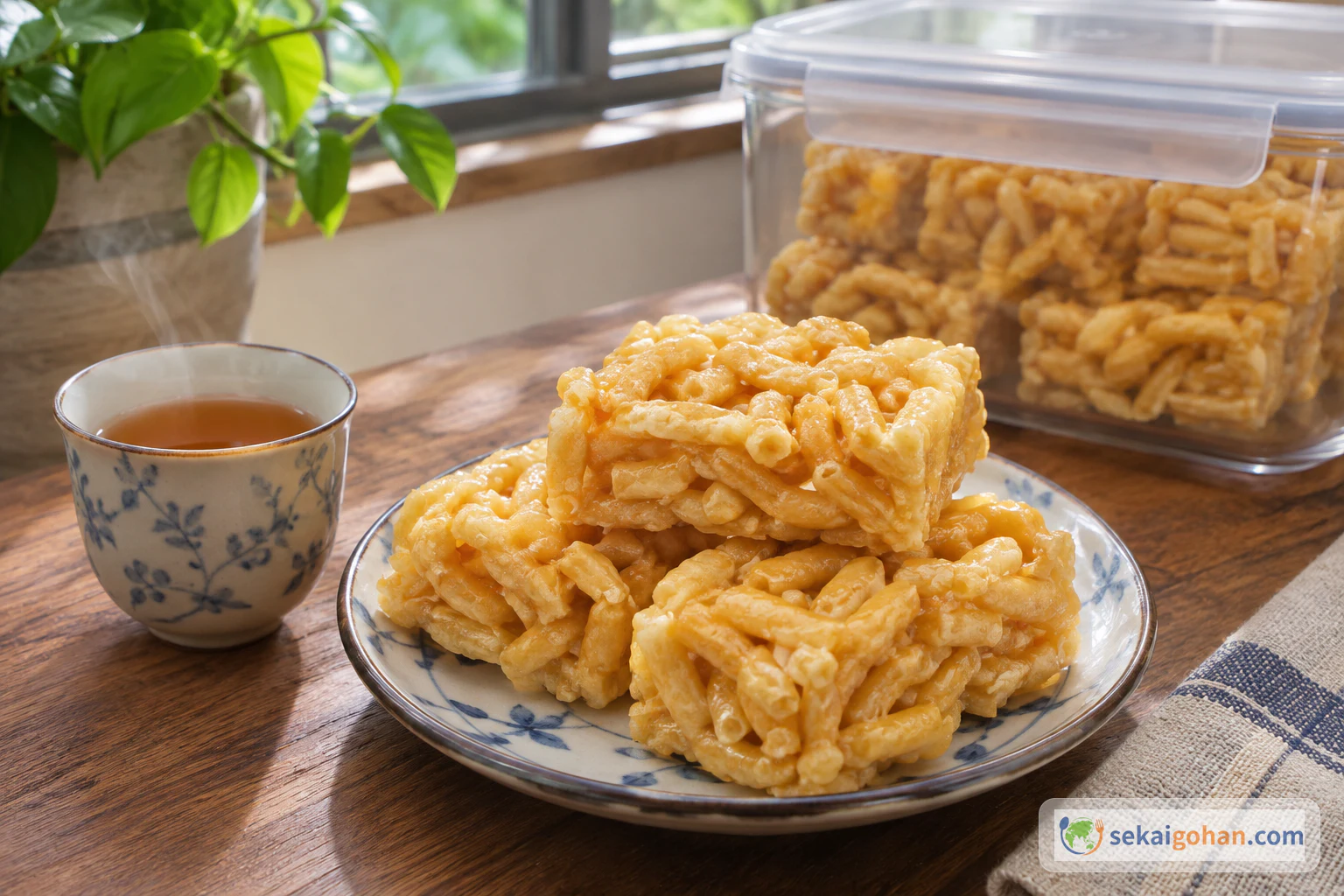
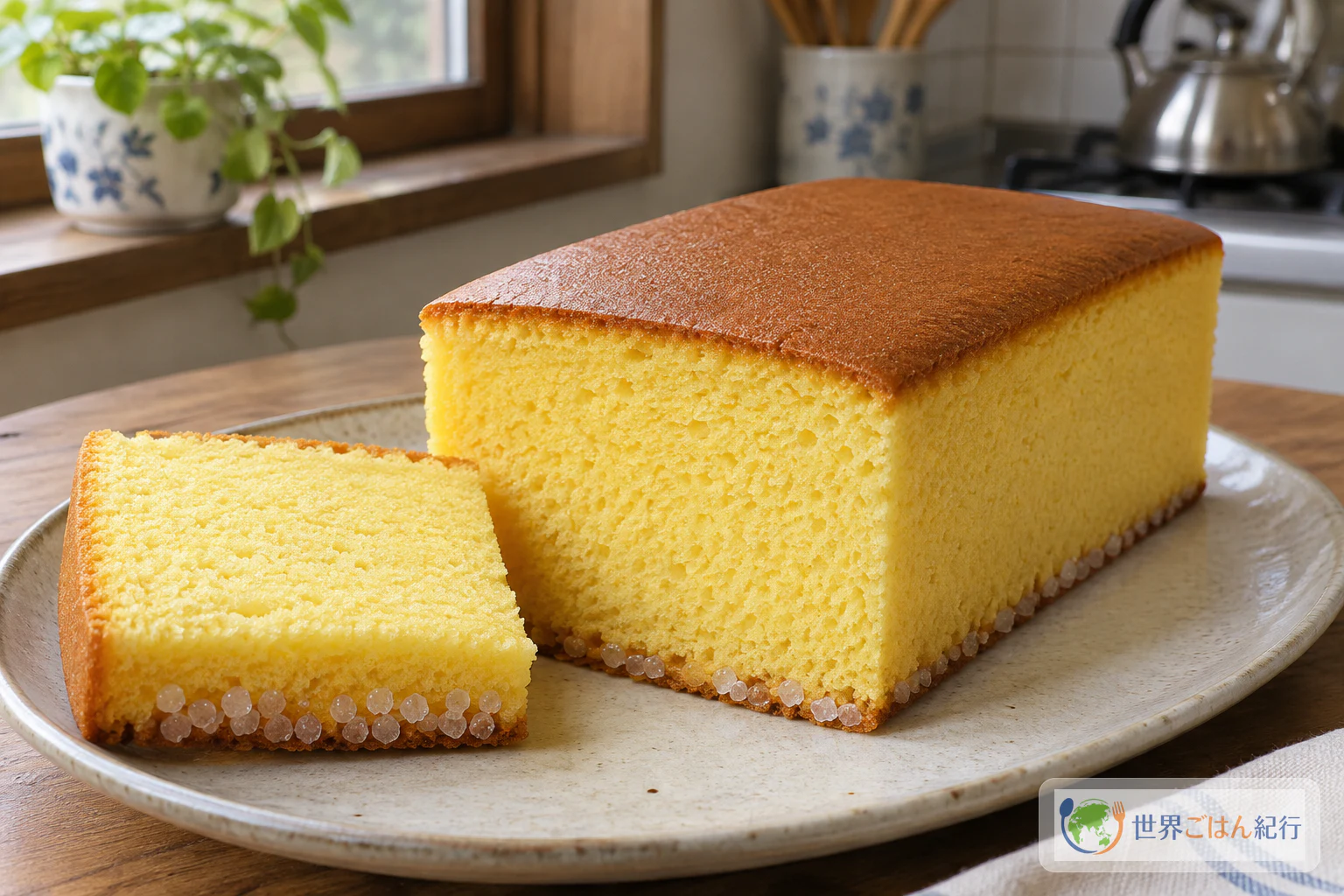
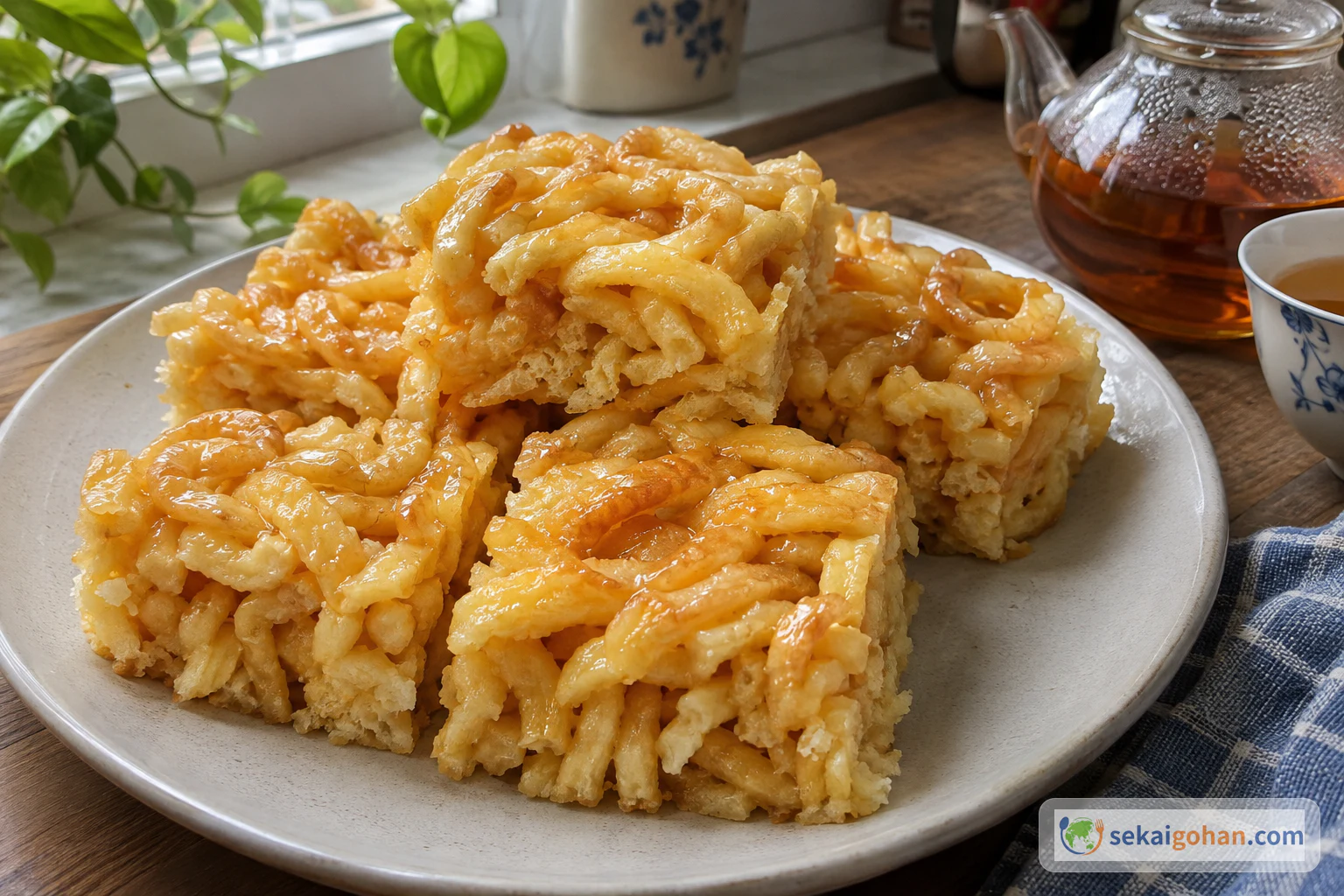
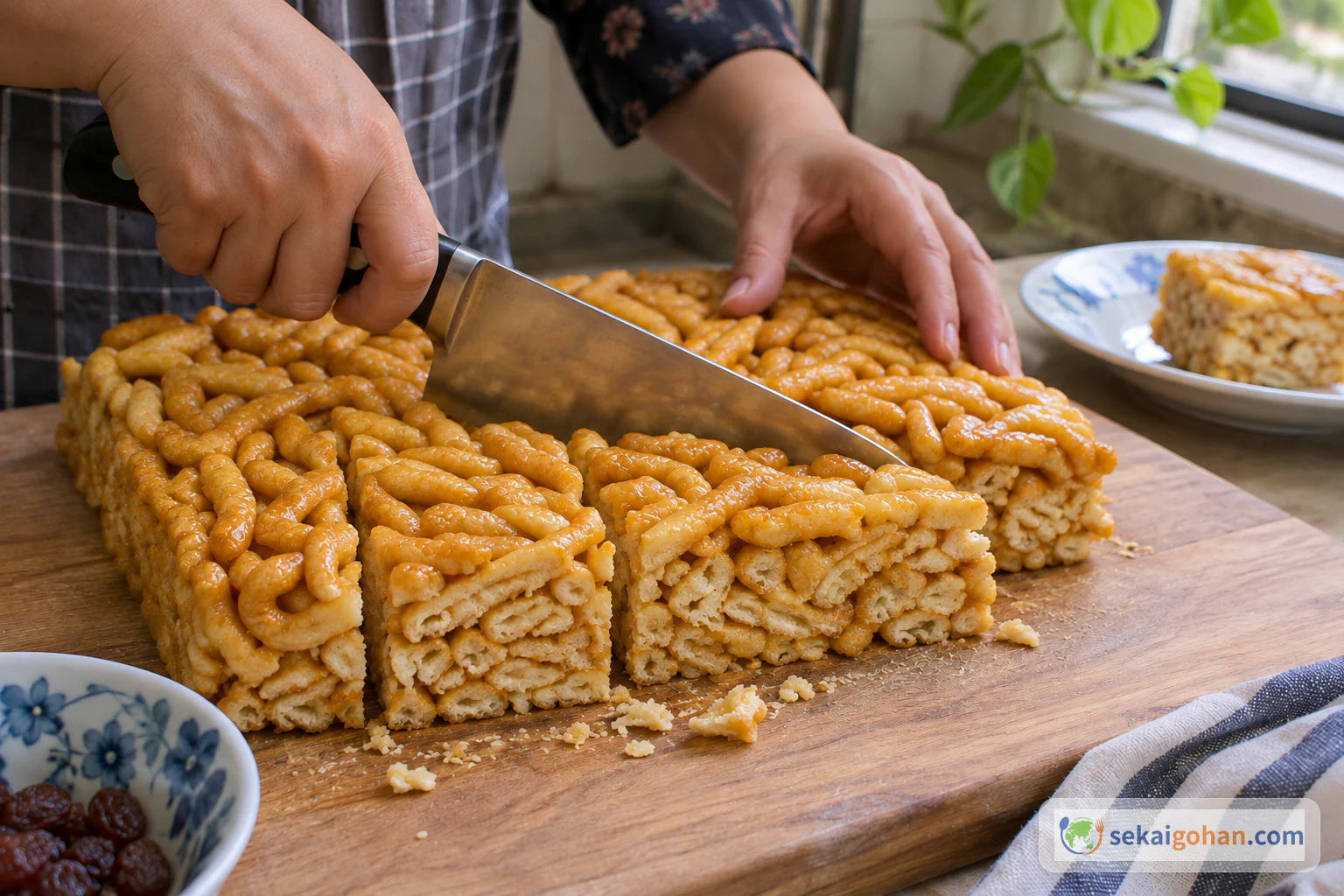
Finished sachima: thin fried dough strips bound with syrup and cut into squares, showing the cut face
Level
Intermediate
Cuisine
Chinese

Sachima, the Manchu-rooted sweet of Beijing and Hong Kong. The float test for frying, the 240°F maltose syrup, and how to press and cut a clean block.

Cooking flow

Cooking steps

STEP 11 / 9

Knead the egg dough and let it rest

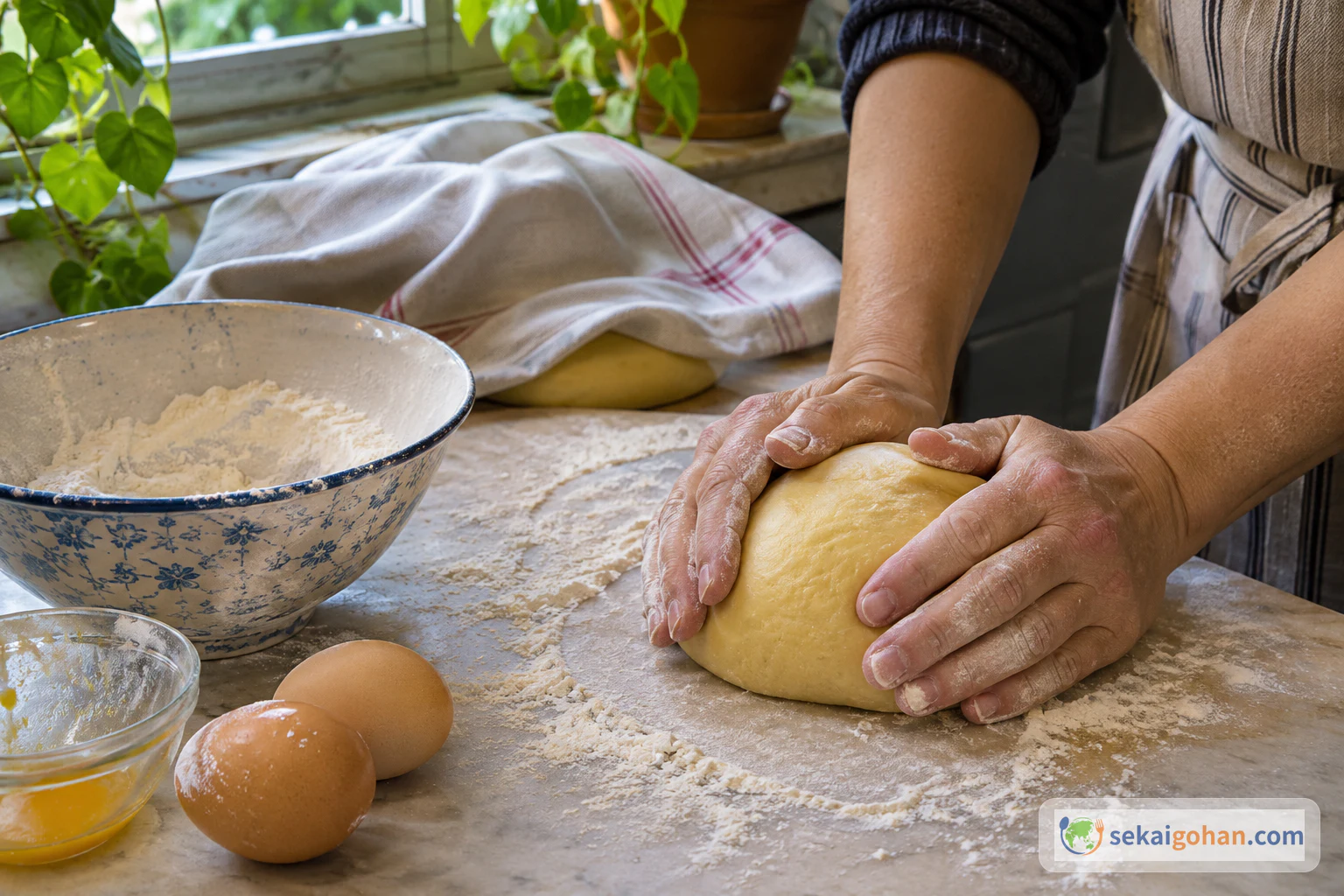
Kneading the flour and egg dough into a single ball before resting
The dough is ready to rest once the surface turns smooth with no dry flour showing

Combine the flour, baking powder and salt in a bowl. Add the 2 eggs and the yolk and work everything together with your hands, then knead on the counter until the dough is smooth. The eggs are the only liquid, so keep kneading past the shaggy stage rather than reaching for water. Cover the dough and leave it for at least 30 minutes, ideally 1 hour. It is ready when it has turned into a smooth, pale yellow ball.

STEP 22 / 9

Roll out a large thin sheet

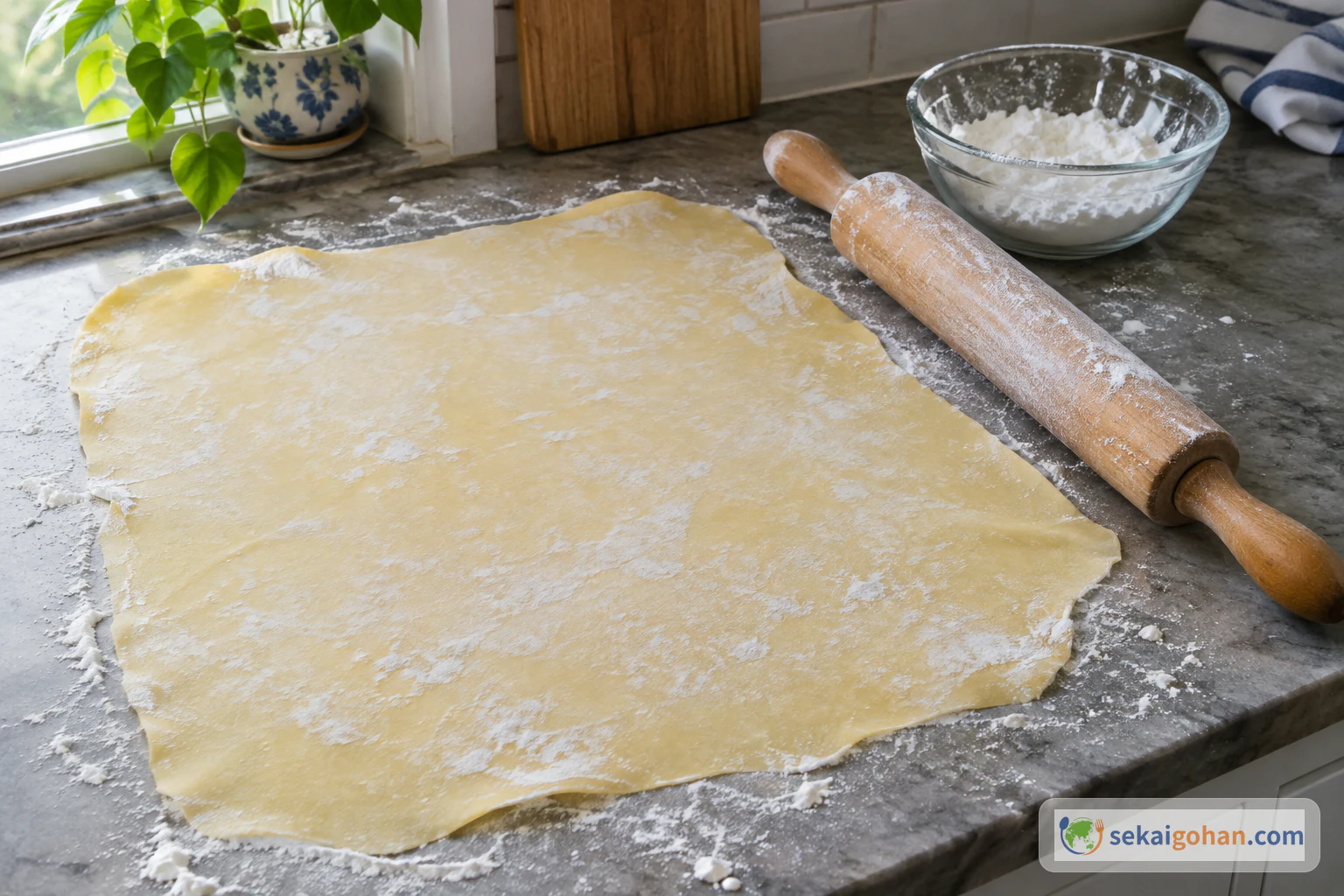
Rolling the dough into a large thin rectangle and dusting it with cornstarch
A white film of cornstarch on both faces keeps the sheet from sticking to itself when cut

Do not knead the dough again after the rest; take it straight to the rolling pin. Roll it into a large, thin rectangle about 12 inches (30 cm) across. Dust both sides and the counter with cornstarch as you go. The sheet is right when it is evenly thin.

Straight from rest to rolling pin

Kneading after the rest tightens the dough again, and it fights back on the rolling pin. Shape it once, rest it, then only roll.

STEP 33 / 9

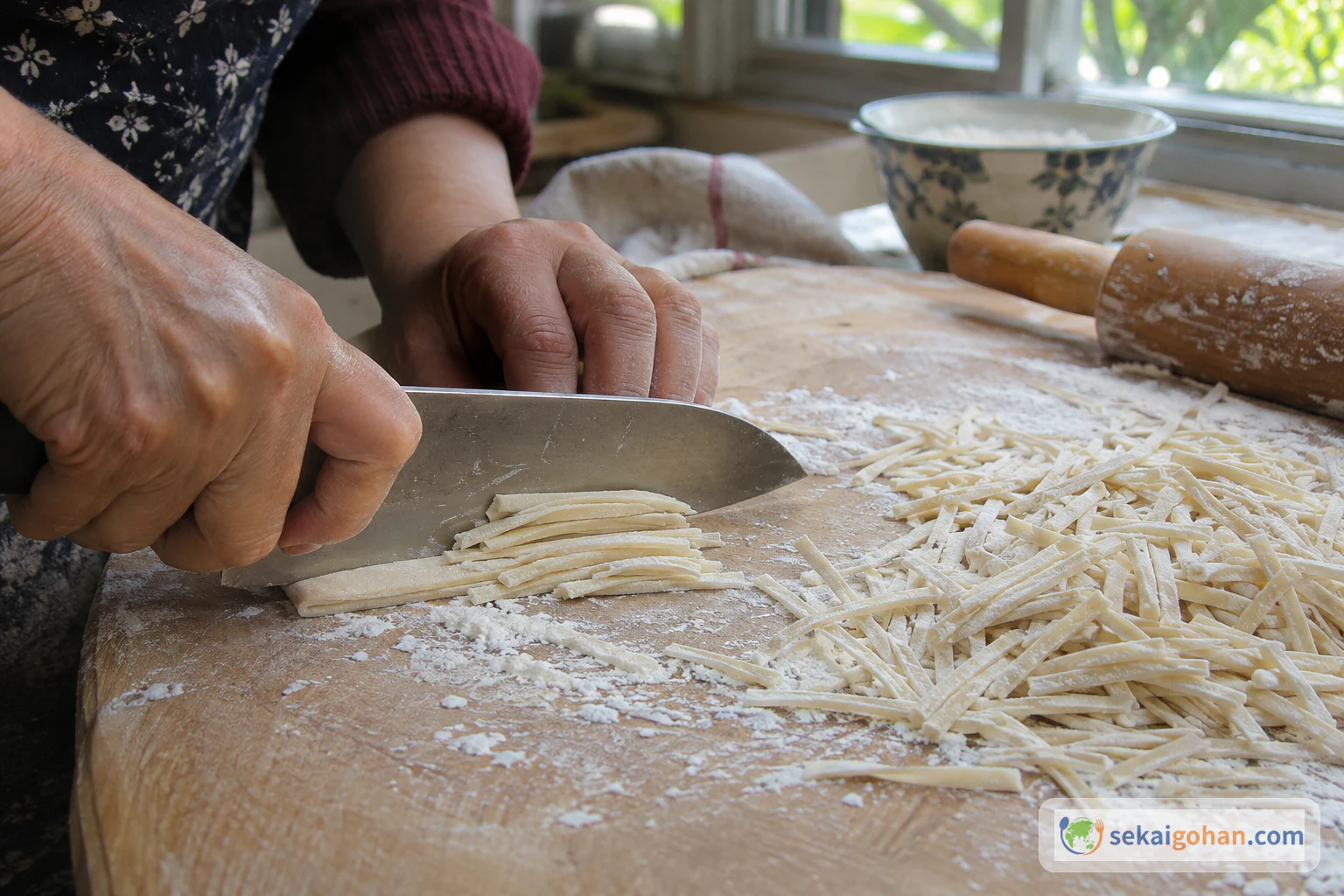
Cut the dough into fine short strips

Cutting the thin dough into fine short strips and separating them with cornstarch
Short, even matchsticks fry at the same speed, so keep the cuts close to one size

Cut the sheet into long ribbons with the large knife, then cut across them to make fine, short matchsticks. Toss the cut pieces with more cornstarch and spread them loosely on the counter. Keep everything dry; wet hands or a wet board make the strips clump. The pile is ready when it falls apart into single strands when you lift a handful.

STEP 44 / 9

Heat the oil and fry one test strip

STEP 4

Pour the oil into the deep pot to a depth of at least 3¼ inches (8 cm) and set it over heat. Set the large bowl and the spider strainer next to the stove. Drop in a single strip. The oil is ready when the strip floats within 3 seconds; if it lingers on the bottom, wait and test again.

Hot oil

Keep the strips, your hands and every tool dry before anything goes near the oil. Add the strips in small batches so the oil does not foam up. Keep a lid beside the pot and a way to put out an oil fire within reach, and never leave the pot unattended.

Trust the float test

The test strip tells you more than a dial on the stove. When it bobs up almost at once and sizzles steadily, the next batches will puff evenly and stay pale.

STEP 55 / 9

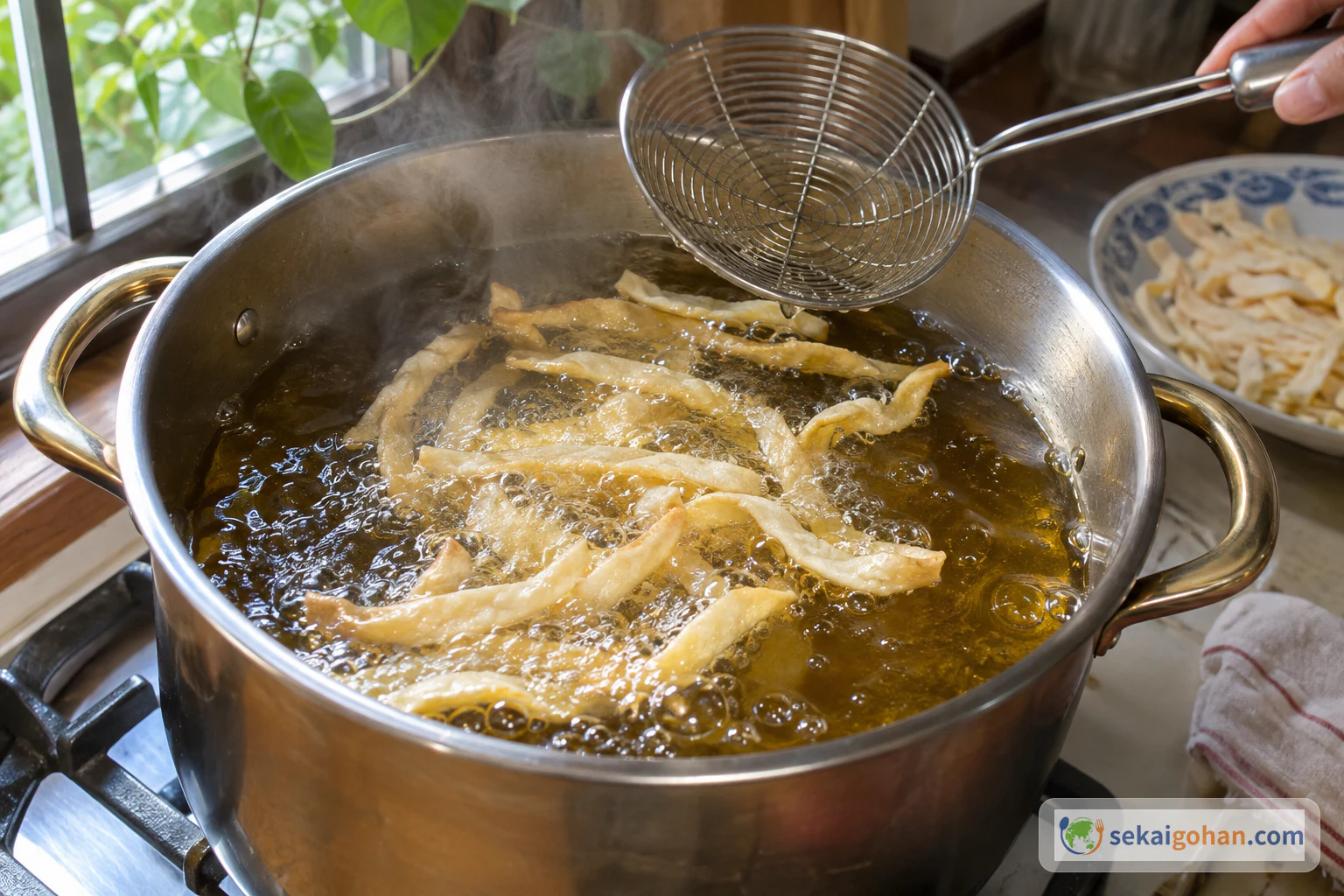
Fry the strips in small batches

Frying thin dough strips in small batches in a deep pot of oil
Lift each batch once the strips have puffed and turned a pale, light gold

Shake loose cornstarch off a handful of strips and scatter them into the oil. Stir them apart and fry for 12 to 15 seconds, until they have puffed and turned a pale, light gold. Lift them out with the spider, let the oil drain back for a moment, and tip them into the large bowl. Repeat with the rest, testing again if a batch is slow to float. The bowl is ready when every strip is crisp-light and evenly pale.

STEP 66 / 9

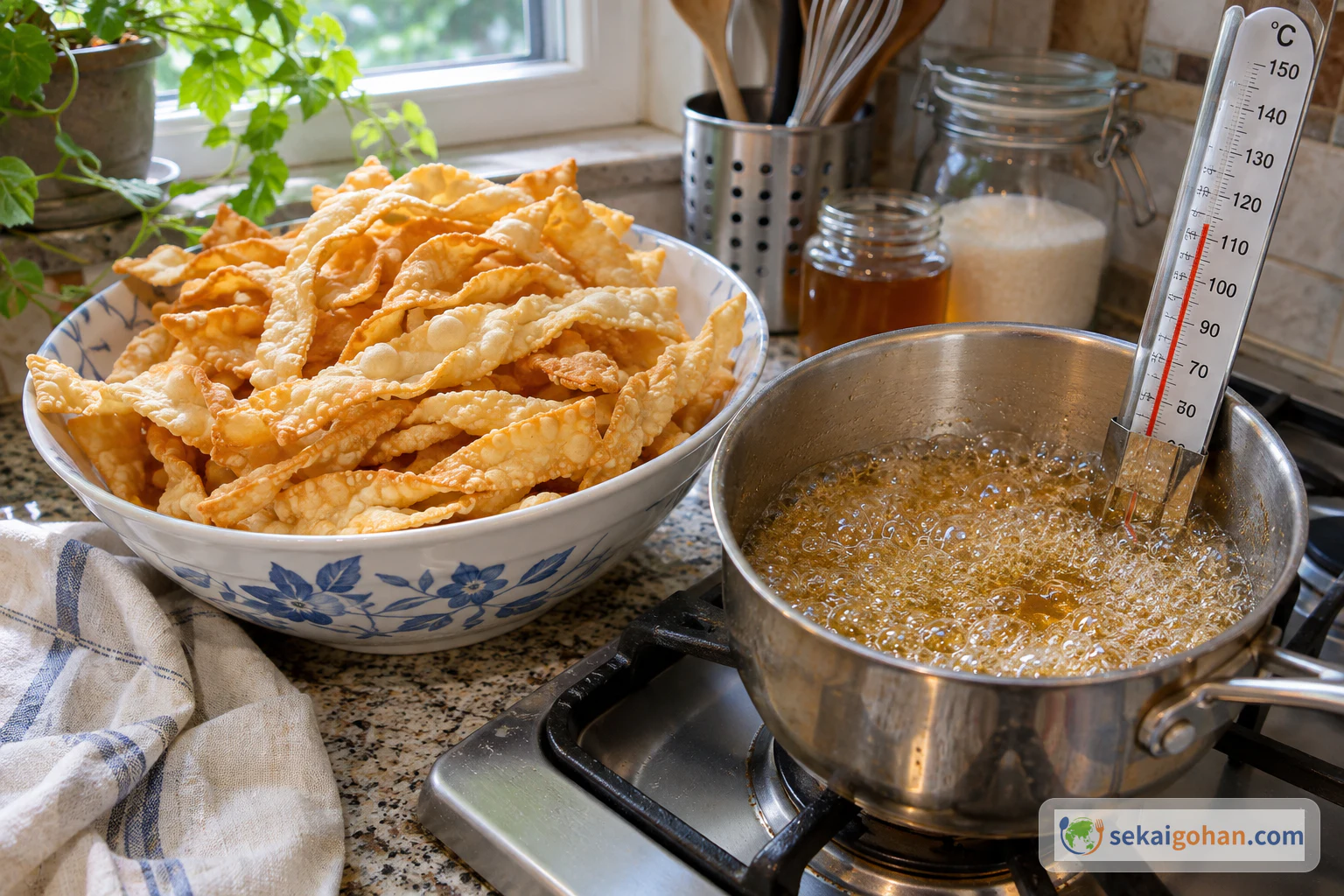
Cook the syrup to temperature

The fried strips waiting in a large bowl while the syrup cooks in a separate pan
Keep the fried strips close to the stove so the syrup goes on them the moment it is ready

Put the sugar, maltose and water in the small saucepan over medium heat. Do not stir; let the sugars melt and bubble on their own. Cook until the syrup reaches about 240°F (115°C), and no higher than about 250°F (120°C). The temperature moves quickly, so lift the pan off the heat each time you read the thermometer. Stop when it reads in that range off the heat.

The thermometer decides

Watching the syrup pull into threads helps, but it only backs up the thermometer. Read the temperature off the heat every time and go by the number.

STEP 77 / 9

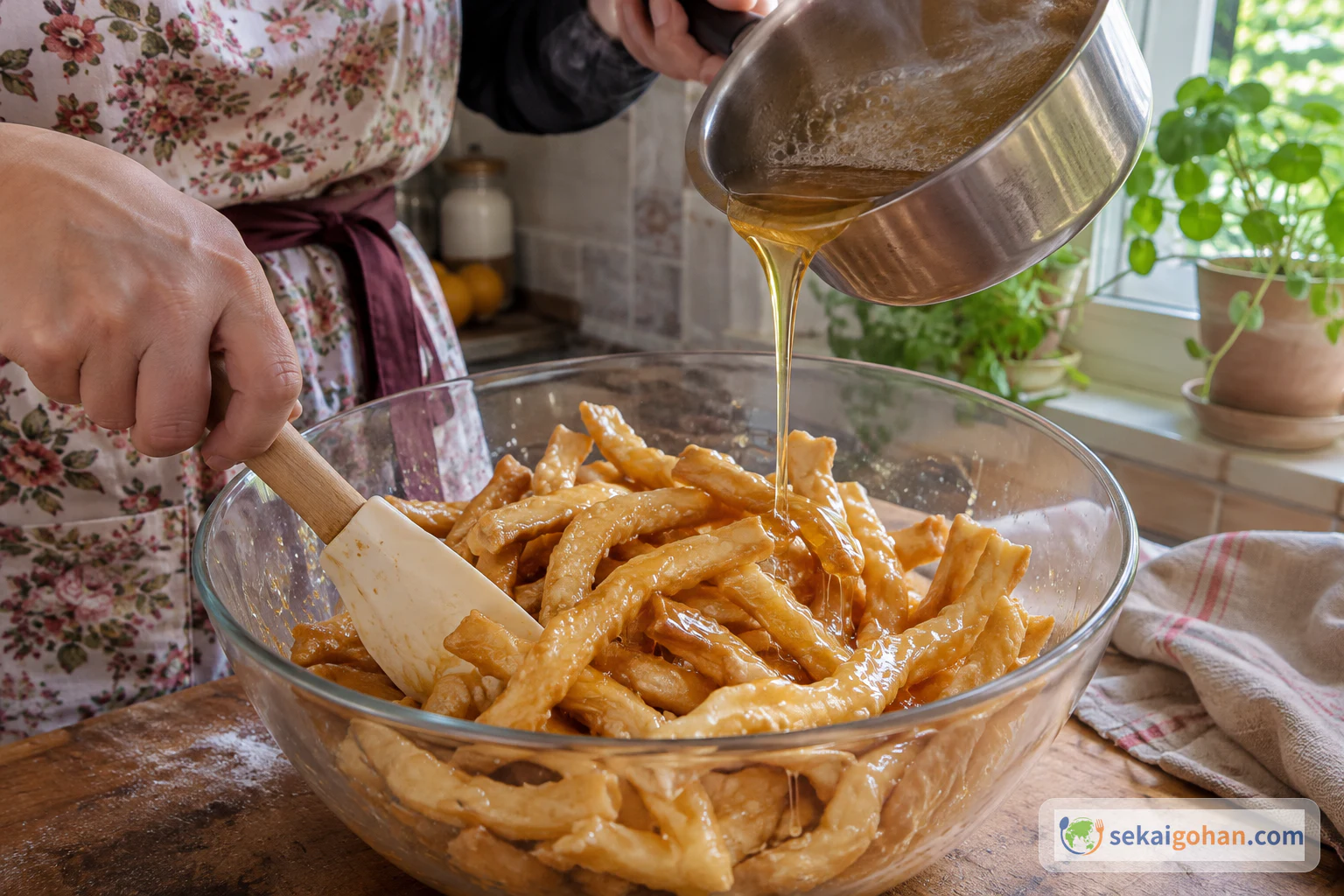
Coat the strips with syrup

Pouring the syrup over the fried strips in additions and folding quickly to coat
Fold from the bottom of the bowl so the last strips get syrup before it starts to stiffen

Pour the hot syrup over the strips in 2 or 3 additions, folding with the spatula after each one. Work fast and keep the coat thin; you are binding the strands, not drowning them. Stop adding syrup once everything clings, even if some is left in the pan. The strips are coated when they glisten all over and come together in loose clumps that pull fine threads as you fold.

Hot syrup

Syrup at 240°F (115°C) sticks to skin and burns. Do not touch it or the coated strips with bare hands; use the spatula for every move.

STEP 88 / 9

Press into the pan and cool

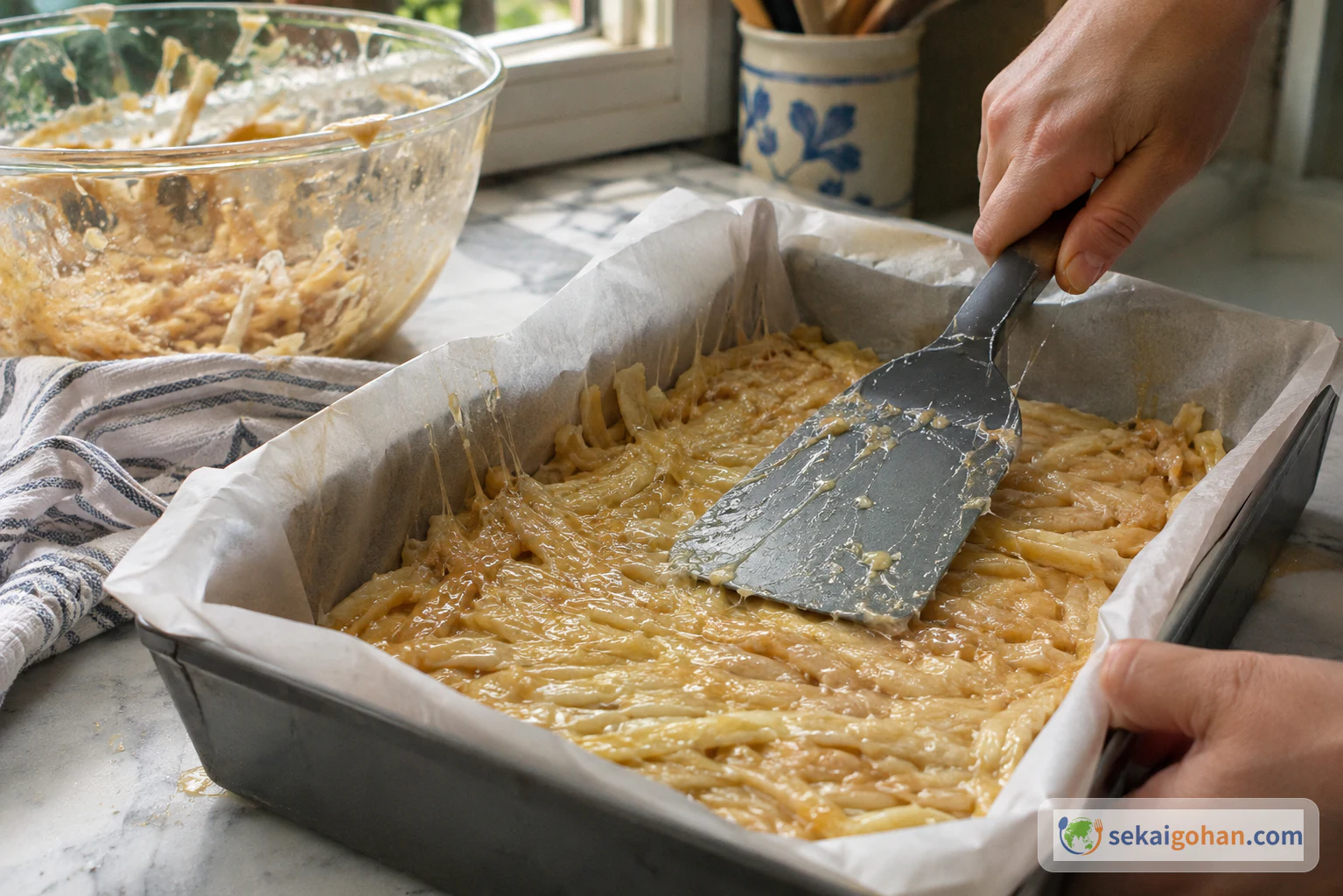
Pressing the coated strips into a parchment-lined pan and leveling the top
A light press keeps the strands open, so the finished squares stay airy

Tip the coated strips into the parchment-lined pan. Spread them to the corners and press the top lightly with the flat of the spatula until it is level. Press just enough to close the gaps, keeping air between the strands. Leave the block until it has cooled completely. It is ready when it feels firm and cool all the way through, with no warmth under the surface.

STEP 99 / 9

Cut into squares

Cutting the fully cooled block into squares with a knife
The cut face should show strands bound by syrup, with small gaps of air between them

Lift the block out by the parchment and set it on a cutting board. Cut it into 9 squares with the large knife. The squares are right when the cut faces show a tight tangle of strips held in glossy syrup and the pieces hold their shape in your hand.

0 / 0
Ingredients

Ingredients

1 / 1

Ingredients

Ingredient Amount Role
All-purpose or bread flour 7 oz (200 g) The structure of the strips
Eggs, large 2 Flavor, color and the only liquid in the dough
Egg yolk 1 Richness and a tender, airy bite
Salt ⅛ tsp Sharpens the egg flavor
Baking powder ½ tsp Puffs the strips in the oil
Cornstarch ¼ cup (60 ml) Dusting, so the cut strips stay apart
Neutral oil (such as sunflower) As needed, at least 3¼ inches (8 cm) deep Frying
White sugar (syrup) 4½ oz (130 g) Sweetness and the set of the block
Maltose (麦芽糖, syrup) 2 oz (60 g) Gloss, chew and stickiness that holds
Water (syrup) 1½ oz (40 g) Dissolves the sugars
0 / 0

The strips go into the oil pale and limp. Seconds later they come up puffed and barely golden, light enough to toss in a bowl like straw. Then the hot syrup goes over them in a thin stream, and the loose pile turns glossy and starts to cling to itself. Sachima (沙琪玛, shāqímǎ) is that pile pressed into a pan, cooled and cut into squares: fried egg-dough strips held together by sugar and maltose. Each piece is soft and airy with a light crunch, tastes of egg and clean sweetness, and pulls into fine sugar threads when you bite it, best with a pot of hot tea beside the plate.

A Manchu sweet that settled in Beijing

The name sounds unlike most Chinese words because it was borrowed from another language. Sachima is usually traced to the Manchus, and its name is read as a sound-for-sound rendering of the Manchu word sacima. The usual story places its start in the Qing dynasty as a sweet for offerings. After the Manchus came through the passes into China proper, it spread through Beijing, and it never left. Old pastry houses in the city, Daoxiangcun among them, still stack it on their counters.

The recipe has moved with time. Older versions are described as a mix of rock sugar, cream and flour, a richer and plainer thing than what is sold now. Today's Beijing sachima starts from a dough of flour, baking powder, egg and water. The dough is cut fine, fried, bound with a syrup that pulls into threads, often studded with raisins, pressed flat on an oiled plate, cooled and cut.

Hong Kong's ma zai

In Hong Kong the same sweet is also called ma zai (馬仔). The Hong Kong pastry-shop style leans richer, with butter and honey in the syrup, raisins and sesame through the block, a square pan and frying at around 285°F (140°C). It is a different mix from the one here, with different proportions all the way through, and the two do not combine well halfway. This recipe keeps to the plain line: egg dough, sugar and maltose, nothing scattered through it, so the egg flavor and the fine tangle of strips carry the whole piece.

Wheat dough runs through the whole of Chinese cooking, and sachima sits at its sweet, fried end. Noodles fried until crisp in chow mein and the thin, pliable wrappers of xiaolongbao come from the same habit of rolling and cutting flour dough by hand. Here the dough gets eggs instead of water and ends in syrup instead of broth.

The name on the label

On the mainland the characters are 沙琪玛 (shāqímǎ); in Hong Kong it is written 沙琪瑪, and Hong Kong shops also sell it as 馬仔, ma zai. The characters were picked for their sound. Why the Hong Kong nickname uses the character for horse is not settled.


Ingredients
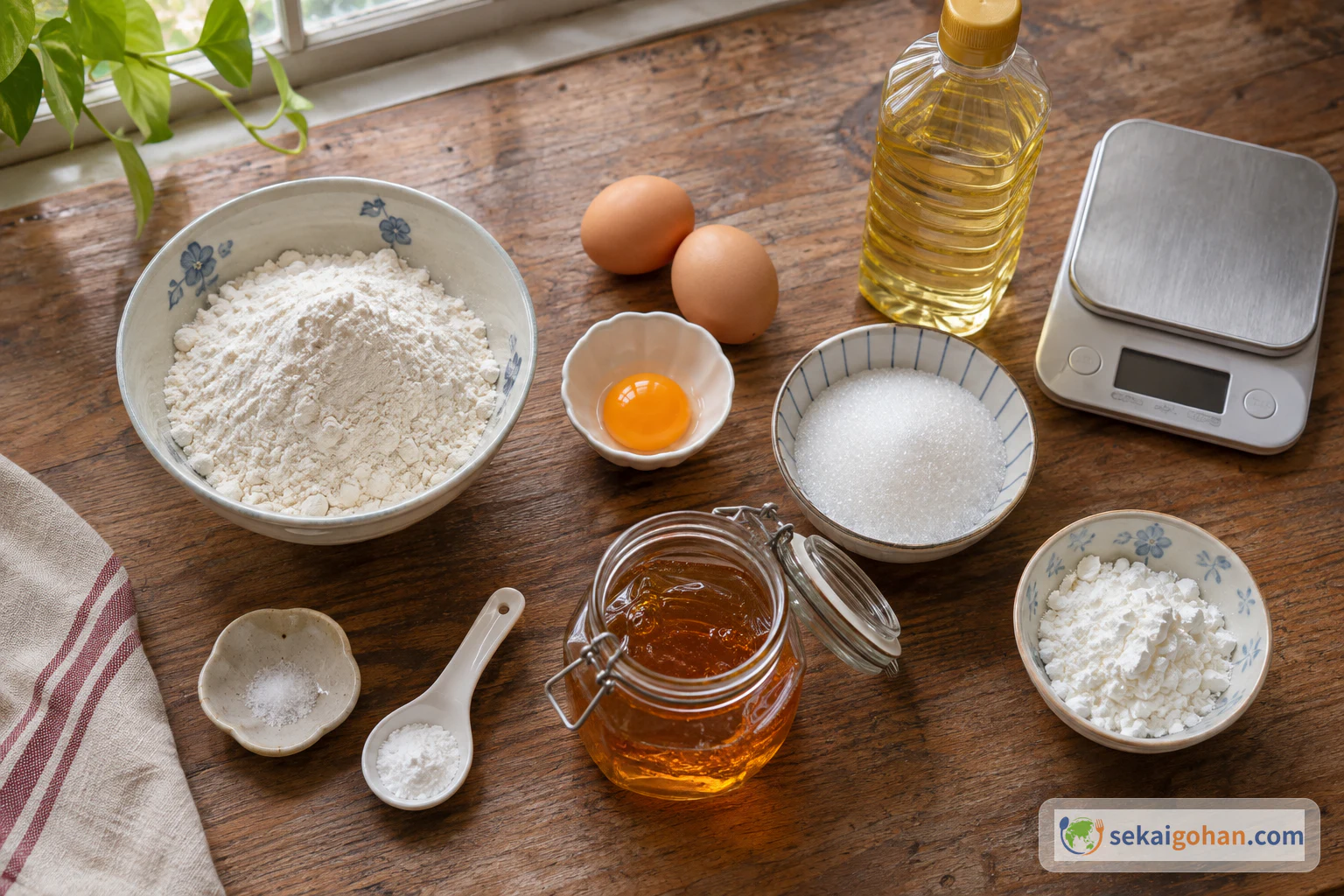
Sachima ingredients: flour, eggs and an extra yolk, salt, baking powder, white sugar, maltose, cornstarch and frying oil
The dough takes no water at all, so the eggs and yolk are its only liquid
Allergen information

Sachima contains wheat and egg. There is no dairy or nuts in this version; check the labels of maltose and baking powder if you cook for someone with allergies.

Equipment

  • Rectangular pan, 8¾ × 6¾ × 1¾ inches (22 × 17 × 4.5 cm)
  • Parchment paper to line the pan
  • Deep pot or wok for frying
  • Candy or digital cooking thermometer
  • Spider strainer
  • Small saucepan for the syrup
  • Rolling pin and a large knife
  • Large mixing bowl and a sturdy spatula

Choosing maltose, flour and starch

Maltose is the one thing to hunt down. It sits in jars at Chinese grocers and online, sometimes labeled malt sugar or malt syrup. It gives the syrup its gloss, its chew and a stickiness that holds the strips together as the block cools. Other starch syrups may differ in thickness and sweetness, so maltose is worth the trip.

Everything else comes from an ordinary supermarket. All-purpose or bread flour both work. Plain white sugar goes into the syrup. Use cornstarch for dusting: do not assume another starch behaves the same way. Cornstarch keeps the cut strips loose. Any neutral oil works for frying.

To keep sachima tasting the way it does in a Beijing shop, hold on to three things: an egg dough with no added water, maltose in the syrup, and a syrup taken to temperature with a thermometer. Raisins and sesame are optional; leave them out and the block is cleaner and more eggy.


Method

The dough needs a rest, and that is your hands-off time. While it sits, line the pan with parchment, pour the oil into the pot, and weigh the syrup ingredients into the saucepan so they are ready. After that the work runs straight through: roll, cut, fry in small batches into one big bowl, cook the syrup, coat, press. The block then cools on its own before you cut it.

When it goes wrong

What you see Why What to do
The block is hard and brittle, like candy The syrup went too hot; past about 390°F (200°C) it turns into hard, brittle candy Read the thermometer off the heat and stop at about 240°F (115°C)
The block stays sticky and will not set The syrup did not get hot enough Cook the next batch fully to temperature before pouring
The test strip sinks and stays down The oil is not hot enough yet Wait and test again until a strip floats within 3 seconds
Strips come out dark or hard Fried too long, or the oil ran too hot Keep each batch to 12 to 15 seconds and lift it while still pale
The strips clump in the oil Not enough cornstarch, or the strips were damp Toss them with more cornstarch and fry them as loose handfuls
The squares crumble when cut The block was still warm, or the strips got too little syrup Let it cool completely; coat every strand thinly next time

Serving, variations and storage

Squares of sachima on a small plate with a cup of tea
A stack of squares and a cup of hot tea, with the rest closed away from the air

Sachima belongs with hot tea, a few squares on a small plate in the afternoon or set out when someone visits. The tea cuts the sweetness and softens the egg-rich crumb. It is high in fat and calories, so enjoy it in moderation.

Variations

  • Raisins: fold a handful into the strips with the syrup. They add bursts of fruit and a chewier bite.
  • Sesame: scatter sesame through the strips before pressing. It adds a toasted, nutty note and some crunch.
  • Hong Kong ma zai: the butter-and-honey style is its own mix, with its own proportions and frying temperature. Make it as a separate batch rather than adding butter or honey to this syrup.
  • Smaller pieces: cut the block into smaller squares or bars for a tea tray. The pieces are easier to share and the cut faces show more of the strands.

Storage

Keep sachima in a sealed bag at room temperature, for up to 1 week. Air makes the surface sticky, so close the bag tightly after every piece you take out.

Frequently asked questions

Baking soda or baking powder?

Baking powder. It is what puffs the strips in the few seconds they spend in the oil and keeps them light. Use the ½ tsp in the dough and nothing else.

What temperature should the frying oil be?

Go by the float test instead of a number. When a single strip comes up within 3 seconds, the oil is right for this dough. The richer Hong Kong style fries its strips at around 285°F (140°C), but that dough is a different mix.

Can I judge the syrup without a thermometer?

The syrup changes fast and the color tells you little in the range that matters. Watching it pull threads off a spoon gives a rough idea, but the thermometer is what keeps the block from turning brittle or staying sticky. Buy one before you make this.

My dough will not come together. Can I add water?

The dough uses only the eggs for liquid, and it starts out shaggy. Keep kneading until it turns smooth; this recipe does not add water.
Sources

  • China Sichuan Food, "Sachima (沙琪玛) recipe." Dough and syrup proportions, pan size, oil depth, float test, frying time, syrup temperature, coating in additions, cutting after cooling, and room-temperature storage in a sealed bag. https://www.chinasichuanfood.com/?p=17967
  • The Hong Kong Cookery, "Chinese Sachima (沙琪瑪 / 馬仔) Soft Flour Pastry Cake." The Hong Kong name ma zai and the Hong Kong-style mix with butter, honey, raisins and sesame, used for comparison only. https://www.thehongkongcookery.com/2020/06/chinese-sachima-soft-flour-pastry-cake.html
  • Visit Beijing, "Sachima (Daoxiangcun Dashilan Street Branch)." The Manchu origin and name, Qing-era offerings and spread in Beijing, the older rock sugar and cream recipe, today's method, the high fat and calorie note, and sale at Daoxiangcun. https://r.visitbeijing.com.cn/food/8