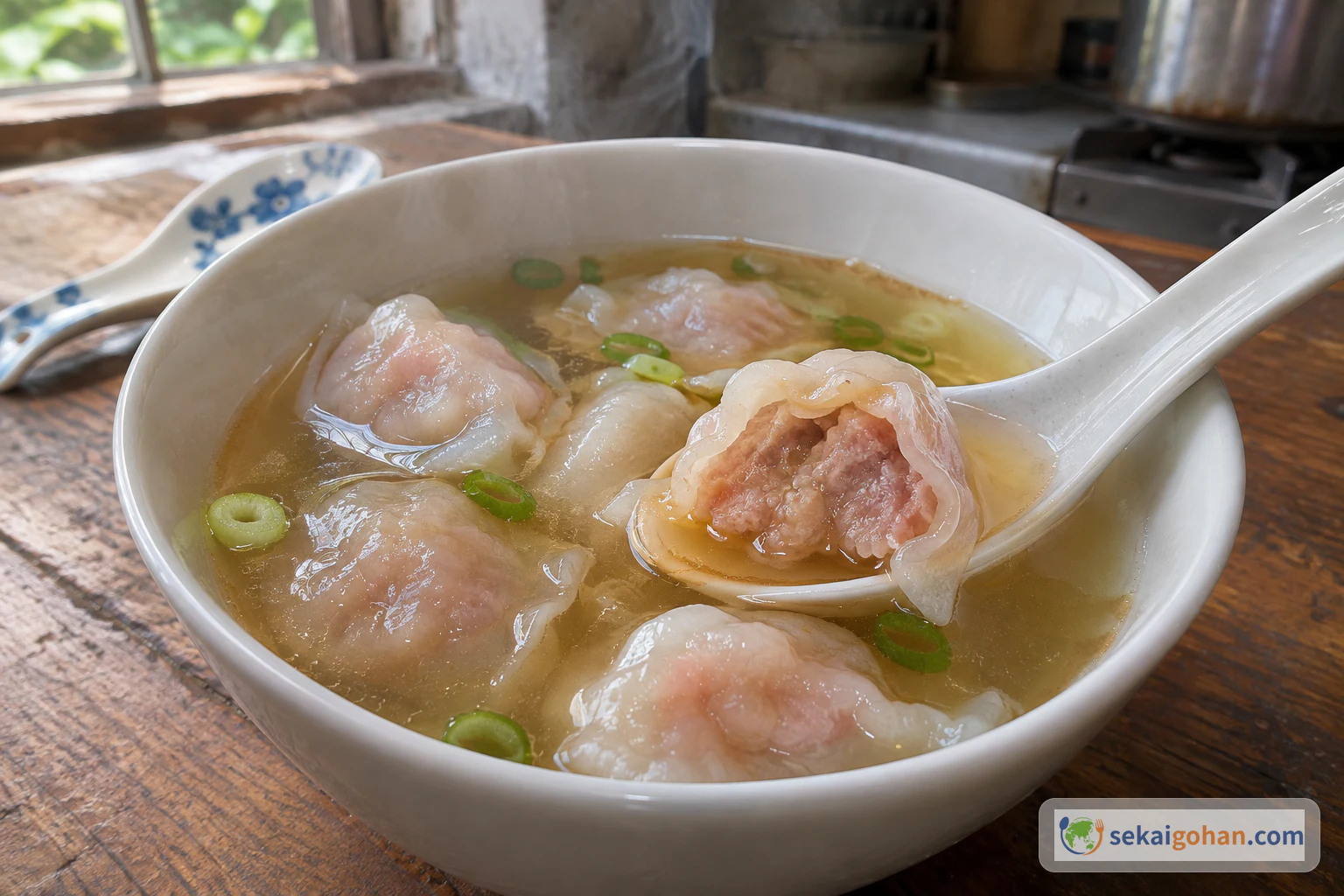
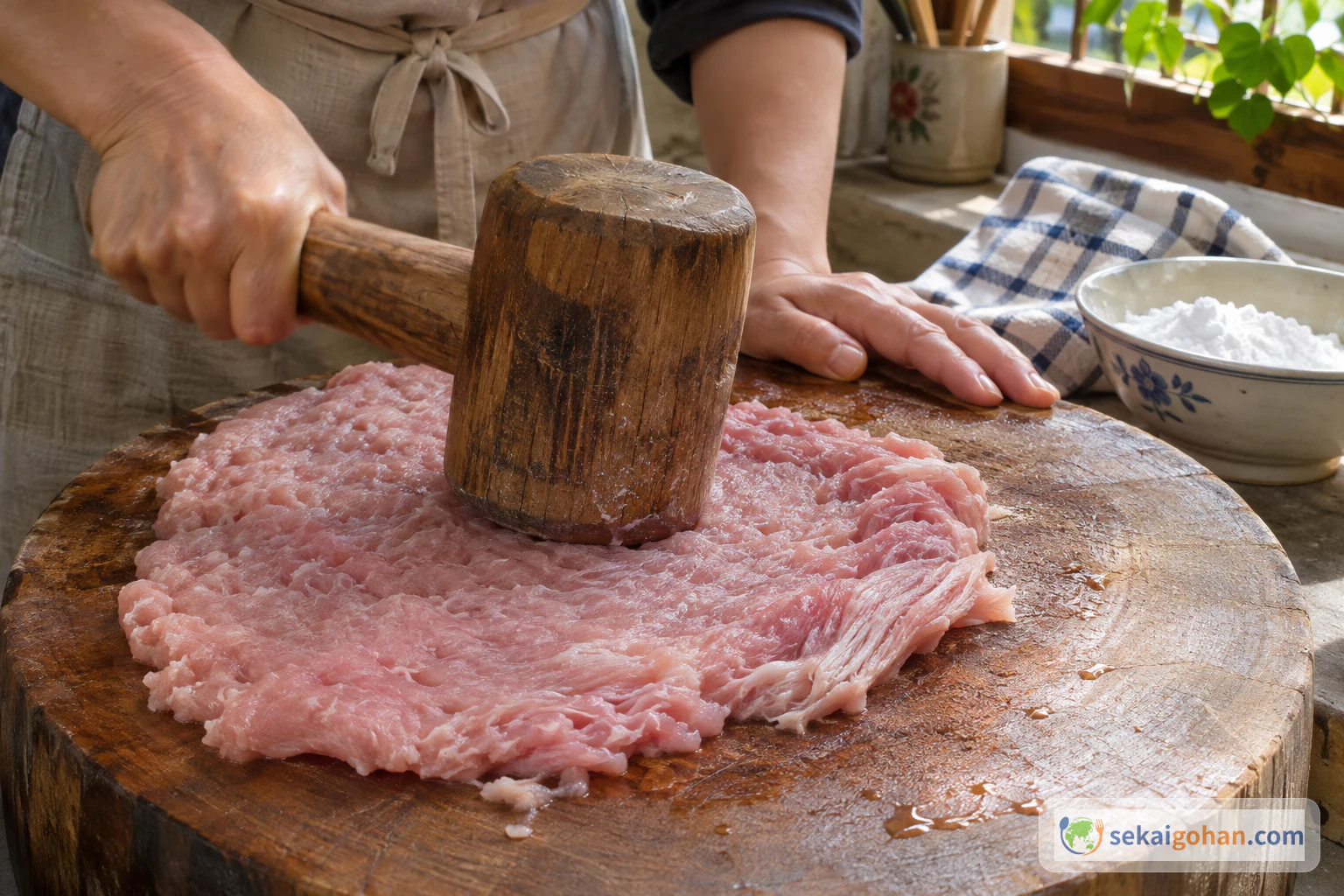
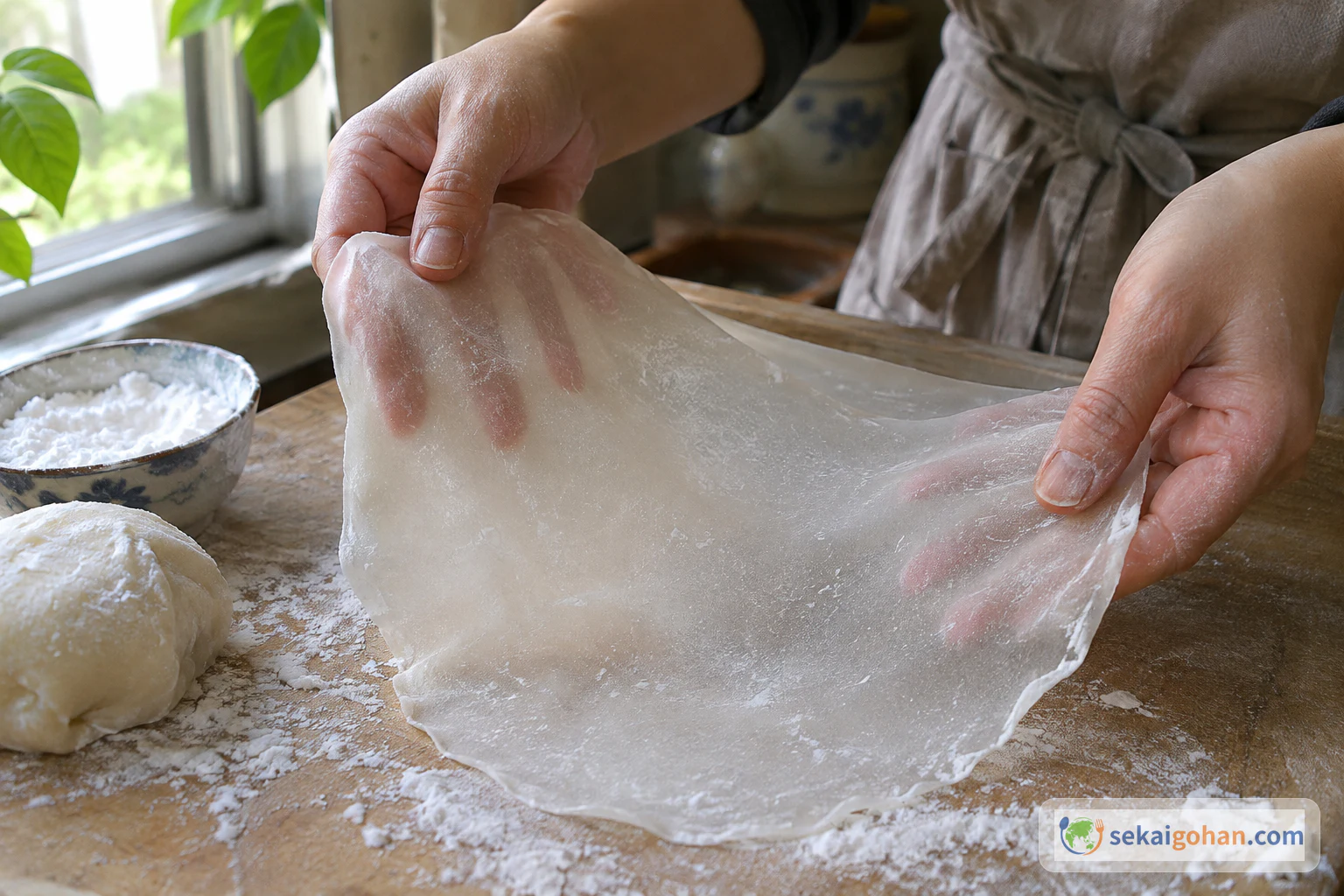
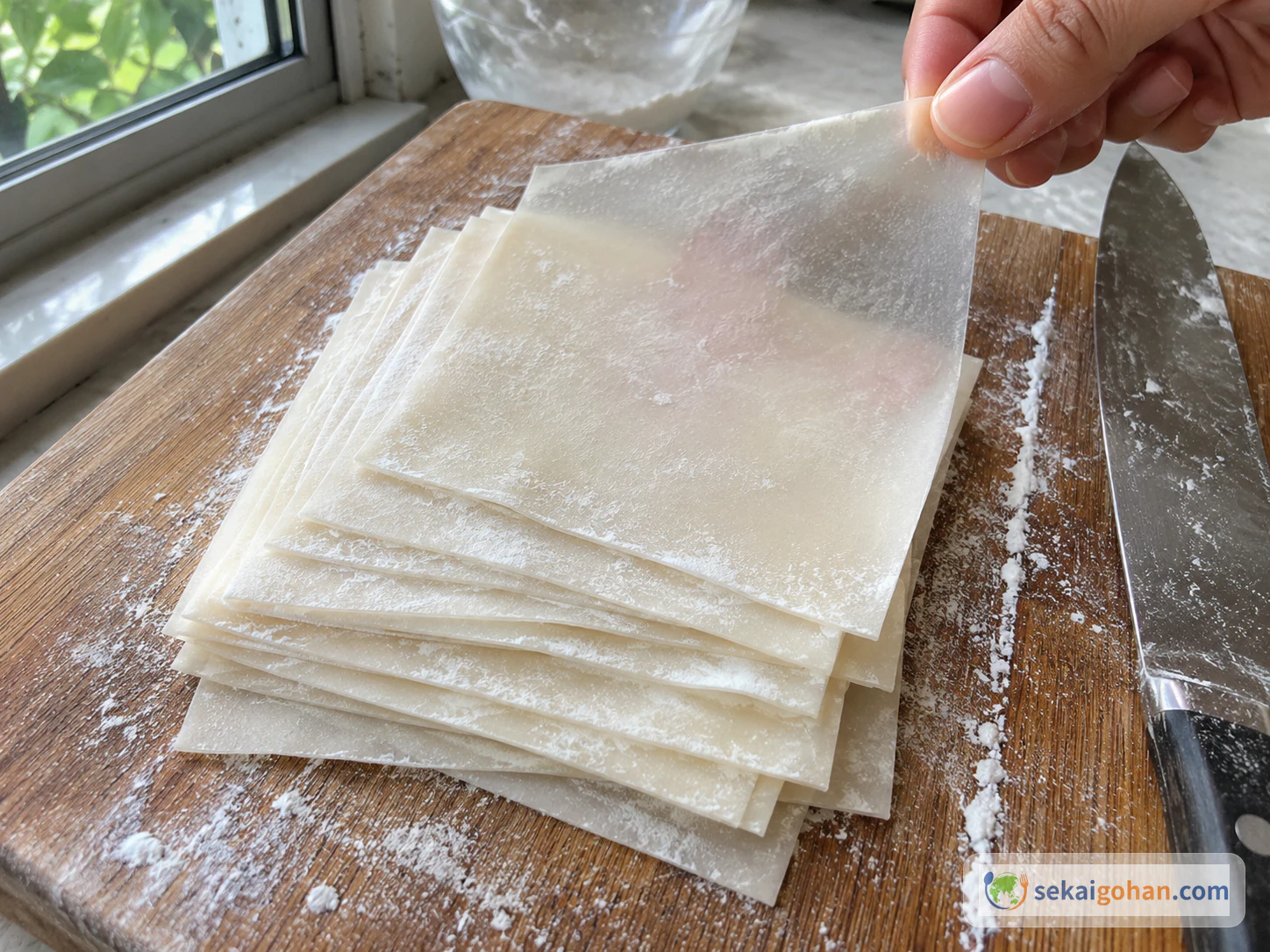
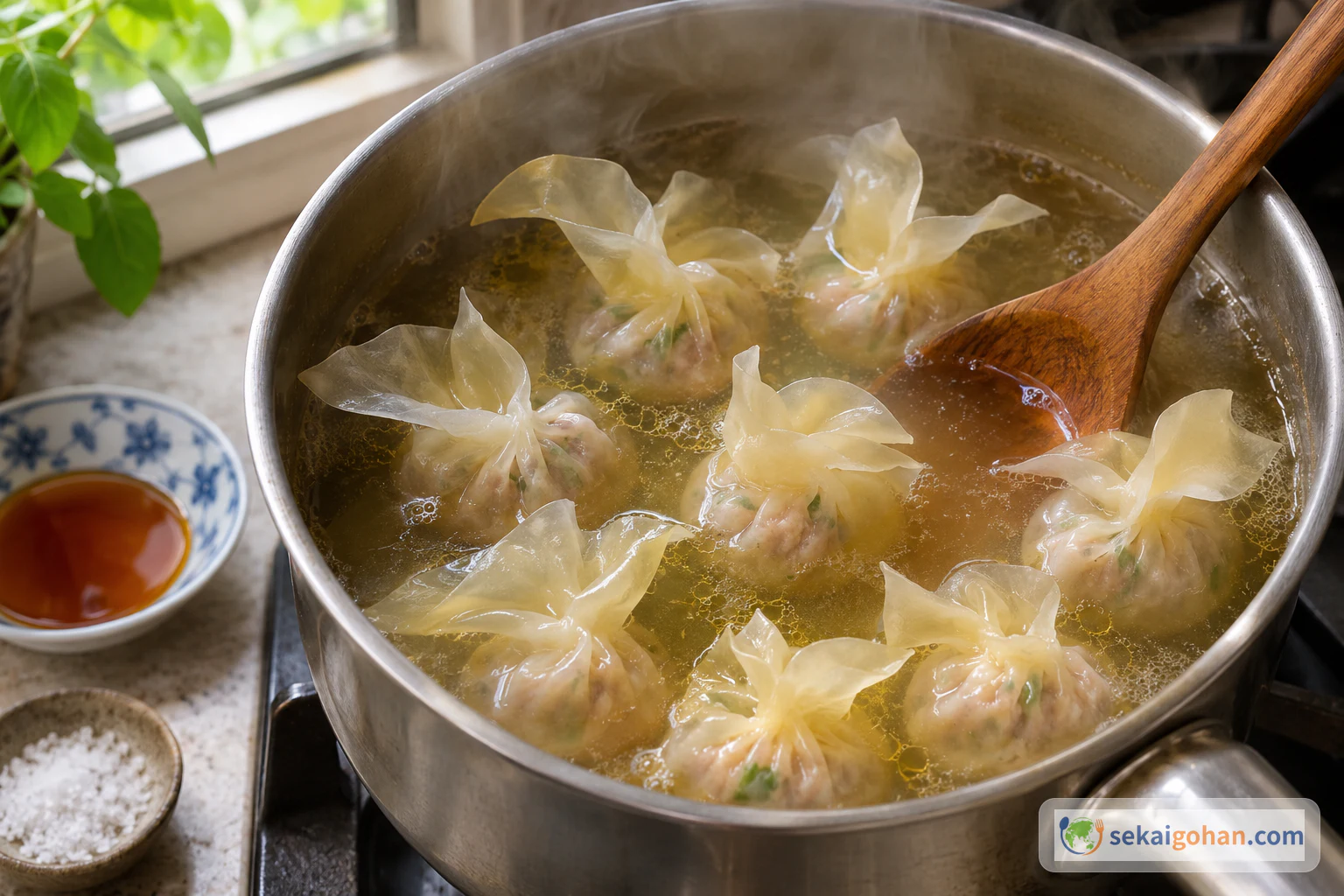
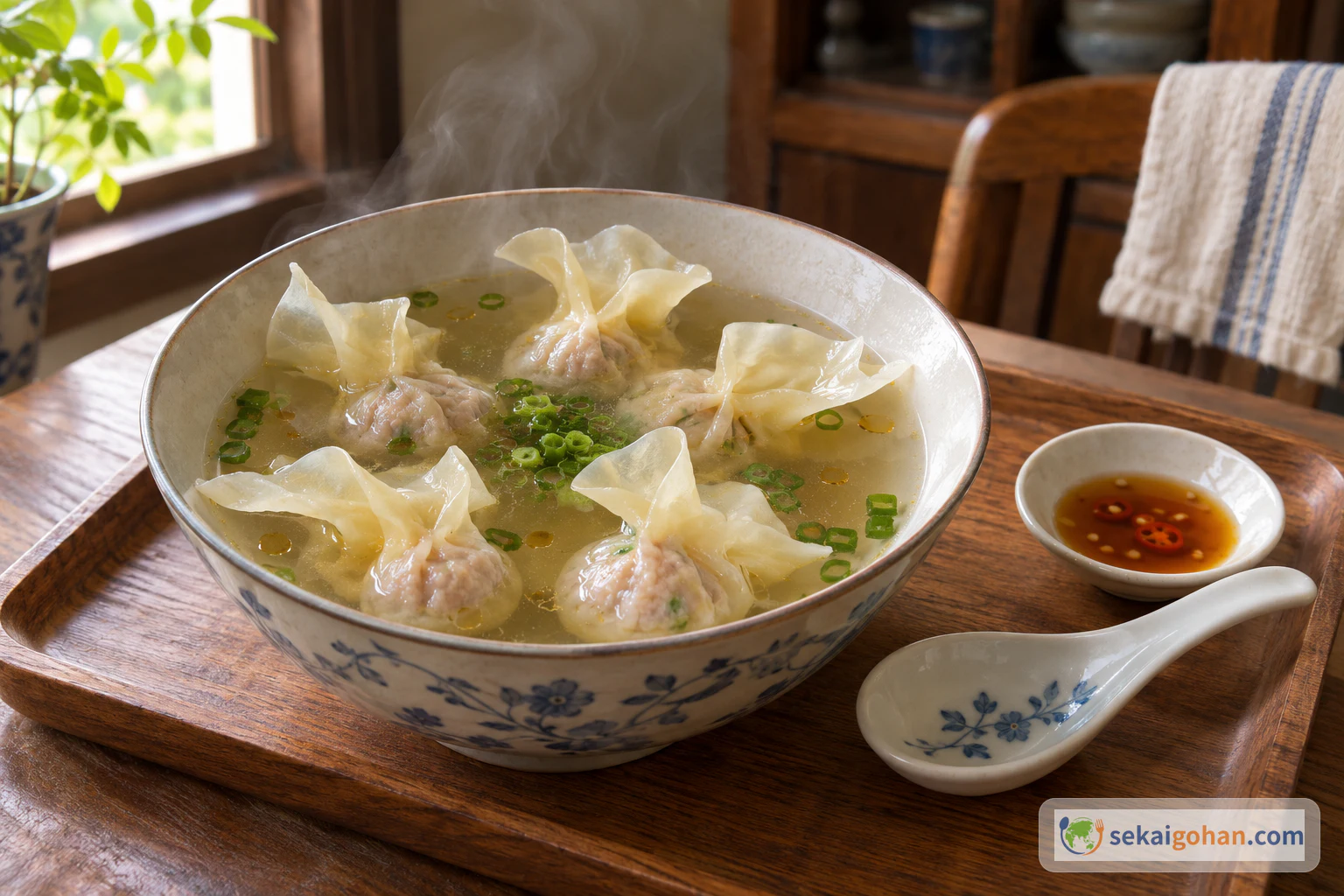
On a Fuzhou street corner you can follow a steady da, da, da to a yanpi shop, where a wooden mallet comes down on a slab of pork leg until the meat gives up its shape. Tens of thousands of blows later, worked together with sweet potato starch, the pork becomes a sheet as thin as a cicada's wing. Hold it to the light and you see the fine, uneven grain of handwork and ragged edges. That sheet is yanpi, Fuzhou's wrapper made from pork. Wrapped around a teaspoon of pork filling and set in clear broth it becomes rouyan, and the skin itself is the surprise: translucent, springy, with a chew close to fish paste and the taste of pork.
A wrapper made of meat: yanpi in Fuzhou
Wontons and bianshi wrap meat in wheat dough. Rouyan wraps meat in meat. The wrapper is lean pork leg pounded into paste and worked with sweet potato starch until it stretches into a film, and the filling is pork again, kept small. In much of Chinese cooking pork is roasted, braised or minced into a filling; in Fuzhou it also becomes the skin. Where xiaolongbao shows how thin a wheat skin can be and still hold soup, yanpi asks how thin pork can be pounded and still hold together.
Swallows in the bowl
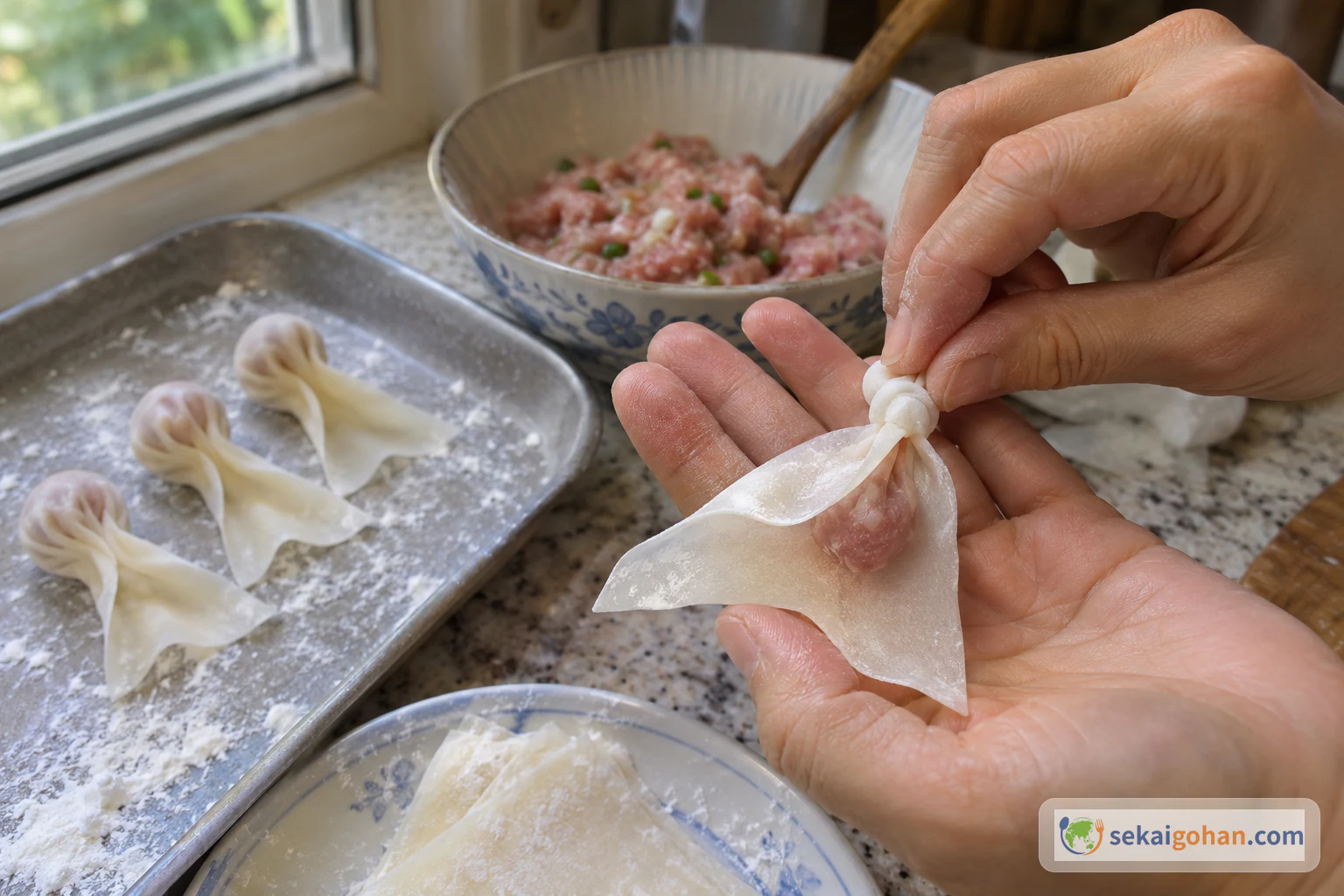
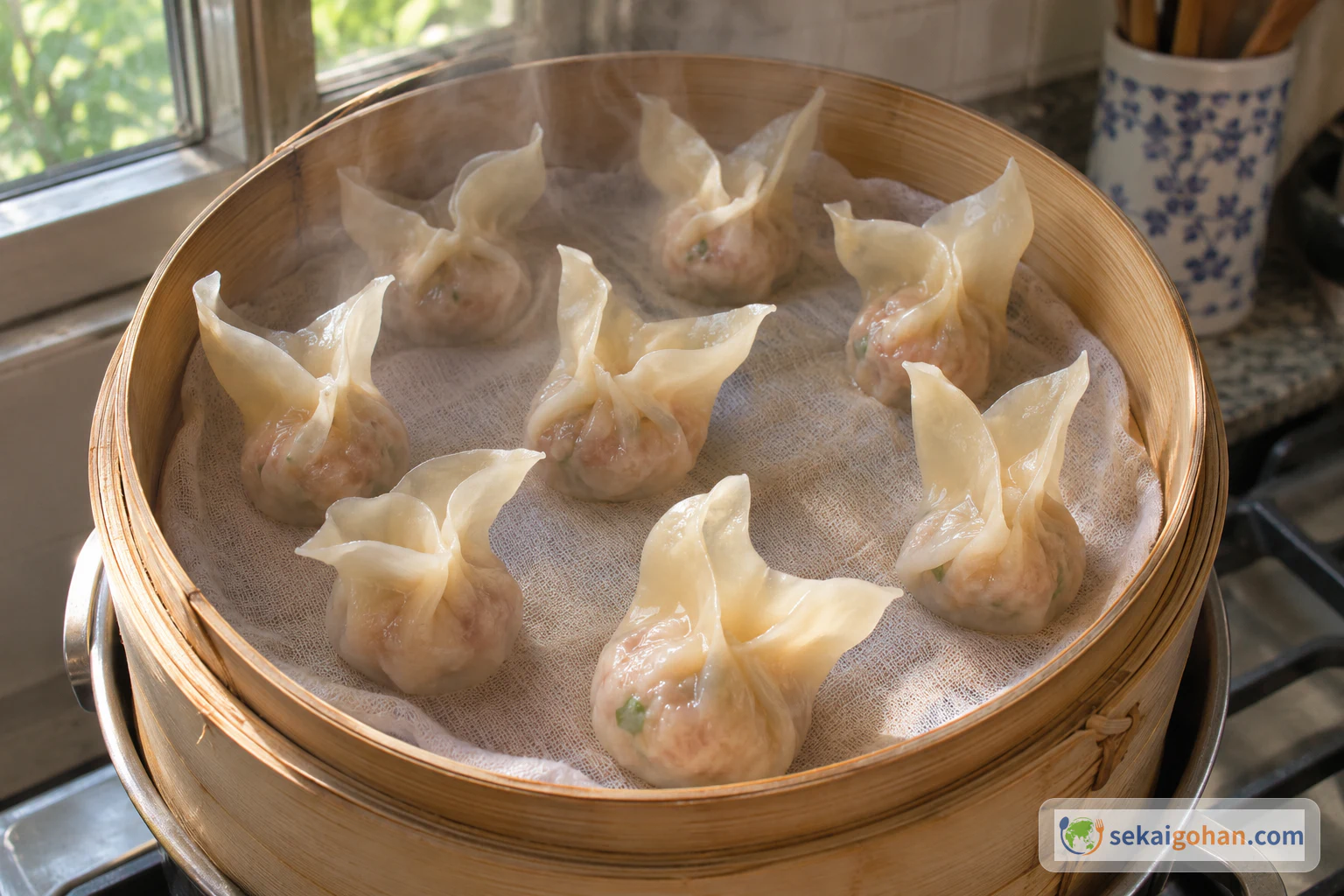
A finished rouyan has a tight, round head of filling and a loose wrapper tail that fans open behind it, and that silhouette gave the dish its name. The same wrapper turns up in several dishes. Rouyan is the filled dumpling, served in broth. Taiping yan is rouyan cooked with duck eggs. Yansi is the wrapper cut into strips and dropped into soup unfilled, a way to taste the skin's spring with nothing in the way. Yanwan is a separate dish again, meatballs rolled in strips of yansi and steamed. Fuzhou fish balls often share the bowl with rouyan, though they are a different dish of fish paste.
燕 (yàn) means swallow; 燕皮 (yànpí) is "swallow skin." The dumplings are called rouyan (肉燕) or bian rouyan (扁肉燕). In the Fuzhou dialect, "duck egg" sounds like ya luan (压乱), "pressing down chaos," so rouyan cooked with duck eggs became Taiping yan, "peace swallows."
Banquets, villages and workshops
Fuzhou has a saying: no banquet without yan, no New Year without yan. Rouyan comes to weddings, funerals, festivals and the table set for guests, and Taiping yan carries its wish for peace into those meals.
Houfu Village, in Qingkou Town in Minhou County, built its living on the wrapper. In the 1960s Lin Dengjin brought five craftsmen from Fuzhou to start a workshop there. By the 1980s, forty to fifty households were making yanpi full-time and shipping it to Taiwan and overseas. Makers there use only the hind leg, as fresh as they can get it, with sweet potato starch from Luoyuan. They pound for about half an hour, at a room temperature around 68°F (20°C), until the paste turns wet-looking and glossy. They work a lump of 3.3 to 4.4 lb (1.5–2 kg) into a sheet some 16 feet (5 m) long, cut it into squares, and the result is translucent and strong enough to soak in water without tearing.
In Fuzhou's old Sanfang Qixiang quarter, Tongli Rouyan is known for handmade wrappers, struck tens of thousands of times with a wooden mallet. Its filling is lean pork leg, pork belly and water chestnut. Machine-made wrappers are thicker, lack the torn-fibre texture that pounding by hand leaves, and break more easily in boiling broth. Some diners order yansi on its own to judge a shop by its skin. In December 2018, the Yihai rouyan making technique from Taijiang District entered Fuzhou's fifth batch of municipal intangible cultural heritage. Some reports call rouyan provincial heritage as well; the municipal listing is the one on record.
Where it began, and how it travelled
Where yanpi was first made is not settled. Pucheng, in Nanping to the north, claims it. One story places its start in the Jiajing reign of the Ming dynasty, in the house of a Pucheng censor, where a cook beat pork leg with a wooden rod, mixed in sweet potato starch and rolled it paper-thin. Another tale goes back to the Southern Song and a banquet for Zhen Dexiu, where "fish balls" was misheard as "meat balls." Both are stories told about the dish rather than history with records behind it. Pucheng still sells its dried wrappers as "Pucheng shangbai yanpi" or "qingshui rouyan pi," and calls wrappers from outside the province "Fujian yanpi."
Households change the filling: dried shrimp, fish, egg, Shaoxing wine or shrimp oil go in depending on the kitchen. Some wrap rouyan into an ingot shape, others roll them like small spring rolls. In Taiwan and among overseas Chinese, cooks usually buy the wrappers and make the filling at home with shrimp and water chestnut, steaming a batch and freezing it for later. Fuzhou communities in Singapore and Malaysia keep fish balls, oyster cakes and red-lees mee sua on the table, and eat rouyan alongside the fish balls.
Ingredients
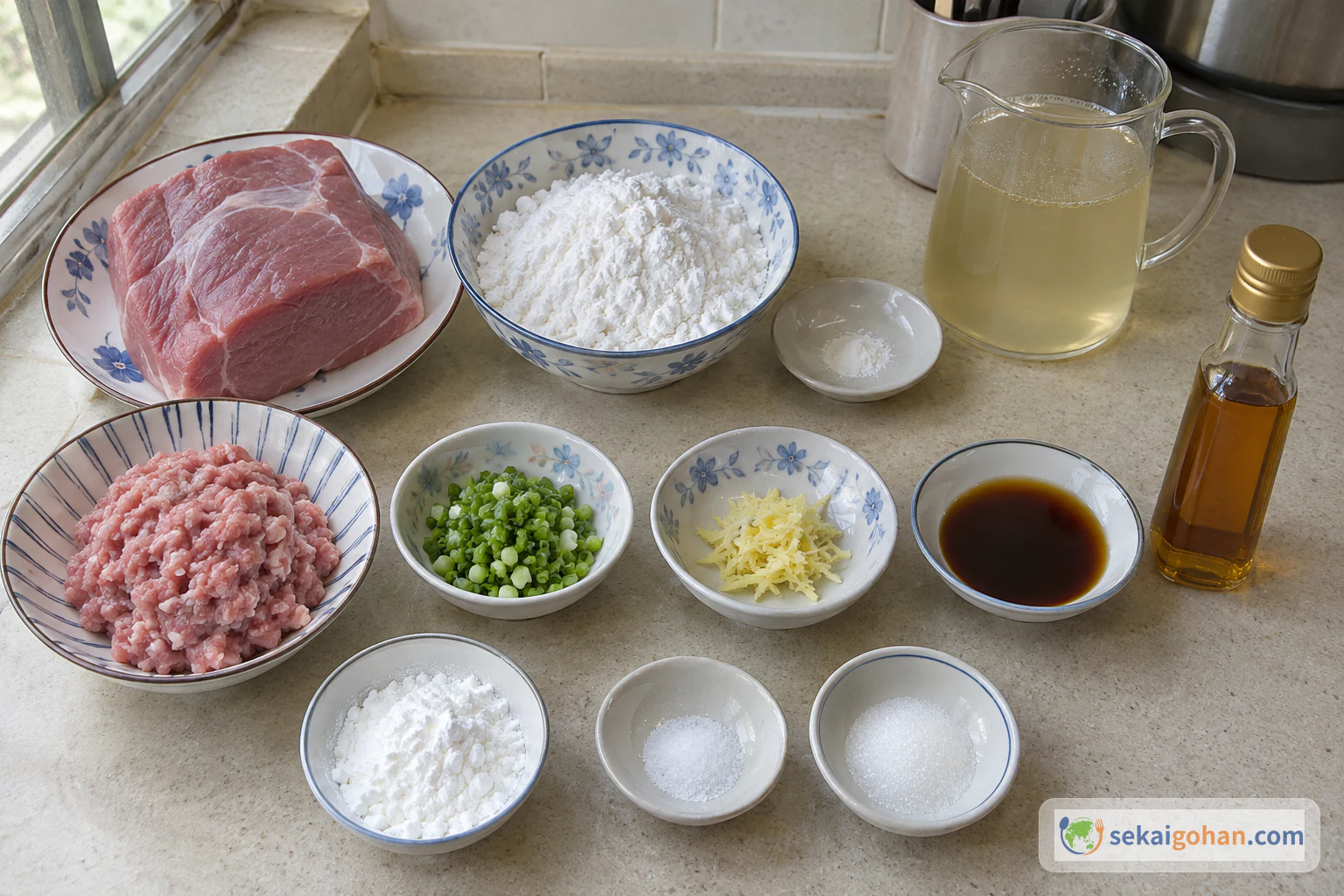
No water goes into the wrapper. The pork and starch alone make the sheet, and the dusting starch is extra to the 1.1 lb (500 g) that gets pounded in. The wrapper batch makes more squares than one batch of filling needs, so plan to freeze the rest or cut them into yansi.
Trim the leg first, then weigh it. The wrapper depends on equal weights of lean pork and starch, and membrane or fat left on throws that balance off and keeps the paste from turning smooth.
Light soy sauce contains soy and often wheat. The broth contains fish (fish sauce), and the filling contains sesame. The serving additions below bring egg (duck egg) and fish (fish balls). Use only food-grade edible alkali, wear gloves when you handle it, and keep the kitchen ventilated.
Equipment
- Wooden meat mallet
- Thick wooden cutting board
- Rolling pin
- Sharp knife
- Mixing bowl and chopsticks
- Steamer
- Saucepan for the broth
- Instant-read thermometer
- Plastic wrap
Choosing and substituting
Sweet potato starch is the one ingredient you cannot swap. Look for bags labelled 红薯淀粉, 地瓜粉 or sweet potato starch at Chinese grocers or online. Potato starch and cornstarch gel at different temperatures and give a different translucency and spring, so the wrapper comes out other than yanpi. Peeled sweet potato starch makes a whiter sheet.
The pork must be a whole block of lean leg. Pounding a block leaves long fibres that give the wrapper its grain, and that grain is what separates handmade yanpi from the thick machine version. Ground pork and a food processor both cut those fibres short, so the sheet will not stretch the same way.
| You want | You can use | What changes |
|---|---|---|
| Fuzhou shrimp oil (虾油), the traditional seasoning | Fish sauce, as in the broth here | Savoury and salty, but a different flavour from shrimp oil |
| Chinese light soy sauce (生抽) | 1½ tsp regular soy sauce plus a little water | Close in salt; Japanese usukuchi is a different product |
| Chicken bouillon granules | Any chicken bouillon powder | Little difference |
| Fresh wrappers | Dried yanpi (干燕皮) from Chinese supermarkets or online | Skips the pounding entirely; wrappers need a brief dip in water before wrapping |
Dried yanpi is the honest shortcut. Store it away from heat and humidity and soften it only when you are ready to wrap.
Method
The wrapper is the hard, physical part, and it comes first: pound the pork, work in the starch, cut the squares and keep them covered. The filling takes a few minutes to mix and then rests in the fridge, which is your window to set up the steamer and warm the stock. From there the dumplings move from steamer to broth to bowl in quick succession.
Pounding warms the meat, and warm paste turns slack instead of sticky. Work with the pork straight from the fridge, and if your arms slow down, put it back in the fridge for a while before carrying on.
Too little starch and the sheet tears as you stretch it. Too much and it turns to paste in the broth and clouds the soup. Dust thinly and often, on both sides, so the full amount goes in evenly over the whole pounding time.
Pork must never be eaten raw or pink, however fresh it is; raw pork can carry hepatitis E virus, Salmonella and Campylobacter. Cook every rouyan until the centre reaches 146°F (63°C) for at least 30 minutes, or 167°F (75°C) for at least 1 minute. Without a thermometer, cut one open: the filling must show no pink and the juices must run clear. For children, older people and anyone pregnant, steam longer to make certain, even if the wrapper turns softer.
When it goes wrong
| What you see | Why | What to do |
|---|---|---|
| The sheet tears while you stretch it | Too little starch, or the pork was not pounded long enough for the fibres to bind | Dust more starch and keep pounding. Turn torn pieces into yansi |
| Wrappers turn to paste in the broth and the soup clouds | Too much starch in the sheet | Use less starch next time. For this batch, keep the broth time short |
| Wrappers are thick and mealy | The sheet was not stretched enough, or the squares are too large | Cut the squares smaller than 3 inches and roll each one thinner with a rolling pin |
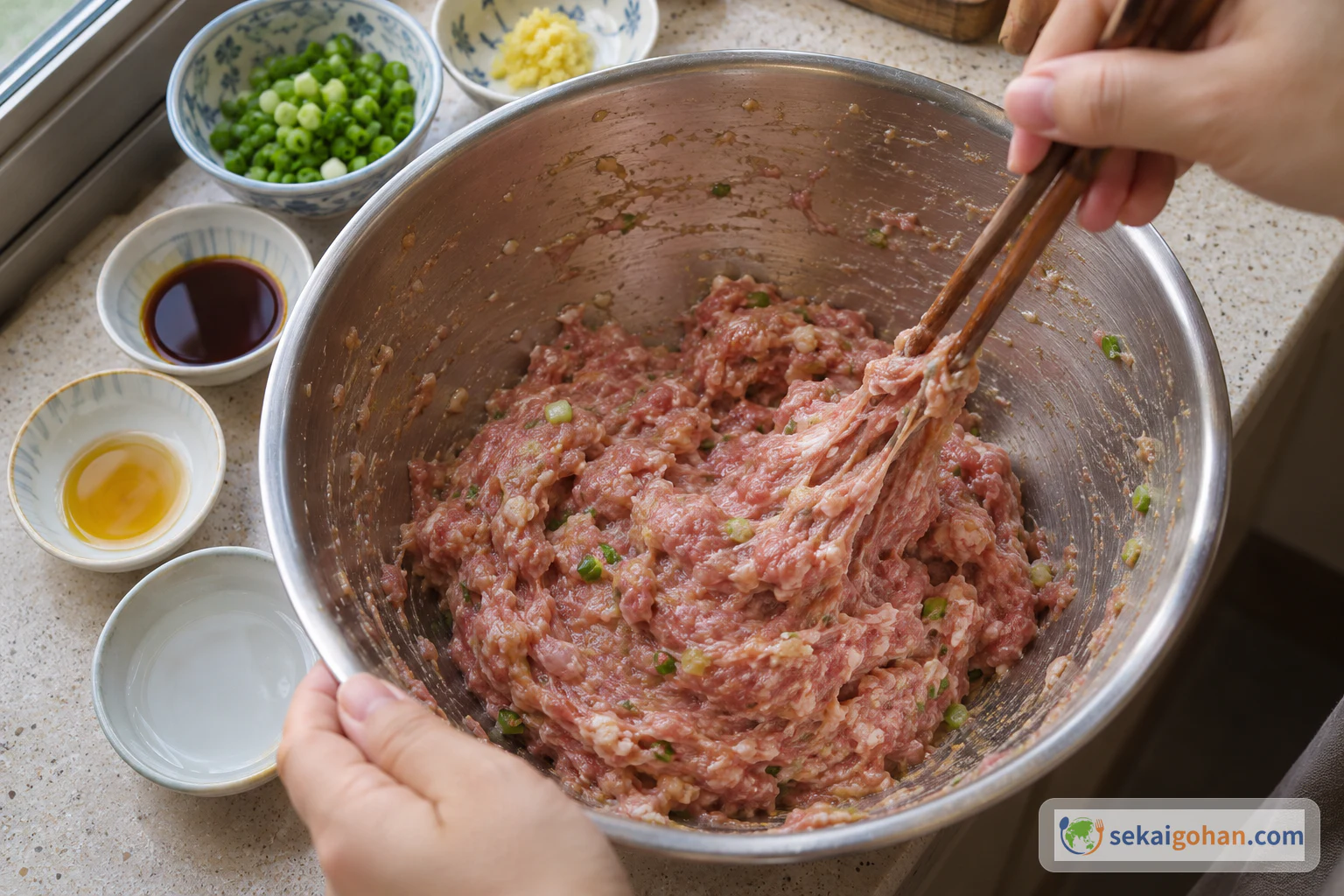
| The filling is dry and crumbly | It was not stirred long enough to turn sticky | Stir in one direction until it clings to the chopsticks; add a little water |
| The rouyan smell raw or porky | Undercooked, or the meat got warm while you worked | Cook through to the centre, and keep the pork cold through the pounding |
| Wrappers slump and fall apart after steaming | Steamed too long | Stop at 8 minutes and move them into the broth |
Serving, variations and storage
At the table
Rouyan is a bowl to eat hot, as a snack or as one dish among many at a banquet table. In Fuzhou it often shares the bowl with fish balls. For a celebration, Taiping yan with a halved duck egg brings the dish's wish for peace to the table. Chicken or quail eggs work in its place and add the same richness, though the duck-egg pun is gone.
Variations
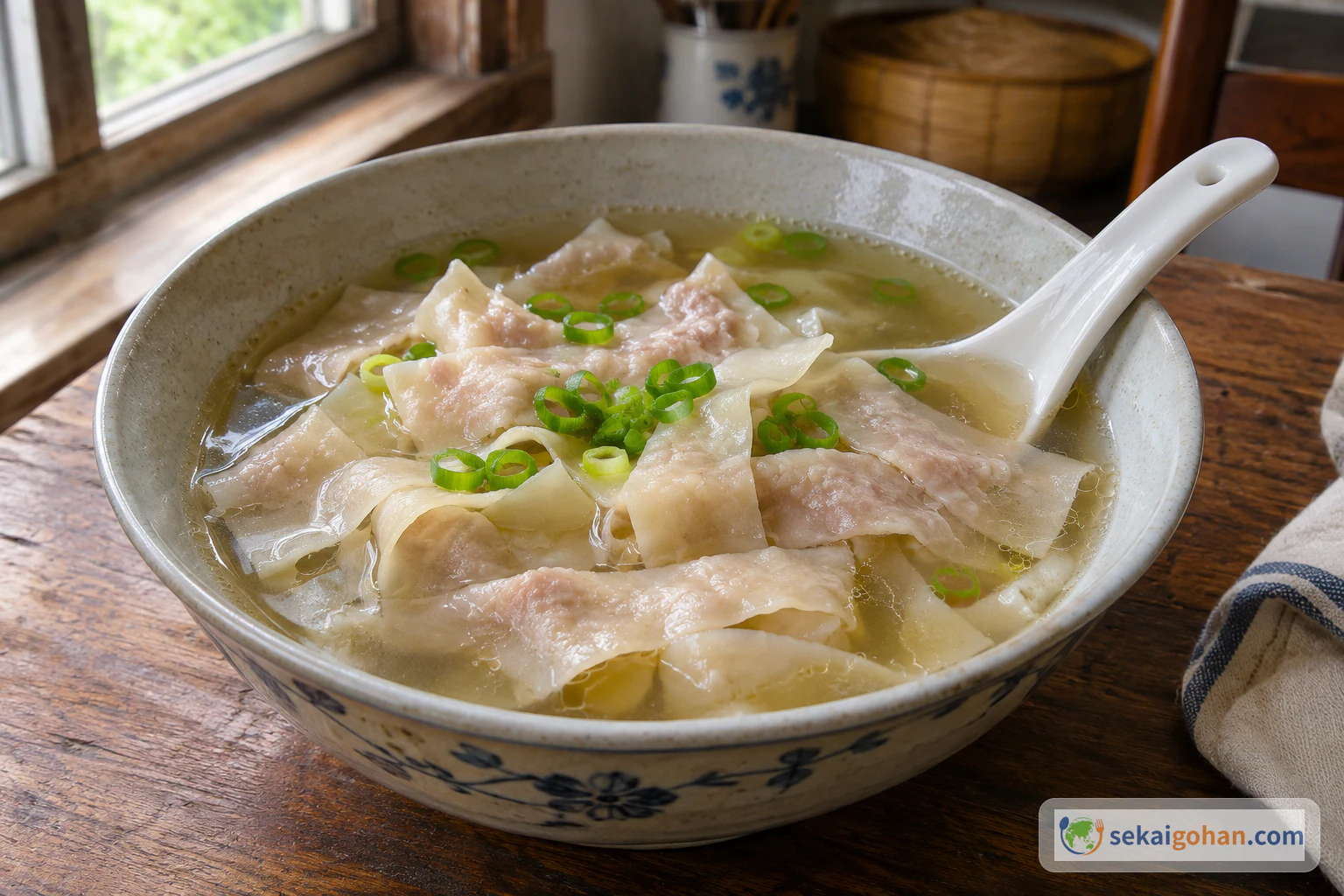
- Yansi. Cut wrappers into strips ¾ to 1¼ inches (2–3 cm) wide and simmer them in the seasoned broth for 2 minutes. With no filling, you taste the wrapper's spring and pork flavour on its own, and it uses every torn sheet.
- Water chestnut filling. Add 1 oz (30 g) of coarsely chopped canned water chestnut to the filling. The crunch moves it closer to the filling of Fuzhou's old shops. Water chestnut releases water, so keep the filling slightly firmer by holding back some of the water.
- With fish balls. Heat store-bought Fuzhou fish balls and add them to the bowls, the way rouyan is eaten in Fuzhou and in Fuzhou communities in Southeast Asia.
- Pan-fried. Steam the rouyan, then fry both sides in a little oil and serve them as a starter. The wrapper turns crisp at the edges. This is a home idea, not a Fuzhou standard.
Storage and hygiene
Use fresh wrappers the same day. Freeze leftover wrappers and wrapped rouyan raw, and cook them straight from frozen without thawing, checking that the centre is cooked through. Keep dried wrappers away from heat and humidity, and soften them only just before wrapping. Make the broth on the day you eat it rather than ahead. Wash the board, mallet, knife and cloths after the raw pork, and keep them apart from raw vegetables and cooked food.
Frequently asked questions
Do I need the edible alkali?
You can leave it out. The wrapper still forms, but it comes out less white and a little less springy. If you use it, buy food-grade alkali and keep to the small amount in the table.
How big should the squares be?
Anywhere from 2 to 3 inches (5–8 cm) works, and Fuzhou workshops cut them as large as about 4 inches (10 cm). Larger squares are easier to wrap but tend to come out thicker. 3 inches (8 cm) balances easy wrapping with a thin skin.
My pork is very fresh. Does it still need full cooking?
Yes. Freshness does not make pork safe to eat raw or pink. Every rouyan needs to be cooked through to the centre, with no pink in the filling.
Can I use the trimmings from the leg in the filling?
Yes. Chop the lean ends of the leg coarsely with a knife and use them in place of some of the ground pork. The filling turns chunkier and less smooth than one made with ground pork.