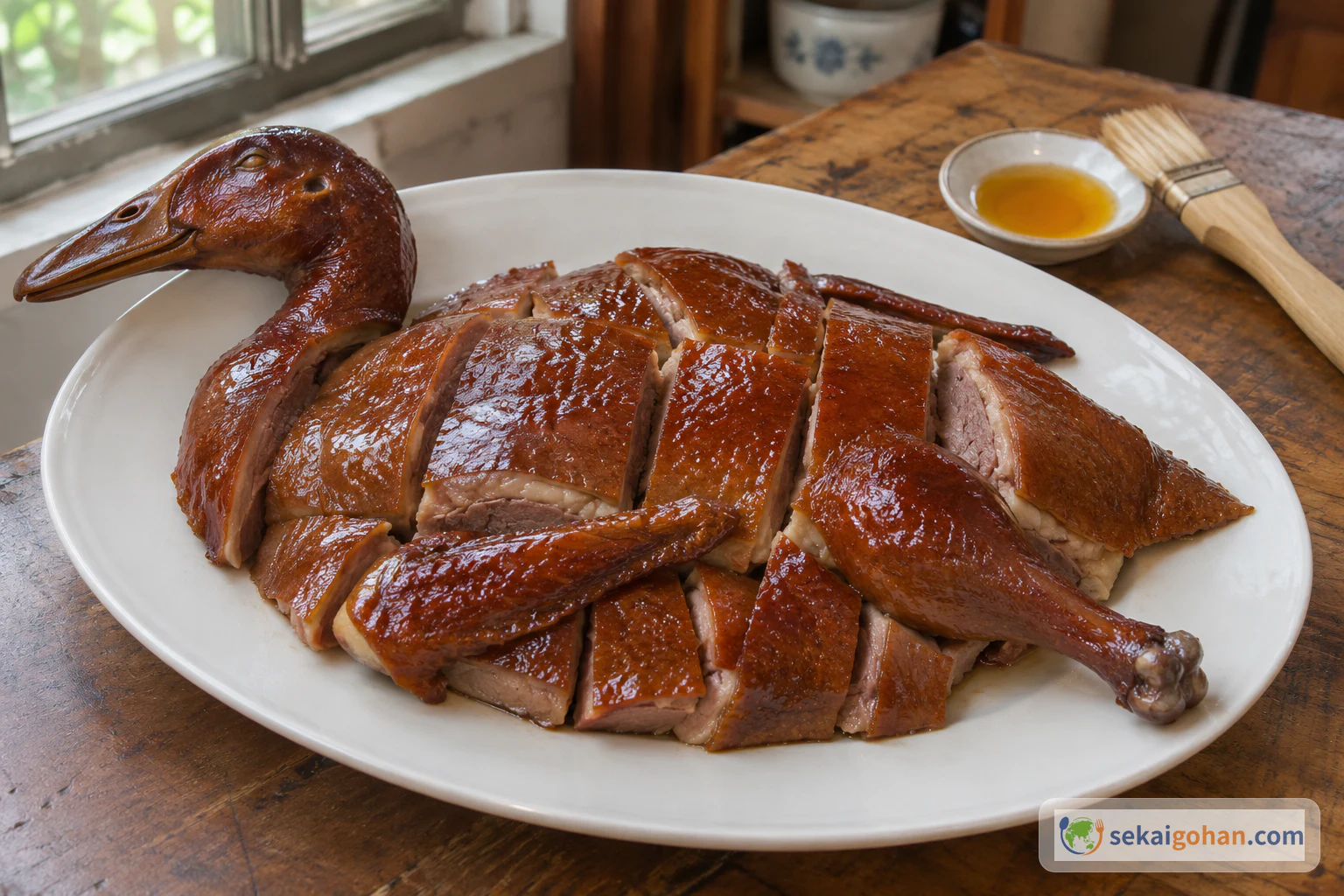
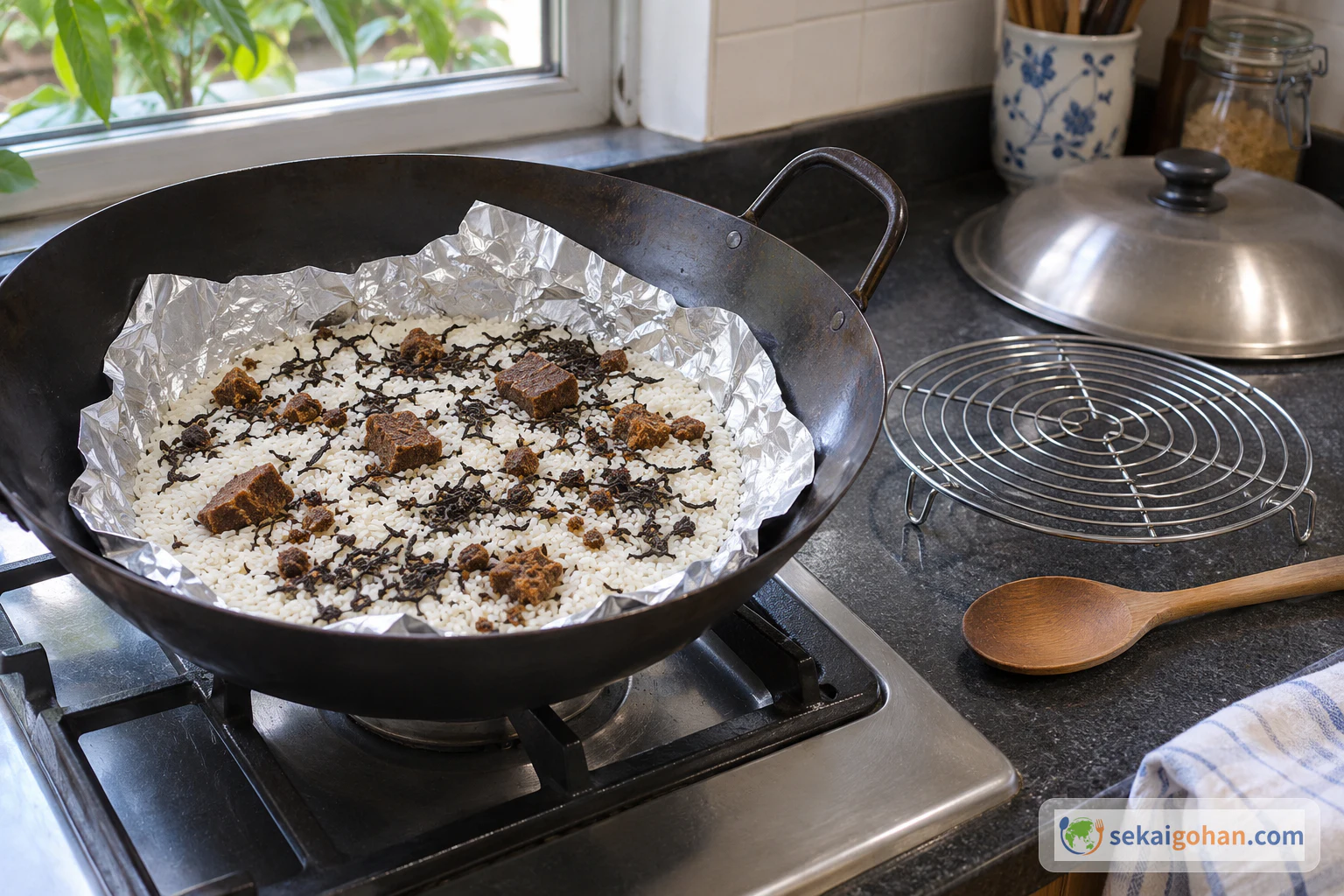
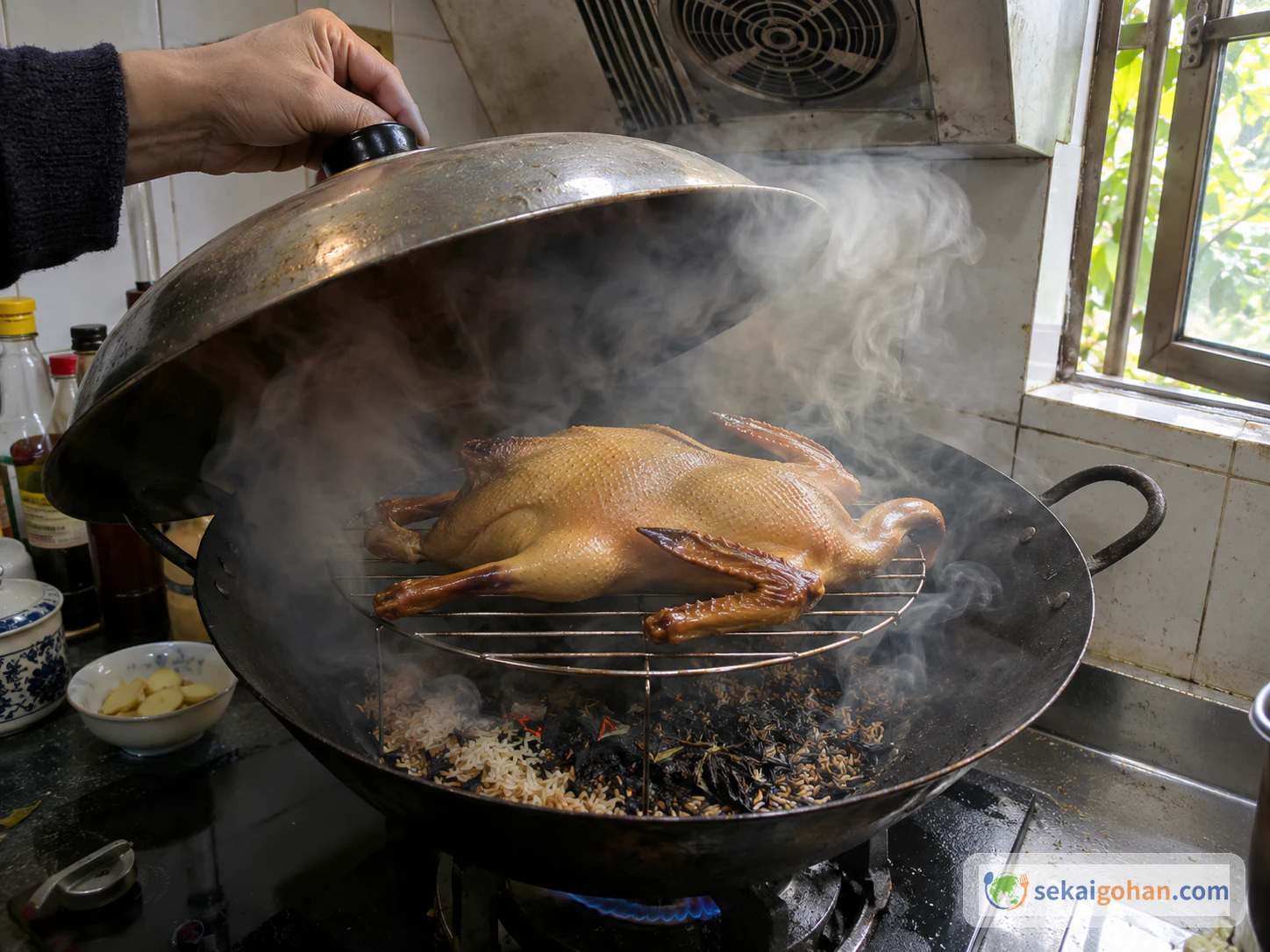
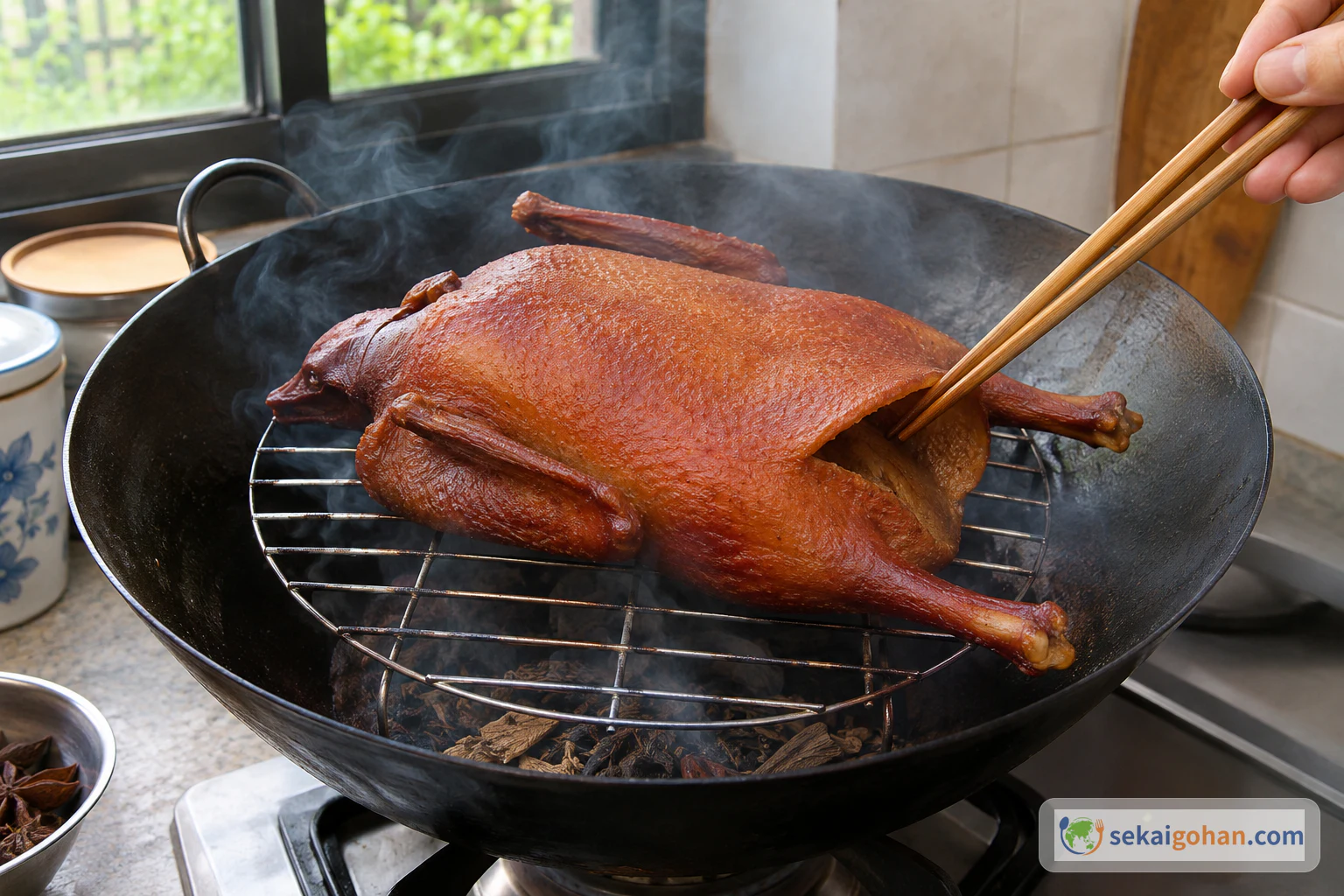
Rice, brown sugar and loose tea lie on a sheet of foil in the bottom of the wok, and for a while nothing happens. Then a thin, sweet smoke lifts off the sugar and the kitchen fills with the smell of toasting tea. That is the moment the steamed duck goes onto the rack and the lid comes down. Zhangcha duck is the smoked duck of Chengdu in Sichuan, named for the camphor leaves and tea that feed its smoke. Made the traditional Sichuan way, steamed first and smoked after, it comes to the table moist rather than crisp. The reddish-brown skin shines with sesame oil, the duck fat is rich and sweet, the seasoning is light and smells of rice wine, and tea smoke runs through every bite.
Camphor, Tea and Duck: A Chengdu Banquet Dish
The name lists the method. The tea is fuel for the smoke, never brewed and never a braising liquid; together with camphor leaves it is what turns a pale bird reddish brown and perfumes it. Zhangcha duck is counted among the classic dishes of Sichuan, a kind of smoked duck that belongs on the banquet table rather than in everyday home cooking. In Chengdu, cooks pick plump young drakes that come to market in autumn. The shop-made bird is golden red, crisp outside and tender inside, and it smells of camphor wood and tea. It is one of the dishes that show how wide the cooking of China runs, from roasting and braising to this slow work with smoke.
In Chinese the dish is 樟茶鸭, zhāngchá yā. 樟 (zhang) is the camphor tree, 茶 (cha) is tea and 鸭 (ya) is duck. In Chengdu it is also called "four-process zhangcha duck" (四制樟茶鸭), after the four stages a shop bird passes through.
The shop at the end of the rat-hole alley
From 1928, Zhang Guoliang sold roast duck and other dishes at the corner of Tidu East Street and Shuwa Street in Chengdu. The lane leading to his stall was deep, with a narrow entrance, so people said it looked like a rat's hole, and the business became known as Haozidong Zhang Yazi, "Rat-Hole Zhang's Duck". The name stuck. The shop was named a famous Chengdu snack in 1992 and received the title of China Time-Honored Brand in 1995 and again in 2006. In 2010 its Haozidong curing and braising craft was listed as a Chengdu municipal intangible cultural heritage item, best known for zhangcha duck. There, the cleaned and cured bird goes into a smoking oven over straw, tea leaves and camphor leaves, then is cooked through in a house braising brine, coated all over with maltose and fried until golden.
Where and when the dish itself began is not settled. Stories that name a single inventor or a founding year circulate widely, but the shop's own history starts in 1928 and is the history of one shop, not of the dish.
One name, several methods
Three families of method share the name. The Chengdu shop smokes, braises and fries. The traditional Sichuan style marinates, steams, then smokes, and finishes with sesame oil, with no frying at all; this is the one cooked below, and it is the reason the skin ends up supple and glossy instead of crackling. In Fujian the order flips: the duck is cured with spices including Sichuan pepper, soaked for hours in a spiced braising brine, smoked over camphor wood shavings, black tea and orange peel, steamed for a long time and deep-fried.
Peking duck is a different dish altogether. Salted pressed duck and brine-cured duck rely on salt and drying, and soy-braised duck is simmered; zhangcha duck stands apart from all of them because its color and scent come from smoke. Cantonese char siu is a roast, while here the heat is gentle and the color comes from burning sugar and tea. If you have made beggar's chicken, you already know the rhythm of putting a whole bird through one long, patient process.
Ingredients
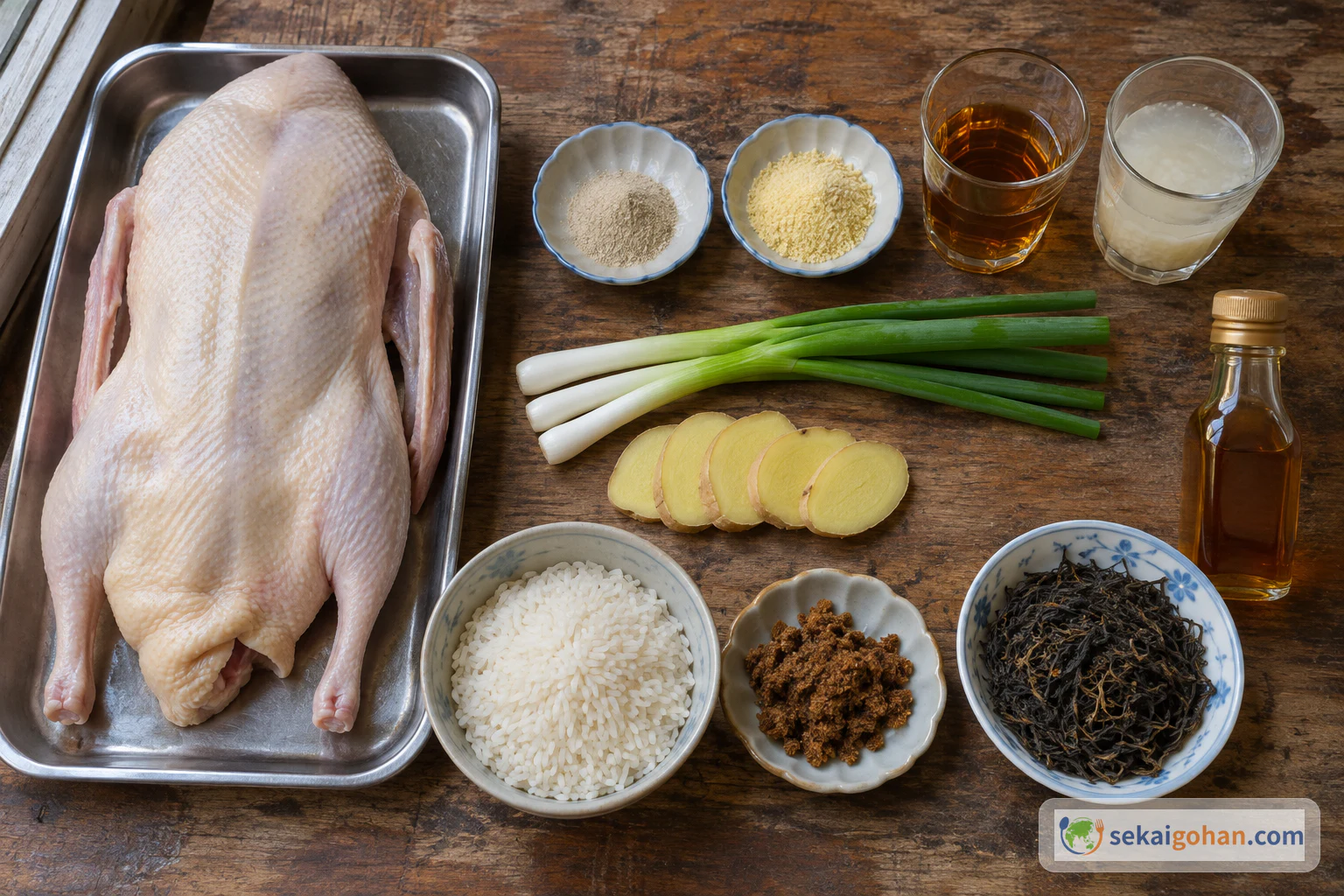
This dish contains duck and sesame (sesame oil). Chicken bouillon powder often contains chicken, wheat and soy, and Shaoxing wine contains ingredients made from wheat. Read the label of each product you buy. Anyone who reacts to smoke, including people with asthma, should stay away from the stove while the duck smokes.
Equipment
- Large wok or heavy, wide pot for smoking
- Round wire rack that sits inside the wok above the smoking mix
- Lid that covers the wok with the duck inside
- Aluminum foil
- Large steamer that holds a whole duck (a bamboo steamer over a wok works)
- Deep container that fits inside the steamer
- Food thermometer with a probe
- Pastry brush
- Cleaver or heavy knife for chopping through bone
Buying the Duck, the Wine and the Smoke
A frozen, cleaned whole duck of about 3.3 lb (1.5 kg) is the easiest bird to find outside Sichuan; aigamo or other farmed ducks work. Breeds differ in fat and weight, so stay close to that size. Thaw the duck in the refrigerator starting the day before.
The fermented rice wine liquid is the drained liquid from jiuniang, the sweet fermented glutinous rice sold in Chinese grocery shops. If you cannot find it, use the same weight of Shaoxing wine; the sweetness and fragrance will change. Chicken bouillon powder brands vary a lot in salt, and nothing else in the marinade salts the duck, so the seasoning stays light. Leave the salt out of the marinade and put salt or a dipping sauce on the table for anyone who wants more.
For the smoke, use loose-leaf black tea or jasmine tea, not tea bags. Use dark brown sugar; it burns into a sweet smoke that colors the duck.
Camphor leaves are not sold as food, so this duck is smoked with rice, sugar and tea alone. Never use camphor blocks, camphor oil or any mothball-type camphor product in their place. Camphor is not food. Keep the tea at its listed weight; the aroma is lighter than a Chengdu shop bird, with tea and brown sugar in front.
| Keep for the taste of the dish | Fine to let go away from Sichuan |
|---|---|
| Tea and brown sugar smoke, slow and on low heat | Camphor leaves |
| Light, wine-scented seasoning inside and out | The exact Sichuan duck breed |
| Sesame oil gloss on the finished skin | The fermented rice wine, if Shaoxing wine is all you have |
Method: Marinate, Steam, Then Smoke
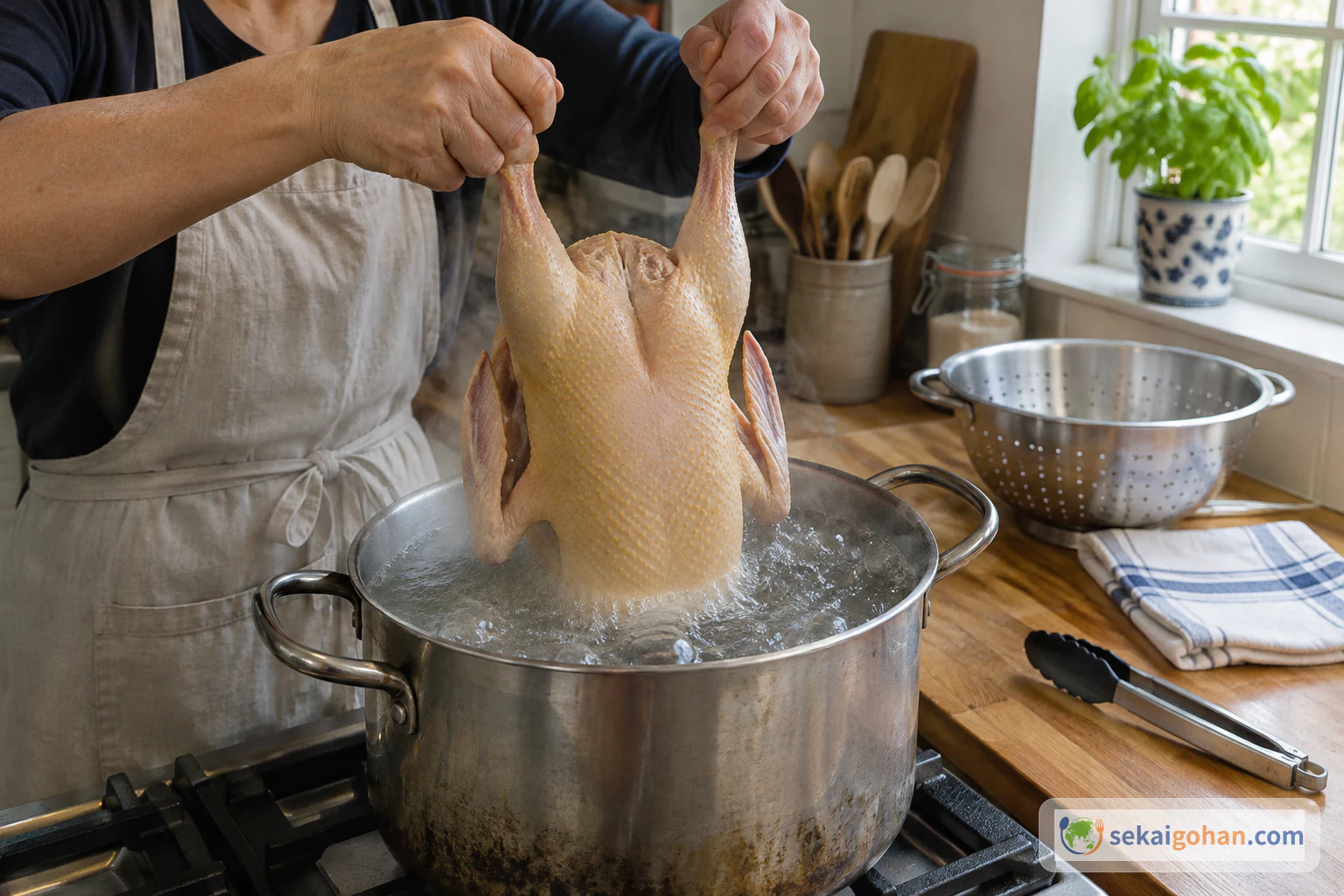
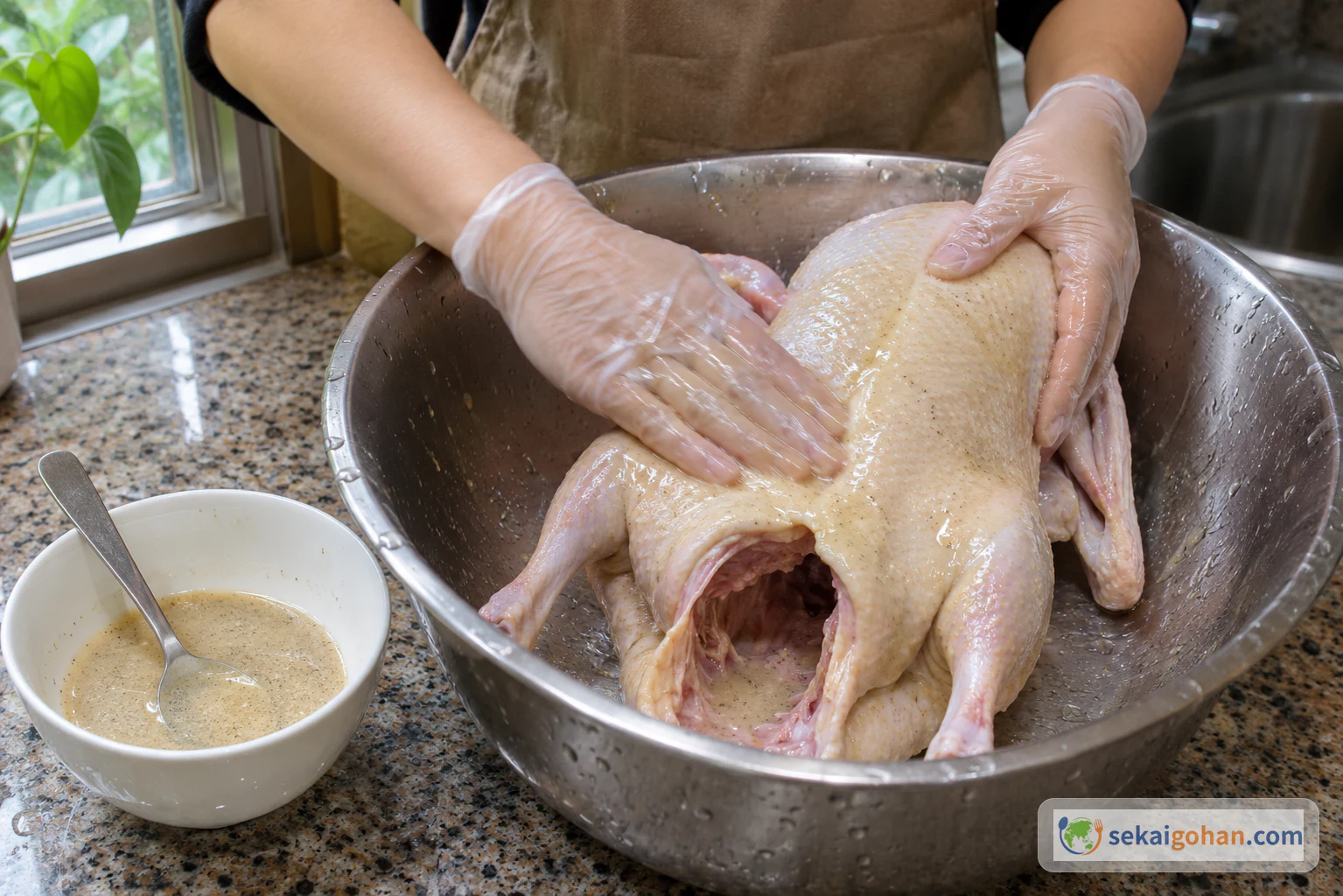
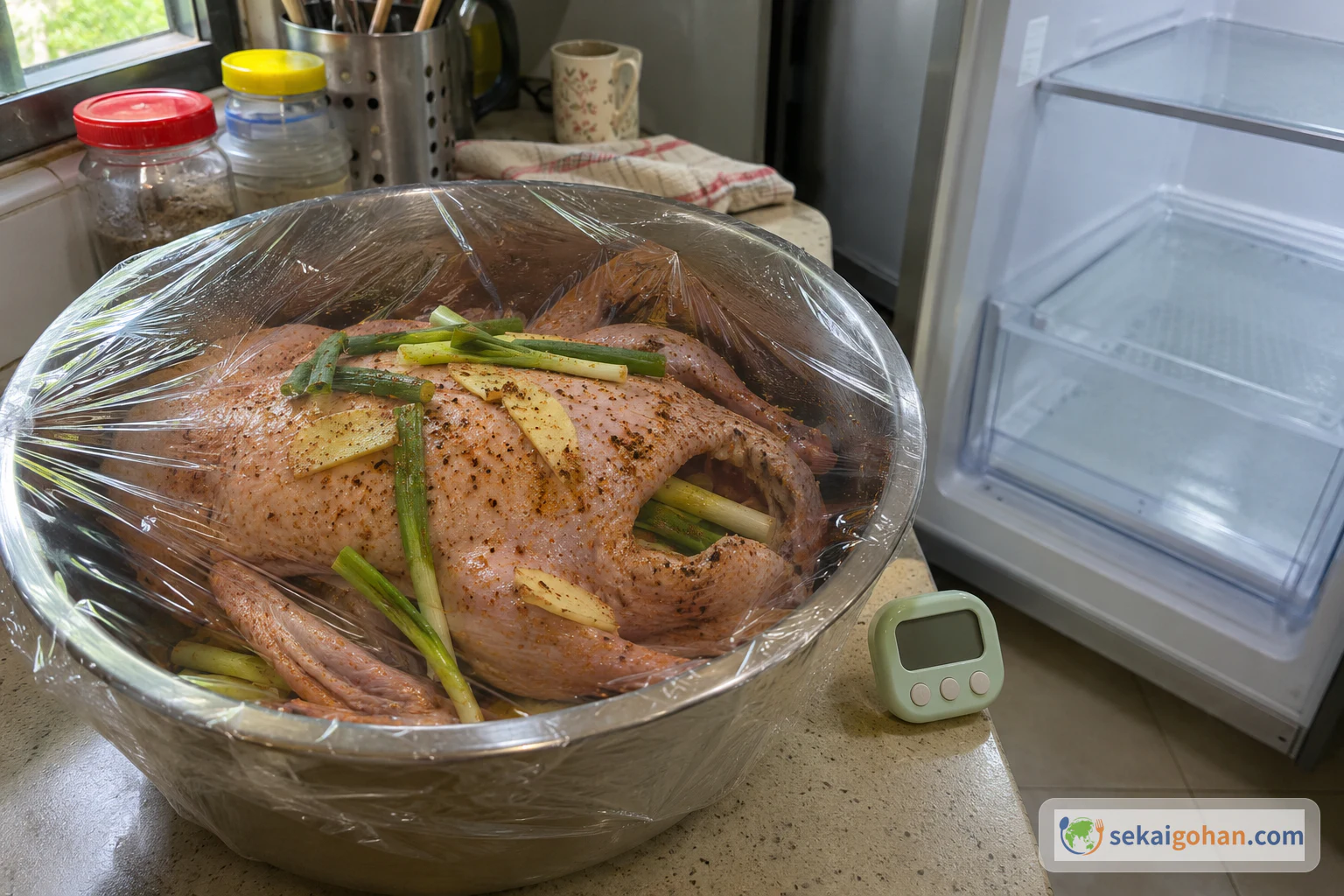
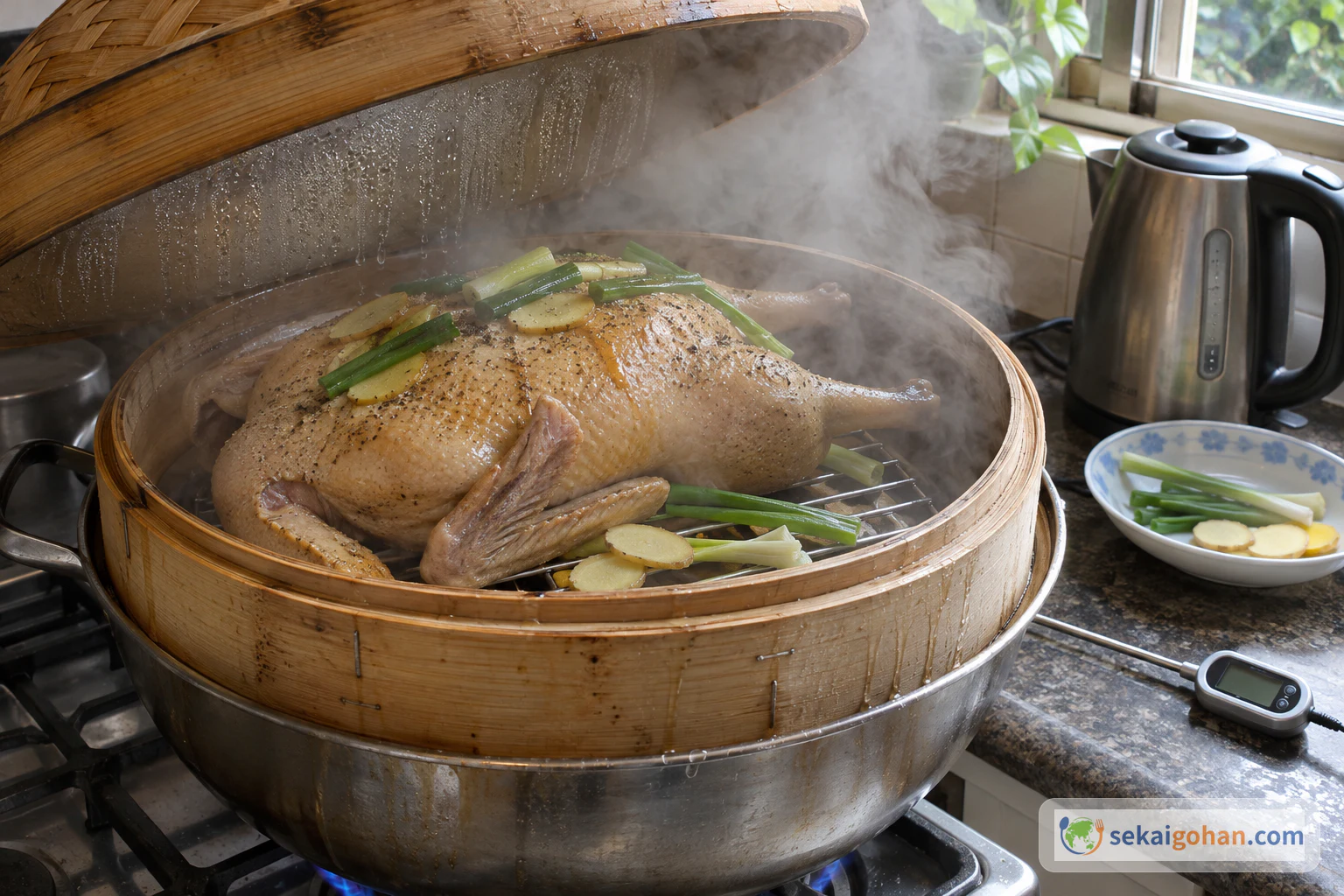
Thaw the duck the day before. On cooking day, the blanching and marinating take little hands-on time, and the 3-hour marinade sits in the refrigerator. The 1½ hours of steaming is quiet work apart from topping up the water. The hour of smoking needs you at the stove, with the fan running and a window open, so clear the area around the wok before you light it.
Smoke under the extractor fan with a window open, or outdoors if you have a safe place for a burner. Never leave the wok smoking while you sleep or leave the house. Keep the heat low so no flame rises from the gap under the lid, and keep anything that burns away from the wok. If the smoke turns black and stinging, turn off the heat.
Wait until the smoking mix is giving off steady smoke before the rack and duck go in; the duck never goes onto a cold wok.
Once the duck is on the rack, the burner stays on low for the full hour. High heat chars the sugar and rice, and charred smoke tastes bitter on the skin; low heat gives the slow, sweet tea smoke the dish is named for.
When It Goes Wrong
| What you see | Why | What to do |
|---|---|---|
| No smoke rises from the wok | The heat is too low, or the wok is still cold | Heat the mix on medium until smoke rises before the duck goes in, and close up gaps around the lid |
| The duck tastes bitter or burnt | The rice, sugar and tea scorched | Keep the heat low; if the mix turns black, stop, let it cool and start again with fresh rice, sugar and tea |
| The center is under 167°F (75°C) after steaming | The home steamer runs gentler than its time suggests | Keep steaming and recheck until it reaches 167°F (75°C) |
| The skin tears | The blanch ran long, or the duck was pulled off the rack by its skin | Blanch briefly, and lift the bird from below with the rack or a clean cloth |
| The meat tastes flat | The marinade is lightly salted | Season at the table with salt or a dipping sauce |
Serving, Variations and Leftovers
On the table
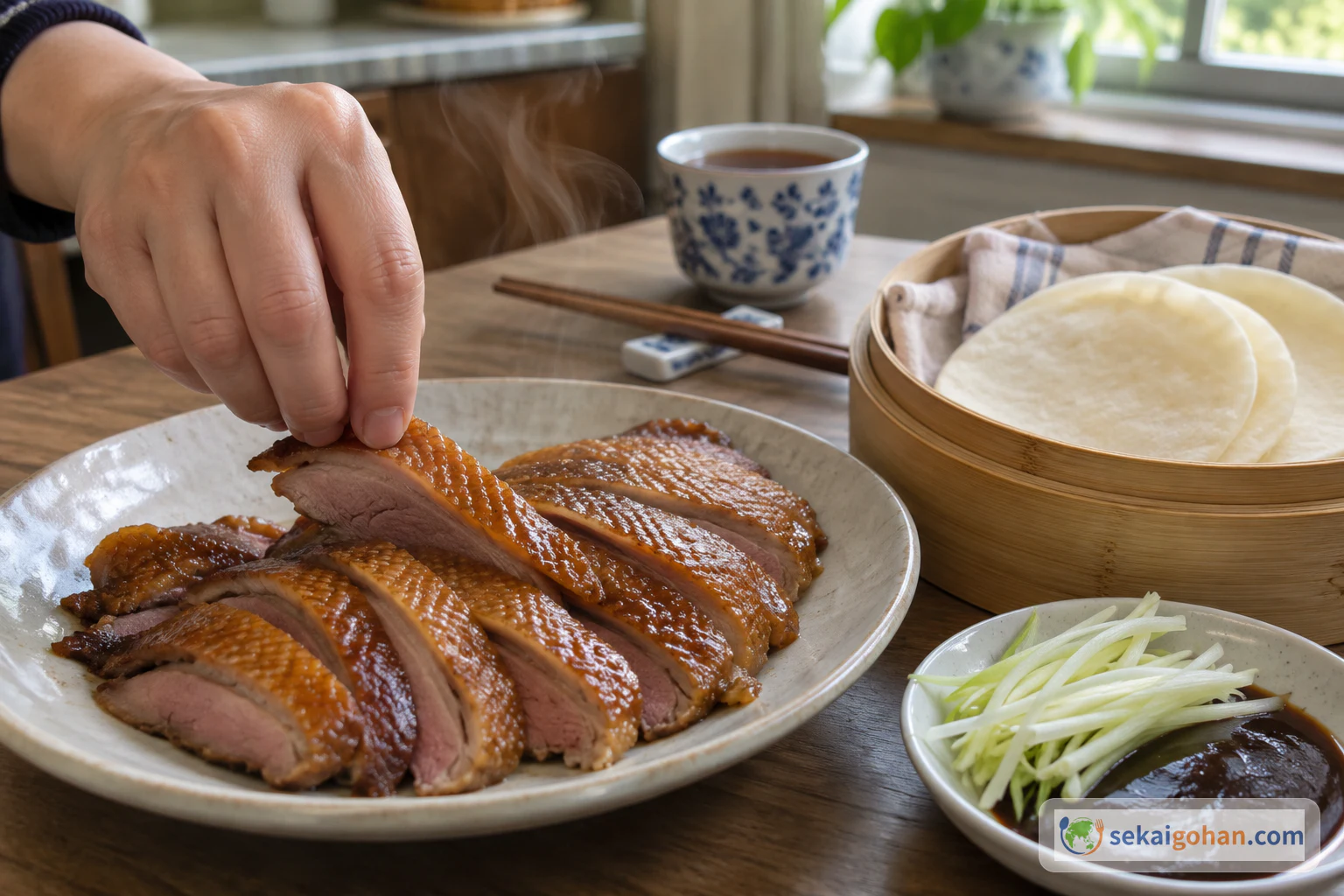
Zhangcha duck is food for a gathering. A whole bird makes a centerpiece plate to share, chopped and set skin side up so everyone can see the color. Thin steamed buns and a small dish of shredded scallion with a savory sauce make an easy way to eat it: tuck a piece of duck and some scallion into a bun. A pot of tea on the side picks up the smoke.
Variations
- Jasmine tea smoke: swap the black tea for the same weight of jasmine tea and the smoke turns more floral.
- More smoke: if the smoke tastes thin to you, add a little more tea next time, a small amount at a time, and keep the heat low.
- Cold, the next day: smoked duck settles overnight, and cold slices make a good starter.
- Leftover meat: shred the last of the duck into fried rice, noodles or a salad, where the smoky fat seasons everything around it.
Leftovers
Cool the leftover duck, then refrigerate it quickly in a covered container. Eat it cold, or reheat it until the center reaches 167°F (75°C). Keep raw duck out of room temperature throughout; marinating always happens in the refrigerator.
Frequently asked questions
Is zhangcha duck the same as Peking duck?
No, they are two different dishes. Zhangcha duck is a smoked duck from Sichuan, colored and scented by smoke from tea and, in Sichuan, camphor leaves. Its steaming and smoking make it a different bird on the plate.
Do I need to brew the tea first?
No. The leaves go into the wok dry, straight from the pack, mixed with the rice and sugar. They only burn to make smoke and are thrown away with the foil afterward.
Why is there no Sichuan pepper?
The traditional Sichuan style seasons the duck with white pepper, wine and bouillon powder only. Sichuan pepper belongs to the Fujian method, which cures the bird in a spiced salt brine. Leaving it out keeps the tea smoke in front.
Why does the duck go into the smoke already cooked?
In this method the steaming does the cooking and the smoking gives the color and scent. That lets the smoke stay low and gentle for the full hour without having to cook the bird through. The Fujian method puts the smoke first and steams afterward.