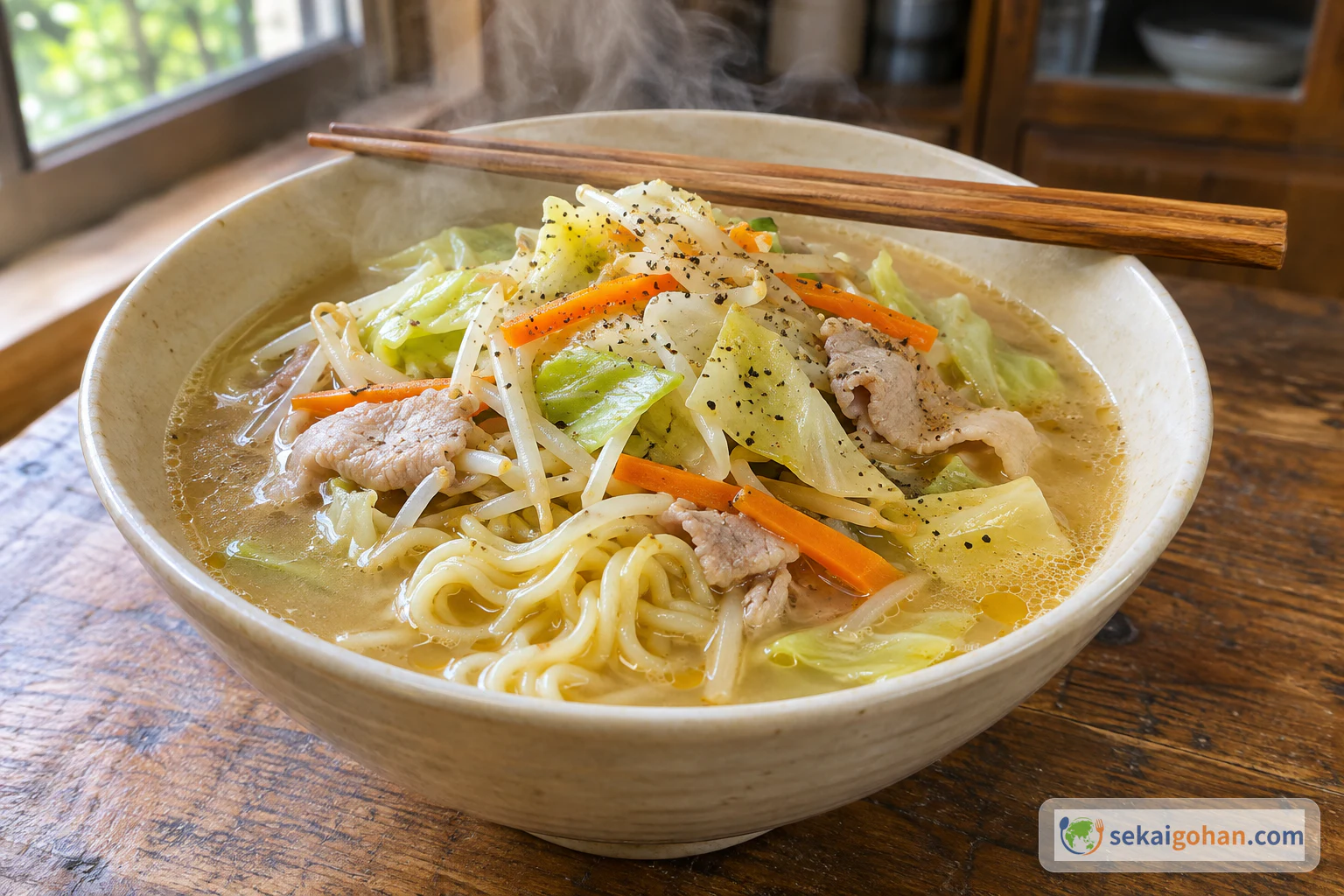
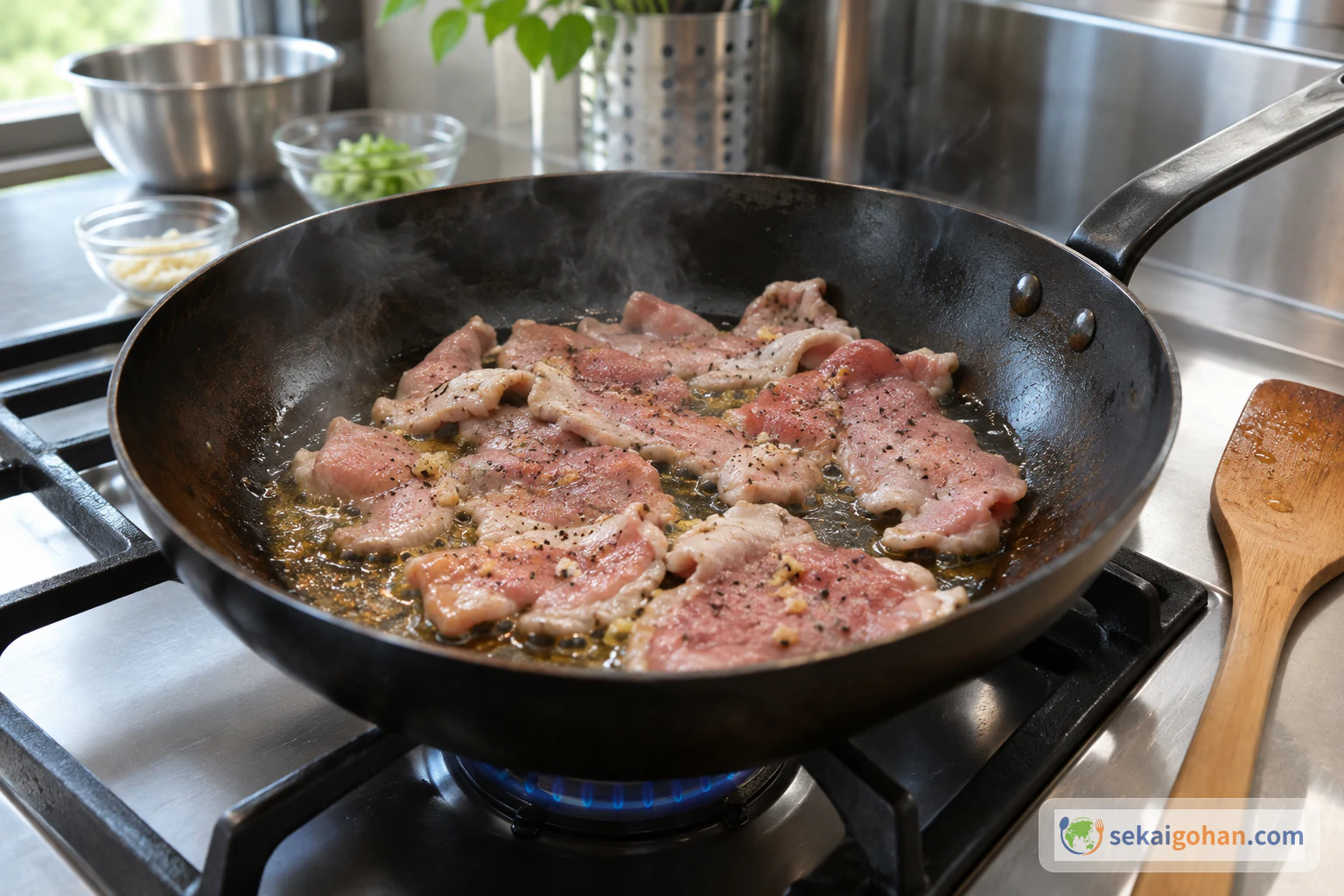
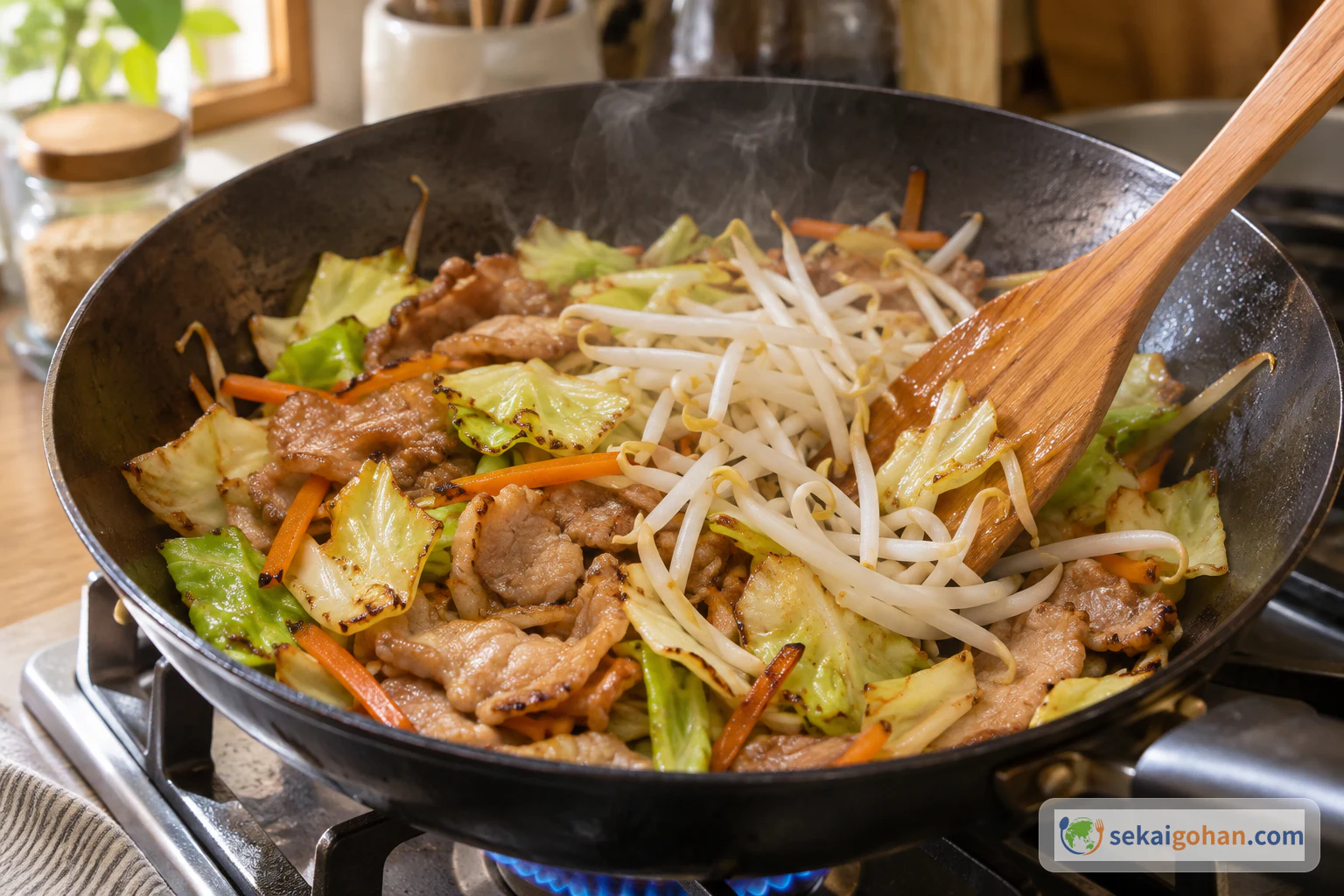
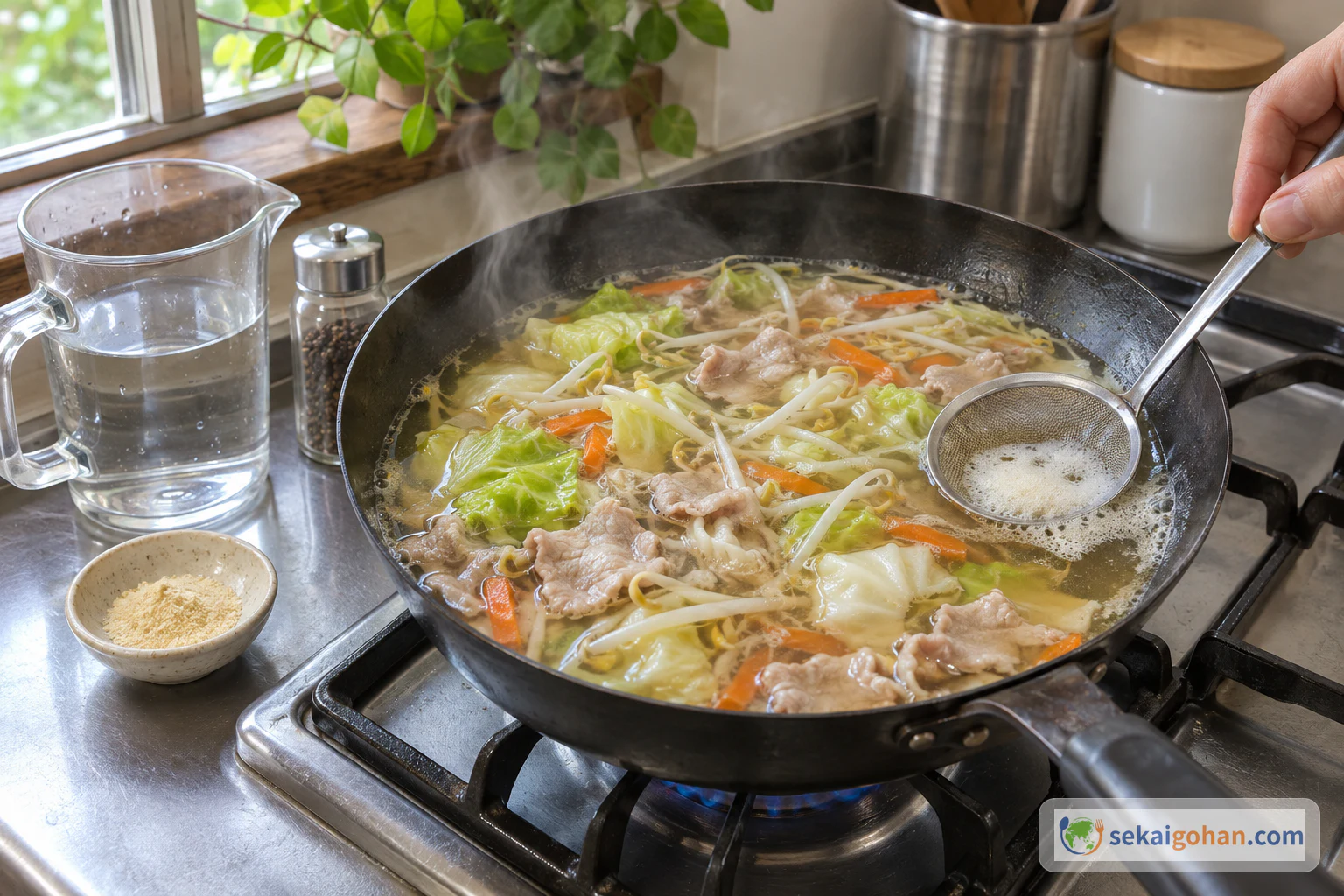
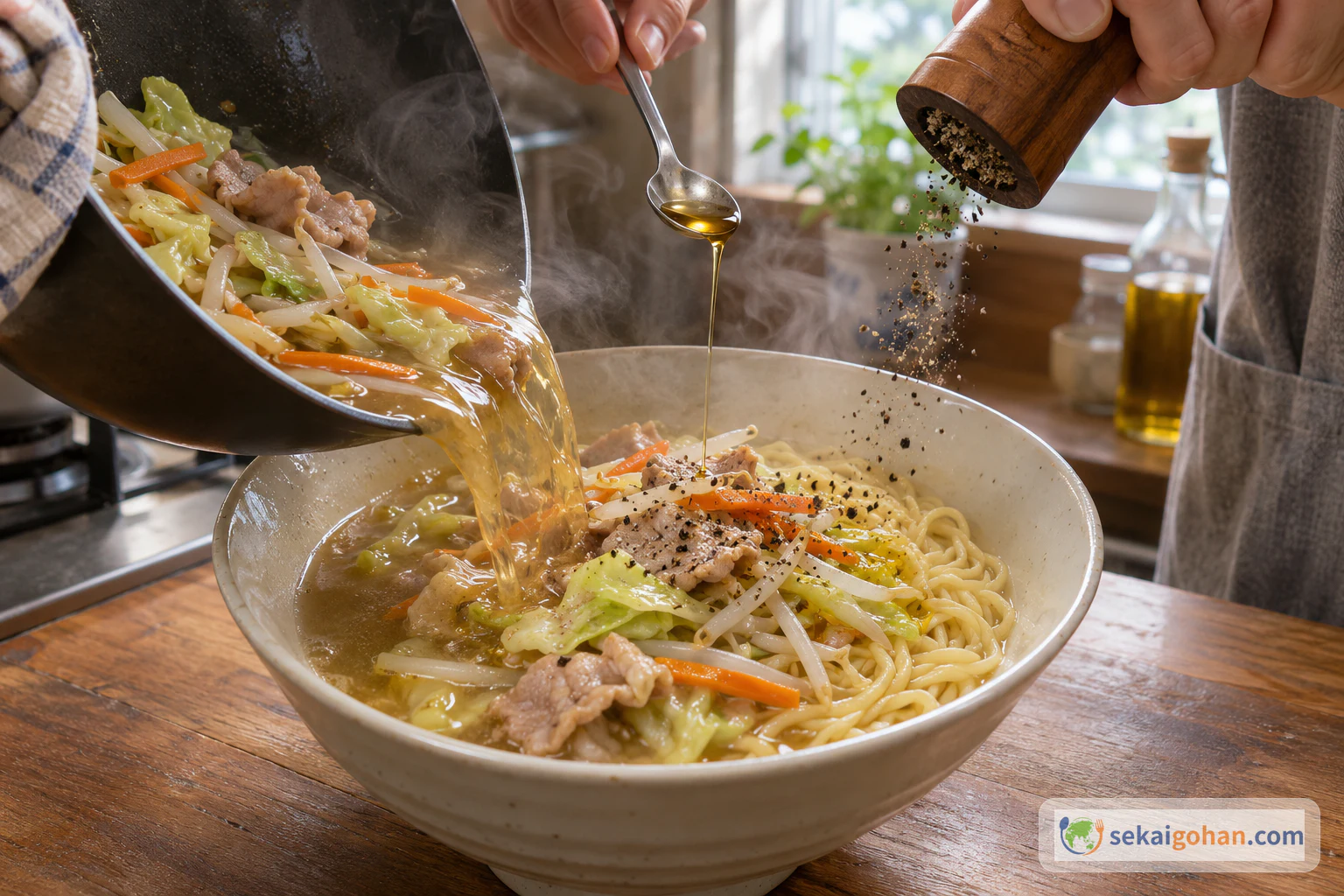
The pork hits the hot sesame oil and the kitchen smells toasted almost at once. Then comes a heap of cabbage and carrot, then a quick toss of bean sprouts, and finally the water and chicken stock pour in and the whole pan goes quiet and starts to bubble. In those few minutes of simmering, the vegetables give their sweetness to the broth, and that is what you pour over a bowl of springy noodles. Tanmen is a salt-seasoned noodle soup from the Kanto region around Tokyo and Yokohama, a fixture of the neighbourhood Chinese diners Japanese people call machi-chūka. It tastes clean and savoury, sweet from the cabbage, nutty from a last spoon of sesame oil, and sharp from coarse black pepper.
From a Yokohama Hillside to Every Kanto Diner
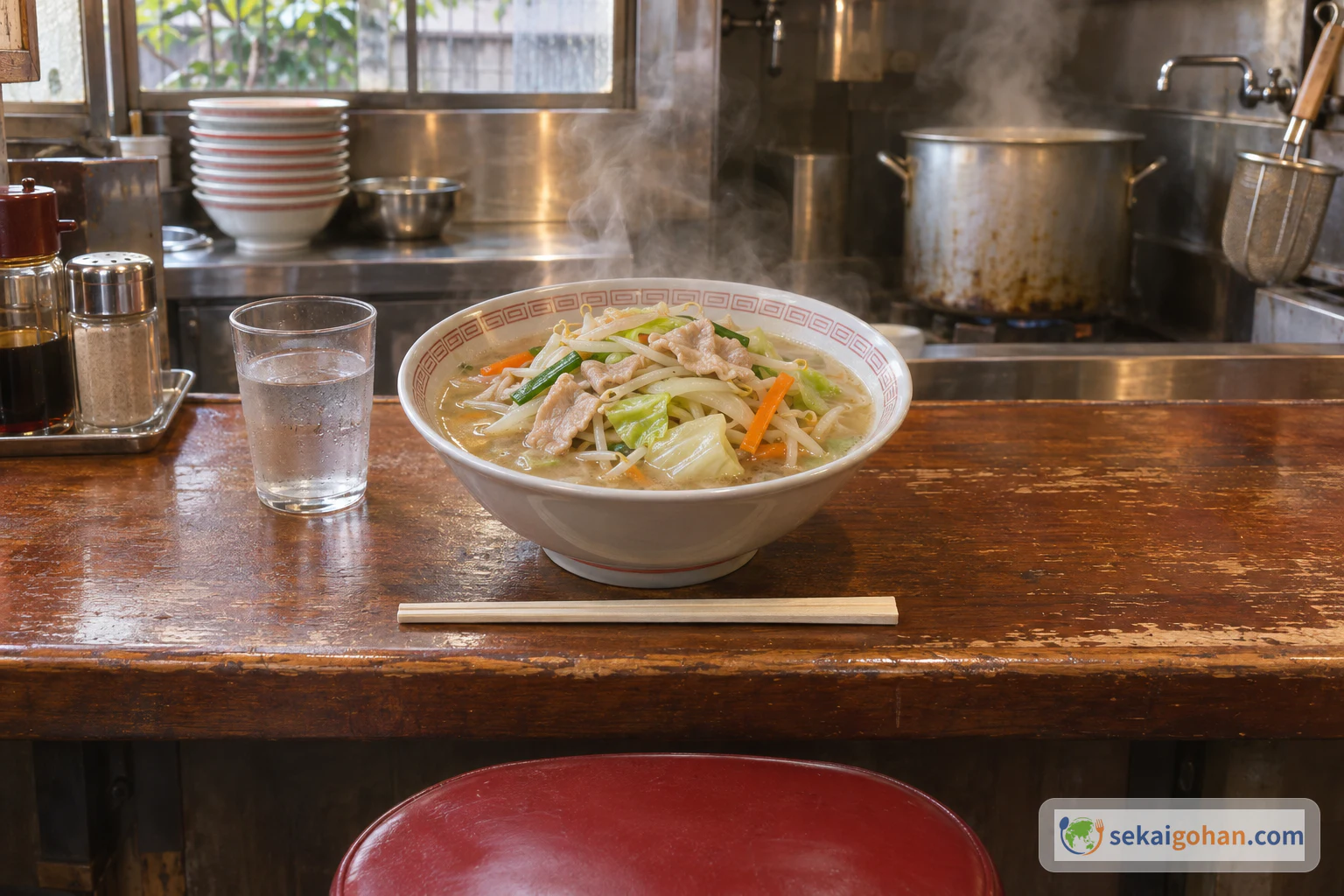
What makes a bowl tanmen
The whole identity of tanmen sits in one move: the vegetables are simmered in the soup, not laid on top of it. A bowl of ramen with stir-fried vegetables is assembled the other way round, with noodles and broth in the bowl first and the vegetables piled on after. In tanmen the pork and vegetables are stir-fried, the broth goes into the same pan, and only after the vegetables have cooked in it does everything go over the noodles. That is why the soup turns faintly cloudy and tastes of cabbage rather than only of chicken.
Its nearest neighbour is chanpon from Nagasaki, and the differences are easy to taste. Chanpon broth is pork bone with chicken, the bowl carries seafood, and the noodles cook in the soup itself. Tanmen keeps to a chicken-based broth, pork and vegetables, and noodles boiled in their own pot. Shops have long served it on flat noodles, which is the older style, though thinner noodles are now common, and a hard grind of black pepper on top is a common finish.
Tanmen is written 湯麺, "soup noodles". In Chinese the same word covers any noodles in broth, so ordering it in China gets you a category, not this bowl. The Chinese dish closest to Japanese tanmen is sùcài tāngmiàn, vegetable soup noodles.
Nogezaka, 1955
In 1955 Takeo Tashiro opened a tiny shop called Yokohama Ippinko on Nogezaka, a slope in Yokohama that was then an open-air black-market of stalls. The shop had about three tsubo of floor and nine counter seats. It still serves its tanmen as the "original Yokohama tanmen". The story usually told is that cooks returning from Manchuria after the war had already been serving tanmen from stalls, and that it was adapted for Japanese tastes from home cooking they had eaten there. Where tanmen was first made is not settled, and which Manchurian dish lay behind it has never been pinned down.
What is clear is how fast it spread. Through the late 1950s and 1960s tanmen moved across the Kanto region, and by the mid-1960s ordering it at a Tokyo Chinese diner was everyday. Today it is a standard in Kanto, while plenty of shops in western Japan do not serve it at all. Kawasaki's horse-racing track has many eateries that make tanmen their speciality. Local styles have grown up under town names, Saitama tanmen, Odawara tanmen and Gifu tanmen among them, and Gifu tanmen, despite its name, began in neighbouring Aichi. The Yokohama shop now sells frozen tanmen by mail order and keeps its miso tanmen and its sanma-men, another Yokohama noodle dish, as separate items. If you are cooking your way around Japan, this is the bowl that tastes most like an ordinary weekday lunch at a Kanto counter.
One more piece of lore: a comedian's line, "There's no tanmen for you!", borrowed from a scene in a Jackie Chan film, became a catchphrase, and many people tie a later tanmen boom to it.
Ingredients (serves 2)
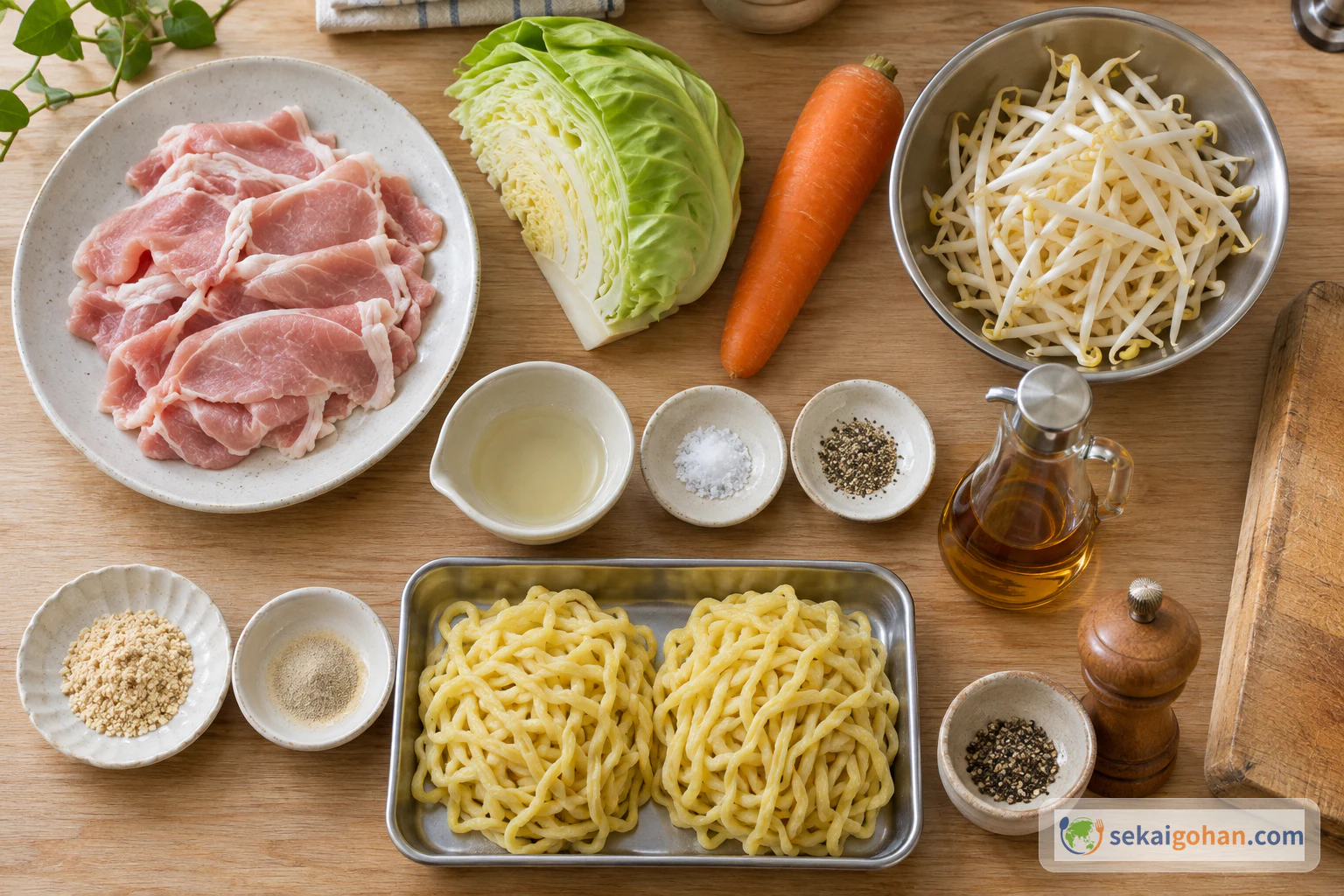
This bowl contains wheat (noodles), pork and sesame (sesame oil). Some chicken stock powders contain soy or soy sauce. Check the ingredient label on your noodles and stock powder; if you make the variation with an oyster-sauce dipping sauce, oyster sauce is made from shellfish and some products also contain crustaceans such as shrimp or crab.
Equipment
- Large frying pan or wok
- A separate pot for boiling the noodles
- Strainer or colander
- Measuring cup
- Measuring spoons
- Instant-read thermometer (optional)
Choosing and Substituting
Nothing here needs a specialty shop. The four things that make the bowl taste like a Kanto diner are salty chicken broth, the sweetness of stir-fried vegetables, sesame oil and coarse black pepper. Keep those and the rest can bend.
| If you have | It works because | What changes |
|---|---|---|
| Thinly sliced pork belly instead of offcuts | Thin slices cook as fast | Richer and fattier; the salt stands out more, so season the soup more lightly |
| Cooking sake instead of drinking sake | It does the same job on the pork | Cooking sake is often salted, so go lighter on salt later |
| Black pepper in the soup instead of white | Same heat | The broth looks darker and the vegetable sweetness comes forward less cleanly |
| Untoasted sesame oil | Fine for frying | Far less aroma; toasted oil is what gives the finished bowl its smell |
| Stock paste instead of powder | Same role | Pastes and powders carry different amounts of salt, so taste before adding any |
| Dried Chinese noodles instead of fresh | Still a wheat noodle | They absorb the soup differently, so do not swap them portion for portion; cook to the pack time and plate the moment they are drained, or the soup turns thin |
Noodle shape changes the bowl too. Thin noodles make it light; medium-thick wavy noodles catch the broth and carry it up with every bite.
Method
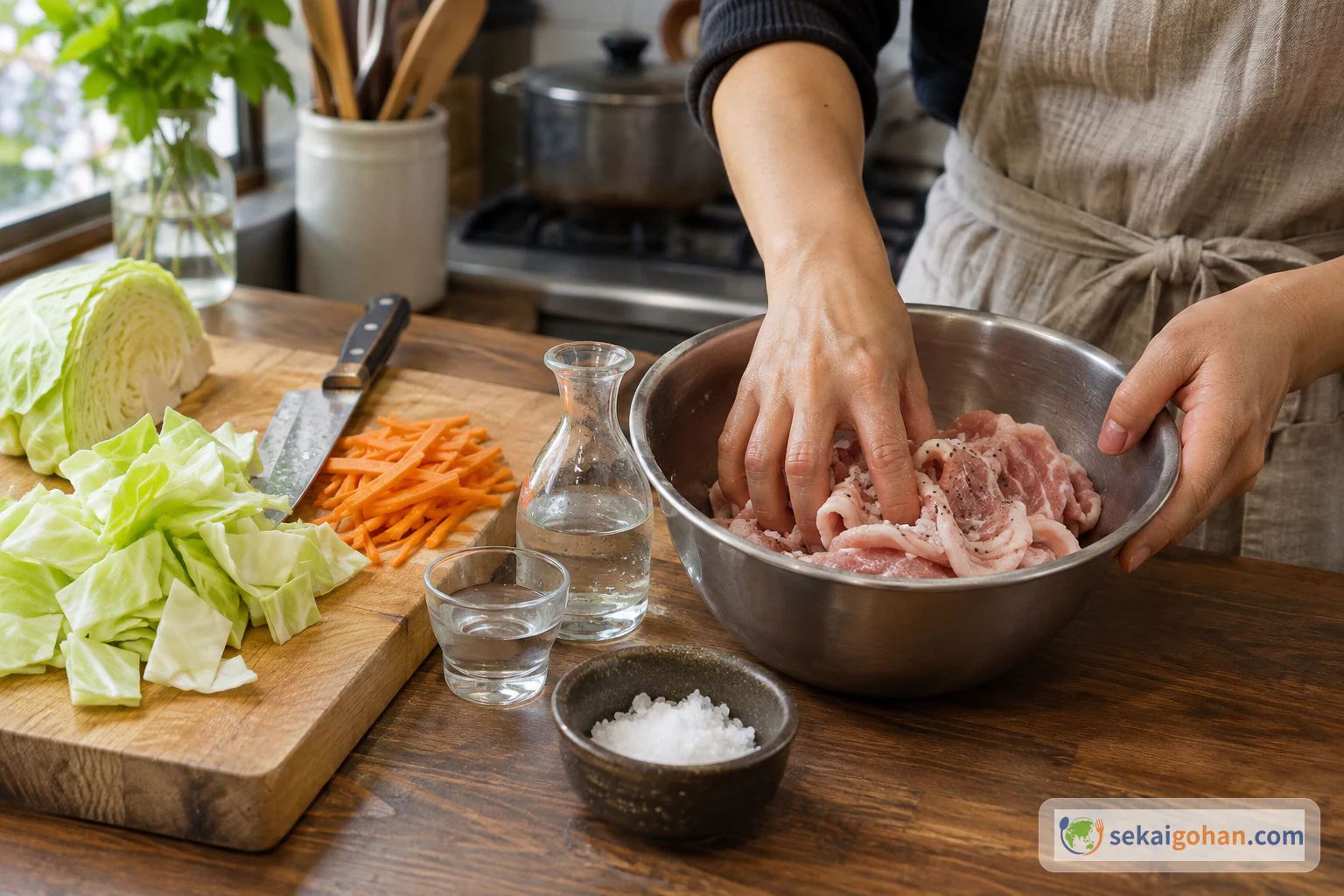
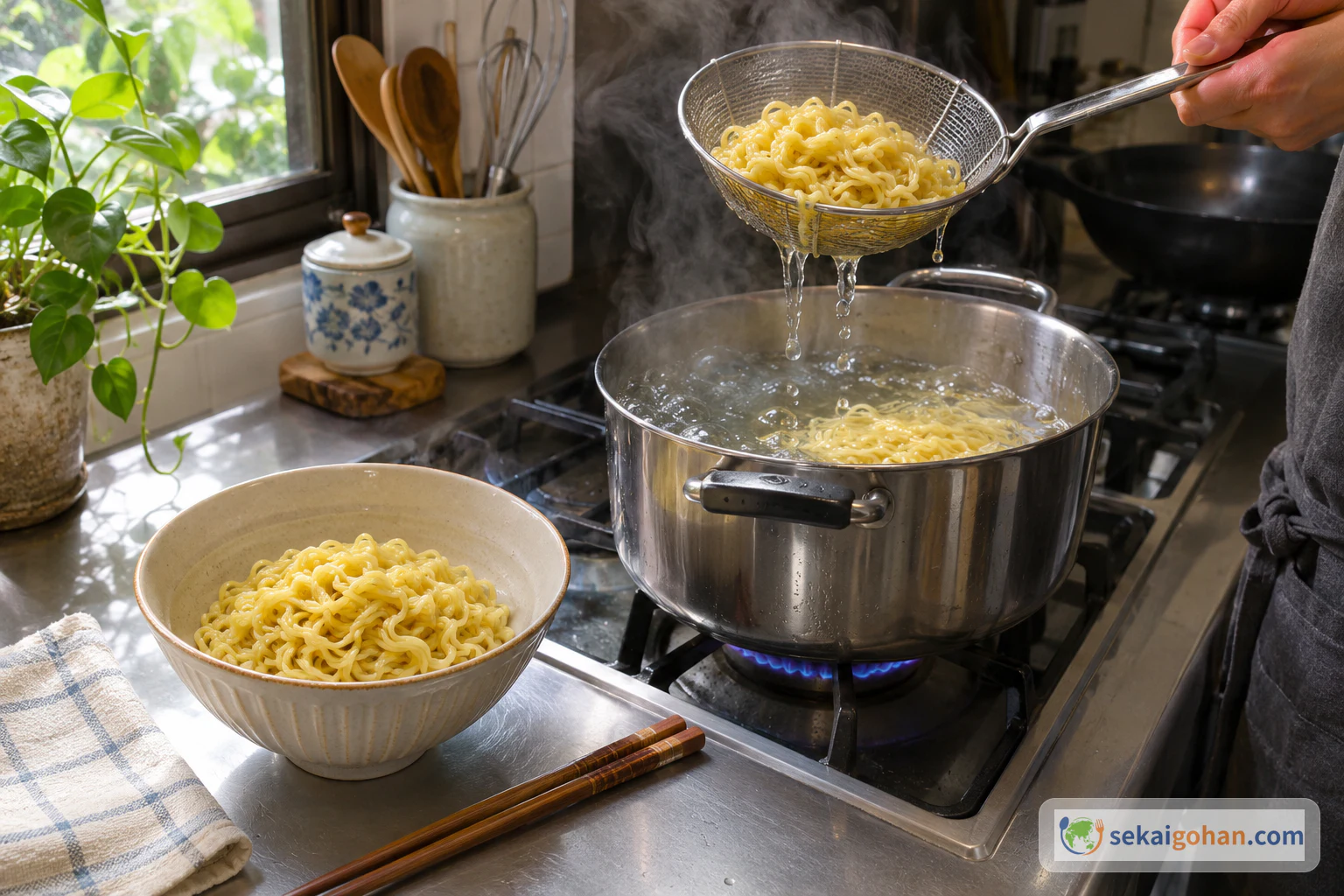
Cut everything before the pan goes on, because once the pork is in, the work runs straight through. Put the noodle water on to boil as you start the stir-fry; the noodles cook while the soup simmers, so both are ready together and the noodles never sit.
When It Goes Wrong
| What you see | Why | What to do |
|---|---|---|
| The soup tastes thin and watery | The bean sprouts were wet or fried too long, or the noodles carried water into the bowl | Drain the sprouts well, toss them only briefly, and shake the noodles dry |
| The salt never seems right | Stock powders vary widely in salt | Taste before salting, add salt in pinches, and stop when the broth tastes bright |
| The pork is tough | Thin slices dried out in the first fry | Take the pork off the first fry while it is still half pink; it finishes cooking in the simmering broth |
| The vegetables are limp and dull | Too long in the pan, or heat so low they stewed in their own water | Give cabbage and carrot about 2 minutes at medium, the sprouts only a quick toss |
| The noodles are soft and the bowl goes lukewarm | The noodles waited while the soup was finished | Start the noodles while the soup simmers, plate them the moment they drain, and warm the bowls |
Salt goes into the pork before cooking, then the broth gets only what it needs at the end. Seasoning the meat first means the soup needs less salt, and the cabbage sweetness stays in front.
Serving, Variations and Storage
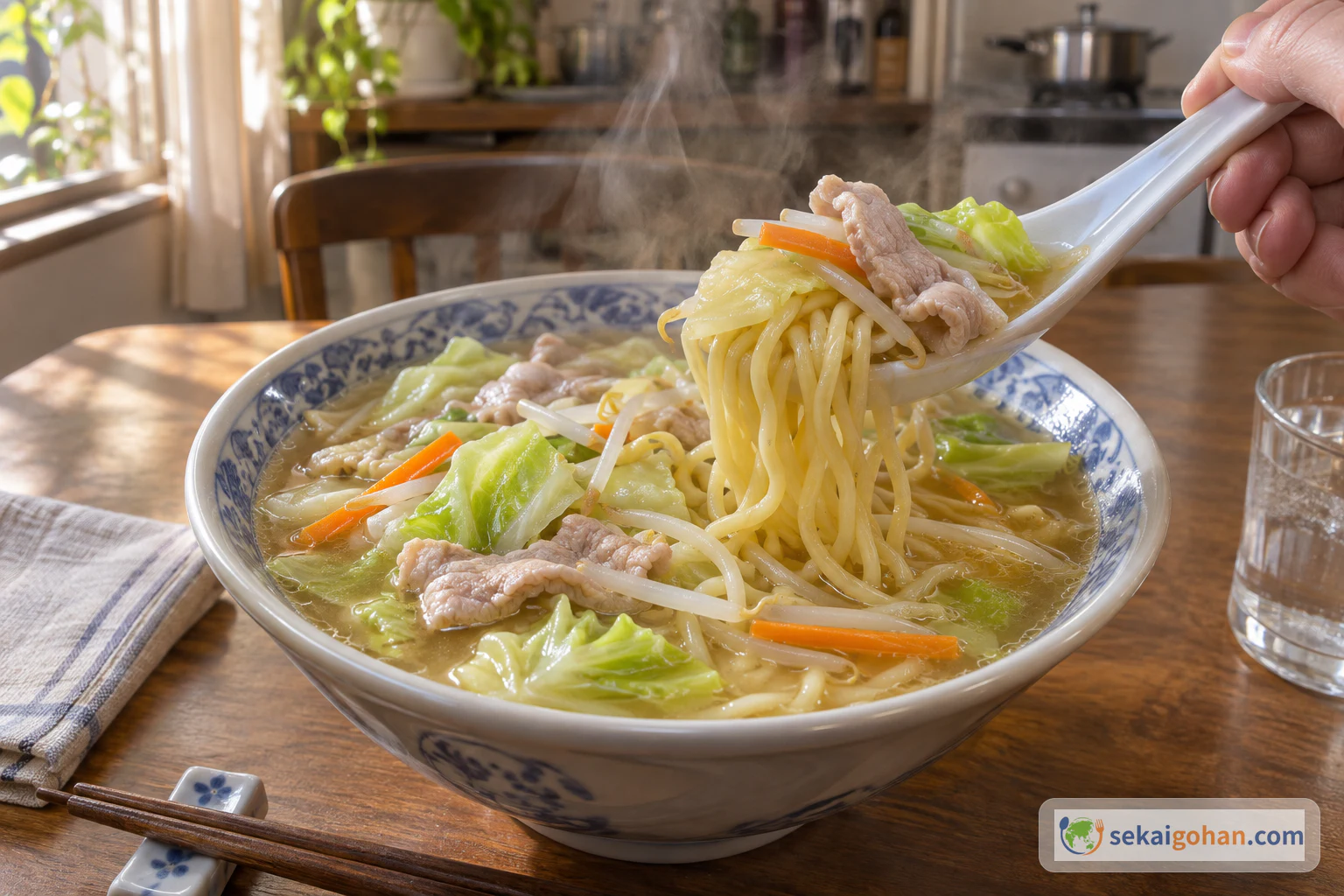
At the table
Tanmen is a one-bowl meal, lunch at a counter or a quick dinner when the fridge holds a cabbage and not much else. Eat it with chopsticks and a Chinese soup spoon, lifting noodles and vegetables together so every mouthful carries broth. Coarse black pepper is the expected finish; diners also add a few drops of vinegar or chilli oil (rāyu) to the bowl as they go, which sharpens a salt broth without changing its character.
Variations
- Garlic-forward diner style. Smash a clove of garlic and fry it before the pork, then add garlic chives, wood ear mushroom and onion with the vegetables. Boil the broth hard at the end until it turns slightly milky, and serve it on flat noodles. The result is heavier and more aromatic than the version above.
- Homemade chicken broth. Simmer chicken thighs with ginger peel, sliced garlic, sake and water for 30 minutes and use that broth in place of water and stock powder. Season it with salt, soy sauce and a little sugar, add onion to the vegetables, and keep the noodles light and the vegetables generous. Serve the poached chicken on the side with a sauce of ginger, green chilli, soy sauce, vinegar, sugar and oyster sauce. The soup tastes deeper and rounder, and the seasoning is built from scratch, so taste as you go rather than following the amounts above.
- Miso tanmen. Season the broth with miso instead of salt. It becomes a different bowl, darker and heavier; one well-known Tokyo chain tops its miso version with mapo tofu.
- Instant shortcut. Use a pack of salt-flavour instant ramen. Fry a little pork, add vegetables for about 2 minutes (komatsuna, wood ear mushroom or napa cabbage all work), and season with part of the soup sachet. Boil the noodles for 3 minutes in about 2 cups (500 ml) of water, dissolve the rest of the sachet in that water, pour it into the pan, bring it to a boil and pour it over the noodles. Saltier and simpler, and ready in very little time.
Storage
Tanmen is best eaten as soon as the noodles are cooked; noodles left in the soup turn soft and fall apart. If you keep leftover soup and vegetables, store them without noodles: cool them quickly, then refrigerate quickly in a covered container. Bring the soup back to a full boil before eating, and pour it over freshly boiled noodles.
Frequently asked questions
Is tanmen the same as tantanmen?
No. Tantanmen is the Japanese name for dandan noodles from Sichuan, built on sesame paste and chilli oil. The names sound alike, but tanmen has no sesame paste and no chilli in the broth; its heat comes only from the black pepper on top.
Why boil the noodles in a separate pot?
Noodles cooked in the soup release starch and drink up the broth, so the soup turns thick and the noodles go soft. A separate pot keeps the broth clear and lets you time the noodles to finish with the soup.
Which noodles should I buy?
Fresh Chinese noodles from the chilled section, labelled for ramen. Flat noodles give the older diner style, thin ones a lighter bowl, and medium-thick wavy noodles hold the most broth.
Can I use a different vegetable mix?
Yes, as long as cabbage stays at the centre, because its sweetness is what flavours the soup. Napa cabbage, onion, garlic chives and komatsuna all fit. Add firmer vegetables with the carrot and leafy ones at the end, and remember that more watery vegetables thin the broth, so taste before salting.