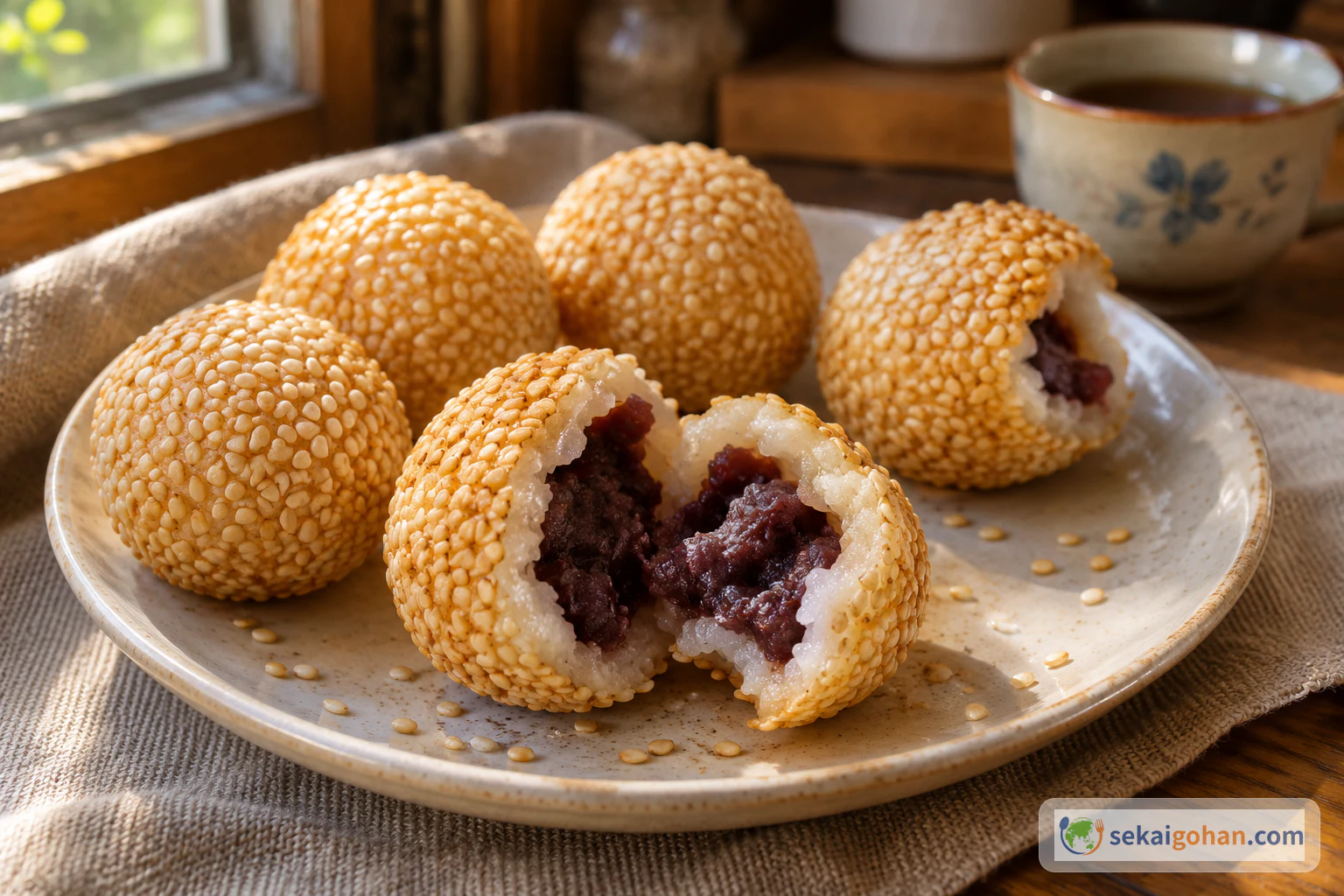
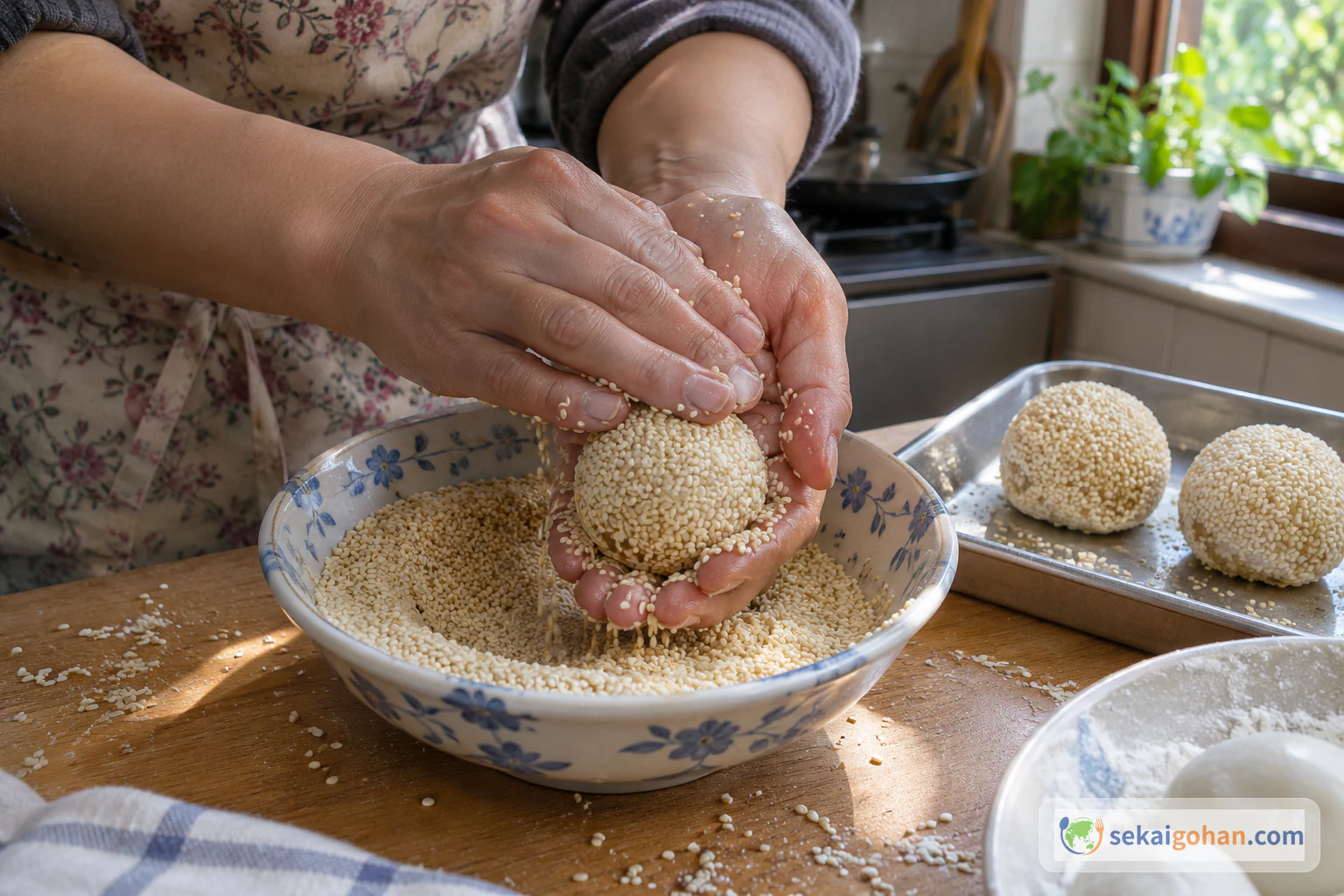
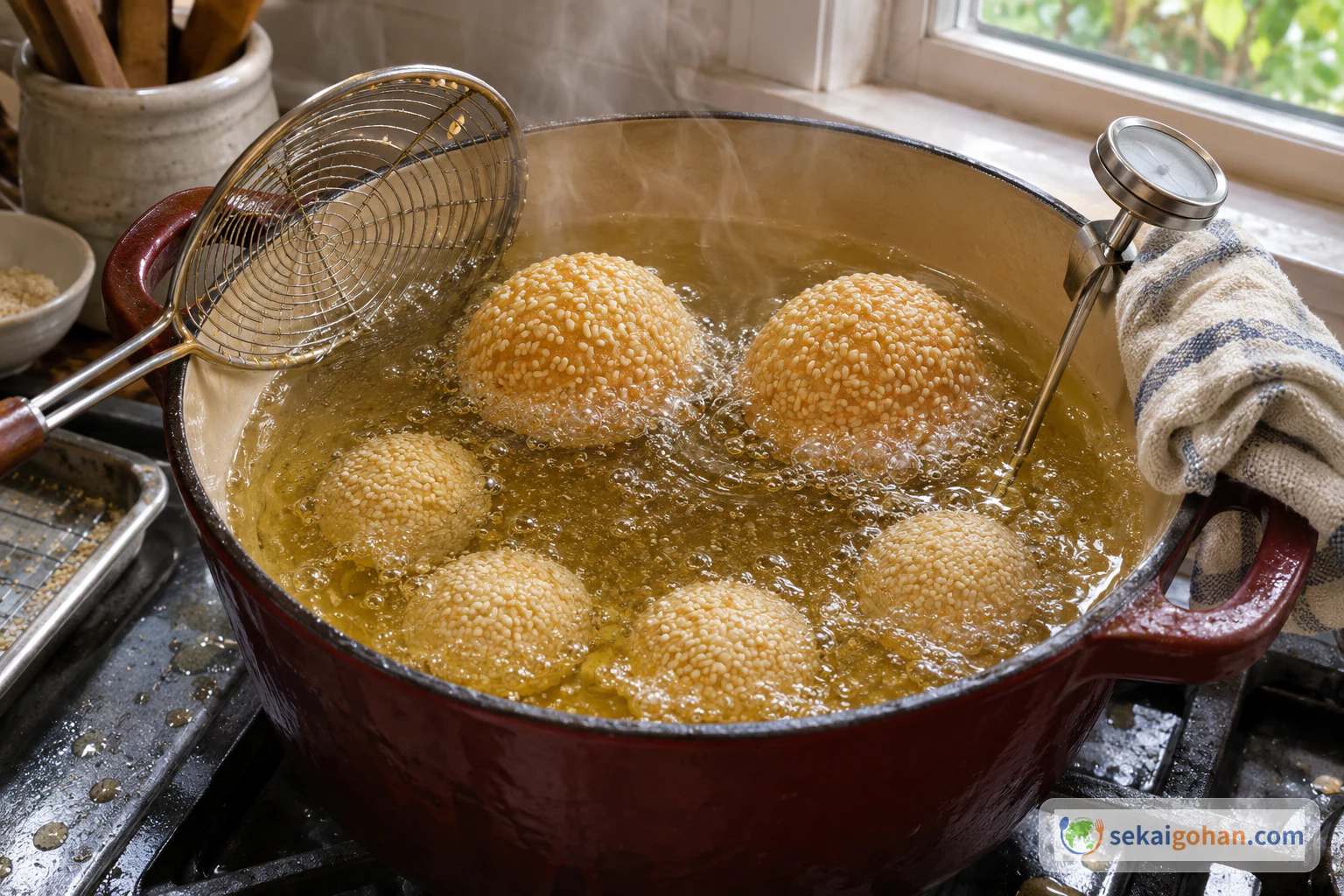
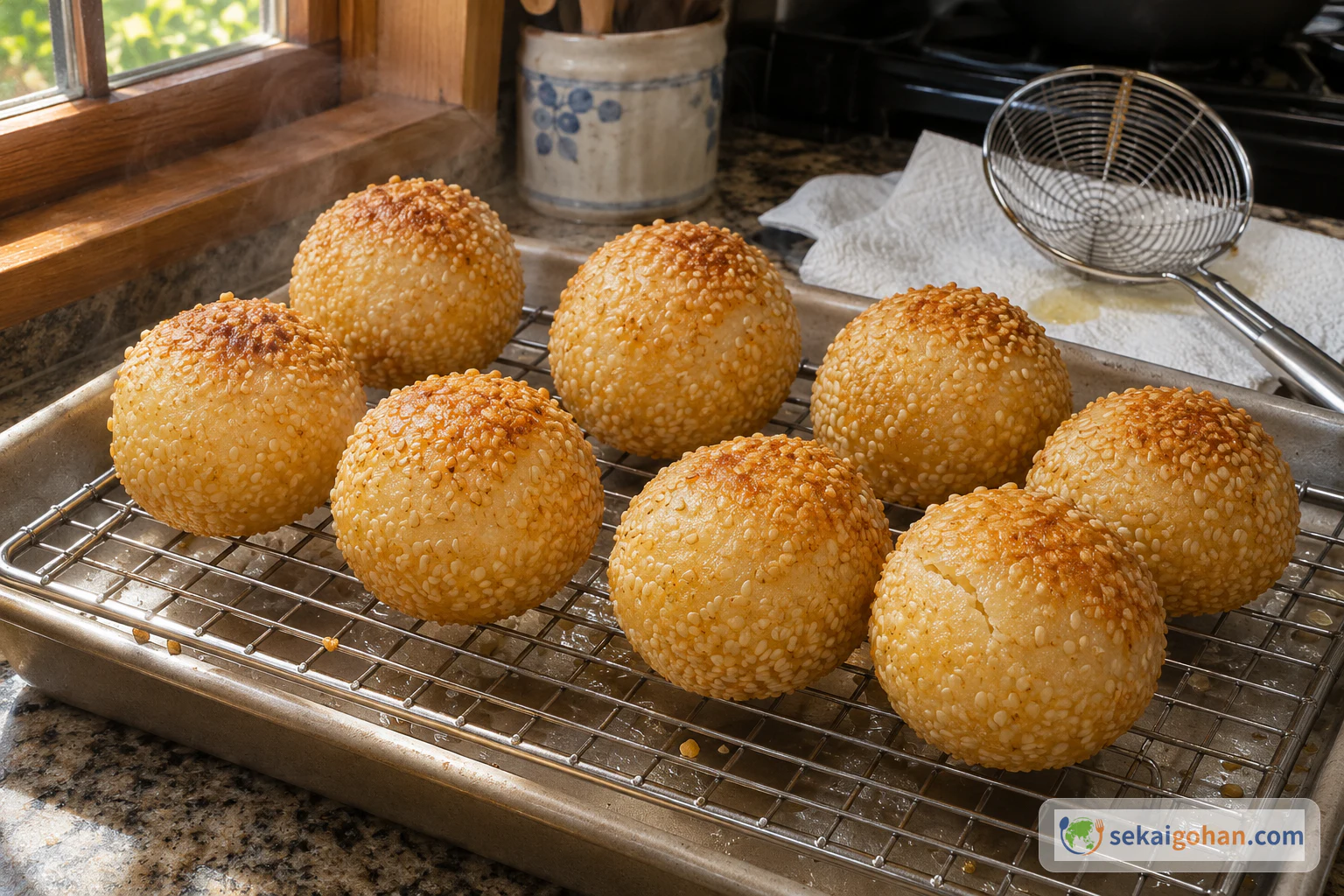
Lower the sesame-coated balls into the pot and they sink to the bottom, pale and small. A few minutes later the first one lifts off, rises to the surface with fine bubbles clinging to its seeds, and is suddenly a size bigger. There is no yeast and no baking powder in the dough. Boiling water and slow, low oil do all the work. Zhimaqiu, jin deui (煎堆) in Cantonese, is a glutinous rice dough wrapped around sweet bean paste, rolled in white sesame and fried until the shell is crisp and the inside stays chewy. It belongs to the dim sum tables of Guangdong and Hong Kong, and to the New Year table across southern China.
Jin Deui: The Ball That Rolls Gold Into the House
Many names for one round sweet
In Mandarin it is zhimaqiu (芝麻球), the sesame ball, and around Guangdong, Hong Kong and Macau it is jin deui. Travel and the name keeps changing: ma tuan (麻糰) in the north, ma qiu (麻球) in Jiangsu and Zhejiang, ma yuan (麻圓) in Sichuan and the northeast, huanxi tuo (歡喜坨) in Wuhan, zhen dai (珍袋) in Hainan and zha zao (炸棗) on Penghu. Everywhere it is the same idea, a glutinous rice ball fried in oil with sesame on the outside. Because it swells in the oil with nothing added to make it rise, it is eaten as a sweet of luck and prosperity.
One character separates them. Zhimazao (芝麻棗), also called kaikouxiao (開口笑), or 笑口棗 in Cantonese, is a different fried sweet: a wheat-flour dough with leavening that splits open on the surface as it fries. Zhimaqiu is glutinous rice, filled, and swells into a smooth round ball.
Jiujiang and the New Year oil pot
Cantonese speakers greet the new year with the words 煎堆轆轆,金銀滿屋: as the jin deui roll, gold and silver fill the house. The round shape that rolls and the dough that keeps growing in the oil carry the wish for a home that fills up. In Jiujiang, in Nanhai near Foshan, the New Year is not complete without jin deui. They go to relatives as gifts and to the ancestors as offerings. In the cold last month of the year, every household fired up a pot of oil, the whole village smelled of frying, and the children were kept out of the kitchen so the spitting oil could not reach them.
The Jiujiang version is not a ball at all but a flat round cake, filled with popped glutinous rice, peanuts and sesame. In the last years of the Guangxu reign of the Qing dynasty, a local man named Zou Biannan reworked it into the "Jiujiang crisp-skin big jin deui". By the early 1930s it was shipped to Hong Kong, Macau, Southeast Asia and the Americas, and people counted it among the "three treasures of Jiujiang" with the town's double-distilled rice liquor and its fish fry. It entered a dictionary of famous Chinese specialties in 1986, was listed as intangible cultural heritage by Foshan city and Nanhai district in 2011, and joined Guangdong's sixth provincial list, under traditional craftsmanship, in 2015. Some accounts trace round jin deui back to the Tang court; where the ball first began is not settled.
From the dim sum cart to home kitchens
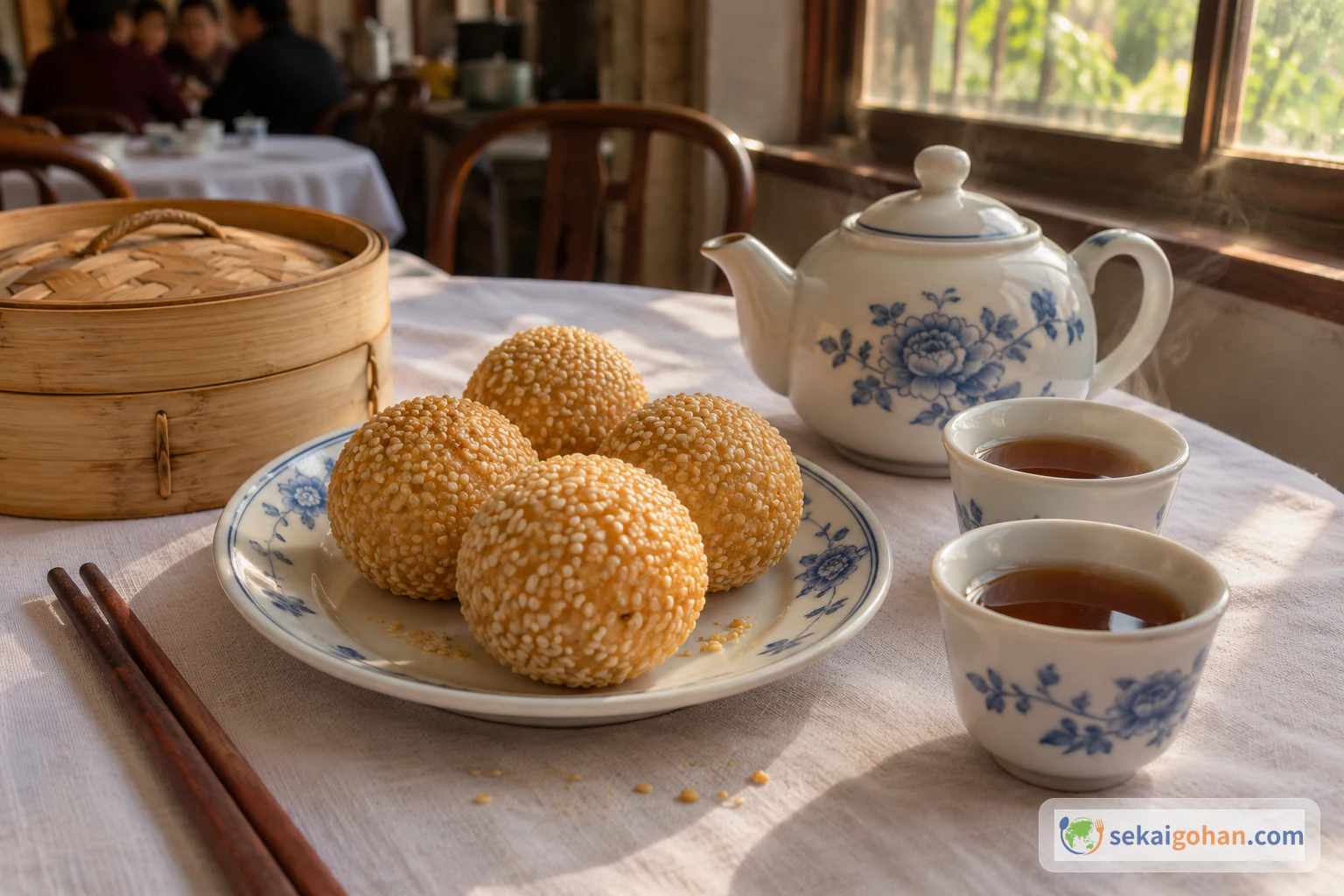
The ball you know from dim sum is the round, filled one, usually with red bean paste and sometimes with lotus seed paste. Kitchens differ in the dough as much as the filling. Some sweeten it with brown sugar, which turns the ball darker and gives it a deeper aroma, and some fry hotter and faster. The version here keeps white sugar and low oil, because that is what gives the tallest, roundest puff at home. For more from the same country, browse more dishes from the Chinese kitchen.
Ingredients (makes 16)
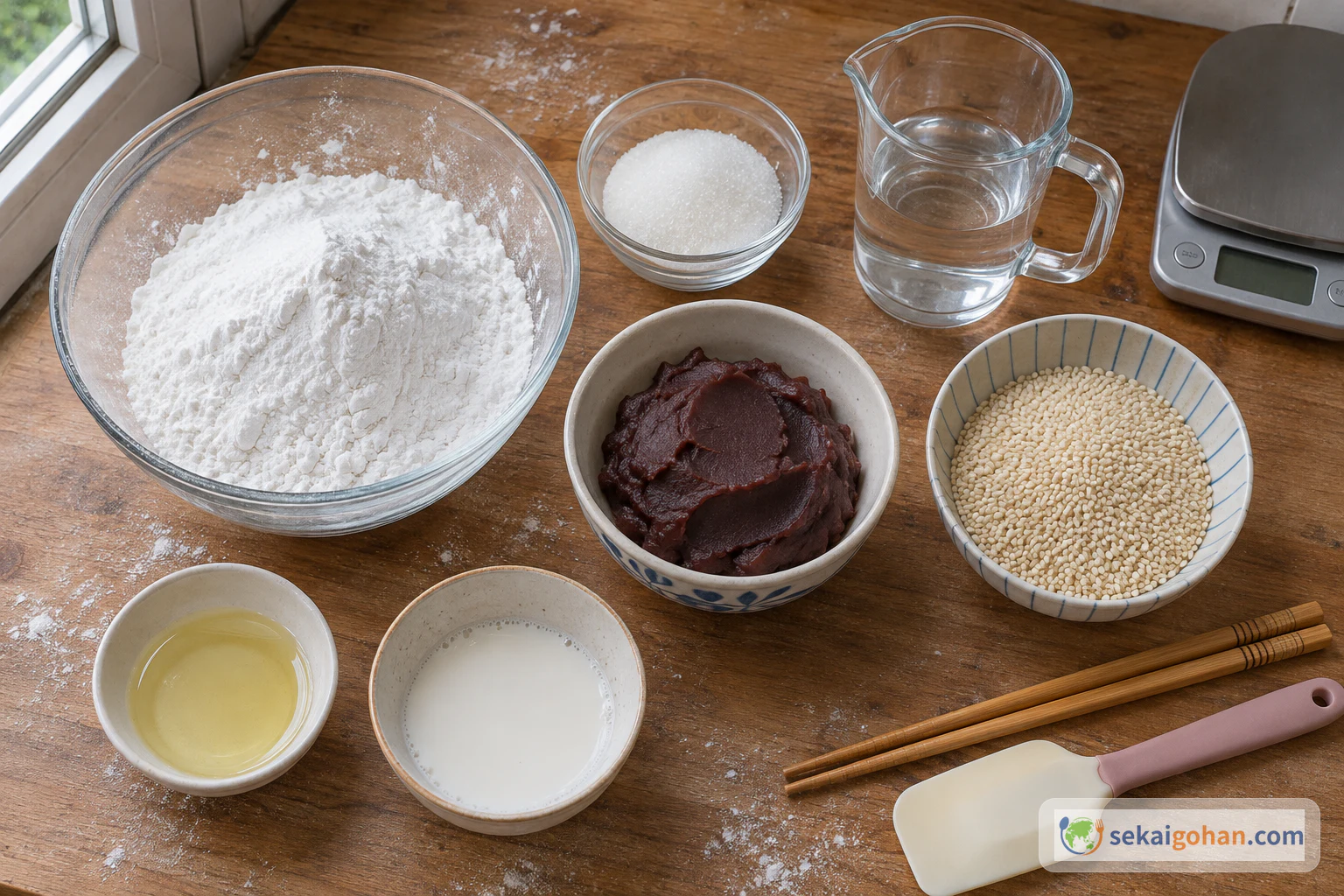
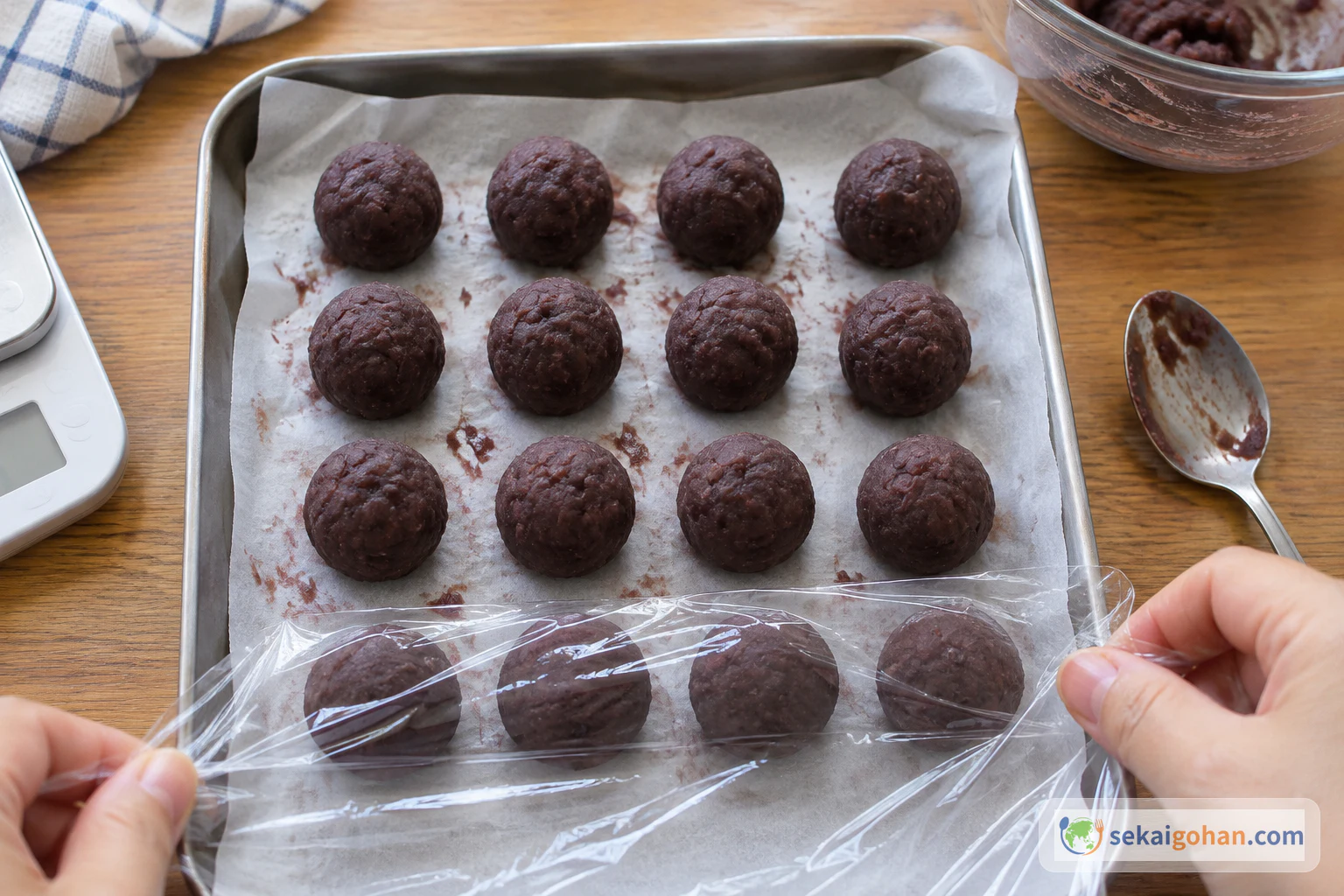
The slurry flour is a measure of its own, apart from the dough flour. Neither the slurry nor the sesame ends up entirely on the balls: some stays in the bowls, and that is how it should be. The filling divides into sixteen pieces with a spoonful to spare.
Sesame coats every ball and cannot be replaced, so these are off the table for anyone with a sesame allergy. The dough contains no wheat, milk or eggs. Store-bought red bean and lotus seed pastes can contain milk or soy, so read the label when you buy. If the frying oil has been used for other foods, traces of those foods come with it.
Equipment
- Heatproof bowl and a small saucepan
- Kitchen scale
- Chopsticks and a rubber spatula
- Plastic wrap and a small tray
- Spray bottle for misting water
- Two small bowls for the slurry and the sesame
- Heavy pot, deep enough for 2 inches (5 cm) of oil with room above
- Deep-fry or candy thermometer
- Slotted spoon or spider
- Wire rack set over a tray
Choosing Flour, Sesame and Filling
The flour decides the dish. It has to be glutinous (sticky) rice flour that is water-milled: the rice is washed, soaked, stone-ground together with water, and the milky liquid is settled, pressed and dried. Japanese shiratamako is made exactly this way and is the easiest water-milled flour to find at Japanese and Asian grocers or online. Mochiko is also glutinous rice, but it is dry-milled and coarser, so the dough loses stretch and the balls puff less. Regular rice flour and Japanese joshinko come from ordinary non-sticky rice, and potato starch has none of glutinous rice's pull; neither of them makes this dough.
Glutinous flour, mochiko and regular rice flour often sit side by side. Look for "water-milled" or shiratamako on the bag. A coarse flour is one of the main reasons sesame balls stay small.
Buy raw, untoasted white sesame. Toasted sesame has already been through the heat once, and over two rounds of frying it darkens and turns bitter before the dough is cooked. Store-bought sweet red bean paste works well, smooth or chunky. Packs are often larger than you need, and a firm paste is easier to roll than a loose one.
For the sugar, granulated white keeps the ball pale gold; brown sugar belongs to a different dough. Any neutral frying oil works, such as canola or vegetable oil. Olive oil brings its own aroma and does not suit the sweet.
These balls spend up to a quarter of an hour in the oil. Raw seeds come out lightly golden in that time, while pre-toasted seeds scorch and pass their burnt taste to the oil.
Method
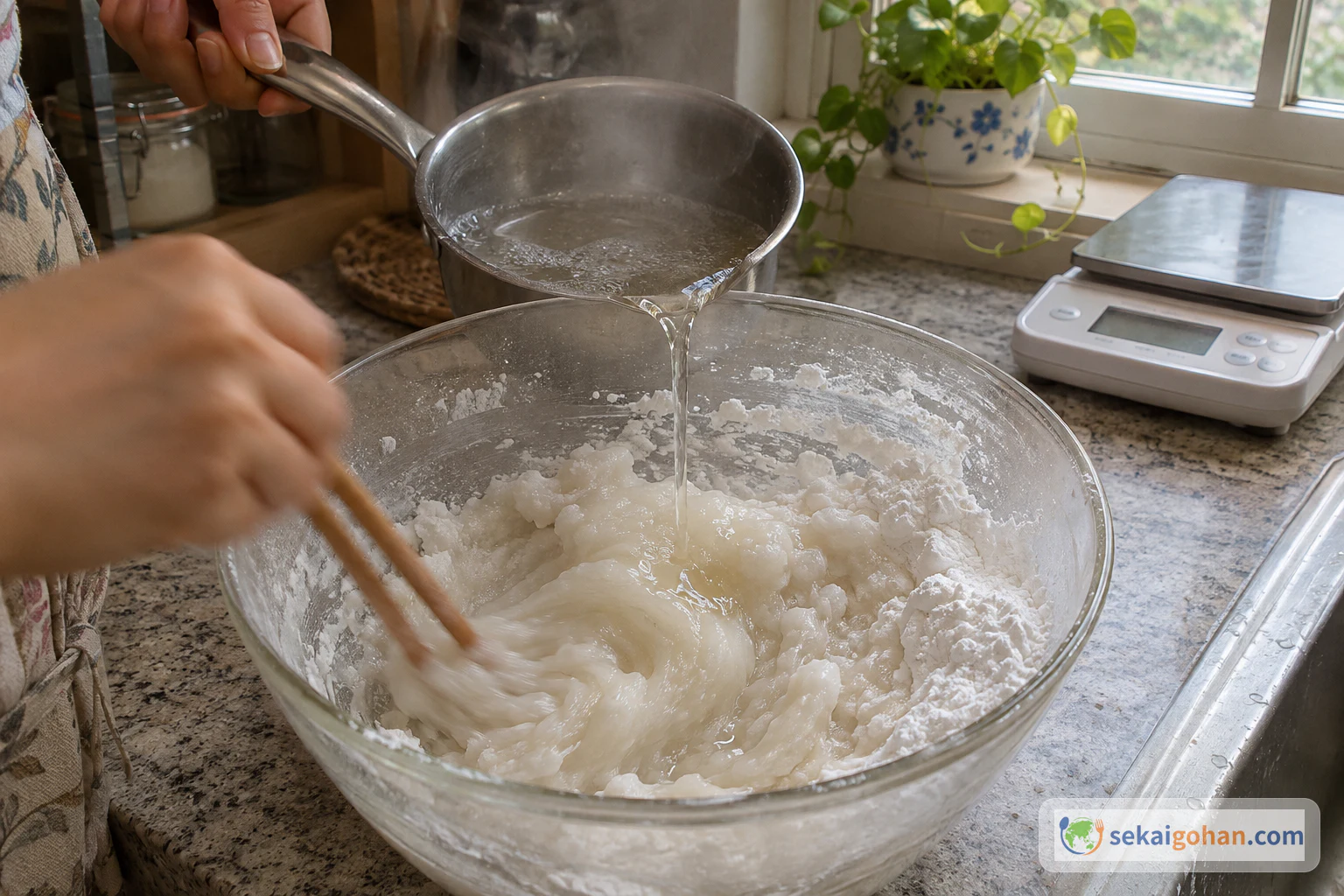
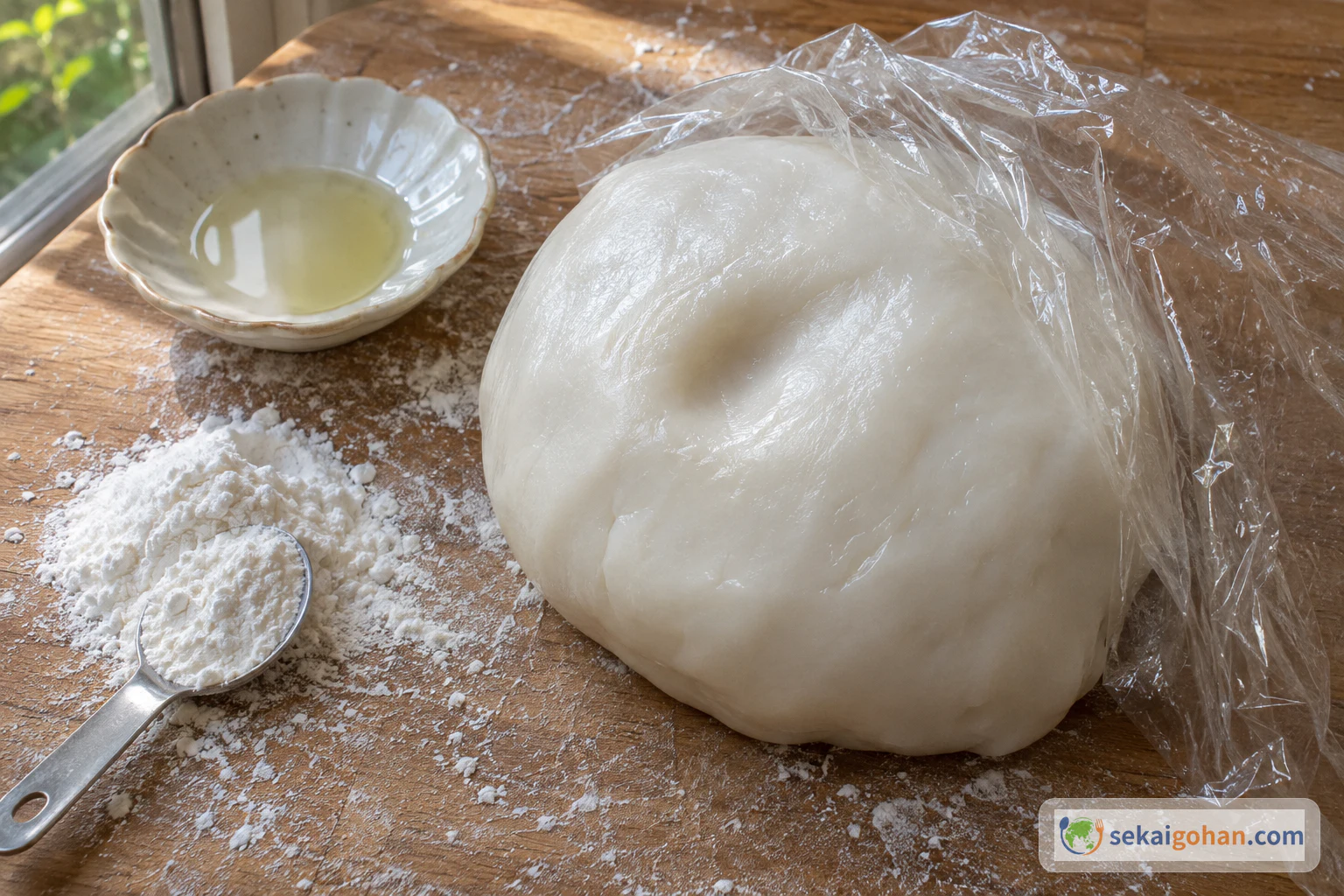
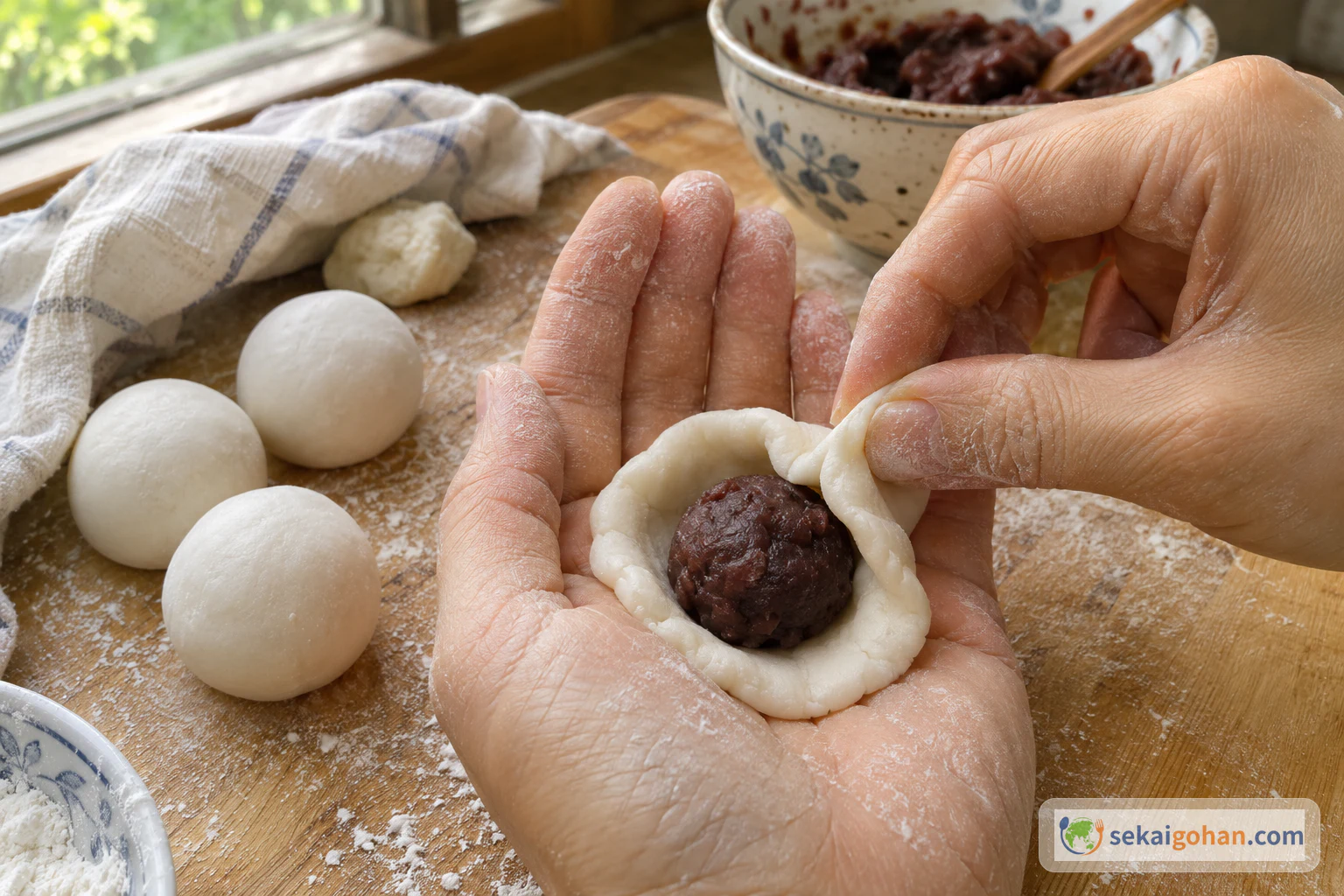
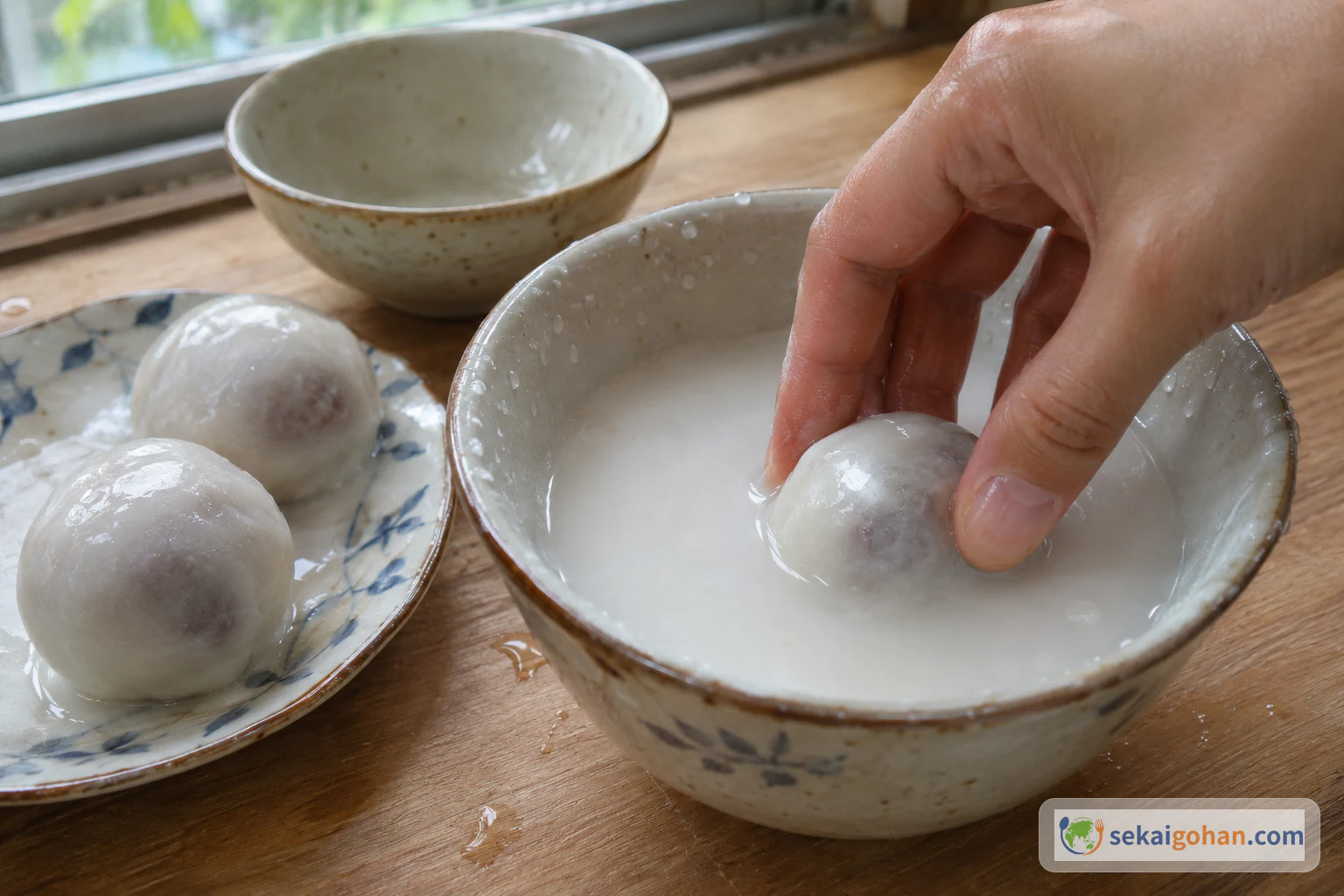
Make the dough first. Its 30-minute rest is your hands-off stretch, and it is when you roll and chill the filling. Shaping, dipping and coating then go ball by ball at the counter. Frying comes last, in two batches of 6 to 8, each one slow, and the pot needs your full attention the whole time.
At 250°F (121°C) the scalded dough stays soft long enough to swell from the inside. In hotter oil the surface sets into a shell before the ball has grown, and you end up with a small, dense ball. Trust the thermometer and the color over the clock, since the times shift with the size of your pot and how many balls are in it.
Stay at the stove the whole time the oil is on, and turn off the heat if you step away. Ordinary frying oil reaches its ignition point after 5 to 10 minutes of heating and catches fire on its own at about 700°F (370°C); a small amount of oil gets there faster. A stove with an overheat safety cutoff is the safer choice. Keep children well away from the pot. If the oil catches fire, never pour water on it, because the water explodes into steam: turn off the heat and smother the pot with its lid or a damp cloth, or use a fire extinguisher. If flames reach the ceiling, get out and call emergency services.
When It Goes Wrong
| What you see | Why | What to do |
|---|---|---|
| The balls stay small | The oil ran hot and the surface set first, the dough dried out, or the flour was coarse | Hold 250°F (121°C) on the thermometer, keep dough pieces covered, and use water-milled glutinous flour |
| A ball bursts and filling leaks out | The seam was not closed, the filling was soft, or the oil was too hot | Pinch every seam shut and chill the filling. Lift a burst ball out early so it does not foul the oil |
| Sesame drops off into the oil | The slurry was too thin, or the seeds were not pressed in | Measure the slurry flour, and roll each ball firmly between your palms after coating. Loose seeds burn and taint the oil |
| Dark, bitter seeds | The oil climbed past 300°F (149°C), or the seeds were pre-toasted | Keep the heat under 300°F (149°C), use raw sesame, and discard oil that tastes burnt |
| Raw, pasty center | Lifted too early, or balls made too large | Keep to the 18 g dough and 9 g filling, and fry until pale golden and firm |
| Hard and flat once cool | The second fry was too short, or the dough dried before frying | Give the full second stretch, and serve them the day you fry them |
Serving, Variations and Keeping
At the table
Serve the balls warm or at room temperature, with a pot of strong dark tea such as oolong or pu'er to cut the sweetness. They end a dim sum meal, fill a New Year plate, and travel well as a gift on the day you make them. Break one open at the table: the thin, chewy wall pulls apart and the paste is soft inside.
Variations
Lotus seed paste in place of red bean gives a paler, lighter-scented center and a smoother bite. Chunky red bean paste leaves whole beans in the middle for more texture, while smooth paste gives the classic soft, even center. Both fill and seal exactly like the smooth red bean paste, and firm, well-chilled paste matters even more with chunky beans, since they press against the wrapper.
Keeping
Sesame balls are best the day they are fried. As they sit, the sesame loses its aroma and the dough tightens. Fry only as many as the table will finish, and skip the microwave, which steams the crisp shell soft.
Frequently asked questions
Do I really need a thermometer?
Yes. 250°F (121°C) is far below ordinary frying heat, and at that level the oil looks almost still, so judging it by eye is unreliable. A clip-on deep-fry or candy thermometer lets you hold the temperature through both stages and catch the climb toward 300°F (149°C) before the seeds darken.
Can I fry them hotter to finish faster?
There is a hotter style, fried at 340 to 355°F (170 to 180°C) for about five minutes, but it comes with its own dough: brown sugar and more flour, with the balls dipped in plain water before the sesame. That style sets the shell quickly and the balls swell less. For this dough, keep the oil low; hot oil traps it before it can puff.
Are sesame balls vegan?
The dough, coating and frying oil contain no animal ingredients, and red bean paste is often just beans and sugar. Some store-bought pastes include milk, so check the label. With a plant-only paste, the whole ball is vegan.