

Oshiruko: A Smooth Bowl of Azuki and Soft White Dumplings
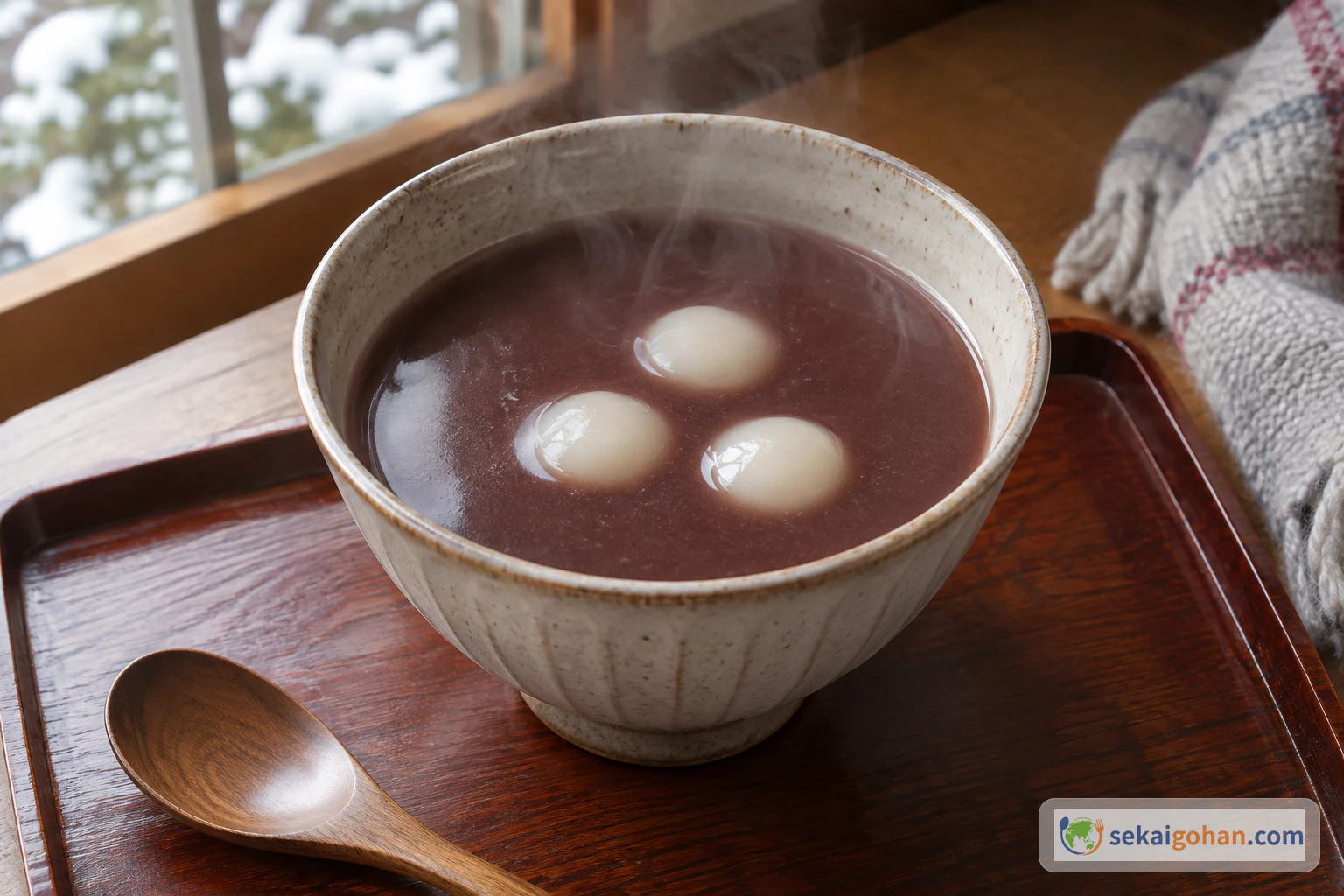
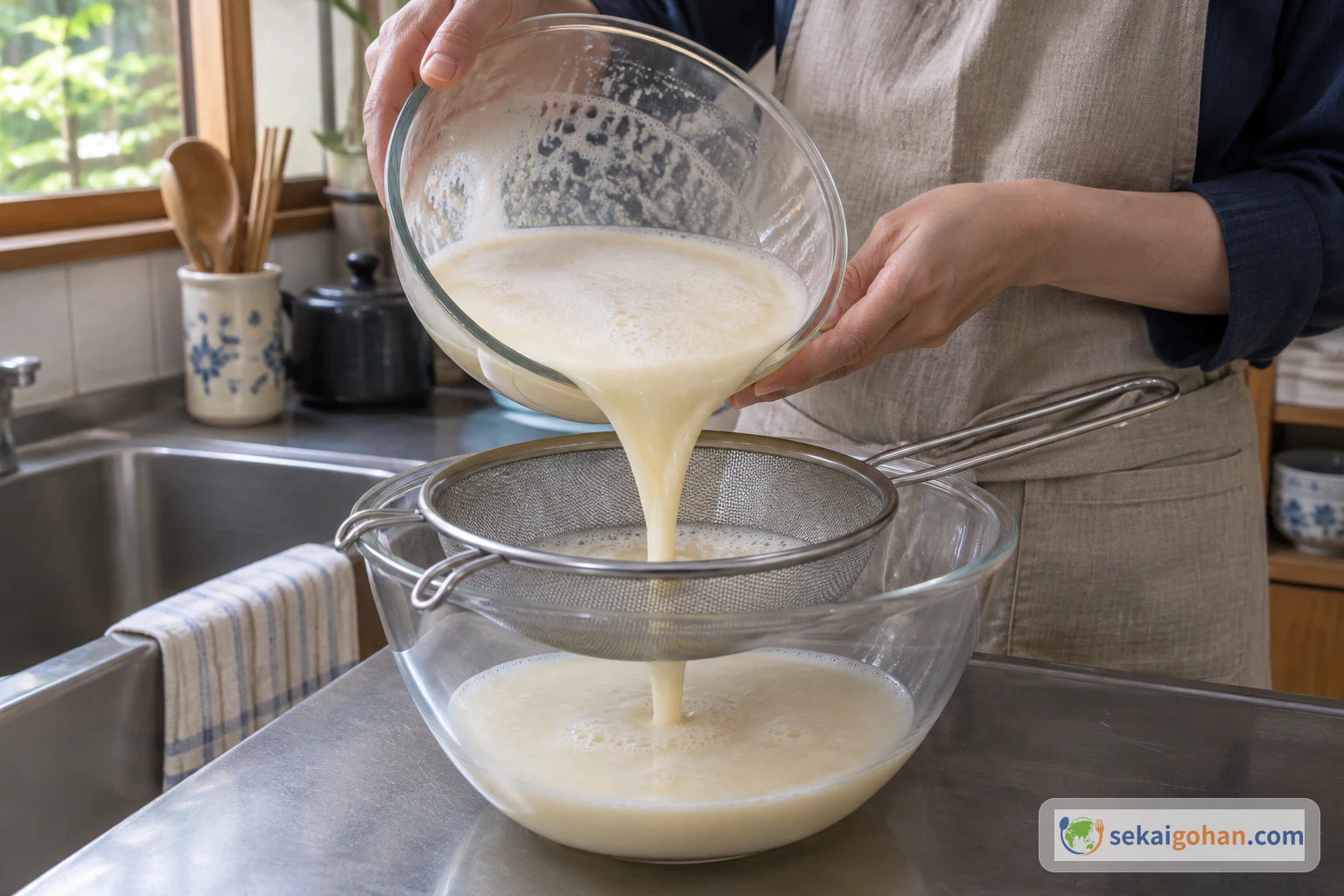
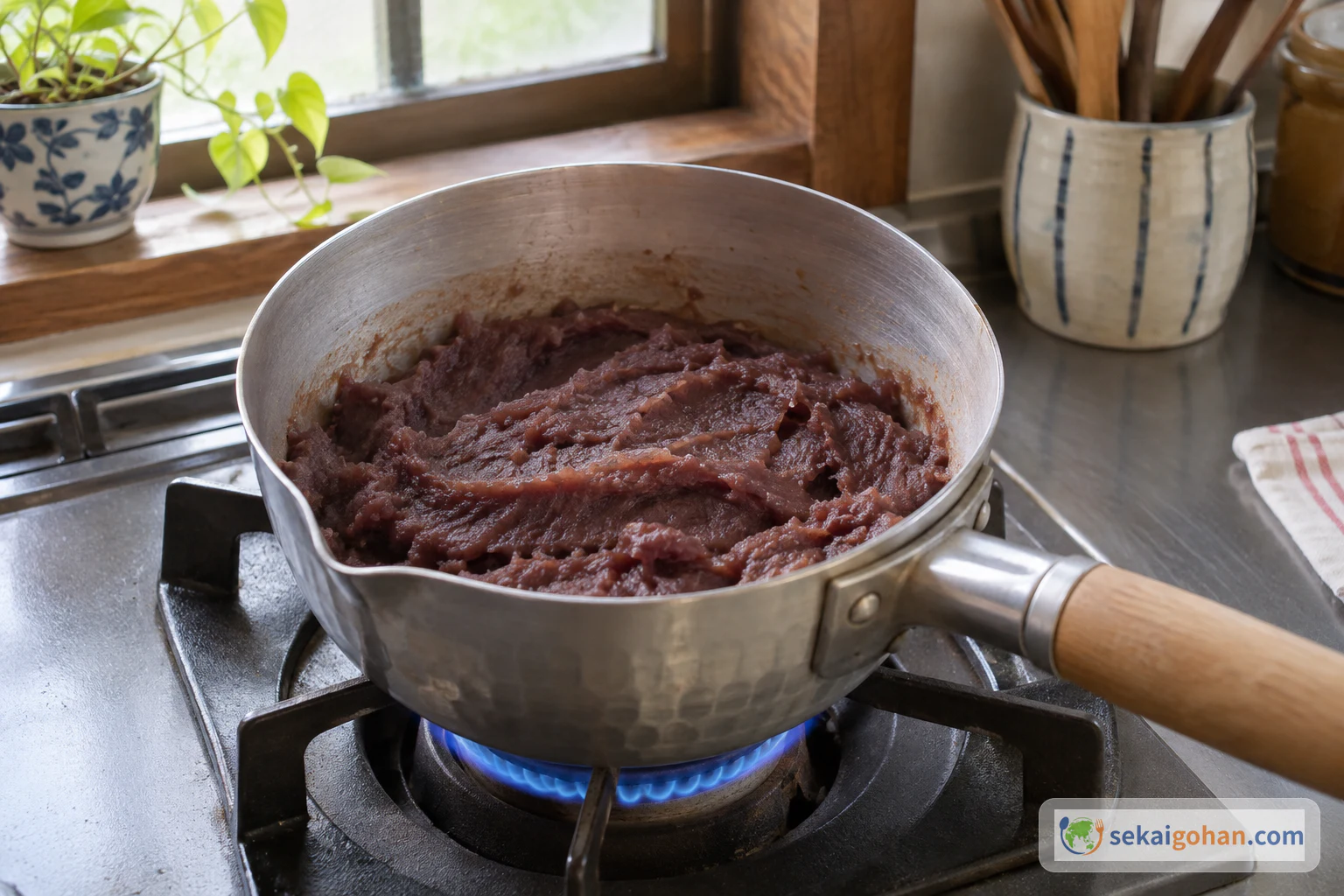
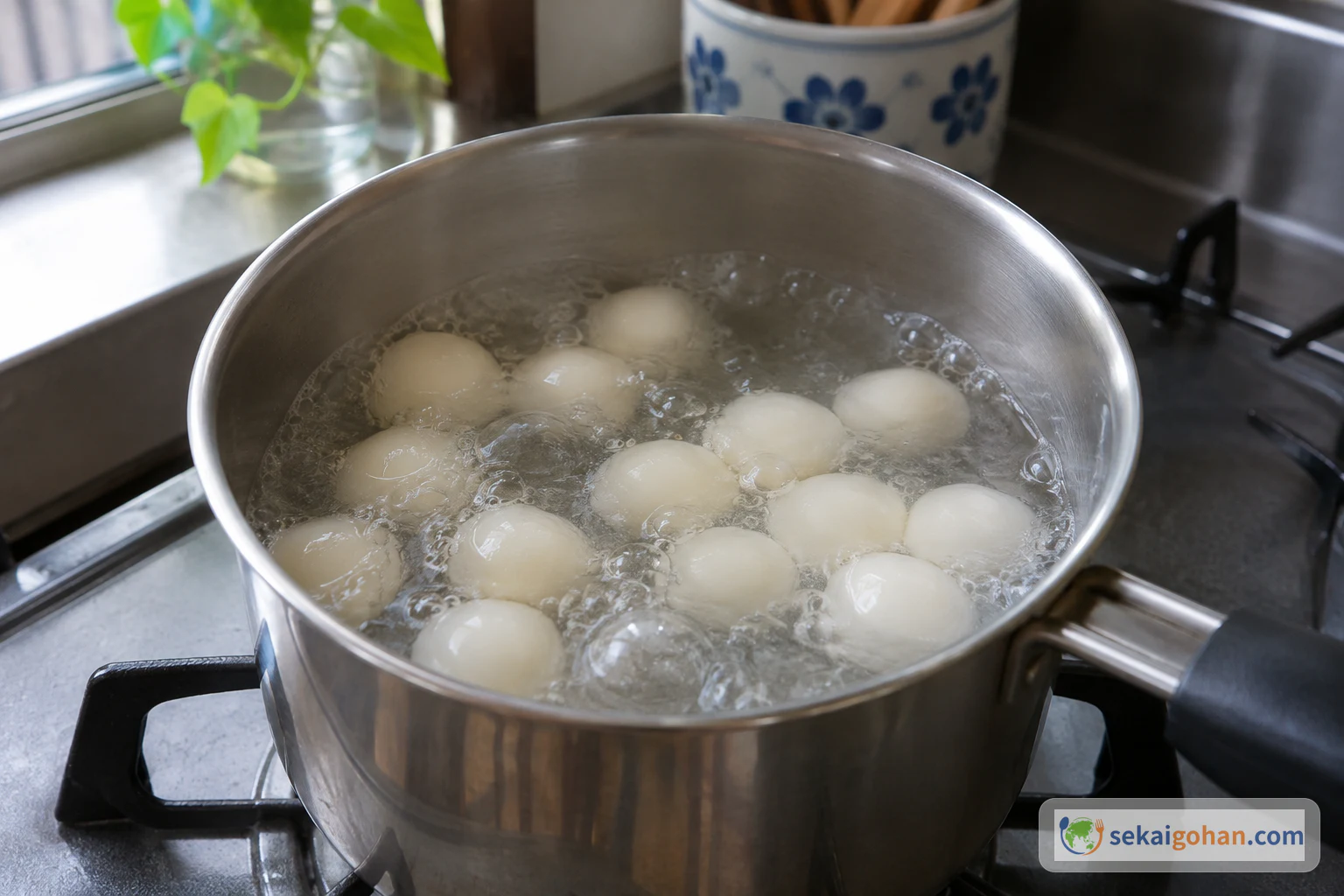
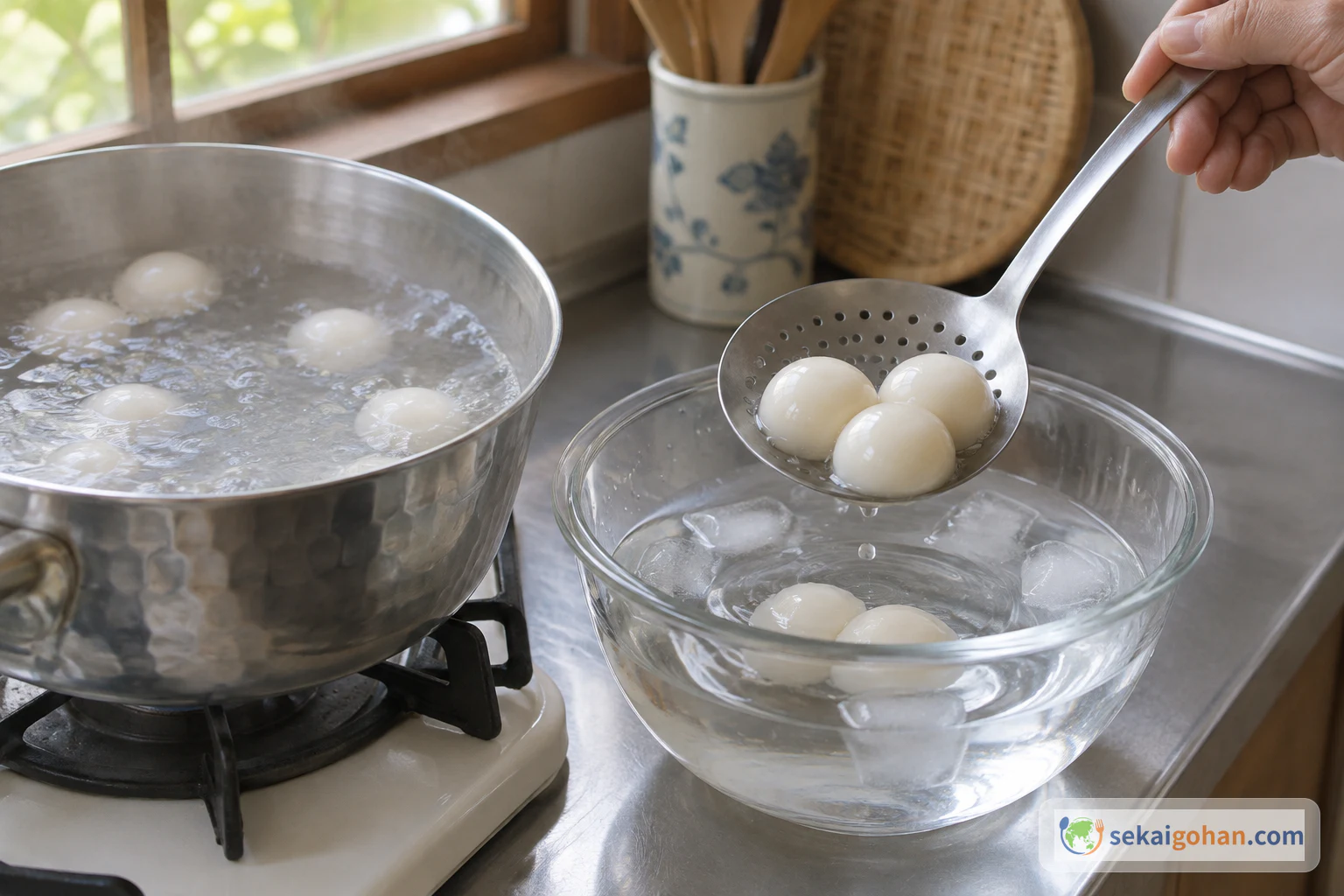
Strain the azuki until no skins remain and the liquid is smooth. Then sweeten it gently and float small shiratama dumplings, boiled until they rise, on top.
In January, after the New Year, many Japanese homes take down the round kagami mochi that sat on display through the holiday and eat it. A bowl of warm, sweet azuki soup is one of the foods linked to that day. Oshiruko (お汁粉, shiruko) is that kind of soup: azuki beans cooked and sweetened into a thin, warming sweet you eat with a spoon.
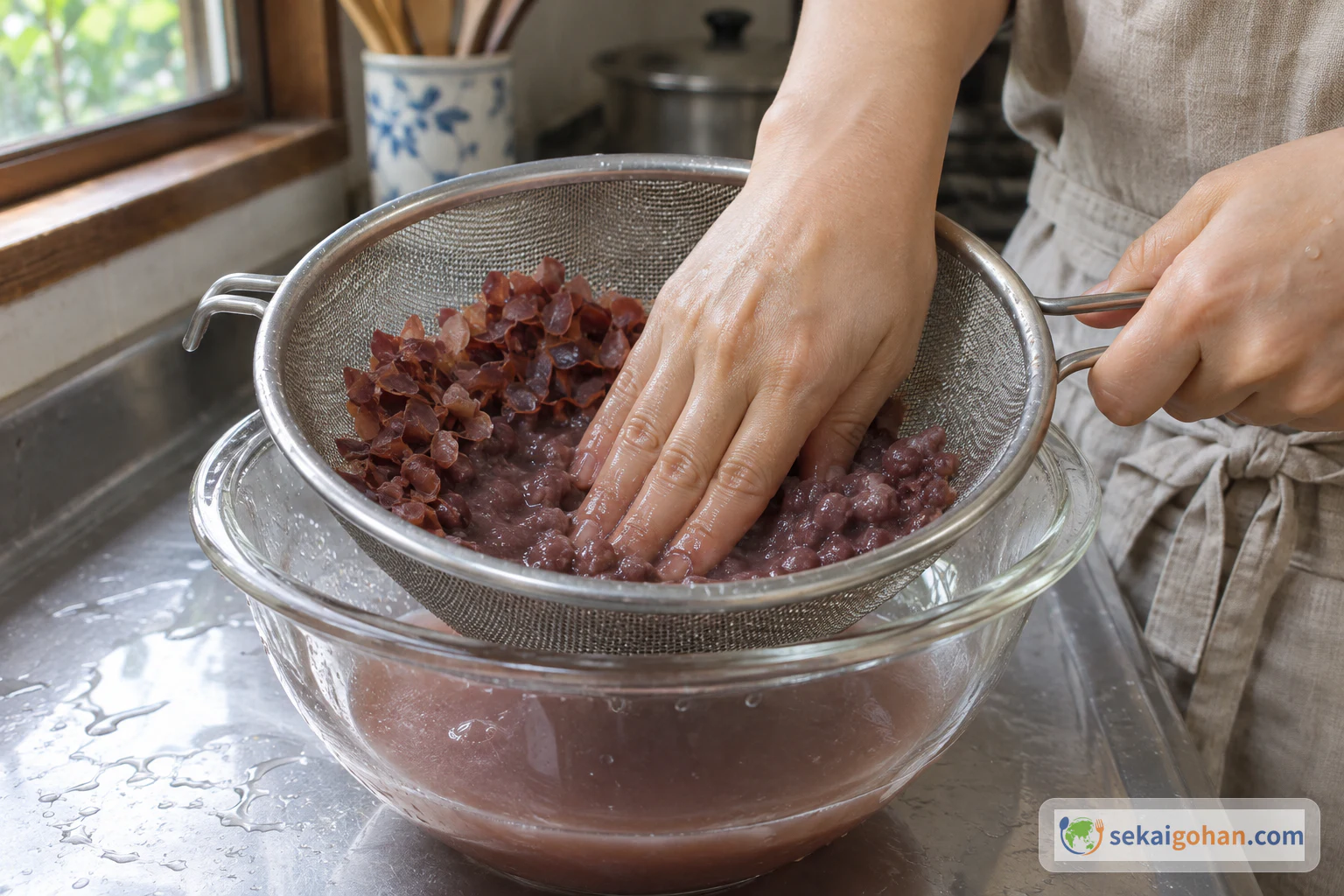
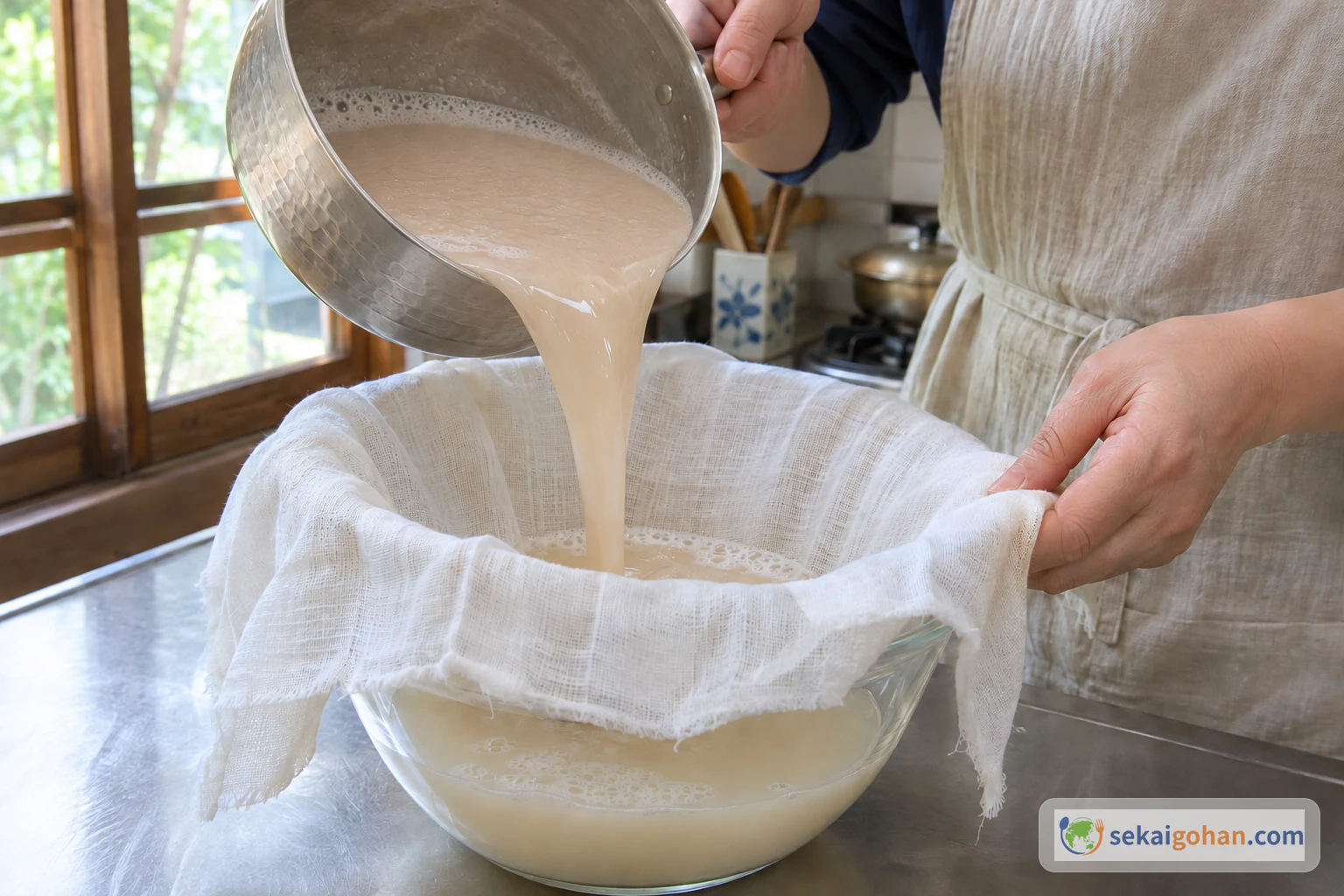
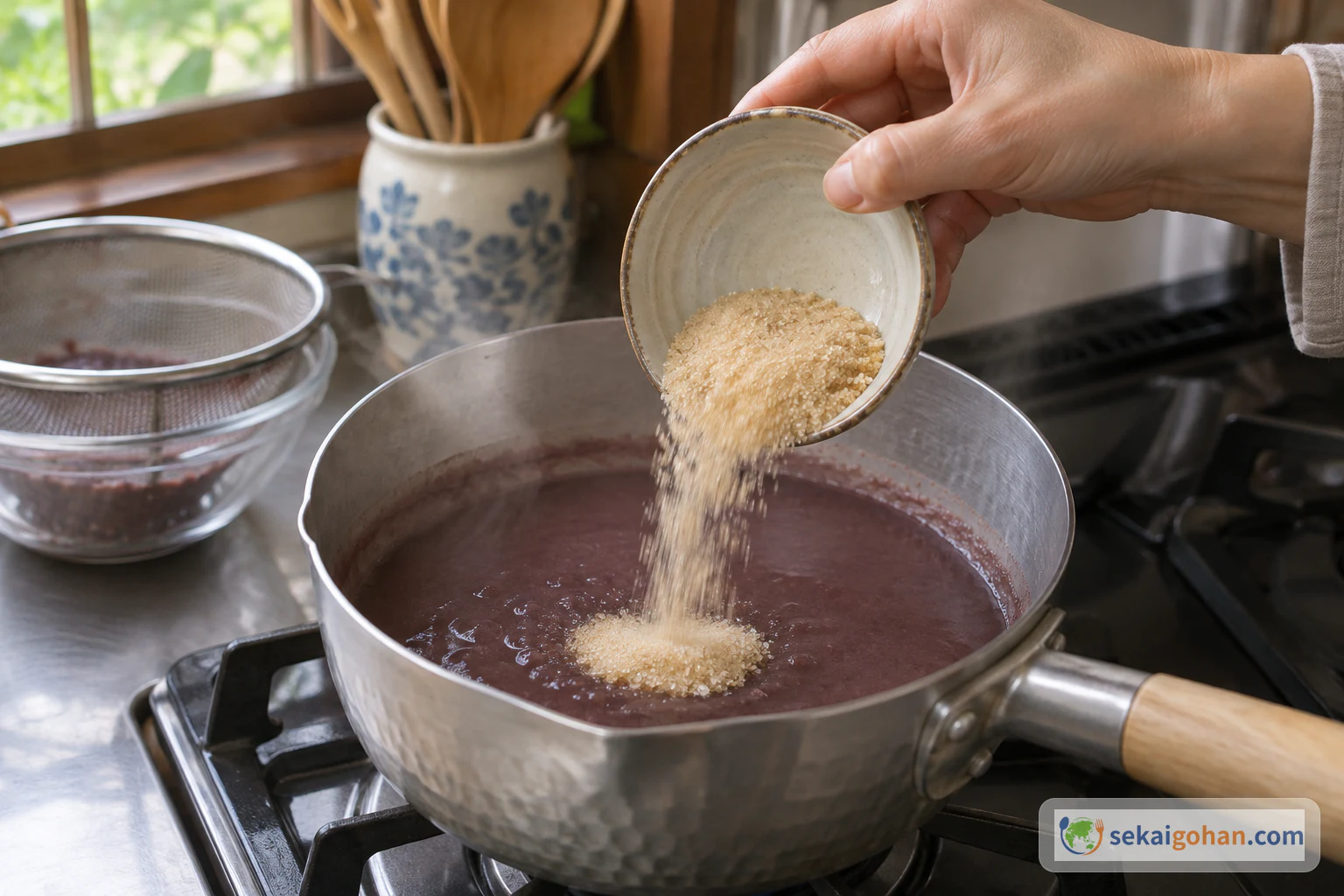
This article follows one specific version: a gozen shiruko (御前しるこ) made from dried azuki beans. The beans are boiled, pressed through a sieve to remove the skins, settled in water, strained again through cotton cloth and sweetened with sugar and a little salt. Instead of mochi, the bowl gets small white shiratama dumplings made from shiratamako, a glutinous rice flour. The result is a smooth bean soup rather than one full of whole beans.
The recipe comes from Kikkoman's Home Cooking recipe site, which lists it as serving 4 and taking 80 minutes. Those are the figures the page lists. Sekai Gohan has not kitchen-tested this recipe, and the 80 minutes is not broken down by step, so each stage below is judged by what you see in the pot, not by the clock.
Ingredients: Serves 4, with Each Water Kept to Its Own Job

Equipment
- A pot for cooking the beans, and a pot for warming the finished soup
- A pot of water for boiling the dumplings
- A colander
- A fine kitchen sieve
- Several bowls (for catching the bean liquid, settling it and holding cold water)
- A clean sarashi cotton cloth
- A measuring cup and a tablespoon
- A spoon or spatula for stirring
- A slotted spoon
- Serving bowls
Choosing and Swapping: Keep the Flour and the Sugar as They Are
Shiratamako is a flour made from glutinous rice, and it is not the same as potato starch, joshinko (non-glutinous rice flour), mochiko or ready-made mochi. This recipe is built around shiratamako with 3 tablespoons of water, so swapping in another flour changes both the dough and the dumplings. Shiratamako is rice-based, but production lines differ by product, so check the package label for allergen and shared-facility information. This article does not guarantee any product is allergen-free.
Sugar is set at 150g for this version. Using a different sweetener or reducing the sugar is your own experiment. It changes the taste and may change other qualities of the soup, and nothing here guarantees the result.
Dried azuki is the starting point. Canned azuki or ready-made bean paste would make a different, shorter recipe with different steps and amounts, so they are not used here.
Method: Cook, Strain, Settle, Sweeten, Then Make the Dumplings
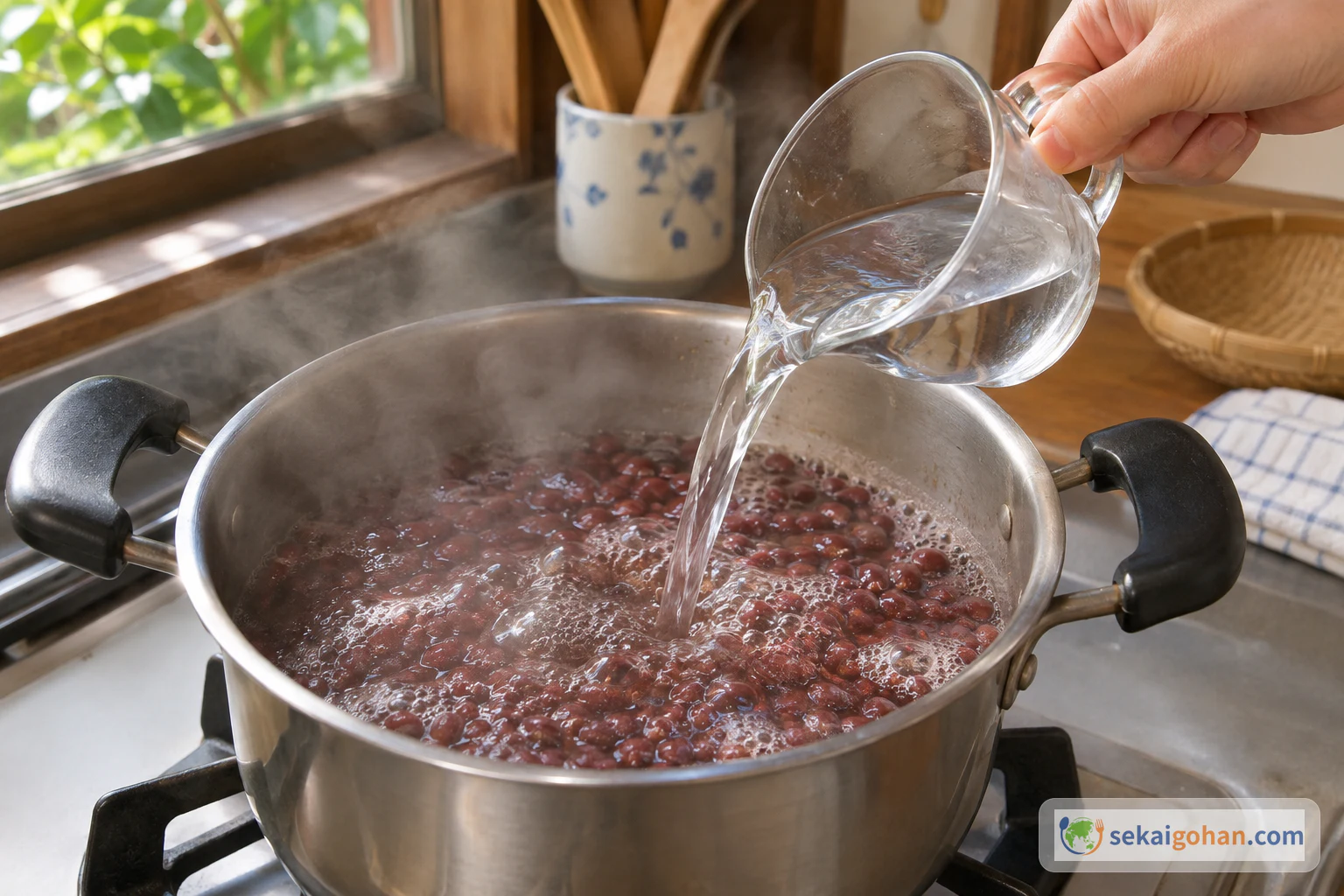
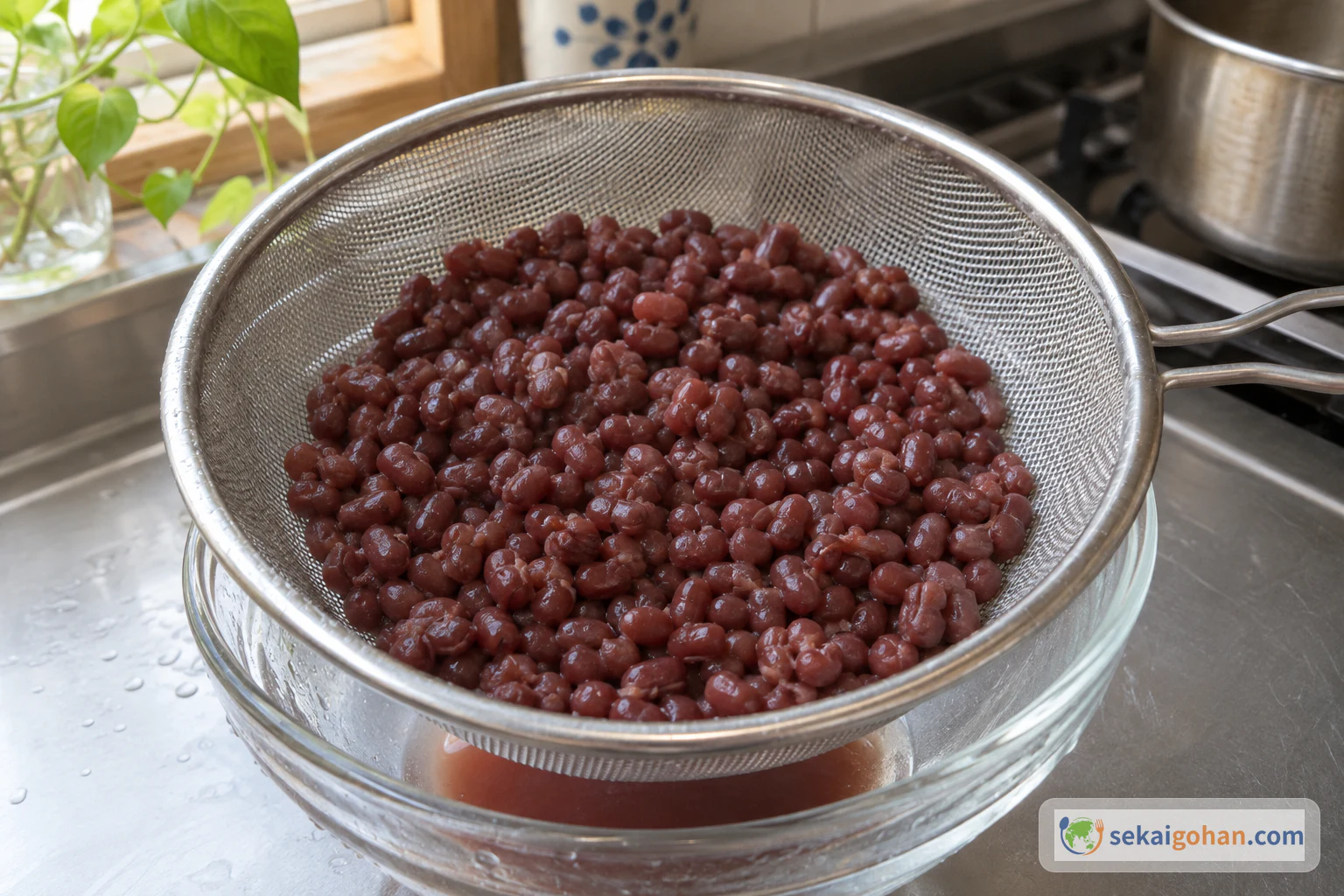
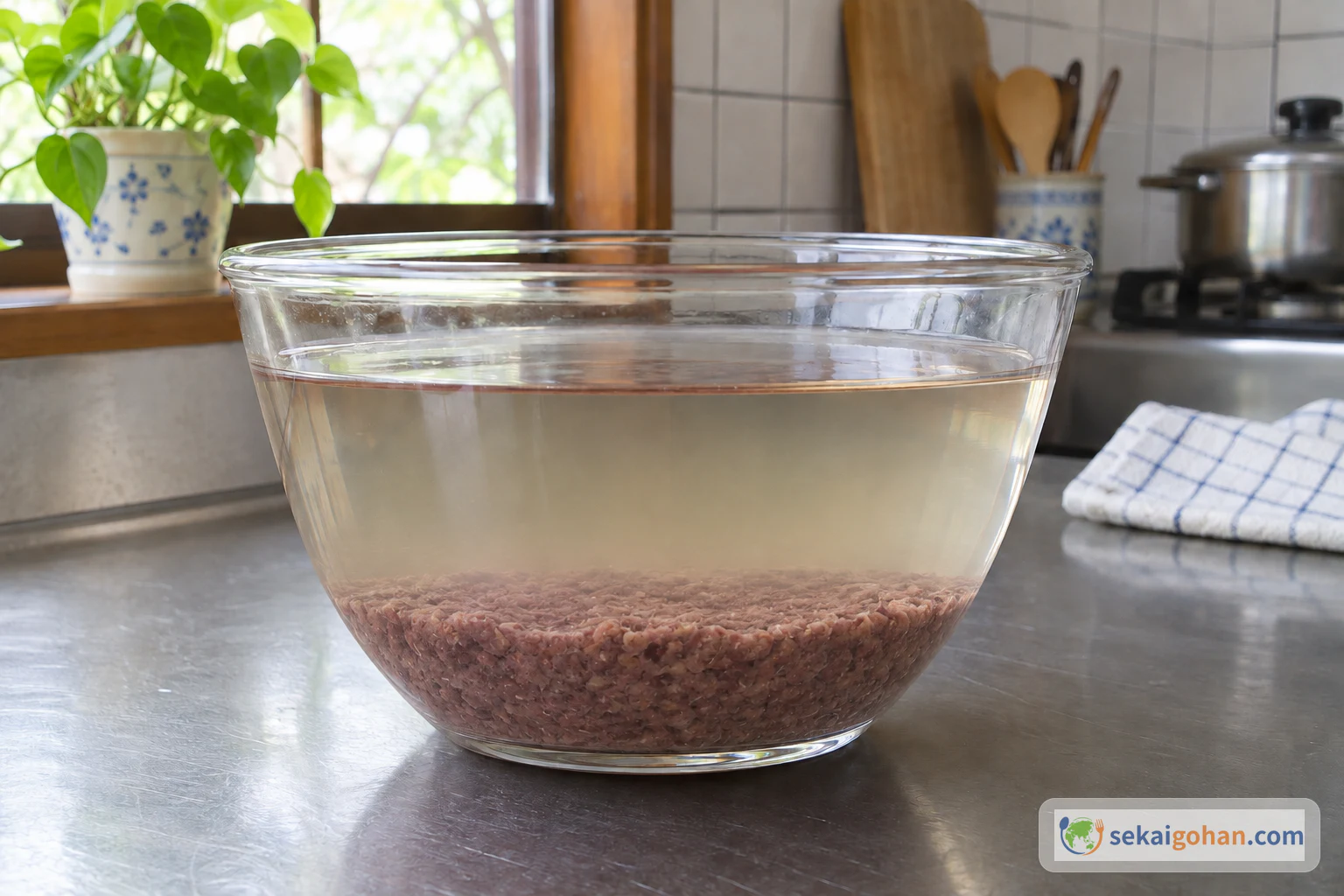
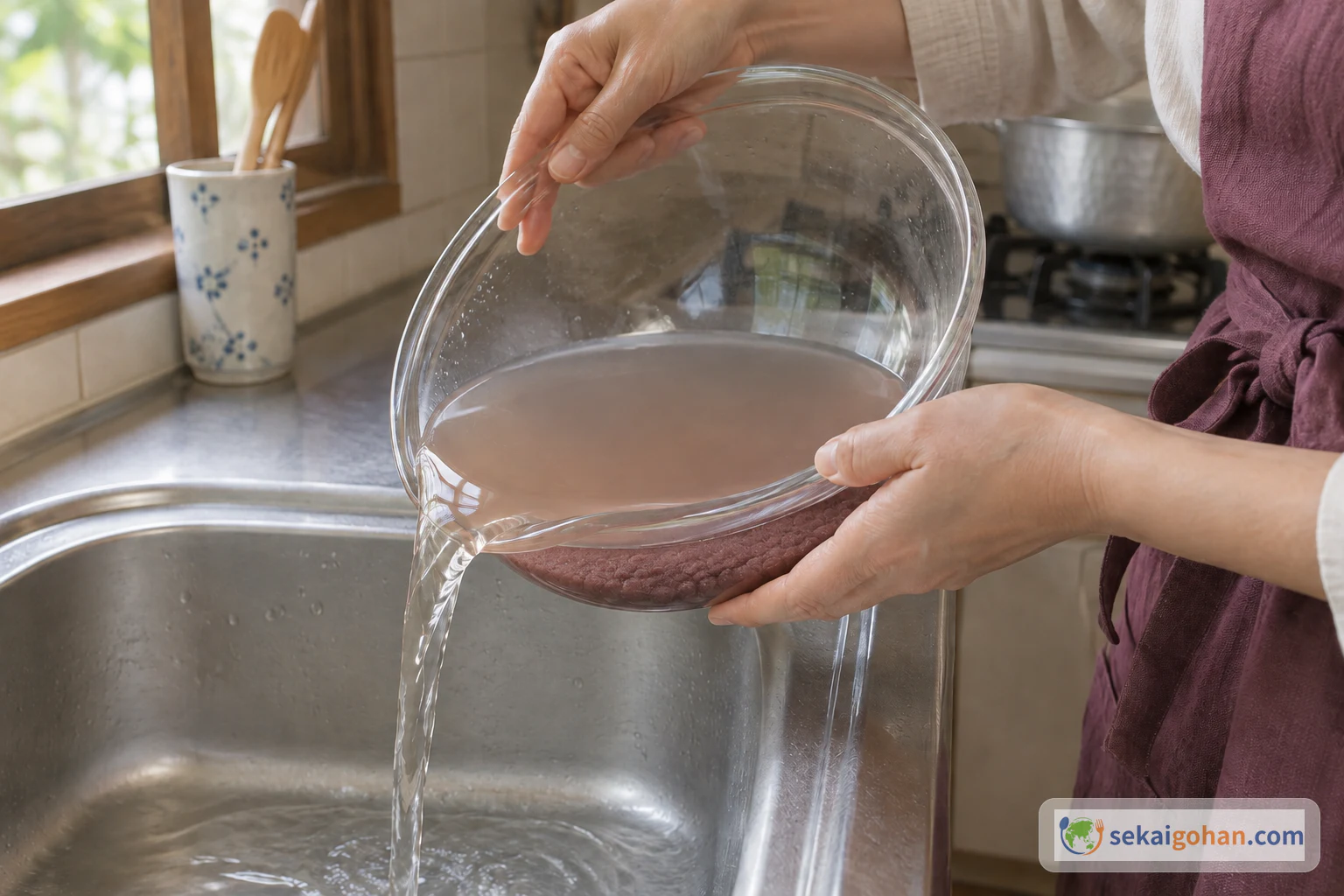
The bean work runs in one direction: cook until soft, press through a sieve, strain again, settle and pour off the top water, strain through cloth, then sweeten. Make the dumplings once the soup is finished. Hot pots and boiling water are involved throughout, so pour and drain with care, and keep the sieve, bowls and cloth clean.
Skins, Cloudy Water, Thick Soup: Fixing Things Along the Way
Most of the work in this recipe is in the straining. When something seems off, go back to the cue for that stage rather than to a time.
| Condition | What to check | What to do |
|---|---|---|
| The beans are still firm after the second cooking | The beans should be soft before you strain | Keep cooking in the fresh water until they are soft. No time is set, so judge by the beans |
| Skins end up in the bowl | Skins should stay in the sieve in step 5 | Pass the liquid through the sieve again, as in step 6 |
| The top water stays cloudy | Settling and pouring off is repeated until the top water is clear | Add plenty of water again, let it settle and pour off the top. There is no fixed number of rounds |
| Solids pour out with the top water | Only the top water should leave the bowl | Pour more slowly and stop before the settled layer moves |
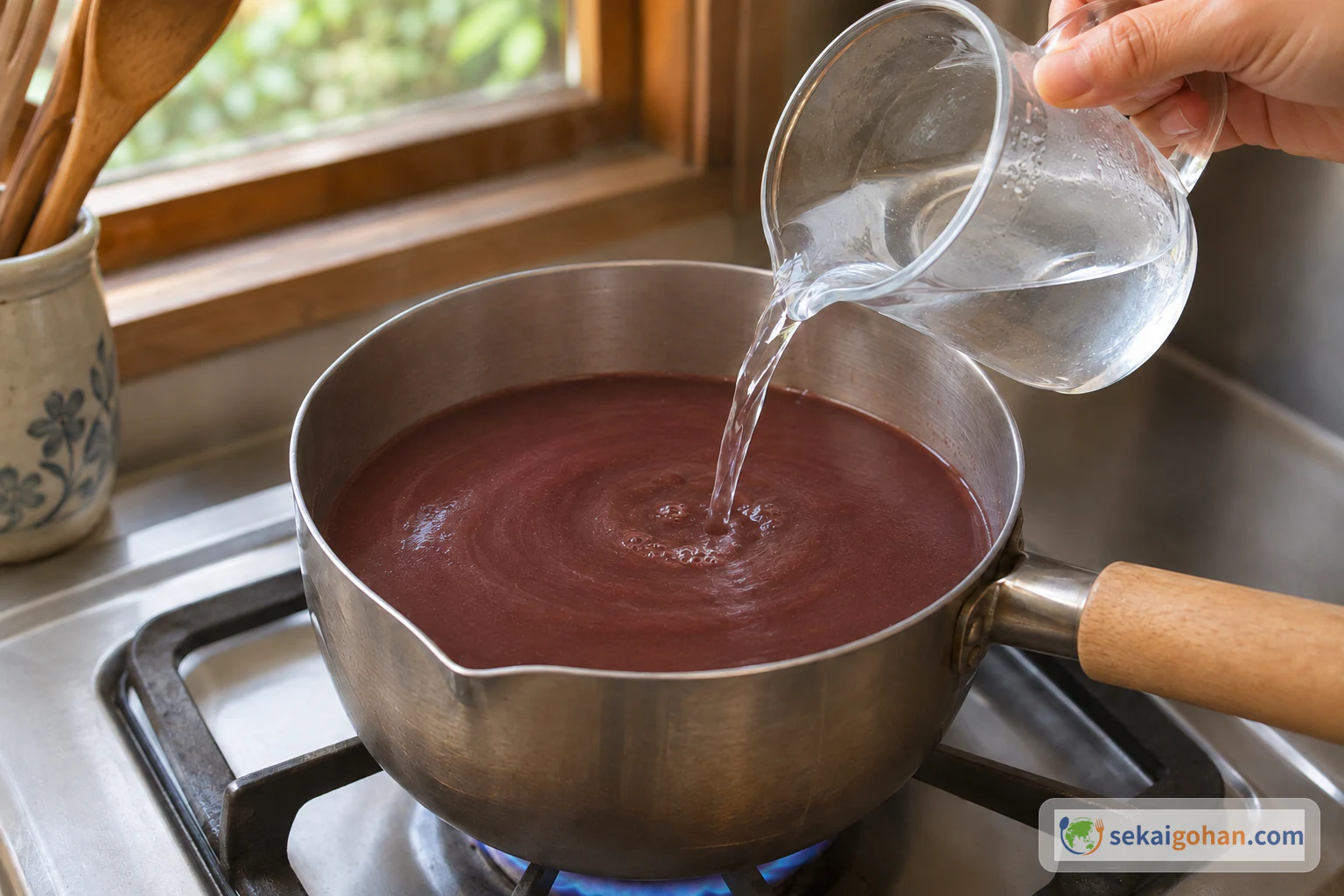
| The soup is too thick | Finishing water is added as needed | Over low heat, add water as needed and stir |
| The dumplings sink | They are cooked to the point of floating | Leave them in the boiling water until they rise, then scoop them out |
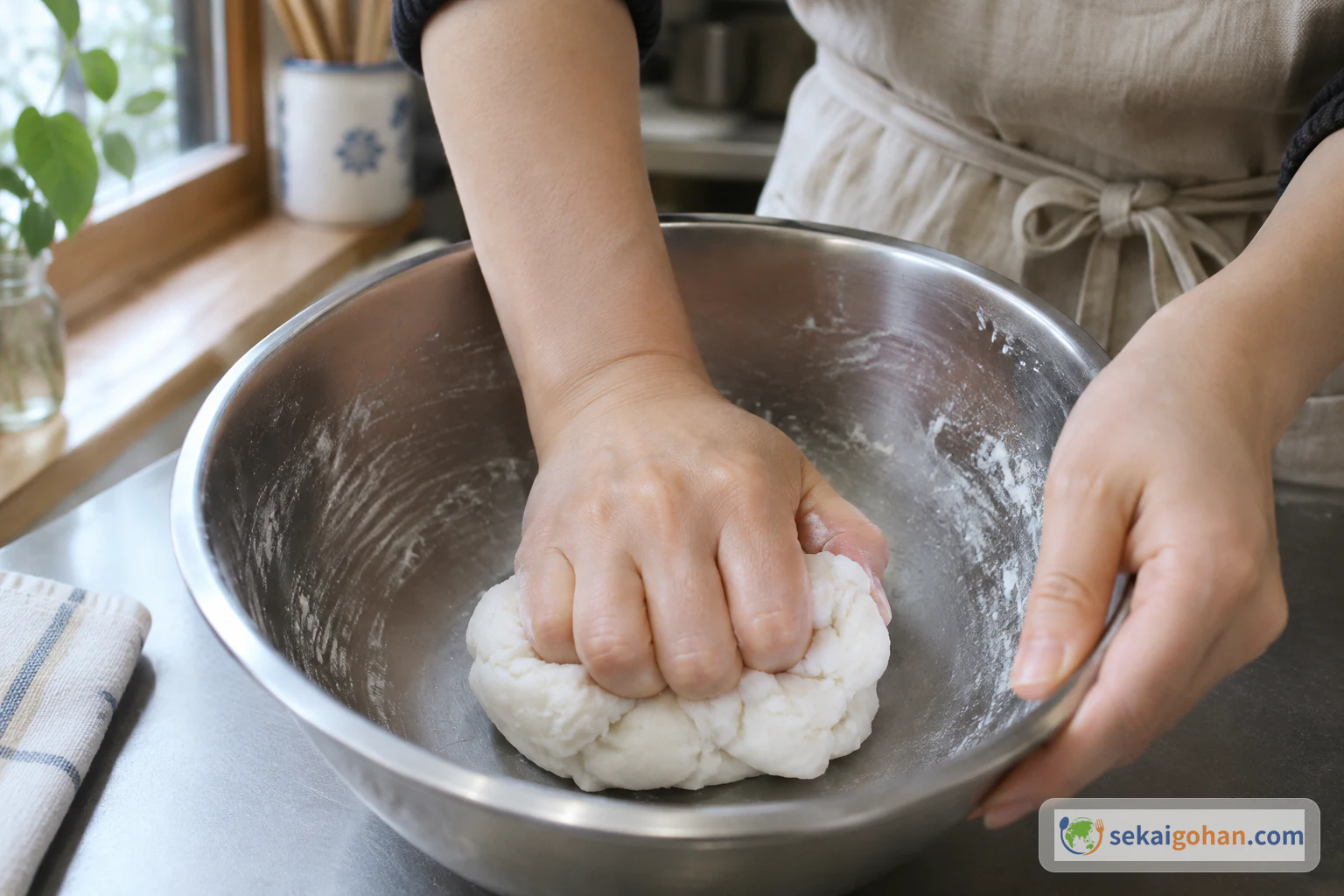
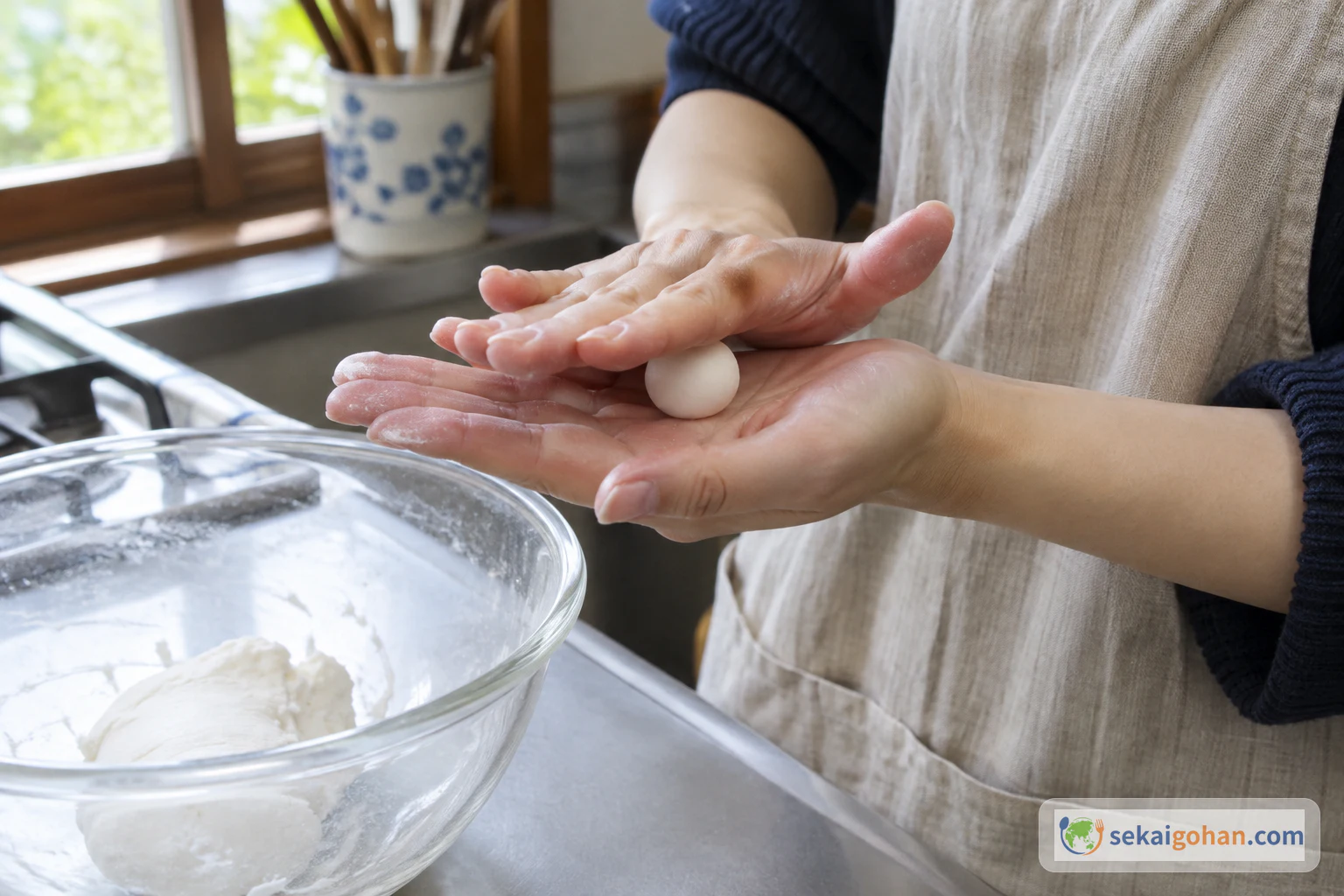
For the dough, aim for the earlobe softness in step 13. There is no fixed rule for adding extra water beyond the 3 tablespoons.
Variations: Mochi for Kagami Biraki, Chilled Shiruko and More
These are separate ways of eating, not part of the gozen shiruko above.
With mochi for kagami biraki. Japan's Ministry of Agriculture, Forestry and Fisheries describes eating mochi from kagami biraki with azuki, for example turning the opened mochi into zenzai with canned azuki. If you serve mochi in place of the shiratama, it becomes a different bowl from this recipe.
Mochi can cause choking. Japan's Consumer Affairs Agency, in its guidance on preventing accidents among older people, advises cutting mochi into small pieces, moistening the throat first with tea or soup, and chewing well so the mochi mixes with saliva before swallowing. Sipping the soup does not make mochi safe to swallow; all three precautions go together. Using shiratama instead of mochi is not a safety guarantee for anyone with chewing or swallowing difficulties.
Chilled shiruko. The recipe notes that it can also be served as chilled shiruko (hiyashi shiruko). No chilling method or holding time is given, so none is set here.
Keeping some bean texture. Skipping part of the straining leaves more bean in the soup. That is a change of texture and no longer the smooth gozen shiruko this recipe makes.
Less sugar. You can try it, but treat it as your own experiment. The 150g of sugar is what this version is built on.
Kagami Biraki and the January Bowl of Oshiruko
Meiji's food education pages describe gyōji-shoku, foods eaten at seasonal milestones and festivals, as a Japanese custom, and their January calendar pairs kagami biraki with oshiruko. The Ministry of Agriculture, Forestry and Fisheries describes kagami biraki as the day the kagami mochi offered at New Year is taken down and eaten with wishes for good health. Rather than being cut with a knife, the mochi is broken open by striking it. One way it is eaten at home is with azuki, as zenzai.
That is the setting for this bowl, but the recipe itself is not made from kagami mochi. It is a gozen shiruko of strained azuki with shiratama dumplings, which you can make whenever you like. The dates of kagami biraki and the names people use for these azuki dishes vary, and the sources used here do not settle them for all of Japan. For more dishes from the same table, see Japanese food on Sekai Gohan.
Frequently Asked Questions
Are oshiruko and zenzai the same thing?
The sources used here mention both in connection with kagami biraki, but they don't give a single nationwide definition that separates the two. In this article, oshiruko means the version made here: azuki strained smooth and served with shiratama.
Do I need to soak the dried azuki first?
The recipe does not start with soaking. The beans are rinsed and go straight into the pot with 3 cups water, followed by the 1 cup added at the boil. No soaking step is added here.
How much water goes into the shiratama dough?
3 tablespoons for 50g shiratamako. Don't confuse it with the cup measures used for cooking the beans.
How long does each step take?
The recipe lists a total of 80 minutes but doesn't give times for individual steps. Judge each stage by its cue: the wrinkles smoothing out, the beans turning soft, the top water running clear, and the dumplings floating.
Why are the bean waters given in cups with no millilitre conversion?
The recipe uses cups without stating a cup volume, so this article keeps its units rather than guessing a conversion. The straining, settling and finishing waters are "plenty" and "as needed" by design.
Can I use cut mochi instead of shiratama?
You can eat it that way, as a separate variation tied to kagami biraki, but follow the Consumer Affairs Agency's choking precautions: cut the mochi small, moisten your throat first with tea or soup, and chew well before swallowing. See the warning under Variations.
Can I make oshiruko ahead and store it?
The recipe gives no storage period or reheating method for the finished oshiruko, so this article does not give one. The storage guidance on the Ministry of Agriculture page applies to mochi itself, not to finished shiruko or shiratama.
Sources
- Kikkoman Home Cooking, "おしるこ(お汁粉)【あずき(小豆)からつくる本格おやつ】" (Oshiruko made from azuki). The only recipe used here: the gozen shiruko description, the listed 4 servings and 80 minutes, all ingredient amounts, the nine-step method, and the note that it can be served chilled. https://www.kikkoman.co.jp/homecook/search/recipe/00002674/
- Ministry of Agriculture, Forestry and Fisheries (Let's Washoku Project), "鏡もちの由来と美味しく食べるコツ" (The origins of kagami mochi and tips for enjoying it). Used for kagami biraki as the day kagami mochi is taken down and eaten with wishes for good health, breaking it open rather than cutting it with a knife, and eating it with canned azuki as zenzai. Its mochi storage guidance is not applied to finished oshiruko. https://www.maff.go.jp/j/keikaku/syokubunka/culture/wagohan/articles/2301/spe13_01.html
- Meiji Co., Ltd., "行事と食事|日本の食と文化" (Festivals and food: Japanese food and culture). Used for gyōji-shoku as foods eaten at seasonal milestones and for the January calendar pairing kagami biraki with oshiruko. https://www.meiji.co.jp/meiji-shokuiku/japaneseculture/foodmeal/
- Consumer Affairs Agency, "みんなで知ろう、防ごう、高齢者の事故" (Let's learn about and prevent accidents among older people). Used only for the mochi choking precautions: cut mochi small, moisten the throat first with tea or soup, and chew well before swallowing. https://www.caa.go.jp/policies/policy/consumer_safety/caution/caution_009