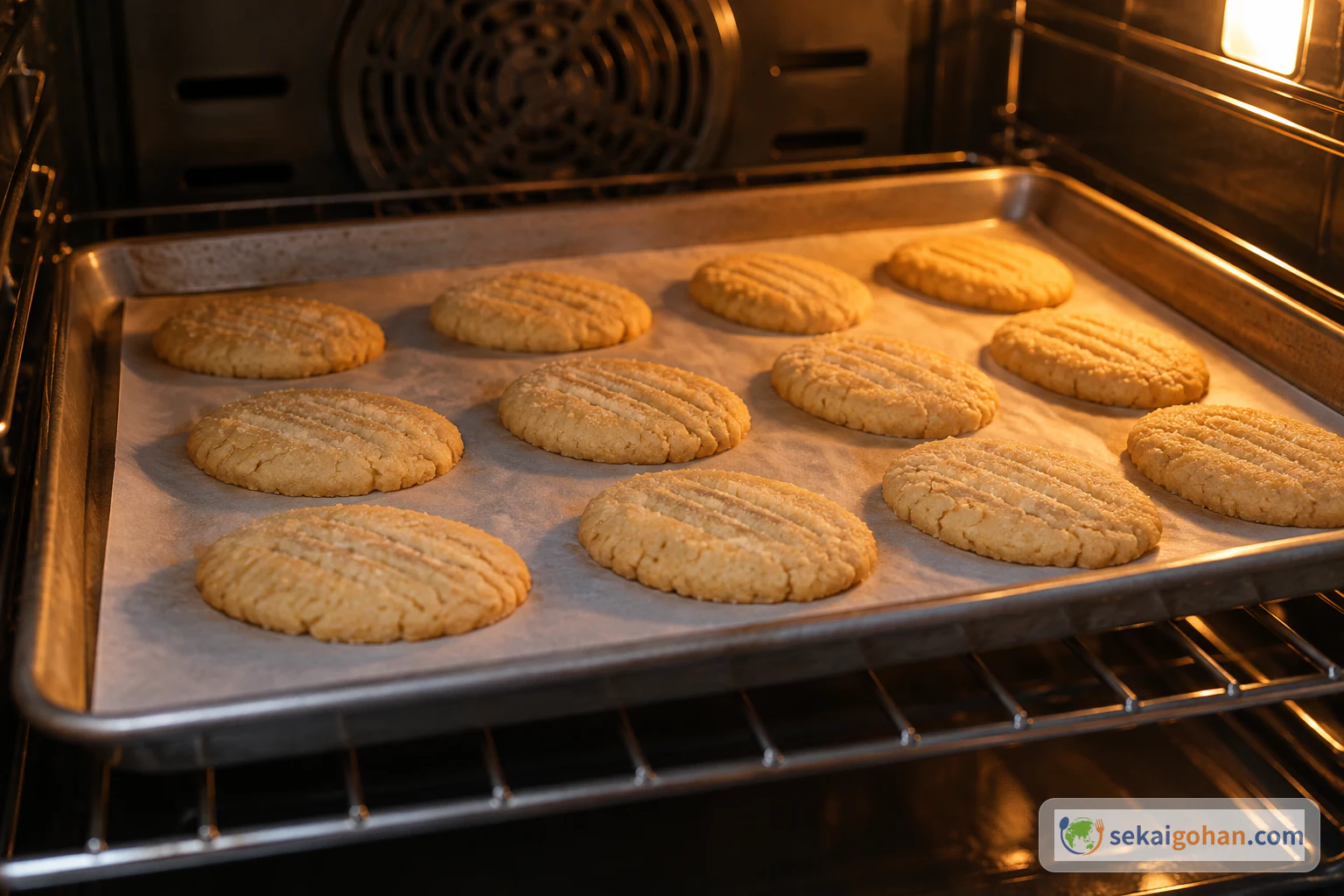
Gaizai Crackers: A Small Oval of Crust, Filling and Patient Handwork
This recipe has not been kitchen-tested, and no temperatures have been measured in it. The baking time is a guide only. Your own food thermometer decides when the pork-fat filling is done.
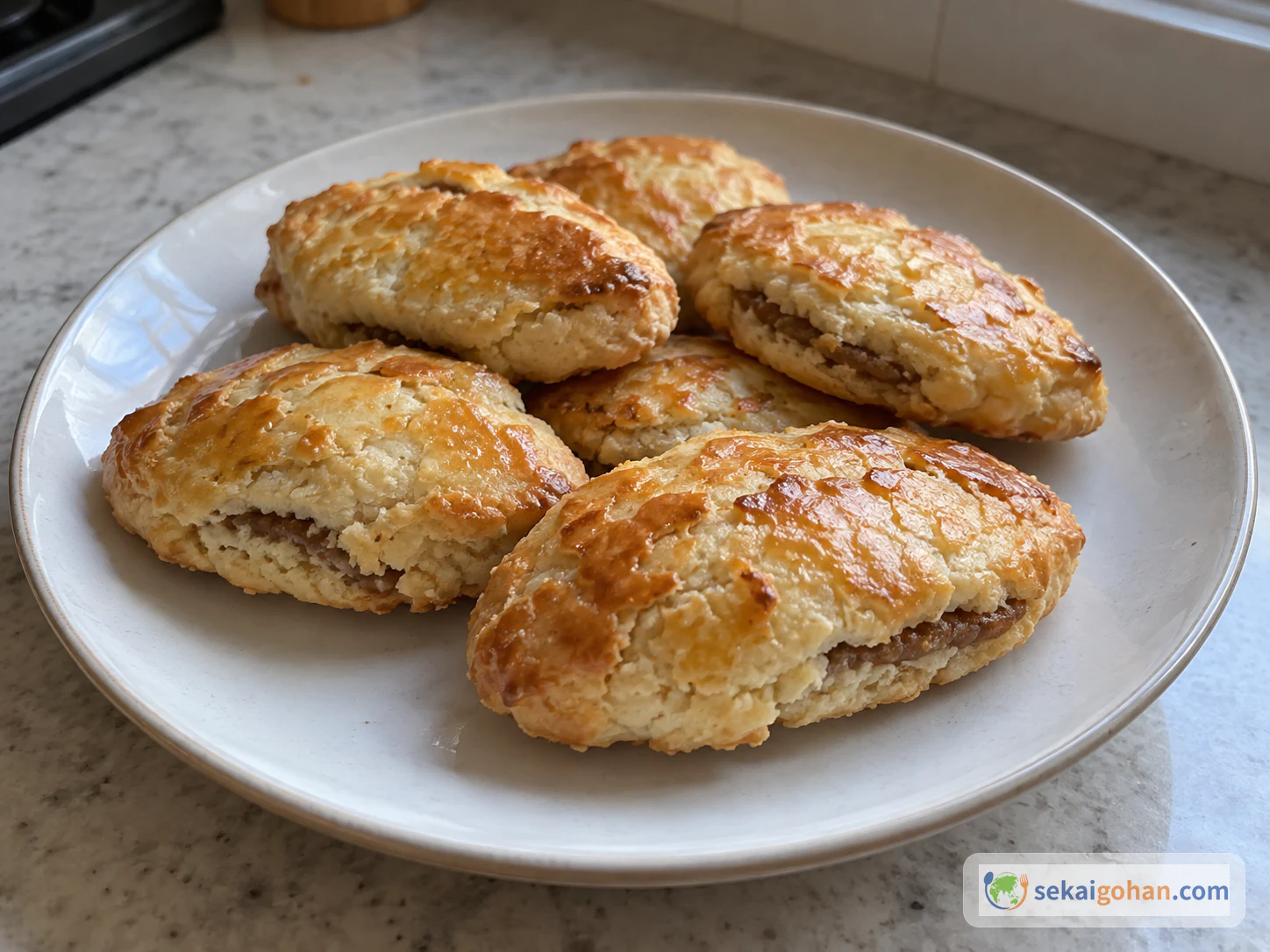
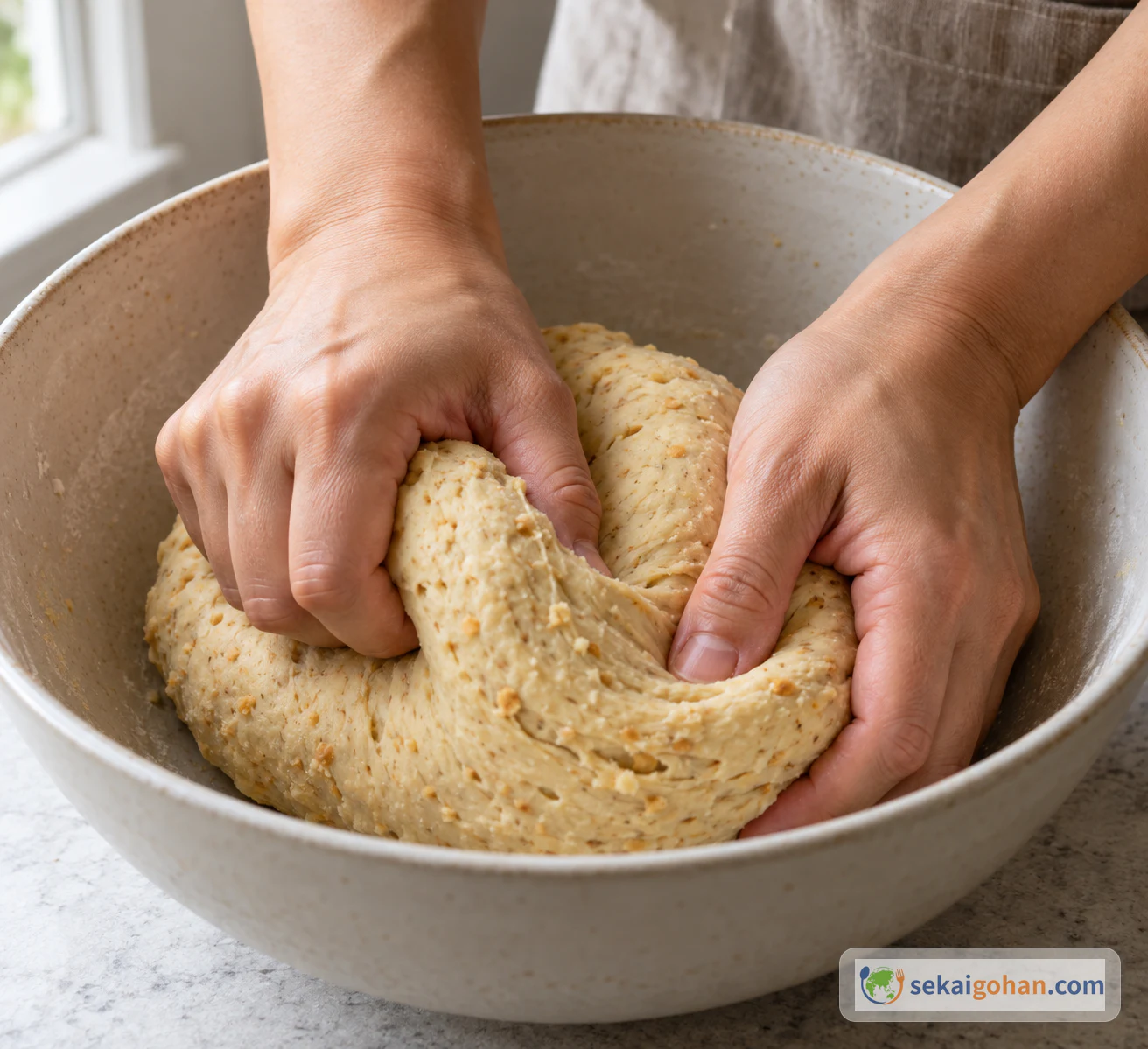
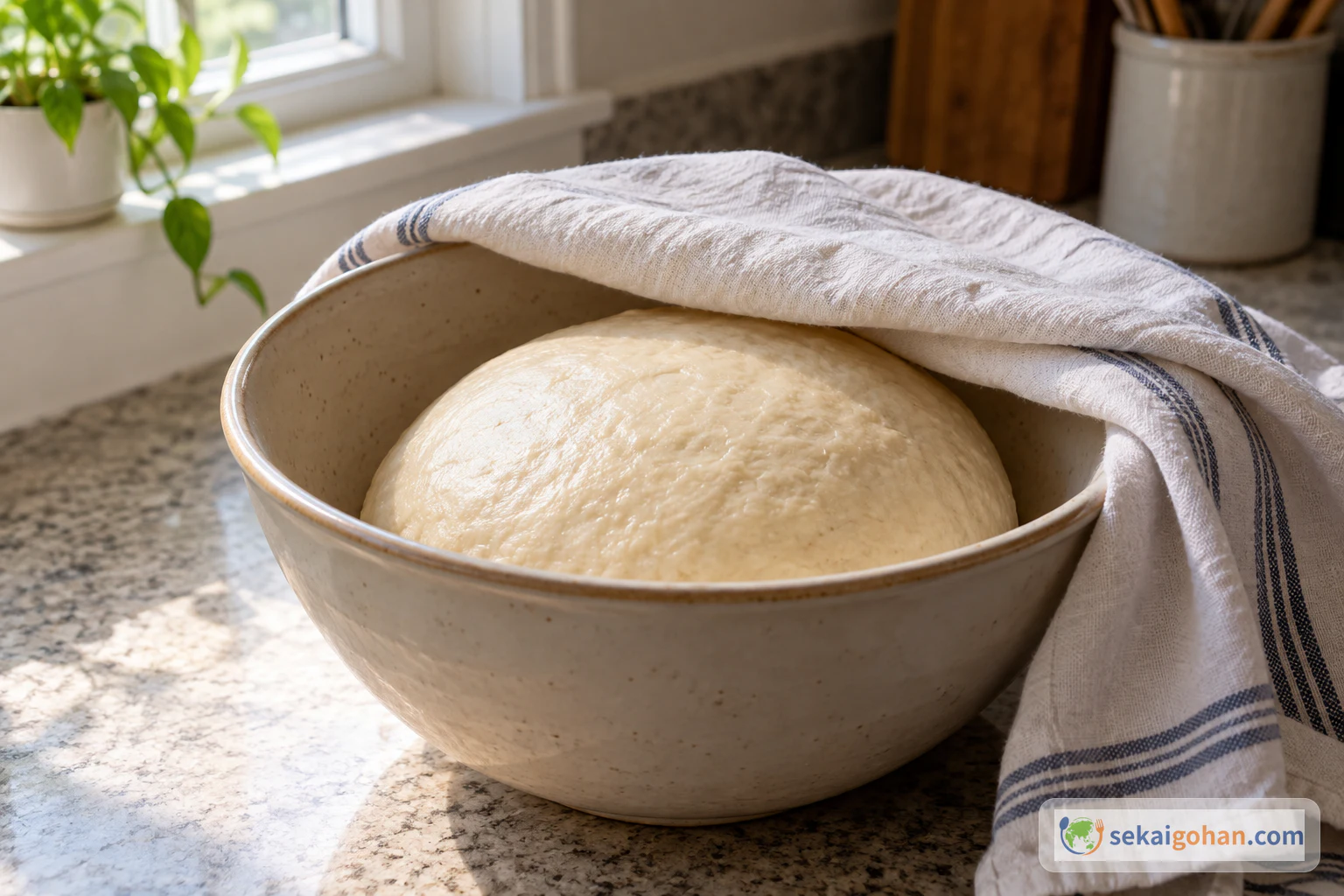
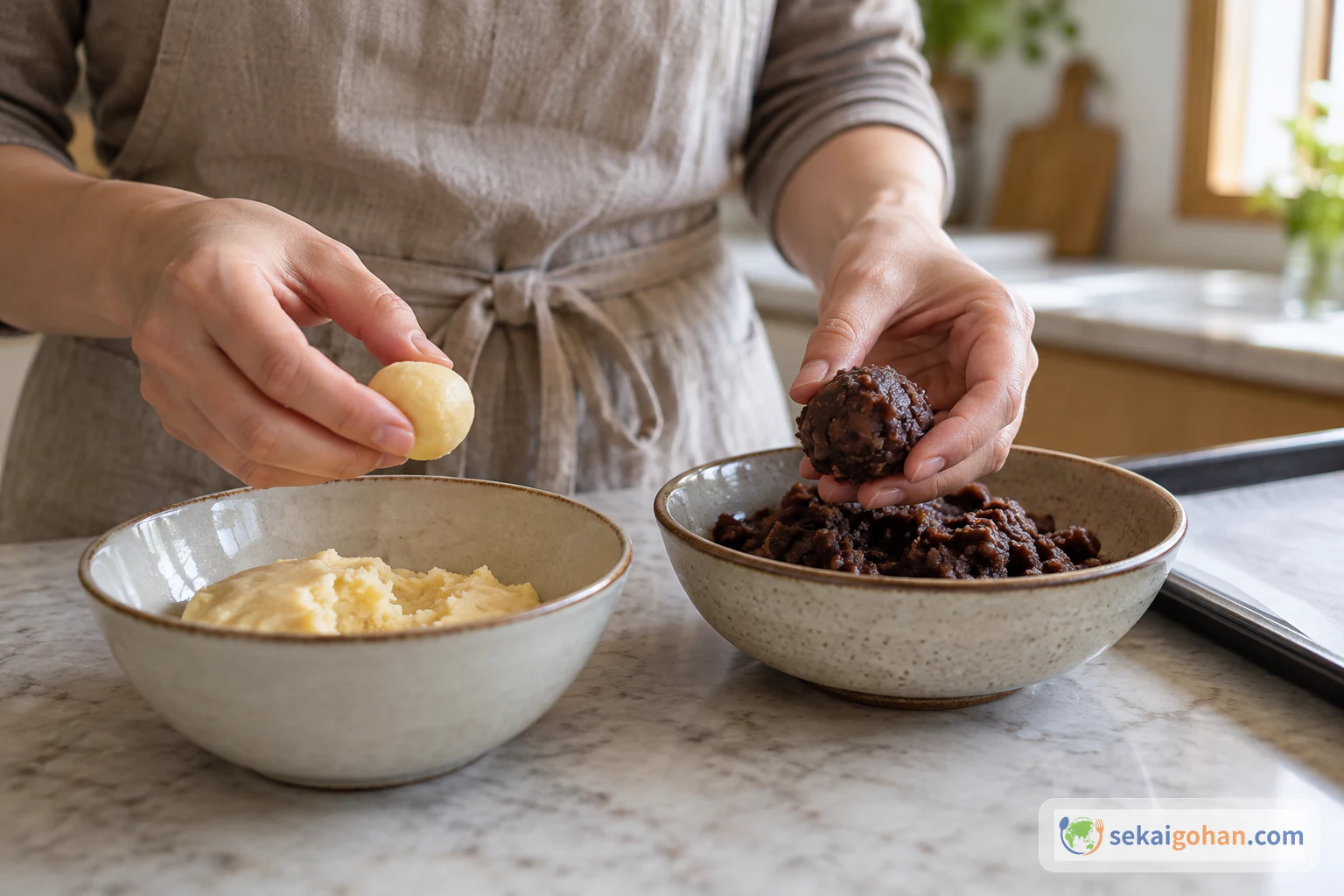
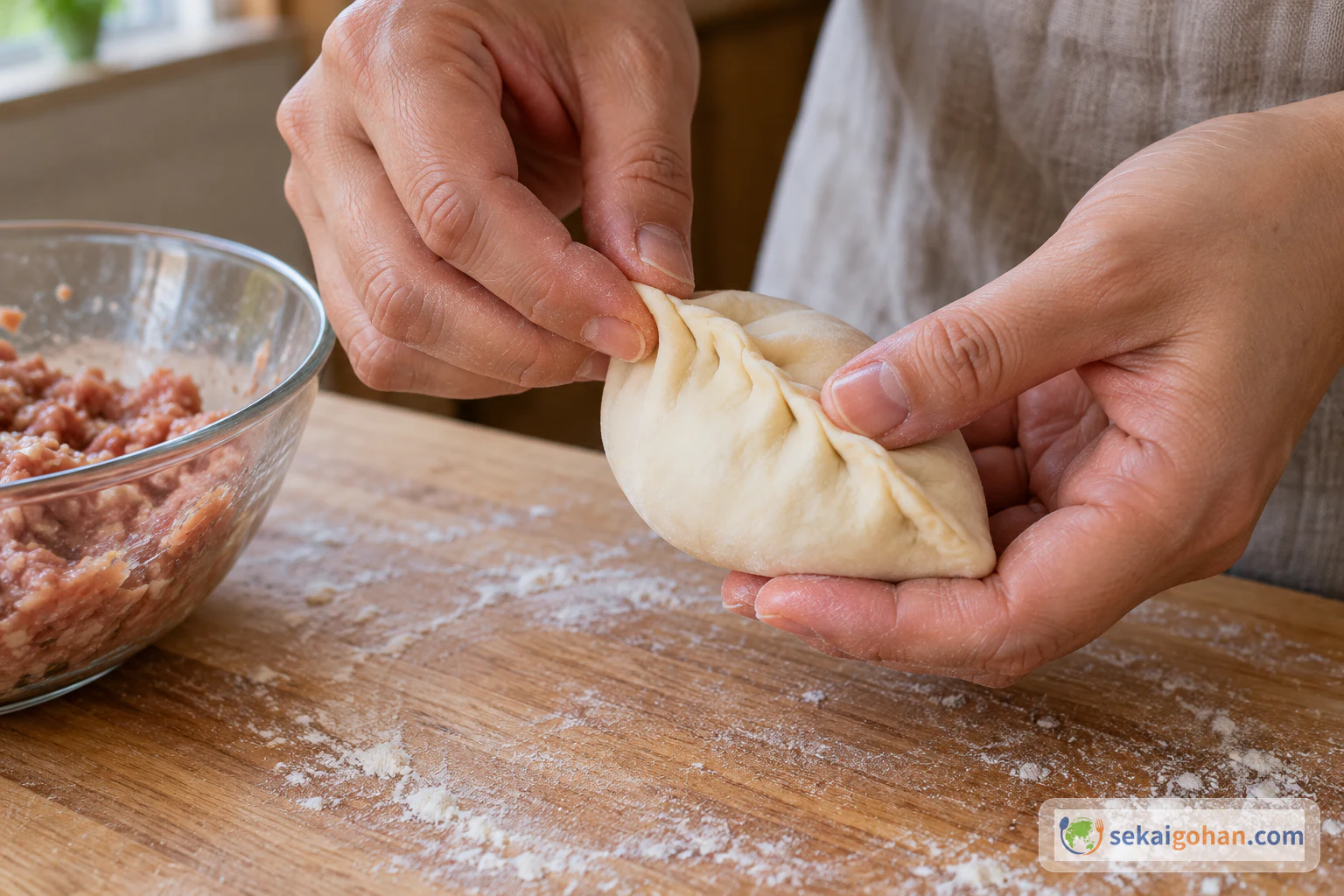
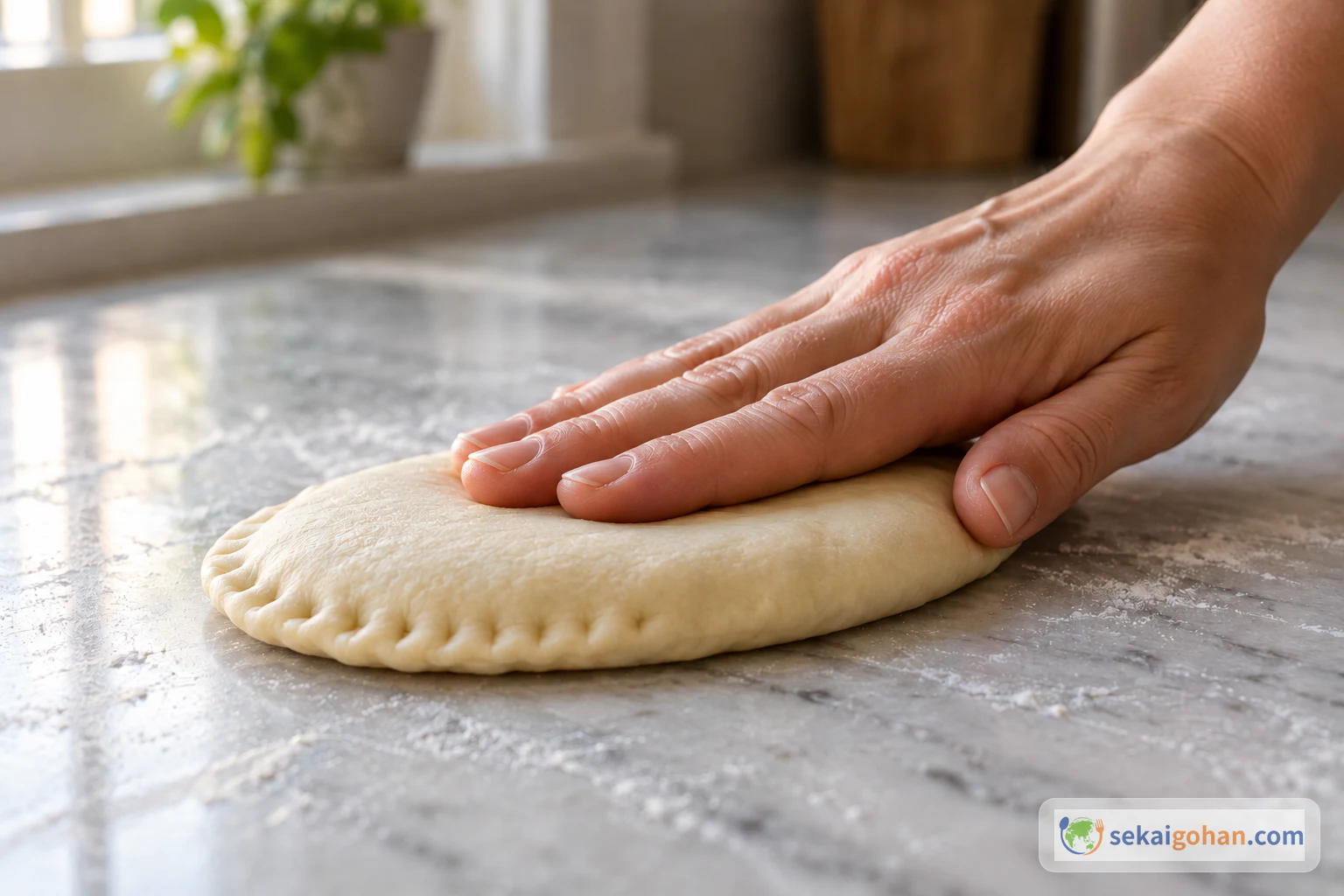
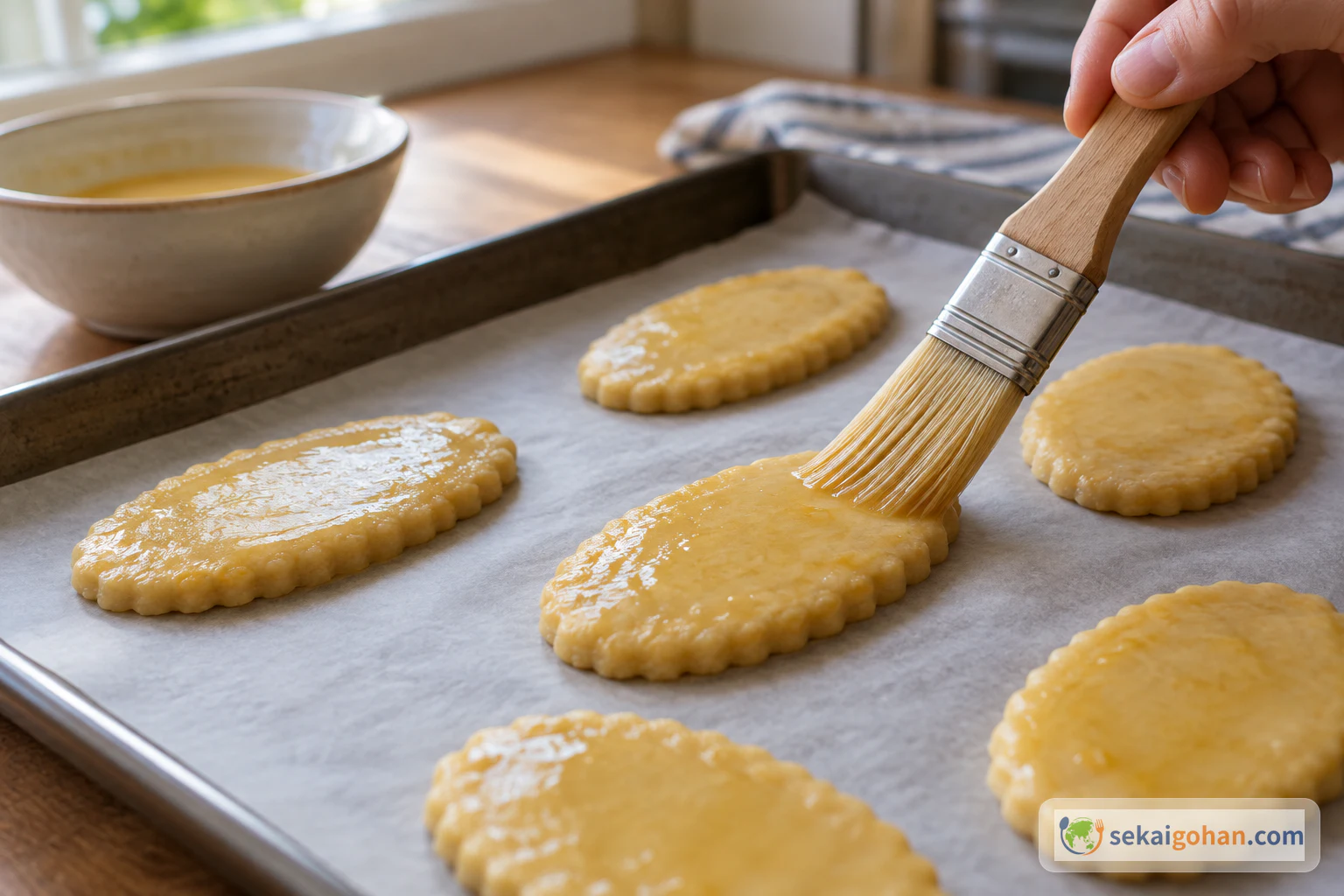
The crust and the filling are made separately, and each gets its own rest. Only at the end do they come together: 10g of dough closed around about 15g of filling, shaped into a small oval, pressed flat, brushed with egg and baked.
Gaizai crackers (鸡仔饼) are filled Cantonese baked cookies. This article follows one version only: "岭南鸡仔饼", posted on 8 November 2022 by the School of Hotel Management and Culinary Arts at Guangzhou Huashang Vocational College as part of its Cantonese pastry coursework. The page presents the cookies as a Guangzhou specialty snack and describes them as sweet and fragrant, crumbly, and sweet with a touch of salt. Those are the college's words, not a tasting note from us.
This is not a heritage formula or a standard for all of Guangdong, and no other recipe's amounts or methods have been mixed in.
What comes from the college page, and what we added
From the college page: the ingredient names and measured amounts, the order of work, the crust's rest of about 30 minutes, the filling's rest of about 1 hour, the 10g and about 15g portions, the oval shaping, the egg brushing, and the bake at 190°C top heat and 170°C bottom heat for about 15 minutes.
Not stated on the page:
- how much water, alcohol or egg to use (only "a little" or "as needed")
- what type of oil, alcohol or egg to use
- how long or at what temperature to blanch the pork fat
- how long to marinate it
- where or at what temperature to rest the crust and filling
- how many cookies the recipe makes
We have not filled in numbers for water, alcohol or egg, or for the marinating time.
Our editorial additions and readings:
- Food safety conditions. The blanching end point, the time limit before baking and the thermometer check are ours, based on public guidance from Japan's Ministry of Health, Labour and Welfare, the US FDA and Health Canada. They are general guidance applied to this recipe by our own judgment. None of those bodies has assessed this cookie.
- 麦牙糖. The page uses this spelling. We read it as maltose, because the page says it can be melted with heat.
- 食粉. The page does not give its composition. We read it as food-grade baking soda based on Chinese-language usage. See the FAQ for how thin that evidence is.
- 肥肉. We read this as pork fat from context. The page names no cut.
- 熟面粉 (cooked flour). The page does not say how to make it. The dry-toasting method below comes from a separate article.
Ingredients: Crust, Filling and Egg
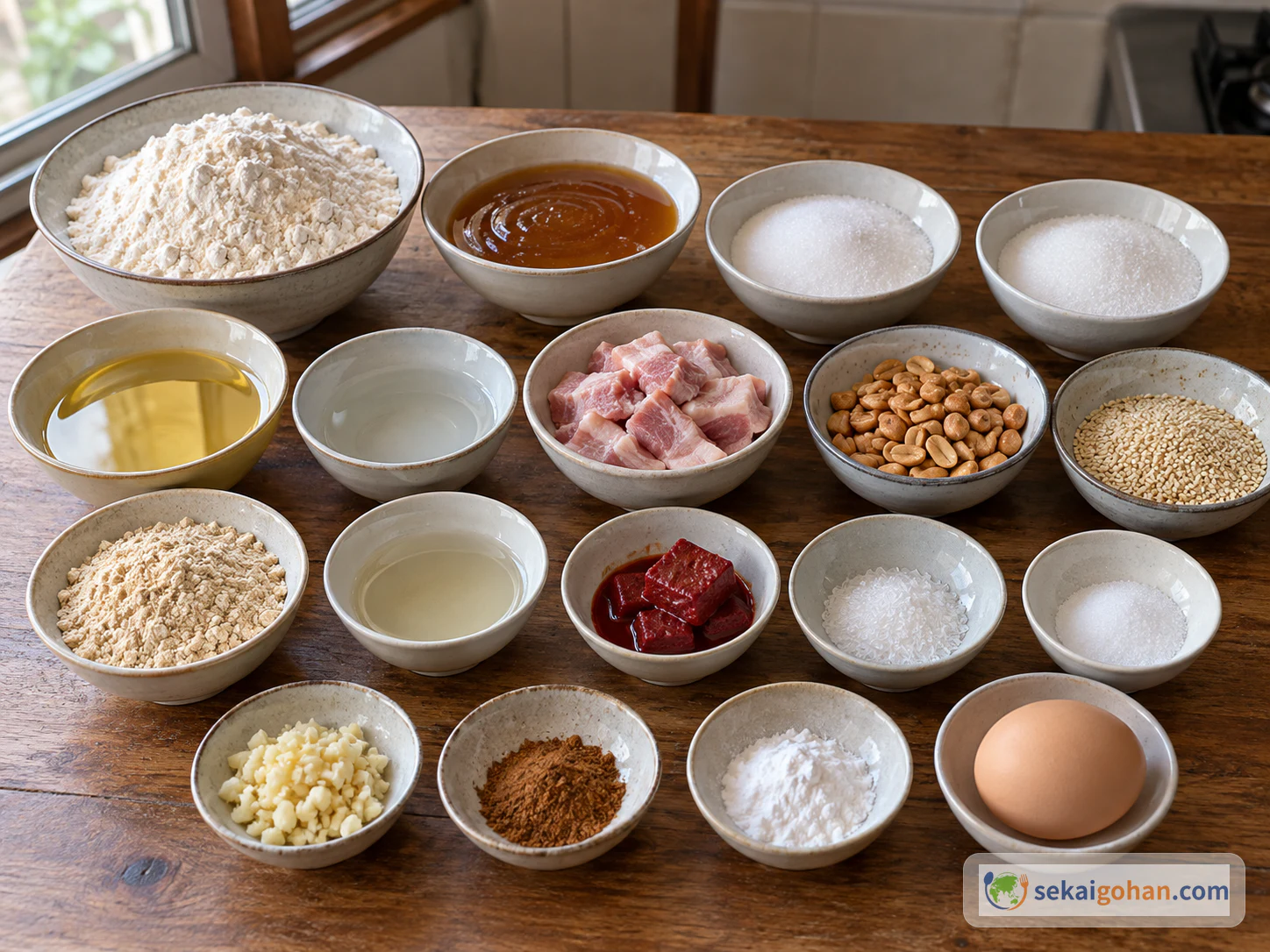
To make the cooked flour, toast flour in a dry pan over low heat with no oil or water, stirring continuously. When it smells fragrant, turn off the heat, let it cool, rub it loose and pass it through a fine sieve.
The sugar and the baking soda each appear twice, so weigh out the crust and filling portions separately.
This recipe contains wheat flour, egg, peanuts and white sesame. Depending on the product, red fermented bean curd may also involve soy or other allergens. Read the label on every packaged ingredient.
Choosing and Buying What You Need
- Low-gluten flour: search for 低筋粉. A local cake or soft flour may not be an exact match.
- Maltose: search for 麦芽糖 as well as the English name.
- Baking soda: use a food-grade product. Treat alkaline agents based on sodium carbonate, such as kansui (lye water), as a different ingredient.
- Red fermented bean curd: search for 南乳. Do not swap it for other kinds of fermented bean curd.
- Oil and alcohol: the type is left to you, and no particular one is suggested.
- Cooked flour: search for 熟面粉, or make it as described above.
Equipment
- Oven
- Food thermometer with a thin probe that reads at the tip
- Scale
- Sieve
- Mixing bowls
- Pot for blanching
- Knife and cutting board
- Mortar and pestle
- Pastry brush
- Baking tray
Method: Crust First, Then Filling, Then the Oven
These conditions are editorial additions.
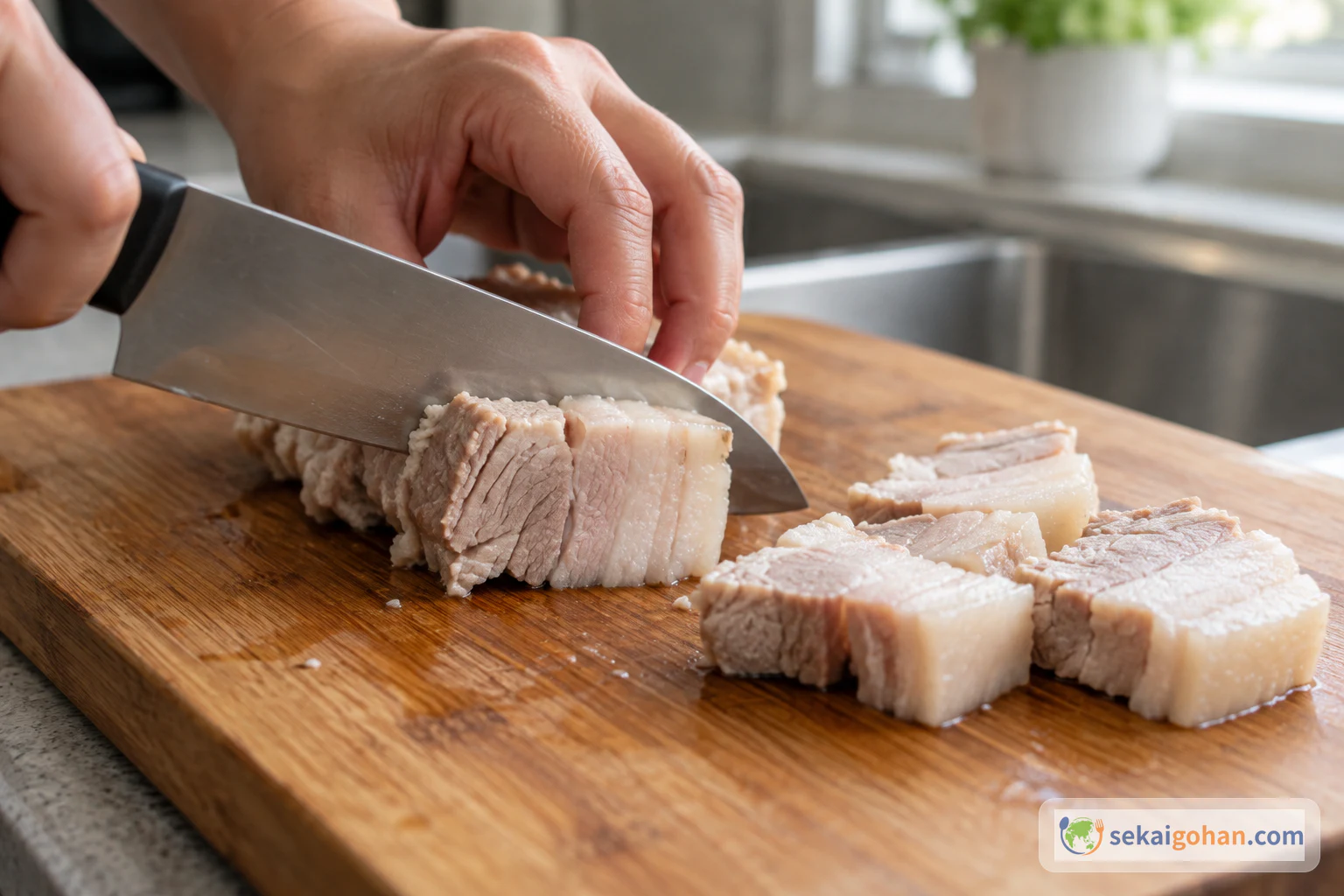
- Raw pork fat: wash your hands after touching it. Wash the knife and board it touched, then pour boiling water over them. Keep raw meat and raw egg away from other foods.
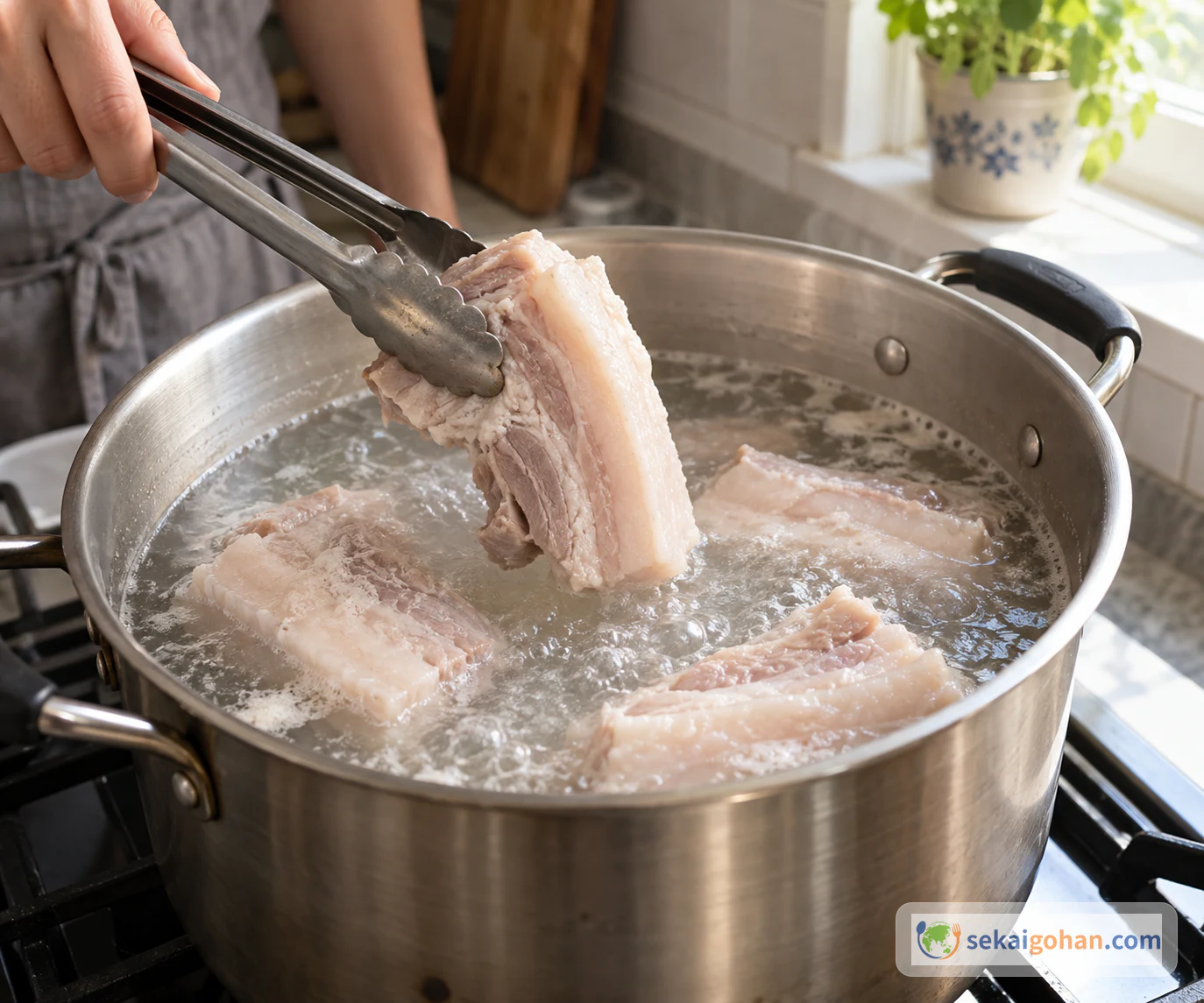
- Blanching: the center of the thickest piece must reach 75°C, then stay on the heat for at least 1 more minute.
- Time limit: from the end of blanching to the moment the cookies go into the oven, allow no more than 2 hours. If the room is above 32°C (90°F), the limit is 1 hour.
- Baking: the center of the filling must reach 75°C, followed by at least 1 more minute in the oven. Color cannot tell you this.
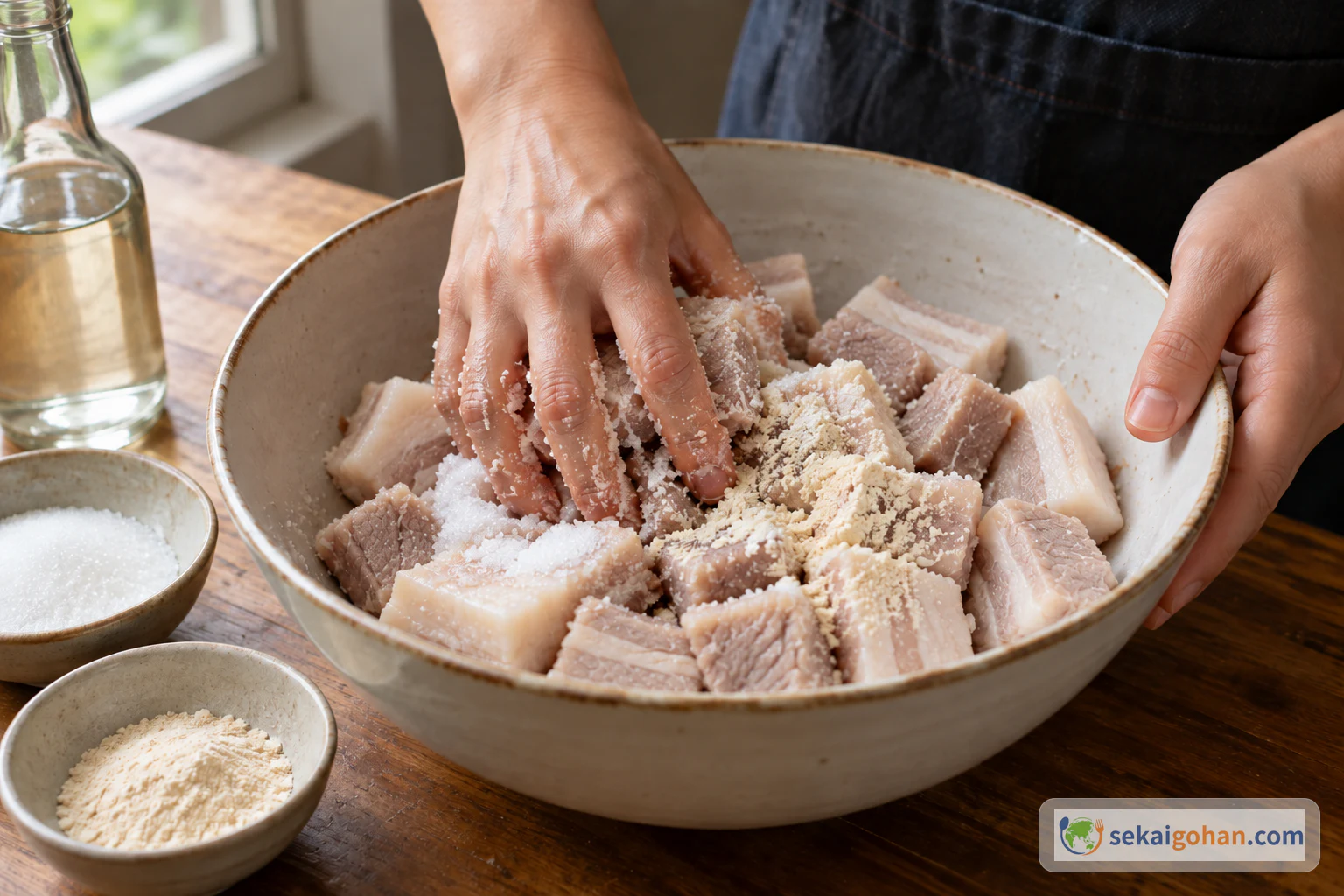
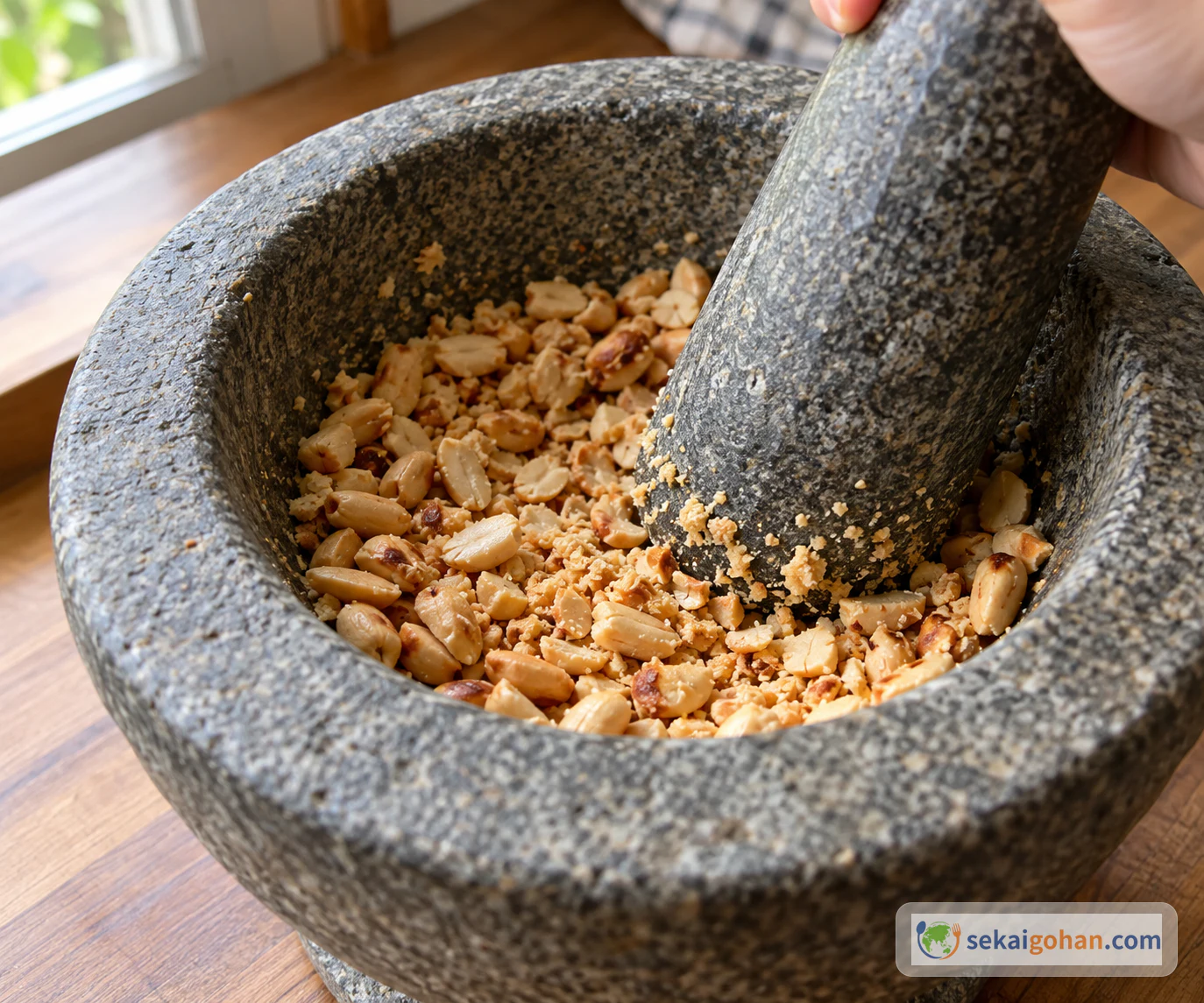
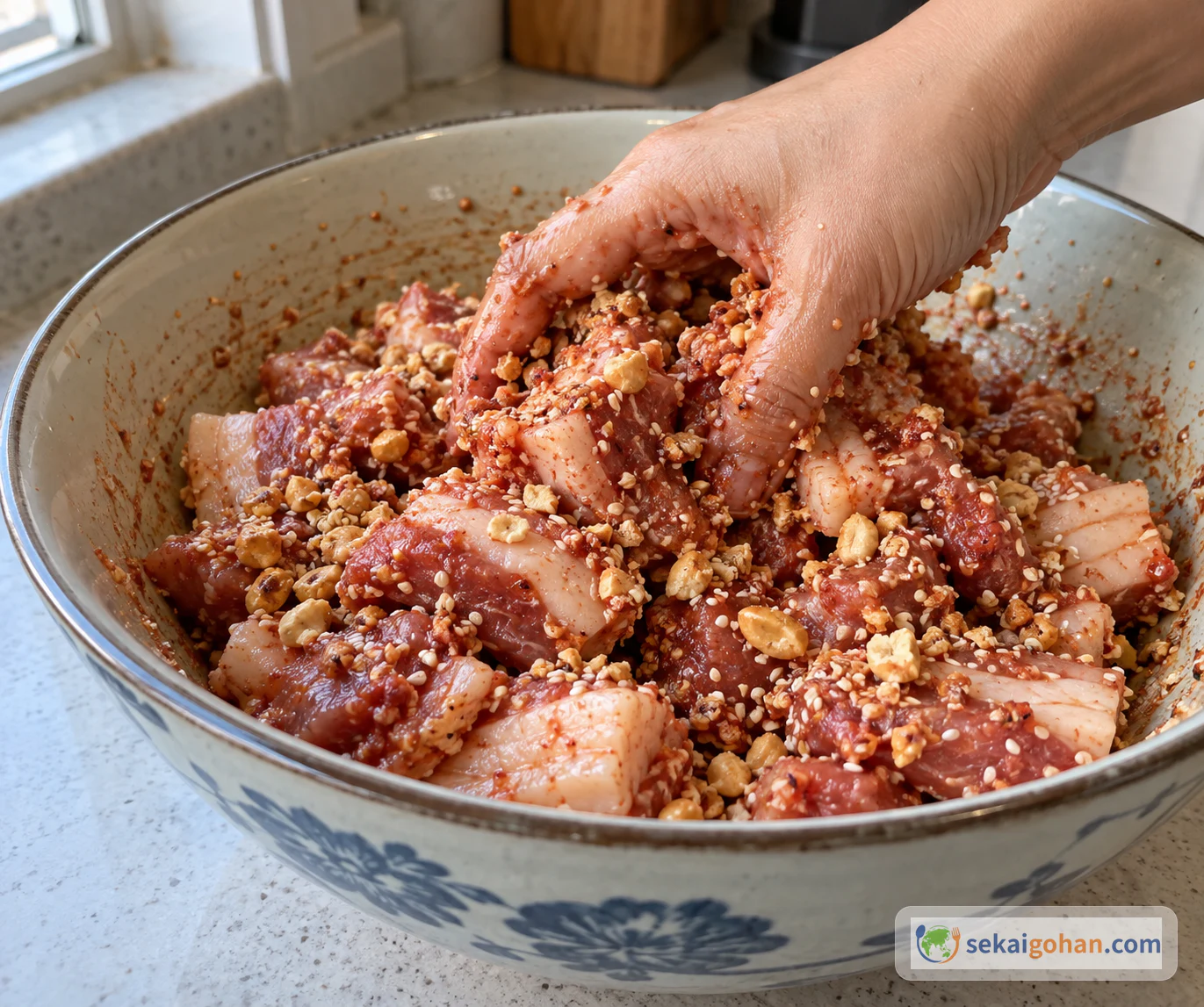
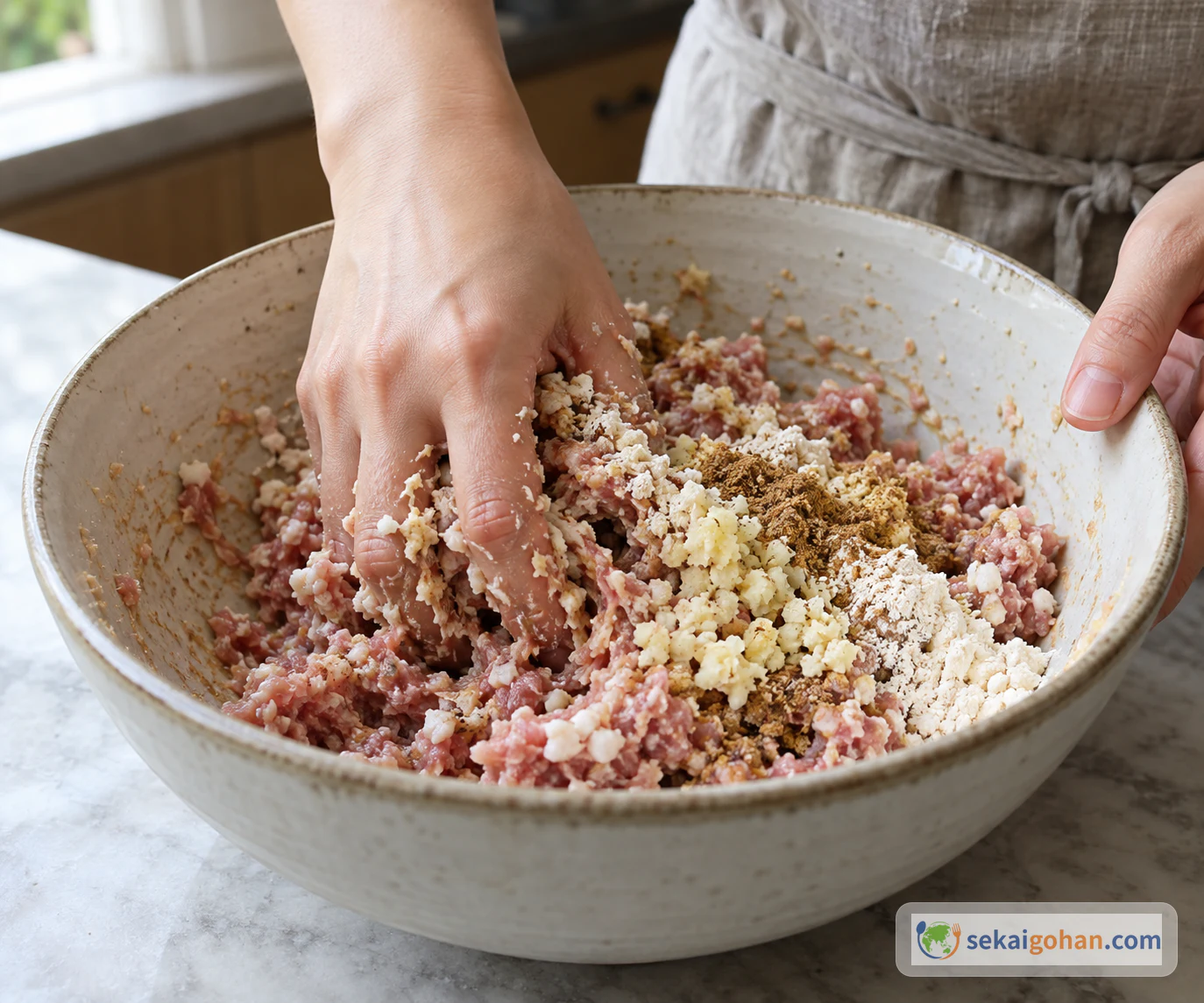
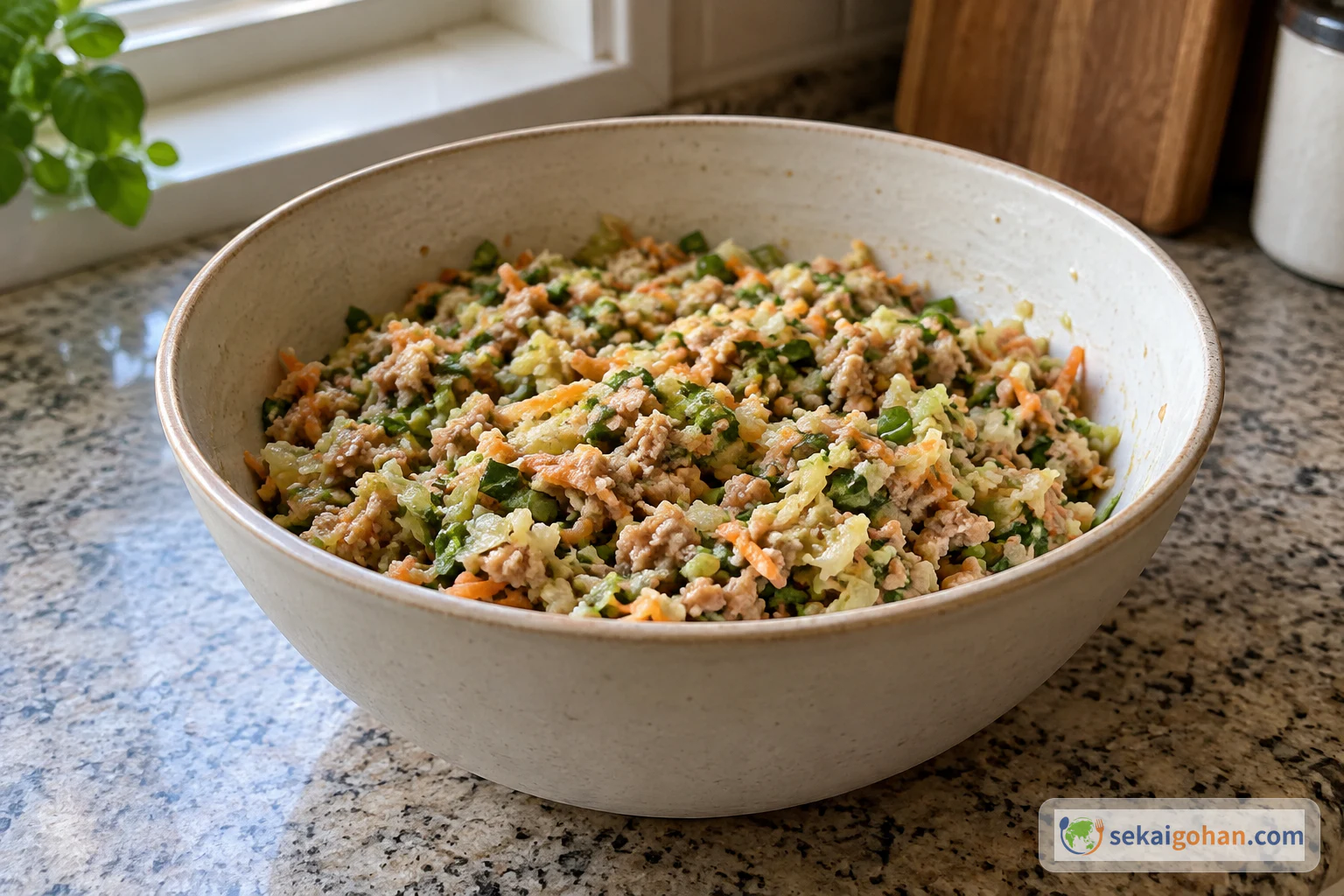
Meeting these conditions has not been shown to make this recipe safe. It has not been tested. The photos illustrate each action and show neither doneness nor safety.
Troubleshooting
| Problem | What to do |
|---|---|
| The thickest piece of fat is slow to reach 75°C in the boiling water | Keep heating and measuring. Do not cut or marinate it until it has reached 75°C and had at least 1 more minute |
| The kitchen is above 32°C (90°F) | The limit is 1 hour, so rest the filling in the refrigerator at 10°C or below |
| Shaping is running past your time limit | Refrigerate whatever is waiting, and make a smaller quantity next time |
| The cookies look done but read below 75°C | Keep baking and measure again. Color does not tell you the filling is hot enough |
| Some cookies pass and others do not | Check them one by one and keep baking any below 75°C |
| The cookies burn before reaching 75°C | Do not eat them |
| You cannot find red fermented bean curd or the type of flour listed | No tested substitute is available, so we cannot tell you how a swap would turn out |
How Other Versions Differ
Same name does not mean same cookie. A 2023 Zhongshan Daily feature, whose title says a hundred bakeries make a hundred kinds of gaizai crackers, reports differences in how crust and filling are combined and wrapped, in the shape, and in the filling. It also carries one food writer's three-way classification, with Guangzhou, Doumen and Zhongshan as examples. That is the writer's own scheme, not a formal regional classification.
Other differences are worth knowing before you compare recipes:
- Crust alkali: Chinese Cooking Demystified's Cantonese Chicken Cookies use kansui in the crust and no 食粉. That is a different formula, so don't swap one into the other here.
- Second shaping method: the college page also describes sandwiching filling between two sheets of dough and cutting it into pieces. This article uses only the first method, the wrapped and flattened oval.
- Walnuts: the college page's opening summary mentions walnuts, but they are not in its measured ingredients, so they are not used here.
Where This Version Sits
This recipe reached us as coursework from a vocational college's pastry program. The page names no individual author or instructor, and it does not tie the recipe to any historical formula. For that reason we are not telling an origin story here, and we are not repeating the legends and health claims that circulate around the cookie. If you would like to keep exploring, browse more dishes from China.
Frequently Asked Questions
Do gaizai crackers contain chicken?
There is no chicken in the college's measured ingredients. The fat in this version is 肥肉, which we read as pork fat. We can't generalize from this to every shop or region.
How many does this recipe make?
The college page gives no count. It describes crust from 500g of flour paired with 1500g of filling as a general combination, alongside the 10g and about 15g portions. Dividing the measured ingredients gives about 105 pieces' worth of crust and about 92 pieces' worth of filling, so roughly 90 to 100 cookies. That is our arithmetic. It leaves out water, alcohol and trimmings, and it has not been tested.
What exactly is 食粉?
The college page does not say. The first-step crust portion is 3.5g, and the 5g filling portion goes into the pork-fat marinade. We read it as food-grade baking soda (sodium bicarbonate) because a Chinese-language forum post equates 食粉 with food-grade baking soda, and Cantonese Wikipedia gives that chemical name for 梳打粉, the related term. This is thin evidence: the forum post is a personal one, and it does not prove what the college meant. Treat it as our interpretation.
Why are there no amounts for the water, alcohol and egg?
The college page gives only "a little" and "as needed" for the water and alcohol, and no amount for the egg. It also doesn't name a type of oil, alcohol or egg, or give a marinating time. We left those gaps open rather than inventing figures.
Are the oven temperatures certain?
The page's temperature text has stray spaces between the digits of the bottom-heat figure, and we read it as 170°C. The page also says nothing about preheating, rack position, tray load or turning the tray.
Can these be baked safely at home?
The college's oven settings and time are not a safety check, and we have not tested this recipe. Use a thermometer at both the blanching and baking stages to confirm 75°C at the center, followed by at least 1 more minute. Japan's Ministry of Health, Labour and Welfare gives that general guide. Health Canada lists 71°C for pork, and we use the higher figure.
How should I keep leftovers?
Refrigerate leftover filling and baked cookies within 2 hours, with the cookies divided into shallow containers. We have no information on how many days they keep, and we are not suggesting a reheating method.
Sources
- Guangzhou Huashang Vocational College, School of Hotel Management and Culinary Arts, "走进中西面点之粤点制作 岭南鸡仔饼" (2022). Ingredients, amounts, order of work, resting times, shaping, baking settings and time. https://www.gzhsvc.edu.cn/jdxy/info/1047/2641.htm
- Zhongshan Daily / Zhongshan Pictorial, "城事|一百家饼铺就有一百种鸡仔饼" (2023). Differences in forms and fillings between regions and shops, and a food writer's three-way classification. https://epaper.zsnews.cn/zsphoto/view/cateid/26/id/625698.html
- Ministry of Health, Labour and Welfare (Japan), "家庭での食中毒予防." General guide of 75°C at the center for at least 1 minute, refrigerating when cooking is interrupted, and avoiding cross-contamination. https://www.mhlw.go.jp/stf/seisakunitsuite/bunya/kenkou_iryou/shokuhin/syokuchu/01_00008.html
- Ministry of Health, Labour and Welfare (Japan), "お肉による食中毒の原因や予防方法について紹介します." Heating meat to 75°C at the center for at least 1 minute, and secondary contamination from hands and tools. https://www.mhlw.go.jp/stf/web_magazine/closeup/08.html
- Ministry of Health, Labour and Welfare (Japan), "肉の食中毒" (consumer leaflet). Risks of raw pork, thorough heating, and washing hands, knives and cutting boards. https://www.mhlw.go.jp/file/06-Seisakujouhou-11130500-Shokuhinanzenbu/leaflet-ippann.pdf
- U.S. Food and Drug Administration, "Safe Food Handling." Refrigerating perishable food within 2 hours, or 1 hour above 90°F (32°C); using a thermometer rather than color or texture; separating raw meat and eggs from other foods. Applying this to the time before baking is our editorial judgment. https://www.fda.gov/food/buy-store-serve-safe-food/safe-food-handling
- Health Canada, "Safe internal cooking temperatures." Inserting a thermometer into the center of the thickest part, or from the side for thin items; checking multiple items one by one; a guide of 71°C for pork. https://www.canada.ca/en/health-canada/services/general-food-safety-tips/safe-internal-cooking-temperatures.html
- 一品网 cooking forum, "「食粉」,全称「食用小苏打粉」" (2007). A personal post equating 食粉 with food-grade baking soda; low reliability, used only to support our interpretation. http://www.ywpw.com/forums/cooking/p0/html/106.html
- Cantonese Wikipedia, "梳打粉." The chemical name of 梳打粉 (sodium bicarbonate); the entry does not use the term 食粉. https://zh-yue.wikipedia.org/wiki/梳打粉
- CNPP, article including a method for dry-toasting flour. Toasting flour over low heat with no oil or water, then cooling and sieving; it does not use the term 熟面粉, and the method is our editorial addition. https://www.cnpp.cn/focus/3506024.html
- Chinese Cooking Demystified, "Cantonese Chicken Cookies (鸡仔饼)." A different version using kansui in the crust and no 食粉, cited only to show how versions differ. https://chinesecookingdemystified.substack.com/p/cantonese-chicken-cookies