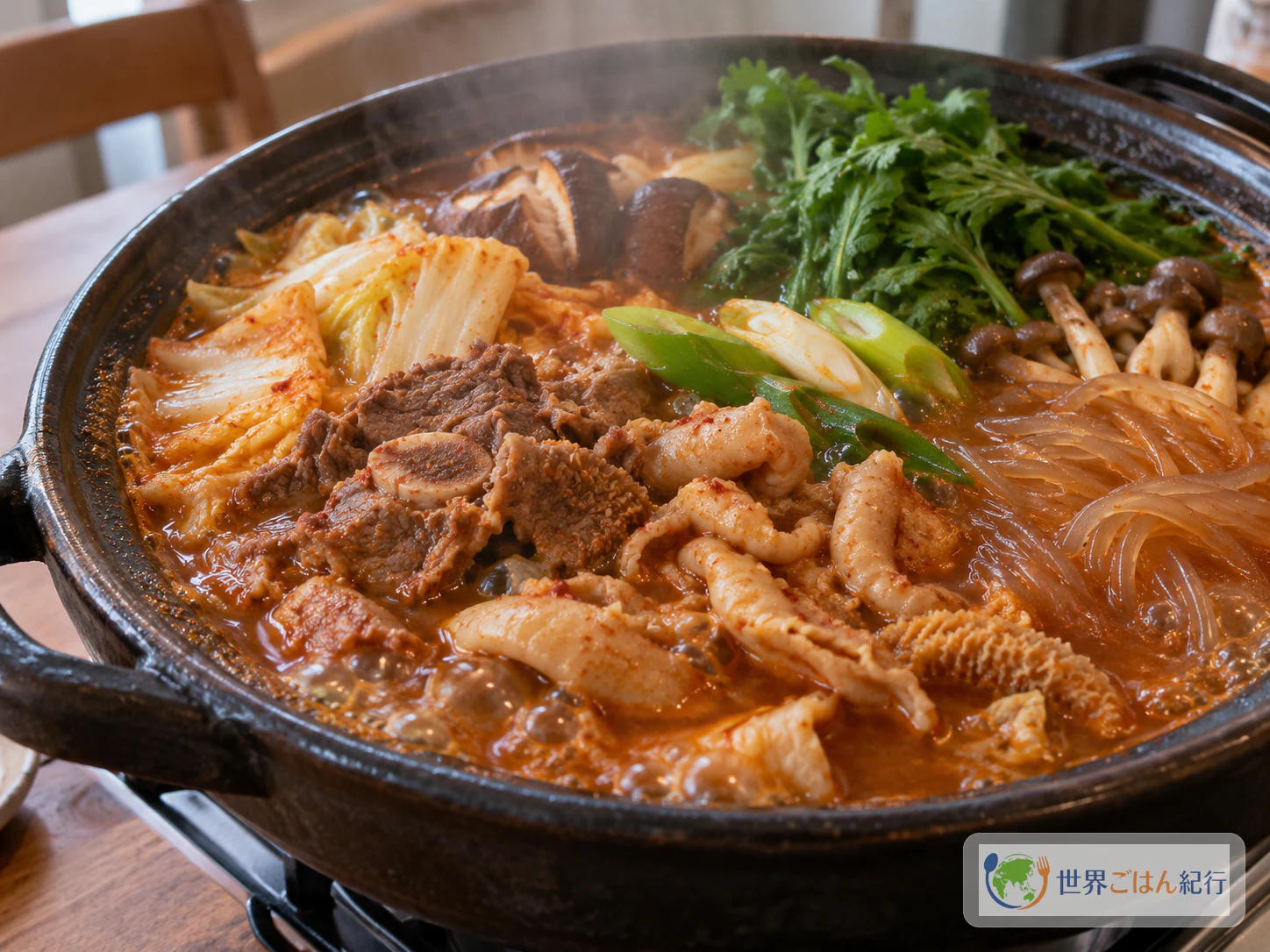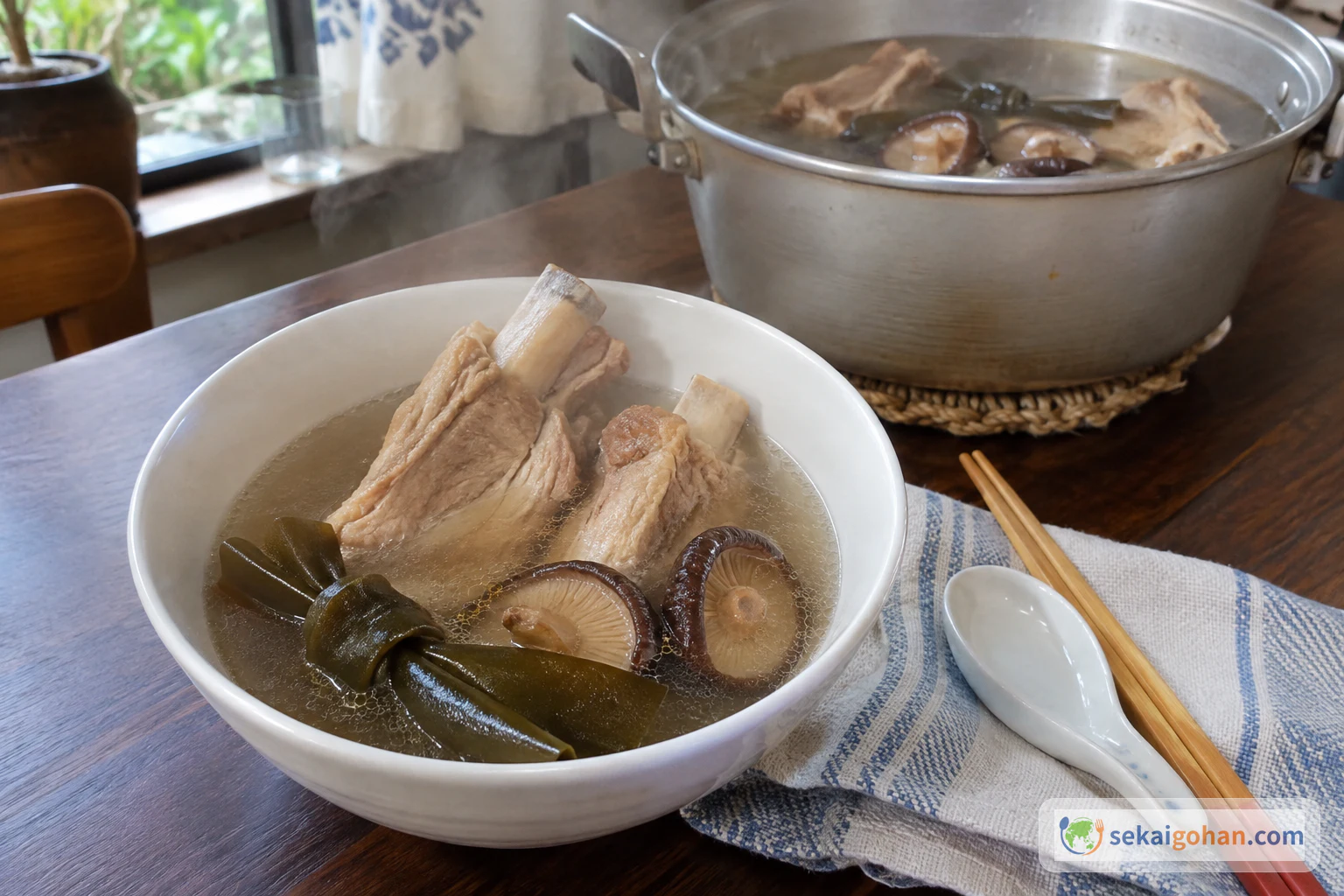
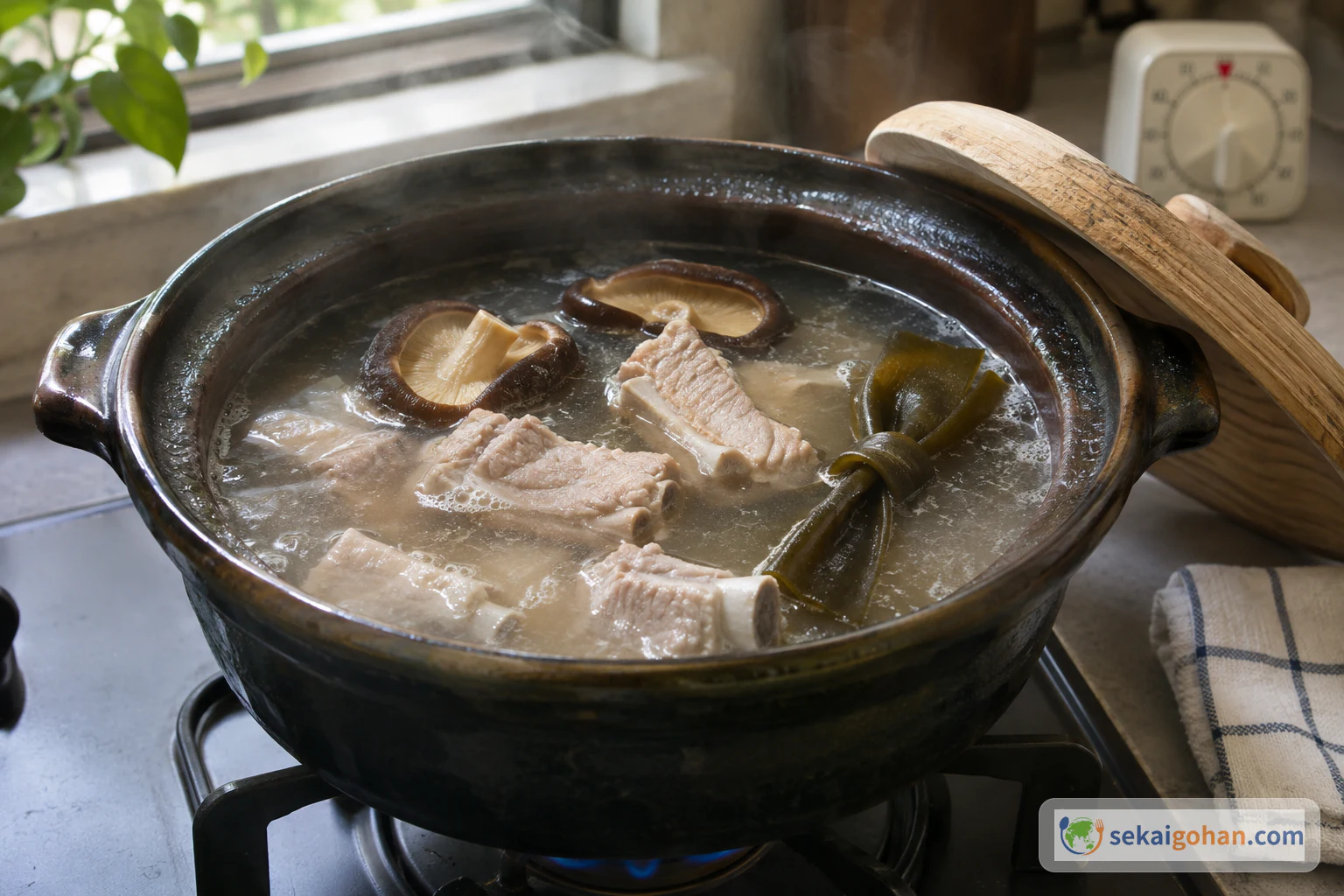
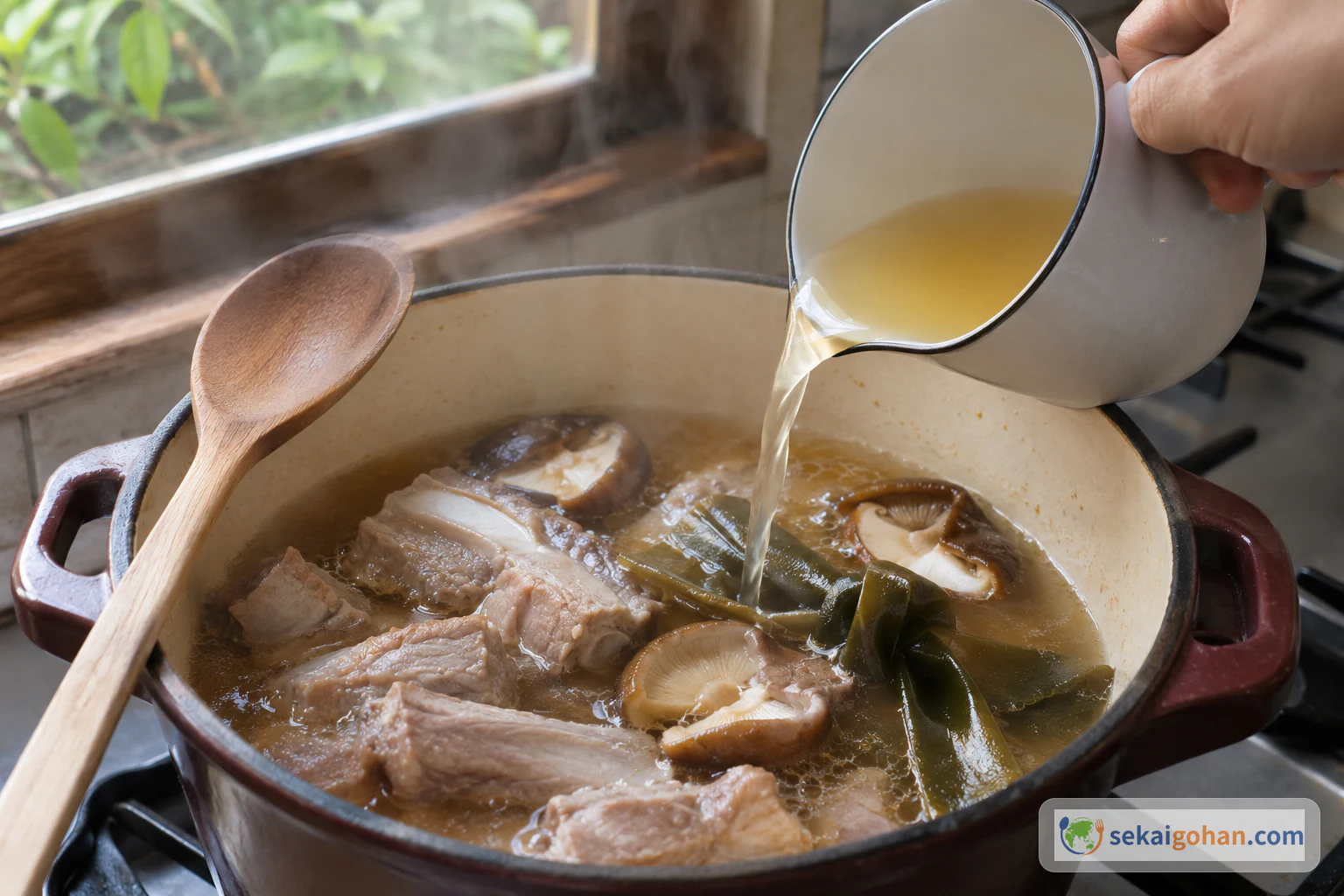
After about an hour and a half on a low flame, you lift one rib from the pot and pull the bone. It slides out cleanly and leaves soft meat behind. That moment tells you the pot is ready. Sōki jiru is the Okinawan soup of bone-in pork ribs simmered with knotted kombu and dried shiitake. At the end it is topped up with bonito stock and seasoned like a clear suimono. The broth is light and clear, with a little salt, a touch of soy sauce, the deep flavor of kombu and mushroom, and the richness of pork that has cooked long enough to come off the bone.
Soki in Okinawa: Rib Bones, New Year Pork and a Clear Bowl
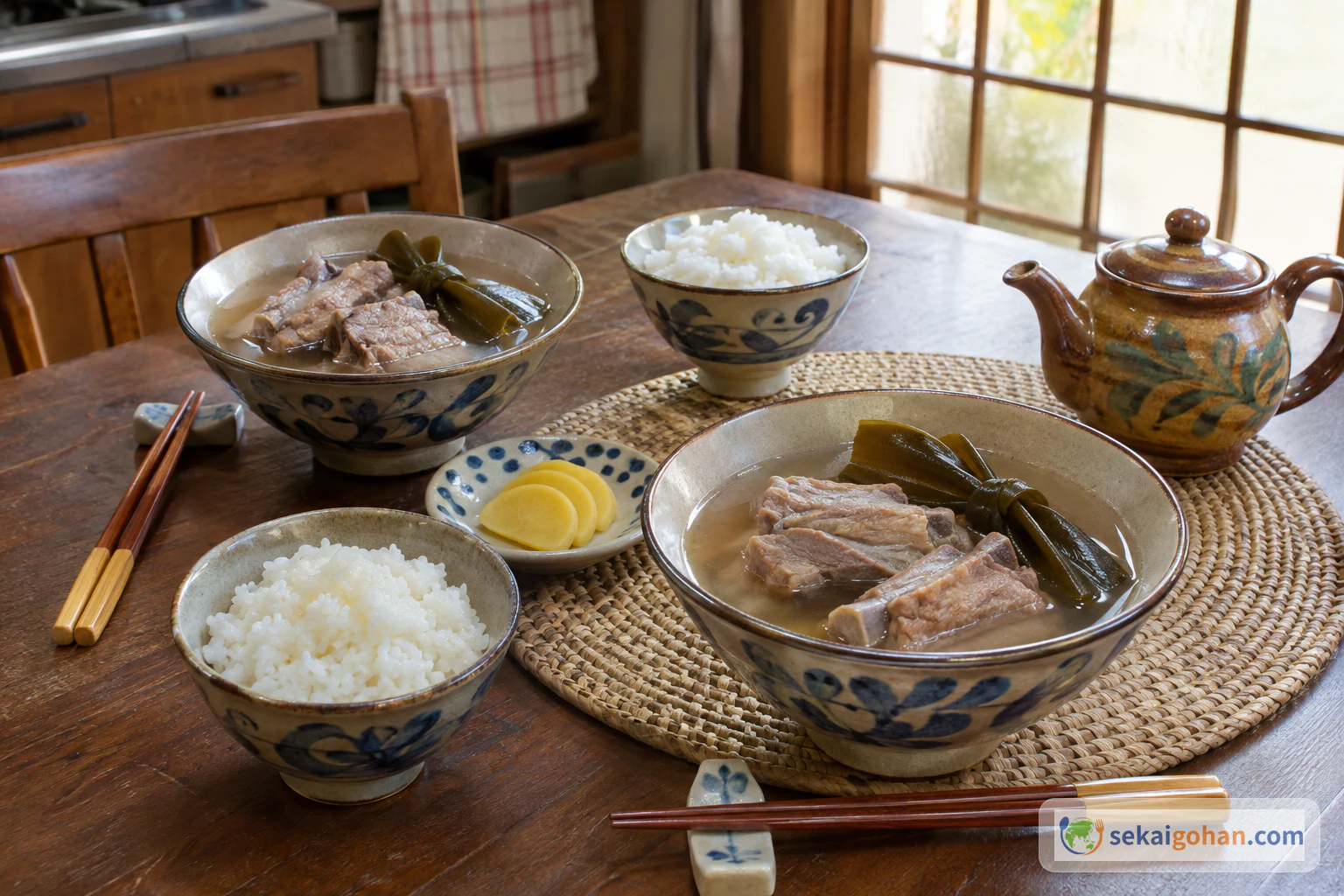
Okinawan cooking uses the whole pig, and bone-in cuts appear often. Soki is the rib section, cooked on the bone. It is close to the cut called spare ribs on the Japanese mainland. When those ribs are simmered until tender and served in a clear broth, the dish is soki jiru. Some people also call it the soup of soki bones. Visitors know soki best from soki soba, where the ribs are cooked in a sweet soy glaze and laid on Okinawa noodles. In Okinawa itself, though, soki jiru is the more common dish.
New Year pork and the family altar
In the past, families slaughtered a pig at the end of the year and greeted the New Year with pork dishes. Soki jiru is still a standard part of the Okinawan New Year. People who lived frugally the rest of the year cooked pork on special days and placed it on the Buddhist family altar as an offering before the family ate it. Today the soup appears well beyond the holidays. Families make it at home, restaurants and school lunches across Okinawa serve it, and it is also sold in ready-to-heat pouches.
Three kinds of soki
The ribs are cooked in more than one way. The clear soup in this recipe uses hon-soki, the bone-in ribs cooked whole. Nankotsu soki (cartilage soki) is made from the cartilage end of the ribs and is cooked until the cartilage is tender. The third kind is the sweet soy braise used as a noodle or rice topping, which you will find under the variations. Other pork-bone pots in East Asia go in different directions. Tonkotsu ramen boils bones hard until the broth turns milky, and dwaeji gukbap pairs pork broth with rice. Soki jiru stays clear and is finished with bonito stock like a Japanese suimono.
The name is said to come from the Okinawan word for rib bones. On its own, "soki" refers to the cut. Soki jiru means "soki soup," and soki soba means the ribs served on noodles.
Ingredients (serves 4)
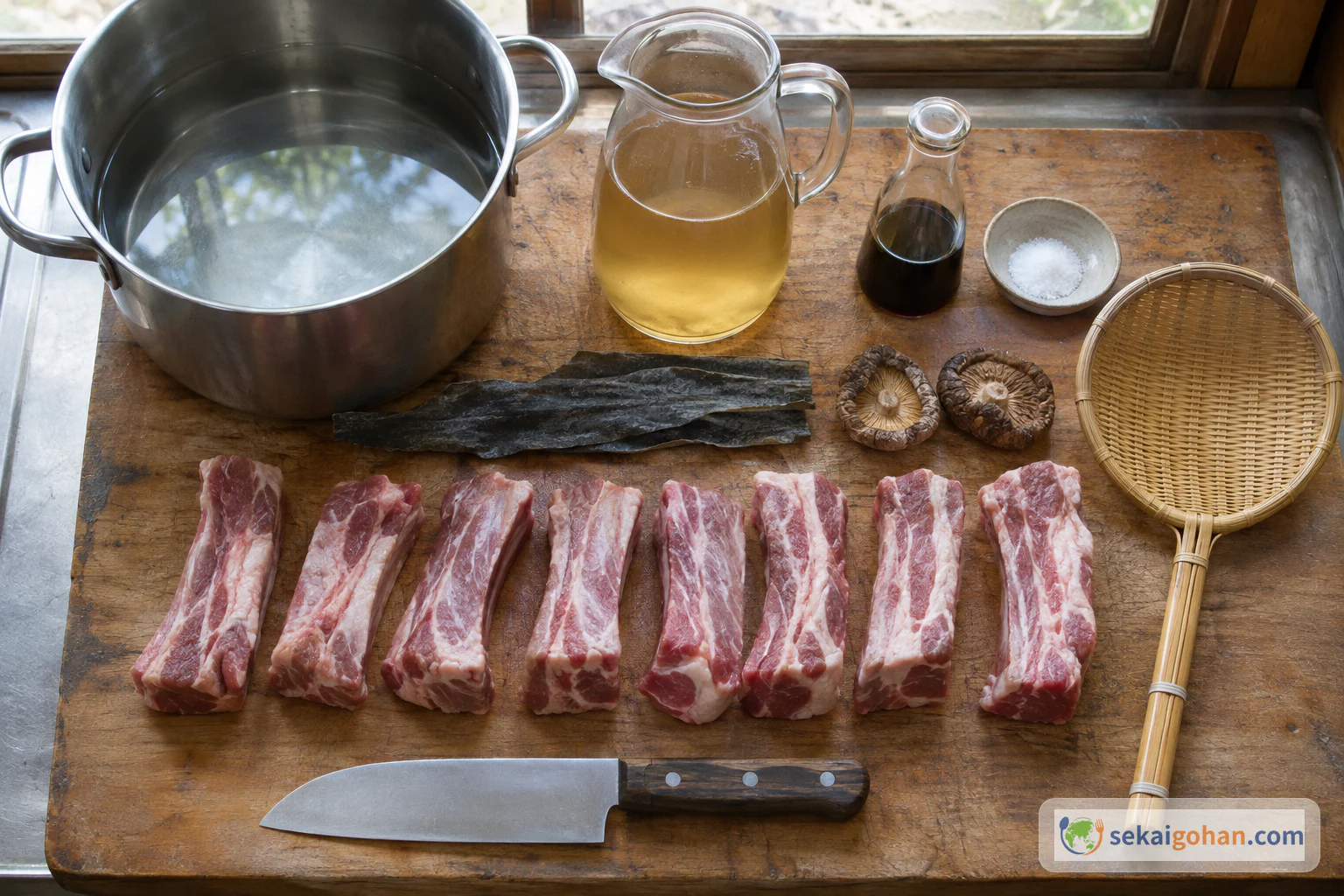
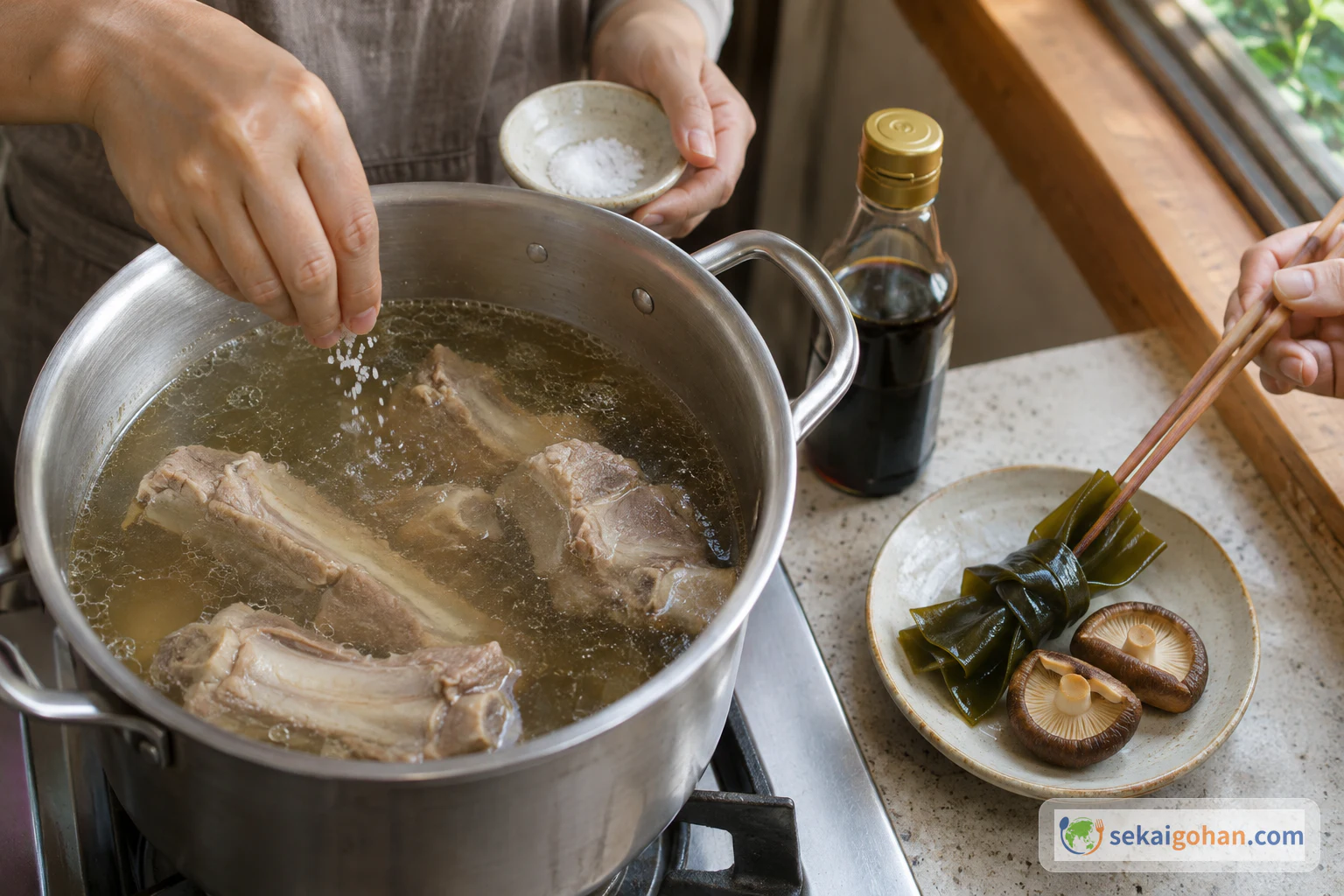
Add only part of the teaspoon of salt partway through the simmer, and keep the rest for the end. The broth reduces as it cooks, and the bonito stock that goes in last brings its own salt. Season the final balance only after the stock is in.
This soup contains pork, kombu (seaweed), shiitake (mushroom), bonito (fish) and soy sauce (soy and wheat). If you use instant bonito stock granules, read the label for other allergens. Store raw ribs in the refrigerator in a bag or covered container so their juices cannot drip onto other food. Wash your hands, knife and board after touching raw pork, and keep raw-meat tools away from cooked food and serving bowls.
Equipment
- Heavy pot of about 4¼ quarts (4 L) or larger
- Kettle for boiling water
- Colander
- Mesh skimmer
- Two small bowls for soaking
- Knife and cutting board
- Measuring cup and teaspoon
- Small plate for holding the kombu and shiitake
- Instant-read thermometer
Buying Ribs, Kombu and Stock
The ribs decide the dish. Ask a butcher for bone-in pork spare ribs and plan on two pieces per person, eight in all. In Okinawa these are sold as soki. Elsewhere, the closest cut is spare ribs. Pork belly is a different cut, the one used for ordinary Okinawa soba. This soup is built on the bone, so buy bone-in ribs.
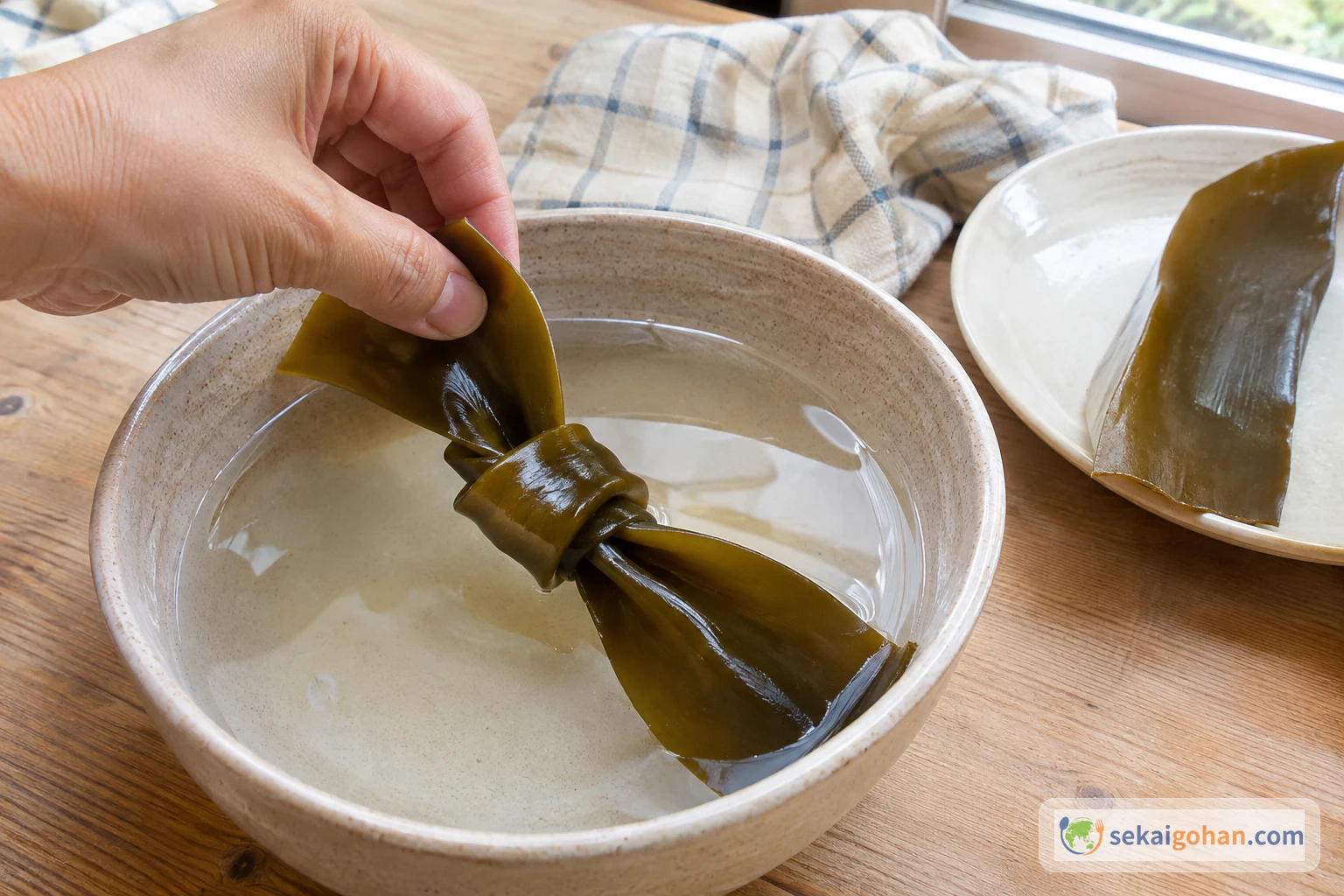
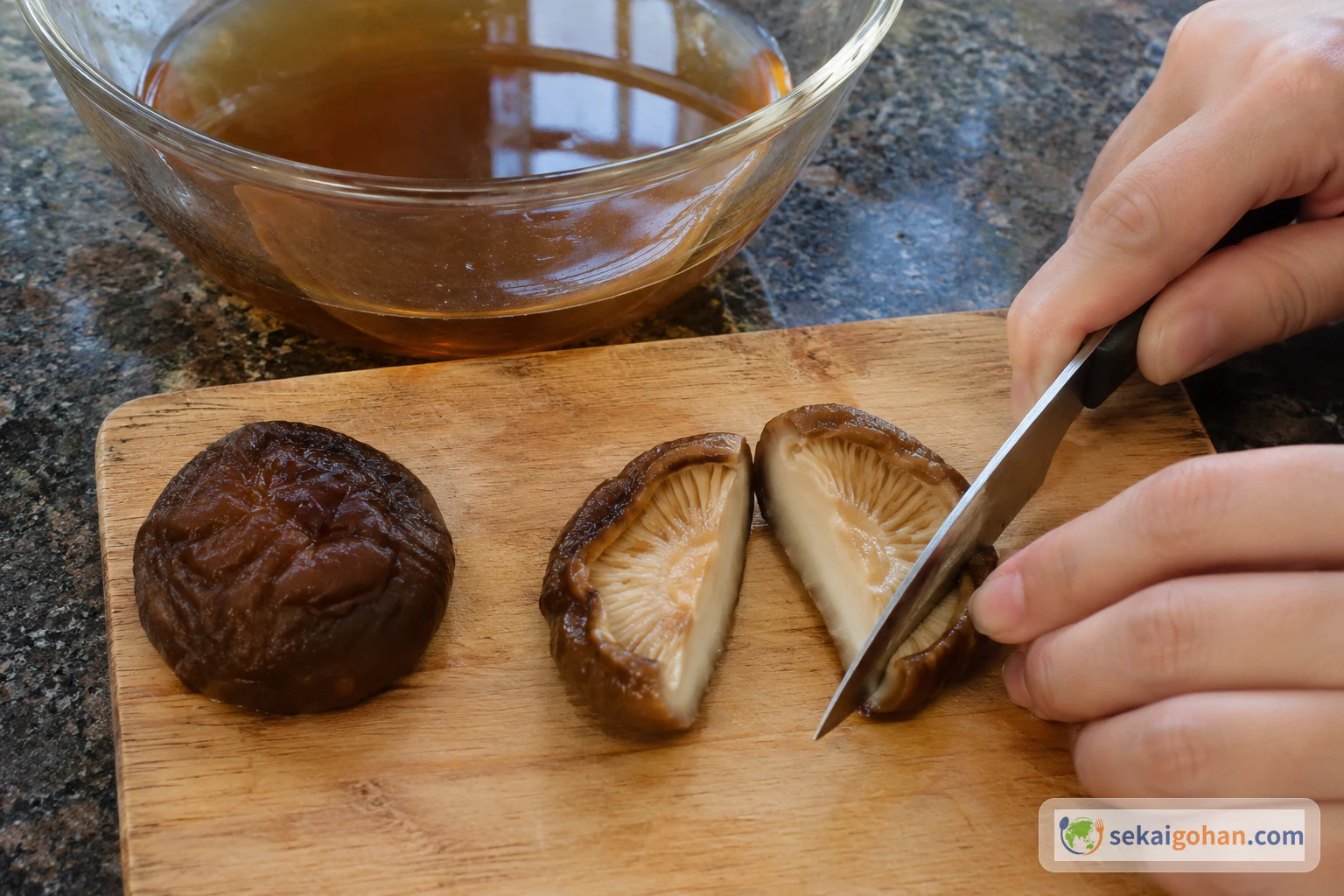
Look for long sheet kombu at a Japanese grocer or online. Ma-kombu and rishiri kombu both work. It needs to be long enough that you can tie it in a knot once it has softened. For the dried shiitake, choose two thick caps. If they are small, still use two, because their flavor is meant to stay in the background. Bonito stock can come from granules or be brewed from shaved bonito flakes. Granules are quicker, but salt levels differ from product to product, which is one more reason to finish the salt last.
Keep the bone-in ribs, kombu, shiitake and bonito stock for the soup to taste Okinawan. You have more freedom with the vegetables, which change with the season and are covered under the variations.
Method
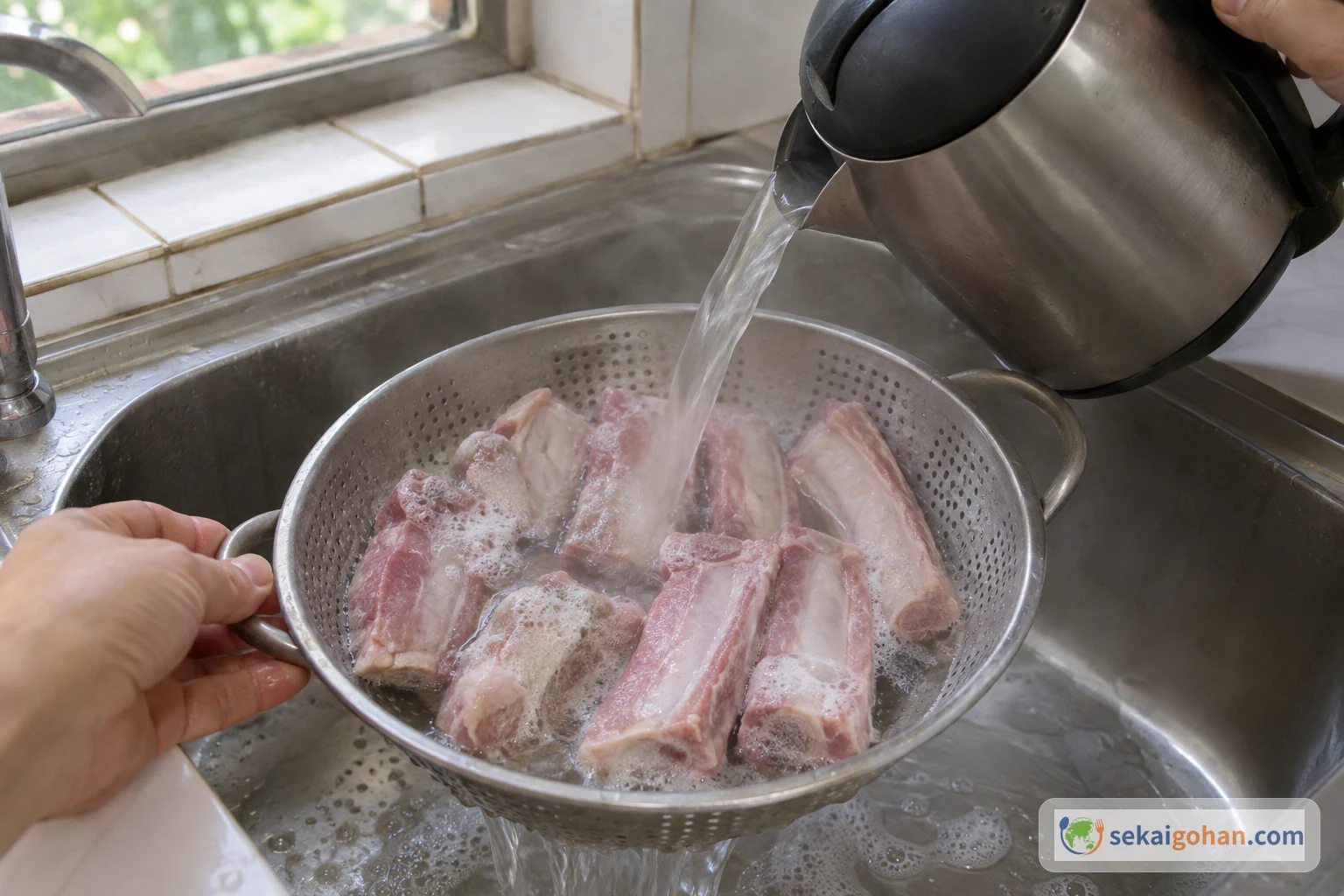
The work happens in three stages. First, scald the ribs and set the kombu and shiitake to soak. Next, bring the pot to a boil and skim it clean. The long stretch on low heat is mostly hands-off: you season lightly, pull out the kombu when it softens and watch for the bone to come loose. The last step is balancing the broth.
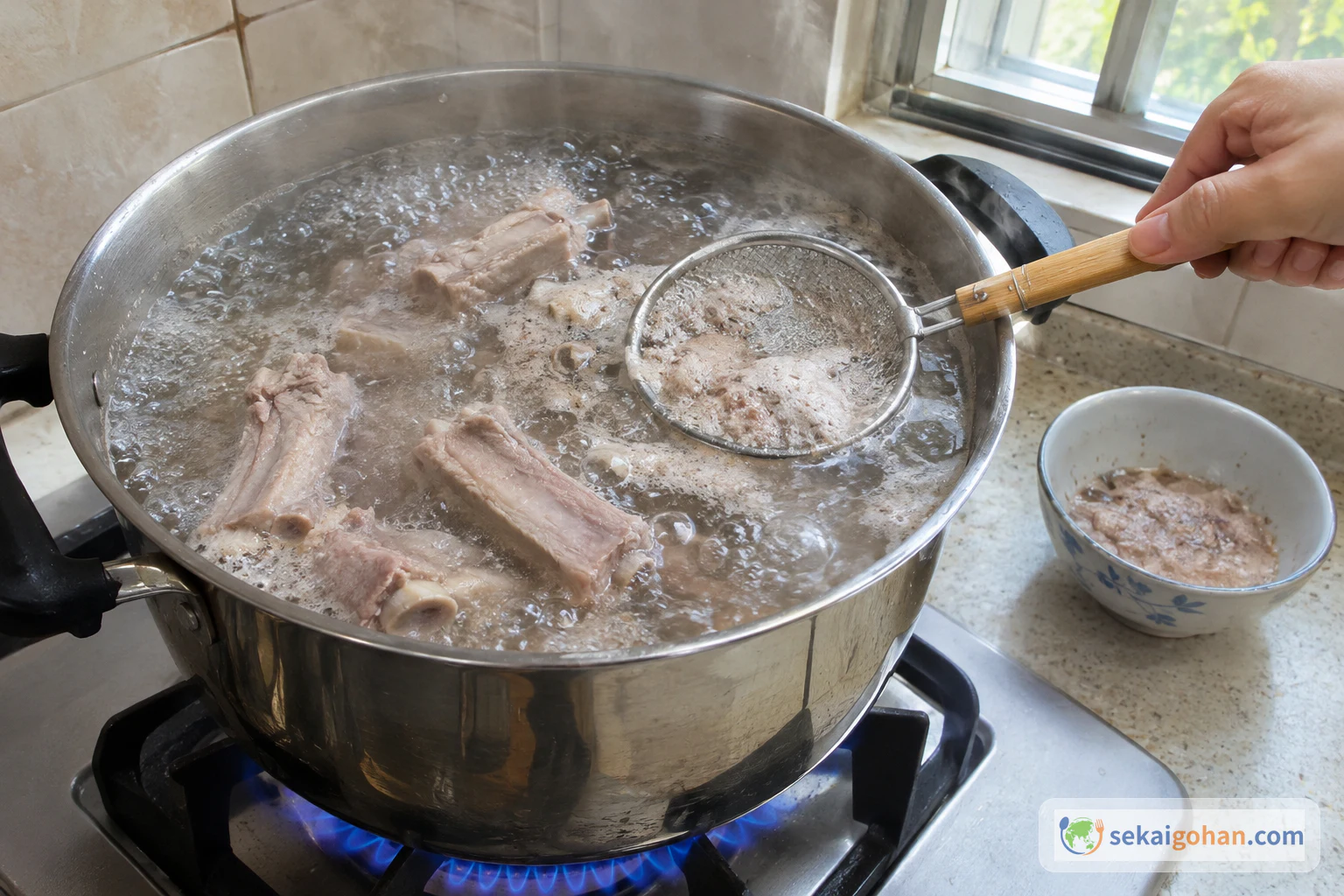
Skim right when the pot first boils. That is when grey foam gathers fastest, and skimming it then keeps the broth clear and clean-smelling. After you turn the heat down, keep the surface at small, slow bubbles. A rolling boil makes the broth cloudy and tightens the meat.
Do not eat pork raw or undercooked. Cook it until the center reaches 167°F (75°C) for at least 1 minute, and check right next to the bone, which is the last part to heat through. A bone that slides out shows that the meat is tender, and clear juices and pale meat are only rough signs. Only the thermometer reading confirms the pork is cooked through. Take extra care when serving children, older people, pregnant people and anyone with weakened immunity.
If you want more kombu and shiitake aroma, add a little of the reserved soaking water at the end and taste before adding more. Put it in before the final salt, because it changes the balance.
When It Goes Wrong
| What you see | Why | What to do |
|---|---|---|
| The bone will not come out after 1½ hours | The meat needs more time, or the heat dropped too low to keep a simmer going | Keep a gentle simmer and test again. Go by the bone, not the clock |
| Cloudy or strong-smelling broth | The foam was not skimmed at the first boil, or the pot boiled hard | Next time, scald the ribs well and skim carefully at the boil. Keep the low simmer quiet |
| Too little broth at the end | It reduced during the long simmer | Top it up with bonito stock to about 4 cups. Use stock, not water, so the flavor holds |
| Too salty | All the salt went in early, or the stock was salty | Add the salt in two stages, and taste the stock before using it to top up |
| Slippery, falling-apart kombu | It stayed in the pot after it had softened | Lift it out once it is soft and put it back only for the finish |
Serving, Seasonal Versions and Leftovers
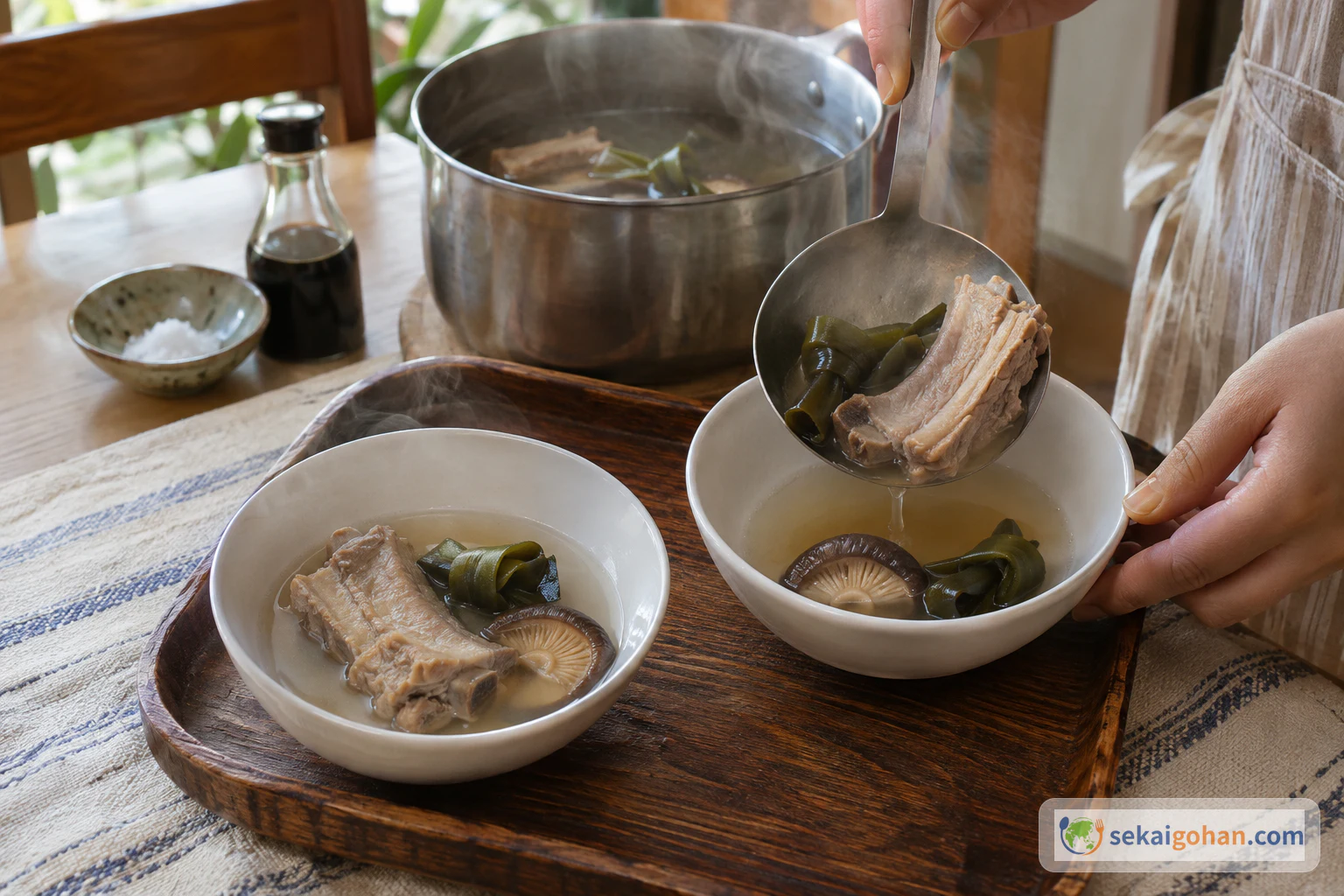
Serve the soup in bowls, with ribs, a kombu knot and shiitake in every bowl and clear broth poured over. The meat comes off the bone with chopsticks at the table. It is the soup Okinawan families put out at New Year, and the same pot works on an ordinary night.
Daikon in winter, winter melon in summer
In Okinawa the vegetable in the pot changes with the season. In winter it is daikon, and in summer tōgan (winter melon). Use as much as you like. Cut it into chunks, add it late in the simmer and cook until tender. Both vegetables soak up the pork broth and make the bowl more filling. Taste again before the final salt, because the vegetable draws seasoning from the broth.
Sweet soy-braised soki
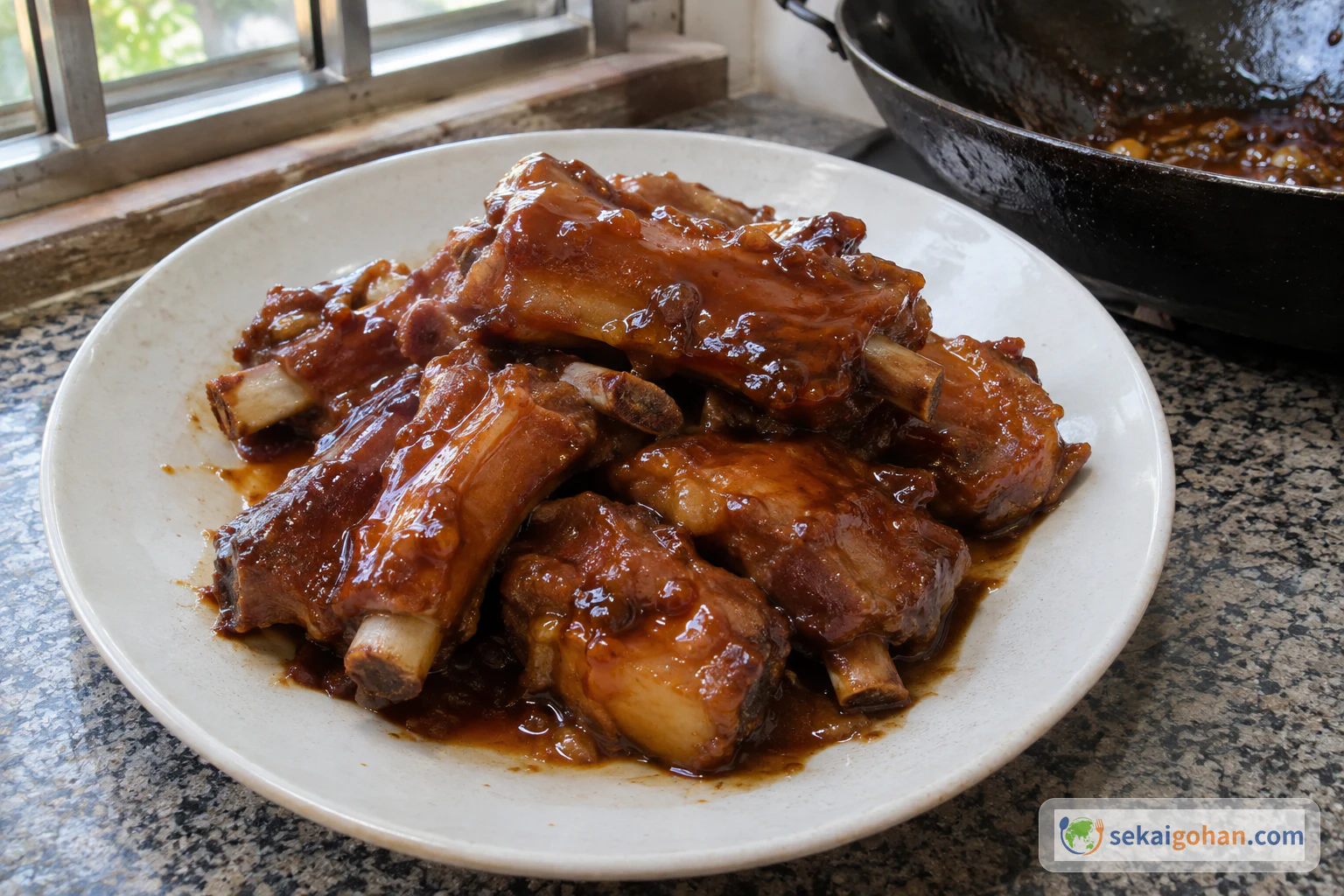
This is a separate dish, the one laid on soki soba or served over rice. Keep its amounts apart from the soup. For 1⅓ lb (600 g) of pork rib pieces, the seasoning is 1½ oz (45 g) sugar, 1⅔ tbsp mirin, 5 tbsp soy sauce and 1⅔ tbsp awamori. That is enough to top five bowls of noodles. To cook it, cut the ribs between the bones. Put them in cold water, bring to a boil, boil for 5 minutes, then drain and rinse. Simmer them on low with sliced ginger for 1½ hours. Add the seasoning and cook for about 5 minutes, until the liquid has almost evaporated and coats the meat in a glossy glaze. The same 167°F (75°C) check applies. These seasoning amounts come from an Okinawan noodle recipe that gives no cooking method, so the blanching, simmering and glazing times follow a separate English-language soki soba recipe. This dish sits close to Taiwan's lu rou fan, where soy-braised pork is also spooned over rice.
Cartilage soki
Nankotsu soki uses the cartilage end of the ribs. Cook it until the cartilage itself is soft enough to bite through, and use that texture to judge when it is done. It does not necessarily take the same 1½ hours as the bone-in ribs.
Leftovers
Let the soup cool, transfer it to a covered container and refrigerate it promptly. To serve, reheat it in a pot until it boils and the meat next to the bone is hot all the way through.
Frequently asked questions
Can I make it with pork belly?
Pork belly is a different cut. It is the meat on ordinary Okinawa soba. Soki jiru takes its body and its doneness cue from the bone, so use bone-in spare ribs.
Does soki jiru need awamori?
No. The soup uses only salt, soy sauce, kombu, shiitake and bonito stock. Awamori belongs to the sweet soy braise.
Do you eat the kombu and shiitake?
Yes. Both go back into the pot at the end and are served in every bowl next to the ribs. The kombu knot is soft enough to eat with chopsticks.
Why add bonito stock at the end instead of from the start?
The long simmer belongs to the pork, kombu and shiitake. Adding the stock at the end brings the pot back to its finished volume and gives the clear, savory flavor of a Japanese suimono. It also lets you judge the salt only after everything is in.