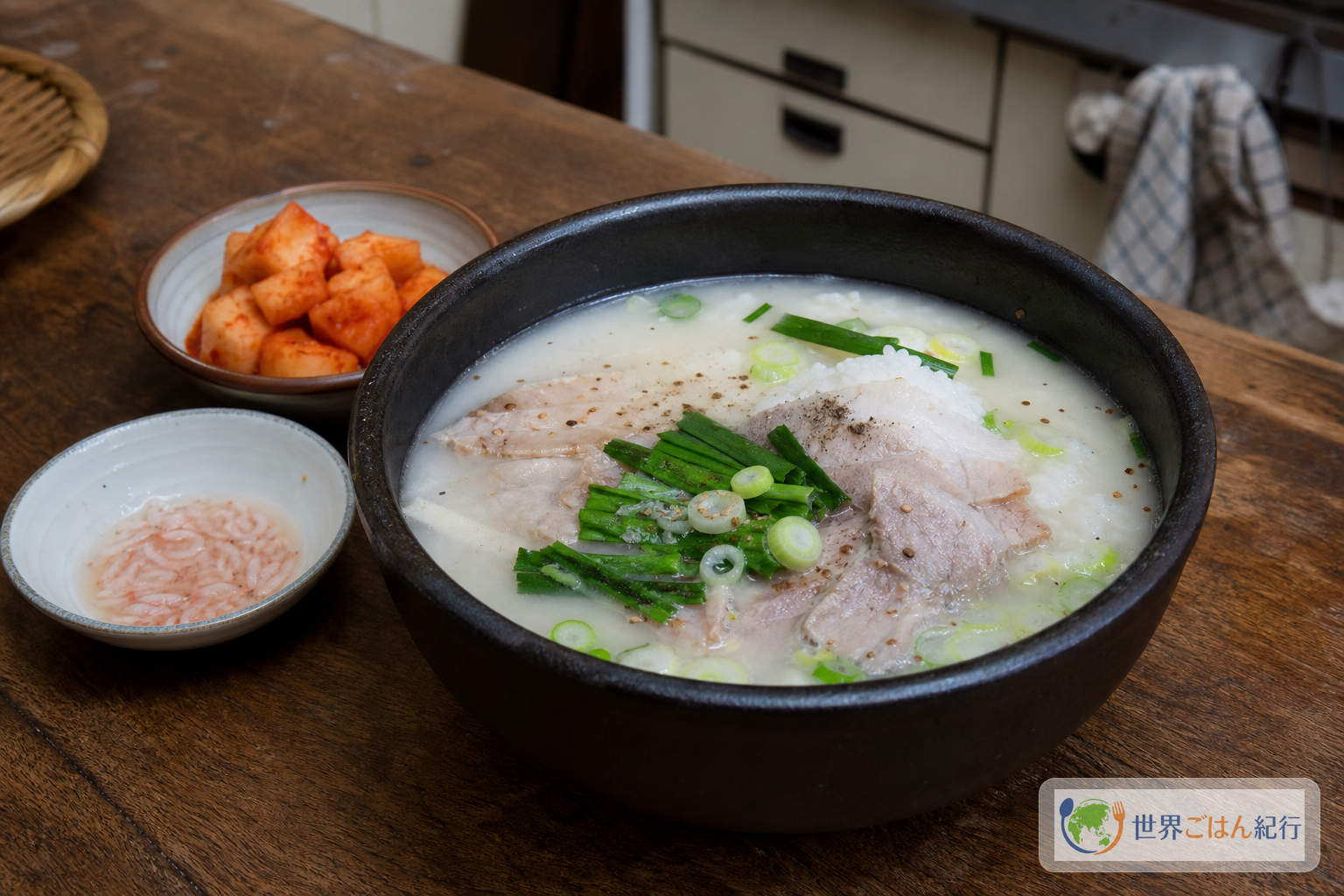
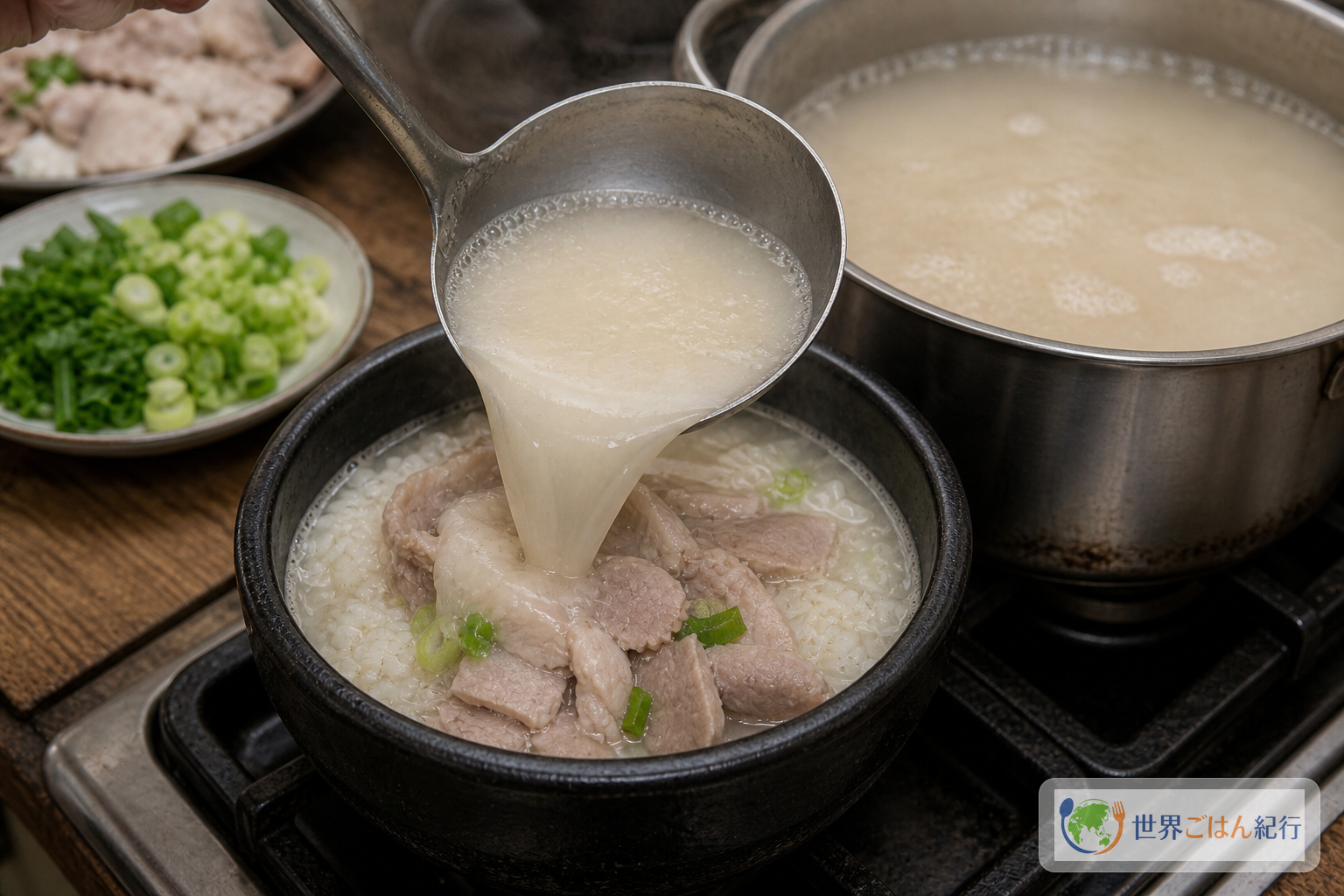
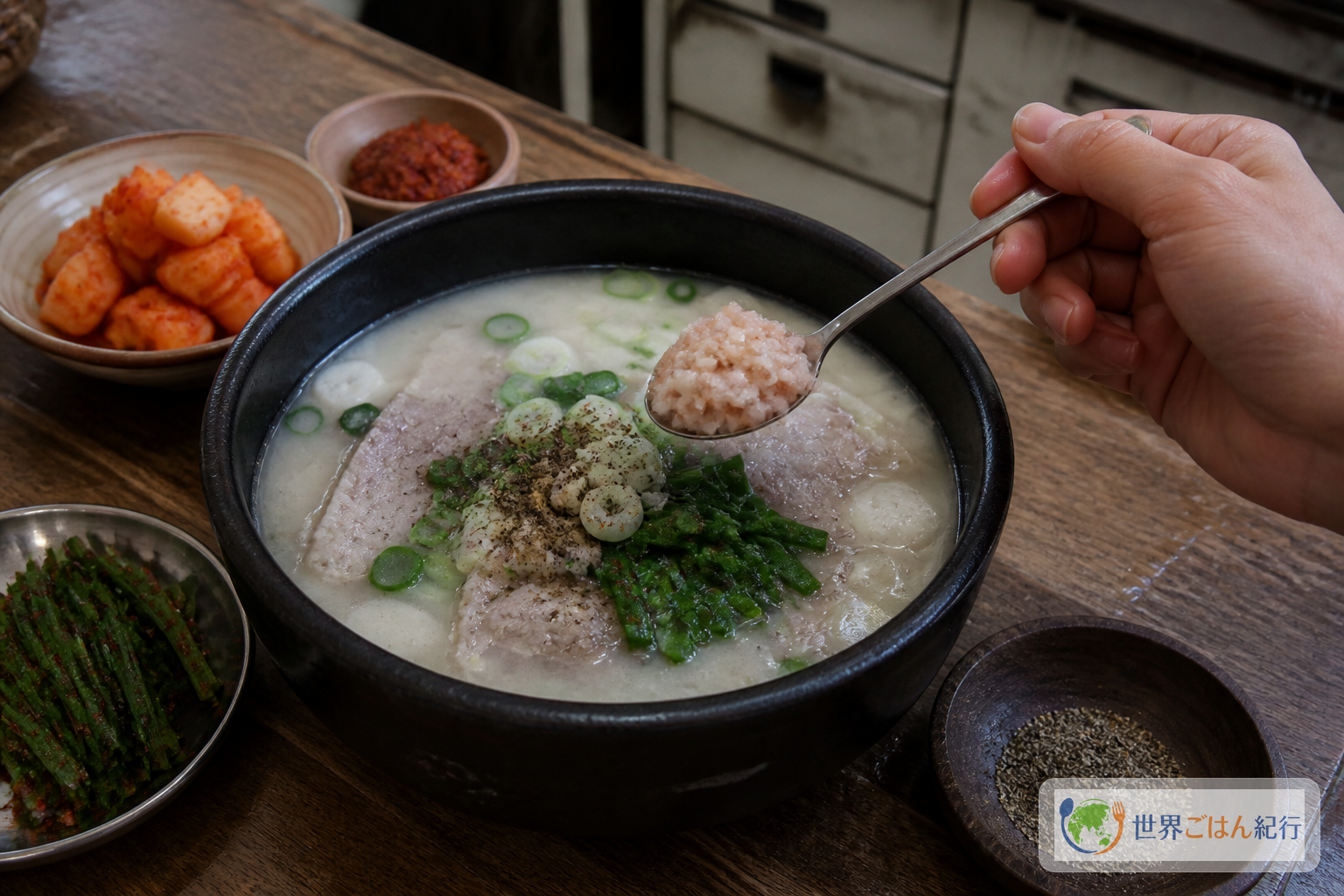
Sit down at a dwaeji gukbap restaurant in Busan and out comes a steaming bowl of pork soup with rice and boiled pork. Then little dishes of kimchi, garlic chives and salted shrimp land on the table. The soup isn't fully seasoned from the start. You stir in the salted shrimp, pile on the chives, add a red chili paste if you like, and season it right in the bowl. That's how dwaeji gukbap (돼지국밥) is eaten. Busan's pork soup with rice has as many ways to shift its flavor as there are side dishes on the table.
This recipe makes four bowls. It uses 800 g of pork neck bones or spareribs and 450 g of pork shoulder, and takes about 3 hours 10 minutes in total. The proportions are adjusted for home cooking, so how cloudy the broth turns depends on the bones and how you simmer them; there's no guarantee of a pure-white soup. Keep the pot lightly seasoned, serve the heat on the side, and combine the rice with the soup just before eating. The whole thing is built around adding salt and spice at the table.
Regional styles and how the rice is served
Dwaeji gukbap tends to bring a milky white soup to mind, but it comes in more than one color. Koreana's food feature divides it into a cloudy type made by boiling pork bones, a semi-translucent type made by boiling the pig's head and offal, and a clear type made by boiling only meat. The same feature links the clear type to western South Gyeongsang Province and the semi-translucent type to the cooking of refugees from the north. That's Koreana's account, and it doesn't map neatly onto every restaurant. Clear soup is dwaeji gukbap too.
The way it's served varies as well. When the soup and rice come separately, it's called ttaro gukbap; a set meal of boiled pork, soup and rice is called suyuk baekban. Some places use only meat, others add offal or sundae (Korean blood sausage); it depends on the restaurant. At home, a cut of pork that's easy to find does the job. If rice going soft in the hot soup bothers you, take a cue from ttaro gukbap and serve the rice separately.
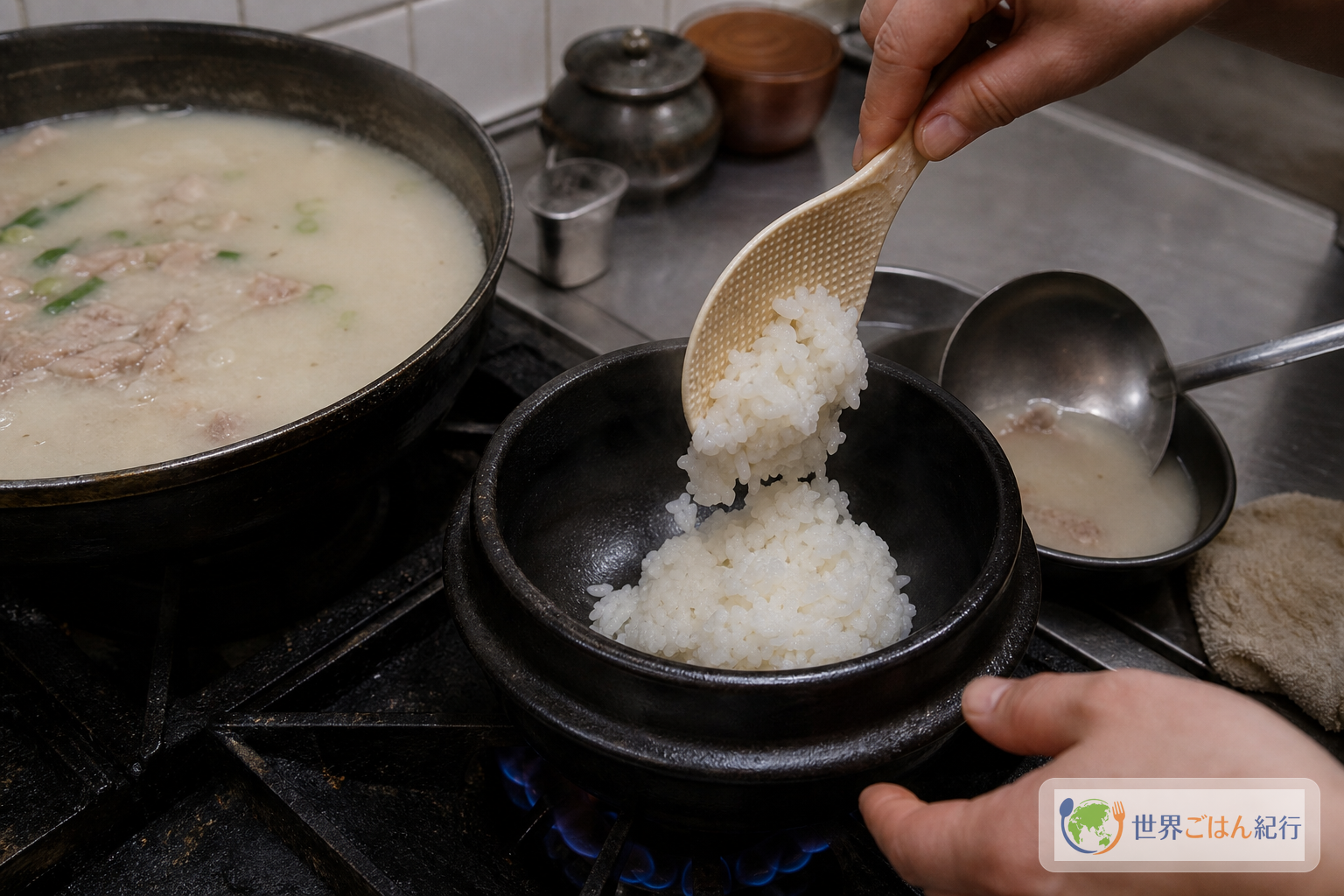
Repeatedly pouring hot soup over cold rice and draining it back into the pot to warm the rice is called toryeom. This recipe isn't a full recreation of toryeom. Instead, it keeps the soup hot by warming the bowls and using warm rice.
From refugee tables to an everyday city bowl
Koreana's "Local Wartime Dishes" presents dwaeji gukbap as a dish that absorbed the flavors and habits of refugees from many regions during the Korean War. The story it tells is one of regional food habits brought to Busan by the people who gathered there, layered into a single bowl. Still, it isn't a story you can pin to one person, one restaurant or one year. It's worth remembering, too, that this is food born against the heavy backdrop of war and displacement.
So when did it spread through the city? The Korea Tourism Organization points to the growth of pig farming from the 1970s onward and to meat processing around Busan as the background to its spread. Koreana's wartime account covers a different period and different ground, so the two can't be blended into a single origin story. It makes more sense to read them side by side, treating the dish's origin and its spread as separate stories.
In Busan today, dwaeji gukbap specialists cluster in the Seomyeon local food street near Seomyeon Station. If you want something sweet afterward, how about a Korean street snack? See the hotteok recipe (in Japanese), which also covers Busan's seed-filled version.
Ingredients (serves 4)
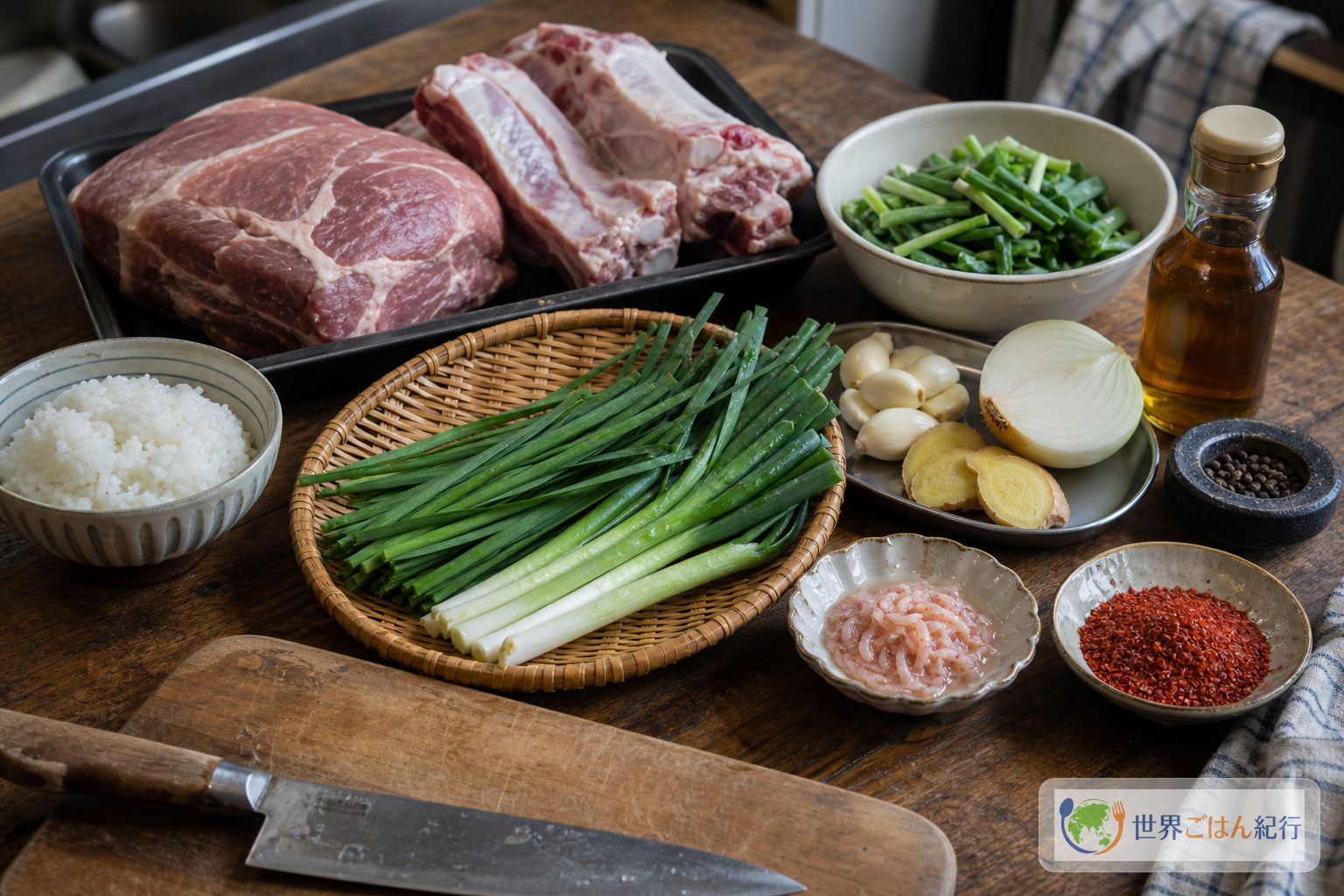
The neck bones are for the broth; the pork shoulder is a block of meat you'll slice thin for topping. Because bones and topping meat are separate, you can swap in 800 g of spareribs if neck bones are hard to find. Get a 450 g block of shoulder, and judge doneness by internal temperature, not by time alone.
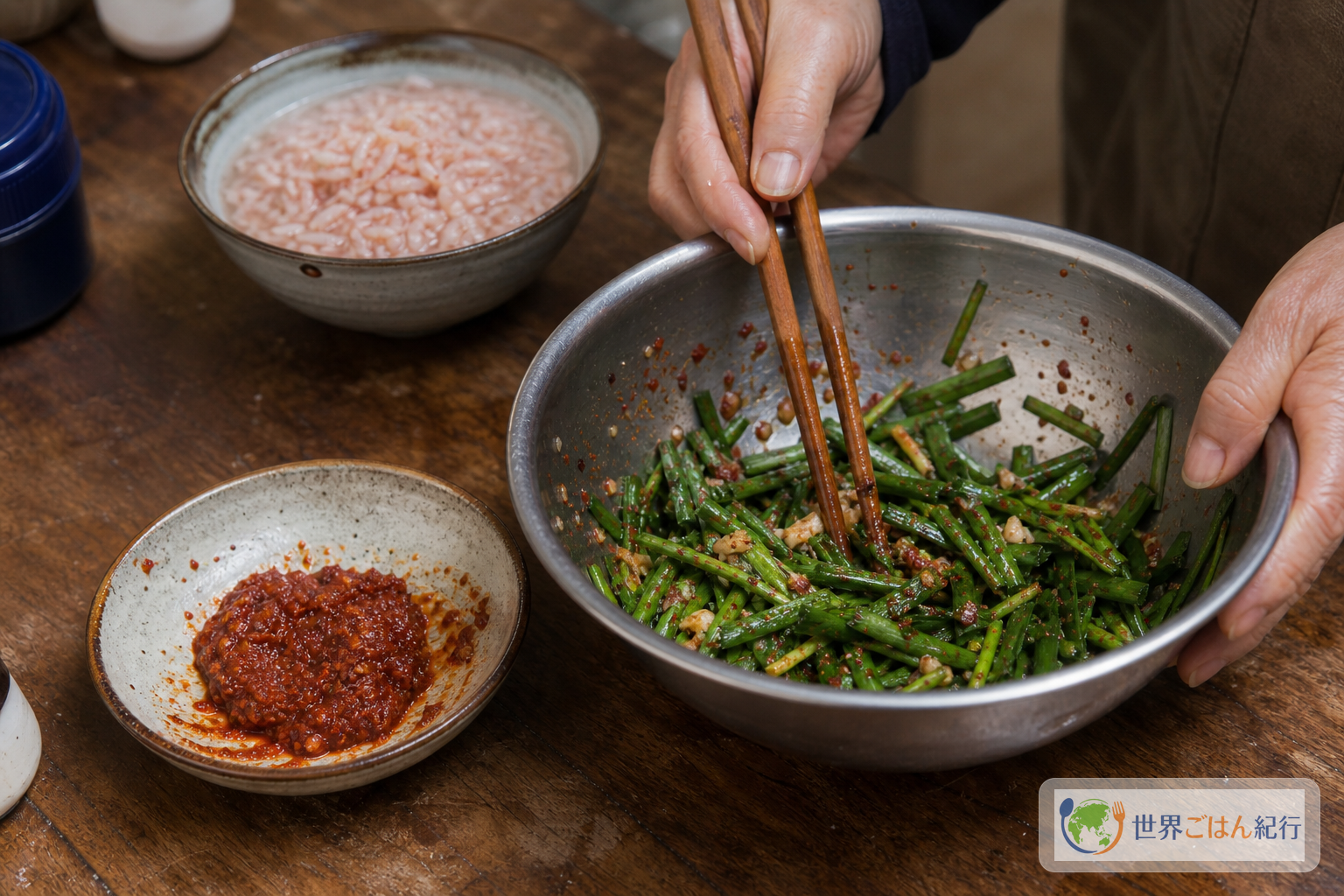
Here's how the condiments are divided. Use 1 tbsp gochugaru for the chives and 1/2 tbsp for the dadaegi. Split the 2 tsp grated garlic, 1 tsp for each. From the 40 g salted shrimp, use just 1 tsp of the brine in the dadaegi; the rest goes on the side for four people. Since the salted shrimp is served in its own dish, there's no need to put it all in the bowls. Treat the 1 1/3 tsp salt as an upper limit and add it a little at a time, tasting the soup as you go.
Check labels for pork, sesame, the wheat and soy in soy sauce, and the shellfish/seafood in salted shrimp and kimchi. If you need to avoid seafood, don't use fish sauce as a substitute. Pork needs to reach an internal temperature of 75°C (167°F) for at least 1 minute. Don't judge safety by color or juices alone.
Stock up on Korean seasonings and use them in the next pot
Pork, garlic chives, long scallion, onion, garlic, ginger and rice are everyday groceries. The Korean items take a little more looking. Gochugaru is the general name for Korean chili flakes, and the heat varies by product. Don't swap in the same amount of other ground chili. For salted shrimp, look for "saeujeot" on the label as a clue, and check the ingredients and storage instructions. Color and the look of the shrimp alone don't guarantee freshness.
Leftover gochugaru can go into another pot on another day. Unlike dwaeji gukbap, where heat is added afterward to a white pork soup, sundubu jjigae (in Japanese) is a stew with the chili heat cooked right into the pot. For a red Korean stew made with well-fermented kimchi, try kimchi jjigae (in Japanese).
You only use 2 tsp of sesame oil for the chives, so whatever you have on hand is fine. The rest can go into japchae (in Japanese). As for bowls, you don't need special ones; just warm ordinary deep bowls with boiling water. Regular bowls work fine, so try it first with what you have. If you use a dedicated vessel like a ttukbaegi (Korean earthenware pot), check the actual product's instructions to see whether it can go over direct heat and how to heat it. Not all earthenware is safe over an open flame.
Method
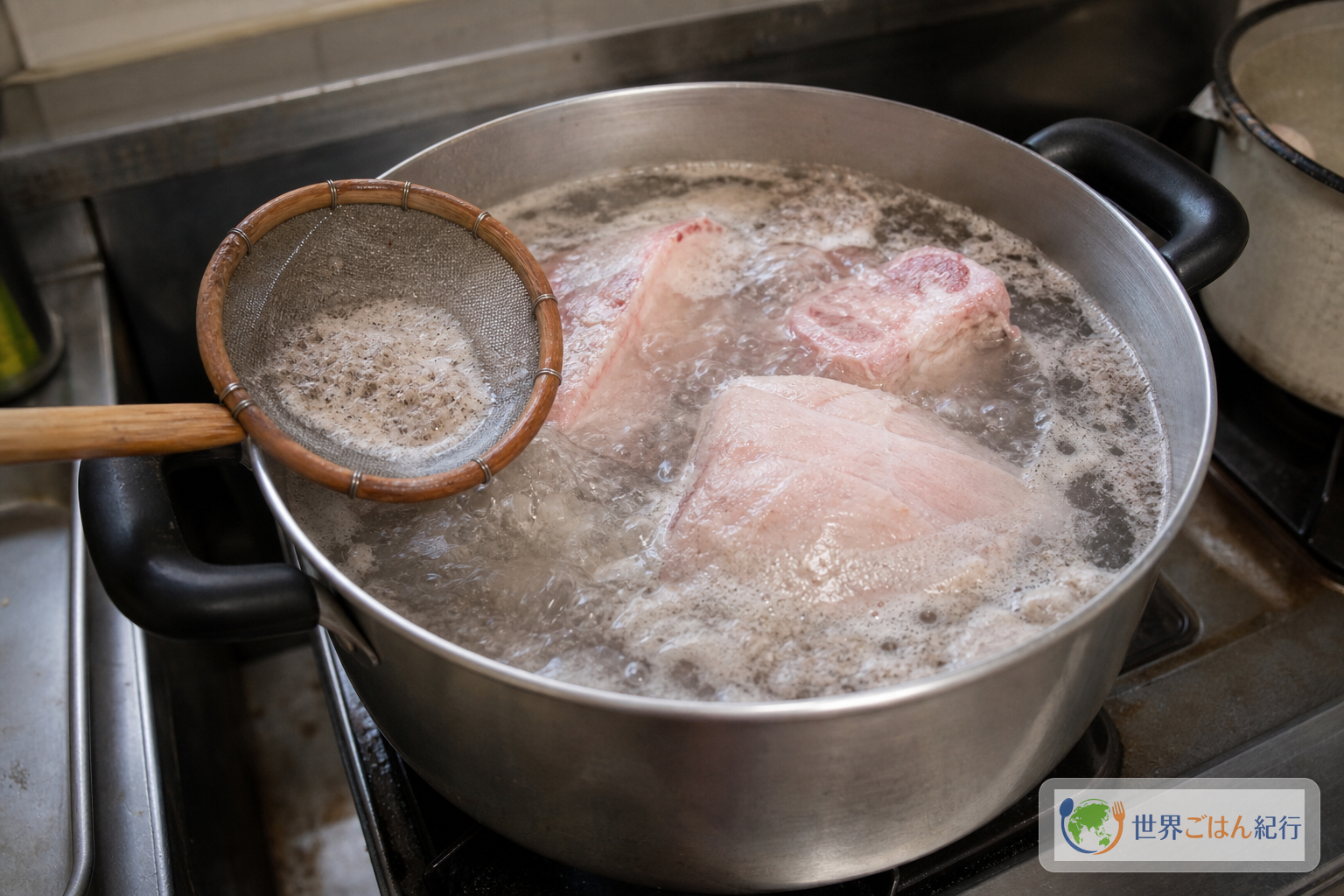
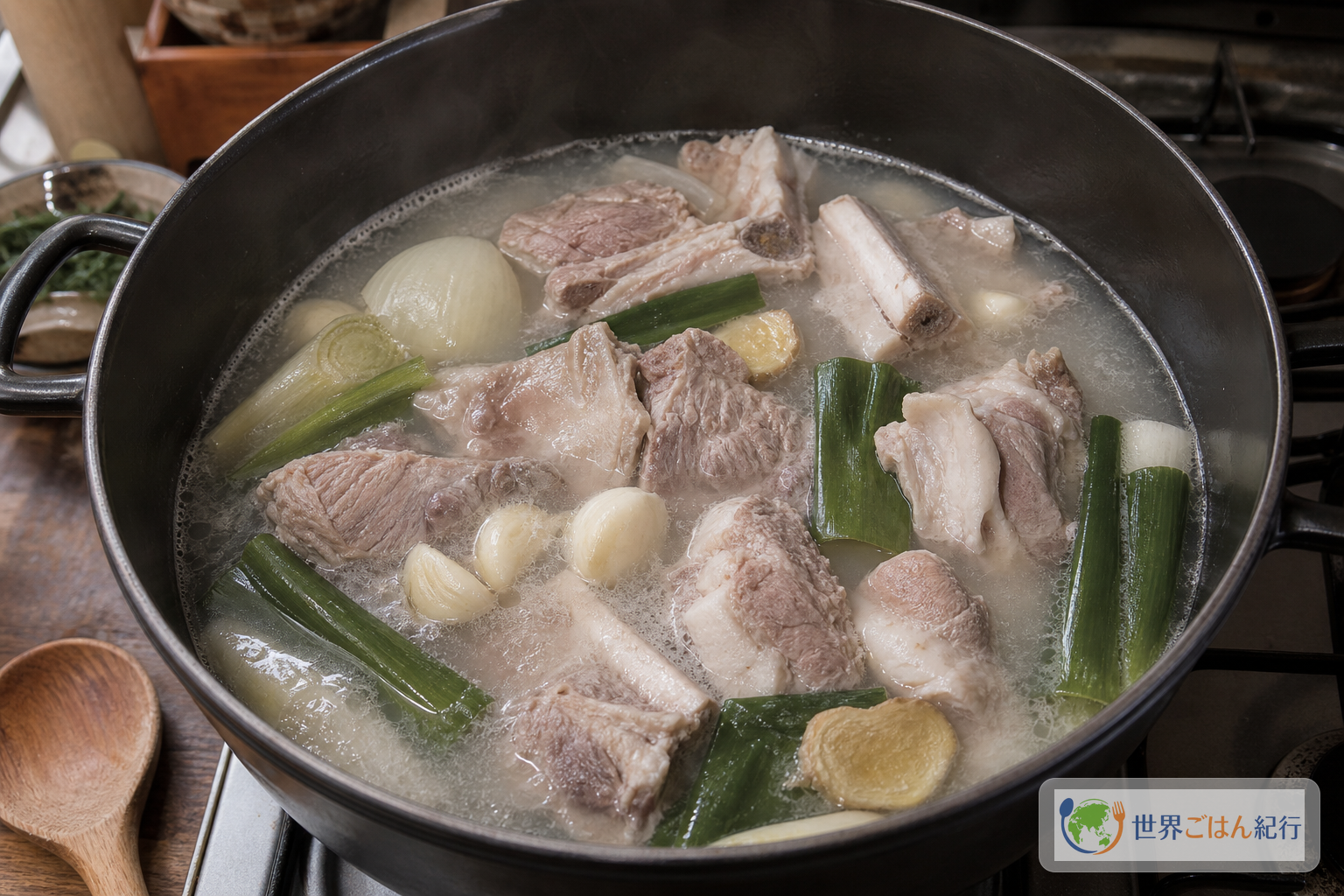
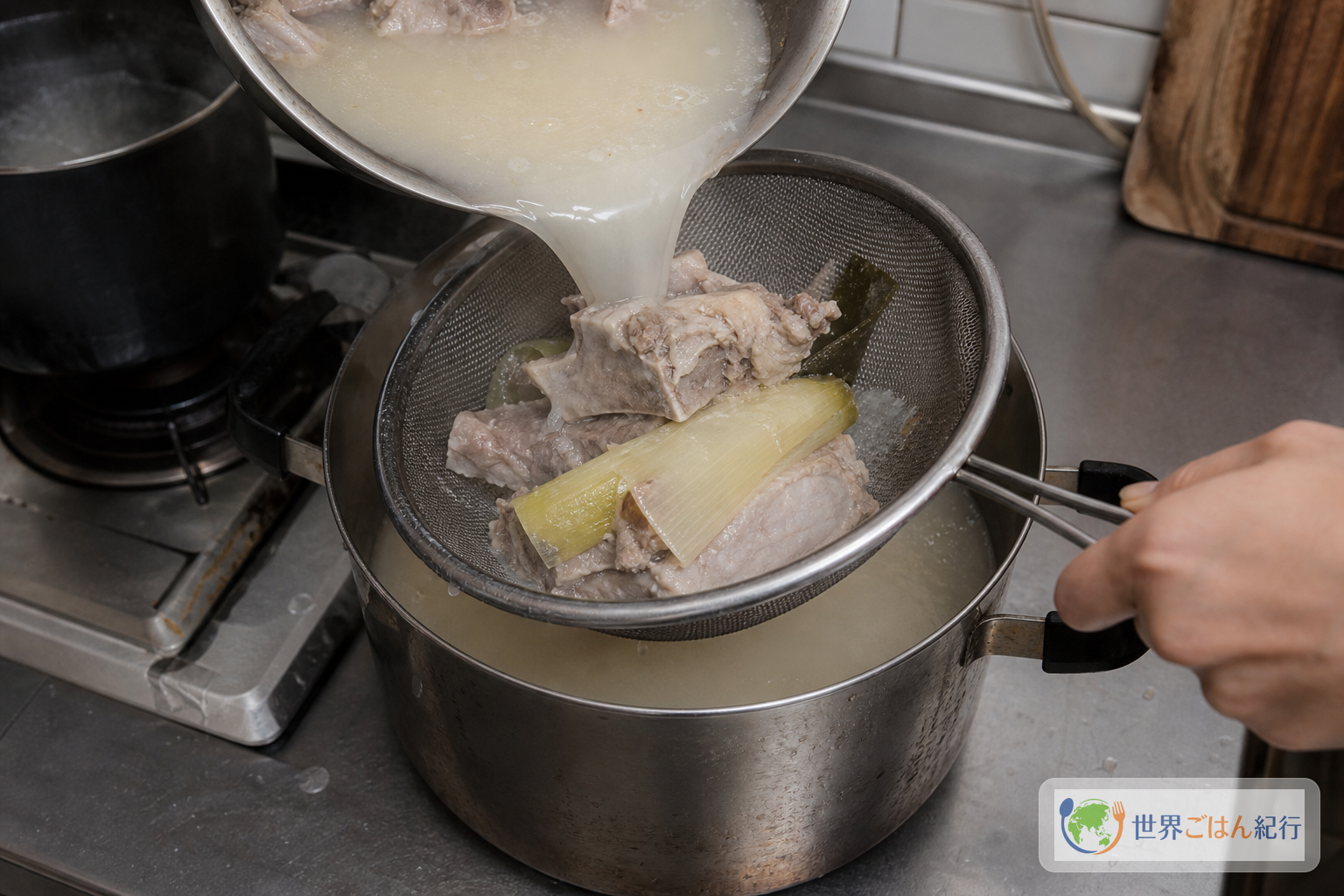
The order of work: blanch, simmer bones and meat, take out the cooked meat, strain the broth, make the condiments, prepare bowls and rice, and assemble. Taking the meat out first is the key point of this home version. Simmering gently as this recipe does won't necessarily give you a rich, milky broth. Don't keep cooking the topping meat in pursuit of whiteness.
Cooking tips
If the liquid drops so much during simmering that the bones or meat poke above the surface, add boiling water a little at a time. The target after straining is 1.6 L of finished broth. That covers 1.4 L for four bowls, plus enough for the dadaegi and tasting.
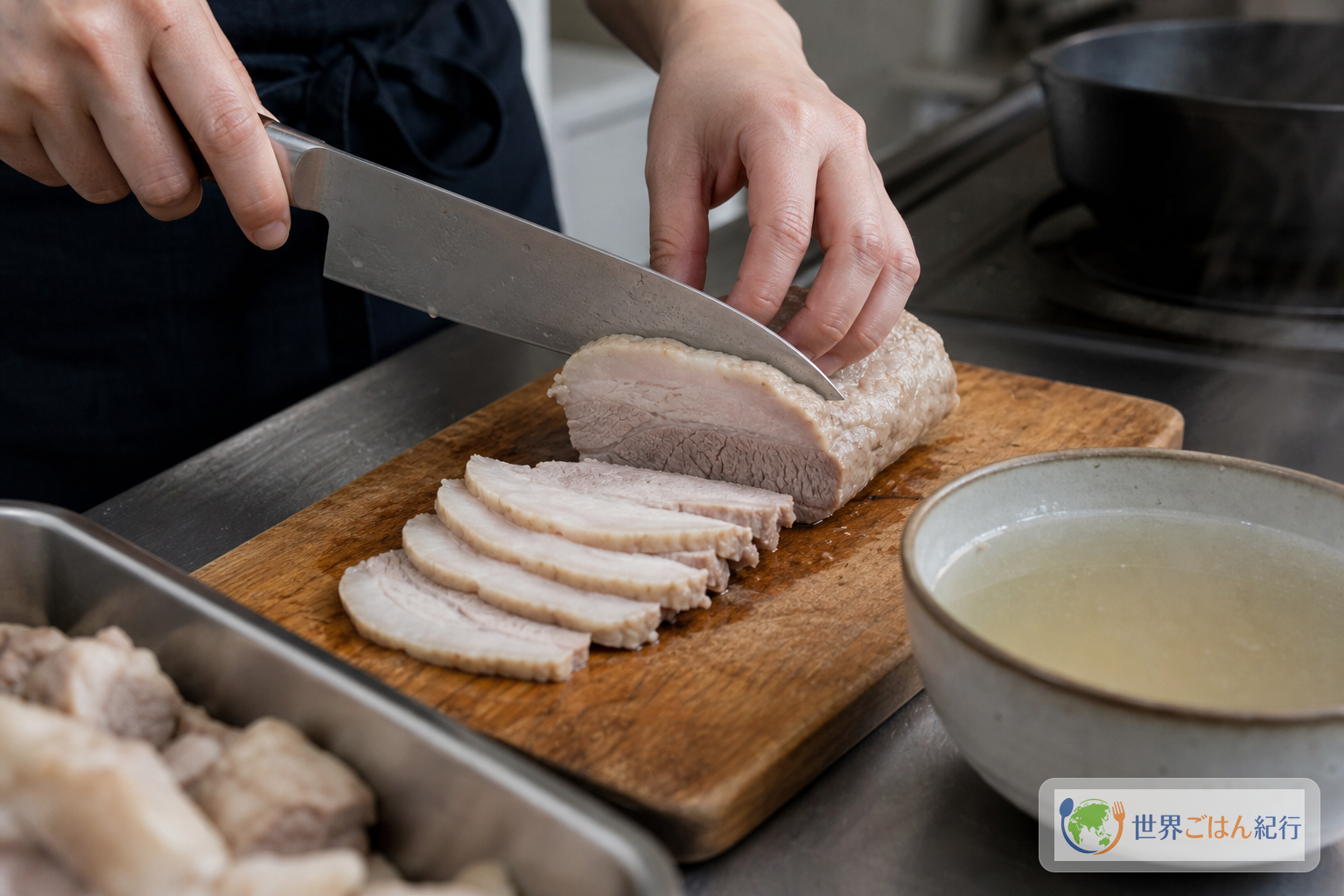
Rest the meat for 10 minutes with 3 tbsp broth spooned over it, then slice it 4–5 mm thick against the grain on a clean cutting board. If it's hard to cut, slightly thicker slices are fine. Don't hold hot meat down with your bare hands.
Cut the chives into 4 cm lengths and slice the scallions thin. Seasoned chives release water if made too early, so toss them just before eating. Loosen the dadaegi with 2 tbsp broth and add it to each bowl starting with 1 tsp.
Swapping ingredients, and how the flavor changes
Even if you swap the neck bones for spareribs in this home version, you still get a broth from bone and meat. It won't have the density or whiteness of a restaurant broth simmered for hours, though. Without salted shrimp, you can season with salt alone. Fish sauce adds salt, but its fermented seafood aroma is different, and fish sauce won't taste the same. If you want to try it, put 2 tsp fish sauce and 1/3 tsp salt in a separate dish for four, and add a little to each bowl. It isn't a true equivalent, so enjoy it on those terms.
| What you change | How to do it at home | Difference in flavor or texture |
|---|---|---|
| Neck bones | 800 g spareribs | You also get meat, but cloudiness varies with the bone cut |
| Salted shrimp | Salt, or fish sauce in a separate dish | No shrimp bits; different fermented aroma |
| Gochugaru | Other ground chili, starting with a small amount | Tends to be hotter, with a different aroma |
| Rice in the bowl | Serve the rice separately | Rice is less likely to go soft |
| Heat of the seasoned chives | Reduce gochugaru to 1 tsp | A milder home-style tweak |
| Pork shoulder | 450 g block of pork leg | Leaner and dries out easily, so don't overcook |
Serving the rice on the side and adding it to the soup bit by bit, ttaro gukbap style, is another option. Add the rice just before eating and it's less likely to go soft. If you're curious about Korean rice dishes beyond plain white rice, have a look at kongbap (in Japanese). That isn't to say it's the standard accompaniment at the same restaurants.
If it won't turn white, it's too salty, or the meat is tough
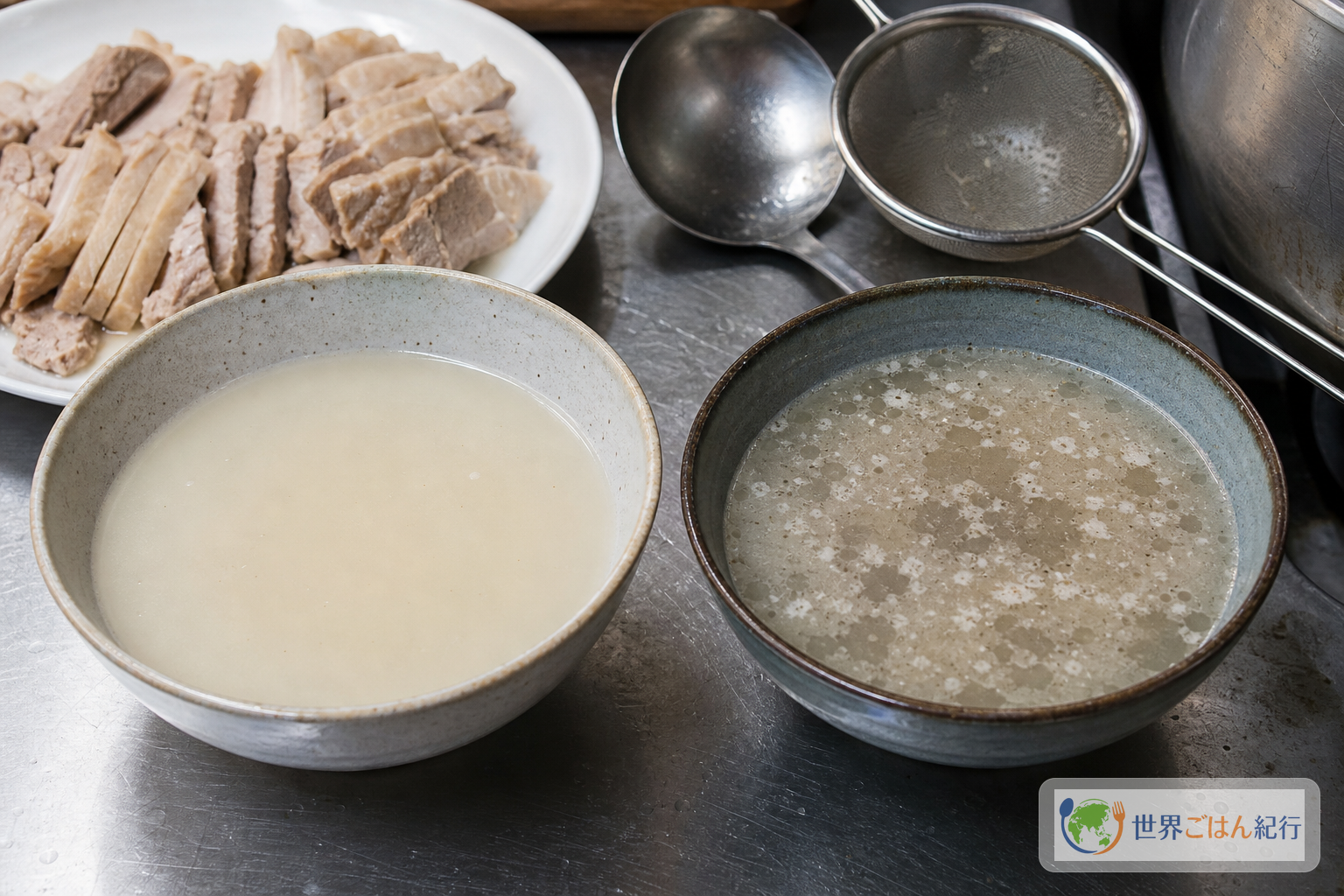
If the broth doesn't turn white, there's no need to call it a failure. Cloudiness has to do with a cooking method that disperses fat and other components into the broth. Simply simmering longer over low heat won't necessarily make it white. Serious Eats' tonkotsu ramen guide explains that clear stocks are simmered gently, while cloudy pork bone stock is boiled. That's a ramen guide, not a process common to every dwaeji gukbap restaurant. Adding milk or soy milk isn't part of this home version either. Don't judge by whiteness alone; check the tenderness of the meat and the flavor of the broth.
| Problem | What to check | How to fix it |
|---|---|---|
| Only faintly cloudy | Bone cut, heat level, time | Check the meat's tenderness and the broth's flavor; don't keep cooking the topping meat chasing whiteness |
| Gray foam or bone bits remain | Blanching, straining | Skim the foam and strain through a fine-mesh sieve. The color won't necessarily turn white again |
| Too fatty | Cuts used and fat on the surface | Skim off floating fat a little at a time |
| Too salty | Salted shrimp and salt in the pot | Add unsalted hot water a little at a time and taste. More rice doesn't lower the salt concentration of the soup |
| Tough meat | Overcooking, slicing direction | Slice against the grain. Overcooked meat can't be fully rescued |
| Soggy rice | How long it sat in the soup | Serve it on the side from the next bowl on. Swollen rice won't recover |
A normal pork smell is softened by blanching and the aromatics. If something smells off, or there's any doubt about how it was stored, throw it out rather than masking it with spices. If it's gotten far too salty, dilute it with unsalted hot water first. Adding more dadaegi won't reduce the salt.
Side dishes and a meal to change the flavor at the table
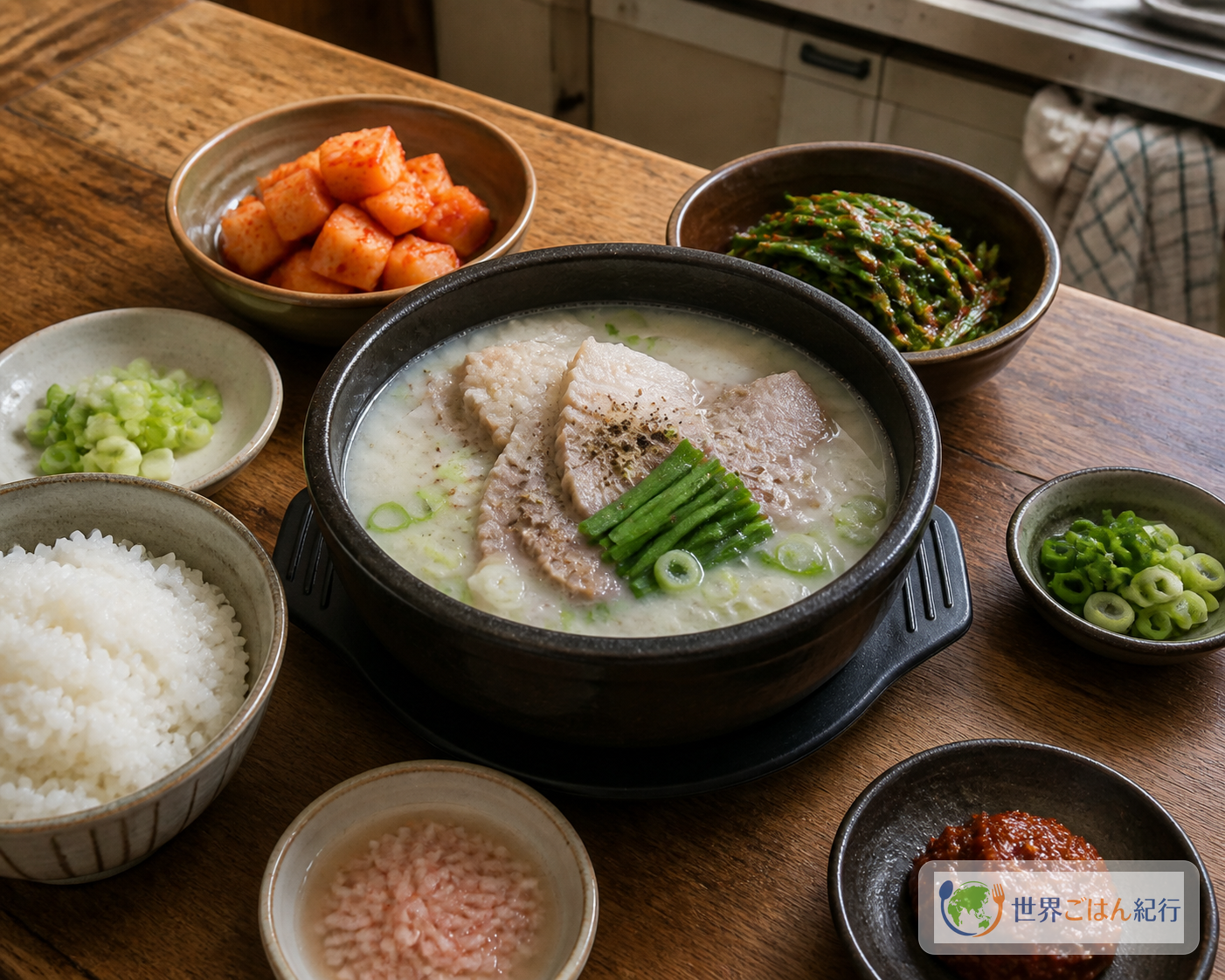
First taste the soup alone, then add the chives. If it needs salt, adjust with salted shrimp or salt, and finally dissolve a little dadaegi. This order of changing the flavor one sip at a time is a home suggestion, not the only way to eat it. For anyone who doesn't want heat, use chives without chili and skip the dadaegi.
With soup and rice as the star, a simple meal is plenty. Plan on about 160 g kimchi for four. At home, a few small side dishes, such as salted cucumber or chilled tofu, round out the table. Leftover sesame oil and scallions can go into the namul for bibimbap (in Japanese) another day. For a white soup made with chicken to compare, try samgyetang (in Japanese).
Visit Busan's listing for the Yeongjin Dwaeji Gukbap main branch shows a suyuk baekban served with pork, tofu and stir-fried kimchi. That's one restaurant's spread; the side dishes aren't the same everywhere.
Storage and reheating the next day
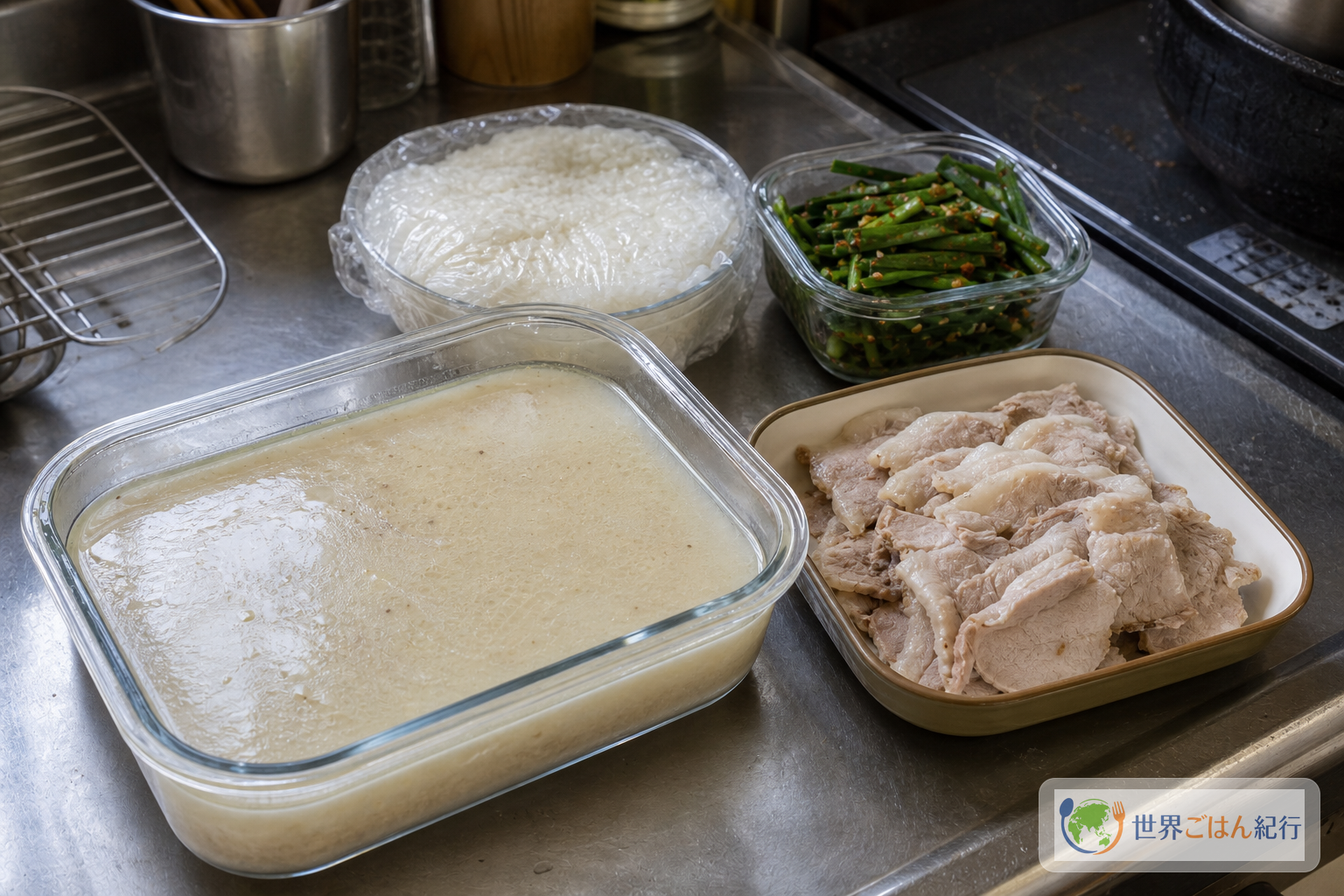
Keep the broth, meat, rice and seasoned chives separate, divide them into clean, shallow containers, cool them quickly, then refrigerate or freeze. Don't leave the big pot at room temperature until it's cool enough to touch. Spores of Clostridium perfringens can survive ordinary simmering, so avoid leaving it out at room temperature for long.
When reheating, stir the broth up from the bottom of the pot and bring the whole batch to a boil. Reheat the meat thoroughly to the center too, aiming for at least 75°C (167°F). Warm the rice separately and evenly, and combine it with the broth just before eating. There's no fixed number of days that can be guaranteed safe, so finish it soon. Store the salted shrimp according to the product label.
Don't assume that food left at room temperature for a long time, or stored under unknown conditions, becomes safe once reheated. If there's an off smell or discoloration, don't eat it. Even with no visible problem, safety can't be guaranteed. Take salted shrimp out with a clean spoon, and don't let broth or rice get into the jar.
Things to check before you cook
Even without bones, there's a regional style of clear soup made from pork meat alone, so boneless makes the clear style. The ingredient table in this article, however, is for the bone-in home version. Made without bones, it won't have the same whiteness or body.
Is dwaeji gukbap spicy?
In this home version, no chili goes into the pork soup itself. Heat is added afterward with the seasoned chives and dadaegi. Seasoning differs by restaurant, so you can't say every place serves it without heat.
Can I serve the soup and rice separately?
Yes. In Korea there's a style called ttaro gukbap that serves the soup and rice separately. At home, serving rice on the side lets each person add it at their own pace. When making it ahead, store them in separate containers too.
Related recipes
- Sundubu jjigae (in Japanese) — A red stew of tofu and clams, with gochugaru bloomed in oil.
- Hotteok (in Japanese) — A syrup-filled street snack, including Busan's seed-filled version.
- Samgyetang (in Japanese) — A white soup of chicken and glutinous rice, different from pork soup.
- Japchae (in Japanese) — Stir-fried Korean glass noodles, another use for sesame oil.
Sources
- 韓国観光公社「Dwaejigukbap: Busan’s Representative Local Dish」 — Published February 20, 2025. Soup styles, condiments, toryeom, the Seomyeon restaurant street. Accessed and checked October 5, 2026 (JST).
- Koreana「Local Wartime Dishes」 — Refugee food culture, three soup types and serving styles. Accessed and checked October 5, 2026 (JST).
- Visit Busan「Yeongjin Dwaeji Gukbap Main Branch」 — Example of one restaurant's suyuk baekban spread. Accessed and checked October 5, 2026 (JST).
- J. Kenji López-Alt / Serious Eats「Make Perfect Tonkotsu Ramen: The Food Lab Redux」 — Updated August 10, 2018. How boiling relates to cloudy pork bone stock. Not a source for this recipe's proportions. Accessed and checked October 5, 2026 (JST).
- 農林水産省「食育ガイド」22ページ — Cooking to 75°C at the center for at least 1 minute; storing in small portions. Accessed and checked October 5, 2026 (JST).
- 農林水産省「煮込み料理を楽しむために~ウェルシュ菌による食中毒にご注意を!!~」 — Cooling, storing and reheating stews. Accessed and checked October 5, 2026 (JST).
- 近畿農政局「食後に残った食品を扱う時に気を付けたいポイント」 — Reheating to 75°C or higher; bringing soups to a boil. Accessed and checked October 5, 2026 (JST).
- FoodSafety.gov「Cook to a Safe Minimum Internal Temperature」 — Version checked November 21, 2024. Checking with a thermometer and U.S. cooking guidelines. This recipe's 75°C for 1 minute follows Japan's Ministry of Agriculture, Forestry and Fisheries. Accessed and checked October 5, 2026 (JST).