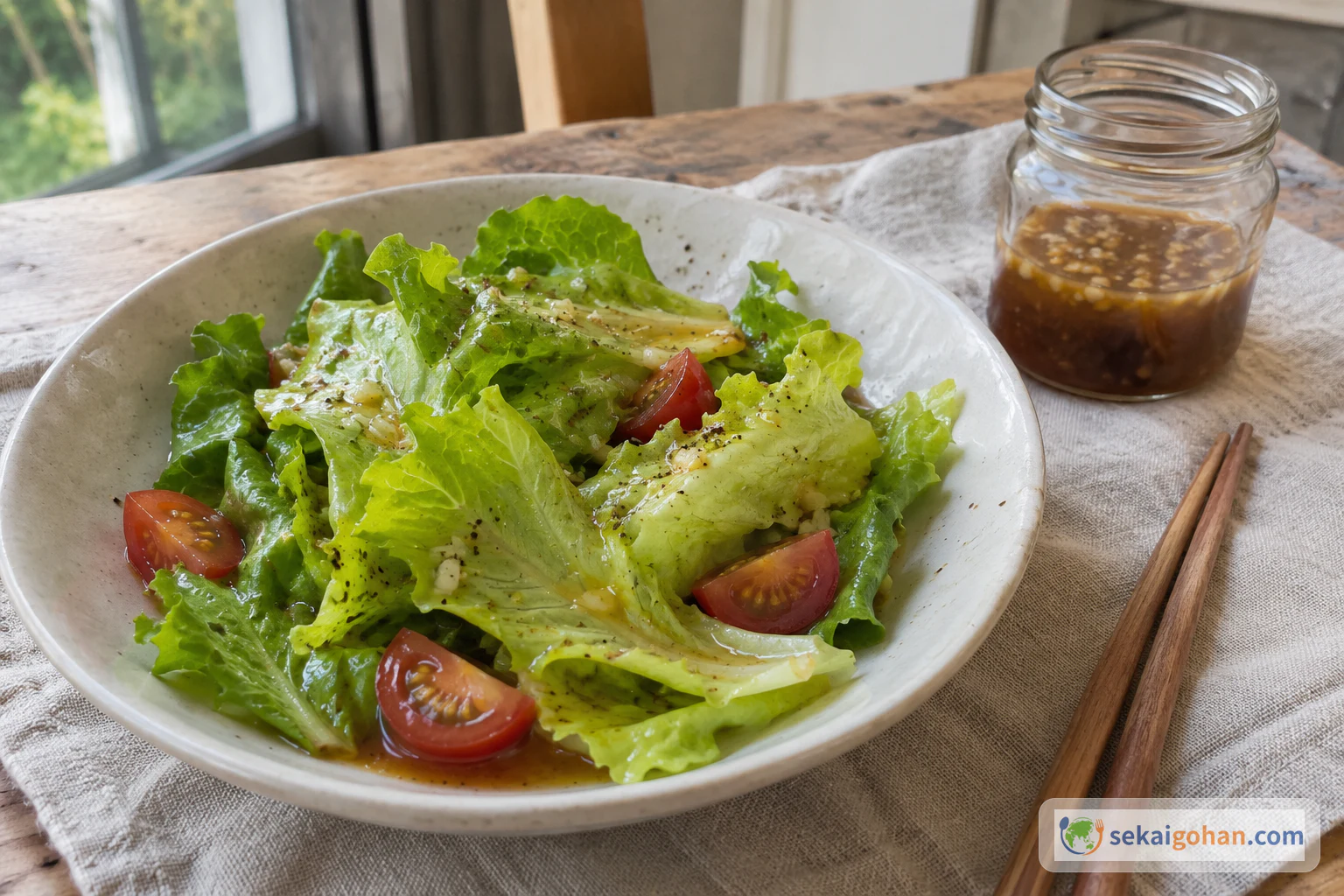
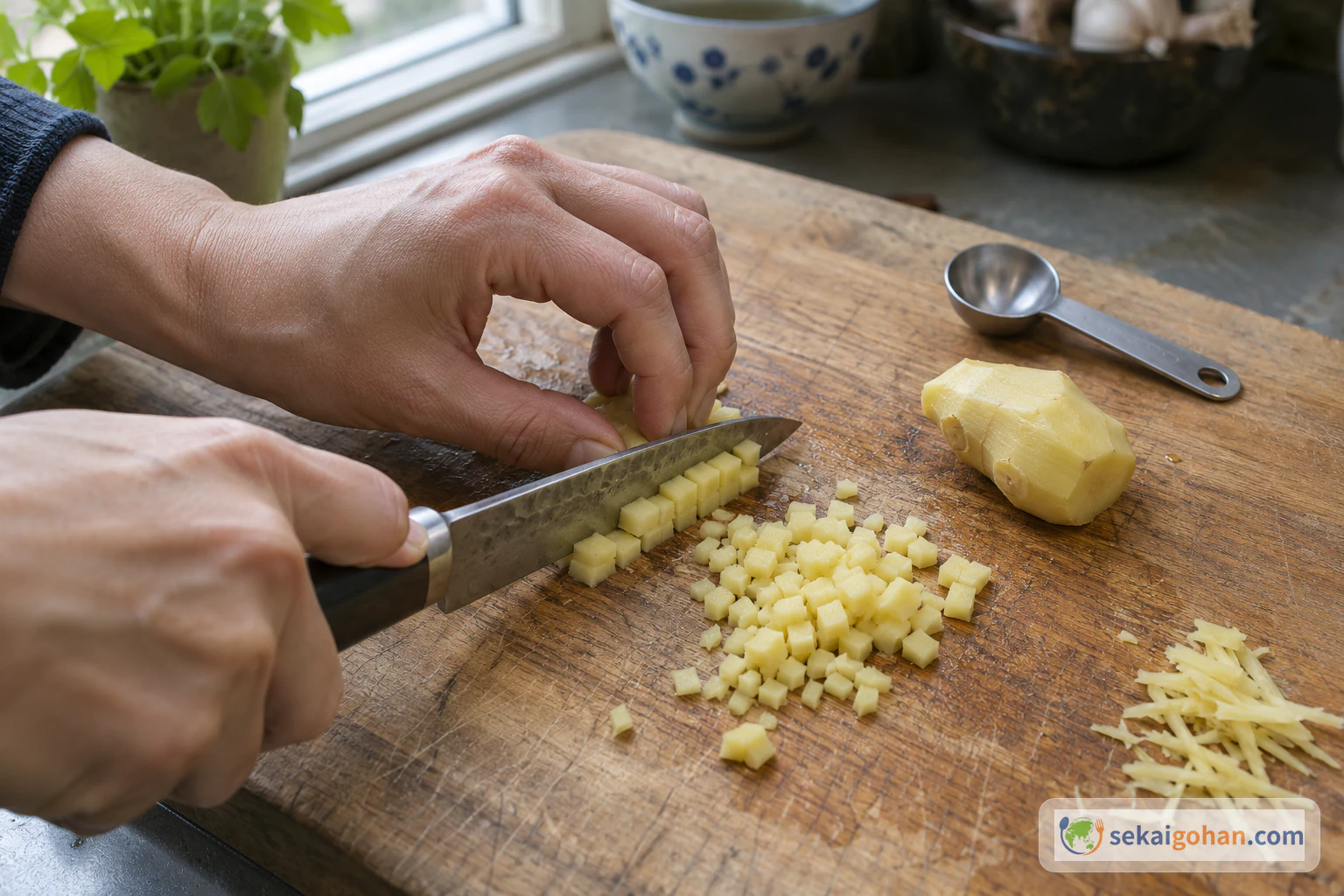
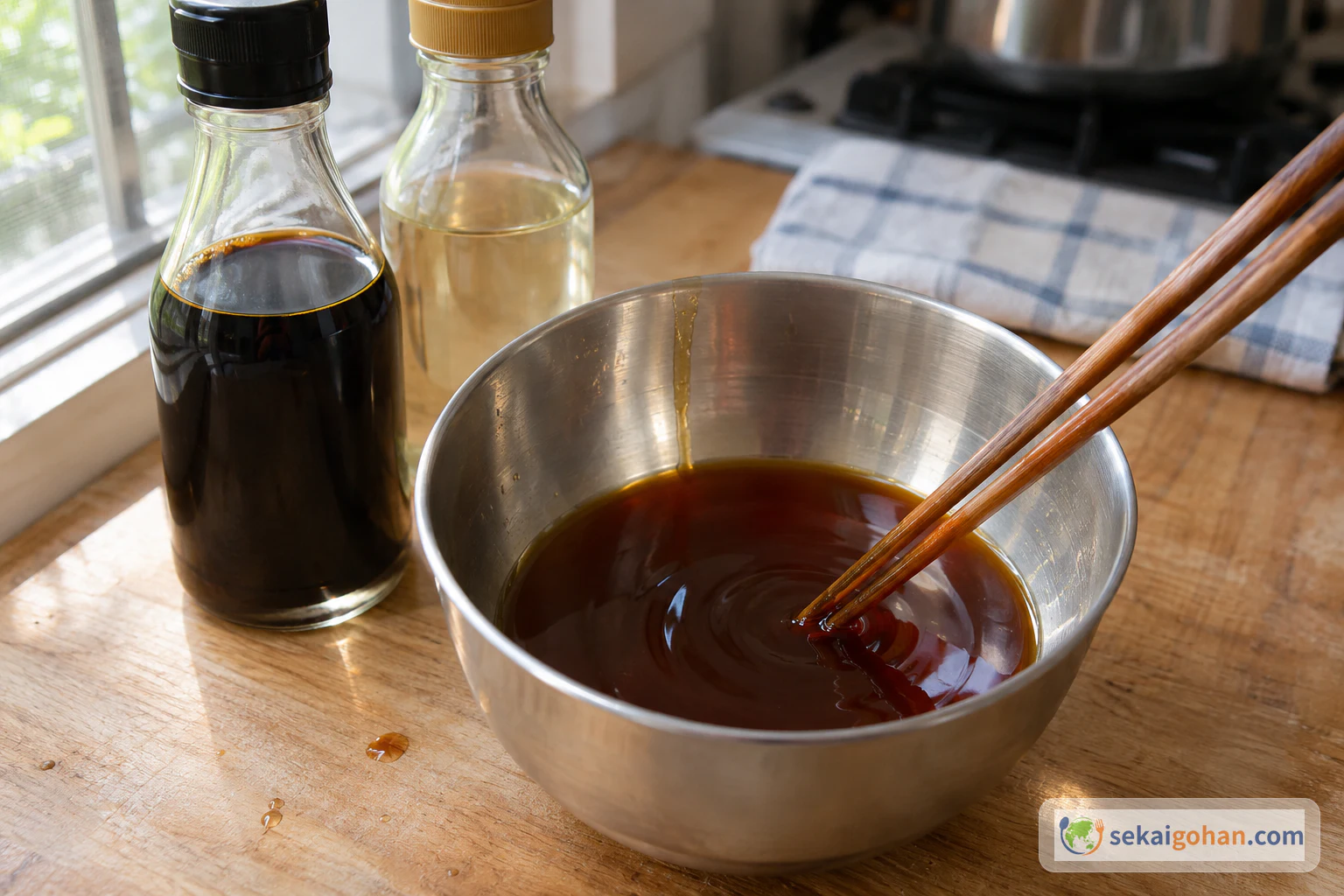
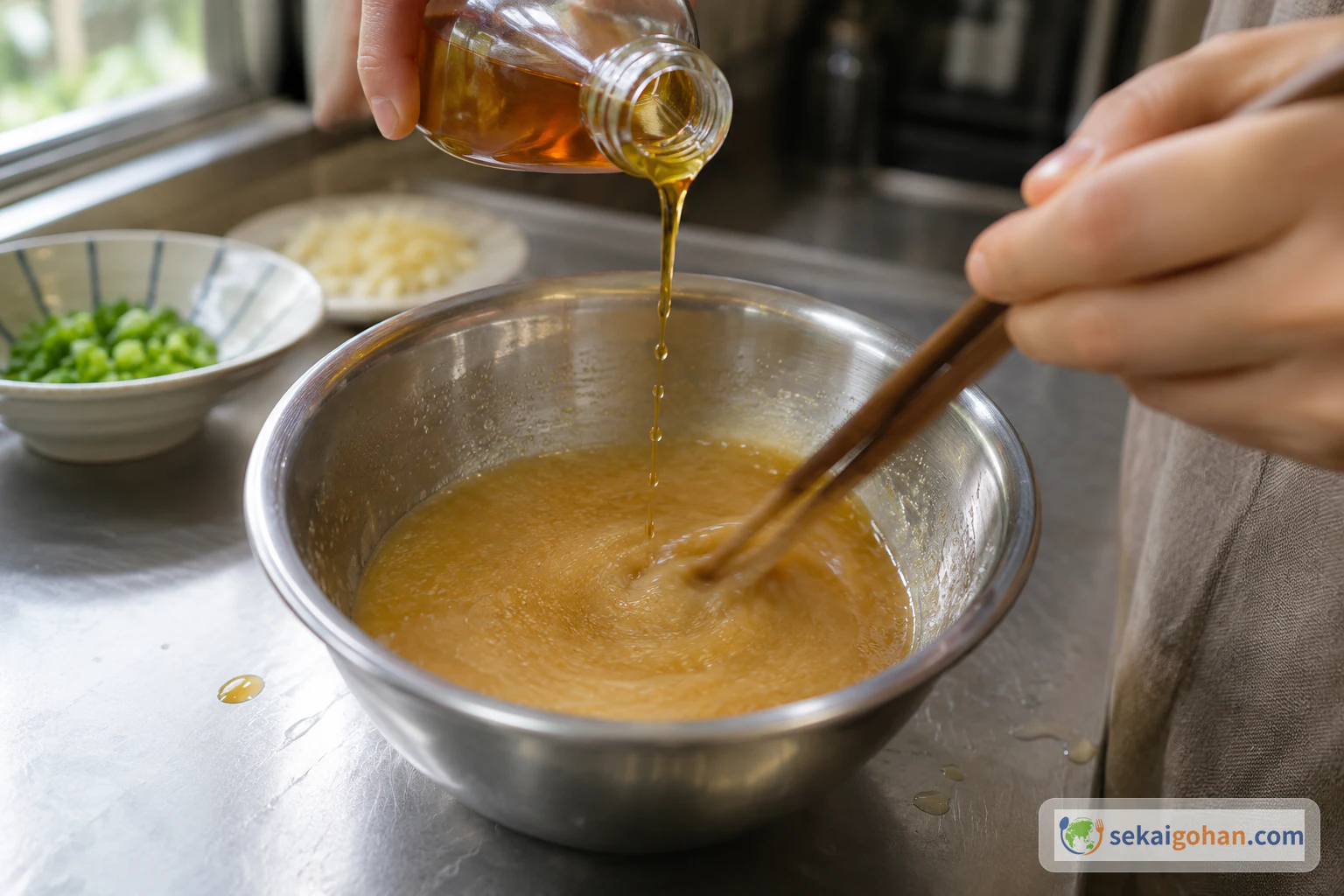
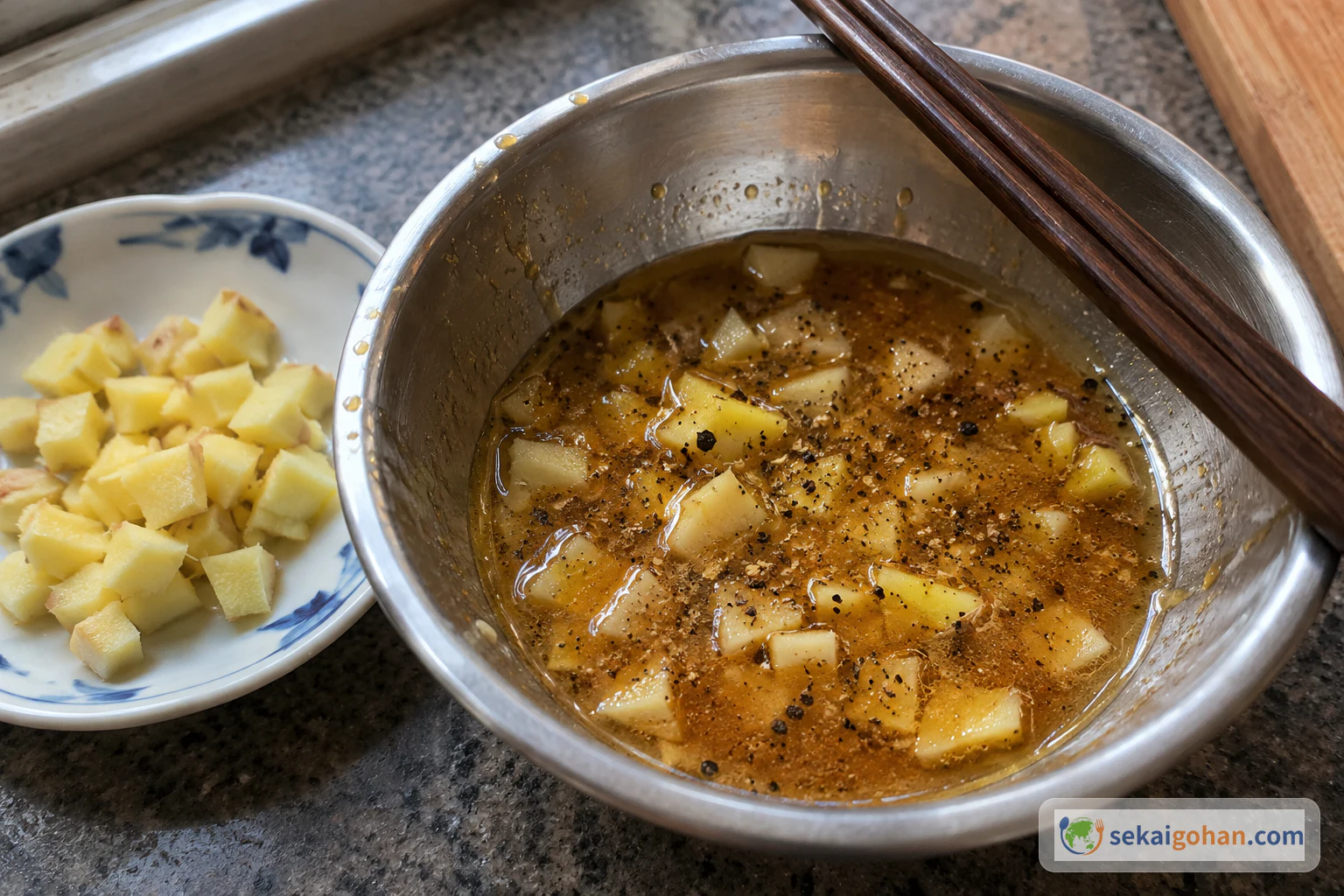
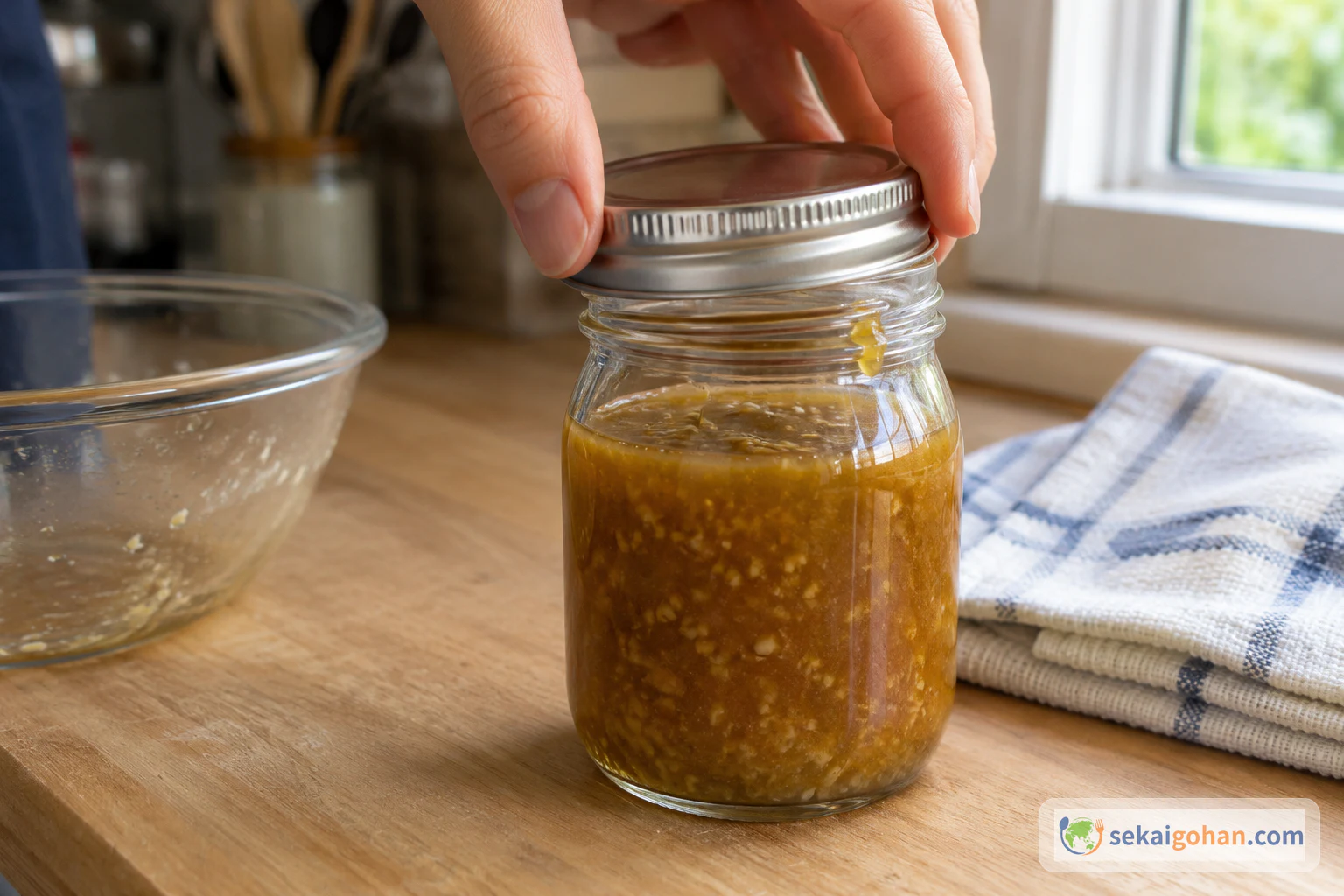
The ginger goes under the knife first, a small knob tapped down into pale cubes on the board, and its sharp, clean smell rises straight off the wood. Soy sauce and vinegar meet in a little bowl, and when the sesame oil goes in a bit at a time, the dark liquid turns cloudy and starts to smell of toasted sesame. That is wafu dressing, the soy-based salad dressing of Japan: soy sauce, vinegar and sesame oil, pointed up with ginger and pepper, and never cooked. On a leaf it tastes salty and bright first, then nutty, with small bursts of ginger heat each time you bite into a cube.
From Shredded Cabbage to a Bowl of Salad
How soy sauce reached the salad
By Kewpie's own company timeline, in 1958 it became the first to make and sell bottled dressing in Japan, a red French dressing. Salad at that time was a garnish, a heap of shredded cabbage beside the main dish rather than a plate of its own. In 1965 the timeline lists a soy-based bottled dressing called Oriental, made with Japanese taste in mind. In 1973 it lists dressings in which the oil and the watery part sit in separate layers, the kind you shake before pouring.
Then, in 1978, the same timeline records bottled dressings named wafu (Japanese-style) and chuka (Chinese-style) going on sale. With a soy sauce flavour people already knew from every other meal, salad began to appear on the table far more often, and the range of things tossed into the bowl widened. Through the 1980s dressing flavours spread into Western, Japanese and Chinese styles. Who first called a soy dressing wafu, and what home cooks were stirring together before the bottles arrived, is not settled.
What makes it wafu
The deciding ingredient is soy sauce. Kewpie's food-service wafu dressing is described as soy-based, mellow and low in sharp acidity, with a toasted sesame note, and it is classed as the separating kind. It is also used beyond salad, on steamed chicken, small dishes of beans and hijiki seaweed, tofu with tiny dried fish, and rice bowls of chopped tuna.
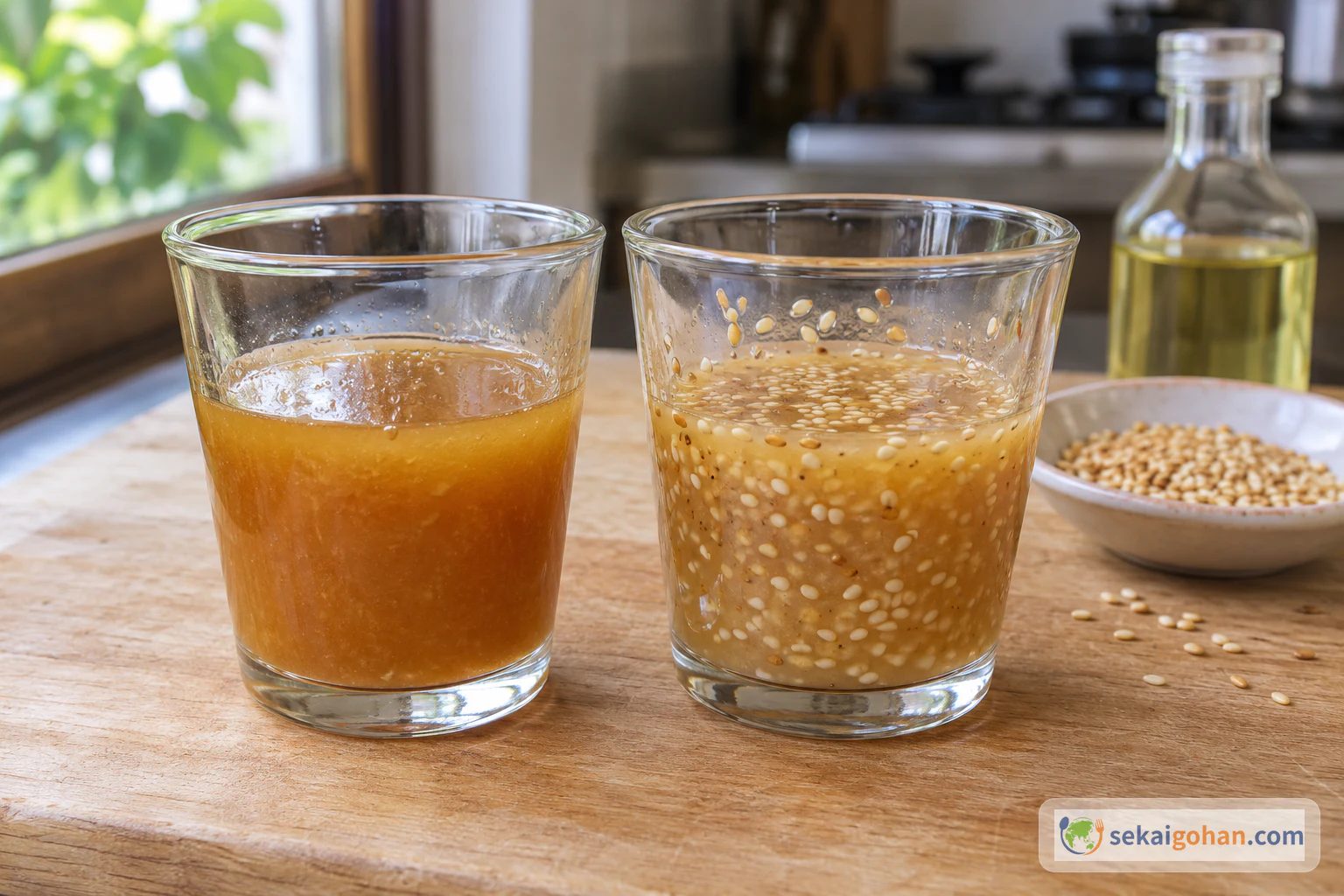
The neighbours on the shelf share a family resemblance and differ in one move each. Wafu goma (sesame) dressing adds sugar and white toasted sesame seeds and uses neutral salad oil, so it tastes sweeter and has a seedy crunch. Ponzu dressing takes its acidity from citrus. French dressing is oil and vinegar with no soy sauce at all. Further afield, Brazil's vinagrete is built around chopped vegetables, while wafu dressing is all about the liquid. For more from the same kitchen, see the dishes of Japan.
Wafu means "Japanese-style", and dressing is borrowed from English. In practice the word points to soy sauce rather than to any vegetable: an onion dressing made with white dashi, lemon and olive oil is counted as Western-style, even though onion sounds homely and Japanese.
The home recipe this article follows only says to mix everything together. Splitting it into five steps, with the ginger last, is Sekai Gohan's own arrangement, and the ⅛ inch (2–3 mm) size for the ginger is a guide rather than a stated measurement.
Ingredients (serves 2)
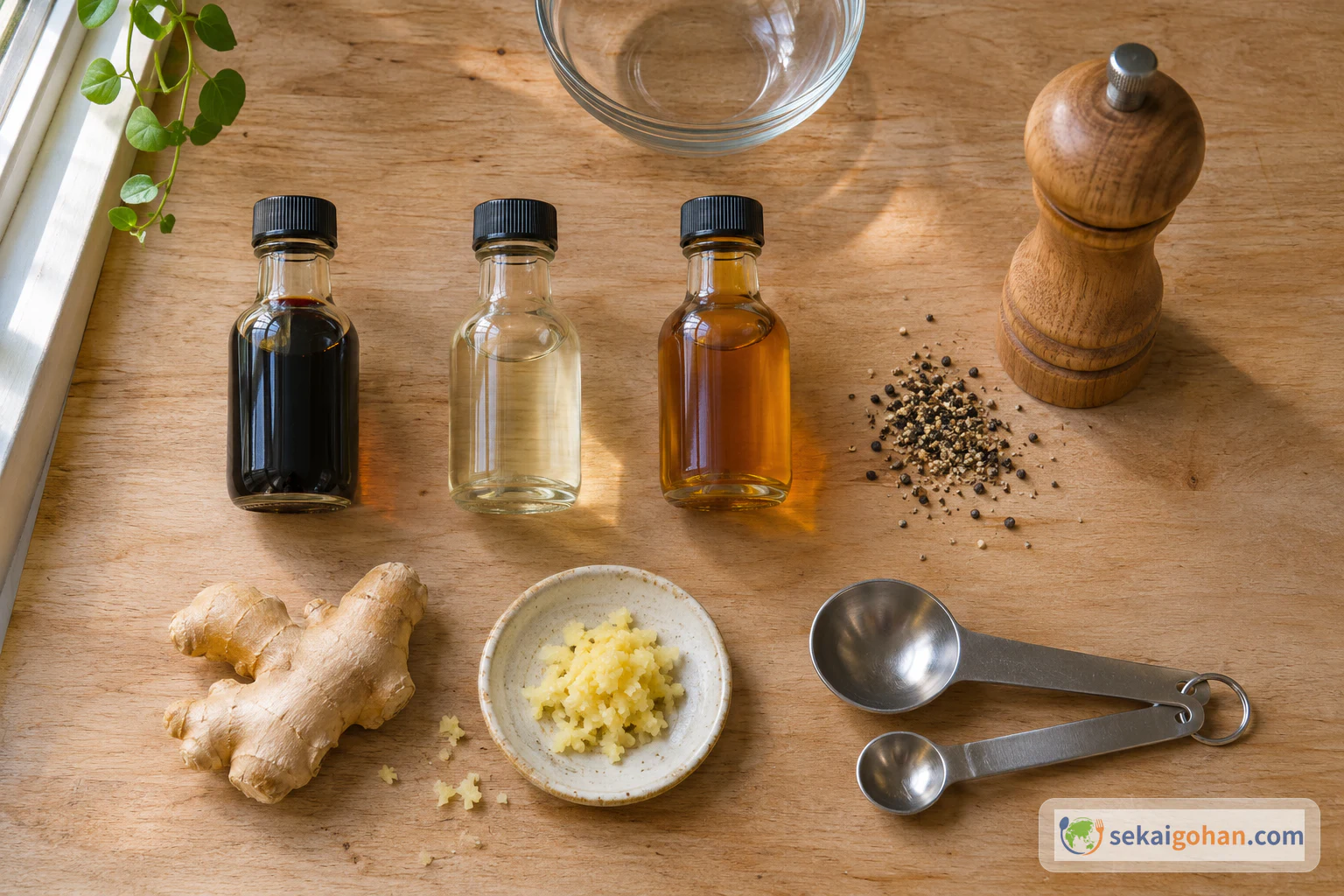
There is no sugar and no salt in this dressing. The soy sauce carries all the salt, and the sweetness people expect from bottles belongs to a different mix, covered under the variations below.
With only five ingredients in spoonful amounts, a splash too much soy sauce or vinegar tips the whole jar. Level each spoon. For "a little" pepper, two or three shakes is right.
Soy sauce contains wheat and soy, and sesame oil contains sesame. Check the ingredient label on your soy sauce, as brands differ.
Equipment
- Measuring spoons (tablespoon and teaspoon)
- A small bowl
- Chopsticks or a small whisk
- Cutting board and knife
- A small clean jar with a tight lid
Choosing the Soy Sauce, Vinegar and Oil
Fresh-pressed soy sauce (nama shōyu) has a lifted aroma and rounder edges. Regular dark soy sauce (koikuchi) from the supermarket works; it comes through a little saltier and stronger in aroma. Keep the amount the same and taste before changing anything.
Vinegar changes the character more than any other swap. Rice vinegar is mellow and reads slightly sweet. Grain vinegar is clean and sharper. Apple cider vinegar brings a fruity smell. Any of the three makes a good wafu dressing as long as the soy sauce stays in.
Sesame oil is the aroma, and its scent fades after the bottle is opened, so buy a small one and use it up. Neutral salad oil in its place takes the sesame out and pushes the ginger and soy sauce forward. Buy the smallest knob of ginger you can find, since the jar needs only a teaspoon. Black pepper is more aromatic and shows as dark specks; white pepper is hotter and leaves no colour. Freshly ground of either smells brighter.
Method
The only knife work is the ginger, so cut it first and have everything measured before you start mixing. There is no heat and no waiting: the liquids go in first, the oil follows a little at a time, and the ginger and pepper go in last. Five minutes covers the lot.
Ginger cut too fine releases more heat into the liquid and the dressing turns harsh. Even cubes of about ⅛ inch (2–3 mm) give a clear ginger note in each bite without taking over.
When It Goes Wrong
| What you see | Why | What to do |
|---|---|---|
| A layer of oil on top after a while | Separation is normal; oil and the watery part drift apart over time, as in any separating dressing | Shake the closed jar hard until the dressing turns cloudy again, every time before pouring |
| Oil slick even right after mixing | The oil went in all at once | Next time add it in two or three pours, stirring between each |
| Ginger burns rather than lifts | Too much ginger, or cut too fine | Keep to 1 tsp and dice evenly at about ⅛ inch (2–3 mm) |
| Too salty | Regular dark soy sauce in place of fresh-pressed | Go back to fresh-pressed soy sauce, or next time add a little more vinegar |
| Sharp, sour edge | Grain vinegar | Switch to rice vinegar for a rounder taste |
| Flat aroma | Sesame oil open too long | Use a fresh bottle of sesame oil |
| Murky and gritty | The ginger was grated | Go back to coarse dice; grated ginger clouds the liquid and spreads the heat everywhere |
At the Table
Serving
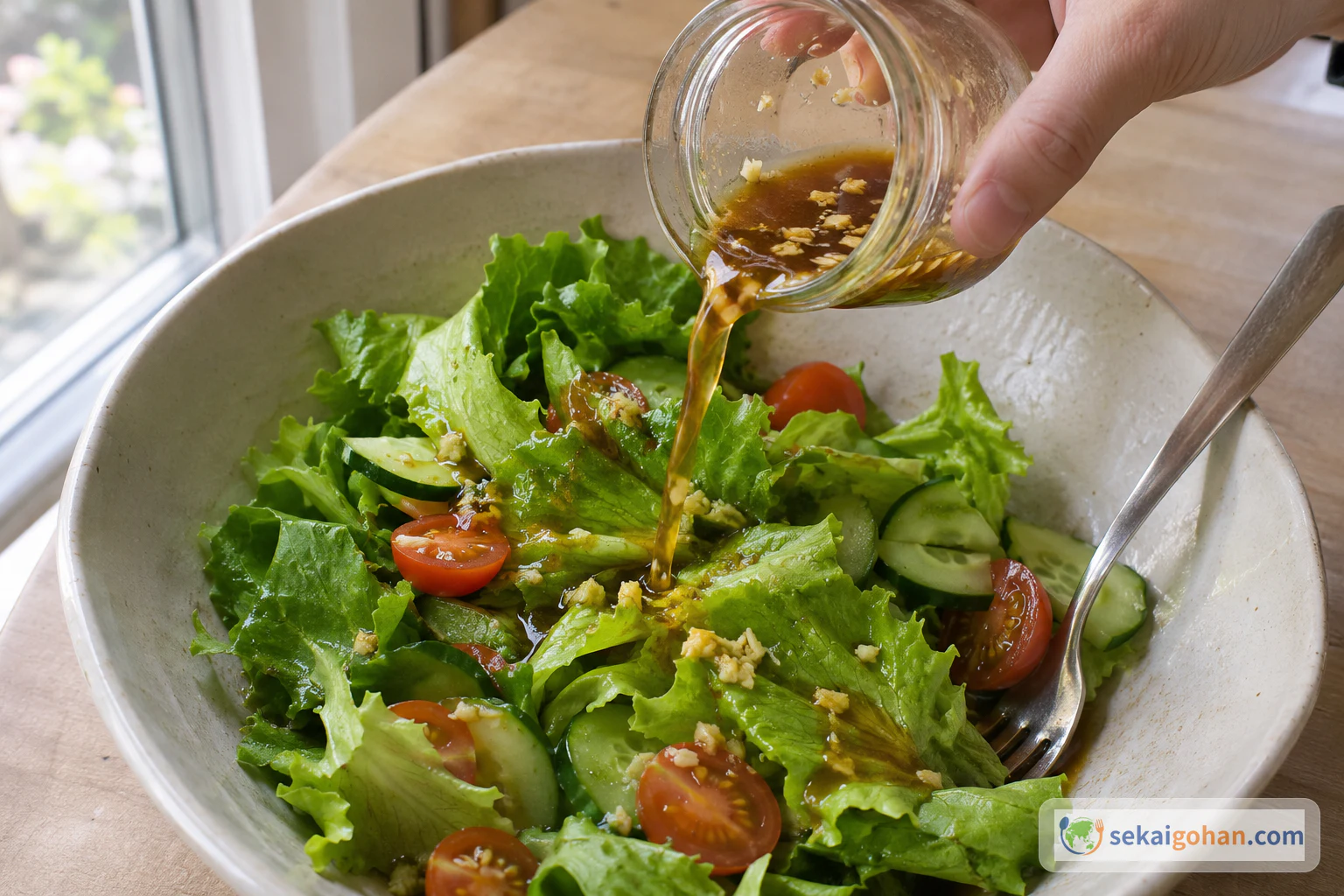
Shake the jar and pour it over a bowl of torn lettuce, cucumber and tomatoes just before eating, so the leaves stay crisp. It also suits tofu salads, steamed chicken, and small dishes of beans and hijiki seaweed. One serving (half the recipe, the dressing alone) comes to about 1.2 g of salt and 70 kcal; how much ends up on your plate depends on how much salad is under it.
Wash vegetables well under running water, including pre-wrapped and pre-cut ones. Keep juices from raw meat and fish away from salad. Wash any knife and board used for raw meat or fish, then pour boiling water over them; separate boards for meat, fish and vegetables are safer still. Never store raw meat or fish with this dressing poured over it.
Variations
The sugar split is the biggest fork in wafu dressings. This one has none; the sweeter versions below are separate mixes, so make each as written rather than blending them into the main recipe.
- Wafu sesame dressing (serves 3): stir 1½ tbsp vinegar, 1 tbsp fresh-pressed soy sauce and 1 tsp sugar together well. Add 1 tbsp salad oil a little at a time, stirring well, then add 1 tsp white toasted sesame seeds. It comes out sweeter and milder, with a toasty crunch in place of the ginger heat.
- Sweet grain-vinegar style: 2 tbsp grain vinegar, 1 tbsp sesame oil, ¼ tsp salt, 1 tsp sugar, 2 tsp soy sauce and ½ tsp grated ginger. Sweeter and less salty than the main recipe, with the ginger spread evenly through instead of in bursts.
- Rice-vinegar style: 2 tbsp rice vinegar, 1 tbsp salad oil, ¼ tsp salt, 1 tsp sugar and 2 tsp soy sauce. The softest of the group. The same mix made with apple cider vinegar and no soy sauce moves into French dressing territory and stops being wafu.
- Different aromatics: fine shreds of shiso leaf in place of the ginger, no more than 1 tsp, turn the dressing green and herbal. Swapping the sesame oil for salad oil, same amount, lets the soy sauce and ginger lead.
Frequently asked questions
Can I double it?
Yes. Multiply everything by the same amount: 2 tbsp soy sauce, 3 tbsp vinegar, 2 tbsp sesame oil, 2 tsp ginger and a little pepper. Mix in the same order, and still add the oil in stages.
How is it different from a bottle from the shop?
A typical bottled wafu dressing lists soy sauce first, then glucose-fructose syrup, vegetable oil, brewed vinegar and salt, so it is sweetened where this one is not. Making your own lets you set the balance of salt, acid and aroma yourself. Store a bottled dressing exactly as its label says, since it is made and sealed differently from a homemade jar.
Can I make it milder for children?
Leave out the pepper and use less ginger, never more than 1 tsp. The soy sauce, vinegar and sesame oil stay as they are, so it still tastes like wafu dressing.
Can I leave out the ginger?
You can, but the ginger is the centre of the aroma, and without it the dressing tastes flatter and rounder. If ginger is the problem, shiso is the better swap than nothing at all.