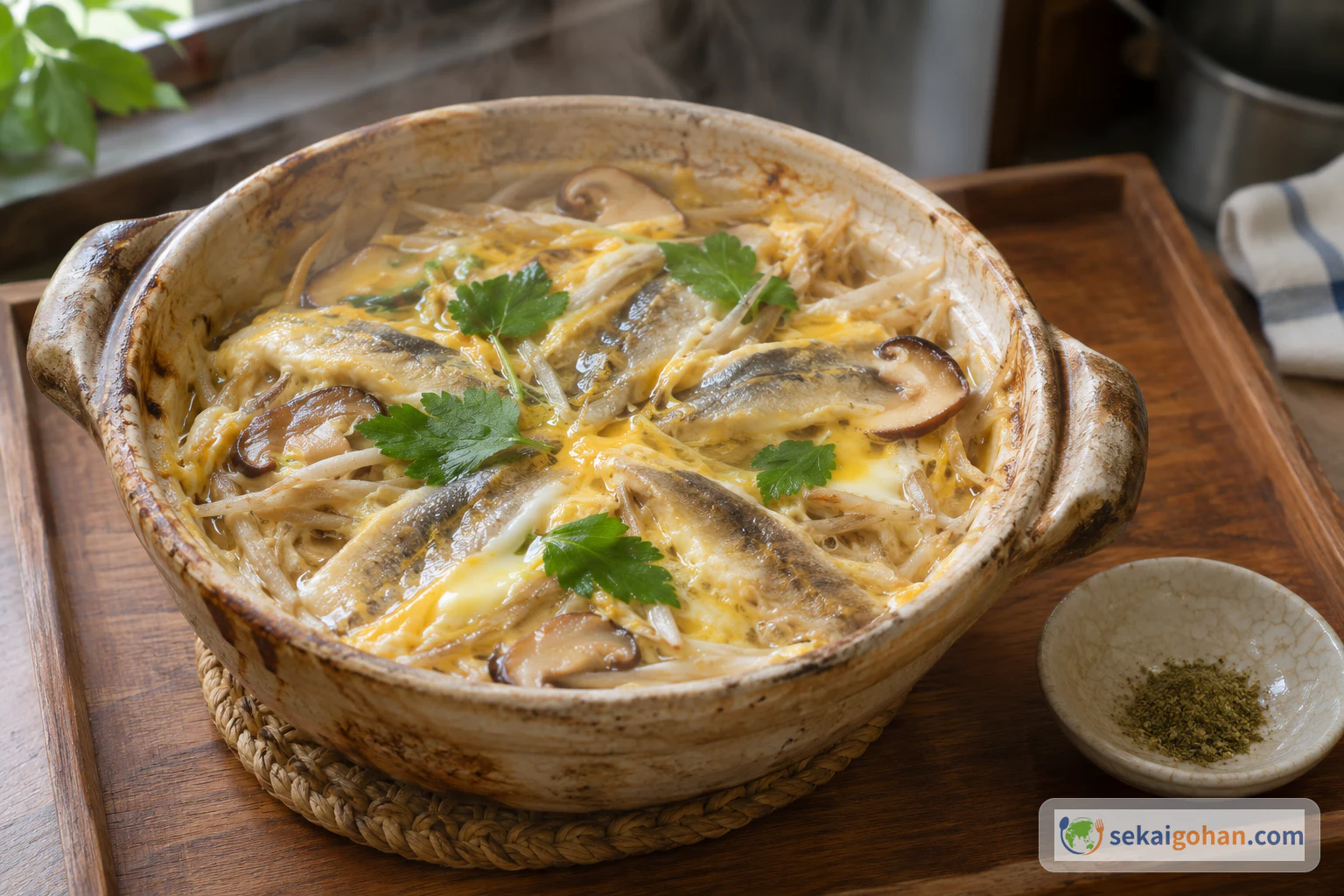
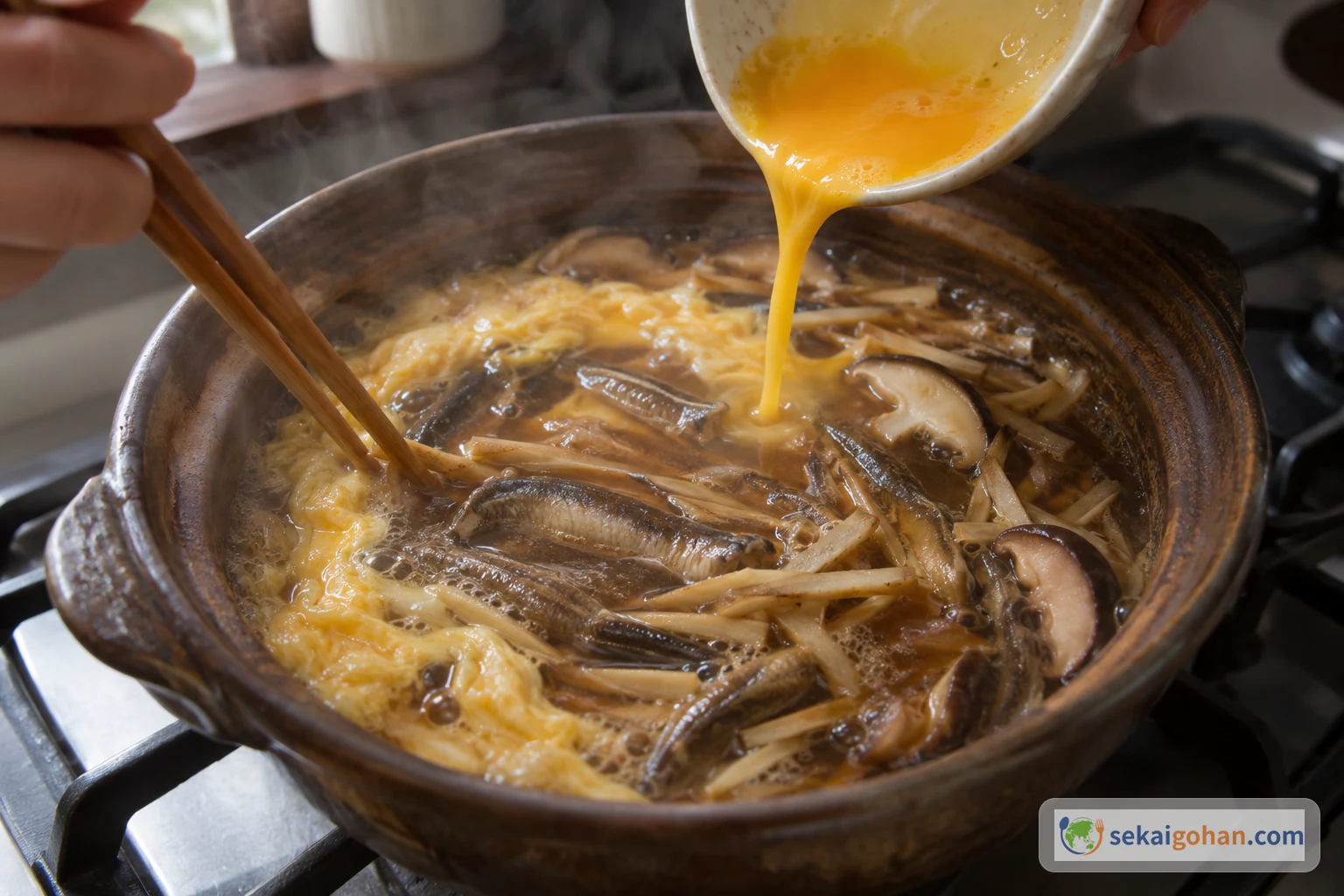

Yanagawa nabe in a shallow individual clay pot: butterflied loach over shaved burdock, set with soft half-cooked egg and scattered mitsuba
Serves4 servings
CuisineJapanese

Yanagawa Nabe: Edo-Style Loach and Burdock Set in Egg

Yanagawa nabe is a Tokyo pot of opened loach and shaved burdock set with soft egg. Learn to scald off the slime, when to pour the egg, and when to stop.

Level: Intermediate

Cooking flow

Cooking steps

STEP 11 / 10

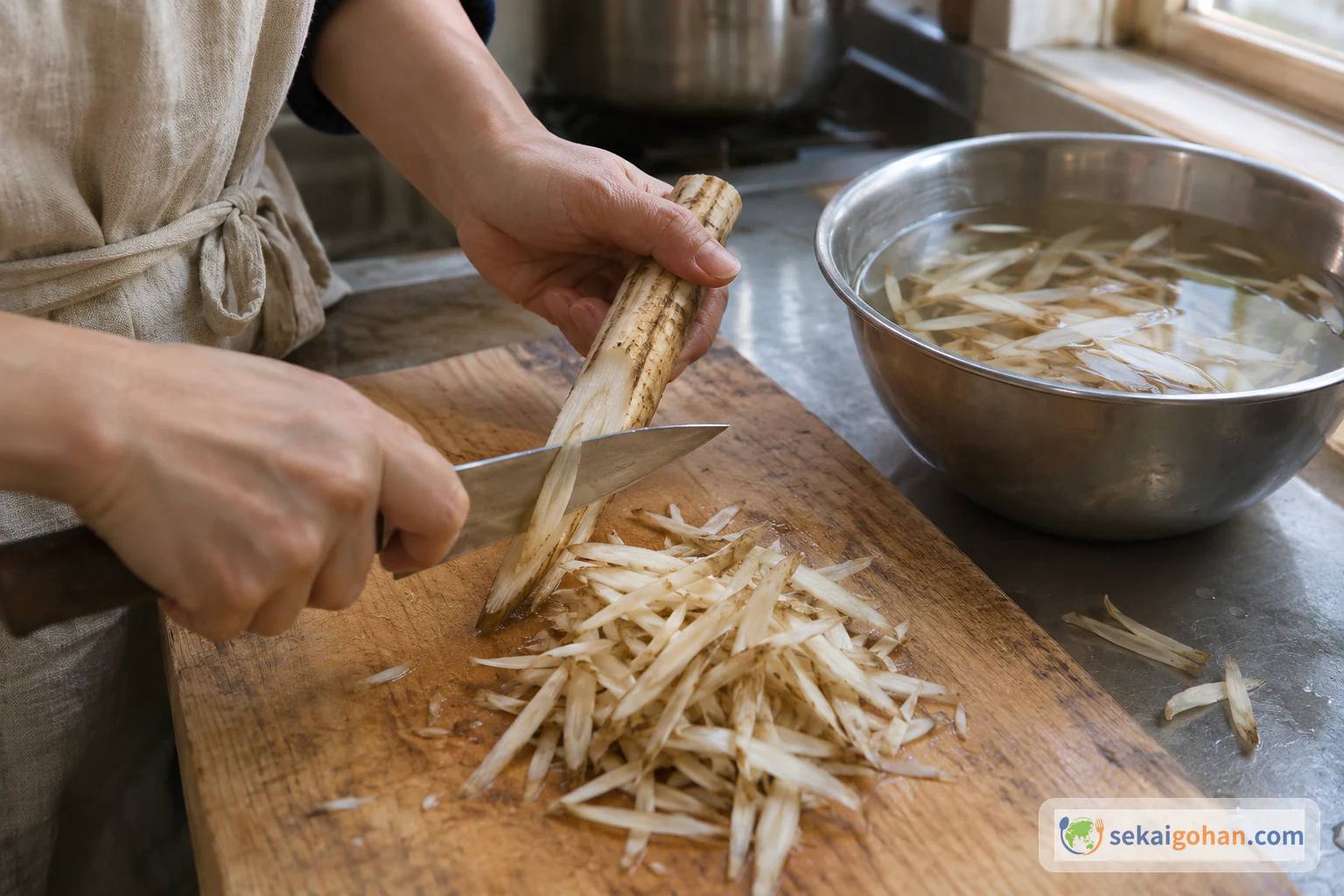
Shave the burdock and soak it

Hands shaving burdock into thin slivers with a knife, the shavings soaking in a bowl of water
Shave straight over the board and move the slivers into the water in handfuls, so none sit cut and exposed for long

Hold the scrubbed burdock in one hand and shave thin slivers off the end with the knife, turning the root as you go, the way you would sharpen a pencil with a blade. Keep the slivers thin and even so they cook at the same pace and feel soft in the mouth. Drop them straight into a bowl of water as you work, because the cut surface darkens and the soaking draws out harshness. Leave them only briefly, since a long soak washes away the aroma. Lift them out when the cloudiness in the water starts to thin, and drain.

STEP 22 / 10

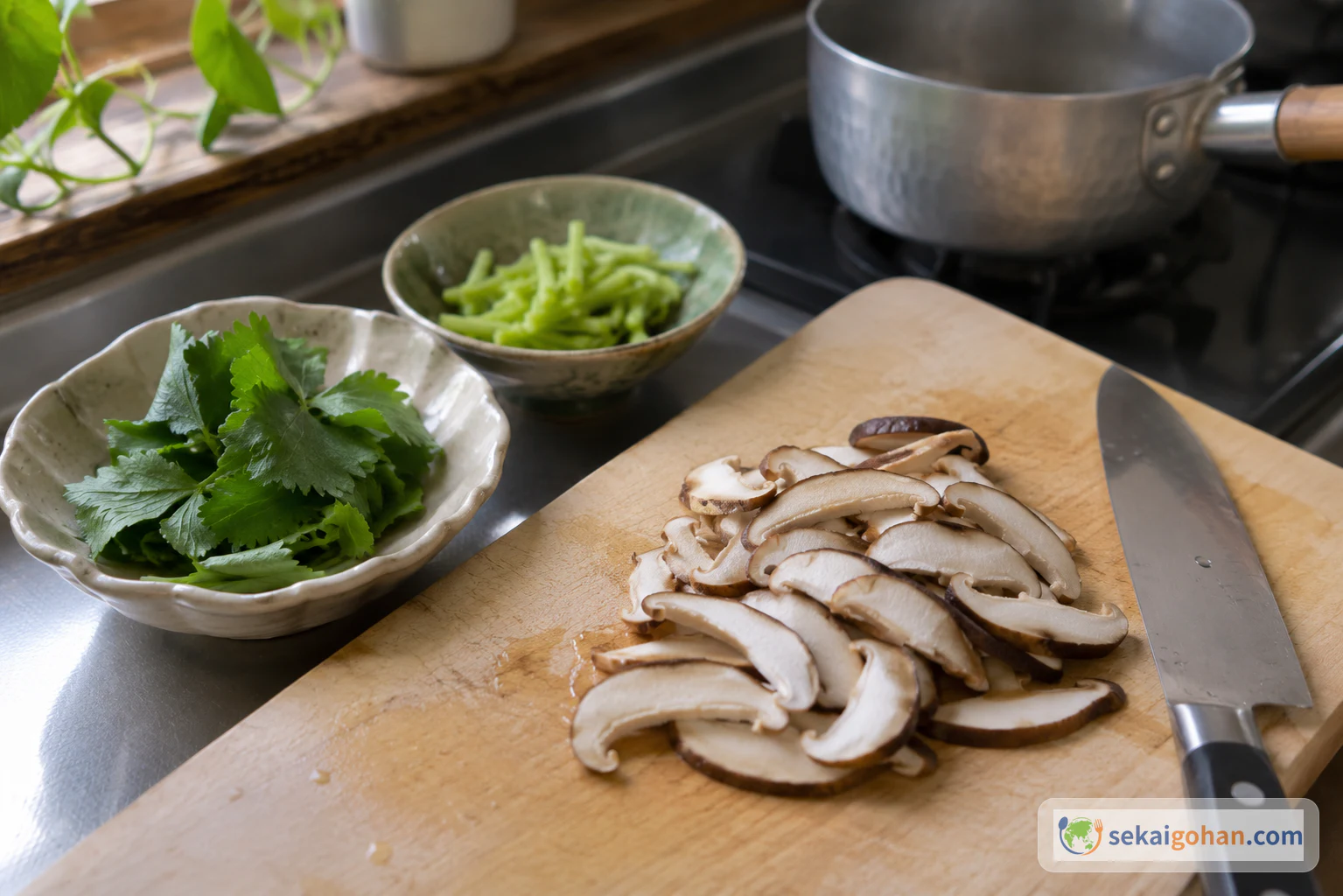
Slice the shiitake and prepare the mitsuba

Thinly sliced fresh shiitake on a board, with mitsuba leaves and short cut stems in separate dishes
Short stem pieces keep their crunch; the leaves wilt almost on contact, which is why they wait until last

Cut the stems off the shiitake and slice the caps thinly. Pluck the mitsuba leaves from the stems, then cut the stems into ⅝-inch (1.5 cm) lengths. Keep the leaves and stems in separate small dishes, since both go on at the very end. You are ready when you have a pile of evenly thin mushroom slices and two little heaps of green.

STEP 33 / 10

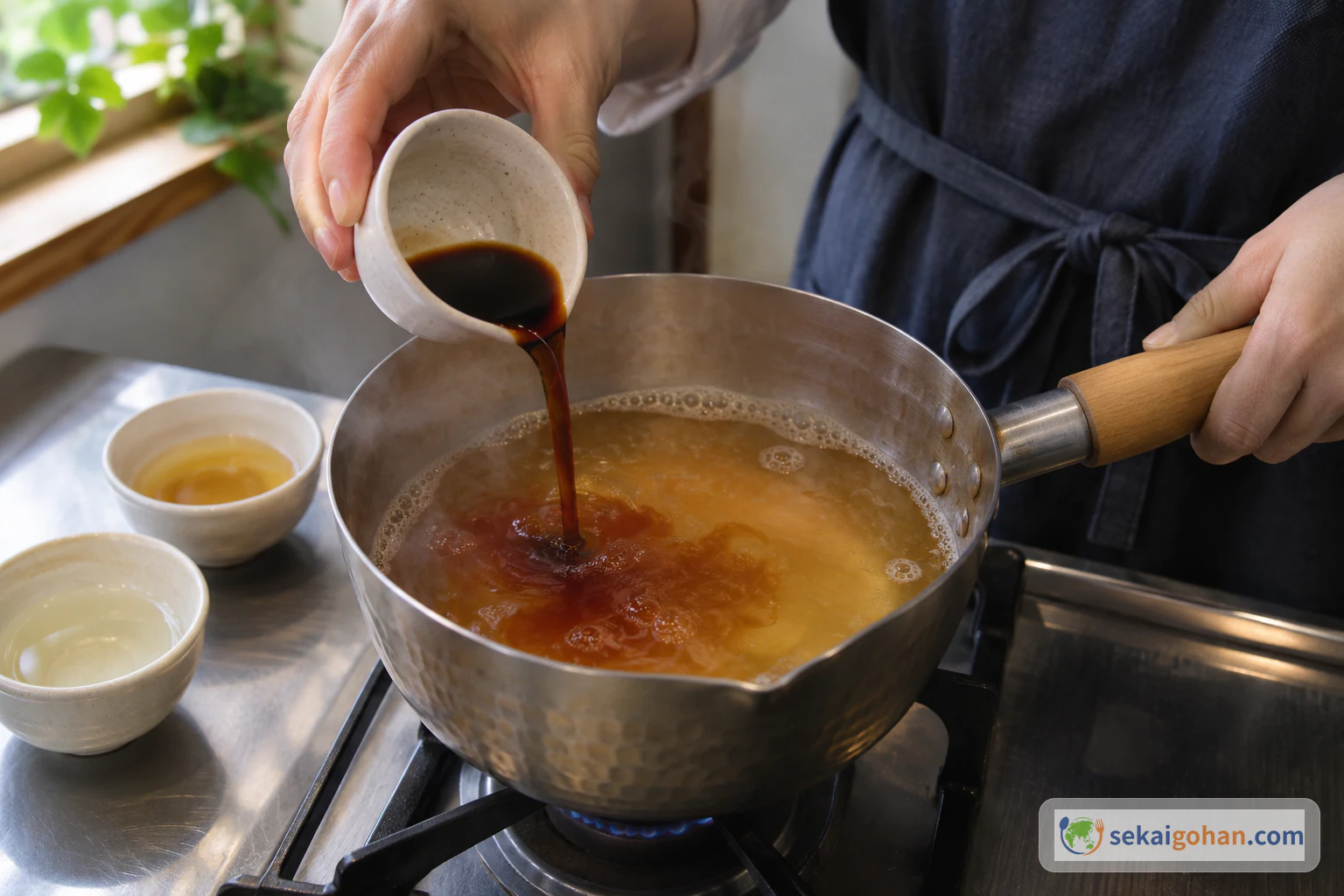
Make the broth

A small saucepan of dashi bubbling as dark soy sauce is poured in from a small cup
The broth turns a deep amber as the soy goes in; one boil is all it needs

Pour the dashi into a saucepan and set it over the heat. Add the sake, mirin and dark soy sauce. Bring it up to one full boil so the seasonings come together into a single broth. When the surface rolls at a boil, take it off the heat and set it aside.

STEP 44 / 10

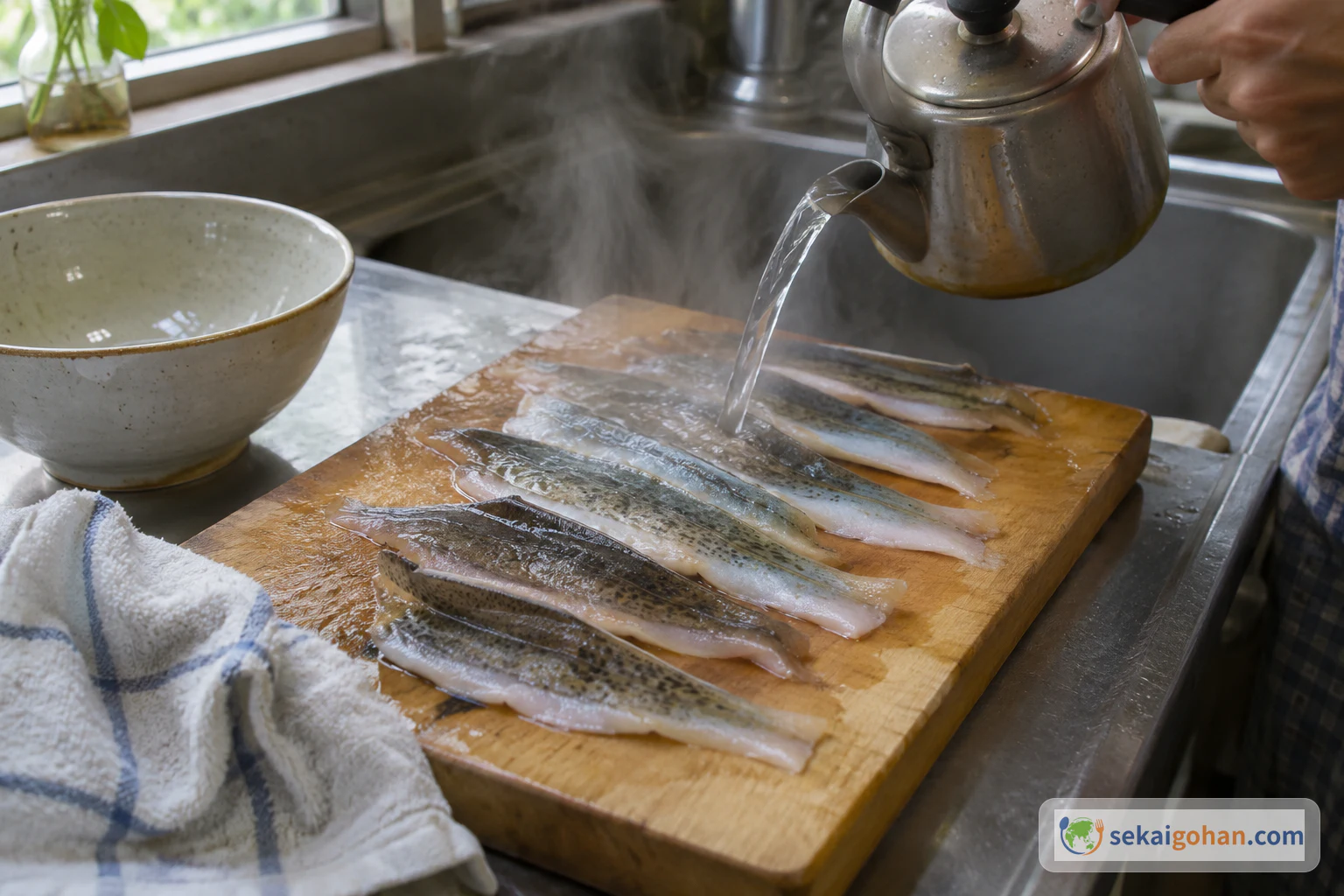
Scald the loach skin

Butterflied loach laid skin side up on a flat wooden board, boiling water poured over them from a kettle
Watch the edges of the skin; the whitening shows up there first

Lay the loach fillets on a flat board, skin side up, in a single layer so none overlap. Pour boiling water from the kettle over the skin, moving the stream along so every fillet is covered. The heat firms the slime on the skin so it can be scraped away. Stop when the skin turns pale and whitish.

STEP 55 / 10

Chill the loach and scrape off the slime

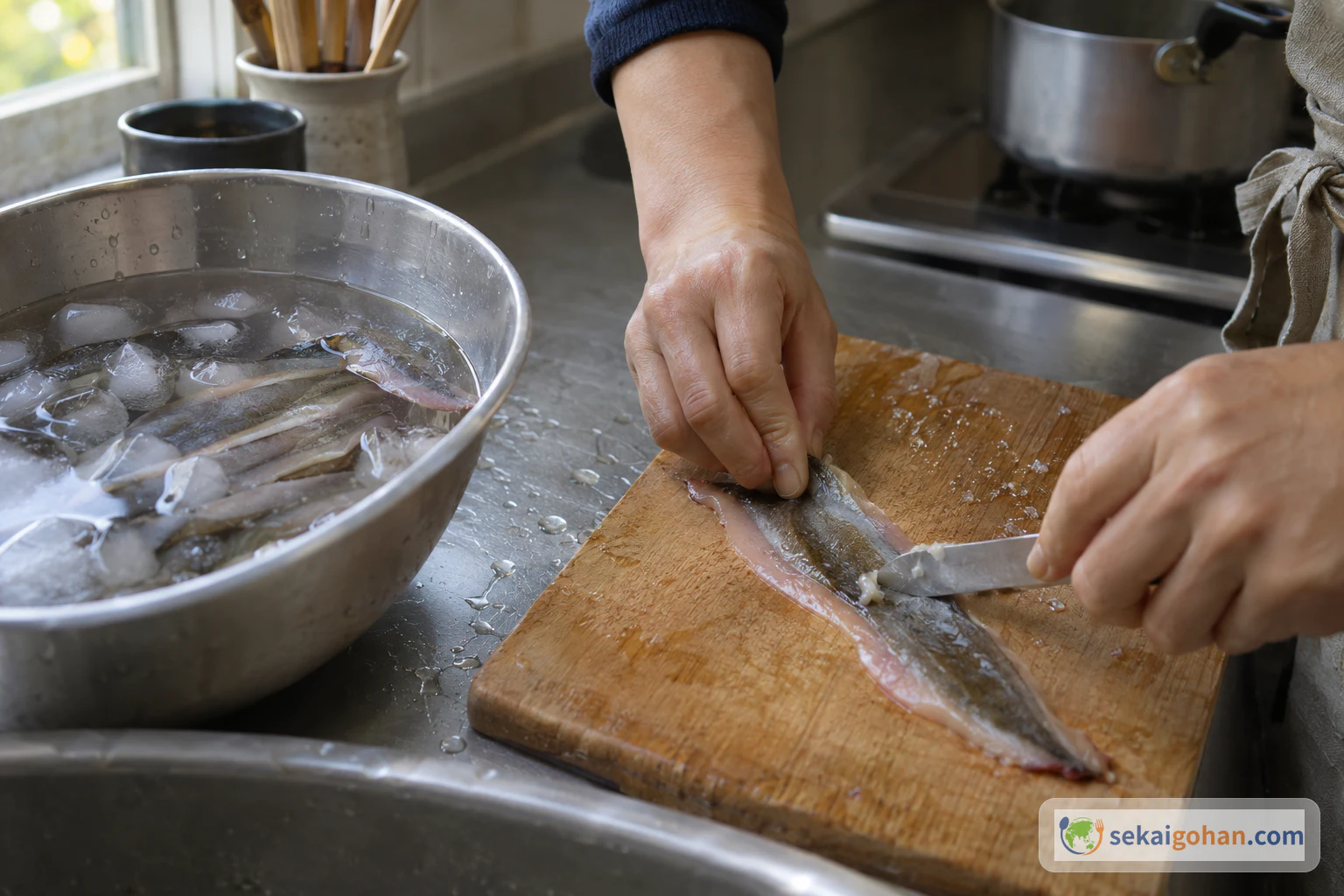
A hand scraping the whitened slime off a chilled loach fillet with a table knife, a bowl of ice water beside the board
Hold the knife almost flat to the skin, so the edge lifts the film without cutting into the flesh

Move the fillets into the ice water right away so the heat stops and the flesh firms up. Lift them out one at a time onto the board. Draw a table knife lightly along the skin to scrape off the whitened slime. Use only light pressure, because the flesh is delicate and tears if you dig in. The fish is done when it feels cold and firm and the skin looks clean with no white film left.

The scald and the scrape decide the pot

Slime left on the skin clouds the broth and gives the egg a muddy taste. A quick scald, an immediate plunge into ice water, and a light scrape take it all off while the fish stays whole.

STEP 66 / 10

Cook the loach through in the broth

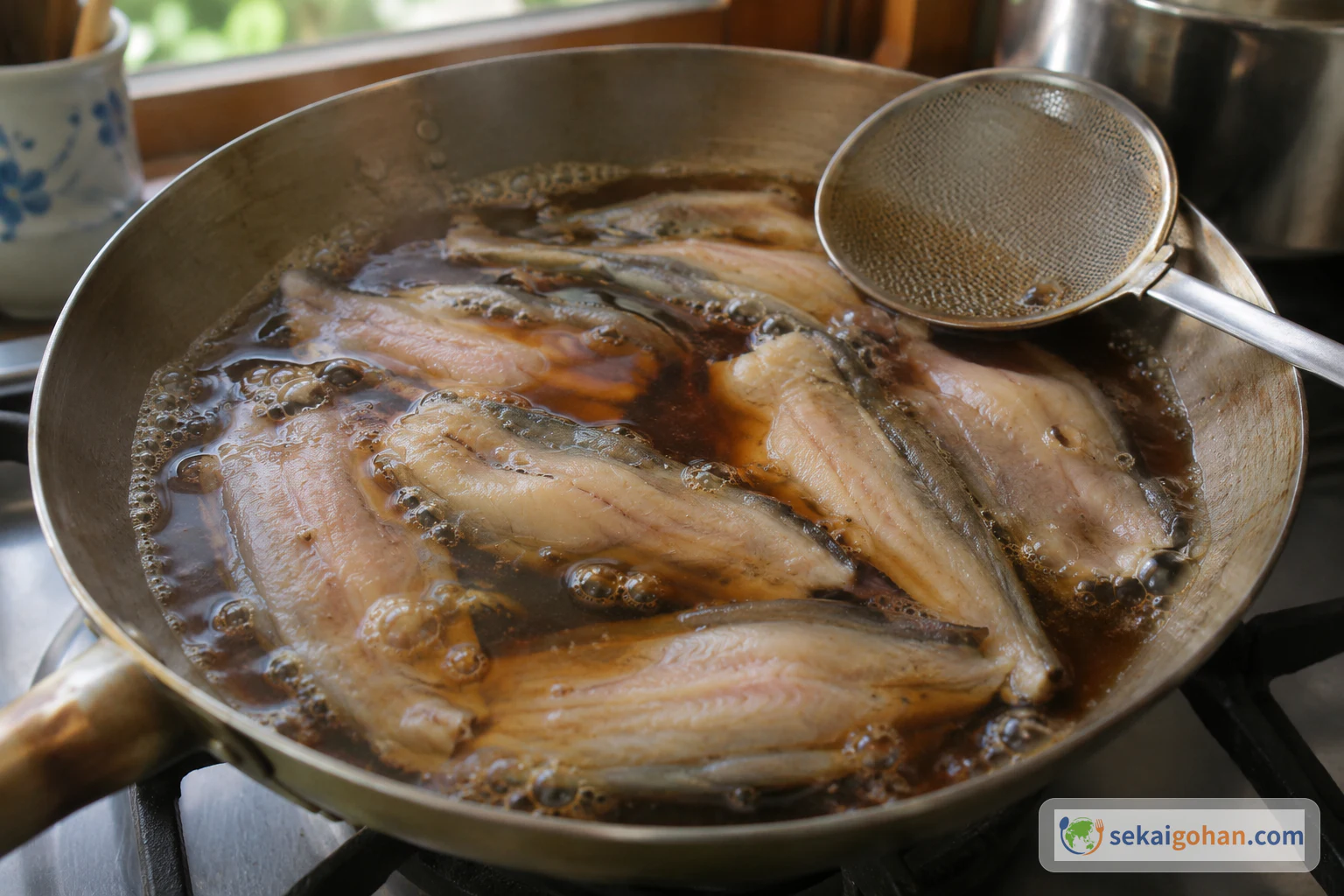
Opened loach fillets cooking in simmering dark broth in a shallow pan, a skimmer resting on the rim
The fillets start pale and grey; let them sit in the broth until the color is even from edge to center

Return the broth to the heat and bring it to a boil. Slide in the scraped loach and let it cook in the broth. Keep the boil gentle so the fillets hold their shape. Cook until the flesh is opaque all the way through, with no translucent patches in the thickest part. Lift the loach out and keep the broth; it goes into the clay pots next.

STEP 77 / 10

Lay the burdock and shiitake bed

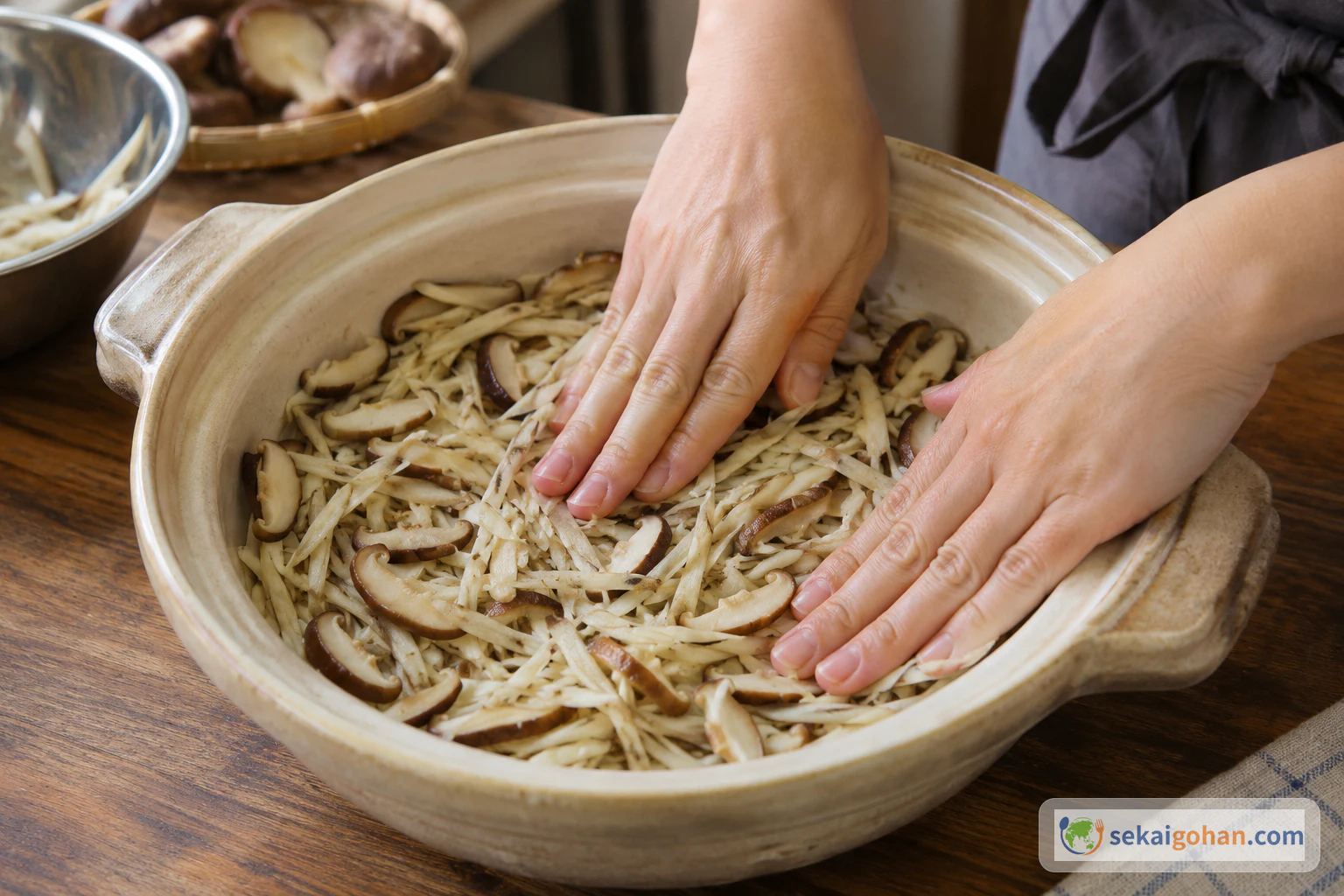
A mixed bed of shaved burdock and sliced shiitake pressed level in the bottom of an individual clay pot
An even layer means the broth sits at the same depth all the way around the pot

Toss the drained burdock and sliced shiitake together until they are well mixed. Divide the mixture among the individual clay pots. Spread it across the bottom of each pot in an even layer and press it level. This bed keeps the loach off the hot clay so it does not catch. The bed is ready when no bare clay shows through.

STEP 88 / 10

Arrange the loach and add the broth

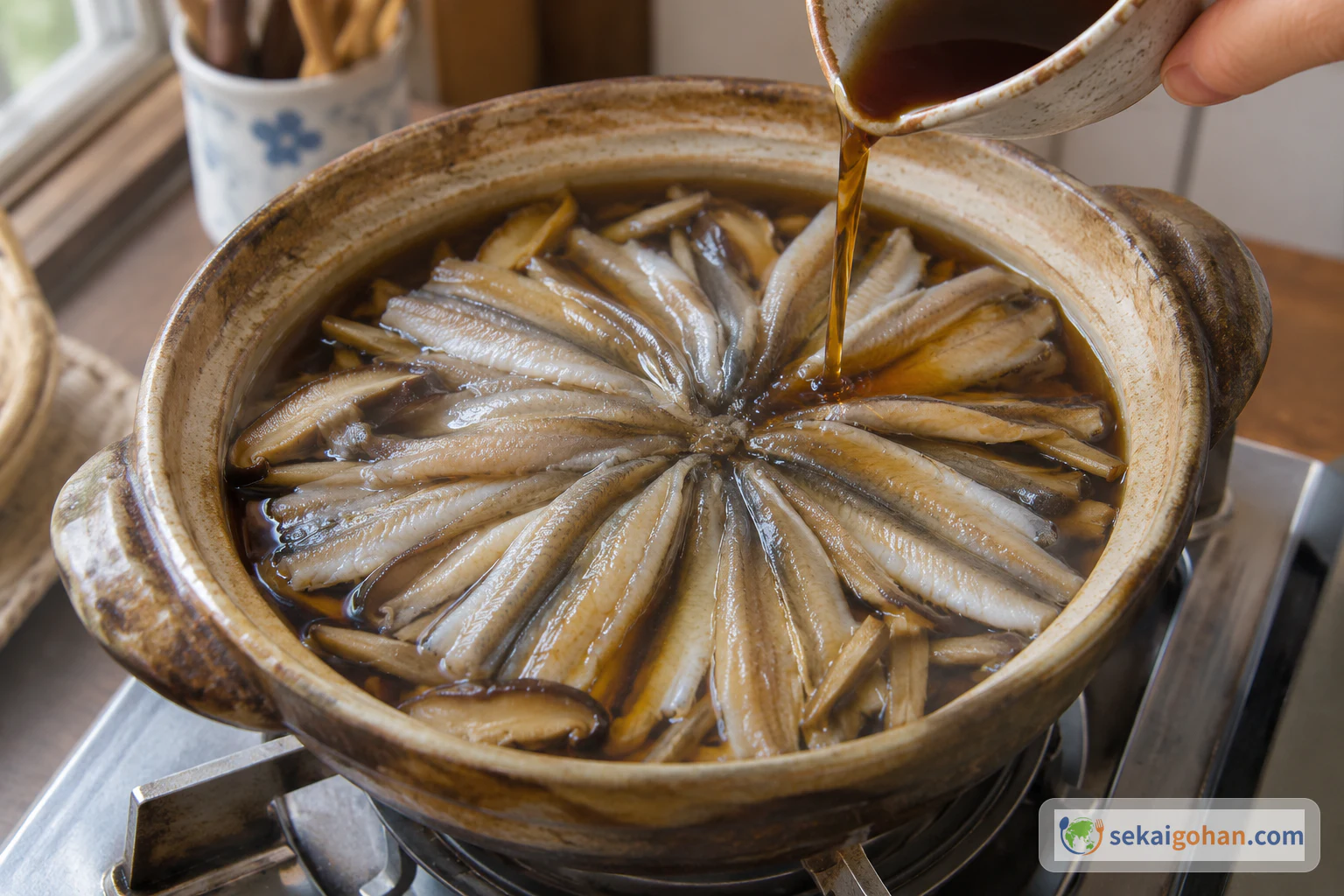
Loach fillets fanned out over burdock and shiitake in a clay pot, dark broth poured in to just cover them
Pour along the rim rather than over the fish so the fan stays in place

Lay five loach fillets in each pot in a radial fan over the bed. The fan cooks evenly and makes the pot easy to share out with chopsticks. Pour in the broth slowly. Stop when the broth just reaches the fish, barely covering it.

STEP 99 / 10

Bring it to a boil and pour in the egg

Beaten egg poured in a stream around simmering loach, burdock and shiitake, setting at the edges
Pour from close to the surface so the egg settles into the broth instead of splashing

Beat one egg for each pot. Set a pot over the heat and wait for the broth to boil, since egg poured into broth that is not yet boiling turns cloudy and loose. Once it boils, pour the egg in a slow ring around the fish. Within moments the egg sets into soft ribbons at the edges while the middle stays runny.

STEP 1010 / 10

Scatter the mitsuba and take it off the heat

Yanagawa nabe with mitsuba scattered over glossy half-set egg, a small dish of ground sansho beside the pot
The egg looks less set than you want when the heat goes off; the hot clay finishes it on the way to the table

Scatter the mitsuba leaves and stems over the egg. Turn off the heat while the egg is still half-set, and glossy. The clay holds heat and keeps cooking the egg after the flame is off, so stop early and leave the pot where it is. If you prefer your egg fully set, keep the heat on until the egg is firm all the way through. Serve with ground sansho alongside.

0 / 0
Ingredients

Ingredients

1 / 1

Ingredients

Ingredient Amount Role
Loach, butterflied (dojō, hiraki) 20 fillets The main ingredient. Mild flesh and savory skin
Burdock, scrubbed (arai gobō) 2 roots Shaved into slivers. Aroma, crunch and the bed of the pot
Fresh shiitake mushrooms (nama shiitake) 1 pack Sliced thin. Savoriness and a soft chew
Mitsuba 1 bunch Leaves and stems scattered at the end for fragrance and color
Eggs 4 Beaten. One for each pot, to bind
Ground sansho pepper (kona sanshō) a little A citrusy, numbing finish at the table
Dashi (dashi-jiru) 1⅔ cups (400 ml) The base of the simmering broth
Sake scant ½ cup (100 ml) Broth
Mirin scant ½ cup (100 ml) Gentle sweetness and gloss
Dark soy sauce (koikuchi shōyu) scant ½ cup (100 ml) Salt and deep color
0 / 0

The small clay pot comes to a boil and the dark broth climbs up around a fan of loach fillets resting on shaved burdock. You pour the beaten egg in a ring. At the edges it sets into soft ribbons while the middle stays loose and glossy. A scatter of mitsuba goes on, the heat goes off, and the pot reaches the table still bubbling, with a pinch of ground sansho waiting beside it. Yanagawa nabe is a Tokyo pot of opened, boned loach simmered in a soy and mirin broth and bound with egg. The loach is mild and tender, the burdock gives an earthy crunch and a deep root aroma, and the broth tastes savory and gently sweet without any sugar.

A Loach Pot From the Rivers of Edo

Strength food in a city without meat

In the Edo period, eating the meat of animals was forbidden, and loach sat alongside carp and eel as a fish people turned to for strength. Loach and burdock were both thought of as stamina foods, and the pair was eaten mainly in summer. Today the pot is eaten all year round. The neighborhoods that carry the tradition are Asakusa and Komagata in Taitō ward and Takahashi in Kōtō ward, along the old waterways of the east side of the city.

Tokyo cooks loach in more than one way, and the three are easy to mix up. In maru-nabe, live loach goes into boiling sake until it is stunned, then cooks whole in warishita broth in an iron pan. In nuki-nabe, loach that has been split down the back and boned simmers with burdock. Yanagawa nabe takes the opened fish, simmers it in warishita, and closes it with shaved burdock and beaten egg. The egg is what marks it out, turning a dish of fish and root into something soft and spoonable. Loach itself is lean and light-tasting, so the egg and the broth carry the richness.

Why the old shop writes "dozeu"

The oldest loach house in the city, Komagata Dozeu, opened in 1801. Its name was first written dojau, in four kana. After the great fire of 1806, the founder, Echigoya Sukeshichi, changed it to the three-kana dozeu, because four characters were thought to bring bad luck. Around Asakusa, old houses such as Komagata Dozeu, Iidaya, Iseki and Hirai still keep the taste of Tokyo loach cooking alive.

A name with two stories

Where the name comes from is not settled. One story says the shallow pan used for the dish was a clay pot fired in Yanagawa, in Kyushu. Another says Yanagawa was the name of a small eating house, either in Nihonbashi or in Senzoku village near Asakusa. Both are told, and neither has won.

The town of Yanagawa in Fukuoka Prefecture has its own long love of the dish. It is a canal town known for its punt rides and as the birthplace of the poet Kitahara Hakushū, and alongside its famous eel steamed in a wooden seiro, loach yanagawa nabe cooked in a shallow clay pot has been eaten there for generations. Whether the Tokyo pot and the Yanagawa table share a single beginning is part of the same open question. You can find more home cooking from across Japan on the site.


Ingredients (serves 4)
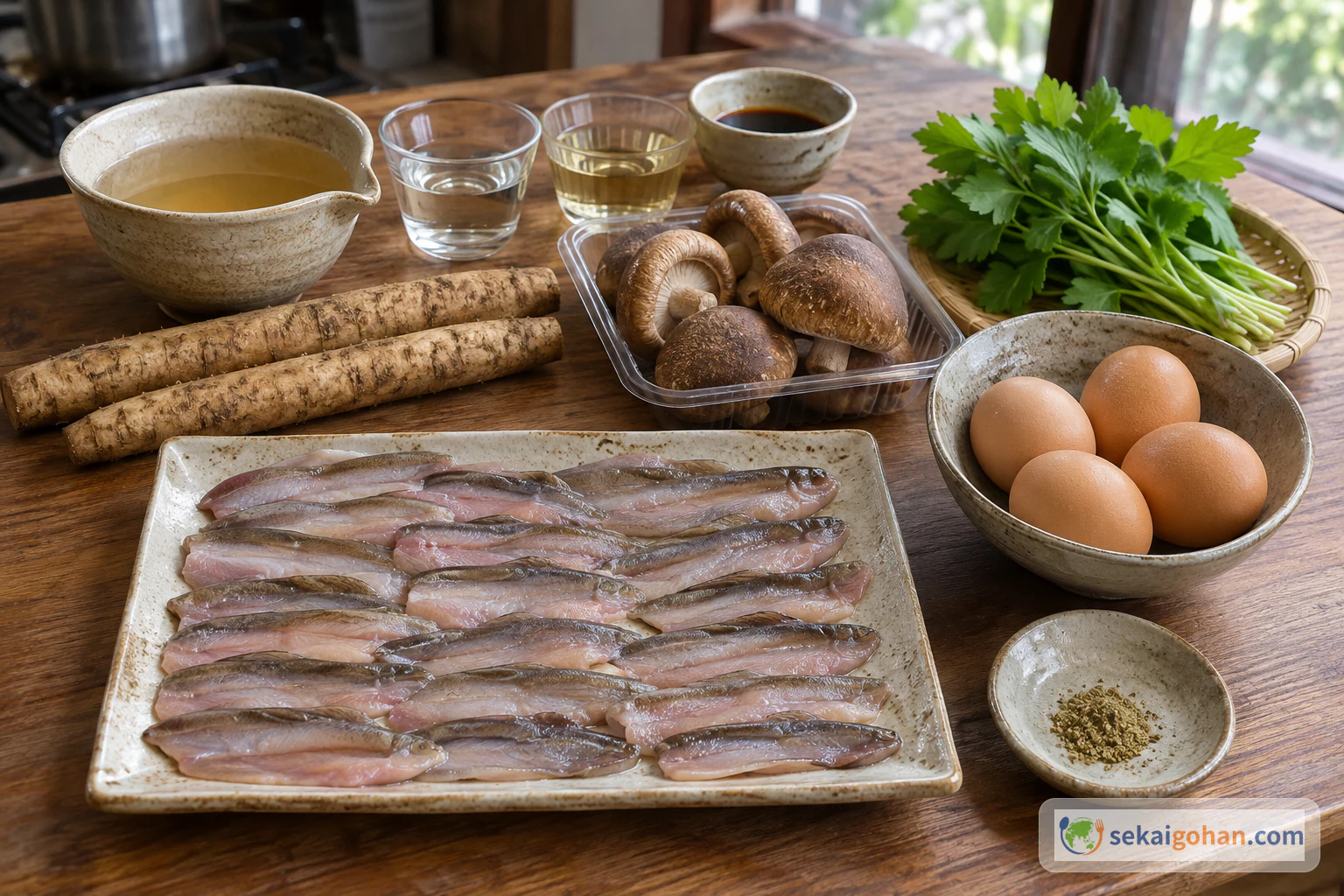
Ingredients for yanagawa nabe: butterflied loach, scrubbed burdock, fresh shiitake, mitsuba, eggs, ground sansho, and dashi, sake, mirin and dark soy sauce
Everything for four pots: the loach arrives already opened, so the only knife work is on the vegetables

The broth is four parts dashi to one part each of sake, mirin and dark soy, and nothing else. The sweetness comes from mirin alone, which keeps the pot clean-tasting and lets the burdock come through.

Allergen information

This dish contains egg and fish (loach). Check the labels on your dashi, soy sauce and mirin, since dashi can be made from bonito, kombu, shiitake and other ingredients.

Equipment

  • Individual shallow clay pots (donabe), one per person
  • A small saucepan for the broth
  • A flat wooden board for laying out the loach
  • A kettle of boiling water
  • A bowl of ice water
  • A table knife for scraping
  • A kitchen knife and cutting board
  • A bowl of water for the burdock

Buying the Loach and Choosing Swaps

Everything depends on getting loach that is already opened and boned. Loach specialists and mail-order shops sell it this way. Supermarket availability varies widely by region. Live, whole loach belongs to maru-nabe and needs a different method entirely, so it does not fit the steps below. There is no swap for the fish itself; this pot is built around it.

The rest of the shopping is easy, and each choice nudges the flavor in its own direction.

Ingredient Swap What changes
Dashi Bonito dashi or kombu dashi Bonito gives a smoky, savory depth; kombu is rounder and quieter
Dark soy sauce Light soy (usukuchi) or white soy The broth turns paler and the saltiness shifts
Fresh shiitake Maitake or enoki More savoriness, but a different texture from thin shiitake slices
Mitsuba Seri (Japanese parsley) A sharper, greener fragrance
Ground sansho Shichimi tōgarashi Chili heat in place of sansho's citrus tingle

Some kitchens sweeten the broth with sugar, and some cook loach in a miso broth. Adding sugar or miso moves the pot toward a different dish, a sweet-salty warishita or a miso-based loach soup, so make it first with the plain four-to-one broth.

Keep the shiitake slices even

Slice every cap to the same thickness. In the clay pot, the mushrooms and burdock cook only as long as it takes the egg to set, so even slices come out evenly tender.


Method

The work splits into two halves. First comes the prep: shave and soak the burdock, slice the shiitake and mitsuba, make the broth, then scald, chill and scrape the loach and cook it through in the broth. Then each clay pot is built and finished at the stove, one by one, and the second half moves fast once the egg goes in. Have every pot assembled before you heat the first.

Loach must be cooked through

Loach can carry a parasite. Never eat it raw, and cook it through to the center. In this method the loach is cooked twice, once in the broth and again in the clay pot; keep both heatings. When you pour boiling water and lift fish out of ice water, keep your hands clear of the stream, and handle hot clay pots with a thick cloth.

The egg is left half-set. If you cook for pregnant women, older people, infants or anyone with a weak immune system, keep the heat on until the egg is firm all the way through.

Build every pot before the first egg goes in

The finish takes only moments per pot. With each pot already holding its bed, fish and broth, you can boil, pour and stop one after another and keep every egg soft.

When It Goes Wrong

What you see Why What to do
Slime still on the skin, cloudy broth The scald was too light or the scrape was skipped Scald until the skin whitens, chill in ice water right away, and scrape every fillet
Loach falling apart Pressed too hard while scraping, or boiled hard in the broth Scrape with a flat, light knife and keep the broth at a gentle boil
Burdock tastes of nothing It sat too long in the water Soak only until the water starts to clear, drain, and use it soon after
Egg dry and rubbery It went in before the boil, or the pot stayed on the heat too long Wait for the boil, pour, and turn off while the egg is half-set; the clay finishes the rest
Scorching on the bottom Loach touching bare clay, or the broth cooked down Lay the burdock and shiitake bed first and keep the broth just covering the fish
Too salty or too flat The broth was adjusted before tasting the base mix Make the four-to-one broth first, then change only the soy next time

Serving and Variations

Each pot goes to the table bubbling, one per person, with the ground sansho passed around so everyone sprinkles their own. The egg keeps softening into the broth as you eat, so start with the loach while the egg is at its silkiest, then spoon up the burdock and broth from the bottom. It is a pot to eat straight from the stove.
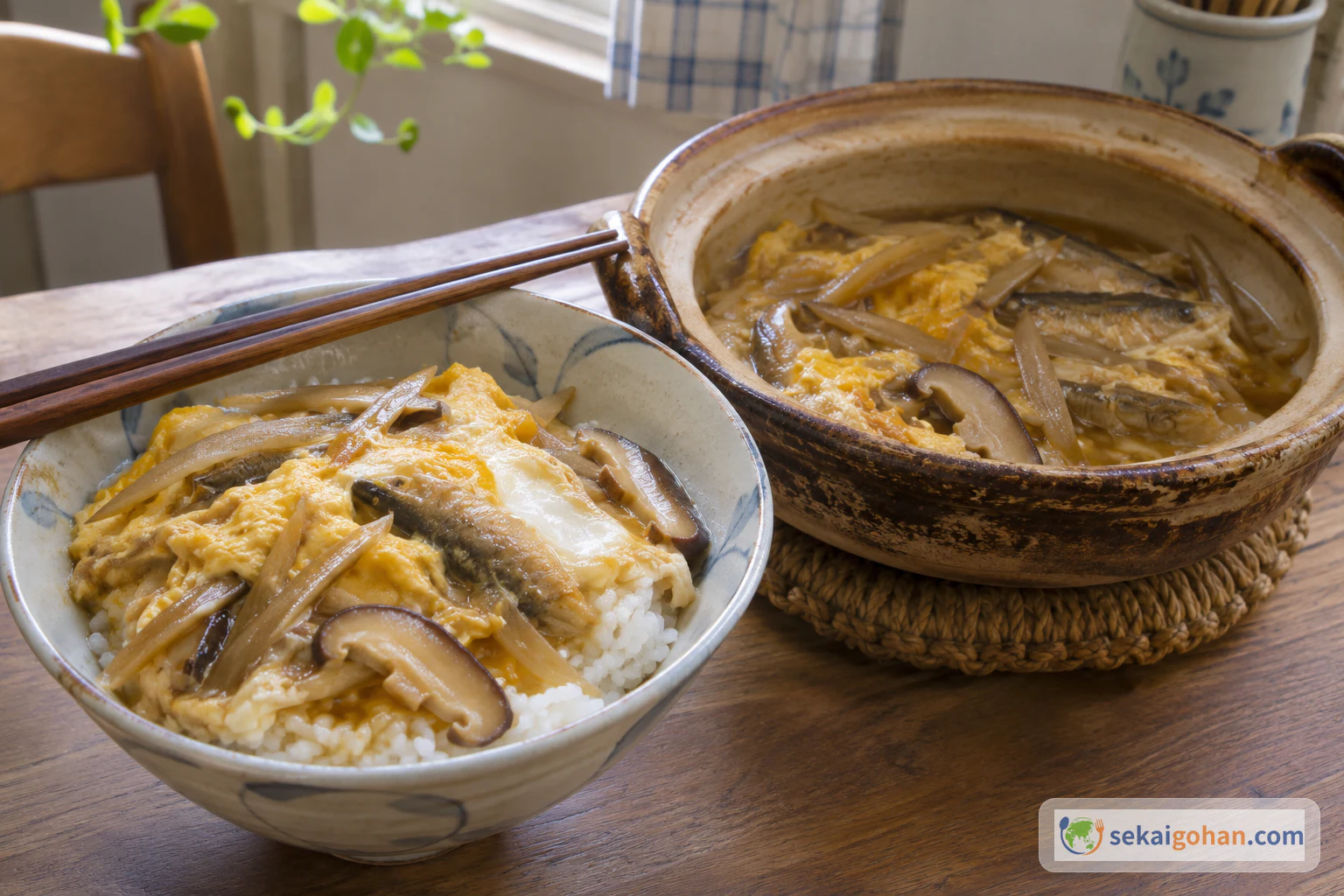
Yanagawa nabe spooned over a bowl of rice as yanagawa-don, the clay pot with the rest of its contents beside it
Spoon the fish and egg on top first, then add broth a little at a time until the rice is just moistened

Variations

  • Yanagawa-don. Spoon the finished pot over a bowl of rice. The full amount of broth makes the rice too strong, so drain the toppings a little or add only a small amount of broth.
  • Shichimi instead of sansho. Shichimi tōgarashi swaps sansho's citrus tingle for warm chili heat and a nuttier finish.
  • Other mushrooms. Maitake or enoki in place of shiitake deepen the savoriness, though the pot loses the soft chew of thin shiitake slices.
  • Egg in two pours. Pour half the egg, let it set, then pour the rest over the top for a fluffier, layered finish. It makes the half-set moment harder to judge, so watch the second pour closely.

Frequently asked questions

I only have individual pots for two. Can I make it in one larger pot?

Yes. Use a shallow pot with thick walls, lay the bed, fan all the loach over it, and pour in broth to just cover. The egg sets less evenly across a wide surface than in small pots, so pour it in a wide spiral and turn the heat off a little earlier.

Why is the loach cooked twice?

The first simmer in the broth cooks the fish through and seasons it. The second, in the clay pot, heats everything together and sets the egg. Keep both, since the loach must always be fully cooked.

Can I use whole live loach?

Not for this dish. Live, whole loach is the basis of maru-nabe, where it is stunned in sake and cooked bones and all. Yanagawa nabe needs fillets that are already opened and boned.
Sources

  • Tsuji Culinary Institute, "How to make dojō yanagawa nabe" (parts 1 and 2). Ingredients and amounts for four, the broth proportions, and every step from shaving the burdock to finishing the egg half-set with sansho. https://www.tsuji.ac.jp/hp/jpn/edo/recipe/dojyounabe/dojyounabe.htm
  • Ministry of Agriculture, Forestry and Fisheries of Japan, "Yanagawa nabe / Dojō-jiru, Tokyo" (Uchi no Kyōdo Ryōri). Definition of yanagawa nabe and the difference from maru-nabe and nuki-nabe, the neighborhoods that carry the tradition, the two stories behind the name, Edo-period loach eating and its season, and the history of Komagata Dozeu and the dozeu spelling. https://www.maff.go.jp/j/keikaku/syokubunka/k_ryouri/search_menu/menu/34_4_tokyo.html
  • Dojō no Ōkawa, "Loach recipe: yanagawa nabe." Scalding, chilling and scraping the slime from opened loach, the availability of opened loach by mail order, and serving the pot over rice as yanagawa-don. https://dojou-ookawa.com/contents/recipe2
  • Tokyo Metropolitan Government Bureau of Public Health, "Gnathostoma" (Shokuhin Eisei no Mado). Loach as a host of gnathostome parasites and the rule never to eat loach raw. https://www.hokeniryo1.metro.tokyo.lg.jp/shokuhin/musi/08.html
  • Kirishima Shuzo, "Yanagawa nabe" (Kyushu no Aji to Tomo ni). Loach yanagawa nabe in Yanagawa, Fukuoka, cooked in a shallow clay pot, the town's canals, Kitahara Hakushū and steamed eel, the unsettled origin of the name, and loach as a lean, light-tasting fish. https://www.kyushufood.kirishima.co.jp/kyuaji/329/