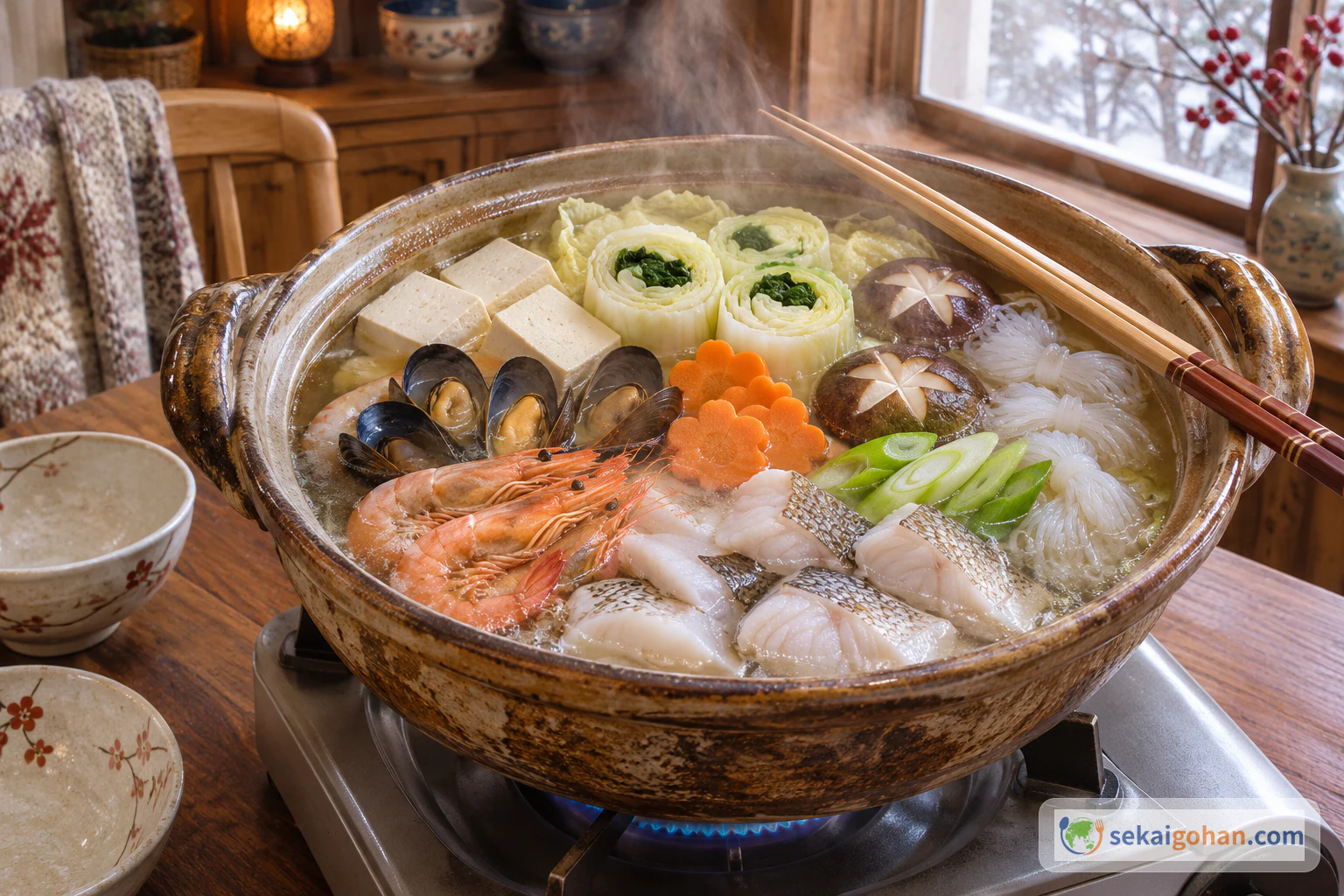
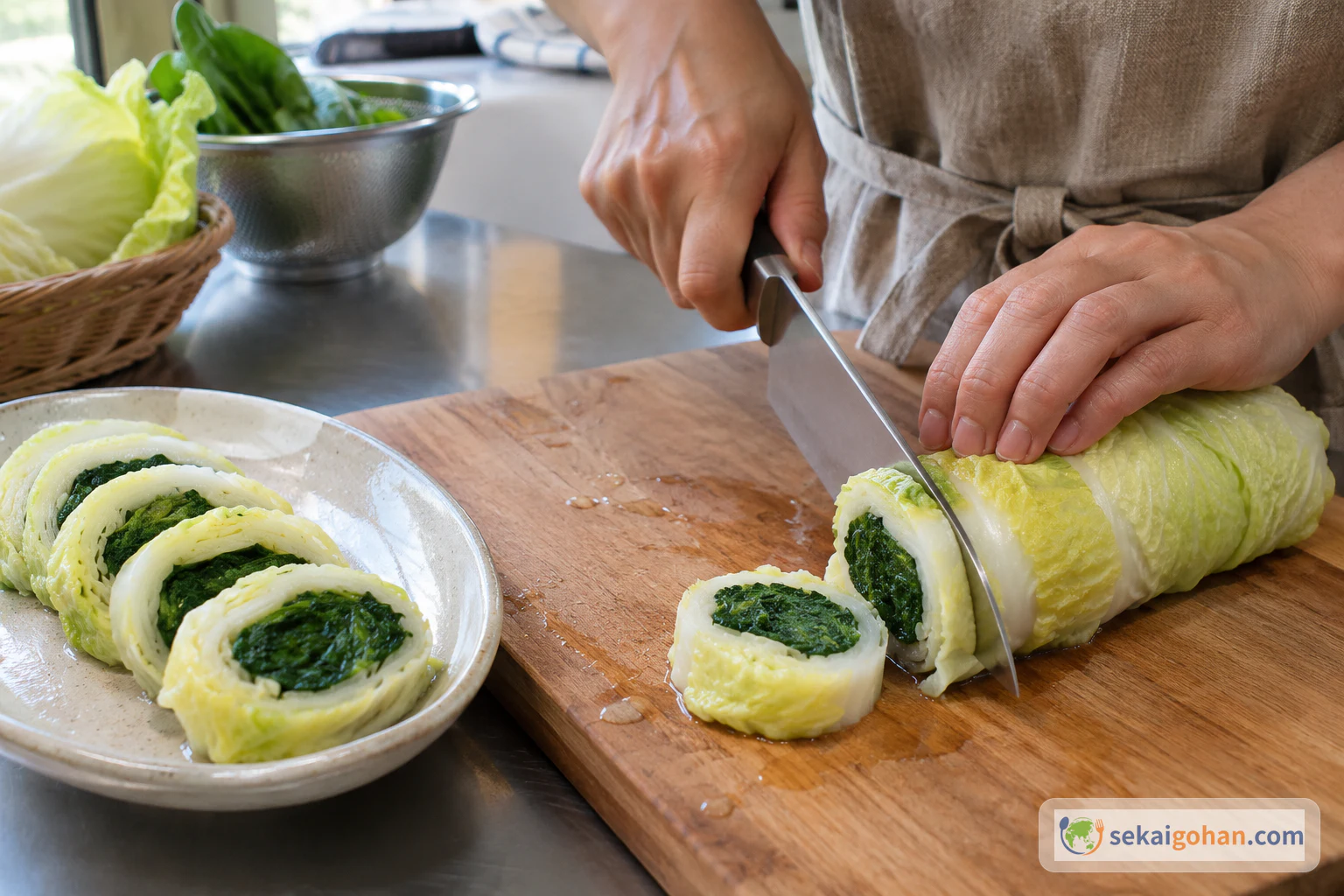
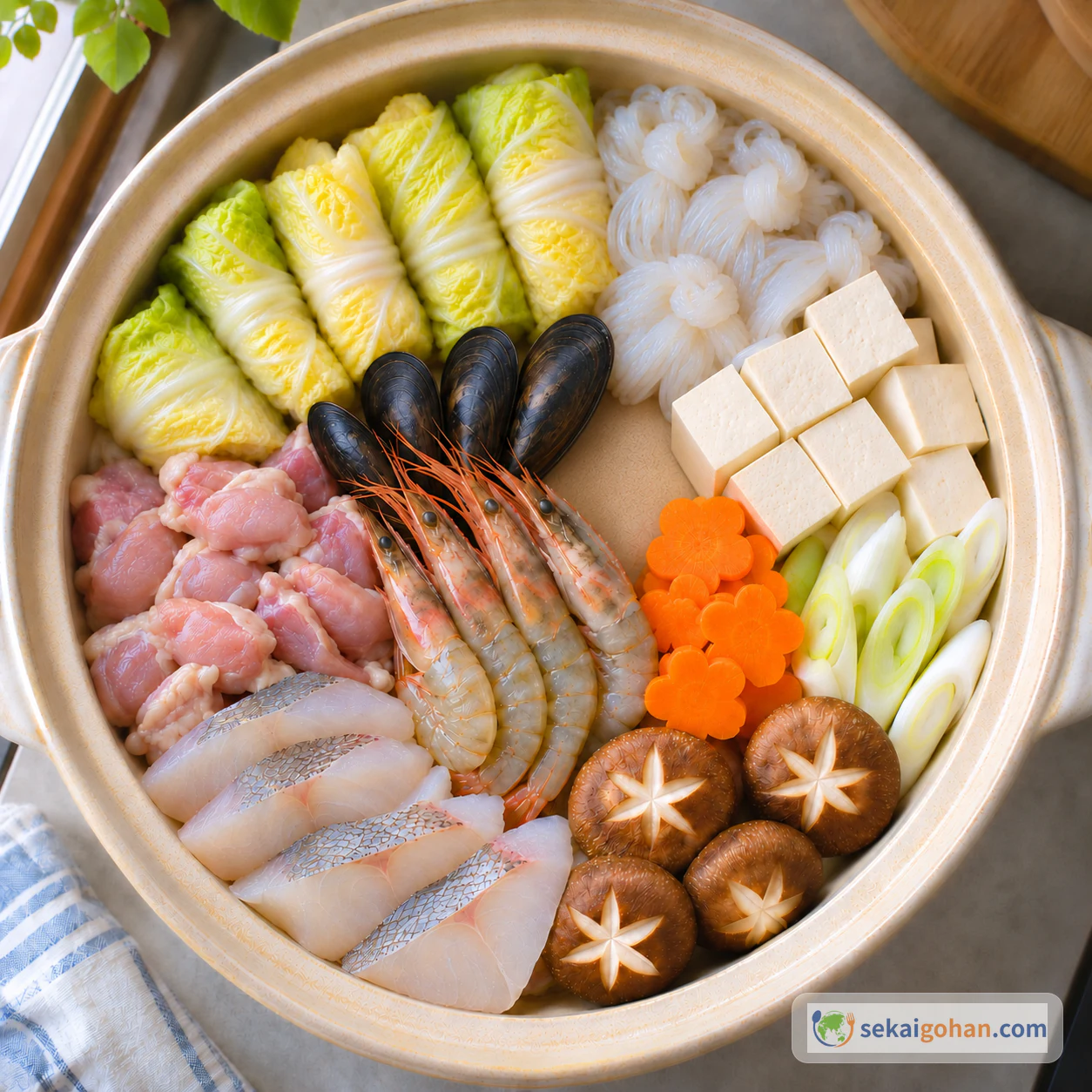
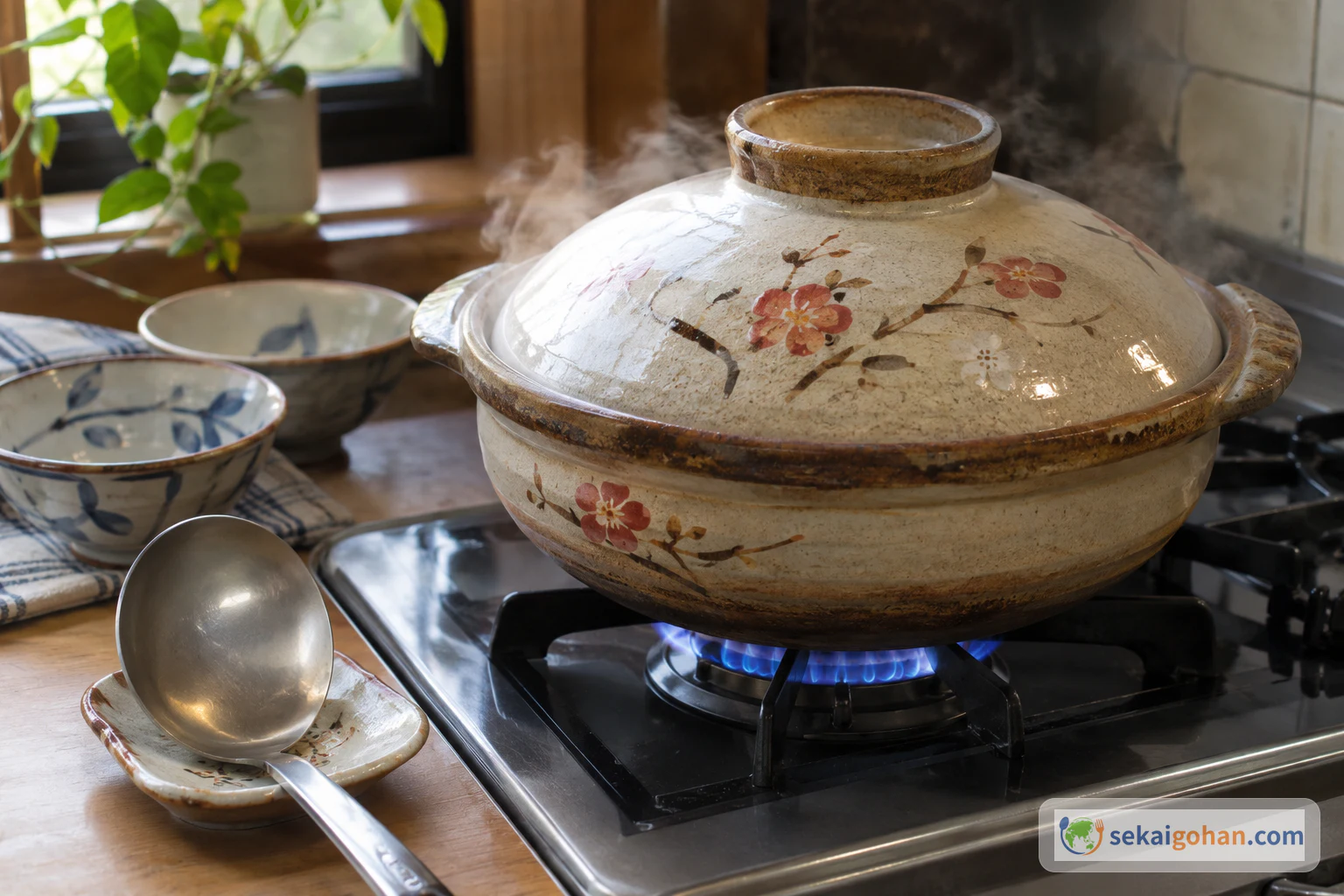
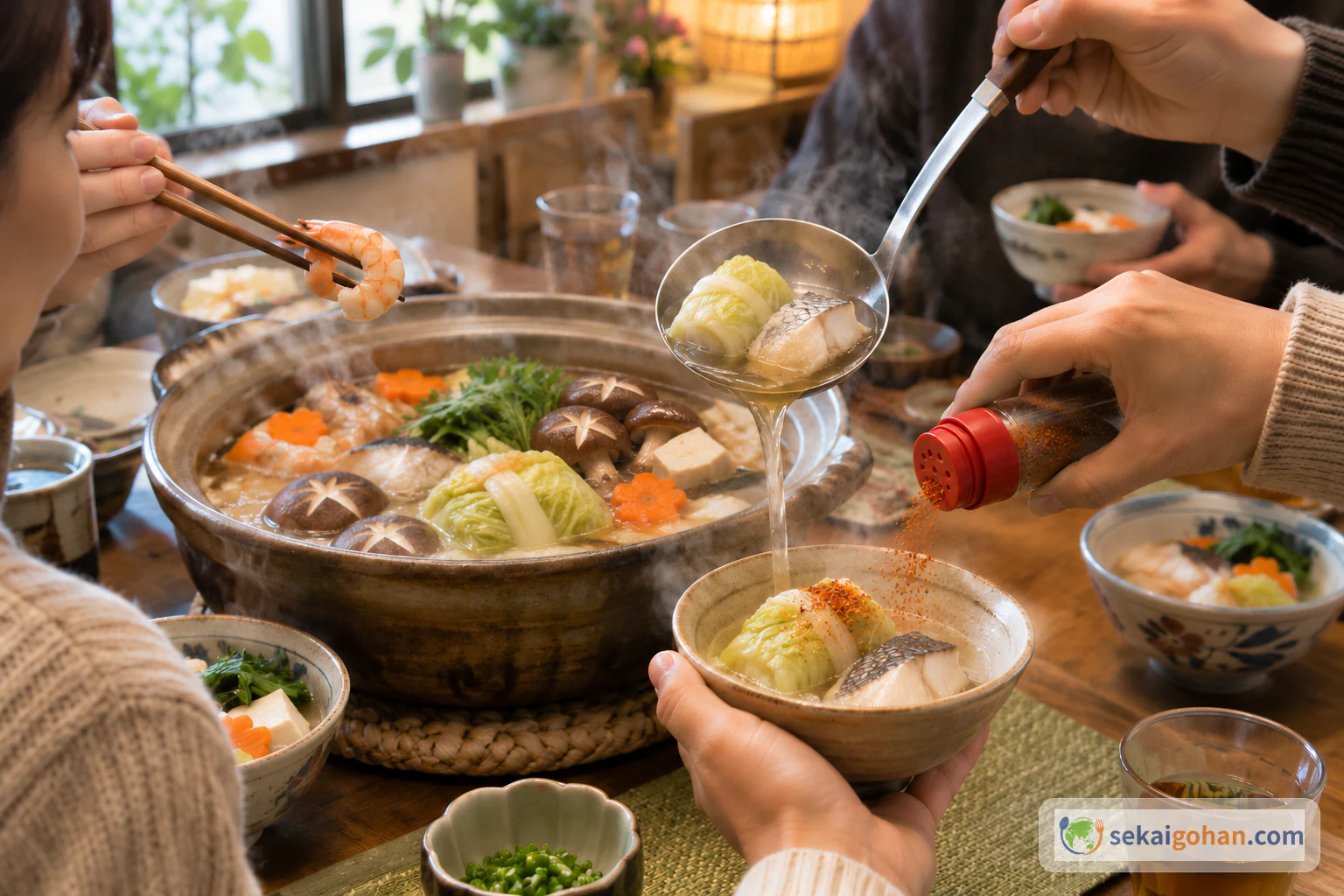
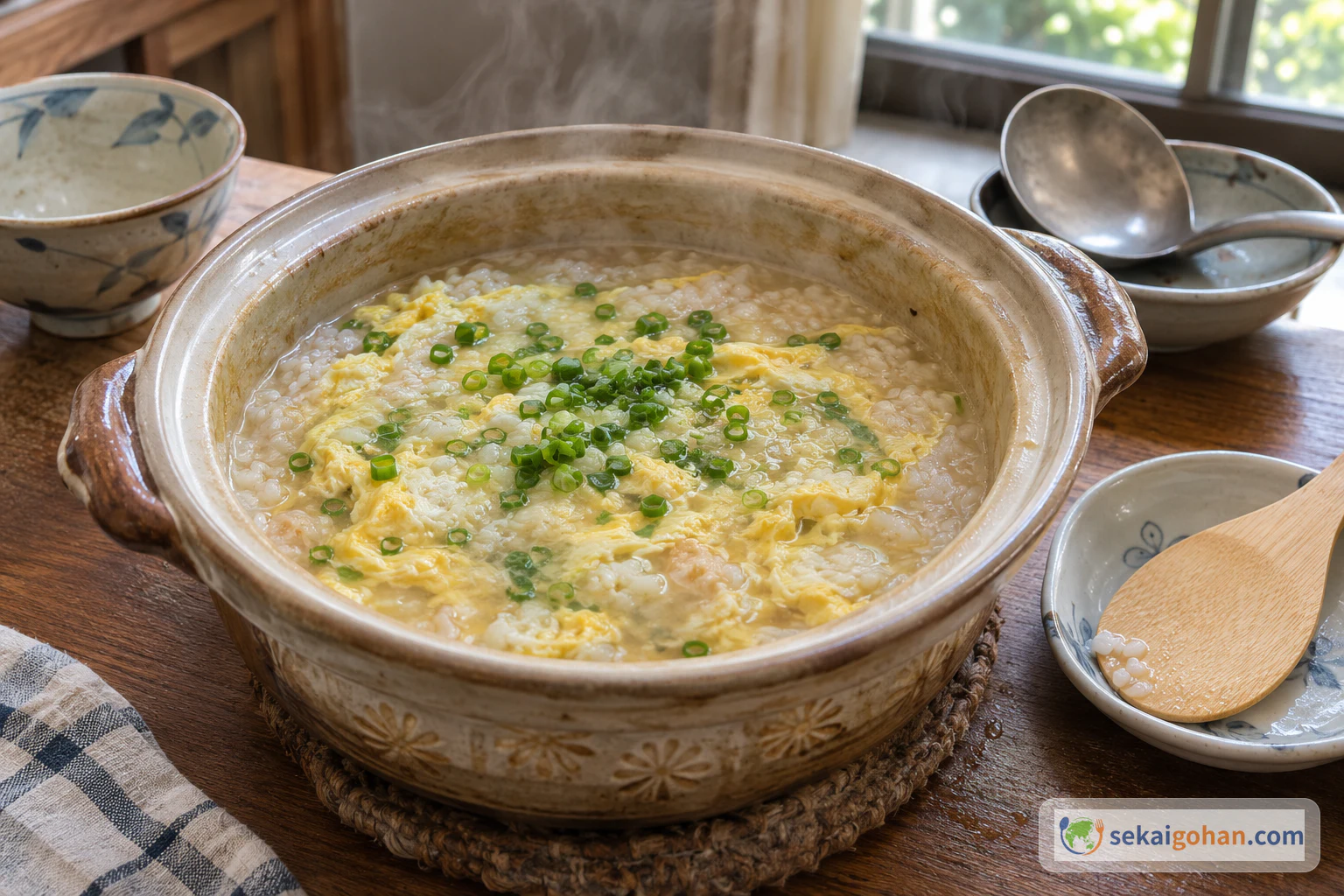
The lid comes off and a cloud of steam rolls across the table. Underneath, everything sits in its own patch of the wide clay pot: pale rounds of napa cabbage with bright spinach at their centre, head-on shrimp, mussels, tofu, shiitake and a little knot of shirataki, all in a clear, light-coloured broth. Each person ladles broth and a few pieces into a small bowl, shakes on some shichimi, and reaches back into the pot. Yosenabe is Japan's gathered hot pot: fish, shellfish, chicken and vegetables simmered together in lightly seasoned dashi, with the broth eaten along with everything else. It tastes clean and savoury, sweet from the sea, and the last of that broth becomes a pot of rice porridge.
Everything Gathered Into One Pot
The name tells you how the dish works. Yose comes from the verb yoseru, to gather or bring together, and nabe is the pot, so yosenabe is the pot where many things are gathered. There is no fixed list. Meat, seafood, vegetables, mushrooms and tofu go in according to the cook's taste and what is on hand, and the dish is still yosenabe as long as the broth stays light enough to drink.
That broth is what places it among Japan's many hot pots. Nabe are often sorted into three kinds by their liquid. Water-boiled pots such as mizutaki and chirinabe cook everything in plain water, and each diner seasons their own bowl with condiments and dipping sauce. Sukiyaki sits at the other end, cooked in a small amount of strongly seasoned liquid. Yosenabe belongs in the middle with oden: simmered in a lightly seasoned broth that you enjoy together with the ingredients. None of the three is a newer fashion. Each grew out of cooking methods long in use and found its way into the pot separately. Because the seasoning is already in the broth, yosenabe has no dipping sauce, which also sets it apart from shabu-shabu.
Winter, around a burner
Yosenabe is a winter pot for family and friends, set in the middle of the table on a portable burner or cooked on the stove and carried out steaming. The broth seasoning shifts from region to region, and so do the ingredients, which follow the season and the market. It turns up across Japan, one pot that changes with every kitchen it passes through. If your picture of Japanese broth is the dense, milky pork stock of tonkotsu ramen, yosenabe goes the other way: pale, quick and clear.
The shippoku thread
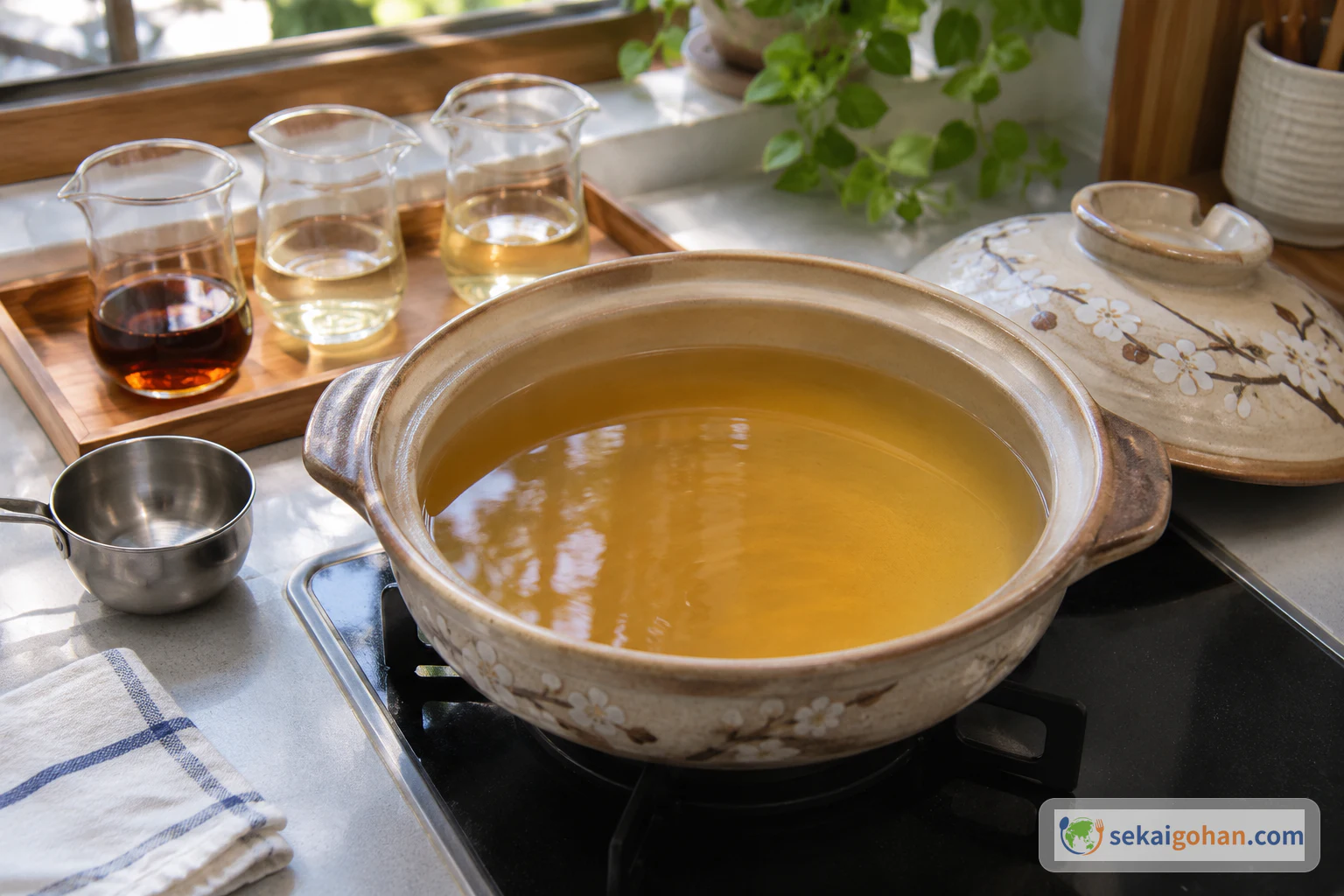
Where yosenabe began is not settled, but one thread runs through Osaka. Shippoku nabe, an Osaka pot, is usually described as a kind of yosenabe that grew out of shippoku cuisine, the Chinese-influenced banquet food that took shape in Nagasaki during the Edo period. In Edo, the old Tokyo, the habit of several people taking food with their own chopsticks from one shared dish or pot was slow to catch on, while in Kyoto and Osaka it spread readily. Shippoku nabe still differs from today's light yosenabe. It simmers in a warishita of soy sauce and mirin over kombu and katsuobushi stock, fish such as sea bream or kisu is grilled before it goes in, and there is no dipping sauce. It ends with zosui or udon, just as yosenabe does.
The word first meant a tablecloth, then came to mean a Chinese-style table, and finally the food served on that table. A pot named after a shared table fits a meal where everyone eats from the middle.
Chanko nabe, the pot of the sumo stables, is its own dish despite the family resemblance. China has its own gathered-ingredient dishes too, such as Buddha's delight, but yosenabe's identity rests on that light, drinkable dashi broth.
Ingredients (serves 2)
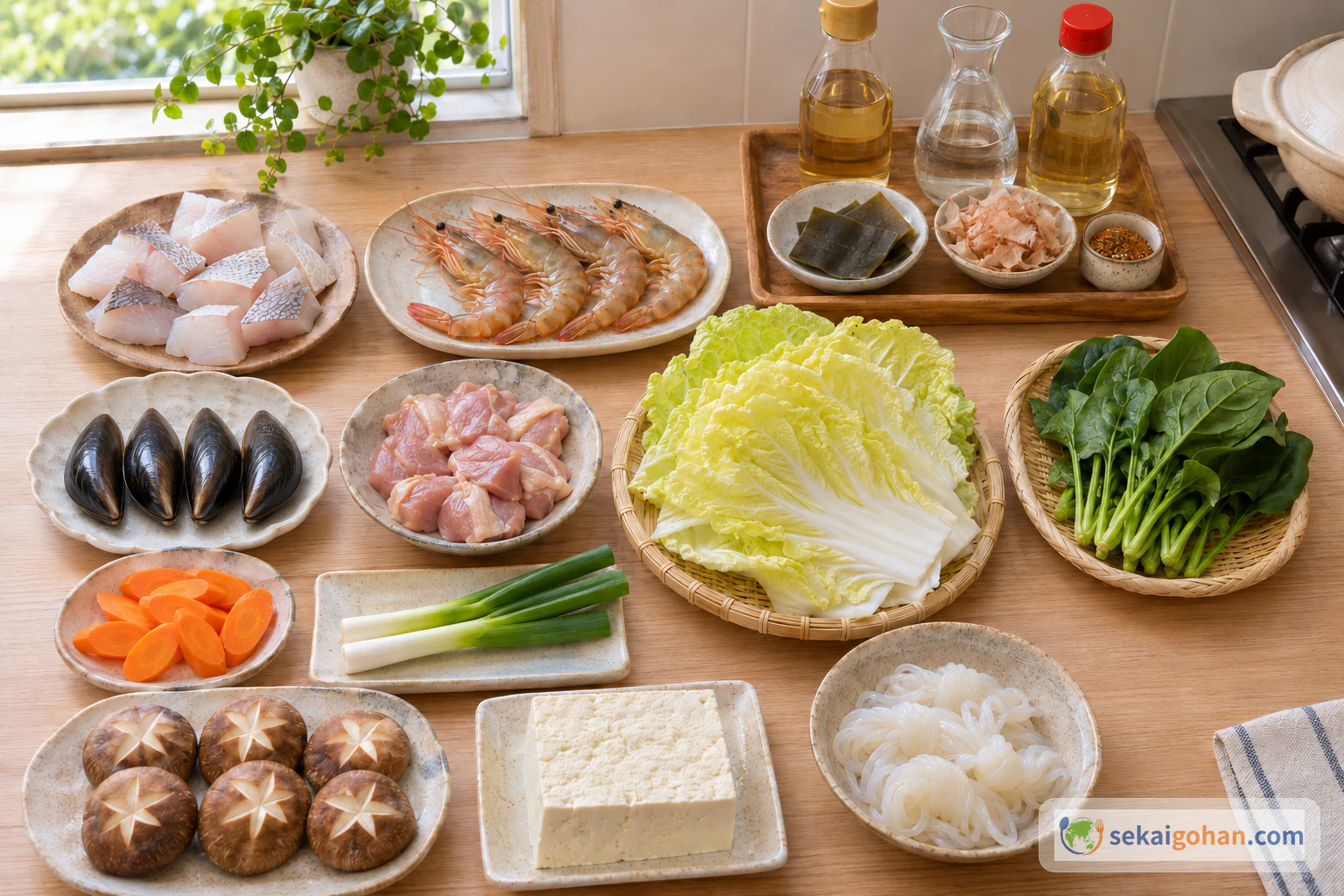
The shells and heads carry flavour into the broth. Peeled shrimp work, but the broth tastes thinner. With so little seasoning in the pot, every ingredient that adds depth counts.
This pot contains fish, crustaceans (shrimp), molluscs (mussels), soy (tofu, soy sauce) and wheat (soy sauce). Shirataki is made from konjac. Check the labels on dashi, soy sauce and any packaged ingredients if you cook for someone with allergies.
Equipment
- Large pot for blanching
- Colander and a bowl of cold water
- Bamboo sushi mat, or baking paper
- Knife and cutting board
- Small pot for the broth
- Donabe (clay pot) or a wide, shallow pot with a lid
- Portable gas burner (for cooking at the table)
- Long cooking chopsticks and a ladle
- Small individual bowls
Choosing and Swapping Ingredients
A Japanese grocery or an online shop is where you will find usukuchi light soy sauce, knotted shirataki, kombu, katsuobushi and momen tofu. Everything else comes from a good supermarket and fish counter. Seafood quality decides the taste of the whole pot, so buy the freshest fish and shellfish you can. Where fresh fish is hard to find, frozen white fish fillets and frozen shrimp work.
The two things that make the pot taste of Japan are the dashi and the light soy sauce. Light soy is saltier than regular soy, yet paler, so it seasons the broth while keeping it clear.
| Ingredient | Swap | What changes |
|---|---|---|
| Homemade awase dashi | Instant awase dashi | Ready in moments; the simplest route on a weeknight |
| Light soy sauce | Regular soy sauce plus a pinch of salt | Broth turns darker; the salt makes up for regular soy being less salty |
| Blue eye cod | Pacific cod (madara), sea bream or another mild white fish | Same clean flavour and clear broth |
| Mussels | Clams, purged of sand first | Smaller, sweeter, with plenty of juice |
| Chicken thigh | Chicken tenderloin (sasami) | Leaner, with less fat in the broth |
| Scallions | Long Japanese leek (Tokyo negi) | Sweeter and softer once simmered |
| Sake | Cooking sake | Works in this small amount |
| Knotted shirataki | Plain shirataki | Spread and cut it so it can be picked up (see step 5) |
Method
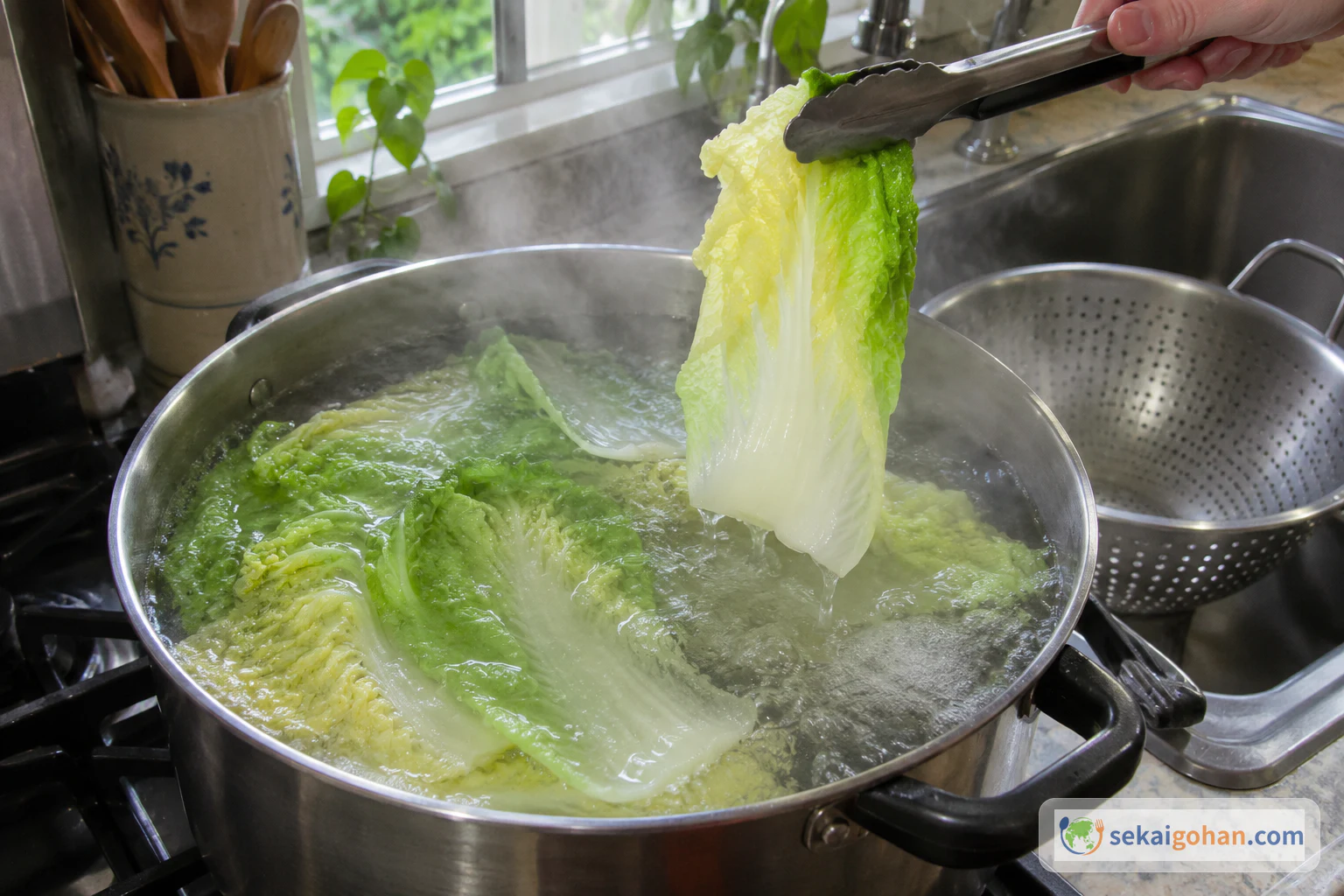
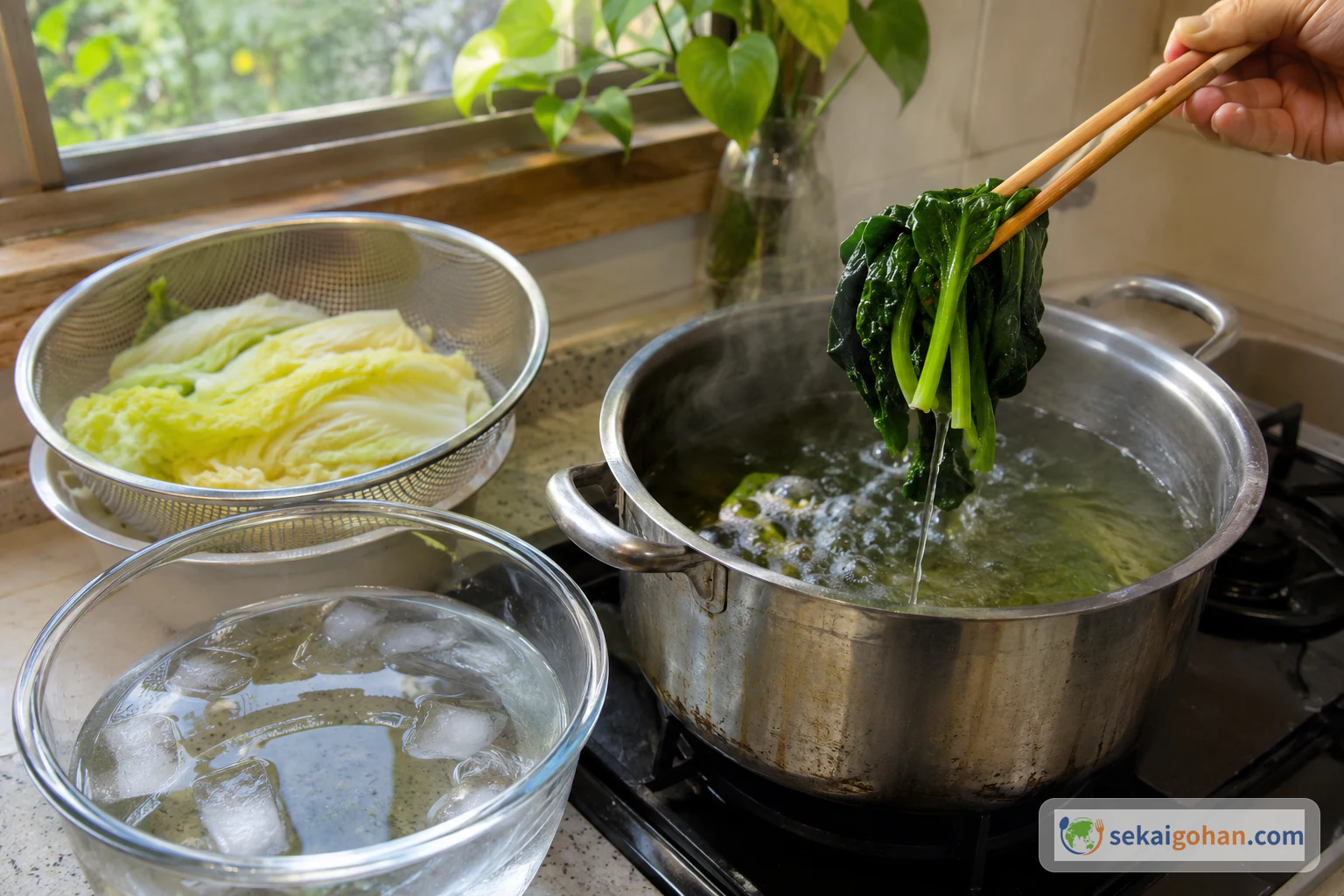
The work happens in the order the pot needs it: blanch and roll the cabbage first, make the broth, cut and arrange everything raw, then simmer once. Blanching the cabbage ahead brings it level with the quick-cooking seafood, so the final simmer is short and everything is ready at once. Have the bowls on the table before the lid goes on.
Do not eat any of this pot raw. Mussels and shrimp must be cooked completely, and the chicken and fish cooked all the way through before serving. Start with mussels that are already debearded and scrubbed.
When It Goes Wrong
| What you see | Why | What to do |
|---|---|---|
| Cloudy broth | Overcooking the fish and shellfish | Keep to the 5–8 minute simmer and serve at once. Careful prep before the pot tends to help keep the broth clearer |
| Cabbage rounds unroll | Water left in the roll | Squeeze the log harder before cutting, or cut the cabbage instead of rolling it |
| Some pieces done, others still raw | Slow ingredients placed on top | Set the cabbage rolls, carrot and tofu lower, and lift out leafy pieces as they finish |
| Broth tastes flat | Regular soy used without extra salt | Add a pinch of salt, taste, and adjust a little at a time |
| Broth too salty | Too much soy or salt | Taste before adding salt; with light soy, the salt it brings is often enough |
The main thing to watch in this pot is timing. Everything is cut and blanched so it cooks in one short simmer, and most problems come from leaving it on the heat too long or stacking it unevenly.
Serving and Variations
Cooking at the table, round by round
The one-pot method above gets everything cooked at once and is the easiest way to make yosenabe for the first time. The other way is the way it is often eaten in winter: cook on a portable burner in the middle of the table. Bring the broth to a boil, add about a quarter of the ingredients, still grouped, then cover and heat until everything is cooked through. Turn the heat low, eat, and add the next round when the pot is empty. Root vegetables can go in while the broth heats; leafy greens cook fast, so pull them out early. This way takes longer than the one-pot method, since each round needs its own simmer, but the meal stretches out and the broth grows richer with every round.
Variations
- Shippoku nabe style. Grill the fish before it goes in and season the stock with soy sauce and mirin as a warishita. The flavour becomes deeper and more savoury.
- Tamari broth. Use tamari soy sauce instead of light soy. The broth turns darker and rounder, and it is a starting point for cooks avoiding wheat; check the label.
- Vegetable pot. Use a vegetable-based dashi and build the pot from vegetables, mushrooms and tofu. The broth is lighter and sweeter, without the seafood depth.
- Seasonal swaps. Trade the seafood and vegetables for what is good that week. Yosenabe is a freestyle pot, so the dish holds as long as the broth stays light.
Frequently asked questions
Do I need a donabe?
No. A wide, shallow pot with a lid works the same way and lets you arrange the ingredients in sections. A donabe holds heat well and looks right on the table, and with a portable burner it lets you cook in rounds as you eat.
Do I have to make the cabbage rolls?
No. If rolling feels fiddly, cut the blanched cabbage in half lengthwise and then into 2-inch (5 cm) pieces, and add the blanched spinach to the pot as it is. The flavour is the same; the rolls are about looks.
Can I change the ingredients?
Yes. Swap in other seafood, meat, vegetables or mushrooms according to taste and what you have. Keep the broth balance as it is and remember that quick-cooking things like shellfish and leafy greens need less time than root vegetables.
Can I peel the shrimp?
Yes, the dish works either way. You lose some of the flavour that the heads and shells give the broth, so if you peel them, the dashi needs to be good.