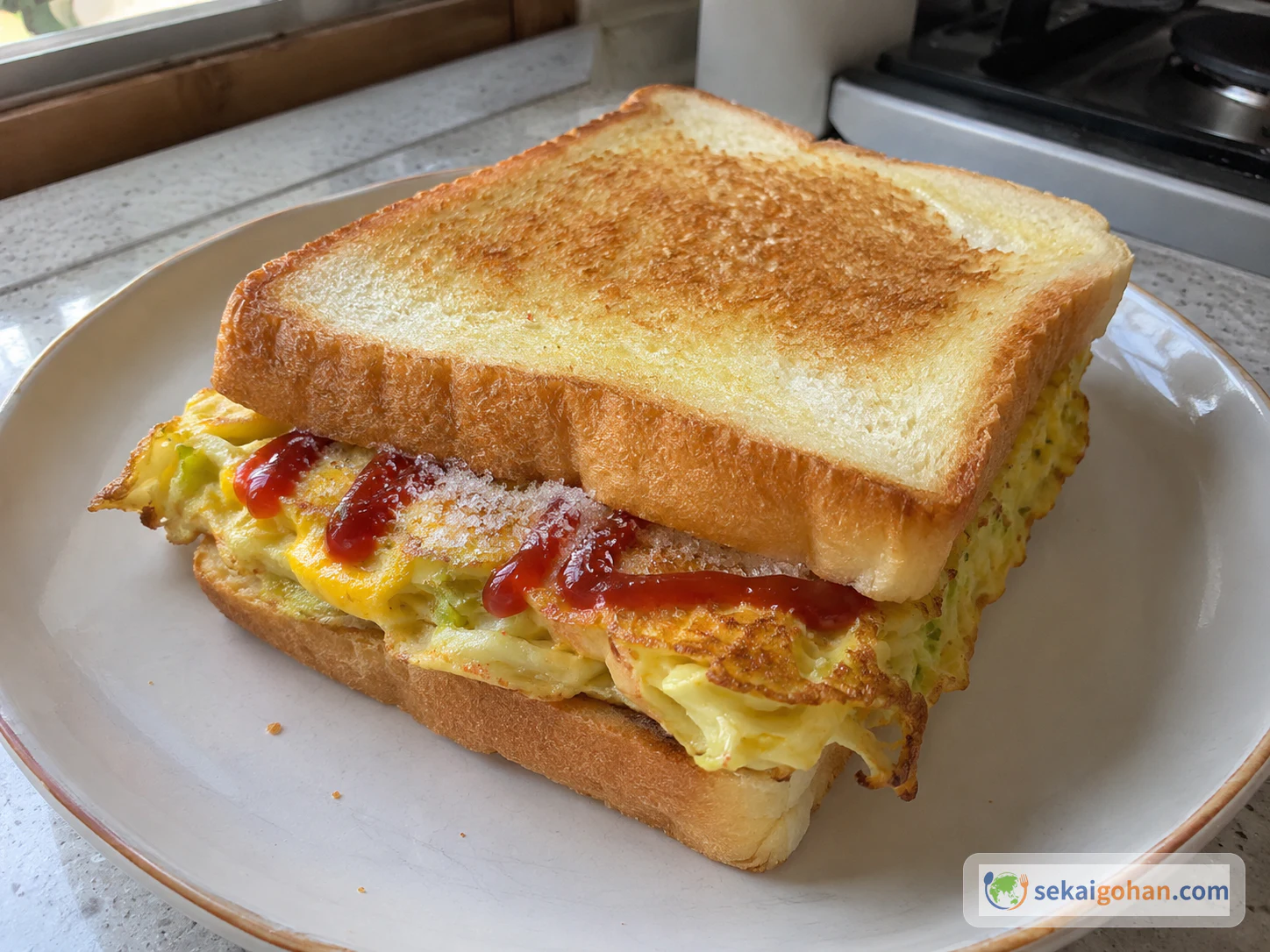
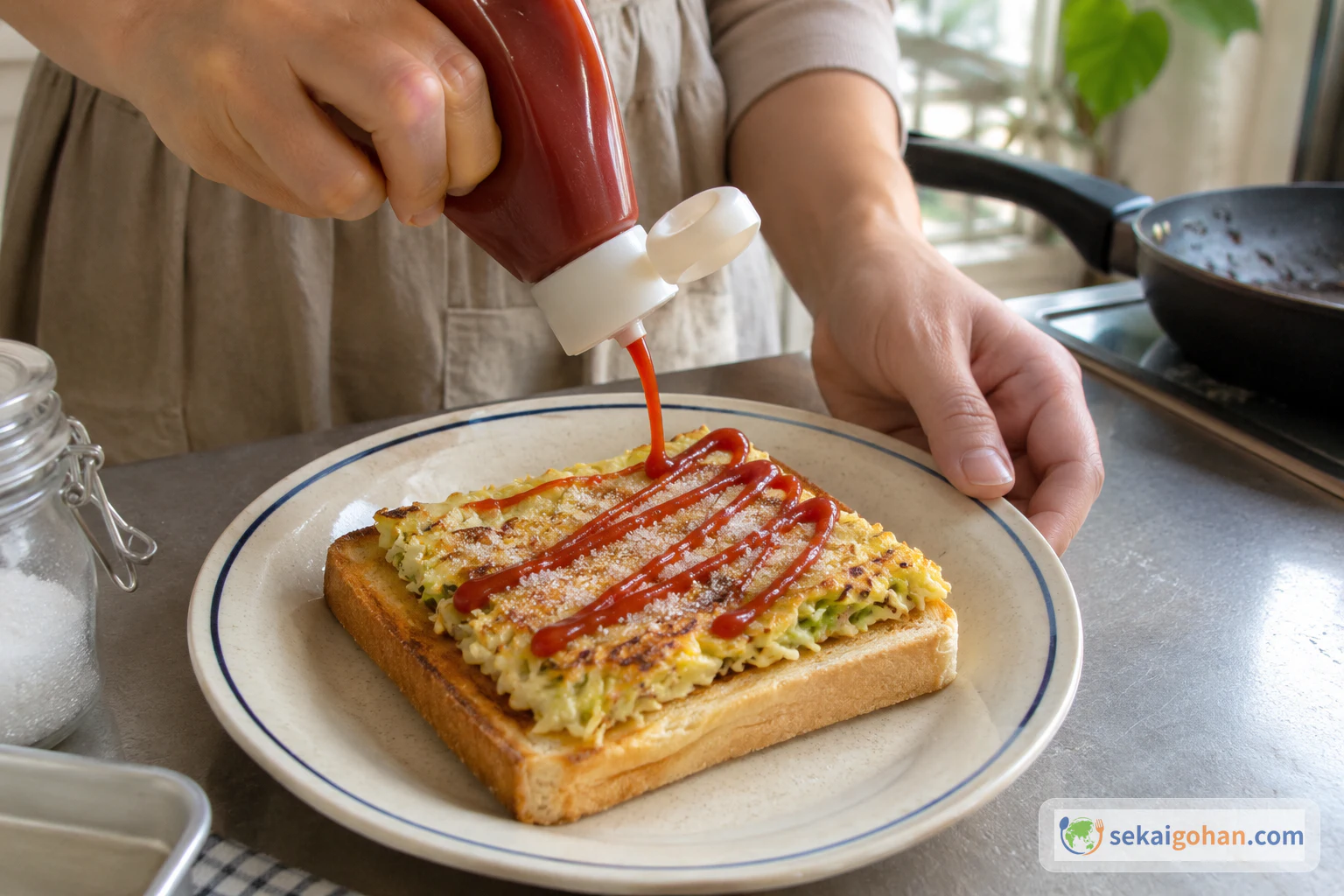
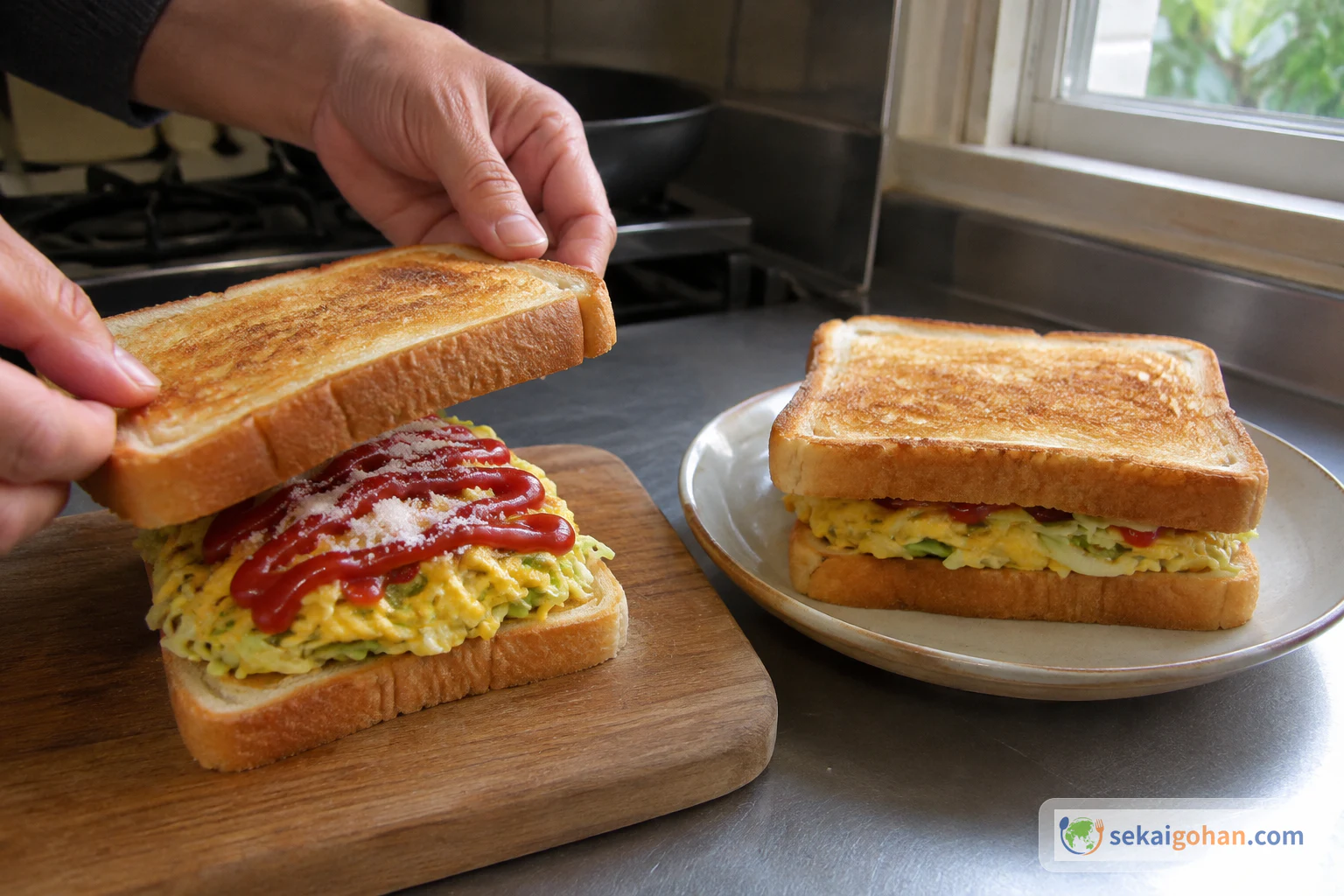
Korean gilgeori toast: a pan-fried cabbage and egg patty between slices of bread, layered with sugar and ketchup
Serves1 serving
CuisineKorean

Gilgeori Toast: Korean Street-Stall Cabbage and Egg Sandwich

Gilgeori toast, Korea's street-stall cabbage and egg sandwich. Soften the cabbage, shape a patty bigger than the bread, and finish with sugar and ketchup.

Cooking flow

Cooking steps

STEP 11 / 10

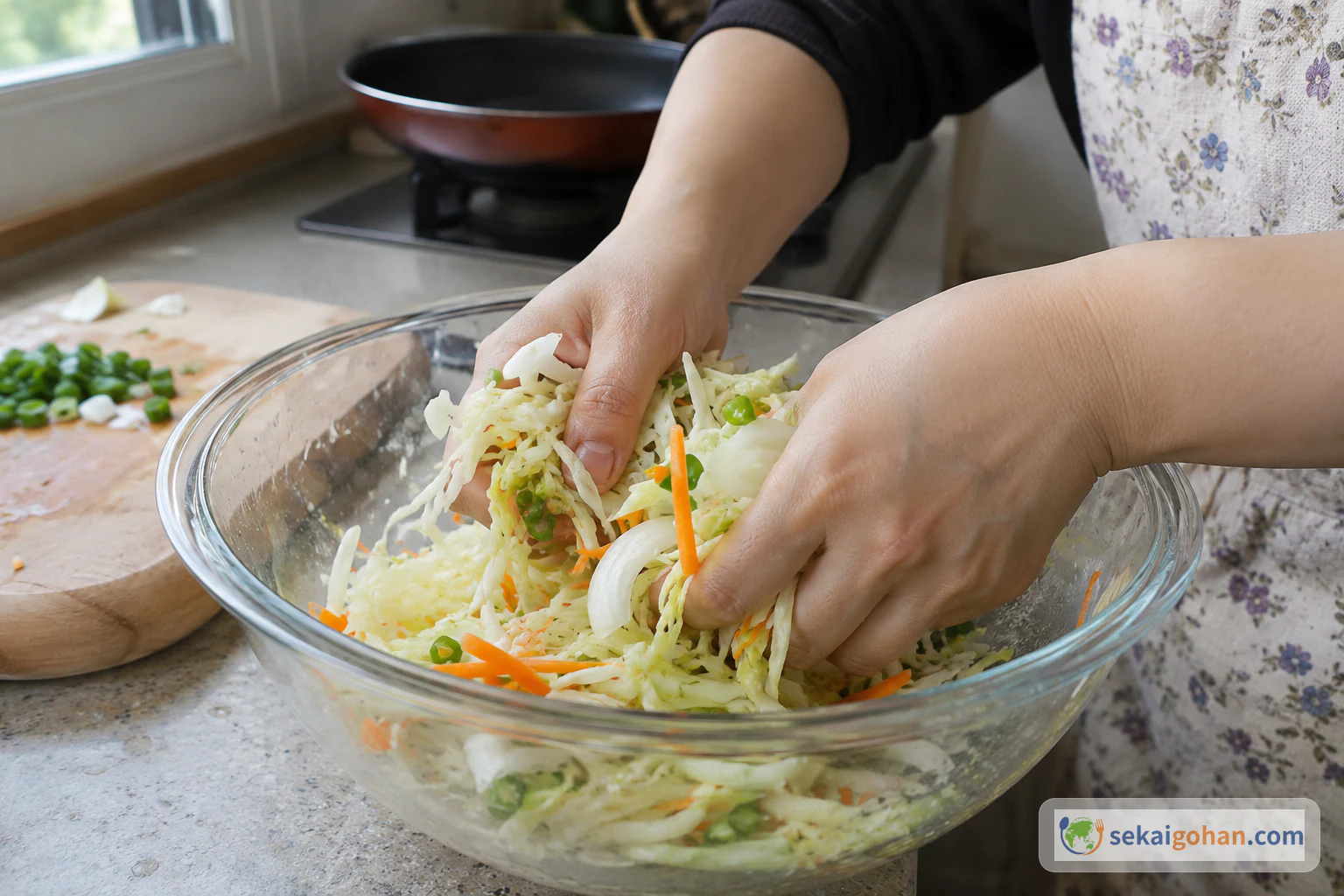
Soften the vegetables by hand

Hands grabbing and releasing shredded cabbage, onion, green onion and carrot in a bowl
Squeeze gently and release; the aim is relaxed shreds, not bruised or wet ones

Put the shredded cabbage, sliced onion, green onions and carrot matchsticks in a medium bowl. Grab handfuls and let them go, again and again, to soften the shreds a little. Work through the whole bowl so the onion and carrot spread evenly through the cabbage. Stop when the shreds have relaxed and pack down slightly instead of springing back up.

STEP 22 / 10

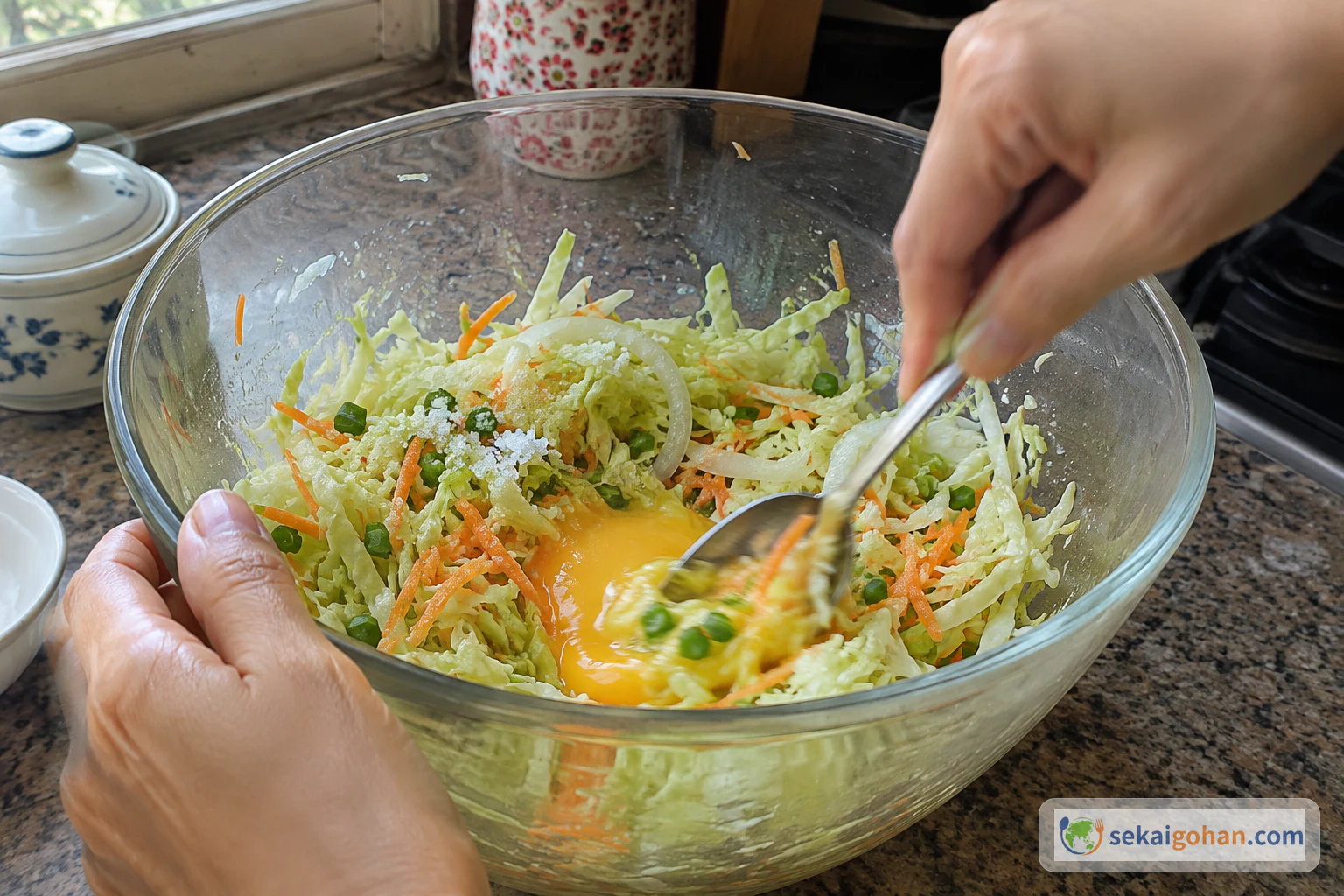
Mix in the salt and egg

A spoon mixing egg and salt into the softened vegetables in the same bowl
The egg should coat the vegetables like a glaze, holding them loosely together

Sprinkle the salt over the vegetables and crack the egg straight into the bowl. Mix well with a spoon, lifting from the bottom so the egg reaches every shred. There is no need to beat the egg separately first. The mixture is ready when the vegetables are evenly coated and no pool of egg is left at the bottom of the bowl.

Soften before the egg goes in

The grab-and-release step is what lets a single egg hold this much cabbage together. Stiff, springy shreds push apart in the pan, while softened ones lie flat and knit into a patty you can flip.

STEP 33 / 10

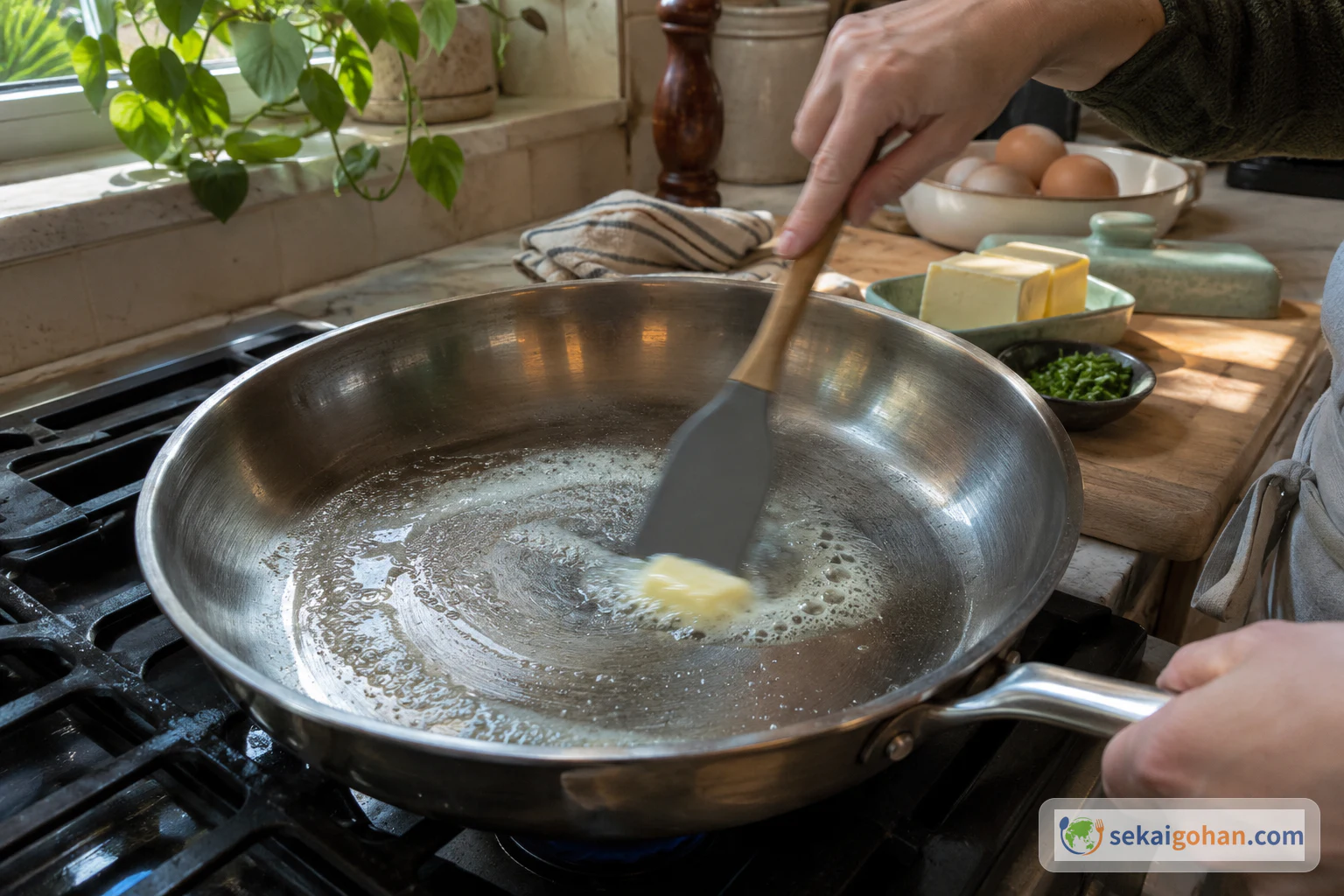
Heat the pan and melt the butter

Butter melting and being spread across a large skillet with a spatula
Spread the butter wide; the patty covers more of the pan than the bread does

Heat a large skillet over medium-high heat, then lower it to medium. Add about 1 tablespoon of butter and let it melt. Spread it with the spatula so it coats the area where the patty will sit. The pan is ready when the butter is fully melted and bubbling gently, without browning.

STEP 44 / 10

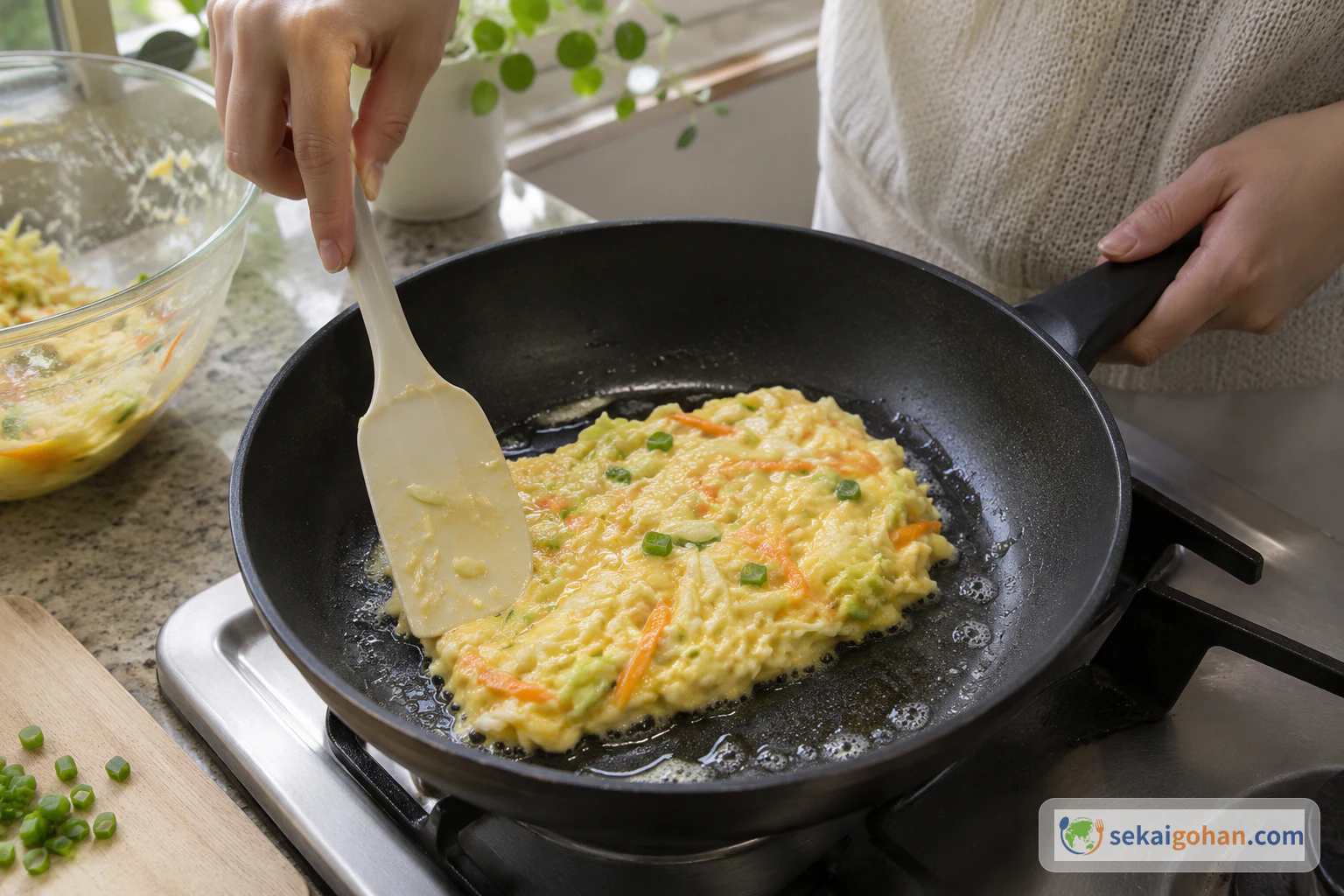
Shape the patty

Raw vegetable and egg mixture being shaped into a rough rectangle in the skillet
Rounded corners are fine; what matters is even thickness so it browns evenly

Add all of the vegetable-and-egg mixture to the buttered pan in one go. Use the spatula to pat it into a rough rectangle, pushing the edges in and squaring the corners. Make it a little larger than one slice of bread. The shape is right when it sits flat and even, with no loose shreds straying from the edges.

STEP 55 / 10

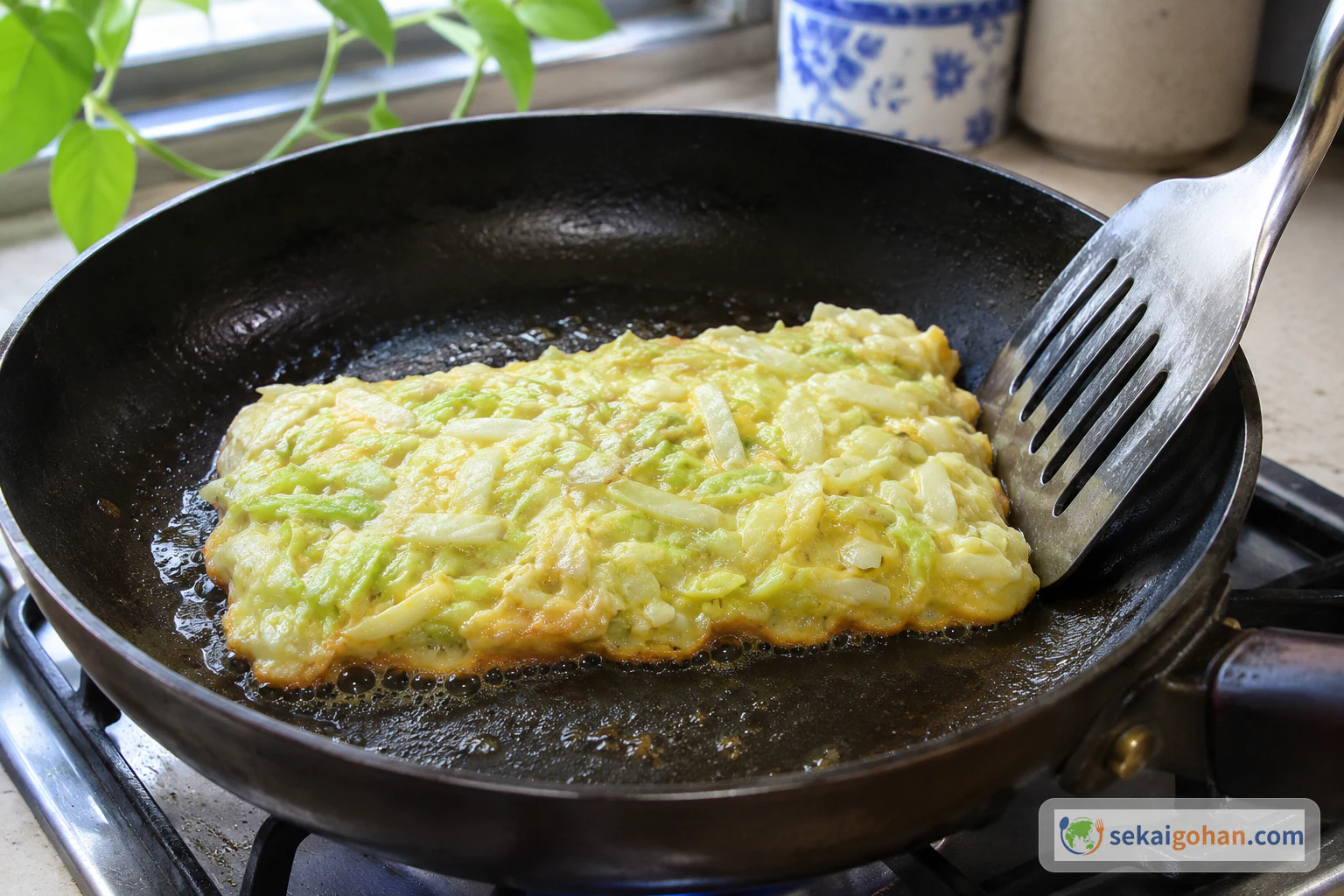
Cook the first side

The cabbage and egg patty cooking, with a lightly browned lower edge
Lift a corner to check; the color you want shows at the edge first

Let the patty cook over medium heat for about 2 to 3 minutes. Keep tidying the edges with the spatula as the egg sets, because the patty spreads a little at first. Leave the middle alone so the bottom can form a crust. It is ready to turn when the underside is light brown and crispy and the top has started to set.

STEP 66 / 10

Turn the patty

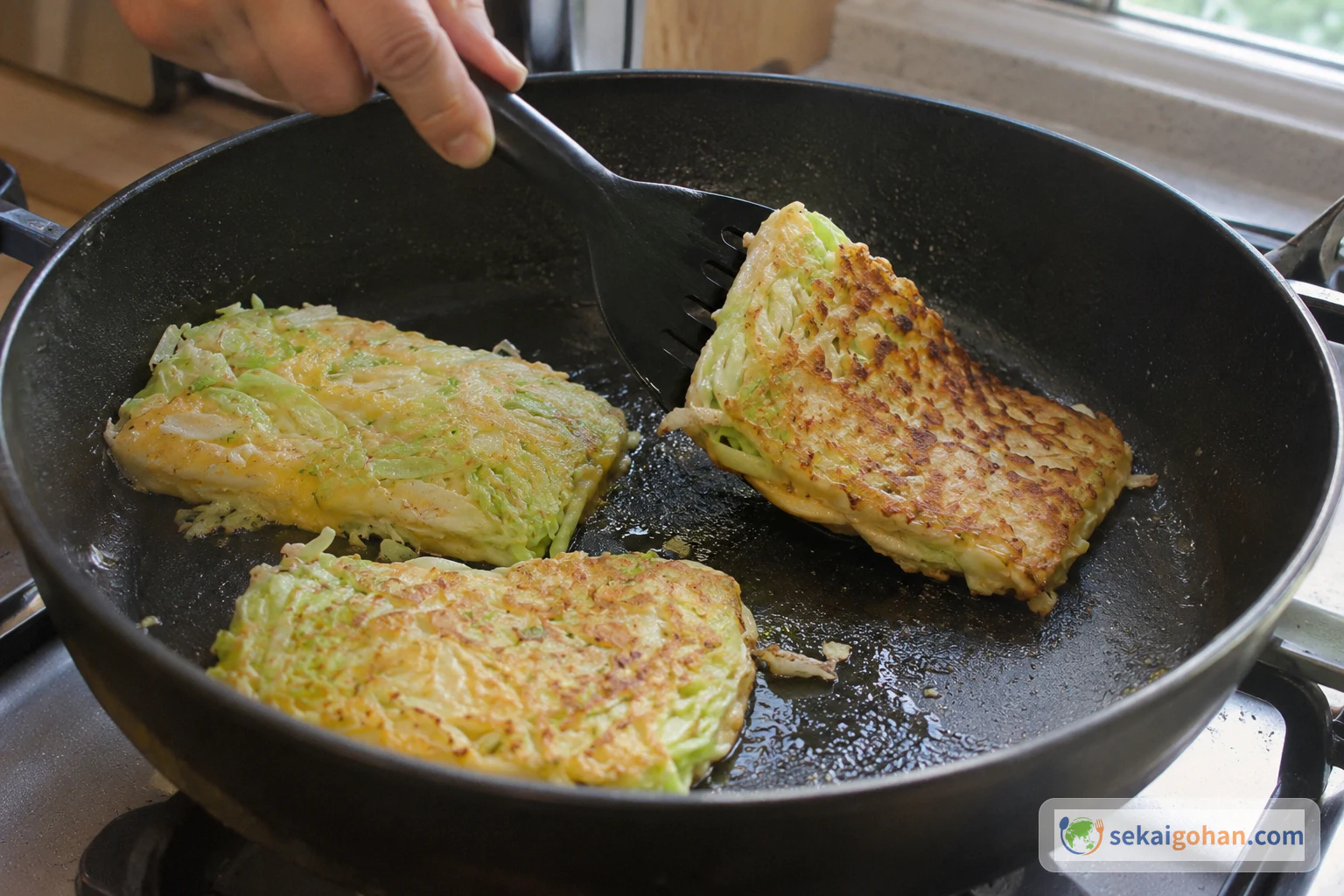
A spatula turning the patty to show its browned first side
Turn it once; flipping back and forth breaks the crust

Slide the spatula fully under the patty and turn it over in one confident motion. Nudge it back into its rectangle if the flip pushed it out of shape. If the pan looks dry under it, add a little more butter. The flip has worked when the browned, crisp first side faces up in one piece.

STEP 77 / 10

Toast the bread in the corner of the pan

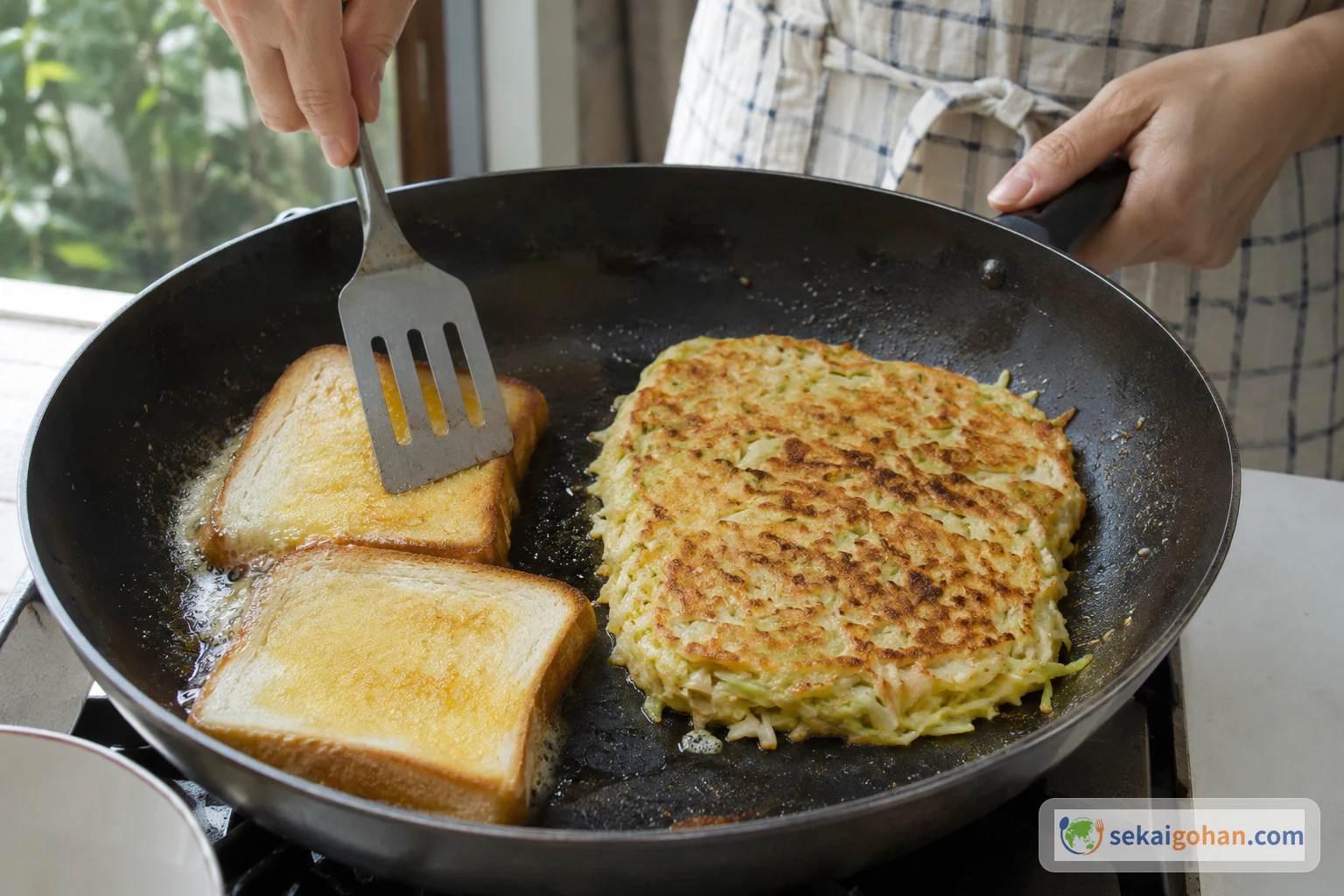
Two slices of bread toasting in a buttered corner of the skillet beside the turned patty
One pan does both jobs; keep the bread moving if the corner runs hotter than the middle

As soon as the patty is turned, melt a little butter in a free corner of the same skillet. Lay both bread slices in it and toast them, then turn them to toast the other side. They pick up the same butter and heat as the patty. The bread is done when both sides are lightly crisp and golden.

STEP 88 / 10

Finish the second side

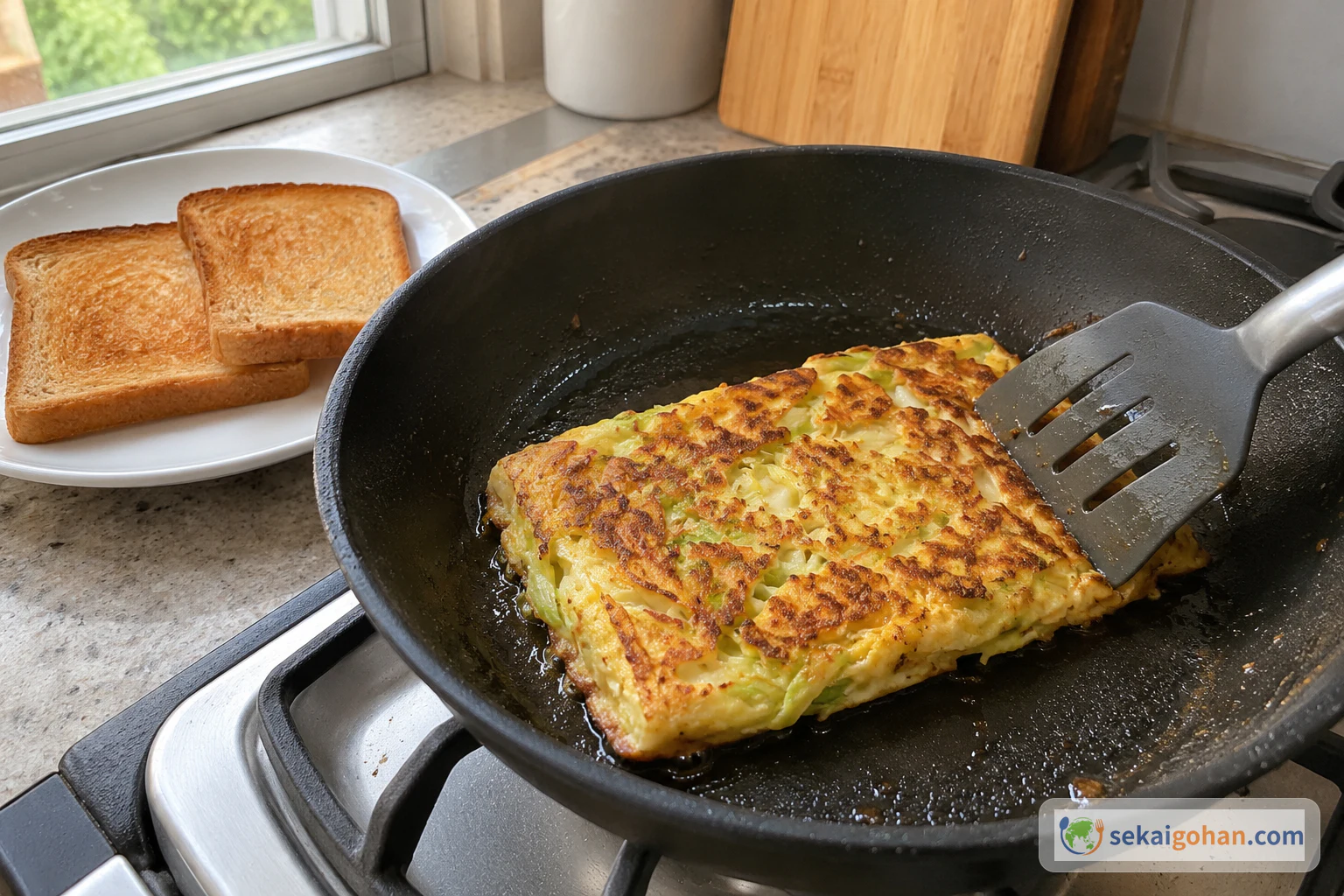
The patty golden brown in the skillet, with toasted bread waiting on a plate
Crisp, darker edges are part of the texture; the middle stays tender

While the bread toasts, keep cooking the patty over medium heat for another 2 to 3 minutes. Keep shaping the edges so it stays a little larger than the bread. Move the toasted bread to the plate as soon as it is ready. The patty is done when both sides are golden brown and a little crispy at the edges.

Cooking the egg through

The browning times are cues for color and crunch. They do not show whether the egg in the middle is fully cooked. Cook the mixture as soon as the egg is cracked into it, and heat it through. As a general home-cooking guide, heated food is cooked through when the center reaches 75°C and holds it for at least 1 minute. To check, push an instant-read thermometer into the thickest part of the patty.

STEP 99 / 10

Layer the sugar and ketchup

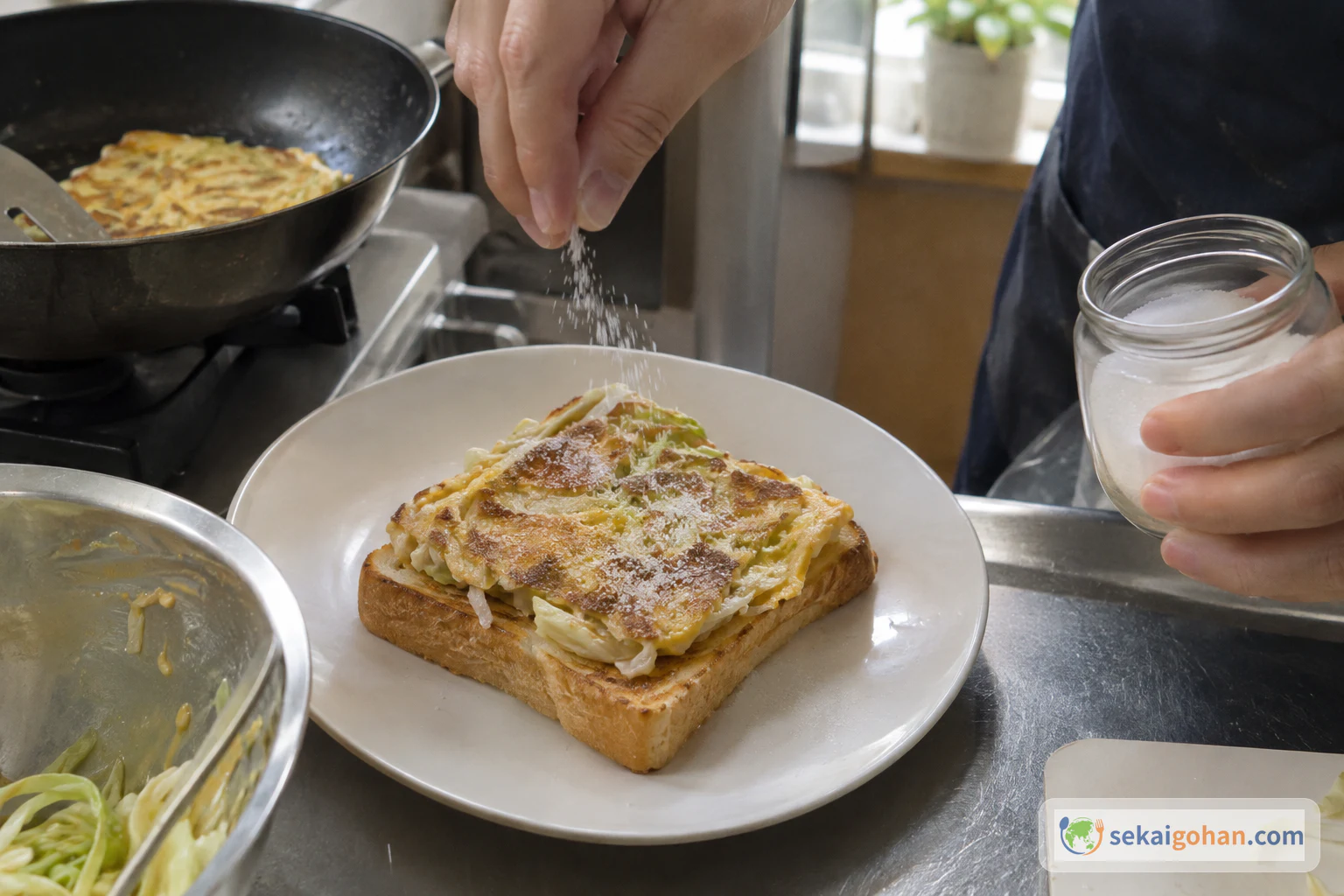
A hand sprinkling sugar over the patty on a slice of toasted bread
Spread the sugar right to the edges so the sweetness reaches every bite

Set one slice of toasted bread on the plate and lay the hot patty on it. Sprinkle the sugar evenly over the whole surface of the patty. Drizzle the ketchup over the sugar, and add the yellow mustard now if you are using it. The layering is complete when every part of the patty has a speckle of sugar and a line of sauce.

Ketchup being drizzled over the sugar-speckled patty
Sugar first, ketchup second; the ketchup holds the sugar in place
STEP 1010 / 10

Top with bread and serve

The second slice placed on top, with a whole toast plated and ready to serve
A whole sandwich on the plate, uncut, with the browned patty edges showing all round

Place the second slice of toasted bread on top and press down lightly. Serve it right away while the bread is still crisp and the patty is hot. To share it, cut it in half on the plate. To eat it on the go, roll it gently in foil like a burrito. It is ready when the patty edges peek out evenly around the bread.

0 / 0
Ingredients

Ingredients

1 / 1

Ingredients

Ingredient Amount Role
Shredded cabbage 5 to 6 oz The body of the patty; softened by hand so it holds together
Sliced onion about 2 tbsp Sharpness and sweetness inside the patty
Green onions, sliced diagonally 2 Fresh onion flavor and green color
Carrot matchsticks about 1 tbsp Color and a little sweetness
Salt ¼ tsp Seasons the vegetables and egg
Egg 1 Binds the vegetables into one patty
Milk bread or multi-grain bread 2 slices, 4 to 5 inches (10 to 13 cm) The toasted shell of the sandwich
Unsalted butter about 1 to 2 tbsp, for cooking Fries the patty and toasts the bread in the same pan
Sugar 2 tsp, or a zero-calorie natural sweetener The sweet crunch that defines street toast
Ketchup 1 to 2 tbsp Tang and moisture against the crisp patty
Yellow mustard 1 tbsp (optional) A sharp edge alongside the ketchup
0 / 0

The patty goes into the butter as a loose heap of cabbage shreds held together by one egg, and the spatula keeps pushing its edges square while it sizzles. By the time two slices of bread have toasted in a corner of the same pan, the patty is golden and crisp on both sides. Then the last moves come quickly: patty on bread, a scatter of sugar, a line of ketchup, the second slice on top. Gilgeori toast is the Korean street-stall sandwich built this way, and on a Seoul sidewalk it is cooked in front of the person waiting for it. The first bite is buttery and crunchy. Then the soft, savory cabbage and egg arrive, and the sugar and ketchup turn it sweet and tangy at the same moment.

Street Toast, Made While You Wait

The name says where it lives. Gilgeori means "street," and the sandwich belongs to the kiosks and sidewalk stalls where a vendor works a flat pan with a spatula, shaping the vegetable-and-egg patty and toasting the bread side by side. People who remember buying it describe the same scene: the patty and bread cooked to order, then sugar and ketchup layered on just before the toast is handed over. It is fast food in the plainest sense, eaten standing up or carried off down the street. Where and when it was first sold is not settled.

What goes inside changes from stall to stall and from shop to shop. The version here is the lean one: cabbage, onion, green onion and carrot bound with a single egg, fried in butter, with sugar and ketchup as the finish. Many people remember a fuller kiosk toast that adds fried ham, a slice of cheese and mayonnaise. Some cooks hold back part of the vegetables and press them onto the top of the patty while it cooks. The sweet-and-savory pairing of sugar with egg is the thread that runs through all of them.

It sits among Korean street foods with very different characters. Hotteok is the sweet griddle snack from the same kind of stall, tteokbokki is the chewy rice-cake dish in red sauce, and gimbap is the rolled food people carry with them. For more from the same table, browse the Korean recipes.

The name on the sign

In Korean it is written 길거리토스트, sometimes with a space as 길거리 토스트. The romanization appears as gilgeori toast or gilgeori-toast, and in English it is usually just called Korean street toast.


Ingredients (serves 1)
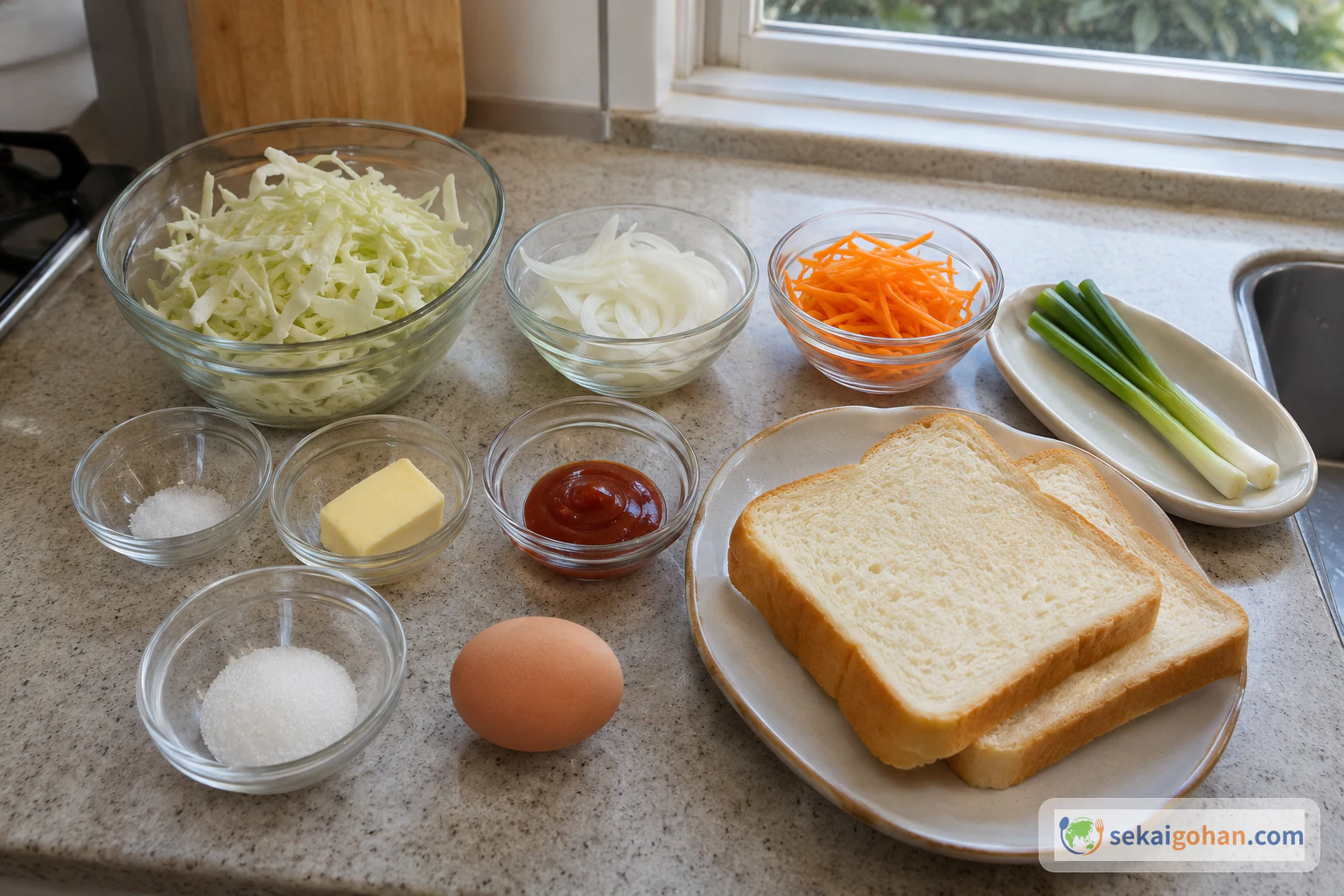
The ingredients for gilgeori toast laid out with milk bread and no mustard
Cabbage, onion, green onions, carrot, egg, milk bread, salt, butter, sugar and ketchup

The butter amount covers all the cooking. About 1 tablespoon goes in first to coat the pan, and the rest is there for when the pan looks dry after the flip and for toasting the bread.

Allergen information

This sandwich contains egg, milk (butter) and wheat (bread). Bread recipes differ from product to product, so check the packages of the bread, butter and mustard you buy for allergens and shared-facility notes before cooking for someone with an allergy.

Equipment

  • Medium mixing bowl
  • Spoon
  • Large skillet
  • Spatula
  • Plate
  • Aluminum foil (optional, for wrapping)

Choosing the Bread, Butter and Sweetener

Measure the cabbage (5 to 6 oz), because it is the body of the patty that one egg binds together.

Milk bread gives the soft, slightly sweet slice that crisps up in butter. Multi-grain bread works too and makes a heartier, denser sandwich. Either way, choose slices about 4 to 5 inches (10 to 13 cm) across, so the patty can be shaped to overhang them. Use unsalted butter, since the salt is already measured into the vegetables. If you are cutting sugar, a zero-calorie natural sweetener takes its place on the patty. Keep the sugar and the ketchup together whatever else you change, because that pairing is what makes this street toast rather than a plain egg sandwich.

Size the patty to the bread

Lay one bread slice next to the pan before you start. You will shape the patty to be a little bigger than that slice, so the crisp, browned edges show around the bread in every bite.


Method: One Bowl, One Pan, Two Sides

Cut every vegetable before you touch the egg. The egg goes in last, and the mixture goes straight into the pan. After that, everything happens in one skillet: the patty cooks on one side, then flips, and the bread toasts in the free corner while the second side browns. The sandwich is built on the plate and eaten at once, so have the sugar, ketchup and plate within reach before the patty goes in.

When It Goes Wrong

What you see Why What to do
The patty breaks apart when you flip it The vegetables were not softened, or the first side had not formed a crust Grab and release the cabbage until it relaxes. Wait to flip until the underside is light brown and crisp
The butter browns or smokes before the patty goes in The pan was still at medium-high Lower to medium before adding the butter, and wait a moment for the pan to settle
The patty is pale and soft after the stated time The heat was too low, or the patty was shaped too thick in one spot Keep the heat at medium and press the patty to an even thickness
The patty ends up smaller than the bread It spread unevenly or was not squared while cooking Keep pushing the edges in with the spatula on both sides so it stays a little larger than one slice
The bread is soggy or uneven It was toasted in a dry corner, or only on one side Melt butter in the corner first and toast both sides until lightly crisp

Serving, Variations and Leftovers

At the table

Gilgeori toast is a one-hand meal. It suits a quick breakfast, a late snack, or something to eat on the way out the door, and the foil wrap catches the ketchup as you go. Eat it hot, because the crisp bread against the soft patty is the whole pleasure.

Variations

  • Add yellow mustard. About 1 tablespoon with the ketchup gives the sweetness a sharp, vinegary edge.
  • Use multi-grain bread. The sandwich becomes heartier and less sweet, with more chew in the bread.
  • Make the kiosk-style toast. Fried ham, a slice of cheese and mayonnaise turn it into a richer, saltier sandwich. This is a fuller version from the stalls, built around the same patty.
  • Hold back some vegetables. Set aside a small handful of the vegetables before adding the egg, and press them onto the top of the patty while it cooks. You get fresher, crunchier strands on the surface.

Leftovers

This sandwich is made to be eaten as soon as it is built. Do not leave it out at room temperature for long. If any is left, put it in a clean, shallow container so it cools quickly, refrigerate it, and heat it through thoroughly before eating.

Frequently asked questions

Can I mix the egg and vegetables ahead of time?

Cut the vegetables while the pan heats, but add the egg only when you are ready to cook. Cook the mixture promptly once the egg is cracked into it. Do not hold the egg mixture in the fridge for later.

Can I fry it in oil or margarine instead of butter?

Yes. Some versions cook the patty in margarine or olive oil. Butter gives the bread and patty their toasty, dairy aroma, so with oil the sandwich tastes cleaner and less rich.

Why is there sugar on a savory sandwich?

The sugar is what makes this taste like street toast. Its sweet crunch against the salted egg and the tangy ketchup is the contrast people remember from the stalls. If you would rather not use sugar, a zero-calorie natural sweetener goes on in the same place.

Sources