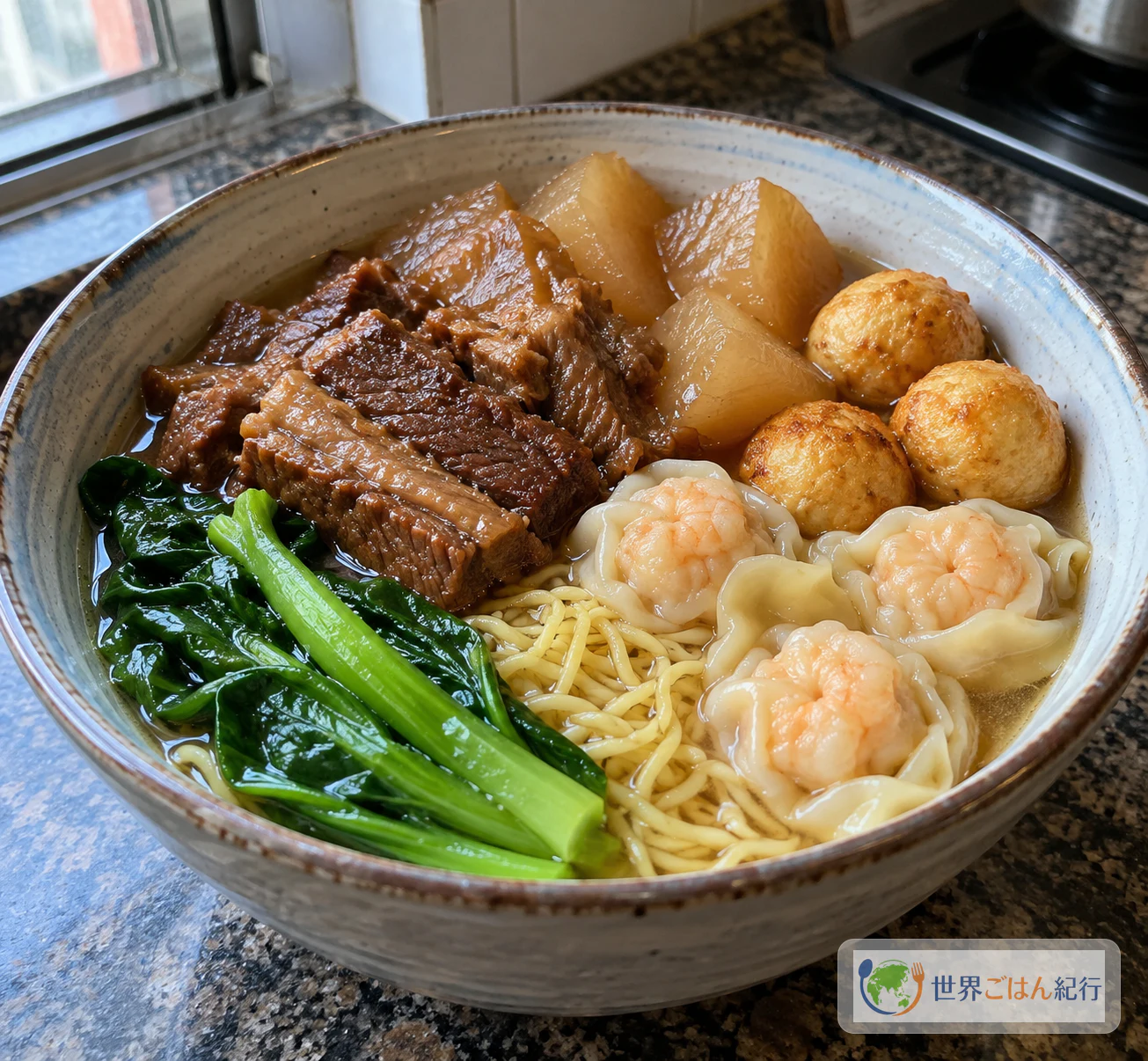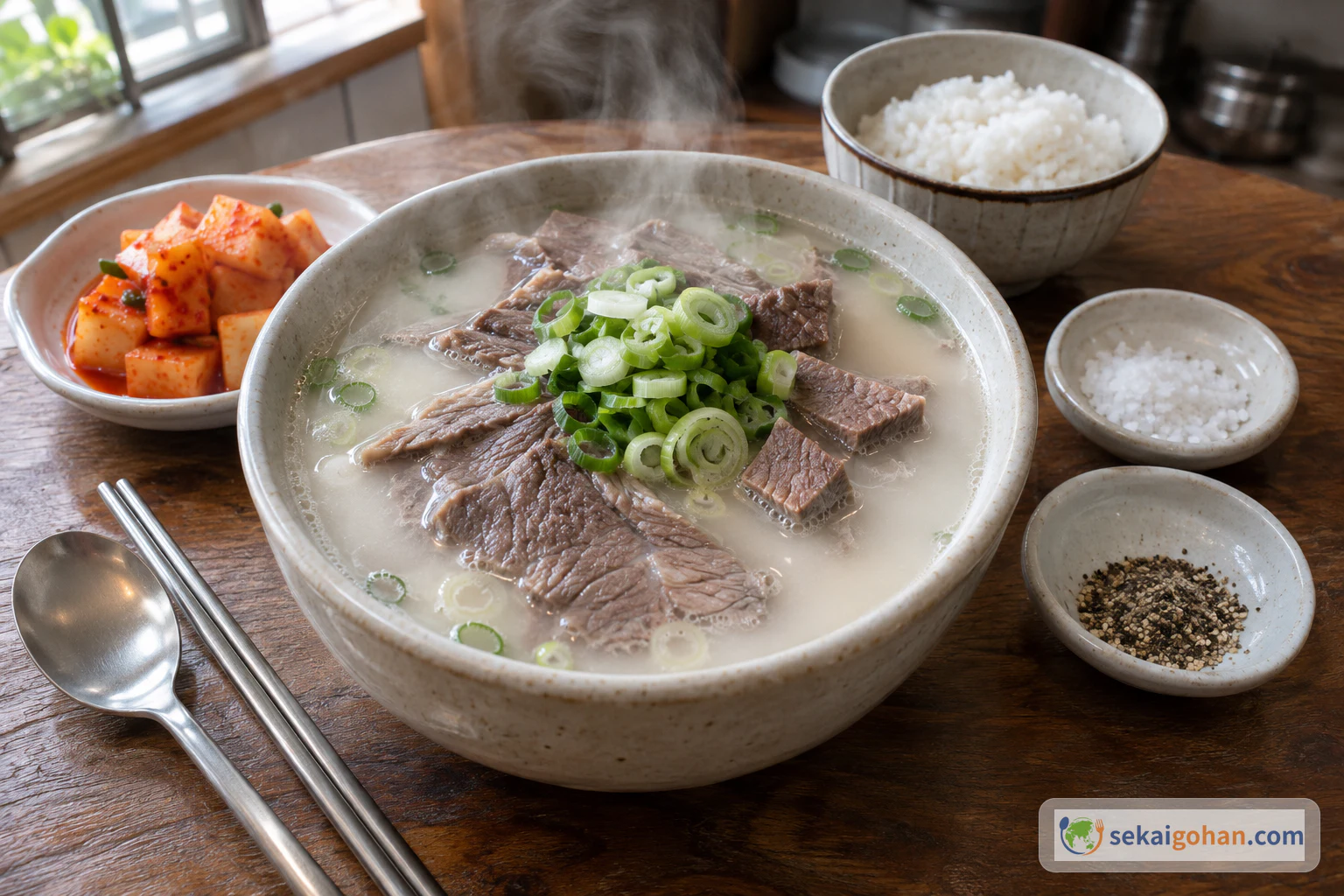
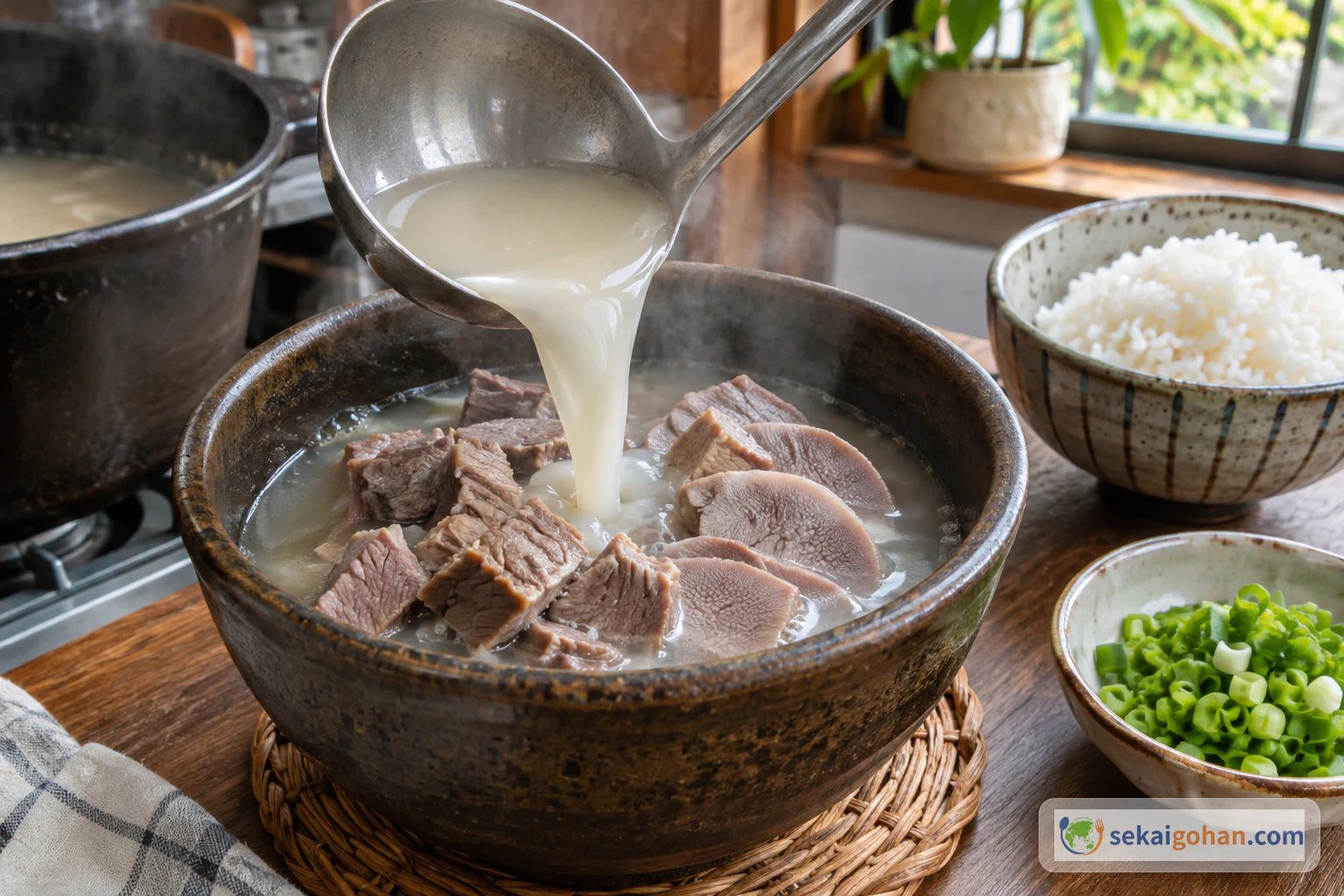
The bowl arrives almost blank: a milky white broth with pale slices of beef and tongue under the surface, steam rising, and no salt in it to speak of. Then the work moves to the diner. A pinch of salt goes in, a spoon of chopped green onion, maybe some chili pepper, and the bowl gets stirred and tasted until it is right for that one person. Seolleongtang is the ox bone soup of Seoul, built from knee bones, gristle, tongue and beef cooked for ten to eleven hours until the broth turns opaque. It tastes clean, deep and beefy, with a soft body from the gelatin. Rice sits next to it and usually ends up in it.
A White Broth with Several Stories Behind Its Name
Nobody agrees on exactly where seolleongtang began, and the competing stories are part of its charm. The best-known one ties it to Seonnongdan, the altar where kings of the Joseon court held rites for agriculture and performed the ceremonial first plowing. After the rite, the sacrificed ox was cooked into a large pot of soup and shared, and the name is usually traced from seonnongtang, "Seonnong soup," through seollongtang to the seolleongtang of today. A related story places the ceremonial plowing and the soup much earlier, in the Silla period. Another theory points to the Mongol period and a meat broth called sulen. Where it was first made is not settled.
How it is eaten
What is settled is the way it is eaten. The kitchen sends the broth out unseasoned or very lightly seasoned, and each person seasons their own bowl at the table with salt, pepper, red pepper, garlic and spring onion. Rice comes on the side, and many people tip it straight into the broth halfway through. A dish of kkakdugi, cubed radish kimchi, is the usual companion, its crunch and sourness cutting through the richness of the soup.
That table habit shapes how you cook it at home. You are making a base, not a finished seasoning, so the goal at the stove is color, body and a clean beef flavor with no gamey edge. It sits in the same family of long-cooked Korean soups as the chicken-and-ginseng samgyetang and the pork-based dwaeji-gukbap, but here the bones carry everything, and the white color is the signature. For more dishes from the same table, see the Korea country page.
Seolleongtang is sometimes written with the Chinese characters 雪濃湯, "snow-thick soup," which fits the color nicely. Korean dictionaries treat that spelling as incorrect. In Seoul, Imun Seolnongtang is regarded as the oldest restaurant serving the soup that is still operating.
Ingredients
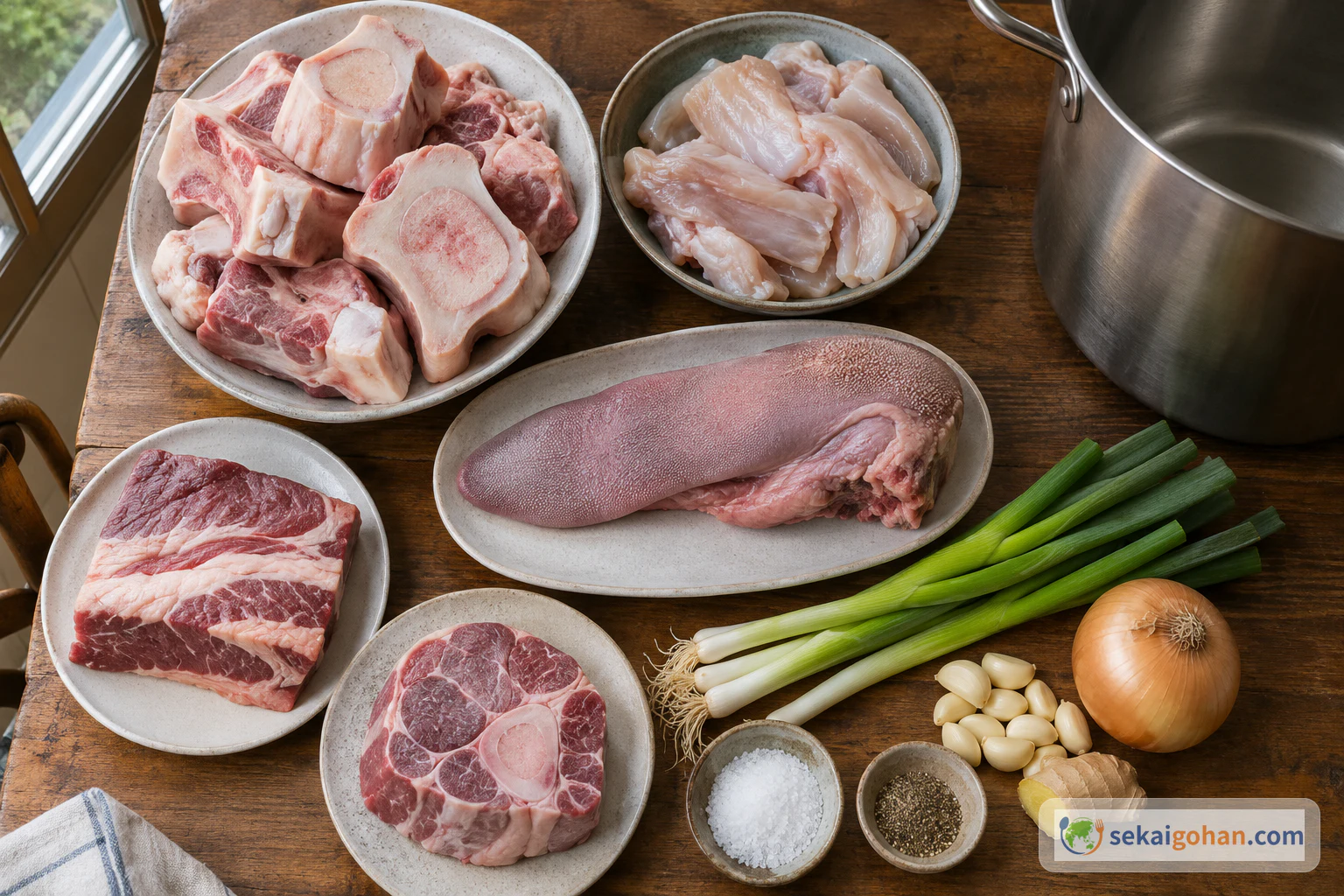
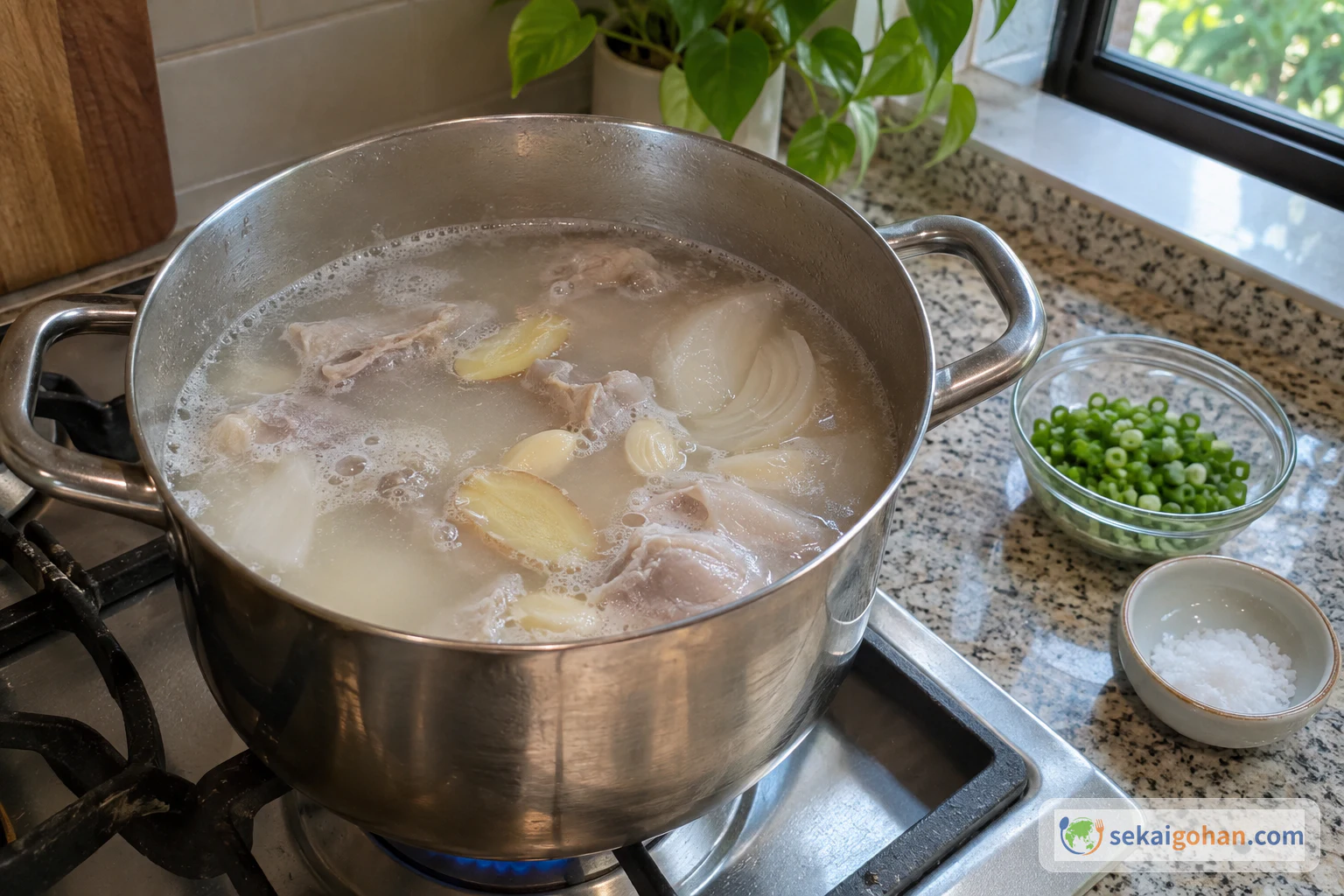
The bones and gristle build the broth, the tongue and the two cuts of beef become the meat in the bowl, and the vegetables go in late to clean up the flavor.
This soup is made entirely from beef and beef bones. It also contains green onion, garlic, ginger and onion. Check the labels on anything you serve with it, such as kimchi.
Equipment
- A large stockpot that holds the bones with 15½ lb (7 kg) of water and still leaves room to boil
- A large bowl for soaking
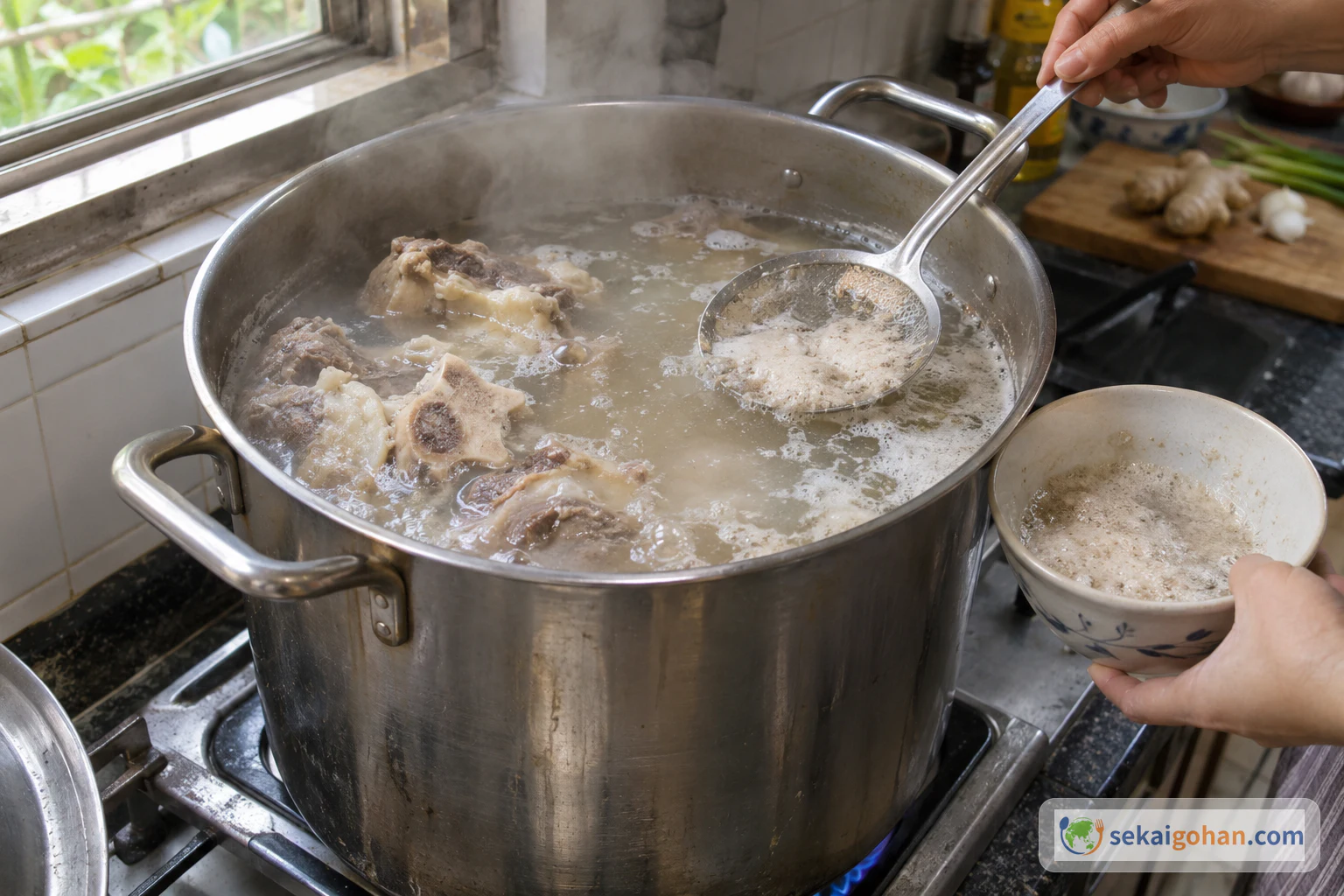
- A skimmer or fine ladle for scum and fat
- A colander
- A clean cotton cloth
- A kitchen scale
- A sharp knife and a cutting board
- A ladle for serving
- A fat separator (optional)
Choosing and Substituting
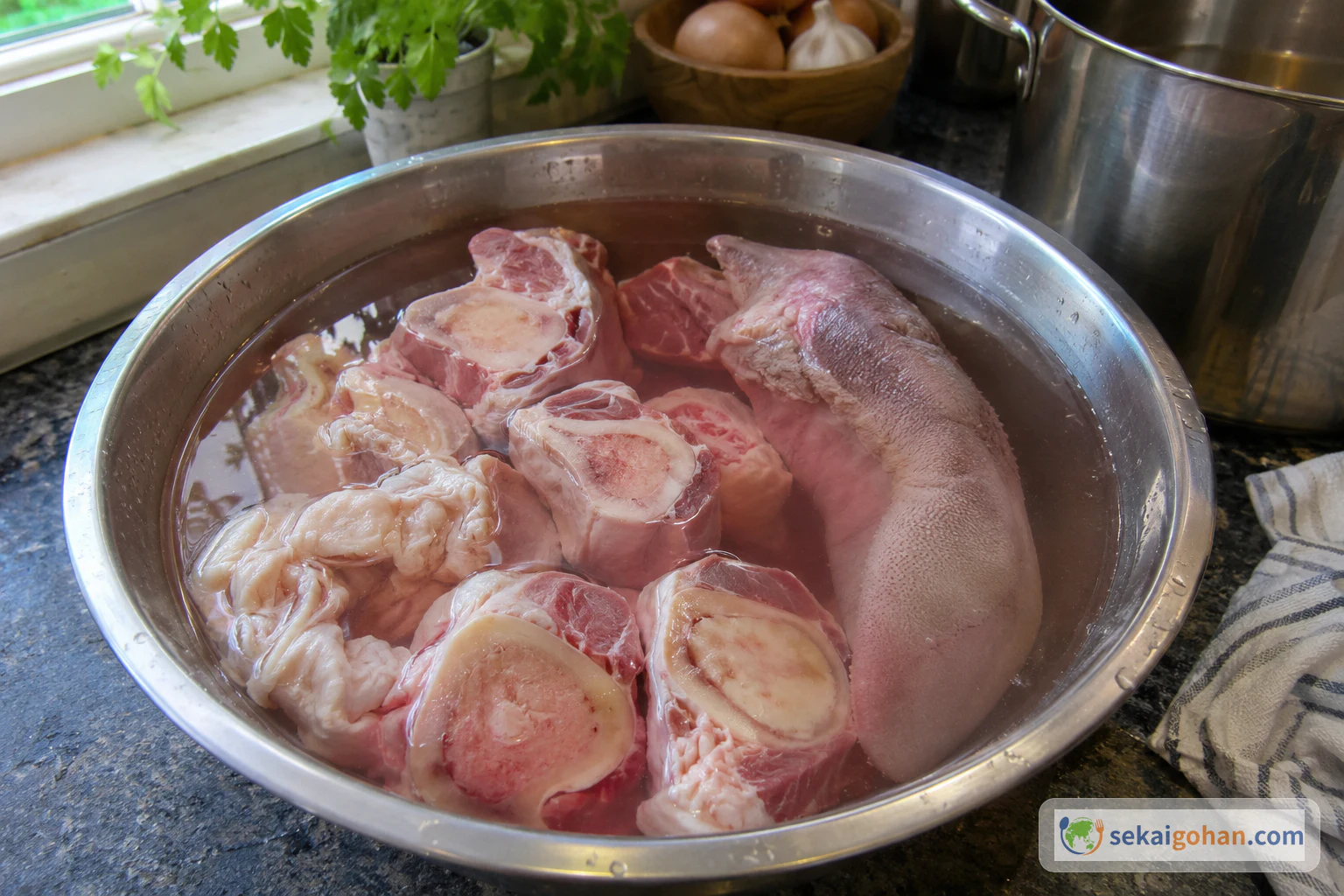
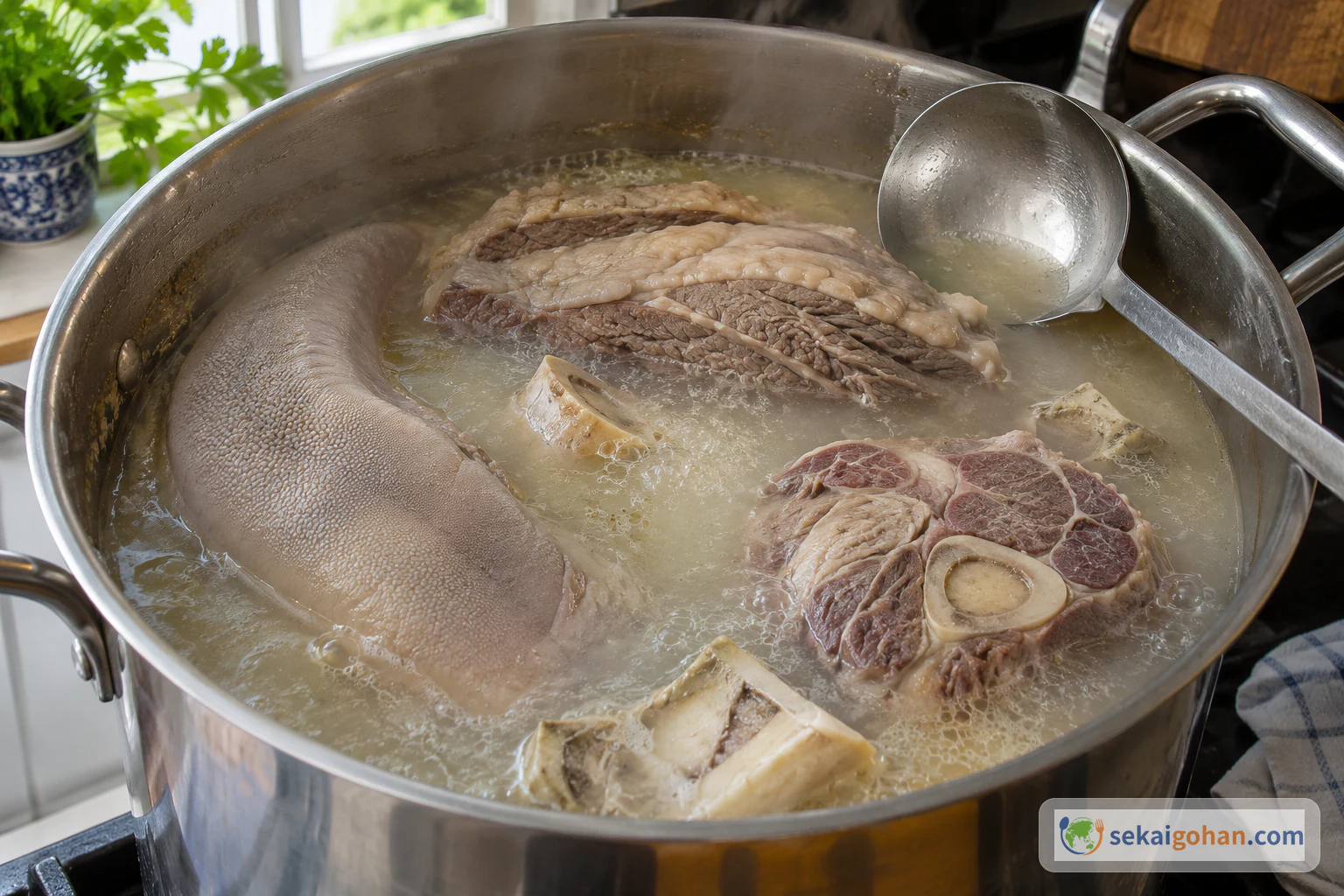
The bones decide everything. Ask a butcher for ox knee or joint bones; the knuckle ends with plenty of cartilage give the most color. The gristle can be beef tendon, knee cartilage or a mix of both; either brings the gelatin that gives the broth its body and makes it set when cold.
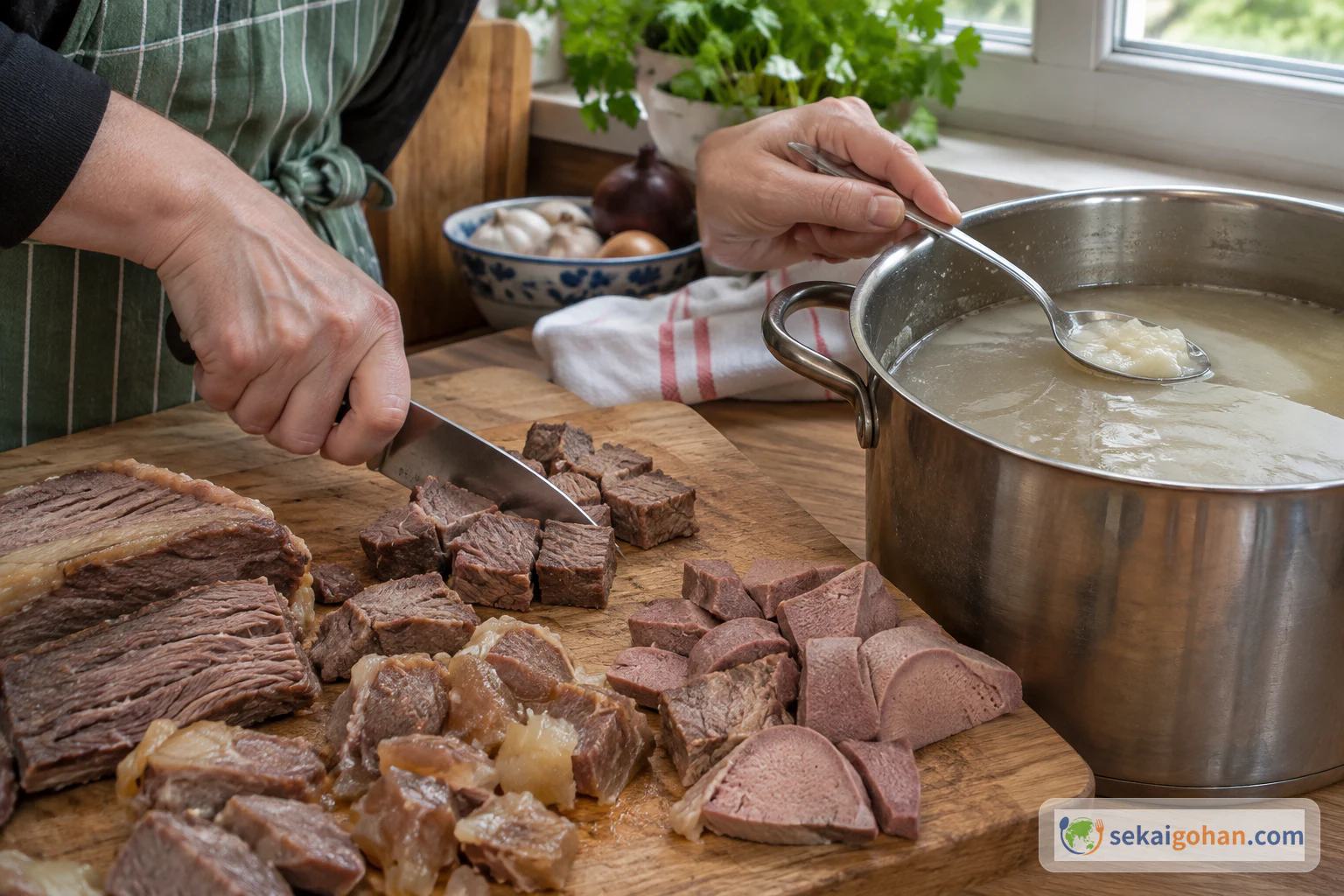
Buy the tongue as a whole piece. Thin-sliced tongue for grilling falls apart over an hour of simmering and turns stringy. For the brisket, a block of beef plate or chuck is a close swap; it stays a little fattier and softer. Shank is easy to find and should stay shank, because its sinews turn tender and slightly sticky, which is the texture you want in the bowl.
| Keep | Can let go |
|---|---|
| Knee or joint bones and gristle, for the white color and body | Brisket can become plate or chuck |
| The blood soak and the parboil, for a clean taste | Chili pepper at the table is optional |
| Salting at the table | Korean coarse salt is nice but any good salt works |
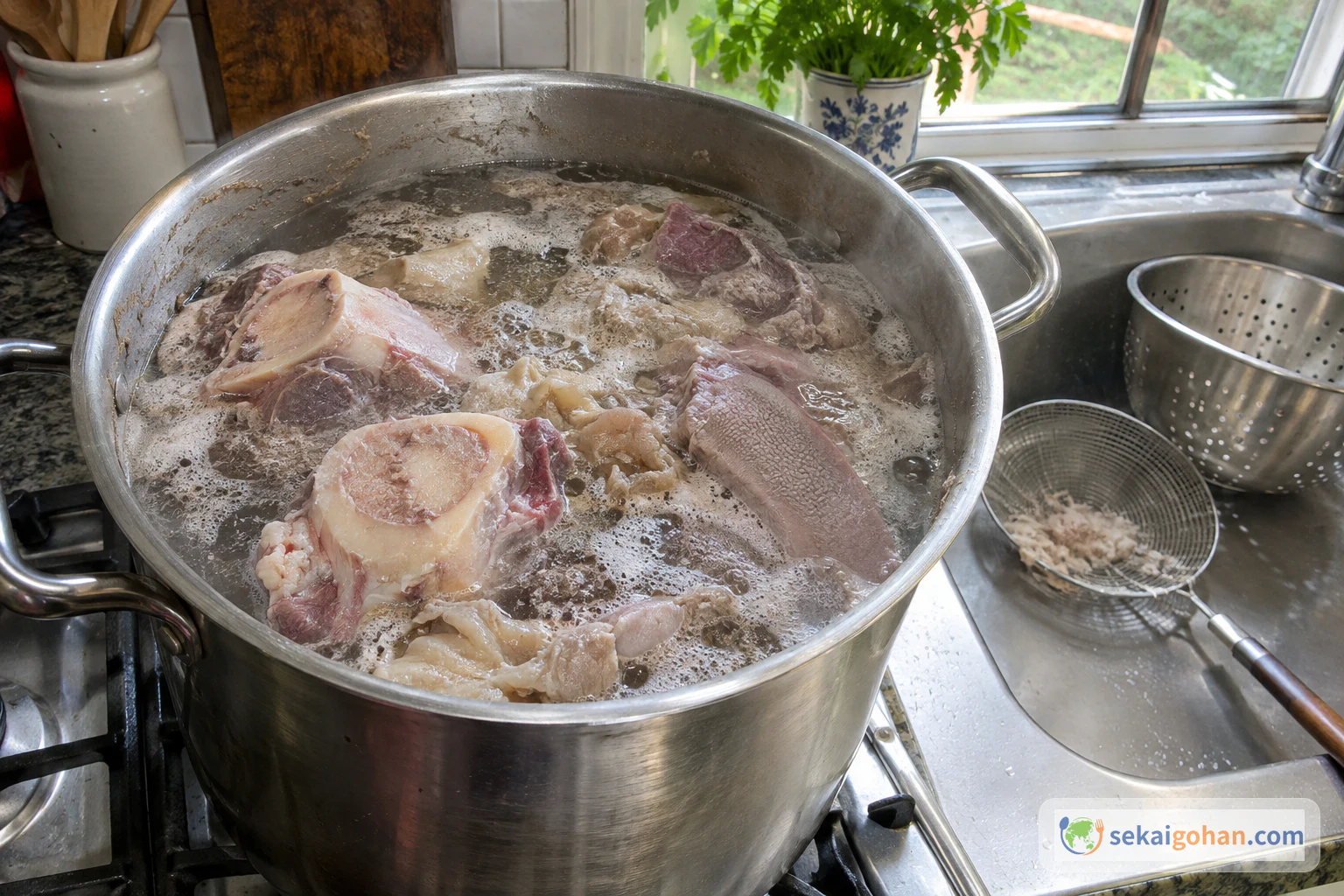
White broth comes from bones rich in cartilage kept at a lively boil. A pot that only barely trembles gives a clear, thinner soup.
Method
The work is front-loaded and then mostly waiting. Start the soak in the morning, parboil, and from there the pot boils on its own for hours while you skim now and then. Prepare the vegetables during the soak so they are ready when the pot calls for them, and plan to be home for the whole day. Sekai Gohan has not cooked this recipe as a whole in its own kitchen, so treat the times and amounts as published guidance and adjust to your pot and stove.
When It Goes Wrong
| What you see | Why | What to do |
|---|---|---|
| A gamey, bloody smell | The soak, parboil or skimming was cut short | Next time, soak fully and boil the first water for the full 5 minutes before discarding it. For this pot, skim hard and let the aromatics cook their full hour |
| The broth stays clear or thin | The heat was too low, or too much water went in | Turn the heat up to a steady rolling boil and let it reduce. Cooking a second batch from the same bones and combining it adds body |
| The broth is greasy | Fat was not removed | Cool the broth until the fat sets and lift it off before the final boil |
| The water dropped below the bones | Long hours of hard boiling | Top up with boiling water, never cold, so the boil does not stop |
| The tongue or beef is tough | It came out too soon | Return it to the pot and keep cooking until it is tender |
Serving, Variations and Storage
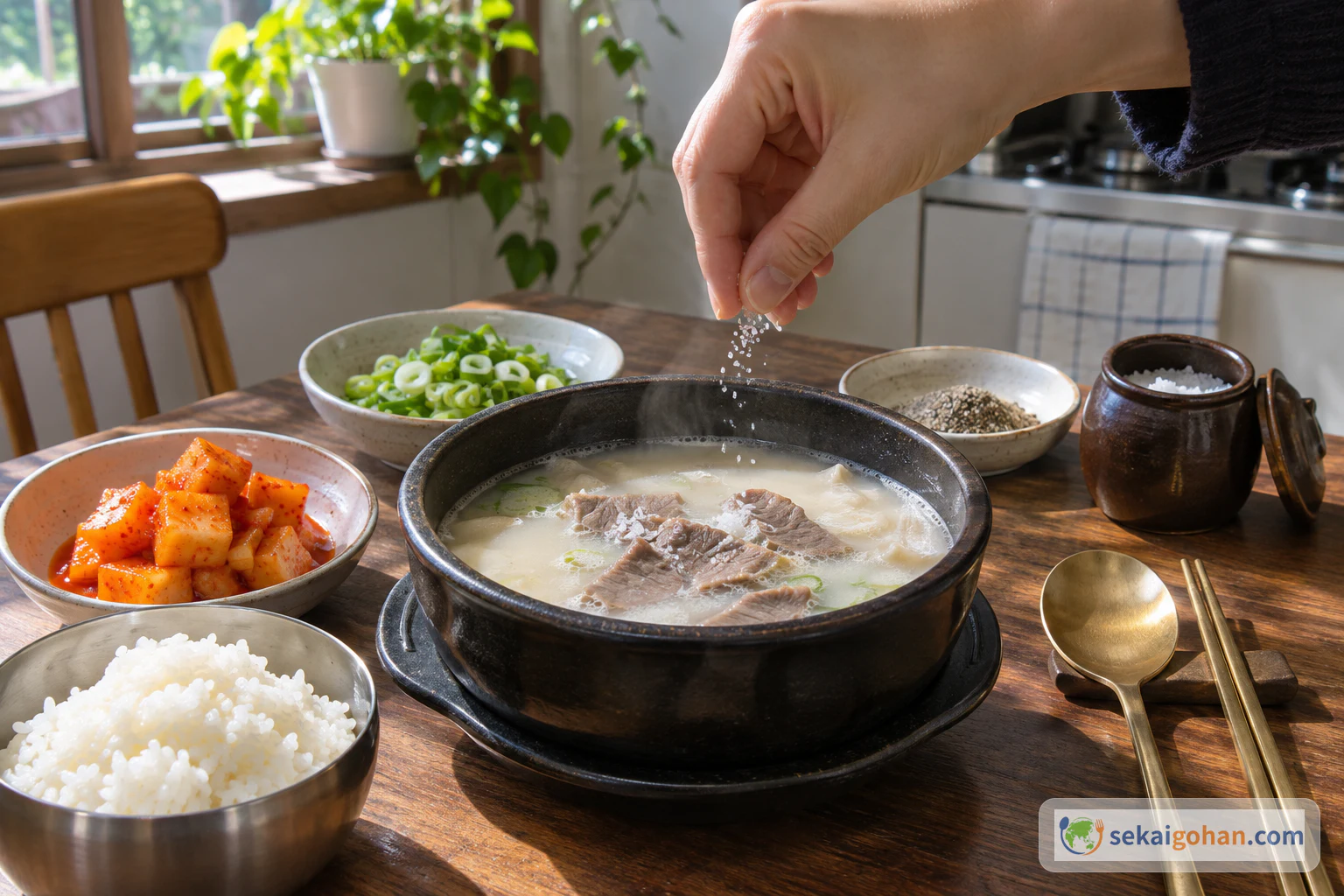
At the table
Seolleongtang is a full meal with rice and kkakdugi, the cubed radish kimchi whose sour crunch balances the soft broth. Put salt, pepper, chili pepper and chopped green onion where everyone can reach them. Salt the broth a pinch at a time and taste between pinches; an unsalted white broth tastes flat, and the right amount of salt suddenly brings out the beef.
Variations
- Thin noodles in the bowl. Cooked somyeon noodles go under the broth with the meat and soak up its flavor, making the bowl heartier.
- A second extraction. After lifting out the broth, cover the same bones with fresh water and boil them again for several hours, then combine both batches. The second batch is milder on its own but adds volume and body.
- Red at the table. A little gochugaru or a splash of kimchi juice stirred into the bowl adds heat and sourness and turns the broth pink.
- Garlic at the table. A small spoon of minced garlic added by each diner gives a sharper, more pungent bowl.
Storage
Cool the broth quickly, divided into smaller containers, then cover it and refrigerate promptly. Keep the meat in its own covered container in the refrigerator. For longer keeping, freeze the broth in freezer bags. To serve, bring the broth back to a full boil before ladling it over the meat.
Frequently asked questions
Why is the broth seasoned at the table instead of in the pot?
Each person likes a different level of salt, and the plain broth lets everyone adjust their own bowl. It also keeps the pot flexible for noodles, kimchi juice or chili. Cook for flavor and color, and leave the final seasoning to the table.
Can I make it with only bones and no tongue?
Yes. The bones and gristle make the broth, so leaving out the tongue still gives you seolleongtang. Add a little more brisket or shank so there is enough meat for each bowl.
My cold broth turned into jelly. Is that right?
That is a good sign. The gelatin from the knee bones and gristle sets the broth when it is cold. It melts back into a smooth soup as soon as it is heated.
Can I spread the cooking over two days?
Yes, as long as the broth never sits out warm. At the end of the first day, cool it quickly in smaller containers, cover and refrigerate it. The next day, lift off the set fat and bring the broth back to a full boil before continuing.