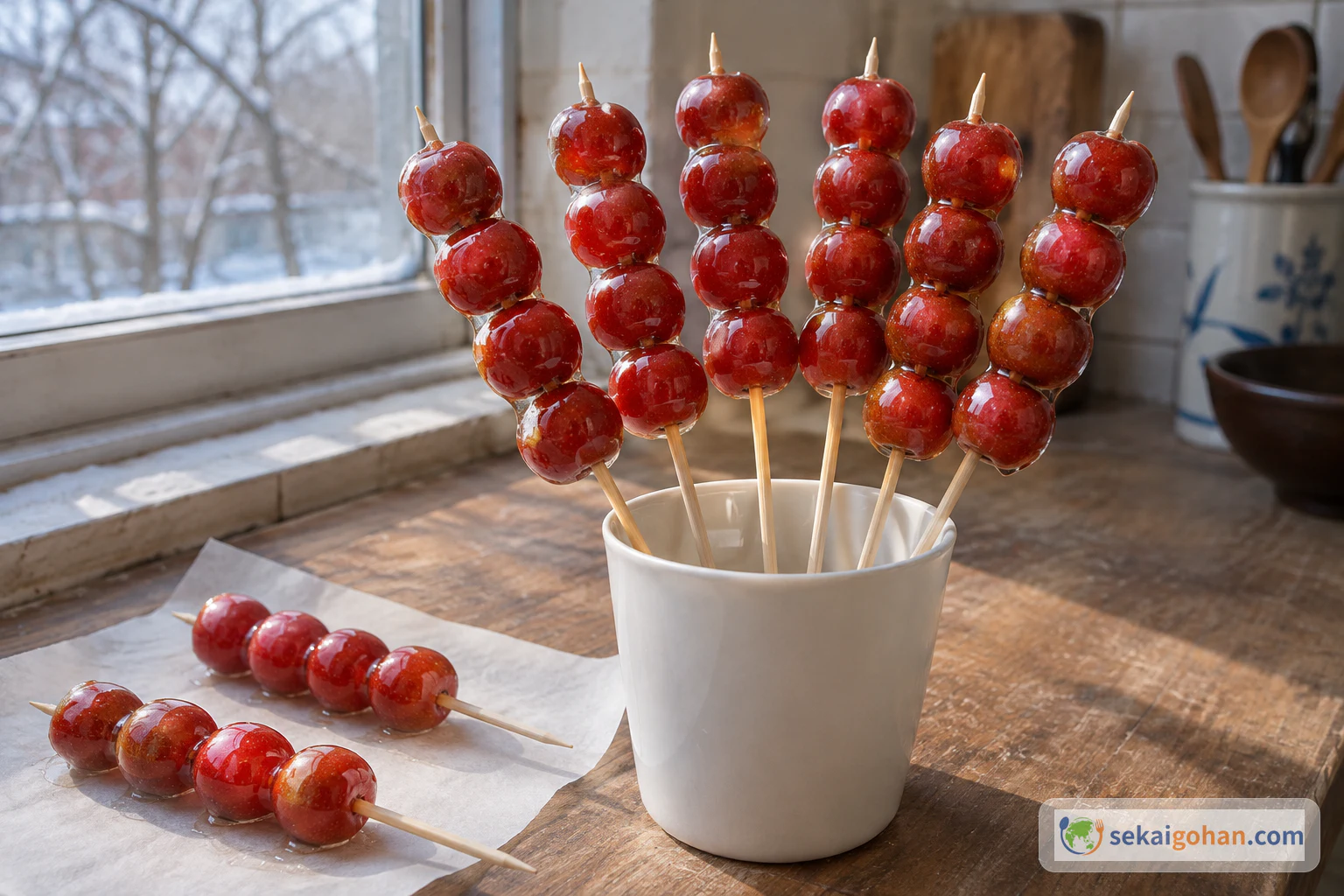
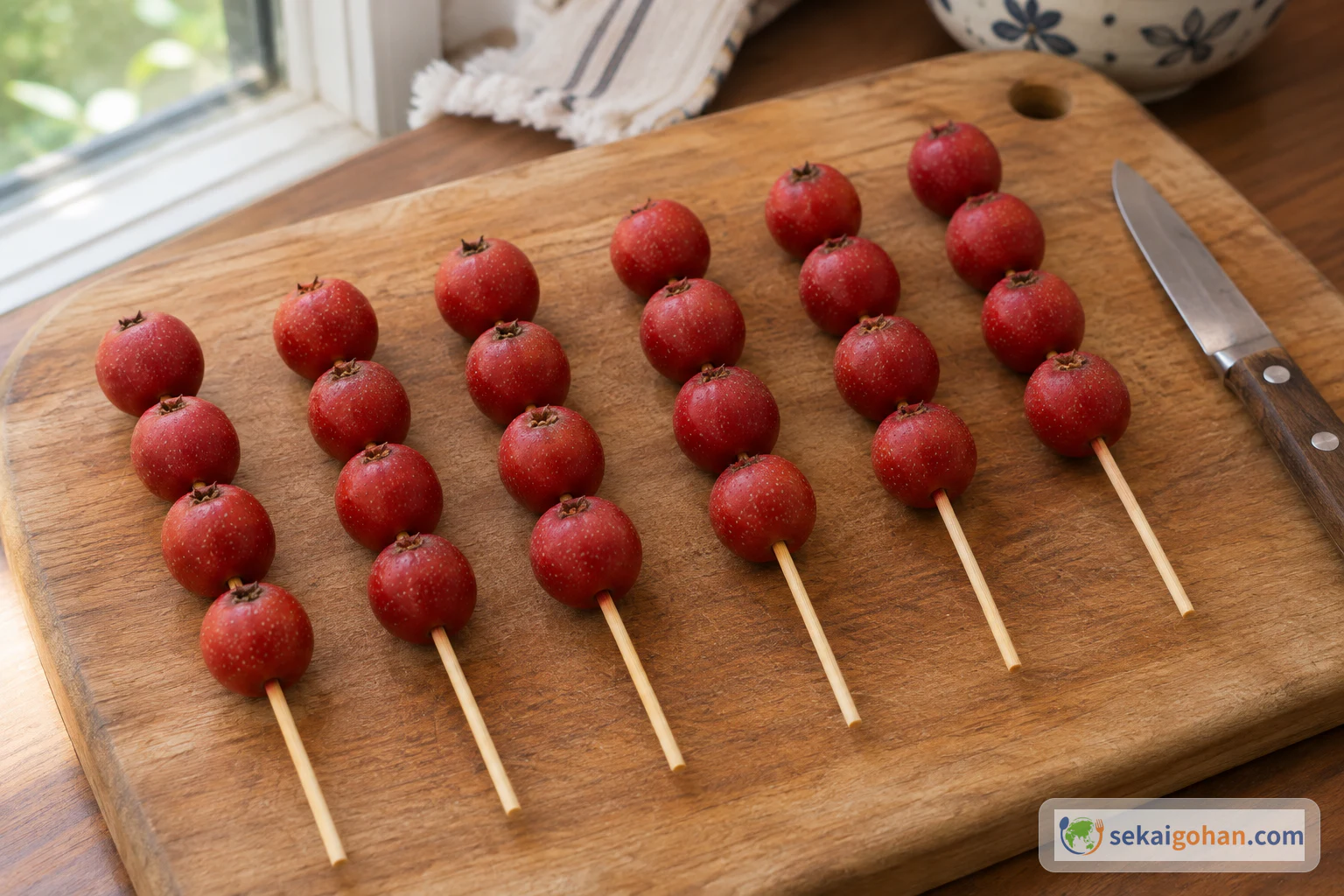
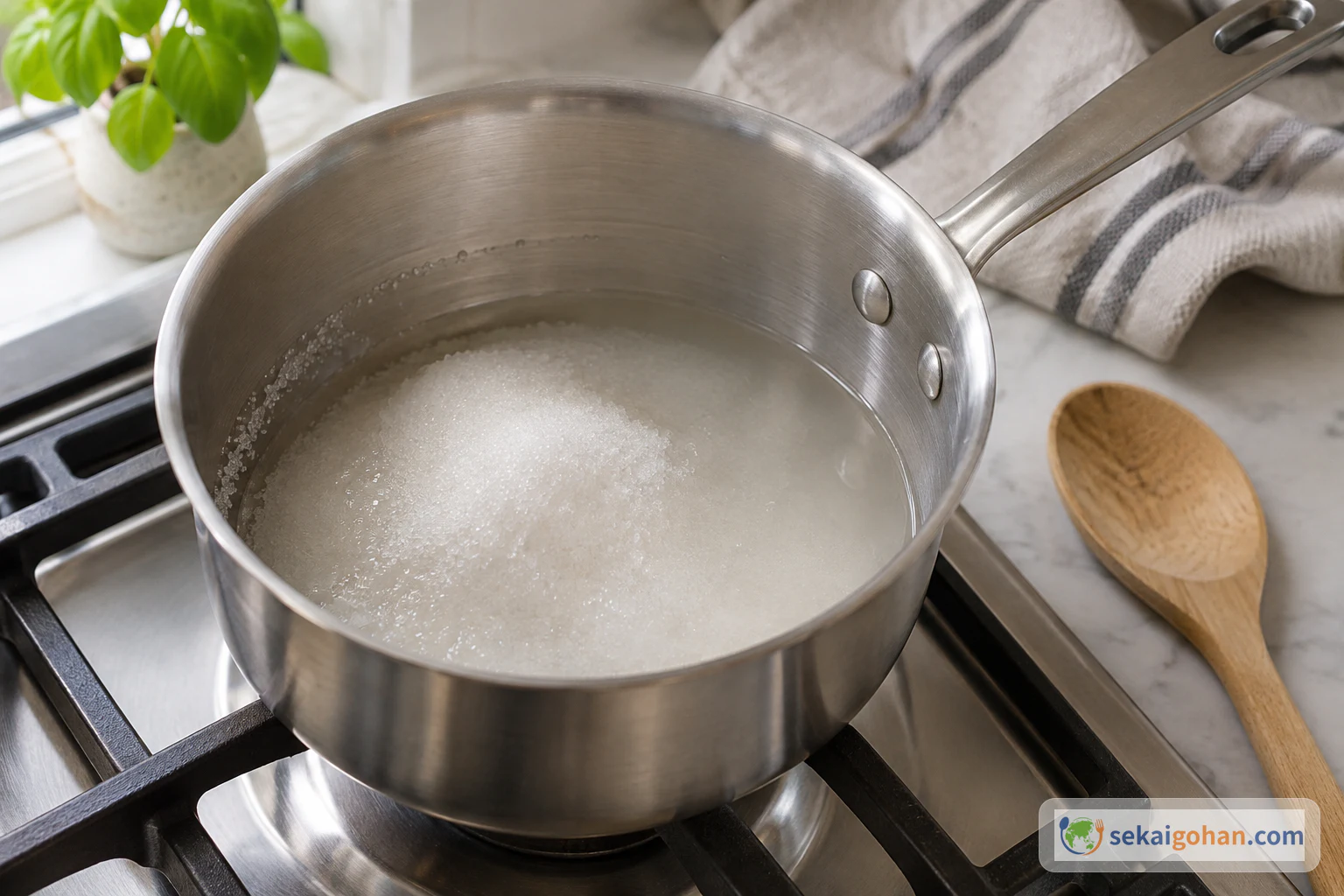
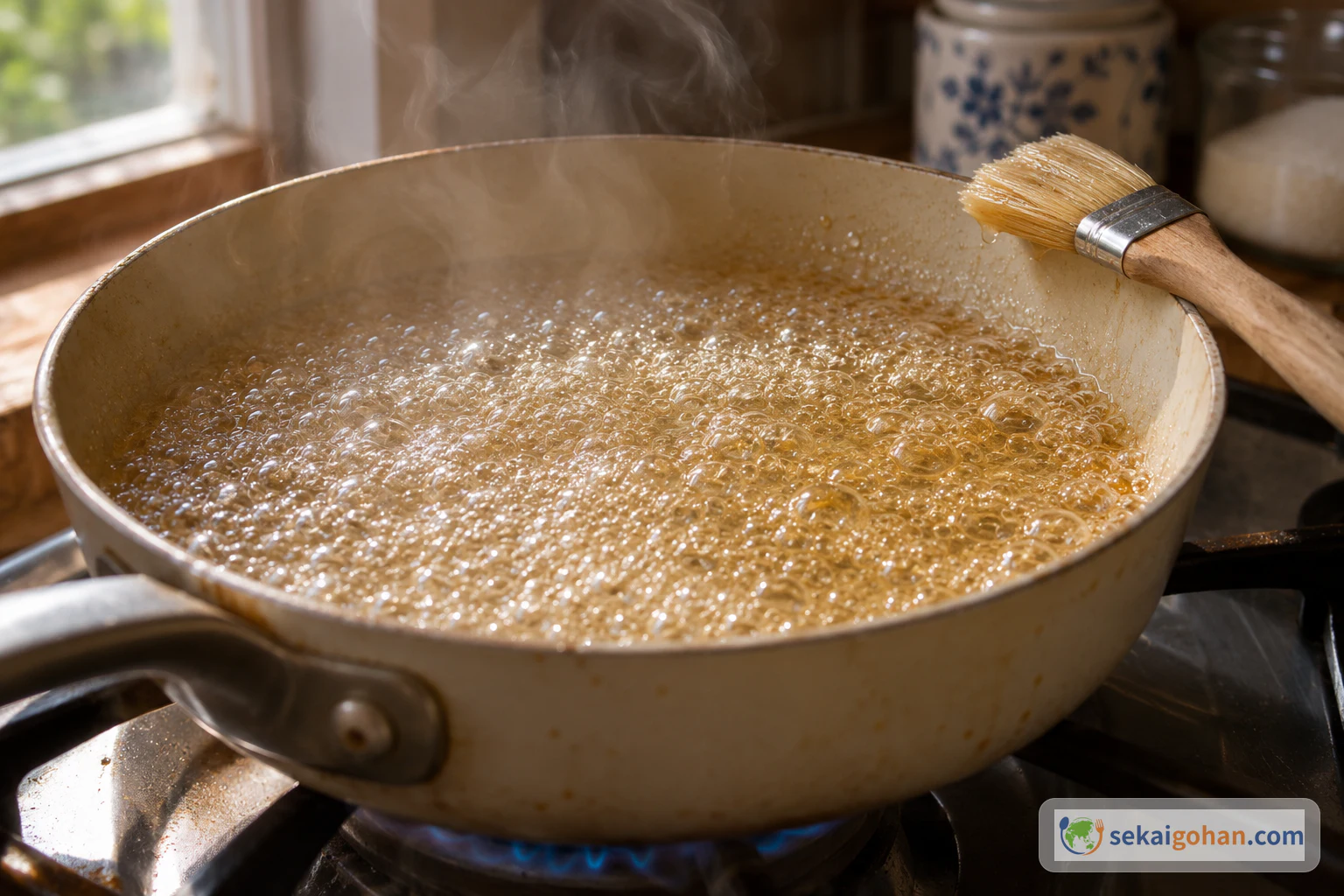
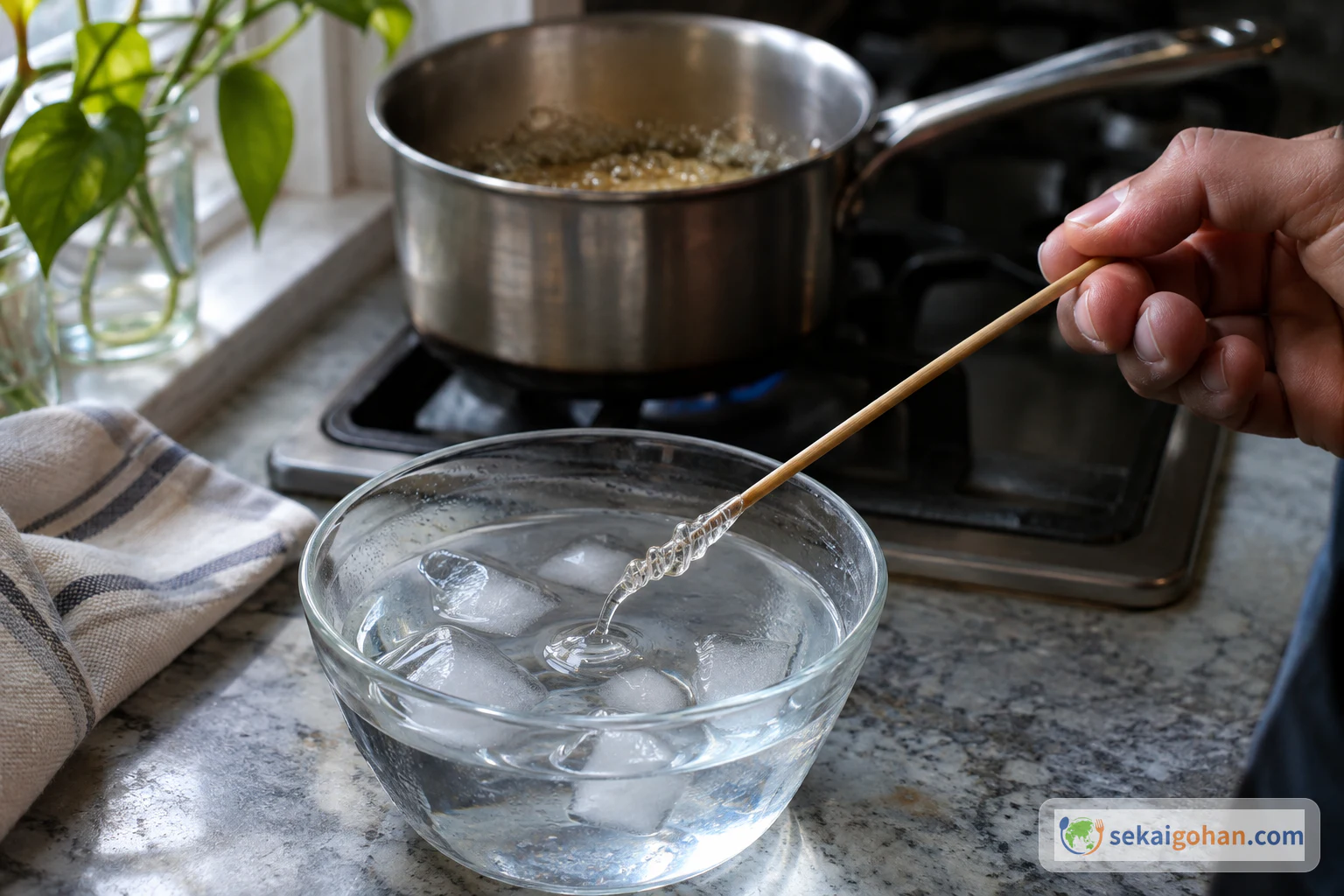
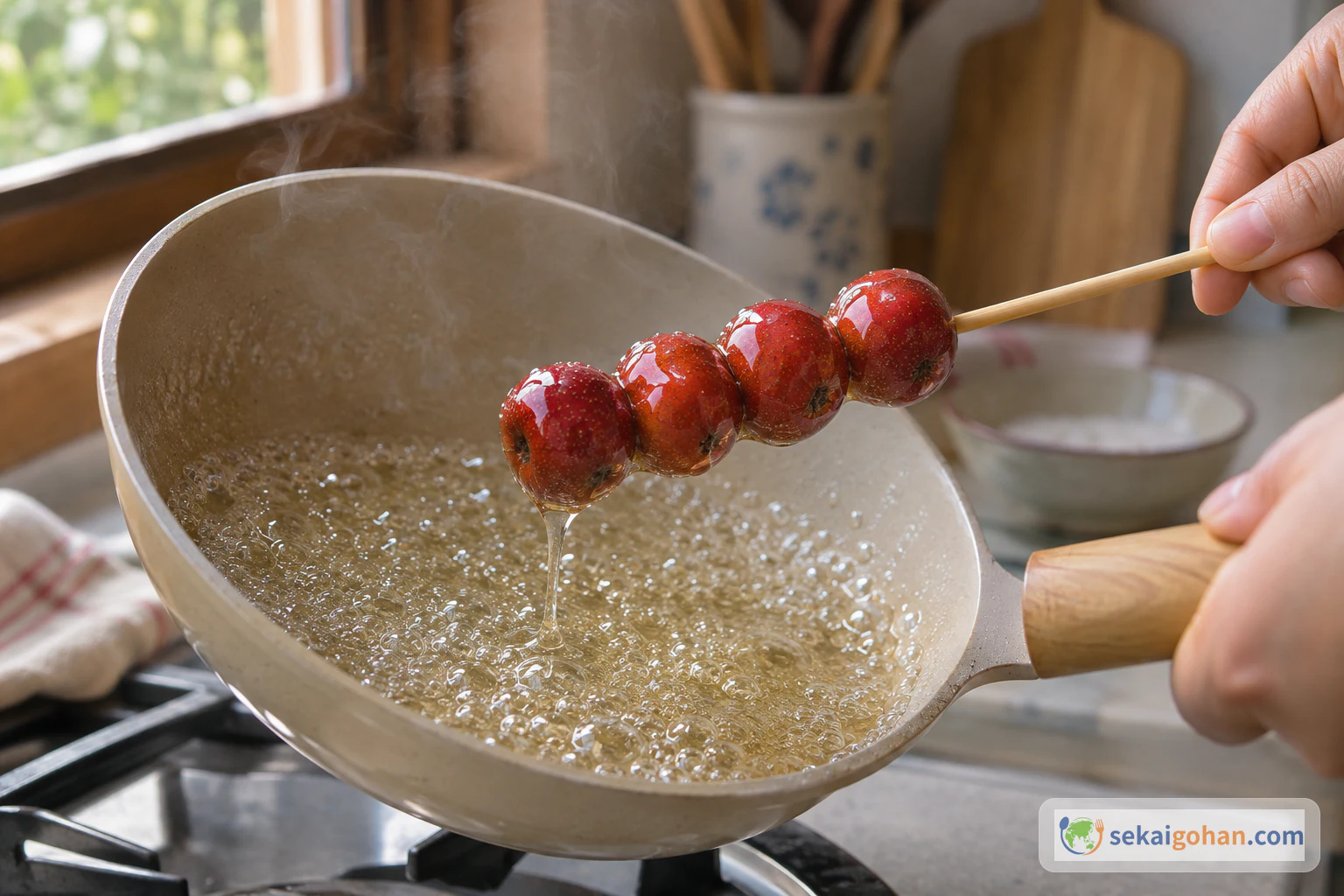
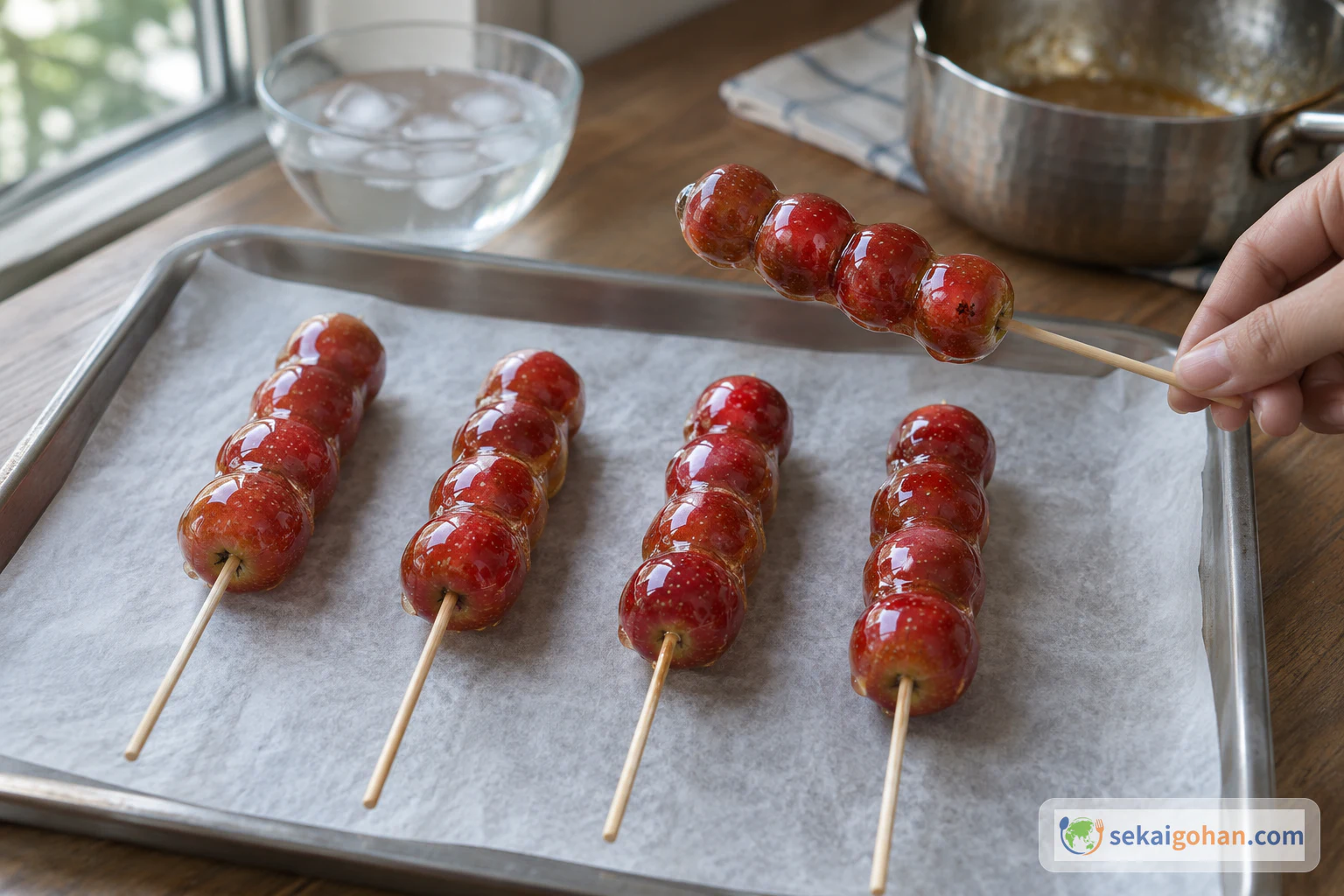
Toward the end of the boil, the bubbles in the pan stop looking like soap froth and turn small, tight and even, and the syrup takes on the faintest yellow. Touch a skewer tip to it, plunge it into iced water, and the sugar comes out hard enough to snap. Tanghulu (糖葫芦) depends on that moment: red hawthorn berries on a bamboo skewer, rolled once through the syrup so each one wears a thin, glassy shell. It is a winter street sweet of northern China, and the first bite is a crack of sugar followed by hawthorn sour enough to make the sweetness taste clean.
Red Skewers on a Cold Street Corner
In Beijing in winter, skewers of red hawthorn are sold on street corners, and hawthorn is the oldest form of the sweet. Vendors set freshly coated skewers on a board and let the cold air harden the shells, so the northern winter has always done part of the work. One account traces the name back to the Southern Song dynasty, though how and where it began is uncertain. Old Beijing shop names tied to tanghulu include Furenquan, Jiulongzhai, Xinyuanzhai and Quanfu De.
The pairing works on the tongue for a reason: sugar softens the sharp acid of hawthorn, and the fruit keeps the sugar from turning cloying. Street versions now also come with strawberries, banana, orange and honey dates, and some sellers coat Chinese yam, walnuts or mandarin. Canteens at China Agricultural University turn out pineapple, kiwi, mandarin and cherry skewers, with hawthorn, strawberry and fig the favourites, and there are metre-long skewers and rose-shaped versions too. In winter 2025 a version layered with milk skin became such a craze in Beijing that buying advice went out to shoppers in the city.
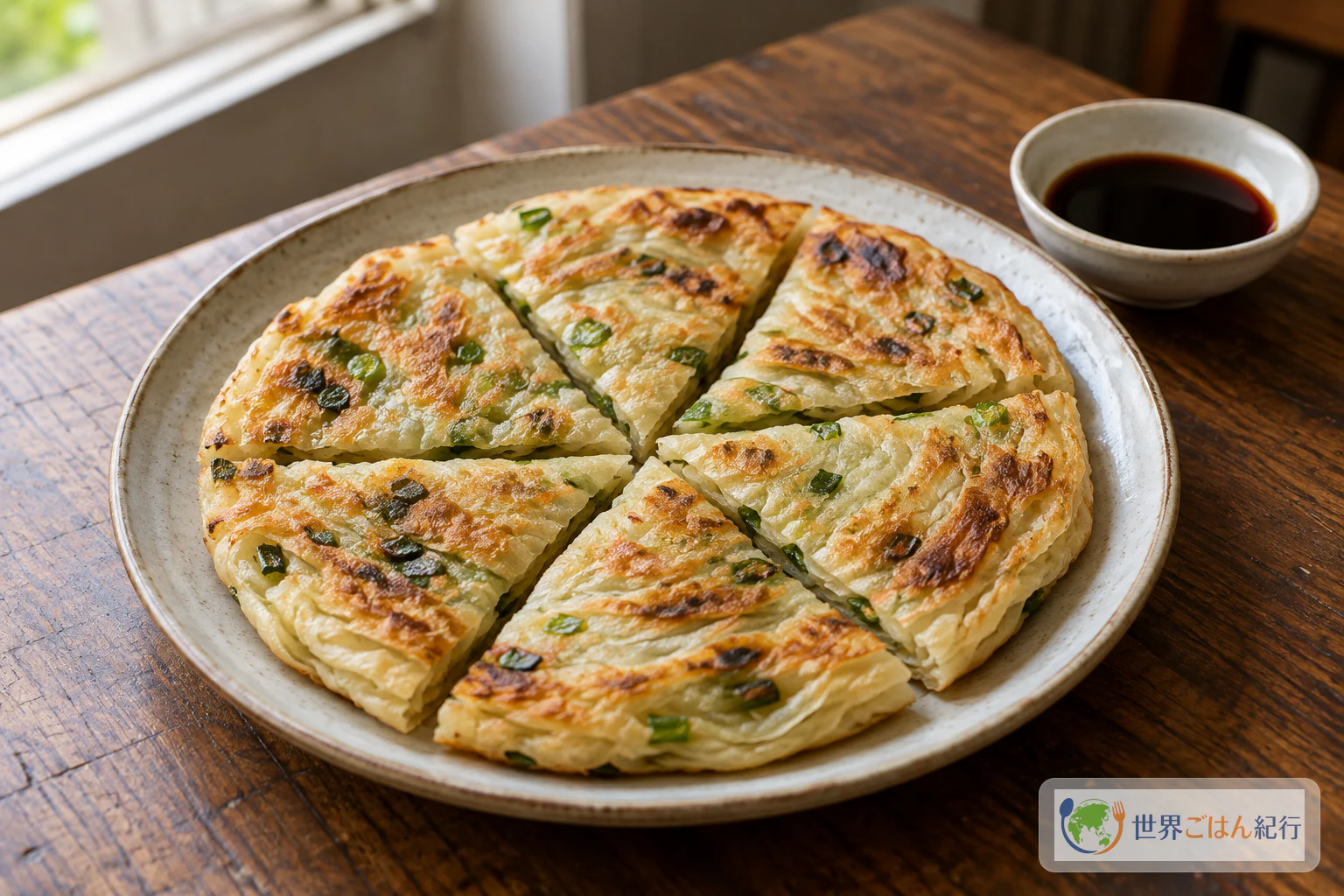
Tanghulu sits at the light end of Chinese cooking, and it shares a stall-side spirit with Korea's hotteok. Where hotteok is a dough, tanghulu is nothing but fruit, sugar, water and a pan heated far past boiling.
糖葫芦 (táng húlu, traditional 糖葫蘆) is the everyday name; 冰糖葫芦 (bīngtáng húlu) is the fuller one. In Tianjin the same skewer is called 糖墩儿 (tángdūnr).
Same Sugar, a Different Sweet
Take the same hawthorn, sugar and water, but pull the pan off the heat the moment the sugar dissolves, then toss the fruit in it until it cools, and you get 糖雪球 (táng xuěqiú): berries in a white, frosty crust. The sugar crystallises instead of setting into glass. Tanghulu needs the syrup cooked on until the bubbles turn fine and even and the colour goes faintly yellow. Temperature decides which sweet you end up with, and that is the whole craft of this recipe.
Ingredients
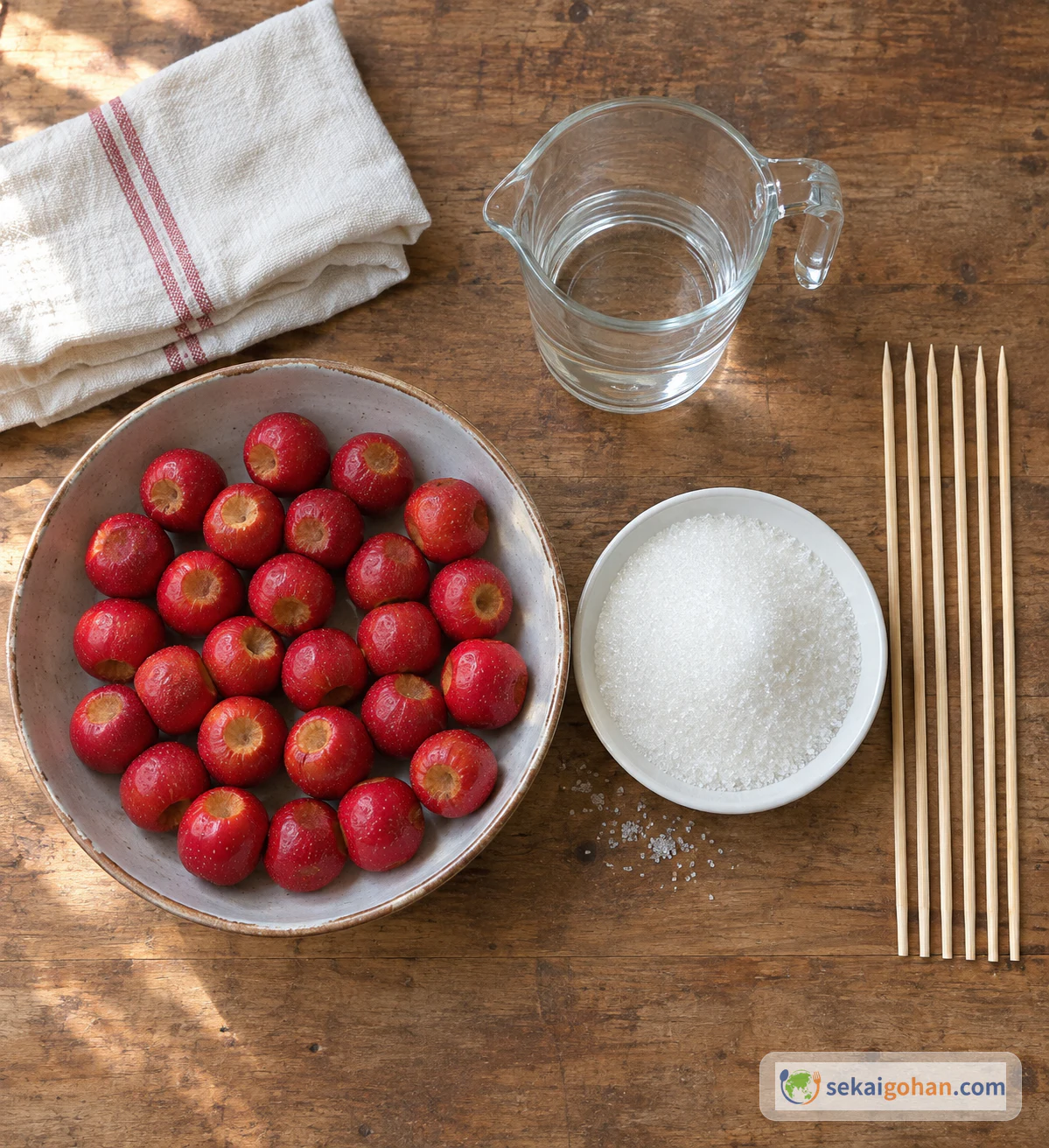
The syrup is a 2:1 ratio of sugar to water by weight. Weigh the water rather than using a cup, so the ratio holds. This batch makes more syrup than six skewers carry, which keeps it deep enough to coat smoothly to the last skewer.
The classic skewer is fruit, sugar and water only. The milk-skin version adds dairy and lactose. Anyone allergic to a substitute fruit such as strawberries or grapes should choose a different fruit. Tanghulu is very high in sugar, so people with diabetes should keep to a small amount.
Equipment
- A shallow, light-coloured saucepan, so you can see the syrup change colour
- 6 bamboo skewers
- A candy thermometer (optional; the cold-water test works without one)
- A small bowl of iced water
- A pastry brush and a cup of water
- A silicone mat, or parchment on a tray
- Clean kitchen towels or paper towels
- A small cherry pitter or a paring knife for the hawthorn
Choosing the Fruit
Fresh hawthorn can be hard to track down outside China. The hawthorn products we found on sale abroad were candied: strips already made with sugar. Candied hawthorn will not work. It holds the wrong amount of moisture and has the wrong shape, and its sugar is already part of it, so it cannot take a clean glass shell.
When fresh hawthorn is out of reach, other fruit carries the same syrup without any change to the ratio or the temperature.
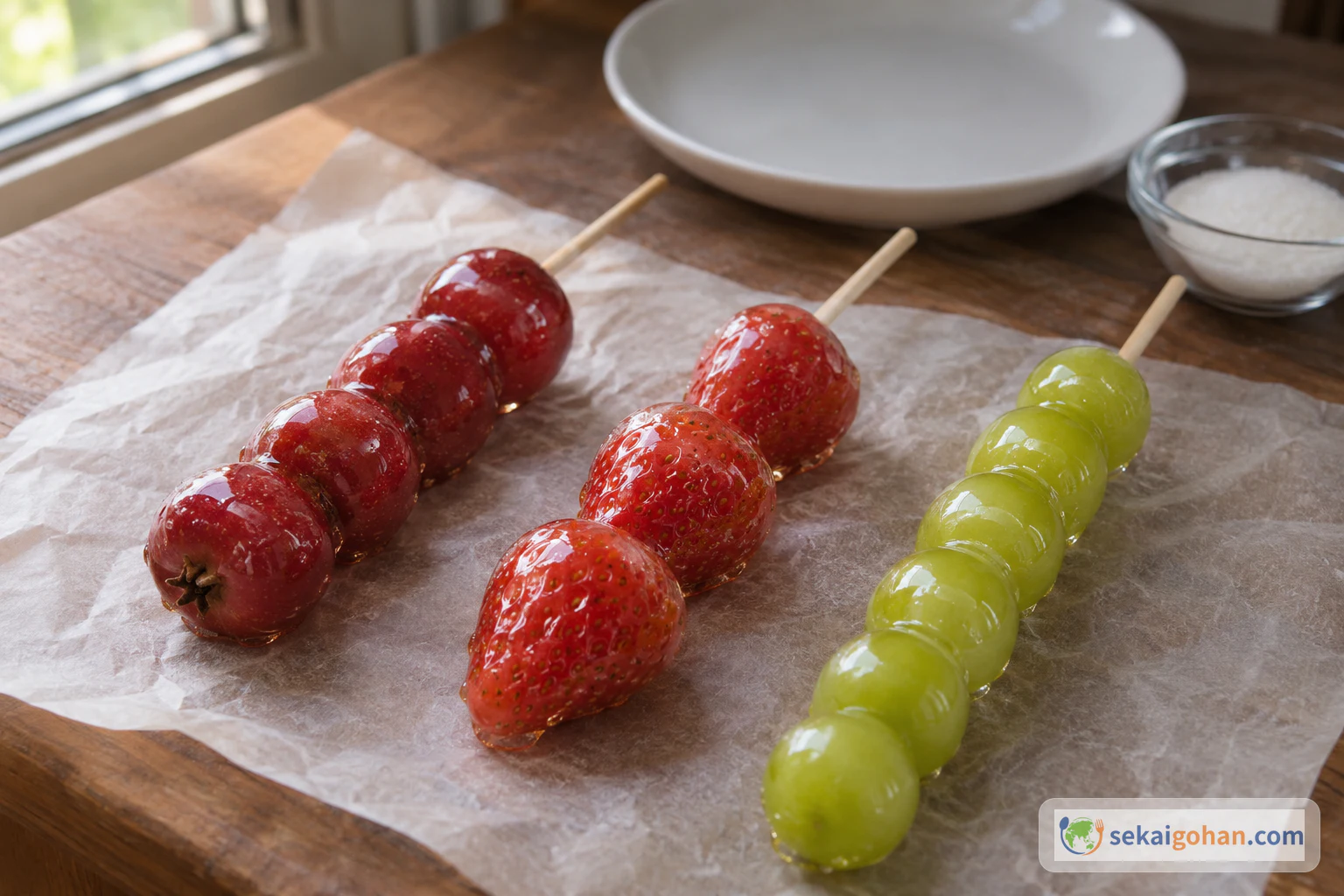
| Fruit | Preparation | What changes |
|---|---|---|
| Strawberries | Hull them; with medium or large berries, thread 3 per skewer | Softer acid and juicier flesh; the wettest choice, so drying is critical |
| Seedless grapes | Pull off the stems, keep the skin on, dry the stem scar | Sweeter, with a springy skin that pops under the shell |
| Mandarin segments | Remove the thin membrane and white threads | Fragrant and mild in acid |
| Apple cubes | Cut out the core and seeds, pat the cut faces dry | Firmer, with real chew |
| Blackberries | Wipe dry; leave them whole | Tart and dark, close to hawthorn in spirit |
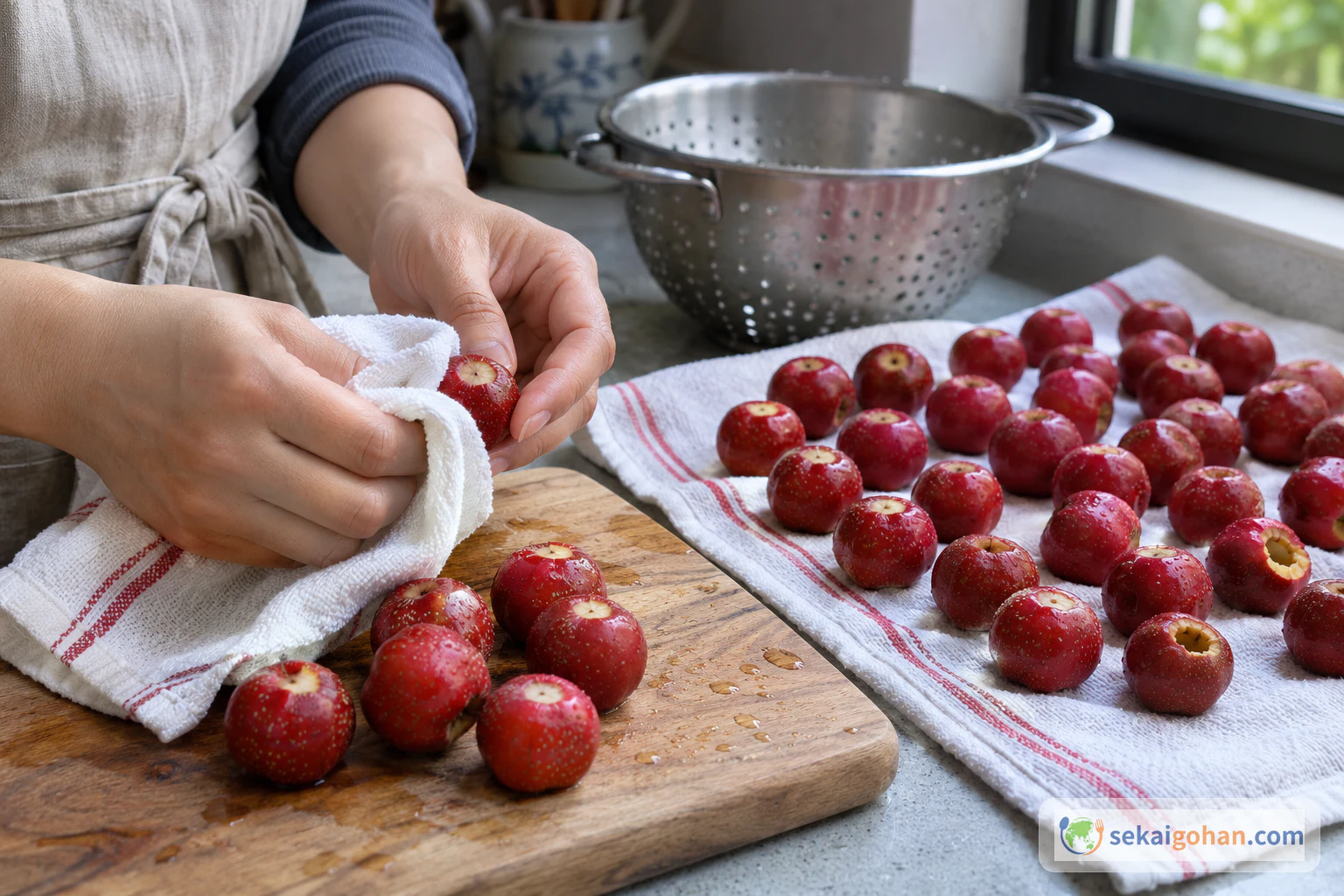
Any water on the fruit ruins the coating. It loosens the shell, clouds it and turns it sticky. Every piece should feel matte and dry to the touch before it meets the syrup, including the cut face of apple and the stem end of a grape.
Method: Syrup to 300°F, One Thin Pass
The fruit comes first because it needs time to dry, and that drying is the only hands-off stretch. Skewer everything before you light the stove; once the syrup is ready it will not wait. Set the bowl of iced water and the lined tray beside the burner so you can move straight from pan to tray. Choose a dry day or an air-conditioned room: sugar pulls moisture from damp air, and the shell softens.
Syrup at 300°F (150°C) is far hotter than boiling water and clings to skin. Keep children away from the stove, especially when you tilt the pan, and let an adult hold the skewers. Keep iced water within reach, and if syrup touches skin, cool the burn under cold running water right away.
When It Goes Wrong
| What you see | Why | What to do |
|---|---|---|
| The shell is sticky or pulls into threads | The syrup stopped short of hard crack, the fruit was damp, or the air is humid | Boil a minute longer and repeat the cold-water test until it snaps clean; dry the fruit fully |
| The coating is white and sandy | The syrup was stirred after boiling, or crystals from the pan wall fell in | Swirl instead of stirring, brush the walls down, and make a fresh batch |
| The shell is thick and lumpy | The skewer was dipped twice or sunk into the syrup | Tilt the pan and make one quick pass across the surface |
| The shell is cloudy and juice beads underneath | The fruit sat in the hot syrup and started to weep | Coat only the outside; keep the fruit above the pool |
| The syrup stiffens in the pan halfway through | It cooled as you worked | Warm it over low heat until it flows again |
| Berries spin or slide in the syrup | They were twisted after threading | Thread each berry once and leave it |
The first few skewers from a pot always coat thinnest. Later ones go on heavier as the syrup cools and begins to crystallise, so coat the skewers you care most about first.
At the Table, and How Long It Keeps
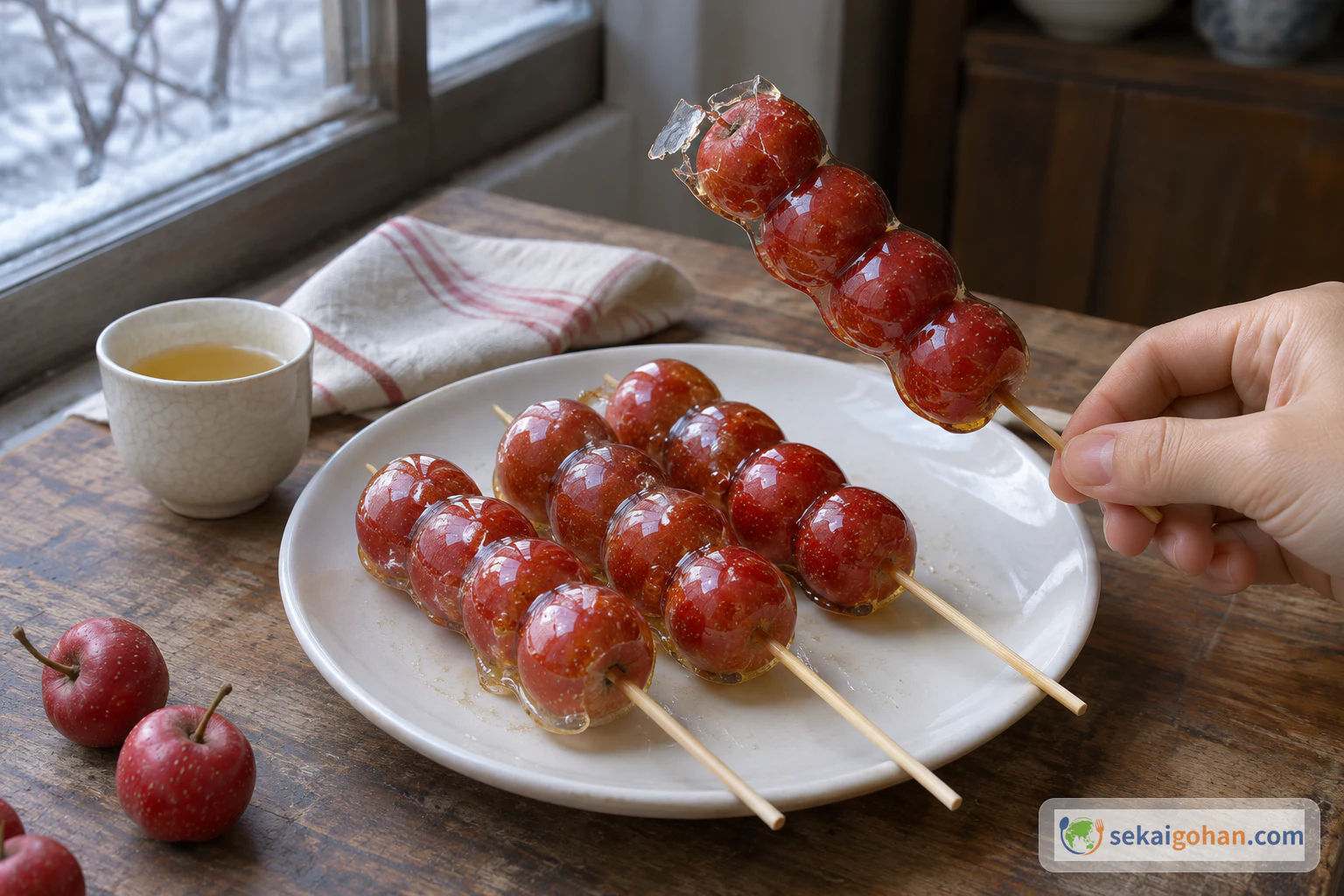
At the table
Serve tanghulu as soon as the shells are cold, held by the skewer and eaten standing at the counter or passed around the table. A cup of warm Chinese tea suits the sharp-sweet bite. At home it makes a bright finish after a steamed meal such as xiaolongbao, and it is a sweet for eating on the spot, not for packing.
The milk-skin version
The winter-2025 Beijing craze wraps or layers the hawthorn with milk skin (奶皮子), and some versions add yogurt. It turns the skewer rich and creamy against the fruit's acid. It also brings in dairy and lactose, so anyone sensitive to lactose should start with a small amount and anyone with a milk allergy should skip it.
Keeping and safety
Heat and damp both melt the shell, so eat it the same day. To hold skewers for a short while, wrap them loosely in a paper bag and keep them somewhere cool and dry. Opinions split on the fridge: some keep the bagged skewers chilled, while others find fridge moisture turns the shell sticky. Never eat skewers left out uncovered overnight, and discard any with fruit that smells off.
Shards of sugar shell and any missed hawthorn pit can choke a child, so pit every berry and stay with children while they eat. Have them sit down with their skewer rather than walk or run, since the bamboo tip is sharp. Children should eat small amounts, and everyone should rinse their mouth with water afterward to protect their teeth.
Frequently Asked Questions
Can I use rock sugar or brown sugar instead of granulated?
Stick with granulated white sugar. Rock sugar and light brown sugars change how clear and how hard the shell sets. White sugar gives the transparent glass that lets the red fruit show through.
Can children help make it?
Yes, with clear roles. An adult handles the hot syrup, tilts the pan and coats the skewers. Children can wash and dry fruit before the stove goes on, take the cooled skewers from the tray and help clean up.
How many skewers can one pot of syrup handle?
One pot comfortably coats four to six skewers, which is why this batch makes six. Beyond that, the syrup cools and starts to crystallise faster than you can rewarm it. For more skewers, make a second fresh batch rather than stretching the first.
Why not use banana, mango or watermelon?
They are too soft and too wet. The juice seeps into the hot syrup and the flesh slumps under the weight of the shell, so the coating will not set cleanly. Firm, fairly dry fruit holds up best.