Bratwurst: Browned Edges, Marjoram and a Piece of Bread
Keep the pork fat, the marjoram aroma and the browned surface from the grill. Keep the mince cold while you work, and confirm that the center of the ground pork is fully cooked.
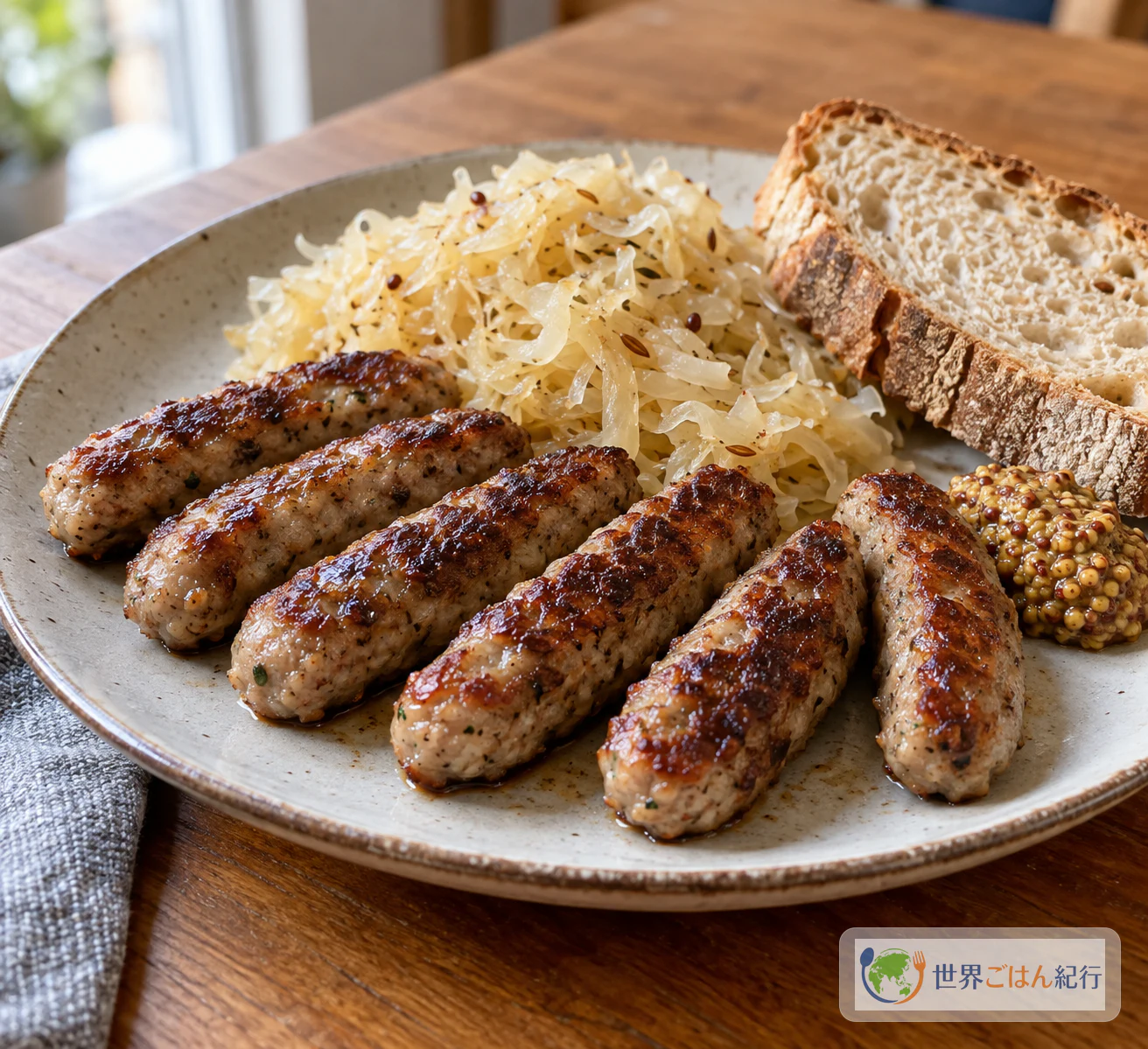
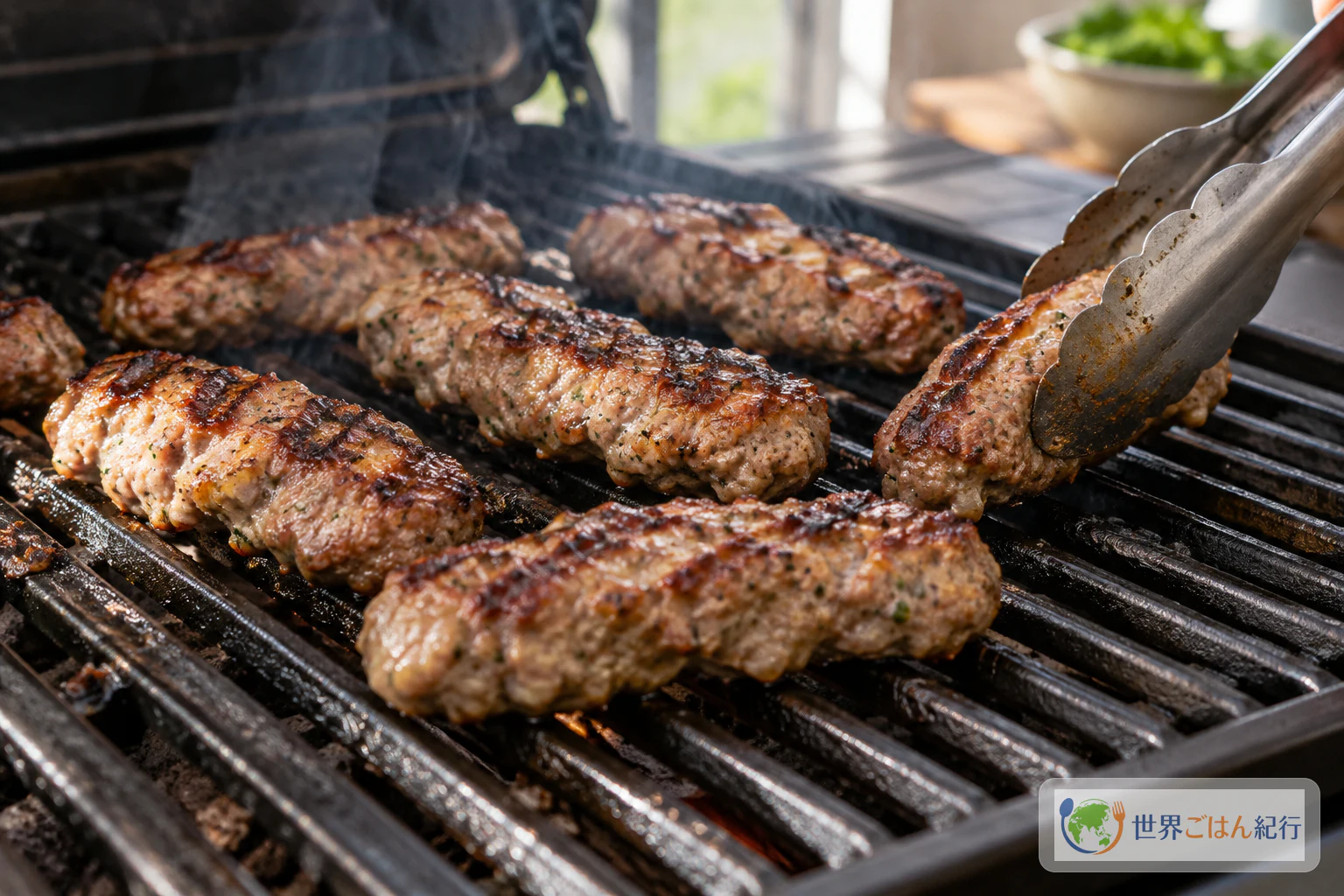
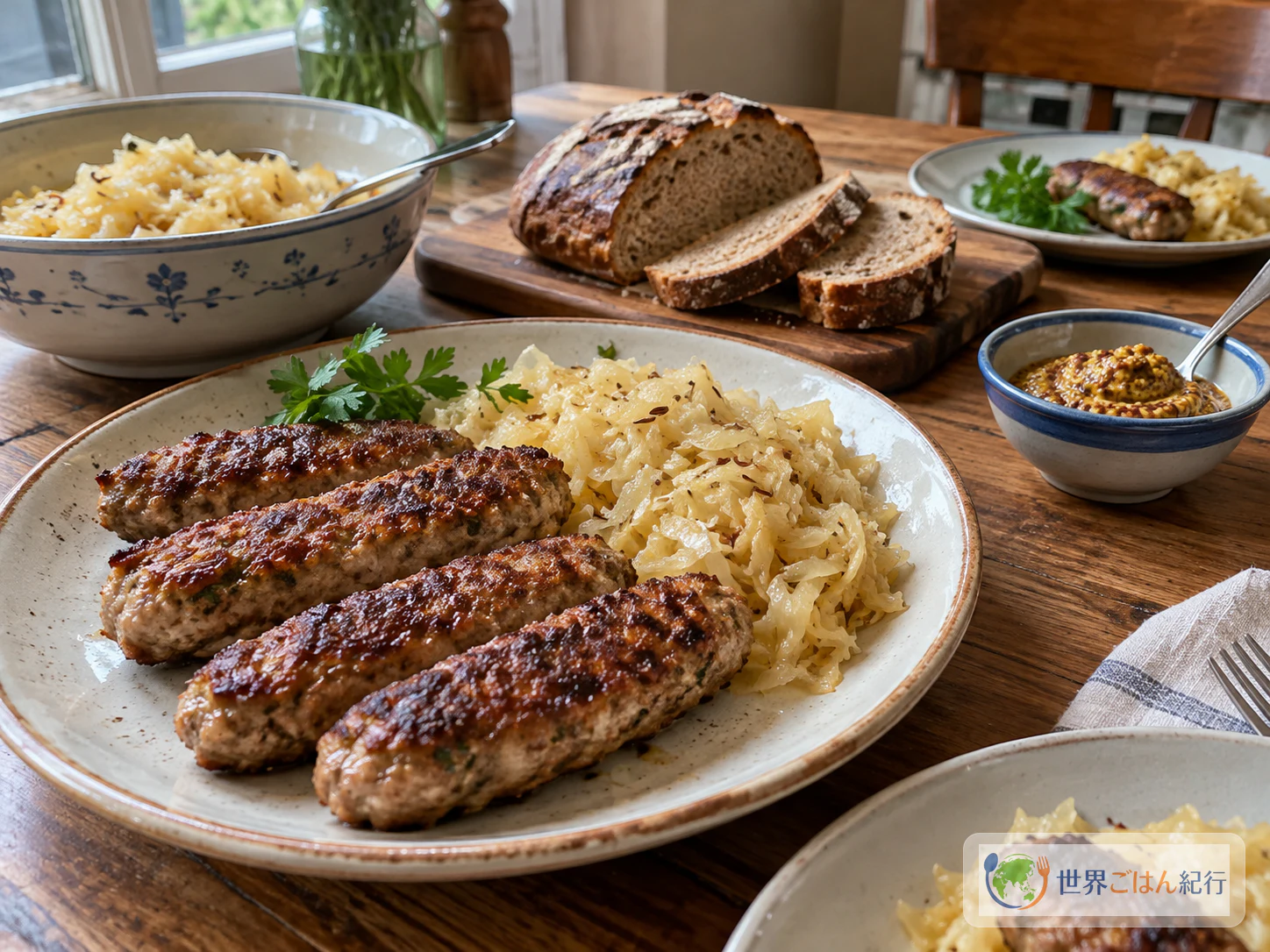
Small sausages brown on the grill until their surfaces turn golden. Then they go into bread with mustard, with sauerkraut on the side. In Nuremberg, the tourist office describes the local sausages being grilled over beechwood and served with mustard or horseradish, sauerkraut, potato salad and regional bread. Bratwurst is not one fixed recipe. The name covers German grilled sausages, and their size, meat, spicing and serving style change from place to place.
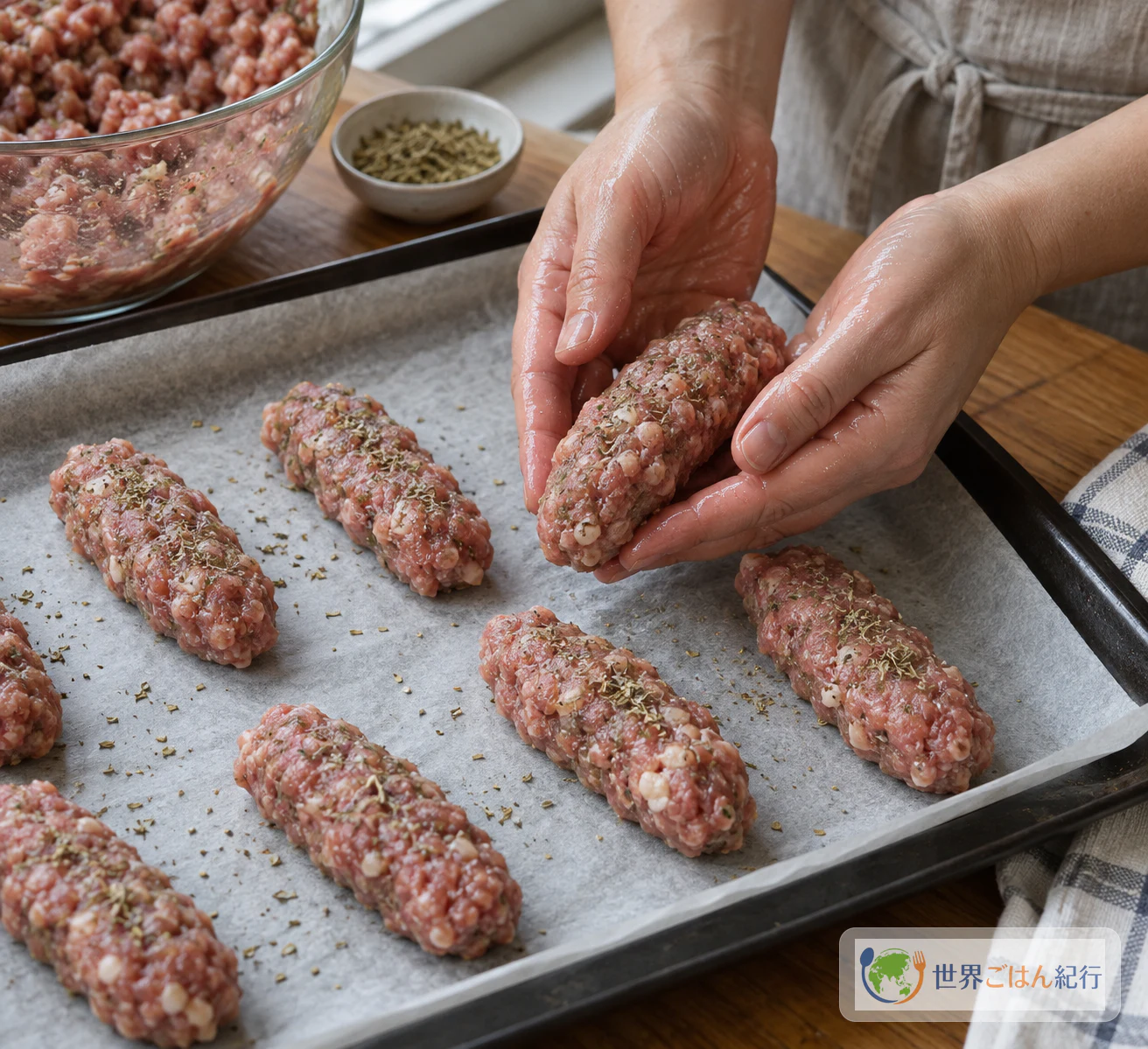
This article takes its aroma from a Nuremberg-style blend and turns it into a pork mixture you can make in an ordinary kitchen. You shape it into slim, finger-thick patties instead of stuffing it into casings. The flavor follows the same ideas: pork with plenty of fat, marjoram and a well-browned surface. However, without casings it does not have a sausage's snap, and it is not the protected Nuremberg product.
Nürnberger Rostbratwurst is a protected name in the EU. It applies only to sausages made within the city of Nuremberg according to the set recipe. The homemade patties in this article are a simplified home recipe inspired by that style and should not be called by that name.
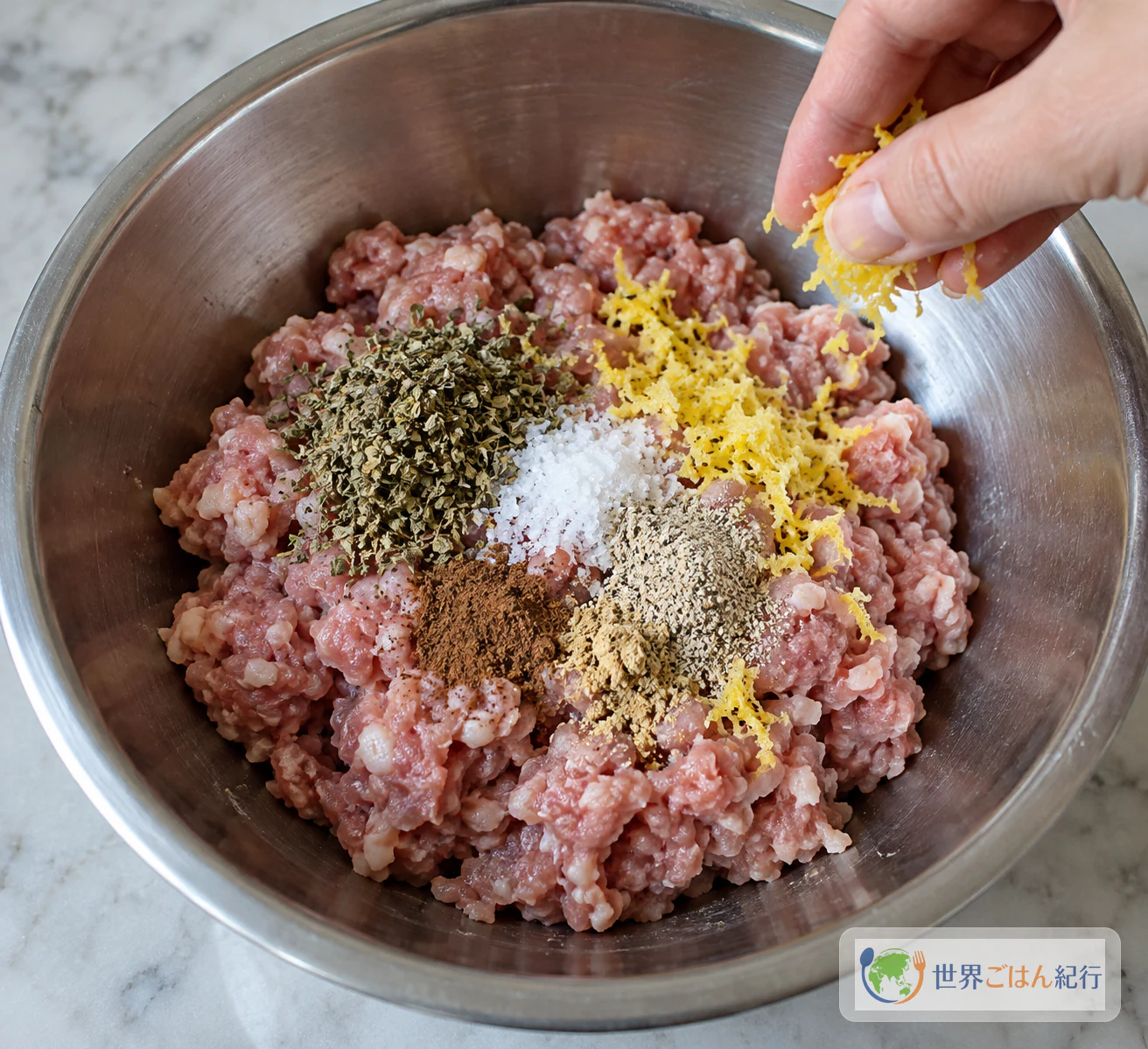
Ingredients (Serves 4): Scaled from a 1 kg Nuremberg-Style Blend
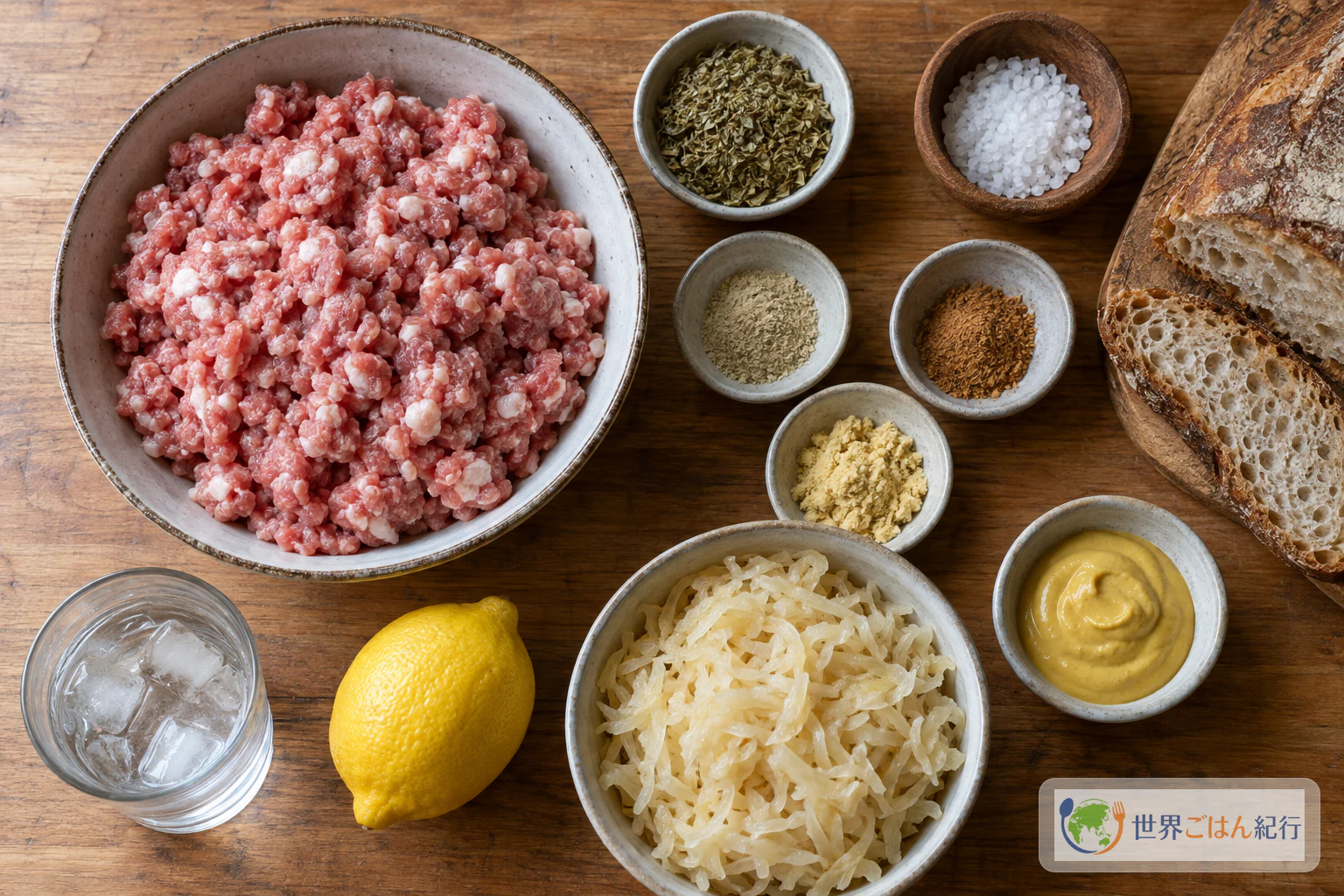
These amounts are a Nuremberg-style Bratwurst recipe for 1 kg of pork, multiplied by 0.6. That is why some amounts look unusual, such as 1.2 tbsp or 3/10 of a lemon. Rather than rounding them freely, weigh the salt and keep the spices close to these amounts. The four servings are a setting for this home version. As a shaping guide, 600 g of mixture makes about 24 slim patties. The size matters more than the count, so make more or fewer depending on how much mixture you have.
Pork is the main ingredient. Check the labels on store-bought sauerkraut, mustard and bread for allergens such as mustard and wheat. Keep raw meat in the refrigerator or freezer according to the package label.
Equipment
- A mixing bowl, chilled before you start
- Plastic wrap
- A charcoal or wood-ember grill, or a frying pan for cooking indoors
- Separate tongs and plates for raw meat and cooked patties
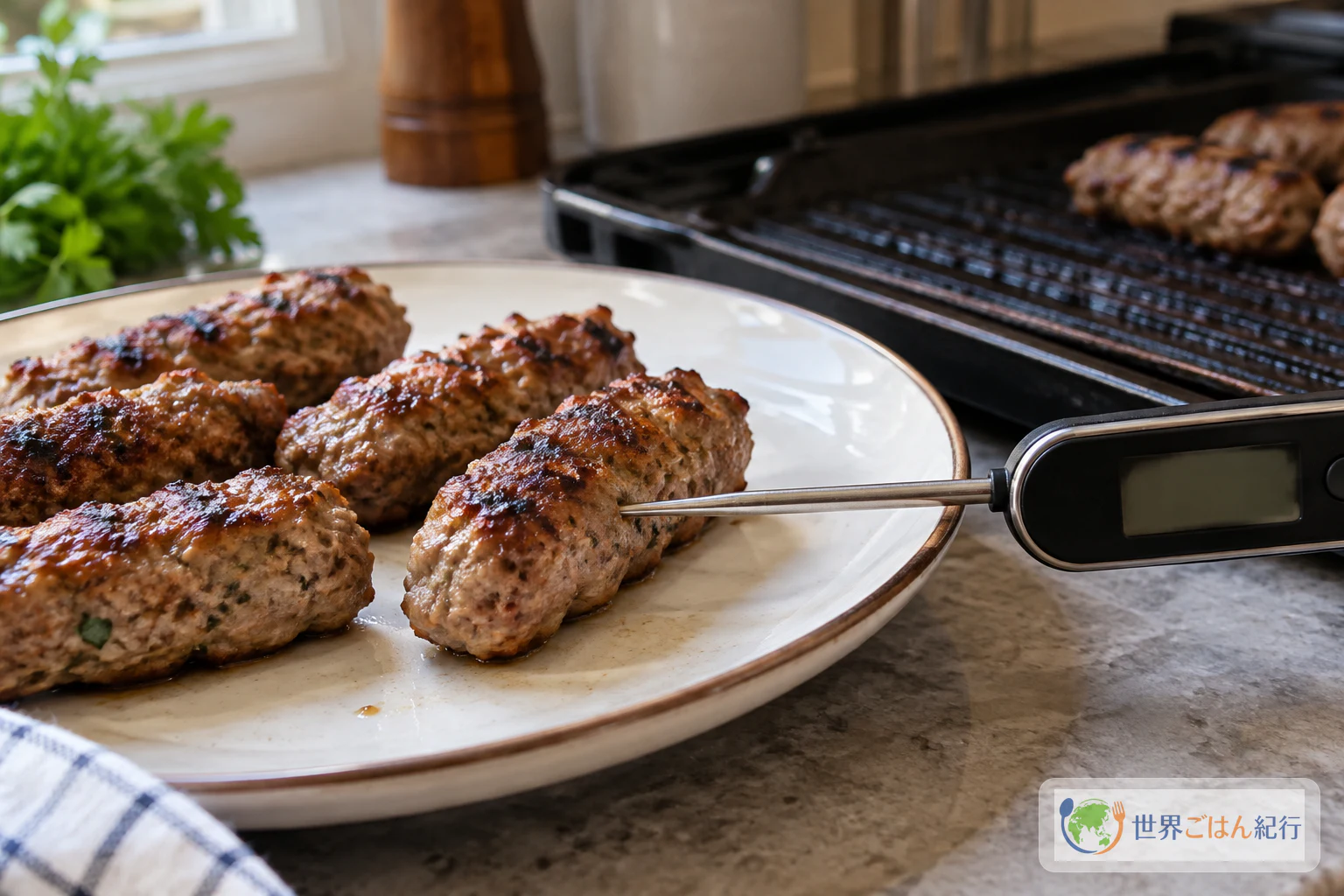
- An instant-read food thermometer
Choosing the Pork and Spices
Fat content. The reference recipe calls for pork shoulder and neck mince with about 25–30% fat. Ordinary lean ground pork tends to give a drier result that falls apart more easily. If you can, ask a butcher for a fattier grind.
Salt. Coarse salt grains vary in size, so measure by weight (10.8 g), not by spoon. That keeps the saltiness where the recipe intends.
Marjoram. Dried marjoram gives this sausage its character. Nuremberg's city page lists it with pork, salt and pepper as an ingredient of the local sausage. Oregano smells different, so it is not a like-for-like substitute. If you leave out the marjoram or replace it, you lose the aroma that defines this recipe.
White pepper and ginger. White pepper gives gentle heat, and black pepper makes the aroma stronger. Fresh ginger is not a direct swap for ground ginger because it adds moisture and a different aroma.
Method: Cold Mixture, Even Browning, a Fully Cooked Center
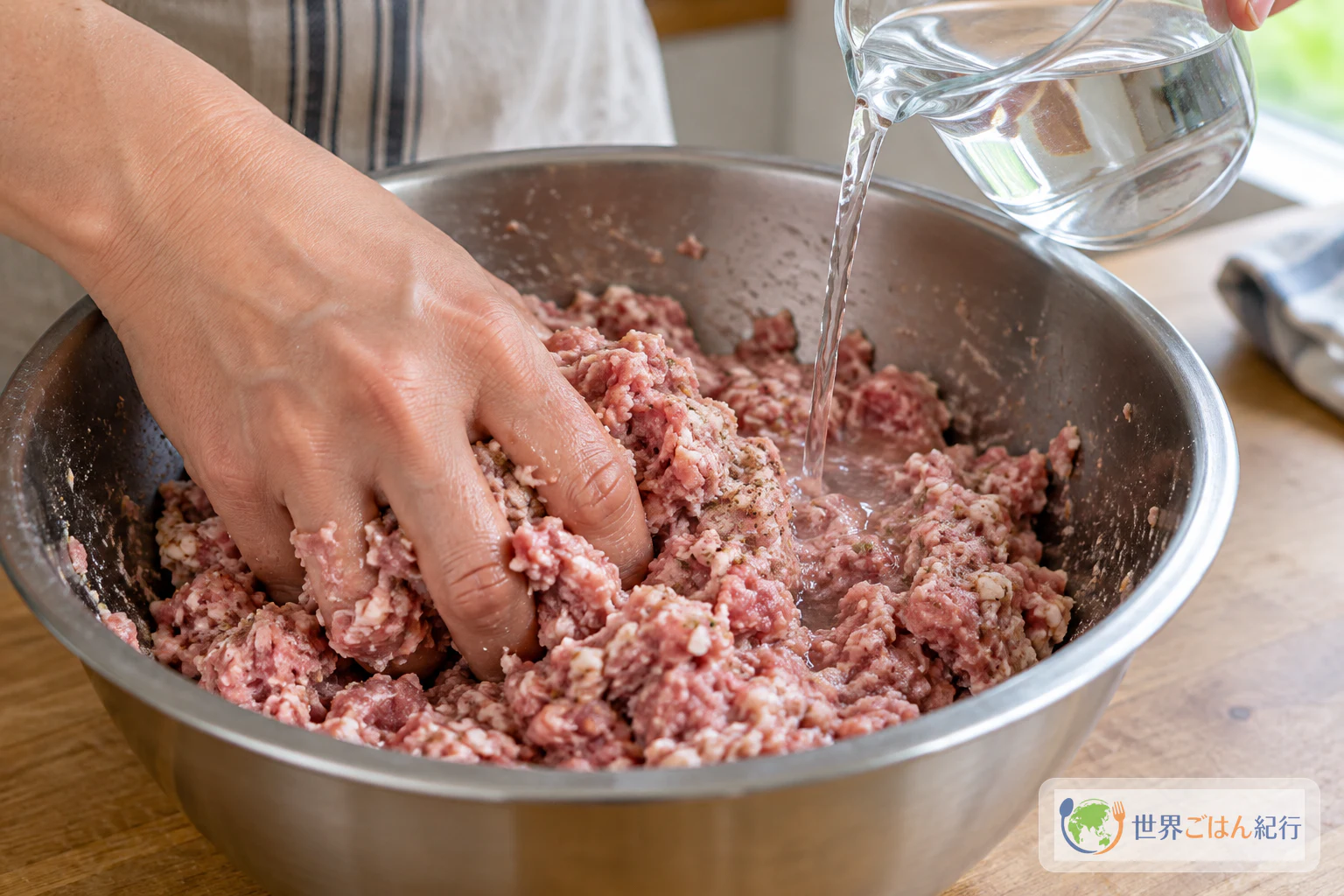
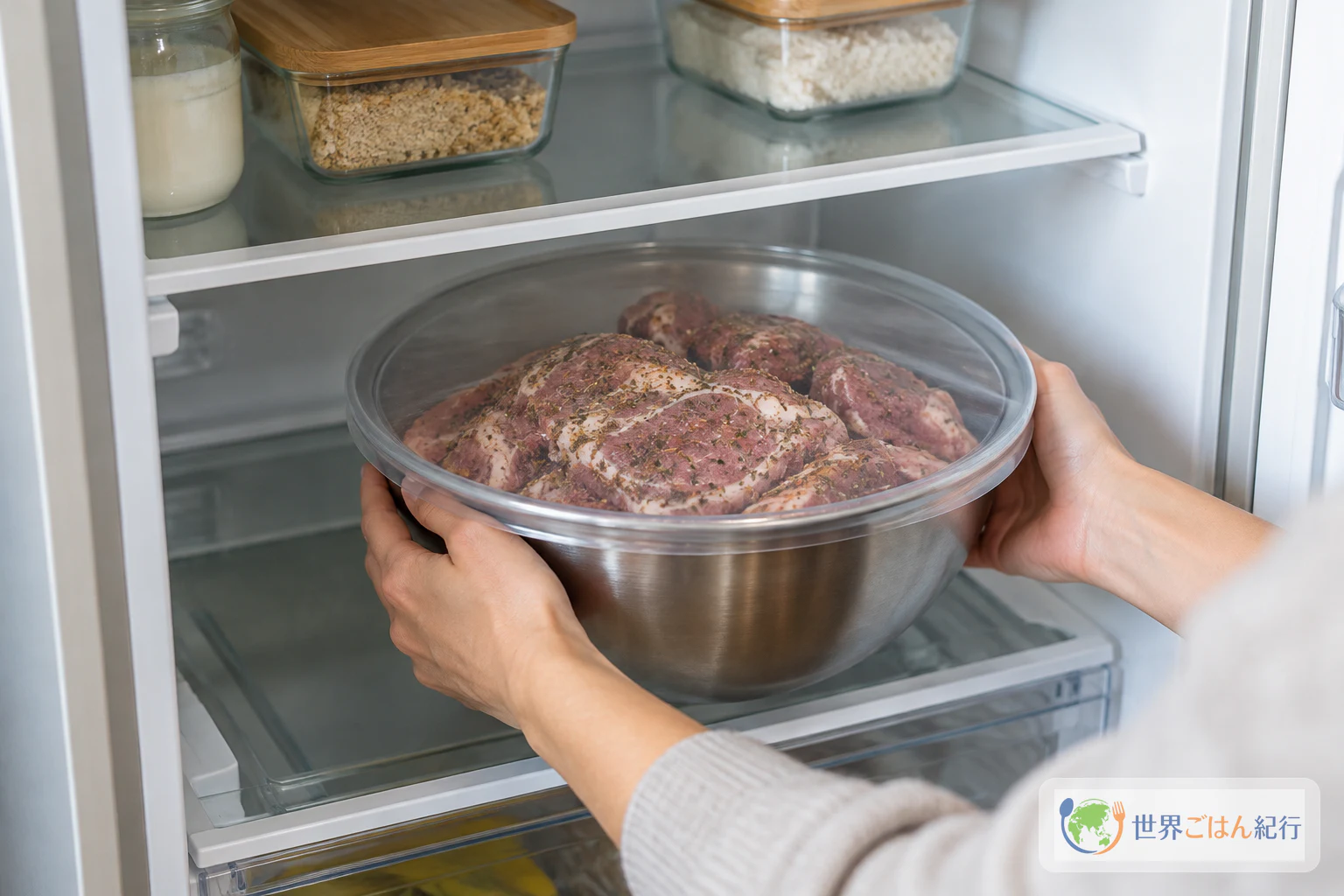
Chill the pork, the bowl and your tools first. The recipe author notes that warm hands or warm meat melt the fat, which leaves the cooked sausage dry and crumbly.
Cool any leftovers quickly in shallow containers and refrigerate them. Reheat them thoroughly before eating. These materials do not confirm a specific storage time for the homemade mixture or the cooked patties, so none is given here.
Troubleshooting
| Problem | Likely cause | What to do |
|---|---|---|
| The mixture is sticky and the fat smears | The meat, tools or hands warmed up | Chill the meat and tools before kneading. Refrigerate the mixture if you stop. Keep the ice water cold and add it a little at a time |
| The patties fall apart or turn dry | Too little fat, too little binding, or warm fat | Use pork with enough fat and knead until tacky. Don't move the patties right after placing them; turn them once the surface has set |
| The outside burns before the center is done | The heat is too high | Lower the heat and keep rolling the patties. Check the center with a thermometer rather than judging by color |
| The aroma is weak | Marjoram was left out or replaced | Use dried marjoram; oregano gives a different aroma |
The advice to keep the mixture cold comes from the recipe author. The advice on handling the patties on the grill is general home-cooking guidance.
Variations
- Change the salt, keep the weight. If your coarse salt has a different grain, use the same weight so the seasoning stays the same.
- Use sheep casings. Stuff the mixture to finger size and twist every 8 cm. The texture comes closer to the original, but you need stuffing equipment.
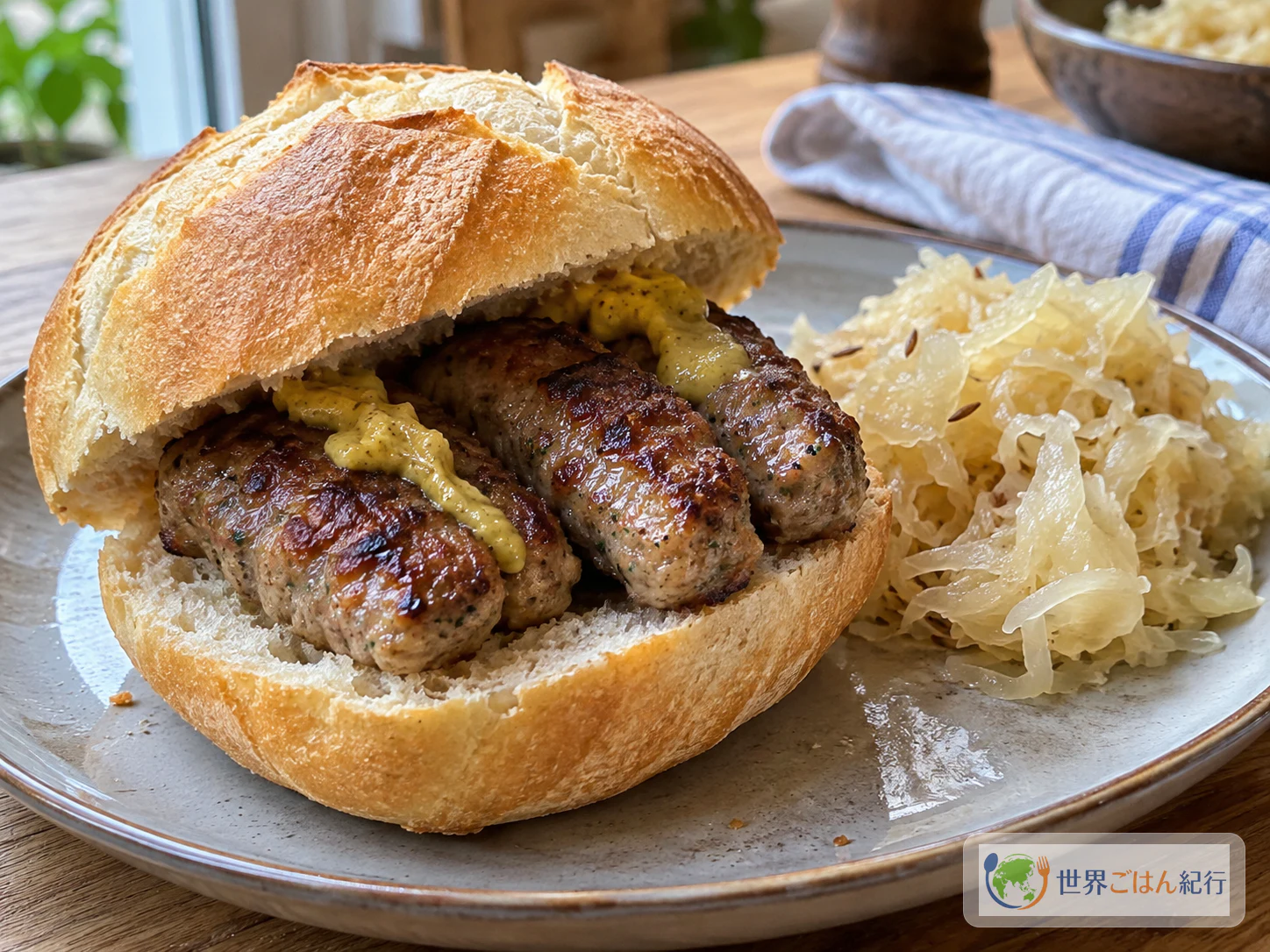
- Patties in a roll. Leave them as patties and put them in a roll. They are easy to shape at home, though there is no casing to snap.
- Warm or cold sauerkraut. Serving sauerkraut warm or cold lets you choose how the sourness and temperature contrast with the hot pork.
- Store-bought Nuremberg sausages. If you find small Nuremberg sausages, serve them three in a roll, "Drei im Weggla" style. Treat this as a store-bought option and keep it separate from the homemade version.
Bratwurst and Nürnberger Rostbratwurst
"Bratwurst" is a broad term for German grilled sausages. "Nürnberger Rostbratwurst" is one specific product with a protected name.
According to the city of Nuremberg, its sausage is made from pork, salt, pepper and marjoram. It has been protected as an EU geographical indication since 2003. The tourist office says the sausages are about 8 cm long and weigh about 20–25 g, and are grilled over beechwood. They are traditionally served with mustard or horseradish (Kren), sauerkraut, potato salad (Kartoffelsalat) and regional bread such as Bauernbrot. Only sausages made in the city according to the set recipe may carry the name.
The city's page dates a historical record of the sausage to 1313. That date refers to the record, not to a recipe that has stayed unchanged since then. People often explain the sausages' small size with stories about keyholes or prison cellars, but the city itself calls these uncertain legends.
Nuremberg also has a different way to eat its sausages: Saure Zipfel, also called Blaue Zipfel. Here the sausages are simmered in a broth of vinegar, onions, wine and spices instead of grilled. It is a separate dish from the grilled recipe in this article.
At the table, sharp sauerkraut and hot mustard both pair well with rich pork. That is one way to see the combination, not a rule. If you'd like to explore more German cooking, try Sauerbraten for a braised meat dish, Bayrisch Kraut for a cabbage side, or Käsespätzle to fill out the table.
Frequently Asked Questions
What's the difference between Bratwurst and Nürnberger Rostbratwurst?
Bratwurst is the general term for German grilled sausages, which vary by region. Nürnberger Rostbratwurst is a protected EU name for sausages made in Nuremberg according to a set recipe. The homemade patties here are inspired by the Nuremberg style but are not that product.
Can I leave out the marjoram?
You can, but marjoram is the defining aroma of this style, so the sausage will lose its character. Oregano smells different and is not a direct replacement.
Can I make it without casings?
Yes. The reference recipe itself suggests shaping the mixture into finger-thick patties about 8 cm long. They are easier to make at home, but they don't have the snap of a casing.
What internal temperature should ground pork reach?
The center should reach 75°C and stay there for at least 1 minute. Check the thickest patty with a thermometer instead of relying on time or color.
What about nutrition?
Nutrition depends on the pork's fat content and the products you use. It has not been calculated for this recipe.
Sources
- Europabüro Nürnberg / Stadt Nürnberg, "Nürnberger Rostbratwürste (g. g. A.)." Ingredients of the Nuremberg sausage (pork, salt, pepper, marjoram), EU protected geographical indication since 2003, the 1313 historical record, and the uncertain status of the keyhole and prison-cellar explanations. https://www.nuernberg.de/internet/eu_buero/nuernbergerbratwurst.html
- Congress- und Tourismus-Zentrale Nürnberg, "Nürnberger Bratwürste." Size and weight of the Nuremberg sausage, grilling over beechwood, the rule that it must be made in the city, serving with mustard or horseradish, sauerkraut, potato salad and regional bread, and Saure/Blaue Zipfel. https://tourismus.nuernberg.de/geniessen/spezialitaeten/nuernberger-bratwuerste/
- Gurmestan, "Bratwurst recipe — German cuisine." The 1 kg Nuremberg-style blend that was scaled to 0.6× here, kneading and chilling, keeping the mince cold, optional casings or finger-thick patties, grilling over embers, and serving with sauerkraut, mustard and country bread. The scaling and the four-serving setting are editorial adaptations. https://gurmestan.com/en/recipes/bratwurst/
- Ministry of Health, Labour and Welfare (Japan), "家庭での食中毒予防" (Preventing food poisoning at home). Cooking to a center temperature of 75°C for at least 1 minute, avoiding cross-contamination between raw meat and ready-to-eat food, and cooling leftovers quickly in shallow containers and reheating them thoroughly. https://www.mhlw.go.jp/stf/seisakunitsuite/bunya/kenkou_iryou/shokuhin/syokuchu/01_00008.html