Portugal's Soul in One Bowl of Soup
What comes to mind when you think of Portuguese food? Custard tarts. Salt cod. But ask Portuguese people which dish they love most, and the answer may surprise you: caldo verde. The name means "green broth."
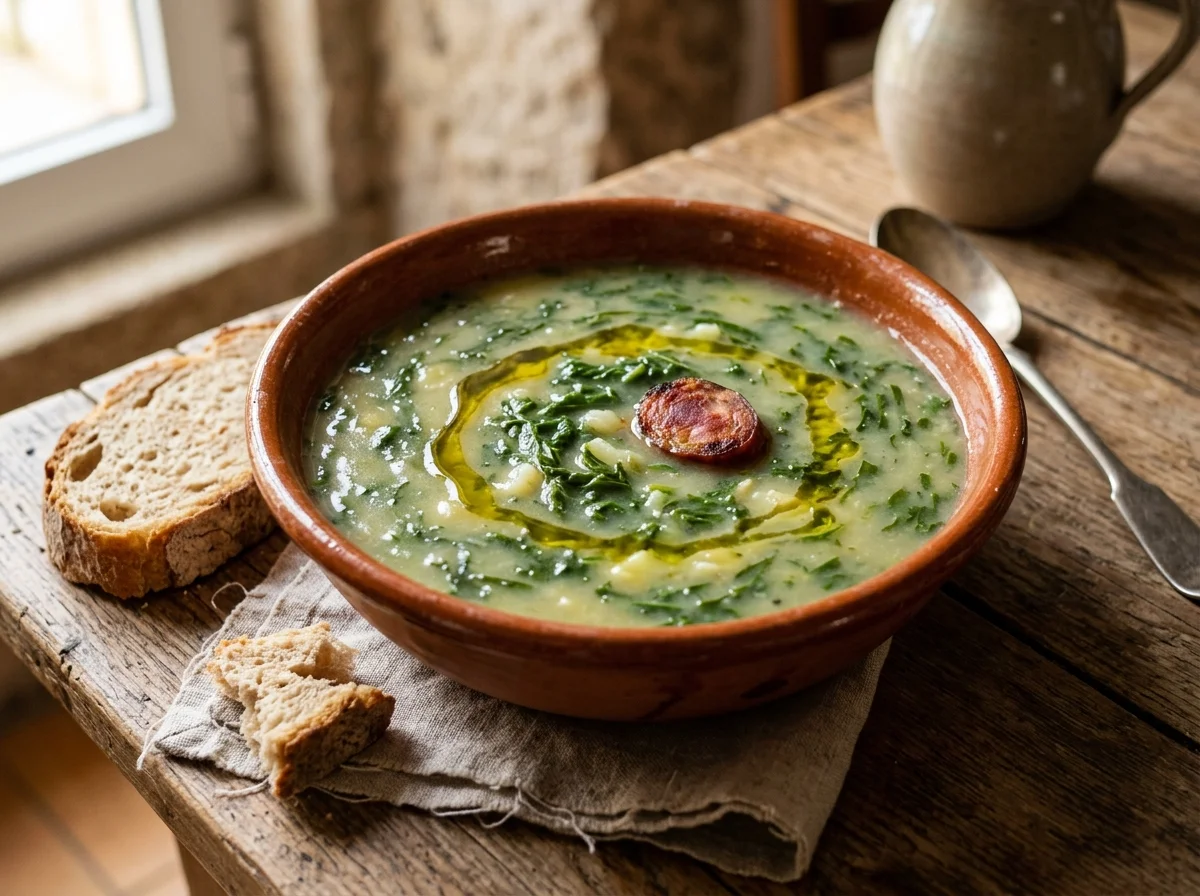
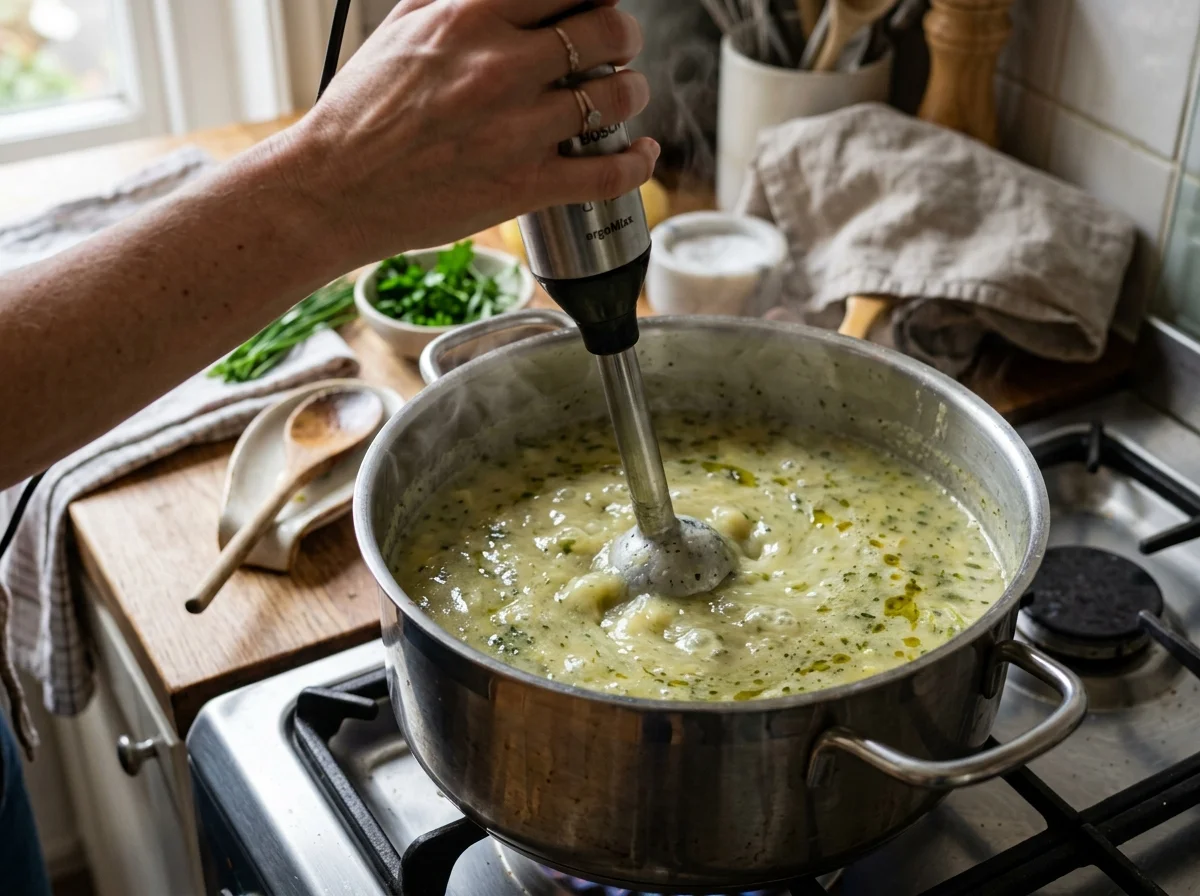
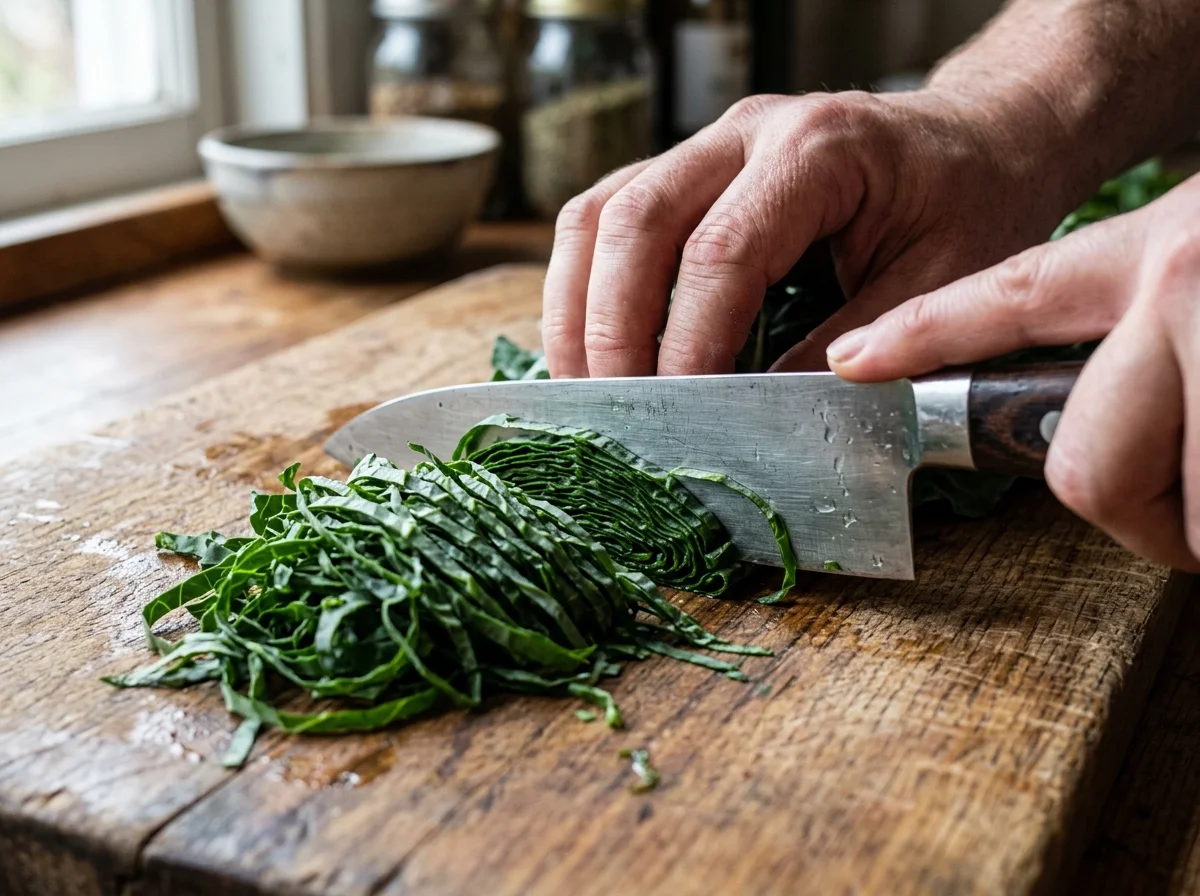
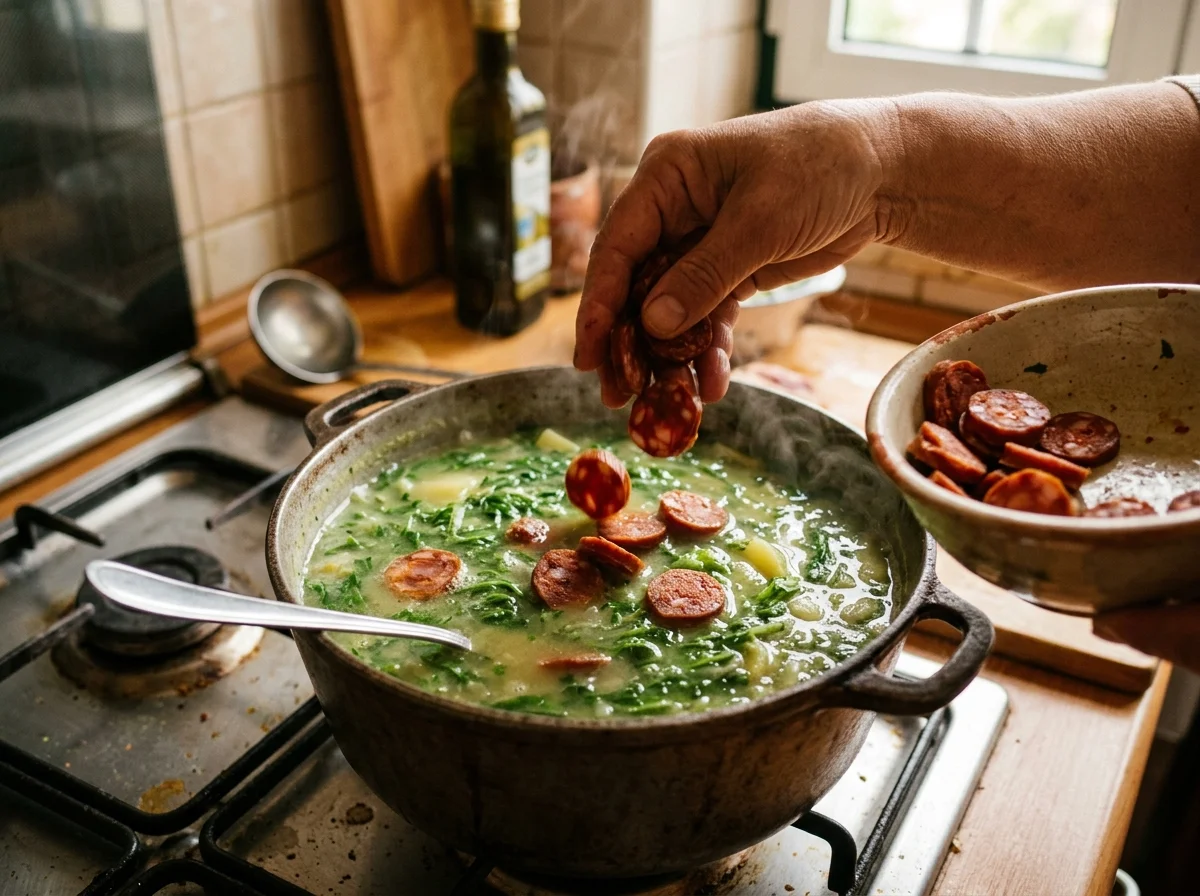
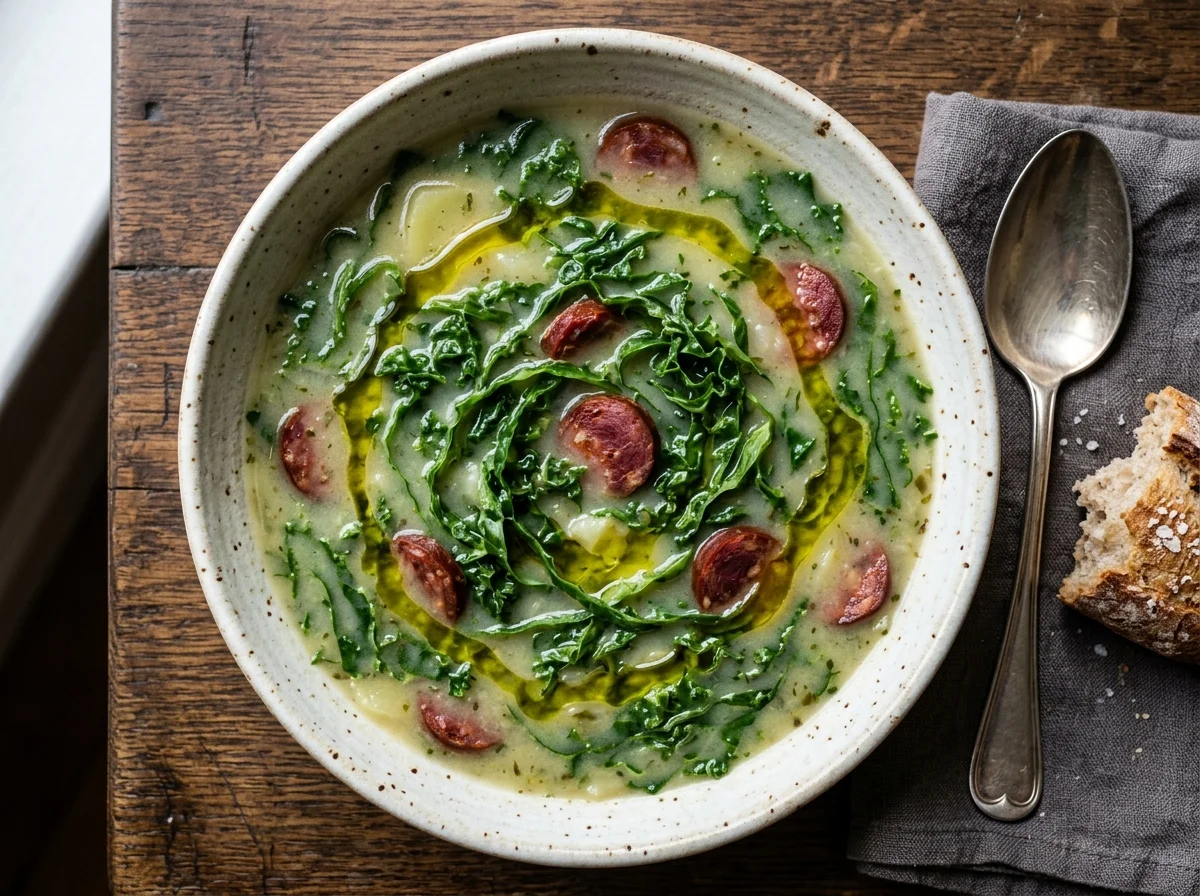
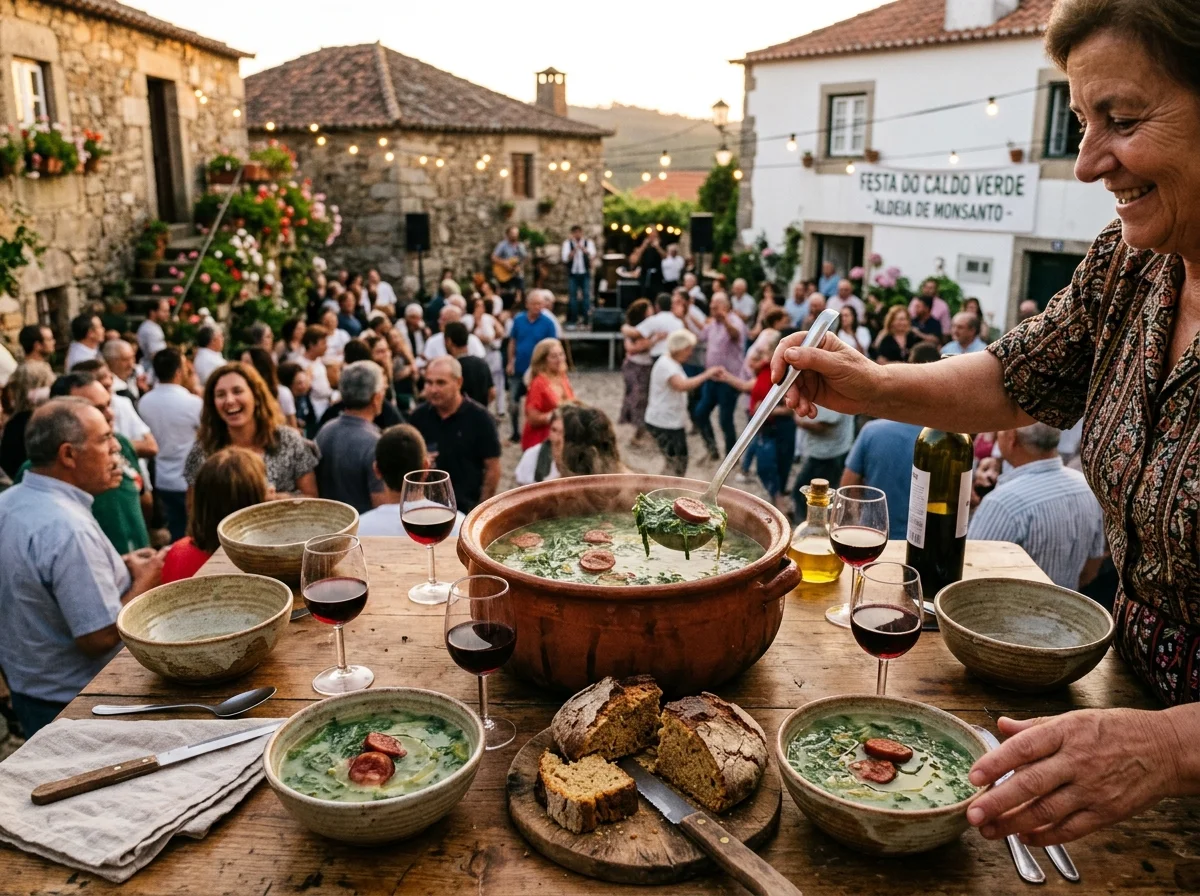
It takes just four main ingredients: potatoes, kale, chouriço and olive oil. Mash the potatoes into a smooth soup. Float hair-fine ribbons of kale on top. Let the savor of the chouriço melt in. Finish with a swirl of olive oil. It is humble, yet somehow elegant, a home dish born on farms in the Minho region of northern Portugal.
In Portuguese, "green broth." It is thought to have originated in the Minho region, and it is a national soup that appears at weddings, saints' festivals, Christmas and in front of the football match, in short, on every occasion.
It sits alongside the great European soups, such as Hungarian goulash and Czech svíčková.
Ingredients (serves 4)
Chouriço contains pork. The egg variation uses egg. The vegan version has few allergens, but if you substitute sausages for the chouriço, check the product's ingredients.
Portuguese chouriço is a firm, smoky, dry-cured sausage. Spanish chorizo also comes in a fresh type. Spanish dry-cured smoked chorizo works fine; if yours is fresh, brown it in a skillet first. If you can find neither, a coarse-ground smoked sausage plus 1 tsp of paprika can stand in.
Tips
Caldo verde is a minimally seasoned soup, so the quality of the ingredients goes straight into the flavor. This is especially true of olive oil. Use a good extra-virgin oil for the finishing drizzle: skimp on it and the soup tastes thin. Portuguese oil is best if you can find it.
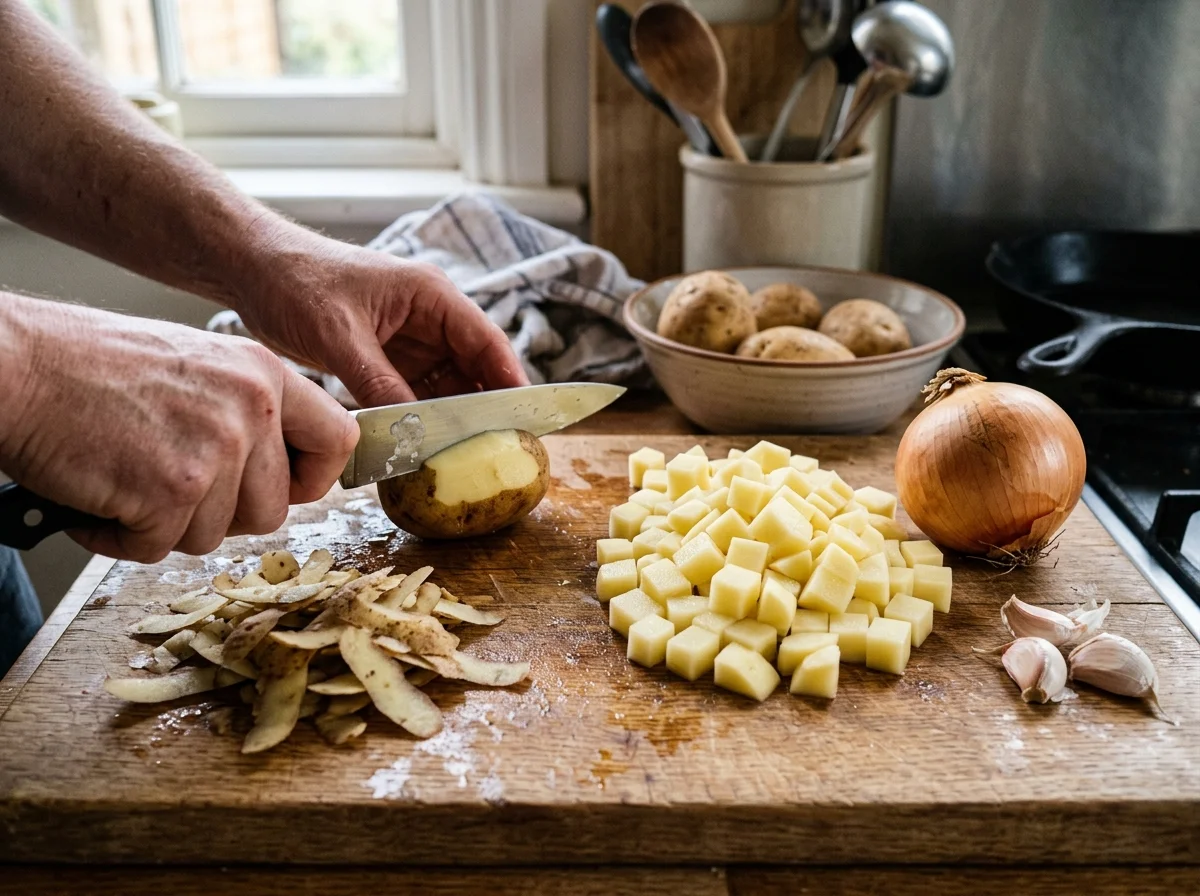
A waxy variety such as Yukon Gold holds together and gives a smooth texture when mashed. Very floury potatoes can leave the soup grainy. Like Bosnian burek, this is a simple dish where ingredient choice decides the result.
If the soup is too thick after mashing, add water. If it is too thin, uncover and simmer for 5 minutes. The ideal is about the body of a French-style vinaigrette, just coating the back of a spoon. Not as thick as a potage, not as thin as a consommé: the middle is the right answer for caldo verde.
Variations
Vegan version (no chouriço)
Leave out the chouriço and add 2 tsp smoked paprika and 1/2 tsp smoked salt instead. This reproduces the chouriço's smoky flavor with seasonings. Use extra olive oil to make up for the richness.
Egg version (caldo verde com ovo)
Top the soup with a poached egg and break the yolk as you eat. It is a modern twist popular in Lisbon restaurants, a way of pairing egg with soup like Tunisian chakchouka.
Bacon version
Use 100 g thick-cut bacon in place of the chouriço. Cut it into 1 cm strips, crisp it first and use the fat as the base of the soup. The bacon's smokiness plays the part of the chouriço. A simple version that uses only ingredients from an ordinary supermarket.
Turnip version
Replace half of the potatoes with 300 g turnips and finish with sausages plus 1 tbsp miso instead of chouriço. The sweetness of turnip pairs well with the bitterness of kale, and the miso's depth takes the place of chouriço.
Background
A soup born on Minho farms
Caldo verde was born on farms in the Minho region of northern Portugal. Its exact origin is unknown, but it is thought to date from the 16th century or later. Potatoes arrived in Portugal in the late 16th century; before that, the base was chestnuts or turnips.
Minho is a green farming region. Kale (couve galega) grows year-round. Potatoes keep well. Chouriço is a preserved food from pig slaughter. These three come together in Minho.
Portuguese emigrants and the wider world
Caldo verde is loved in places with many Portuguese emigrants, such as Brazil, Massachusetts, France and Luxembourg. In Brazil especially, large quantities are served at the June festas juninas (St. John's festival).
Nutrition (per serving, one of four)
| Nutrient | Amount |
|---|---|
| Calories | 320 kcal |
| Protein | 12 g |
| Fat | 16 g |
| Carbohydrates | 34 g |
| Fiber | 5 g |
| Sodium | 580 mg |
What to Cook Next
- Bacalhau à Brás: Continue with the same country's table.
- Carbonnade: Reuses ingredients and aromas from the same region.
- Waterzooi (in Japanese): Reuses ingredients and aromas from the same region.
FAQ
Questions from first-time cooks of caldo verde.
Q1. What is the best substitute if I cannot find kale?
Collard greens or the dark outer leaves of cabbage are good. Komatsuna (about 150 g) with 5 shiso leaves is a close stand-in: the crunch of the komatsuna and the slight bitterness of shiso partly reproduce kale. Spinach is too soft to give the right texture, so keep it as a last resort.
Q2. Can I leave out the chouriço and still make it taste good?
Yes. As described in the vegan version, smoked paprika and smoked salt can replace it. But the chouriço's fat adds a lot of richness to the soup, so use extra olive oil to compensate (add 1 tbsp more at the end).
Q3. Can I make it ahead?
Yes. It keeps for 3 days in the refrigerator, and the next day the potato starch has blended into the soup and it tastes even better. Kale discolors, though, so the best way is to store the soup before adding the kale and add fresh kale when reheating. You can freeze it for 1 month, but the potato starch changes and the texture shifts slightly.
Q4. What if I have no immersion blender?
Crush roughly with a potato masher. In fact that is the more traditional way: the recipe was born on Minho farms long before immersion blenders existed. Even mashing with a fork is fine, and a few leftover lumps do no harm.
Q5. What should I drink with caldo verde?
In Portugal, Vinho Verde is the standard. Its name translates as "green wine," and it is a lightly sparkling white. Its light acidity and slight fizz contrast with the warmth of the soup. For a non-alcoholic option, sparkling water with a squeeze of lemon is simple and pairs well.
Related European Dishes
If caldo verde caught your interest, try other traditional European soups and stews too. They hold farm wisdom and deceptively simple, deep flavors.
- Goulash: Hungarian paprika stew, another of Europe's great national soups
- Svíčková: Czech beef in cream sauce, a masterpiece of Central European home cooking
- Carbonnade: Belgian beer stew, a dish for getting through cold northern winters
- Moussaka: Greek eggplant and ground meat bake, a staple of Mediterranean cooking
Sources
- Leite, D. (2009). The New Portuguese Table. Clarkson Potter.