Meeting the Smoke of Roasted Eggplant with Cold Yogurt
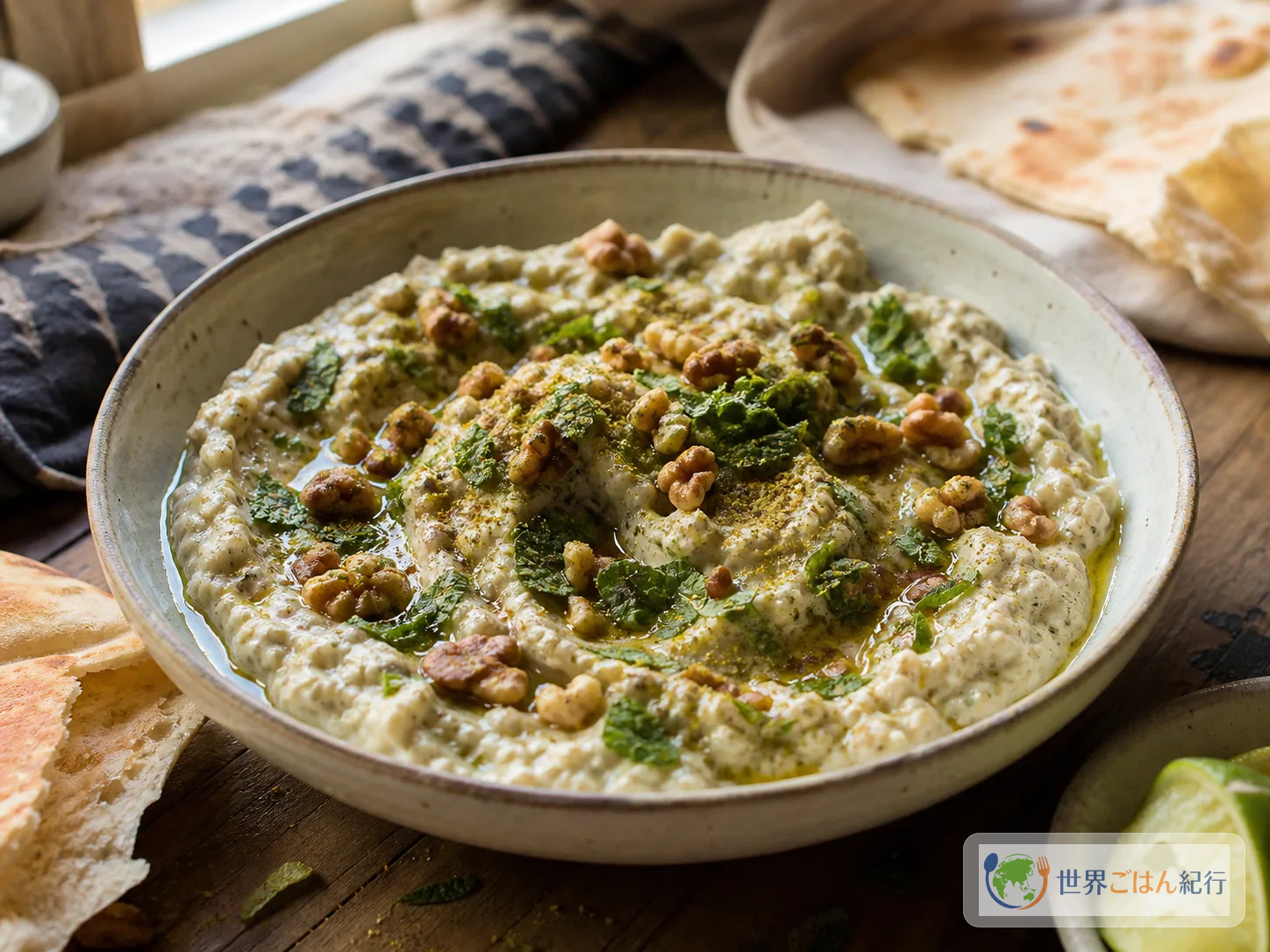
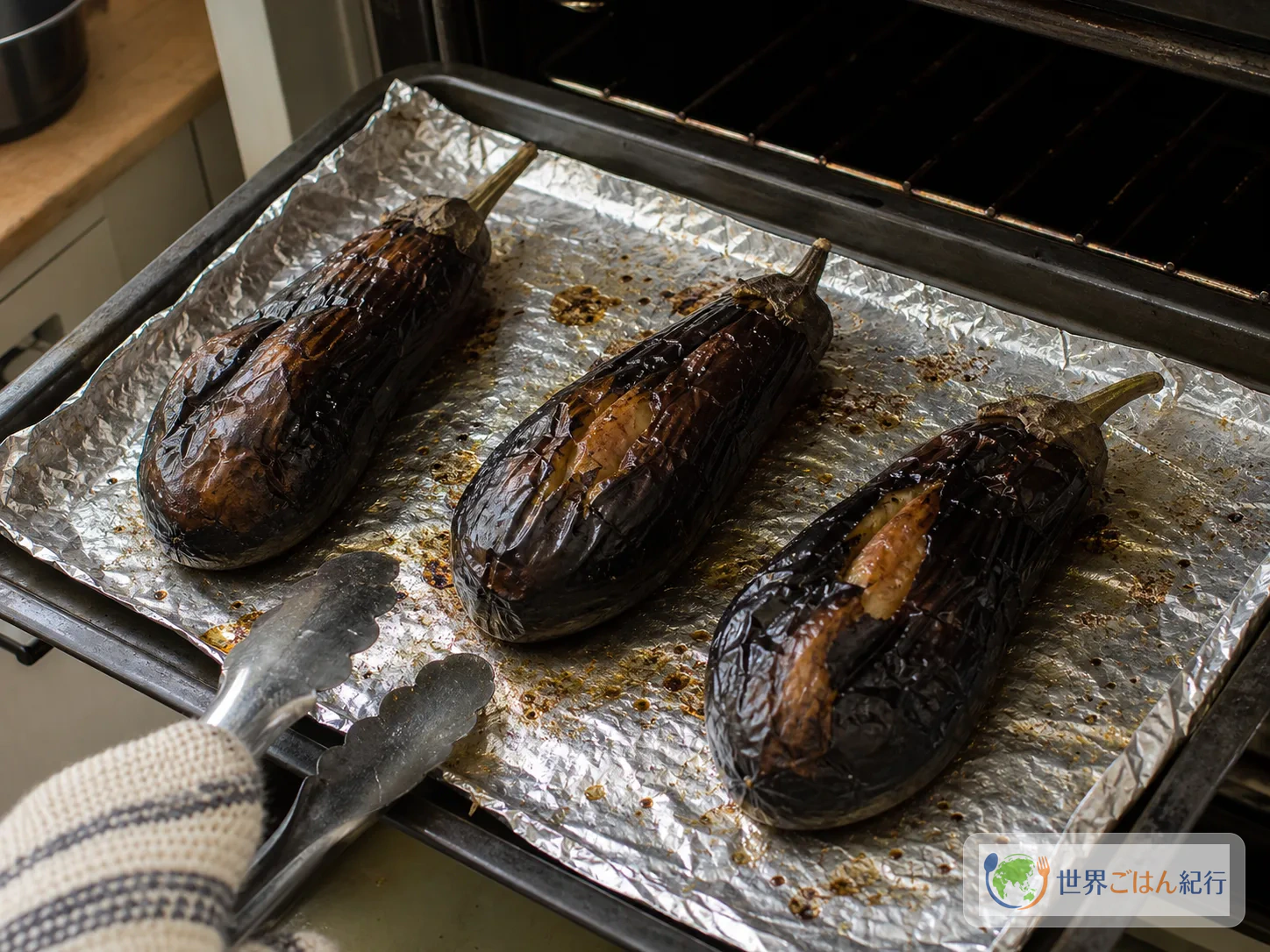
On the day you roast eggplant, the air in the kitchen leans slightly toward summer. The skin shrivels, blackens in places, and the flesh sinks when you press it with chopsticks. Take out the hot flesh and mix it into yogurt, and the smoky scent of roasted eggplant settles into the white tang.
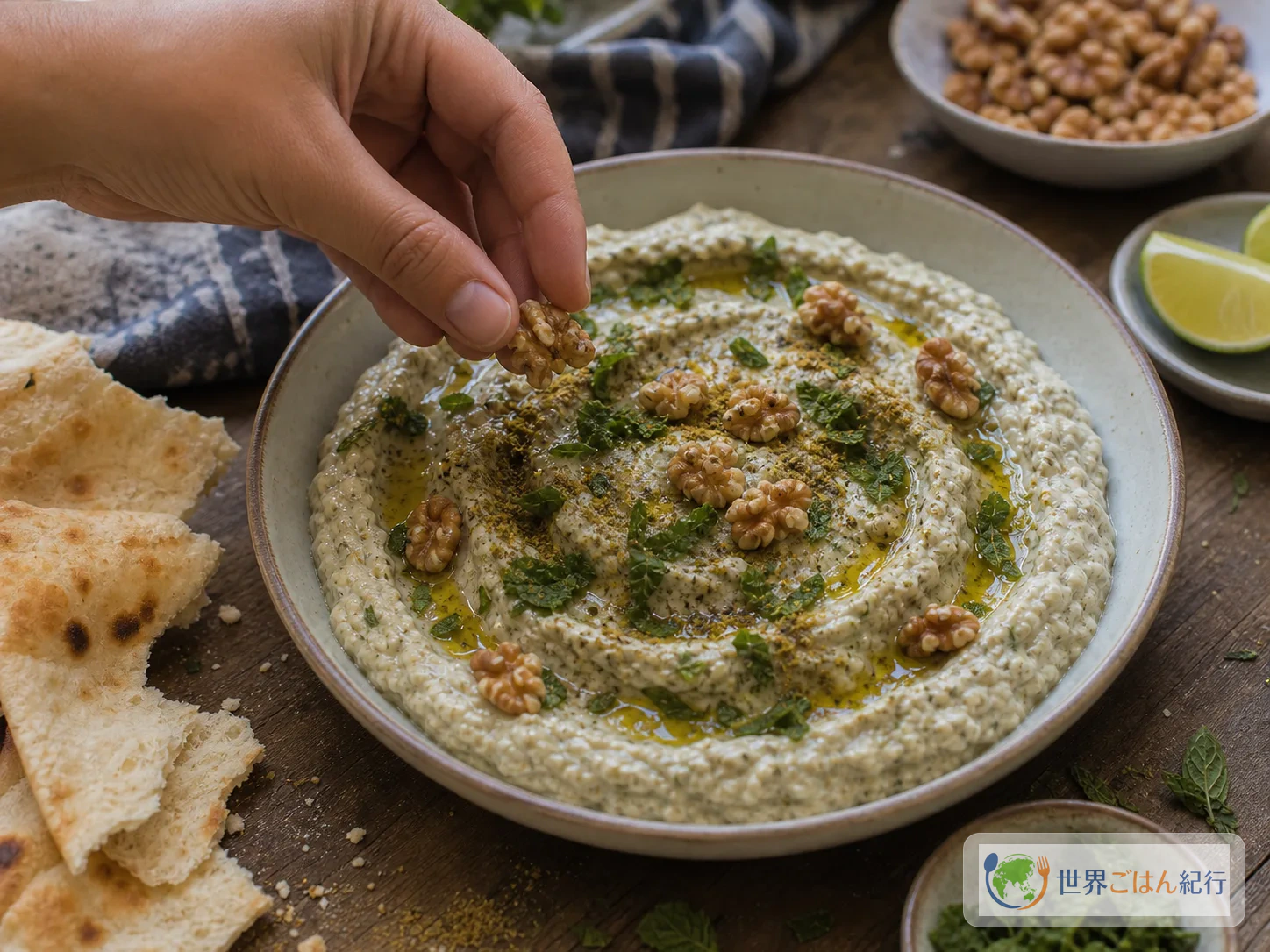
Borani (Borani / بورانی) is a small dish from Iran and its surroundings that combines vegetables with yogurt. There are versions with spinach, beets and pumpkin, but the roasted-eggplant borani, borani-ye bademjan, is the easiest to make in a home kitchen and shows the biggest difference in aroma. It looks as if eggplant and yogurt are the only stars, but in practice small decisions decide the flavor: drawing out moisture, making the aromatic oil, letting the heat cool, and fixing the sourness at the end.
Among roasted-eggplant dishes, Lebanese baba ghanoush (in Japanese) comes together with tahini and lemon. Borani moves a little away from that and is eaten for the lactic tang of yogurt, the toastiness of walnuts, and the dry fragrance of mint and spices. Set beside chelow kabab (in Japanese) it lightens the meat and rice, and served with a rich stew such as fesenjan it cuts the weight of pomegranate and walnuts with cold acidity.
For another Iranian eggplant small dish, eaten warm with kashk, fermented whey, kashk-e bademjan (in Japanese) is a close entry point. Borani has the lightness of cold yogurt; kashk-e bademjan puts the saltiness of kashk and the fragrance of mint oil in front.
In English it is written Borani, Borani Bademjan, Persian eggplant yogurt dip and so on. The Persian word bādemjān means eggplant. This article uses "borani" as the title, as it is easy to search for, and focuses on the roasted-eggplant version.
This recipe uses dairy and walnuts. If you have a nut allergy or a dairy allergy, avoid it. Flatbread served alongside contains wheat. Spices and nuts may be processed on lines that handle other allergens, so check the product labels.
Ingredients: Roasted Eggplant, Yogurt, a Small Plate of Aroma
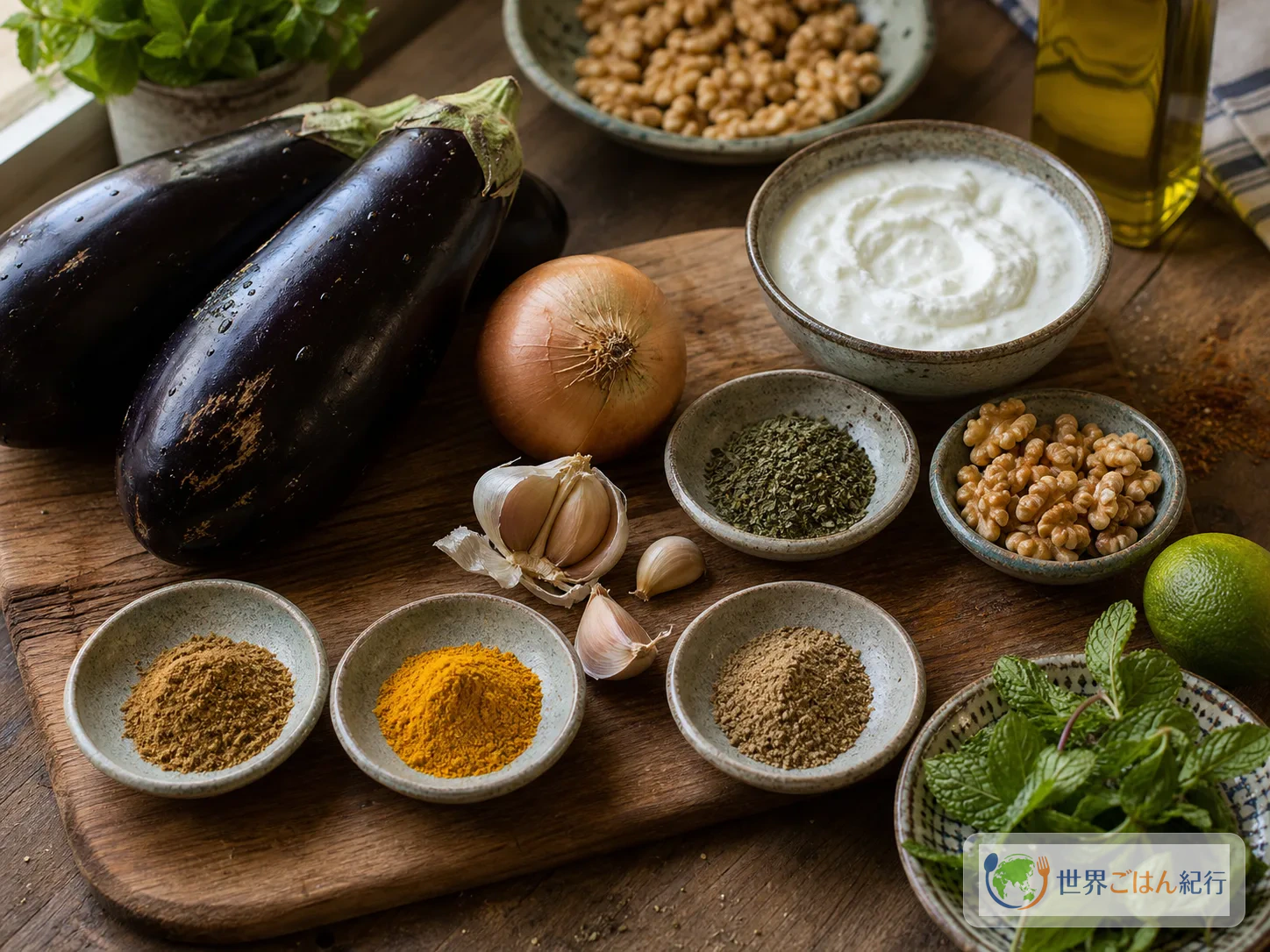
For eggplant, slightly thick, watery ones are easier to handle than long thin ones. Because you drain it after roasting, starting with eggplants that are too small leaves you with little finished dip. Use unsweetened yogurt. If you use ordinary plain yogurt, draining it first makes it less likely to split.
To drain the yogurt, line a sieve with paper towels, put in 350 g yogurt, and leave it in the refrigerator for 30 minutes to 1 hour. On a rushed day, use Greek yogurt. Do not throw away the whey that drains out; dilute it with a little salt and water and it becomes a doogh-style drink.
Shopping Priorities: Look Only at the Aroma Ingredients Online
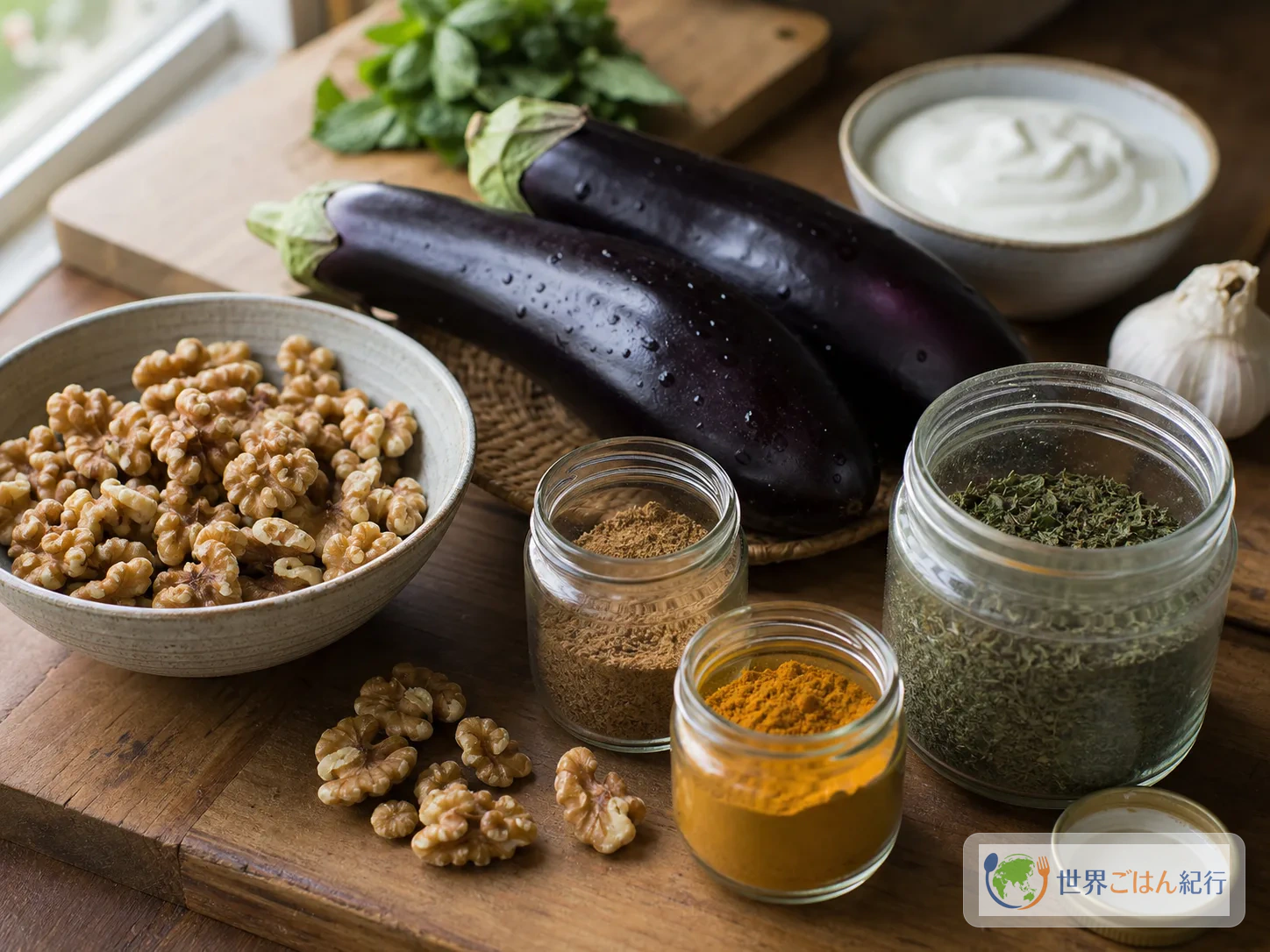
Eggplant, onion, garlic and yogurt are all available at a nearby supermarket. What is worth buying with care are the spices you will reuse and unsalted walnuts with little rancid smell. Cumin, coriander and turmeric also go into the seasoning of ghormeh sabzi (in Japanese), the aroma of tahchin, and South Asian bean dishes, not just borani.
Method: Draw Out the Eggplant's Moisture and Keep the Yogurt from Splitting
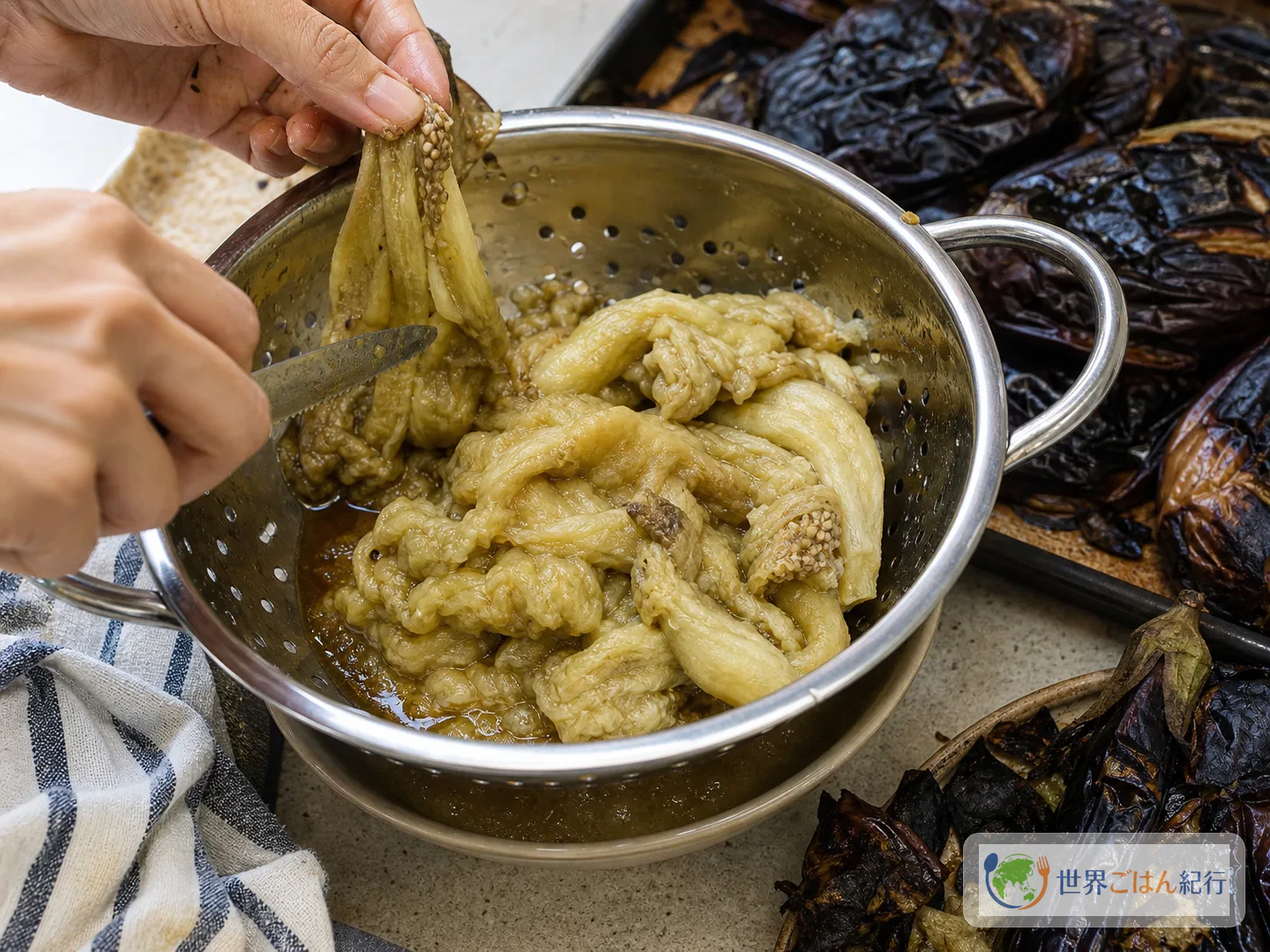
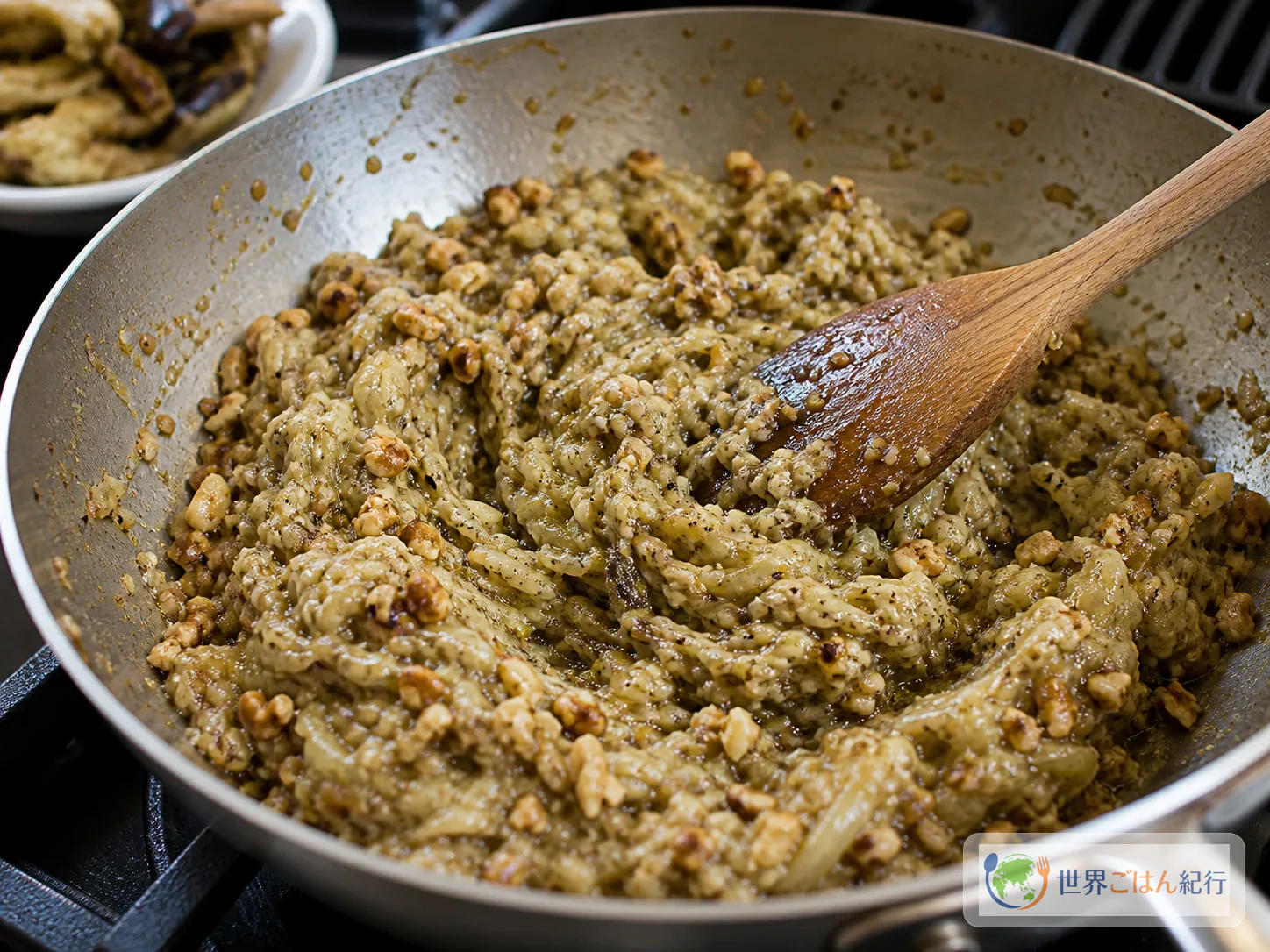
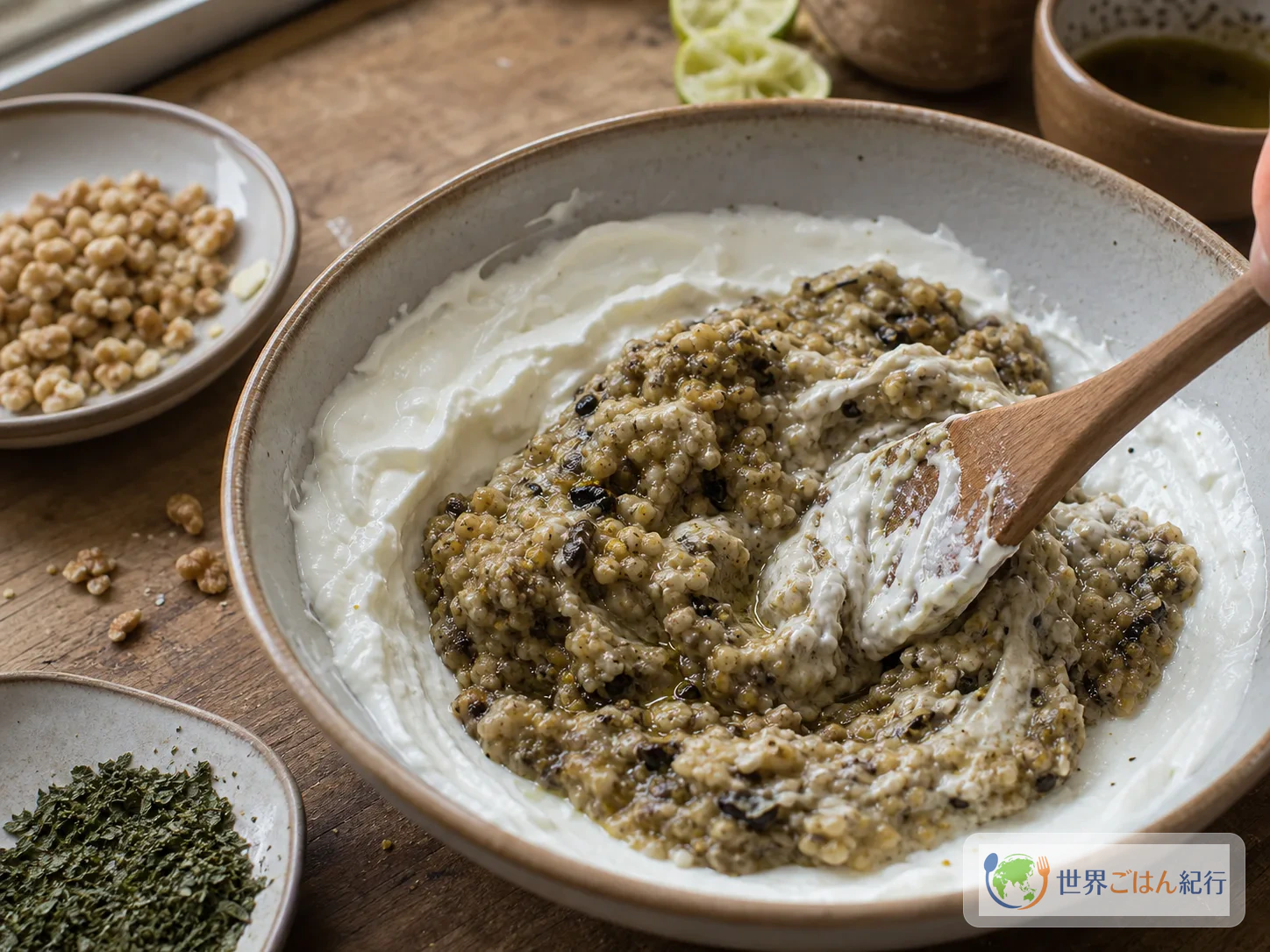
Roast the eggplant well first, peel it while hot, and drain it. The yogurt is simply mixed in at the end. Put hot eggplant straight into yogurt and it splits and turns watery, so the method includes a time for the sautéed eggplant to cool a little.
Common Pitfalls and Adapting It in a Home Kitchen
Borani fails on moisture more than on seasoning. The eggplant, yogurt and lemon each carry water, so the more you hurry, the looser it gets. The method may seem simple, but it is better not to skip this order: roast, drain, cool, then mix.
| Problem | Main cause | Fix |
|---|---|---|
| Watery | Eggplant under-roasted or under-drained | Return to the frying pan and cook off moisture for just 2 to 3 minutes over medium-low heat, then cool |
| Yogurt splits | Mixed in hot eggplant | Cool 10 minutes next time. To fix it now, add 2 tbsp drained yogurt |
| Bitter | Scorched spices or garlic | Use low heat next time. Scorched aromatic oil cannot be undone; if badly burnt, start over |
| Weak aroma | Old spices, too few walnuts | Add 1/4 tsp dried mint, a little cumin and walnuts at the end |
| Too sour | Sourness of yogurt and lemon stacked up | Add 2 tsp olive oil and 10 g walnuts, and a pinch of salt to round it |
Eggplant has thin skin and a fair amount of water. Charring it black over an open flame gives aroma, but at home an oven or a fish grill is more reliable. Even over a flame, put priority on the flesh becoming completely soft rather than burning the skin. If the skin is black but the inside firm, a green smell stays when mixed into yogurt.
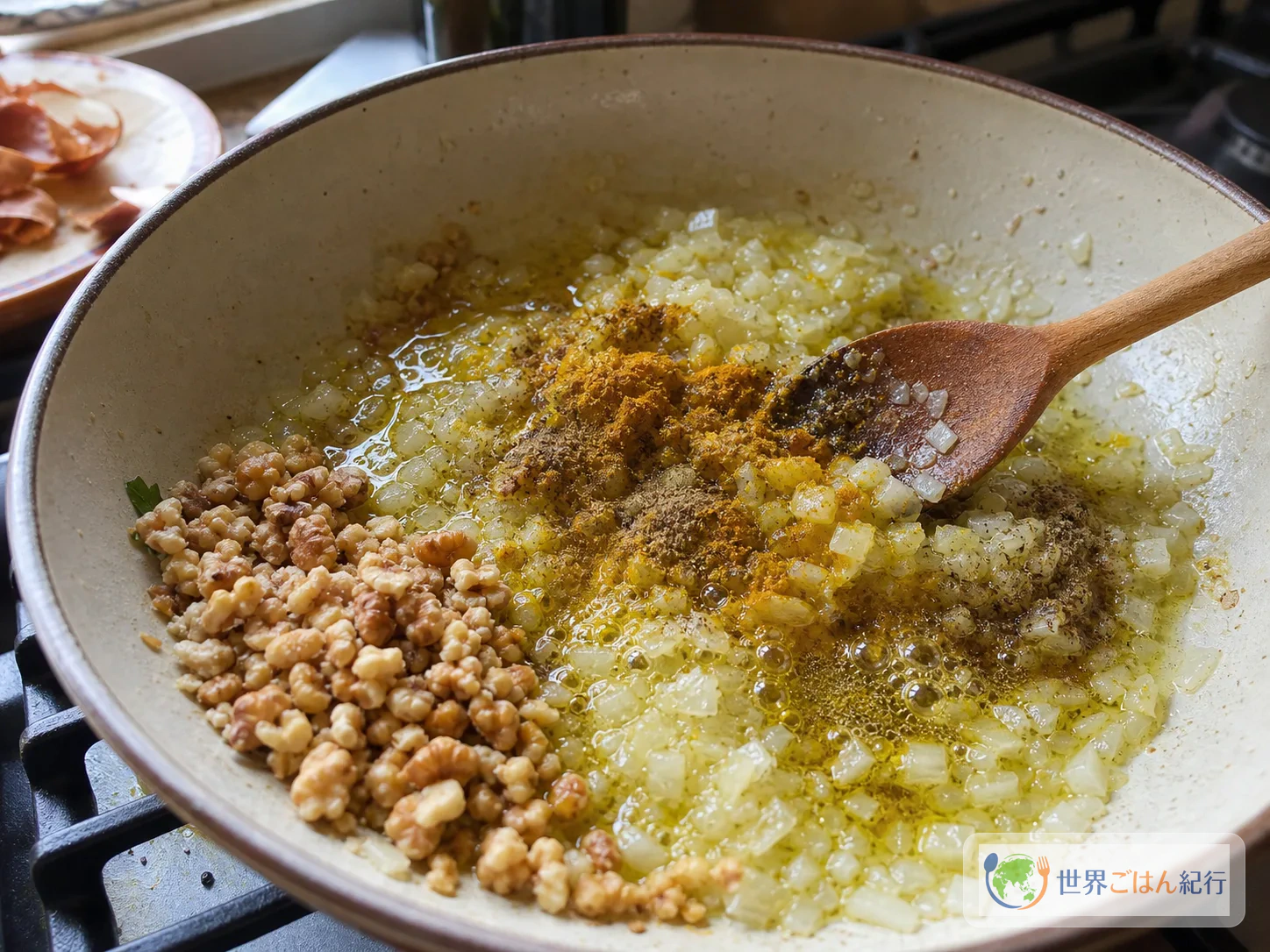
To bring the flavor toward Iran, protect the sourness of the yogurt, the smoke of the roasted eggplant and the toastiness of the walnuts. A little cumin and turmeric is enough. Replacing them with curry powder easily makes a different dish, so on days when you lack the spices, using only cumin is more natural.
Serving, Storage and Frequently Asked Questions
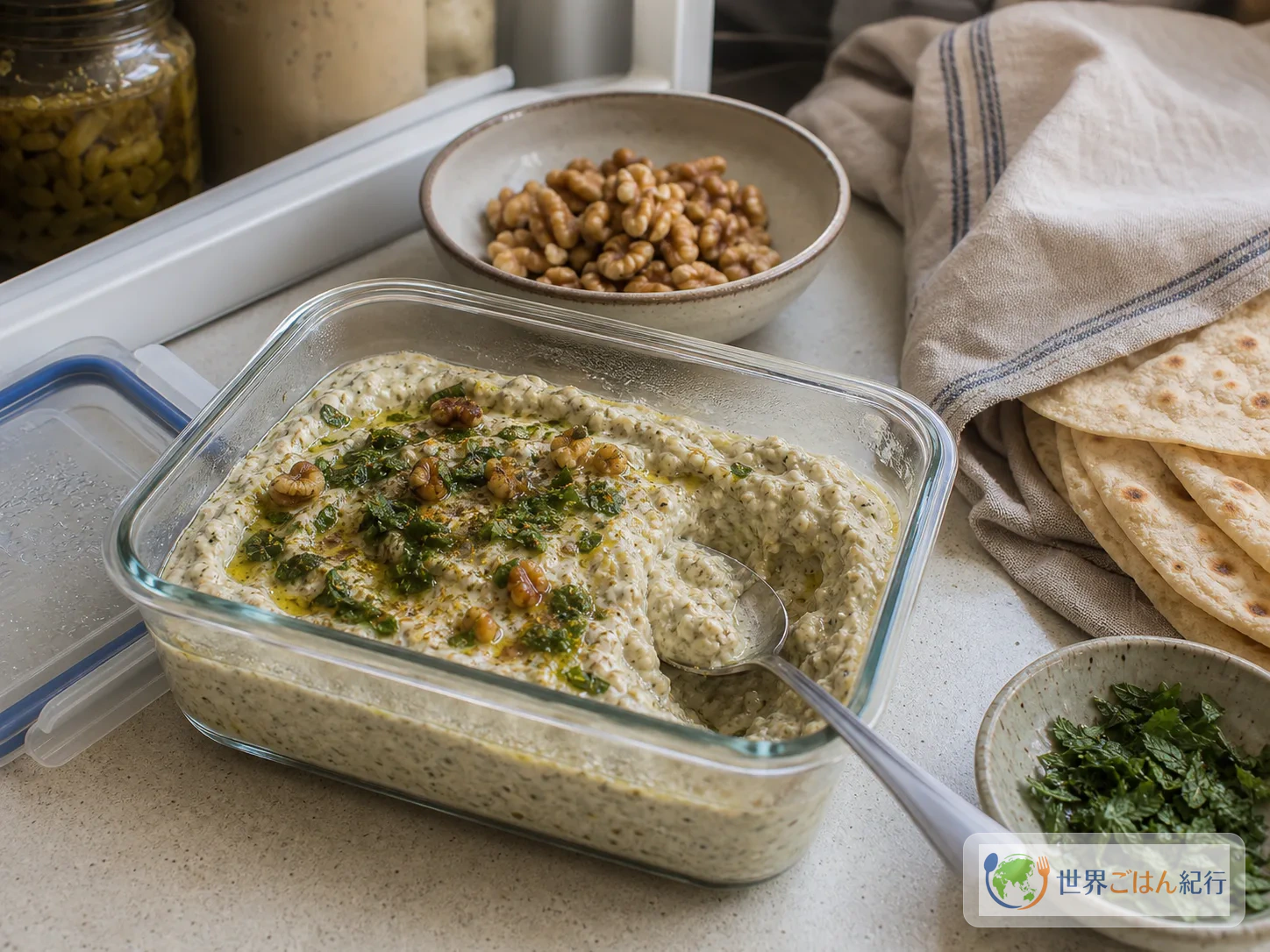
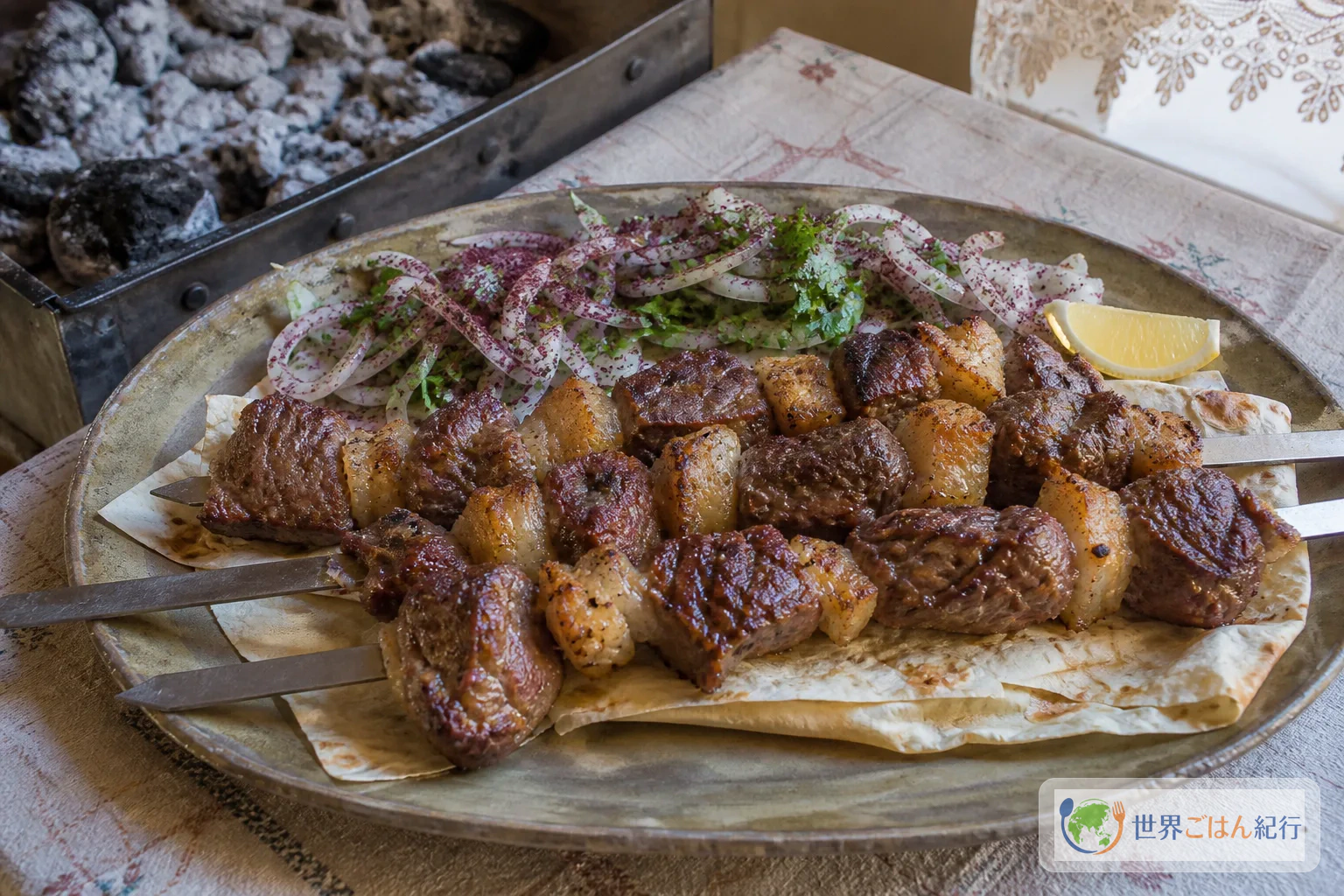
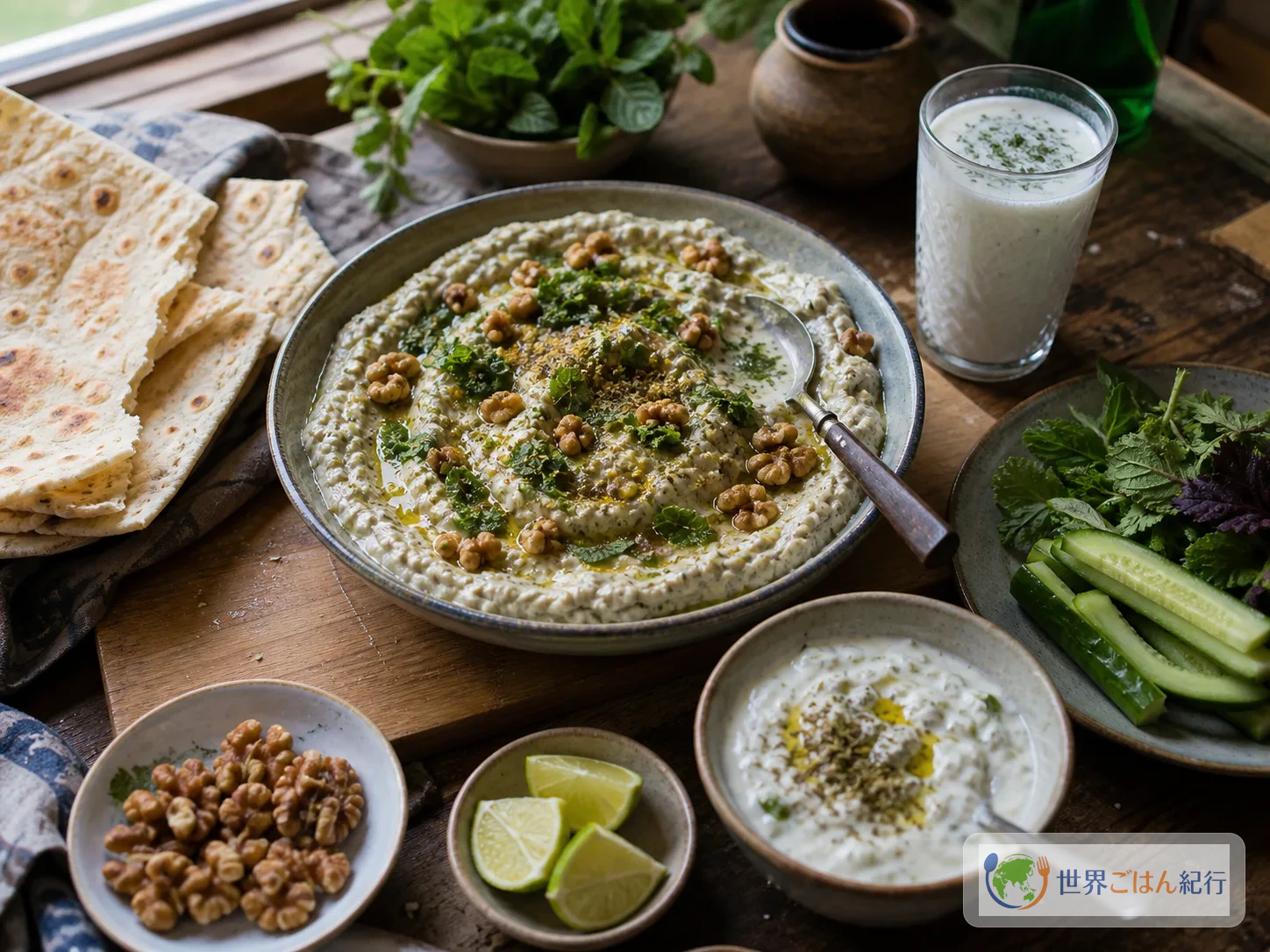
Borani is closer to its proper place as a small plate to scoop with bread or vegetables than as a topping on freshly cooked rice. Set flatbread, cucumber, radishes, herbs and olives beside it and eat it between the meat and rice dishes. For an Iranian menu, tahchin works as the rice star, fesenjan as the stew and chelow kabab as the meat: tahchin, fesenjan and chelow kabab (in Japanese).
Refrigerate for about 2 days. Keep the finishing walnuts, herbs and bread separate. If you store it all mixed, the walnuts get damp and the mint color fades. On the next day water may appear on the surface; do not throw it out, but stir lightly and add a pinch of salt and 1 tsp olive oil to bring it back. Freezing is not suitable because the yogurt splits.
Q1. Is drained yogurt essential?
Not essential. But using ordinary plain yogurt as is tends to make it loose. On a day with little time, Greek yogurt gives stability. If you have only ordinary yogurt, cook off more of the eggplant's moisture than usual.
Q2. Can I leave out the walnuts?
You can, but aroma and texture change a lot. If you cannot use nuts, sauté the onion a little longer for sweetness and add 1 tsp olive oil at the end. Pine nuts or almonds can stand in, but if you have an allergy do not force a nut substitute.
Q3. Can the same method be used for spinach borani?
The thinking about moisture control is the same. For spinach, blanch, plunge in cold water, squeeze hard, chop fine and combine with yogurt. You do not need to sauté it long in aromatic oil as with eggplant. The one thing they share is that leftover water makes it thin at once.
Q4. What does it go with to make the table come together?
It suits the side of rich stews, grilled meat and rice dishes. The coolness of yogurt takes up the herb bitterness of ghormeh sabzi (in Japanese), the sweet-sourness of fesenjan and the meat fat of chelow kabab (in Japanese). To widen it into Middle Eastern meze, set it beside hummus and tabbouleh and the roles of beans, herbs and roasted eggplant become clear.
Q5. Can children or people who dislike spicy food eat it?
It uses no chili, so it has almost no heat. If the sharpness of garlic bothers you, reduce it to 1 clove and sauté 30 seconds longer. If you dislike the aroma of cumin, start with 1/2 tsp. Lemon juice can be adjusted at the end, so for a first try, add only 2 tsp and add more at the table to avoid mistakes.
Sources
- Wikipedia: Borani (checking the name and regional differences)
- PersianGood: Borani Bademjan Recipe (checking the build of roasted eggplant, yogurt and dried mint)
- PCC Community Markets: Persian Eggplant and Yogurt Dip (checking a home version using walnuts, cumin, coriander and turmeric)
- Epicurious: Borani-yeh Bademjan (checking an English-language roasted-eggplant yogurt recipe)