Baklava is a Turkish pastry whose thin sheets shatter the moment you cut a piece, with the aroma of nuts and syrup following a beat later. When you try to make it at home, the first question is where to buy the phyllo, and the next is how to land on a pastry that is not too sweet yet does not dry out.
Baklava carrying the name Gaziantep is registered in the UK's protected food name database, and its specification treats layers of thin pastry, pistachios, clarified butter and syrup as the core. This article borrows that thinking and scales it to a quantity you can make in a home oven and a square pan of about 20 cm. It also describes a way to come close with spring roll wrappers, but the three things to protect are these: do not let the pastry dry out, do not grind the nuts to a powder, and pour cooled syrup over the hot bake.
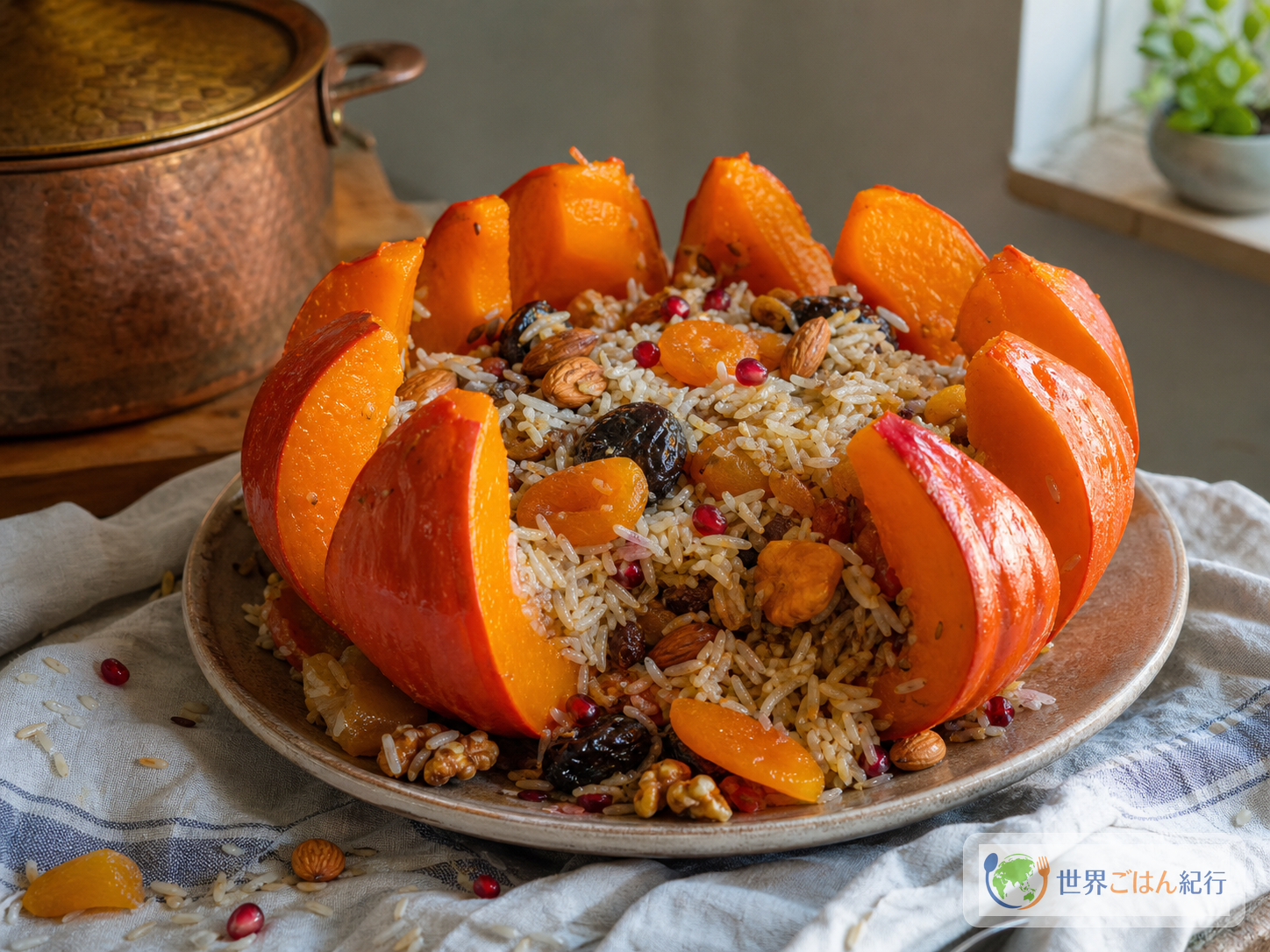
Served after Turkish köfte or lahmacun, the switch from salty to sweet is clean. As a dish built from stacked thin sheets, it also has something in common with Bosnian burek (in Japanese) and Azerbaijani shah plov, so if you like flour-based dishes you may want to bake them side by side.
Thinking about the Gaziantep layers in a home square pan
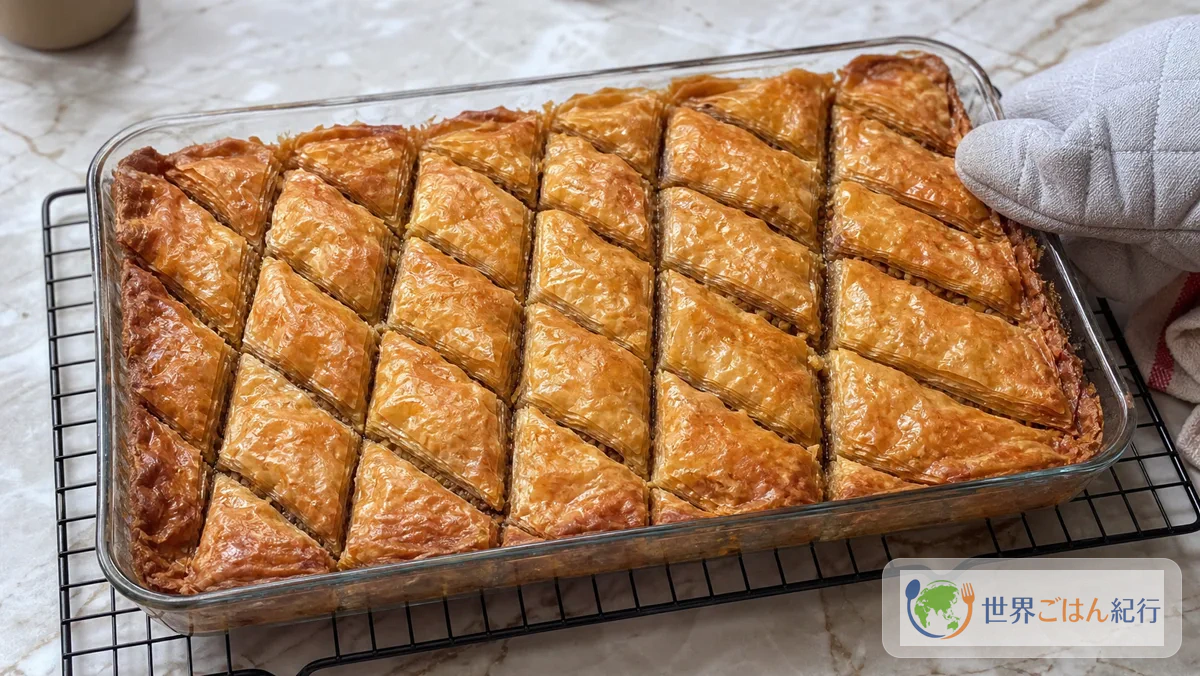
If you see baklava only as a "sweet nut pie," it looks easy to make. But picture a piece cut from a large tray at a pastry shop in Turkey and the star is the layers more than the sweetness. Many sheets of thin pastry are stacked with finely chopped nuts between them, and the heat of the bake takes in the syrup. When you bite, there is a light shattering first, and then the aroma of pistachio and the butter slowly come through. If it gets heavy here, it slides into being just a sweet pastry.
Gaziantep-style baklava is so often discussed largely because of the strength of the land as a pistachio-growing region. Plenty of deep green pistachios, and thin pastry baked on a big tray. Gathering the same quantity of pistachios at home makes even the cost of ingredients weigh on you. So this recipe keeps pistachios as the entrance to the aroma while using walnuts for half, a mix that is easier to keep making. It is not the local dish itself, but the frame of nut oils, thin pastry, clarified butter and cooled syrup is not broken.
It is hard to pin the origin on a single town or a single pastry cook. Baklava is sometimes described as a court sweet of the Ottoman Empire, and sometimes as a pastry of thin sheets and nuts that spread across Turkey, Greece, the Balkans and the Levant. Looking at regional differences, in Turkey the pistachio aroma and thin layers tend to come forward, in Greece walnuts and cinnamon, and in the Levant a floral syrup. The differences from household to household and shop to shop are also large, so this article does not ask which country is the real one; it narrows to how to make the layers and nuts of the Turkish style in a way that is easy to keep to in a home kitchen.
What causes hesitation in a home kitchen is the handling of the phyllo. Frozen phyllo starts drying the moment it comes out of the bag, and the edges crack white. Spring roll wrappers, on the other hand, are easy to handle but thick and hold moisture. If you want to see the real character of baklava the first time, it is worth looking for phyllo at an international grocery or online. On a day you cannot find it, make a smaller one with spring roll wrappers, go lighter on the syrup and enjoy it as a different dish; that kind of resolve leaves more satisfaction than forcing a substitute and ending up with something soggy.
Among syrup pastries, the Levant's kunafa puts hot cheese and kadayif forward, Egypt's basbousa (in Japanese) the grain of semolina, and Algeria's mhancha a roll of almond paste. Baklava is a dish where you neither dry out nor soak the layers, and the line of nuts shows cleanly when cut. Settle that first and your judgment is less likely to waver on shopping or baking time.
| What to decide | Local thinking | Where to land in a home kitchen |
|---|---|---|
| Nuts | Put the pistachio aroma forward | Half pistachios, half walnuts, to balance aroma and sustainability |
| Pastry | Stack extremely thin layers | Use frozen phyllo; treat spring roll wrappers as a different thing |
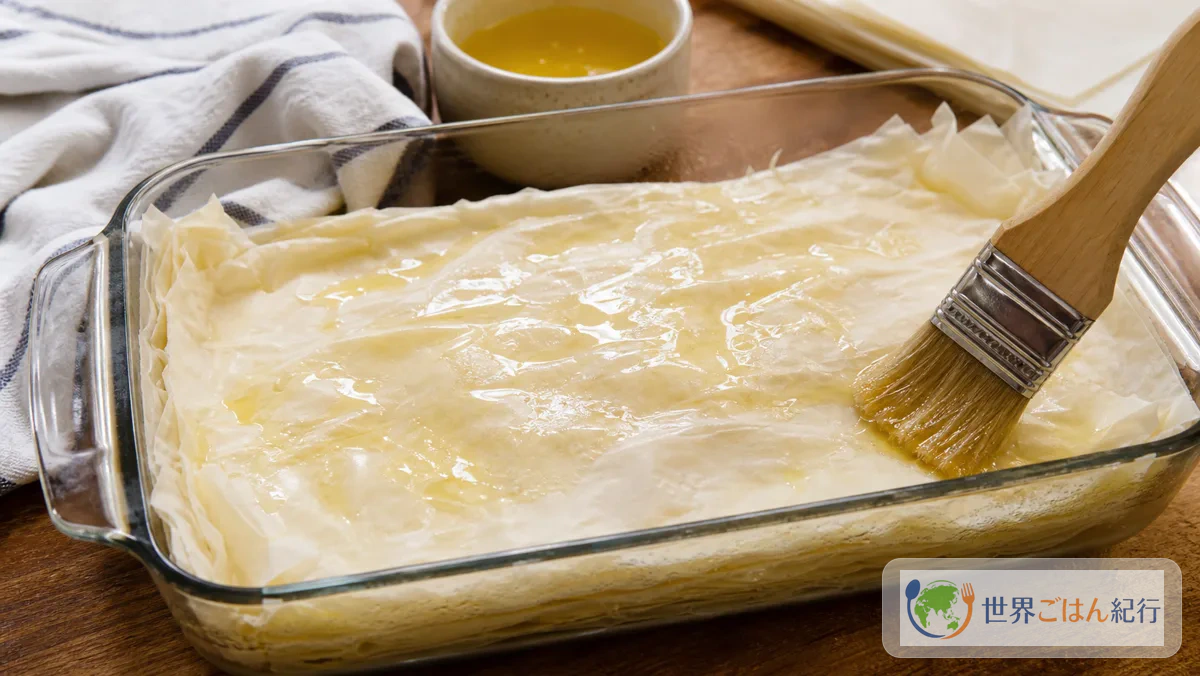
| Fat | Bake the layers light with clarified butter | Melt unsalted butter and avoid the white sediment as much as possible |
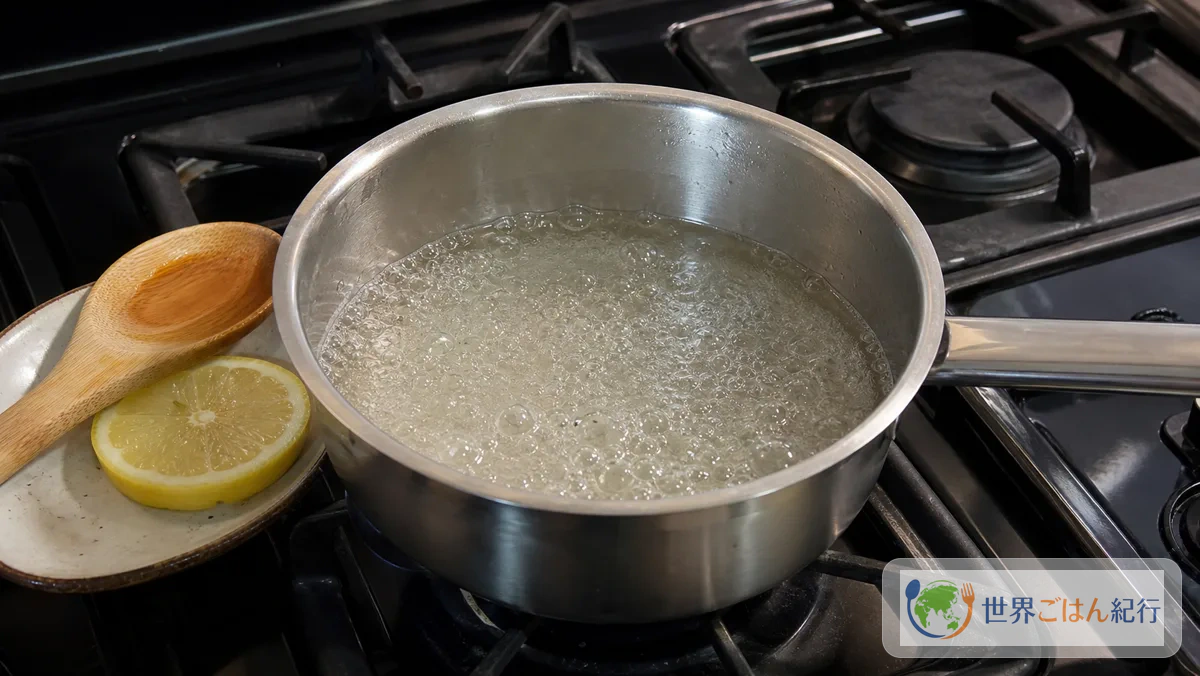
| Syrup | Let the heat of the bake take it in | Pour cooled syrup over the hot pastry little by little |
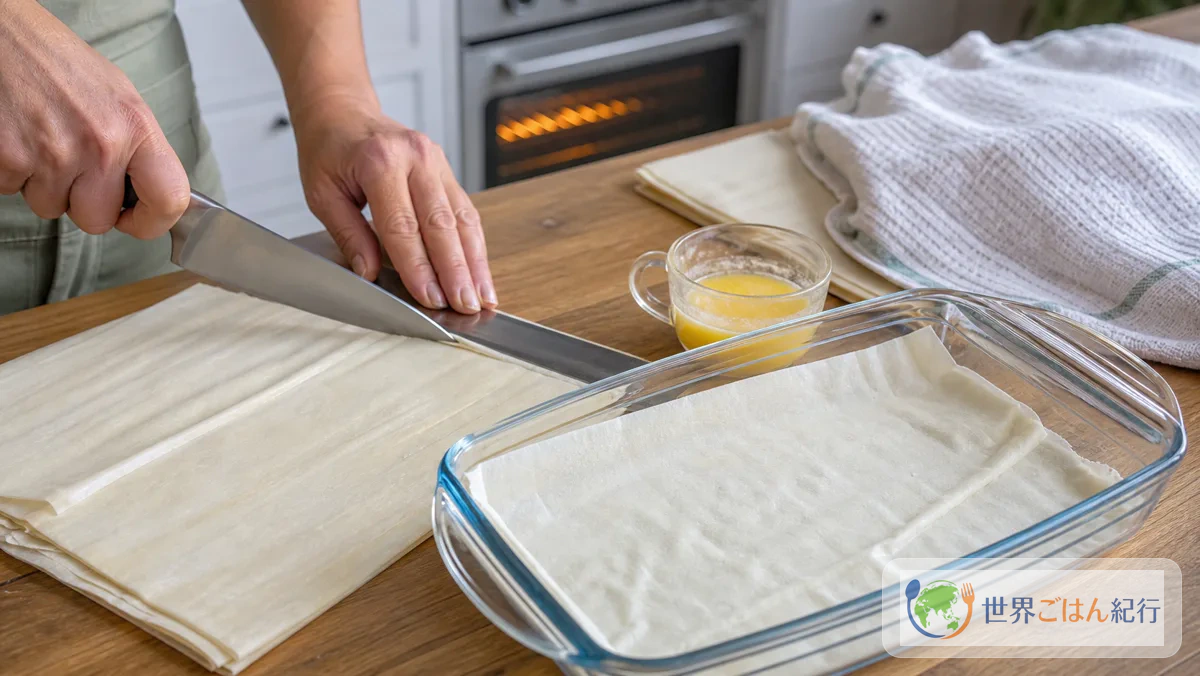
| Cutting | Cut to the bottom before baking | Cut into diamonds first so the layers are not crushed after baking |
Ingredients
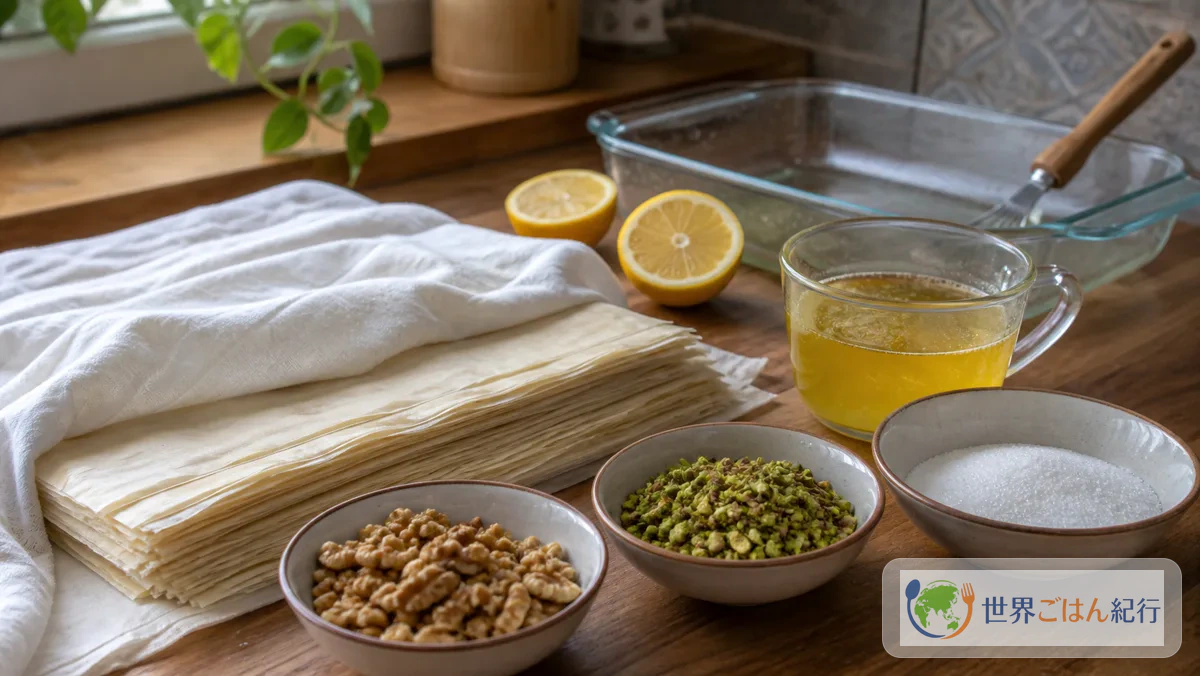
This makes one square pan of about 20 cm × 25 cm, which cuts into 12 to 16 pieces. The sweetness is modest for a Turkish pastry, but cutting the syrup too far leaves the layers without cohesion. Make it with this amount first, and from the second time reducing the sugar by only 30 g keeps it steady.
If you cannot find phyllo, you can substitute 20–24 spring roll wrappers. They will not give layers as thin and dry as phyllo, however. When using spring roll wrappers, use about 80% of the syrup rather than all of it and shorten the baking by 5 minutes, and the bottom is less likely to turn heavy. On days you want to finish with supermarket ingredients alone, this is enough to enjoy, but using phyllo for the first time makes it clear what it means to be "a pastry where you eat thin sheets."
Ingredients and tools that cause hesitation when shopping
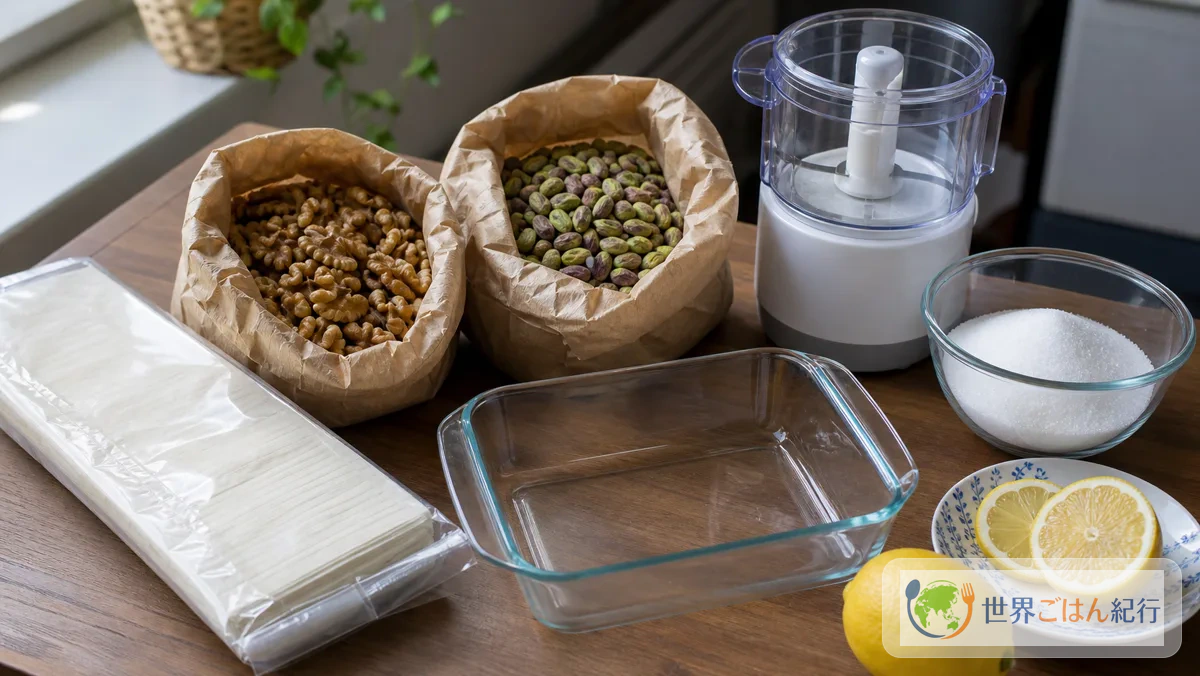
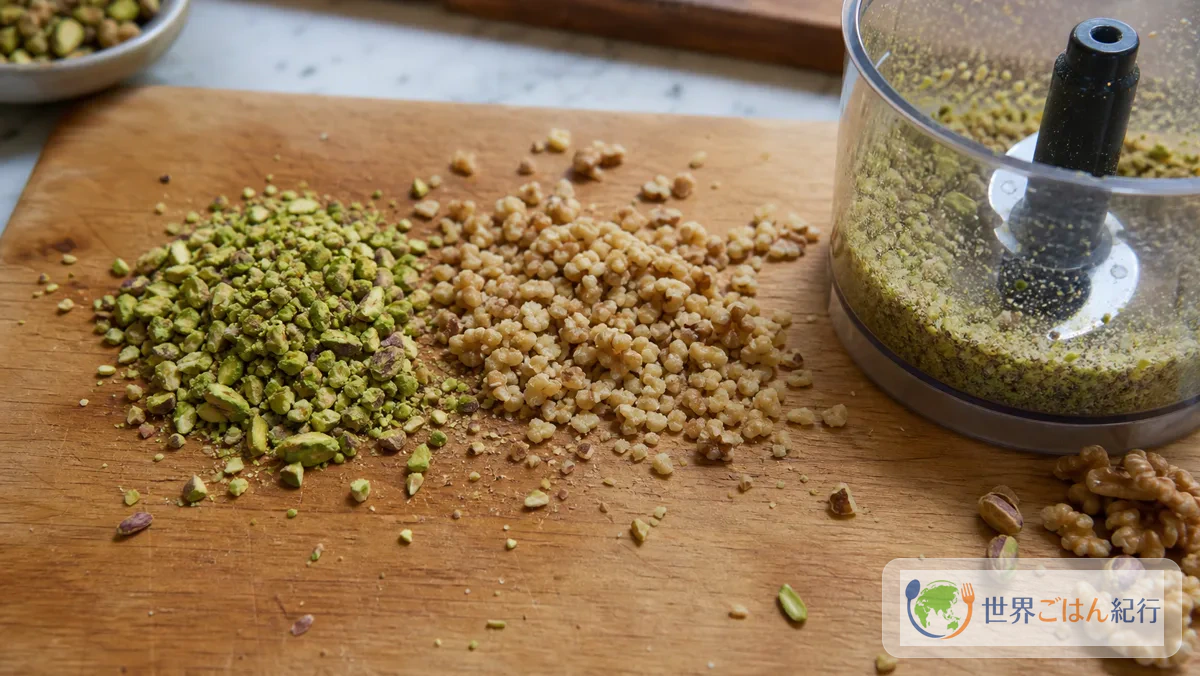
Because baklava has few ingredients, the condition of the tools and nuts changes the result. Nuts in particular clump like a paste when ground to a powder, and when too coarse the layers lift and are hard to cut. You can do it with a knife, but a food processor that can pulse a small amount briefly makes it easier to build layers of an even thickness.
Pistachios alone give a strong aroma, but the price rises when shopping at home. Mixing in walnuts for half adds oil and toastiness, and gives a flavor that is easier to keep making at home.
Chopping nuts by knife every time tends to mix a fine powder with large chunks. If you will keep making baklava and other nut pastries, a small food processor is a tool that sees a lot of use.
If the pan is too large the layers go thin, and if too small the heat is slow to reach the center. A square pan of about 20 cm is a size at which you can adjust while watching the color in a home oven.
Getting closer to the authentic one in a home kitchen
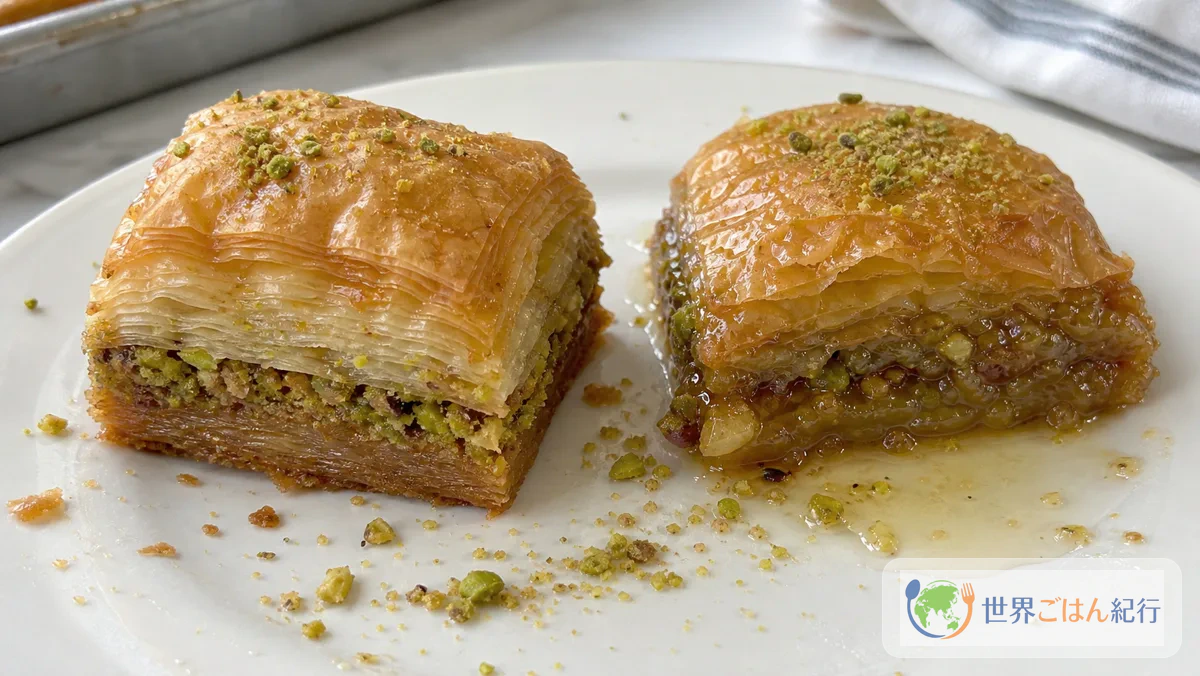
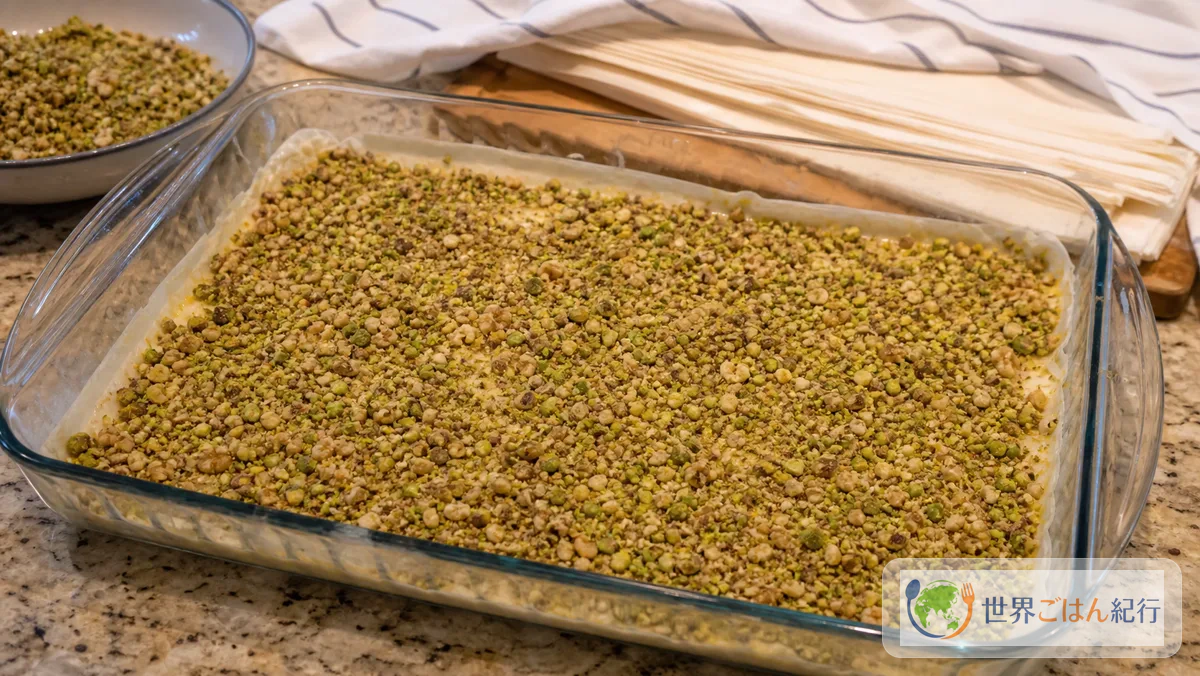
To get closer to Gaziantep-style baklava, what cannot be left out is pistachios, thin pastry and clarified butter. Even so, just gathering a full quantity of pistachios makes it expensive as a pastry. At home, use half pistachios and half walnuts and scatter pistachios on top at the end, and at least the entrance to the aroma is kept.
Phyllo can sometimes be found in the frozen section of international food shops or restaurant supply stores. It starts to dry the moment it leaves the bag, so put out as few sheets on the counter as possible. Torn sheets can go into the lower layers without trouble. Keep the best-shaped sheets for the top surface only.
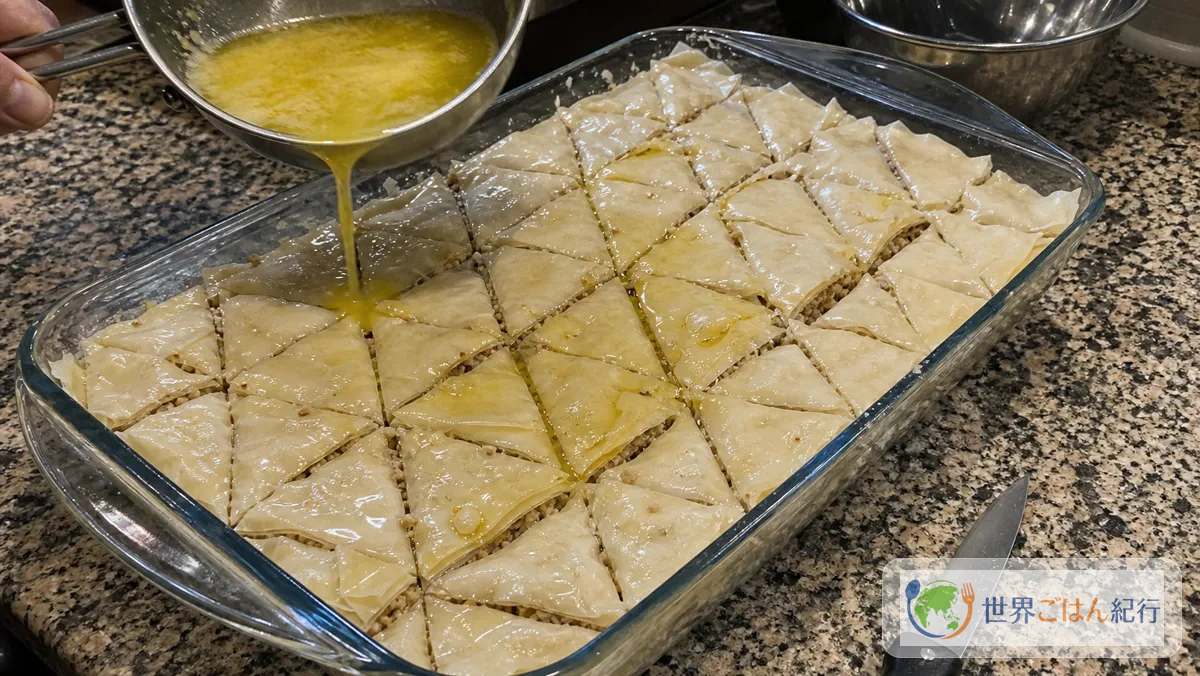
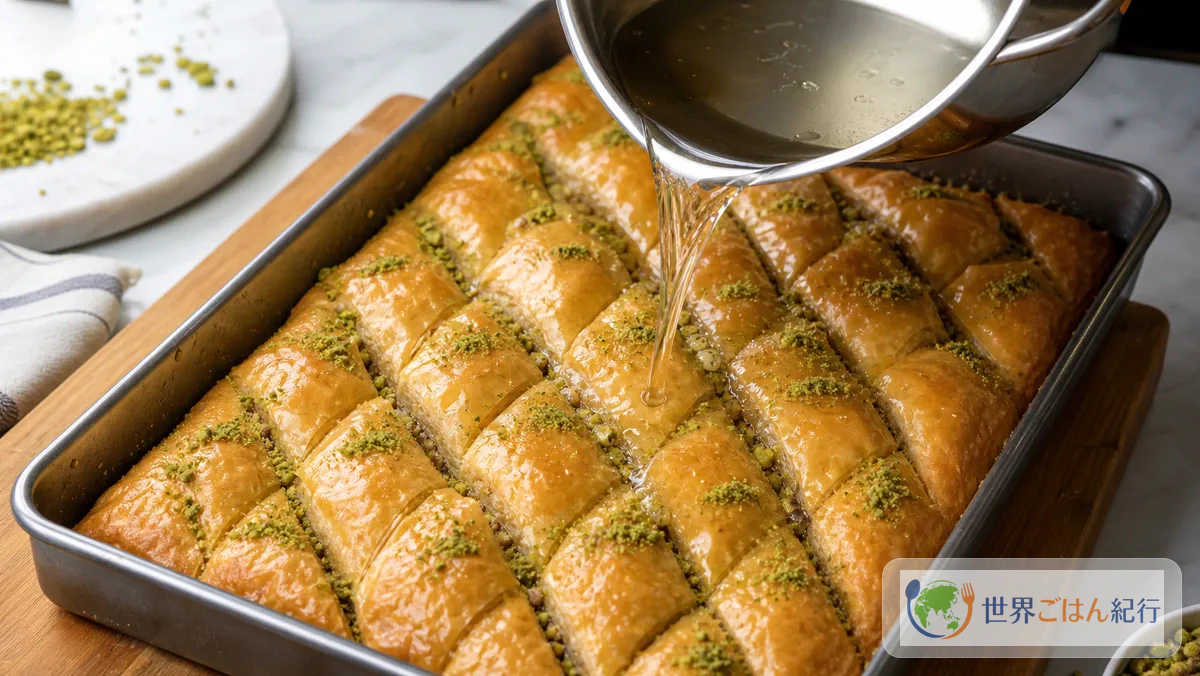
Syrup is not "the more the more authentic." Gaziantep baklava does hold syrup, but the thinness of the pastry and the aroma of the nuts come forward. In a home pan, rather than pouring the whole amount at once over the hot bake, putting half first into the cuts and corners and the rest over the surface avoids the failure of only the bottom turning watery.
When making it with spring roll wrappers, you will be more satisfied if you think of it as "a sweet nut pie that cuts" rather than for the aroma of layers. They are thicker than phyllo and hold more moisture before baking, so after lowering to 160°C bake 15–18 minutes and stop the syrup at 80%. If more than 5 mm of syrup remains at the bottom, reduce the water to 150 ml next time and it will come right.
Serving, storage and FAQ
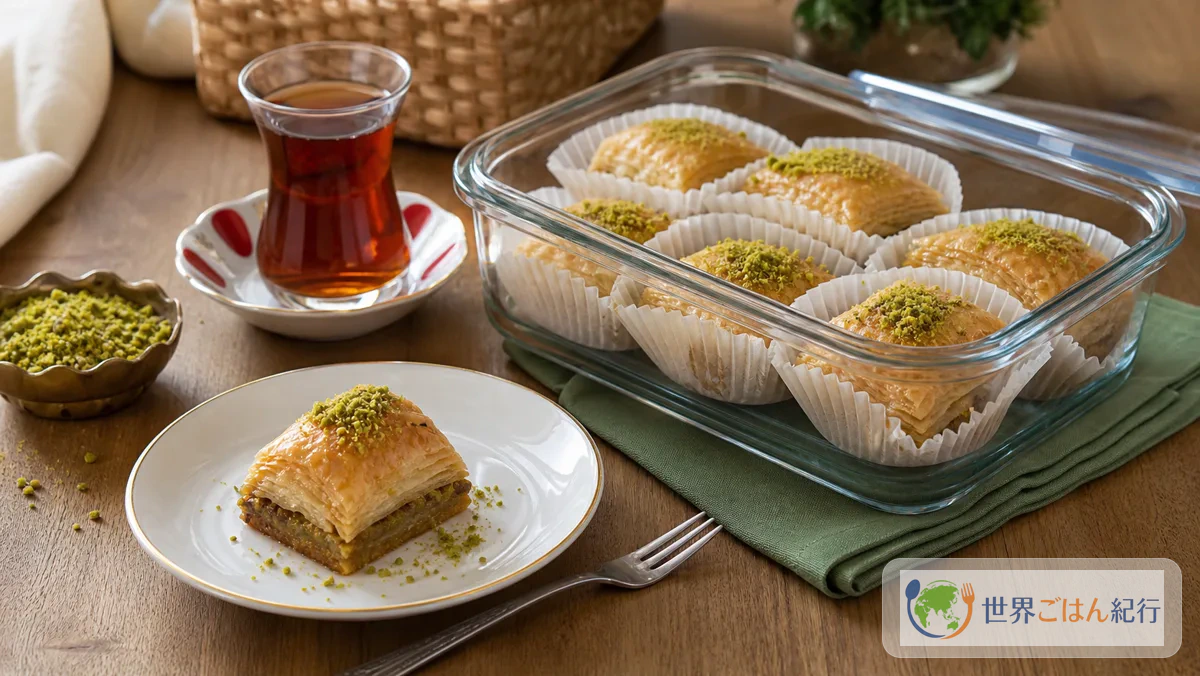
The cut of baklava is more stable the day after baking, once the syrup has settled, than on the day it is baked. In Turkey it is served with strong tea or coffee and eaten a little at a time. At your own table, unsweetened black tea, roasted green tea or a darker-roast coffee works well. A drink with some astringency takes up the sweetness more easily than cold milk.
As a guide, it keeps 2 days at room temperature and 5 days in the refrigerator. In a humid season, put it in an airtight container only after it has cooled completely, then move it to the refrigerator. Take refrigerated baklava out 10 minutes before eating and the butter aroma returns. To freeze, wrap each piece in plastic wrap and put in a storage bag for up to 3 weeks. To eat, remove the wrap and warm for 3 minutes in a 160°C toaster oven, and the surface recovers.
Can I substitute spring roll wrappers for phyllo?
You can. The texture will not be the same, however. Spring roll wrappers have thickness and moisture, so they do not easily become layers that hold air and shatter like phyllo. When substituting, shorten the baking time and stop the syrup at 80%, and heaviness is less likely.
If it is too sweet, can I cut the sugar a lot?
I do not recommend halving it from the start. The syrup is not only sweetness; it also holds the layers together. If you reduce, begin with only about 220 g granulated sugar and 170 ml water. To tone down the sweetness, cutting each piece smaller and pairing it with unsweetened tea keeps the balance of flavor better.
Can I make it without pistachios?
You can make it with all walnuts. The green aroma of Gaziantep is weaker, but it is delicious enough as a home pastry. When using walnuts alone, always add the 1 g salt, and grating about 1 g lemon zest at the end to add aroma keeps it from tasting flat.
Can I fix it if it turns soggy?
It does not come back completely, but if it is only the surface, warming it for 3–4 minutes in a 160°C toaster oven makes it a little lighter. If the bottom is watery, reduce the syrup by 20% next time and lengthen the baking by 5 minutes. If you add syrup while the color is still pale, its power to absorb is weak.
What goes well to serve with it?
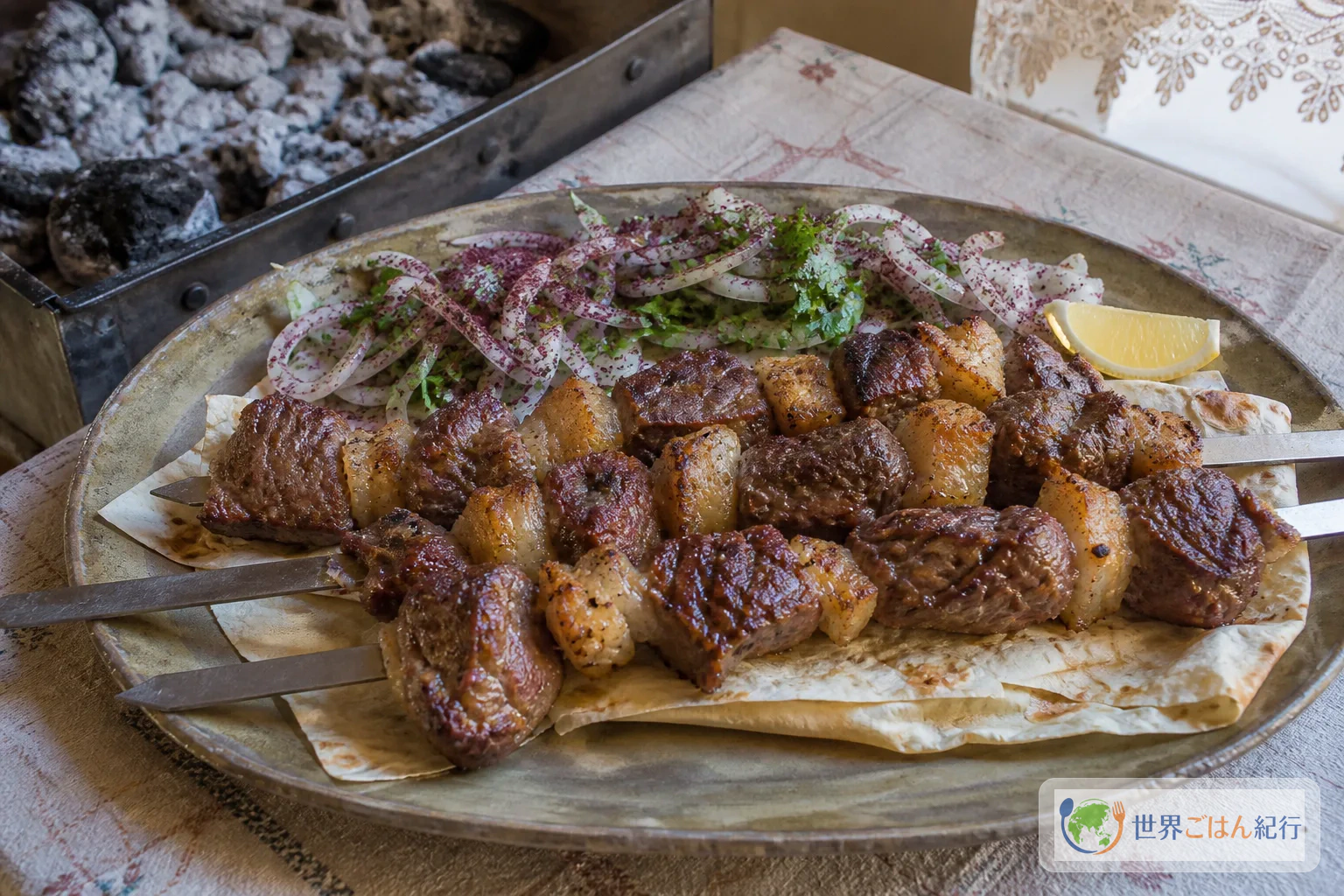
After a savory Turkish meal, a small cut of baklava is natural. With meat, kebab or köfte go well, and with a light starter, dolma. If you move on to Middle Eastern sweet cheese pastries, Lebanese kunafa is also an easy one to compare.
Sources
- UK Government, "Antep Baklavası / Gaziantep Baklavası" https://www.gov.uk/protected-food-drink-names/antep-baklavasi-slash-gaziantep-baklavasi
- UK Government, "Antep Baklavasi Product Specification" https://assets.publishing.service.gov.uk/media/6655d631d470e3279dd332c5/Antep_Baklavasi.pdf
- UNESCO Creative Cities Network, "Gaziantep" https://www.unesco.org/en/creative-cities/gaziantep