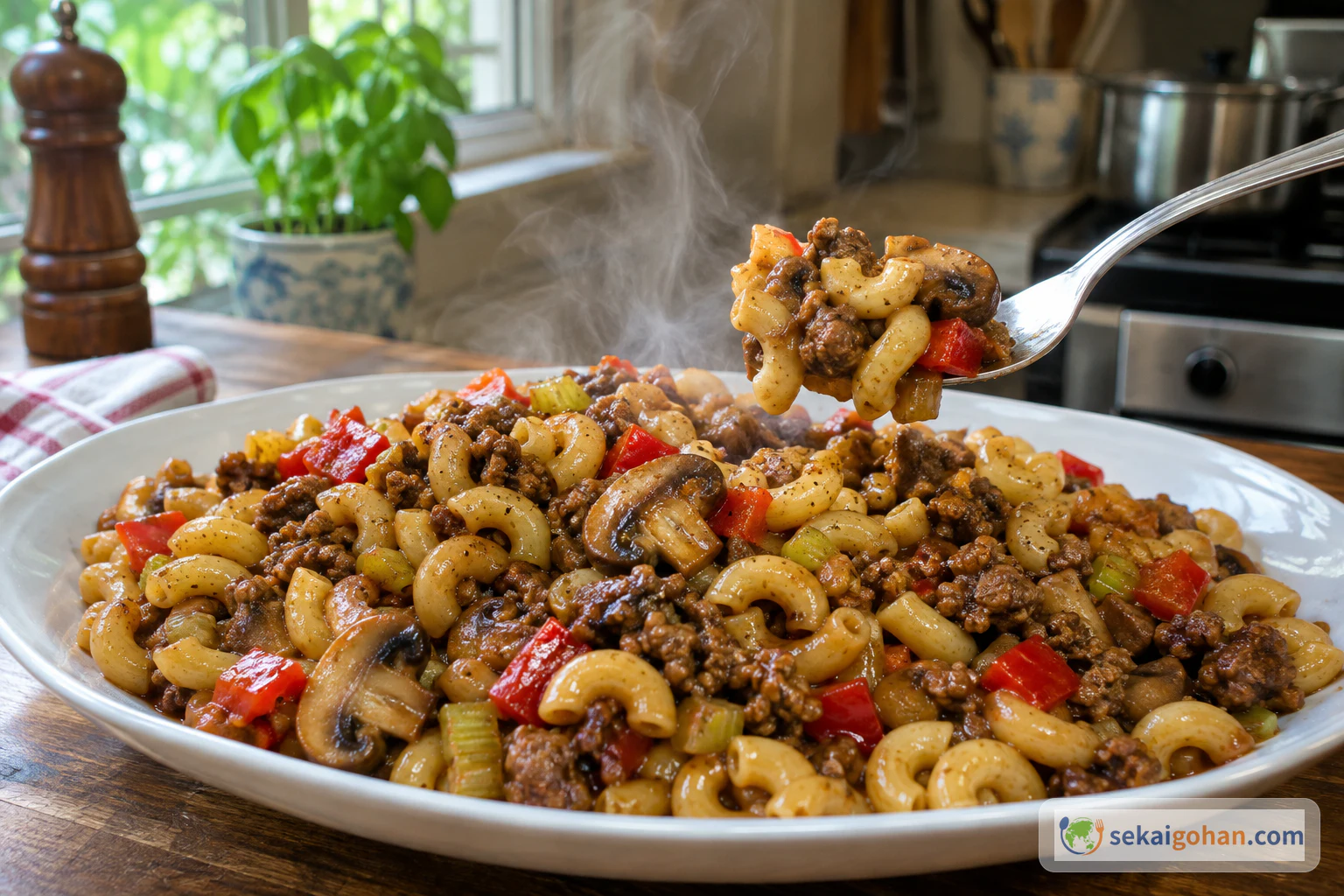
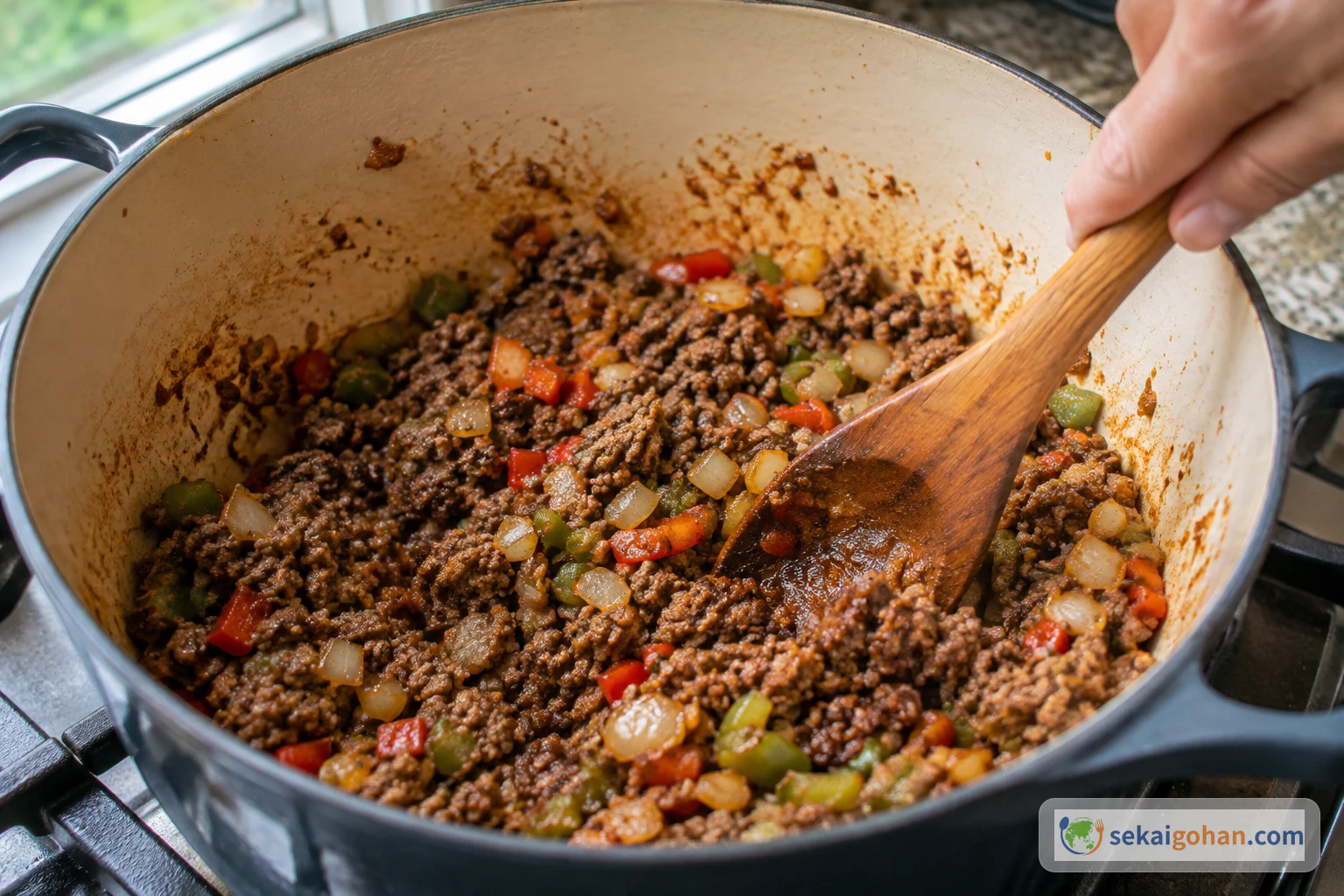
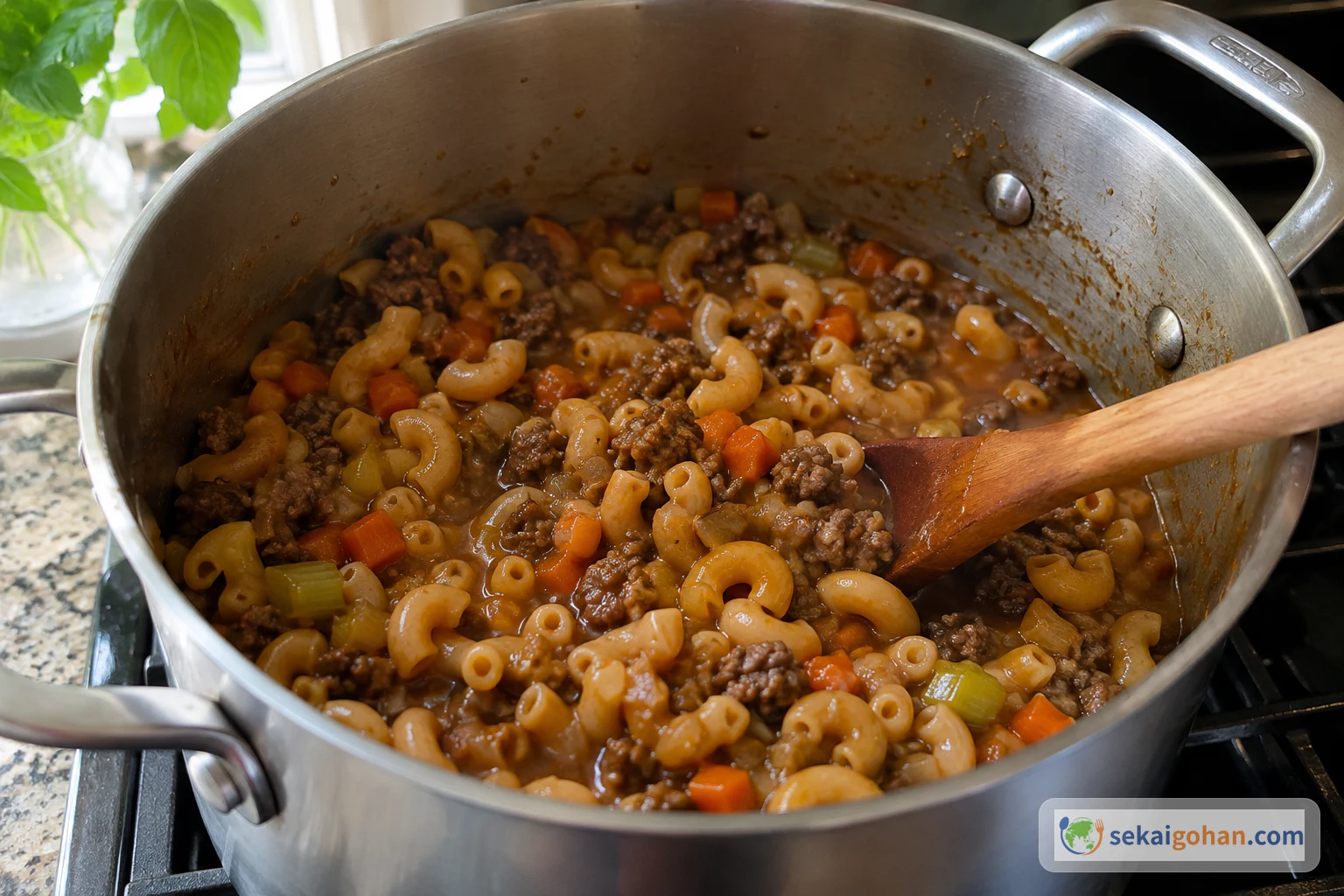
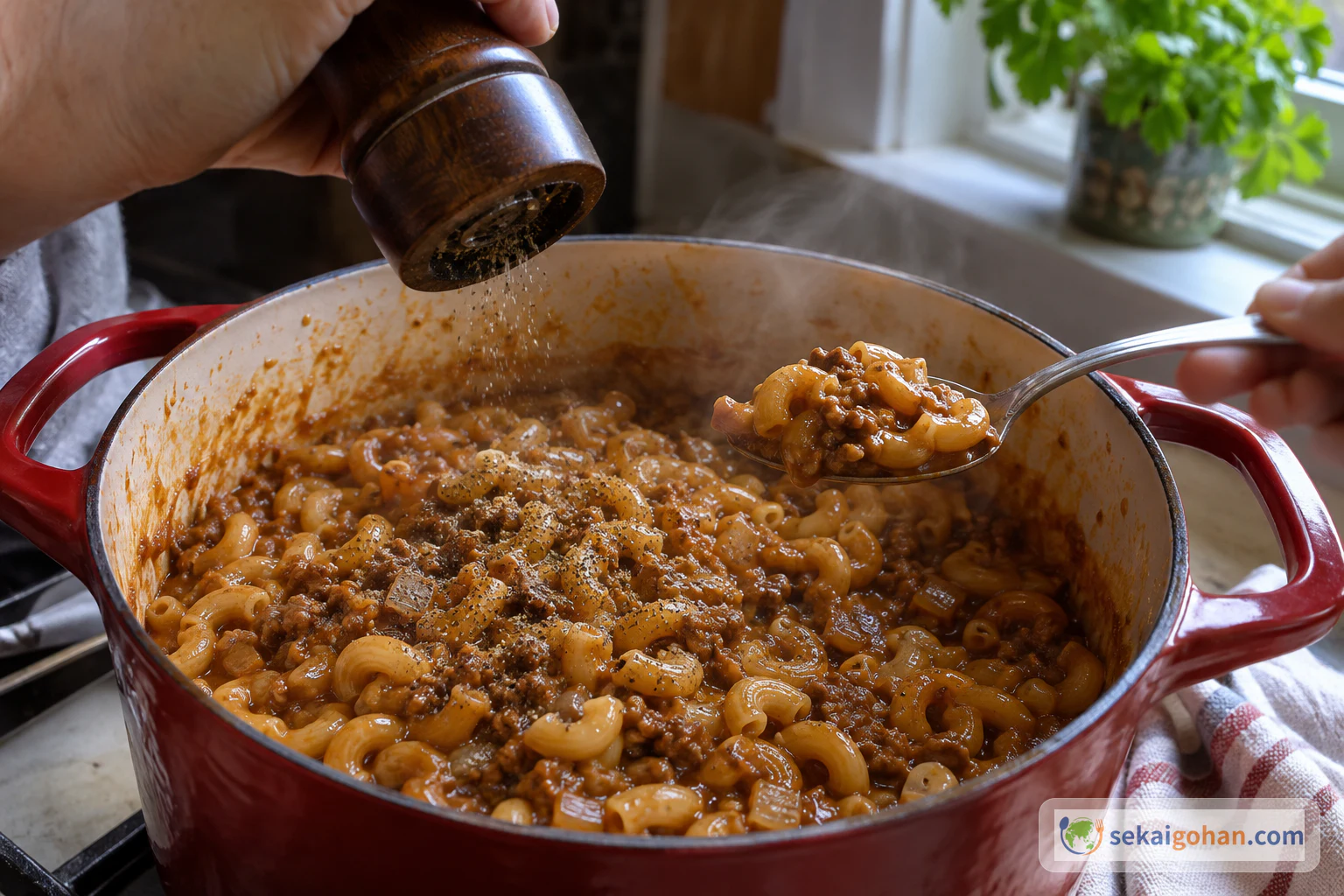
The broth, soy sauce and Worcestershire go into the pot in one pour, and the pale elbows go in after them. You stir, and within moments the pasta turns brown as it drinks up the liquid, while the browned beef and soft red pepper cling to every curve. That is macaroni chinois, the stir-fried macaroni of Quebec's Chinese-Canadian kitchen, known in English as fried macaroni. It tastes salty and savoury from the soy, gets a little sour tang from the Worcestershire, and has the deep, meaty flavour of well-browned beef, softened by sweet onion and pepper. It's a one-pot weeknight dinner, and it reaches the table steaming.
A Chinese Name on a Quebec Plate
In this dish's English name, "fried" means stir-fried. The boiled macaroni is tossed in the same pot as the browned beef and vegetables until it soaks up the sauce. It has nothing to do with the battered, deep-fried mac and cheese sold at American fairs.
The name throws people at first. "Chinois" promises Chinese food, yet the pot holds elbow macaroni, ground beef, celery and Worcestershire sauce, and soy sauce is the only Chinese element in it. The dish is usually credited to Chinese restaurant owners in Quebec City around the middle of the twentieth century, who adapted their cooking to what local diners liked. Who made it first is not settled. Either way, it was never a traditional Chinese dish. It's a Quebec dish that grew up inside Chinese restaurants.
It belongs to a bigger North American story. Many of the chop suey–style dishes on Chinese-Canadian menus were born in North America in the late nineteenth century, built from local ingredients to suit local tastes. Macaroni chinois takes that idea about as far as it goes: Italian-style pasta and a British-style sauce, brought together by soy sauce and the speed of a stir-fry.
Today the dish lives in home kitchens at least as much as in restaurants. It's a standard in Quebec home-cooking magazines, and some recipe collections file it simply under Quebec cooking, next to dishes like poutine and tourtière. Households change it freely. Some use ground pork instead of beef, some add broccoli or bean sprouts, and some sweeten the sauce. The version here keeps to the core: beef, four vegetables and a sauce of broth, soy and Worcestershire. For more of the country's table, see our guide to Canada.
Ingredients (serves 4 to 6)
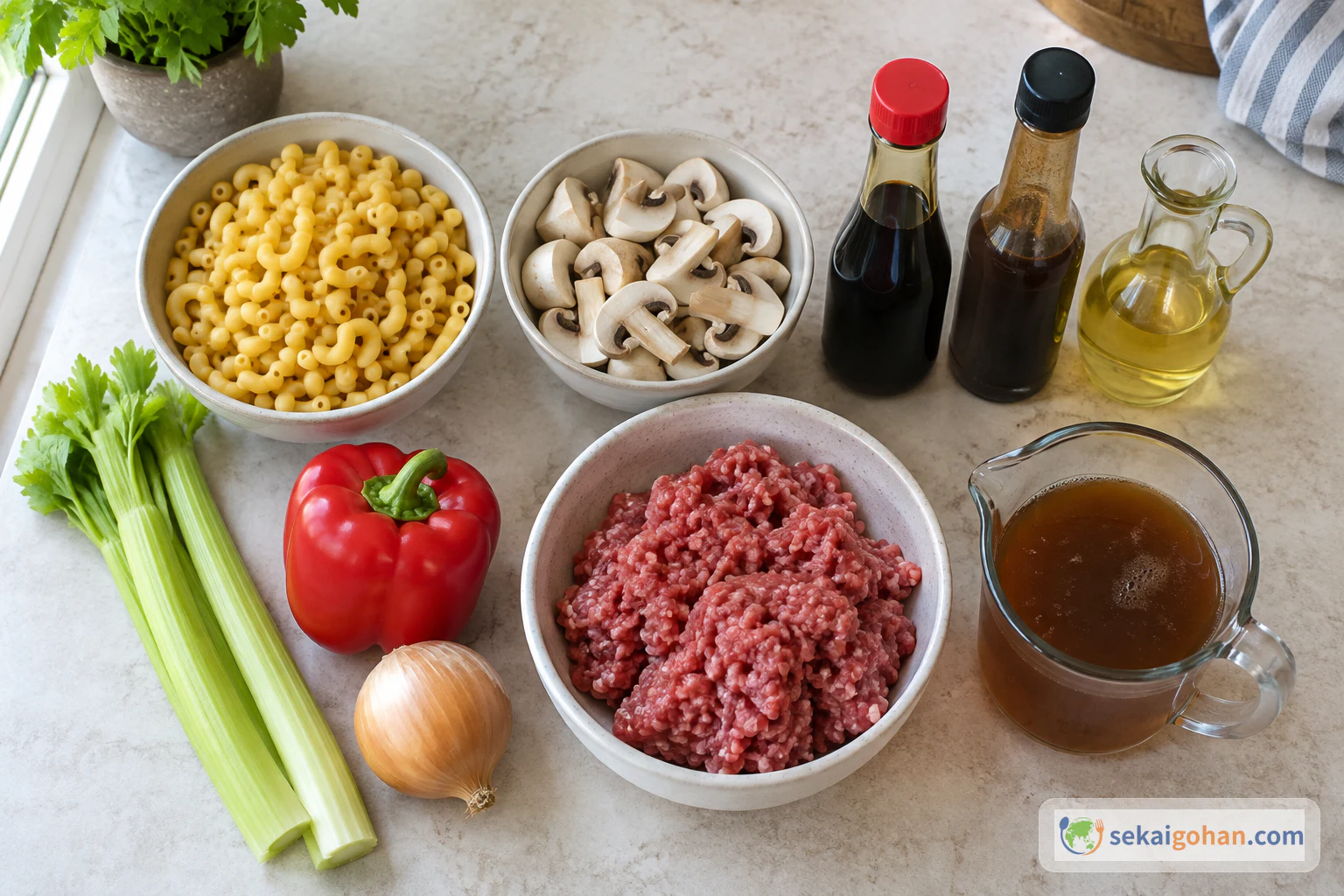
The broth and soy sauce bring all the salt the finished dish needs. Salt the pasta water and nothing else, then let a taste at the end decide whether anything more goes in. Usually black pepper is all it needs.
The macaroni contains wheat, and the soy sauce contains soy and usually wheat. Some Worcestershire sauces are made with fish (anchovy), so check the label. Check the beef broth label too if you cook for anyone with allergies. The recipe uses no dairy, eggs or nuts.
Equipment
- A large pot, big enough to boil the pasta and then hold the whole dish
- A colander
- A wooden spoon
- A cutting board and a sharp knife
Choosing and Substituting
Everything here is in an ordinary supermarket, so you won't need a specialty shop. What matters most is the soy sauce. Reduced-sodium soy sauce keeps the dish balanced, because the beef broth also brings salt. If all you have is regular soy sauce, use less of it, add it in stages and taste as you go. Otherwise the dish turns harsh and salty. Chinese dark soy sauce is a different product and is not a substitute for the reduced-sodium soy sauce used here.
| Swap | What it changes |
|---|---|
| Brown (cremini) mushrooms instead of white | A slightly earthier, deeper flavour. Works well |
| Half beef, half pork | A softer, sweeter meat flavour. Pork alone moves the dish toward the variation below |
| Any short pasta in place of elbows | Fine if it is small and holds sauce. Elbows remain the classic shape |
| Regular soy sauce instead of reduced-sodium | Saltier. Use less and taste before adding the rest |
| Any Worcestershire brand | Brands differ in sweetness and tang. The dish still works |
There's no thickener in this sauce. The pasta absorbs the liquid and the dish comes together on its own, so leave the cornstarch in the cupboard.
Method: One Pot, Start to Finish
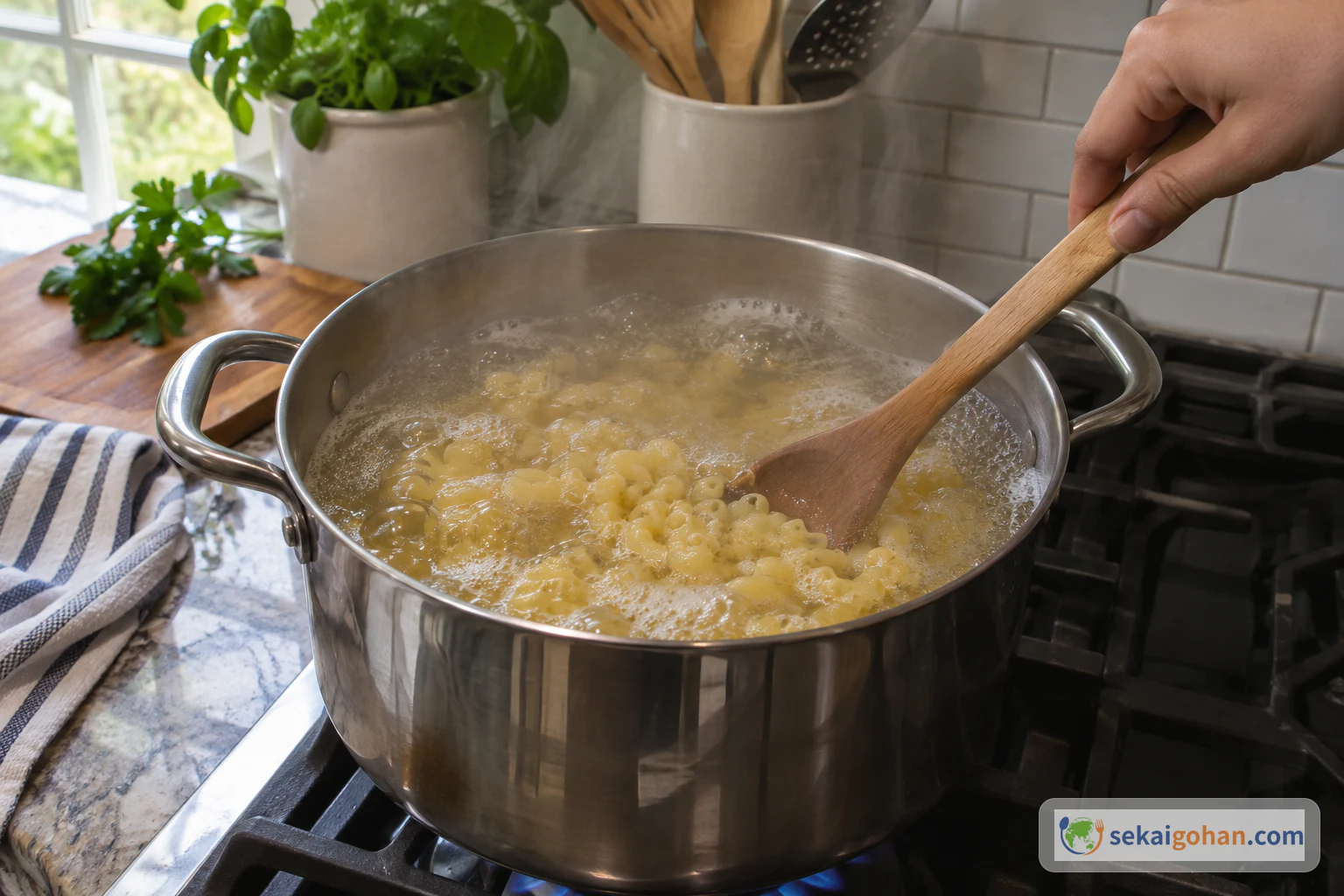
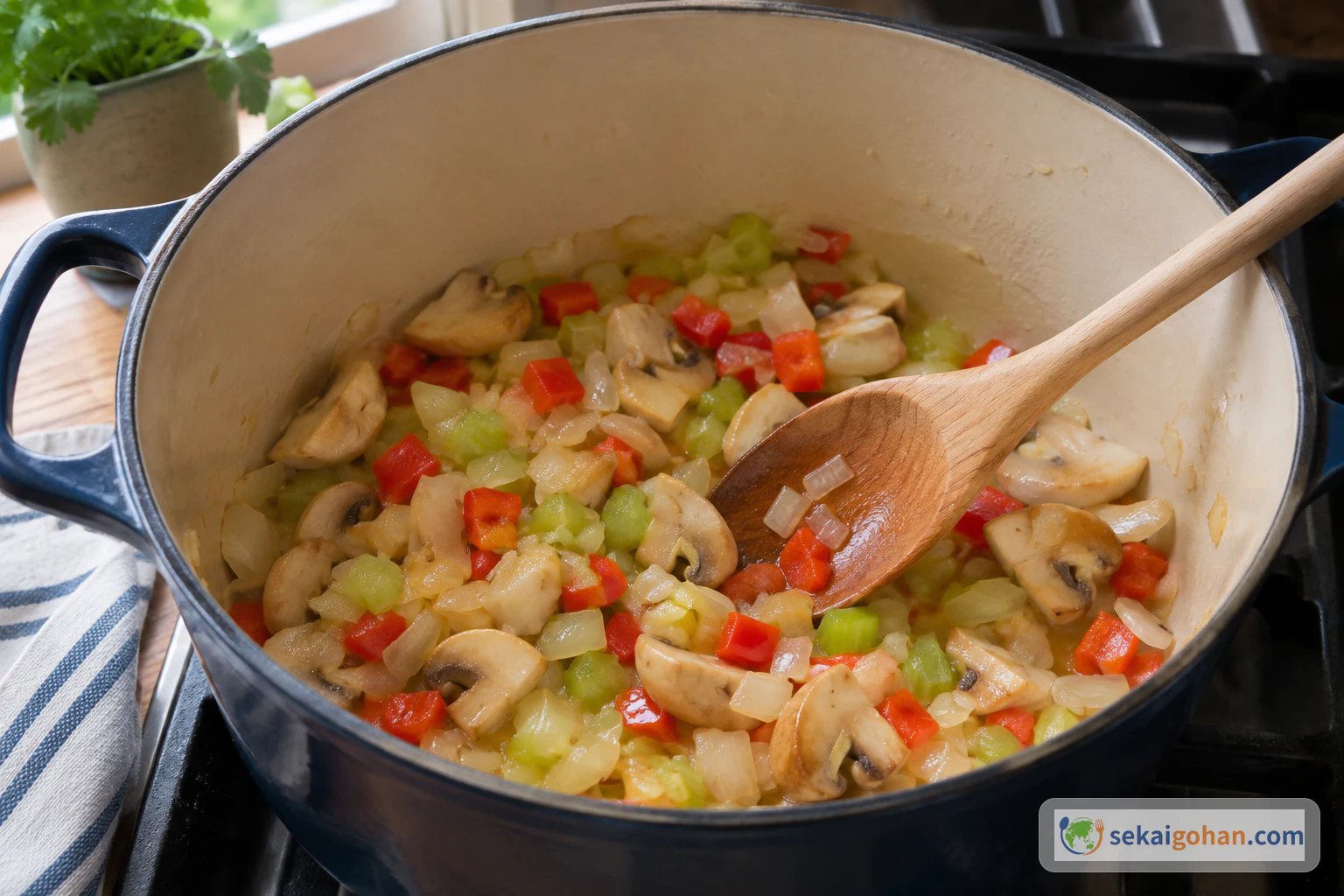
Cut all the vegetables while the pasta water comes to a boil, and keep the beef, broth and sauces within reach. After the pasta is drained, everything happens in the same pot and moves quickly. The only real wait is while the vegetables soften and the beef browns, and that is where the flavour comes from.
When It Goes Wrong
| What you see | Why | What to do |
|---|---|---|
| The finished dish tastes too salty | Regular soy sauce instead of reduced-sodium, or salt added on top of the soy and broth | Leave out any more salt. Next time use reduced-sodium soy, or less regular soy added in stages |
| The macaroni is soft and mushy | It was boiled fully tender, then kept softening in the sauce | Pull the pasta while it still has a firm centre. It finishes cooking in the pot |
| The pasta clumps in the pot | It wasn't rinsed, or sat in the colander still wet and starchy | Rinse quickly under cold water and shake it well. Break up clumps as you fold it into the sauce |
| The beef is grey and the sauce tastes flat | The beef steamed because it was stirred nonstop | Spread it out and let it sit between stirs until it browns and sizzles |
| Pink shows inside the beef | It wasn't cooked long enough before the liquids went in | Keep cooking and stirring until no pink remains, then move on |
Serving and Variations
At the table
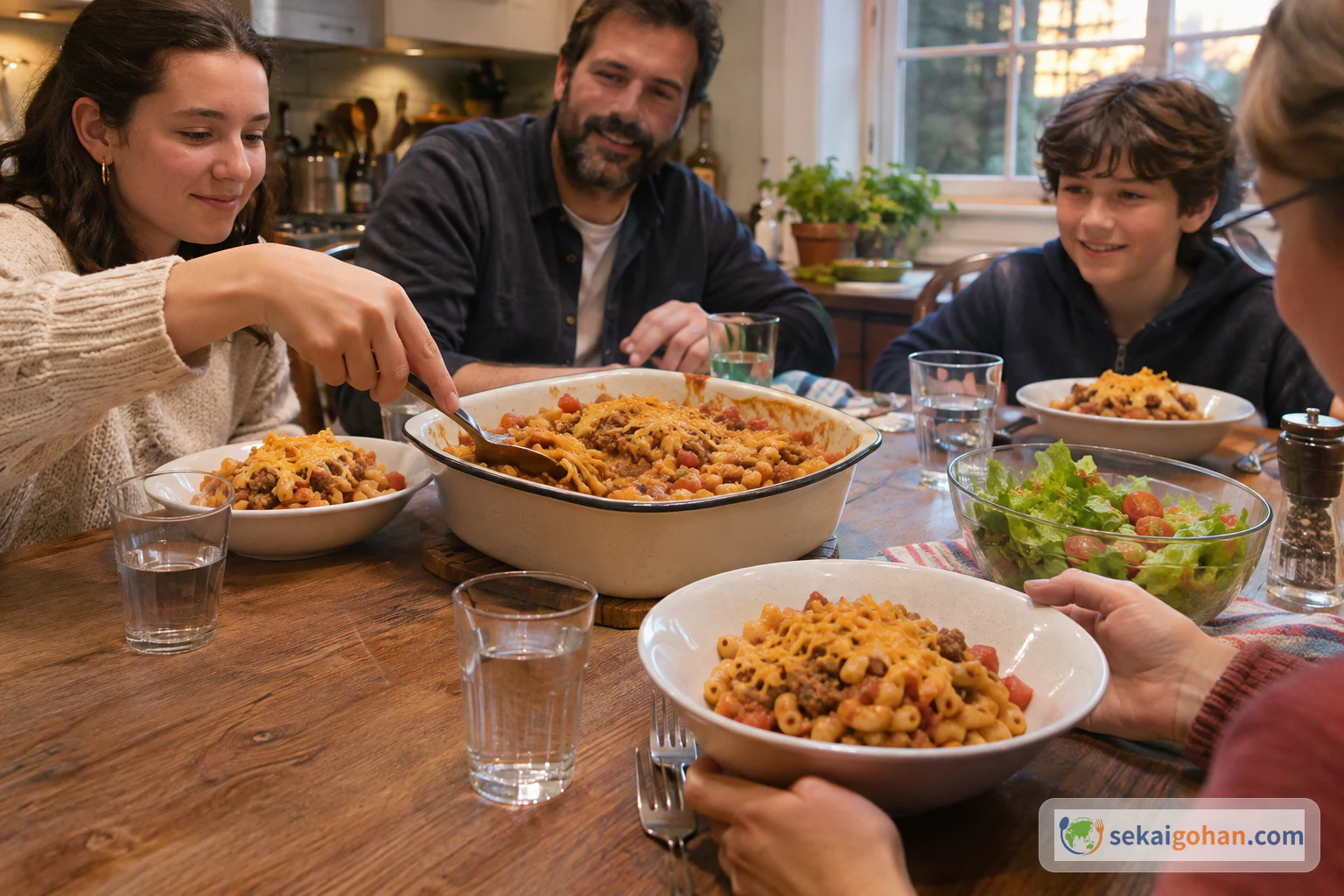
Macaroni chinois is a complete one-pot dinner. Put the pot or a big dish in the middle of the table and let everyone serve themselves into bowls. A simple green salad goes well with the salty, savoury pasta, and a glass of water is all you need to drink. It's a weeknight family meal.
Variations
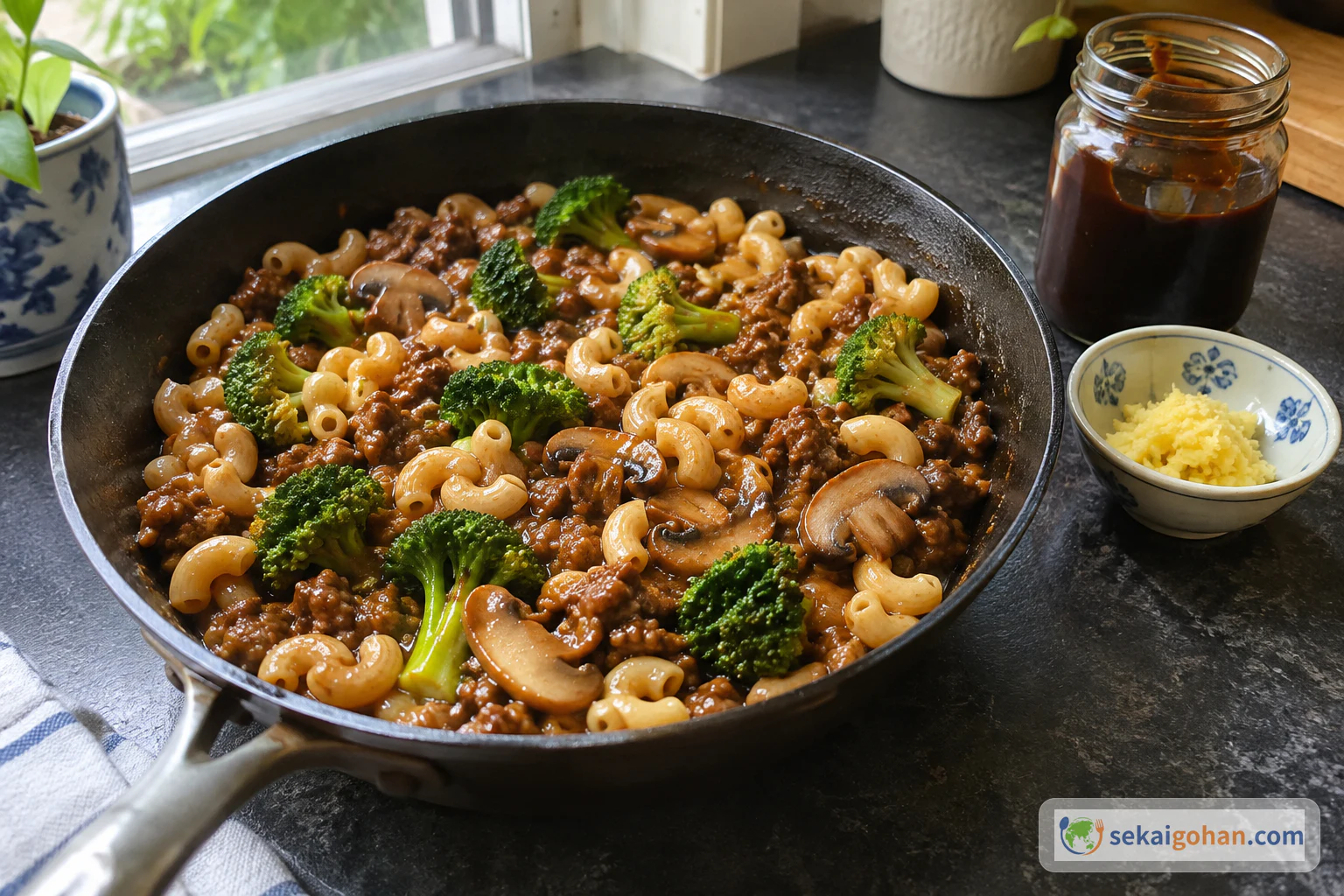
- Pork, broccoli and hoisin. Ground pork replaces the beef, broccoli joins the vegetables, and hoisin sauce and ginger go into the sauce. A splash of the pasta cooking water loosens it. The result is sweeter and glossier, with a sharp kick of ginger. Remember to save some pasta water before you drain.
- Molasses, thyme and bean sprouts. About 2 tablespoons of molasses go into the sauce, with thyme, bean sprouts, both red and green peppers, and concentrated beef bouillon. The molasses pushes the dish toward sweet and dark, and the sprouts add crunch.
- Mushroom swap. Brown mushrooms instead of white ones make it a little deeper and earthier without changing anything else.
Leftovers
Let leftovers cool, then put them in a covered container and refrigerate promptly. Reheat only what you will eat, and stir it over the heat until it is steaming hot all the way through. The pasta keeps absorbing sauce as it sits, so reheated macaroni will be softer than it was on the first night.
Frequently Asked Questions
Why rinse the pasta in cold water?
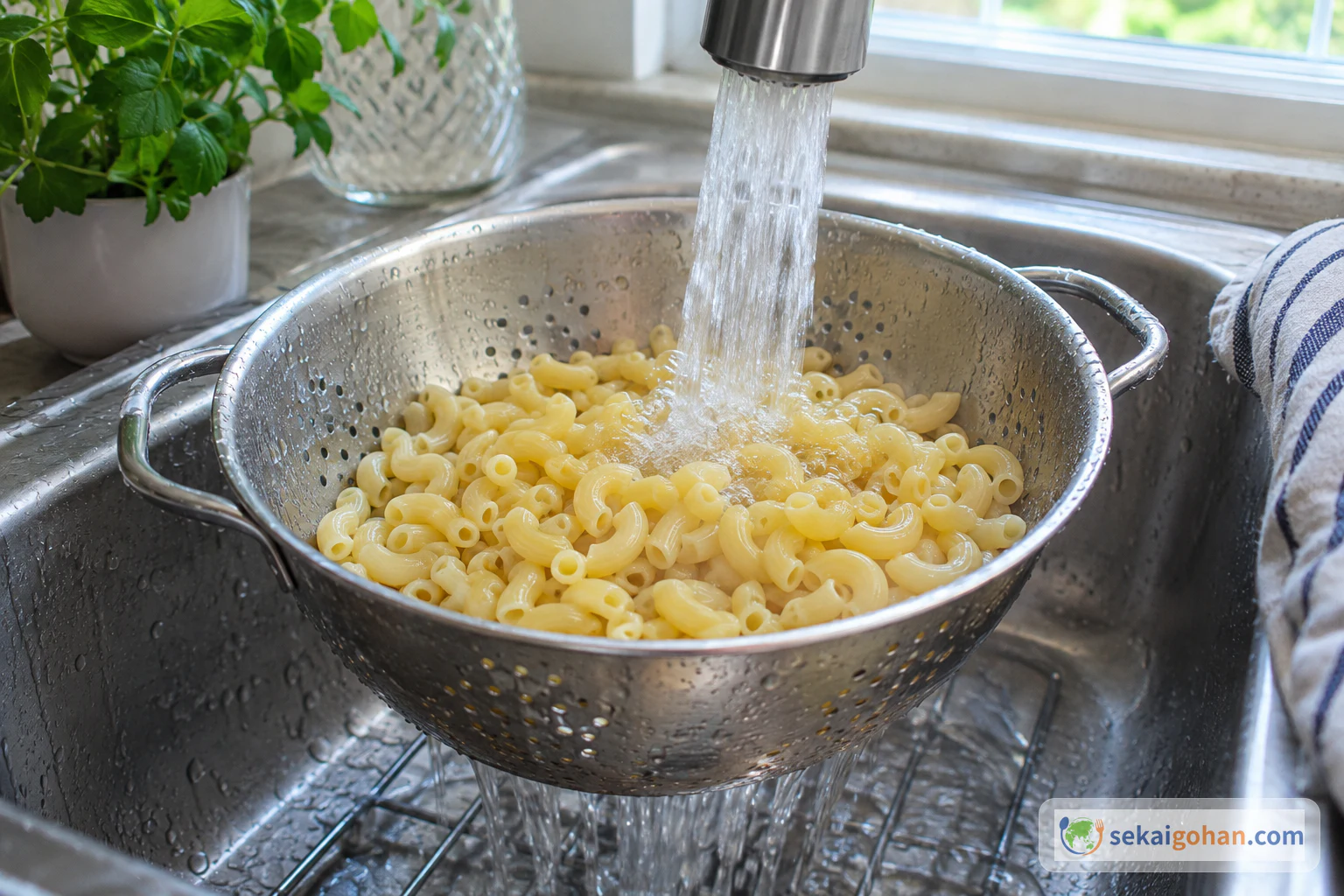
Rinsing stops the macaroni cooking at al dente and washes off the surface starch that makes it stick. That keeps the elbows separate, and they soak up the sauce evenly in the pot instead of clumping into a sticky mass.
Do I need a wok?
No. The pot you boiled the pasta in does every job after that, which is the whole point of a one-pot dinner. A large skillet or deep stir-fry pan works too, as long as it holds all the pasta with room to stir.
Should I thicken the sauce with cornstarch?
No. The macaroni absorbs the broth and sauces as you stir, so the dish ends up coated rather than saucy. If liquid is still pooling, keep stirring over the heat until the pasta takes it up.
Can I make it ahead for a crowd?
Prepare the vegetables and measure the sauces ahead, then cook just before serving. The pasta is at its best right after it absorbs the sauce, when the elbows are still firm and glossy.