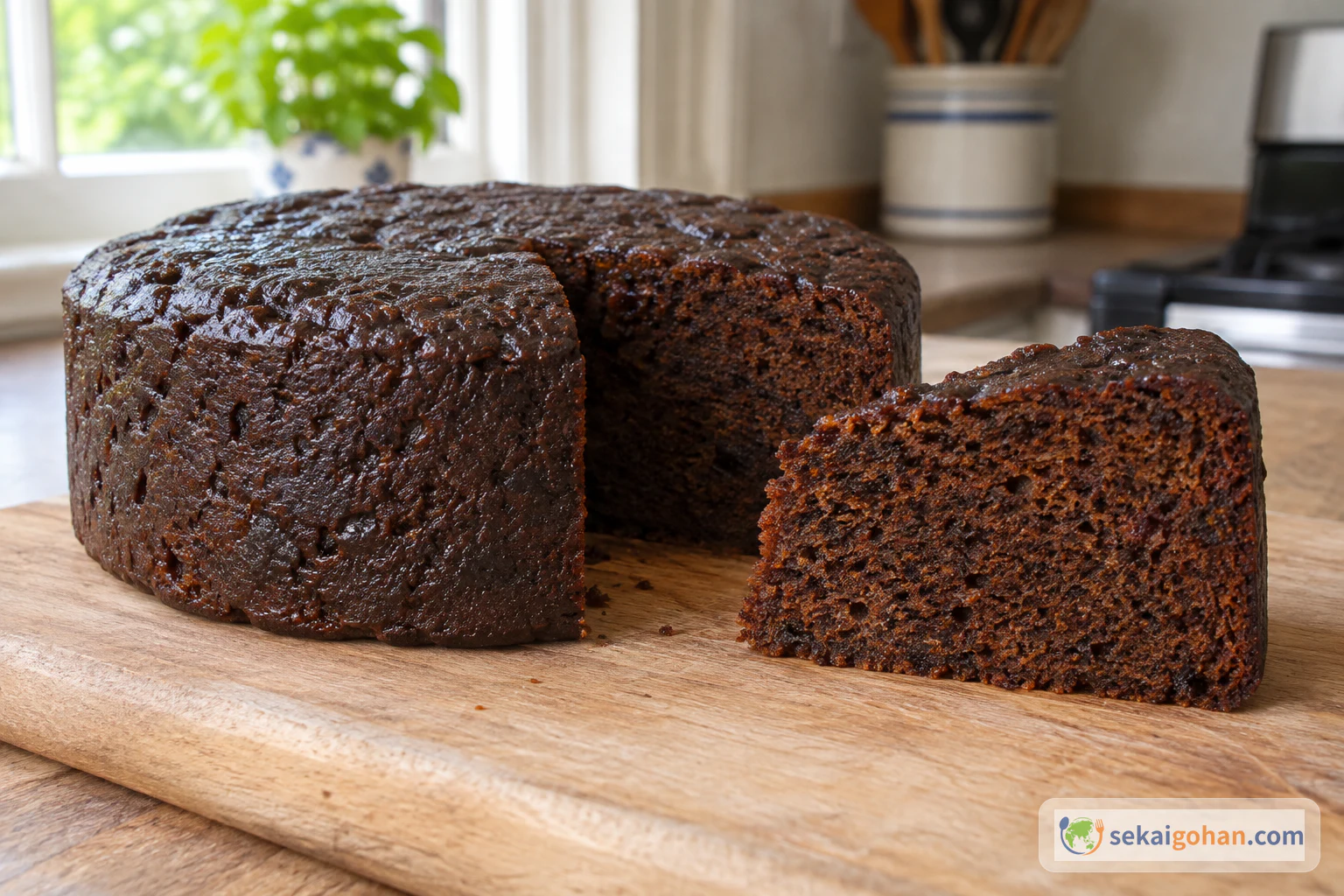
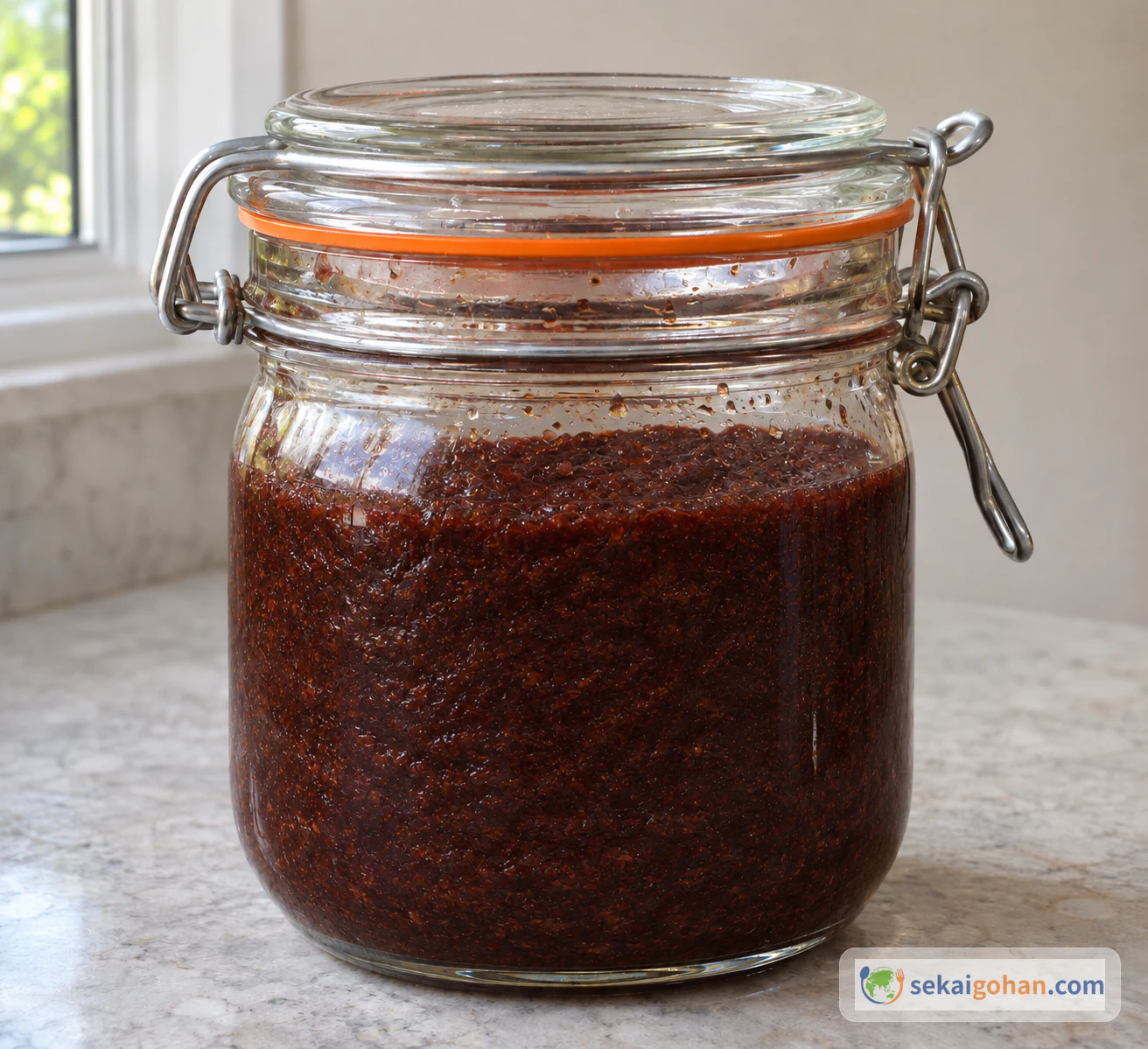
At an Aruban wedding reception, the cake reaches the guests in small pieces, each one tucked into a white box with the couple's initials written on it in silver. Open the box and the slice is nearly black, dense and moist, with no visible fruit at all, because every raisin, prune and strip of peel was ground fine and left to soak in cherry liqueur and cognac long before the oven was switched on. Bolo pretu is the dark fruit cake of the Dutch Caribbean islands, made for Christmas, weddings and other days that call for something special. Each bite is sweet and deep, warm with cinnamon, nutmeg and clove, and carries the cherry of the liqueur and the bite of the cognac all the way through.
A Black Cake for Weddings and Christmas
On Statia and the ABC islands
On St. Eustatius, also known as Statia and one of the islands of the Caribbean Netherlands, bolo pretu is the black fruit cake that comes out for Christmas, weddings and special occasions. It shares the island's table with dishes like carnistoba, a goat stew, along with funchi and pan bati. The same cake is made on Aruba and Curaçao, so it is shared across the Dutch Caribbean islands rather than belonging to any one of them.
On Aruba it is the traditional wedding cake. For the reception it is dressed in thick icing and scattered with silver dragées. Left undecorated, the same cake turns into an everyday dessert, a dark wedge kept in the refrigerator and cut whenever someone wants something sweet.
At Aruban weddings the cake is cut into small pieces, and each piece is packed into its own white box. The bride's and groom's initials go on the box in silver, so every guest leaves holding a little keepsake of the day.
Where the black comes from
The name points straight at the colour. One account from Curaçao says the black comes from burnt-sugar syrup, sugar cooked until it is dark, and describes a cake that is a project starting long before the baking: fruit is steeped in a mix of spirits, sometimes for as long as a year, then combined with nuts, flour, sweet and aromatic spices and that dark syrup. Once it is baked, more spirits are brushed over the top. The same writer was brought it as a gift by a friend from Curaçao for a special day, a cake that takes a lot of work.
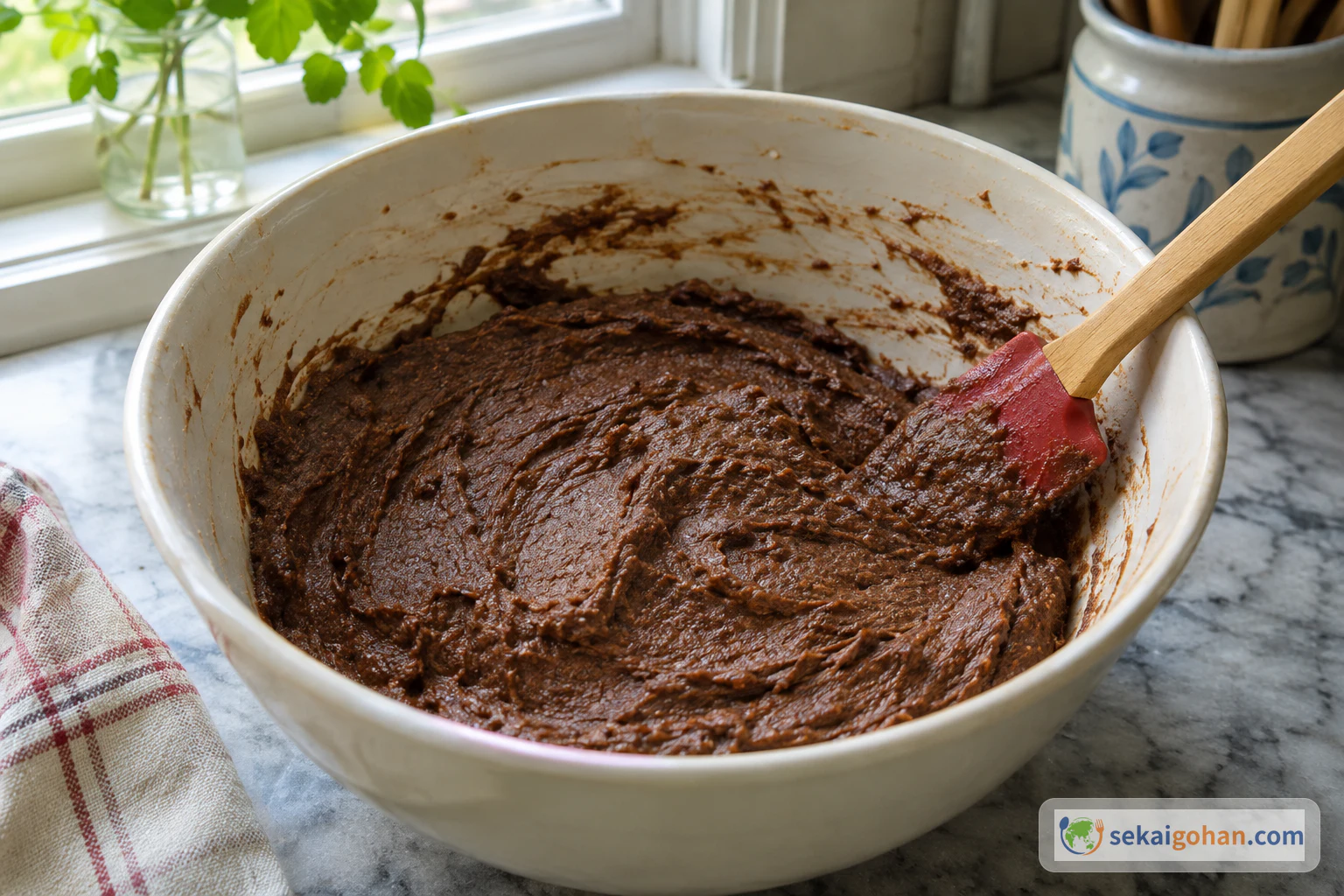
This recipe gets its darkness another way. Prunes, dark corn syrup and brown sugar carry the colour, and grinding all the fruit before soaking gives the crumb its smooth, almost fudgy density. Across the wider Caribbean the cake has close relatives. Jamaica, Guyana and Trinidad all bake a black cake for Christmas, and many of those versions darken the batter with browning, brown sugar cooked down to a nearly black syrup. Bolo pretu sits in the same family, and where the cake first began is not settled.
You will see both Bolo Pretu and Bolo Preto.
Ingredients
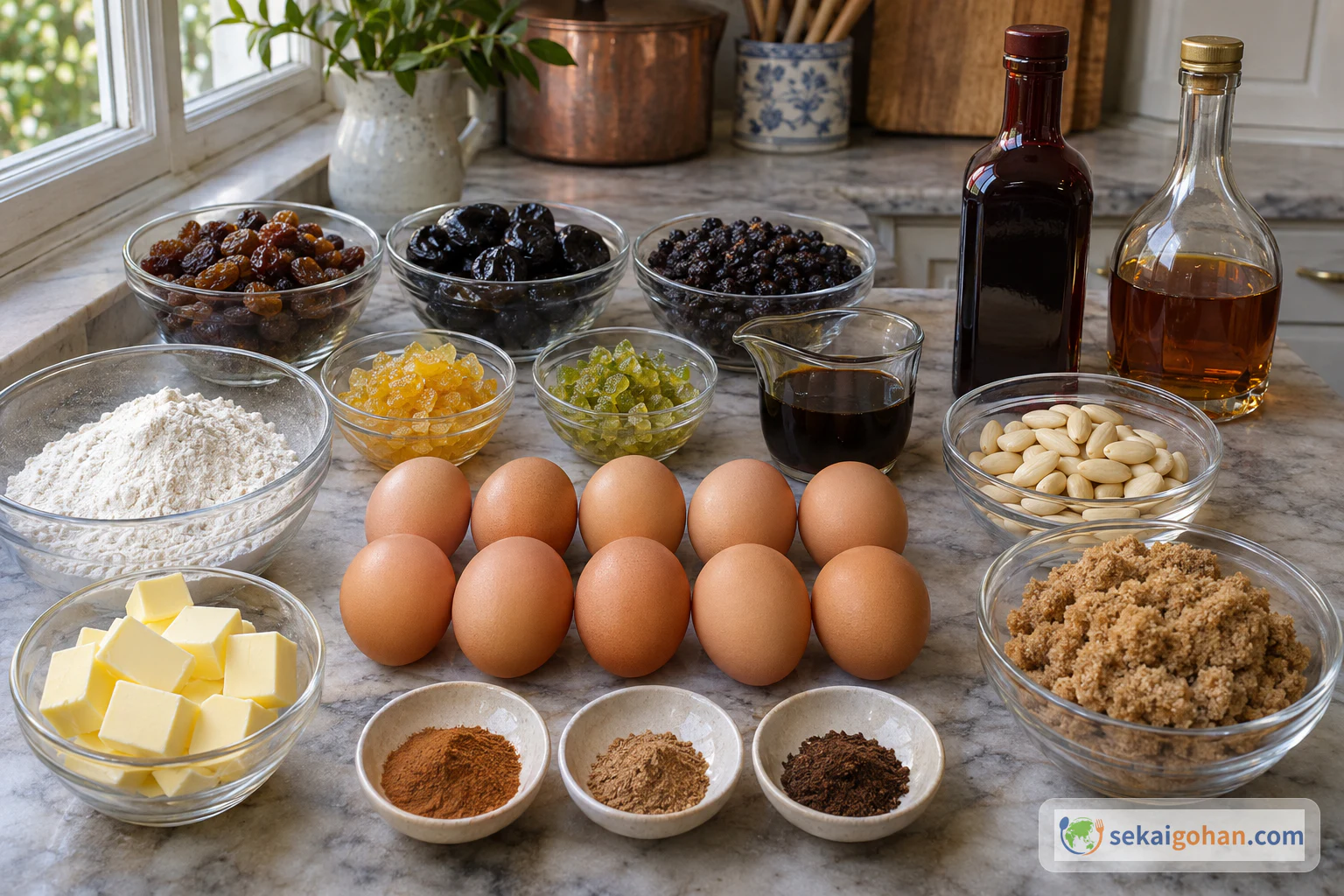
These amounts make one deep 10-inch cake. Almost everything here is dried fruit, sugar and spirits. The fruit is ground and soaked days before you bake, so buy it a week ahead.
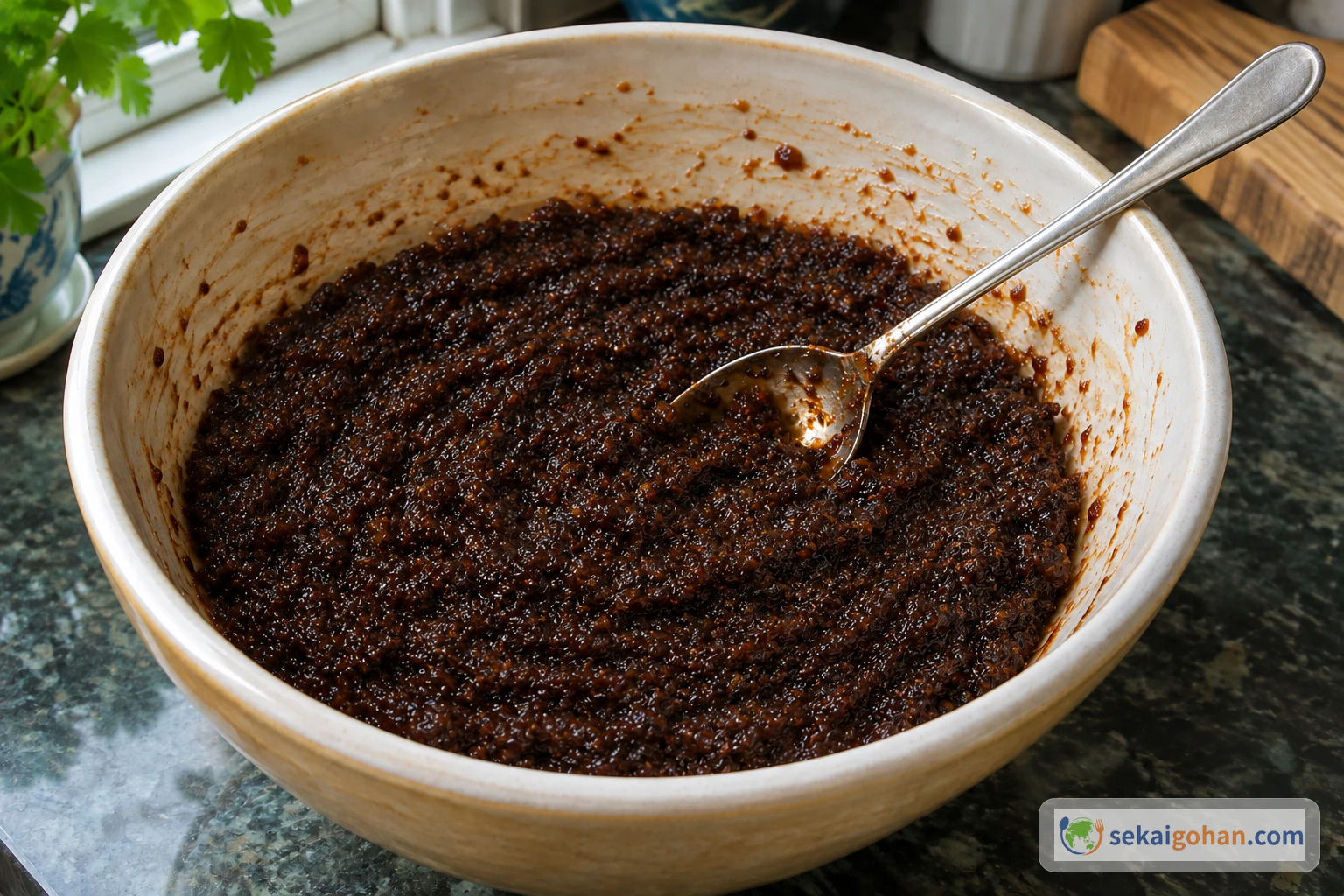
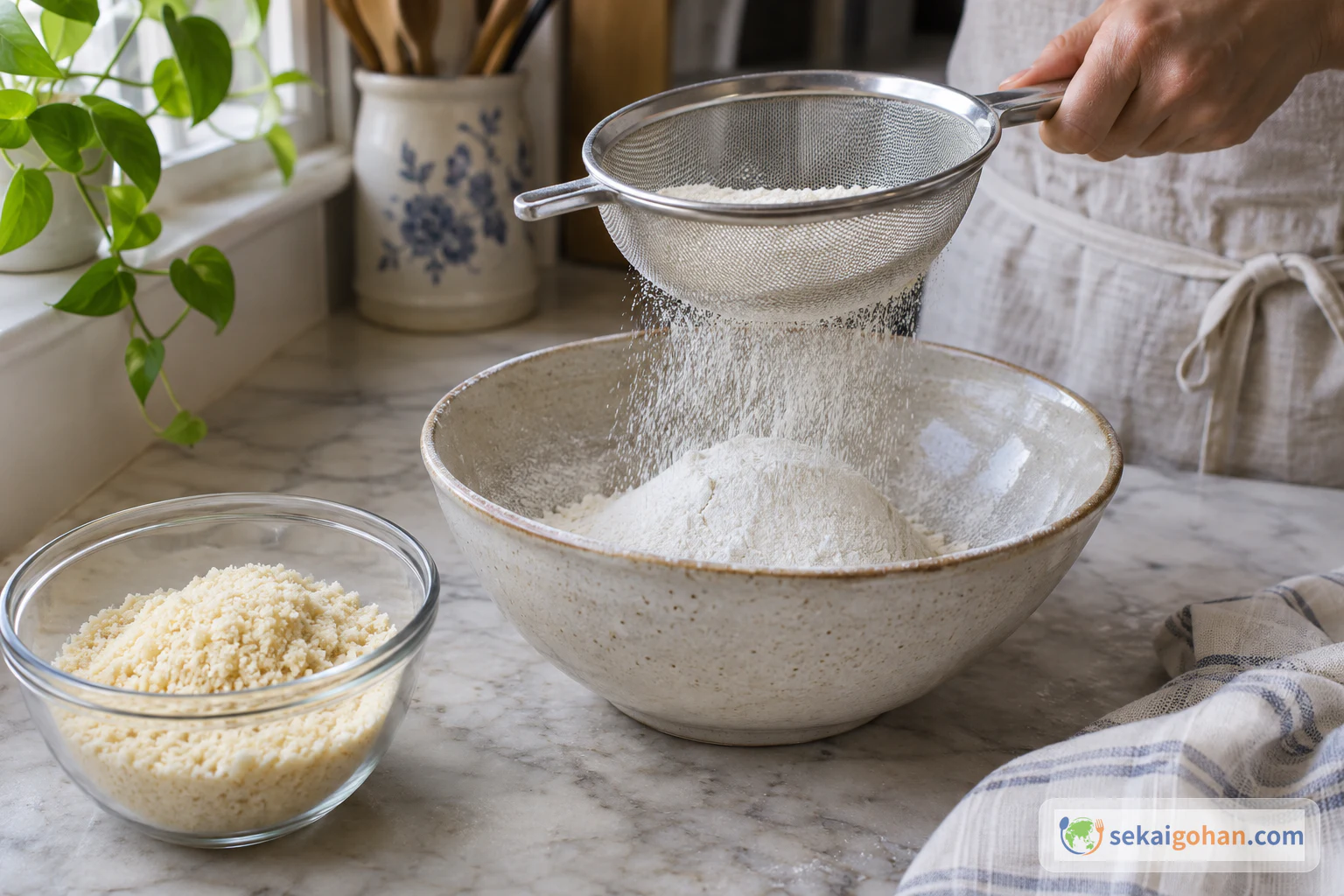
The texture of bolo pretu depends on fruit ground to a paste, with no whole raisins or chunks of peel left. Grind the almonds just as fine. The cut face should look like dark, even crumb with only tiny flecks.
This cake contains eggs, milk (butter), wheat (flour) and tree nuts (almonds). It is soaked in and brushed with alcohol, and some alcohol can remain in the cake after baking. Do not serve it to children or to anyone who is pregnant, and do not eat it before driving.
Equipment
- Food processor or meat grinder
- Large clean container with a tight lid for soaking
- Sieve
- Two separate mixing bowls, plus a large one for the batter
- Electric mixer or a sturdy wooden spoon
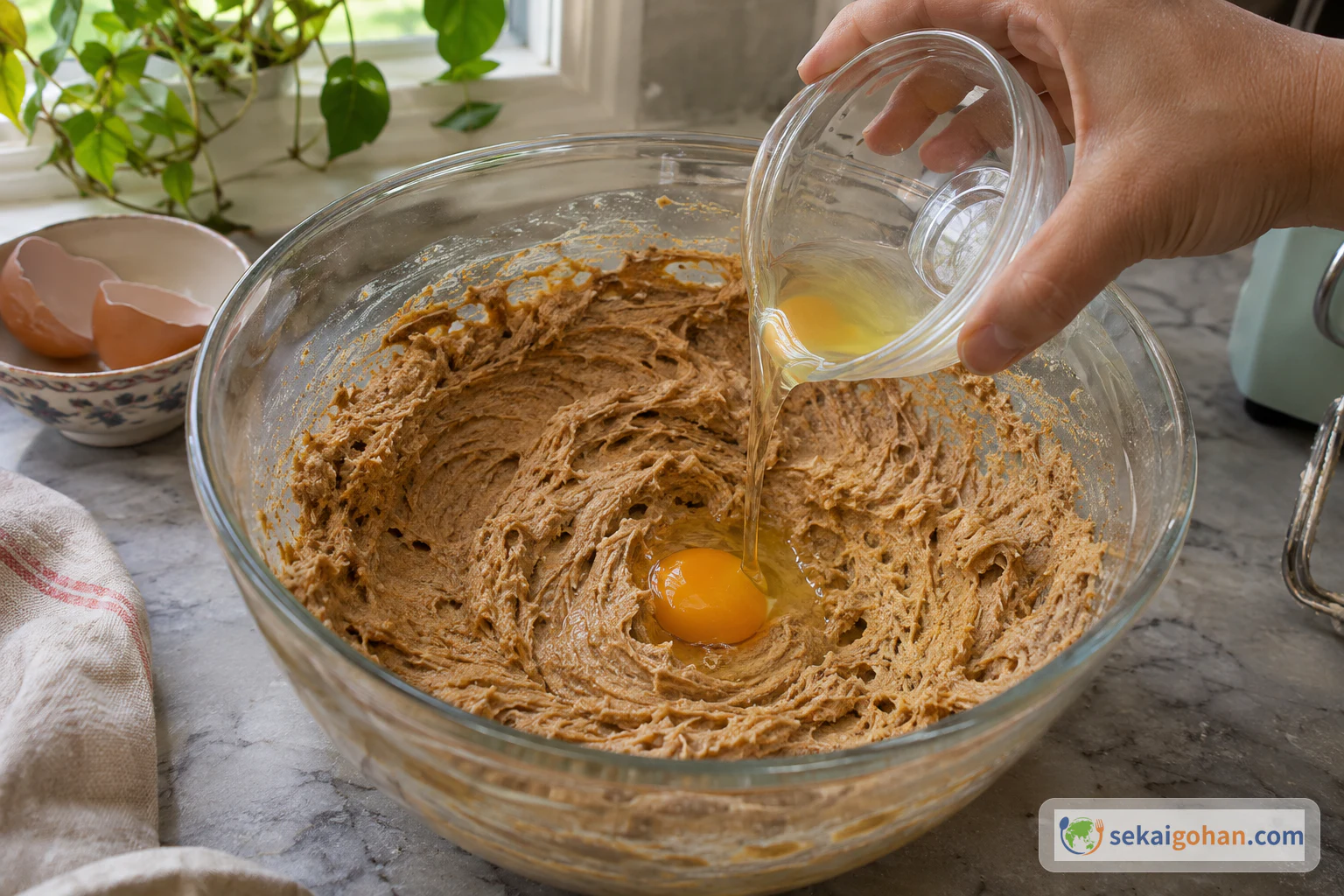
- Small cup for cracking eggs
- Rubber spatula
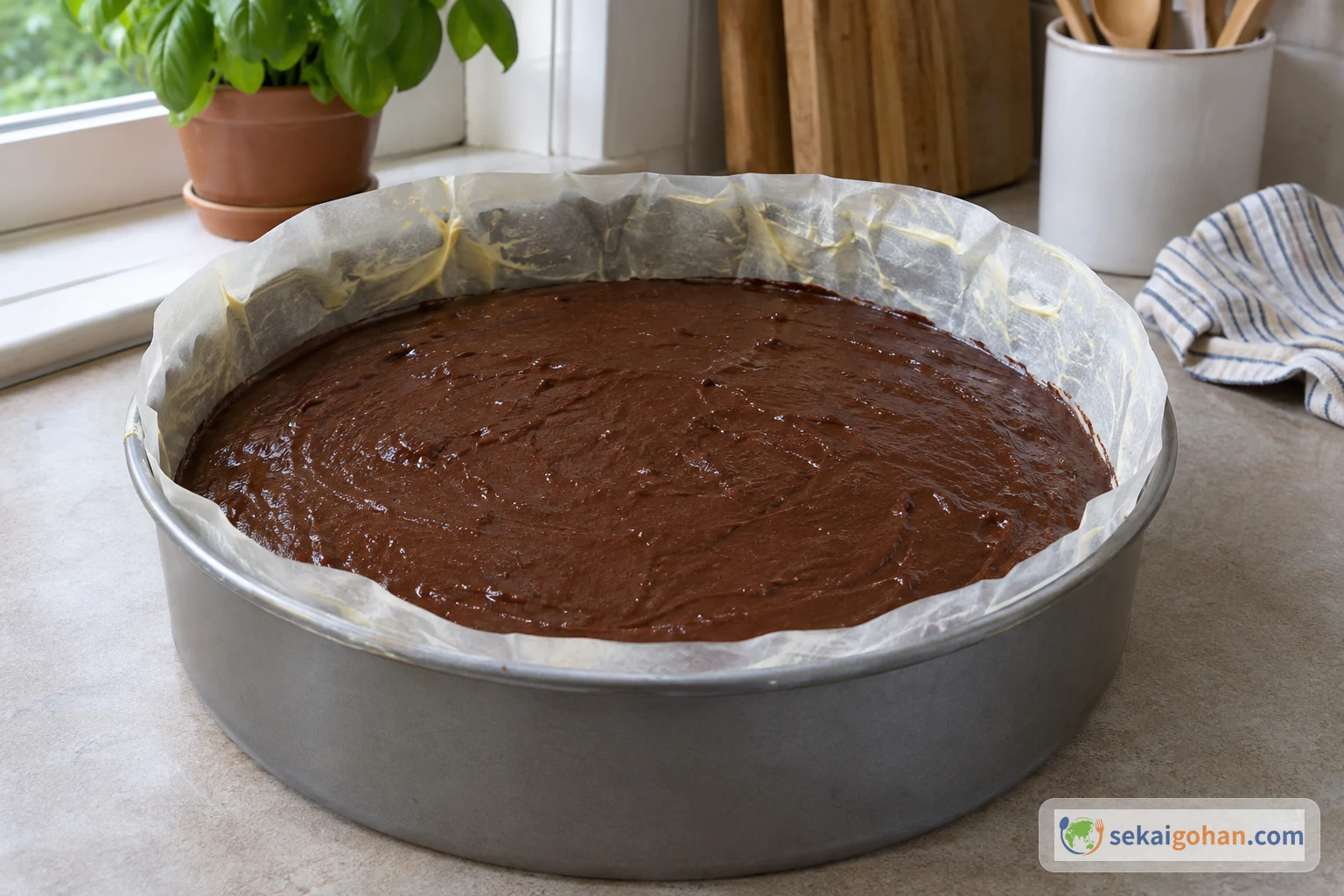
- Round cake pan, 10 inches (25 cm) wide and at least 2¼ inches (5.7 cm) deep
- Parchment paper
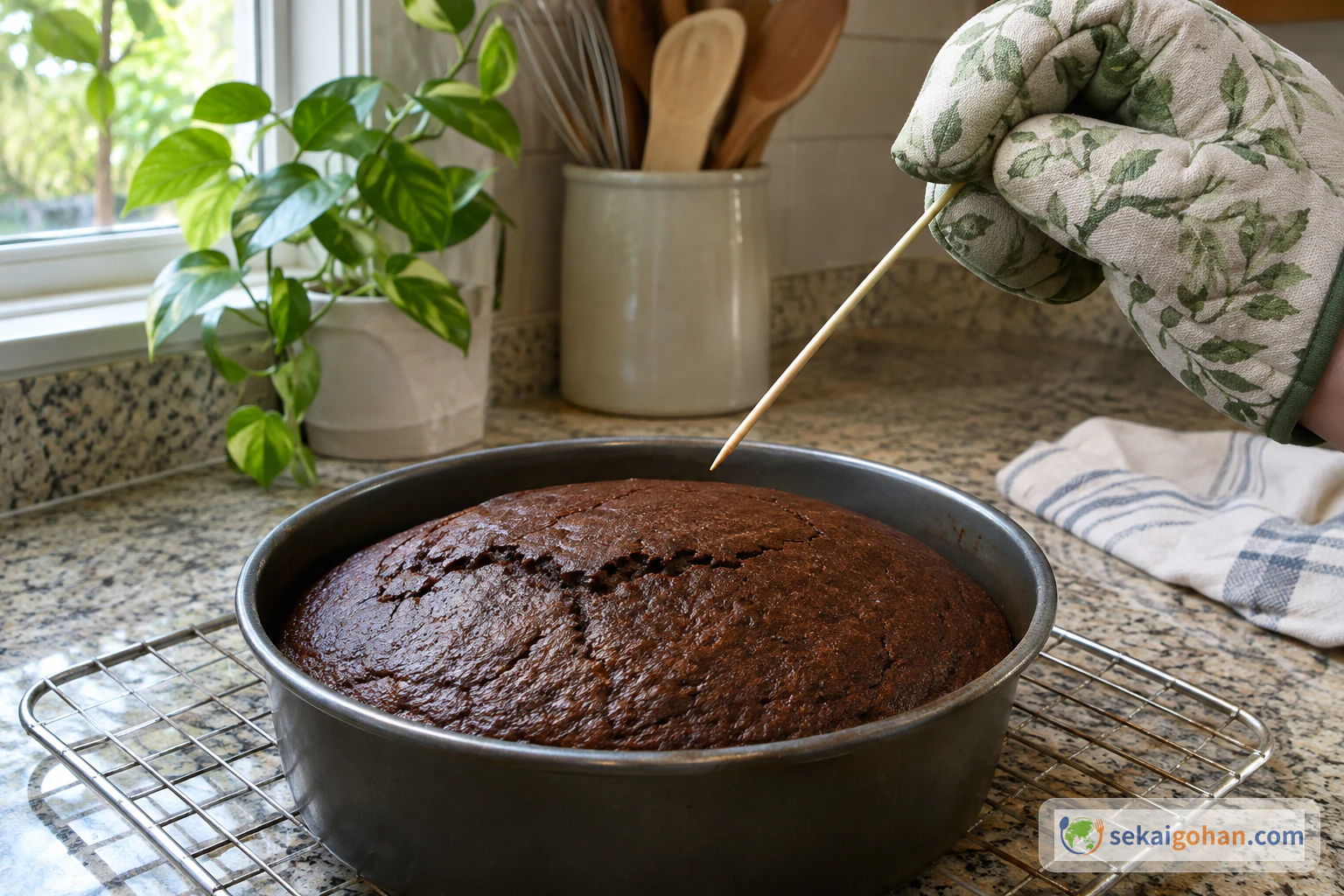
- Bamboo or wooden skewer
- Oven mitts and a cooling rack
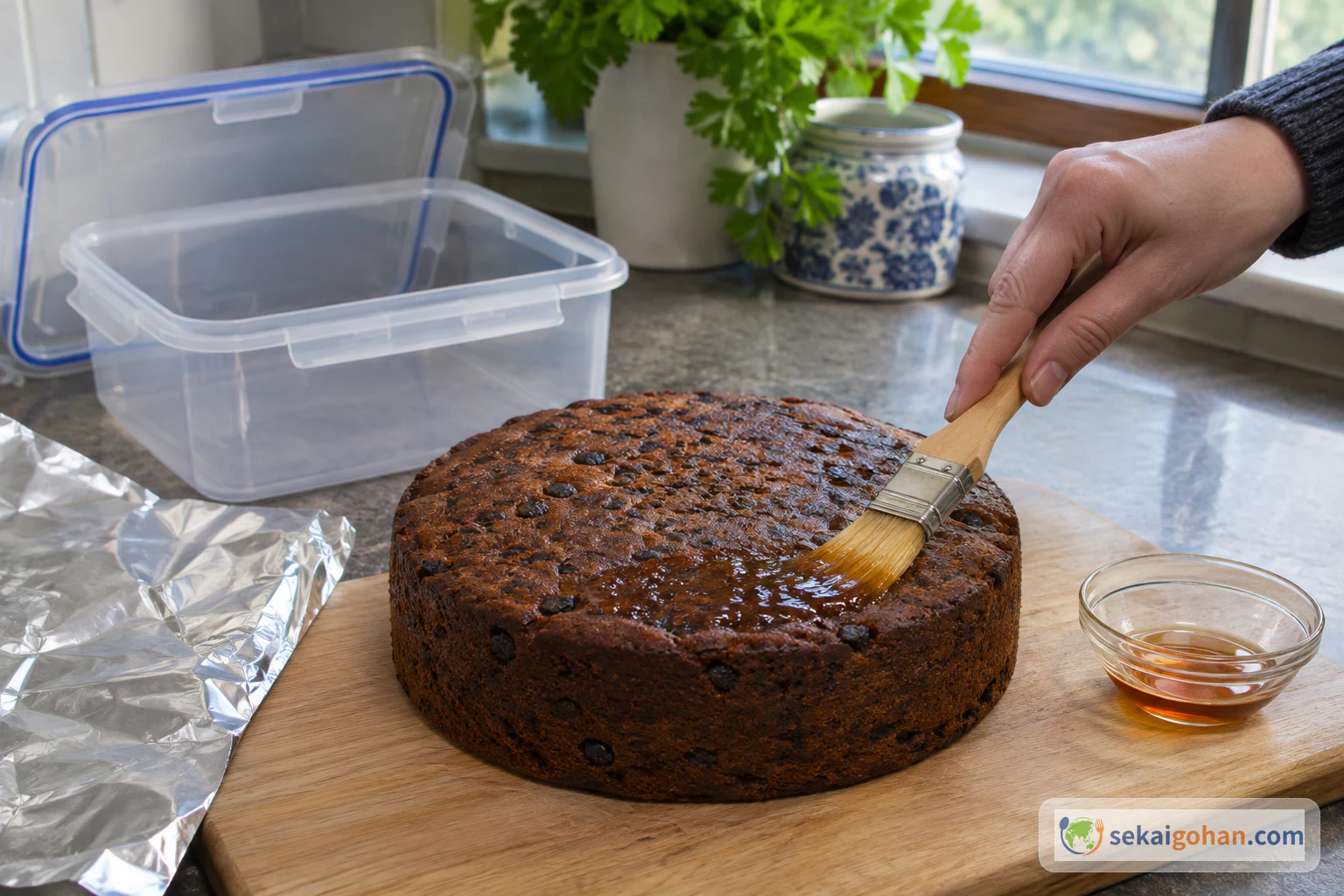
- Pastry brush
- Aluminum foil
- Airtight container large enough for the cake
Choosing and Substituting
The flavour depends on three things: the cherry liqueur and cognac in the soak, the warm trio of cinnamon, nutmeg and clove, and fruit ground fine enough to turn the batter dark and dense. Keep those and the cake tastes like bolo pretu. The swaps below change the edges.
- Cherry Heering is a Danish cherry liqueur sold in most well-stocked liquor shops. Its cherry note runs through the whole cake, so it is worth buying the real bottle.
- Currants can be replaced with more raisins. The cake gets sweeter and loses some tartness.
- Glazed lime peel can be replaced with glazed papaya or another candied citrus peel. Papaya adds sweetness and less citrus perfume.
- Dark corn syrup gives colour as well as sweetness. A light syrup such as glucose syrup works in a pinch, but the cake comes out lighter in colour and the flavour changes.
- Almonds: some cooks blend in bitter almonds, which are hard to buy. Ordinary blanched sweet almonds stand in here and give a milder almond flavour.
- Brown sugar should be ordinary soft brown sugar from the baking aisle.
- Flour, butter and eggs: use a soft cake flour or plain flour, unsalted butter and large eggs.
Method
The work splits across a week. On day one you grind the fruit and set it to soak, which takes very little hands-on time. Then the container sits closed for at least 2 days, ideally about a week. On baking day, prepare the almonds, flour and pan first, build the batter and set it in the oven. The cake bakes slowly at a low heat and is checked with a skewer rather than timed.
When It Goes Wrong
| What you see | Why | What to do |
|---|---|---|
| The skewer is still wet after the first hour | The dense centre takes a long time to set at a low heat | Keep baking and test every 15 minutes until the skewer comes out clean |
| The bottom is scorched and bitter | The heavy batter sat too close to the heat for a long bake | Trim the dark base before serving. Next time, line the pan with paper and bake on the lower rack |
| Whole raisins or peel chunks show in the slice | The fruit was not ground fine enough | Grind the fruit to a true paste before it goes into the soak |
| Flour streaks in the baked crumb | The batter was folded too briefly | Fold until the batter is evenly dark before filling the pan |
| The cake dries out in storage | It was left unwrapped or not moistened | Brush with a little cognac, then rewrap tightly in foil and return it to the airtight container |
Serving and Storage
On the table
Cut bolo pretu into small pieces. It is so rich and dense that a thin wedge is plenty. Serve it plain for an everyday dessert, or bring it out for Christmas, a wedding or any special day. To give it the Aruban wedding touch, cut small pieces, pack each one into a white box and write the initials of the people you are celebrating on the lid in silver.
Keeping it
Store the cake exactly as it went away in the last step: wrapped in foil, in an airtight container, in the refrigerator. In Aruba an undecorated bolo pretu is said to keep this way for six months and more, a traditional claim rather than a food-safety rule. Every so often, unwrap it and brush it with a little cognac, then wrap it up again and return it to the refrigerator. Cut only what you will serve and put the rest back right away. If the cake ever smells off or shows mould, throw it away.
Frequently asked questions
Does the alcohol bake out?
No, not all of it. Some alcohol can remain in the cake after baking, and the cognac brushed on the cooled cake is never heated at all. Do not serve it to children or to anyone who is pregnant, and skip it before driving.
Can I make two cakes at once?
Yes. Double every ingredient and bake in two pans, each 10 inches (25 cm) wide and at least 2¼ inches (5.7 cm) deep. Each pan holds the same amount of batter as the single cake here, so test each one with a skewer the same way.
Should I ice it?
For an everyday cake, leave it plain. For a wedding, Aruban cakes are covered in thick icing and scattered with silver dragées, so use your favourite thick icing and finish it with silver.