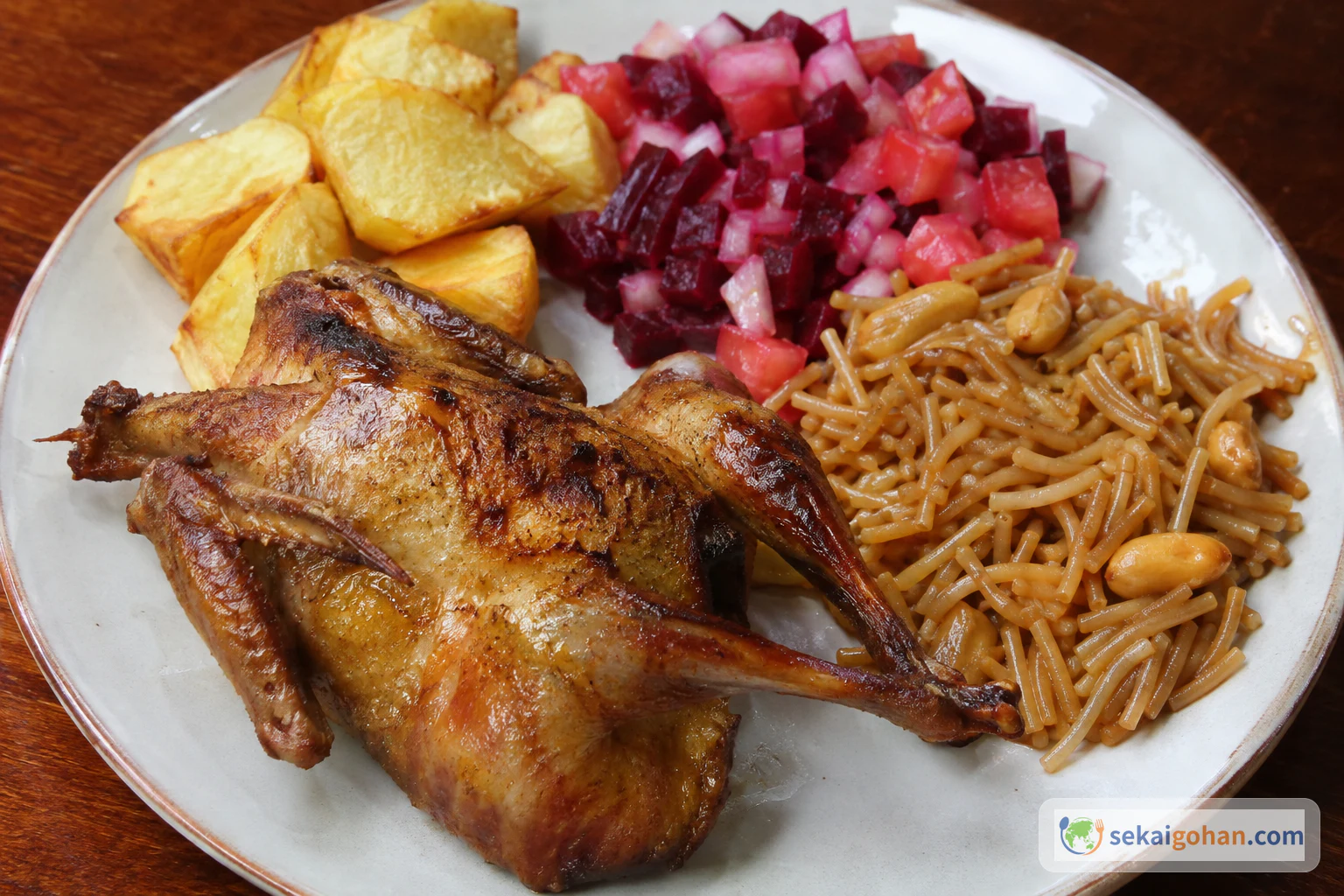
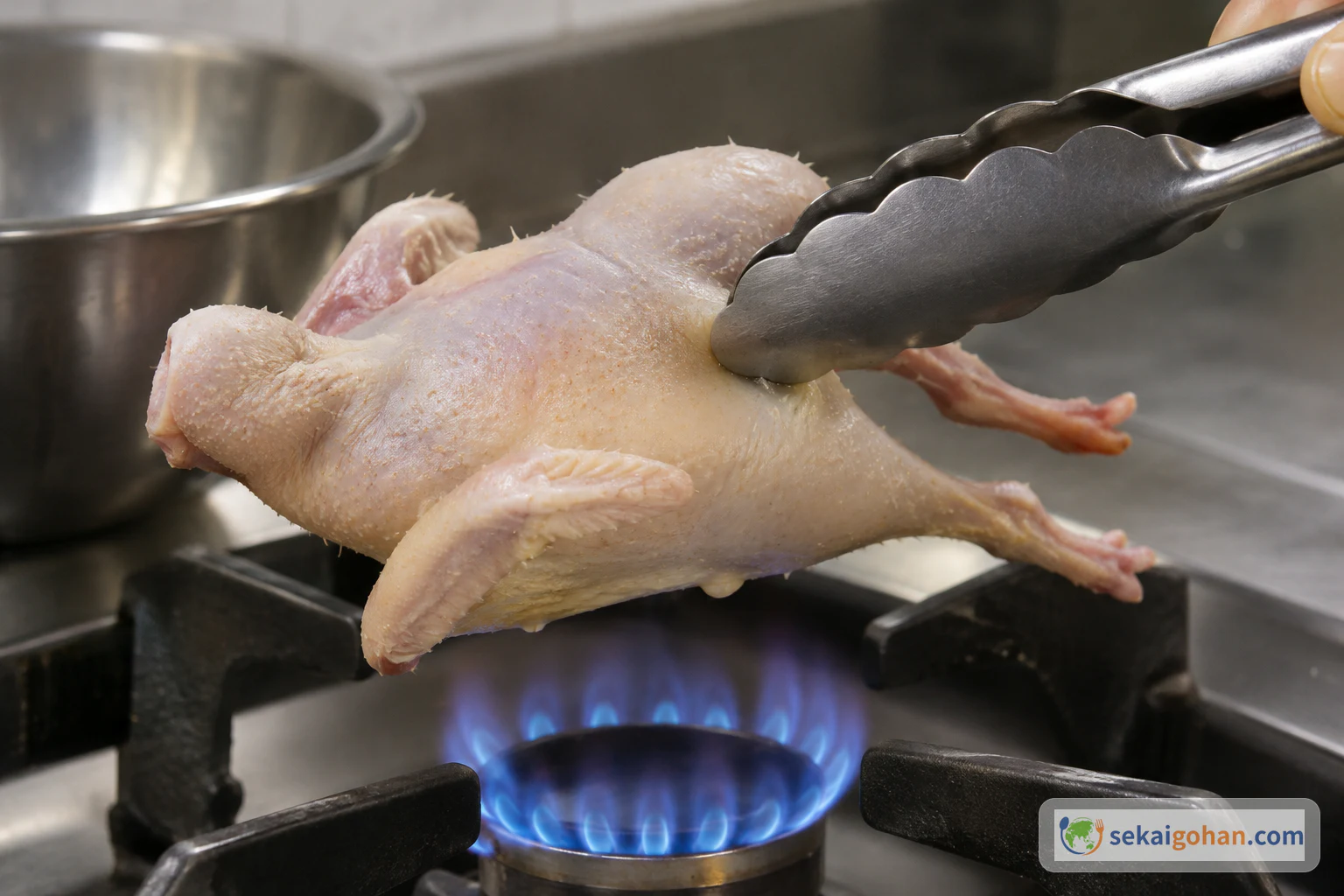
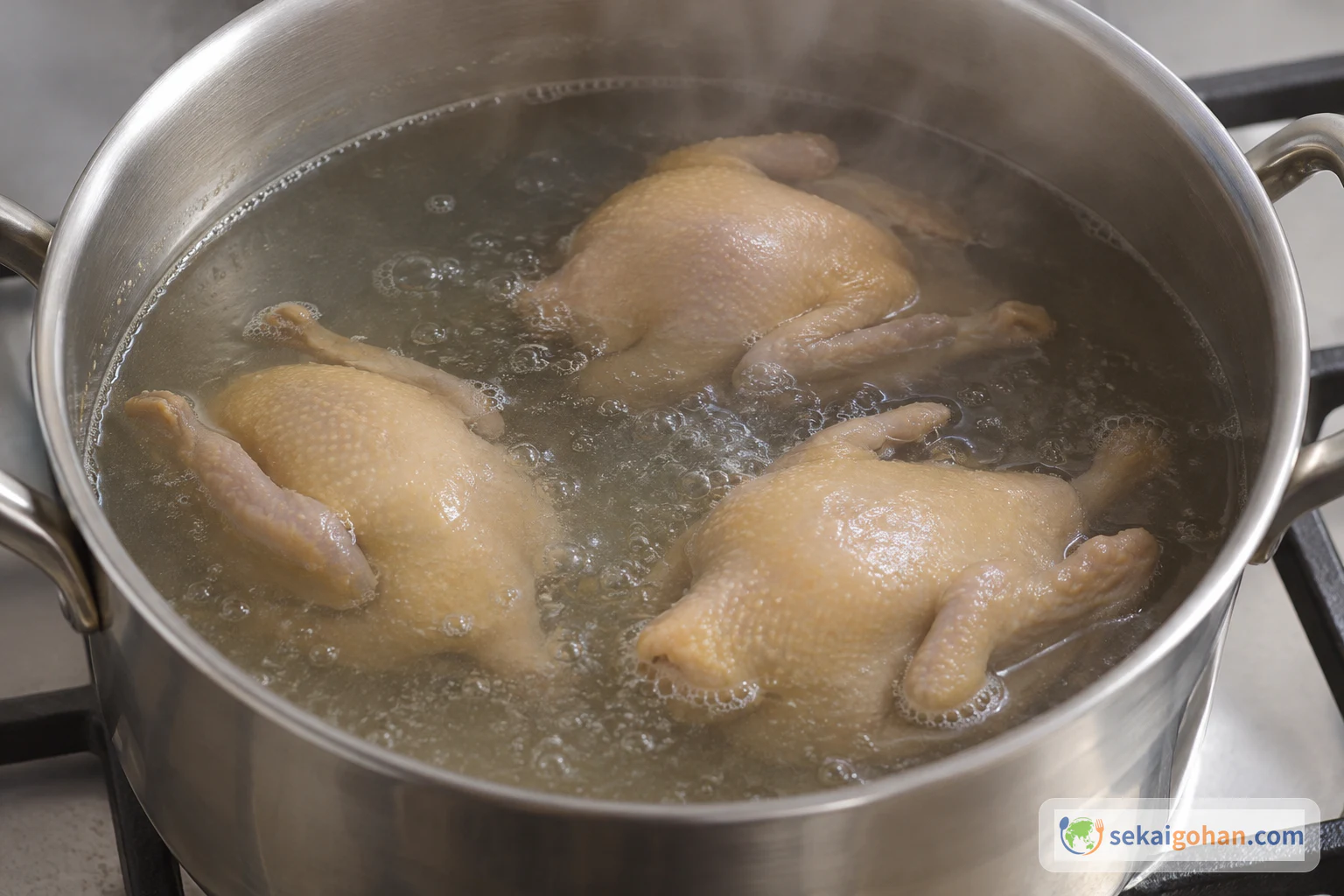
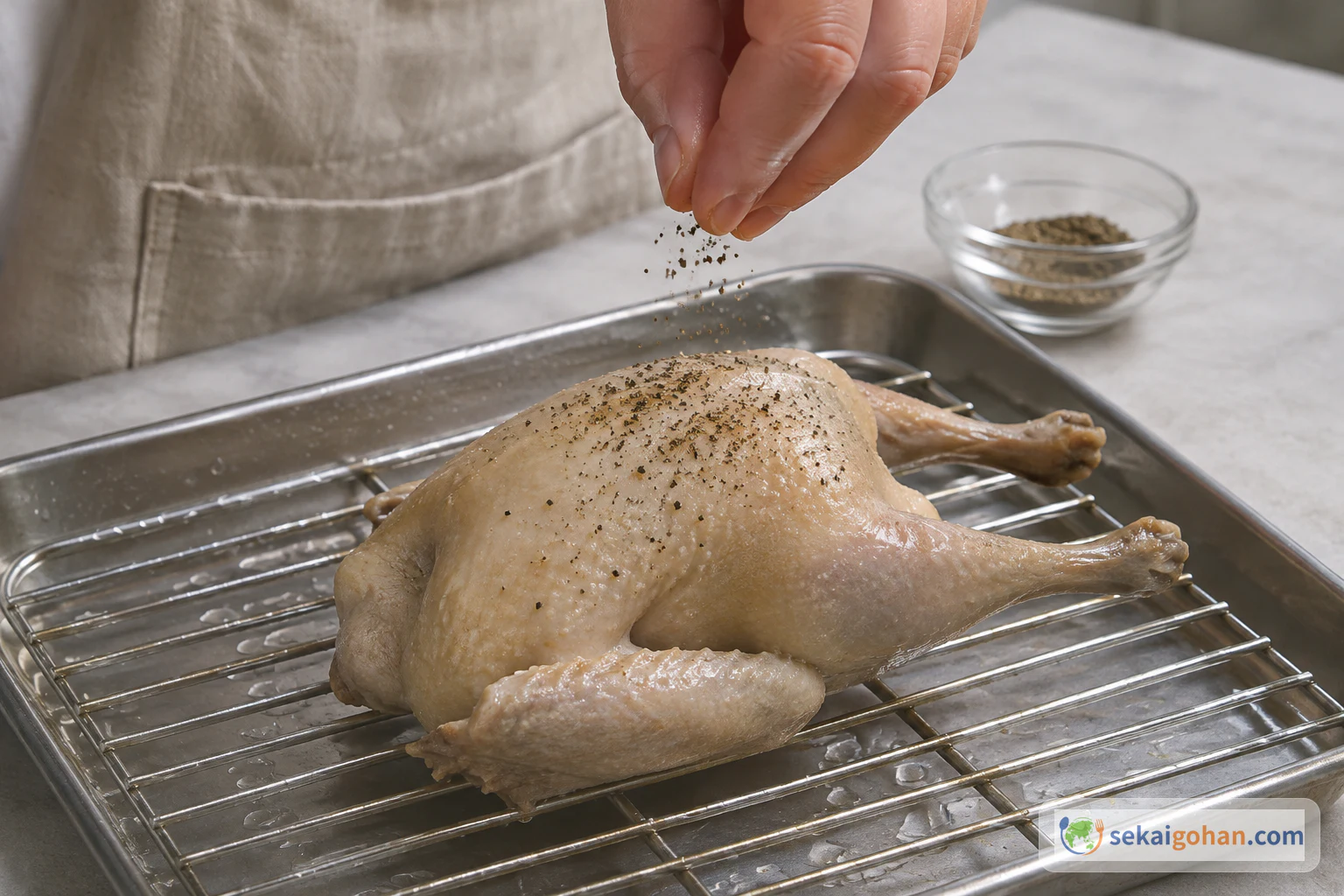
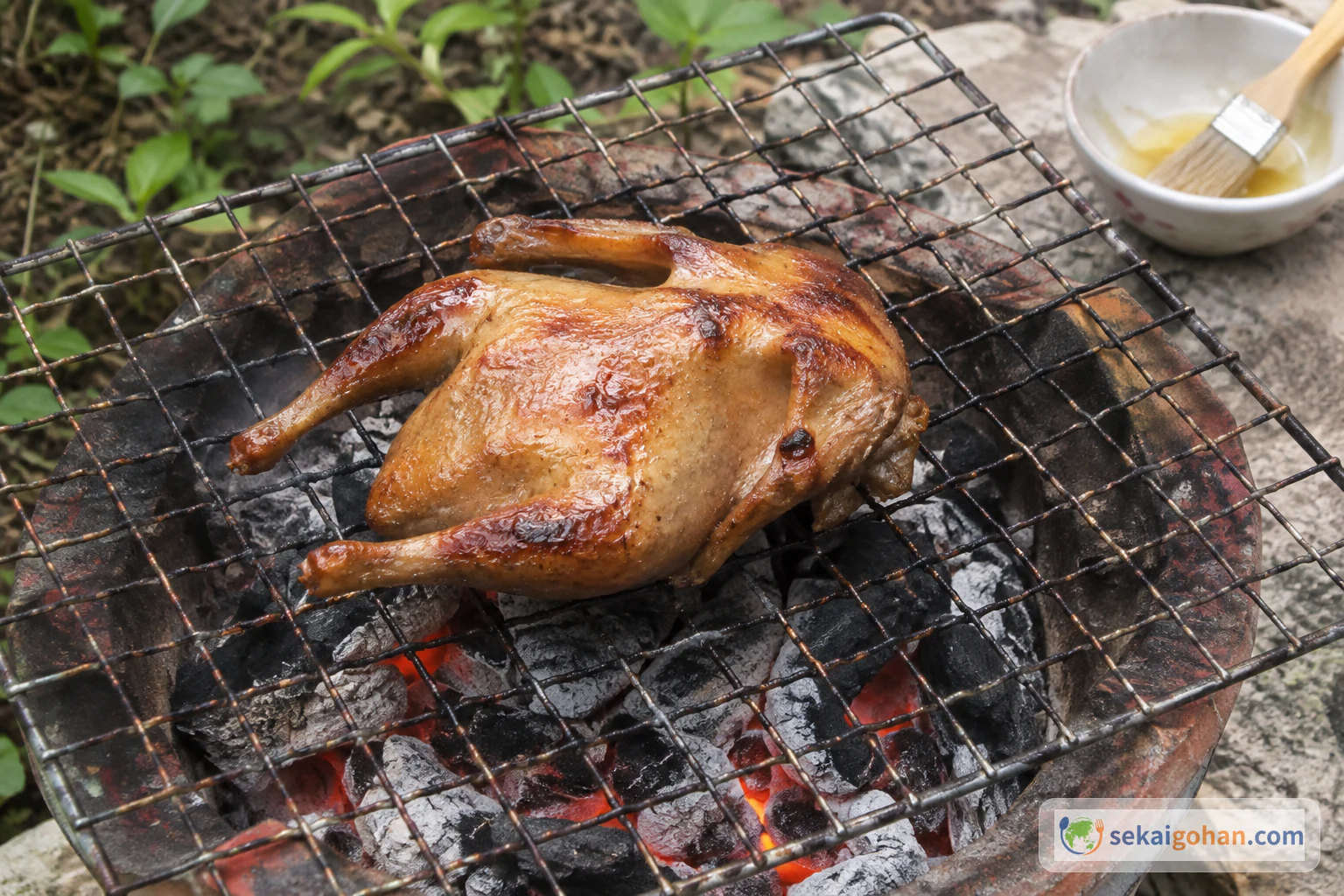
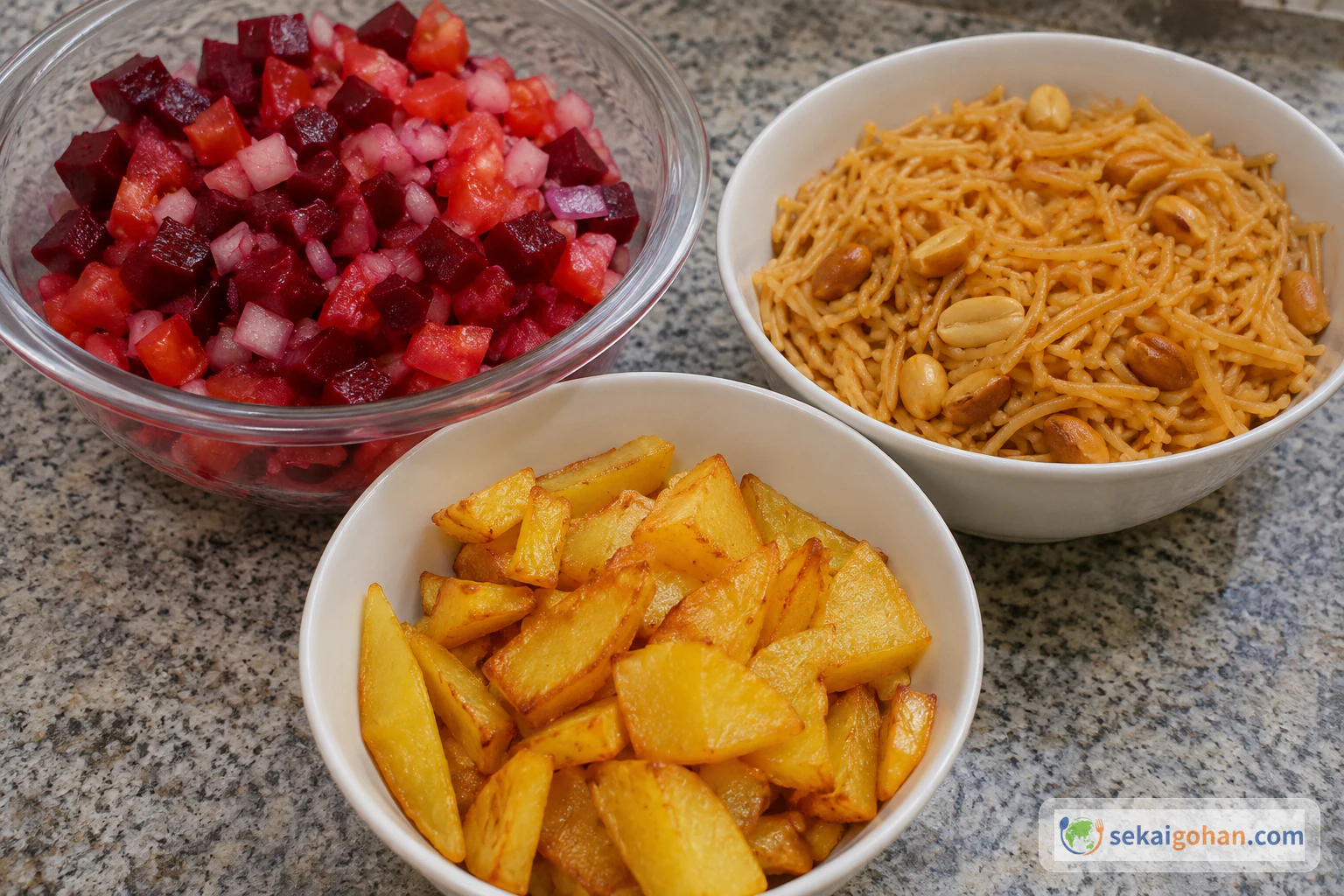
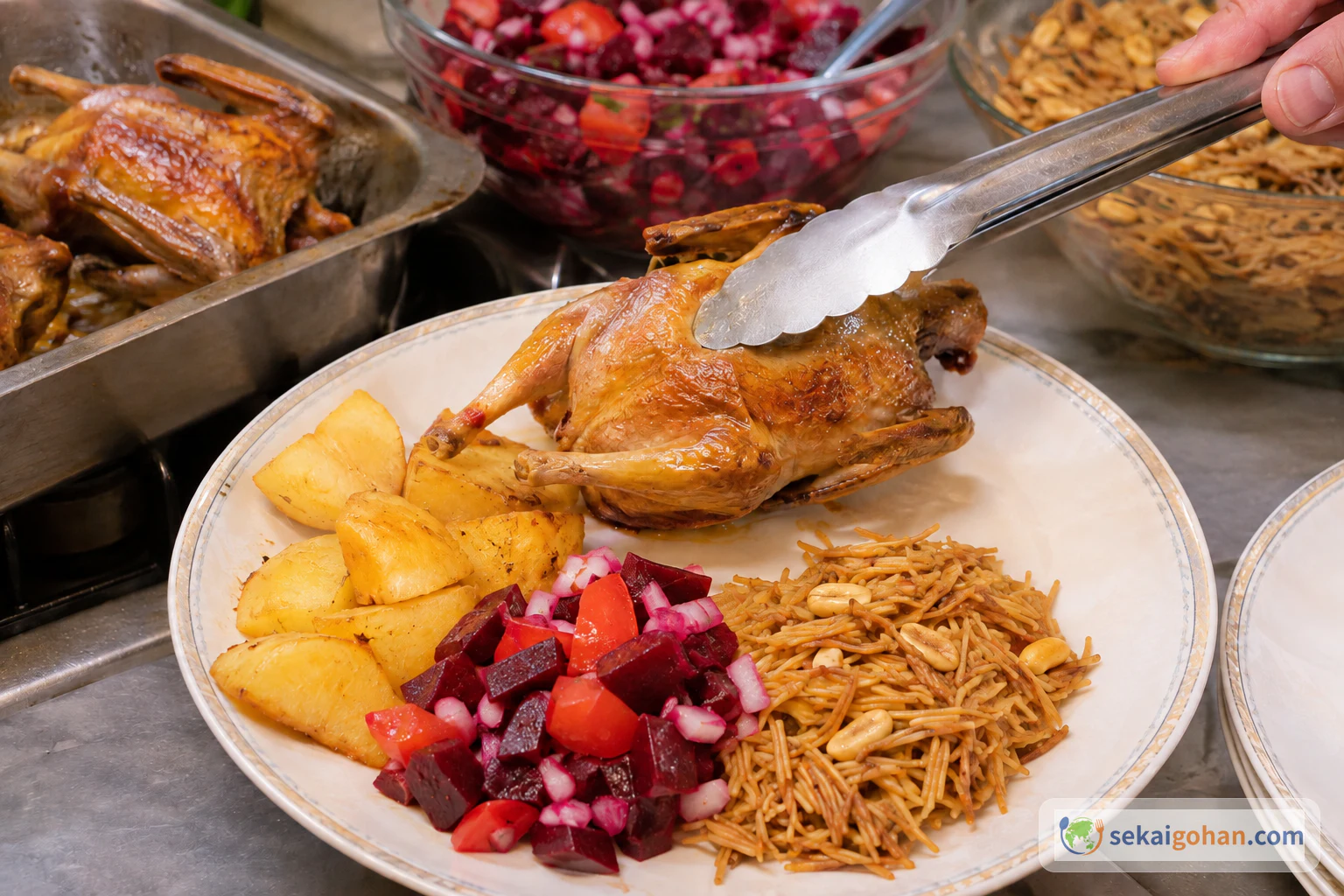
The birds come out of the pot pale and soft, almost fragile, and steam rises off them as the water drips through the rack. Then they go over the coals, and within minutes the skin tightens and turns gold, with a few dark spots where the fat catches. That is pichón de Cliza: a small young pigeon, boiled until tender, finished over charcoal, and set on the plate hot beside fried potatoes, a chopped beet salad and short noodles tossed with peanuts. It belongs to Cliza, a town in the Cochabamba valley of Bolivia, and it tastes of salt, pepper, smoke and dark, tender meat, with the sweet, sharp salad cutting through.
The Town That Raises Pigeons for the Table
Cliza lies about 19 to 25 miles (30 to 40 km) from the city of Cochabamba, in the province of Germán Jordán, and it calls itself "tierra del pichón", the land of the pigeon. The birds are raised in wooden lofts. A pair lays two eggs, which hatch after 21 days, and the young are sold at about three weeks old. That age decides the dish: a young bird stays tender through boiling and grilling, while an older one turns tough.
Two kinds of bird go into it. The ordinary pigeon, the paloma común, is small and cheaper. The moquiwana grows larger and fattens well, and it is sold in pairs. In 2015, the stalls of Cliza were serving at least 800 plates every weekend. One family had been selling the dish for more than sixty years, and the stall itself had stood for about eighty. In 2021, a vendor at the central market had been selling it for more than thirty years, a trade taken over from mother to child, and a plate cost 30 to 50 bolivianos.
Where it began
How the town started eating pigeons is told by word of mouth, and the details are not settled. The usual telling is that pigeons were raiding the maize fields, so people began to eat them, and that the birds were also cheap meat for families with little money. Older cooks once finished the birds in small clay pots, the ollitas de barro; today the charcoal grill, the brasa, is the standard.
The town has built a festival around the dish. The first Feria del Pichón was held in 1985, in the central plaza, and it later moved to the Plaza de Granos. In 2014, at the ninth Feria, a departmental law declared pichón de Cliza part of the gastronomic and cultural heritage of Germán Jordán province.
The plate and its sides
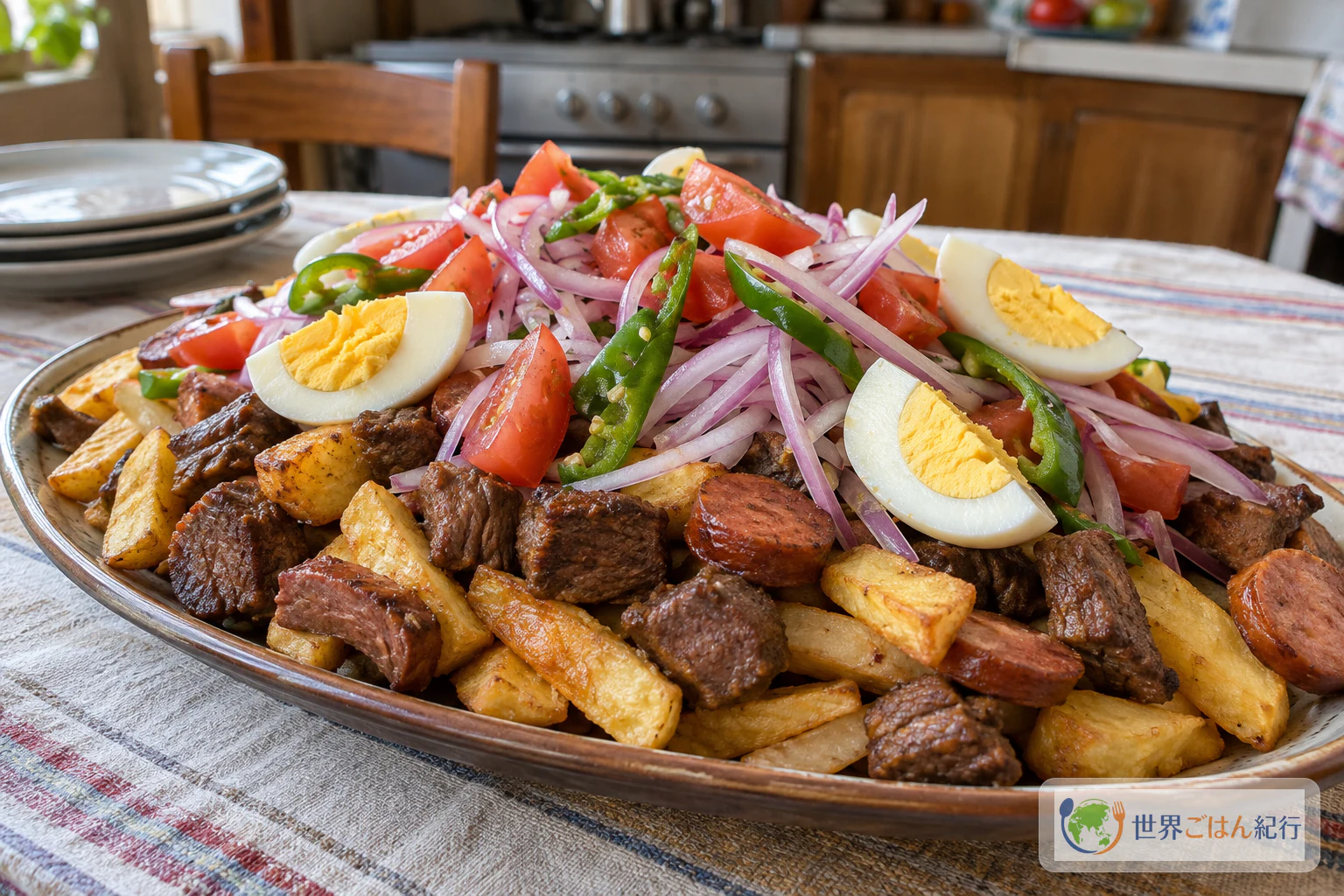
The pigeon always comes with company. Fried potatoes sit beside it, sometimes chuño, the freeze-dried potato of the Andes, as well. Short fideo noodles come mixed with peanuts or with egg, and a finely chopped salad brings colour and acidity. In some kitchens the salad is beet, onion and tomato; in others it is tomato, carrot and onion. Both turn up in Cliza. The peanut thread runs through Cochabamba cooking: it thickens sopa de maní, and here it gives the noodles a roasted, nutty bite. If you want another valley plate built on meat, potatoes and a fresh salad, silpancho makes a good companion piece.
Pichón is Spanish for a young pigeon. The singeing of the last fine down over a flame has its own word in the valley, k'aspar. The noodles are fideo, also called p'huti, and the larger, fatter bird is the moquiwana.
Ingredients
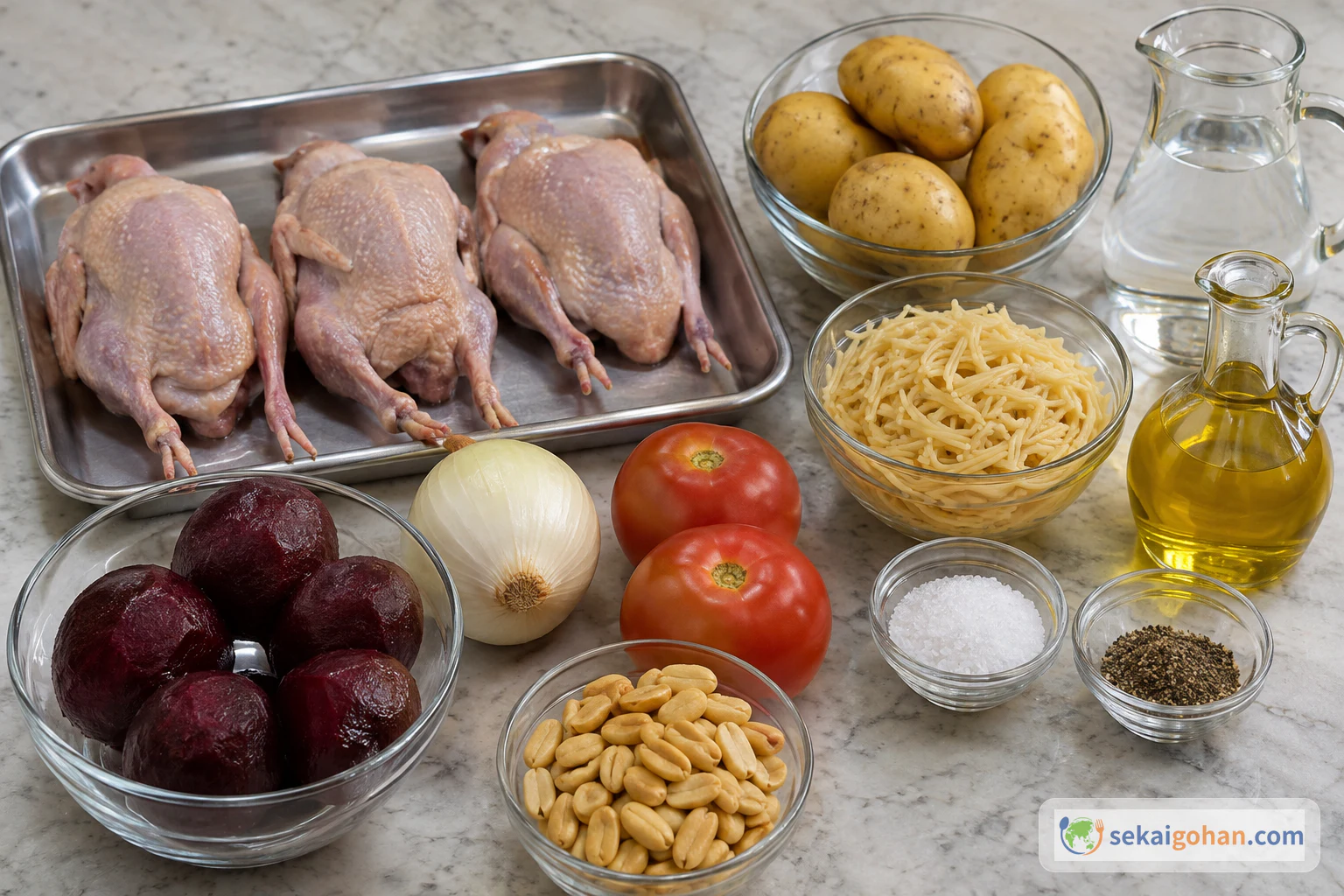
Buy young squab. A three-week-old bird stays tender after the boil and takes colour fast on the grill. A larger, older pigeon comes out tough and stringy however carefully you cook it.
The fideo contains wheat. Peanuts are mixed into the noodles; for anyone with a peanut allergy, use the egg version and keep the peanuts off the table. The egg version contains egg.
Equipment
- Tongs
- A gas burner or other open flame, for singeing
- A pot large enough to hold three birds covered in water
- A wire rack set over a tray
- A probe thermometer
- A charcoal grill used outdoors, with a small brush for oil; or a heavy skillet for pan-frying
- A frying pan for the potatoes
- A knife and cutting board
Choosing and Substituting
The one ingredient worth hunting for is the pigeon. Look for food-retail squab, farmed young pigeon sold frozen and already cleaned, at specialty butchers, game and poultry suppliers, and online shops. Use only birds raised and sold for food; wild pigeons and any hunted or protected birds stay out of the kitchen.
Chicken or quail will grill and plate the same way, but the result is a different dish: paler meat, a milder taste, and none of the dark, close-grained flesh that makes a young pigeon what it is. If you cannot get squab, cook something else that night rather than calling the chicken version pichón.
The rest comes from an ordinary supermarket. Small ready-cooked beets save the long boil and give the salad the same sweetness; six small ones also sit better beside three small birds than six large ones would. For fideo, break a thin pasta such as capellini into short lengths and cook it; it gives the right fine, soft strands. Unsalted roasted peanuts keep the salt under your control. The carrot salad is a real Cliza version too, so if you have carrots and no beets, chop carrot with the tomato and onion and you are still on home ground.
Method
The pot is the backbone of this recipe. Singe the birds first, then set them to boil; the 30 to 45 minutes of quiet simmering is hands-off time, so cook the fideo, chop the salad and peel the potatoes while it runs. Light the charcoal toward the end of the boil so the coals have burned down to a steady glow by the time the birds are drained and peppered. Fry the potatoes last, so everything reaches the plate hot together.
Pigeon is cooked to the chicken standard, not a pigeon-specific one: 167°F (75°C) at the center for at least 1 minute, or an equivalent hold of 158°F (70°C) for 3 minutes, 157°F (69°C) for 4 minutes, 155°F (68°C) for 5 minutes, 151°F (66°C) for 11 minutes, or 149°F (65°C) for 15 minutes. Never serve it raw. Wash your hands, the board, the tongs and anything else that touched raw pigeon or its thawing liquid before you use them again.
When It Goes Wrong
| What you see | Why | What to do |
|---|---|---|
| The meat is tough and stringy | The bird was older or larger than a young squab | Buy young squab next time. For the bird in hand, simmer it for the full 45 minutes, until tender, before grilling |
| The skin stays pale on the grill | The skin was still wet, or no oil was brushed on | Let the birds drain fully on the rack and brush with a little oil before they go over the coals |
| The skin blackens before it turns gold | The coals are too hot or too close | Move the birds to the edge of the grill and wait for the coals to settle to a steady glow |
| The thermometer reads below target at the center | The boil was too short or too gentle for that bird | Return it to the simmering water and check the center again before grilling |
| Fine hairs show on the browned skin | The down was not fully singed in step 1 | Singe every bird carefully before boiling; the down is hard to remove once the skin is cooked |
Serving and Variations
Pichón de Cliza is a plate eaten hot, at the stall or the table, with everything on it at once: a bite of dark meat, a forkful of sweet-sour salad, salty fried potato, soft noodles with peanuts. For a fuller valley spread, add chuño beside the potatoes. A few warm salteñas make a good start before it on a Cochabamba-style weekend.
Carrot salad
Use tomato, carrot and onion in place of beets. The salad turns orange and red, crunchier and less sweet, and the plate tastes brighter and lighter.
Egg in the fideo
Mix the cooked noodles with egg instead of peanuts. The side becomes softer and richer, and it is the right choice when anyone at the table avoids peanuts.
Pan-fried pigeon
Fry the birds in oil or lard instead of grilling them. You lose the smoke, but the skin browns more evenly all over and the dish works on a day without a grill.
Frequently asked questions
Why boil the pigeon before grilling it?
The boil brings a small bird to tender, cooked-through meat without drying it out. The grill then only has to colour the skin and add smoke, a short, hot finish that would scorch the outside long before it cooked a raw bird to the center.
Can I add herbs or vegetables to the boiling water?
Yes. A few herbs and a stalk of celery in the pot give the meat a light aromatic note. Plain salted water keeps the taste of the pigeon itself at the front, so use the herbs lightly.
Six beets for three birds seems like a lot. Is that right?
The salad is generous, and on the plate it carries much of the colour and freshness. With small beets, six give a salad that sits in proportion beside three small birds; with large beets, use fewer.
Can I judge doneness without a thermometer?
Use a thermometer. A golden skin shows only the surface, and with a small, dark-fleshed bird, the colour of the meat near the bone is hard to read. A probe in the thickest part of the breast is the reliable check.