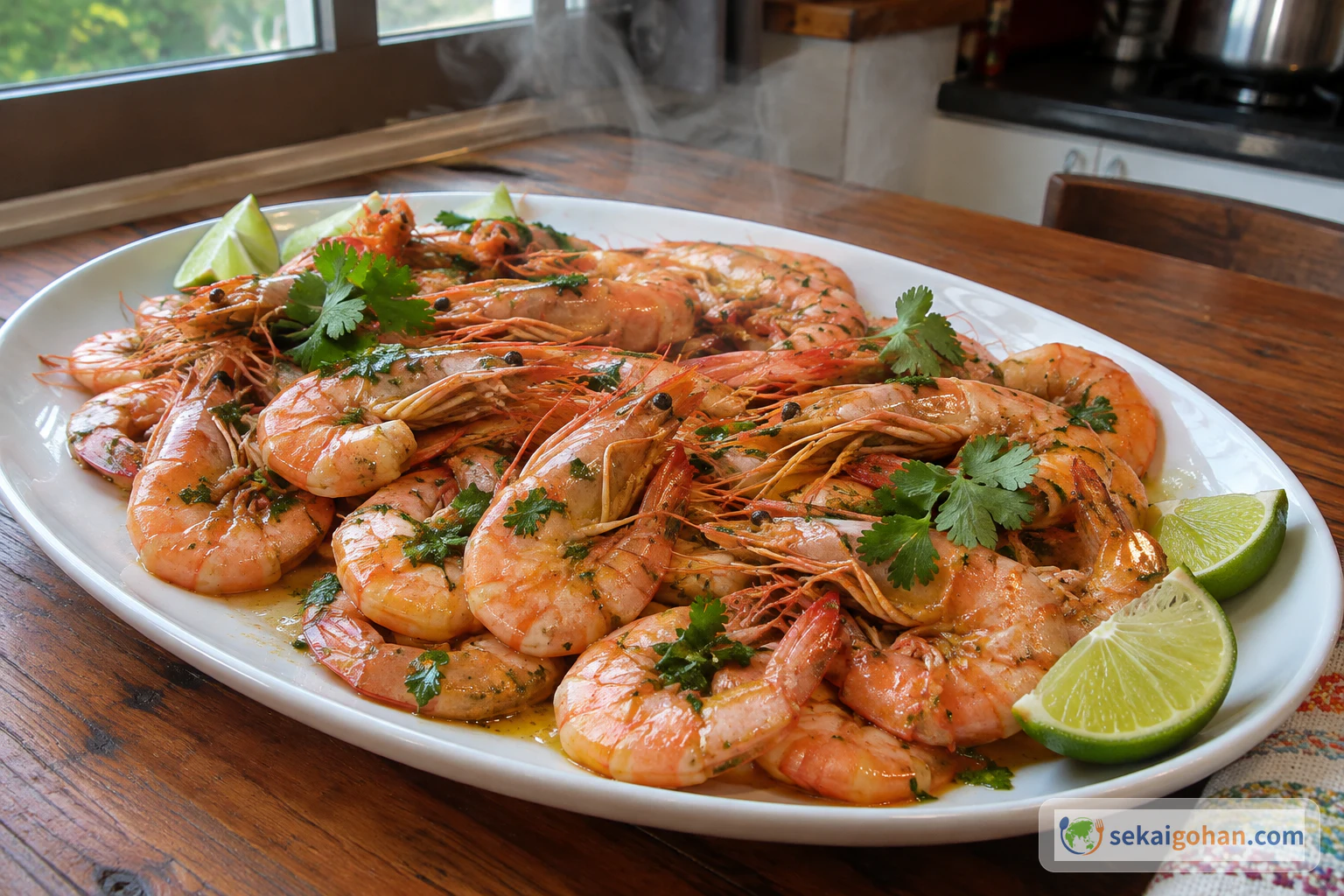
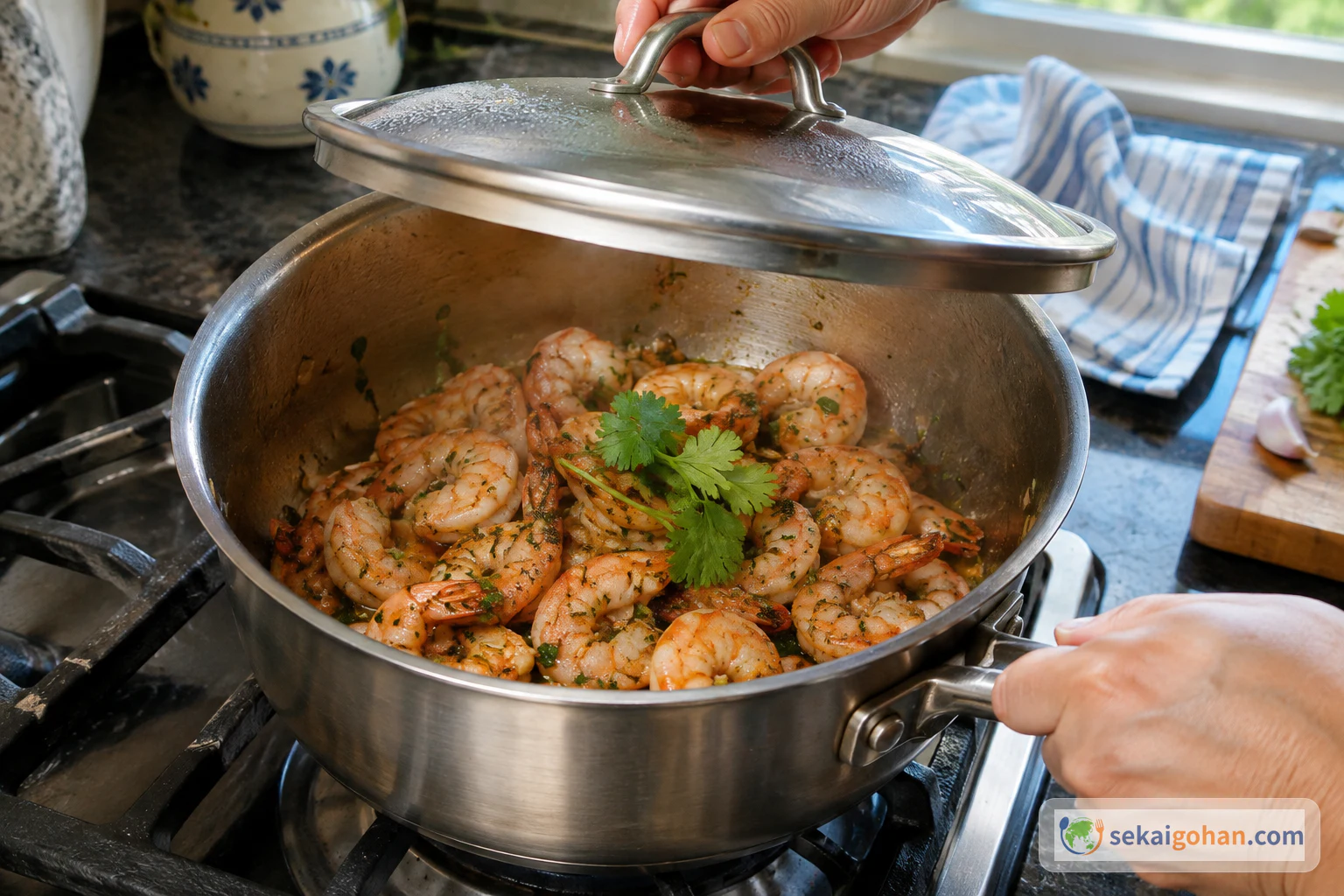
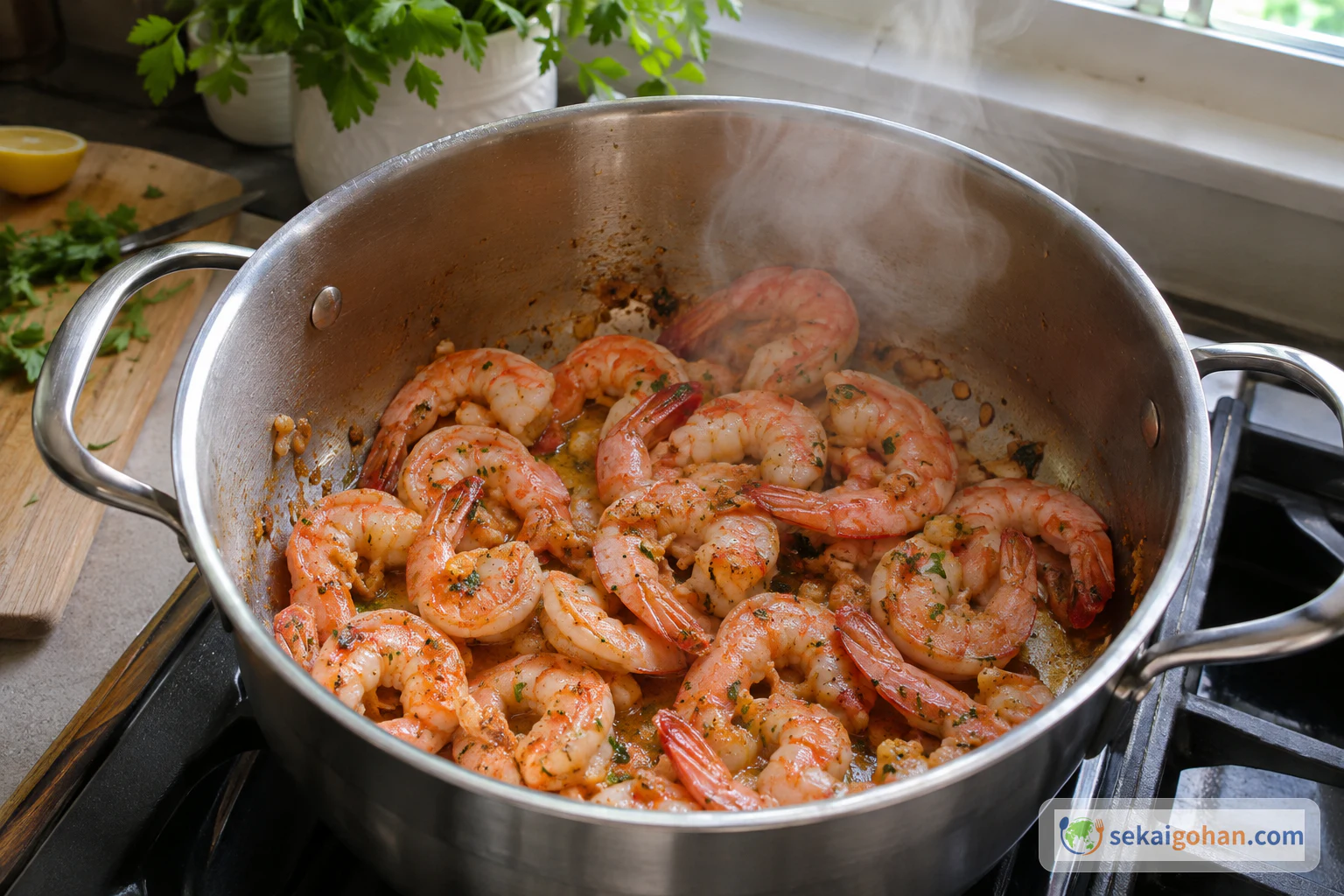
The lid goes on, the coriander wilts against the hot shells, and for five minutes the pot fills with its own steam. When you lift it, a cloud of olive oil, pepper and sea-sweet shrimp rises off a heap of shells gone bright pink. Camarão no bafo is the Brazilian beach-bar plate of large shell-on shrimp that everyone peels by hand and shares. It tastes of the shrimp first: sweet and juicy, with salt and black pepper on the fingers and a green lift from the coriander.
Shrimp Cooked in the Breath of the Pot
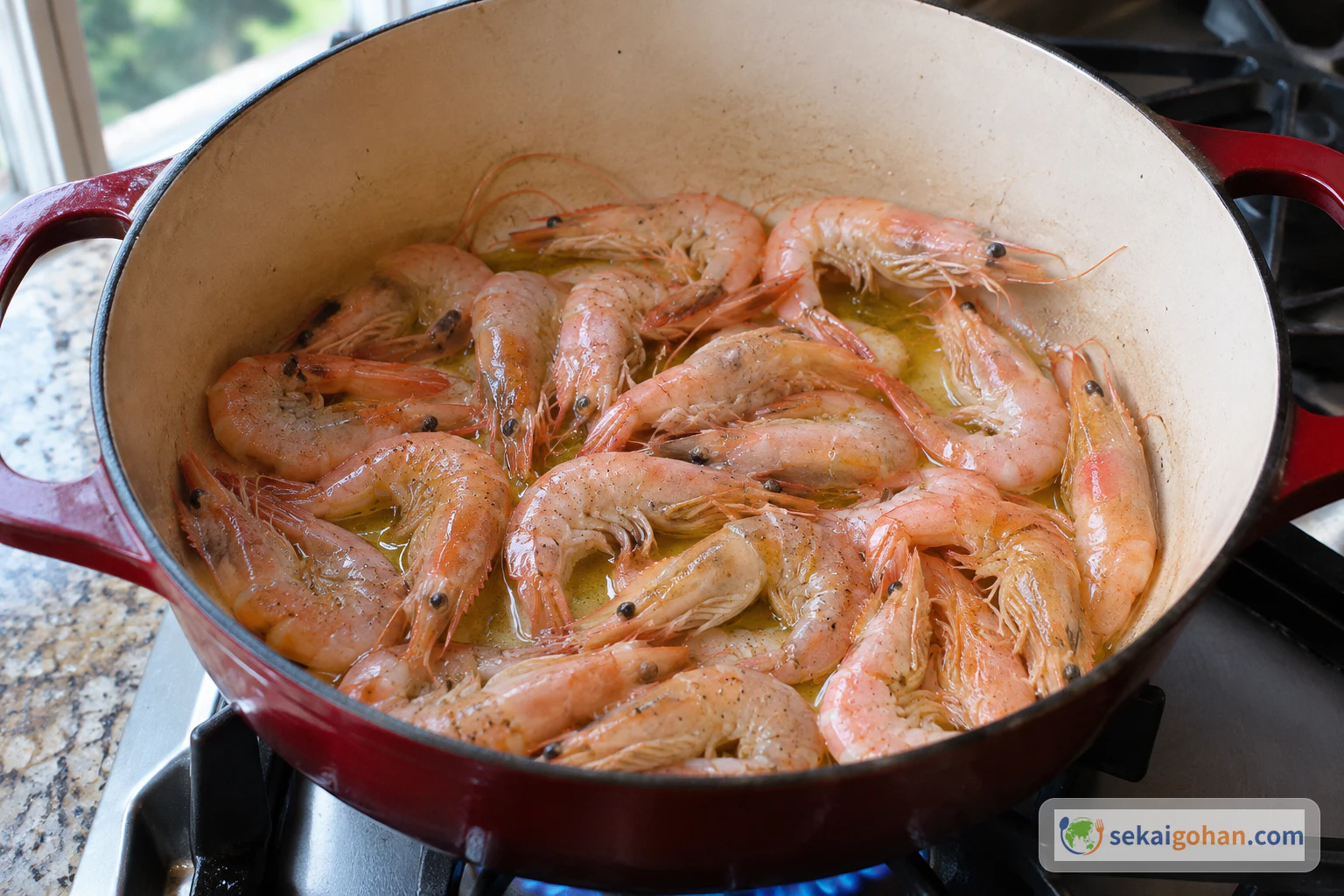
Bafo is the steam trapped inside a covered pot, and camarão no bafo means shrimp cooked by that steam. In Brazil, ao bafo is the everyday way to say something was steamed this way, so the name tells you the whole method: the shrimp sauté in a little oil, then the lid closes and the moisture they release finishes the cooking.
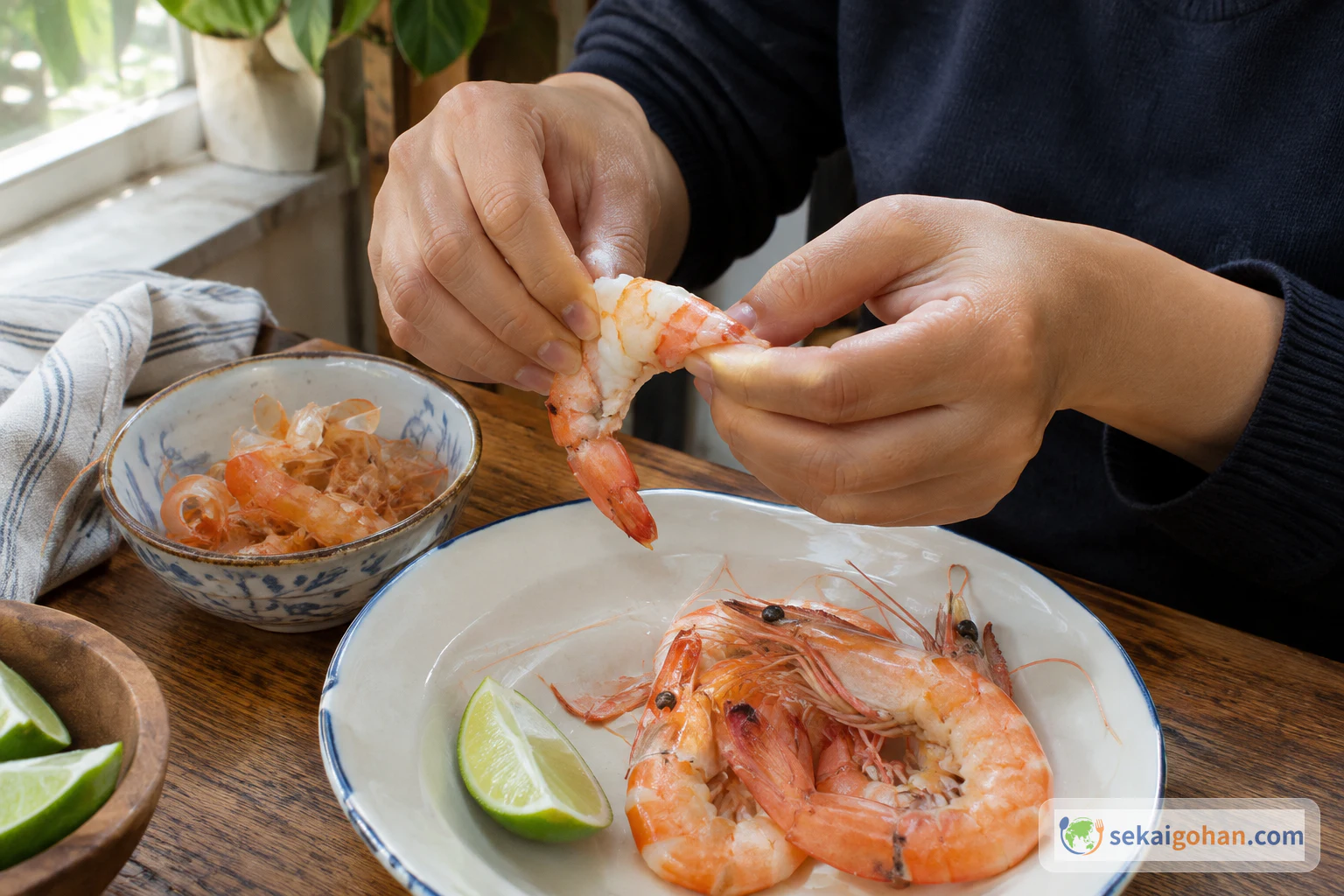
Its home is the bar de praia, the beach kiosk where a platter lands in the middle of the table and the group works through it together. People pull the shells off with their fingers, squeeze lime over the meat, dip it in garlic mayonnaise or hot pepper sauce, and keep the cold beer or caipirinha moving. A bowl for shells and a stack of paper napkins are part of the setting.
Brazil cooks shrimp in richer ways too, like bobó de camarão and moqueca baiana. Camarão no bafo is the plainest of them. It has no sauce, and the shrimp themselves are the whole flavor, so the size and freshness of the shrimp decide the plate. For more dishes from the same table, see Brazil.
You will see both camarão no bafo and camarão ao bafo. Both point to the same idea: shrimp cooked in the steam of a closed pot.
Ingredients
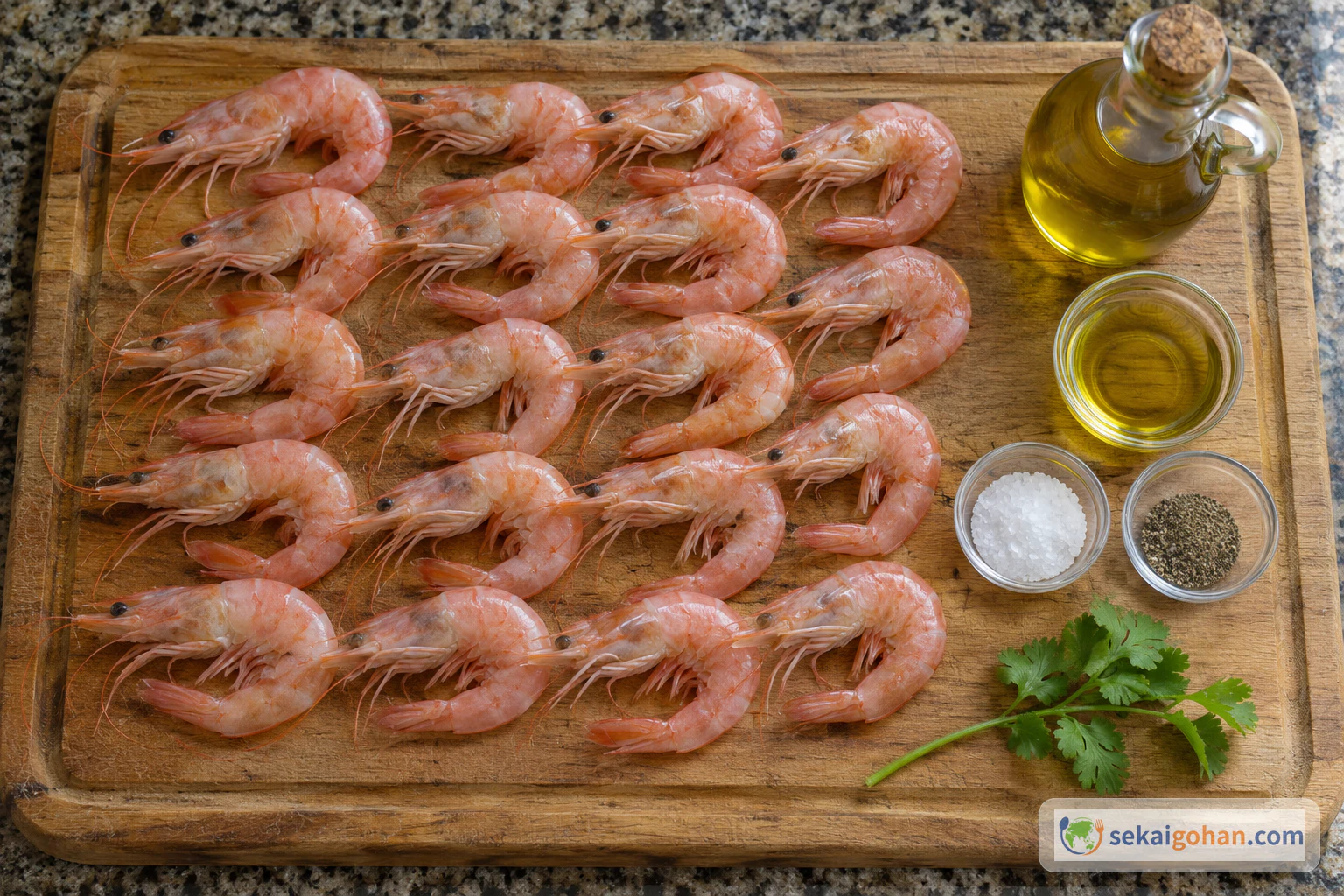
This dish is built on shrimp, a crustacean shellfish. Keep it away from guests with shellfish allergies, and wash hands, boards and knives after handling the raw shrimp.
Equipment
- Wide, heavy pot with a tight lid, light enough to shake
- Colander
- Small sharp knife
- Mixing bowl
- Serving platter, a bowl for shells and paper napkins
Choosing the Shrimp and What Can Change
Buy large shrimp with the shell on. This dish is eaten by peeling at the table, and the shell keeps the meat moist through the sauté and the steam. Black tiger or red shrimp in a large size work well, head-on or headless. Different species and sizes cook at their own pace, so go by color and firmness in the pot rather than by the clock alone.
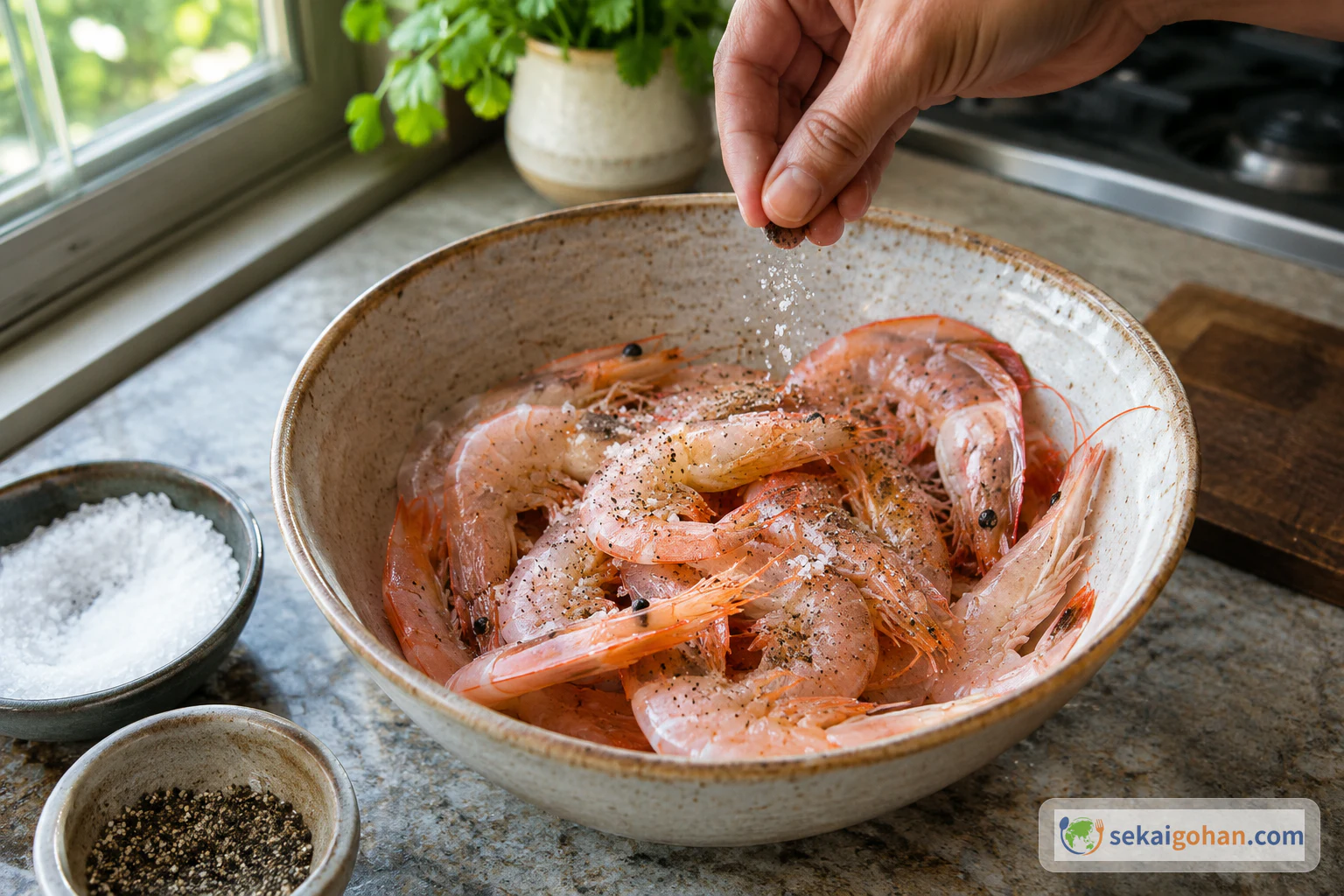
Salt changes with the grain. A teaspoon of fine salt tastes saltier than a teaspoon of coarse flakes, so with fine salt, season a little more lightly. Use an olive oil you like the taste of, since it ends up on everyone's fingers. Coriander and cilantro are the same herb; if someone at the table dislikes it, leave it out. The shrimp will taste plainer but still right.
Touch a few grains of your salt to your tongue. Fine salt hits harder than flaky salt, and with only five ingredients the seasoning shows on every shrimp.
Method
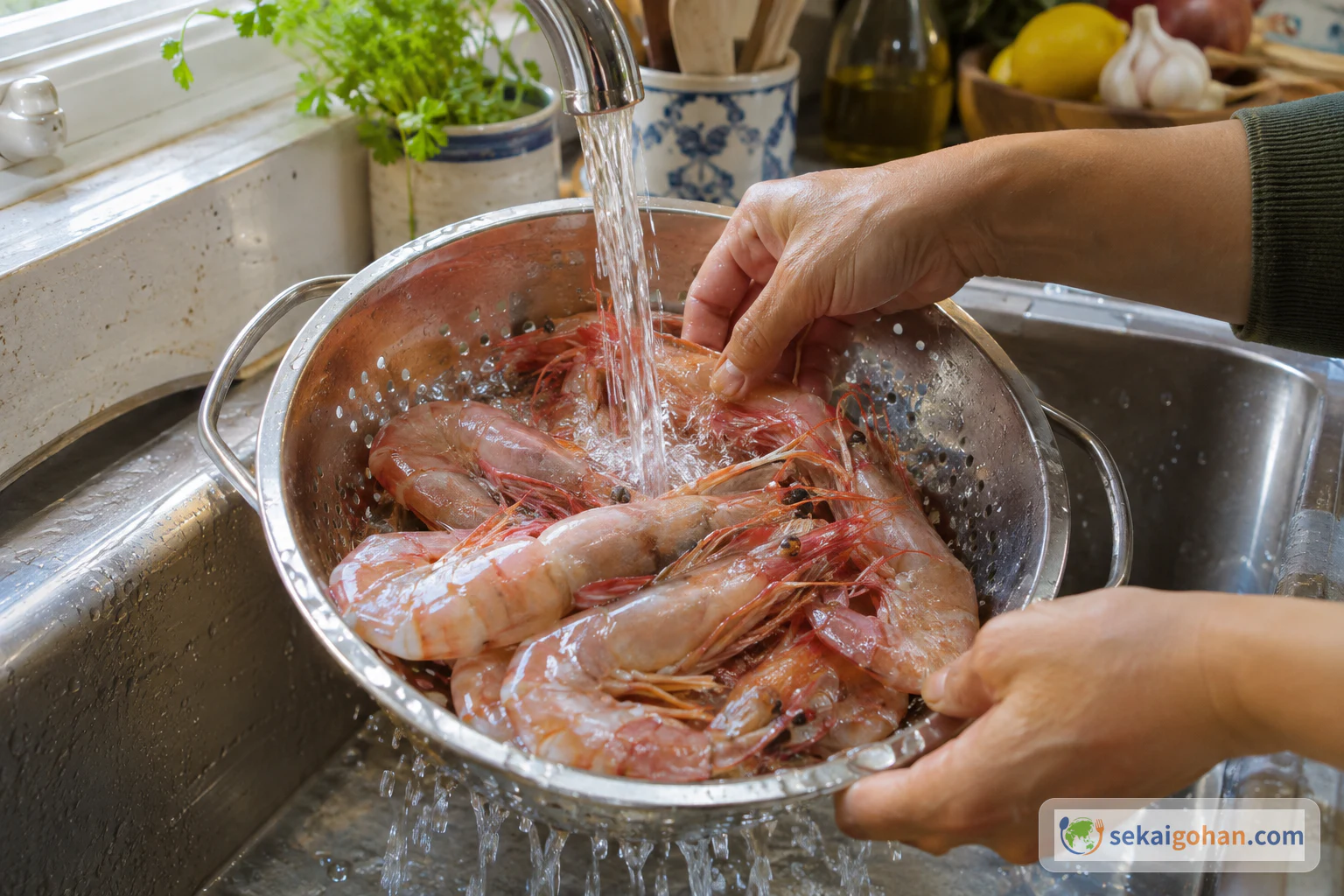
Do all the prep at the sink and the board before the pot goes on: rinse, drain, devein and season. The time at the stove is short, a sauté, a covered steam and a moment with the lid off, and it moves quickly once it starts. Keep the platter ready next to the stove.
Shrimp go from juicy to rubbery and dry quickly. Pull the pot off as soon as the meat is opaque and springs back under your finger.
The whole dish is the steam in the pot. Shake the pot instead of checking under the lid during those five minutes.
When It Goes Wrong
| What you see | Why | What to do |
|---|---|---|
| The meat is rubbery and dry | Cooked too long, often in the uncovered drying stage | Take the pot off the heat as soon as the meat turns opaque and firm. Next time stop drying sooner |
| Some shrimp are pink, others still grey | Crowded in the pot or not shaken during the steam | Spread them in one layer and shake the covered pot a few times. Cook on until every shrimp is opaque and pink |
| The center looks grey and translucent | Not cooked through | Return to the heat and cook until the meat is opaque all the way and bright pink |
| A pool of liquid stays in the pot | The lid came off too early or the shrimp went in wet | Keep the pot uncovered over the heat until the liquid dries off; drain the shrimp well next time |
| Too salty | Fine-grained salt measured like coarse salt | Serve with plenty of lime and white rice; use less fine salt next time |
| A gritty bite along the back | The vein was left in | Cut along the back and lift out the vein before seasoning |
Serving and Variations
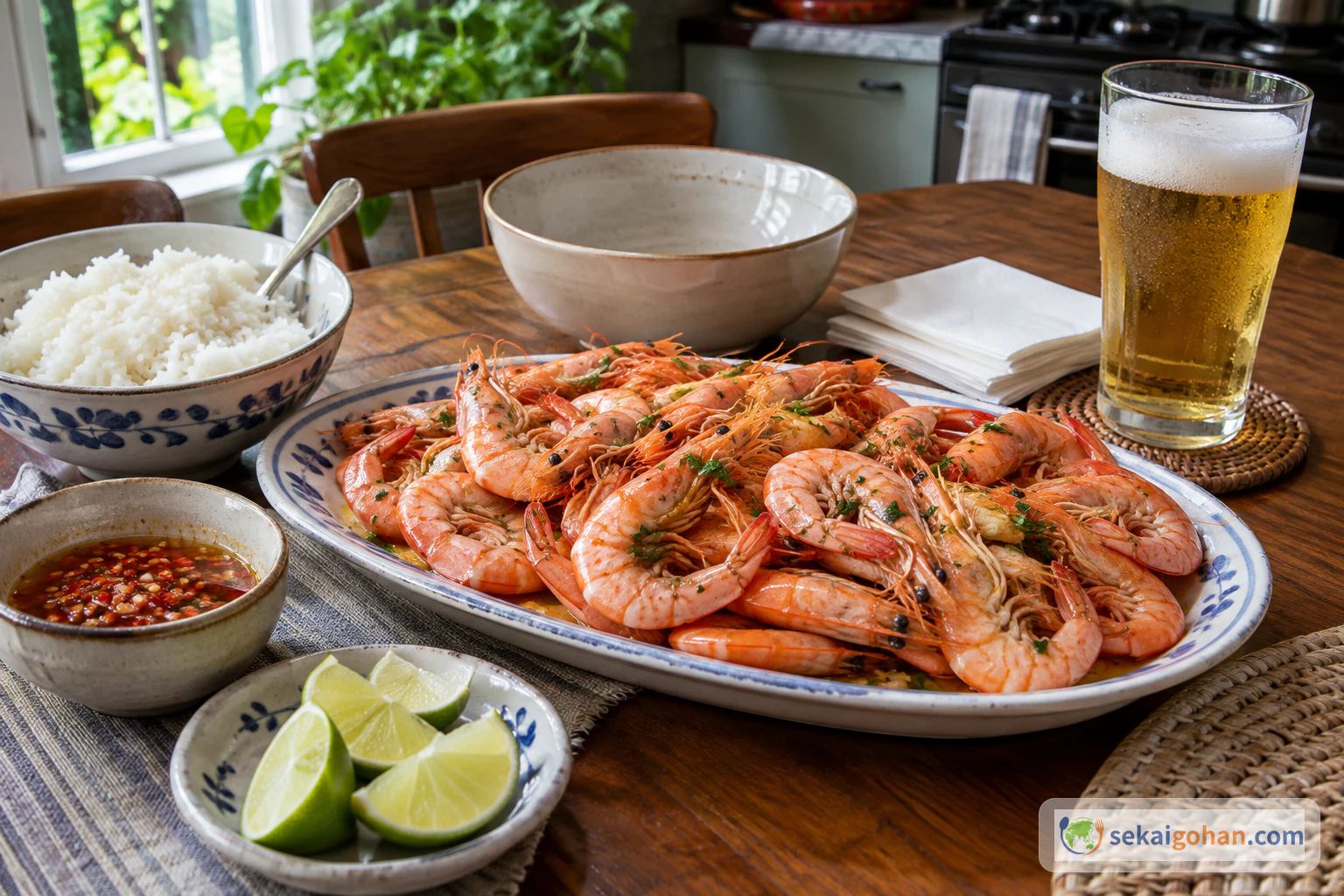
Bring the pot to the table straight away and tip the shrimp onto a platter in the middle. Set out lime wedges, garlic mayonnaise and hot pepper sauce for dipping, with a bowl for shells and plenty of paper napkins. Cold beer or a caipirinha is the drink it is made for. To make a meal of it, add white rice and farofa, the toasted cassava flour that soaks up the juices left on the plate. Eat the shrimp soon after they come off the heat, while they are hot and juicy.
Variations
- In their own juices. Use only a little fat, put the lid on and let the shrimp steam in the water they release, then cook until that liquid is gone and they start to sizzle. The result is drier and more concentrated, with less oil on the fingers.
- With beer, cachaça or lime in the pan. Cover for 3 to 5 minutes, then splash beer, cachaça or lime juice into the pot to loosen the browned bits on the bottom. You get a little sharp, savory pan juice to spoon over the shrimp.
- In a steamer basket. Steam the seasoned shrimp over boiling water for 5 to 7 minutes. They come out softer and paler, without the light golden color from the oil.
- Without coriander. Skip the sprig for guests who dislike it. The steam carries only oil and pepper, and the shrimp taste plainer and sweeter.
Frequently asked questions
Can you eat the shells?
With medium shrimp cooked until the liquid dries off and they begin to sizzle, some people eat them shell and all. The large shrimp in this recipe are peeled at the table. The shells still matter, because they keep the meat moist in the pot.
Can I use frozen shrimp?
Yes. Thaw them fully, then rinse and drain them as in the first step and pat them dry. Shrimp that go into the oil still wet or icy throw off water and steam before they color.
Head-on or headless?
Either works. Head-on shrimp look more dramatic on the platter while headless shrimp are quicker to peel. Cook both until the meat is opaque and firm.
My shrimp are smaller than these. What changes?
Smaller shrimp cook faster at every stage. Watch the shells rather than the clock, and take the pot off the heat as soon as the meat is bright pink and firm.