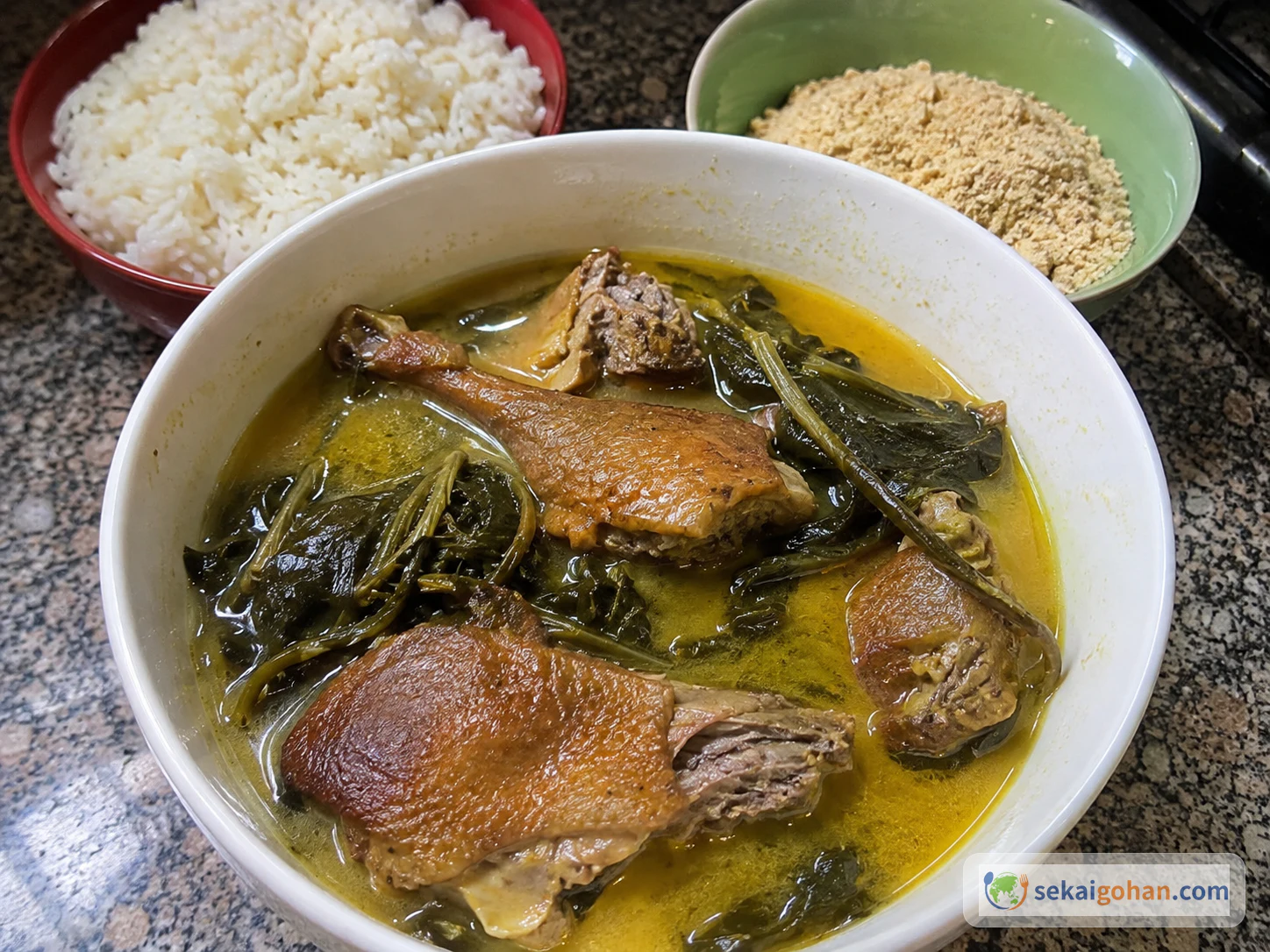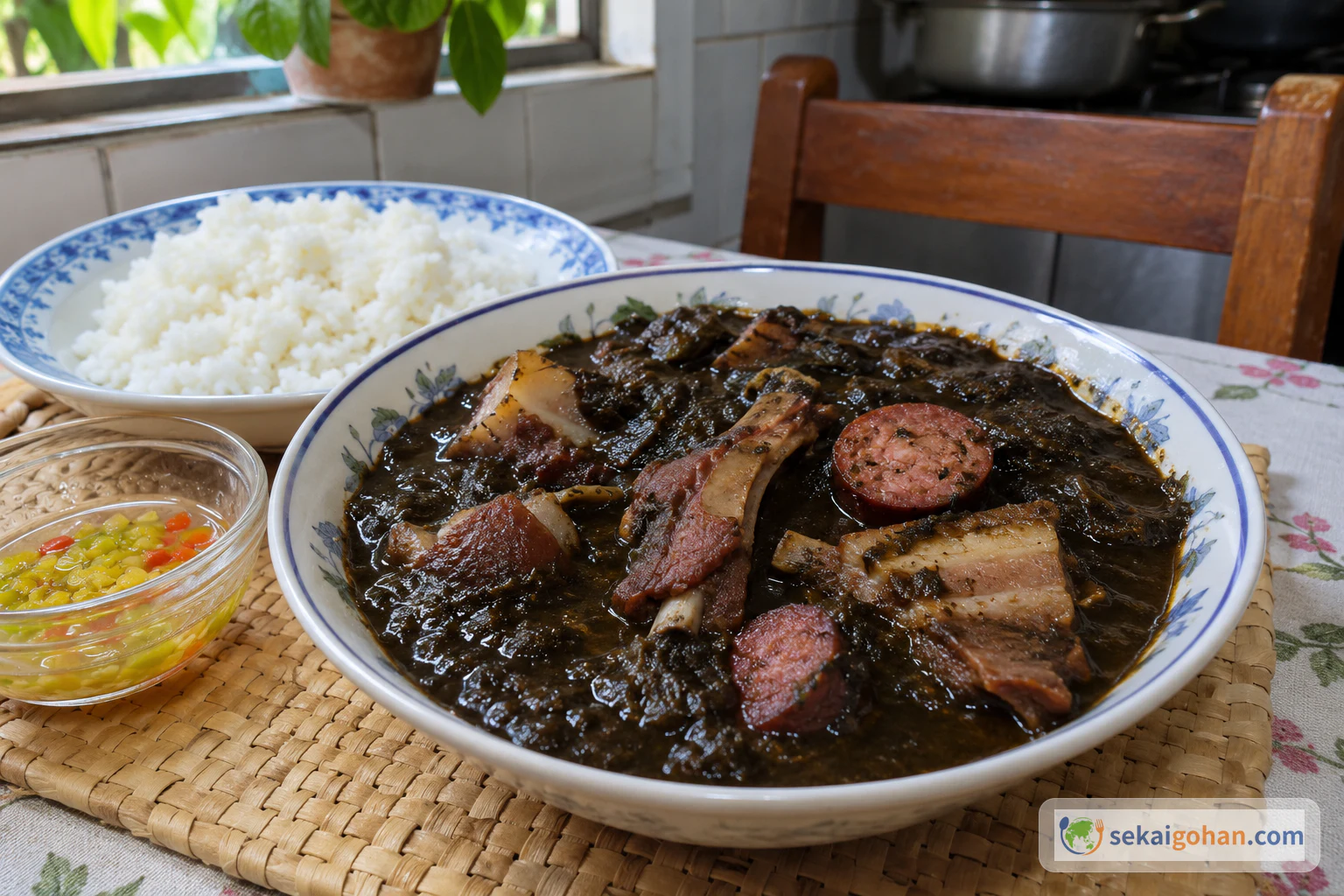
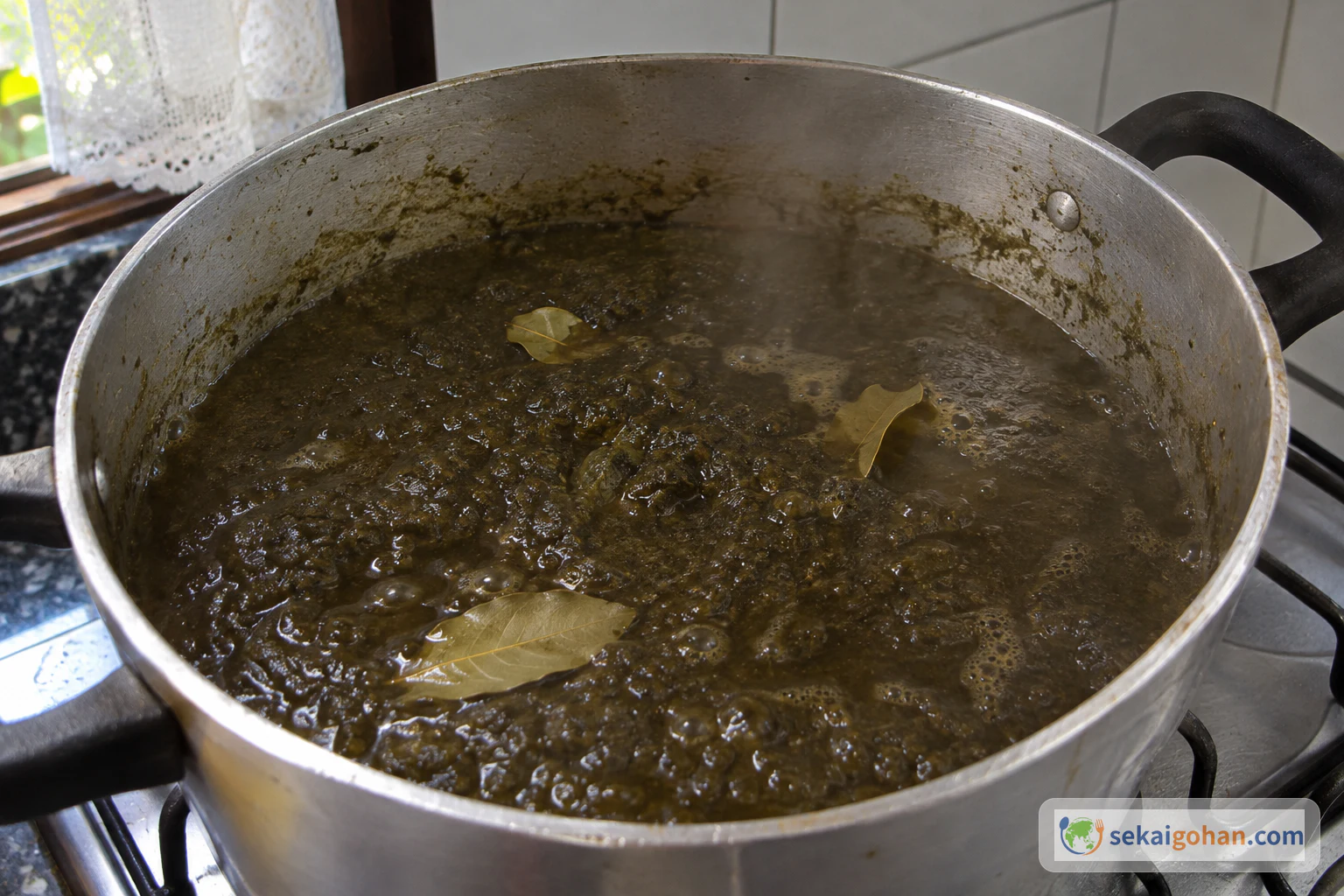
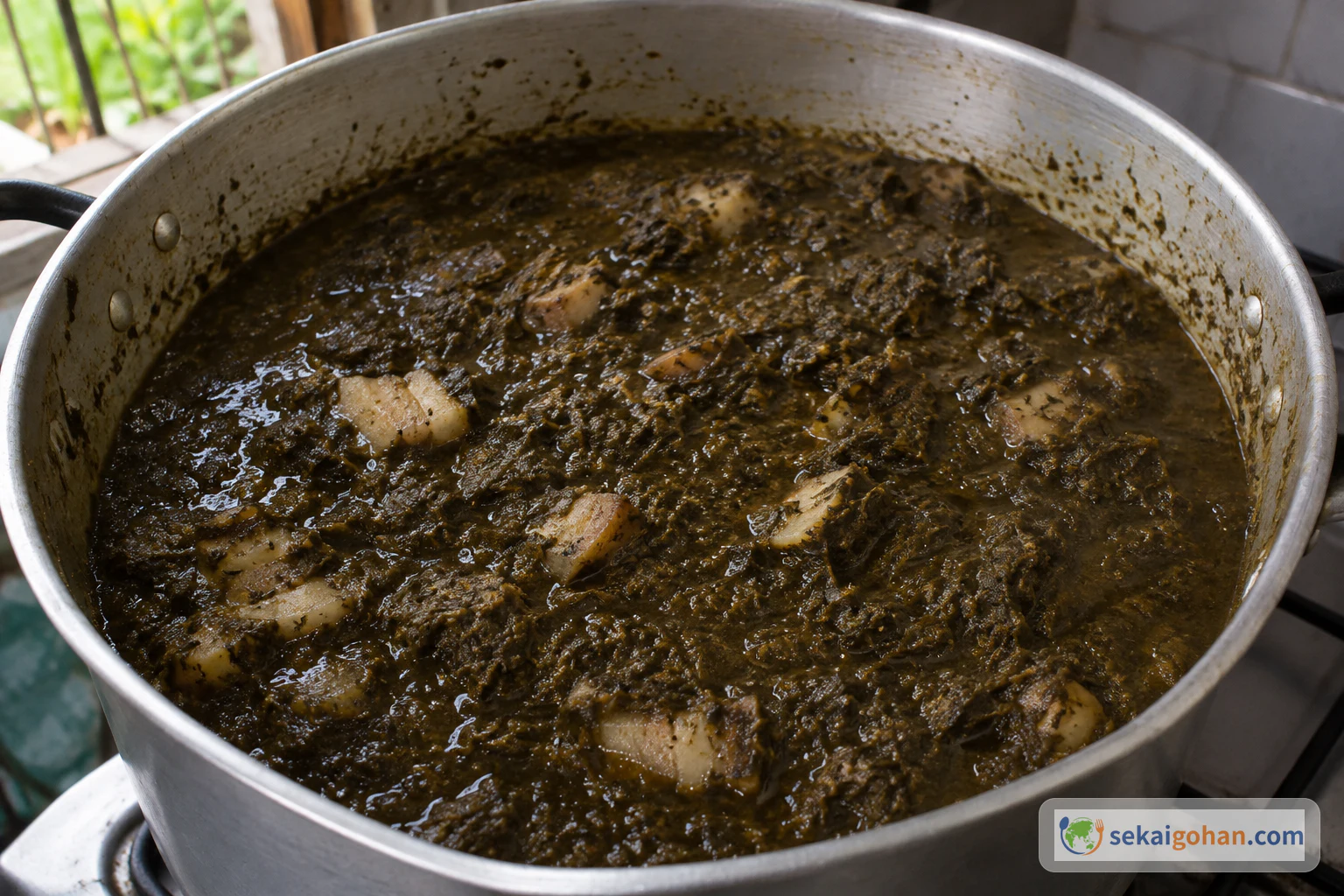
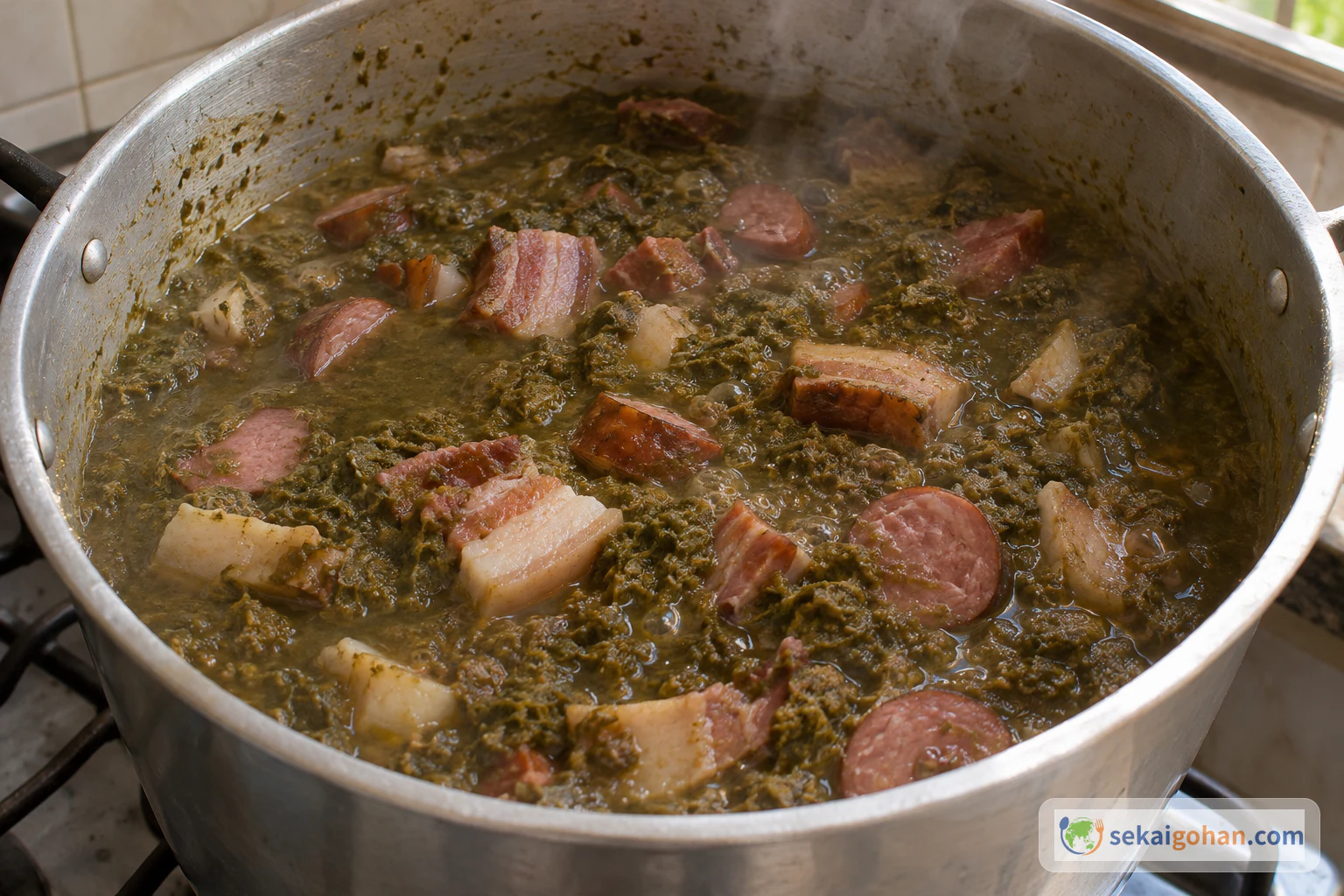
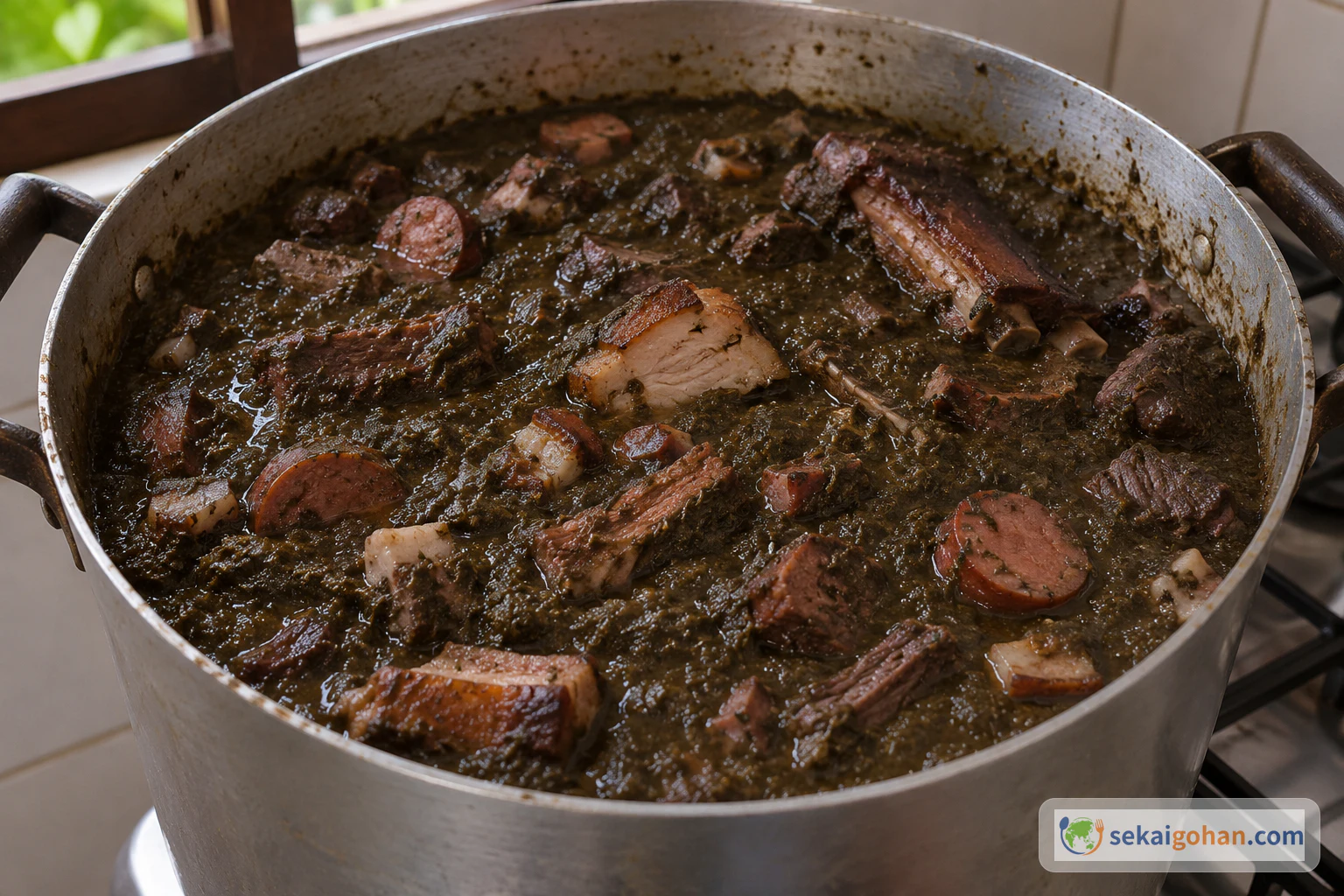
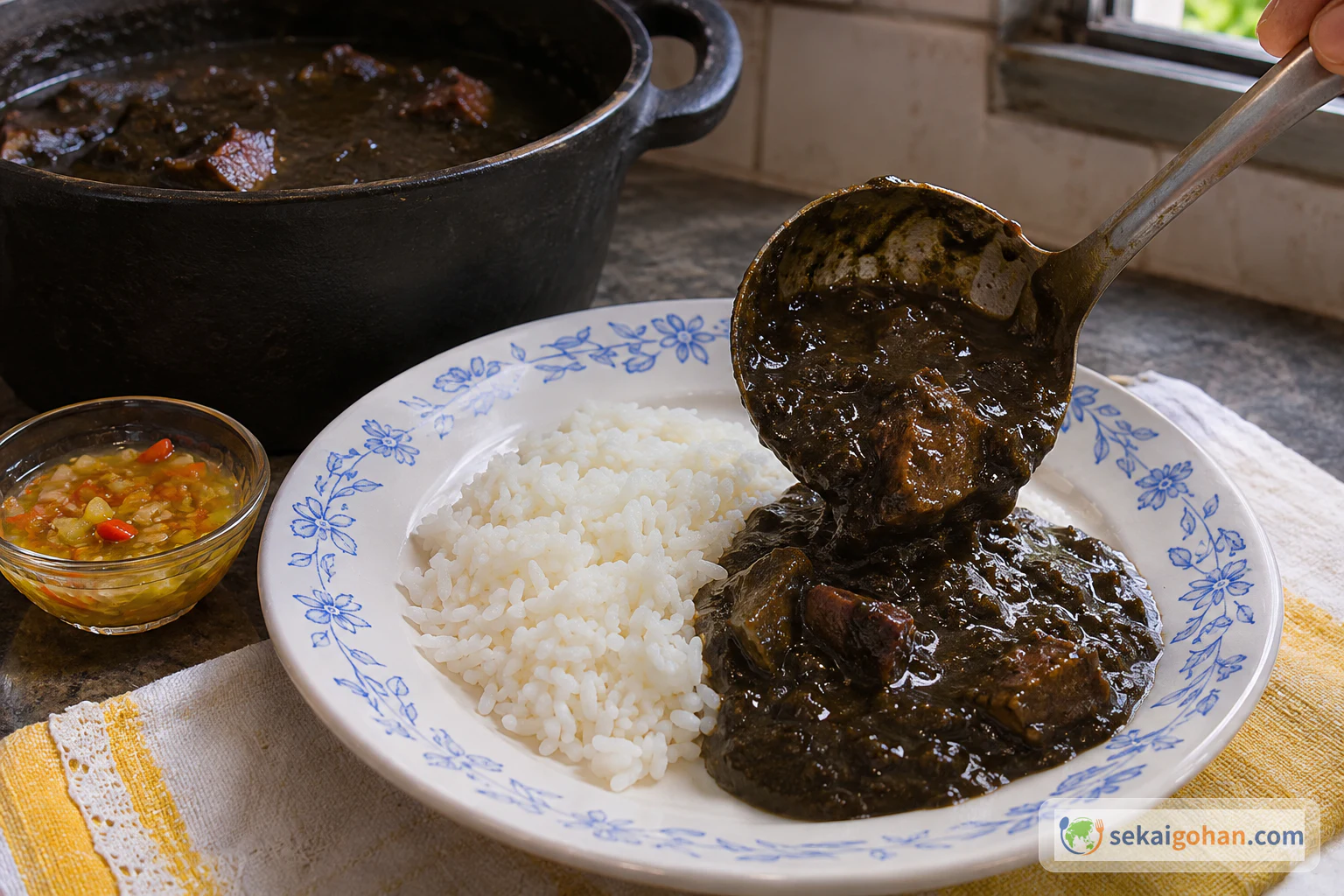
Toward the end of cooking, the pot turns almost black. The stew is thick and shiny, and chunks of sausage, bacon and smoked rib sit half-sunk in it. In Belém and across the state of Pará, in the Brazilian Amazon, this dark pot sits at the center of the October lunch for Círio de Nazaré. Families gather around it, with white rice on one side and a small bowl of pepper sauce on the other. Maniçoba eats like a feijoada in which ground cassava leaves take the place of the beans. It is salty, smoky from the cured meats, and deeply savory, and the leaves have cooked down so far that they turn into the sauce.
Leaves Instead of Beans: What Maniçoba Is
The base of the dish is maniva, the ground leaves of the cassava plant (Manihot esculenta). It is often compared to feijoada because the build is the same: a long-cooked dark base loaded with salted and smoked pork and beef. The difference is that leaves carry the dish where beans would. The meats are the cured kind found all over northern Brazil: charque (dried salted beef), linguiça and calabresa sausage, paio, bacon, smoked ribs and roast pork. The dish is usually said to come from Indigenous cooking. How that history unfolded is not settled.
Why the leaves cook for days
Raw cassava leaves contain hydrocyanic acid, and grinding them releases it as a gas. That is why maniçoba is famous for its cooking time. By tradition the ground leaves cook for at least seven days to drive off the poison. One common telling has maniva boiled for more than 72 hours, then cooked for another 8. In recent years a cook in Pará made a one-hour version in a pressure cooker and split opinion. He used leaves that had already been pre-cooked for 96 hours, and the dish was widely called something other than the traditional recipe. The point people kept coming back to was that the leaves must have gone through cooking for the proper length of time. The number of days on the calendar matters less. These figures describe how the leaves are processed in Pará. They are not a method for a home kitchen.
Cook maniçoba only from maniva sold already cooked (maniva pré-cozida). Never make it from fresh cassava leaves or freshly ground leaves at home. Never use a pressure cooker or any other shortcut on raw leaves. The black color and thick texture of the finished stew tell you the stew is done. They say nothing about cyanide. Safety depends on the leaves having been cooked properly before you buy them.
The Círio table
Círio de Nazaré is the great October religious festival of Belém. Maniçoba is a fixture of its lunch, alongside the other dishes of the day. The pot is made for a crowd: the recipe this one is based on makes 30 servings, which is why the amounts below are scaled down to six. You can find more dishes from the same country on our Brazil page.
On 10 May 2022, the Pará state assembly unanimously passed a bill to recognize maniçoba as part of the state's intangible cultural heritage. The bill then went to the governor for signature.
Ingredients (serves 6)
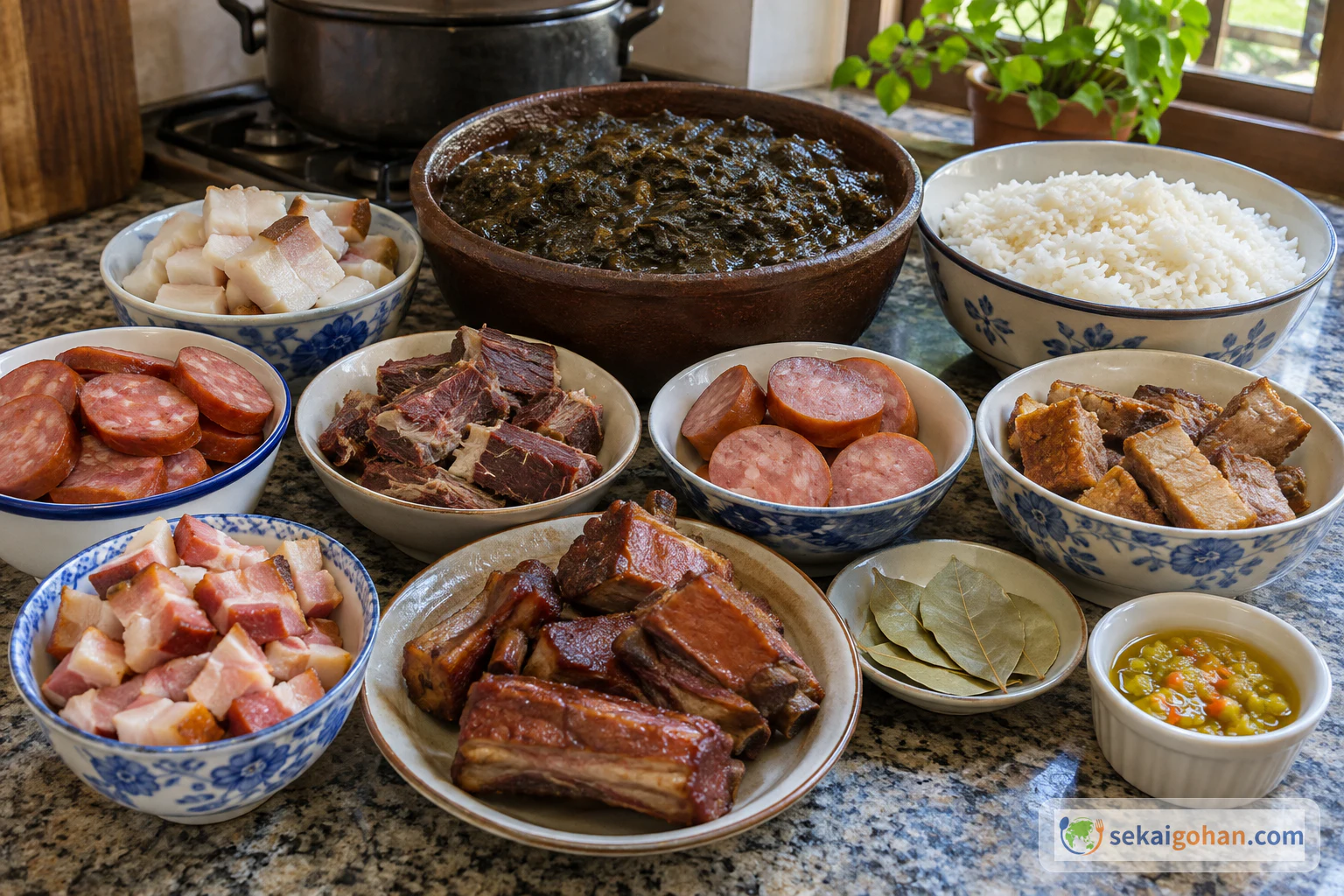
The toucinho and charque come heavily salted. Blanching the fat in two changes of water, and scalding the charque, leaves room for the smoke and the leaves to come through. If you skip this, the whole pot ends up tasting of brine.
Equipment
- A large heavy pot for the long simmer
- A second pot for blanching the salted fat and scalding the charque
- A bowl to hold the prepared meats
- A cutting board and knife
- A long spoon for stirring from the bottom
- A ladle
Choosing and Substituting
The maniva cannot be replaced. Look for it labeled as maniva pré-cozida, already cooked and ground into a dark paste. If the only thing on offer is fresh cassava leaves or freshly ground maniva, do not make the dish. Other greens don't work either. Spinach, kale, sweet-potato leaves or taro leaves cooked with these meats give you a different stew, and it should go by a different name.
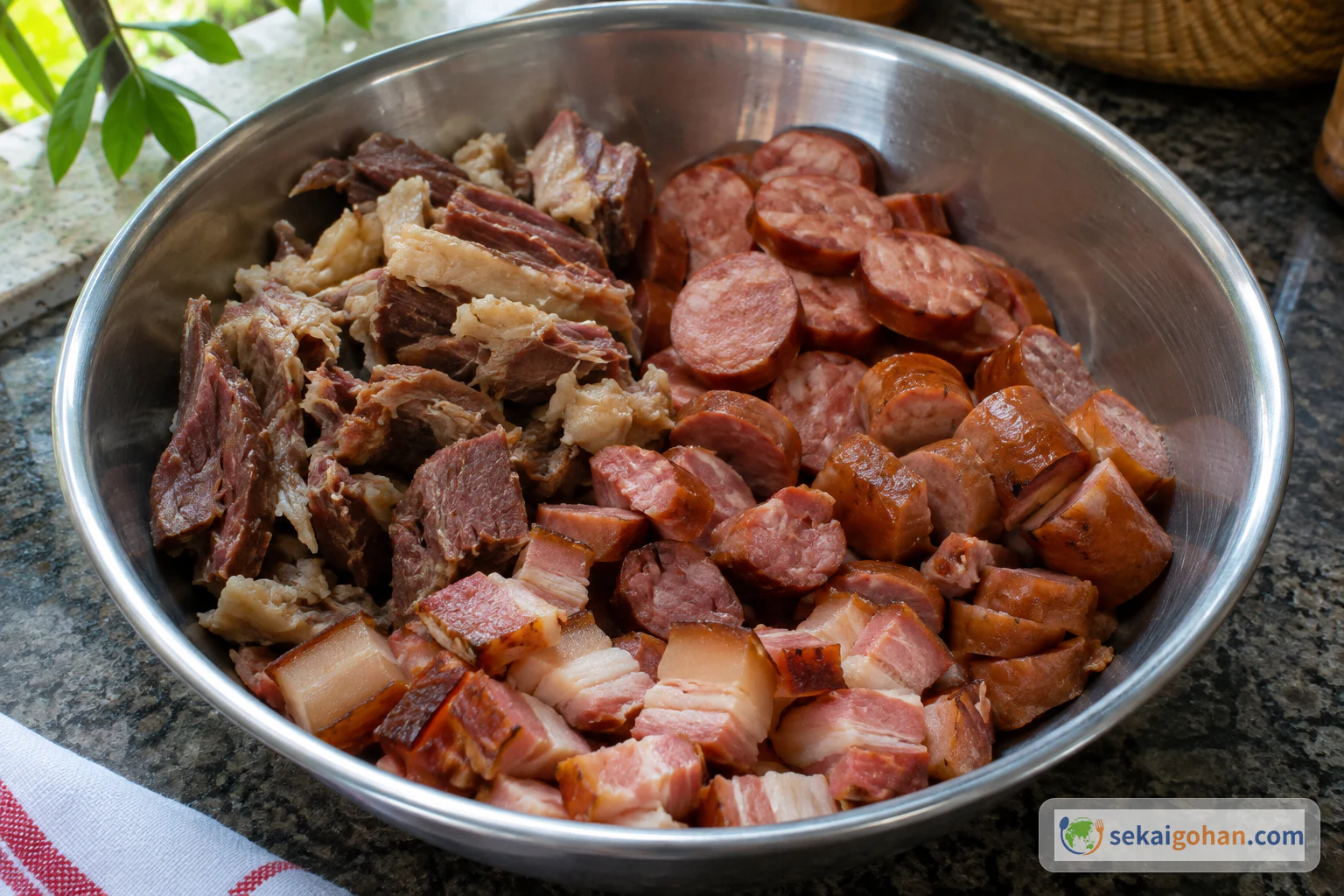
The meats allow some flexibility. Charque, paio and calabresa are the cured meats the stew is built on. When charque is missing, salt beef can stand in, but the beef flavor changes: it is less concentrated and less dry-cured. Keep the smoked ribs in the pot. Along with the bacon, the ribs carry the smokiness that makes the stew taste of Pará.
Method
Plan on about three hours at the stove with pre-cooked maniva. Start the maniva first, then blanch the fat and add it. While the pot cooks, prepare the second round of meats in a bowl so they are ready when the leaves turn black.
The second round of meats goes in only when the leaves have turned truly black. If you add them while the maniva is still olive, the stew runs out of time to thicken around them, and you end up with meat in a thin green-brown broth.
When It Goes Wrong
| What you see | Why | What to do |
|---|---|---|
| The maniva is still olive-brown when you reach step 5 | The leaves have not cooked long enough | Keep simmering, and wait until the pot is black before adding the last meats |
| The stew tastes harsh and salty | The toucinho or charque was not blanched enough | Next time, blanch the fat in two changes of water and scald the charque. Serve more rice with it today |
| The stew stays thin and loose | It came off the heat too early | Keep it simmering until it is black and thick |
| The bottom sticks or smells scorched | A thick leaf base over heat catches easily | Lower the heat and stir from the bottom more often. Don't scrape burnt bits up into the stew |
| You can only find fresh leaves or freshly ground maniva | That maniva has not been cooked | Don't cook the dish. Wait until you can buy maniva pré-cozida |
Serving
Maniçoba is a lunch dish for a full table. In Pará that means the Círio in October, when big pots are made for the family. On the plate it goes with plain white rice and pimenta de cheiro sauce: the rice soaks up the dark stew, and the sauce brings heat and brightness to the salt and smoke. Give each person a bit of every meat, including a rib, so the plate has the mix of textures the pot was built for.
Frequently asked questions
Can I cook it faster in a pressure cooker?
Stick to the open pot. The well-known one-hour pressure-cooker maniçoba used leaves that had already been pre-cooked for 96 hours, and it was seen as a break from the traditional dish. With pre-cooked maniva, the slow simmer in an open pot is what turns the leaves black and thick.
How do I cook it for a big gathering?
Multiply every amount by five to feed thirty. That means 3¼ lb (1.5 kg) maniva pré-cozida, 2¼ lb (1 kg) each of salted pork fat and linguiça calabresa, and 1 lb (500 g) each of charque, paio, roast pork and bacon. Add smoked ribs and bay leaves as needed. Use your largest pot and stir from the bottom more often, because a bigger batch catches more easily.
Is maniçoba eaten outside Pará?
Yes. It is also cooked in Sergipe and in the Recôncavo region of Bahia, in towns such as Santo Amaro and Cachoeira. The pot in this article is the Pará version, made the way it is for the Círio lunch. Keep it separate from Bahian ways of making the dish.