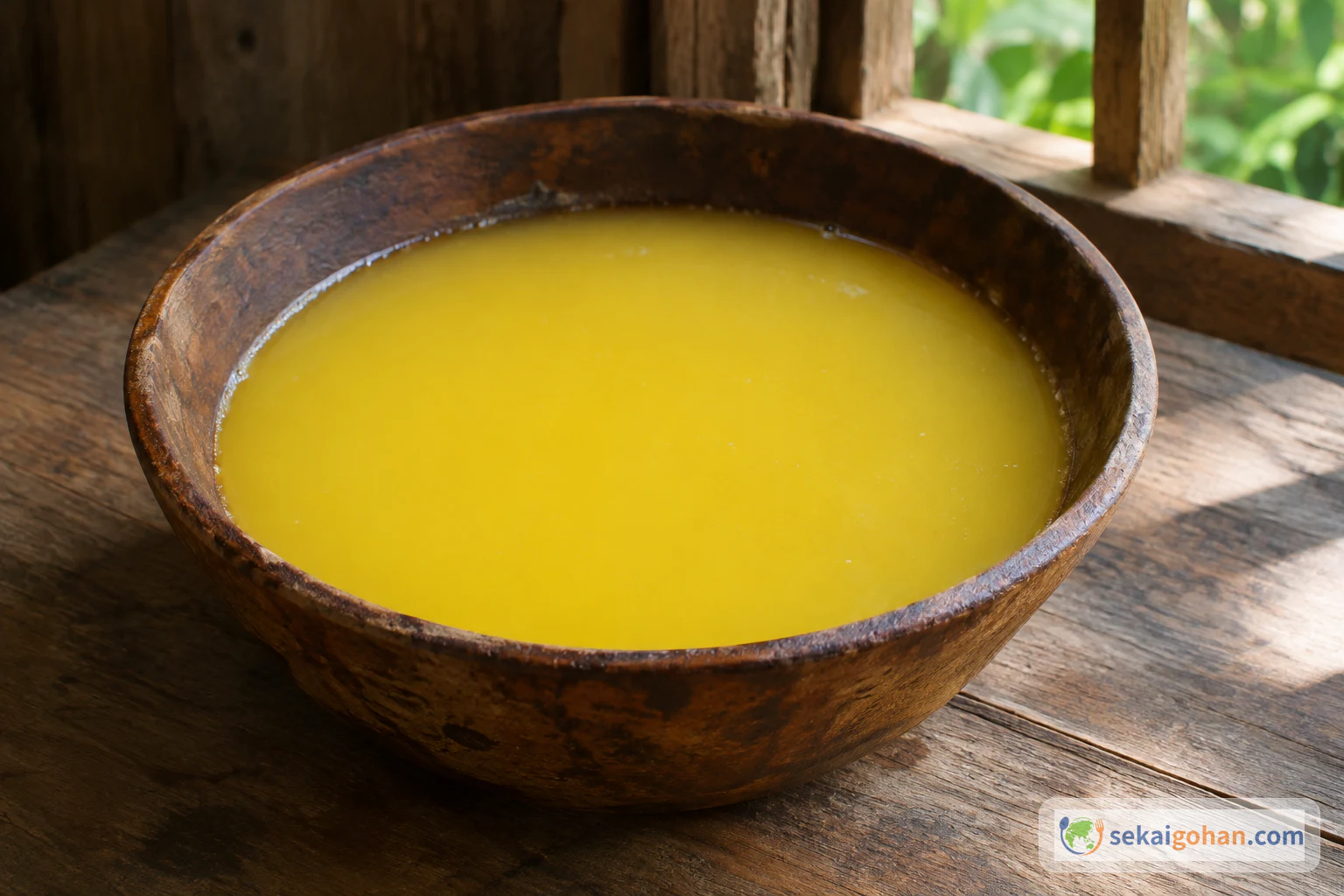
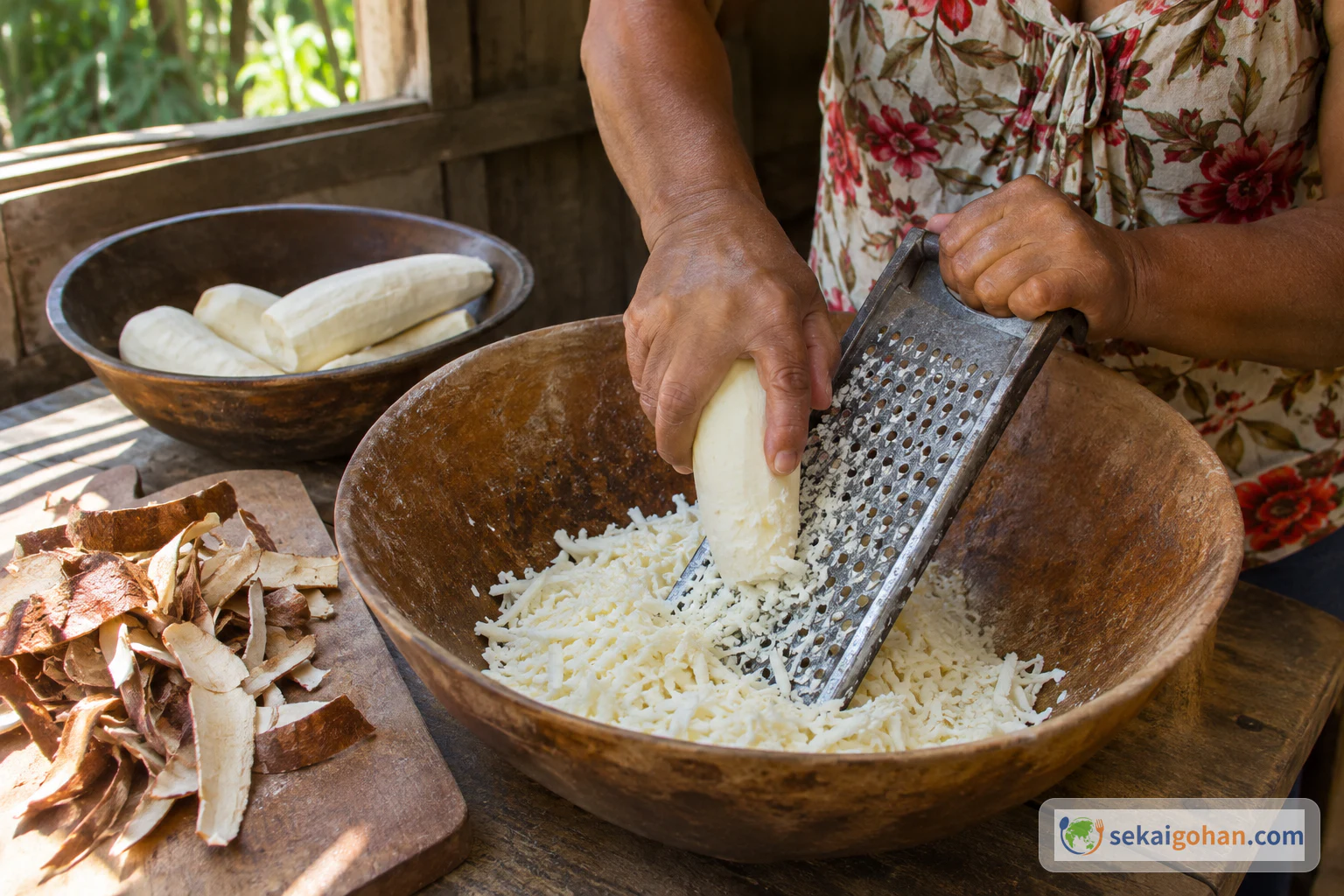
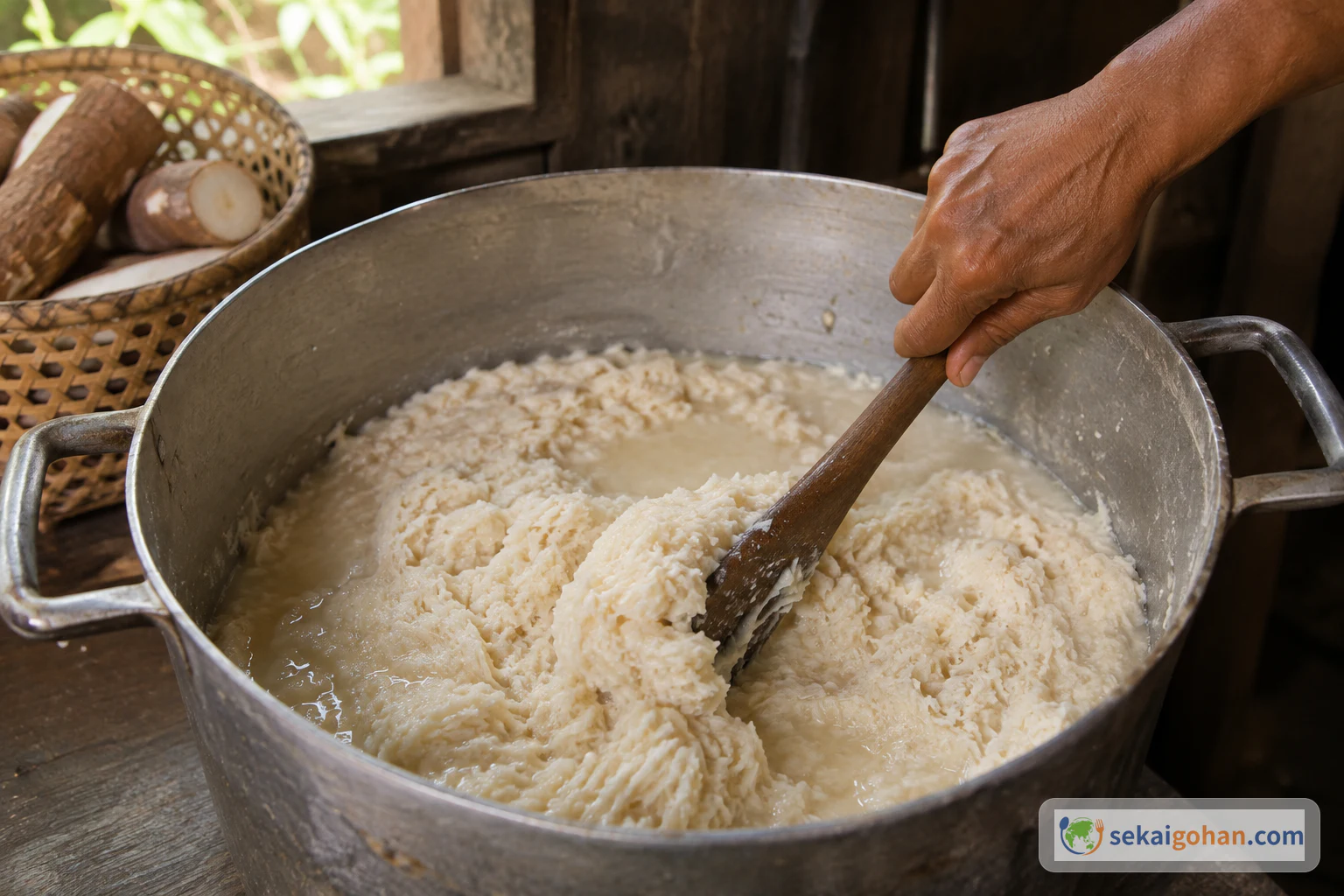
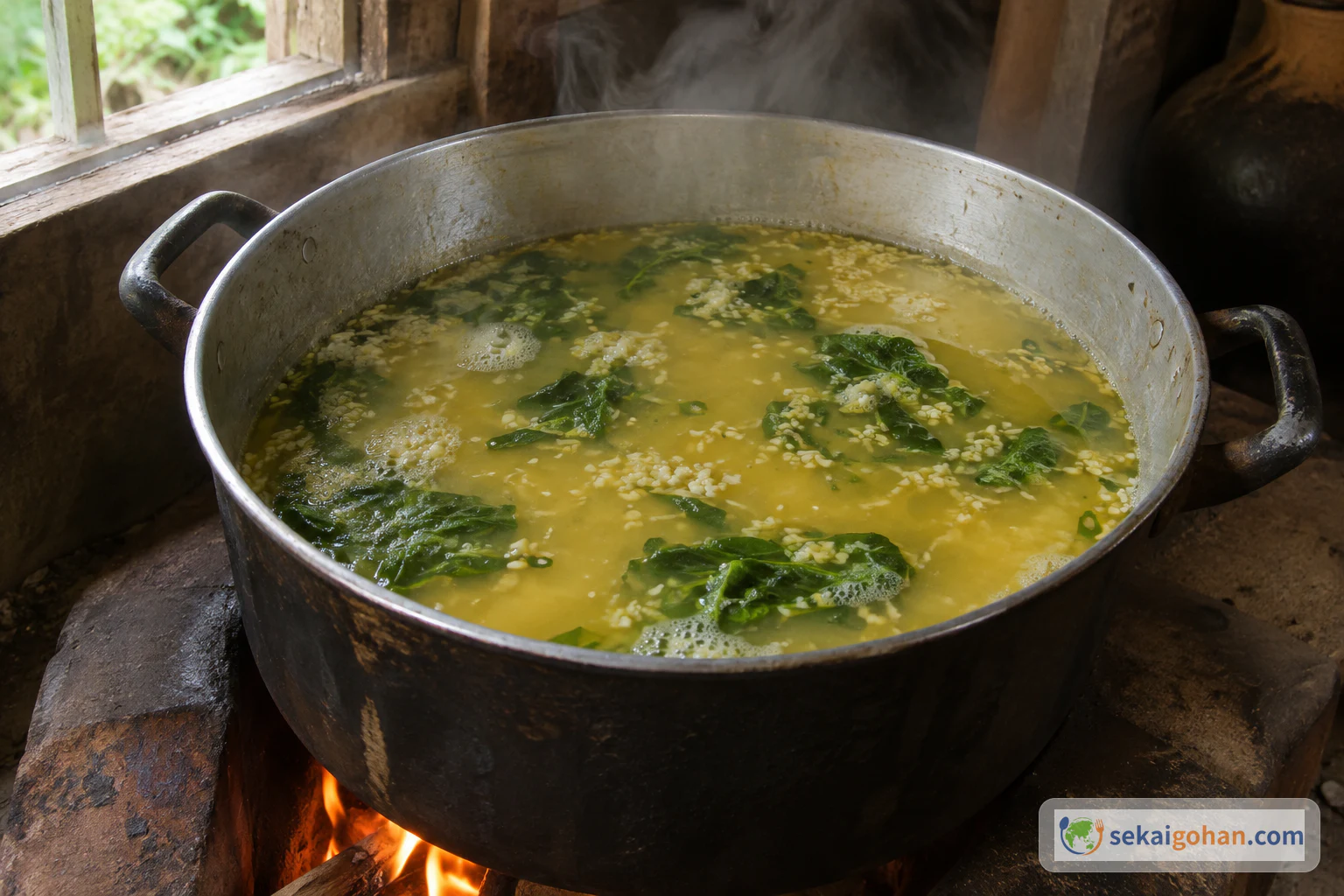
A big pot of pale-yellow liquid simmers slowly, with crushed garlic and bunches of green chicória leaves turning in it. Hours earlier that liquid was the juice pressed from grated bitter cassava, and it was poisonous. Tucupi is that juice after it has rested and been boiled. It becomes a clear, sharply sour yellow sauce that cooks in Pará and across the Brazilian Amazon pour into soups, duck and fish. Its acidity is real: the finished liquid sits at a pH of about 3.5 to 4.5. That sourness carries the dishes built on it.
A Poisonous Root Turned into the Region's Seasoning
Bitter cassava, mandioca brava, is full of cyanogenic glycosides. When the root is grated and pressed, its juice can release hydrogen cyanide. Indigenous peoples of the Amazon learned to grate the root, press out the juice, let it settle and boil it until it was fit to eat. After colonization, regional cooking kept using the bitter juice. Today tucupi is the base of many of the best-known dishes in the cooking of Pará and the wider Amazon, and it is part of what makes the food of the north taste so different from the rest of Brazil.
Why the boiling matters, and why it differs
Boiling is the step that removes the toxic compounds. Nobody has fixed a standard for how long it takes. Each community does it its own way. One household recipe simmers the settled juice with garlic, chicória and salt for an hour and a half. Elsewhere the juice cooks for several hours over a wood fire while the cook skims off the foam, which is considered to hold the poison. Whether tucupi counts as fermented also changes from place to place. Some describe it as a fermented sauce, and in other kitchens the juice only rests long enough for its starch to sink.
Yellow, black and more sour
Most tucupi is the yellow kind, tucupi amarelo. In Roraima, Wapichana women of the Serra da Lua boil yellow tucupi down again and again until it turns into tucupi preto, black tucupi. Sixty liters of yellow tucupi become about two and a half liters of black. The tucupi made by the Baniwa people is known for being even more sour. The yellow kind goes into pepper sauce and tacacá. The black concentrate goes into damurida, a pepper stew, and lately into newer uses such as pudding.
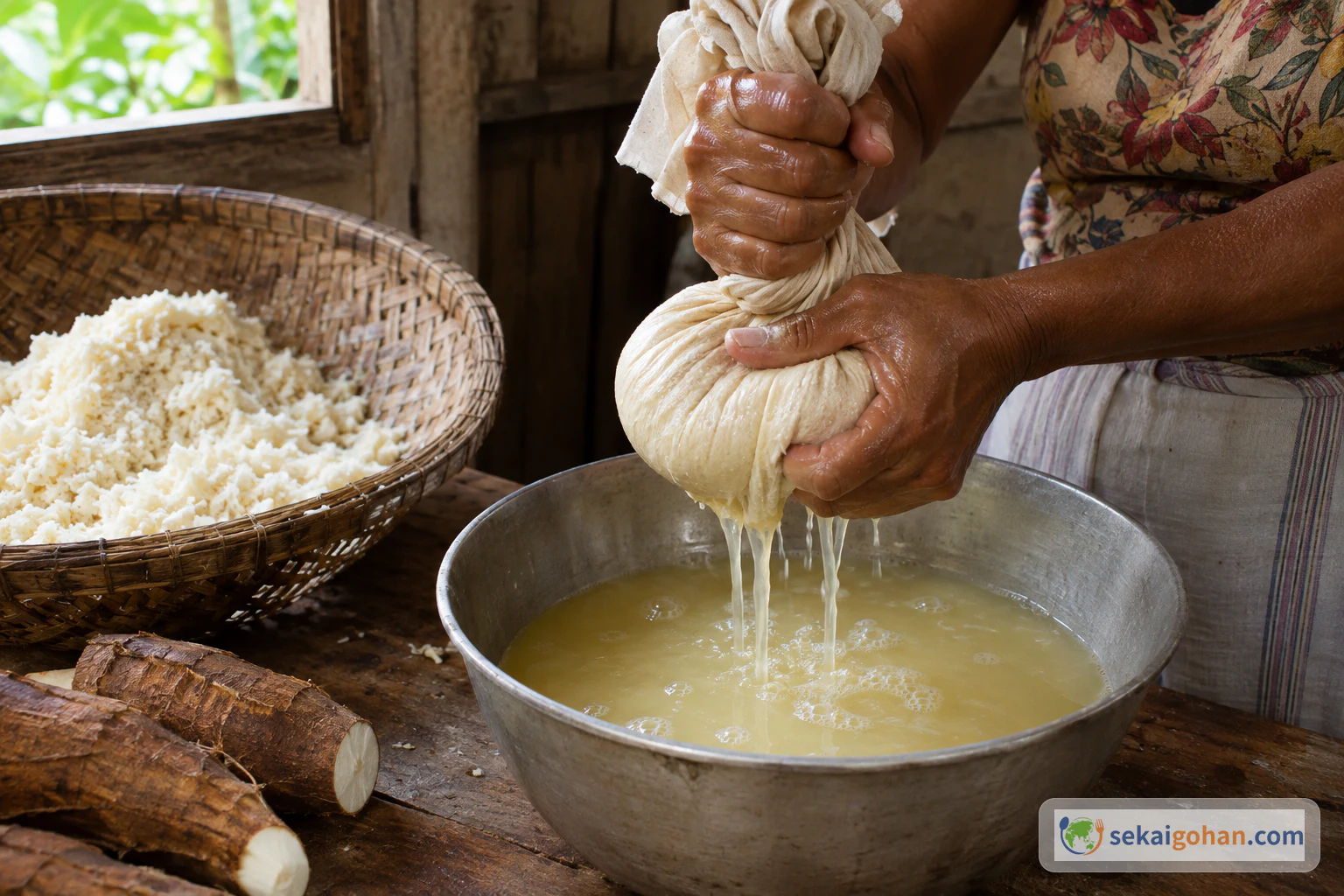
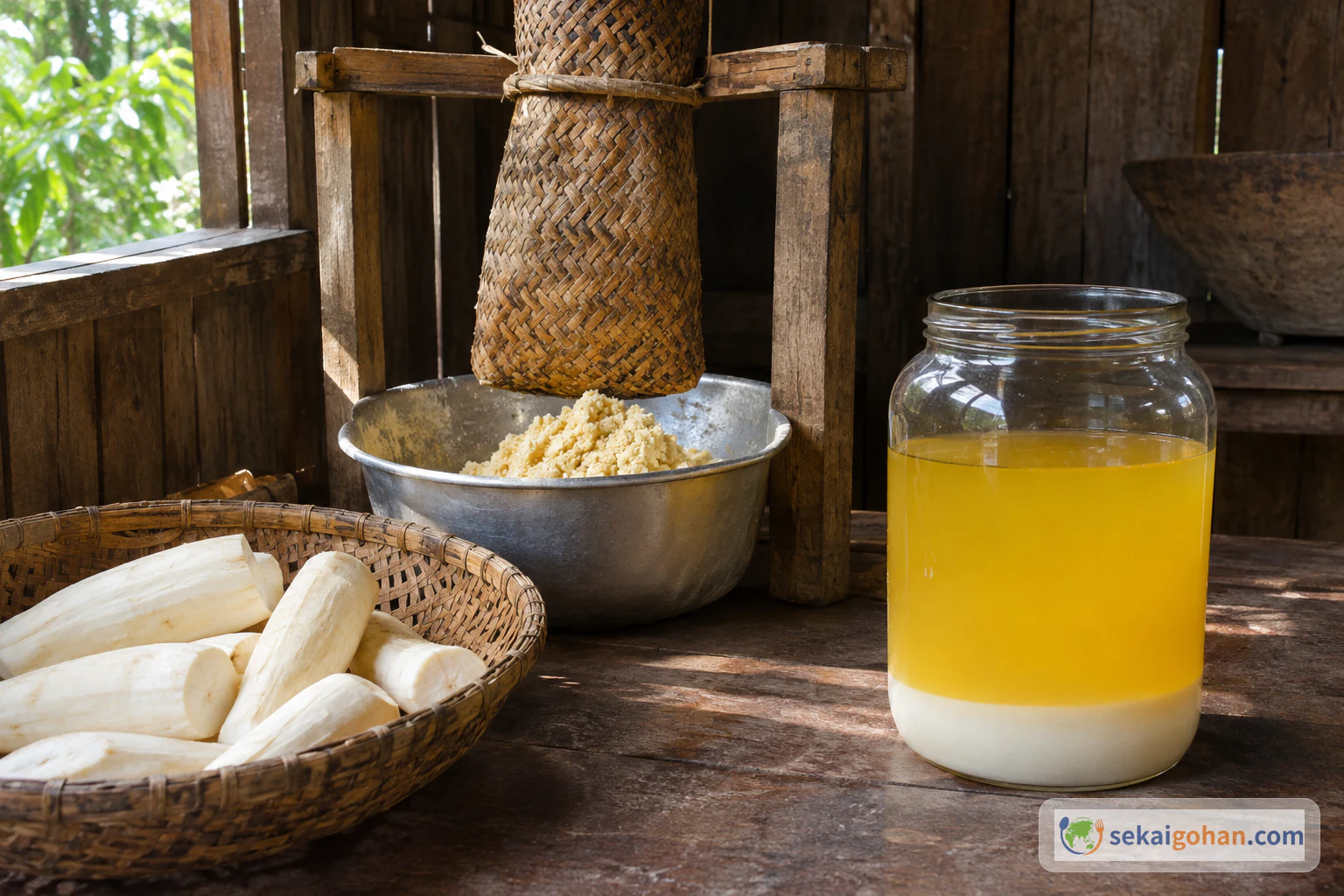
The traditional press is the tipiti, a long woven tube. Grated cassava is packed inside, and when the tube is stretched it tightens and squeezes the juice out. In many home kitchens a cloth wrung by hand does the same job.
Ingredients
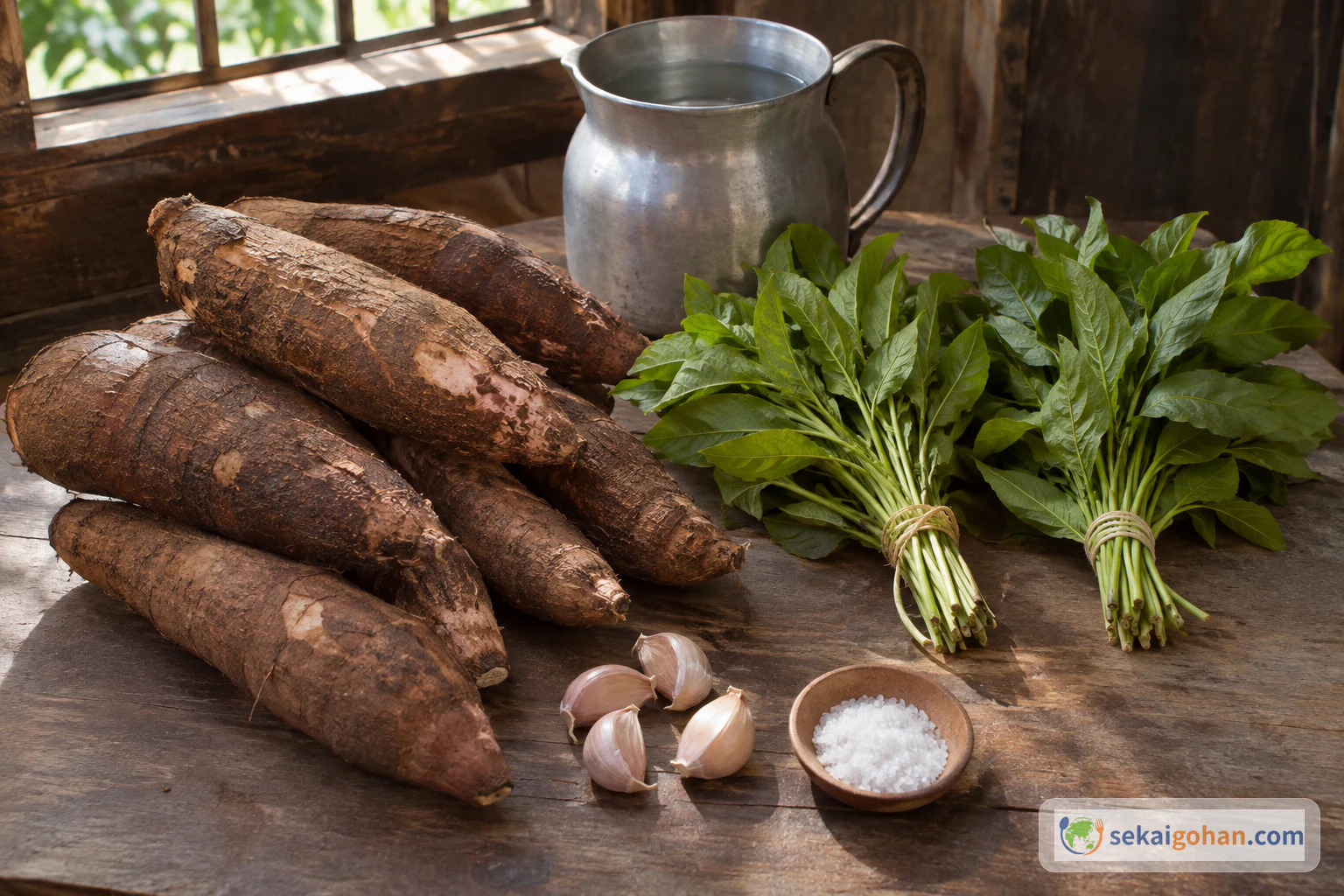
These quantities show how tucupi is made where bitter cassava grows. From this much root you get about 2 quarts (2 L) of tucupi.
Raw bitter cassava juice contains compounds that release hydrogen cyanide, and tucupi that is cooked wrongly can be fatal. Nobody has set a standard boiling time, and a home kitchen has no way to test for cyanide. Do not make tucupi from bitter cassava at home. Buy it bottled. Never taste the raw juice or the pressed pulp. Finished tucupi also contains HCN and is toxic in large amounts, so use it as a seasoning in moderate amounts.
Equipment
- Knife or peeler
- Grater
- Large bowl
- Pot for mixing the pulp
- Fine cloth or cheesecloth (traditionally a tipiti)
- Clear container for settling
- Large pot for simmering
Buying and Choosing
Bottled tucupi is the way to cook with it outside the Amazon. In the United States it is sold at Brazilian grocery stores. Buy it ready to use and keep the cooking for the dishes it goes into.
Fresh cassava from the supermarket gives you no way in. Nothing on it tells you whether it is bitter or sweet, and the bitter root with its toxic juice is what tucupi is made from. The chicória that goes into the pot is a local leaf sold under that name in the Amazon. Its botanical identity is not settled, so pick it up where tucupi is made instead of guessing at a stand-in. The other two items on the list, garlic and salt, are the same everywhere.
When the juice settles, white starch collects at the bottom. Cooks keep it for tacacá, so making tucupi gives you two things for the same soup.
How Tucupi Is Made
The work moves from root to pulp to juice, then takes a long pause. The juice rests 12 hours while its starch sinks. After that the clear yellow top layer simmers with the aromatics. The steps below are the traditional household method. They are here so you can picture what is in the bottle. They are not a project for your kitchen.
Only the yellow liquid goes into the simmering pot. The starch at the bottom stays behind and is kept for tacacá.
What Goes Wrong
- You want to taste the raw juice to check its sourness → raw tucupi releases hydrogen cyanide → never taste juice that has not been boiled, and do not make tucupi from bitter cassava at home.
- The cassava you have is not labeled bitter or sweet → appearance does not tell them apart → do not press it for tucupi. Buy tucupi bottled.
- The liquid in the pot is cloudy and starchy → the juice was poured off before the starch had settled → let it rest the full 12 hours and pour off only the yellow layer.
- The starch went into the pot → the container was tipped too far → pour slowly and stop once the white layer starts to move. The starch belongs with tacacá.
- The tucupi looks clear and golden, so it seems finished → color does not prove the toxic compounds are gone, and no boiling time is agreed on → treat bottled tucupi as the safe choice.
On the Table
Tucupi is a seasoning and is always cooked into something else. Tacacá is a hot soup of tucupi thickened with the reserved starch and served with dried shrimp and jambu leaves. Pato no tucupi is duck cooked in it, and arroz de pato is rice made with that duck. Pirarucu ao tucupi e jambu pairs the giant Amazon fish with tucupi and jambu. Yellow tucupi also goes into pepper sauce.
Jambu is the leaf that keeps turning up beside tucupi. It makes the tongue tingle and go slightly numb, which sets off the sourness of the broth.
Black tucupi
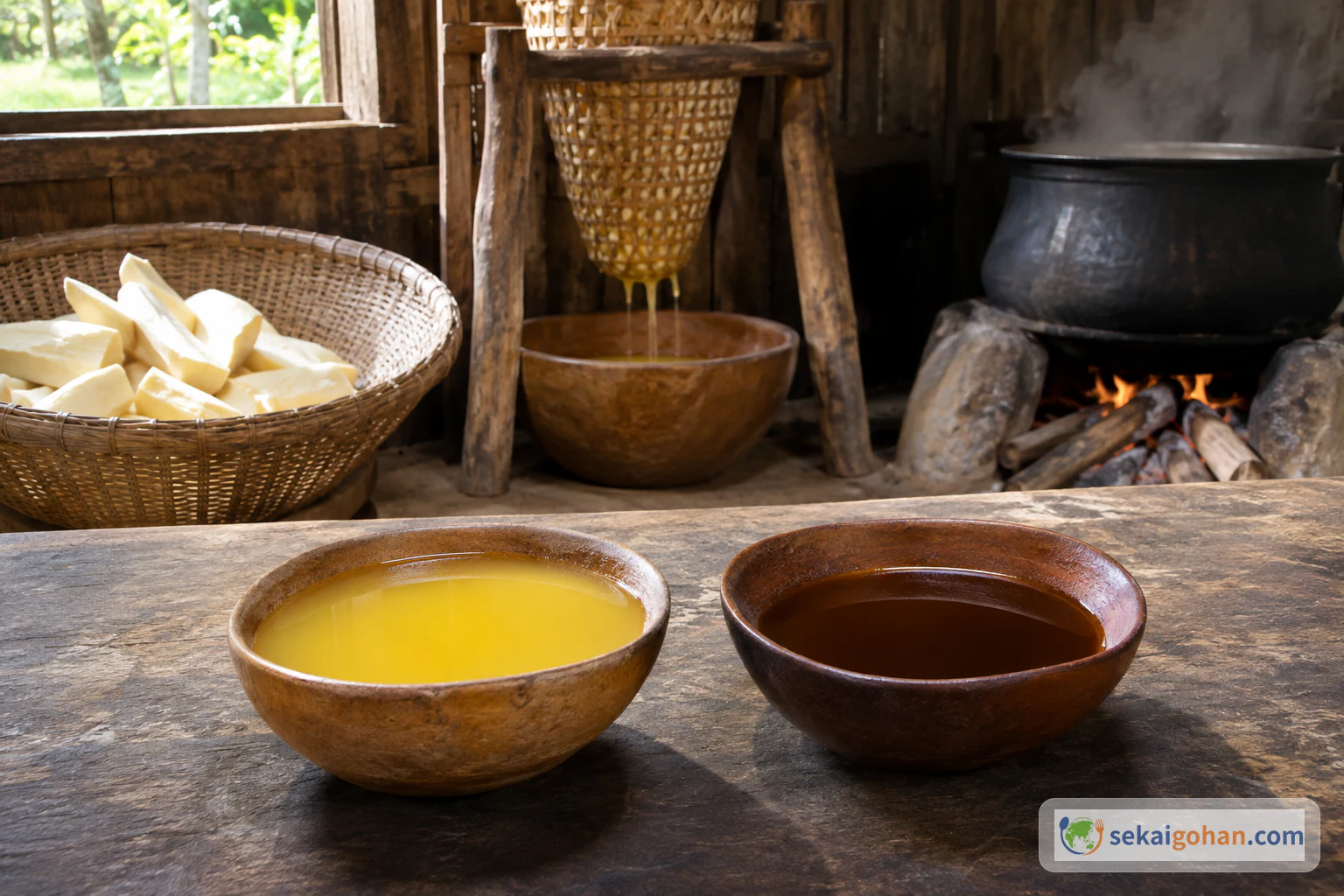
Black tucupi is yellow tucupi boiled down repeatedly until it is dark brown and concentrated. It seasons damurida, and in Roraima it has found its way into pudding. Making it takes huge volumes of yellow tucupi, so it is something to buy rather than make. Use it in smaller amounts than the yellow kind.
Frequently asked questions
Is tucupi fermented?
In some kitchens it is called a fermented sauce. In others the juice only rests for half a day so the starch can settle before it is boiled. How long it sits and how much it ferments differ from place to place. Either way, the boiling is what makes it safe to eat.
Can I use vinegar instead?
Vinegar gives a dish sourness, but it has none of the cassava character of tucupi, and tacacá or pato no tucupi made with it becomes a different dish. To get those dishes right, cook with bottled tucupi.
What gives tacacá its numbing feel?
The jambu leaves served in the bowl. They make the lips and tongue tingle and go faintly numb, and that sensation is part of why tucupi and jambu so often appear together.