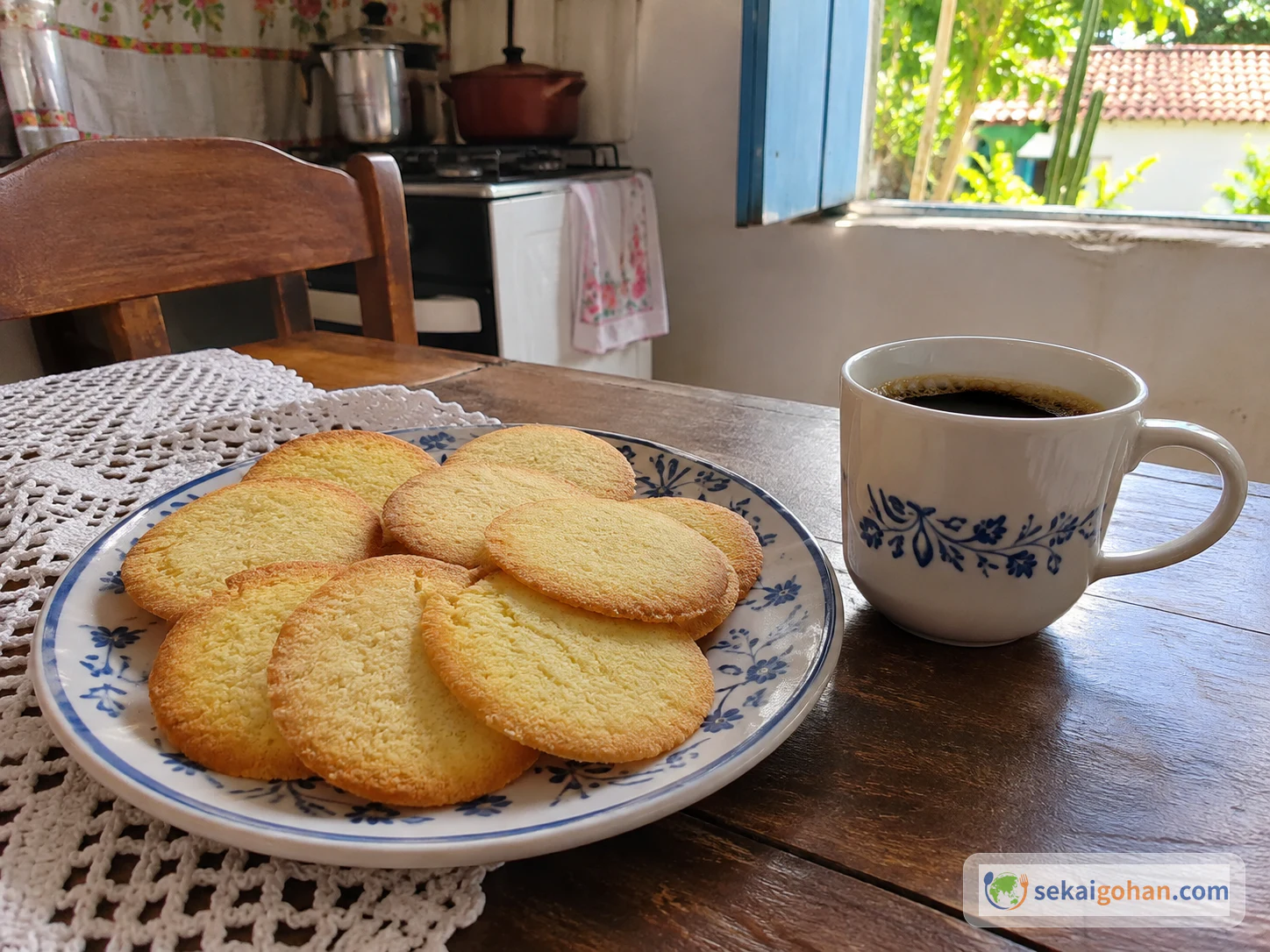
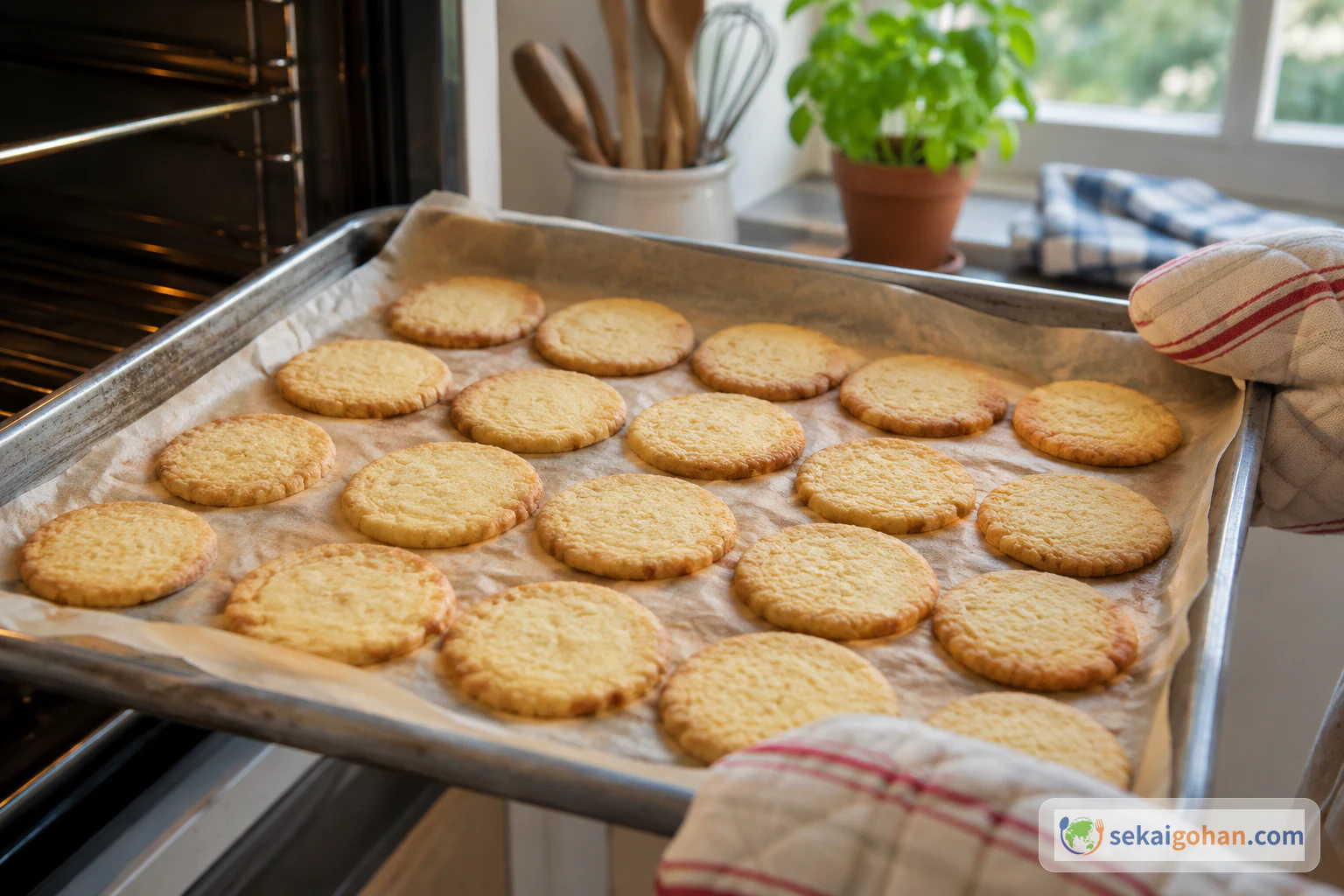
The tray comes out of the oven with rows of pale gold discs on it. They are thin enough that their edges have already turned a light brown, and the kitchen smells of warm sugar and egg. In Northeast Brazil, tareco goes with a cup of coffee. It is a thin, fairly firm, sweet biscuit made from eggs, sugar and wheat flour, plus a little vanilla or citrus zest if you want it. It tastes like a crisp-edged sponge: plain sweetness, eggy warmth, and a snap that softens once you dip it.
One Name, Two Shapes: The Biscuit and the Little Pan Cake
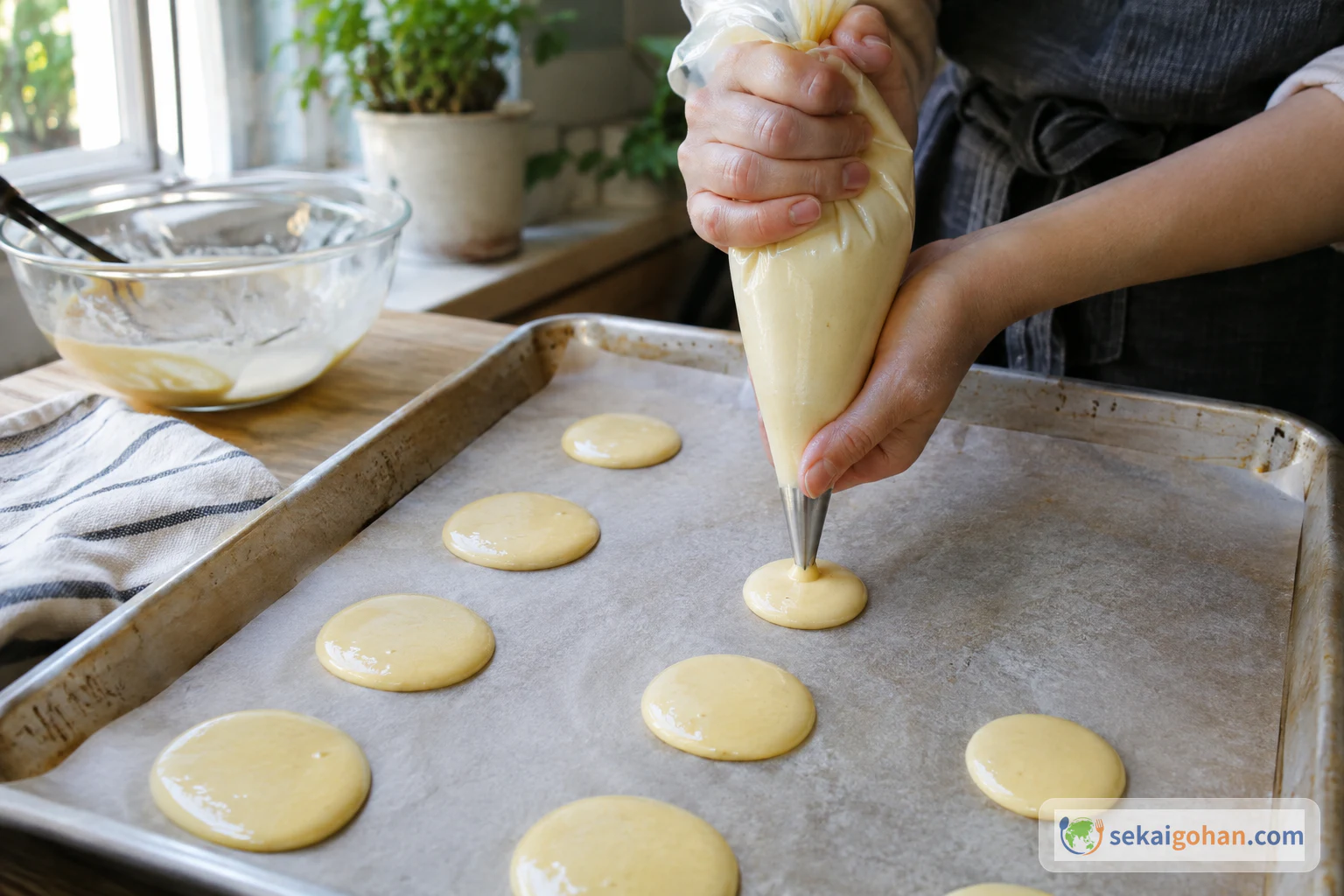
In the Northeast, and especially in Pernambuco, tareco means the thin baked biscuit. You whip the batter like a sponge cake, pipe it into small circles, and bake it hot and fast. The name is usually traced to Pernambuco, and from there the biscuit spread across the Northeast. Exactly where and when it was first made is not settled.
Elsewhere in Brazil the same word often means something else: a small, soft, pancake-like cake cooked in a frying pan, sometimes called bolinho tareco or tareco de frigideira. It has milk, baking powder and butter in it, and it comes out thicker and fluffier. Both versions show up in the same places, with coffee at breakfast in place of bread or as an afternoon snack. They are still two different things to bake, and the recipe below is for the baked biscuit.
The biscuit also has a place in the region's songs and poems. In "Tareco e Mariola," sung by Flávio José, it stands for the countryside and the plain food of home. That is a big part of why it carries so much nostalgia. If you are building a Brazilian sweets table, tareco is the lightest thing on it, next to the dense egg custard of pudim. Both appear among the other dishes on our Brazil page.
When Brazilians want to be clear, they say biscoito tareco for the thin oven-baked biscuit and bolinho tareco for the small pan cake. If you look up recipes in Portuguese, use the first term to find the version on this page.
Ingredients
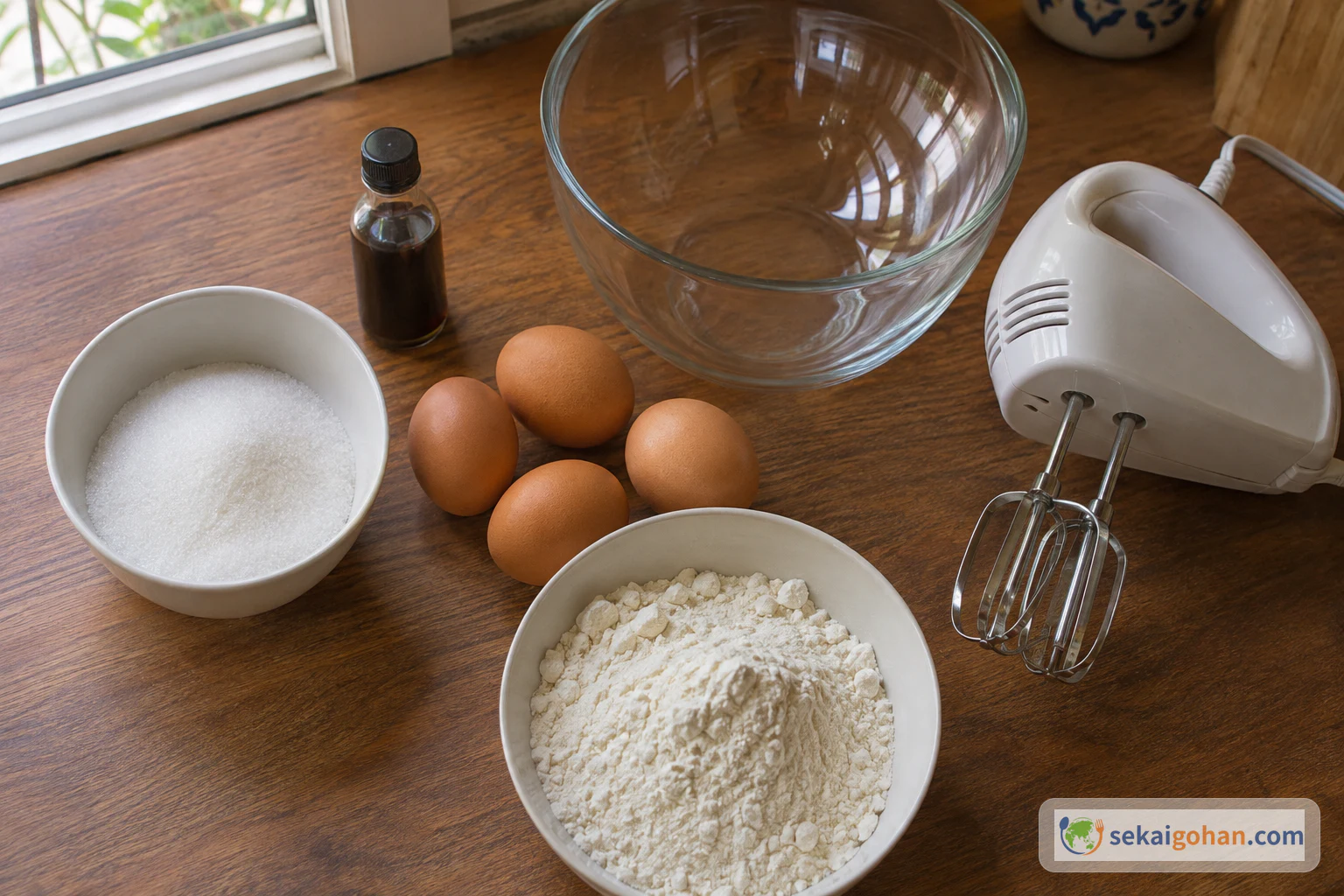
Weigh the sugar and flour. With only three main ingredients, the balance between them decides the texture. Lots of sugar against a small amount of flour is what gives tareco its thin shape and firm, crisp edge.
Tareco contains egg and wheat. The eggs are handled raw before baking. Wash the beaters, bowl and your hands after you touch raw egg, and bake the biscuits through to the center.
Equipment
- Hand mixer or stand mixer
- Large mixing bowl
- Silicone spatula
- Piping bag, or a sturdy plastic bag with a corner snipped off
- Baking tray
- Parchment paper, or a little oil for the tray
Choosing and Substituting
Everything here comes from an ordinary supermarket. Plain white granulated sugar works and gives the cleanest color. Fine caster sugar dissolves faster while you whip. For the flour, use plain wheat flour. Low-protein cake or pastry flour makes the biscuit a little more tender, and the method stays the same.
The aroma is up to you. Vanilla gives a rounder, bakery-like smell. Lemon or orange zest makes the biscuit brighter and sharper. Use one or the other, not both. With no aroma at all, the biscuit tastes plainly of egg and sugar, which suits strong coffee.
A piping bag gives the neatest circles. A freezer bag with a small corner cut off does the same job.
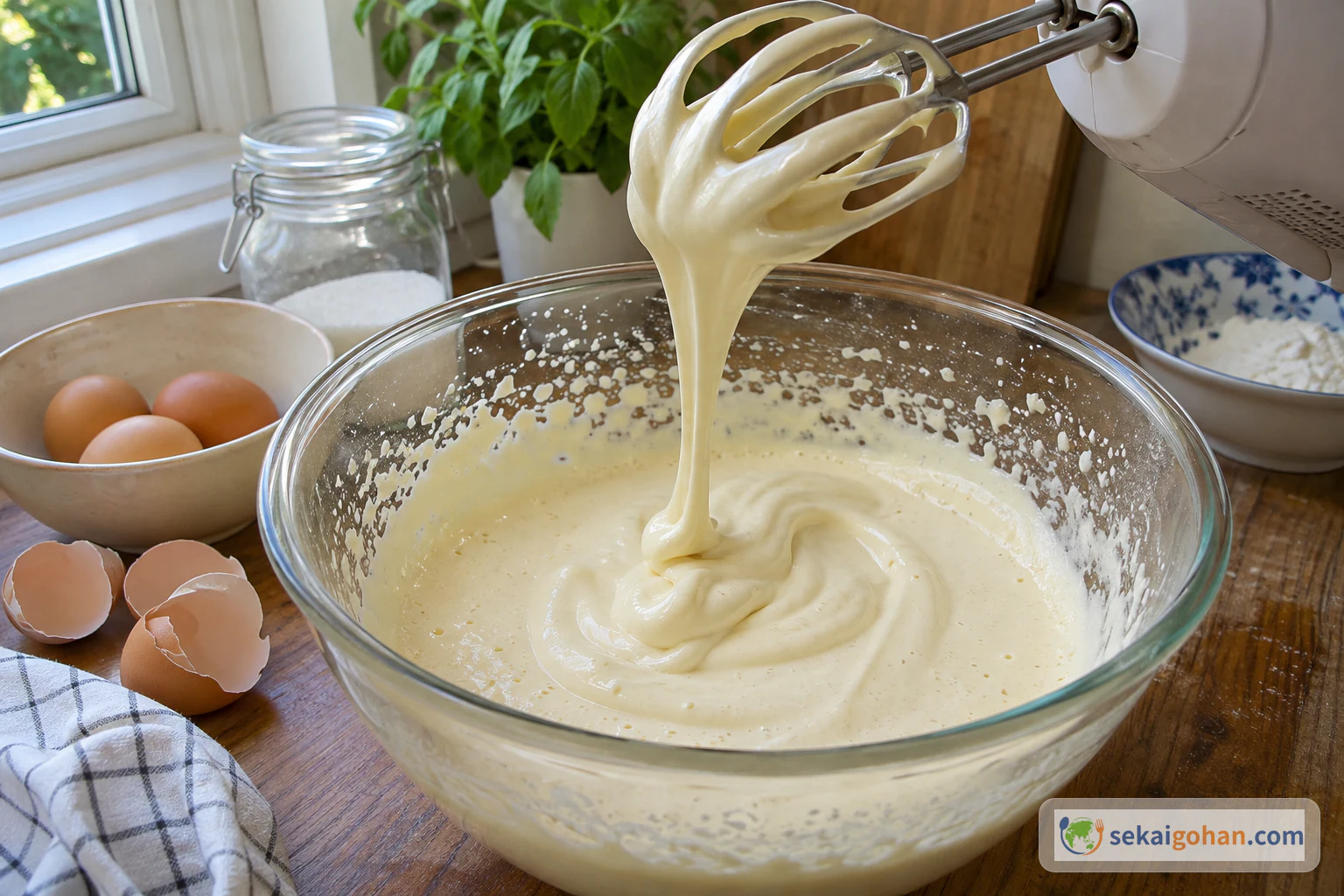
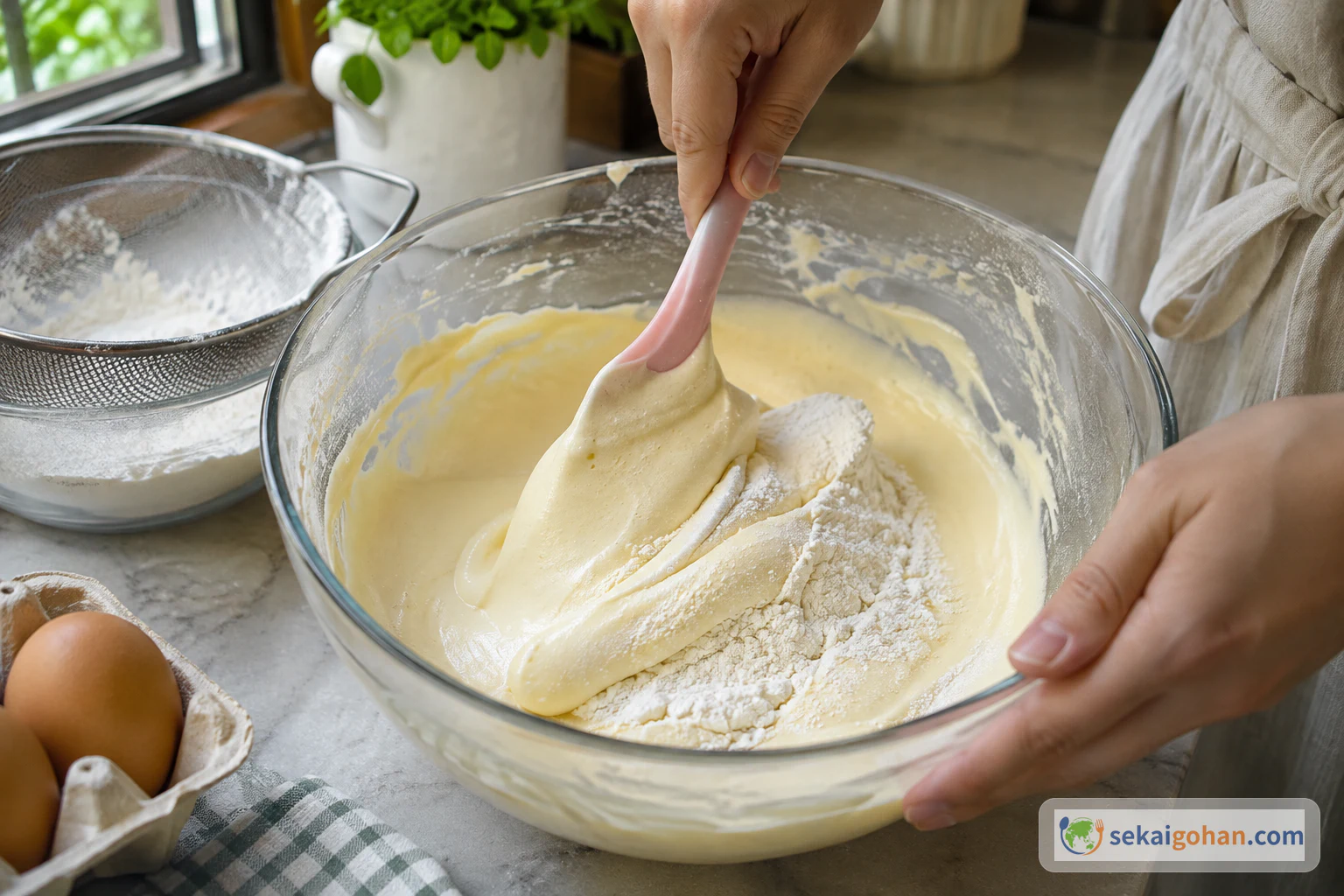
The eggs and sugar are the only thing that makes tareco rise. Everything after the whipping is about protecting that foam. Fold the flour in gently, add the aroma with a few strokes, and pipe soon after.
Method
Line the tray and heat the oven to 355°F (180°C) before you start whipping. The batter is at its best right after folding and shouldn't sit around. The whole job is quick, from whipping to baking. The only hands-off stretch is the short bake, and you should stay right by the oven for it.
Over the last few minutes of the bake, the biscuits go from pale to golden to burnt very quickly. Turn on the oven light and stay at the door. If one side of your oven runs hot, turn the tray halfway through.
The tray and the parchment come out at 355°F (180°C). Use oven mitts, and let the biscuits firm up before you lift them off with your fingers.
When It Goes Wrong
| What you see | Why | What to do |
|---|---|---|
| Edges dark brown or burnt | The thin batter browns fast, and the tray stayed in a little too long | Take the next tray out as soon as the edges turn light brown, and stay by the oven |
| Circles spread flat and run together | The foam collapsed while you folded in the flour | Fold with slow cutting strokes, add the flour in small amounts, and pipe right after mixing |
| Dense, heavy biscuits | The eggs and sugar weren't whipped long enough | Whip until the mixture is white and thick and falls in a ribbon before adding any flour |
| Little lumps of flour inside | The flour went in too fast | Add it a little at a time and let each addition disappear before the next |
| Biscuits stick to the tray | The tray wasn't greased or lined | Use parchment, or a thin, even coat of oil |
| Soft, pale centers | The biscuits came out too soon | Bake until the center is set and the biscuit lifts off in one piece |
Serving, Variations and Storage
At the table
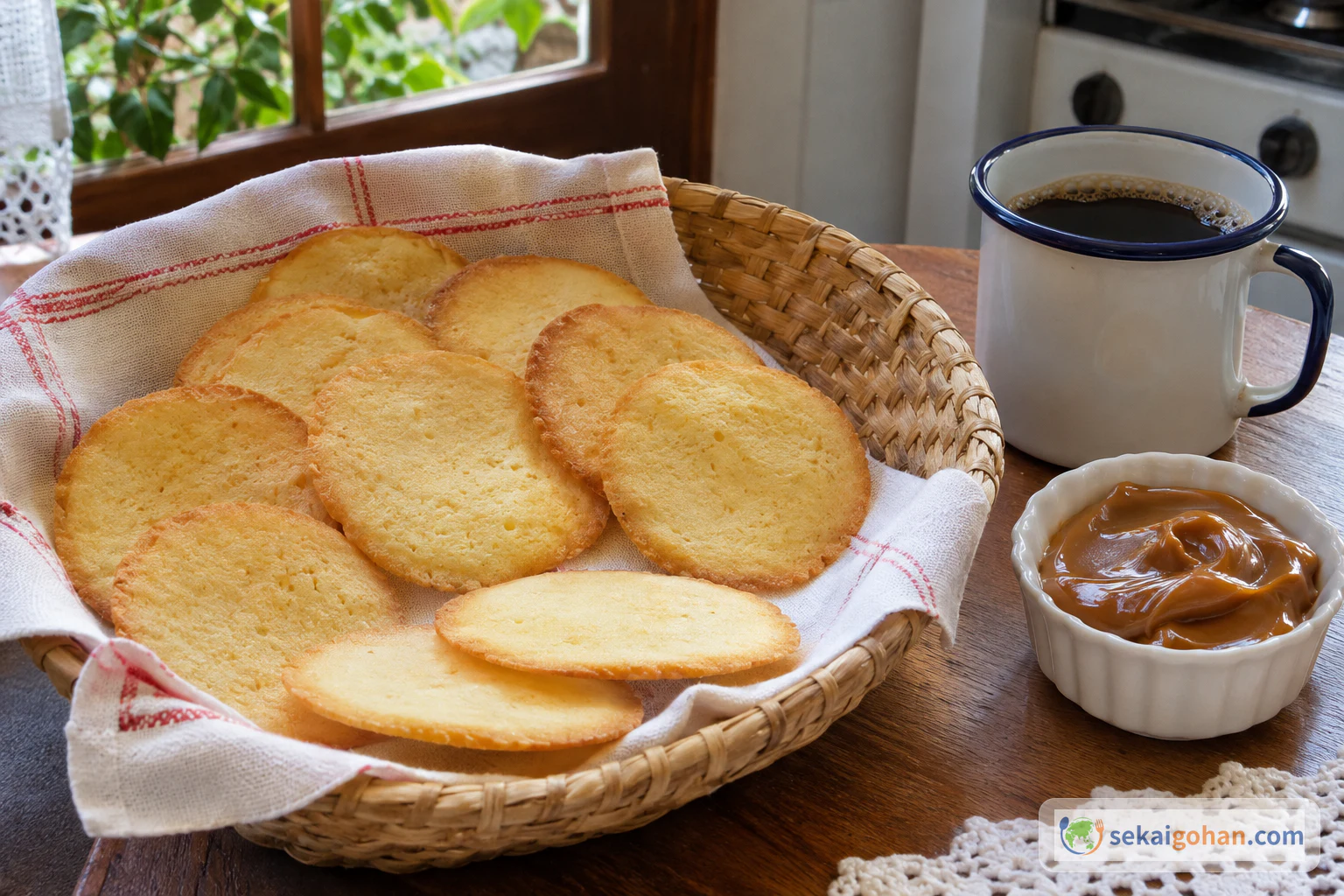
Black coffee is the classic partner. The plain sweetness and dry snap of the biscuit are made for dipping. Put out a basket of tarecos at breakfast instead of bread, or bring them out mid-afternoon. A small dish of doce de leite, some fruit jam or a spoonful of requeijão on the side makes it more of a spread. With pão de queijo, you get one sweet and one savory bite with the same cup of coffee.
The frying-pan tareco
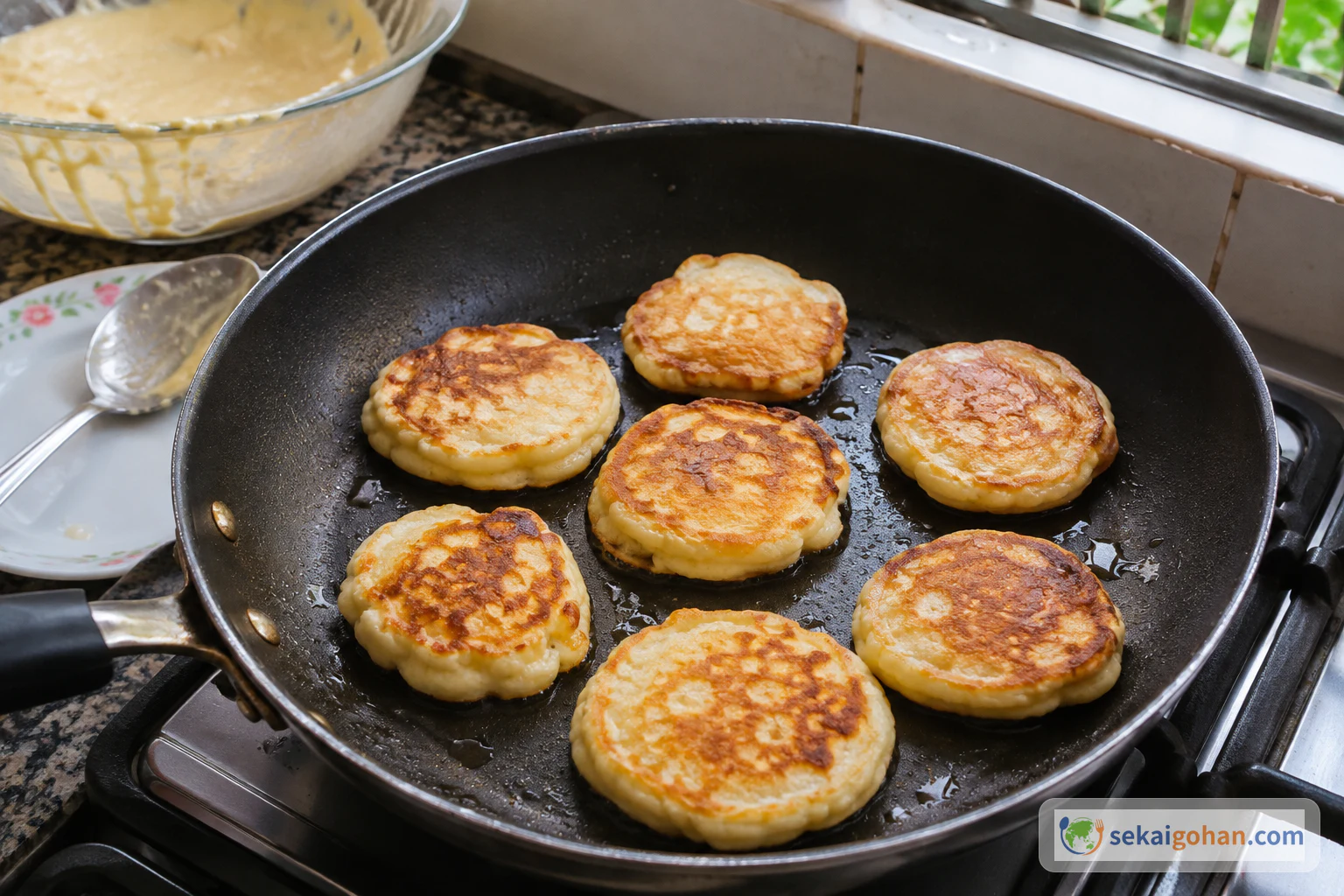
The pan version is a different batter. It is a loose mix of wheat flour, milk, a single egg, 4 tbsp sugar, baking powder and a pinch of salt. You cook it in spoonfuls in a pan with a little butter or oil. Amounts vary from cook to cook. A common version uses 1½ xícaras of flour to 1 xícara of milk, and other versions use 2 xícaras of flour. Cook it on low heat and flip each cake when the edges turn golden. Eat them hot with coffee. They come out soft and fluffy, which makes them the bread-like cousin of the crisp biscuit.
Savory, coconut and rolled versions
For a savory pan tareco, leave the sugar out of the pan batter and add salt. In Alagoas, one maker sells a tareco made with fresh coconut door to door. The coconut makes it richer and chewier than the plain egg biscuit. Some home cooks also make a rolled, baked tareco with oil, milk and margarine. It is a heavier, more crumbly biscuit, and it is mixed and shaped differently from the piped version.
Keeping them crisp
Let the biscuits cool on the tray, then keep them covered and away from humidity. Damp air turns that firm, crisp edge soft.
Frequently asked questions
Should tareco be crisp or soft?
The baked biscuit is thin and fairly firm, crisp at the edge and a little tender in the middle. If yours bend and feel cakey, they needed a little more time in the oven, or the circles were piped too thick. Soft and fluffy is how the frying-pan version should be.
Can I use lemon zest and vanilla together?
Choose one. Vanilla gives a warm, rounded smell and citrus zest gives a bright, fresh one. Together they compete in such a plain biscuit. Adding nothing also works, especially with strong black coffee.
How do I pipe even circles without a piping bag?
Fill a sturdy freezer bag, twist the top closed and snip off a small corner. Hold it upright just above the tray and squeeze from the top. Stop squeezing before you lift away. Cutting a small hole at first gives you more control. You can always cut it a little bigger.
Can I bake several trays at once?
Bake one tray at a time on the middle rack. Fast, even heat gives tareco its thin golden edge. Stacked trays block each other's heat and brown unevenly, and you can't watch two trays closely during those last quick minutes. Pipe the next tray while the first one bakes.