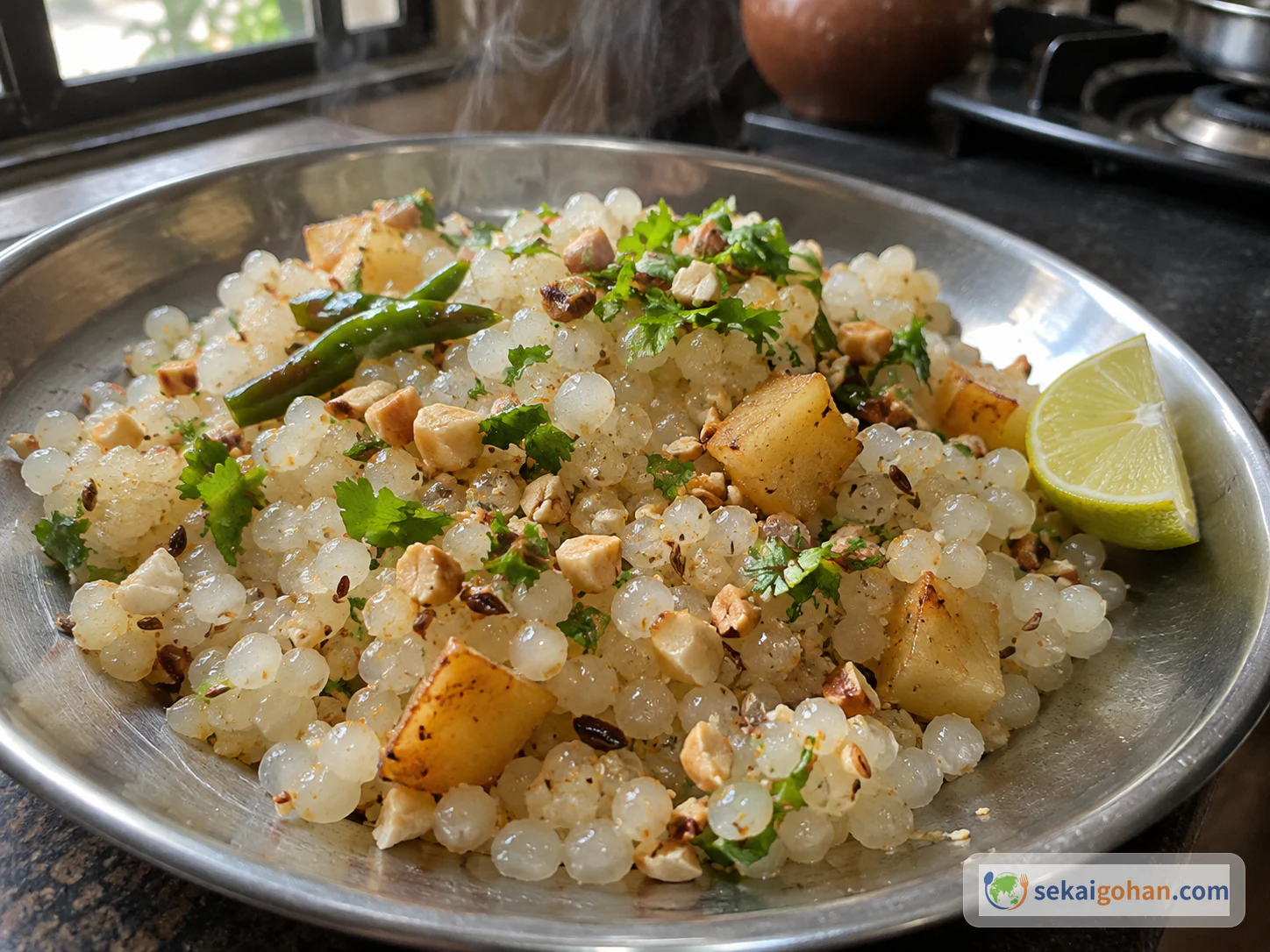
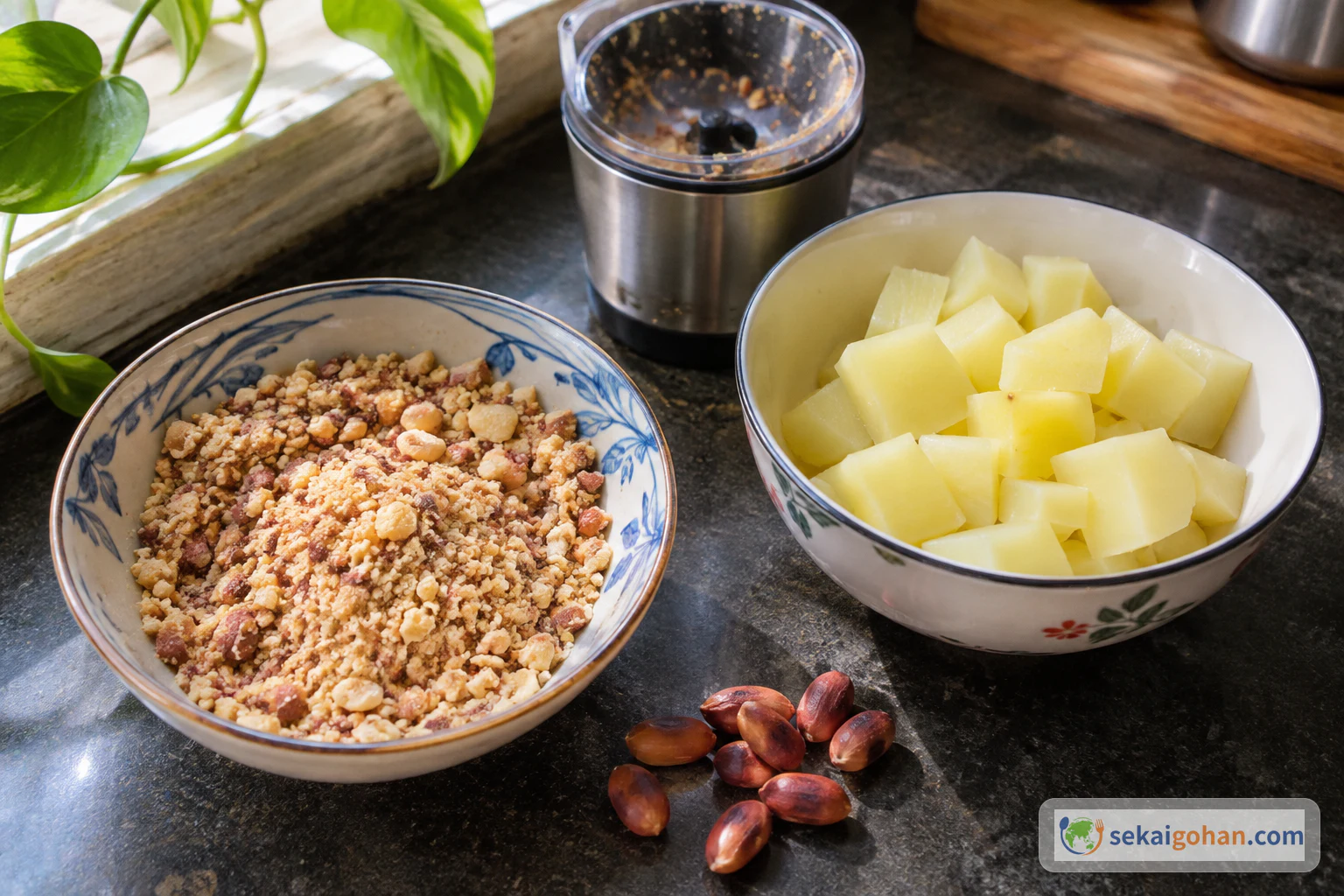
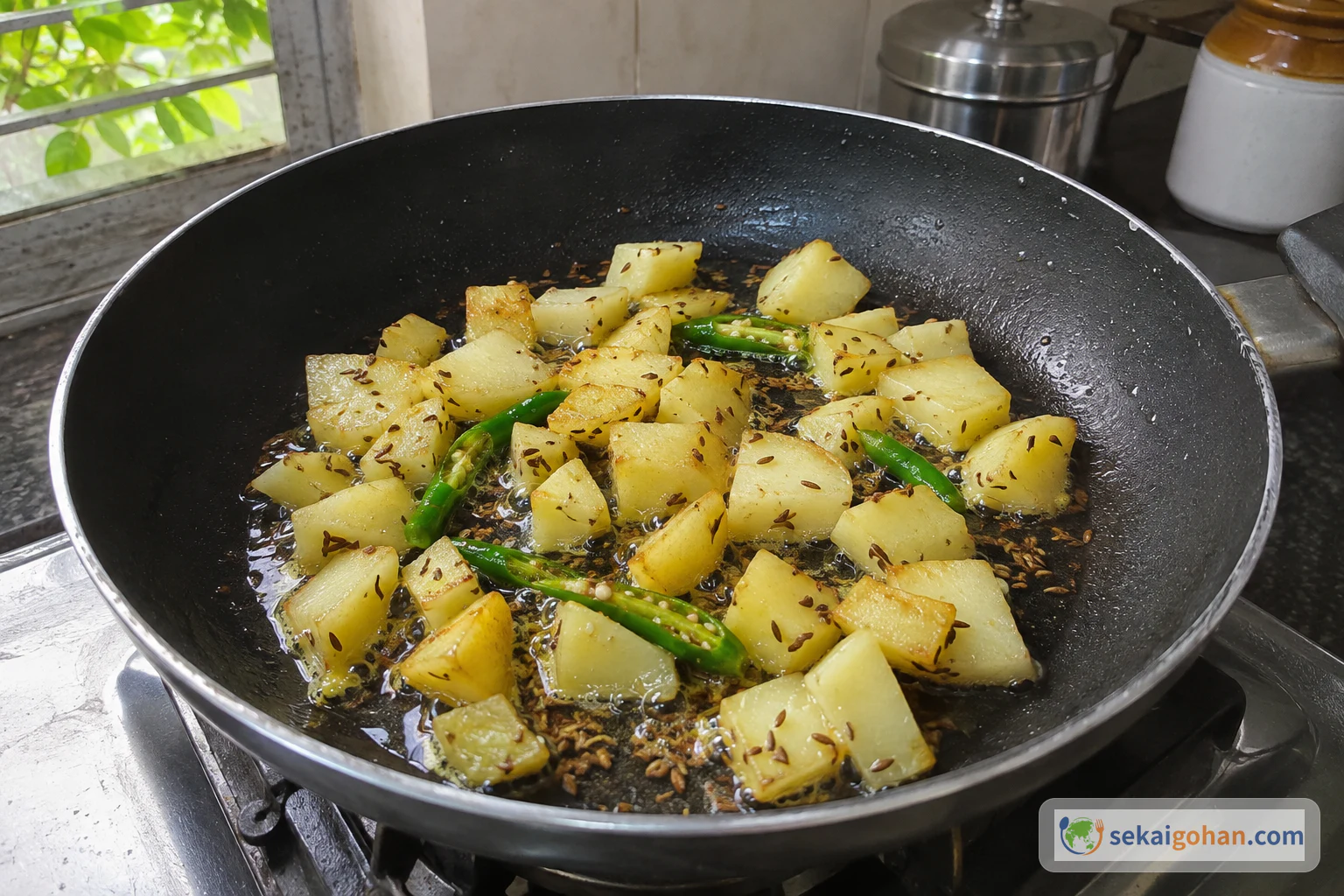
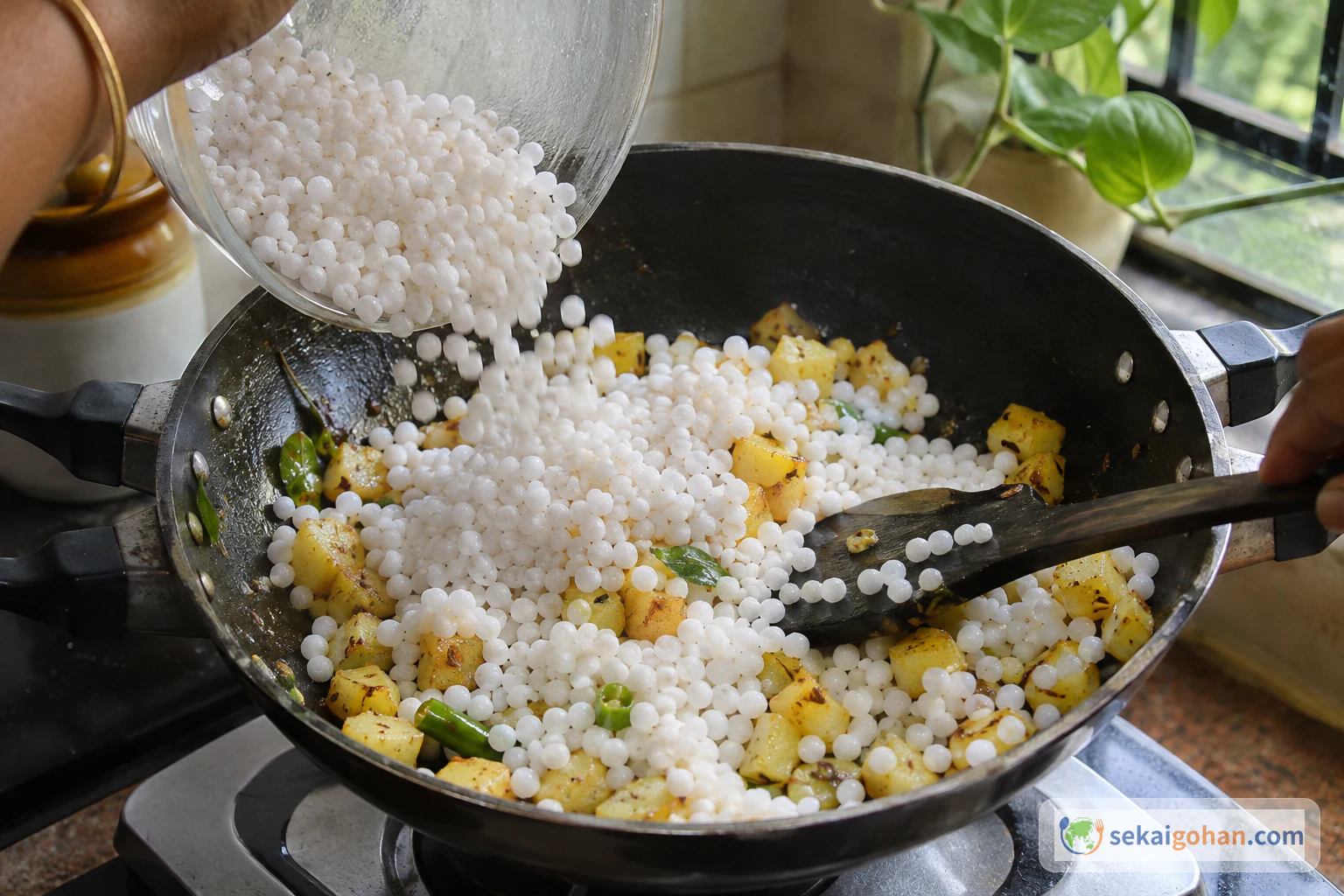
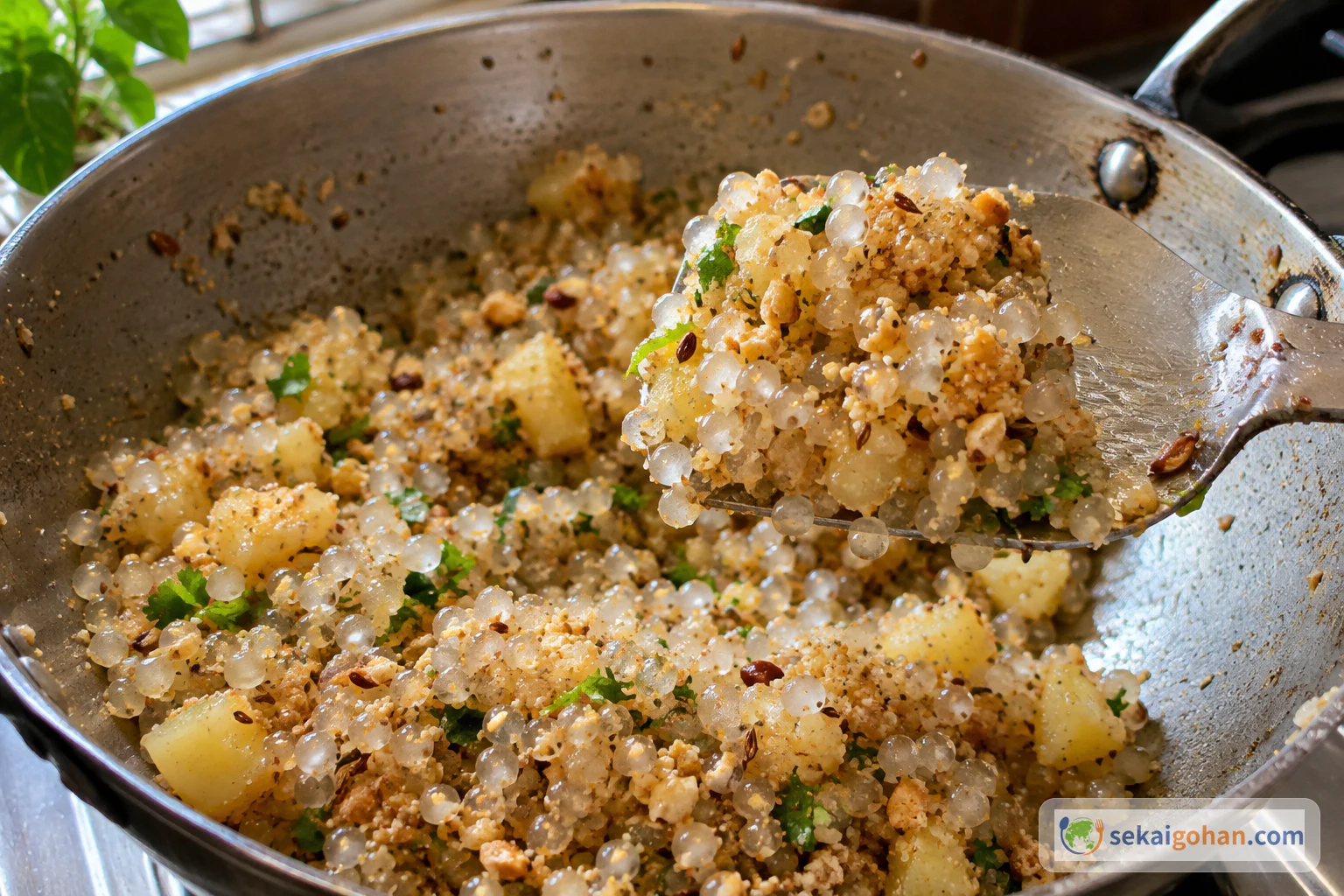
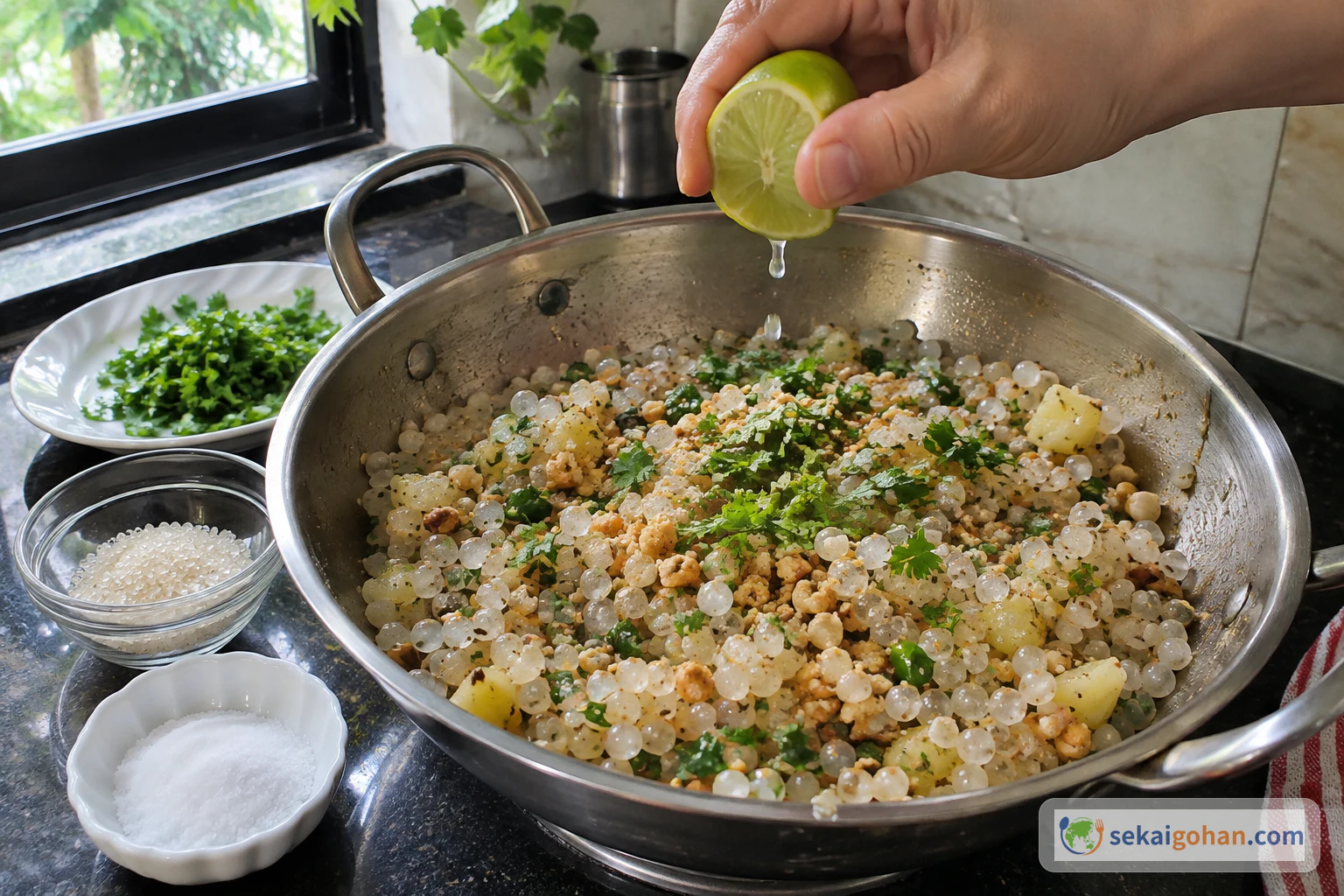
Cumin seeds crackle in a spoonful of oil, the potato cubes turn golden at the edges, and then the soaked pearls go in, still chalky white. A few minutes of slow stirring with peanut powder later, they change: each pearl goes glossy and translucent, loose on the spatula, catching the light like wet glass. Sabudana khichadi is tapioca pearls stir-fried with potato, green chilli and coarsely ground roasted peanuts, finished with lime and coriander. It is a breakfast in Maharashtra and a dish for fasting days across India, and it tastes of toasted peanut and cumin, with a clean chilli heat, a squeeze of sourness and a faint sweetness under the salt. The name shares a word with khichdi, the rice-and-mung porridge, but this pan holds no rice and no lentils at all.
Pearls for Breakfast and for Fasting Days
What sabudana is
Sabudana is made from the starch of the cassava (tapioca) root, pressed into small pearls. It is neither a grain nor a legume, and that single fact explains much of its place at the Indian table. On fasting days many households set aside grains and certain other foods, and a plate of starch pearls, potato and peanuts fills the gap with something hot, filling and savoury.
In India and abroad the pearls are often sold as "sago", and the two words get used for the same pack. True sago comes from the pith of the sago palm. Sabudana comes from cassava, and that is what this dish uses. The same pearls also go by the name javvarisi.
Two faces of one dish
In Maharashtra, sabudana khichadi is a popular everyday breakfast, eaten warm in the morning, often with a bowl of yogurt beside it. It also belongs to the vrat, the fasting days: Shivratri, Navratri, Ram Navami and Ekadashi all bring pans of it out across the country. It is made in Karnataka, Uttar Pradesh, Madhya Pradesh, Rajasthan, Gujarat and West Bengal, and it is sold as street food in Mumbai, Pune and Indore, scooped hot onto plates.
Fasting versions follow each family's practice. Many leave out onion, garlic and legumes, as this recipe does, and many cook with rock salt, sendha namak, in place of ordinary salt. The rules differ from household to household and between traditions, so the same dish shifts slightly depending on whose kitchen it comes from and which day it is cooked for.
Where the pearls came from
How tapioca became an Indian staple is told in more than one way. One account ties cassava's spread to famine years in nineteenth-century Travancore, where it was eaten to get through food shortages. Sabudana production is usually traced to Salem in the early 1940s, though the exact year and the details shift between accounts. Where the dish itself was first cooked is not settled.
Next to the other breakfasts of India it stands apart. Ven pongal is rice and lentils cooked soft with pepper and ghee; sabudana khichadi is dry, loose and chewy, each pearl separate. For more dishes from across the country, see India.
Ingredients (serves 2–3)
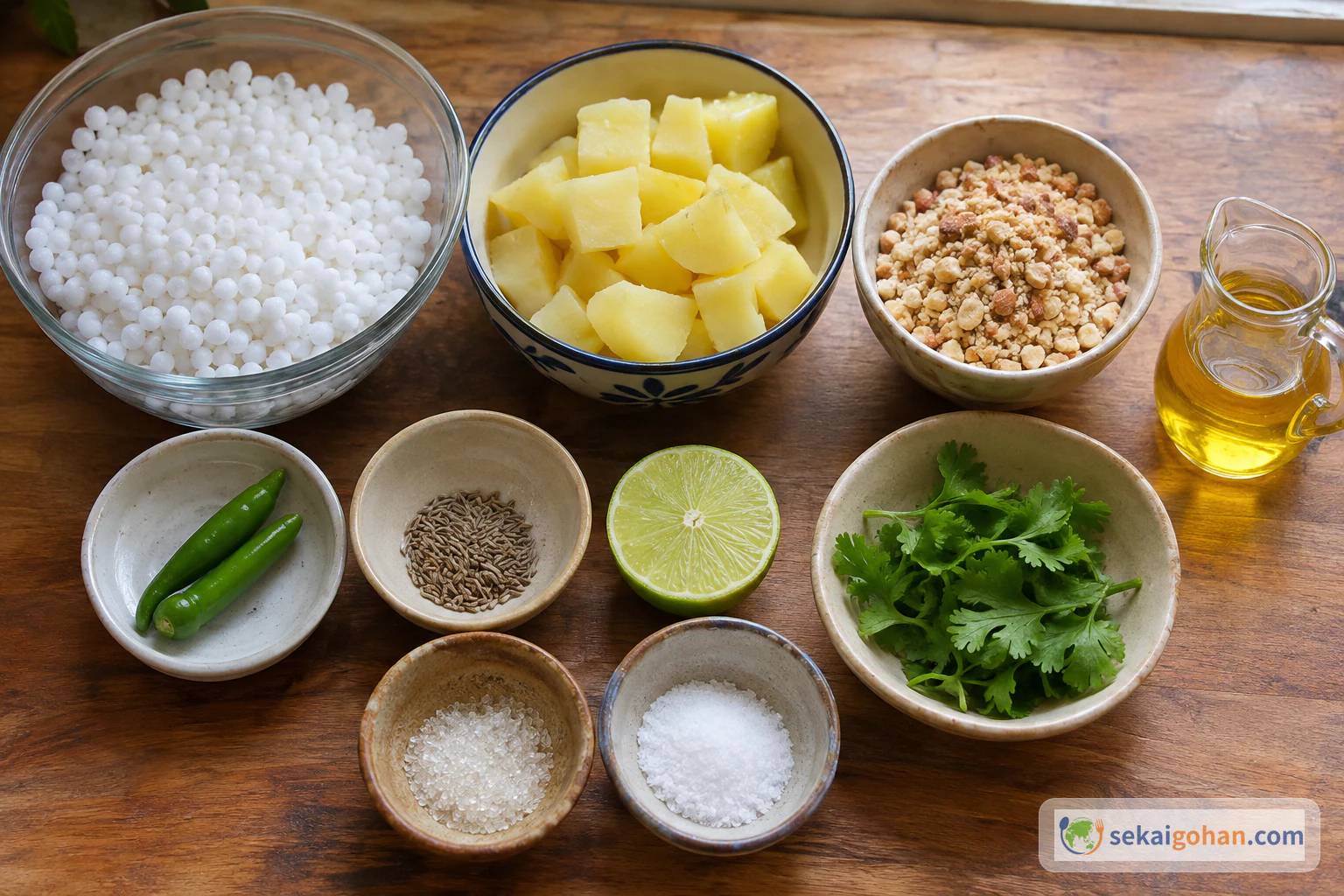
Use large dried sabudana pearls. Small pearls are meant for kheer, the sweet milk pudding, and they turn mushy in a stir-fry. Skip fresh or quick-cook tapioca pearls; they will not hold up to the overnight soak.
Peanut is a main ingredient, not a garnish. If you cook with ghee in place of oil, the dish contains milk. Check labels on peanut powder and packaged pearls for other allergens and shared-facility statements.
Equipment
- A bowl for soaking, with a lid or plate to cover it
- A strainer for draining the pearls
- A small pot for boiling the potato
- A wide pan, non-stick if you have one
- A flat spatula for separating the pearls
- A small spice grinder for the peanuts
Choosing and Substituting
The pearls decide everything. Look for large, dry, opaque white sabudana at an Indian grocer or online, sold as sabudana, sago or tapioca pearls. Read the bag: the ones you want are plain dried pearls that need soaking. Large tapioca pearls from other shops work as long as they are dried and labelled for soaking; small ones belong in desserts.
For the peanuts, roasted unsalted peanuts ground coarse give you control. If your peanuts are salted, go lighter on the salt at the end. Grind them yourself where you can: the coarse bits are what give the dish its crunch.
Each of the other swaps changes the plate a little:
| Swap | What it changes |
|---|---|
| Ghee for oil | Richer and nuttier; ghee is often the fat of choice on fasting days |
| Lemon juice for lime | Slightly sharper sourness, still bright |
| Any fresh green chilli | Heat varies a lot by chilli; start with fewer and taste |
| Leave out the cumin | The toasty base note goes; the dish tastes flatter |
| Leave out the coriander | Loses the fresh finish; fine if you dislike it |
| Ordinary salt for sendha namak | Right for an everyday breakfast; rock salt for a fasting day |
Method: Soak at Night, Stir in the Morning
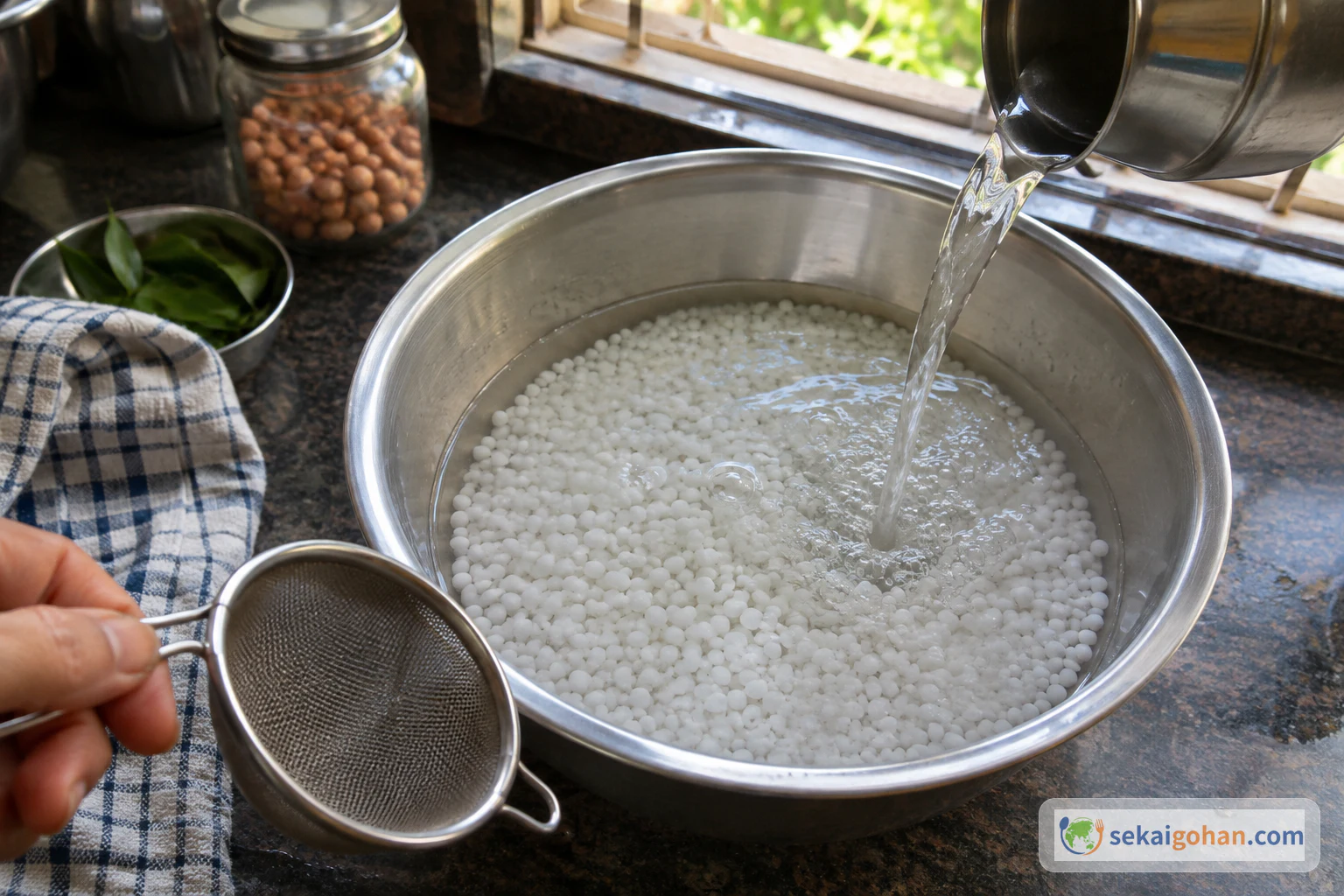
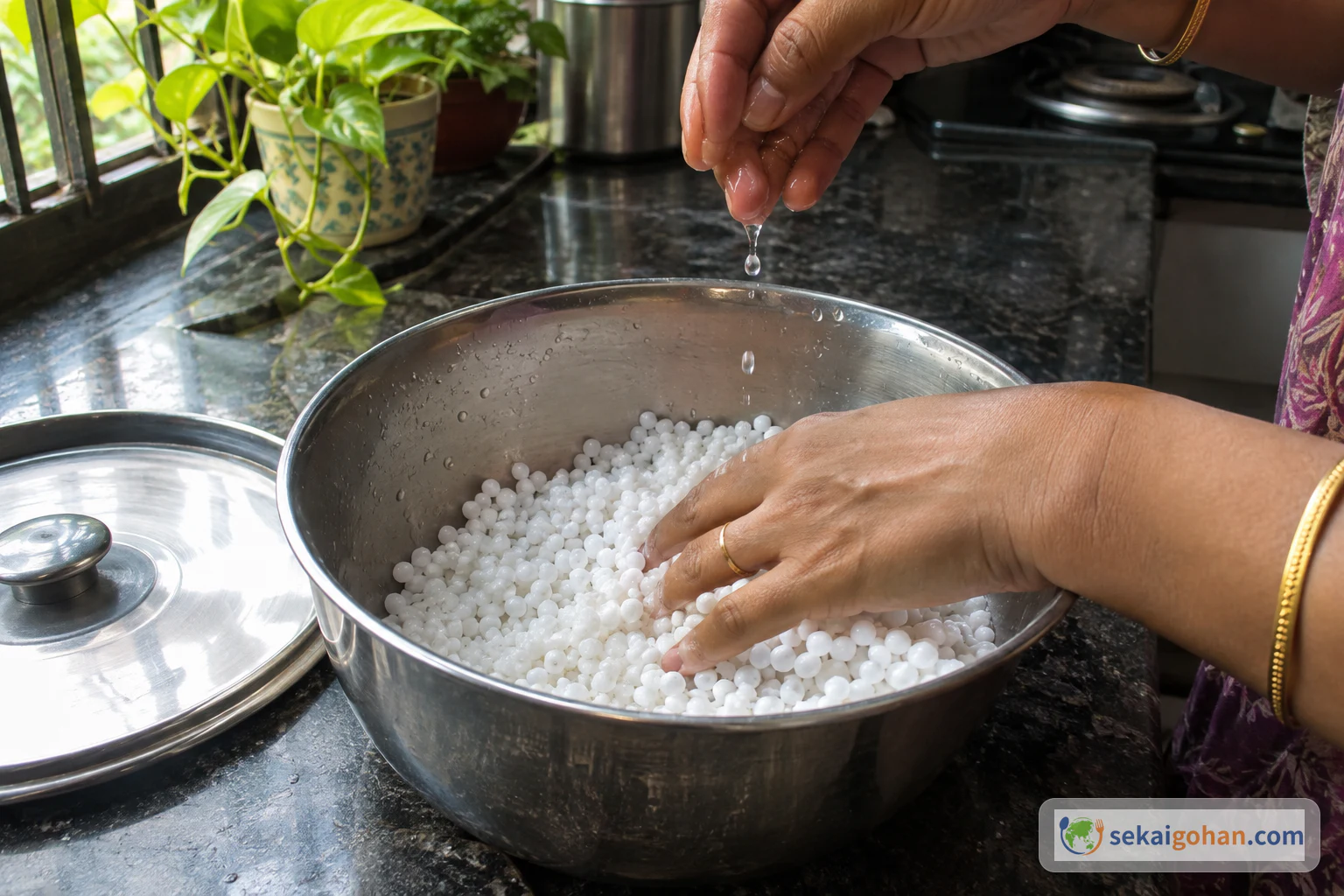
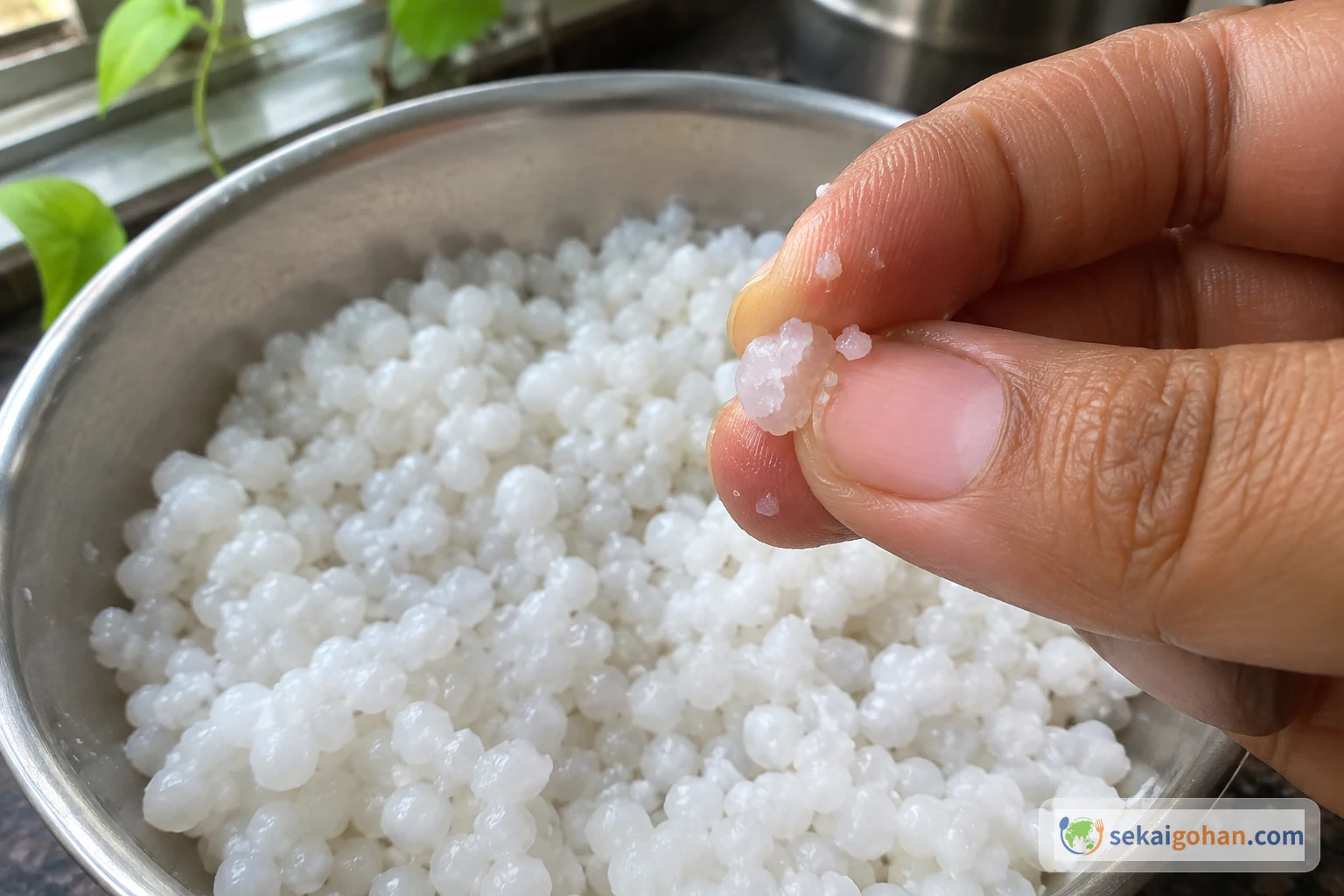
The work starts the evening before. The pearls soak briefly, then rest overnight in the fridge, and that long rest is the hands-off time. In the morning they take one more sprinkle of water and a half-hour rest; roast and grind the peanuts and boil the potato while you wait. The time at the stove is short and quiet, mostly low heat and slow stirring.
When It Goes Wrong
| What you see | Why | What to do |
|---|---|---|
| Pearls stick together in a gluey mass | Too much water in the soak, or water added in the pan | Keep the heat low and separate the pearls with the spatula edge. Next time, drain fully and use only the teaspoon sprinkles |
| Pearls stay hard or rubbery | Too little water during the soak | Before cooking, sprinkle a little water and let them rest again until a pearl squashes easily |
| A pearl will not squash after the morning rest | Pearls have not finished softening | Sprinkle a little more water, mix and wait before cooking |
| Pearls stay white in the centre in the pan | Not cooked long enough | Keep stirring on low until they turn translucent, longer for large pearls |
| The dish turned mushy | Small pearls were used | Buy large pearls; keep small ones for kheer |
| Leftovers turned chewy and rubbery | Reheated in the microwave | Reheat in a pan with a sprinkle of water |
Serving, Variations and Storage
At the table
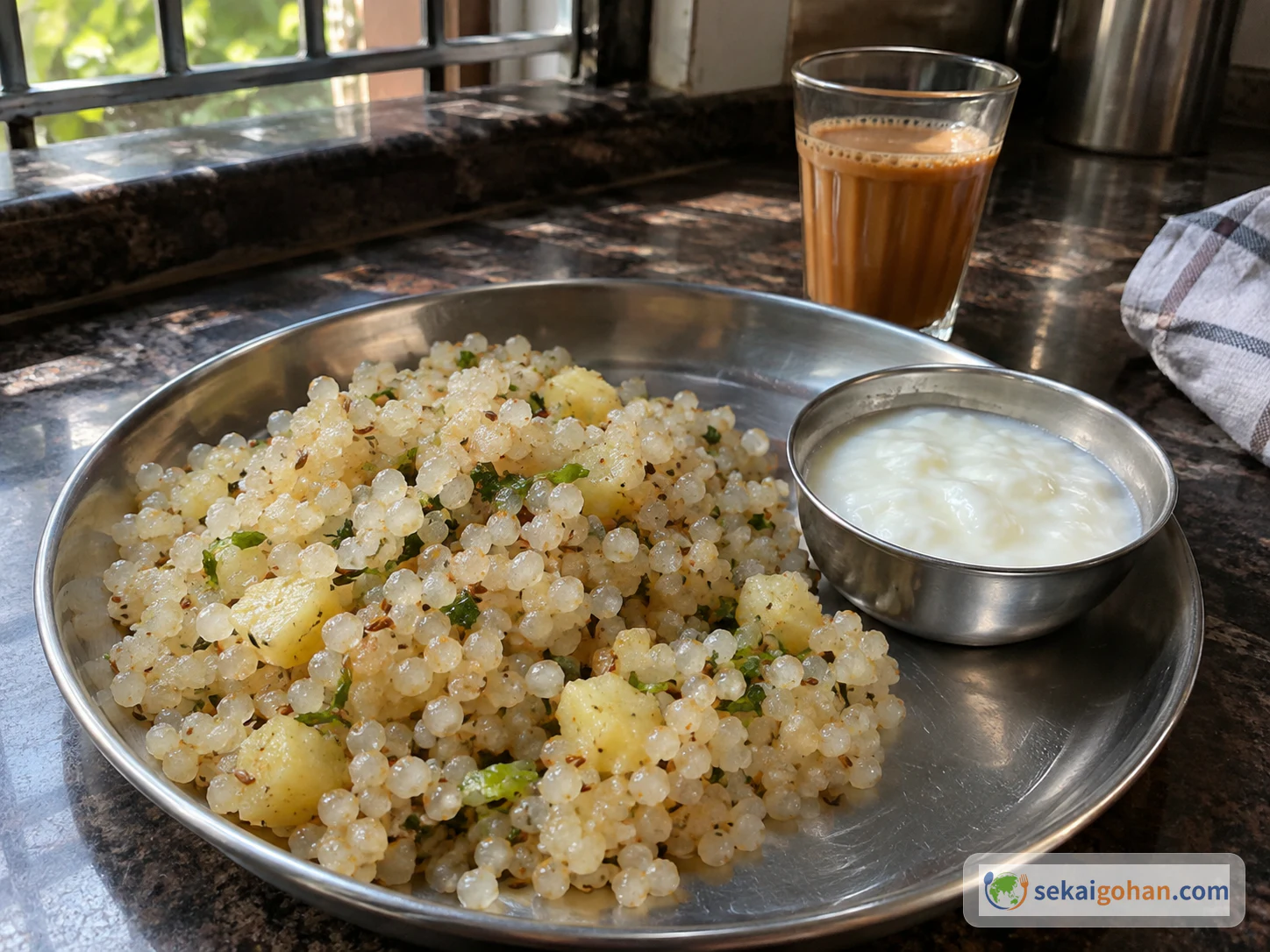
Serve sabudana khichadi warm, straight from the pan. A bowl of plain yogurt or sweet curd beside it cools the chilli, and a spoonful of raita does the same job. On fasting days it often comes with farali papad, crisp wafers made for the vrat. Keep a lime wedge on the plate for anyone who wants more sourness.
Variations
- Coconut. Mixing coconut into the pan with the peanut powder adds sweetness and a softer, fresher richness.
- Ghee instead of oil. A deeper, nutty flavour, and the fat many households prefer on fasting days.
- The festive pan. A richer version uses cashews, raisins, ginger, sesame and cinnamon, with the soaked pearls dried on a towel and the potato steamed and fried. It tastes sweeter and more aromatic, closer to a celebration dish than a breakfast.
Storage and reheating
Cool leftovers, then refrigerate them quickly in a covered container and eat them within 2–3 days. Reheat in a pan with a sprinkle of water over low heat, stirring until the pearls are hot and loose again. Skip the microwave; it turns the pearls rubbery.
Frequently Asked Questions
Do I need rock salt?
For an everyday breakfast, ordinary salt is right. On fasting days many households cook with sendha namak, rock salt, and follow their own rules for what else to leave out. Season either one to taste at the end, as in step 8.
Can I soak the pearls in the morning and cook them the same day?
The overnight rest is what softens the pearls evenly without drowning them in water. Give them the full time in the fridge, at least 8 hours. Starting the soak after dinner puts breakfast right on time.
Can I make it without peanuts?
Peanut powder gives the dish its crunch and richness and helps hold the pearls in a loose, even coat, so leaving it out changes the dish. The festive version uses cashews, which are a tree nut and a separate allergen. For anyone with a peanut allergy, cook a peanut-free pan from the start and keep it apart from peanut products.
Why a non-stick pan?
Soaked sabudana is all starch, and on a dry pan it grabs the bottom and pulls other pearls with it. A non-stick surface lets the pearls slide and separate under the spatula, with less scraping. In any pan, low heat and steady stirring do most of the work.