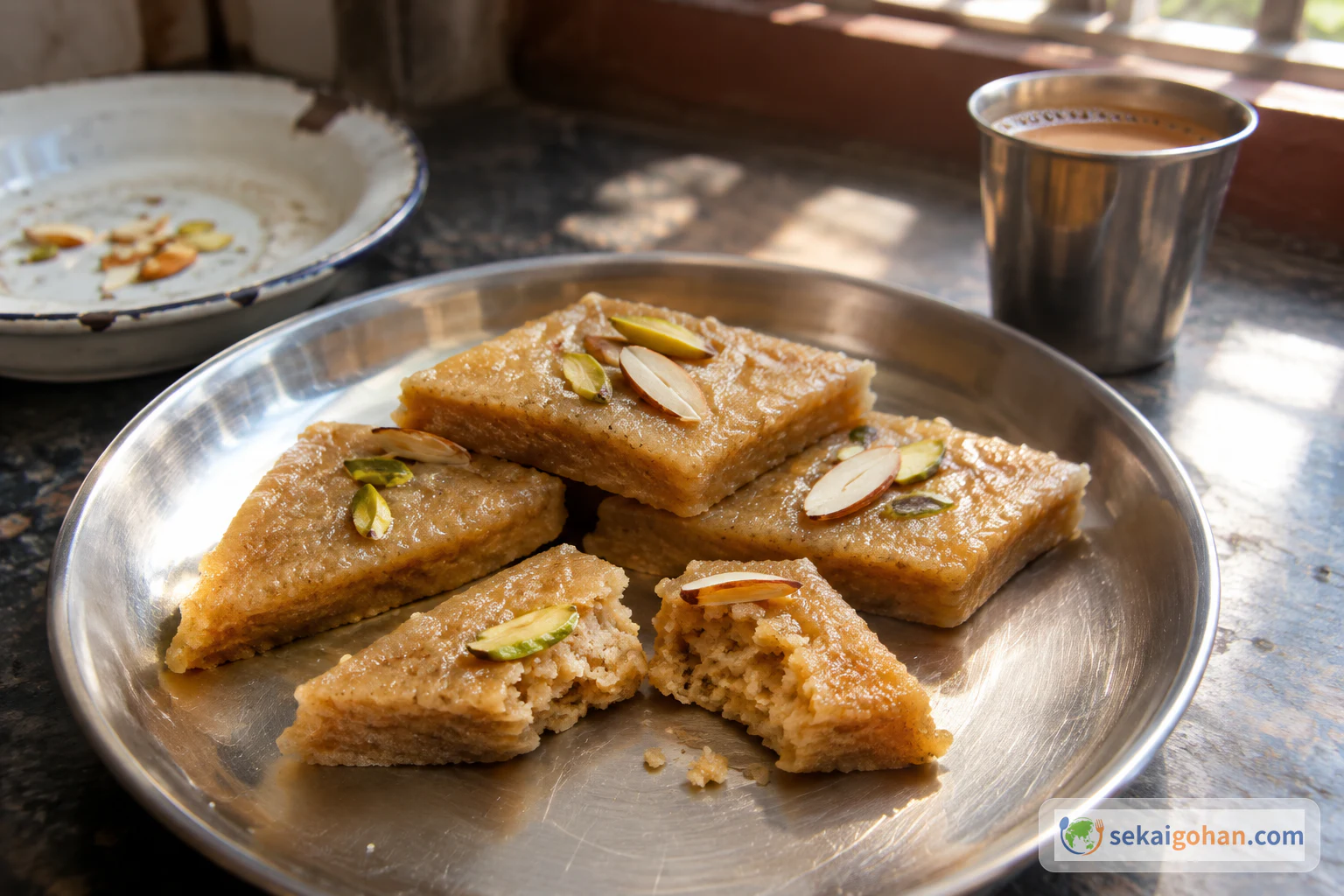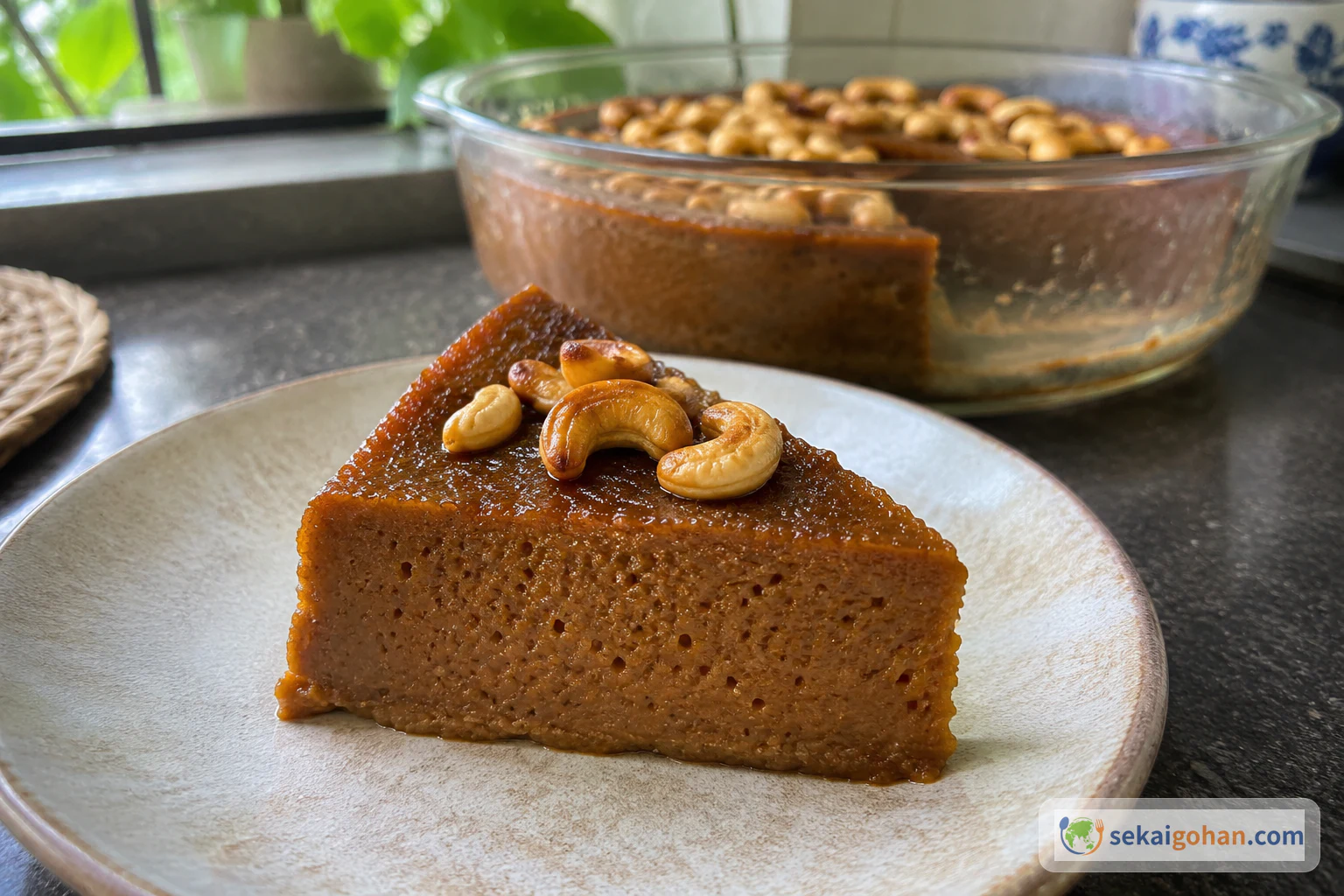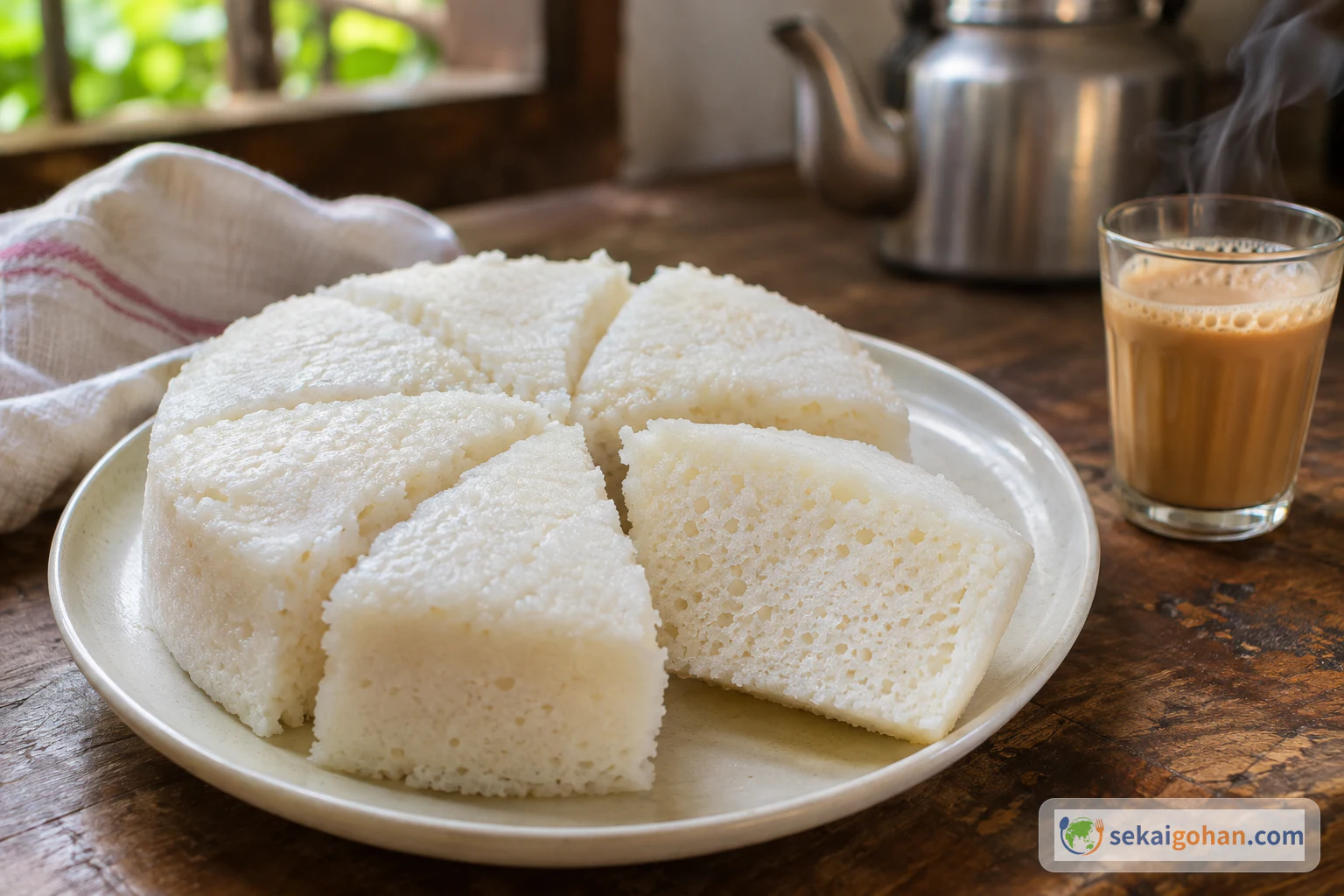
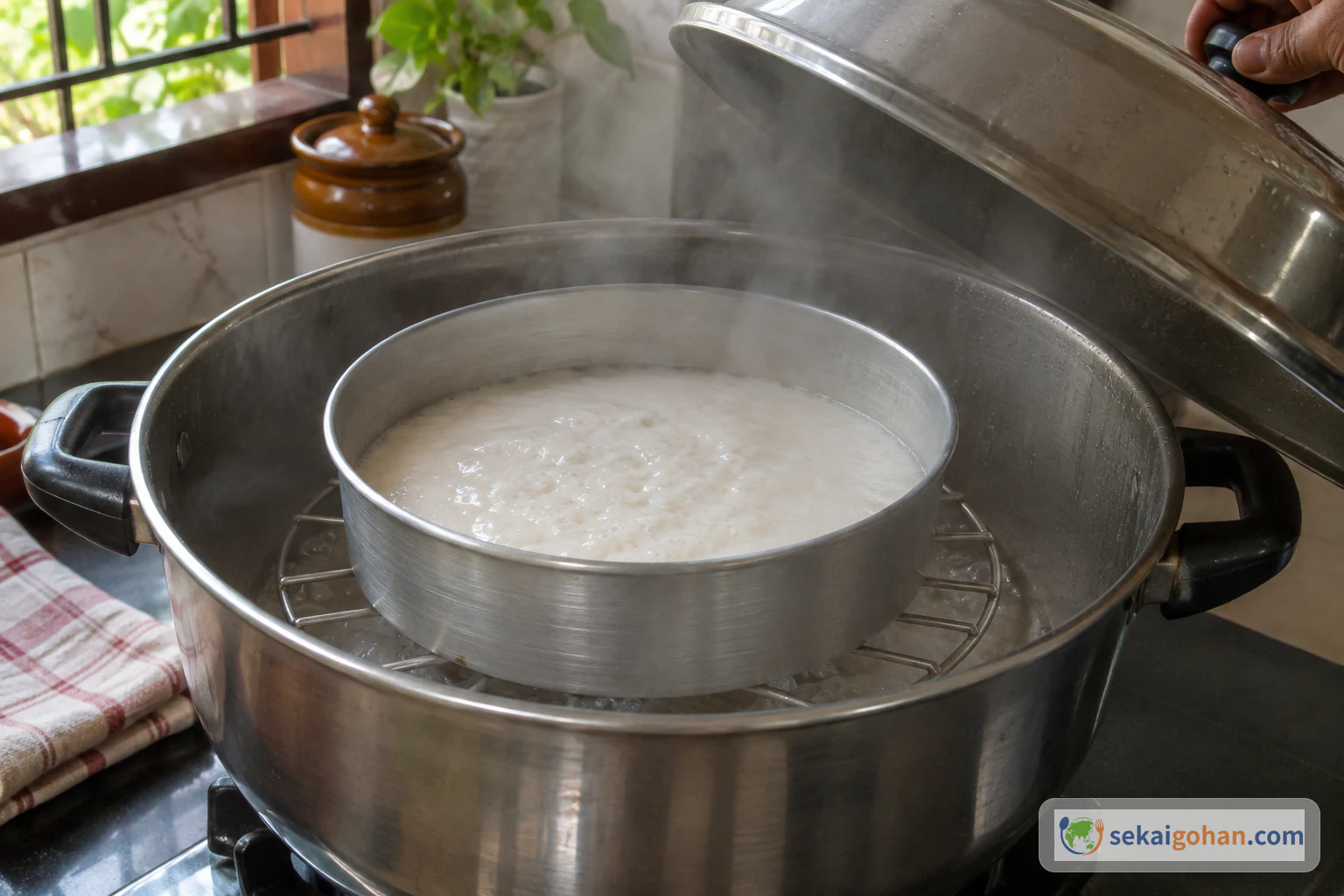
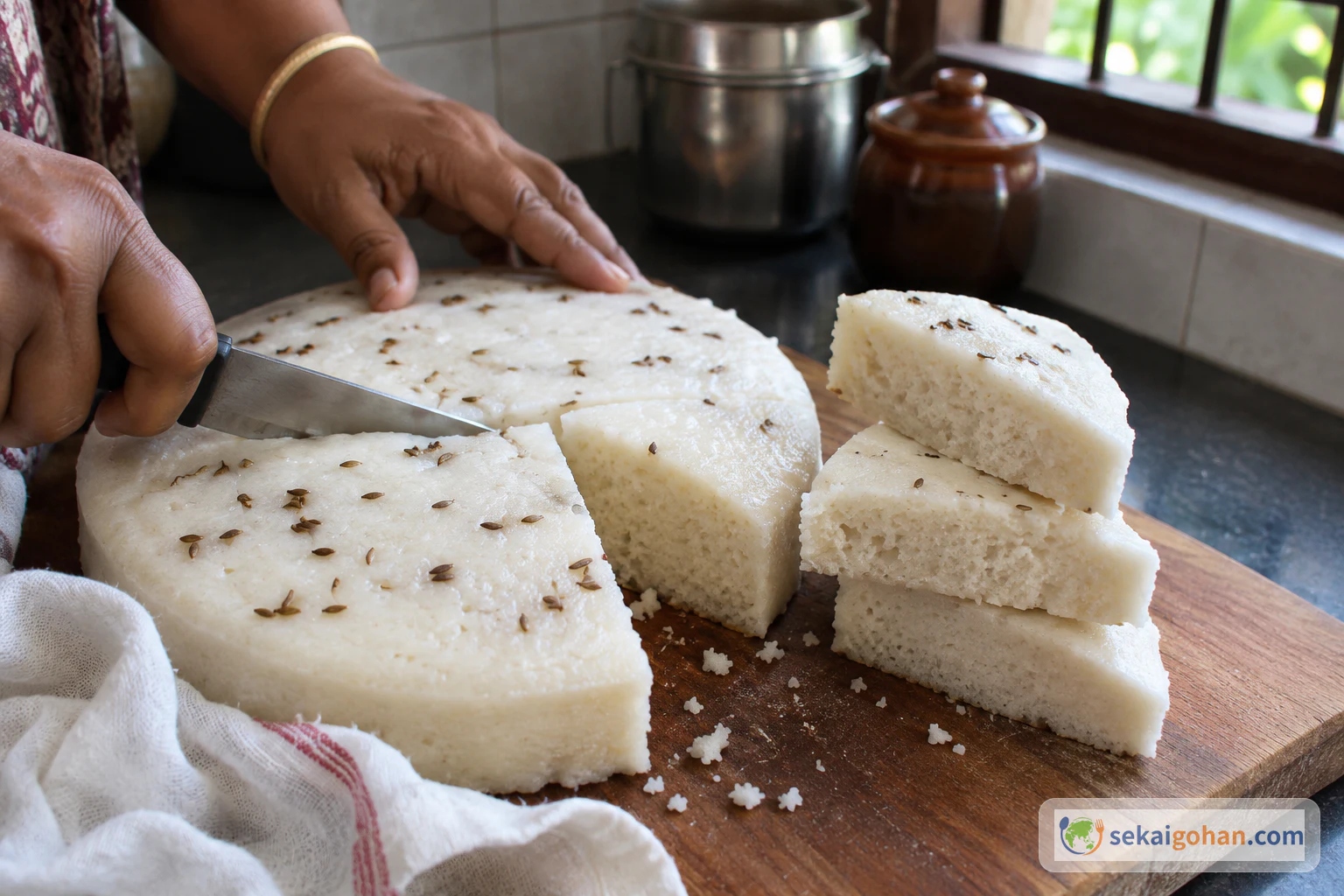
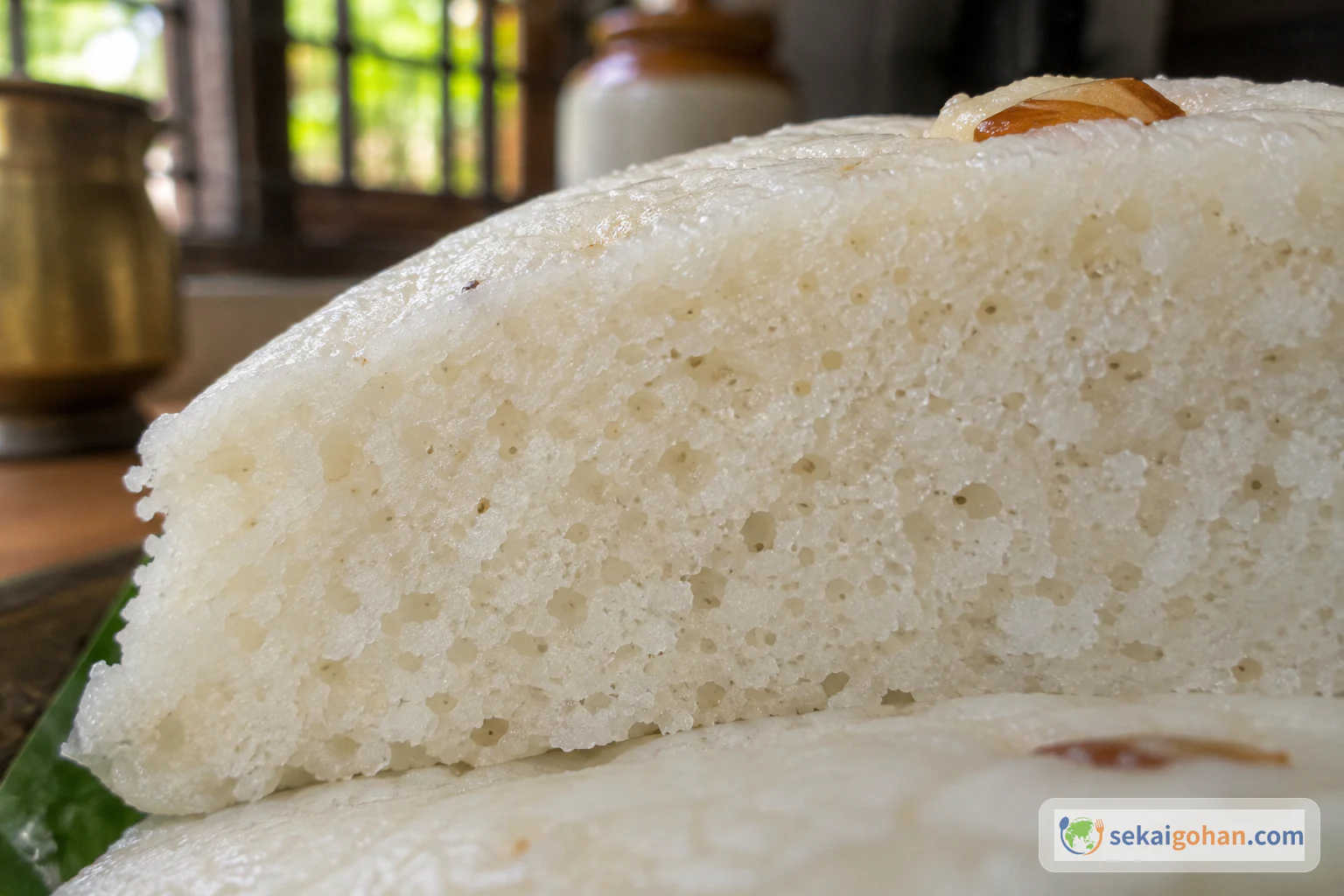
After twenty minutes you lift the steamer lid and steam rolls off a round white cake that has risen high in its pan, its edges just pulling away from the metal. The kitchen smells of coconut and crushed cardamom, with a faint sour note left by the long rise. This is vattayappam (വട്ടയപ്പം), the sweet steamed rice cake made in Kerala's Christian households. It is cut into wedges for Christmas and Easter breakfasts and eaten again in the late afternoon with a glass of tea. The crumb is soft and springy and full of fine, even holes. It is sweet enough to eat plain and mild enough to sit next to a curry.
Vattayappam at the Kerala Table
The name describes the pan. Vattayappam is the appam that is steamed in a round pan, then cooled and sliced like a cake. That sets it apart within its own family. Palappam and vellayappam come from the same kind of fermented rice and coconut batter, but they are cooked on one side in a bowl-shaped iron pan, which leaves them lacy at the edge and soft in the centre. Kallappam is leavened with toddy, the fermented sap of the palm. Vattayappam is the sweet, steamed one, and it is the only one you cut with a knife.
Vattam means round and appam is the word for this family of rice breads and cakes. Put together, the name points to the round pan the batter is steamed in.
Other steamed, fermented batters from India are easy to confuse with it. Idli is also fermented and steamed, but its batter is rice ground with urad dal, so it tastes savoury and slightly tangy. Dosa uses that same batter on a griddle. Vattayappam has no lentils at all. It is made of rice, coconut and sugar, and it eats like a sponge cake: you can tear it, and it is sweet.
In Kerala homes it often follows from other cooking. Batter left over from the morning's palappam gets some extra flour and sugar, rises for a few more hours, and goes into the steamer in the evening as a snack for tea or coffee. At Christmas and Easter it is breakfast, served with chicken curry, mutton curry, sambar or a potato kurma. The sweet cake and the savoury gravy are eaten together.
How households make it differently
There is no single fixed recipe. Some cooks use rice flour, as here, which makes it a weeknight job: mix in the morning, steam in the evening. Others soak raw rice for three to four hours and grind it with coconut. The traditional leavening is a few spoonfuls of toddy, and many recipes today use a little dry yeast. Fermentation takes anything from three to eight hours depending on the batter and the weather.
Steaming time follows the vessel and the thickness of the batter, so each household's time is right for its own pan. A layer under an inch deep on a rimmed thali plate steams in 15 to 20 minutes. A shallow pan can take 30 minutes. A small dish of a light rice-flour batter brushed with coconut oil is done in about 8 minutes. The half-full 8- to 9-inch pan used here takes 20 minutes. Sweetness varies just as much, from about ¼ cup of sugar in some homes up to the ¾ cup used below, which is the top of the range.
Ingredients
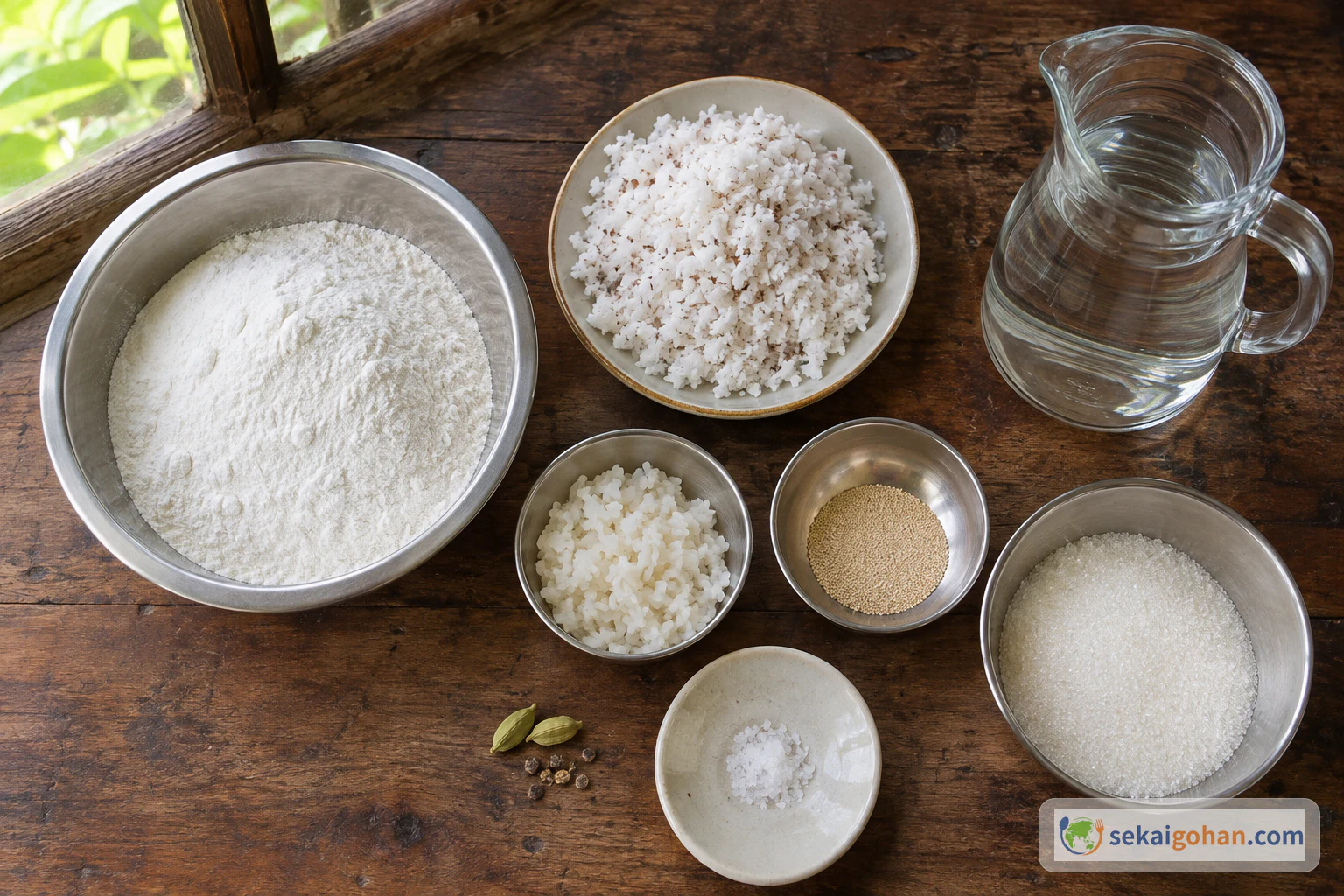
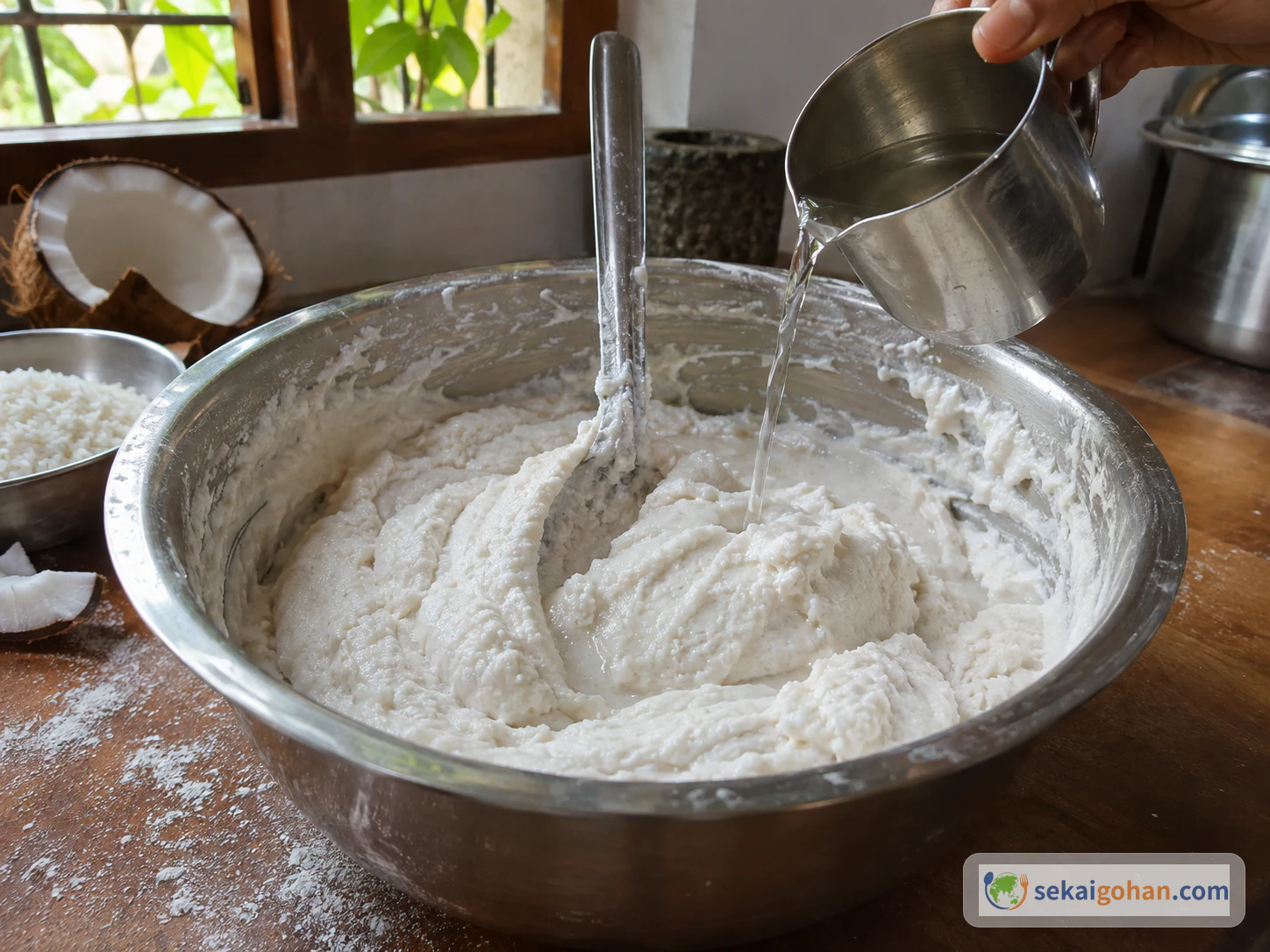
This makes one round cake in an 8- to 9-inch (20–23 cm) pan. The sugar and the water are each added in stages, so it helps to measure the splits out before you start.
This cake contains coconut, yeast and cardamom. It has no egg, dairy or wheat and is vegan. Some cooks make the cooked starch with semolina, which is wheat. For a gluten-free cake, use broken rice, rice flour or leftover cooked rice for the starch. If you add cashews (see Variations), the cake then contains tree nuts.
Equipment
- An 8- to 9-inch (20–23 cm) round cake pan
- A steamer wide enough for the pan, or a large pot with a rack that keeps the pan above the water
- A small saucepan
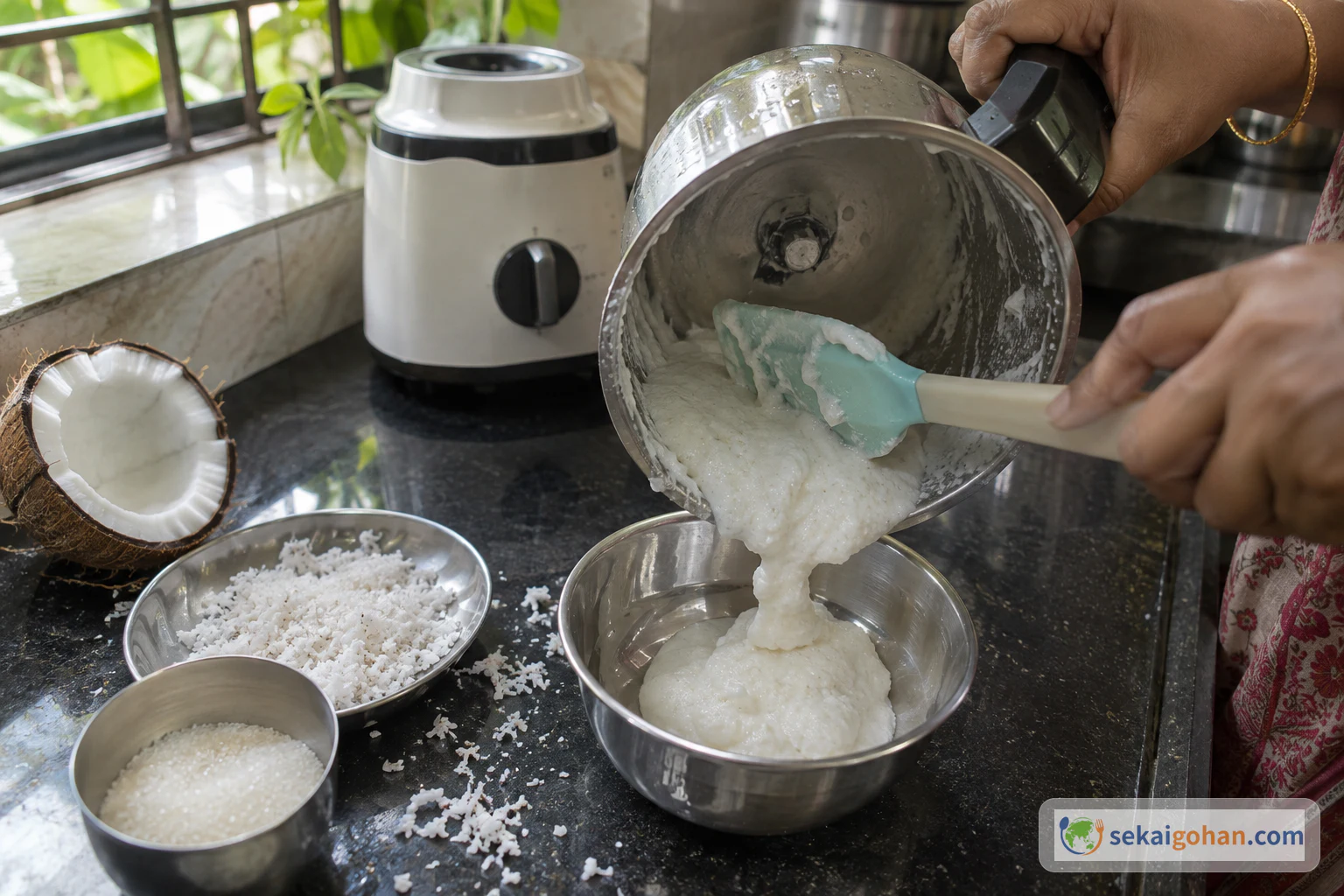
- A mixer grinder or blender, or a mortar and pestle, for the coconut
- A large mixing bowl with a cover or plastic wrap
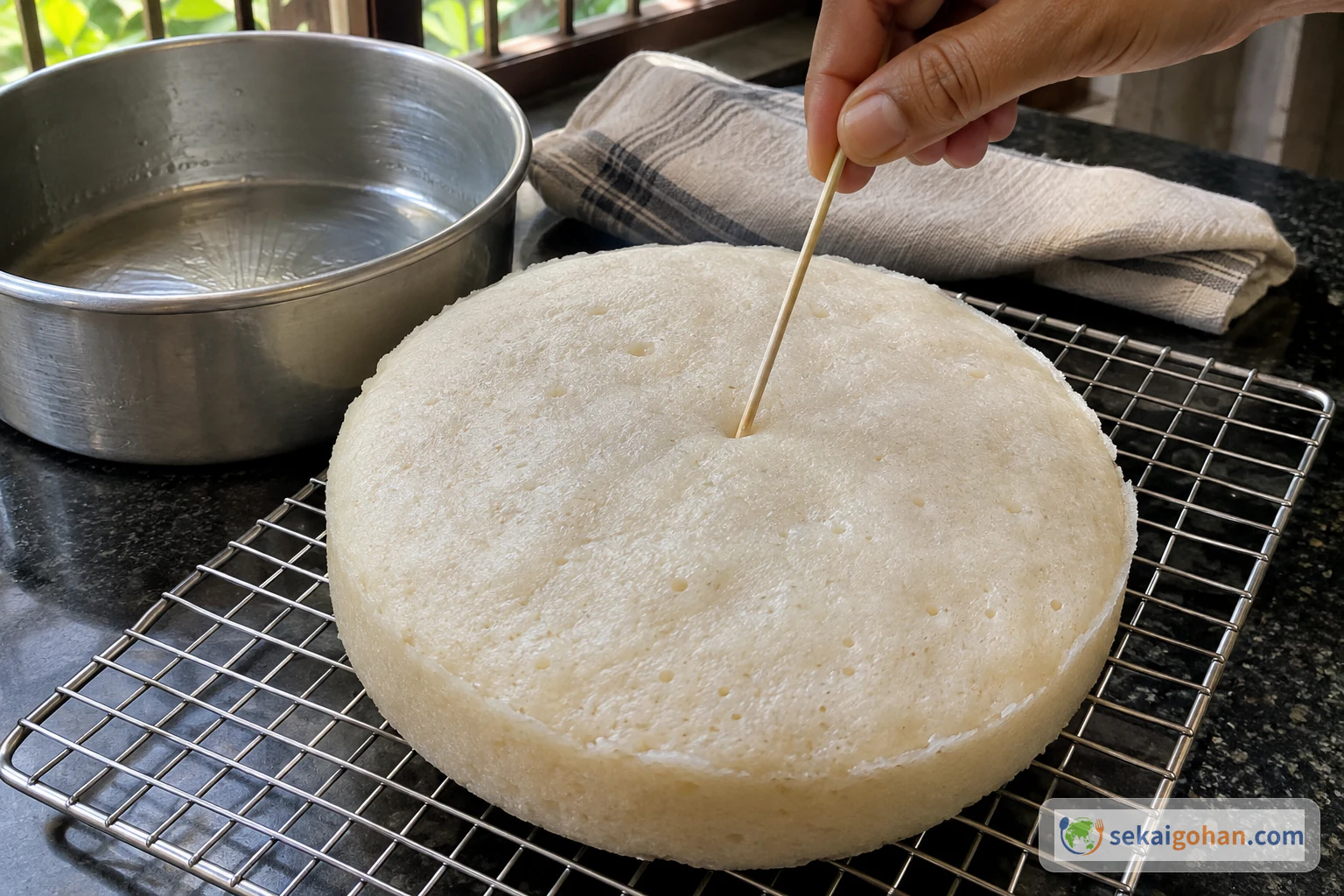
- A bamboo skewer
- A sharp knife and a board
Choosing Rice Flour, Coconut and the Leavening
The rice flour has to be non-glutinous. Look for fine rice flour, sold as rice powder, made from ordinary non-glutinous rice. Japanese joshinko is a close match. Glutinous or "sweet" rice flour, and any very starchy flour, steams into a gummy, sticky cake. Once it is in the steamer it cannot be saved.
If the label says glutinous, sweet or mochi, put it back. Fine, plain rice flour gives a light crumb. Glutinous flour gives a chewy, dense slab.
Fresh grated coconut is best. Frozen grated coconut can stand in for fresh; thaw it before grinding. If you have no grated coconut, use canned or powdered coconut milk and make 1½ to 2 times the cooked starch to make up for the lost body. The cake comes out moist but less light.
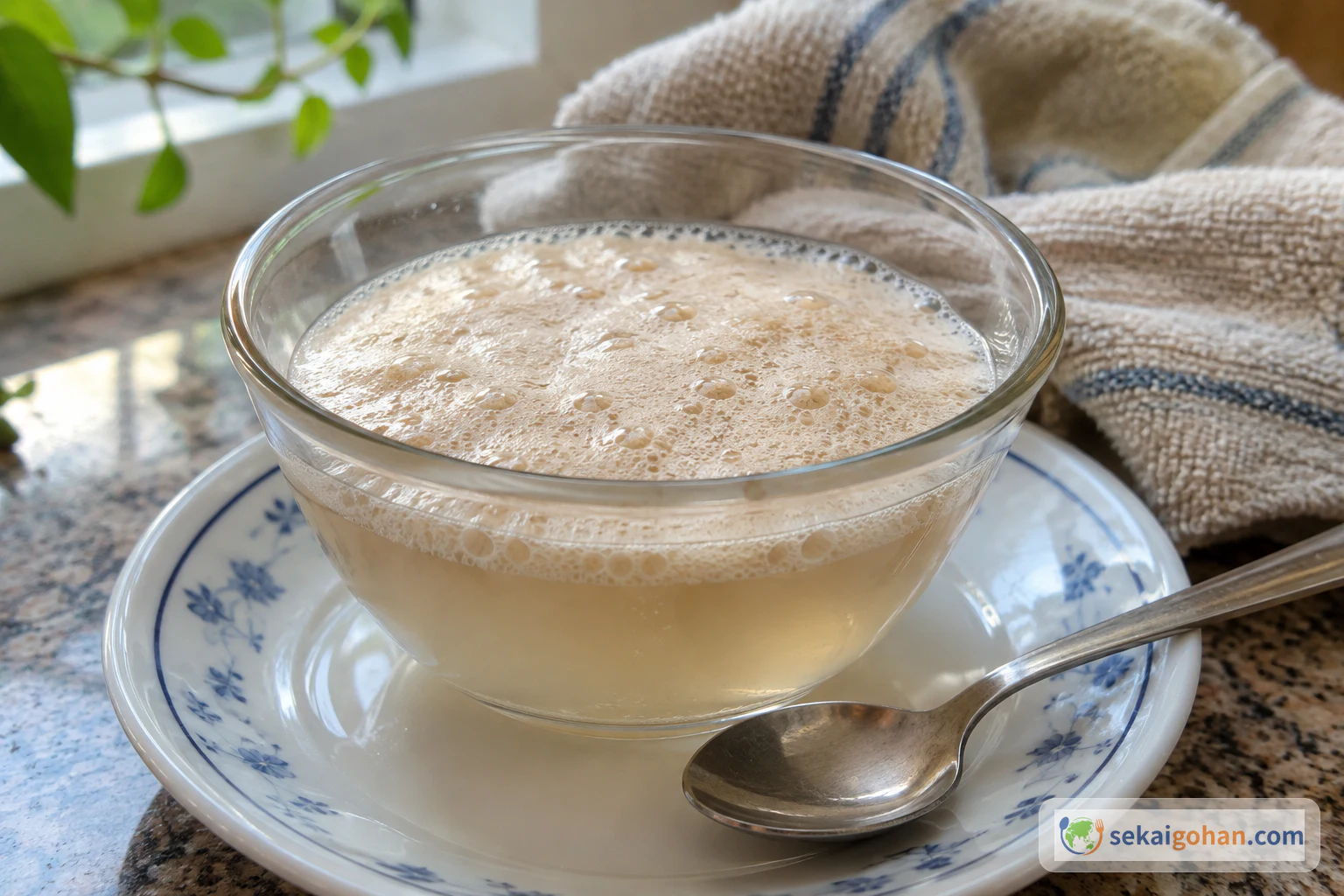
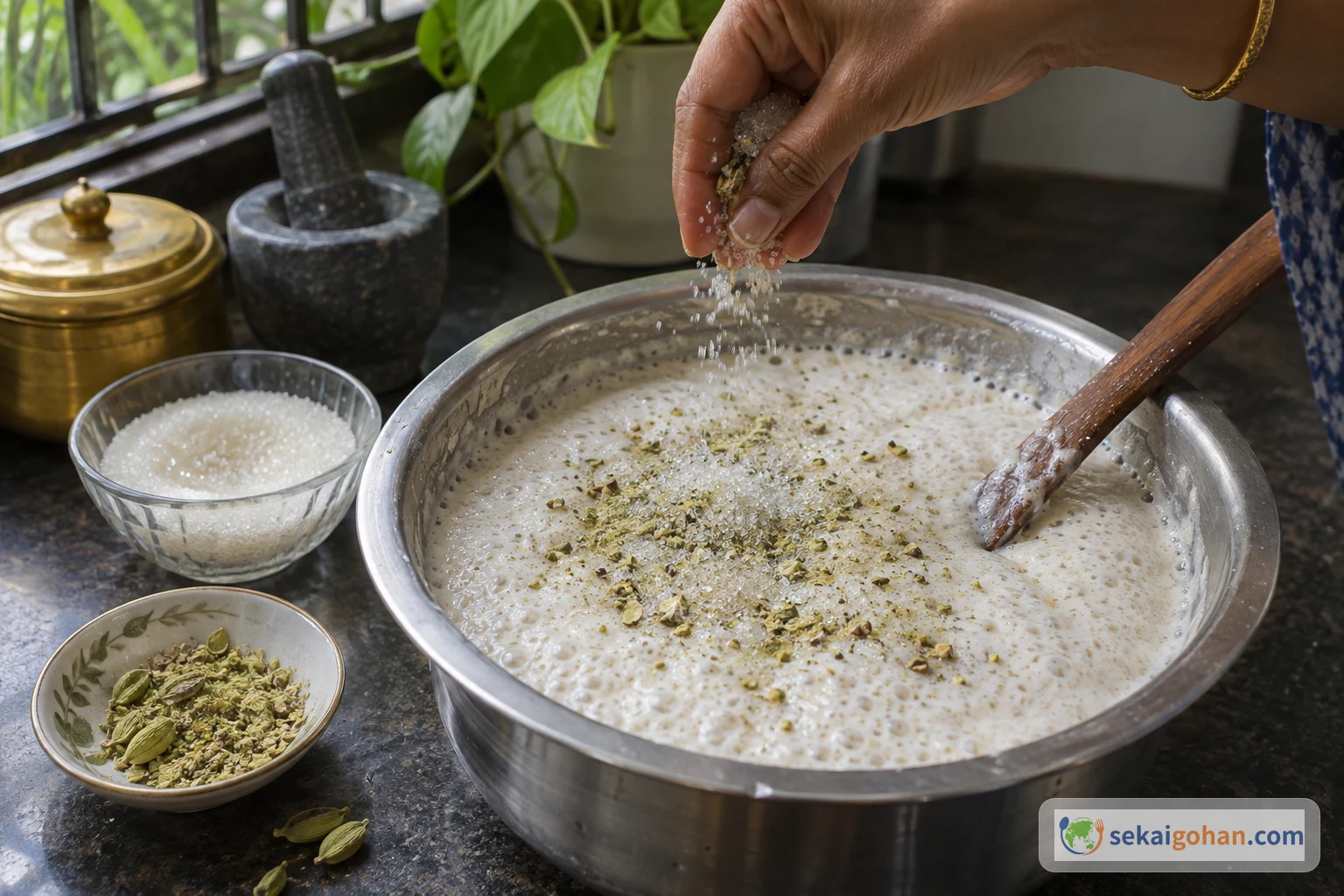
Dry yeast takes the place of toddy, which is alcoholic. That makes this version a choice for readers who want to avoid the alcohol in toddy. Whole cardamom pods, split and the seeds crushed just before use, smell brighter than ground cardamom, but ground cardamom works. Keep it as the only spice, because a second one takes over the coconut. Plain white sugar keeps the cake white. Cut it to ½ cup for a less sweet cake, but never leave it out completely: the first spoonful is what wakes the yeast.
Method
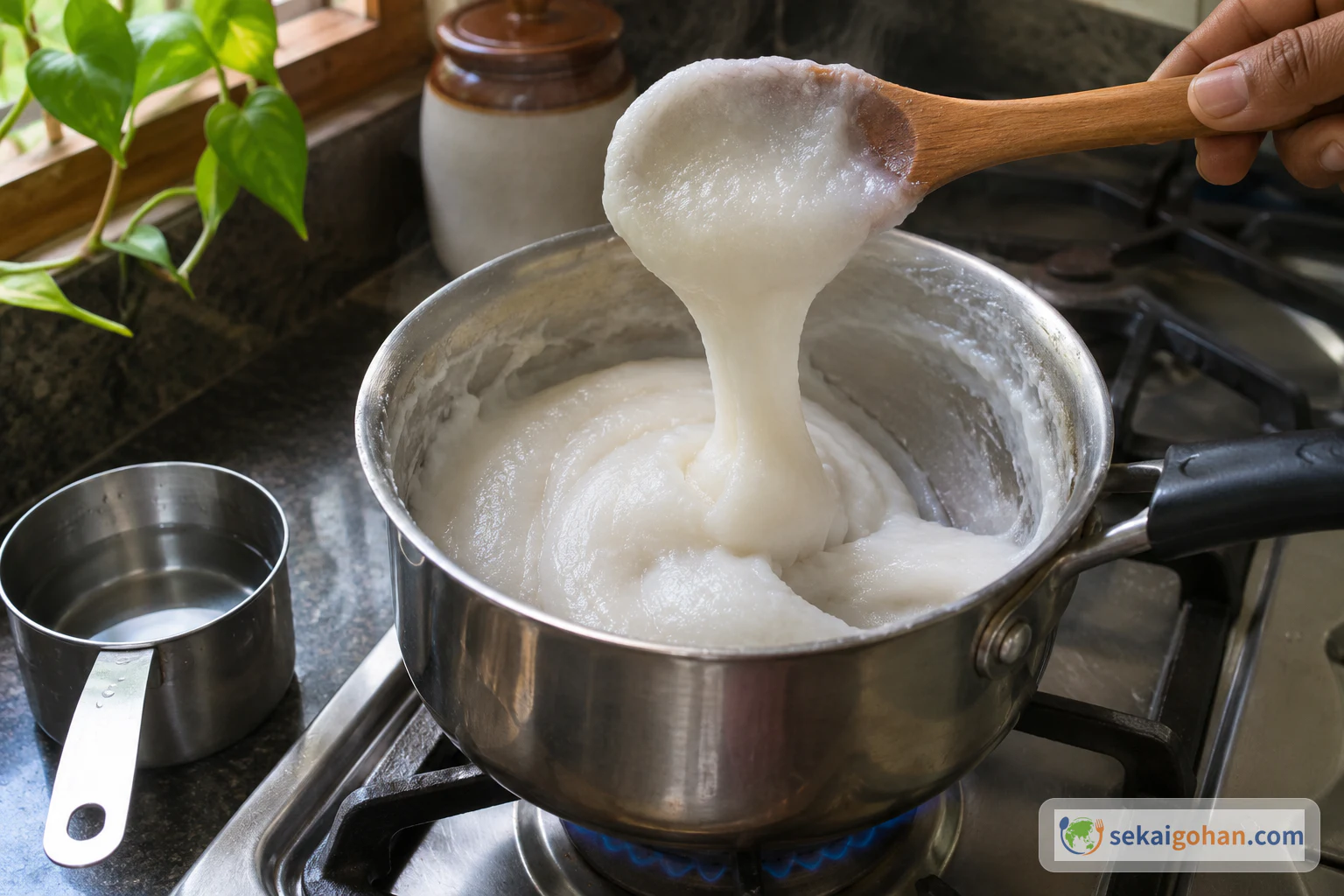
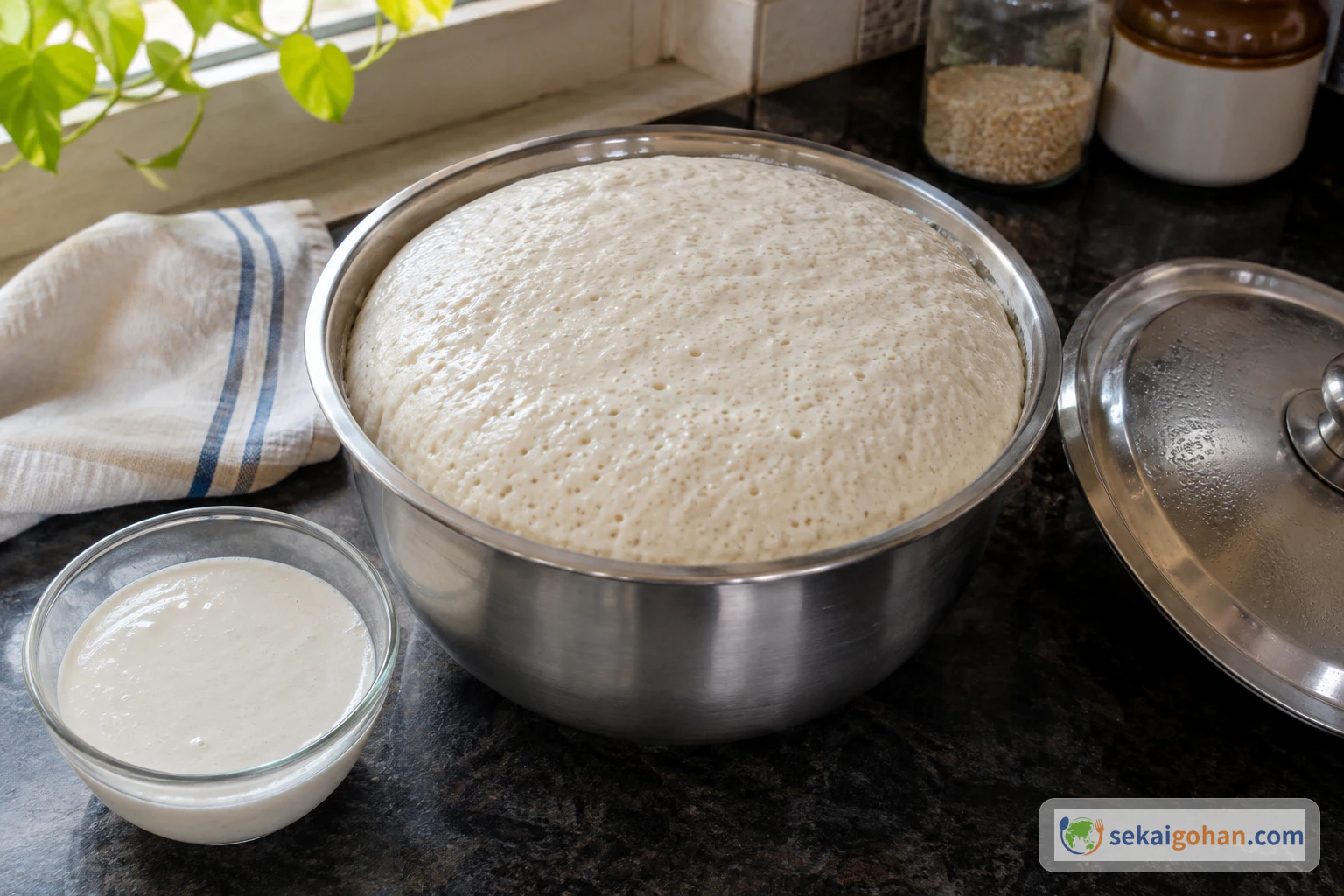
The first three steps are small preparations: make the starch paste, wake up the yeast, grind the coconut. They all go into one bowl, and then the batter needs 6 to 8 hours of hands-off rising. Mix in the morning for an afternoon cake, or at midday for one after dinner. Once the batter has risen, you rest the filled pan for 15 to 20 minutes, steam it for 20 minutes and let the cake cool before slicing.
Two habits make vattayappam rise well. Keep the batter so thick that a spoon stands up in it. Fill the pan only halfway so the cake has room to climb.
Use a clean bowl, a clean spoon and clean hands. Ferment at warm room temperature for the time given. If your kitchen is warmer than about 30°C, do not leave the batter out for the full 6 to 8 hours. Move it to the refrigerator or shorten the rise, and judge by volume and bubbles. Throw the batter away if it smells rotten or wrong, turns stringy or slimy, grows mould, or shows pink, black or any other unexpected colour. Take extra care with fermented foods when cooking for babies, older people or anyone with weakened immunity.
When It Goes Wrong
| What you see | Why | What to do |
|---|---|---|
| The batter looks loose and runny before steaming | Too much water went in | Mix in a little more flour and leave it for about 30 minutes, until it rises again |
| The batter rose and then collapsed | It fermented too long | Mix in a little flour and wait until it is visibly risen again before steaming. Steamed as it is, it will not rise |
| The cake is dense and sunken | The batter was too thin, or the pan was filled more than halfway | Next time make the batter thicker and fill only half the pan |
| The cake is gummy and sticky | Glutinous or very starchy flour | It cannot be fixed after steaming. Stir an equal amount of plain rice flour into any leftover batter, let it rise, and cook it as pancakes in a frying pan |
| Raisins or nuts sank to the bottom | They went in before steaming started | Scatter them over the cake partway through steaming |
| The batter will not rise in winter | The kitchen is too cold | Move it somewhere warm, such as a switched-off warmed oven, without heating the batter directly |
Serving, Variations and Storage
Serving
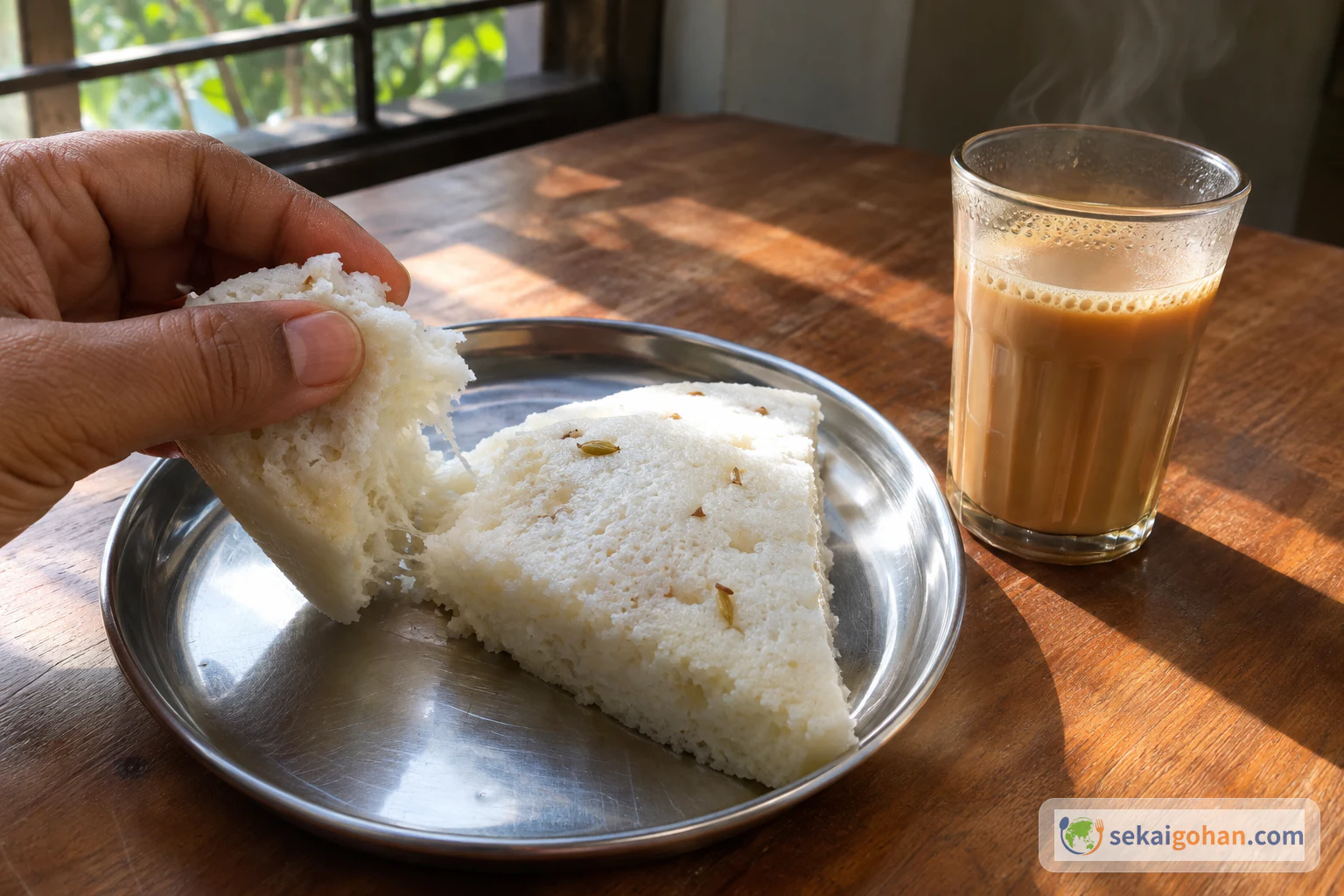
For an afternoon snack, put a few wedges on a steel plate next to hot milky tea or coffee and tear them by hand. For a festive breakfast, serve it with chicken curry, mutton curry, sambar, potato or vegetable kurma, prawn curry or a chicken stew. The cake soaks up gravy like bread.
Variations
- Less sweet, for curries. Cut the sugar to 2 to 4 tbsp in total. The cake becomes a soft side bread for stews and curries rather than a sweet. Keep the 1 tbsp that wakes the yeast.
- Raisins and cashews. Scatter about 2 tbsp raisins, with cashews to taste, over the cake partway through steaming so they stay on top. Cashews add a tree-nut allergen.
- Baking powder instead of yeast. In a pinch, use 1 tsp baking powder in place of the yeast. The cake rises without the long ferment but loses the fermented aroma that makes it taste like Kerala.
- A small, quick cake. For a light home version, grind ½ cup (125 ml) rice flour with 2 tbsp cooked rice and a quarter of a coconut, grated (the amount varies with the size of the coconut). Grind again with 3 tbsp sugar, ½ tsp yeast and a pinch of salt, keeping the batter from getting too loose. Let it rise for 4 hours, stir it well, and steam it in a small coconut-oiled dish for 8 minutes.
Storage
Once the cake has cooled to room temperature, slice it and do not leave it out. Pack the pieces into shallow covered containers so they chill fast, refrigerate them promptly, and, as a cautious guideline, eat them by the next day. Reheat by steaming or in the microwave until hot all the way through. Throw out anything that has been kept too long or seems at all off.
Frequently Asked Questions
Can I steam it in an idli steamer?
Yes. Grease the idli plates and fill each mould only halfway, the same as the cake pan. The thin layers steam through much faster than a full cake, so start testing with a skewer early. They are done when the skewer comes out clean.
Can I grind raw rice instead of buying flour?
Yes. 1¾ cups raw rice replaces the 2 cups rice flour. Soak it for three to four hours, drain it, and grind it with the coconut to a fine, smooth paste before adding the other ingredients. Keep the batter just as thick as the flour version.
Can I ferment it in the refrigerator?
Yes, and in hot weather it is the safer choice. The cold slows the yeast, so the batter takes longer to rise. Steam it once it has nearly doubled and is covered in bubbles, however long that takes, and let it rest in the pan before steaming as usual.
Can I use other spices besides cardamom?
Use only one spice. Cardamom works because it sits well with coconut without hiding the fermented note. Add a second spice and the cake starts to taste like a spice cake rather than vattayappam.