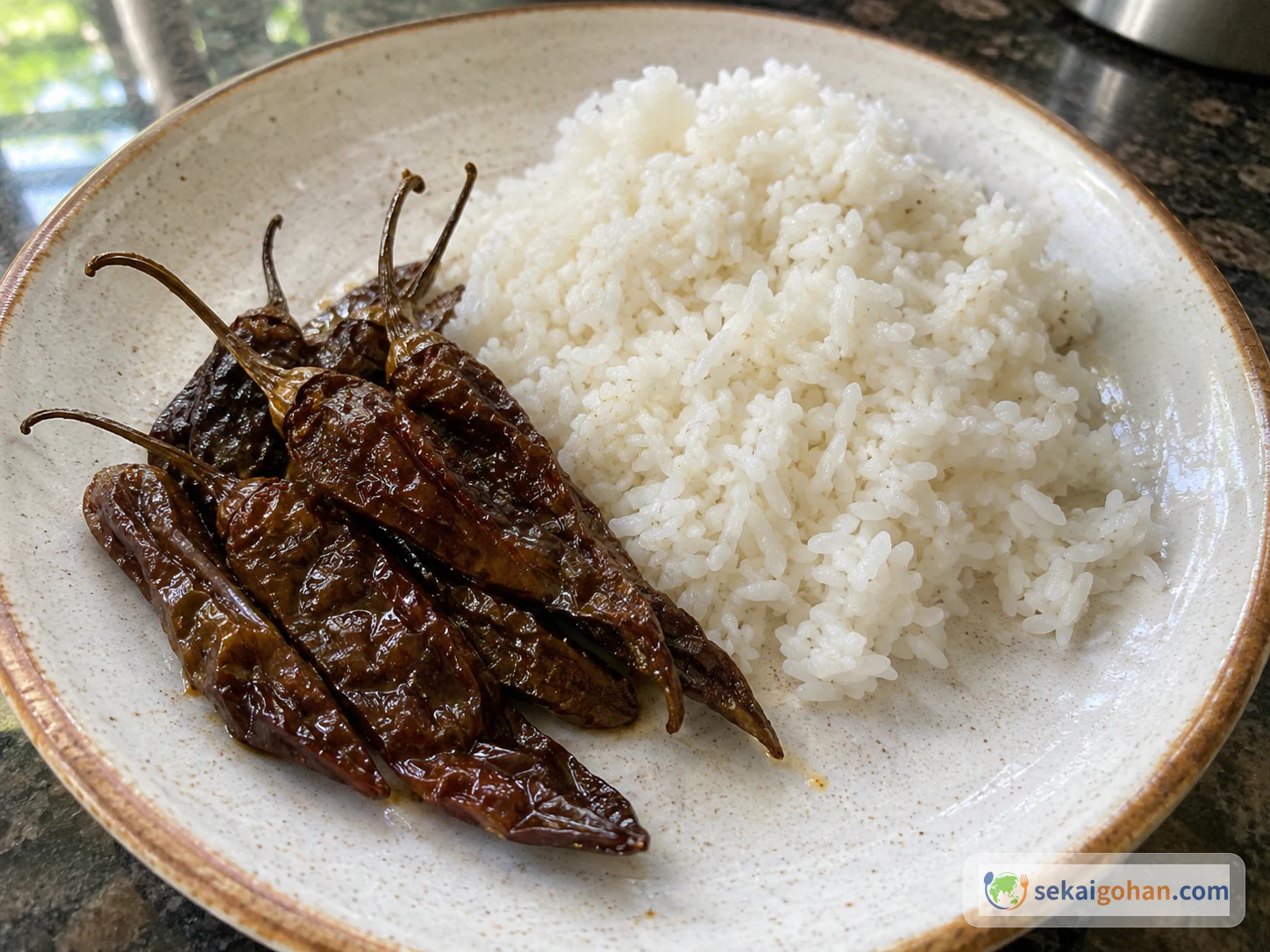
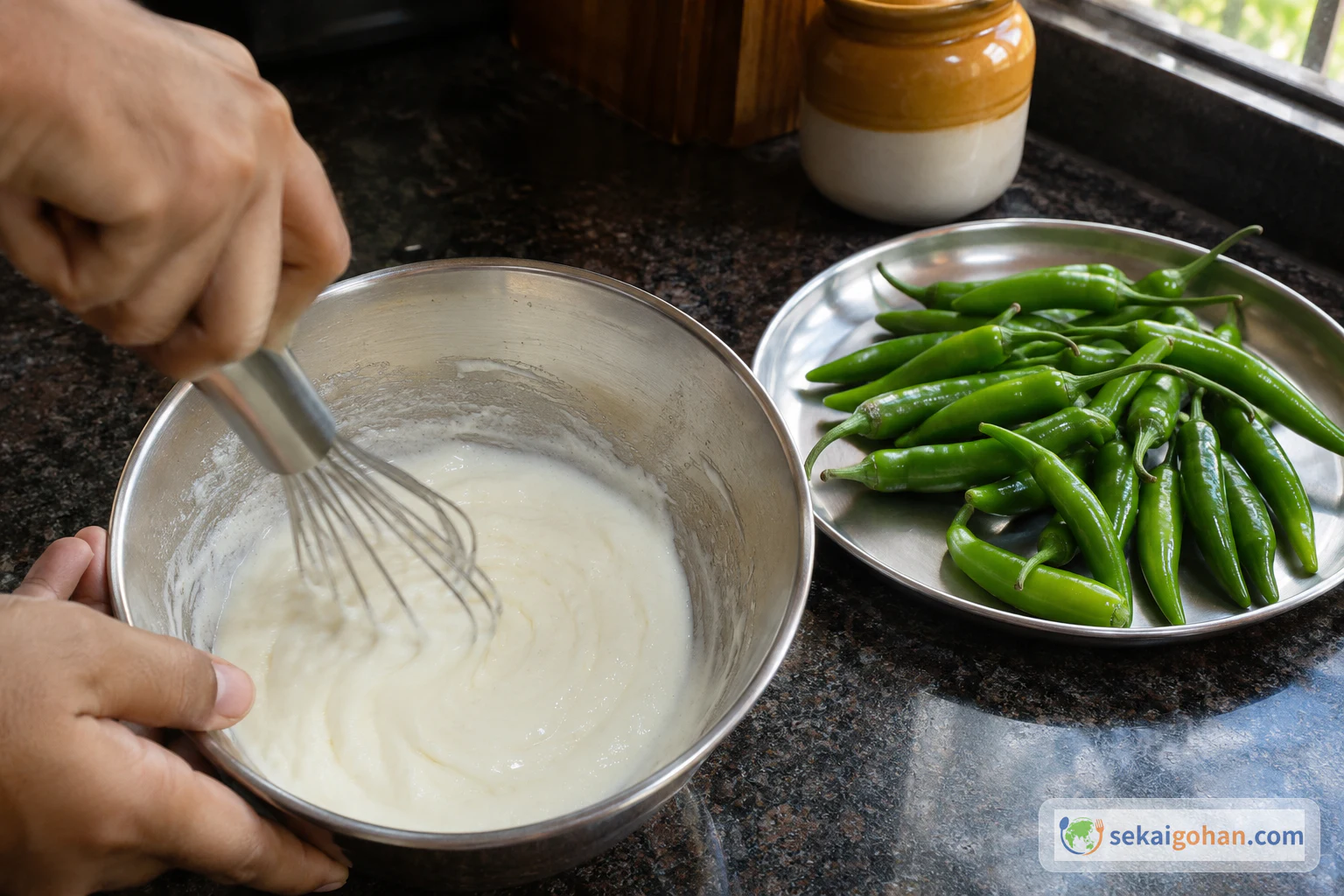
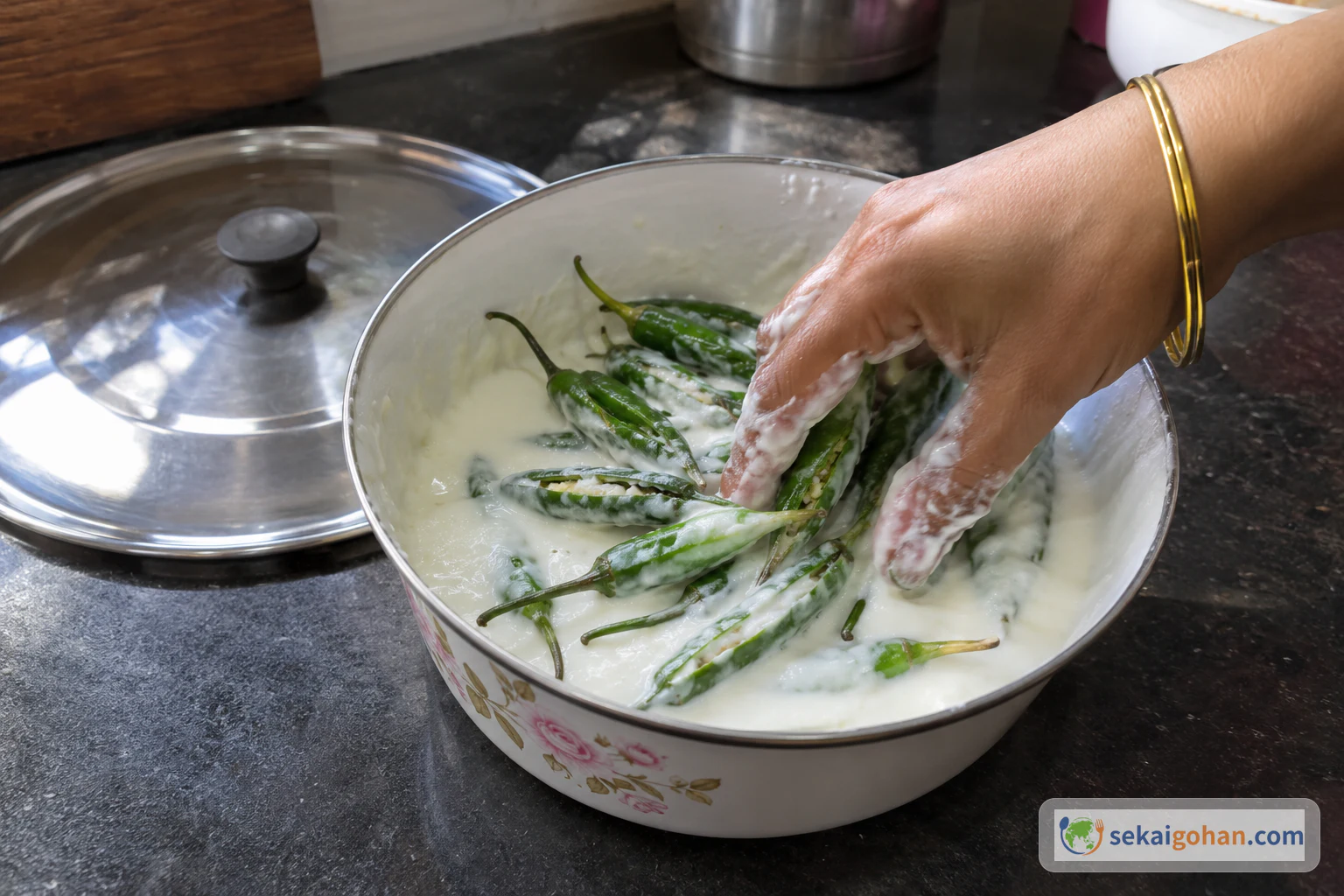
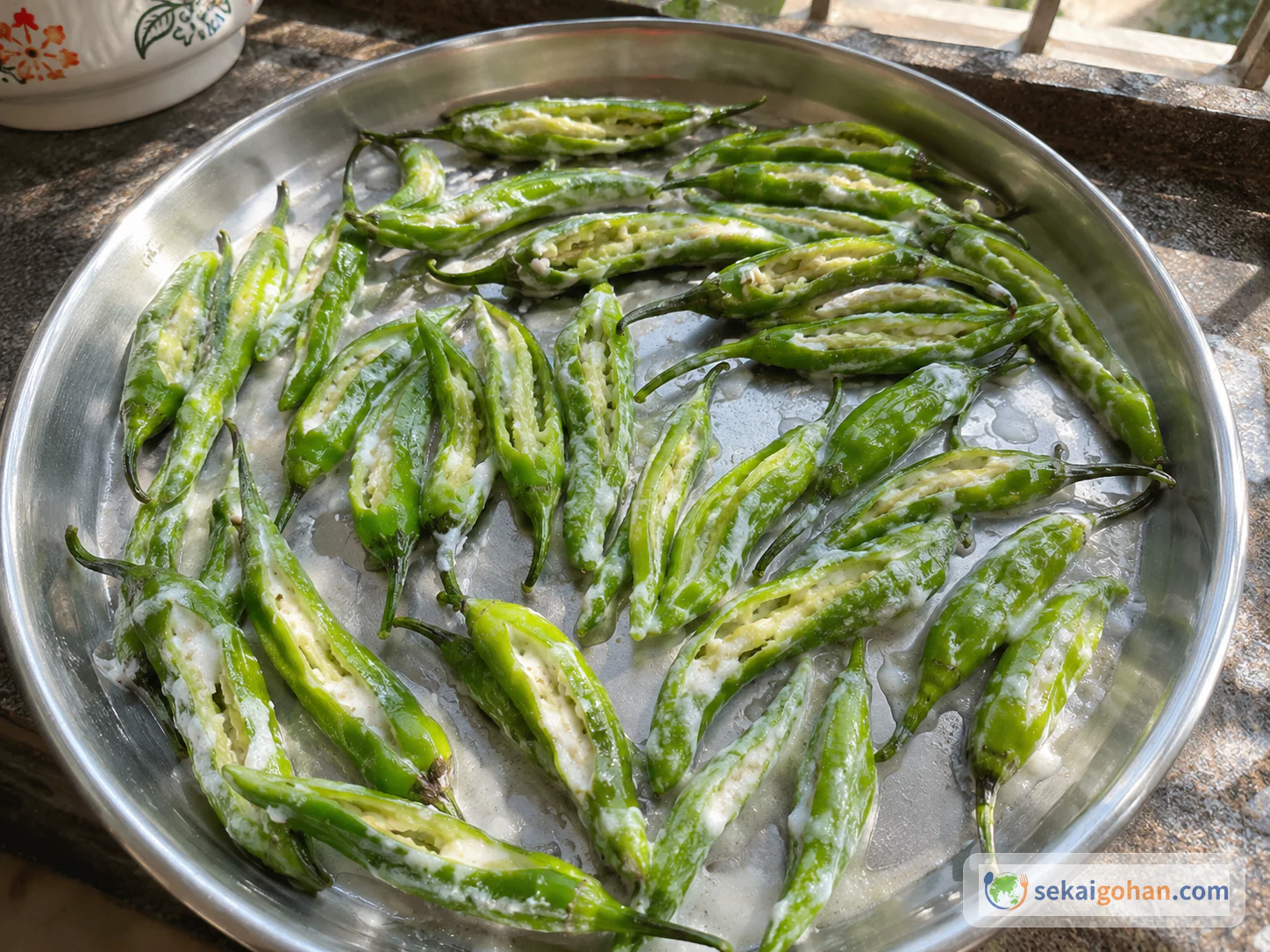
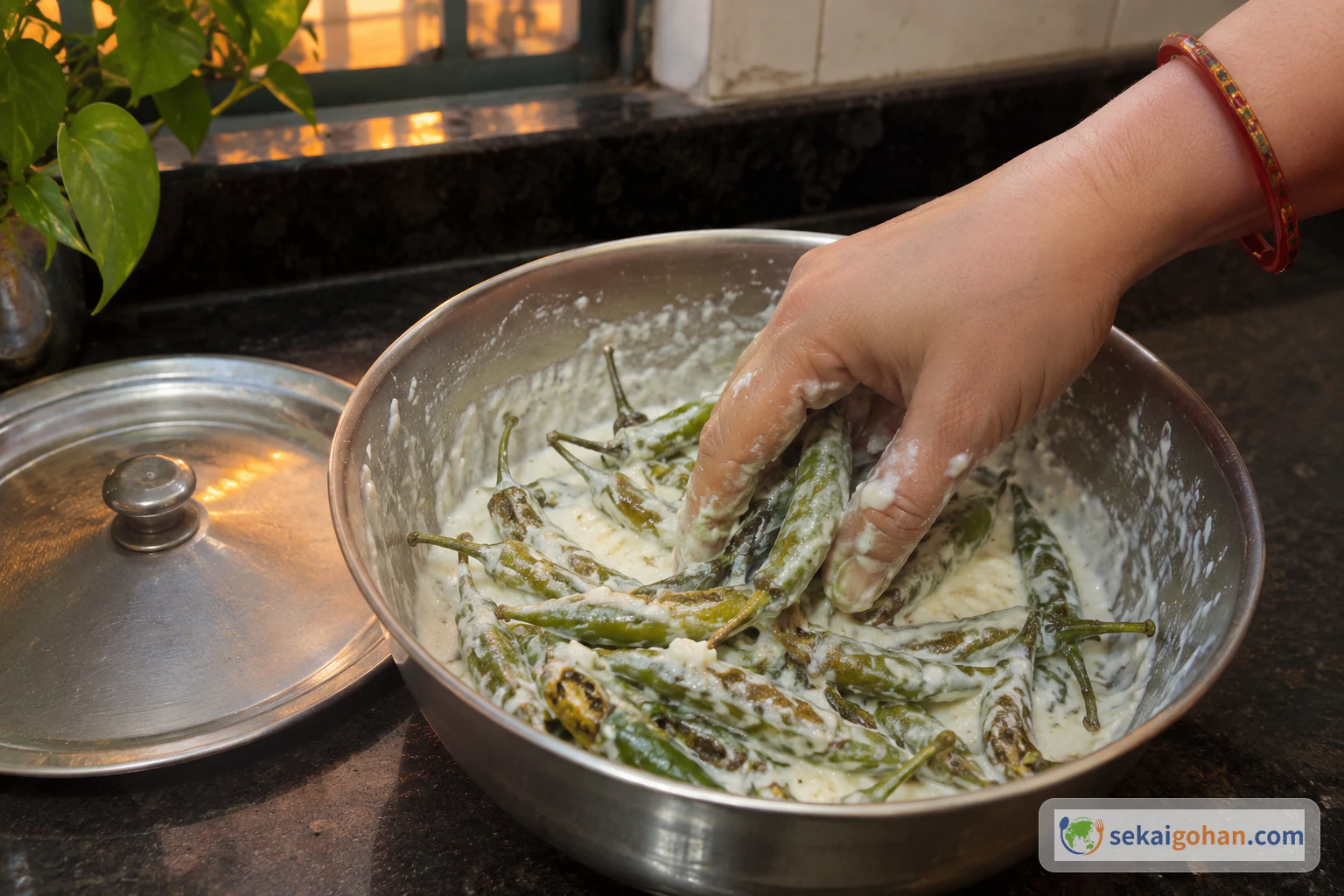
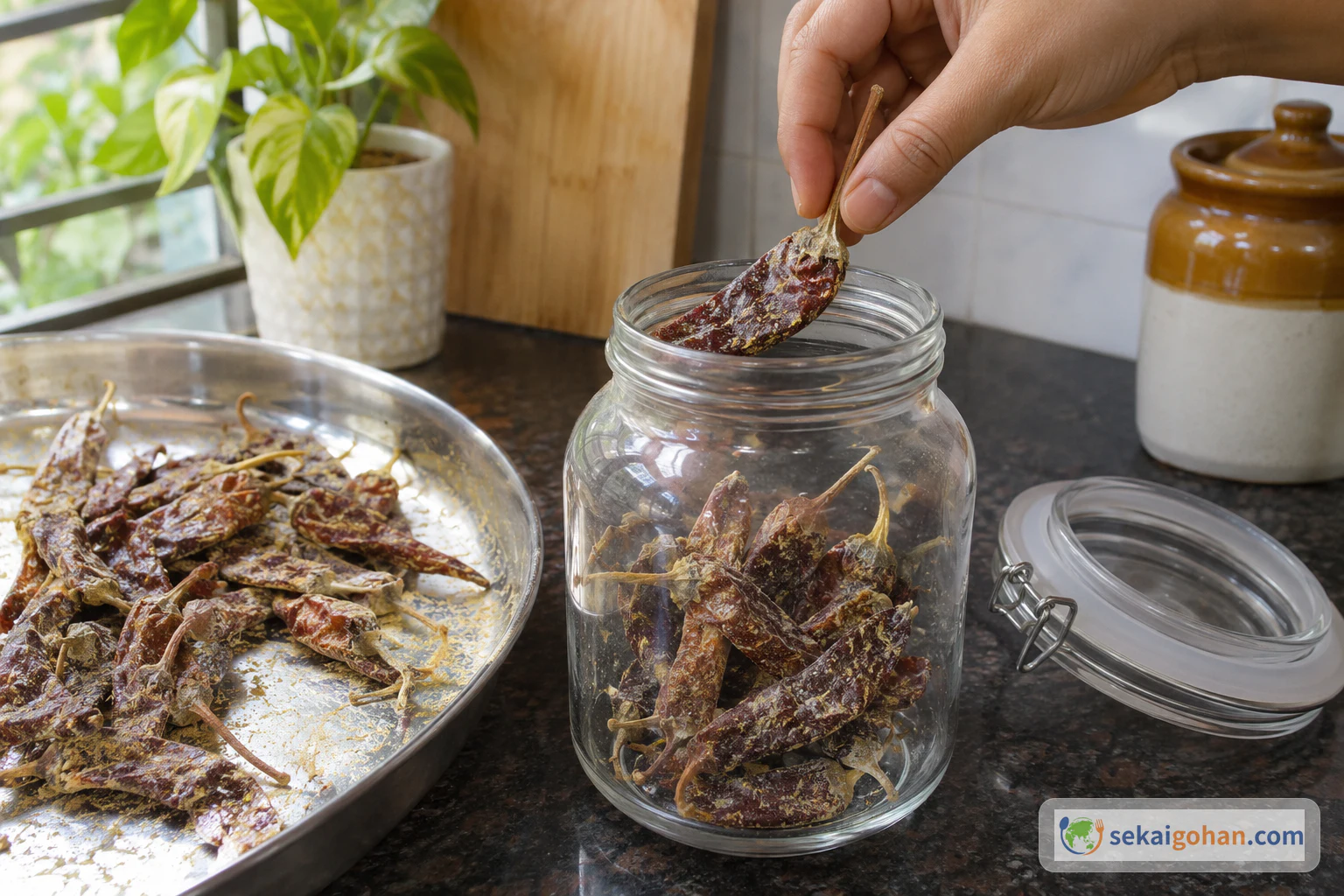
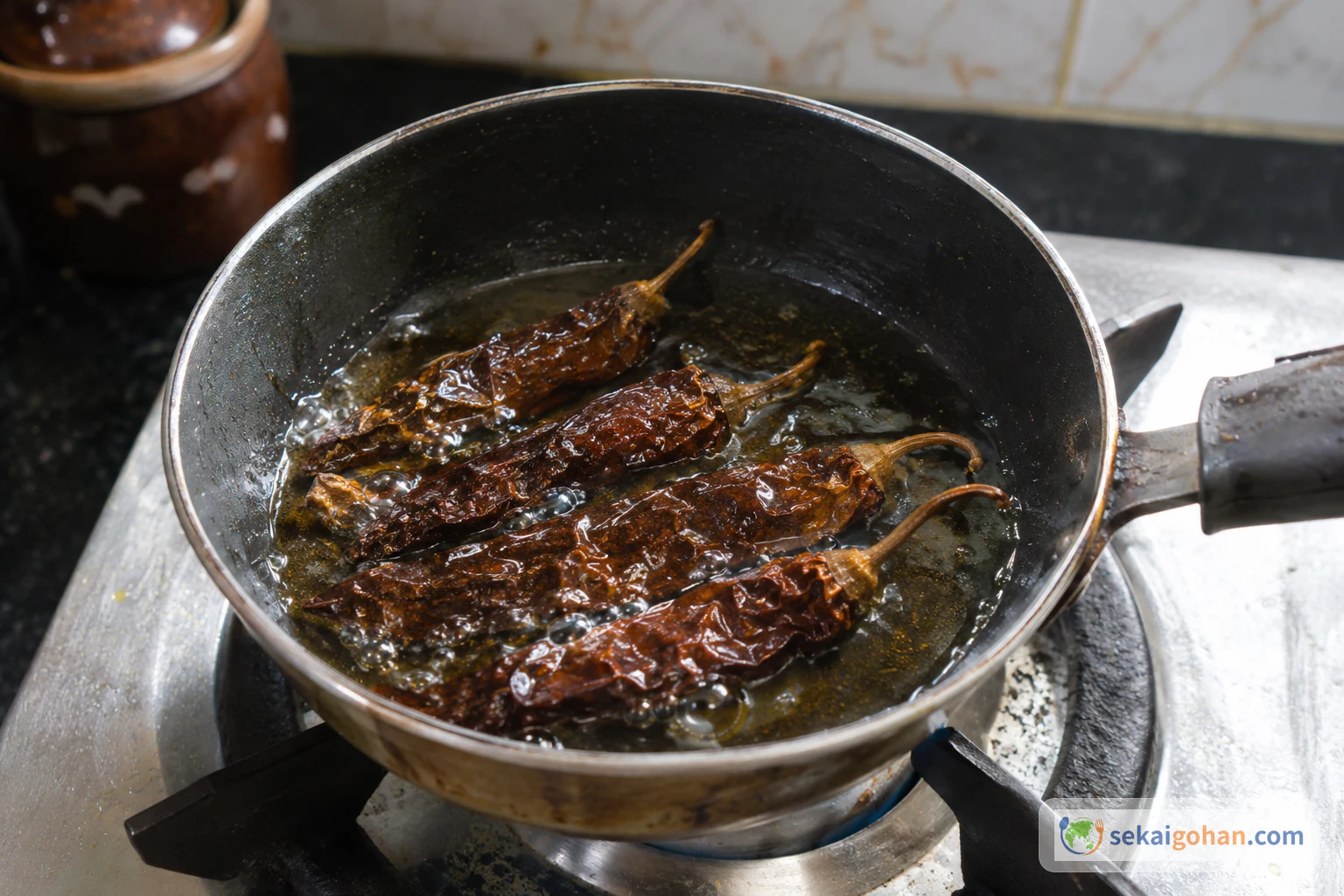
Each evening the plate comes in from the sun, and the chillies go straight back into a bowl of salted curd for another night. A day later they go out again. The routine keeps going until the bowl is empty and the chillies have taken up all of the curd. Then they dry hard, and at mealtime a handful goes into hot oil and turns a deep, dark brown. Thairu mulaku is that handful: green chillies cured in salted curd, dried in the sun, and fried just before eating. On a South Indian plate it sits beside the rice, salty and sour from the curd, with the chilli's heat underneath. A little of it goes a long way with a lot of rice.
Curd, Salt and Sun: A Chilli Pantry from South India
In Kerala, cooks treat these chillies as a preserve you make once and fry as you need it. The fresh chillies are slit, soaked overnight in curd beaten with salt, and dried in the sun the next day. That night they go back into the same brine. The cycle runs for days. Little by little the chillies pull the curd and salt inside, and each day in the sun dries them a bit more. Once the brine is gone, they dry fully and go into a jar. Nothing more happens until somebody wants something sharp next to their rice.
The fried chillies go with plain steamed rice and especially with curd rice (thair sadham). That pairing comes up again and again: a cool, mild bowl of rice mixed with yogurt, and a dark, salty, crackling chilli to bite between spoonfuls. They belong to the same everyday South Indian cooking as avial, Kerala's vegetables in yogurt, and they work just as well on a table built around something rich like Kerala beef fry. For more of the country's food, see India.
Households make it differently, mostly in how much salt goes in, how long the drying takes and whether anything is added to the curd. Some kitchens mix ground fenugreek into the yogurt. The version here keeps to four things: chillies, curd, salt and a little water if the curd is thick. The same fried chillies also turn up in other dishes. In chammanthi, a ground side dish, a few fried curd chillies are ground with shallots, coconut, curry leaves and tamarind, with no water at all. That is its own dish, and a cook will go to the jar for it too.
In Malayalam the dish is thairu mulaku, and it is also called kondattam mulaku. Mor milagai is the name used in Tamil. All three mean these salted, curd-cured, sun-dried green chillies, which are fried before eating.
Ingredients
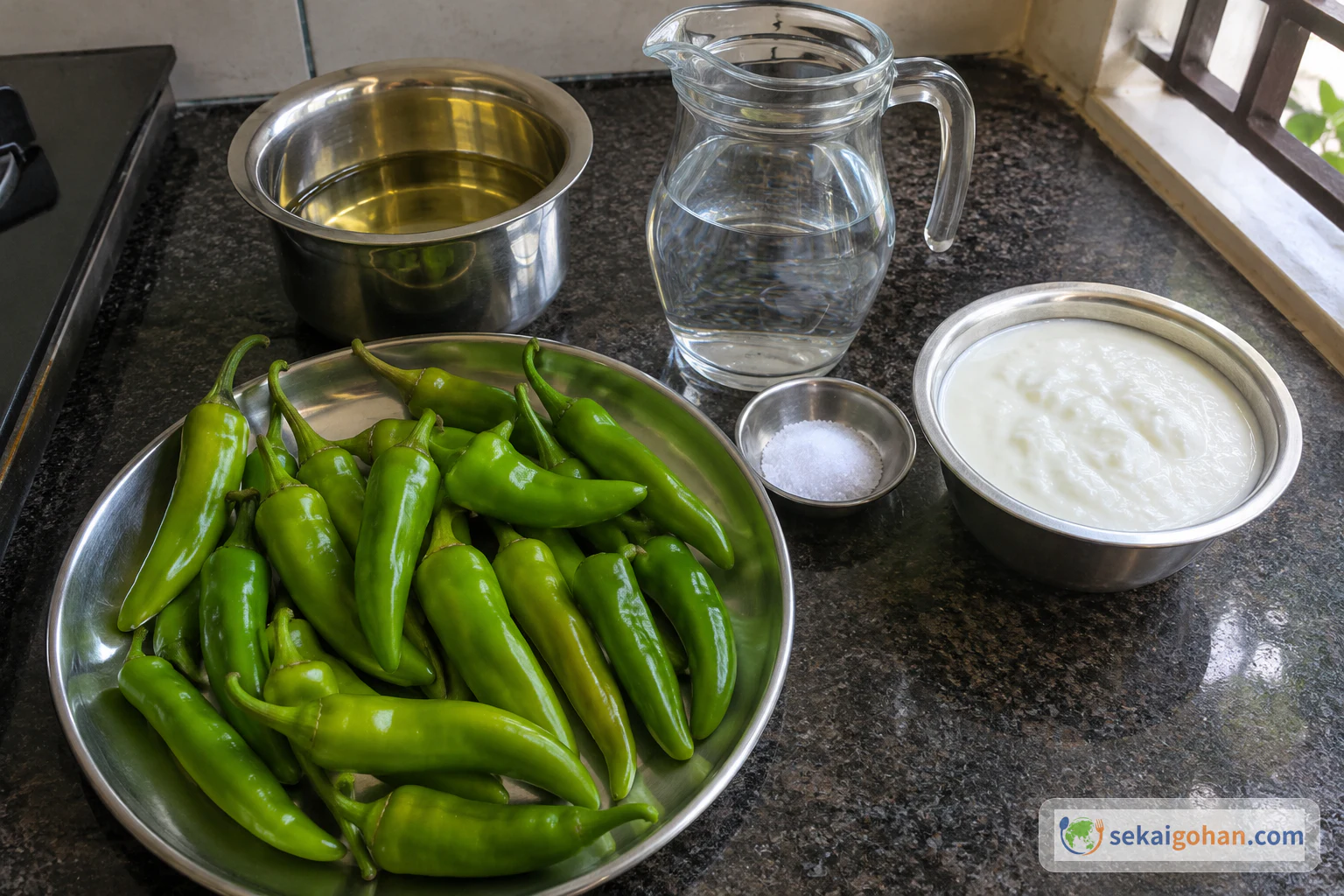
Curd that has turned a little sour works well here. Taste it before you decide on the water. Add the cup of water only when the curd is thick, because a thin brine coats more easily but makes for a slower dry.
Curd (yogurt) is a milk product. The finished chillies contain milk and are not suitable for anyone with a milk allergy.
Equipment
- Two bowls, one for rinsing the chillies and one for the brine
- A whisk
- A small knife and a cutting board
- A lid or cover for the brine bowl
- Wide plates or trays for drying in the sun (steel plates work well)
- An airtight container or jar
- A small frying pan
Choosing the Chillies, Curd and Salt
Pick thick, medium-sized green chillies with moderate heat. Thick flesh holds together through days of soaking and drying. Very hot chillies drown out the sour, salty brine. Thin, fiery chillies and bell peppers are not substitutes. Leave the stalks on. Supermarket green chillies are fine. There is nothing special to order.
For the curd, use plain, unsweetened yogurt. Sweetened yogurt does not belong in this brine. Any plain yogurt will do, thick or loose, since the water fixes the thickness.
Salt is where homes differ most. Use coarse salt, rock salt or whatever salt you have. Measure it by the spoon and don't convert it to weight, because grain size changes how much a spoonful holds. Here is how far the amount varies for the same kind of preserve:
| Chillies | Curd | Salt |
|---|---|---|
| 9 oz (250 g) | 9 oz (250 g) | 4 tbsp, or as needed |
| 9 oz (250 g) | 1 cup yogurt, with 1 tbsp ground fenugreek | 1 tsp |
| 1 lb 2 oz (500 g) | 2 cups | 1 tsp |
Choose one row and stay with its amounts. Don't blend them or scale the salt down from one row into another.
Method
The work is spread over days, and most of it is hands-off. On the first evening you wash the chillies, mix the brine, slit the chillies and leave them to soak overnight. After that, each day has two short jobs: put the chillies out in the morning and return them to the brine in the evening. Once the brine is used up, the chillies dry in the sun on their own. Frying is the only stove work, and it happens at mealtime. Wait for a run of clear, dry, sunny weather before you start.
The curd brine sits out at room temperature for several days. Don't start this during a rainy season or a hot, humid stretch. Smell and look at the brine every evening before the chillies go back in. If it smells off, turns stringy, grows white or blue mould, feels slimy or starts to froth, throw everything away, brine and chillies both.
Only seal the jar once the chillies are completely dry. If you are unsure, give them another full day in the sun first.
Dried chillies spatter in hot oil, and the brown turns black fast. Stay at the pan, fry a small batch at a time and keep your face and hands back from the oil.
When It Goes Wrong
| What you see | Why | What to do |
|---|---|---|
| The brine smells off, turns stringy, grows mould, goes slimy or froths | The curd has spoiled while sitting out | Discard everything. Start again when the weather is dry and sunny |
| Several days of rain or cloud | The chillies can't dry, and the brine spends longer at room temperature | Keep checking the brine each evening. Next time, start only when the forecast shows sun |
| Mould inside the sealed jar | The chillies went in before they were completely dry | Throw out the jar's contents. Next time, give them more days in the sun before sealing |
| The brine is too thick to coat the chillies | Thick curd | Whisk in the cup of water before the chillies go in |
| Chillies black and bitter from the pan | Fried too long or too hot | Fry fewer at a time and pull them out at deep brown |
| Fried chillies too fiery to eat with rice | Very hot, thin chillies | Choose thick, medium-heat chillies for the next batch |
At the Table, Variations and Storage
Serving
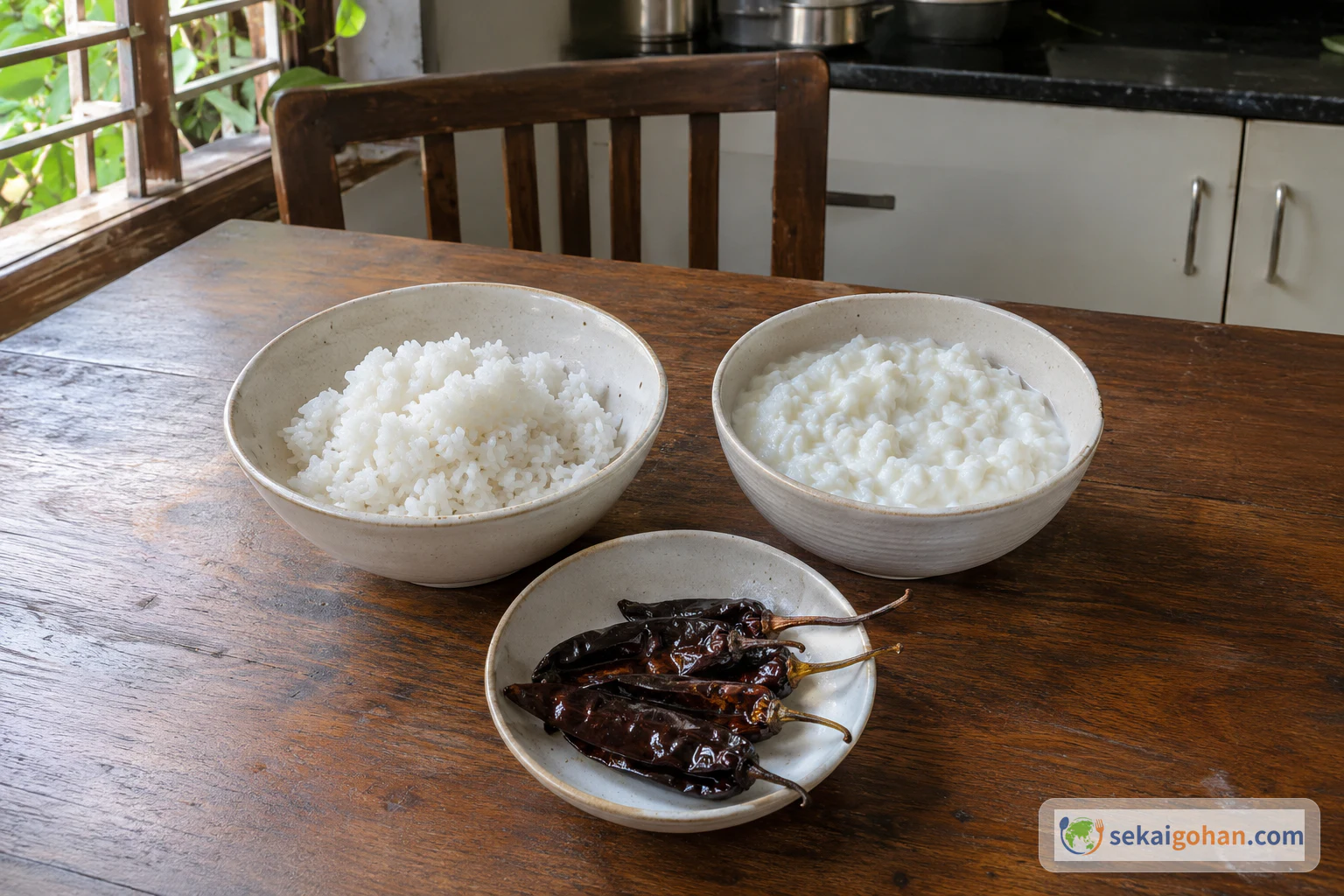
Fried curd chillies go next to plain rice or curd rice for an ordinary meal. Break off a bit with each bite of rice. The cool, mild curd rice and the salty, dark chilli balance each other. Fry them only at mealtime, so they come to the table freshly crisp.
Variations
- Fenugreek brine. Mix ground fenugreek into the yogurt and salt, and fill the slits with this brine before pouring the rest over. The cure takes on fenugreek's bitter-sweet aroma, and the result is a different preserve from the plain curd one. Fenugreek is a legume, so leave this version out for anyone avoiding legumes.
- Refrigerated brine. Some homes put the leftover brine in the refrigerator while the chillies are in the sun. In the evening they take it out, let it come back to room temperature and return the chillies to it. This cuts the time the curd spends sitting out.
- Coconut oil and curry leaves. Fry the chillies in a spoonful of coconut oil in a small pan, then finish with curry leaves for a fuller Kerala aroma.
Storage
Keep the completely dried chillies in an airtight container. Fry only as many as you will eat at that meal.
Frequently Asked Questions
Can I use Greek yogurt?
Yes, as long as it is plain and unsweetened. Thick yogurt like Greek-style needs the cup of water whisked in so the brine is loose enough to coat the chillies and get into the slits.
Why fry the chillies only at mealtime?
They are crisp and best right out of the oil. Dried chillies keep in the jar, and fried ones are made fresh for each meal. Taking a few from the jar and frying them takes only a moment at the stove.
Can I use the chillies for chammanthi?
Yes. Fry them first, then grind them with shallots, coconut, curry leaves and tamarind, without adding water. That makes chammanthi, a ground side dish, which is a different thing from eating the fried chillies whole with rice.