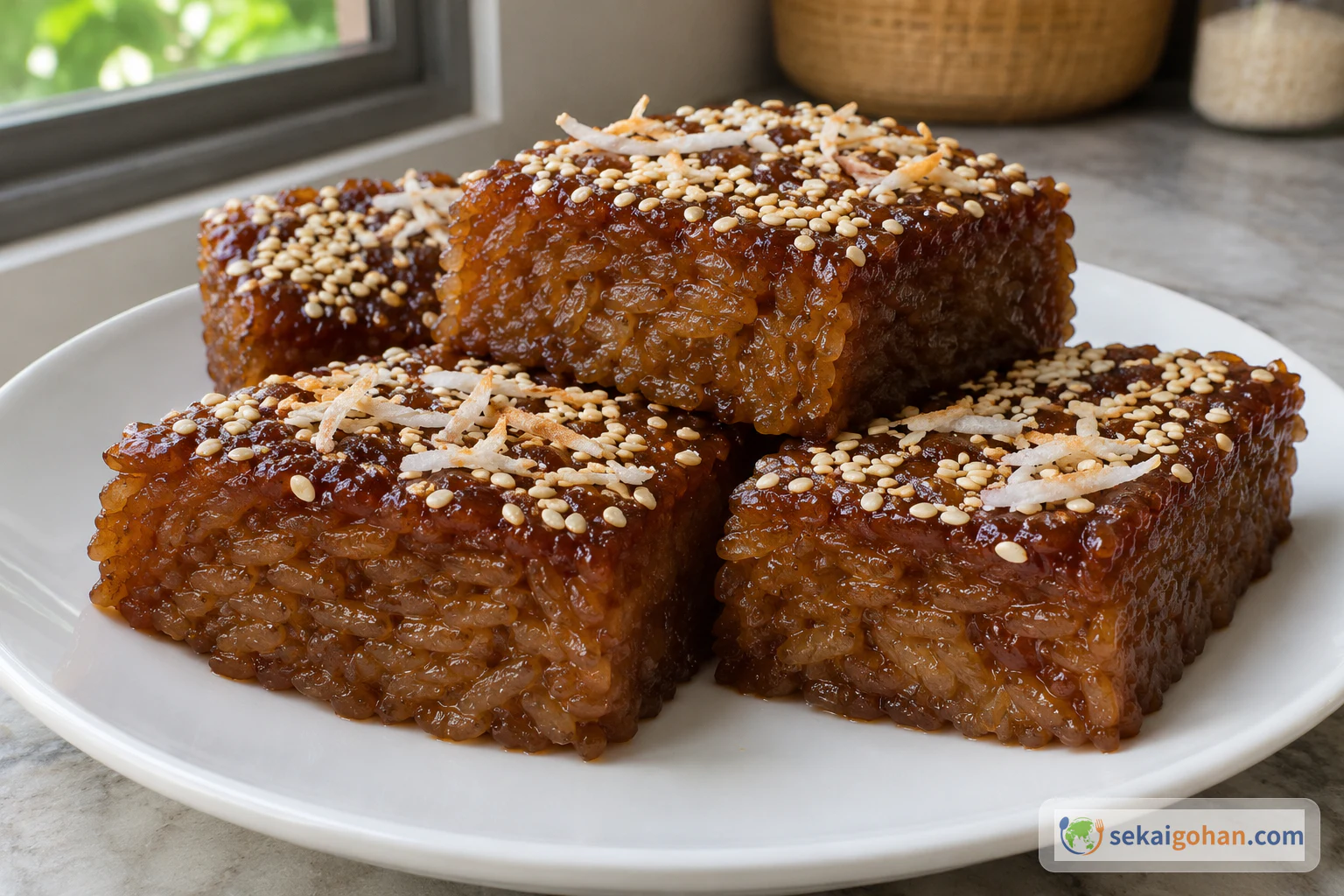
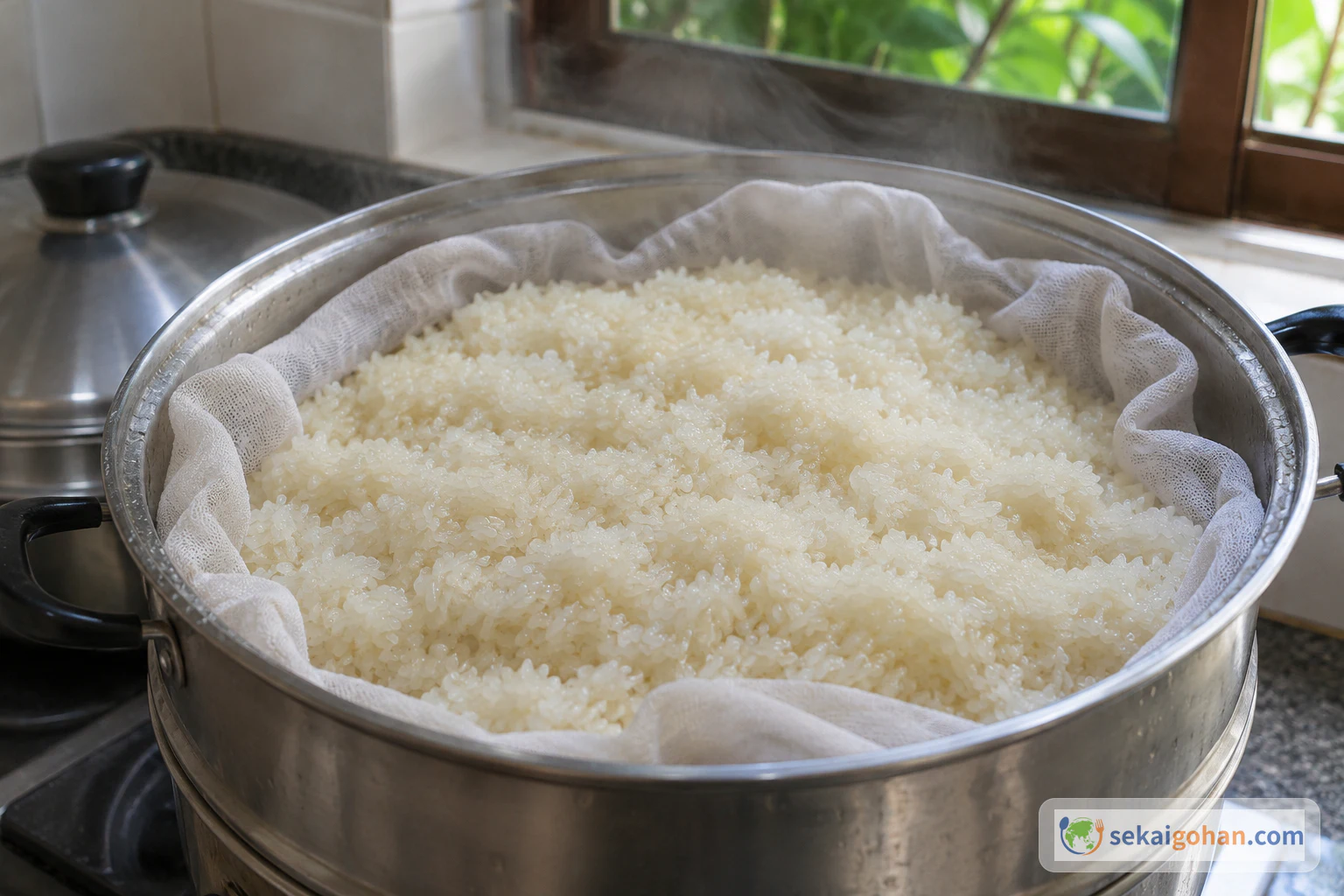
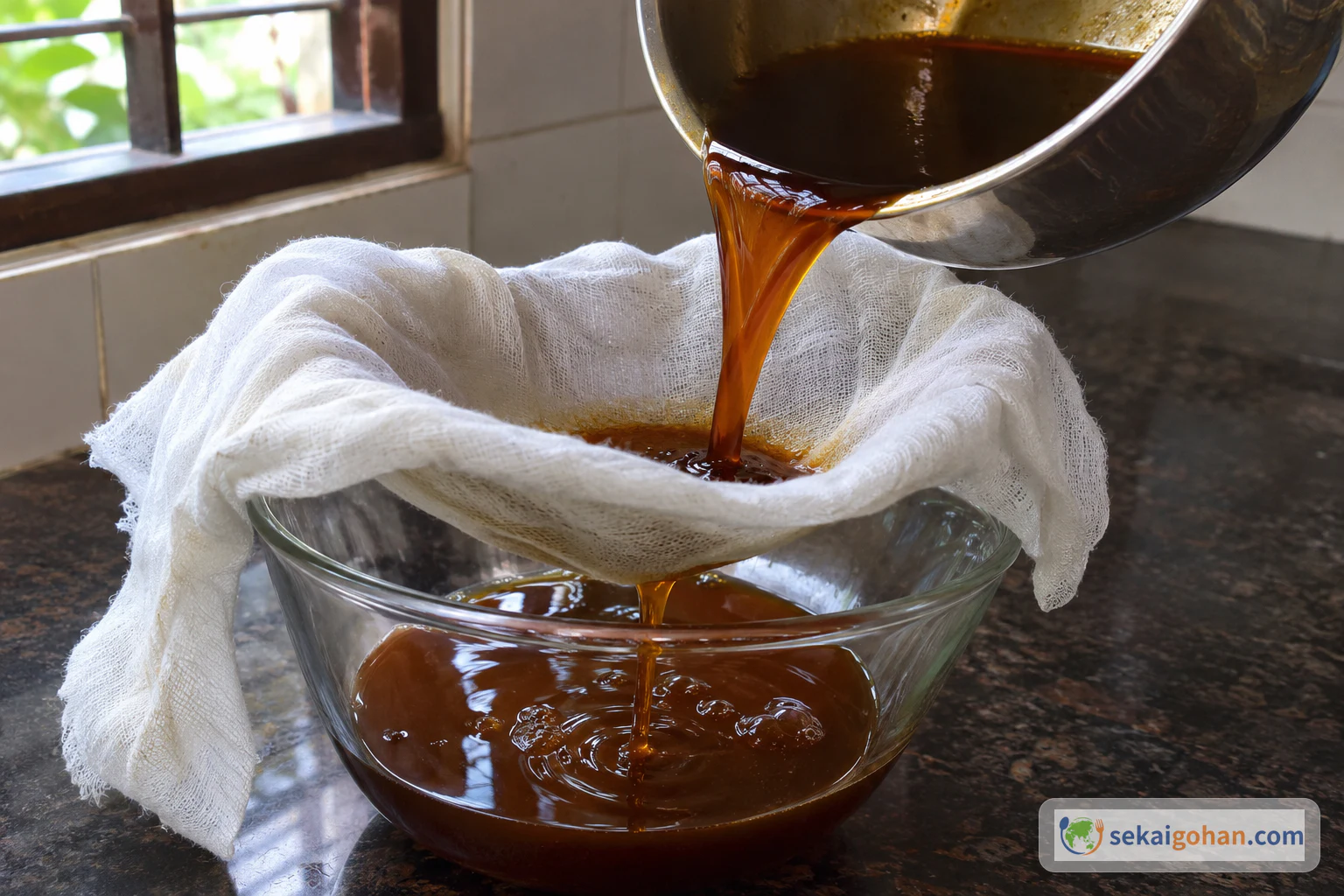
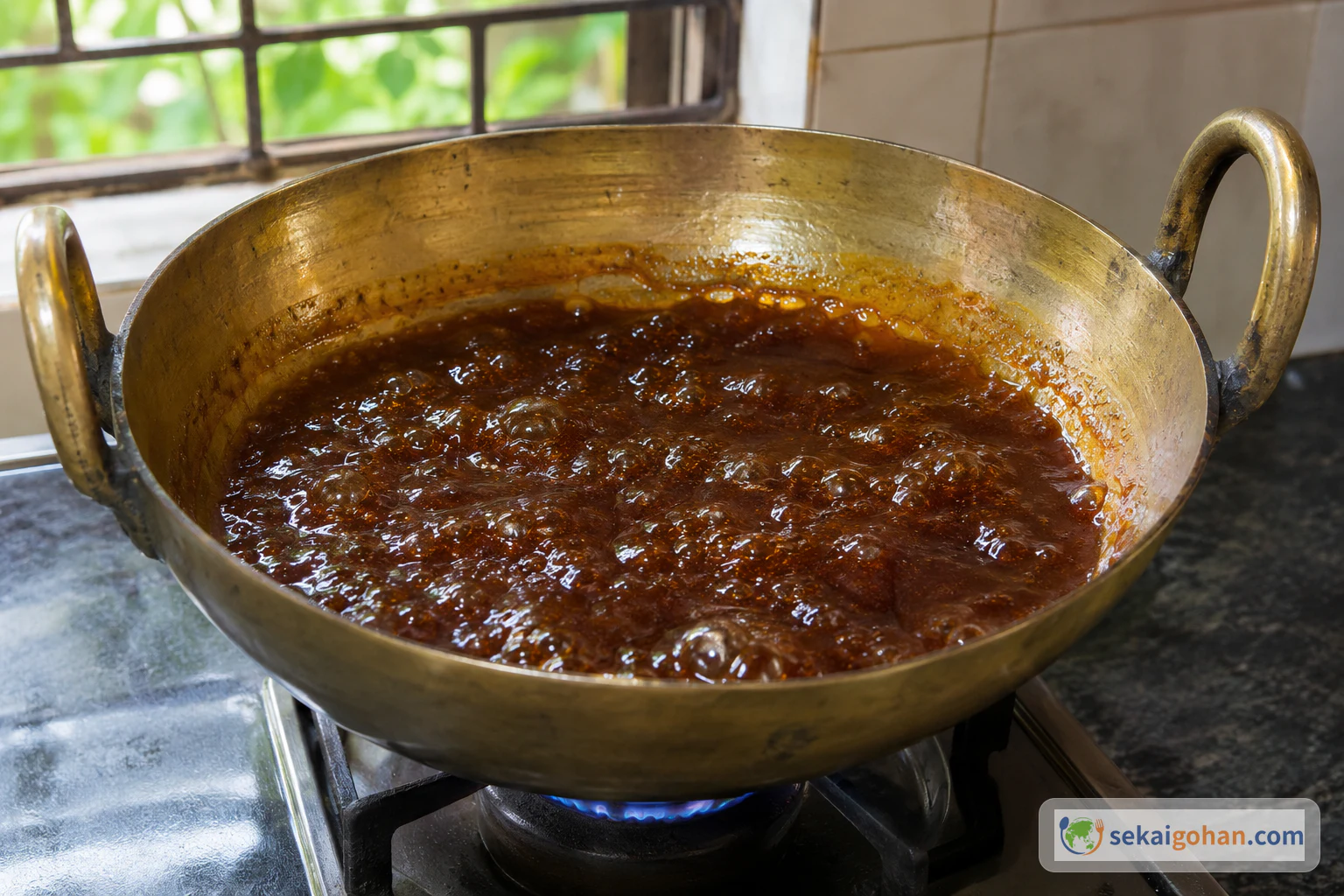
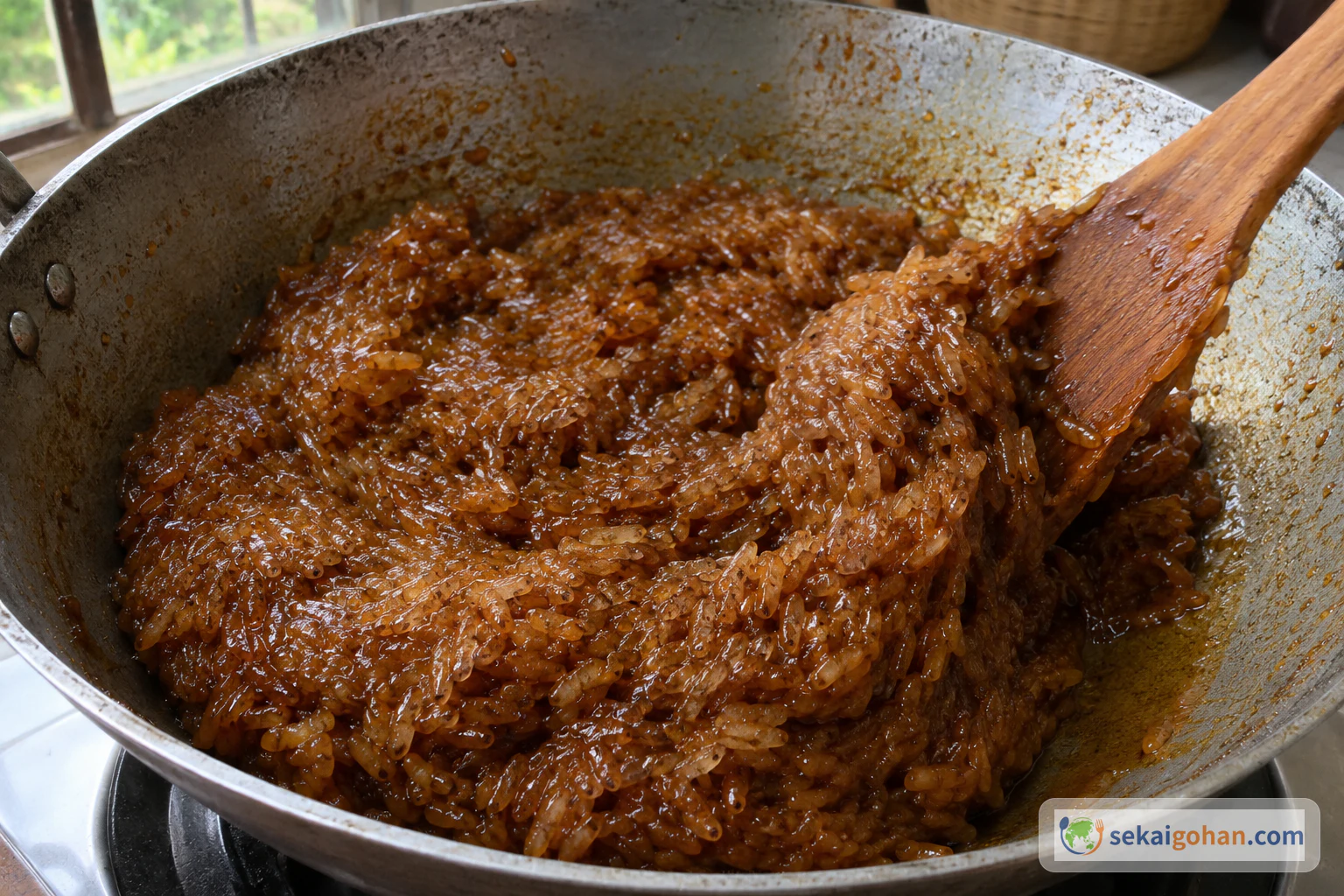
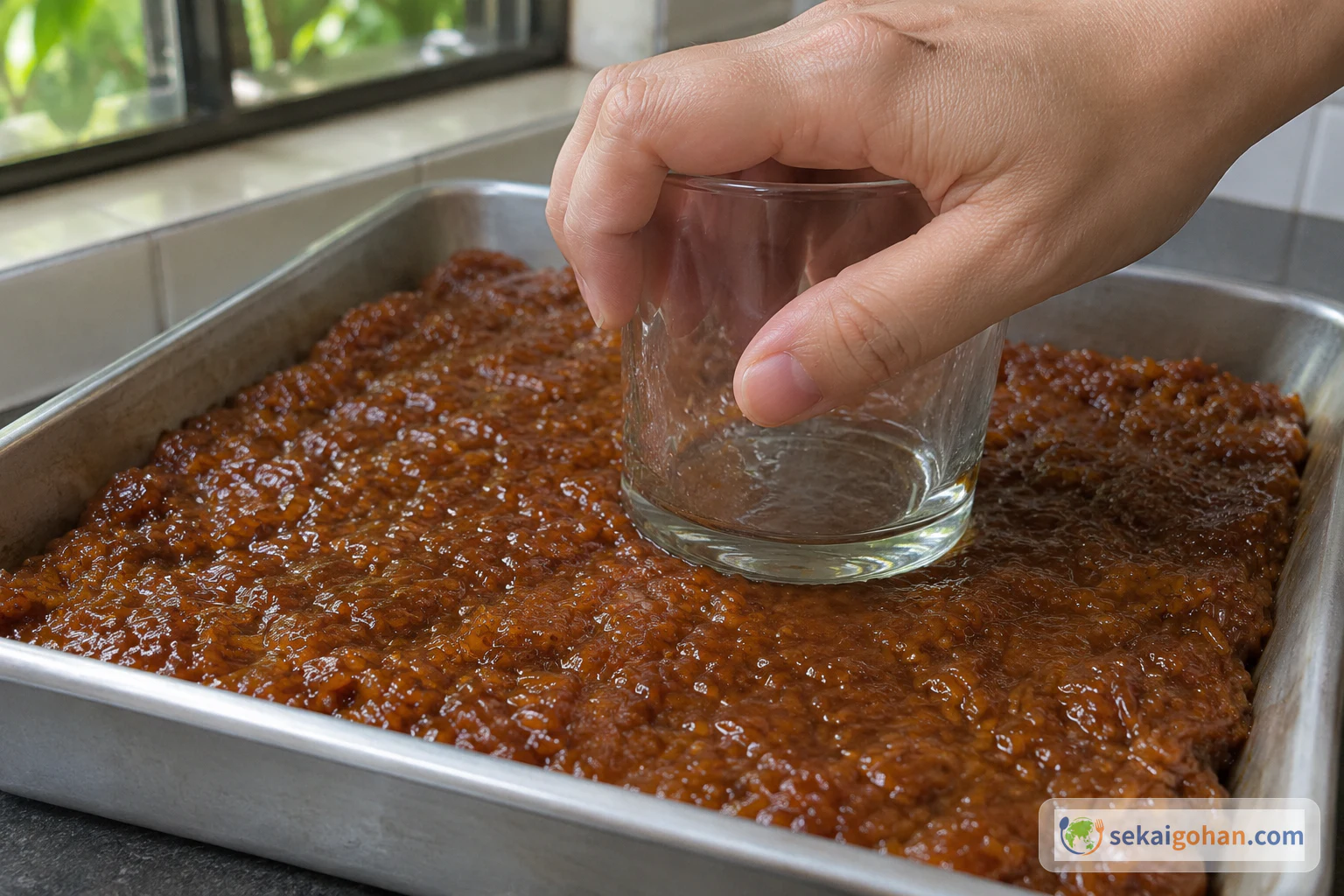
The decisive moment comes late. You have been folding steamed sticky rice through dark palm syrup in a wide pan, and the mass has grown heavy and glossy under the spatula. Then a thin sheen of oil slides out at the edges and the whole thing pulls together into one shining lump. That is shwe htamin, a traditional sweet from Myanmar. Glutinous rice is bound with syrup made from palm jaggery, pressed into a tray, scattered with sesame and coconut, and cut once it has cooled. It is dense and chewy, sweet with the deep, fragrant taste of the jaggery, and a pinch of salt keeps the sweetness sharp.
Golden in name, brown in the tray
The name ရွှေထမင်း means "golden rice" in Burmese. The finished sweet is deep brown, almost black at the edges, because that is the colour of the palm jaggery that binds it. Shwe htamin is one of Myanmar's traditional mont, the big family of sweets and snacks, and its character comes almost entirely from the jaggery. Pure palm jaggery, dark brown or black, brings a natural fragrance along with its sweetness. That smell is what you are tasting under the sesame.
It has a pale partner. Ngwe htamin is a separate white sticky-rice sweet made with coconut milk and sugar, and the two are made in different ways. Inside the shwe htamin family there is also room for change. Some home cooks cook the strained jaggery syrup down with coconut cream and salt before folding in the rice, which gives a richer, softer bar. Further away, sweet sticky-rice dishes such as Korean yaksik and Filipino biko are close cousins.
The other "golden sticky rice"
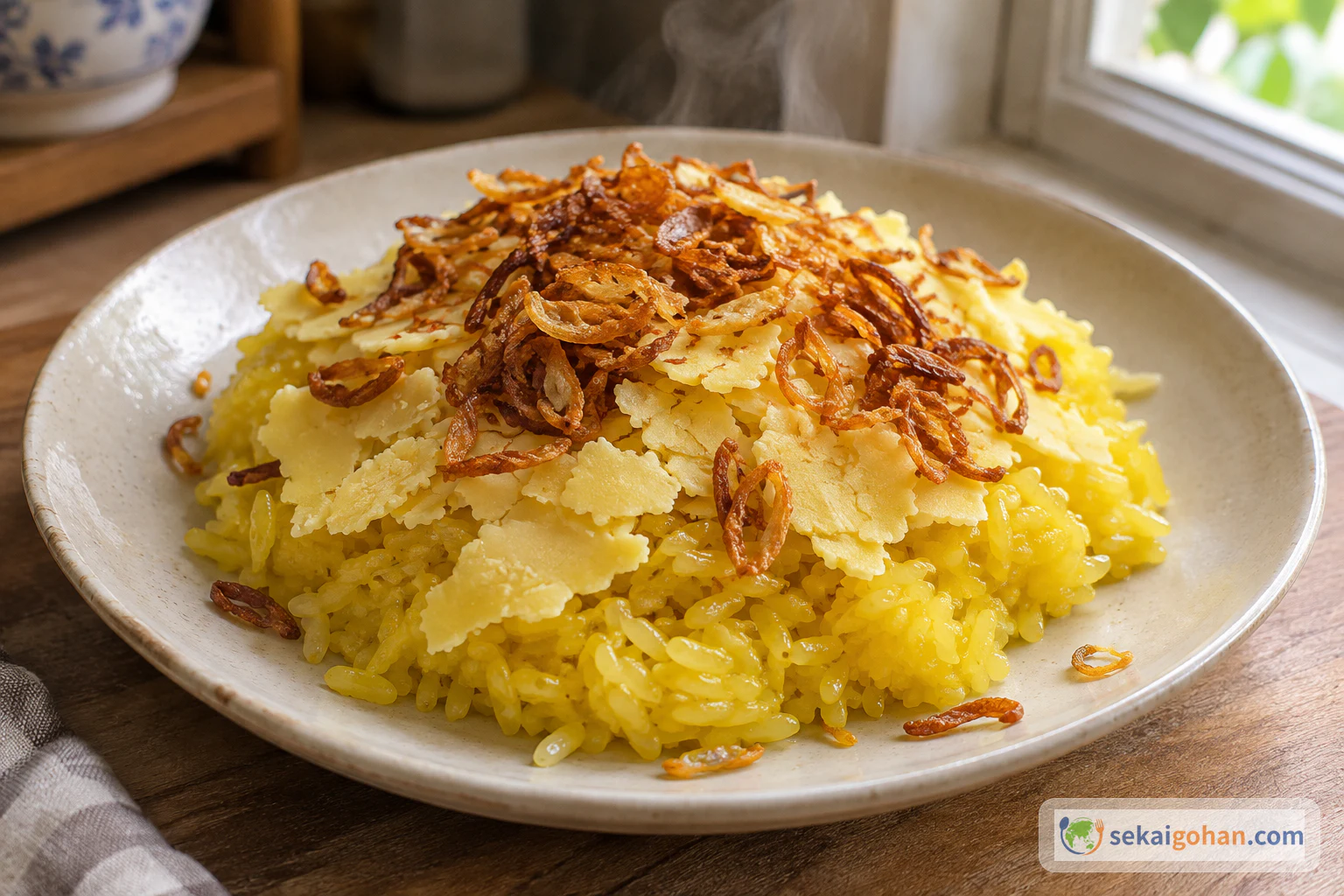
English-language recipes use the same name for a different dish: glutinous rice tinted yellow with turmeric, steamed and then tossed with warm coconut milk, salt and sugar. It contains no jaggery and is never pressed. It is a fine sweet, but a different one, so keep the two apart when you shop and when you cook. The yellow colour can also be confused with hsi htamin, Myanmar's savoury breakfast rice cooked with turmeric and onions, which is not sweet at all. If you want a sticky-rice sweet from next door, Thailand's khao niao mamuang pairs soft coconut rice with mango and is served loose. Shwe htamin is set firm and cut. For more dishes from the country, see our Myanmar food guide.
Shwe htamin, "golden rice", is the brown jaggery sweet. Ngwe htamin is its white counterpart, made with coconut milk and sugar. In Myanmar they are separate sweets, and you should not mix one recipe into the other.
Ingredients
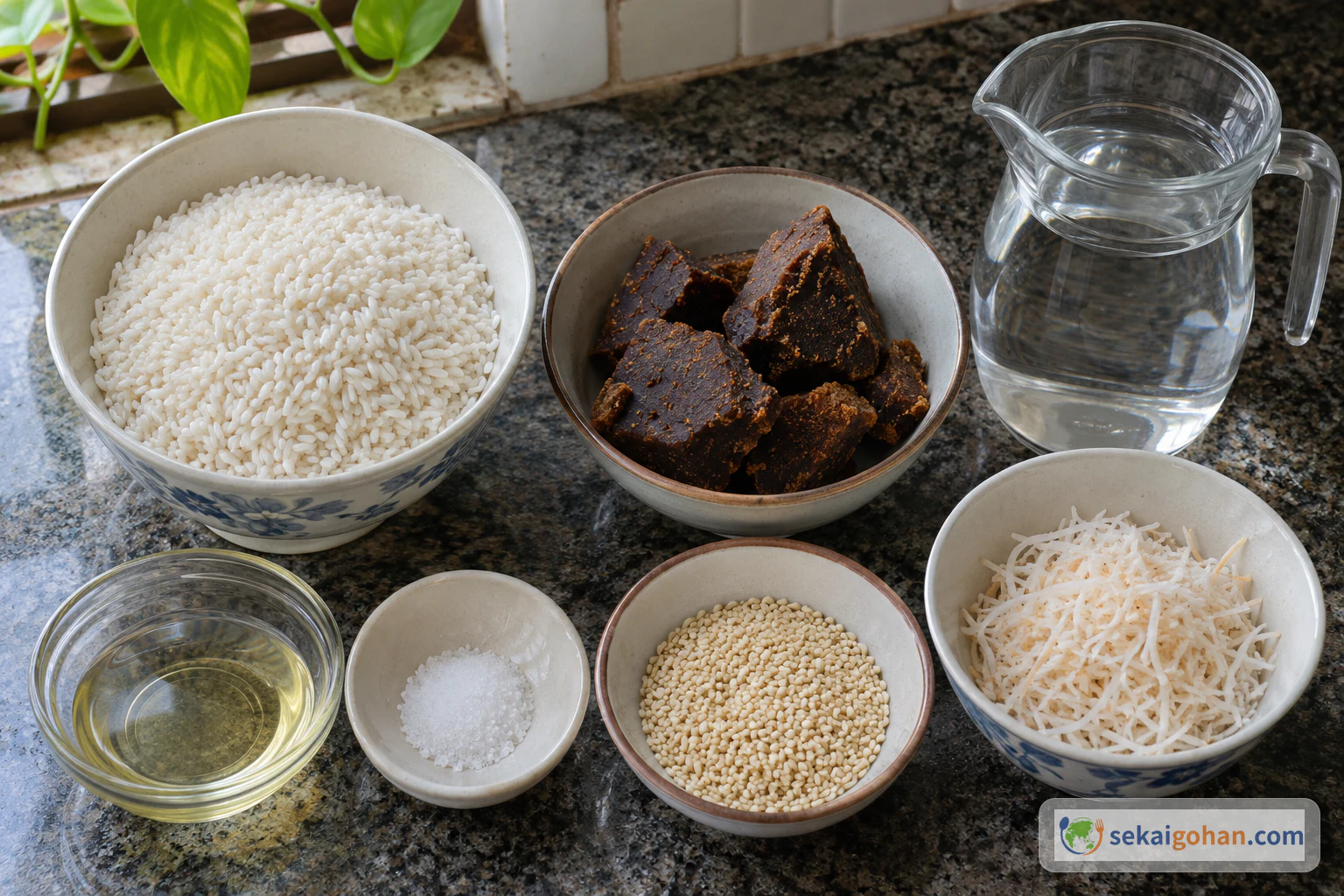
The colour and smell of shwe htamin come from the jaggery, so pick dark brown or black blocks. A pale palm sugar makes a lighter, blander bar.
Sesame is a common food allergen. Here it goes only on top, so you can leave it off part of the tray, or all of it, for anyone who cannot eat it. Check the labels on toasted sesame and dried coconut for allergen and shared-facility statements.
Equipment
- Large bowl and colander
- Steamer with a cloth to line the basket
- Small saucepan
- Muslin or another fine cloth for straining
- Large, heavy pan
- Wooden spatula
- Flat tray
- Wooden board or a flat-bottomed glass for pressing
- Sharp knife
Choosing and substituting
Palm jaggery is the one ingredient worth seeking out. Look for it as palm jaggery or palm sugar in South and Southeast Asian grocers or online, and choose the darkest blocks. If you cannot find it, dark brown sugar works: the colour comes out close, but the flavour is plainer and lacks the jaggery's fragrance.
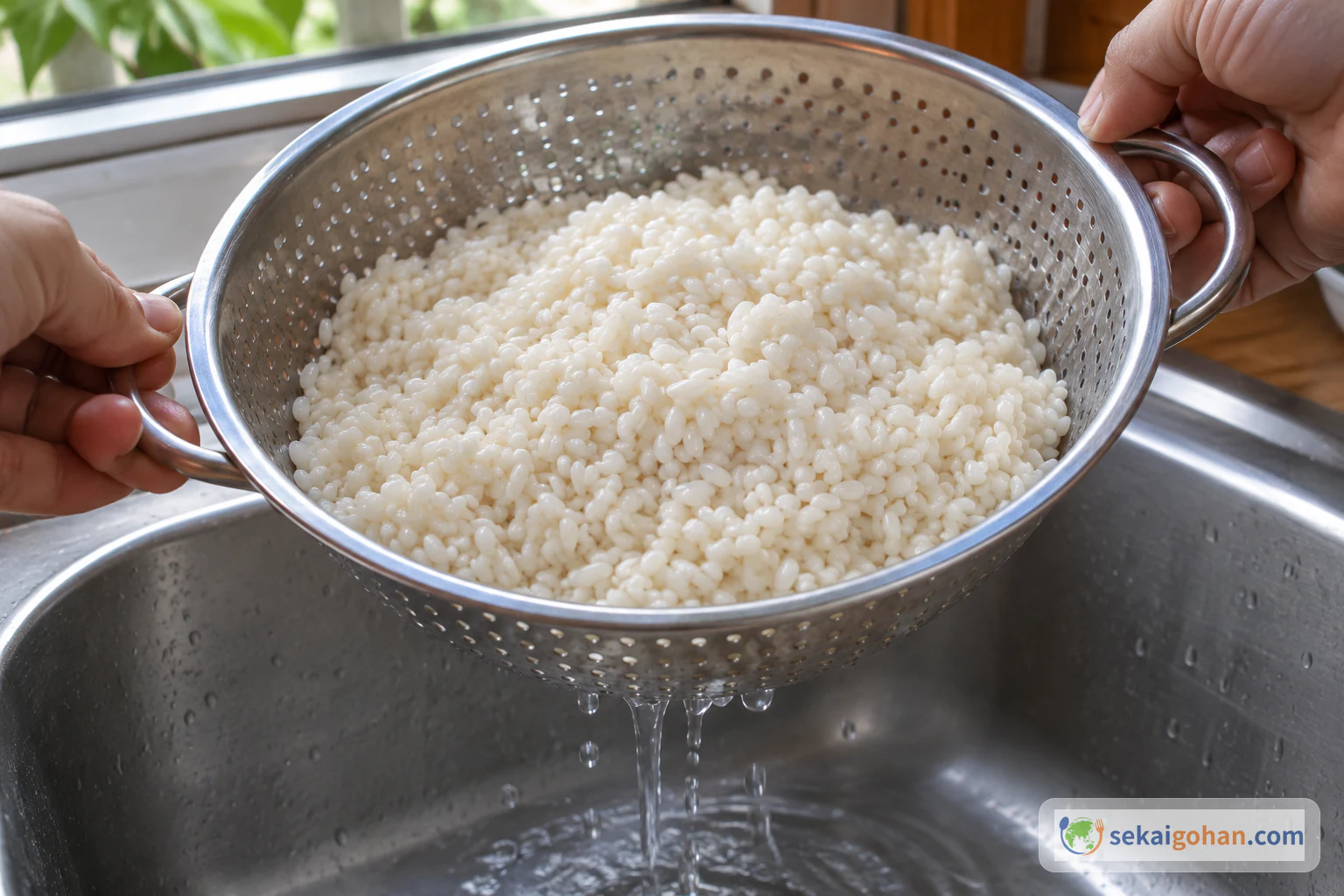
The rice must be glutinous rice, sold as sticky rice or sweet rice. The stickiness of glutinous rice is what holds the bar together, so ordinary long- or short-grain rice cannot stand in. Any neutral oil is fine. The coconut can be dried shredded coconut, coconut pieces or fried grated coconut, or you can leave it out.
| Keep | Can be swapped or left out |
|---|---|
| Glutinous rice, dark palm jaggery, salt | The coconut topping, the kind of neutral oil, the sesame for guests with allergies |
Method
Most of the time here is hands-off. The rice soaks for about four hours, and while it steams you can melt and strain the jaggery. The last stretch at the stove is short and needs your full attention. Have the greased tray and your pressing tool next to the pan before the rice goes into the syrup, because the mixture has to be pressed while it is hot.
Jaggery syrup gets very hot and spatters as it thickens and when the rice goes in. Use a long wooden spatula, keep your hand and face back from the pan, and keep children away from the stove.
When it goes wrong
| What you see | Why | What to do |
|---|---|---|
| Pieces crumble when cut | Not pressed firmly, or cut while still warm | Press harder while hot, and wait until the bar is completely cool |
| Sticky and wet all over | Heat turned off too early, or the syrup was thin | Cook until the oil begins to separate in step 5 |
| Syrup smells burnt | Heat above medium | Lower the heat and keep stirring from the bottom |
| Bar is hard and dry | Rice under-steamed, or the mixture cooked too long | Steam until no chalky centres remain, and stop as soon as the oil appears |
| Colour is pale | A light palm sugar was used | Choose dark brown or black jaggery next time |
Serving and variations
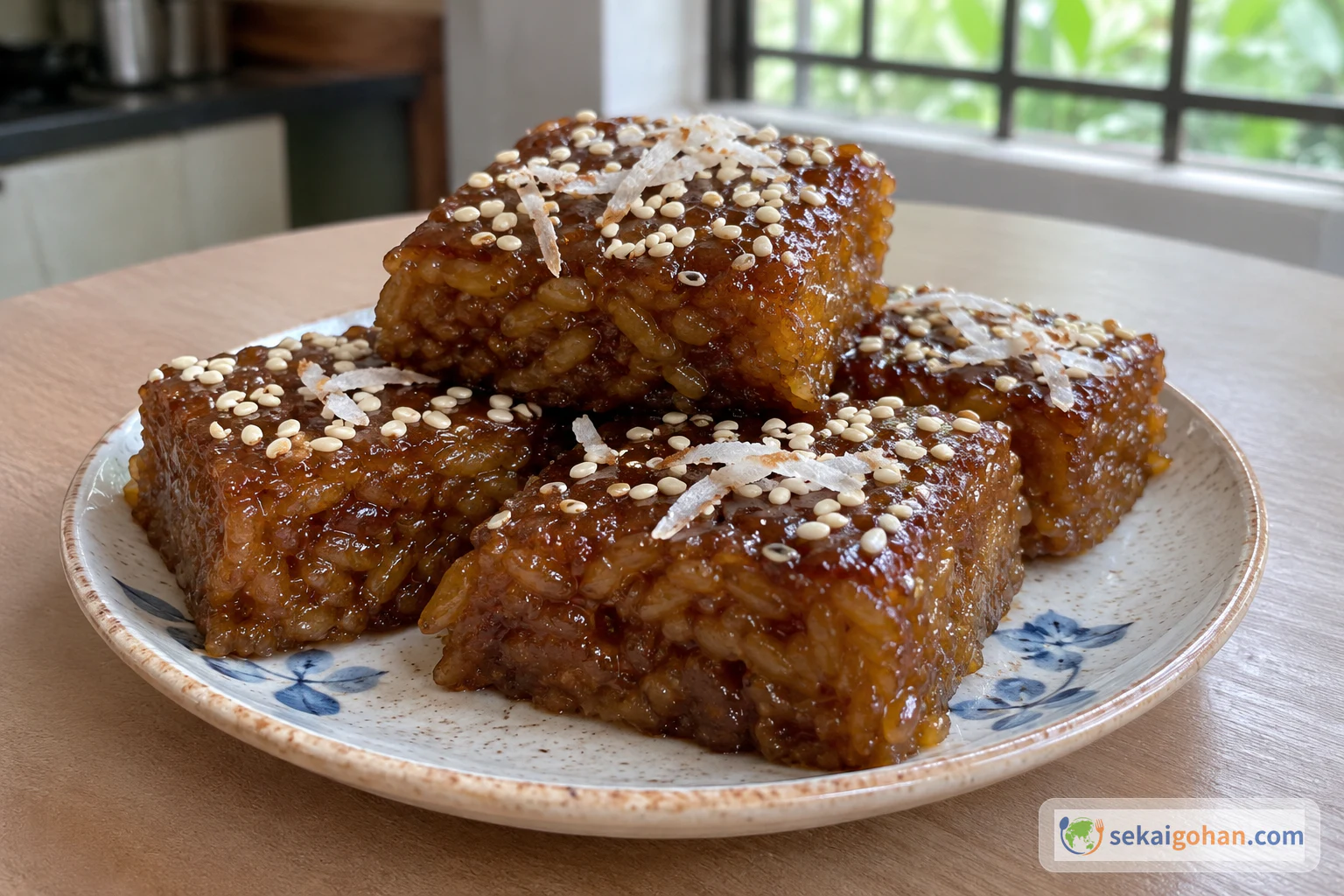
Set the cut pieces out on a small plate, topping side up, so the sesame and coconut show against the dark rice. Bite-size pieces suit shwe htamin best, because it is dense and sweet and a small square is satisfying.
Variations
- Dark brown sugar instead of jaggery. The colour stays close, but the flavour is simpler, without the jaggery's fragrance.
- Coconut cream in the syrup. Cook the strained syrup down with coconut cream and salt before the rice goes in. The bar turns richer and rounder in flavour.
- Rice cooked in coconut milk. Some home versions cook the sticky rice in coconut milk rather than steaming it, then mix it with the melted sugar. The result is softer and tastes more of coconut.
- A smaller tray. Press the mixture into a smaller tray for a thicker slab, then cut it into small pieces to serve as one-bite sweets.
Frequently asked questions
Does shwe htamin go in the oven?
No. It sets in the tray as it cools, held together by the cooked-down jaggery and the sticky rice. Pressing it firmly while hot and letting it cool completely does the work an oven would.
Why is there oil in a sweet?
The oil cooks into the syrup and gives the finished bar its gloss. It also tells you when to stop: once the rice has absorbed the syrup, the oil begins to seep back out, and that is your cue to take the pan off the heat.
Can I leave off the sesame or the coconut?
Yes. Both sit only on top, so the bar holds together the same way without them. Coconut is optional to begin with. Sesame can be left off a corner of the tray for anyone who is allergic.
Is it related to yaksik or biko?
They are close relatives. Korea's yaksik and the Philippines' biko are also sweet dishes of glutinous rice bound with sugar. Shwe htamin stands apart for the fragrance of palm jaggery, its sesame topping and its firm, pressed set.