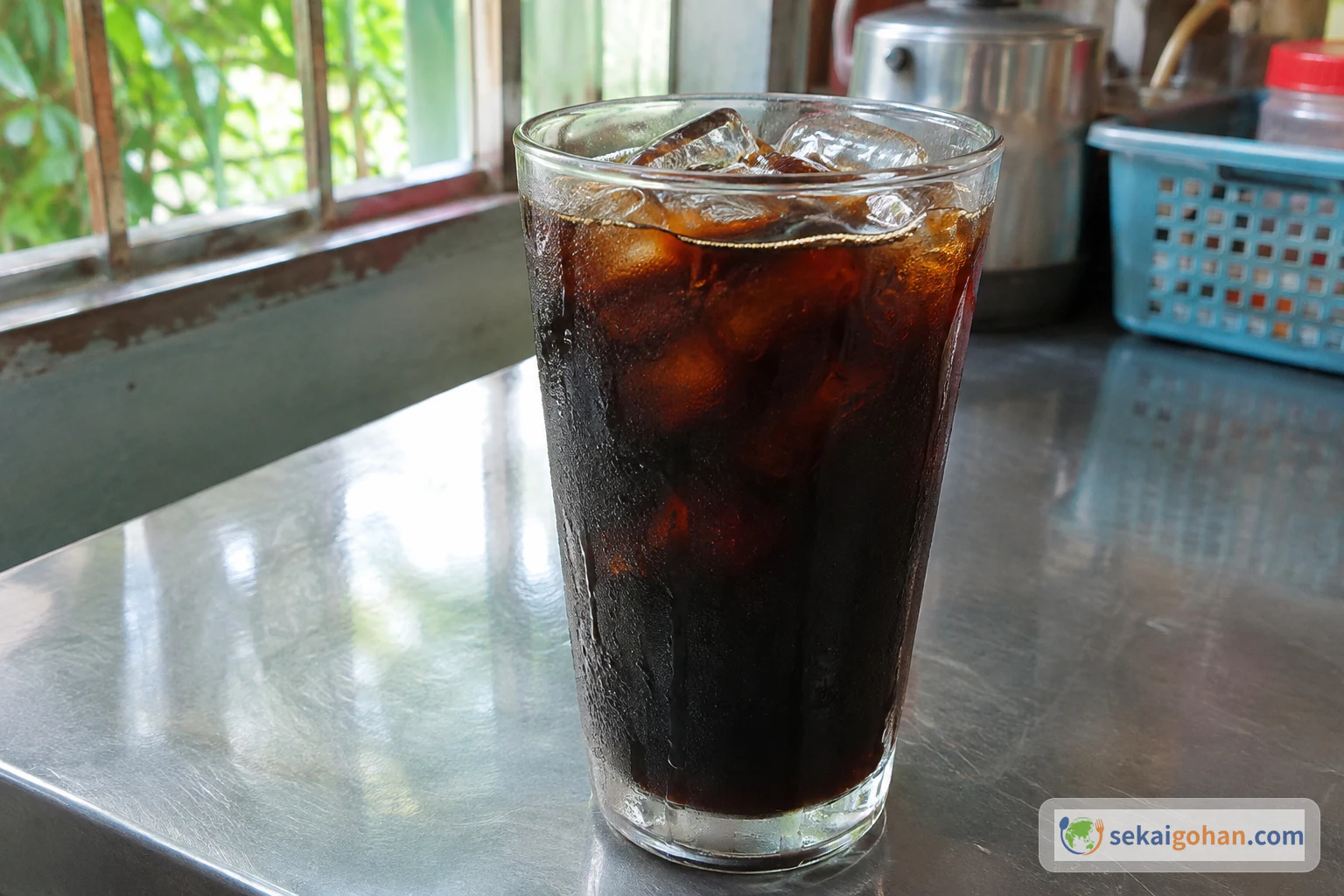
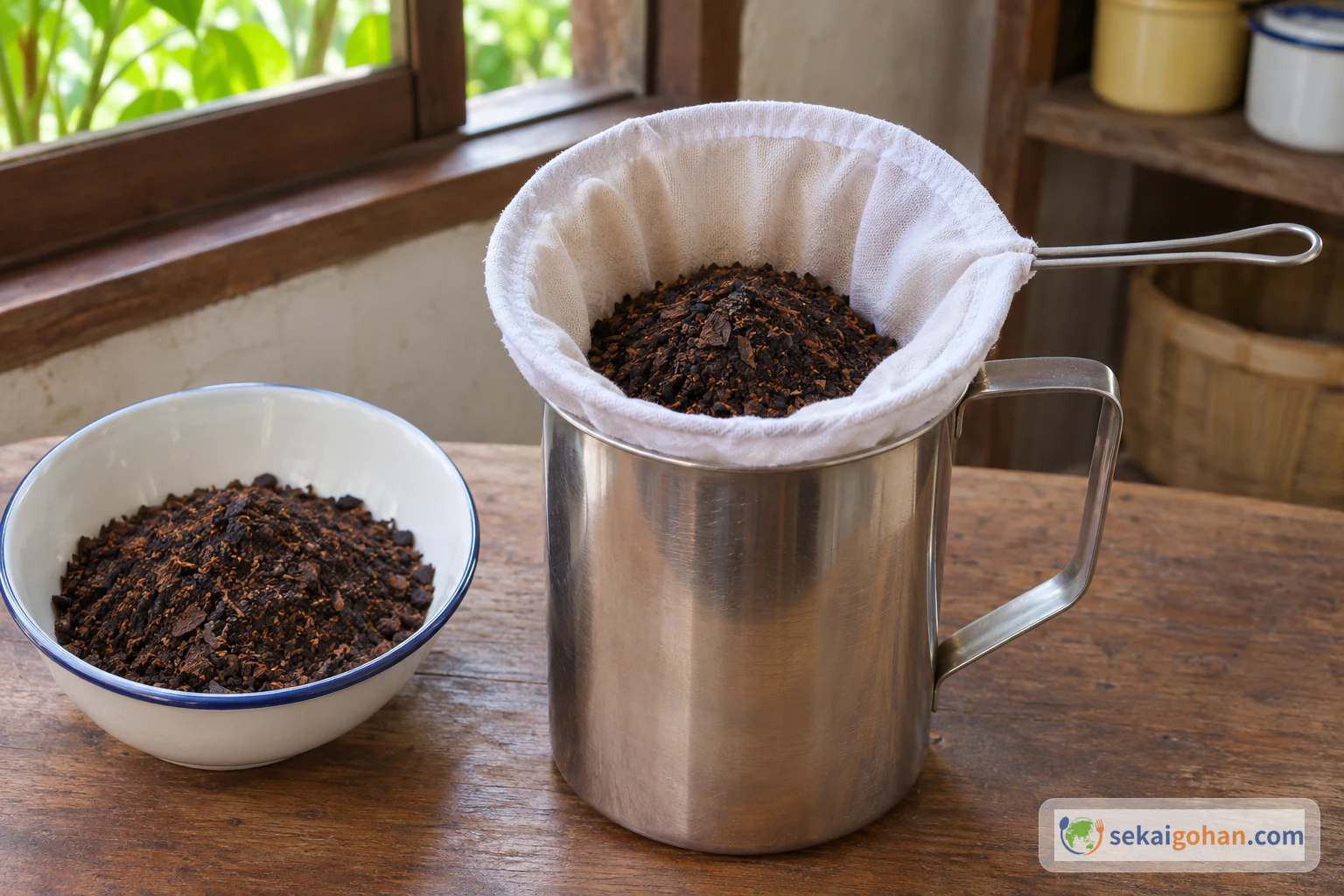
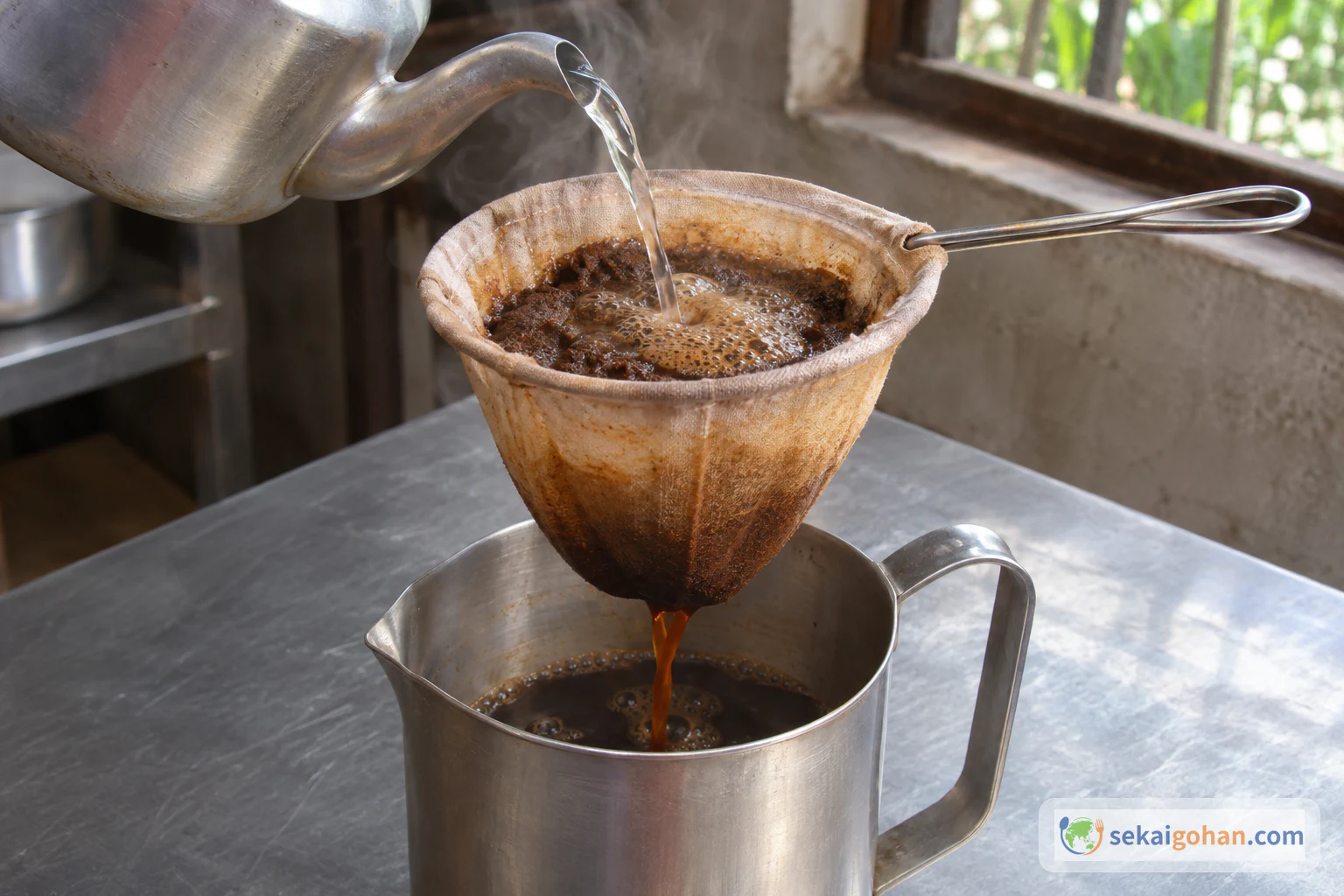
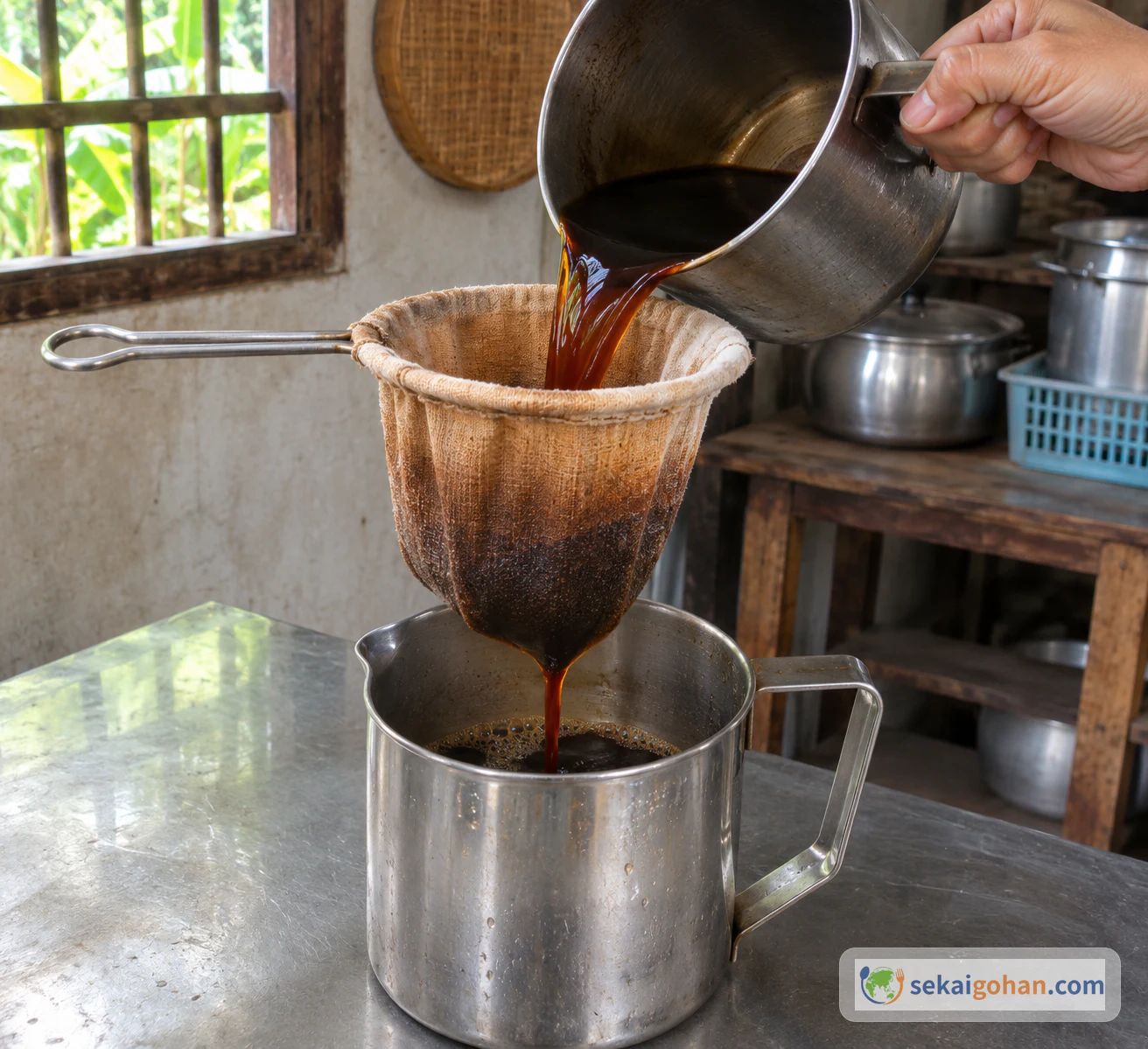
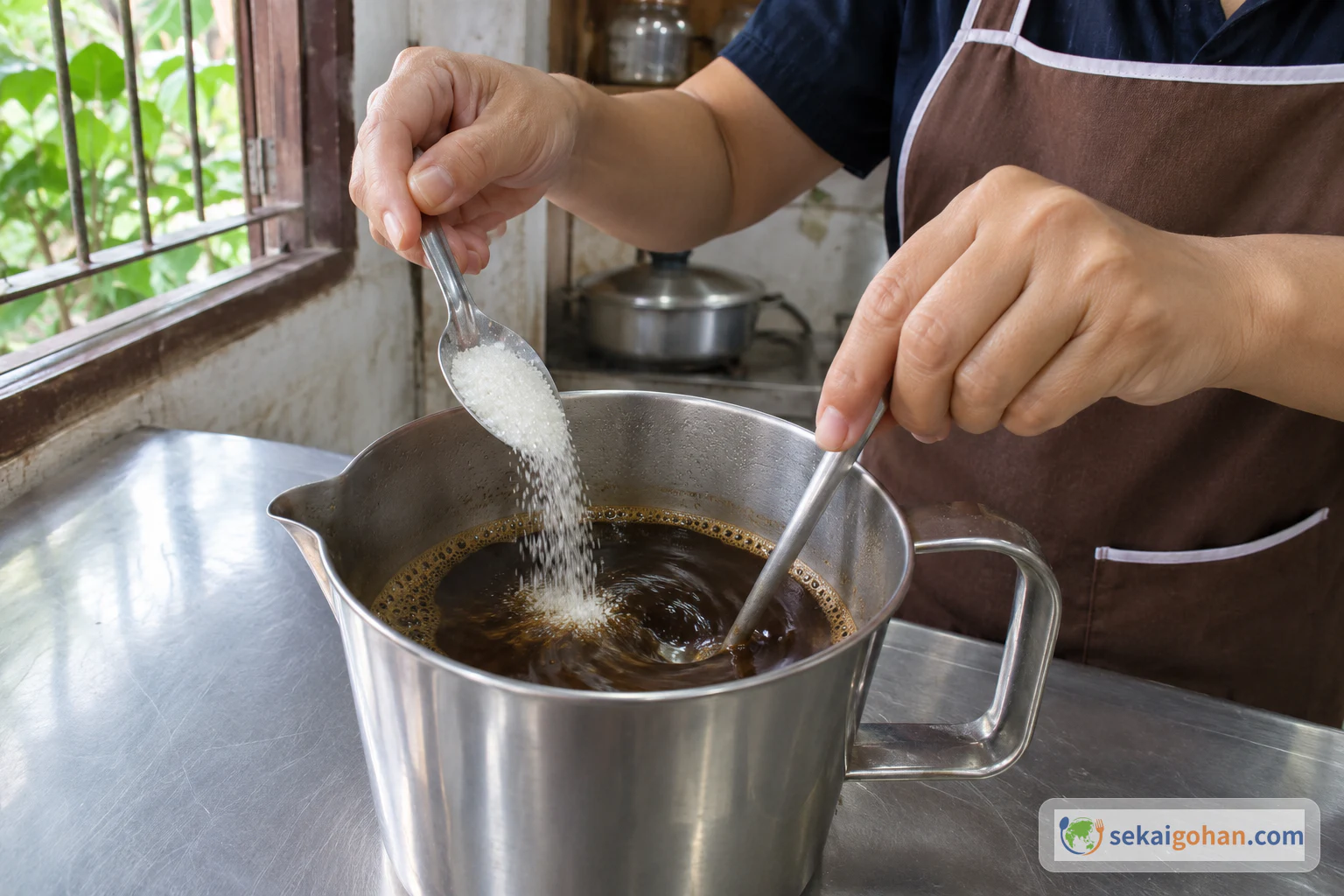
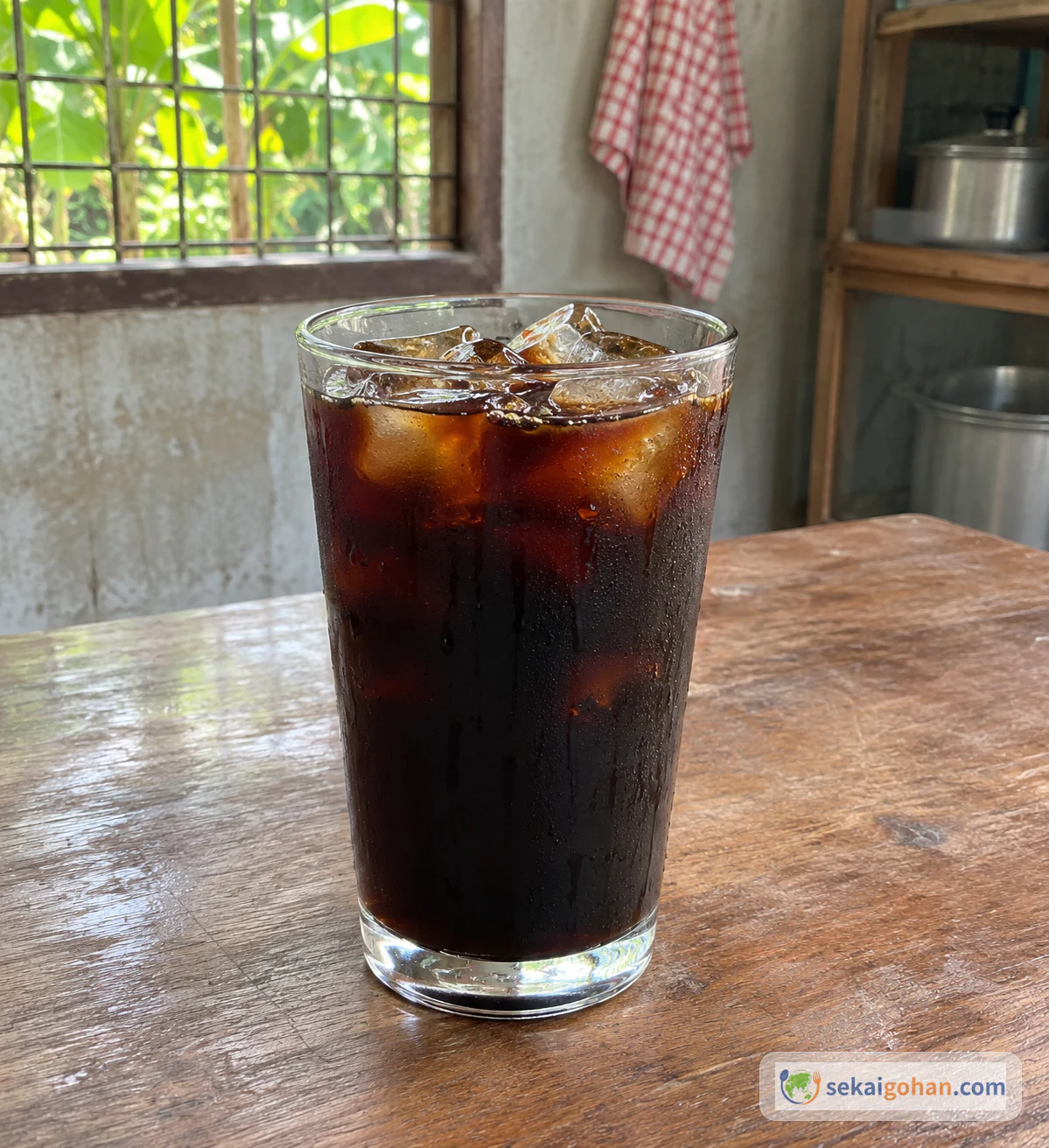
Hot water hits the coffee powder in a cloth sock, and a dark, glossy stream starts to run into the jug below. After about 2 minutes you lift that jug and pour the same coffee back through the grounds, then again. Each pass leaves it deeper and more opaque. Then sugar goes in while it is still hot, and the coffee is poured over a glass packed with ice, where it cracks the cubes and fogs the outside of the glass. That is oliang (โอเลี้ยง), Thailand's sweet black iced coffee. It is strong and dark, with no milk, so the sweetness and the roasted bitterness hit you at the same moment.
A Black Coffee From the Thai Coffee Stall
In Thailand, oliang is poured at street stalls and drink shops alongside a whole family of old-style coffee drinks. What sets it apart from its neighbours is what stays out of the glass. Oliang has no milk. Once condensed or evaporated milk goes in, it becomes a different drink, such as yok-lor, where milk is poured over the top. So when you order oliang, you get a tall glass of near-black coffee over ice, sweetened and nothing else.
The coffee itself is not ordinary ground coffee. Thai cooks use a ready-made traditional coffee powder, sold as a blend. Depending on the brand, it can contain roasted grains, soy, sesame, and butter or margarine along with the coffee. That is where oliang gets its toasty, slightly nutty depth, and it is why the blend you buy matters more than any other choice in this recipe. Where the name oliang comes from is not settled.
The other half of the drink is the brewing. Coffee is not dripped through paper. It goes through a cloth sock filter hung on a metal ring, and the brewed coffee is poured back through that sock a few more times. This back-and-forth is the move you will see at every stall, and it is the part worth learning at home.
The powder is called ผงกาแฟโบราณ, "traditional coffee powder", and the drinks made with it are grouped as kafe boran (กาแฟโบราณ), old-style coffee. Oliang is the iced, black, sweetened one in that family. Look for either word on the pack when you shop. More on the country's cooking is at Thailand.
Ingredients (serves 1)
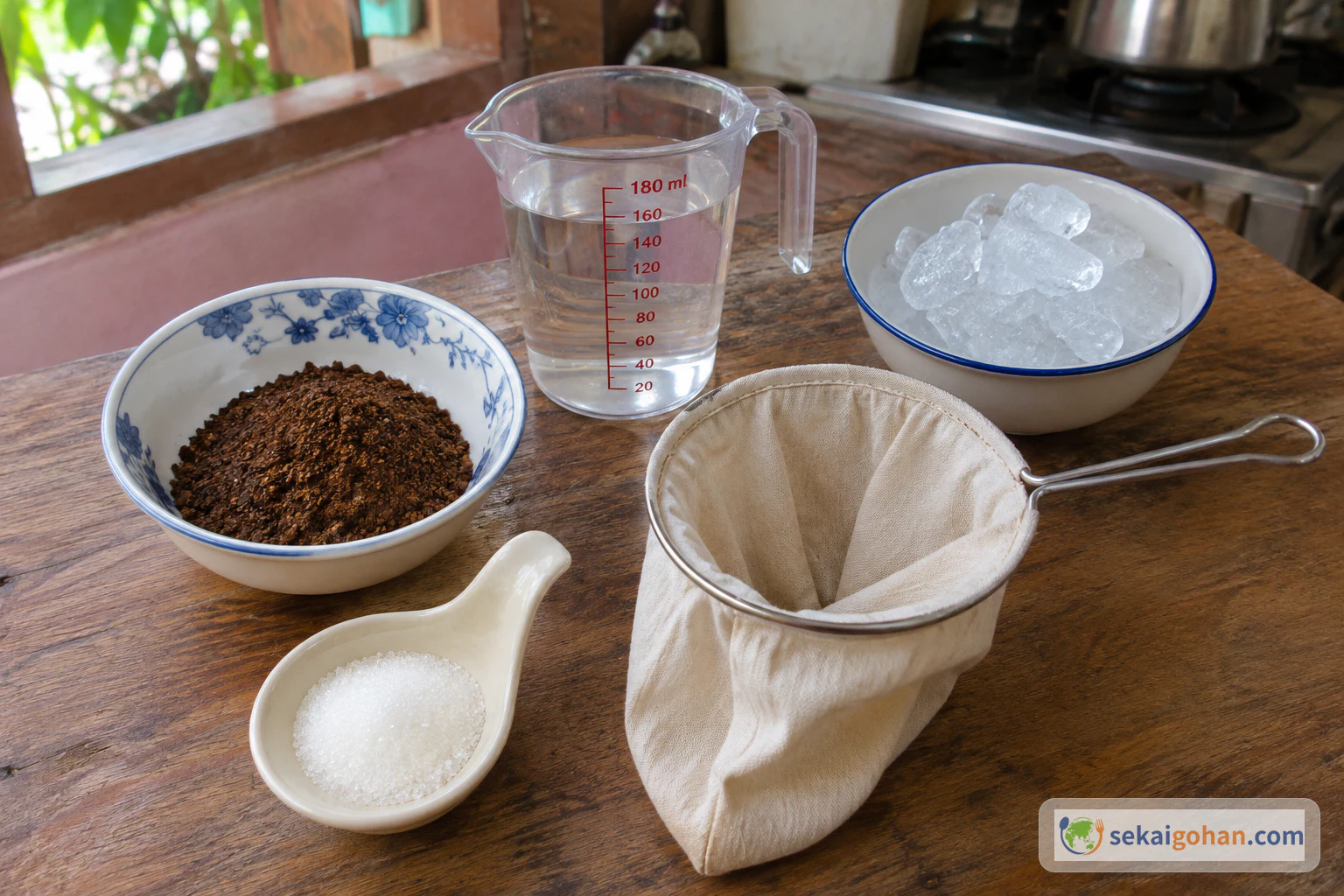
The recipe adds no milk, but Thai coffee blends vary by brand and can contain roasted grains, soy, sesame, and butter or margarine. Read the ingredient list and allergen label on the pack you buy before calling the drink dairy-free or vegan. Use ice made from drinking water, since it goes straight into the glass.
Equipment
- Cloth coffee sock filter on a metal ring (ถุงกรอง)
- 2 heat-resistant jugs or pitchers, to catch the coffee and to pour it between
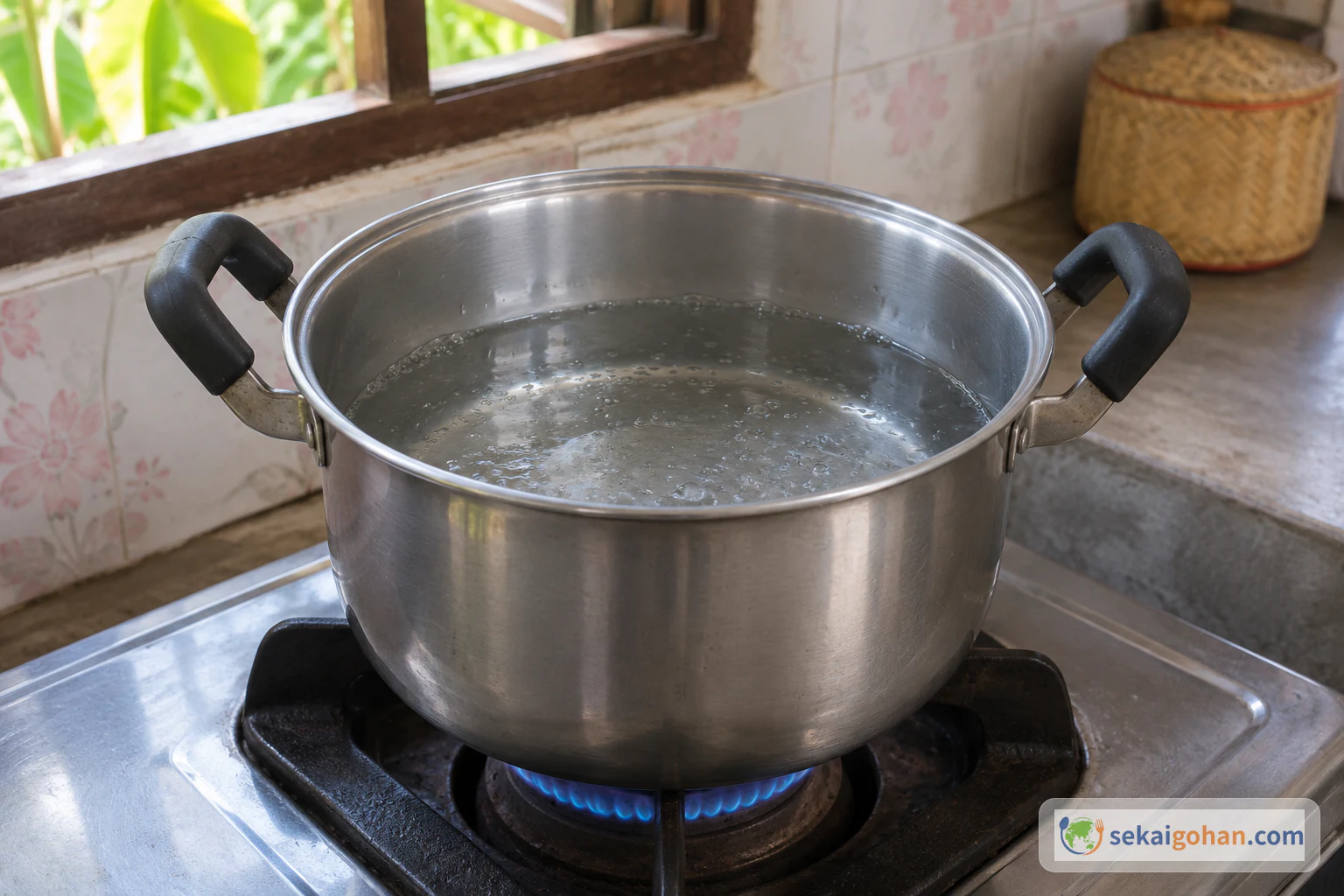
- Kettle or small pot for heating the water
- Measuring cup and measuring spoons
- Spoon for stirring
- Serving glass
Buying the Blend and the Filter
The coffee blend is the one thing worth tracking down. Look in Thai or Southeast Asian grocers, or online, for a pack labeled โอเลี้ยง or กาแฟโบราณ. Brands differ in what they blend in, so pick one by its label. That matters both for allergens and for how roasted or grainy it tastes.
| What you choose | What changes |
|---|---|
| Thai oliang blend | The real taste: dark, toasty and slightly nutty |
| Dark-roast coarse-ground coffee | A workable stand-in. It tastes like strong sweet iced coffee, without the grain and sesame notes of the blend |
| Thai cloth sock filter | The real tool, with a ring that holds the sock open over the jug |
| Washable flannel coffee filter | The closest stand-in for the sock. Hang it securely so you can pour through it more than once |
What you keep for the drink to taste like oliang is the cloth filtering, the sugar dissolved in hot coffee, and no milk. What you can let go abroad is the brand and the shape of the ice.
Go by the words โอเลี้ยง or กาแฟโบราณ and the ingredient list, not by a photo of a dark drink on the front. A plain coffee with a Thai-looking pack will not give you the blend's roasted grain depth.
Method: Brew, Pour Back and Forth, Sweeten, Ice
Measure the powder, sugar and water and put ice in the glass's reach before you start. Heat the water, then everything follows quickly. The only pause is the roughly 2 minutes the coffee spends steeping and draining through the cloth. After that you pour the coffee back and forth, stir in the sugar, and pour over ice, all while the coffee is still hot.
When It Goes Wrong
| What you see | Why | What to do |
|---|---|---|
| Sugar grains settle in the bottom of the glass | The sugar went in after the ice, or after the coffee cooled | Stir the sugar into the coffee while it is hot, before it meets the ice |
| The coffee tastes thin and weak | Extra water went in during the pours | Use only the 180 ml of water, and pour the same coffee back and forth without topping up |
| It tastes like ordinary sweet iced coffee | Plain ground coffee was used instead of the Thai blend | Buy a pack labeled โอเลี้ยง or กาแฟโบราณ for the toasty, grainy depth |
| The drink turns watery in the glass | It sat on the ice before anyone drank it | Pour over ice only when someone is ready to drink it |
Serving and Variations
At the table
Oliang is made one glass at a time and drunk fresh, so brew it just before you want it. It is a cold, sweet, strong glass to set beside Thai food: a plate of khao man gai or pad thai, or something sweet like khanom krok.
Variations
- With milk. Pour milk over the top or stir in condensed milk, and you have moved to the milky Thai coffees such as yok-lor. That makes a creamy, softer drink and a different name, so keep plain oliang black.
- Crushed ice instead of cubes. Crushed ice chills the coffee faster and fills the glass more tightly. The brew stays exactly the same; only the texture in the glass changes.
Frequently asked questions
Can I make oliang ahead?
Brew it when you want to drink it. The drink goes straight from the filter, through the sugar, onto the ice, and it is served freshly made. Keep the powder, sugar and filter ready so you can brew a glass when you want one.
Which spoons should I measure with?
Use the same set of measuring spoons for the powder and the sugar, so the balance stays at 2 tbsp of powder to 3 tsp of sugar in 180 ml of water.
Can I use less sugar?
Yes. 3 tsp gives the sweetness oliang is known for, but you can cut it to suit your taste. Stir in a little less, taste the hot coffee, and add more before you pour it over the ice.