Cơm rượu: Southern Vietnamese Fermented Sticky Rice Balls

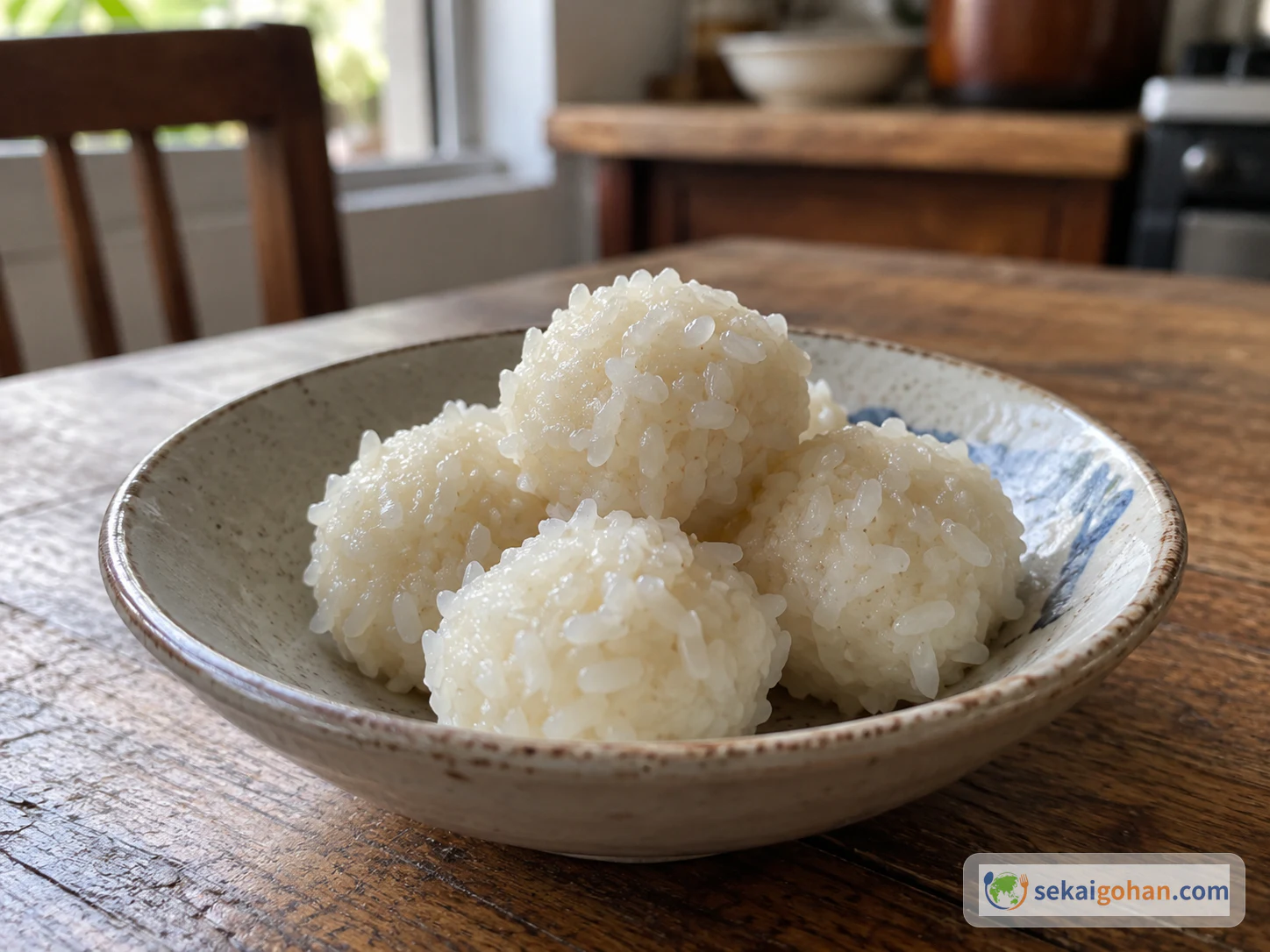
Cơm rượu: small hand-rolled balls of white glutinous rice in a shallow ceramic dish
Cuisine
Vietnamese

Cơm rượu, southern Vietnam's fermented sticky rice balls. Learn to cool the rice before the men ngọt, shape firm balls and seal them for about three days.

Cooking flow

Cooking steps

STEP 11 / 15

Rinse the sticky rice

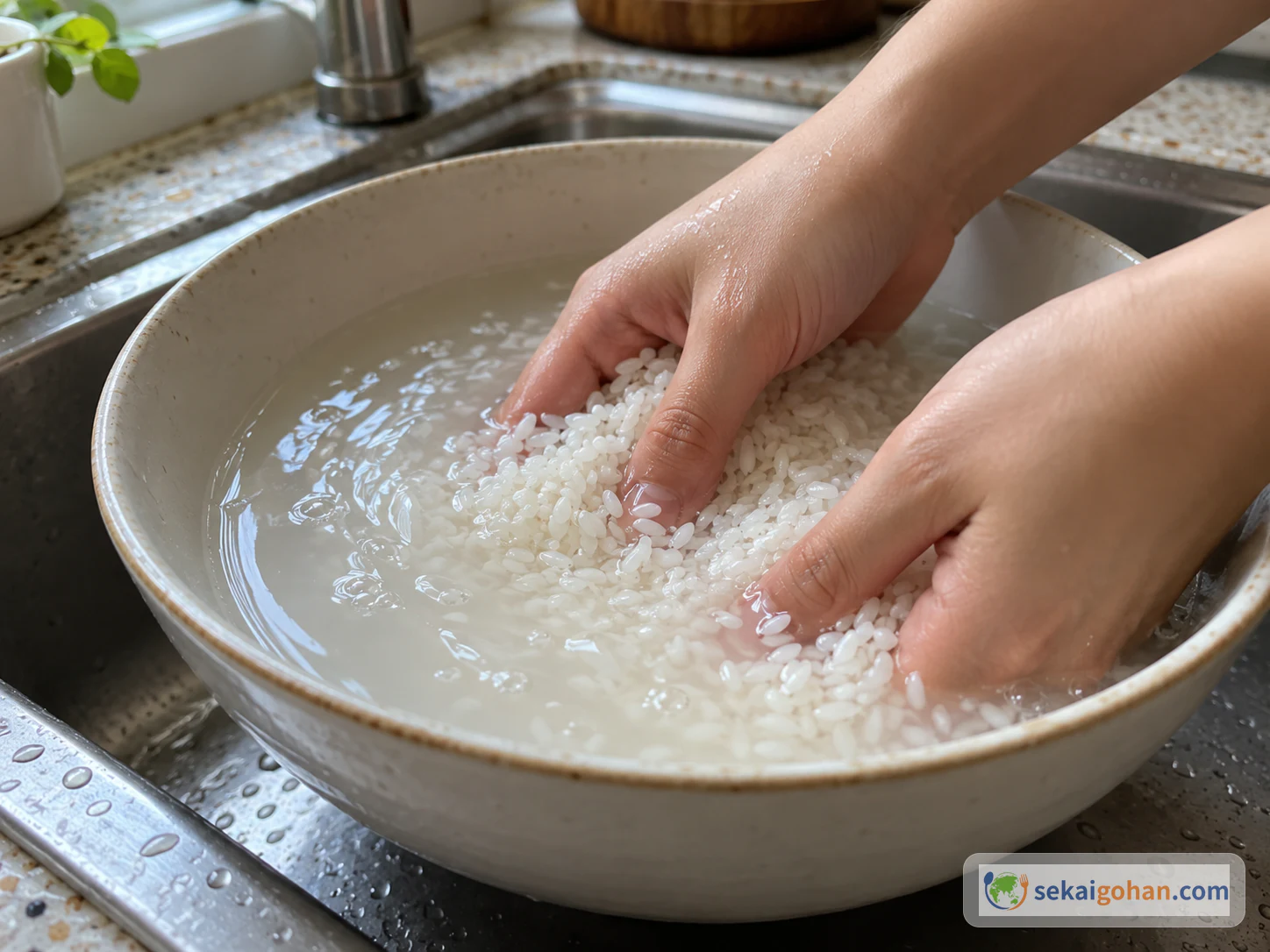
Hands rinsing white glutinous rice in a bowl of water
A light milky haze in the water is normal for sticky rice

Put the glutinous rice in a bowl and cover it with water. Swish the grains between your fingers and rub them gently, then tip the cloudy water away. Repeat with fresh water.

STEP 22 / 15

Soak in salted water for about two hours

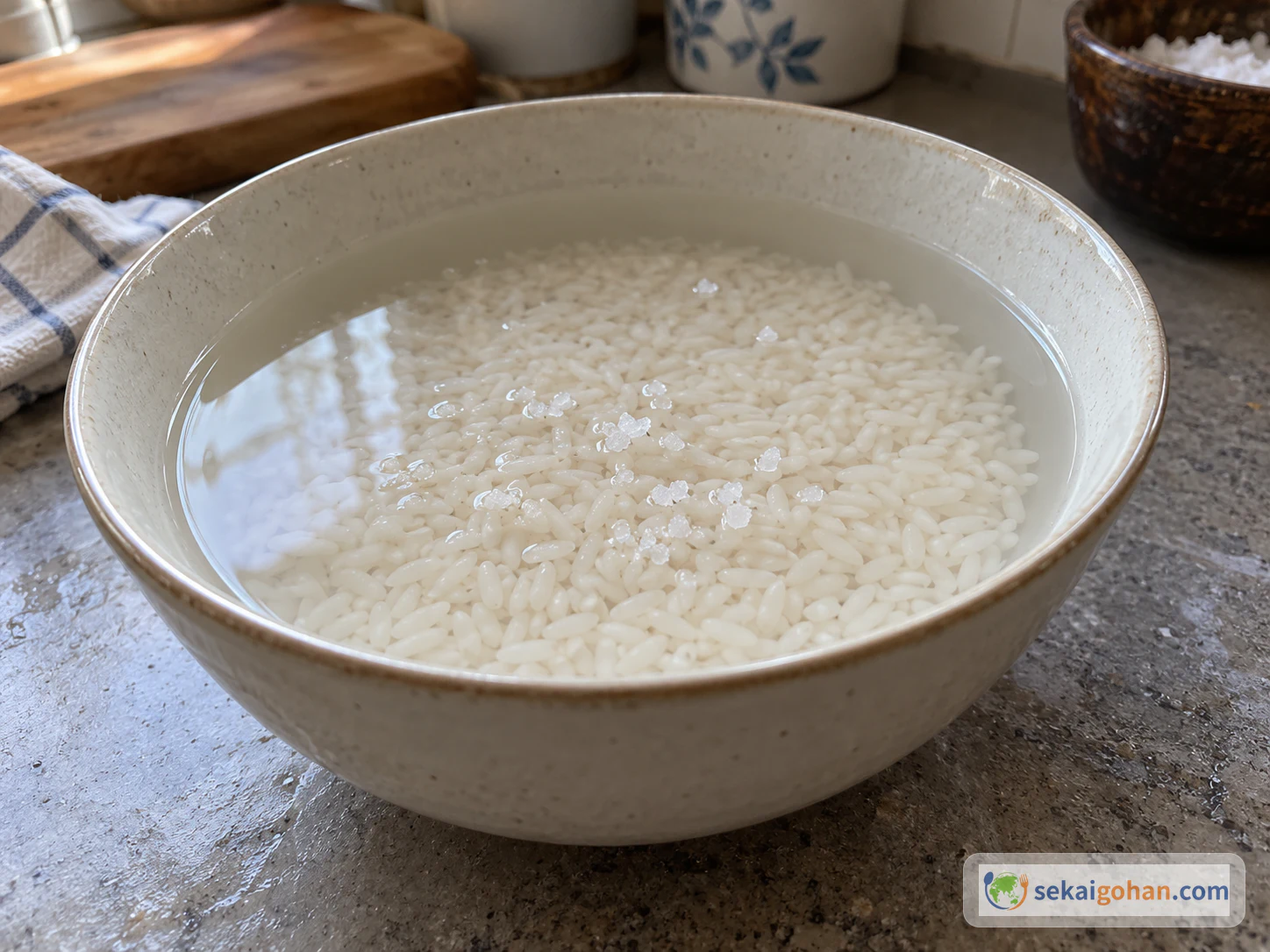
White glutinous rice soaking in water with coarse salt
Coarse salt crystals settle on and around the rice in the soaking bowl

Pour fresh water over the rinsed rice until it is covered. Add the coarse salt for soaking and give the bowl a stir. Leave the rice to soak for about 2 hours.

STEP 33 / 15

Cook in the rice cooker

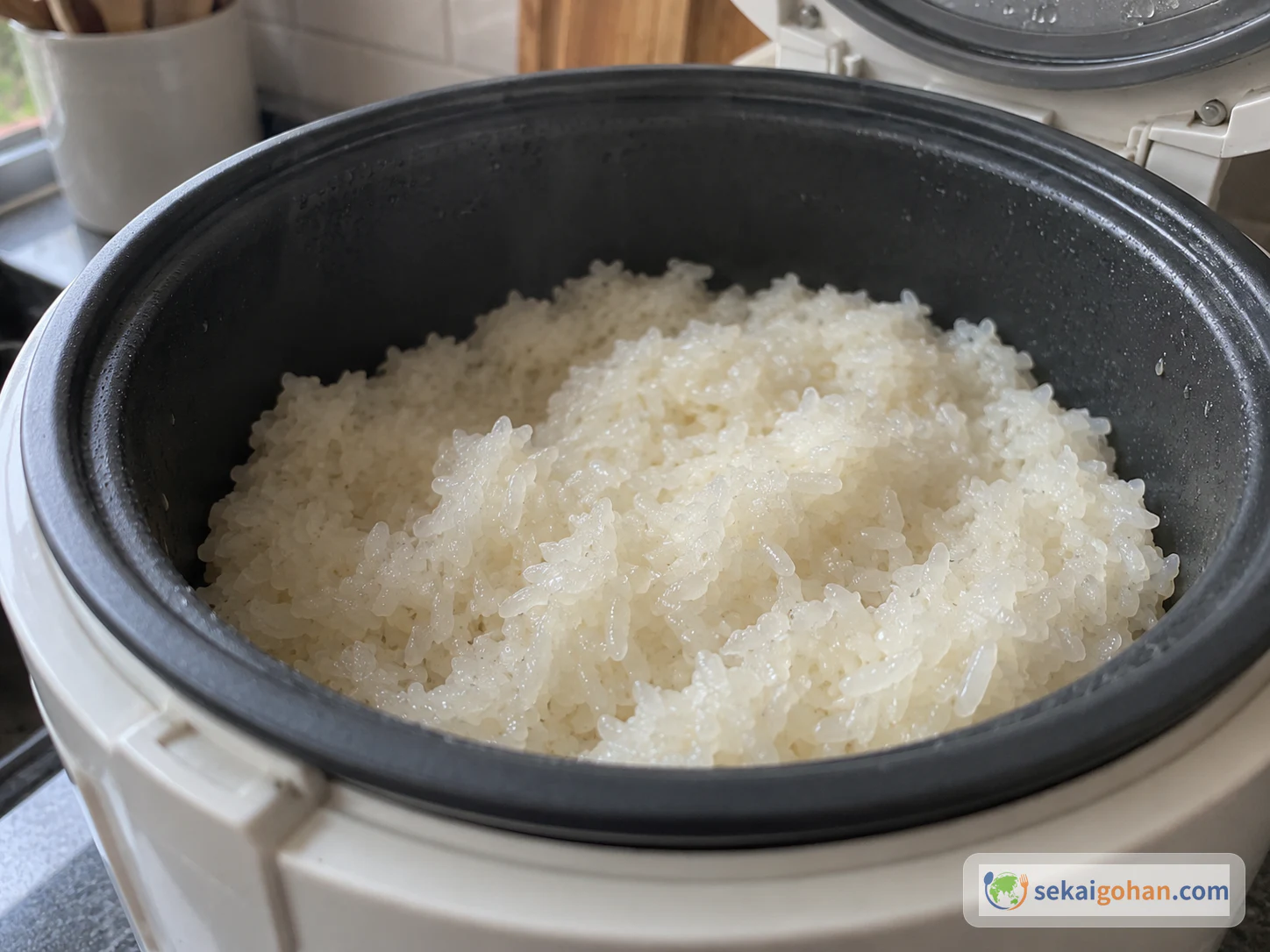
Cooked white glutinous rice in an open rice cooker, moist with a slight sheen
The grains hold together in a soft mass and shine, with no pool of water underneath

Move the soaked rice into the rice cooker. Add ½ cup plus 4 tsp (140 ml) of water for cooking and start the cooker. Let it run its full cycle. The rice is done when the grains are cooked through and cling together with a glossy sheen, still a little moist but not soupy.

STEP 44 / 15

Crush the men ngọt

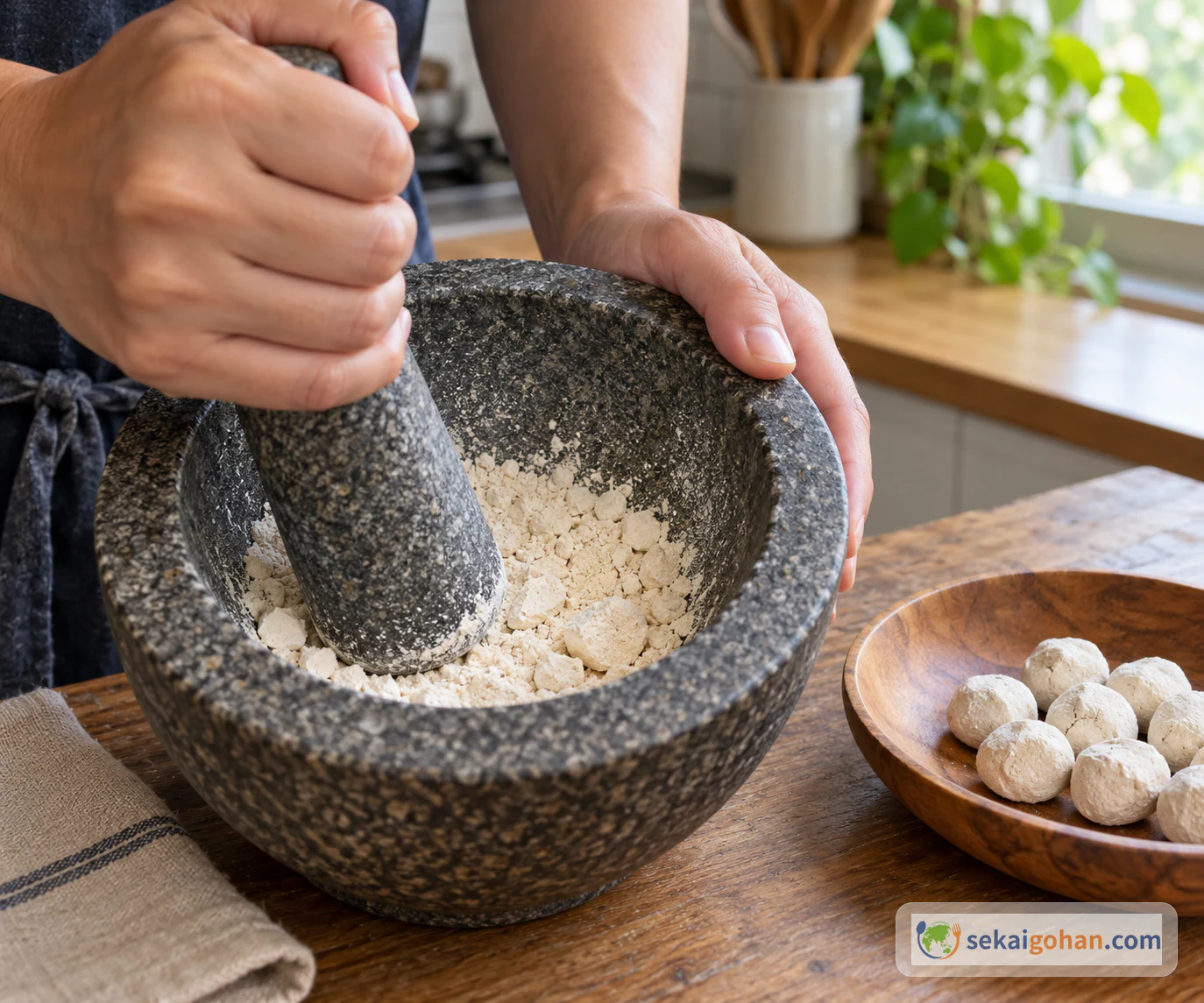
Small men ngọt balls being pounded into fine powder in a mortar
Press and grind rather than bash; loose crumbs at the edges are pulled back under the pestle

Drop the three starter balls into the mortar. Pound them with the pestle until they break apart. Keep working the crumbs against the bowl of the mortar. Stop when the starter is a fine, pale powder with no hard pieces left.

STEP 55 / 15

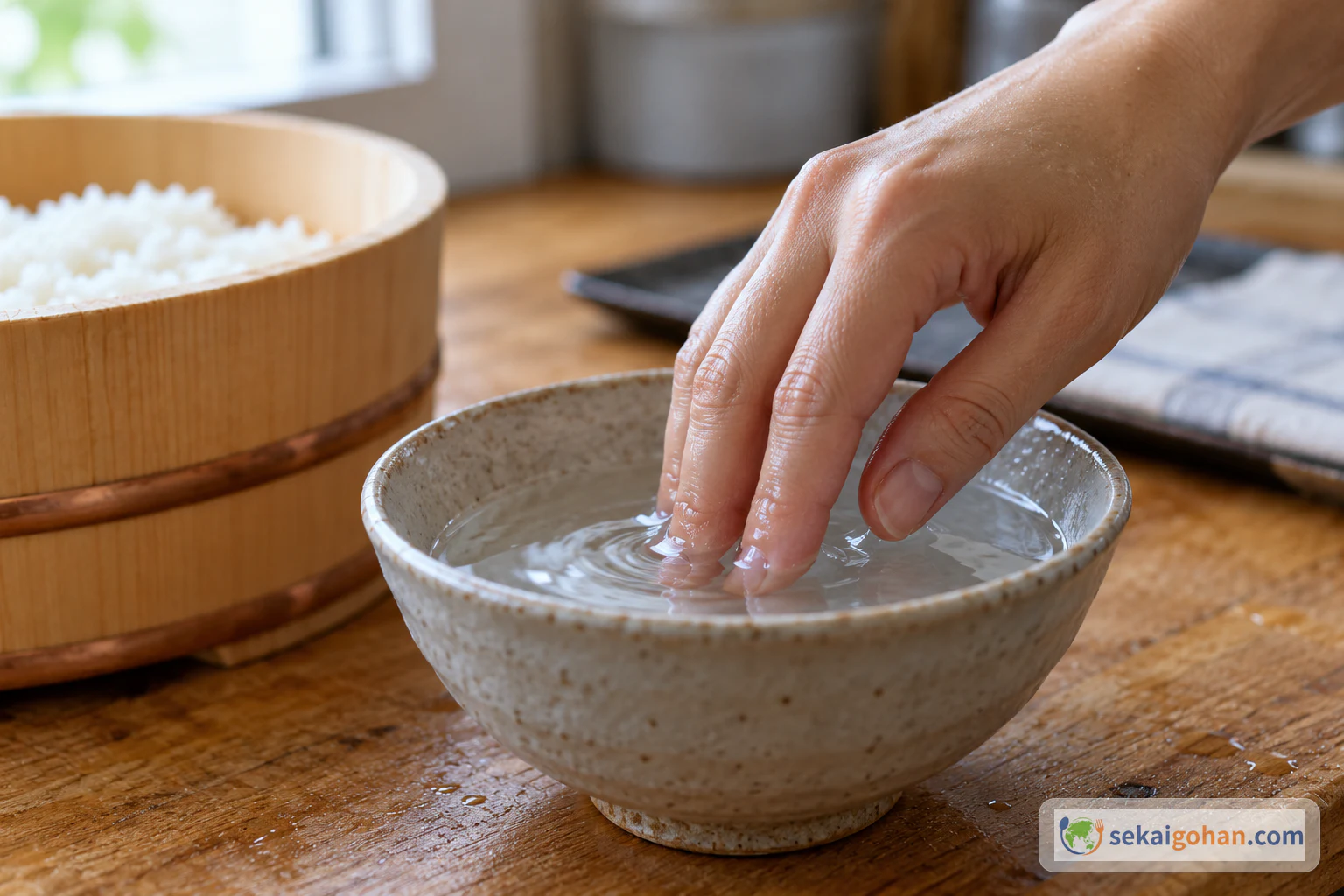
Make the separate hand water

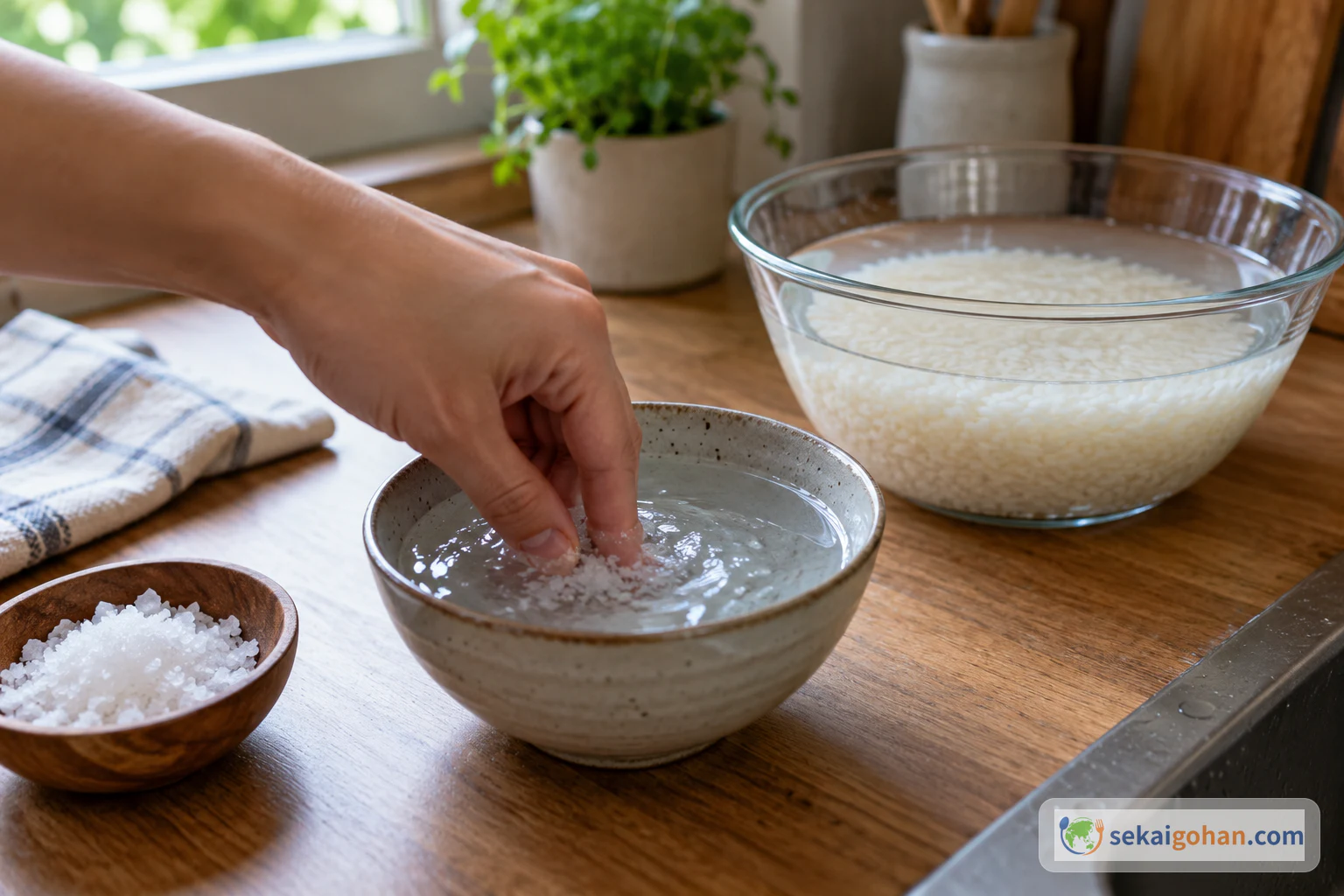
A hand stirring coarse salt into water in a small bowl, with the soaking bowl behind it
The hand-water bowl sits apart from the soaking bowl so the two never get mixed up

Fill the small separate bowl with water. Add a little salt and stir it in with your fingers. Set the bowl beside the tray where you will shape the rice. It is ready when the salt has dissolved and the water is clear.

STEP 66 / 15

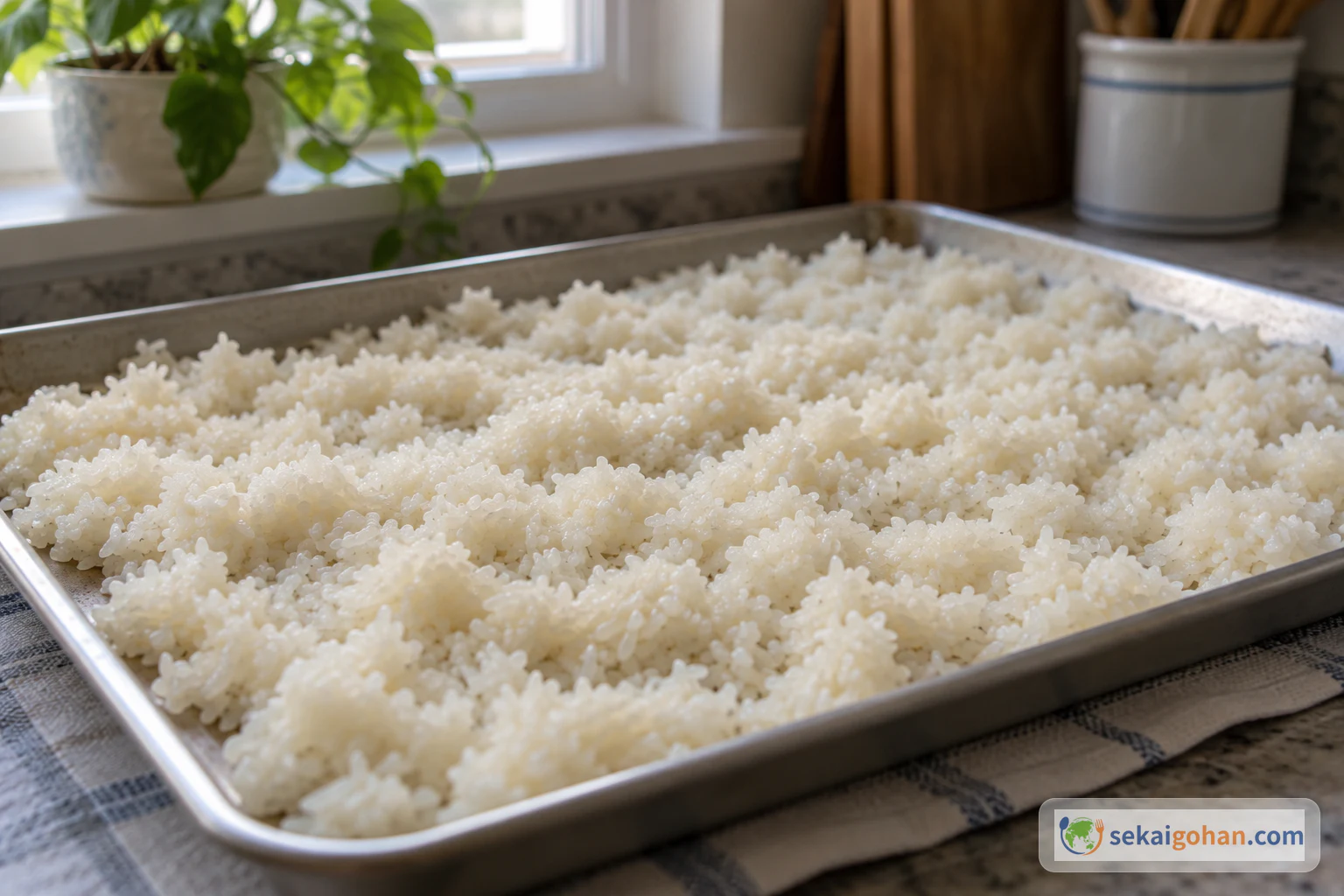
Spread the cooked rice on the tray

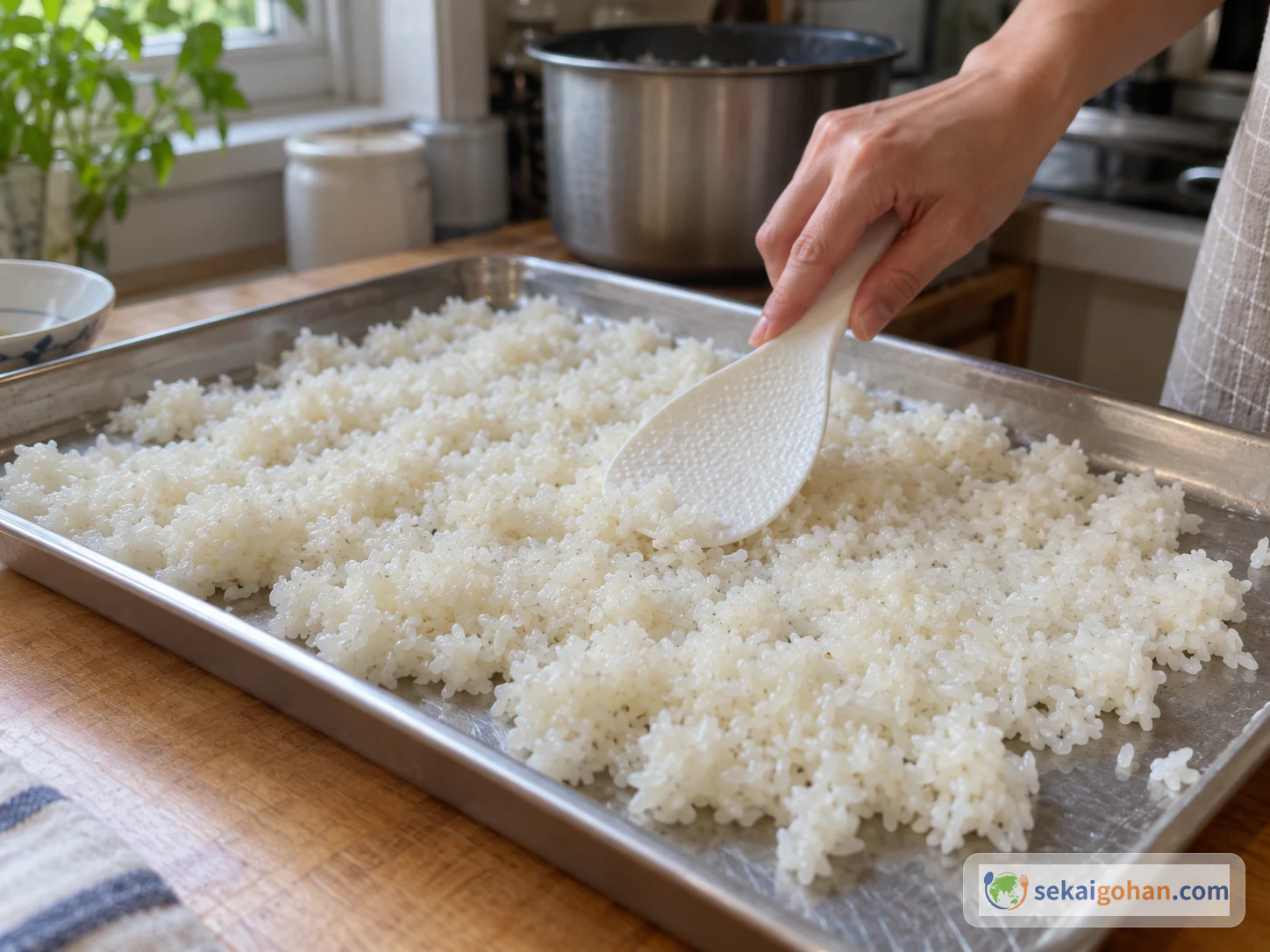
Cooked glutinous rice being spread thinly over a tray with a rice paddle
Small natural clumps are fine; the aim is a layer with no deep mounds

Scoop the cooked rice out of the cooker onto the clean tray. Push it outward with the rice paddle. Break up the thickest clumps as you go. Stop when the rice covers the tray in a thin, even layer.

STEP 77 / 15

Let the rice cool

A thin layer of cooked white glutinous rice cooling on a tray
A thin layer cools evenly across the whole tray, edges and centre alike

Leave the tray of rice alone. Do not add the starter yet. Let the thin layer give up its heat. Move on only when the rice has cooled completely.

STEP 88 / 15

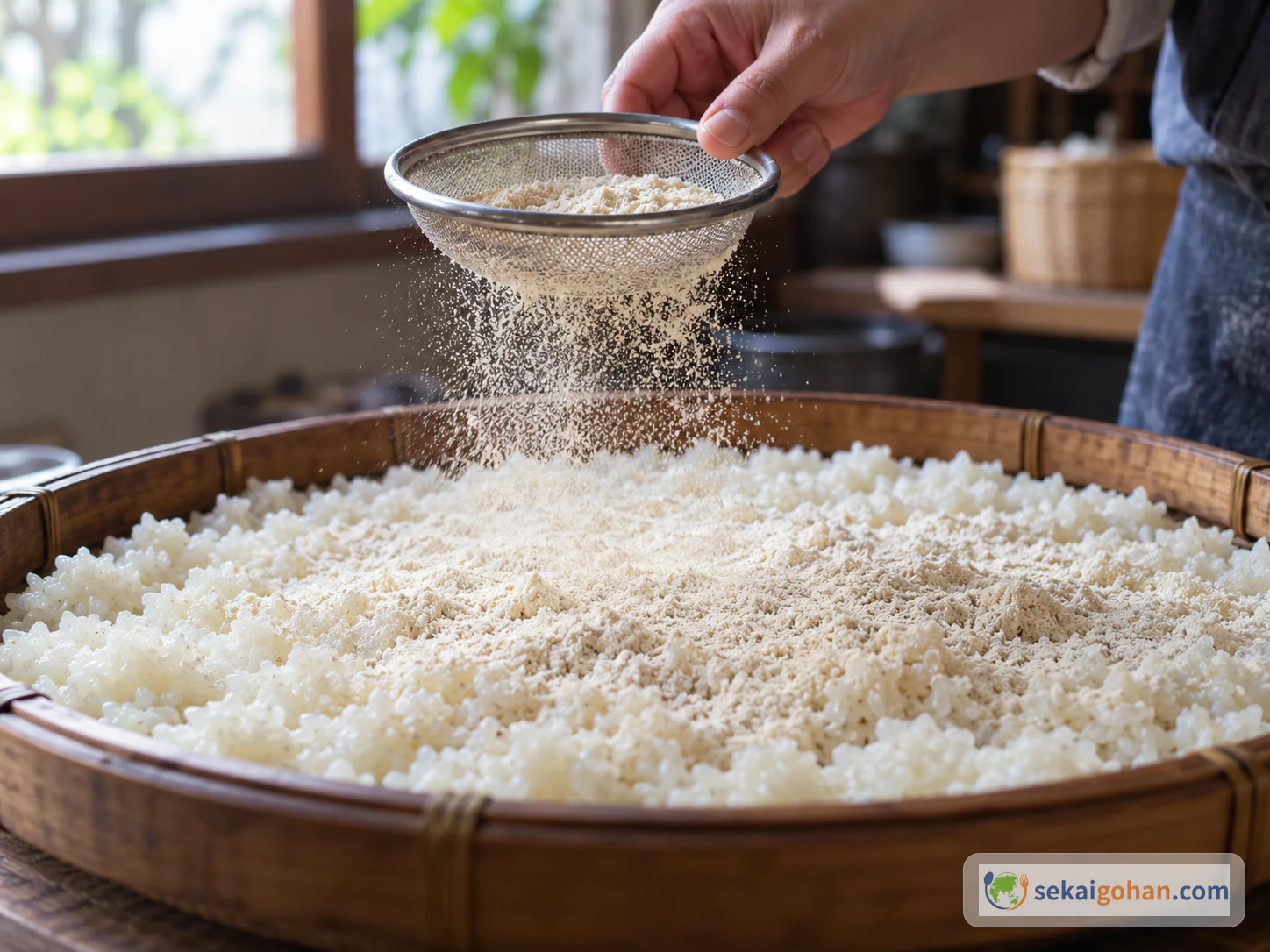
Sift the starter over the cooled rice

Crushed men ngọt being sifted evenly over cooled glutinous rice on a tray
Keep the sieve moving so no patch gets a heap while another stays bare

Tip the crushed men ngọt into the fine sieve. Hold it over the tray and tap it as you move across the rice. Cover the whole surface, corners included. The starter sits on top as an even pale dusting, without stirring it into the rice.

STEP 99 / 15

Wet your hands in the salt water

Fingertips touching the surface of the separate salt water bowl before shaping
A light touch is enough; damp palms are what keep the sticky rice from clinging

Dip your fingertips into the hand-water bowl. Spread the water over your palms. Shake off the excess so your hands are damp, not dripping. Your hands are ready when the rice no longer sticks to them as you pick it up.

STEP 1010 / 15

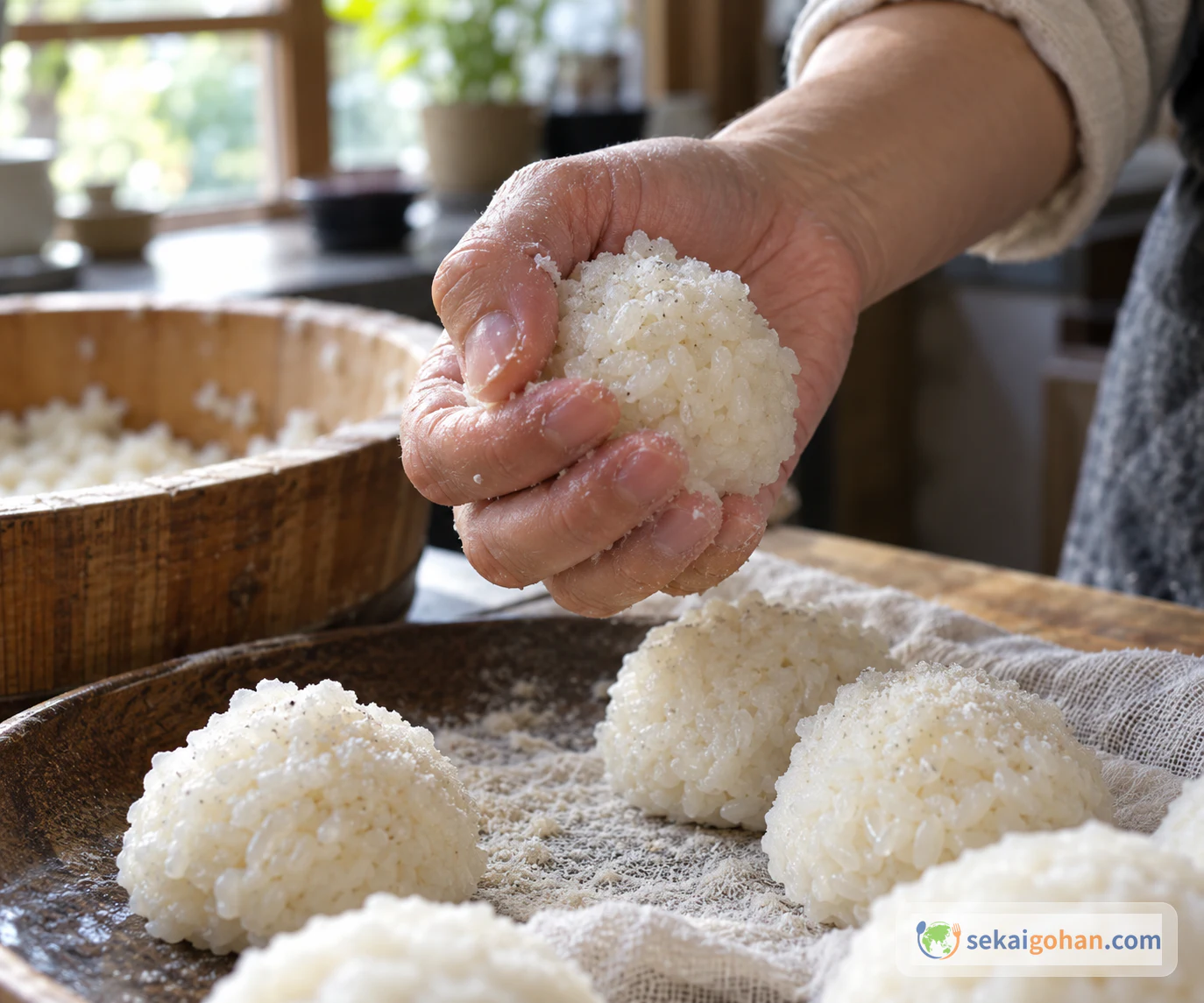
Shape small, firm balls

Hands firmly shaping cooked glutinous rice into small balls
Slightly irregular balls are normal; what matters is that they are pressed tight

Take a small amount of the dusted rice from the tray. Press it between your palms into a ball, squeezing firmly so it holds together. Set it aside on a clean surface and repeat with the rest, wetting your hands again whenever the rice starts to stick. Each ball is done when it keeps its round shape when you set it down.

STEP 1111 / 15

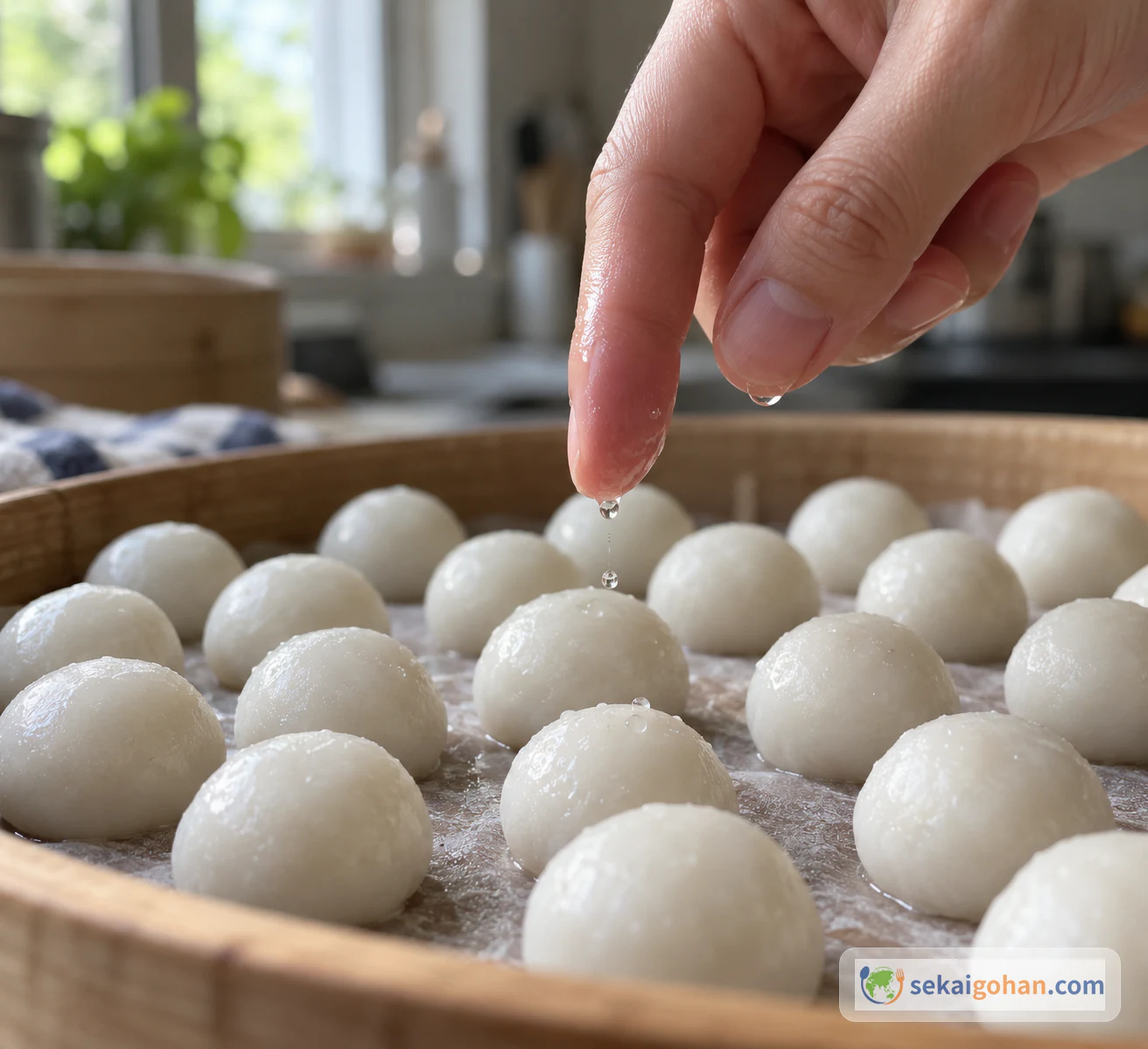
Add a few drops of salt water to each ball

A fingertip letting a few drops of salt water fall onto formed rice balls
Drops from the fingertips, not a pour; the balls keep their shape and surface

Dip your fingertips into the hand water again. Let a few drops fall onto each ball. Go ball by ball so none is missed. Stop once every ball has had its drops, with no puddles on the tray.

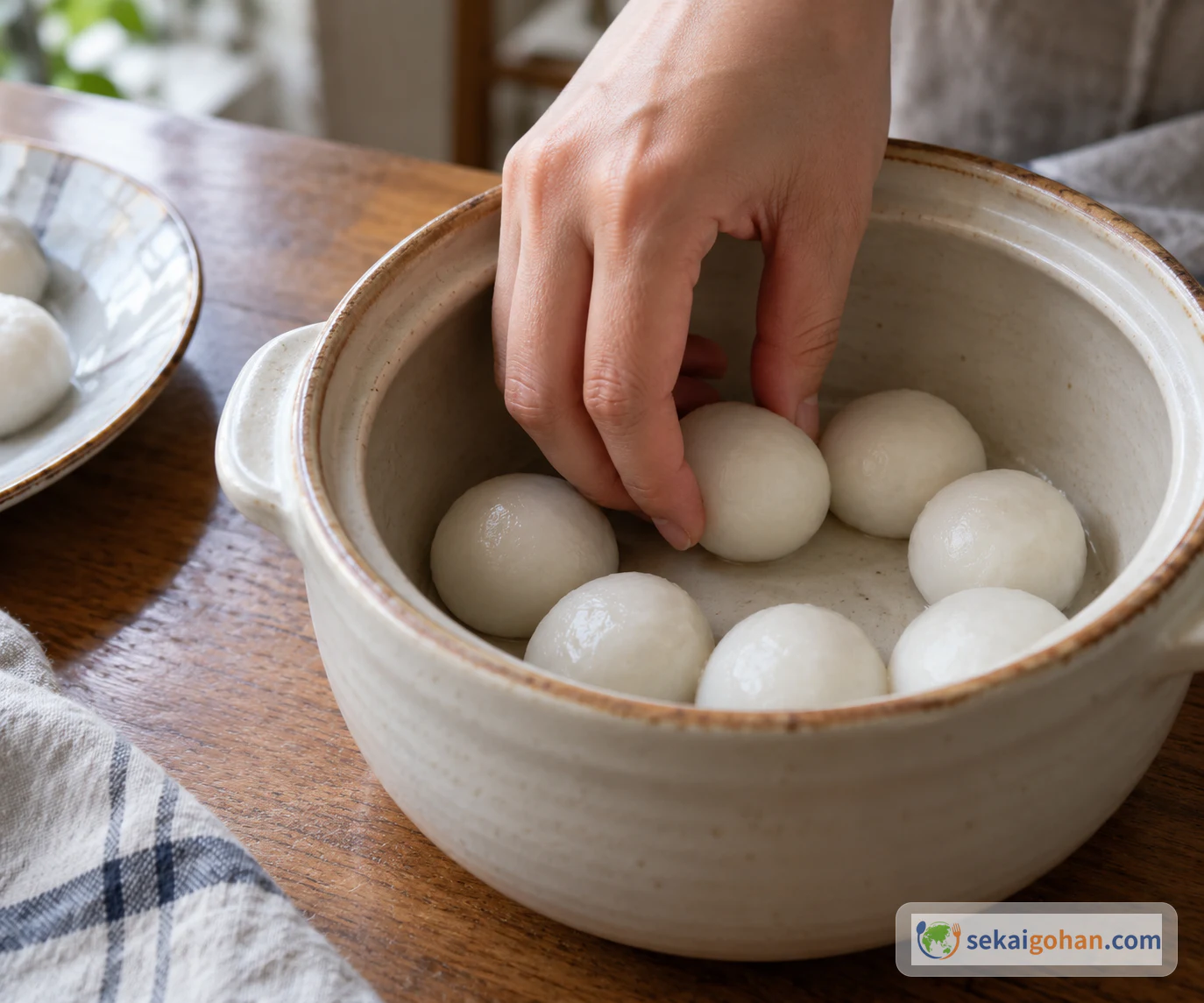
STEP 1212 / 15

Arrange the balls in the container

A hand arranging white glutinous rice balls in an open ceramic container
Laying the balls in gently keeps the pressed shapes intact

Set the open ceramic, porcelain or glass container beside the tray. Lift the balls in one at a time. Place them side by side in the container. The step is done when every ball is in the pot and the rim is clear of rice.

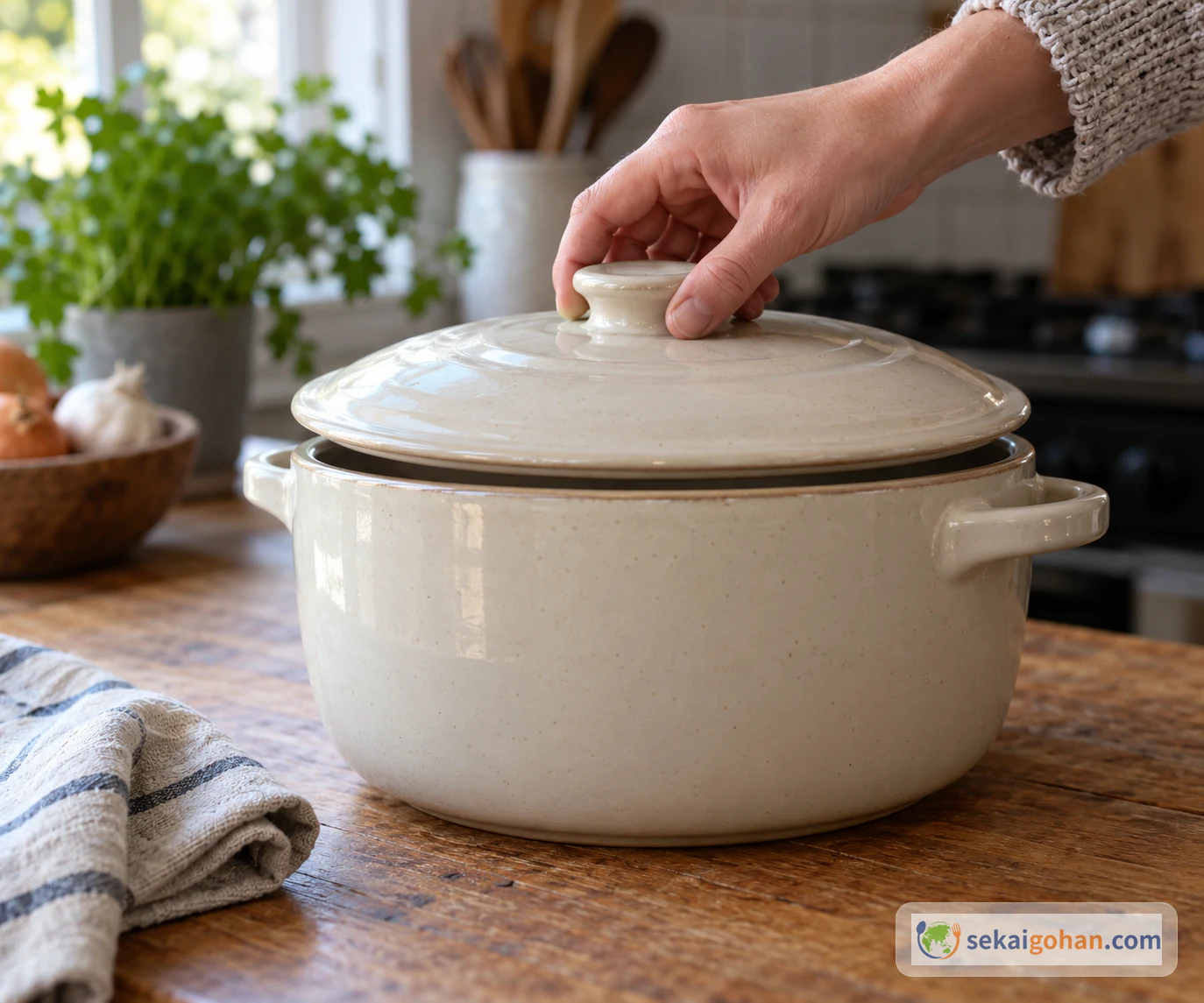
STEP 1313 / 15

Close the lid tightly

A ceramic lid being placed onto an opaque ceramic container
Lower the lid straight down so it seats evenly on the rim

Set the lid in place. Press it down so it closes tightly all the way round. The pot is sealed when the lid sits firm and level with no gap at the rim.

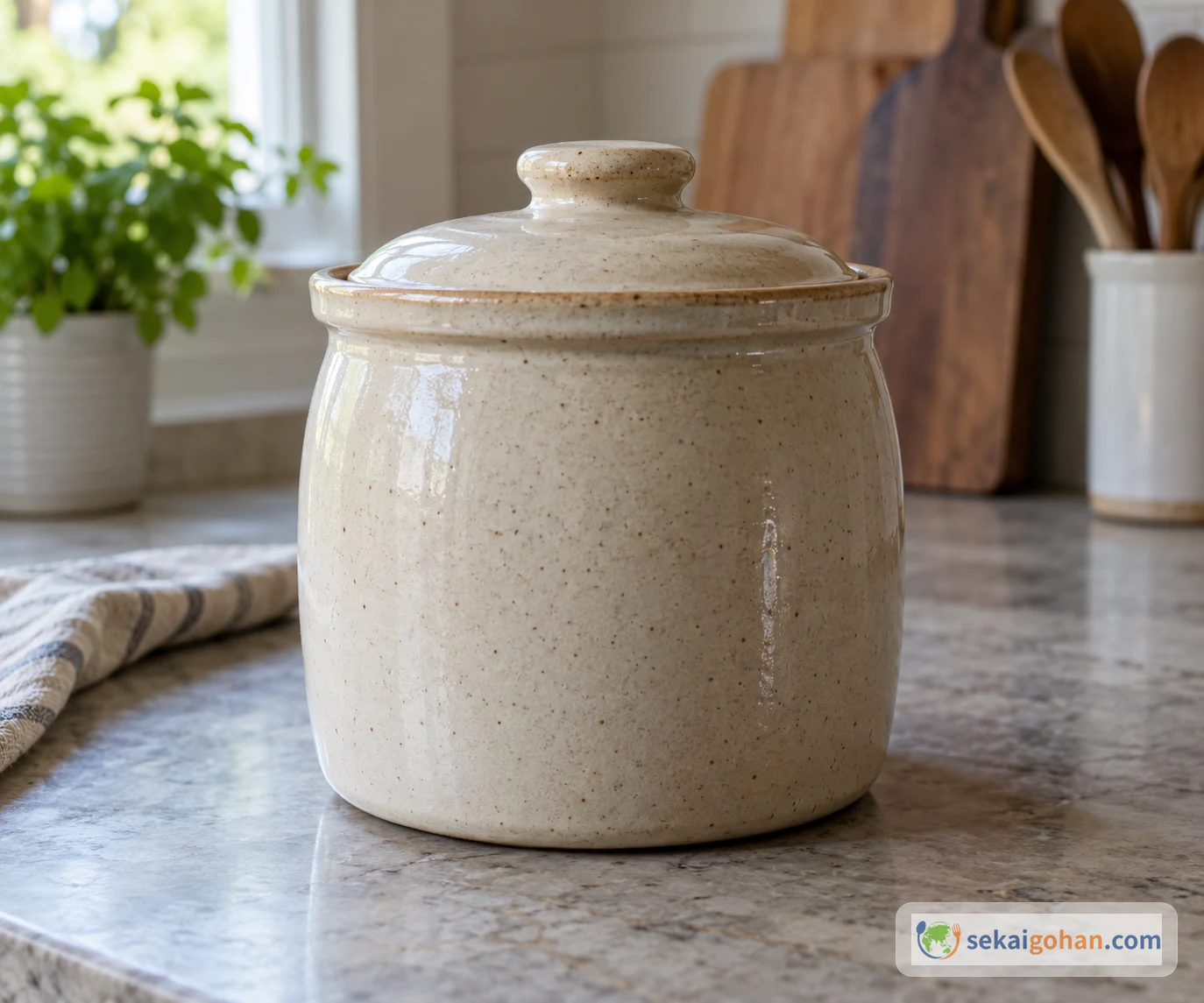
STEP 1414 / 15

Ferment for about three days

A closed opaque ceramic container resting on a kitchen counter
One spot for the whole time; moving the pot around is not part of the process

Set the closed container somewhere warm in the kitchen. Leave it closed and undisturbed. Let it ferment for about 3 days. It is ready to move when lifting the lid releases a fragrance.

STEP 1515 / 15

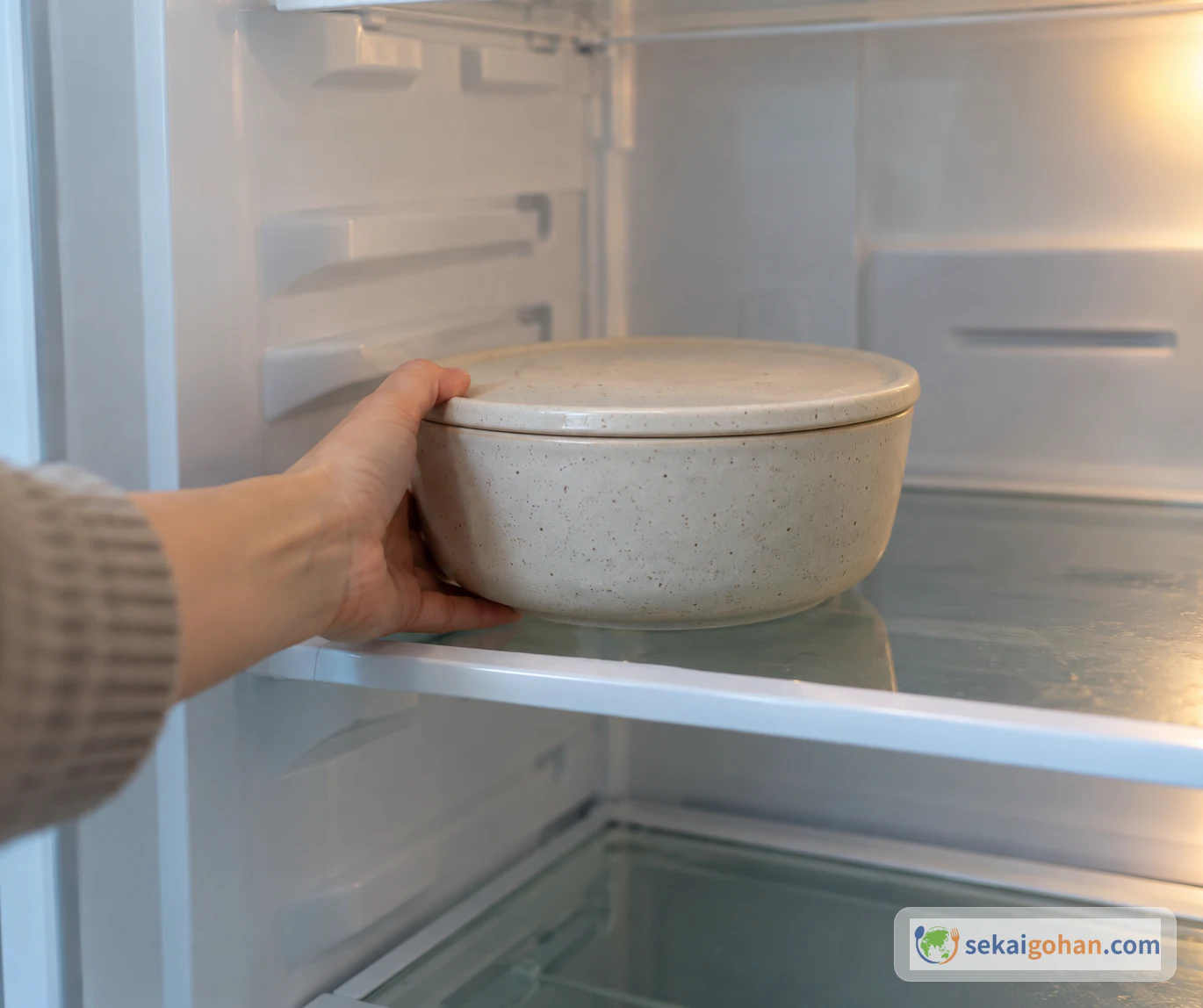
Refrigerate once it is fragrant

A hand placing a closed ceramic container on a refrigerator shelf
The pot goes in with the lid closed, just as it fermented

When the fragrance has come up, close the lid again. Carry the container to the refrigerator and set it on a shelf. Keep it there, lid on, until serving. The cơm rượu is finished once the closed pot is in the refrigerator.

0 / 0
Ingredients

Ingredients

1 / 1

Ingredients

Ingredient Amount Role
White glutinous rice (sticky rice) 10½ oz (300 g) The body of the dish, cooked moist and shaped into balls
Starter balls (men ngọt) 3 small balls, each about the size of a fingertip The fermenting starter, crushed fine and sifted over the cooled rice
Coarse salt, for soaking about 1 tsp Goes into the soaking water only
Water, for soaking as needed Covers the rice during the soak
Water, for cooking ½ cup plus 4 tsp (140 ml) Goes into the rice cooker with the soaked rice
Water, for wetting hands as needed Fills the separate small bowl for shaping
Salt, for the hand water a little Stirred into the hand water; separate from the soaking salt
0 / 0

The cooked sticky rice lies in a thin, glossy layer across the tray, and once it has cooled, a fine pale dust of crushed men ngọt falls over it from the sieve. A few minutes later the rice is pressed into small, firm balls with salt-wet hands, packed into a lidded pot and left alone. About three days on, the pot gives off a fragrance, and that is the signal to move it to the refrigerator. Cơm rượu is fermented glutinous rice, and this is one home cook's southern way of making it: plain white sticky rice, shaped into soft, moist little balls, with nothing sweet poured over them.

Đoan Ngọ Morning and the Southern White Rice Ball

Fermented sticky rice belongs to Đoan Ngọ, the fifth day of the fifth lunar month. On that day, rượu nếp, fermented sticky rice, is set out among the offerings to the ancestors, and it shares the festival table with bánh tro. The author of the southern recipe used here remembers eating cơm rượu with bánh tro for breakfast on Đoan Ngọ morning with their mother, and in that family the rice went into its pot three to four days before the festival.

The fermentation sets the rhythm of the week. Rice is soaked, cooked, cooled, dusted with starter and shaped in one sitting, and then the pot sits closed while the days count down to the holiday. By the morning itself, the work is long finished and the only thing left is to lift the lid.

Giết sâu bọ

Đoan Ngọ morning goes by the phrase giết sâu bọ, a festival name and belief that the recipe's author mentions. It belongs to the calendar and the customs of the holiday, not to any claim about health or about what the dish does.

White balls, purple rice and other households

This is the southern white version: white glutinous rice, a starter called men ngọt, salt and water, and the rice shaped into small balls before it ferments. Other households make it differently. Some use purple sticky rice for a dark, separate version, some pour a sugar syrup over the finished rice, and some work the starter into the rice with their hands before shaping. Each of those is its own recipe with its own proportions.

Sticky rice runs through much of Vietnamese cooking, and cơm rượu sits apart from its neighbours. Cơm lam steams the rice in bamboo tubes and leaves, and bánh chưng wraps it around mung beans and pork in leaves. Neither is fermented. Cơm rượu is the one where a starter does the cooking after the heat is off. More dishes from the same kitchens are on the Vietnam page.


Ingredients
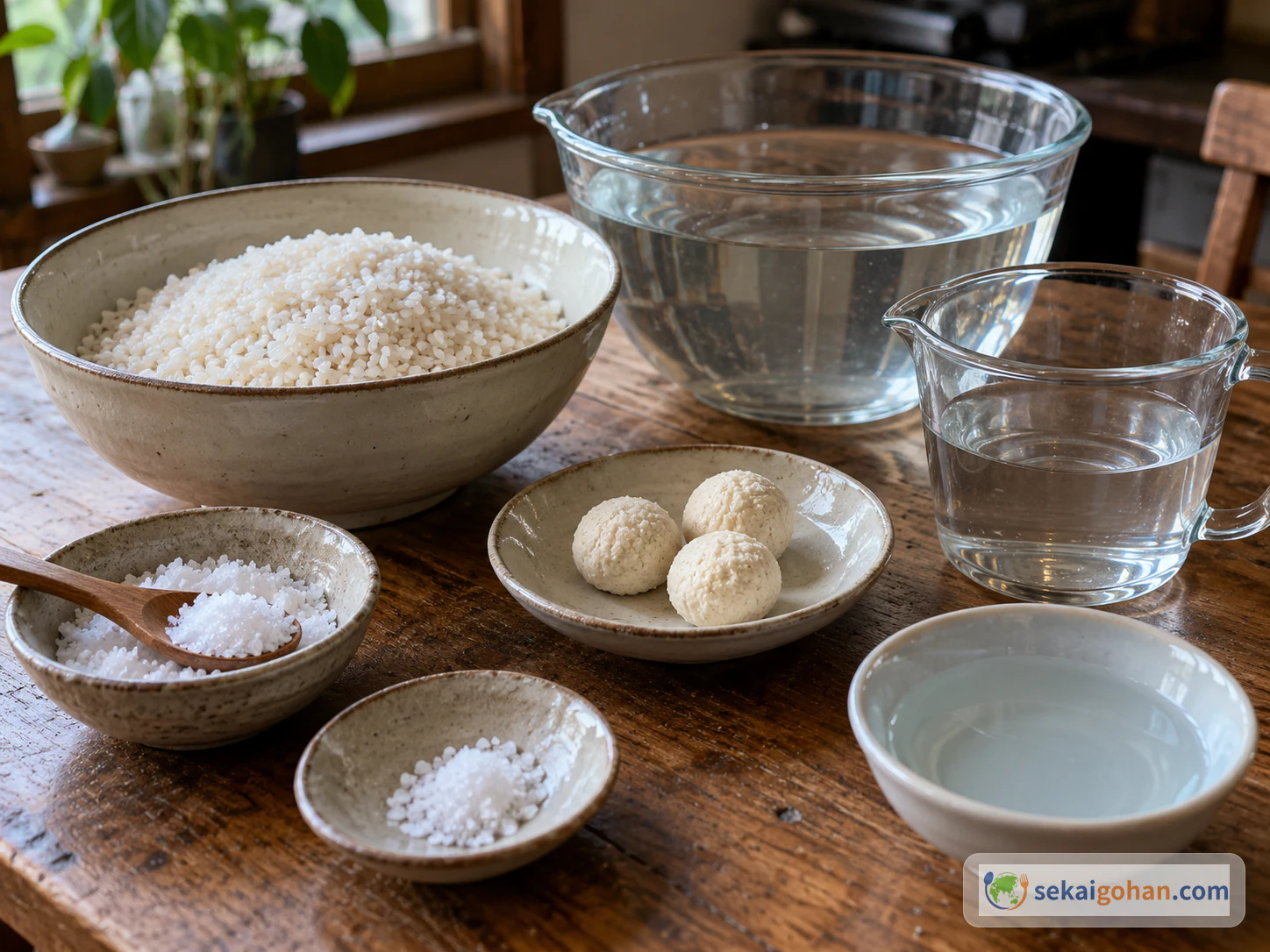
White glutinous rice, three small men ngọt starter balls, coarse salt and separate water for soaking, cooking and wetting hands
The three starter balls are the one measure to count exactly; the water and salt for each job stay in their own bowls
Two salts, two bowls

The teaspoon of coarse salt belongs to the soaking water and nowhere else. The hand water gets its own salt in its own bowl. Keeping them apart keeps the soak and the shaping each doing their own job.

Equipment

  • Rice cooker
  • Bowl for rinsing and soaking the rice
  • Mortar and pestle
  • Small separate bowl for the hand water
  • Clean tray
  • Rice paddle
  • Fine sieve
  • Ceramic, porcelain or glass container with a tightly closing lid
  • Refrigerator space for the container

Buying Rice and Men ngọt

Glutinous rice is sold as sticky rice or sweet rice at Asian grocers and in many supermarkets' rice aisles. Choose white grains for this version; purple sticky rice belongs to a different cơm rượu.

Men ngọt is the decisive purchase. It comes as small, dry, pale balls and is sold at Vietnamese and other Asian grocers and online. Buy only men ngọt sold as food, in sealed retail packaging. Bread yeast, instant yeast and koji are different products, and using any of them turns this into a different dish, so the starter stays as it is. Coarse salt is ordinary coarse cooking salt from any grocer.


Method: Soak, Cook, Cool, Shape, Seal

The work happens in one session and then the pot does the rest. Soak the rice first; during the two-hour soak there is time to set out the tray, sieve, mortar and container. After cooking, the rice must cool on the tray before any starter touches it, and the hand-water bowl is prepared before the rice is spread. Once the pot is sealed, the hands-off stretch is about three days. In Japan, making a drink of 1% alcohol or more at home without a licence is restricted by the Liquor Tax Act, so readers there should check the rules or enjoy cơm rượu where it is made.

Clean hands, clean pot

Wash your hands and use a clean container, tray, sieve and mortar. Keep to the salt and the timing in the steps. Throw the whole batch away if it smells wrong, grows mould or turns an unexpected colour.

Cool first, then dust

The starter goes onto rice that has finished cooling, and it goes on top as a fine, even dusting. Sifting it over the surface, without stirring it in, is how this version spreads the starter before shaping.

When It Goes Wrong

What you see Why What to do
Hard crumbs of starter stay in the sieve The men ngọt was not crushed fine enough Tip the crumbs back into the mortar, grind to a fine powder and sift again
Rice sticks to your palms while shaping Your hands have dried Re-wet them in the hand-water bowl and shake off the excess
Balls slump or crack apart The rice was pressed too loosely Re-press each ball firmly between damp palms until it holds its shape
Starter heaped in some spots, bare in others The sieve stayed still over one place Sift the remaining powder over the bare patches, moving the sieve steadily
Mould, an unexpected colour or a wrong smell in the pot The batch has gone off Throw the whole batch away and start again with a clean container

Serving, Other Versions and Keeping

At the table

Serve a few balls in a small shallow dish, plain, the way they come out of the pot. In the recipe author's memory they sit beside bánh tro for breakfast on Đoan Ngọ morning, and fermented sticky rice is among the offerings set out for the ancestors that day. In the recipe author's family, the rice went into the pot three to four days ahead of the festival.

Other versions

Purple sticky rice gives a darker cơm rượu with its own recipe and proportions. Some households pour a sugar syrup over the finished rice, which turns the plain fermented balls into something sweet and saucy. Others mix the starter into the rice by hand before shaping instead of sifting it over the top. The white southern balls here keep the rice plain and let the fragrance of the ferment carry it.

Keeping

Keep the cơm rượu in the refrigerator, in its container with the lid closed. Take out only what you will serve and close the pot again straight away. If it smells wrong, grows mould or changes colour, throw it away.

Frequently Asked Questions

Do I need an oven or a heating pad for the fermentation?

The method gives no temperature and lists no oven or heating pad. It asks for a warm spot in the kitchen and about three days with the lid closed. Keep the pot in one place and check for the fragrance when the days are up.

Which container works best, ceramic or glass?

Ceramic, porcelain and glass all work. What matters is a clean container with a lid that closes tightly. Choose one big enough to hold all the balls side by side with the rim clear.

Can I make it with purple sticky rice?

Purple sticky rice makes the other, darker version of cơm rượu, with its own proportions. For the white southern balls, use white glutinous rice and keep the amounts in the table.
Sources