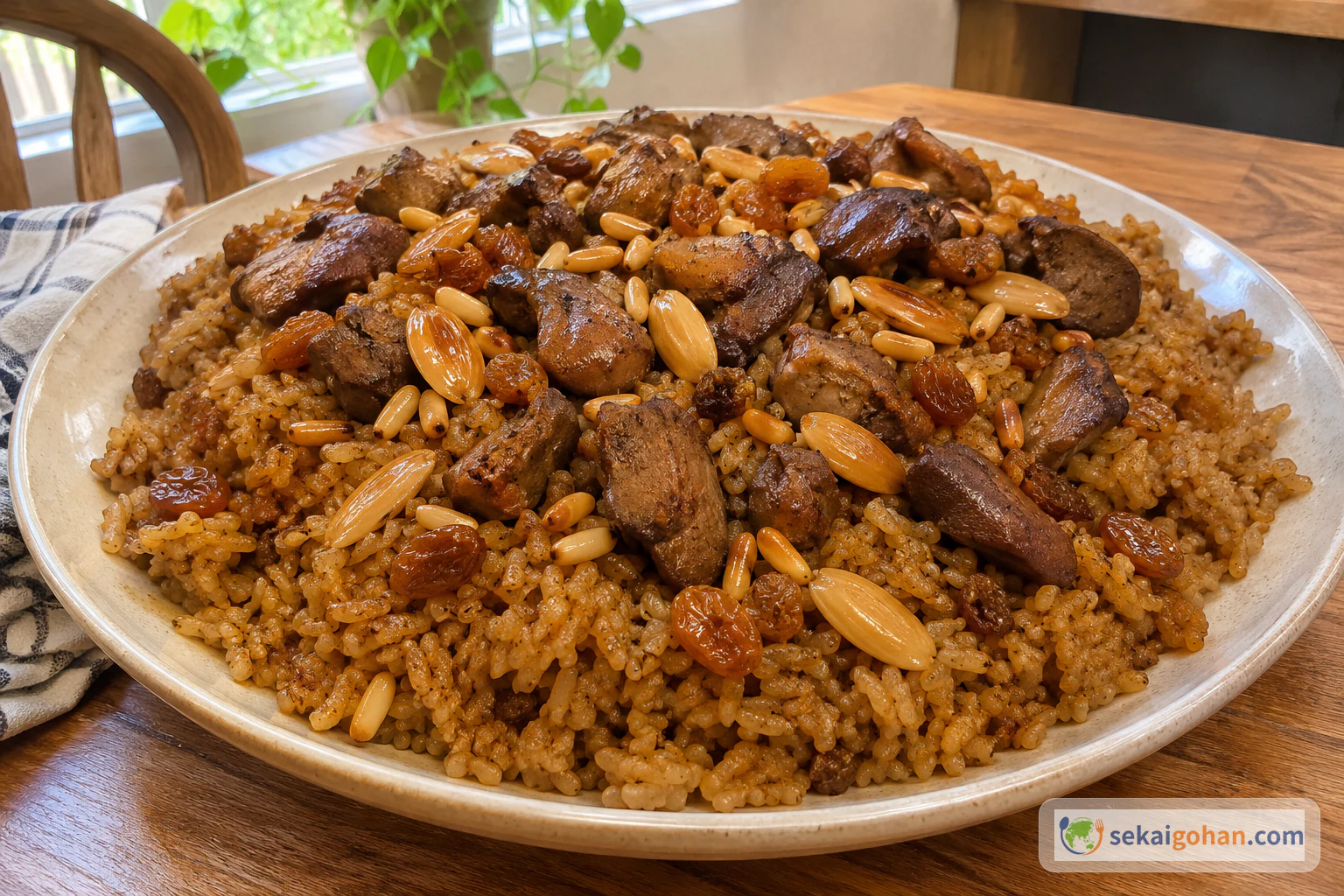
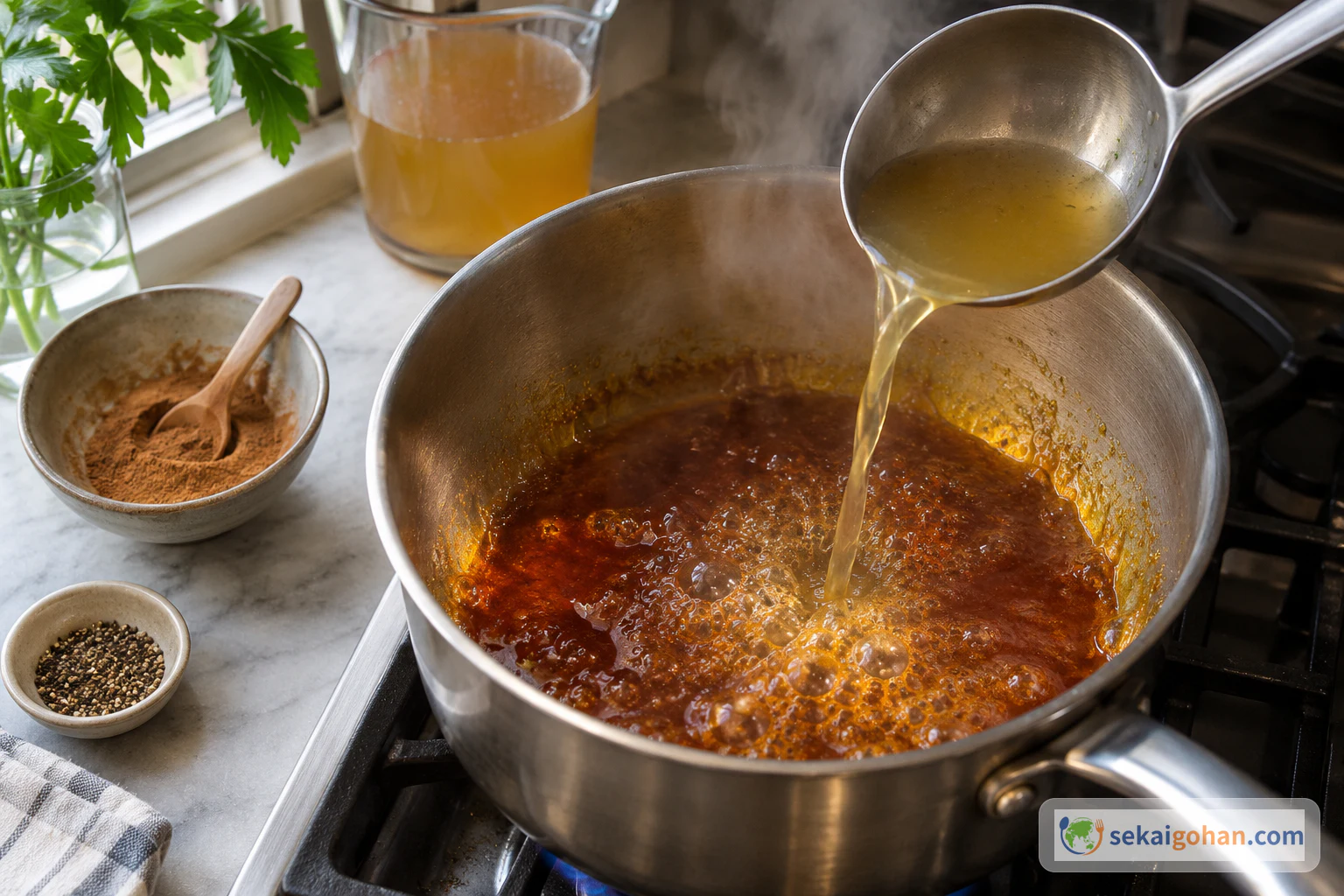
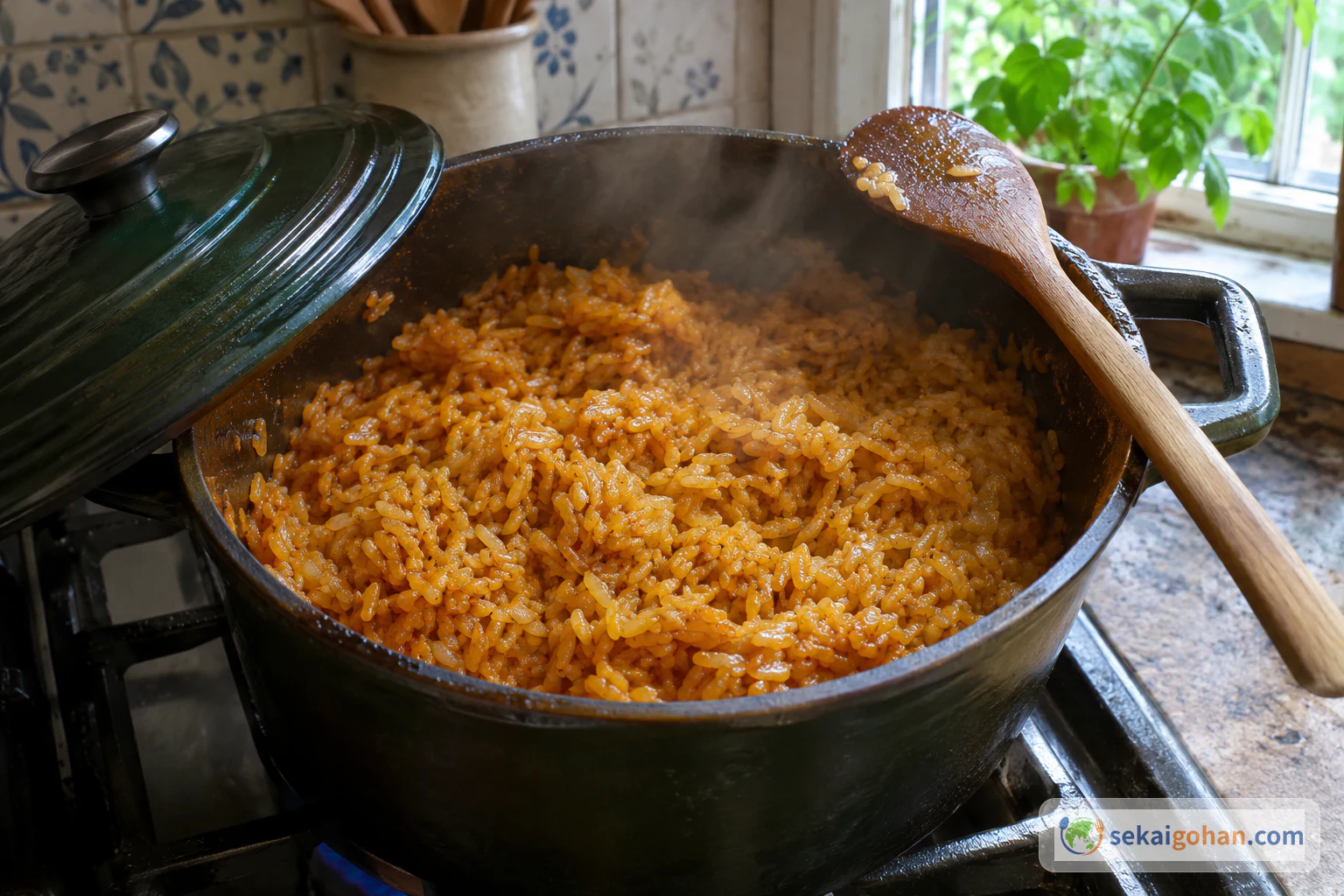
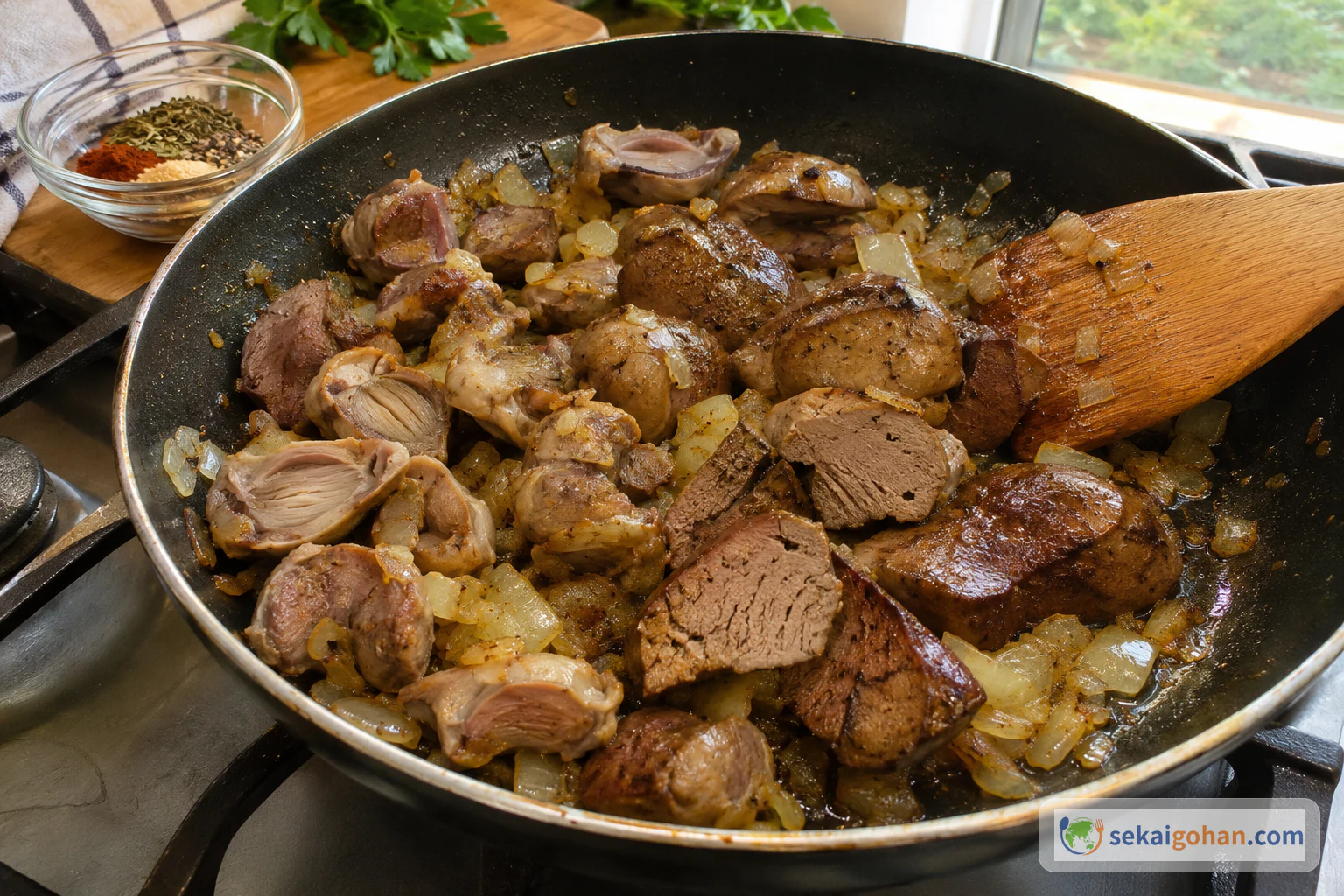
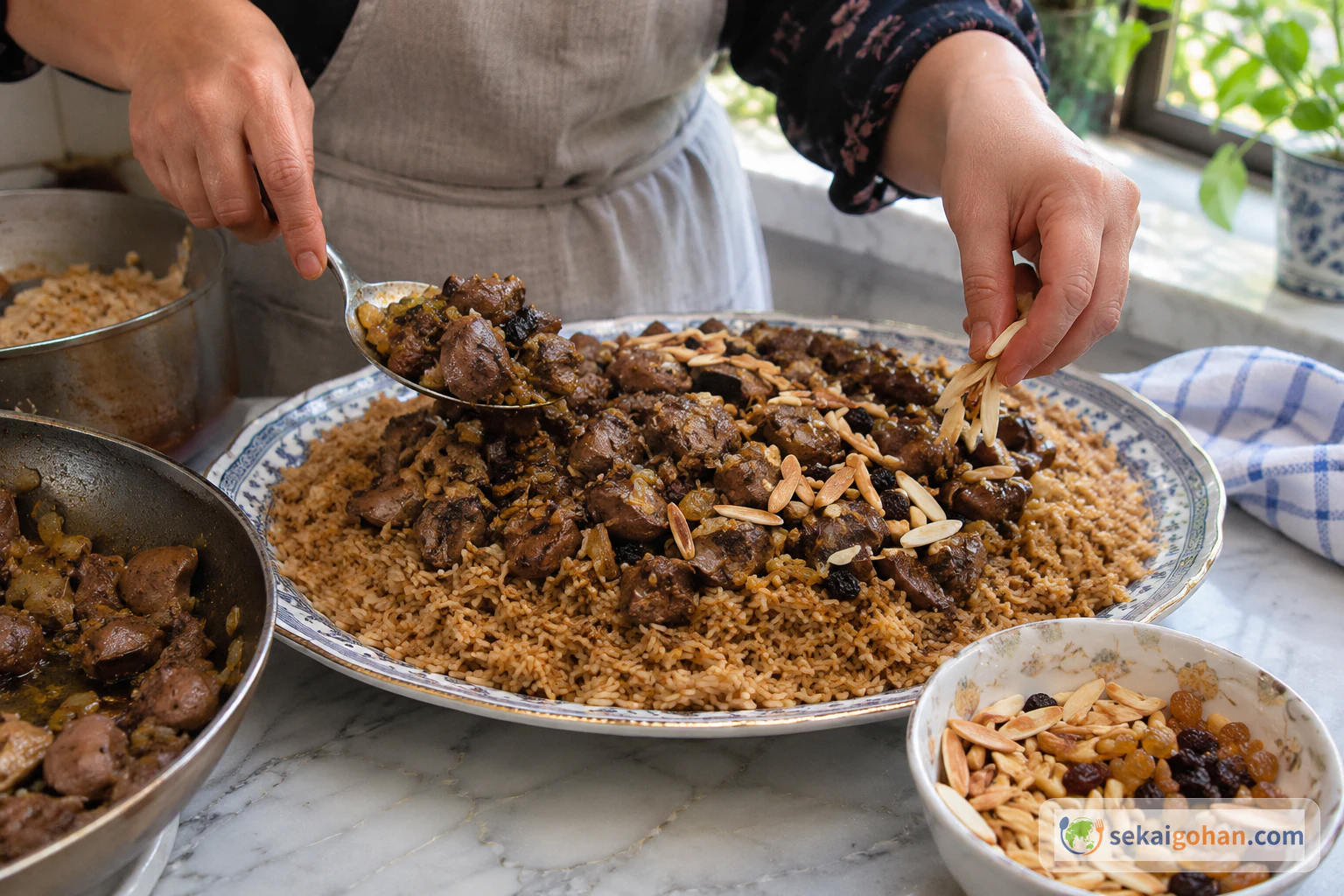
The sugar melts in the dry pot, goes clear and then turns a deep, dark gold. When the hot broth goes in, the pot hisses and spits, and steam smelling of caramel rises off it. That brown liquid colours every grain of rice that cooks in it. Roz bel khalta is Egyptian rice cooked in this caramel broth, piled on a big platter and covered with chicken liver and gizzards fried with onion, then finished with toasted almonds, pine nuts and raisins. Each spoonful has savoury offal, sweet raisins, crunchy nuts and rice that tastes of cinnamon and gentle caramel.
Rice with "the Mixture": A Platter for Feasts
The name says what the dish is. Roz is rice, bel means "with", and khalta is the mixture, which here means the fried offal, nuts and raisins on top of the rice. An Egyptian daily newspaper calls it an authentic Egyptian dish. One food blog describes it as a rice for feasts and large gatherings, served next to roast poultry, lamb and holiday meals, and says that a thick layer of almonds and pine nuts over the platter is a sign of a generous host.
Arabic is written in English letters in more than one way, so the same dish also turns up as ruz bil khalta or rice with khalta. In Arabic it is الأرز بالخلطة. Search for all of these spellings when you look for Egyptian rice or the dish itself.
How households change it
The method stays the same from cook to cook, but the details move. Some cooks caramelize the sugar dry and pour broth over it, and others melt it into water. Some fry the raw rice in ghee first. The biggest change is the topping. Chicken liver and gizzards are the classic khalta. Other cooks use beef liver, or a mix of lamb liver, heart and kidney, and some leave out the offal and top the rice with nuts and raisins only. Rice with khalta is also cooked across the wider Middle East, and the spices and method change from country to country. Where the dish began is not settled.
Its neighbours on the table
Next to koshari, Egypt's street mix of rice, lentils and pasta, roz bel khalta is the dressed-up rice of the house. It is served beside a roast bird on a feast day. For another Egyptian dish, see molokhia. It is often compared with Saudi kabsa, which is also spiced rice for a crowd. Kabsa cooks the rice with its spices and meat. Roz bel khalta gets its colour and sweet smell from caramelized sugar, and the offal, nuts and raisins are cooked separately and laid on top at the end. You can read more about the country's cooking on our Egypt page.
Ingredients
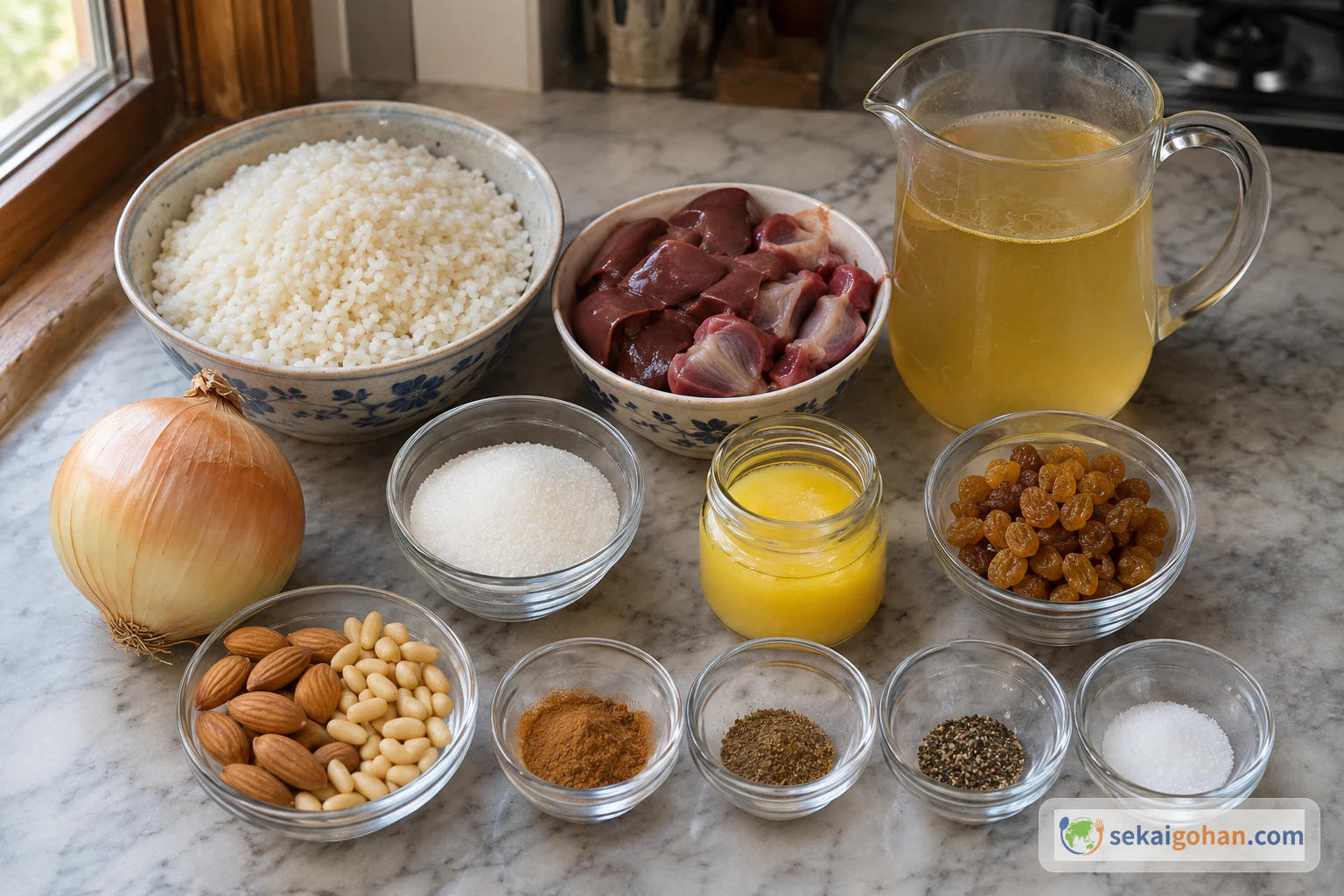
Use a spoonful of the oil or ghee to toast the nuts. Stir a little ghee into the caramel broth, where its nutty aroma goes straight into the rice. Save the rest for the onion and offal. If you have only a little ghee, use it in the broth and use oil for the frying.
This dish contains tree nuts (almonds, pine nuts, and hazelnuts or pistachios if you swap). Ghee is made from milk, and butter used in its place also contains milk. Check the labels on ready-made broth and mixed spice blends for other allergens.
Equipment
- A heavy pot with a tight-fitting lid, for the caramel and the rice
- A small frying pan, for the nuts and raisins
- A second frying pan or pot, for the onion and offal
- A fine sieve, for rinsing the rice
- A cutting board and knife kept for the raw offal
- A ladle, for adding the hot broth
- A food thermometer, for checking the centre of the offal
- A large serving platter
Choosing and Substituting
Egyptian rice is a short, round grain that cooks up tender and separate. Look for it at Middle Eastern grocers or online, sometimes labelled Egyptian rice or roz masri. Calrose-type short-grain rice is the closest supermarket swap. Japanese sushi rice is stickier and clumps on the platter instead of falling loose. Basmati also works but gives a different dish, covered under variations below.
Ghee, called samna baladi in Egypt, is sold in jars at Middle Eastern and South Asian shops. Plain vegetable oil works, but the rice loses that browned-butter smell. "Mixed spice" can be a ready-made blend, or you can mix small amounts of allspice, cinnamon, cloves and nutmeg yourself. Buy chicken liver and gizzards from a butcher, or look for them packed together in the poultry case.
| Keep these for the Egyptian taste | You can swap these |
|---|---|
| Sugar caramelized to dark gold | Almonds and pine nuts → hazelnuts or pistachios, which keep the crunch and change the colour |
| Cinnamon in the broth | Dark raisins → golden raisins, which taste a little brighter |
| Onion cooked soft under the offal | Ghee → vegetable oil, which gives a cleaner but flatter aroma |
| Hot broth added to the caramel | Mixed spice blend → allspice, cloves and nutmeg in small amounts |
Method
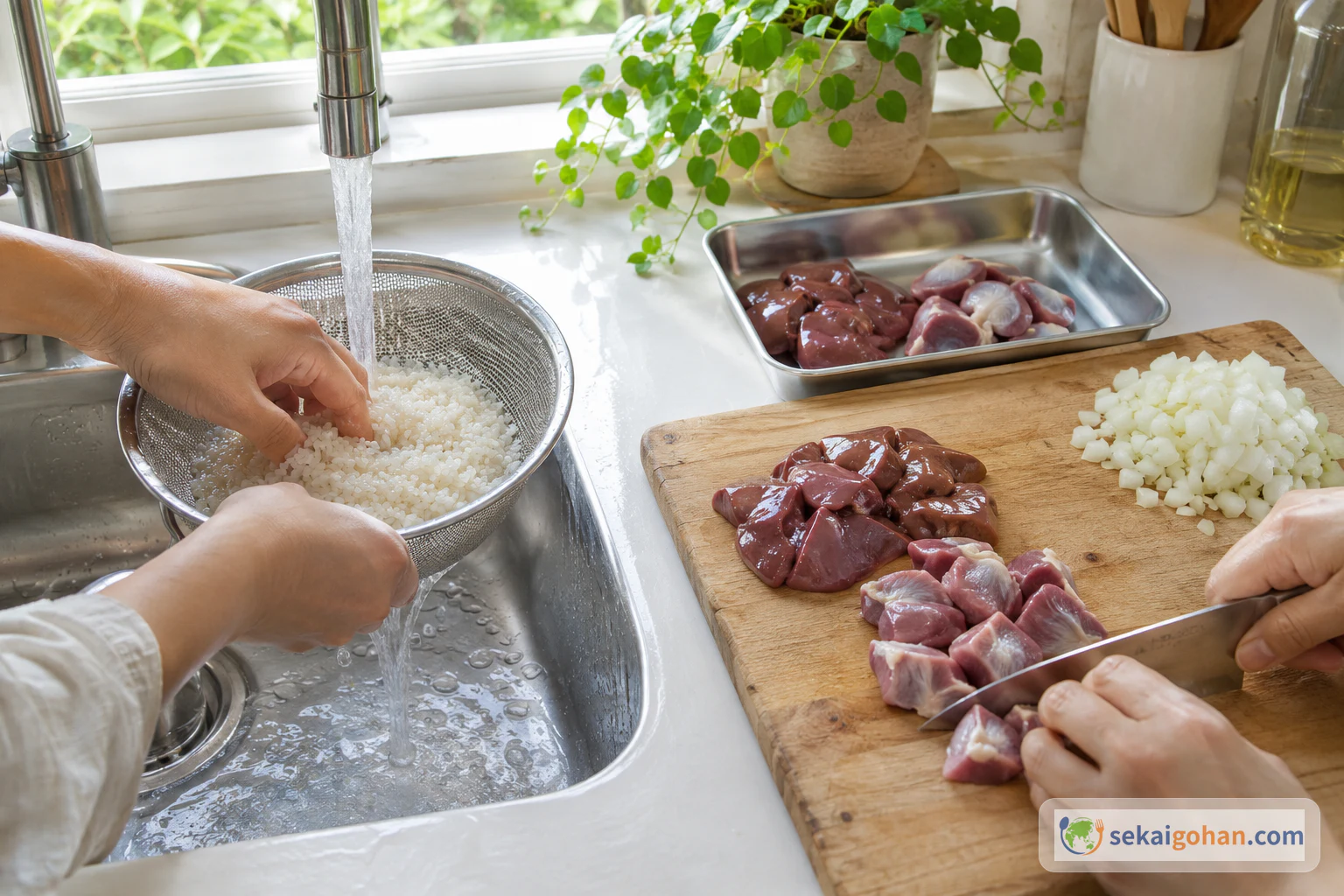
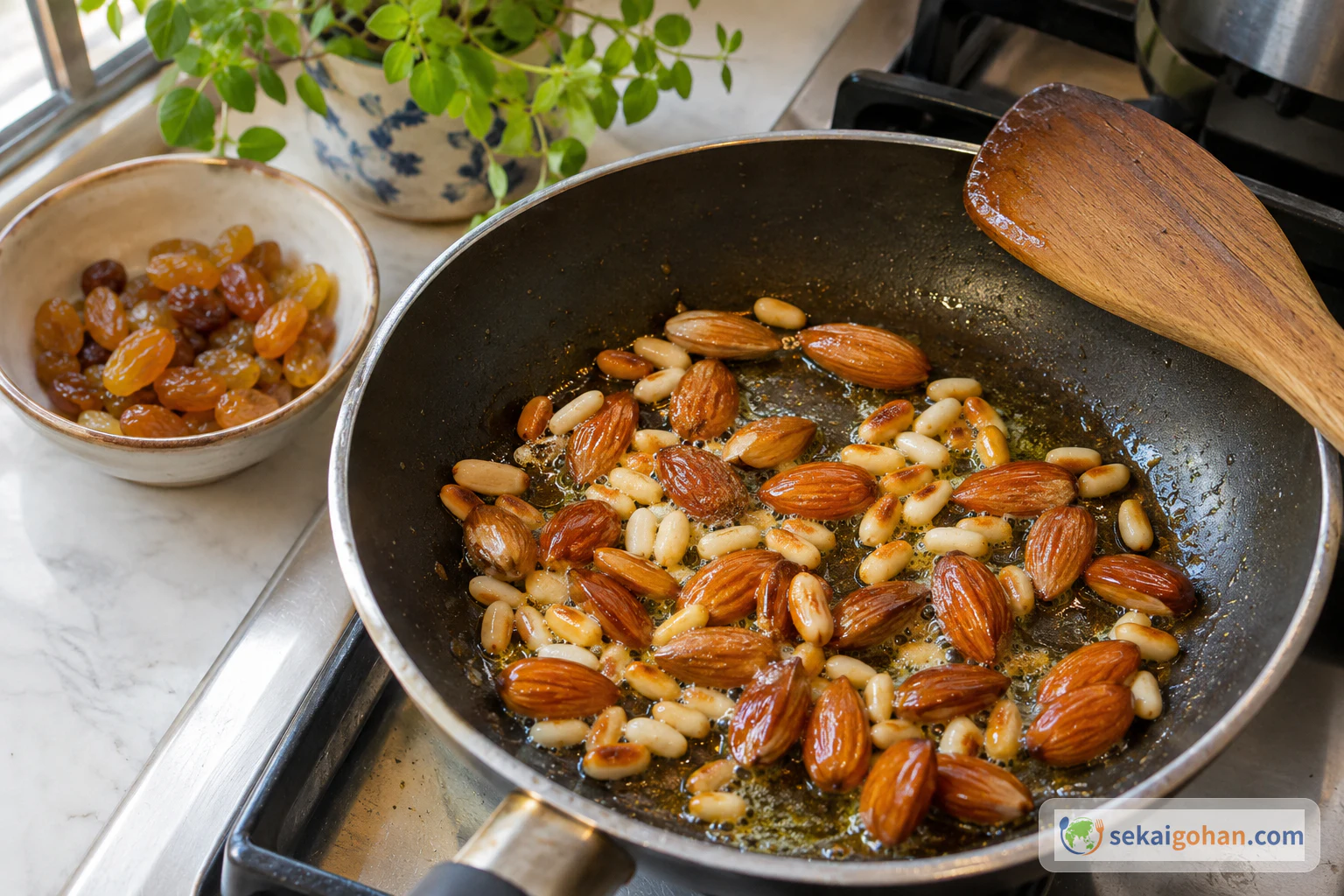
Do all the prep first: rinse the rice, cut the offal, chop the onion and get the broth hot. Toast the nuts and raisins before anything else, because the pan needs your full attention for a few minutes. The caramel moves fast too. Once the rice is covered on low heat, you have hands-off time, and that is when you cook the offal in a second pan, so both are hot when you plate.
Stop the caramel when it is too pale and the rice comes out beige and tastes of plain broth. Take it all the way to dark gold and the grains turn a warm brown that smells of caramel without tasting like dessert. Black caramel means start again.
When It Goes Wrong
| What you see | Why | What to do |
|---|---|---|
| The caramel smells acrid and turns black | The heat was too high or the sugar sat too long | Throw it out and start again. Burnt caramel makes the whole pot of rice bitter |
| The rice is sticky and clumped | It was not rinsed enough, or there was too much liquid | Put the lid back on, lower the heat and let it steam longer. Next time, rinse until the water runs clear |
| The nuts are dark and bitter | The pan was too hot or you stopped stirring | Toast a fresh batch. Pine nuts need constant stirring and come off as soon as they turn pale gold |
| The offal is tough on the outside and pink inside | The pieces were too big for the heat | Cut them smaller, return them to the pan and cook until the centre reaches 167°F (75°C) for at least 1 minute |
| The rice tastes flat | The broth was underseasoned | Add salt, pepper and cinnamon a little at a time, and taste between additions |
Serving and Variations
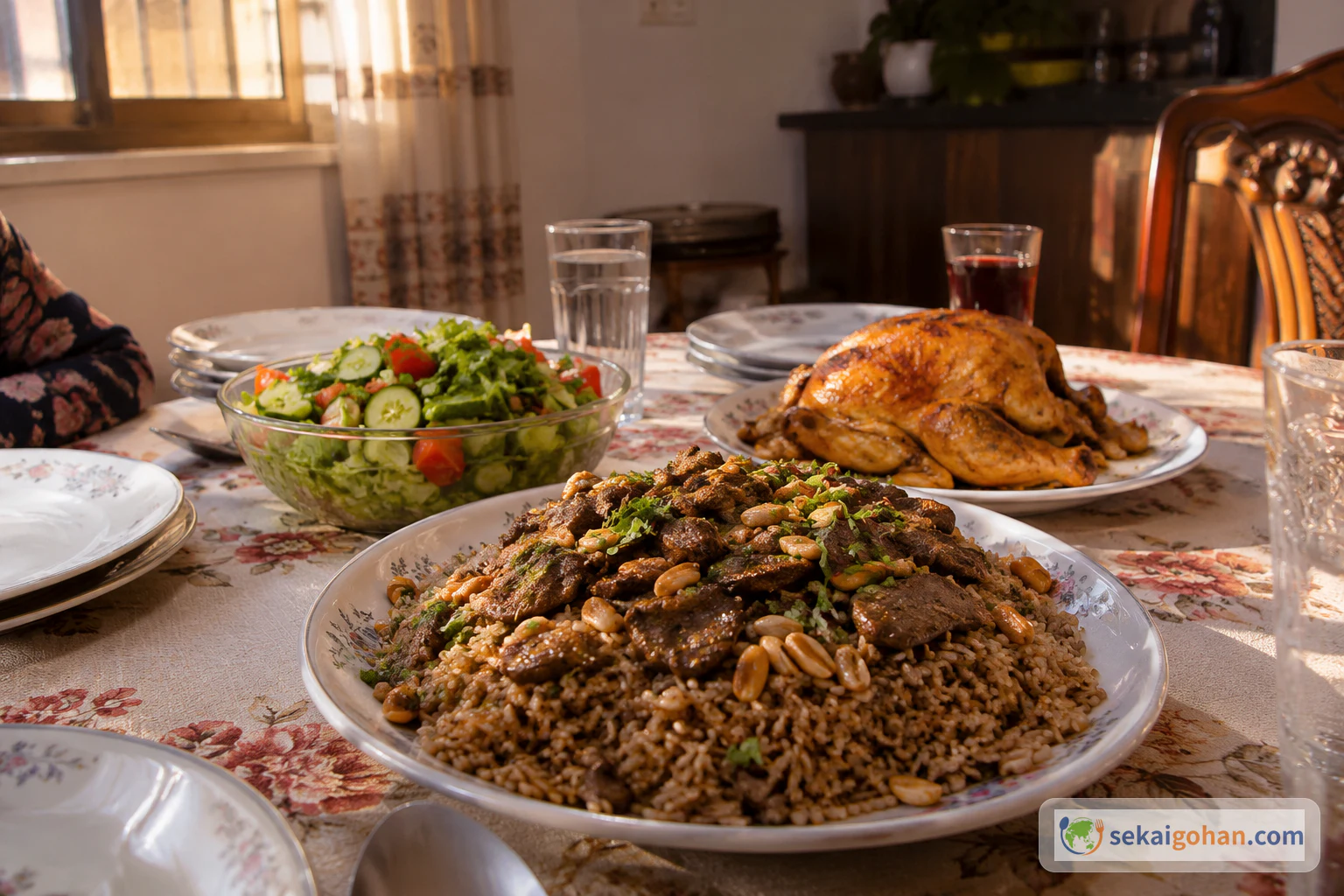
Roz bel khalta is a feast dish, so put it in the middle of the table on a single large platter and let people help themselves. It goes alongside roast meat, such as a roast chicken, lamb, a holiday turkey or a pot roast, and its sweet spice and crunch balance the plain meat. Serve each person some rice from the edge and some khalta from the middle so every plate gets both. For dessert after a meal like this, Egyptian basbousa keeps the feast going.
Variations
- Beef liver. Some households use beef liver alone in place of the chicken offal. It gives a deeper, more mineral flavour and a firmer bite.
- Lamb offal. Use lamb liver, heart and kidney. The topping becomes richer and gamier, and the offal needs a longer time in the pan to cook through.
- With pistachios. Add pistachios to the almonds and pine nuts. Their green brightens the platter.
- Basmati rice. Basmati makes longer, drier, more fragrant grains. It looks more like a pilaf and the texture moves away from the soft Egyptian grain.
Frequently Asked Questions
Can I make it without the liver and gizzards?
Yes. Many cooks top the caramel rice with toasted nuts and raisins only, and serve it as a side for roast meat. Skip step 5 and use the oil or ghee you saved for the offal to toast more nuts.
Why do the gizzards go into the pan before the liver?
Gizzards are dense, muscular and chewy, and they need longer in the pan. Liver is soft and turns grainy if it is overcooked. Starting the gizzards first gets both cooked through at the same moment.
Is the rice sweet?
Not like a dessert. The small amount of sugar is cooked to a dark caramel, so it adds colour, a toasty smell and a light roundness to the savoury broth. The real sweetness comes from the raisins on top.
Can I make it ahead for a party?
It is best cooked close to serving time and eaten soon, so avoid making it far in advance. Toast the nuts and raisins and cut the onion earlier in the day, then cook the rice and offal just before guests arrive. Reheat any leftovers until they are steaming hot all the way through.