
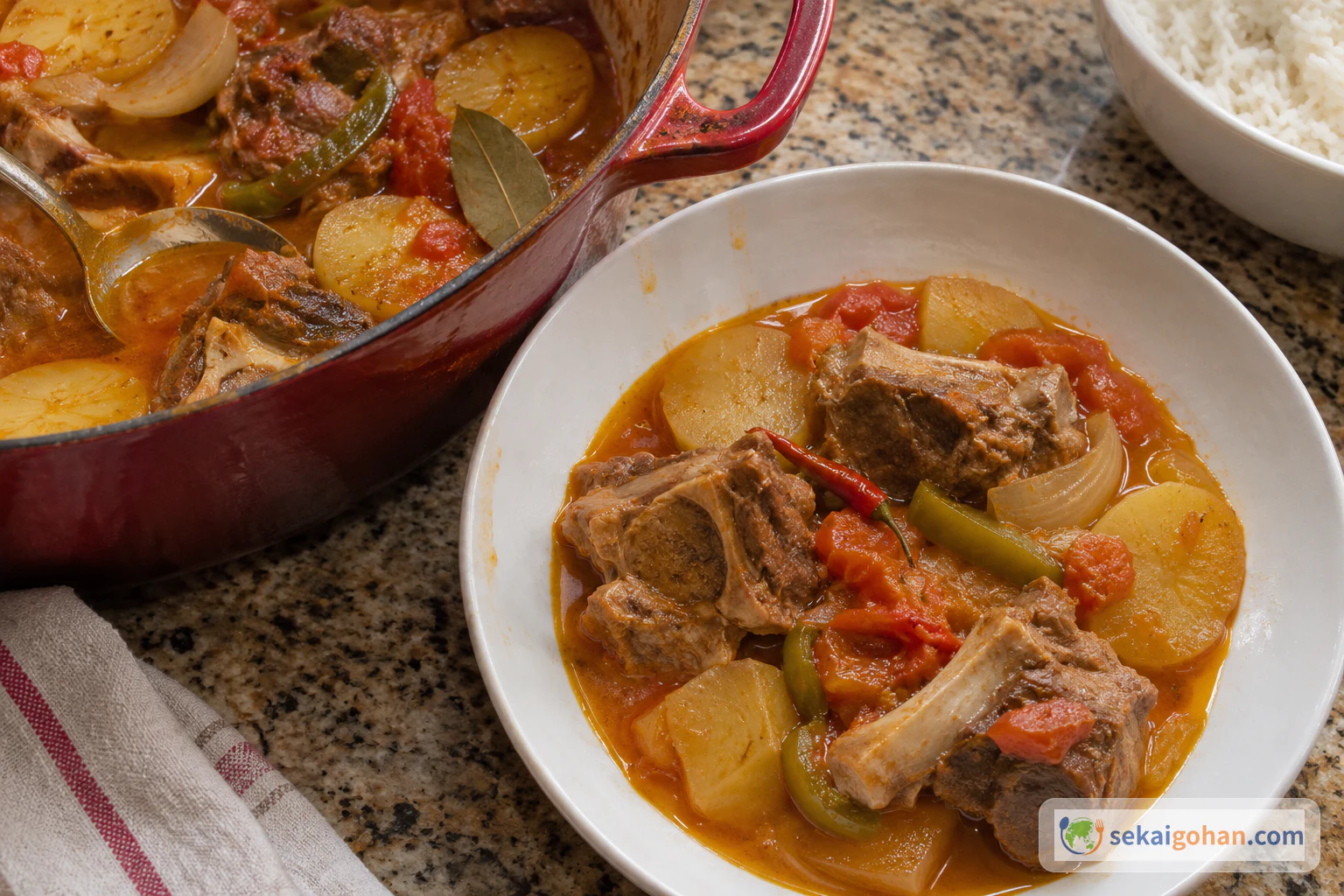
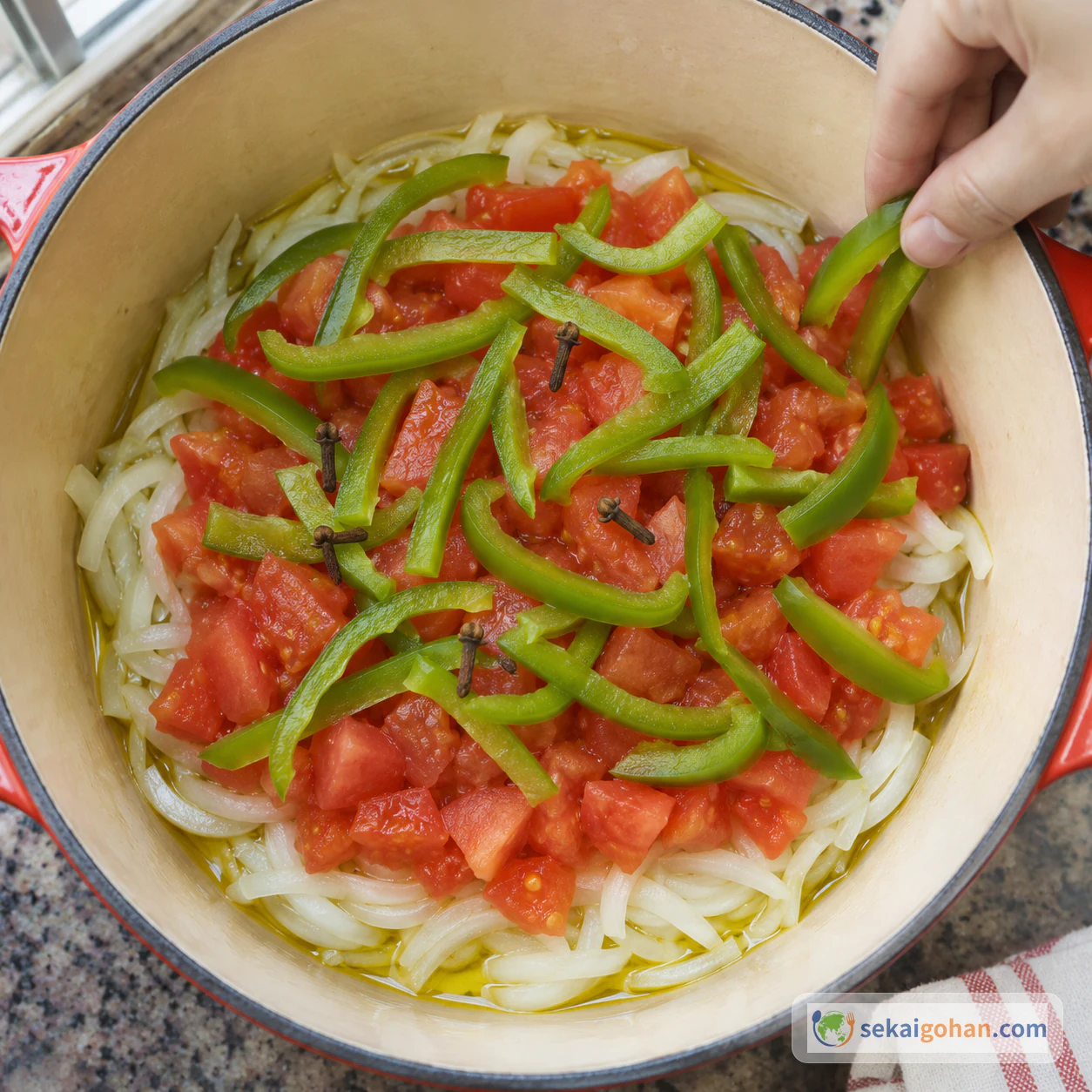
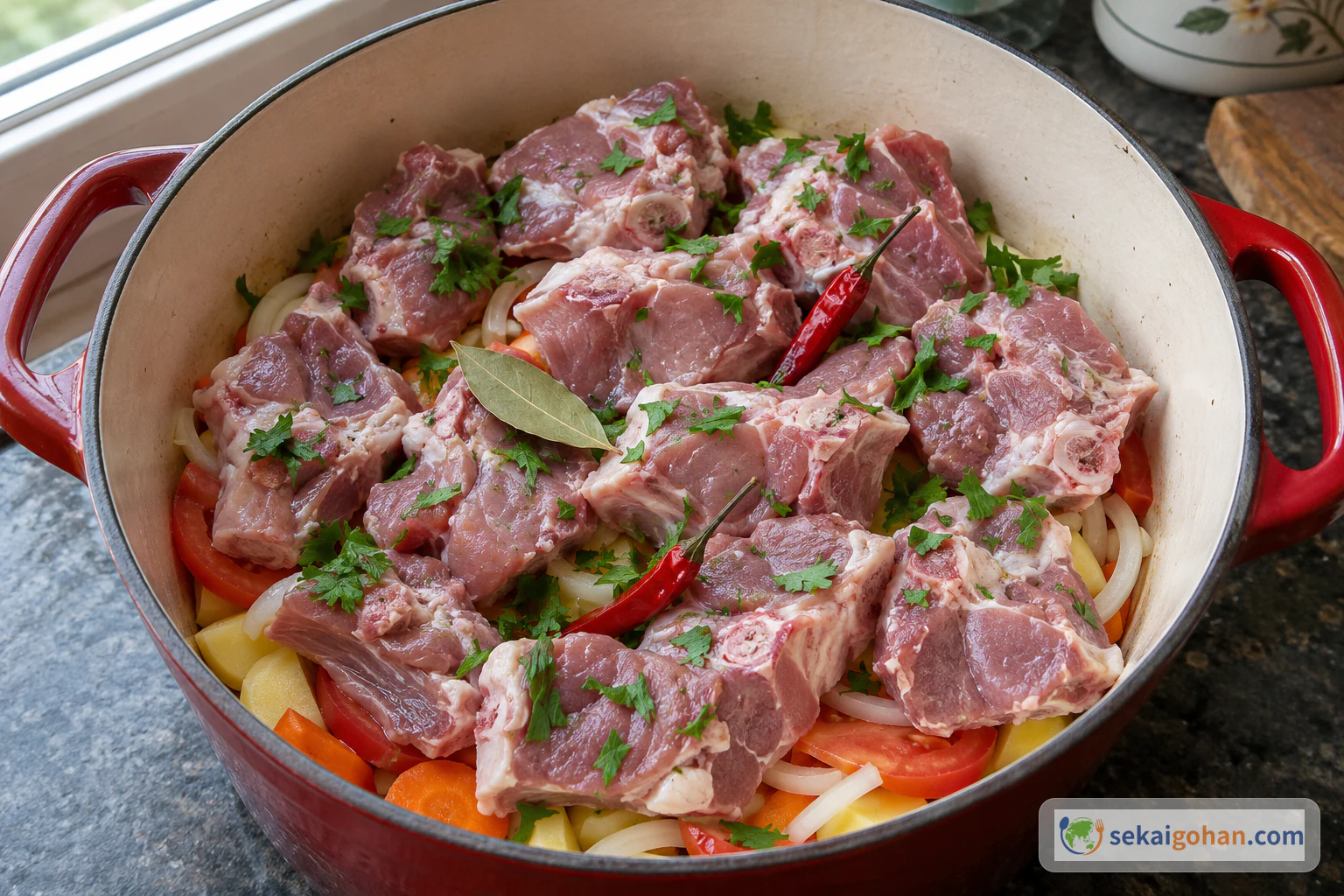
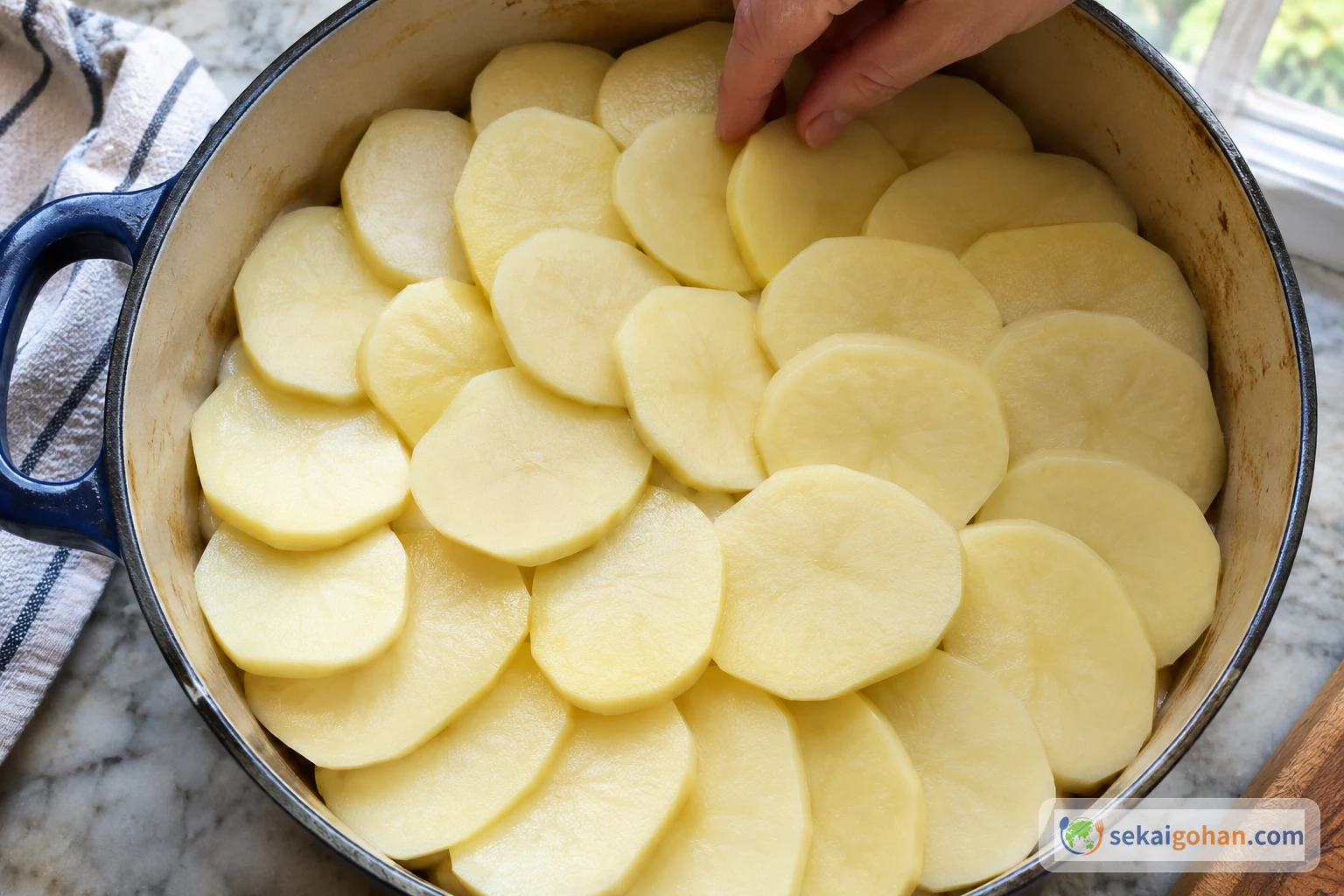
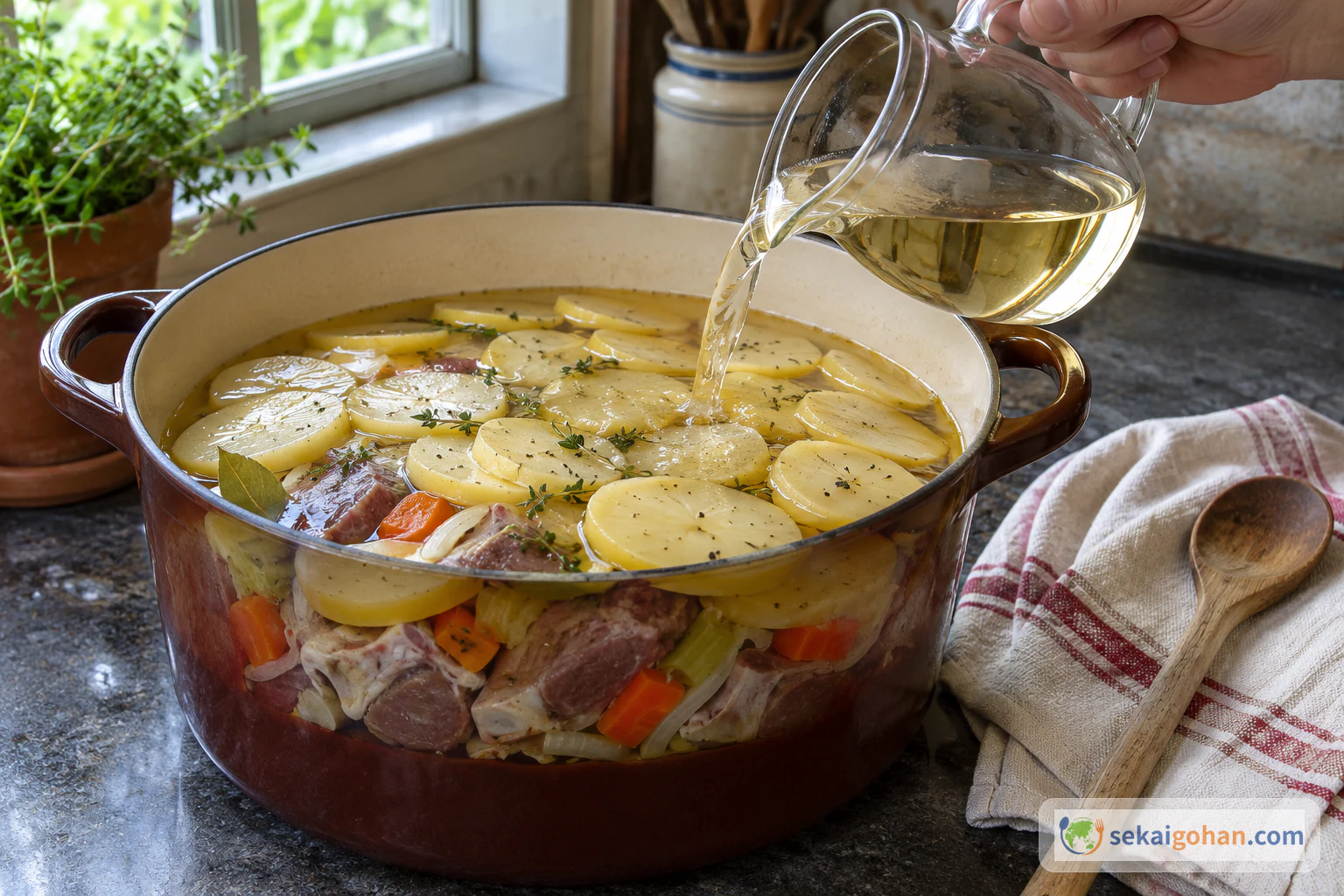
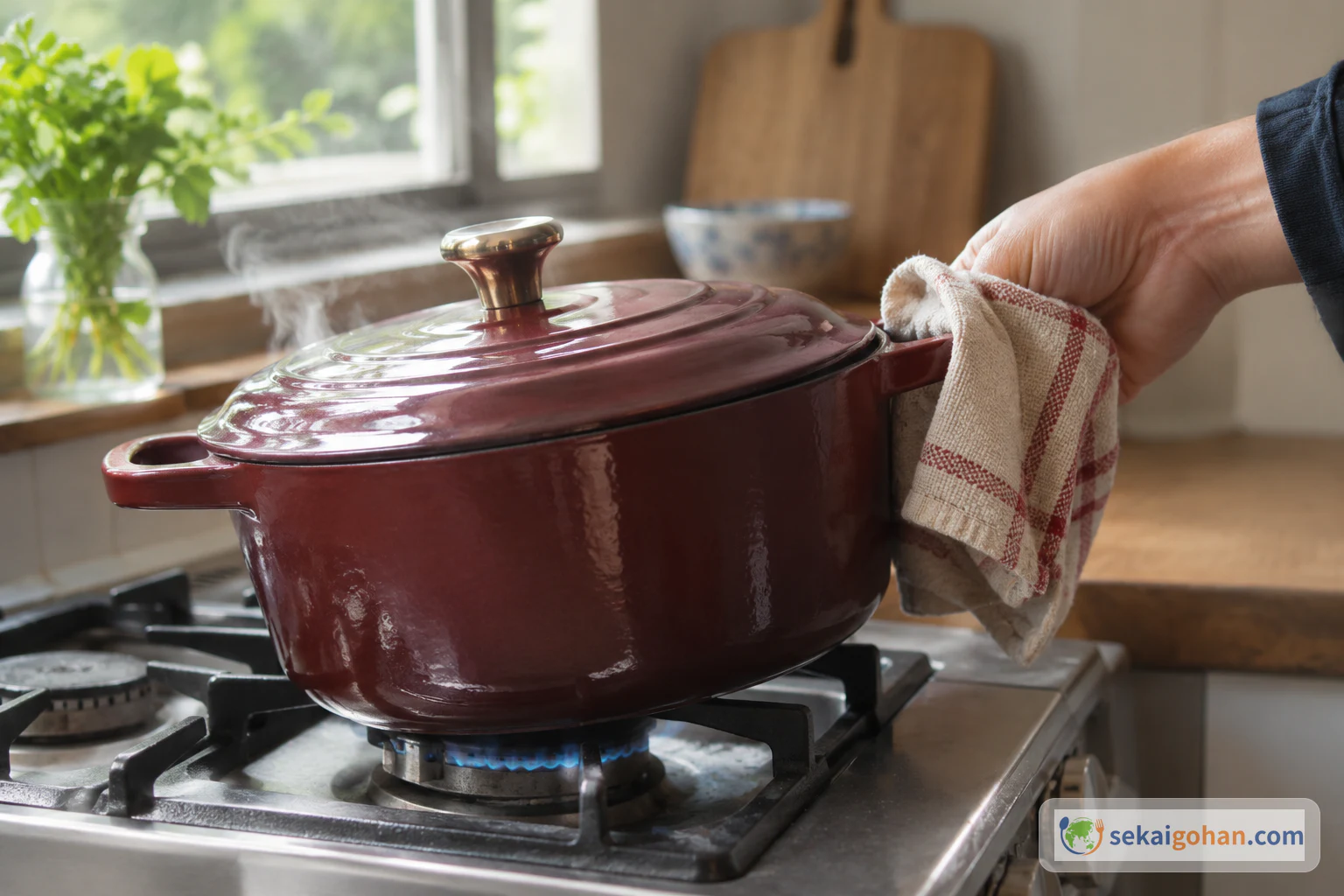
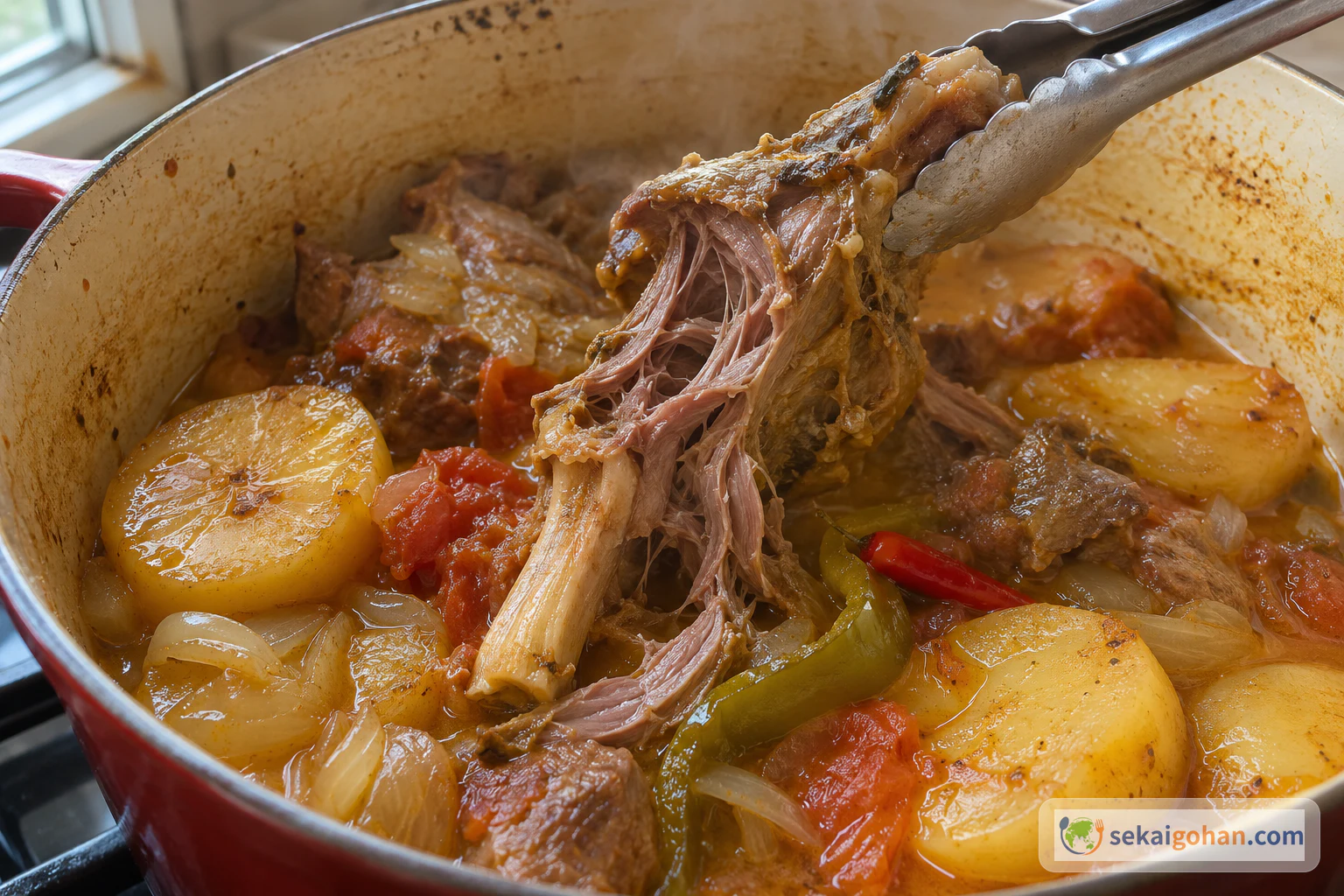
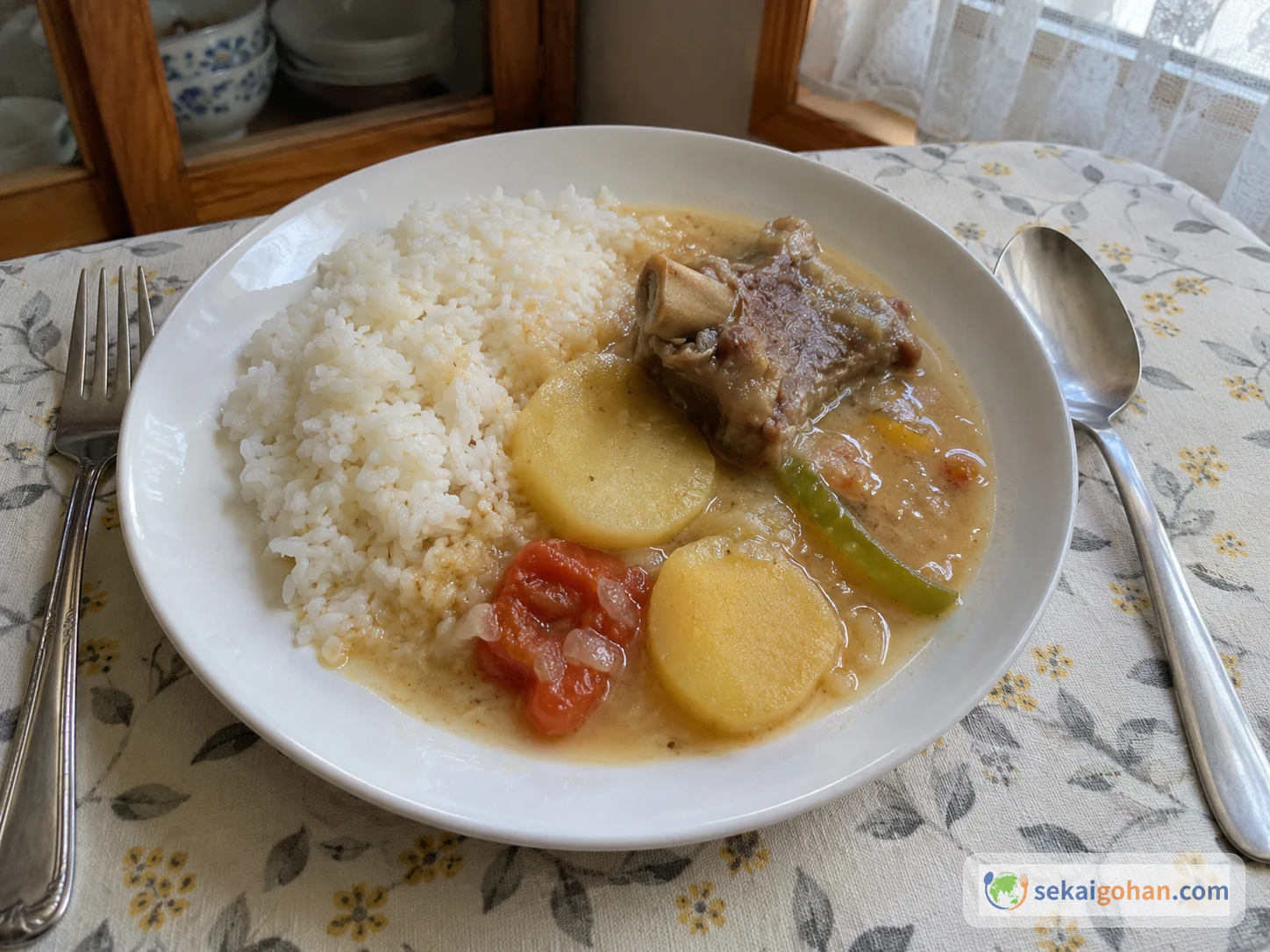
Olive oil goes into the pot first. On top go thin slices of onion, chopped tomato and strips of green pepper, then raw goat on the bone, parsley, a bay leaf and a small red chili, all laid flat and left unstirred. A second round of the same follows, and potato rounds cover everything. White wine with a splash of aged spirit is poured in until it reaches the top, and from then on the cook only lifts the pot by its handles now and then and gives it a shake. This is caldeirada de cabrito, the young-goat stew Angolans serve with white rice on November 11, Independence Day. What comes out is goat that slips off the bone in a pale wine-and-tomato liquor, sharpened by green pepper and chili, with potatoes on top that have soaked up the pot.
A Pot for November 11
The name and the day
The dish carries two Portuguese words. Caldeirada names a stew made in one deep pot, and the best-known caldeirada in Portuguese cooking is made with fish. Cabrito is a kid, the young of a goat, and the word also means its meat. Put together, the name tells you exactly what goes in, and it signals that the animal should be young.
Cabrito comes from the Late Latin capritus. On its own it names the meat, not a recipe. Angola also has kissuto rombo, a roasted goat, which is a separate dish. "Caldeirada de cabrito" always means this layered stew in a pot.
Caldeirada de cabrito is named among Angola's best-known dishes, and it belongs to November 11, Independence Day, the National Day. On that day it comes to the table with white rice. That follows the everyday Angolan pattern, where meat or fish is stewed in a thick sauce with vegetables such as okra and served with rice or with funge, the cassava staple. On the holiday the pattern stays the same and the goat makes it an occasion. Garlic runs through much of Angolan cooking, though this pot leaves it out and leans on onion, tomato and pepper.
Goat in an Angolan kitchen
Chicken is the meat Angolans eat most, and that is why a pot of goat reads as a celebration. Livestock is raised in Cuando Cubango, Cunene, Huambo, parts of Uíge, Cuanza Sul and Malanje, and repeated droughts in the southwest have hit both crops and herds. Where the stew was first made is not settled. Its Portuguese name matches a country whose official language is Portuguese, alongside national languages such as Umbundu, Kimbundu, Kikongo, Tchokwe, Fiote, Kwanyama and Nhaneca.
The heat comes from gindungo, the Angolan name for the small red chili that also goes into muamba de galinha, kissuto rombo and bifes de veado. Muamba stews chicken in palm oil and calulu de peixe stews fish. The goat caldeirada is the one built in layers and moved only by shaking the pot. More dishes from the same table are on the Angola country page.
Ingredients (serves 4 to 5)
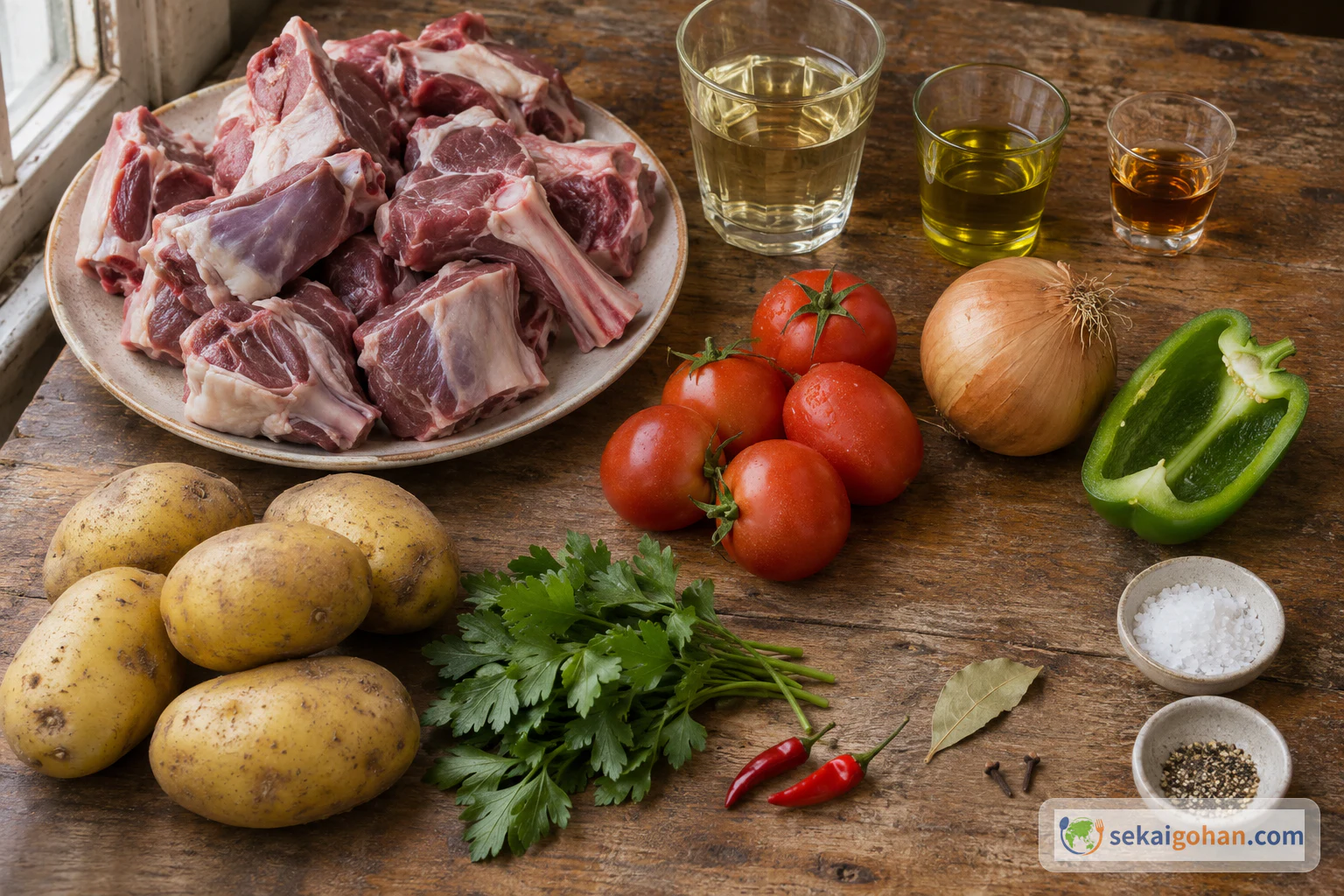
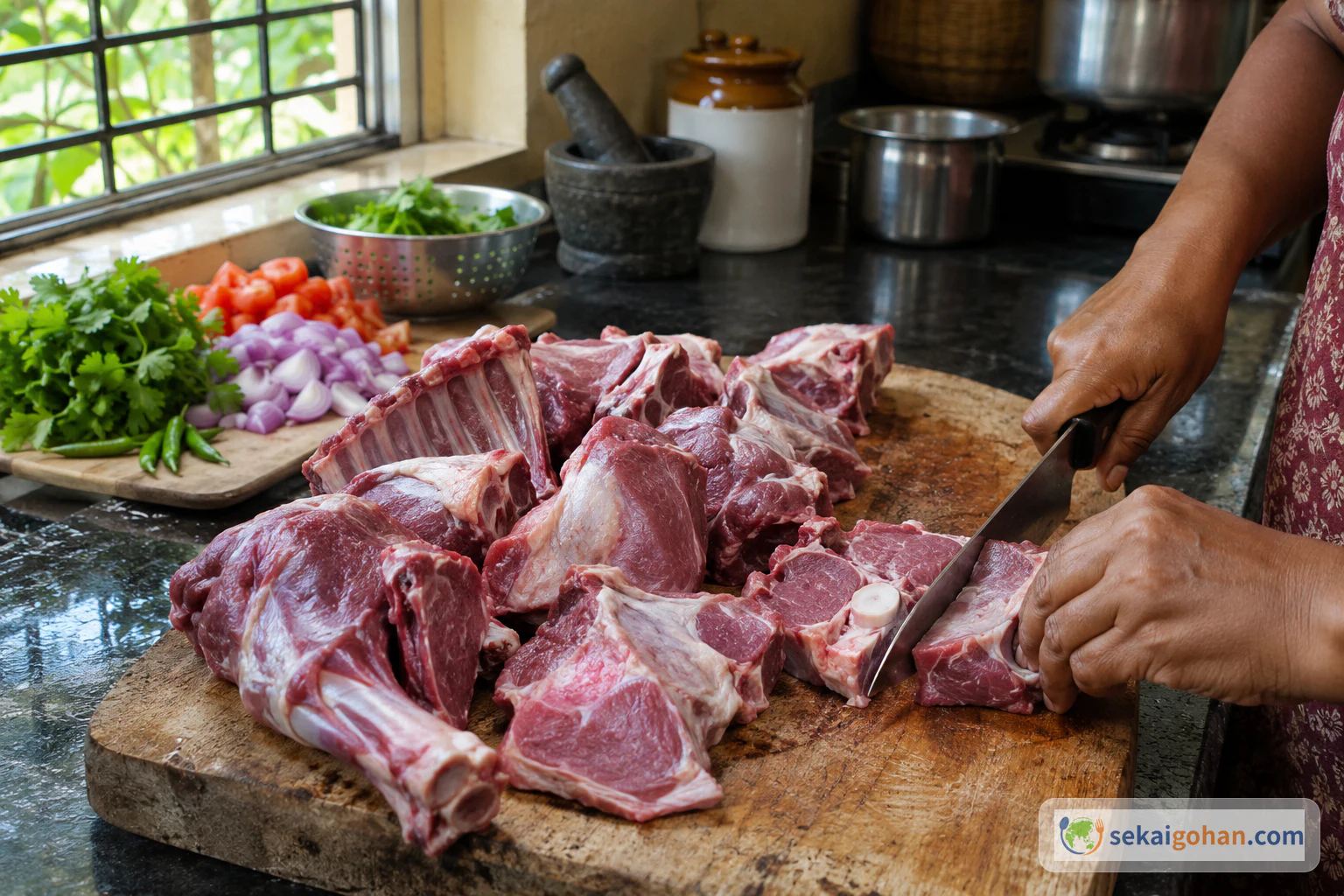
Young goat is the choice that decides tenderness. A kid is more tender and milder than an older animal, and meat from older goat is a common reason a pot stays tough. Ask for bone-in pieces.
None of the common allergens (milk, wheat, egg, peanut, soy, shellfish, buckwheat, walnut) goes into this pot. The caution is alcohol. The wine and spirit do not fully cook off. For children, during pregnancy, or for anyone who does not drink alcohol, leave both out and use hot water to bring the liquid to the top of the layers.
Equipment
- A heavy lidded pot, enameled or cast iron, about 9½ inches (24 cm) across
- A cutting board for raw meat and a separate one for vegetables
- A heavy knife for bone-in meat
- A jug for the wine and spirit
- Tongs
- An instant-read thermometer
- A folded cloth or oven mitts for shaking the pot
Buying Goat and Choosing Swaps
Goat is rarely in ordinary supermarkets. Frozen bone-in goat from a specialty or online meat importer is the realistic route. When goat is out of reach, bone-in lamb shoulder or mutton cooks the same way. The goat's own aroma is lighter with either.
| Keep for the Angolan taste | Can change abroad |
|---|---|
| The layer order, with potatoes on top | Aguardente velha, which can become brandy |
| Dry white wine | Gindungo, which can become another small red chili |
| Shaking the pot instead of stirring | Lamb or mutton in place of goat |
| Salt and pepper only at the end |
Each swap changes something:
- Gindungo → dried or fresh red chili with a little vinegar. Chilies vary widely in heat, so taste and adjust as you go.
- Aguardente → brandy. It is easy to find and works in small amounts. The flavor shifts.
- Green pepper → red bell pepper. The pot turns sweeter.
- Fresh ripe tomatoes → canned. Canned tomatoes are sharper, and the pot moves toward a different dish.
- Fresh parsley → dried. The aroma is much weaker.
- Potatoes. Choose a variety that holds its shape when simmered. Waxy potatoes stay whole.
- White wine. Keep it dry. A sweet wine throws the balance off.
- Cloves. Two is plenty. More turns the pot medicinal.
- Olive oil. Using less makes the bottom layer more likely to scorch.
Method: Layer, Pour, Shake
Cut everything before the pot comes out. The meat and vegetables then go down in a few unbroken minutes. After the wine goes in, the work is hands-off simmering on low heat, interrupted only by a shake of the pot now and then. The bone tells you when it is done.
After cutting raw goat, wash the knife and board, then pour boiling water over them, and wash your hands. If you have to stop partway through cooking, refrigerate the pot and heat it thoroughly when you start again.
Shaking the pot instead of stirring keeps the layers in order. The onion and tomato protect the bottom, and the potato stays whole on top. One stir sends the potatoes down into the liquid, where they break and cloud it.
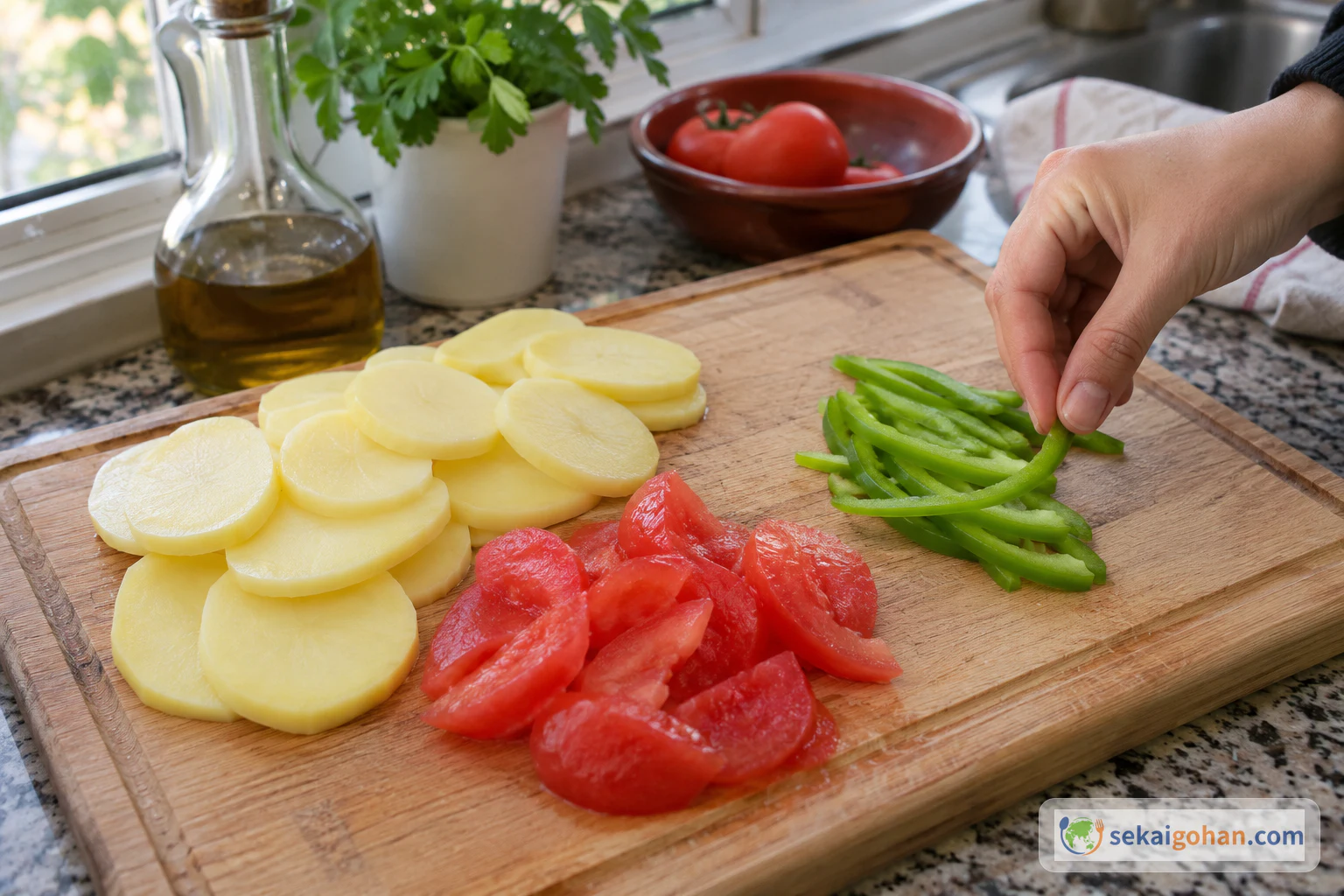
The potato layer traps the steam over the goat and the vegetables. Cut the rounds to the full thickness and overlap them with no gaps.
When It Goes Wrong
| What you see | Why | What to do |
|---|---|---|
| The bottom scorches | The flame is too strong, even on "low", or the layers were stirred | Turn the heat to the lowest flame and only shake |
| The goat stays tight | The animal was not young, or it needs more time | Keep simmering on low and judge by the meat leaving the bone |
| Potatoes break and cloud the liquid | Rounds were cut thin, the pot was stirred, or the heat was high | Cut ⅜-inch (1 cm) rounds, keep them on top, and only shake |
| Too hot | Gindungo varies widely from chili to chili | Next time start with 1 chili. Adding heat is easier than taking it away |
| Soupy instead of a braise | Too much water was added | Take off the lid and simmer on low to reduce |
| A harsh alcohol smell | Too much spirit, or too short a simmer | Use less spirit. For children, leave it out |
Serving, Variations and Storage
At the table
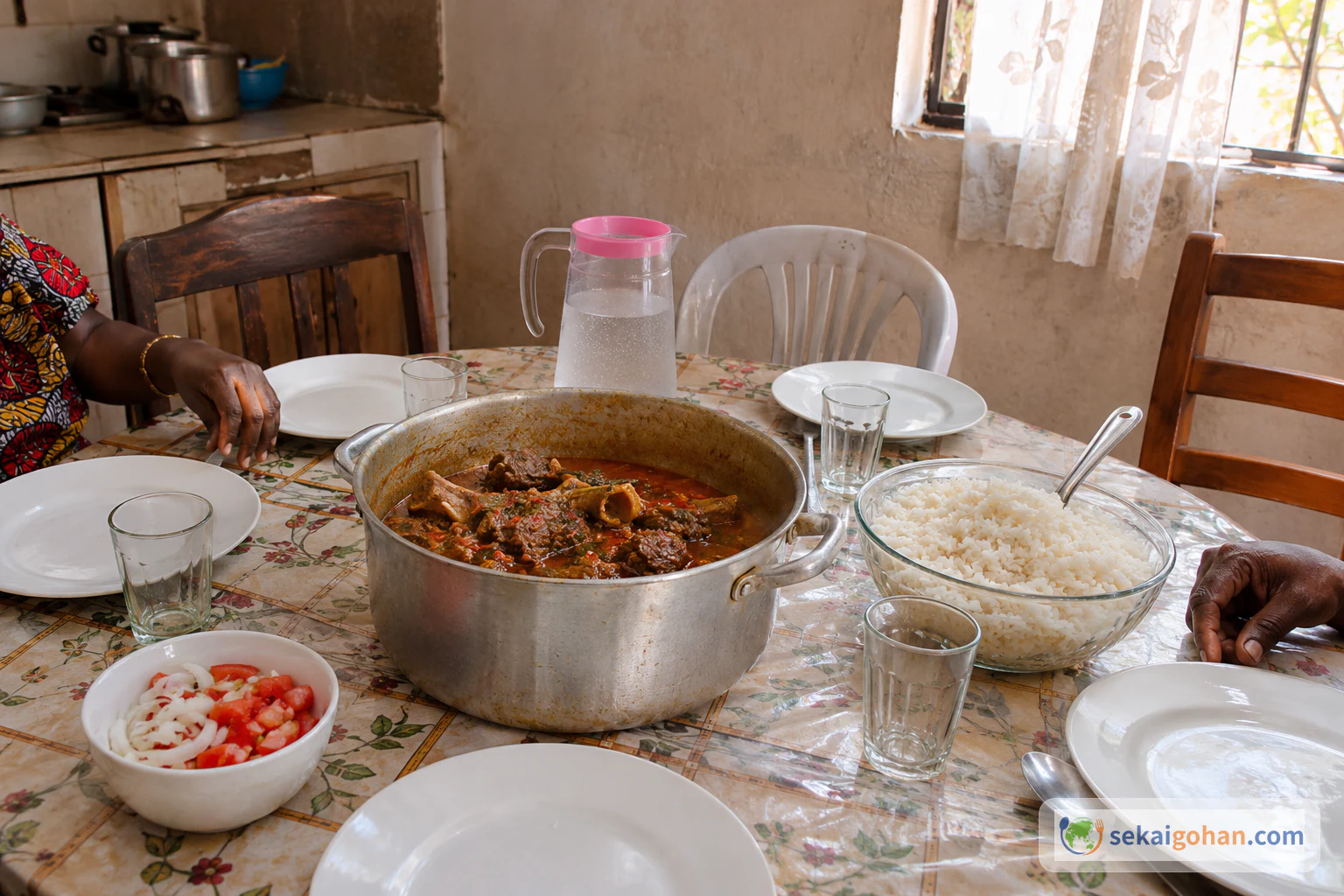
On Independence Day the pot goes out with white rice, and that pairing is the one to start with. Funge serves the same role as the starch on an everyday Angolan table. Bread works on a day when you have neither. The starch changes how the stew comes across: rice soaks up the liquid, funge is eaten with the meat. Set out a small dish of chopped chili for anyone who wants more heat.
Variations
- The English-language home version. Chouriço, piri-piri sauce, paprika and garlic go in. The meat is marinated for 3 to 4 hours, browned for 2 to 3 minutes, layered, and cooked in white wine for 30 to 35 minutes. The result is smokier and quicker, and it becomes a different pot.
- Lemon to start. Another Angolan version seasons the goat with lemon juice first and layers it with onion, garlic, tomato and green pepper. That adds brightness and a garlic note.
- The Portuguese way. The goat marinates overnight in white wine with garlic and bay and is layered without browning. Potatoes and pepper go in after about 45 minutes, and chopped parsley is scattered at the end. The meat takes on more wine, and the potatoes stay firmer.
- Heat on the side. Make the pot with one chili or none and serve chili separately. Children eat from the same pot.
Storage and reheating
Let leftovers cool, then move them to a clean covered container and refrigerate promptly. Never leave the stew out at room temperature, and eat it by the next day. Reheat until it reaches 167°F (75°C) or higher. The potatoes break when heated again, so warm single portions in their own bowls instead of stirring the whole pot. To freeze, freeze only the meat and liquid, because the potatoes fall apart.
Frequently asked questions
Should I brown the goat before layering?
No. The goat goes into the pot raw and cooks slowly in the wine and vegetables. Browning belongs to the English-language home version. The layered version gets its depth from the long simmer and the bone.
Why does the salt wait until the end?
The layers go in unseasoned, and the chili, tomato, pepper and wine season the goat while it cooks. Tasting the finished liquid tells you how much salt and pepper it really needs. Season once, then serve.
Can I use boneless goat?
Bone-in pieces give body to the liquid and give you the clearest doneness cue. You can mix in some boneless pieces to make the stew easier to eat. Check the boneless pieces by tenderness and with the thermometer.
How do I cook it for a crowd?
Double every amount for 8 to 10 people, which means a whole young kid goat. Use a larger heavy pot so the layers stay level. Pour until the liquid reaches the top of the ingredients, topping up with hot water if needed.


