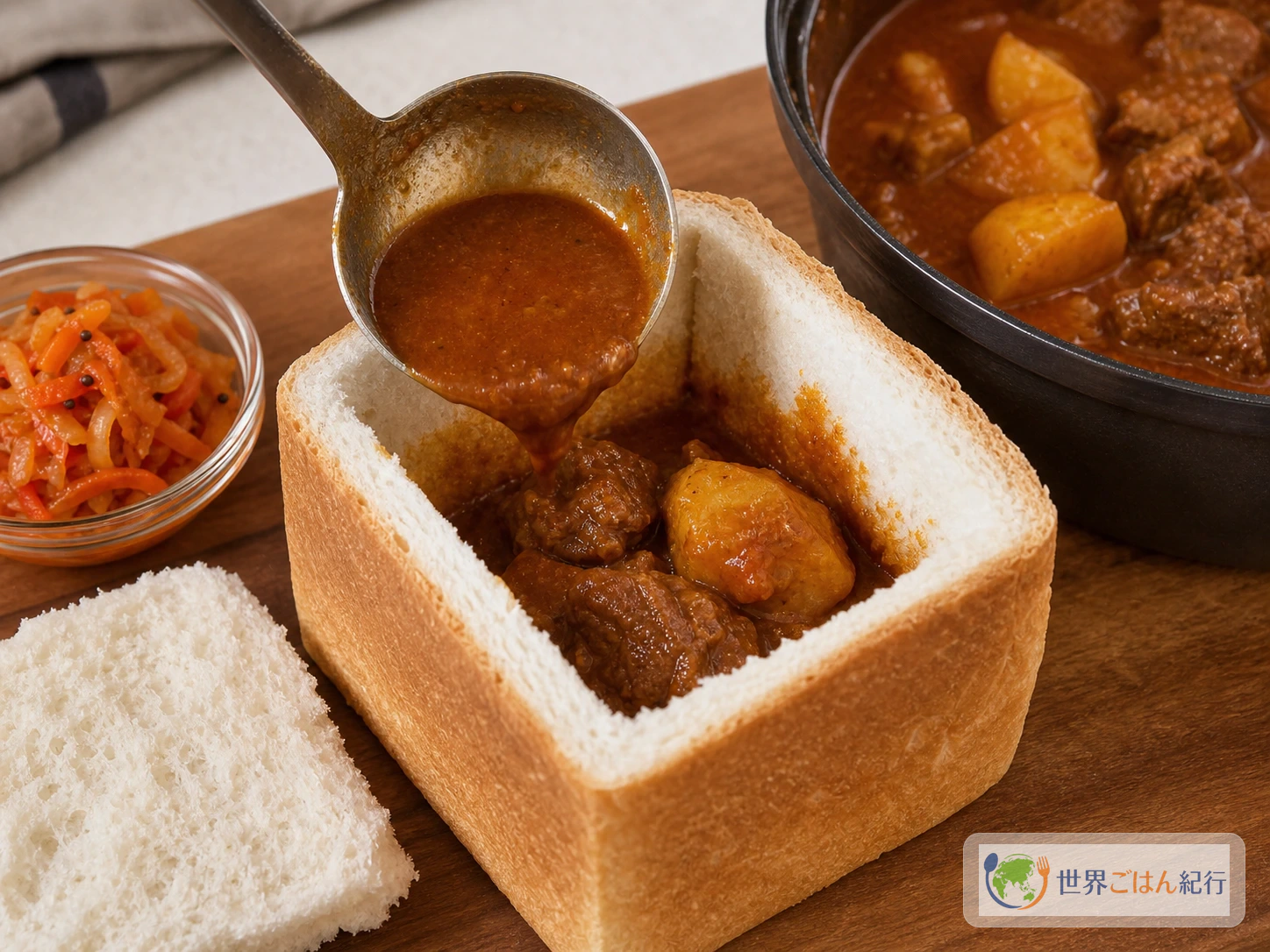
When curry soaks into the bread walls, it becomes street food you can eat down to the bowl
Next to a pot of simmering curry, set a loaf of bread that hasn't been sliced. It may look odd in some kitchens, but to make Durban's bunny chow, this white bread is half the star.
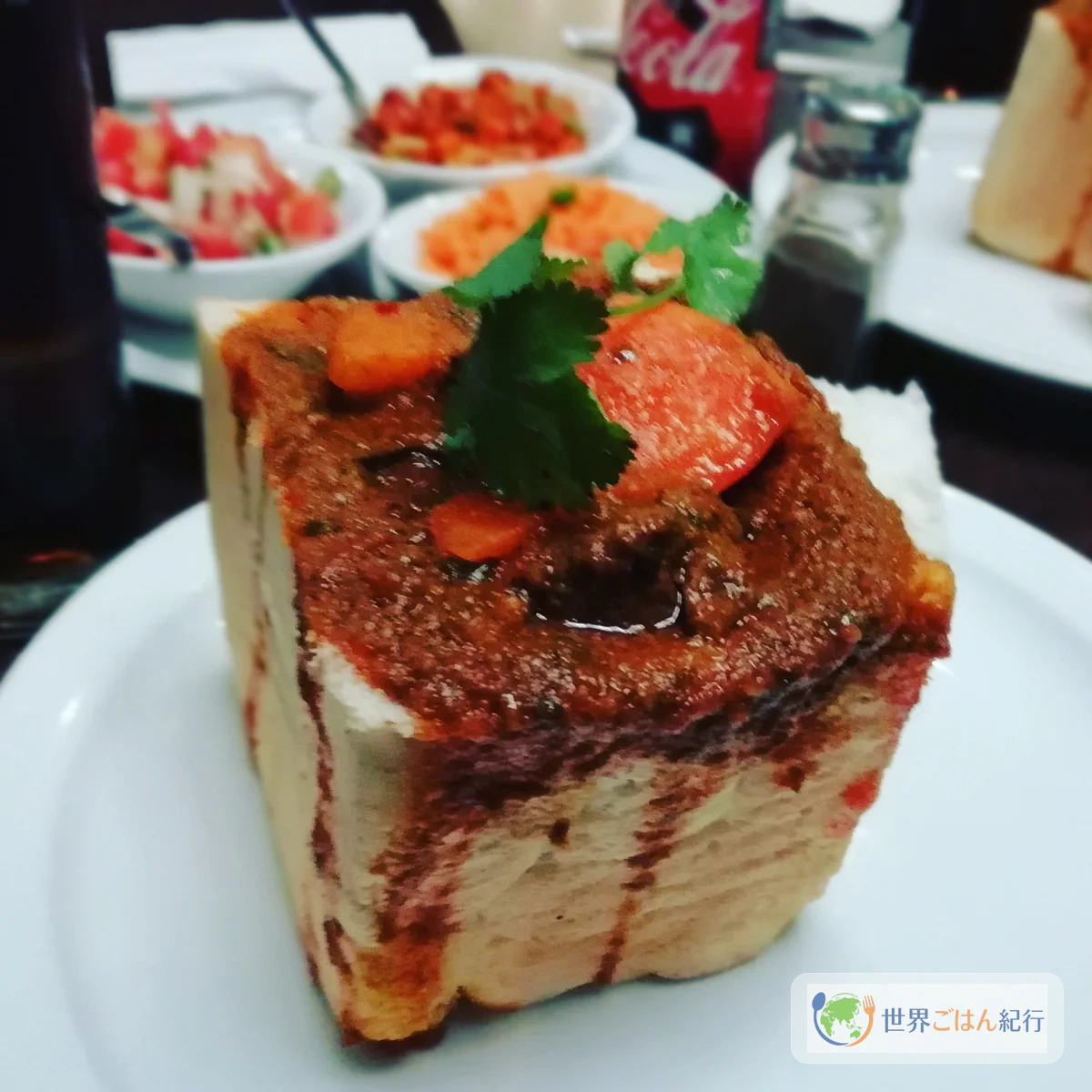
Bunny chow is a dish born in Durban: a white loaf cut into quarters or halves, hollowed out and filled generously with spicy curry. Despite "bunny" in the name, there is no rabbit meat in it. Locally it is shortened to "bunny," and it is filled with mutton, lamb, chicken, bean curry, vegetable curry and more.
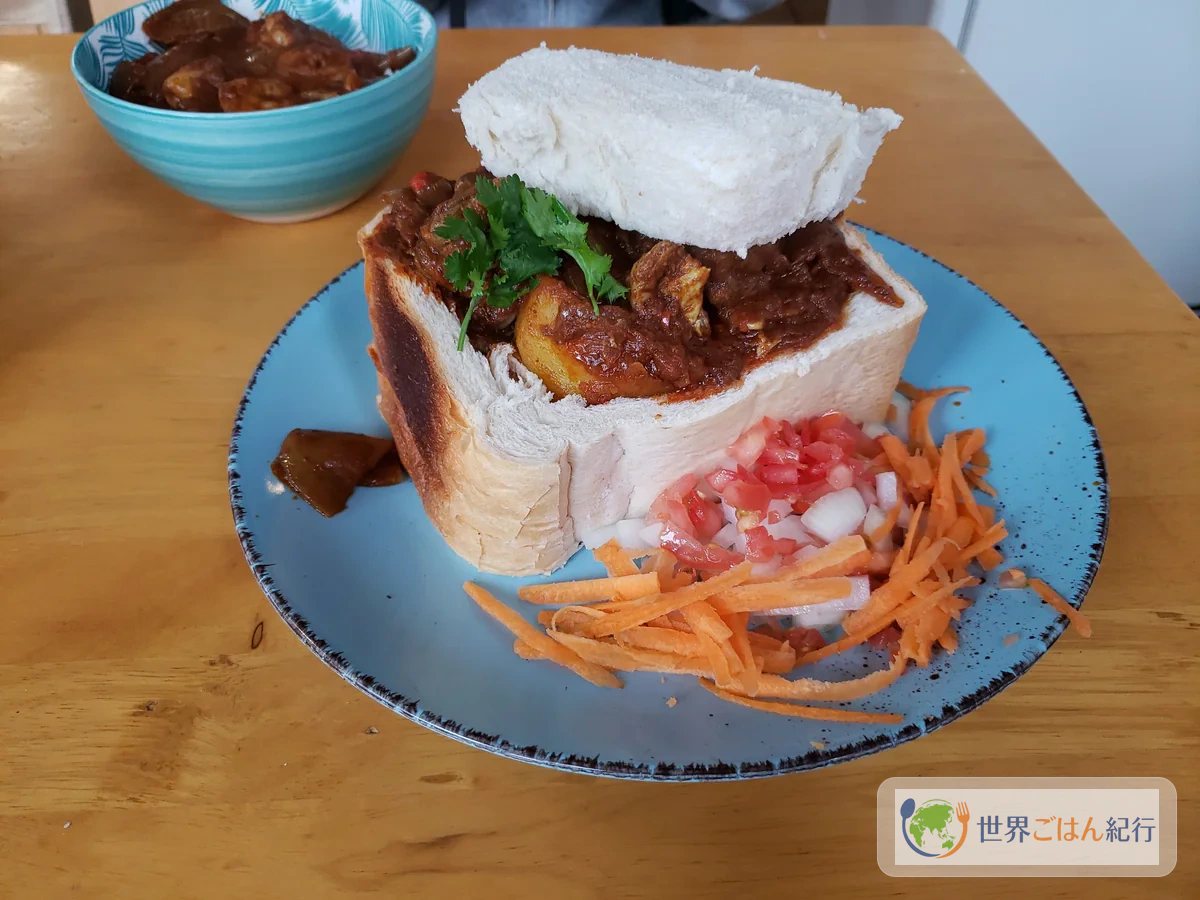
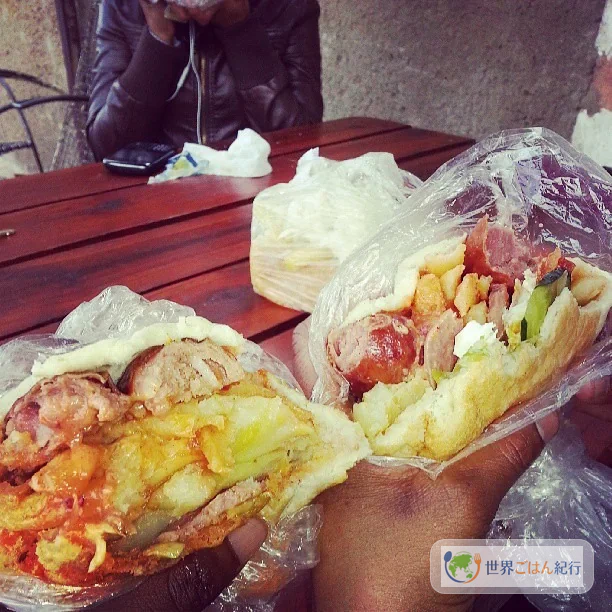
What is interesting is that this is not "curry on bread." The bread itself is the bowl, the utensil and the last bite. First dip the hollowed-out piece that sits on top into the curry, then tear off the walls of bread a little at a time. By the time you reach the gravy that has soaked into the bottom, your fingers and your plate are quite lively.
This article adapts the red spice curry of Durban to ingredients that are easy to find and fills unsliced loaves with it. If South Africa's bobotie is a sweet-savory oven dish of Cape Malay culture, bunny chow is a hand-eaten curry culture grown by Durban's Indian community.
Bunny chow is written Bunny Chow in English and also called simply Bunny locally. Elsewhere in South Africa there are similar "quarter loaf" dishes such as kota and skhambane. This article uses "bunny chow" throughout to mean Durban's curry in bread.
Background: Durban's Indian immigrants and white sandwich bread
Durban is a port city in KwaZulu-Natal on South Africa's east coast. From the late 19th century, many people moved from India to work on sugarcane plantations and elsewhere, and the culture of the Indian community remains strong today. Bunny chow is told as a dish born where this Indian community of Durban and the meals of South Africa's urban workers overlapped.
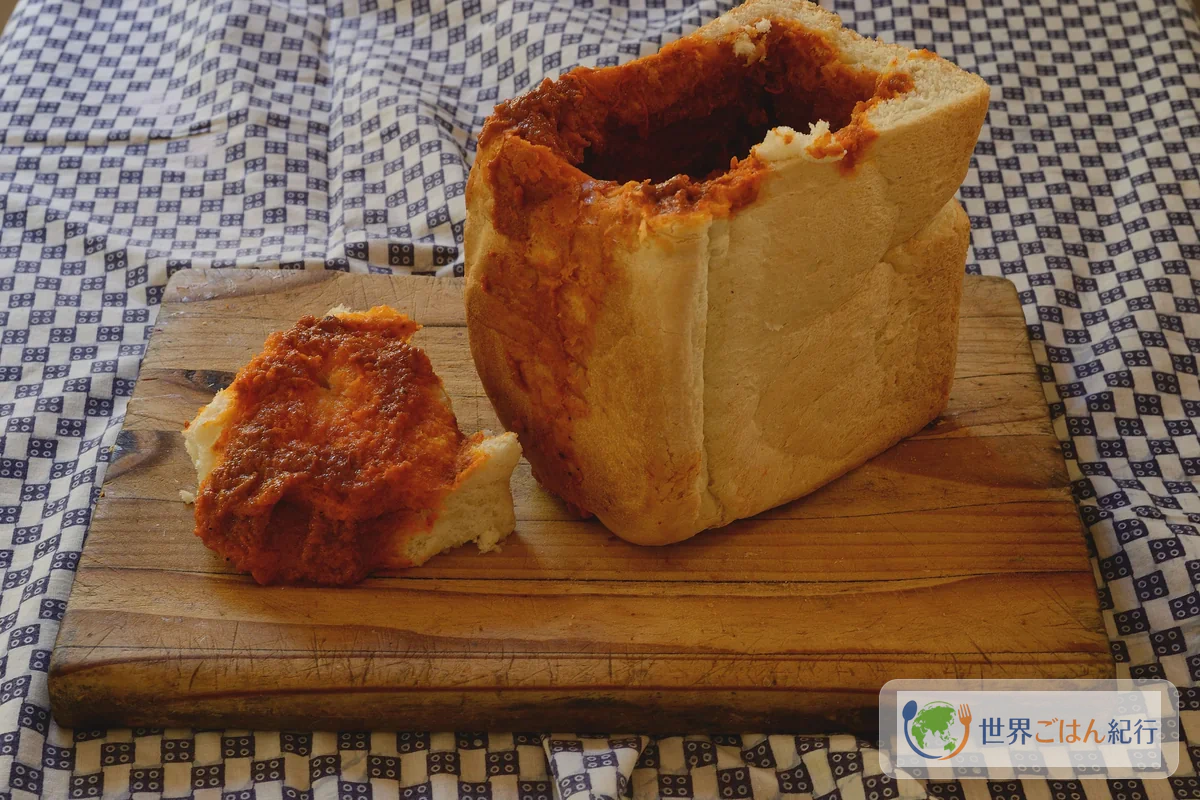
There are several theories of origin. One says that around the 1940s, workers used white bread as a vessel so they could carry curry during short breaks. Another says that during the apartheid era, curry was handed to people who couldn't eat inside shops in a form easy to take away. There is also the theory that the name comes from Bania (the Indian merchant class) and chow (food, to eat).
Rather than asserting one as correct, it is easier to understand the dish by looking at what they share. No plate or knife needed. Warm curry can be carried home without spilling. Cheap and filling. The bread soaks up the gravy so nothing is wasted. Bunny chow is not a tidy restaurant dish but a practical food born of the conditions of the city.
In English-language introductions, bunny chow is often described as a "hollowed-out loaf filled with curry," and TasteAtlas and Atlas Obscura also describe it as an easy-to-carry curry dish from Durban. The Guardian's Meera Sodha also touches on the vegetarian version filled with bean curry, presenting it as an example of Indian immigrant cooking changing to suit its place.
| What to look at | Durban context | What it means when making it elsewhere |
|---|---|---|
| Bread | A quarter of a white square loaf is standard | Buy an unsliced loaf. Sliced sandwich bread is unsuitable |
| Curry | Mutton, lamb, chicken and beans are the standards | Replace with lamb shoulder, beef shank, chicken thigh and chickpeas |
| How it is eaten | Tearing the bread by hand | Set a plate under it and use the bread lid as a spoon |
| Sides | Carrot sambals, pickles, achar | Carrot and onion salad with lemon is enough |
| Heat | Strong, as Durban curry is | Medium for the pot, adding chile at the table suits families |
Rather than remembering bunny chow only as "putting curry in bread," looking at the size of the bread, how the gravy is soaked in, the sambal, and the oil and heat of Durban curry makes it much easier to make. This article takes that "manners of eating" home to your kitchen too.
Ingredients (serves 4): the bread is the bowl; make the curry rich
Here the assumption is a Durban-style curry of lamb or beef, filled into 4 quarter loaves. Mutton is closest to the local dish if you can get it, but it is hard to find in many places, so the recipe is set up to work with lamb shoulder, lamb trimmings, beef shank or beef stew meat.
This dish contains wheat (the bread) and, depending on the meat, beef, lamb or chicken. Some commercial curry powders, garam masala and breads contain dairy, egg, sesame or soy. Check the labels when you buy.
Ingredients and equipment for this dish
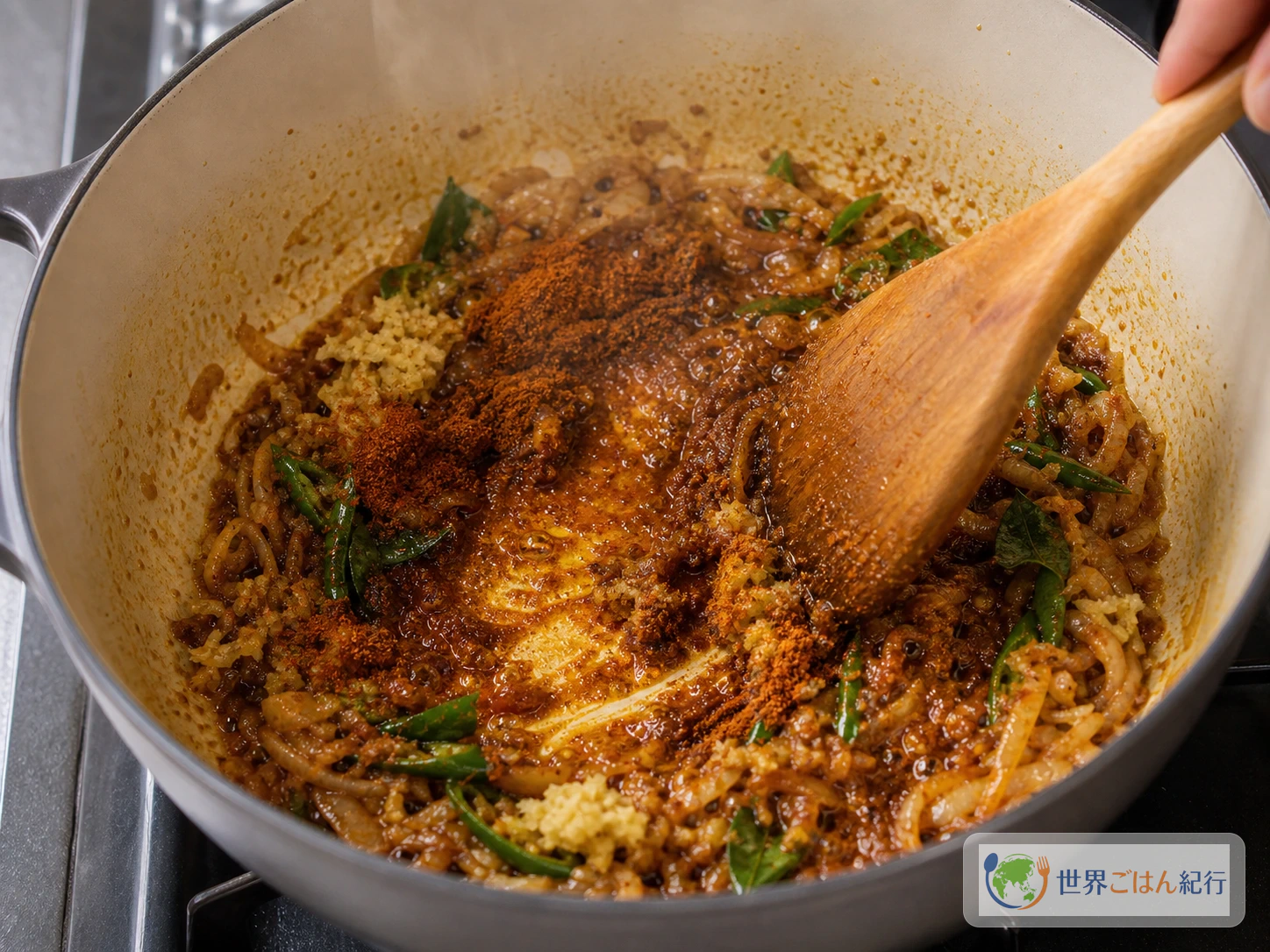
To create the Durban-style aroma, first don't run out of garam masala and coriander. It can be made with ordinary curry powder alone, but adding coriander makes the gravy that soaks into the bread much closer to the local dish.
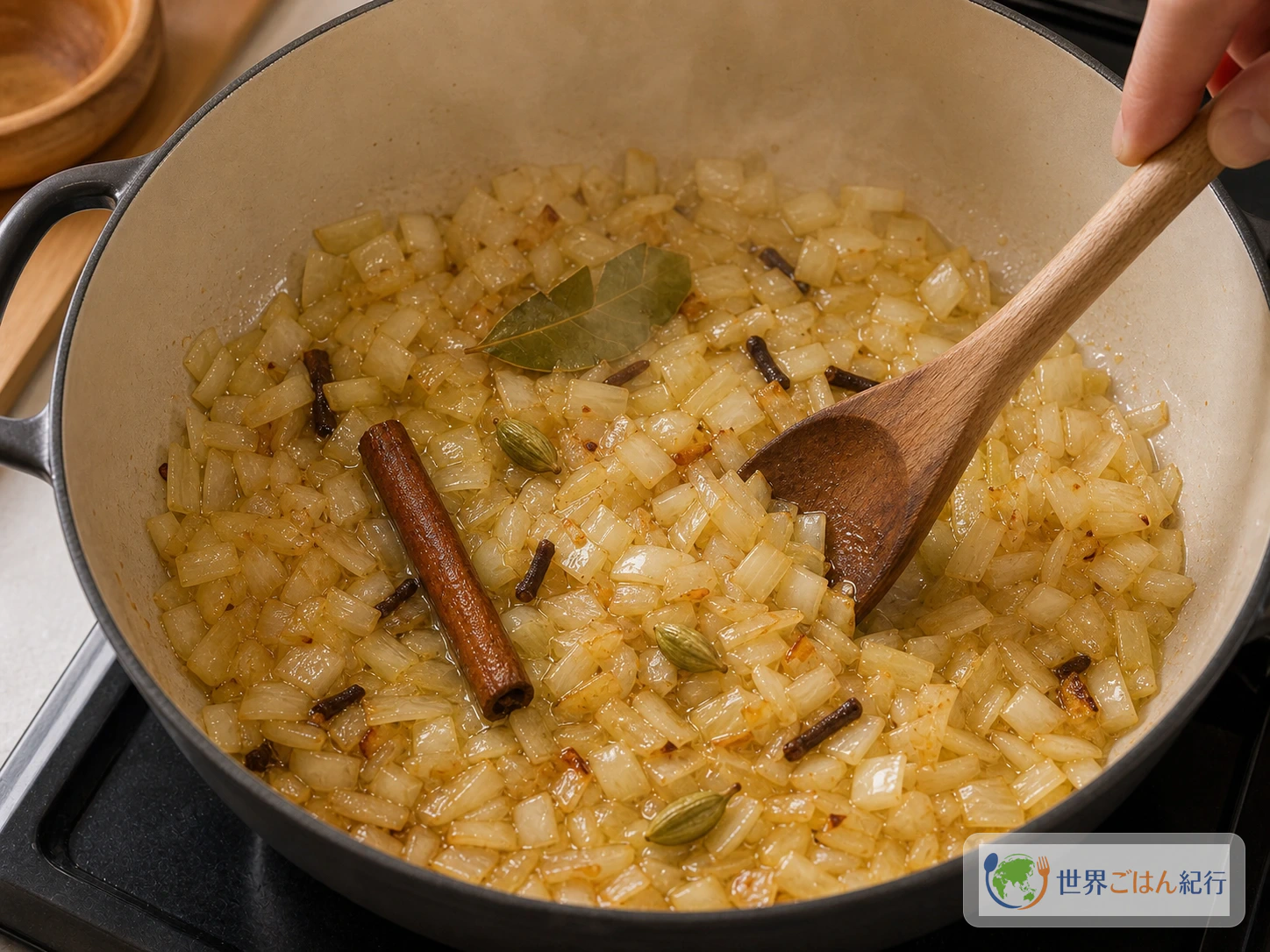
Curry leaves are hard to find in many places. Frozen or dried, they give the green aroma that makes it taste like Durban curry. If you can't get them, don't hunt around; make up with bay leaf and fresh herbs at the end.
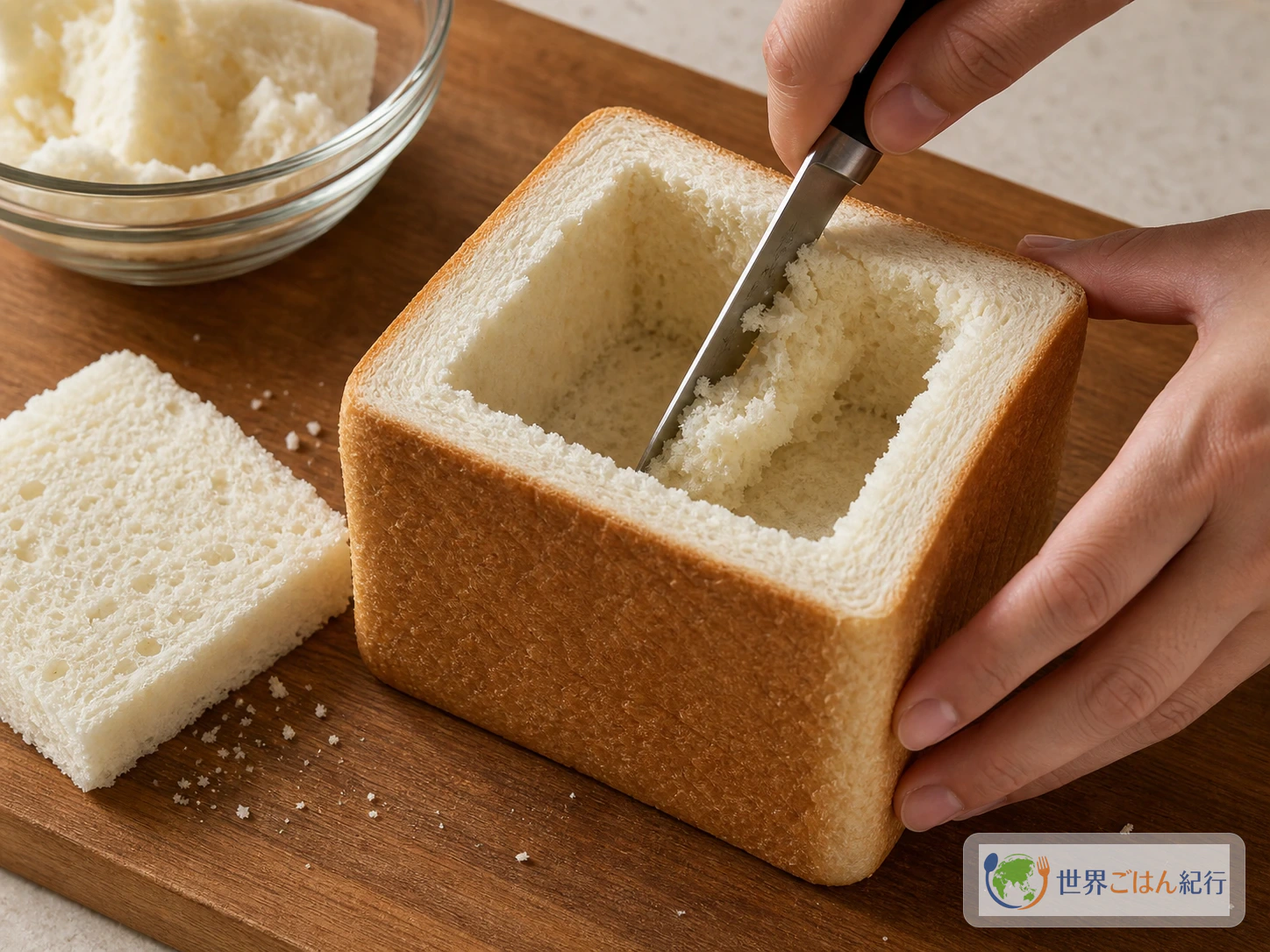
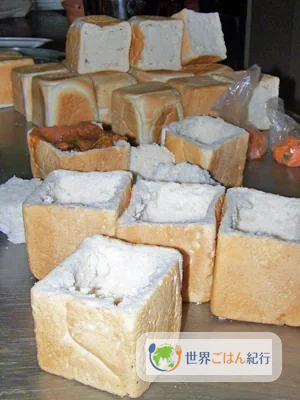
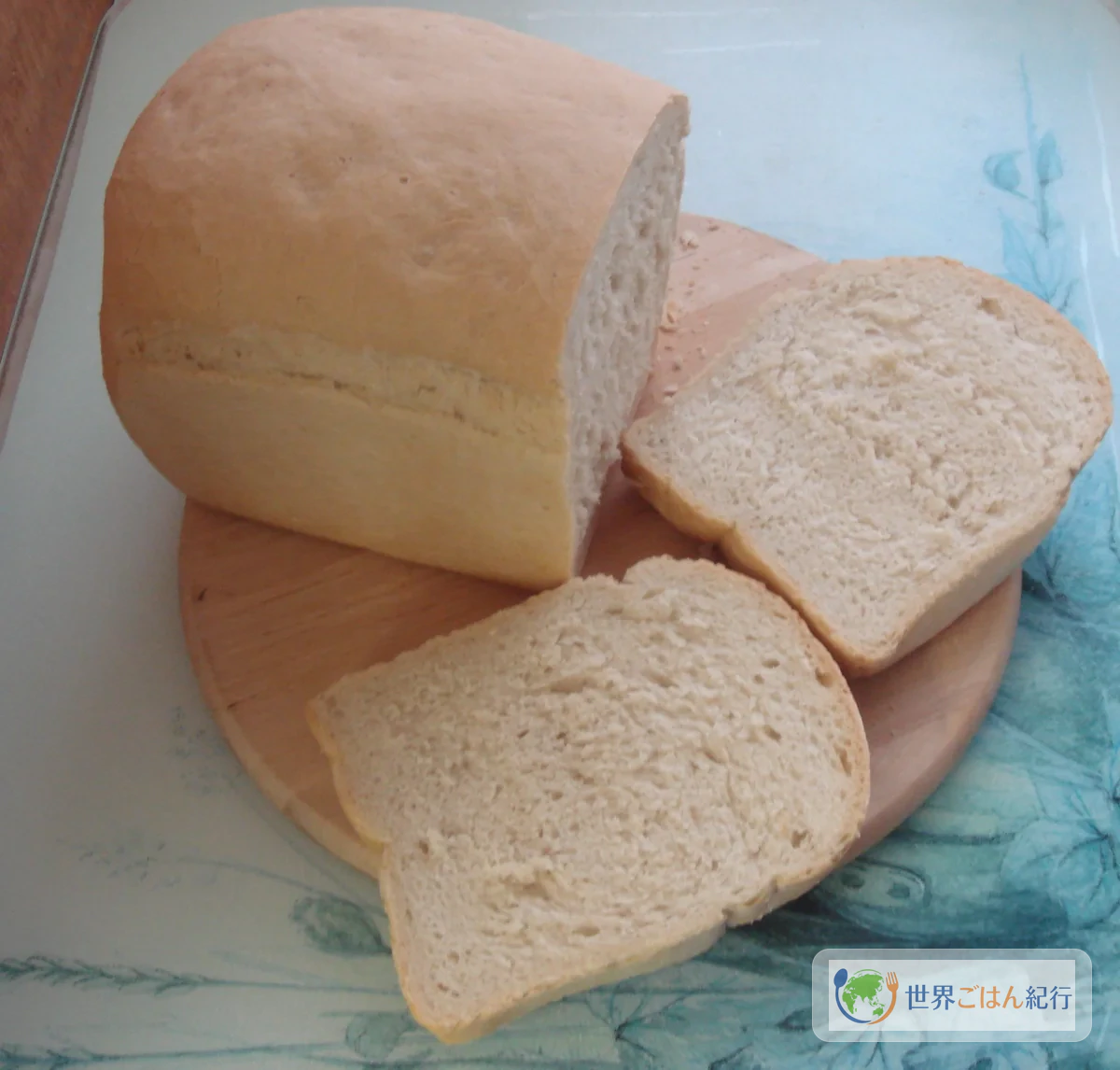
Look for an unsliced square loaf. Asking a bakery for "a whole loaf, unsliced" or buying from a supermarket's in-store bakery is the realistic route.
A heavy pot lets you make a thick gravy without breaking up the meat and potatoes. In a small pot it is hard to judge evaporation, and when put in the bread, only the liquid tends to leak out first.
For the first time, "unsliced bread, beef stew meat, potatoes, onion, tomato, garam masala, coriander, cumin and turmeric" are enough. Add curry leaves, cardamom and cloves from the second time.
Instructions: soak the gravy in first, then fill with the meat last
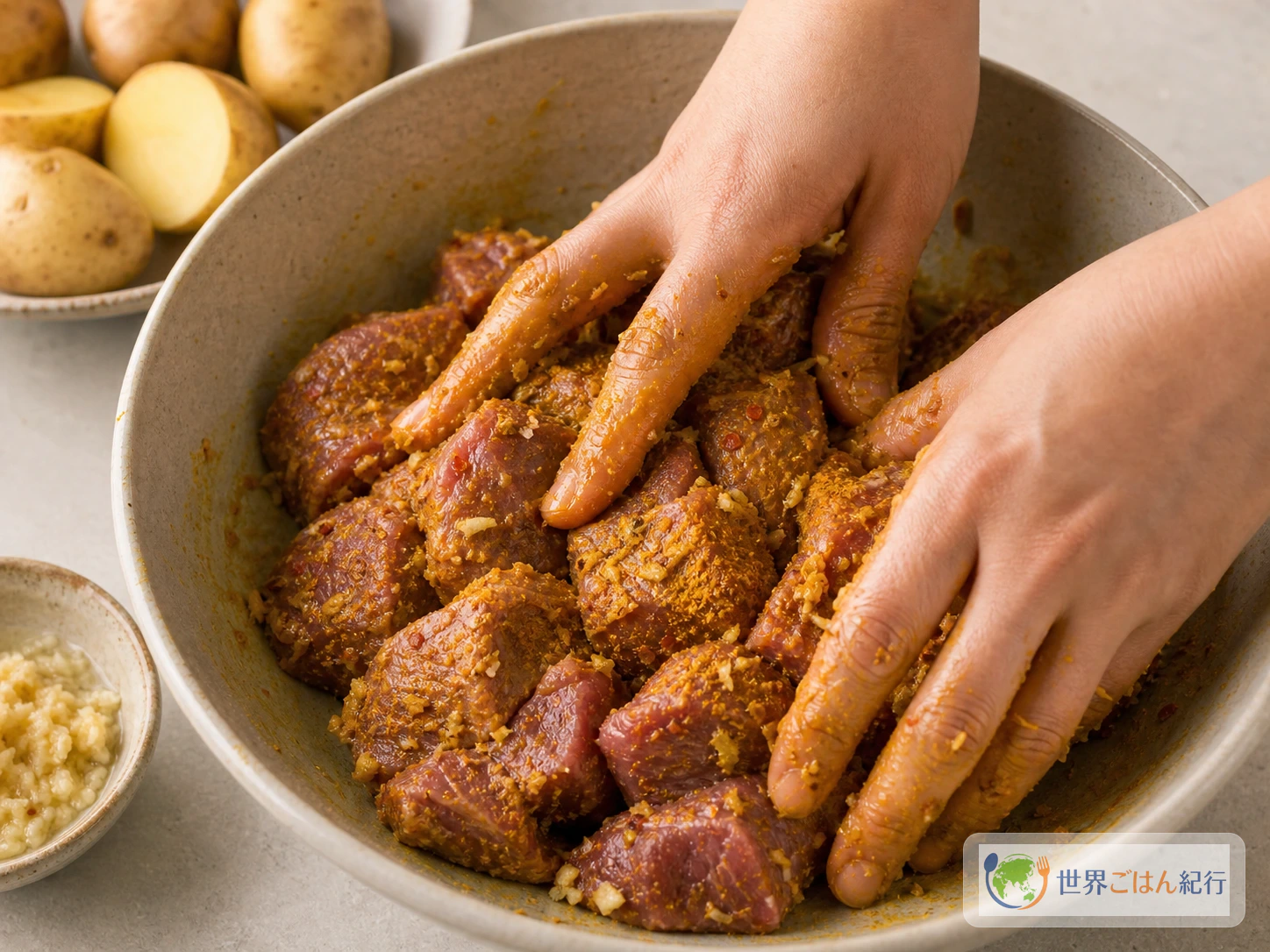
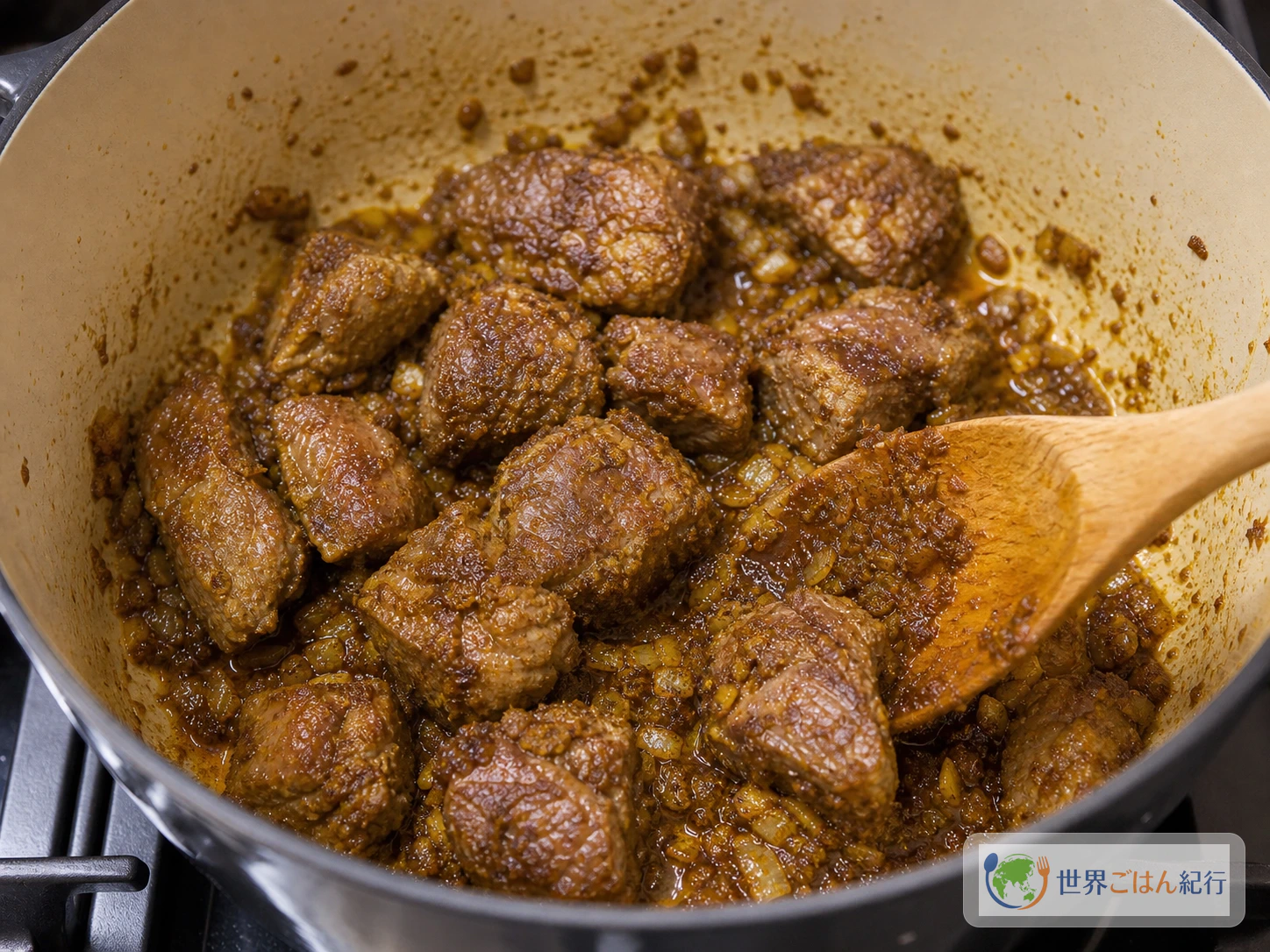
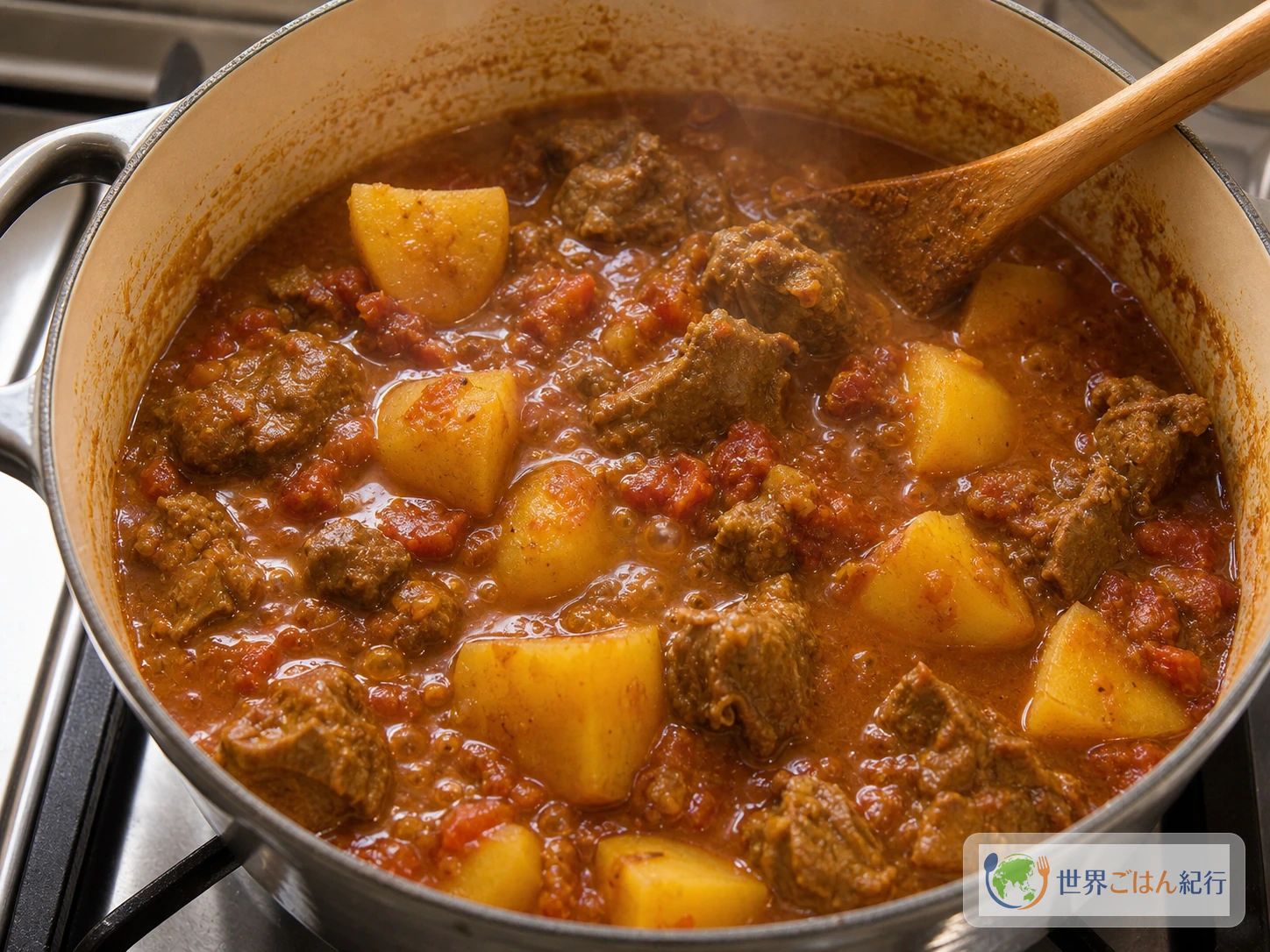
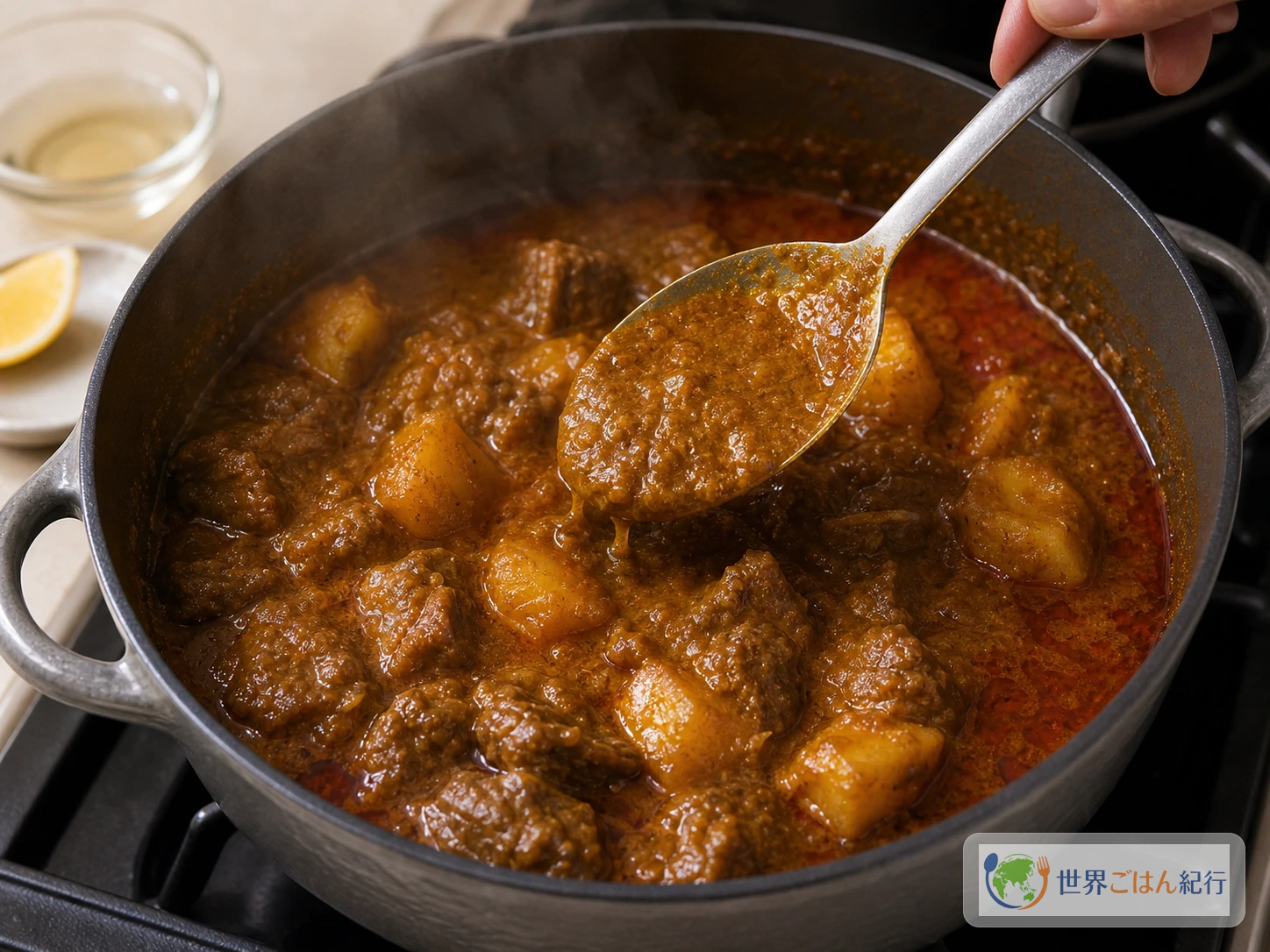
Bunny chow looks like simply making curry and putting it in bread, but how you fill it matters. If the gravy is thin the bread collapses, and if it has too little liquid it is just curry in bread. Soak gravy into the inside of the bread first, and put the meat and potatoes in afterward, and it stays easy to eat to the end.
Whether lamb, beef or chicken, cook it through to the center. If large pieces of meat are tough, simmer them longer before filling the bread. Once filled into bread, it is not suited to storage, so if you make ahead, always keep the curry and the bread separate.
Table for getting closer to the original in a home kitchen
When making bunny chow elsewhere, the biggest trouble is "which bread to buy." South Africa's white square loaf and thin sliced sandwich bread are quite different. Stacking pre-sliced bread does not make a bowl.
| Ingredient you hesitate over | Closer to the original | Realistic elsewhere | Why protect it |
|---|---|---|---|
| Bread | A quarter of a white square loaf | Unsliced square loaf, domed sandwich loaf | It needs thickness to be a bowl |
| Meat | Mutton, lamb | Lamb shoulder, beef shank, chicken thigh | Fillings that won't lose to the gravy |
| Potatoes | A variety that breaks down a little but soaks up liquid | Aim between waxy and floury | Takes up the gravy like the bread |
| Curry leaves | Fresh or frozen | Dried; omit if not available | Gives the aroma of Durban style |
| Heat | A strong masala | Medium in the pot, chile added at the table | Easy for a family to eat |
| Sides | Carrot sambals, pickles | Carrot, onion and lemon | Cuts the oil and heat |
What you should not substitute is the unsliced bread. A baguette or boule can be a bowl, but the Durban character of bunny chow lies in the soft walls of white sandwich bread. The gravy soaks in and the outside can still be held. That place between fragility and strength is the interest of bunny chow.
For the meat, beef stew meat is easiest on a first try. Lamb gives aroma and gets closer to the local dish, but some people dislike it. Chicken thigh is quick, but with the shorter simmer the depth of the gravy is weaker. In that case cook the onions longer and reduce the tomato well to make up for it.
Older tellings of bunny chow often feature bean curry and vegetable curry. On days when meat feels heavy, it works made with 2 cans of chickpeas and potatoes. Reduce chana masala a little thicker and fill the bread with it for a more vegetarian bunny chow.
How to eat it, and the sambal: eating by hand shows the flavor
If you can, eat bunny chow with your hands rather than a knife and fork. Tear off the bread lid on top and scoop the surface of the curry. Next, tear the soft, soaked part inside the bread. Last, eat the outer walls and the bottom. The order of eating is the way of enjoying the dish itself.
Carrot and onion sambal
Grate 1 carrot, and slice 1/4 onion thin and soak 5 minutes in water. Dice 1 tomato and mix with 1 tbsp lemon juice, 1/4 tsp salt and a little green chile. Just leaving it 10 minutes makes a sambal that lightens oily curry.
If South Asian raita is a side that cools the heat with yogurt, the sambal of bunny chow plays the part of bringing the mouth back with raw vegetables and acidity. Because the curry is rich and the bread heavy, leaving out the sambal makes the second half tiring.
Drinks and pairings
Local introductions often mention pairing with cold beer or soft drinks. At home, unsweetened sparkling water, cold barley tea or a lassi-style yogurt drink goes well. On a day when you've made it spicier, dairy is reassuring.
As a menu
Because bunny chow combines bread and curry, you needn't add a staple. Keep the sides light: carrot sambal, cucumber, lemon, yogurt. If you have energy to spare, rather than making a little bobotie for the South African connection, pairing a vegetable dish from the African cuisine overview is easier to eat.
To compare other worlds of "curry and a staple," Malaysia's roti canai, Morocco's tagine and West Africa's maafe are good follow-ups. Among them, bunny chow is a quite singular dish in that you eat the bowl.
What goes wrong: avoiding leaks, thinness and collapsing bread
Failures of bunny chow come from structure rather than flavor. The curry is good but the bread collapses. The bread stands, but the curry is thin and the soaking is unsatisfying. Because it is eaten by hand, look at shape and thickness.

| Problem | Cause | Fix |
|---|---|---|
| Leaks from the bottom | Made the bottom of the bread too thin, gravy is watery | Leave 2 cm at the bottom. Reduce the curry for 5 minutes |
| Bread collapses quickly | Sliced sandwich bread, bread too soft | Use an unsliced square loaf and toast it lightly |
| Flavor is thin | Didn't allow for the portion that goes into the bread | Set the salt a little strong at the pot stage |
| Powdery | Didn't fry the spices in oil | Work the ground spices into the oil before adding water |
| Meat is tough | Not enough simmering time | Simmer an extra 20 minutes before filling the bread |
| Too hot | Put too much chile in the pot | Keep the pot medium and add heat afterward at the table |
If the bread is too soft, lightly toast only the inside after hollowing it out. Making it fully crisp makes it hard for it to absorb gravy, so just dry the surface. 2–3 minutes in a toaster oven or about 5 minutes at 180°C (350°F) in the oven. Don't scorch the outside.
If the gravy is watery, avoid thickening it with starch. It moves toward Japanese-style curry over rice, and the mouthfeel once soaked into bread becomes unnatural. Reducing it with the lid off and breaking up a few potatoes for a natural body suits it better.
If you fill the bread with hot curry, the bottom gets hot to hold. Set it on a deep plate or paper, don't let children hold it by hand, and give a spoon at first. Even eating by hand in the local way, begin after the temperature drops a little for safety.
Storage and eating it the next day
Bunny chow is not stored in its finished form. The bread keeps absorbing the gravy, and by the next day the bottom tears easily. If you want to make ahead, store the curry, bread and sambal separately.
For the curry, the guide is 2–3 days refrigerated and 2–3 weeks frozen. Lamb and beef fat firms when chilled, so when reheating add 2–3 tbsp water and bring it back slowly over low heat. If the flavor is blurred after reheating, add a little salt and lemon juice.
Keep the bread unsliced and cut and hollow it just before eating. Bread that has already been hollowed dries easily, so wrap it in plastic and use it up by the next day. Dried bread, toasted before filling, actually collapses less.
The next day, rather than making bunny chow, you can make curry sandwiches. Lightly reduce the leftover curry, sandwich it in bread and top with carrot sambal. If more is left, you can also put it over rice as ordinary curry. Still, adding lemon and scallions at the end brings back a little of the South African aroma.
Another use is a morning "small bunny." Cut the unhollowed bread thick, press a shallow hollow in the center and put a little warm curry in it. It is not the proper quarter loaf, but it is a good shape for finishing leftover curry on a busy morning. What matters is not forcing yesterday's finished dish to reheat. The moisture the bread has absorbed doesn't come back, so making fresh soaking in new bread the next day tastes much better.
If you plan to freeze, make the meat and potatoes a little smaller. Large potatoes tend to turn watery after thawing, so break them up slightly as you reheat and return them to the gravy and they are easier to eat.
Variations: it works with beans, chicken and vegetables too
Bunny chow is a dish of a bowl to fill with curry. Mutton is not the only right answer. Rather, being able to change it for the eater, with bean curry, chicken, vegetables or less heat, is its strength.
Bean curry bunny chow
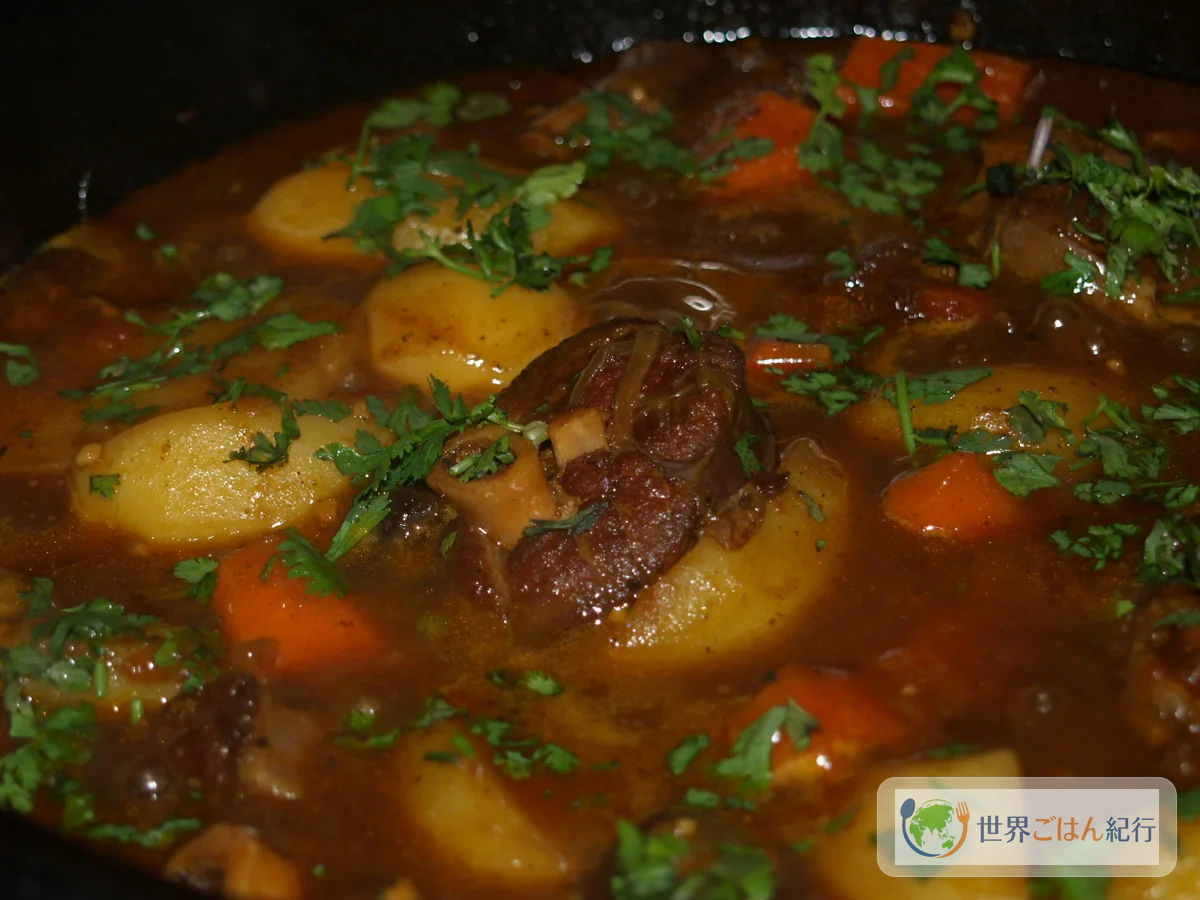
Make it with 2 cans of chickpeas or 2 cans of red kidney beans. Skip the meat-searing step, reduce the onions, spices and tomato well, and then add the beans. Beans break easily, so simmer them only for the last 15 minutes. A little more liquid than chana masala and stronger salt suits the bread.
Chicken bunny chow
Made with 650 g chicken thigh, the simmer shortens to about 30 minutes. Mixing in a few bone-in drumettes gives stock and thickens the gravy. Chicken breast alone tends to be tough, so mixing thigh or drumettes is recommended.
Vegetable bunny chow
Use potatoes, cauliflower, carrots and beans. For a vegetable-only version, use a little more oil and build the aroma of the spices well. It can also be made with the idea of aloo gobi (in Japanese) from northern India moved toward a rich tomato gravy for filling.
Milder version
Reduce the chile powder to 1/4 tsp and increase the paprika. Set out the sambal and chile flakes at the table and let only adults add them afterward. To avoid weakening the aroma, it is better not to reduce the cumin, coriander and garam masala too much.
Smaller version for guests
A quarter of a whole loaf makes a very large portion. On a day with guests when you want to eat several things, hollow out small round rolls or dinner rolls to make mini bunnies. It departs from Durban's quarter loaf, but is easy to eat and looks good on a plate.
Frequently asked questions
Questions about bunny chow gather around bread, heat, fillings and storage. Outside South Africa, simply not mistaking the choice of bread gets you much closer to success.
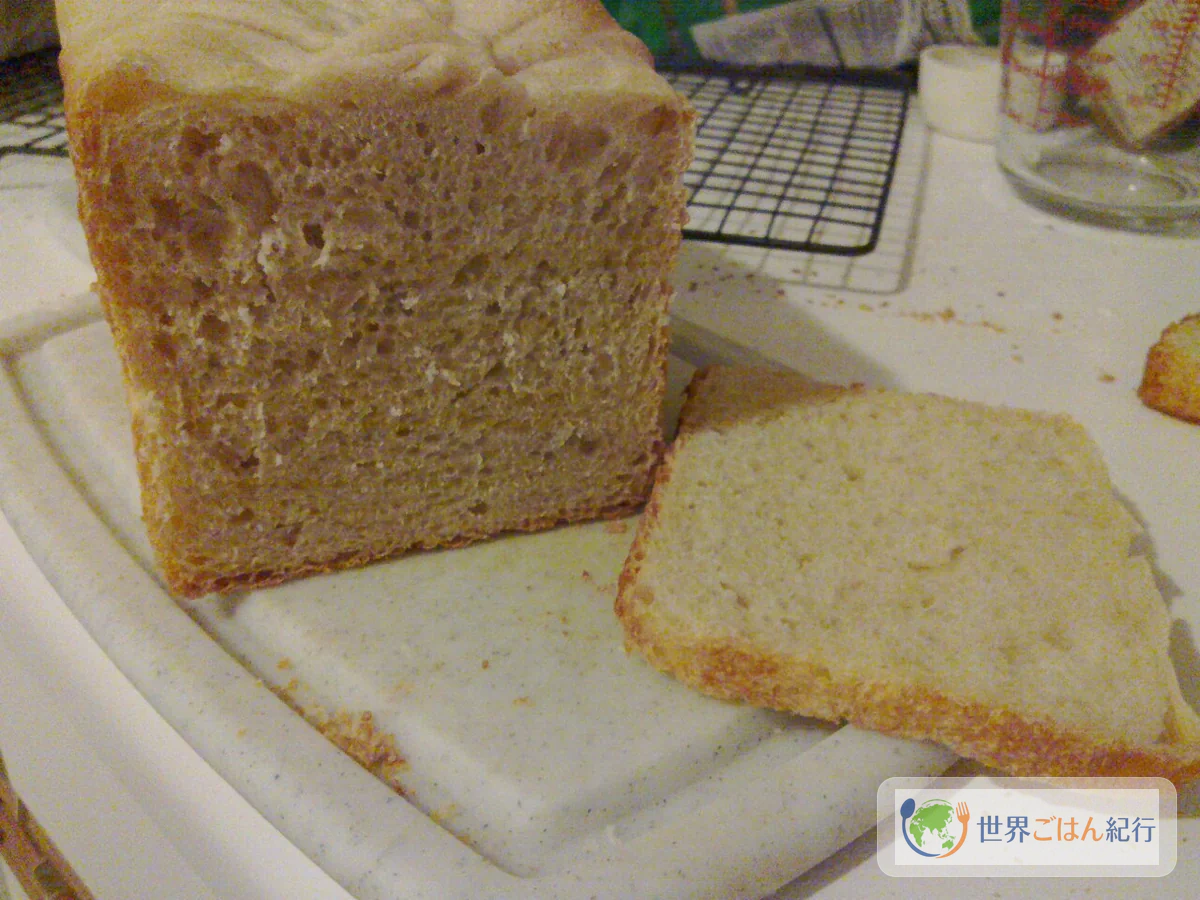
Q1. Can I make it with pre-sliced sandwich bread?
Not as a bowl. Sliced bread can't make a bottom and walls, so the curry leaks. If you really have no unsliced loaf, make a "bunny chow-style" dish by toasting thick-cut sandwich bread and putting curry on it. That is a different thing from the real way of eating, though.
Q2. I can't get mutton. What can I substitute?
Lamb shoulder, beef shank, beef stew meat or chicken thigh. Lamb if you value the local aroma, beef if it should be easy for the family, chicken thigh if you want it quick. In all of them, reducing the gravy thick is what matters.
Q3. Can I make it with only curry powder?
Yes. Use 2 tbsp curry powder and, ideally, add 1 tbsp coriander powder and 1 tsp cumin. Curry powder alone tends to move toward Japanese-style curry, so finishing with lemon, scallions and sambal restores the outline.
Q4. If I don't make it spicy for children, what should I keep?
Reduce the chile and green chile, and keep the garam masala, coriander, cumin and turmeric. Let adults add heat at the table. Even without heat, with onion, tomato, spice oil and lemon the aroma of bunny chow remains.
Q5. Should I toast the bread?
For the local feel, fill soft white bread with hot curry. But much sandwich bread outside South Africa is very soft, so if you worry about collapse, lightly toast only the inside. Baking the outside hard reduces the pleasure of soaking up gravy.
Q6. Can I pack it filled with curry as a lunch box?
I don't recommend it. Over time the bread absorbs too much liquid and the bottom tears easily. If carrying it, put the curry in a thermos jar and the bread in a separate container and fill just before eating. For hygiene too, don't leave bread filled with hot curry at room temperature for long.
Summary: bunny chow doesn't end at using bread as a bowl
What matters in making bunny chow is not gathering every unusual ingredient. Prepare an unsliced white loaf. Cook onions and spices in oil and make the meat and potatoes into a rich gravy. Soak the inside of the bread with gravy first, fill, and add acidity with the sambal. Keep to this order, and you can get quite close to Durban's street food in your own kitchen.
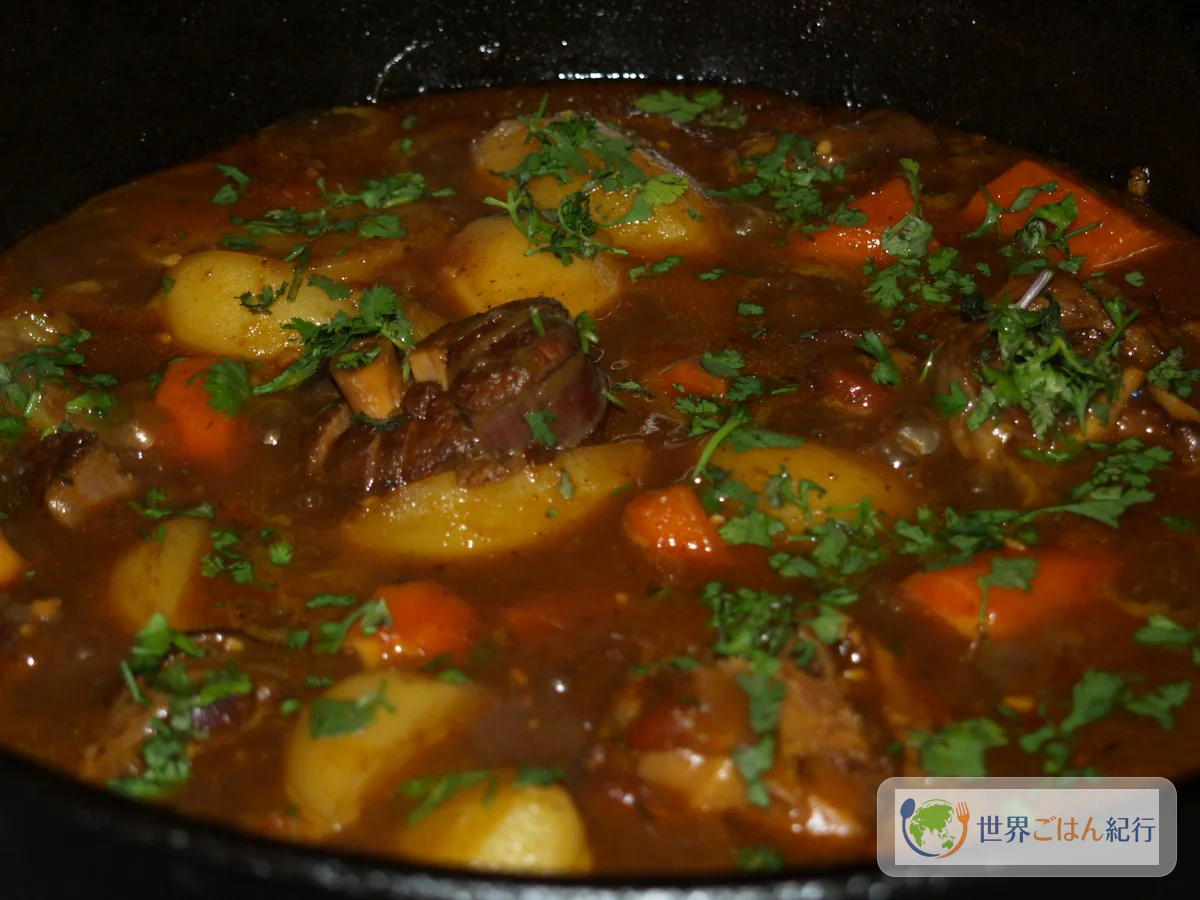
For the first time, beef or chicken thigh is enough. Moving on next to lamb, bean curry and curry leaves gradually adds Durban character. By the time you finish, what remains on the plate is the water of the sambal and a few bread crumbs. A dish where you eat the bowl as well makes even the cleanup a little pleasant.
To widen into South African food next, go to the sweet-savory oven dish bobotie. To look across the African continent, compare jollof rice, fufu, tagine and maafe in the African cuisine overview, and the relationship of curry, stews and staples comes into three dimensions.
Sources
Information on the definition of bunny chow, its Durban origin, its relationship with the Indian community, quarter loaves, mutton, chicken and bean curry, sambal and how it is eaten was drawn from English-language and South African food media and the cooking category of Wikimedia Commons, and reorganized for home cooking outside South Africa.
- TasteAtlas, "Bunny Chow" https://www.tasteatlas.com/bunny-chow
- Atlas Obscura, "Bunny Chow" https://www.atlasobscura.com/foods/bunny-chow-bread-curry
- National Geographic, "Eating Bunnies" https://www.nationalgeographic.com/travel/article/eating-bunnies
- Food52 / Ishay Govender-Ypma, "South African Bunny Chow" https://food52.com/story/21290-how-to-make-south-african-bunny-chow
- The Guardian / Meera Sodha, "Meera Sodha's recipe for vegan bunny chow" https://www.theguardian.com/lifeandstyle/2017/sep/23/bunny-chow-recipe-bread-chickpea-cabbage-curry-meera-sodha-vegan
- Durban Curry Recipes, "How to make a Durban Bunny Chow" https://www.curryrecipe.co.za/how-to-make-a-durban-bunny-chow/
- How to make bobotie
- African cuisine overview