
A pumpkin-colored stirred porridge for a Botswana morning
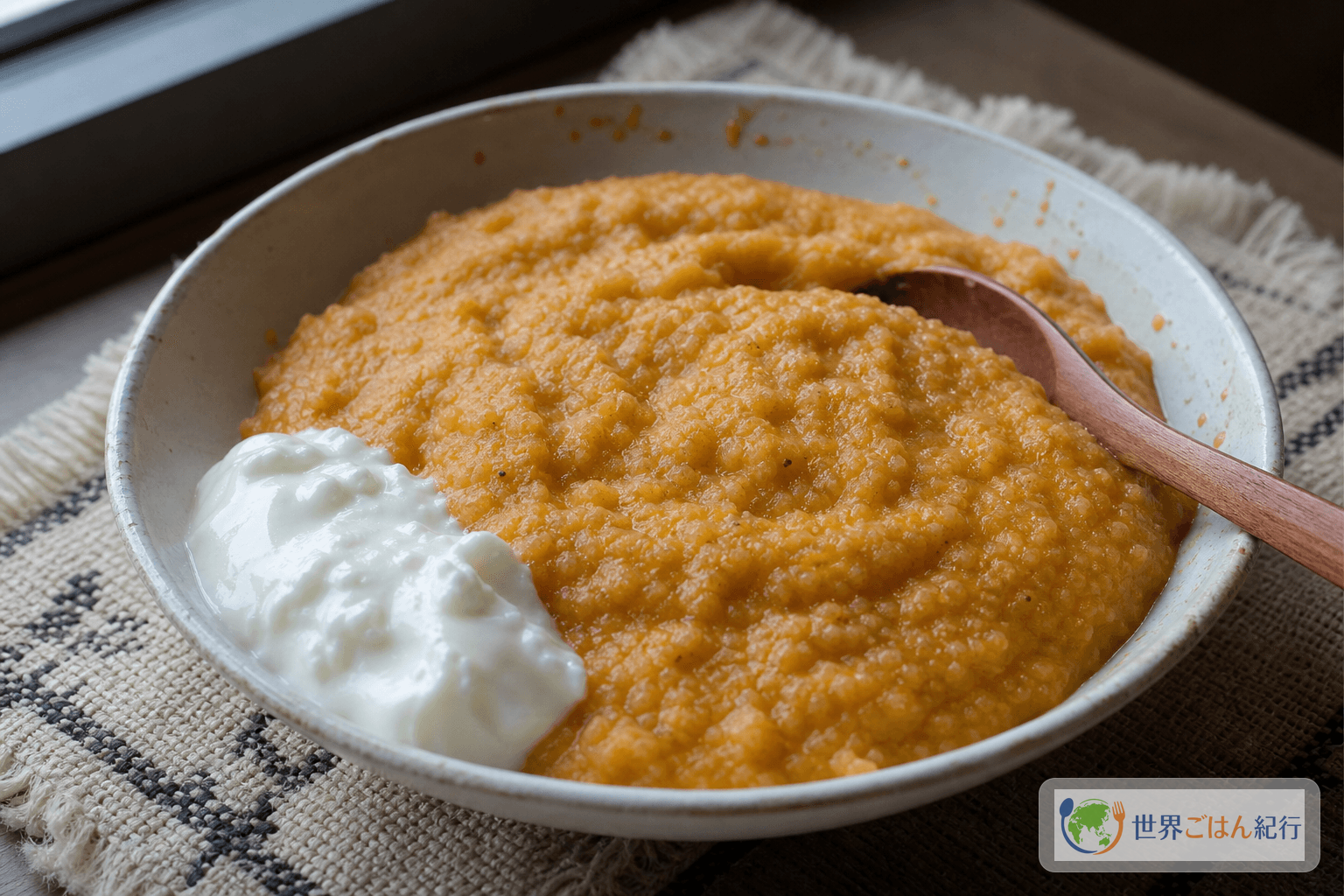
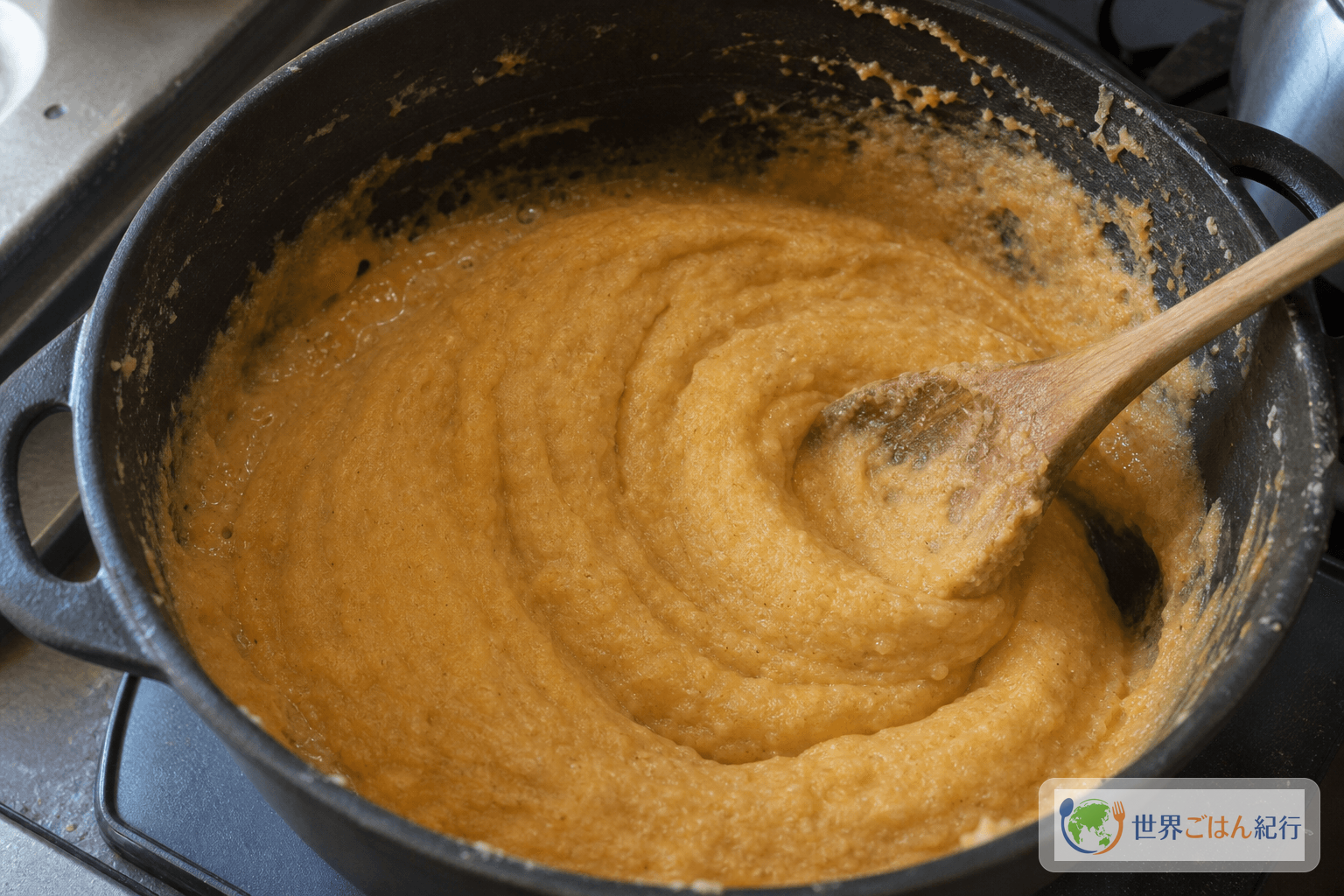
The edge of the pot trembles, and after you draw the wooden spoon through, a yellow path remains for just a moment. Bogobe jwa lerotse is a Botswana stirred porridge whose pleasure is the time you spend watching these quiet changes. Toasty sorghum flour is combined with lerotse, an orange melon, and finished with madila, a sour fermented milk. It is not a sweet dessert but a dish that holds up the table as a staple.
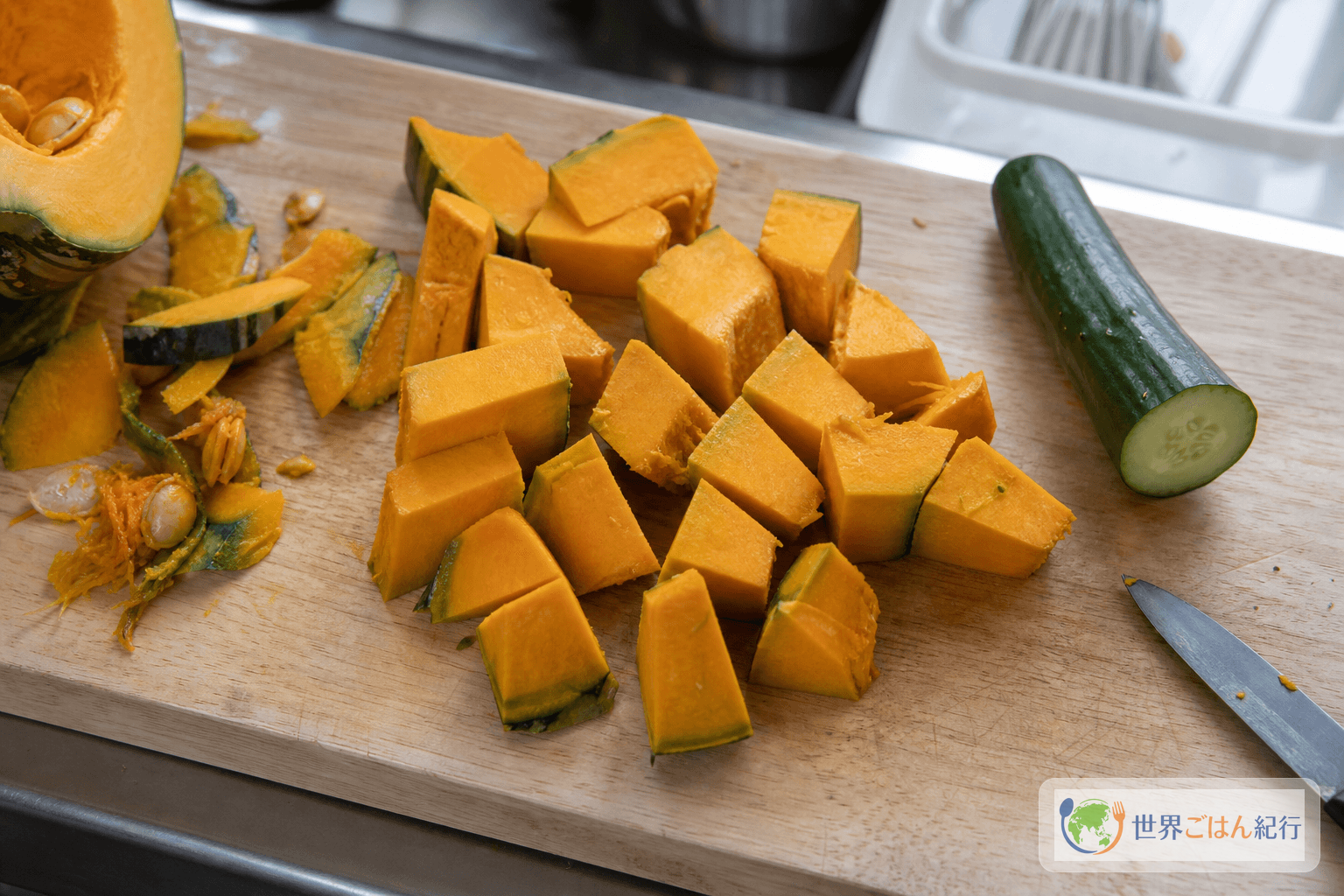
Lerotse looks close to a watermelon, but local recipes explain that it is not very sweet and that raw it has a green aroma close to cucumber. Looking for lerotse in a supermarket elsewhere is not realistic. In this article, pumpkin makes the color and body, cucumber is used in a small amount only for aroma, and madila is approximated with unsweetened yogurt. It is not a complete substitute, but the skeleton of "the grain feel of sorghum, the faint aroma of melon, and a sour accompaniment" is kept.
Among stirred staples, Tanzania's ugali is a dish of white corn flour kneaded with force, and Burkina Faso's tô is a dish where the sauce receives the aroma of sorghum. Bogobe jwa lerotse adds to that the softness of Botswana's melon. It is a quiet staple that suits breakfast and also a lunch with greens or a stew.
Ingredients (serves 4)
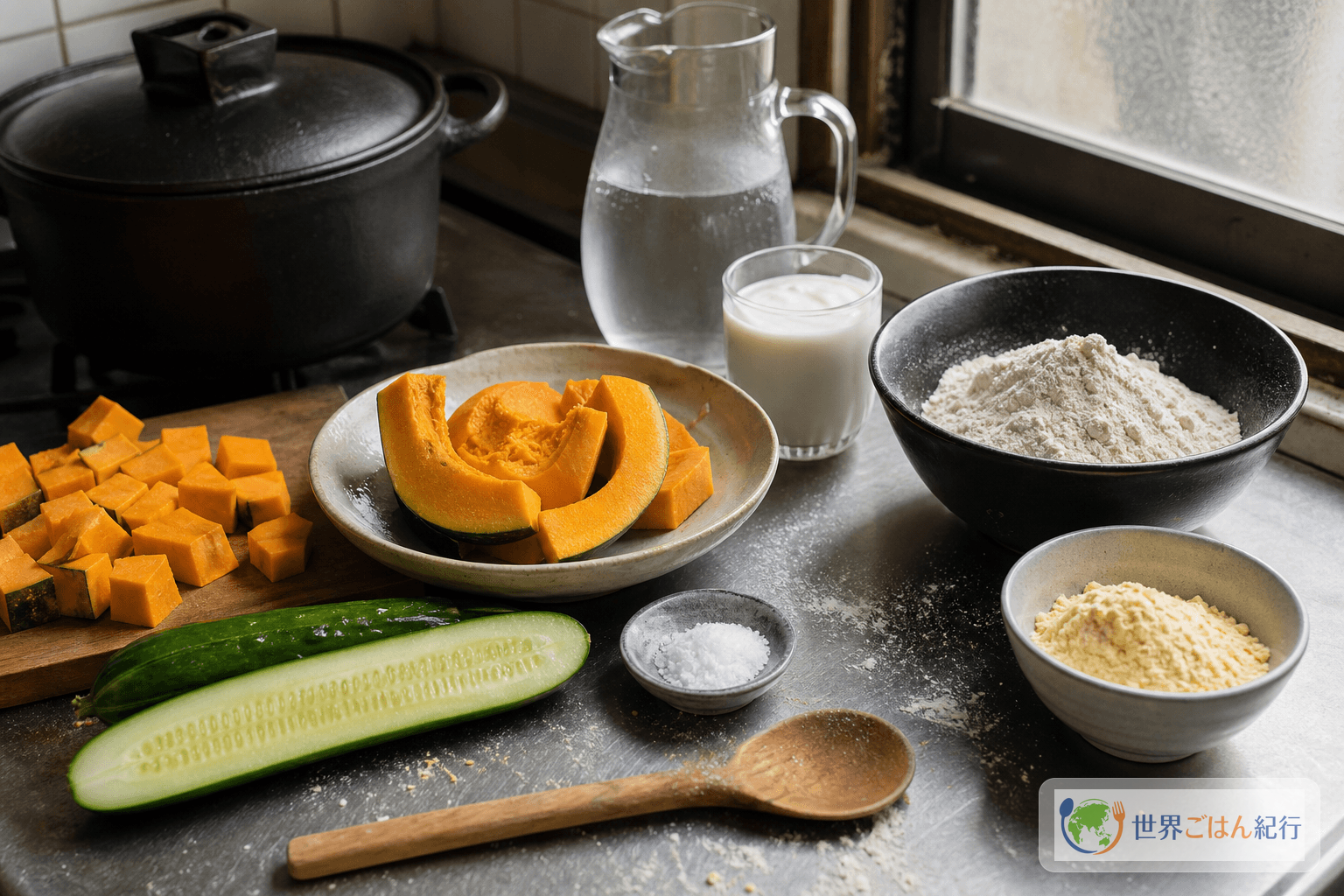
Because dairy is used, people with a milk allergy should omit the madila-style accompaniment. The bogobe itself uses no wheat, but depending on the flour's production line wheat may be present. If you are avoiding gluten strictly, check the product labels.
Ingredients that give you pause when shopping
What is worth seeking for this dish is not ordinary vegetables but the flour and the pot. Pumpkin, cucumber and yogurt are fine from a nearby supermarket. Sorghum flour alone, if replaced with only corn flour, becomes a different porridge entirely. Look for sorghum flour and cornflour at a health-food or specialty grocer or online, and a heavy two-handled pot of about 22 cm (9 in) makes it easy to keep a low heat.
How to make it
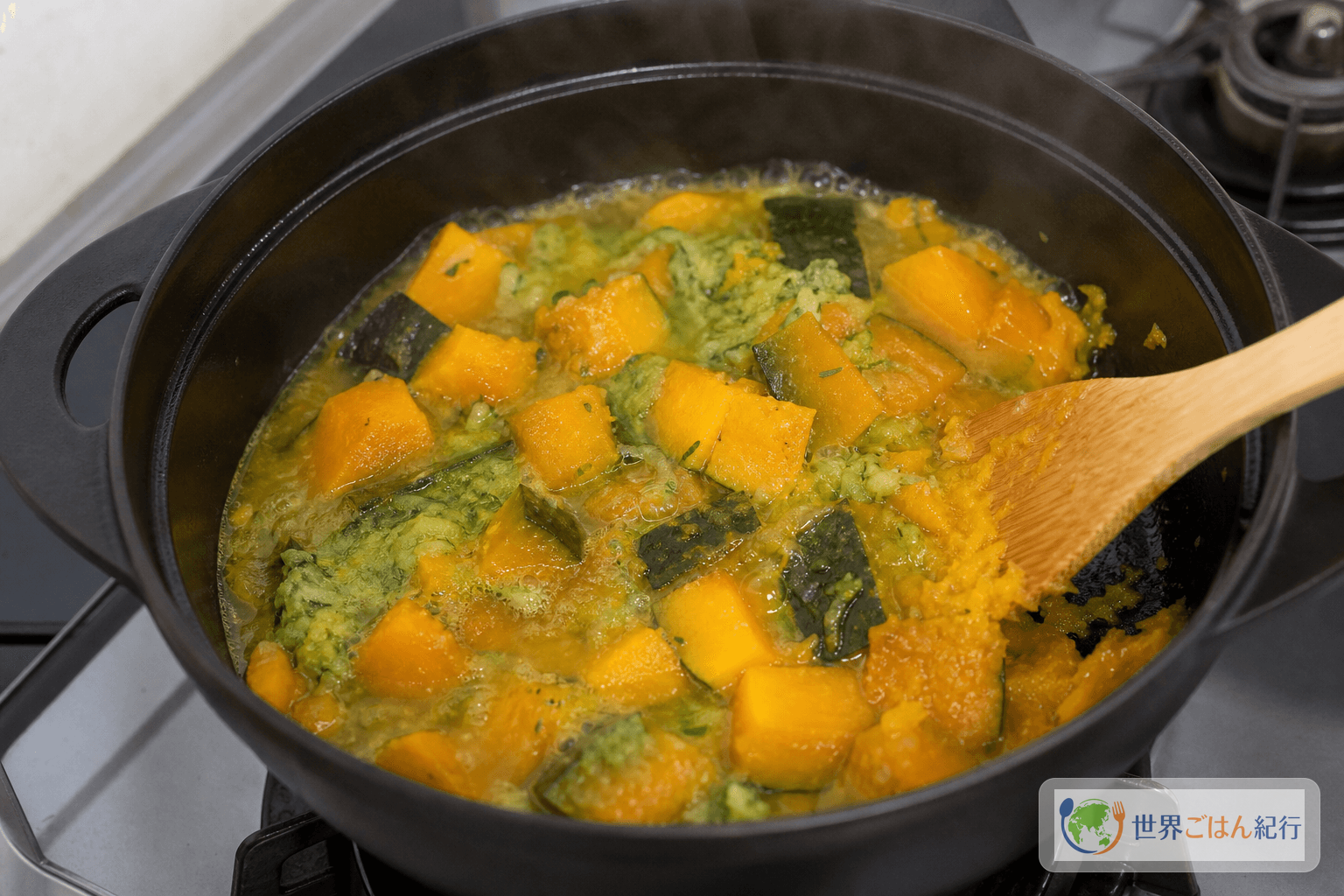
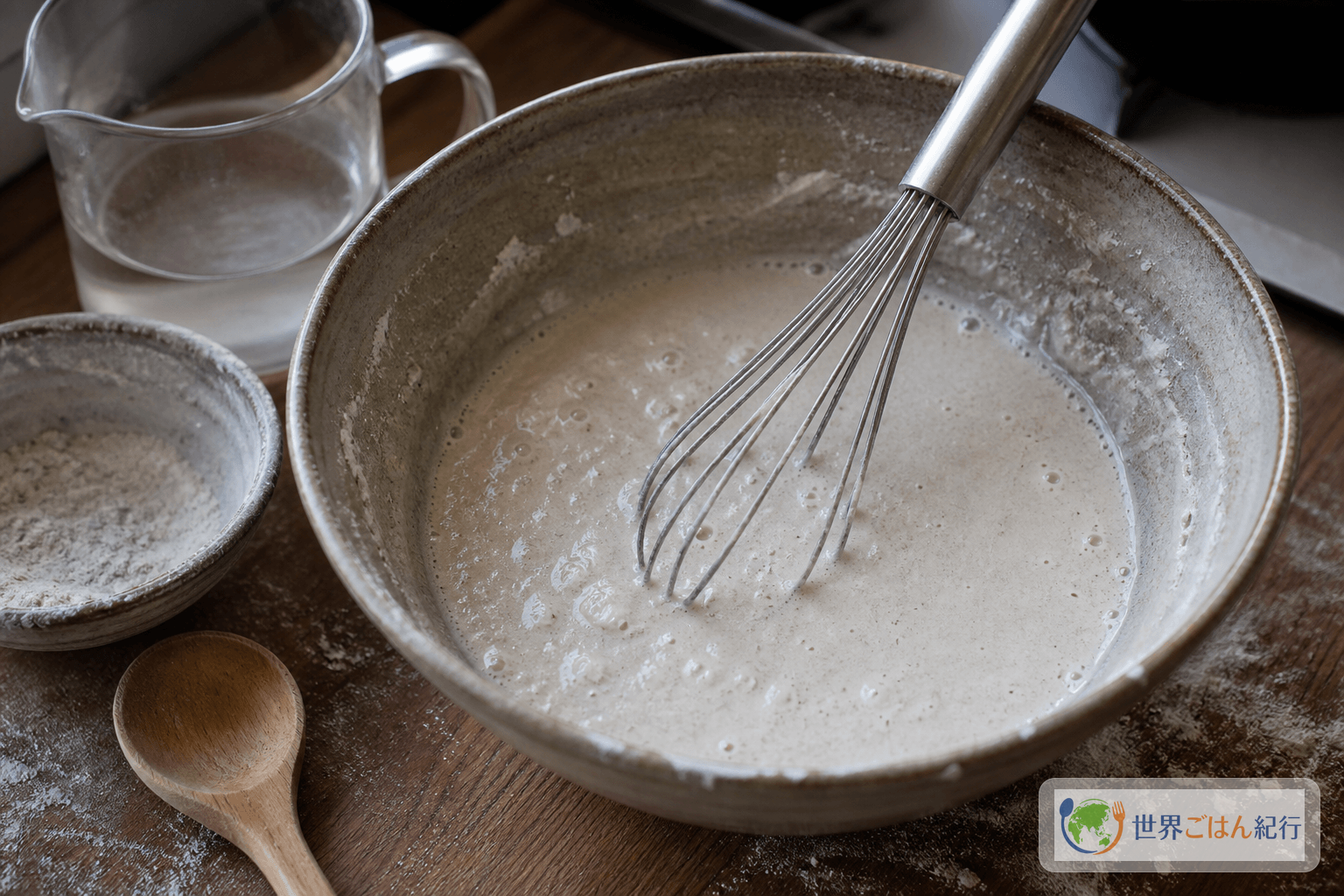
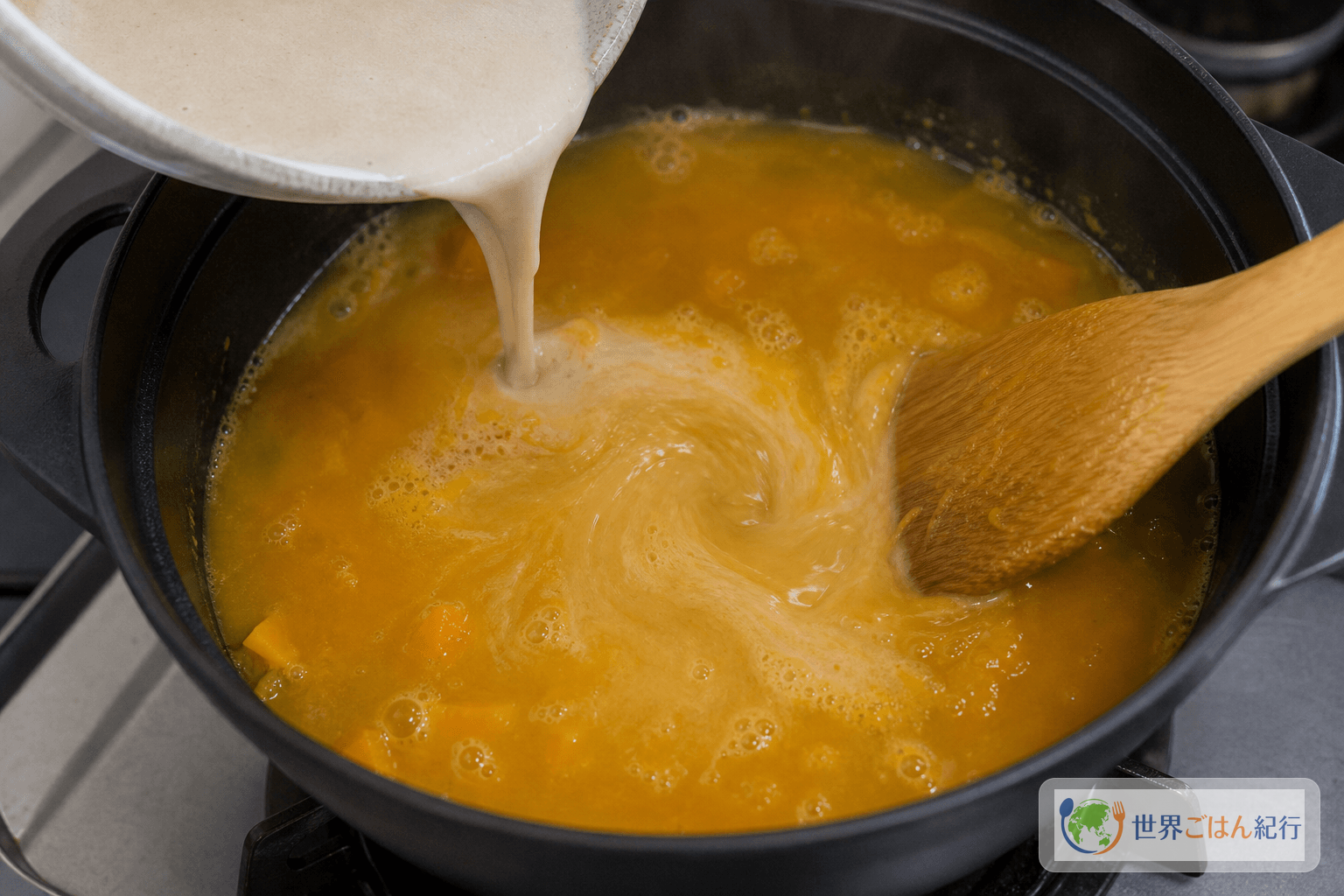
If you put the flour directly into the pot, it tangles with the fibers of the pumpkin and lumps tend to remain. Smoothing the pumpkin first and adding the flour after dissolving it in water makes it easy to handle even on a home burner.
What to keep and what to replace in a home kitchen
From the ingredient names alone, bogobe jwa lerotse may look like "pumpkin porridge." But the local skeleton is the combination of lerotse, sorghum, madila and the way it is stirred. When substituting, rather than moving everything toward ingredients at hand, decide what to keep and you won't fail.
| Element | The local idea | Where to land elsewhere |
|---|---|---|
| Lerotse | An orange melon. Faint aroma and moisture matter more than sweetness | Pumpkin for color and body, a little cucumber for green aroma |
| Sorghum flour | The star that makes grain aroma and stickiness | Use white sorghum flour. Don't make it entirely corn flour |
| Madila | The sourness of fermented milk lightens the porridge | Loosen unsweetened yogurt with milk and add no sweetness |
| Stirring | Cut lumps with a wooden spoon or traditional whisk | Make a slurry first and turn from the bottom over low heat |
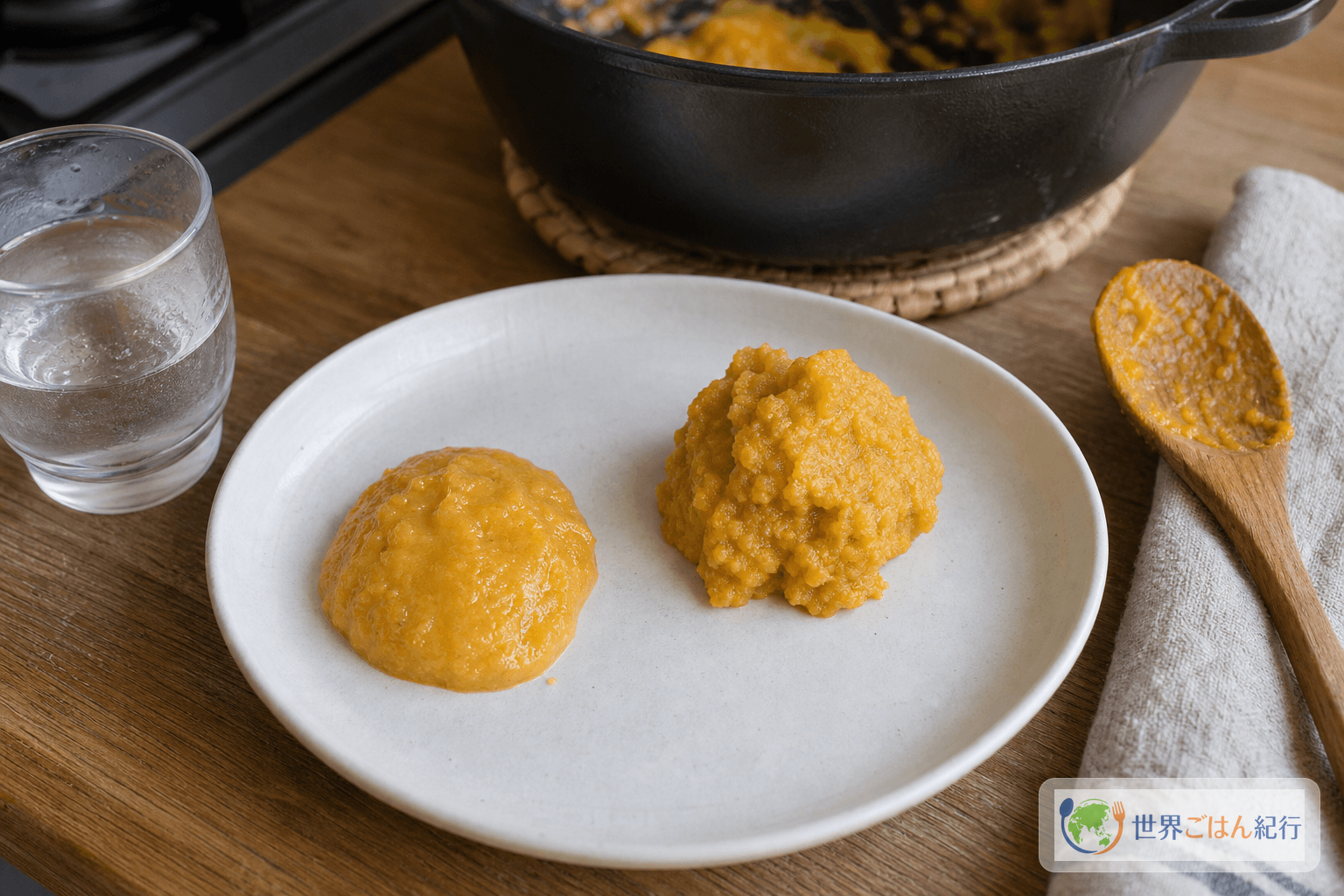
Pumpkin is convenient in a home kitchen, but a very sweet variety tips it toward dessert. If, tasting, it is too sweet, adding 1/6 tsp salt or increasing the lemon juice in the yogurt sauce by 1/2 tsp makes it easy to return to a staple. Conversely, more cucumber brings out a grassy smell. Don't put in 40 g or more; using it as a shading of aroma is safe.
Problem states and how to fix them
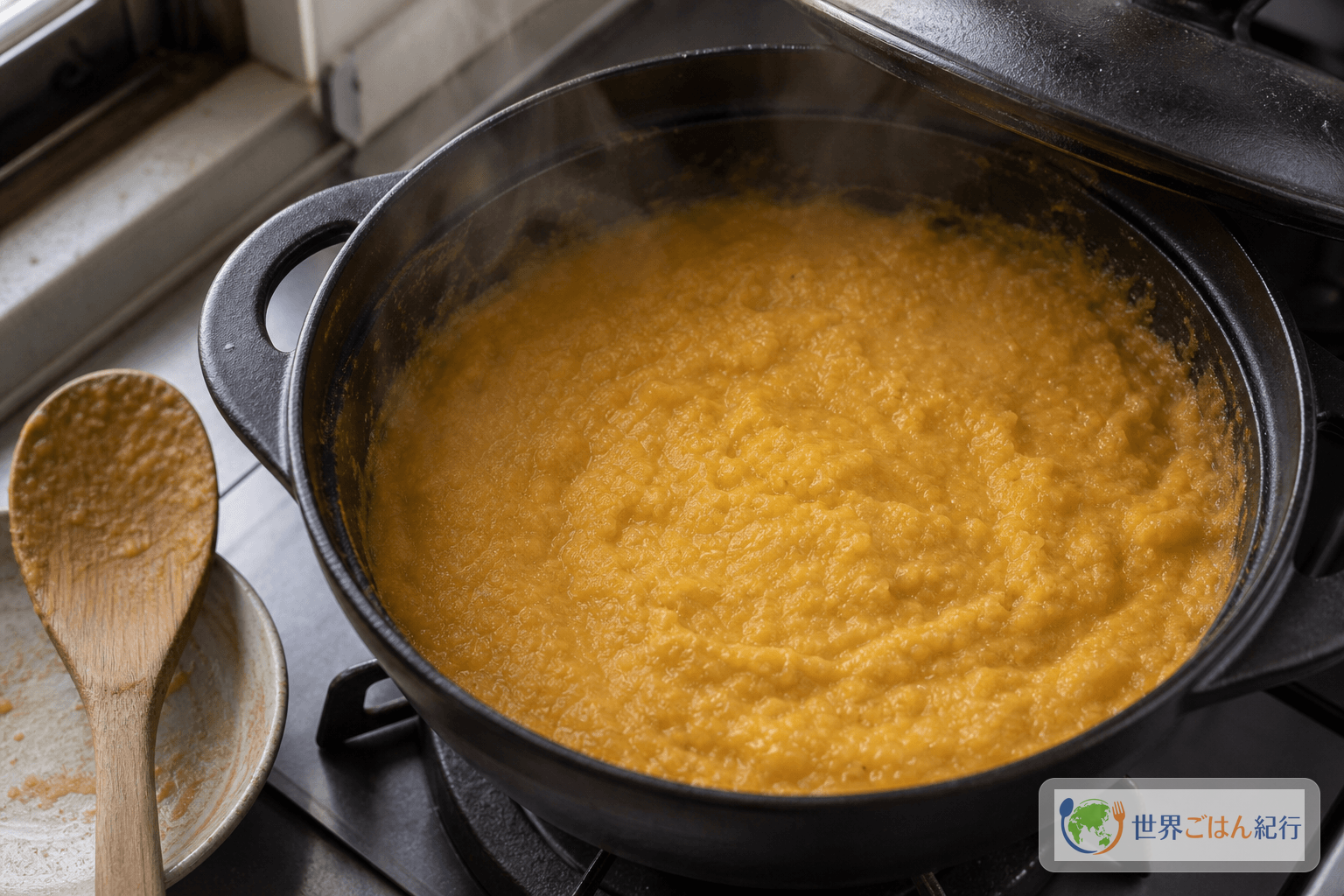
For bogobe, the difficult part is not the ingredients but the timing of stopping in the pot. Pumpkin's water content varies by variety, and sorghum flour's absorption varies by product. Even if you follow the amounts, adjust finally by the wooden spoon's track, how the bubbles come up, and the shape it holds when dropped onto a plate.
| Condition | How it looks in the pot | How to fix |
|---|---|---|
| Lumps remain | White flour grains hit the tongue, small clumps cling to the spoon | Add 2 tbsp boiling water and stir 2 minutes over low heat. Strain large clumps through a sieve and return |
| Too firm | Falls in a crumbly way when scooped, corners stand on the plate | Add 2 tbsp boiling water at a time and stir 1 minute each over low heat |
| Too loose | Spreads on the plate and won't mound | Remove the lid and stir 2 minutes at a time over low heat to evaporate moisture |
| Too sweet | The pumpkin's sweetness leads and it doesn't feel like a meal | Add 1/6 tsp salt and increase the lemon juice in the yogurt sauce by 1/2 tsp |
| Grassy | Cucumber aroma comes first and the porridge's toasty note is weak | Halve the cucumber next time. This time serve more yogurt sauce |
If the bottom starts to scorch, don't scrape it and stir it in, which keeps the taste from clouding. Leave the part with the burnt smell, move only the clean porridge on top to another pot, add 2 tbsp boiling water and bring it back over low heat. For stirred porridges, rescuing before it burns gives a steadier result than trying to manage in the same pot to the end.
How to eat it and plan a menu
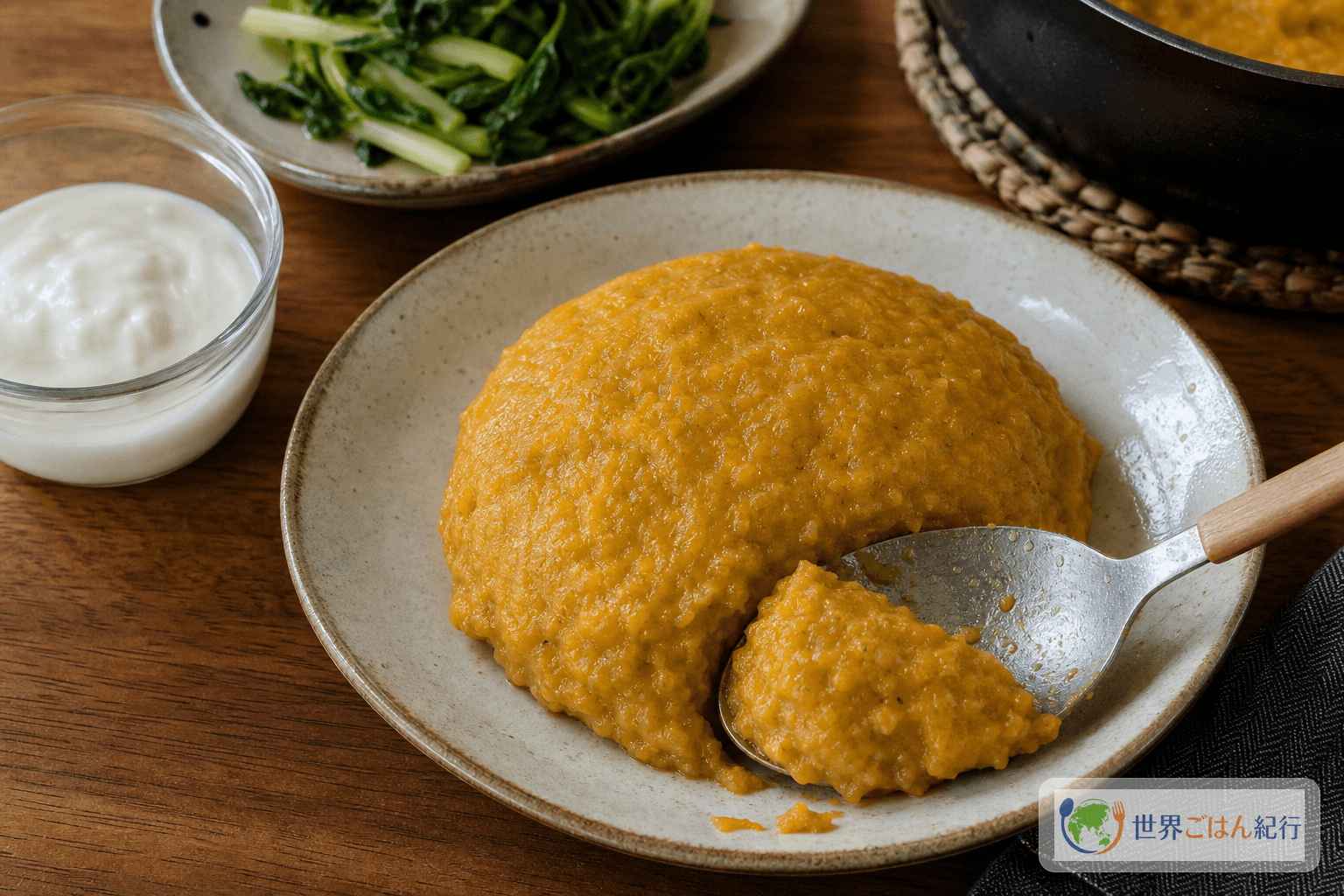
Bogobe is softest while hot, and when it cools the flour tightens and it becomes firm. Mound it in the center of a plate, with madila-style yogurt beside it and greens or a bean stew on the other side, and you move through sourness, grain and saltiness in that order. To lean toward the culture of eating by hand, take a mouthful with your fingertips and coat it with a little sauce. At home a spoon is fine.
Compared with other African staples, it is not as springy as Ghana's fufu, and not as leaf-heavy as Cameroon's sanga. If you want to get used to dishes made by stirring flour, first make this soft bogobe and then move on to ugali and tô, and you will see the difference in heat. If you like a sweet root porridge, Nigeria's asaro (in Japanese) offers a similar enjoyment.
Storage is up to 2 days refrigerated. Spread it in a shallow container to cool and press plastic wrap against the surface to keep it from drying. To reheat, add 2 tbsp water per serving, microwave at 600 W for 1 minute 30 seconds and stir, adding 30 seconds at a time if needed. To bring it back in a pot, use low heat and add boiling water 2 tbsp at a time while stirring with a wooden spoon. It can be frozen, but after thawing it tends to show grains, so it suits eating in a soup more than as a staple.
Frequently asked questions
Can I buy lerotse elsewhere?
It is almost never seen at ordinary supermarkets or import grocers. It may be handled as seeds or plants, but getting it reliably as a fruit for cooking is difficult. This article does not use the local lerotse itself; it takes the approach of approaching its color, moisture and faint melon aroma with available ingredients.
Can I make it with pumpkin alone, without cucumber?
Yes. The cucumber is an aid to aroma, so the porridge holds together without it. But with pumpkin alone it tends to taste sweet and round, so restore the feel of a staple with salt and the sourness of the yogurt sauce.
If I have no sorghum flour, is cornflour alone fine?
You get an edible porridge, but it moves away from bogobe jwa lerotse. With cornflour alone it leans toward ugali or polenta. For a first try, I recommend adding at least a little sorghum flour to check the grain aroma.
Can I stir yogurt into the pot in place of madila?
Yogurt tends to separate when heated, so serving it on the plate rather than putting it in the pot is less likely to fail. Some local recipes fold fermented milk into the stew, but in a small home pot the sourness fades and the look tends to turn grainy.
Can I fix lumps?
For small lumps, adding 2 tbsp boiling water and stirring 2 minutes over low heat loosens them. If large clumps of flour remain, rather than trying to crush them in the pot, it is faster to strain once through a sieve and return it. Next time, don't put the flour directly in the pot; always make a slurry with water first.



