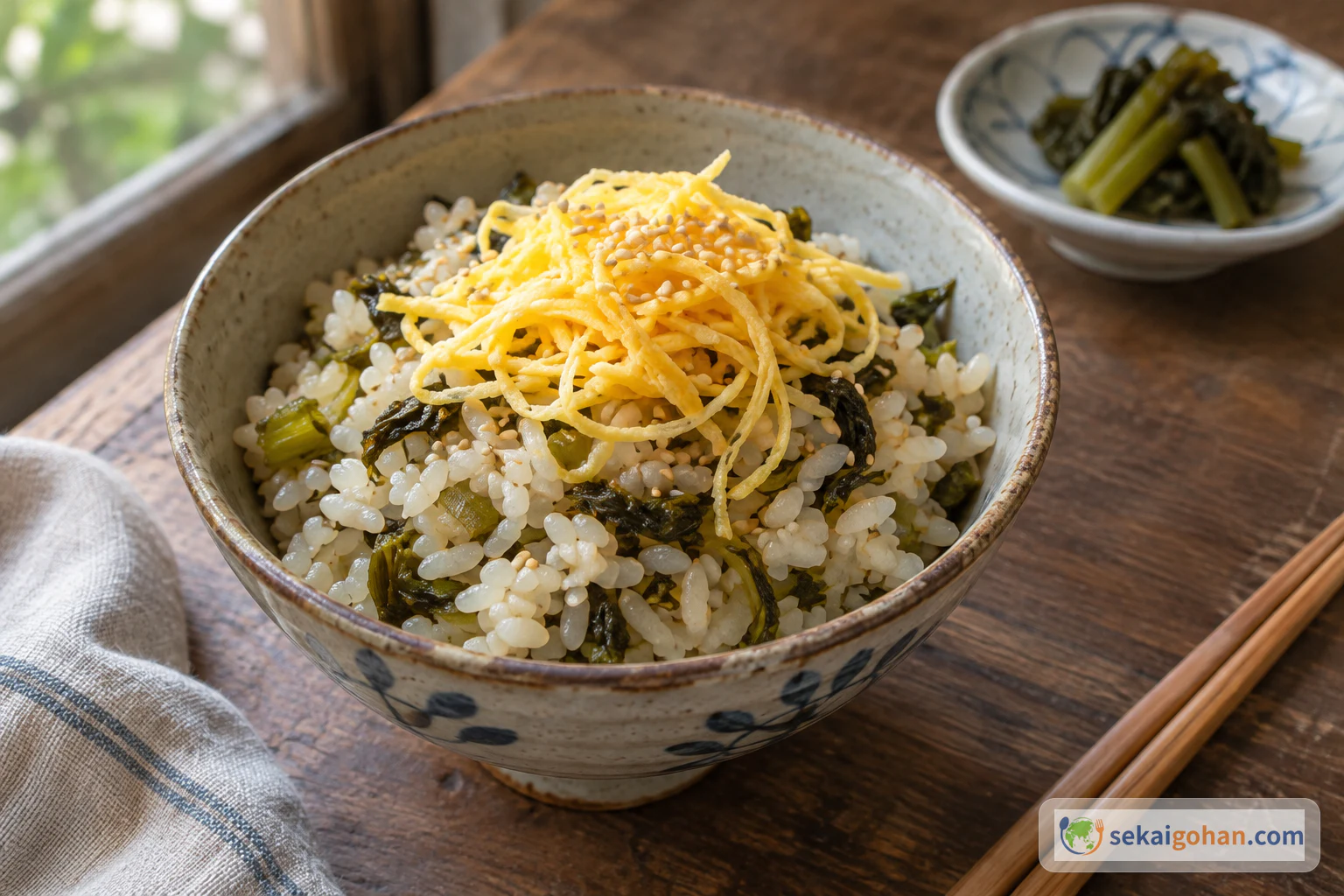
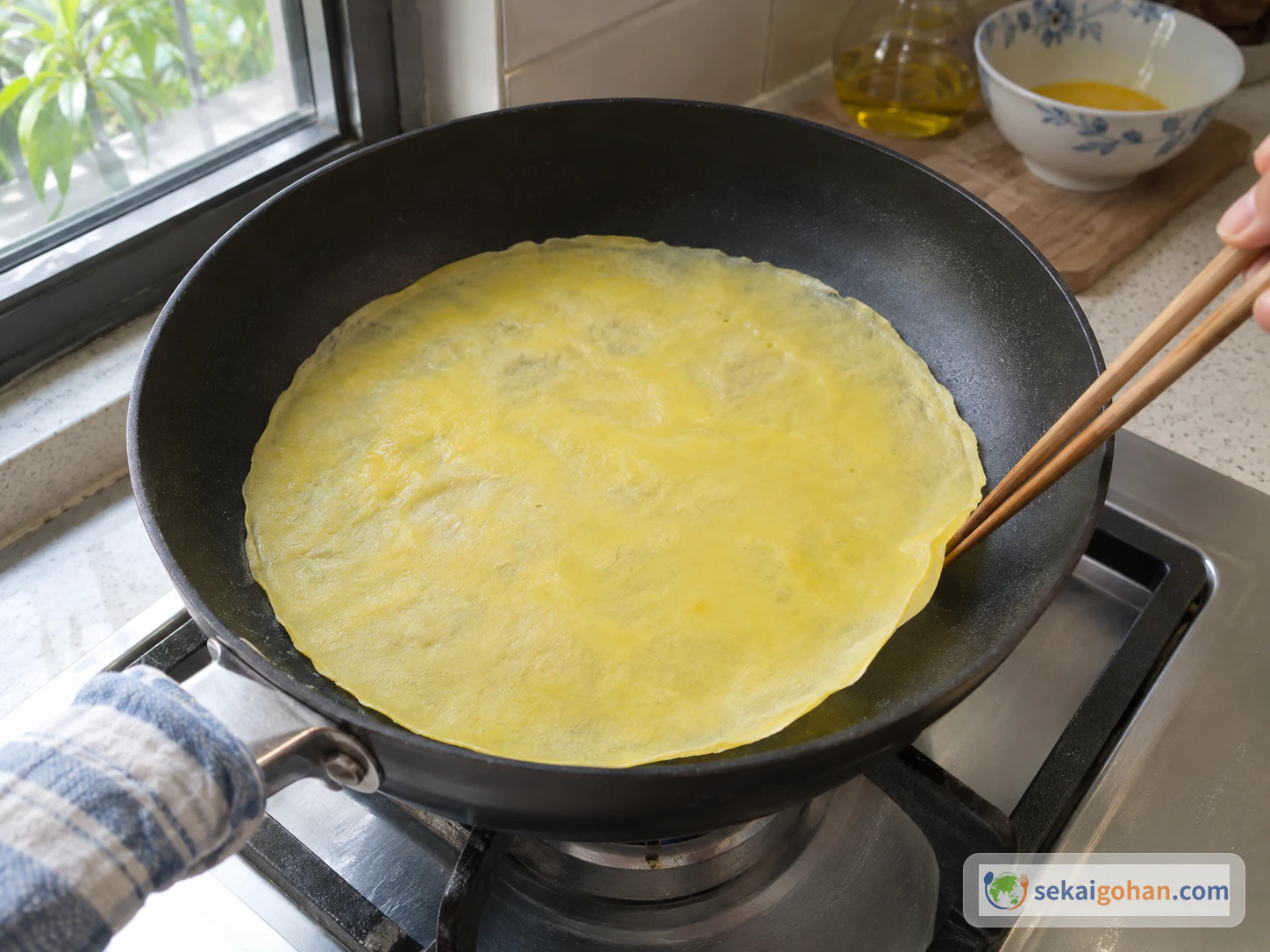
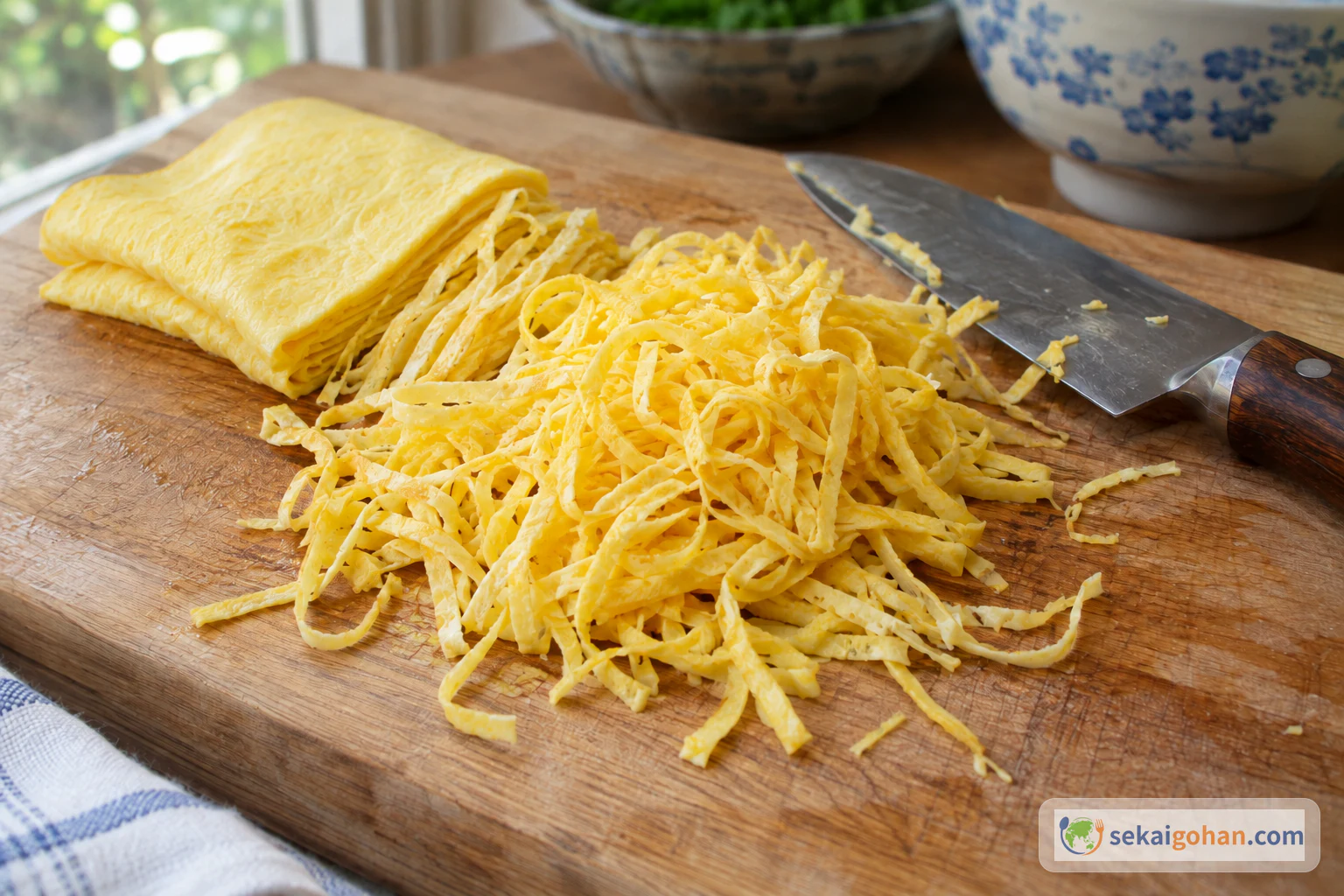
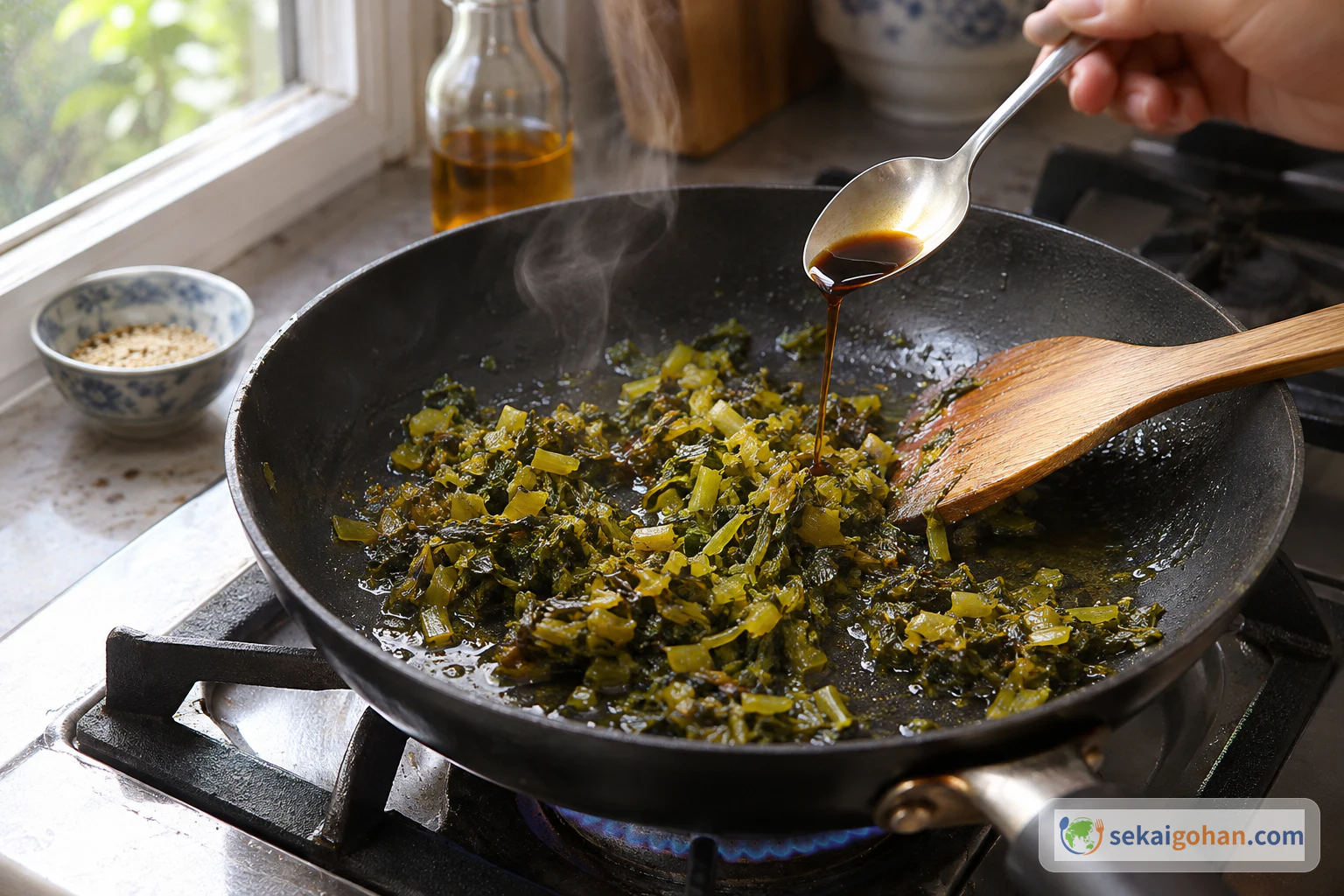
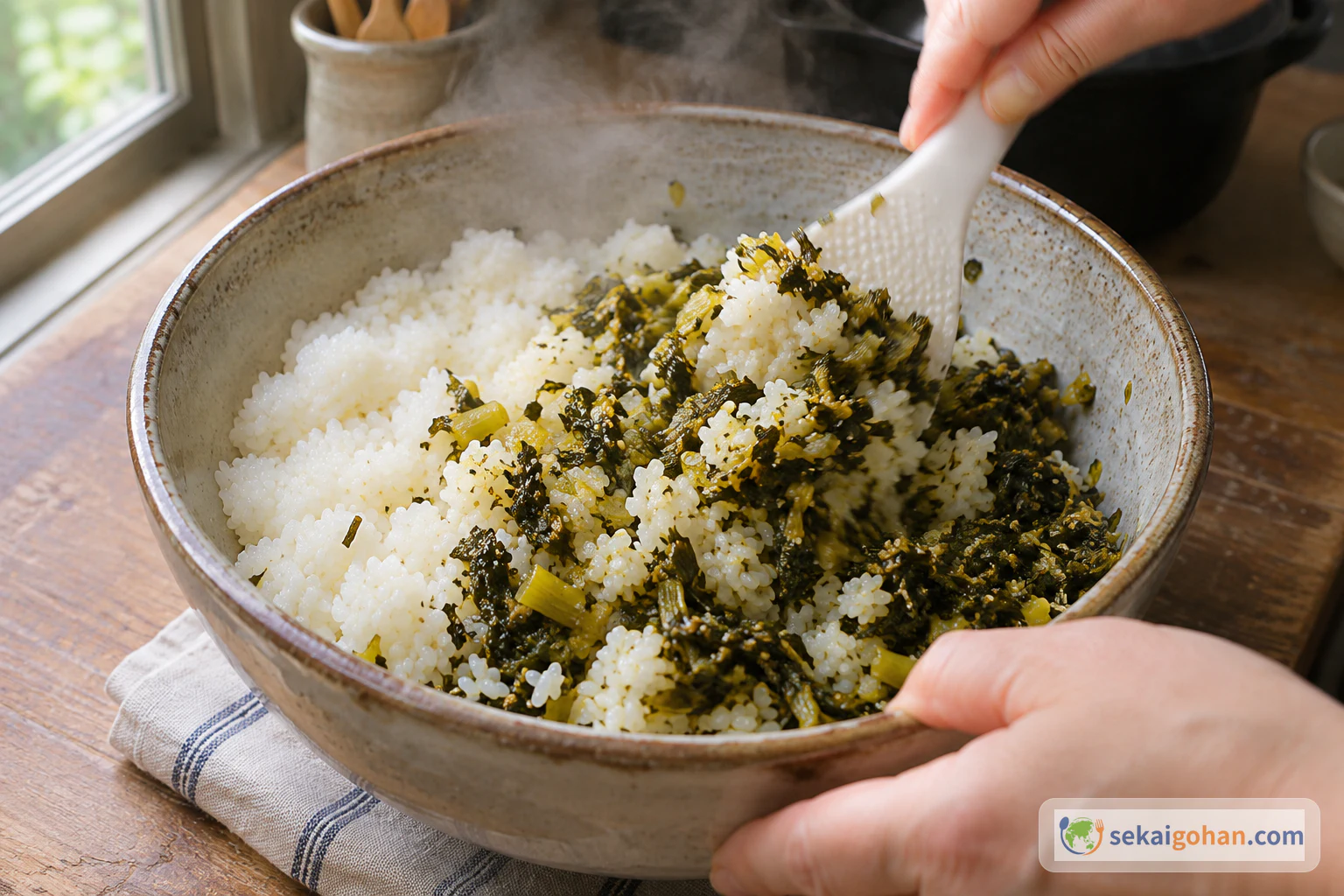
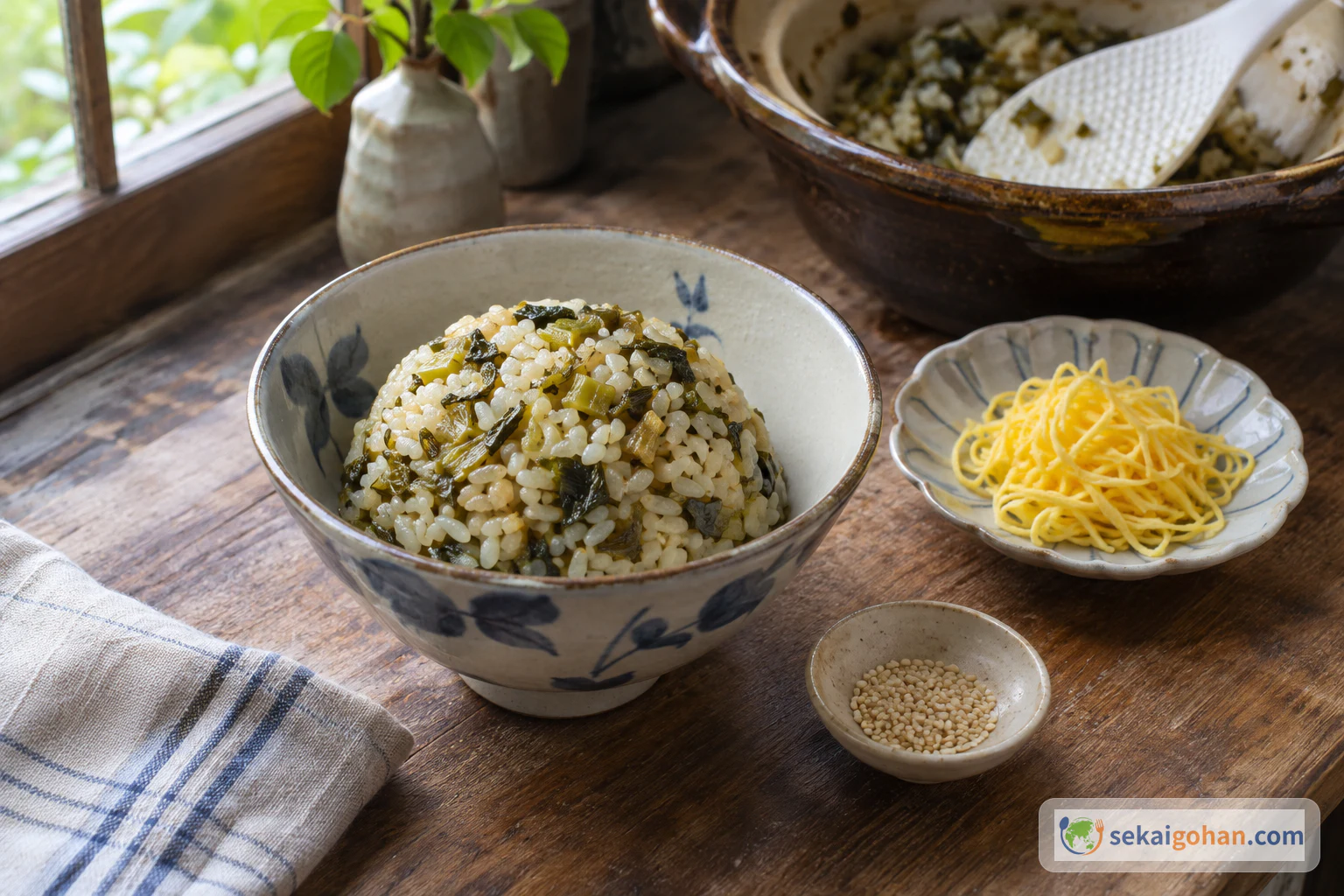
The chopped pickle hits hot sesame oil and the kitchen fills with a sharp, toasty smell, half mustard and half roasted seed. A splash of soy sauce, mirin and sugar sizzles at the edge of the pan, the dark green bits turn glossy, and then the whole panful goes into a bowl of steaming white rice. Takana meshi is pickled mustard greens fried with seasoning and folded into warm rice, then topped with fine threads of sweet egg. It comes from the Aso area of Kumamoto in Kyushu, and it tastes salty, a little sour and a little hot, with sesame running through every grain.
A Rice Dish Built on One Week of Spring
The rice is never fried. That is the line between takana meshi and takana fried rice, which is a separate dish. In the old way, only the pickle goes into the pan. The rice stays soft and separate, each grain coated in seasoned oil instead of browned. If you have made Chinese fried rice, forget that motion here: you are mixing, the way you would dress a salad.
Takana meshi has long been home cooking around Aso city, in Kumamoto. Across Kumamoto Prefecture it is a regular on school lunch menus, so plenty of people grew up eating it at school. In Aso it usually comes with a bowl of dango-jiru, a miso soup with flat, hand-torn wheat dumplings. National Route 57, which runs through the area, is nicknamed the "dango-jiru road." Kumamoto belongs to the same island food culture that gives Japan its pork-bone ramen, and tonkotsu ramen shows the other, richer side of the island's table. For more dishes from across the country, see our Japan page.
The pickle and the land
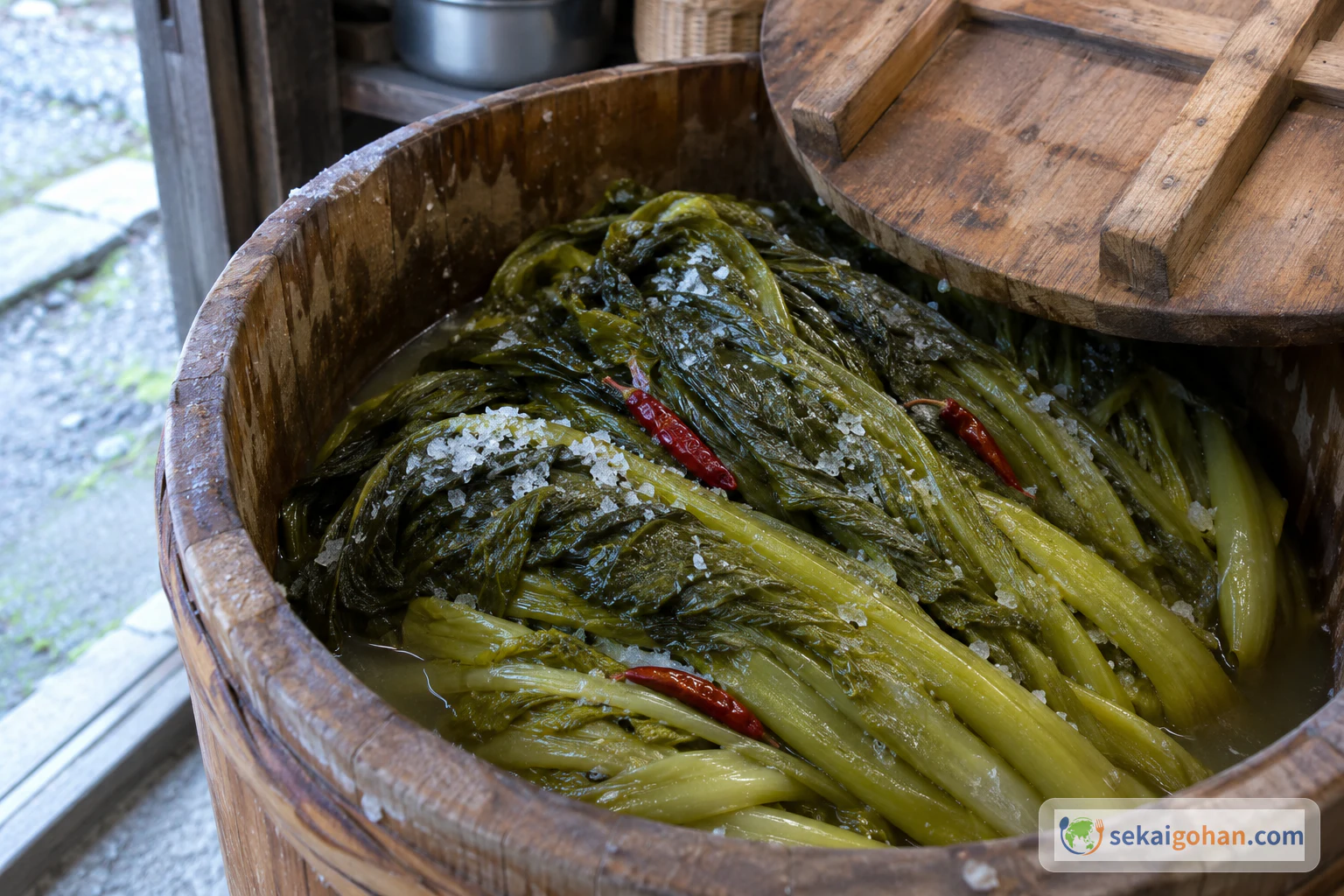
Aso takana is a mustard green grown in a cold climate on volcanic ash soil. It is sown in autumn and sits through the winter. Then in early spring it shoots up all at once. At harvest the thick stem has a point where it snaps cleanly in the hand, so the stalks are picked by hand, not by machine. Locals call this takana-ori, "takana snapping." Each plant is at its best for only about a week. Growers say takana raised on the lowland plains grows too vigorously: the stems get too thick and the flavor and texture suffer. The cold of the highlands is part of what you taste.
The young shoots are thin and tender and lose freshness fast. That is why they have always been salted the same day they are picked, with red chilli tucked in, and some producers add turmeric as well. After three to five days the pickle is ready to eat as shinzuke, a new pickle, still green and peppery. Left for half a year, it ferments into furuzuke, an old pickle that is sour and gently hot. After two months or more it turns amber. The salt rises with the time it is meant to keep: about 4% of the greens' weight for a new pickle, 6% for one aged half a year and 8% for a full year. Each spring, in late March, the Uchinomaki district of Aso city holds the Aso Takana Festival, where visitors can try the harvest and the pickling.
The mustard plant itself is usually traced to Central Asia, and Japanese texts from around the 9th and 10th centuries already mention it. Kyushu has two famous takana. Aso takana belongs to the leaf-mustard group, the same family as nozawana. Miike takana is a fleshy, thick-stemmed type that came from China in the Meiji era.
In Aso the plain version is old pickle chopped fine, fried in oil with chilli and mixed into rice. The Kumamoto home and school-lunch version adds a crown of shredded egg and a sweeter seasoning of mirin and sugar. That is the version below. Asoji, a restaurant in Aso city, is usually described as the first to put takana meshi on a restaurant menu. It fries the chopped pickle stems with bamboo shoots, uses old pickle aged from half a year to two years, sweetens its egg and keeps a taste handed down from the current owner's great-grandmother. Some people also top their bowl with shiso seeds.
Takana-zuke reaches far beyond this bowl. It goes into rice balls, fried rice, dumpling fillings, savory bread rolls and pasta. A bag of it rarely goes to waste.
Ingredients (serves 4)
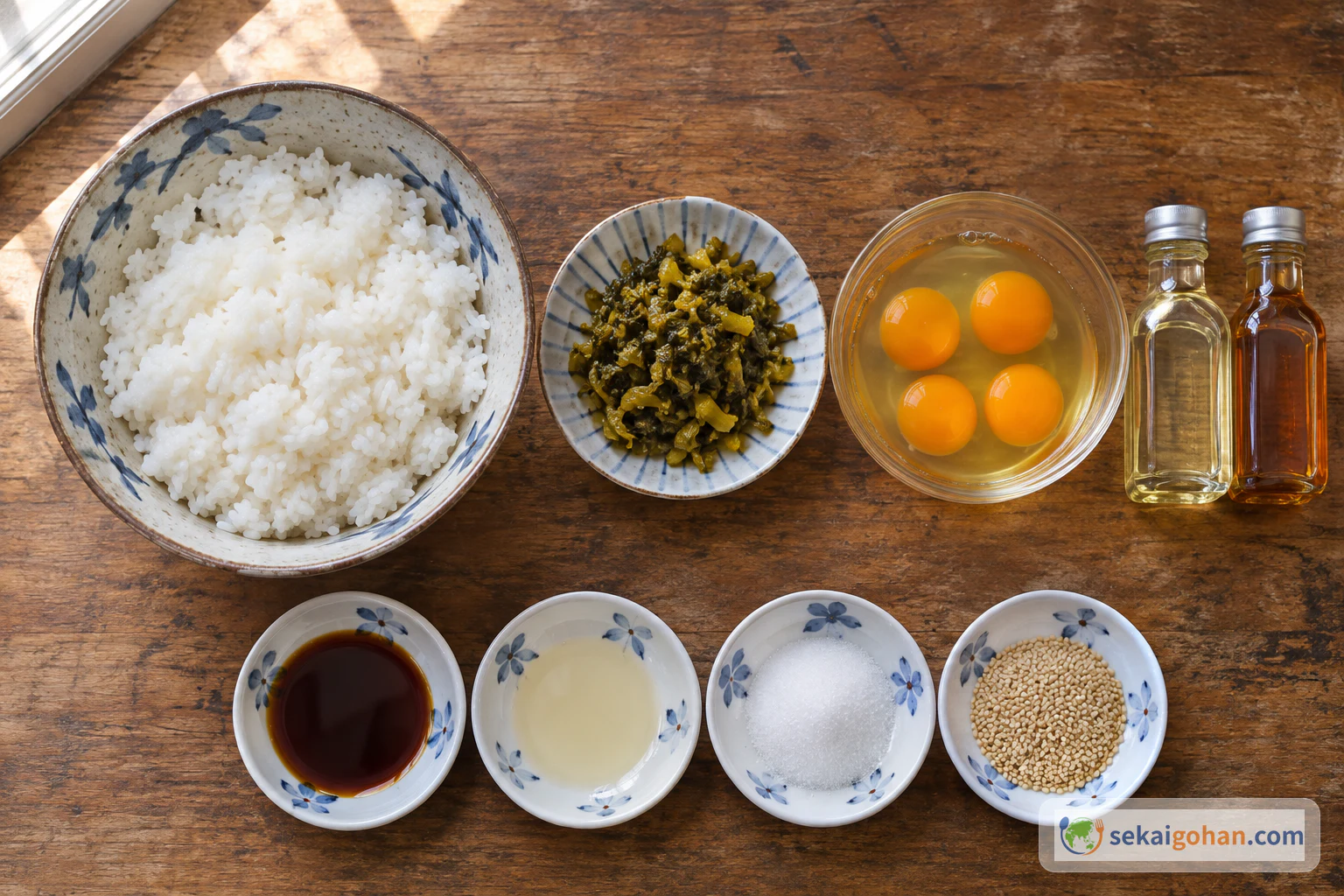
Of the nine ingredients, eight are pantry staples in a Japanese kitchen. The two oils have separate jobs: salad oil is only for the egg and sesame oil is only for the pickle. Keep them apart, or the egg tastes of sesame and loses its clean sweetness.
There is no salt in the list. The pickle brings all of it.
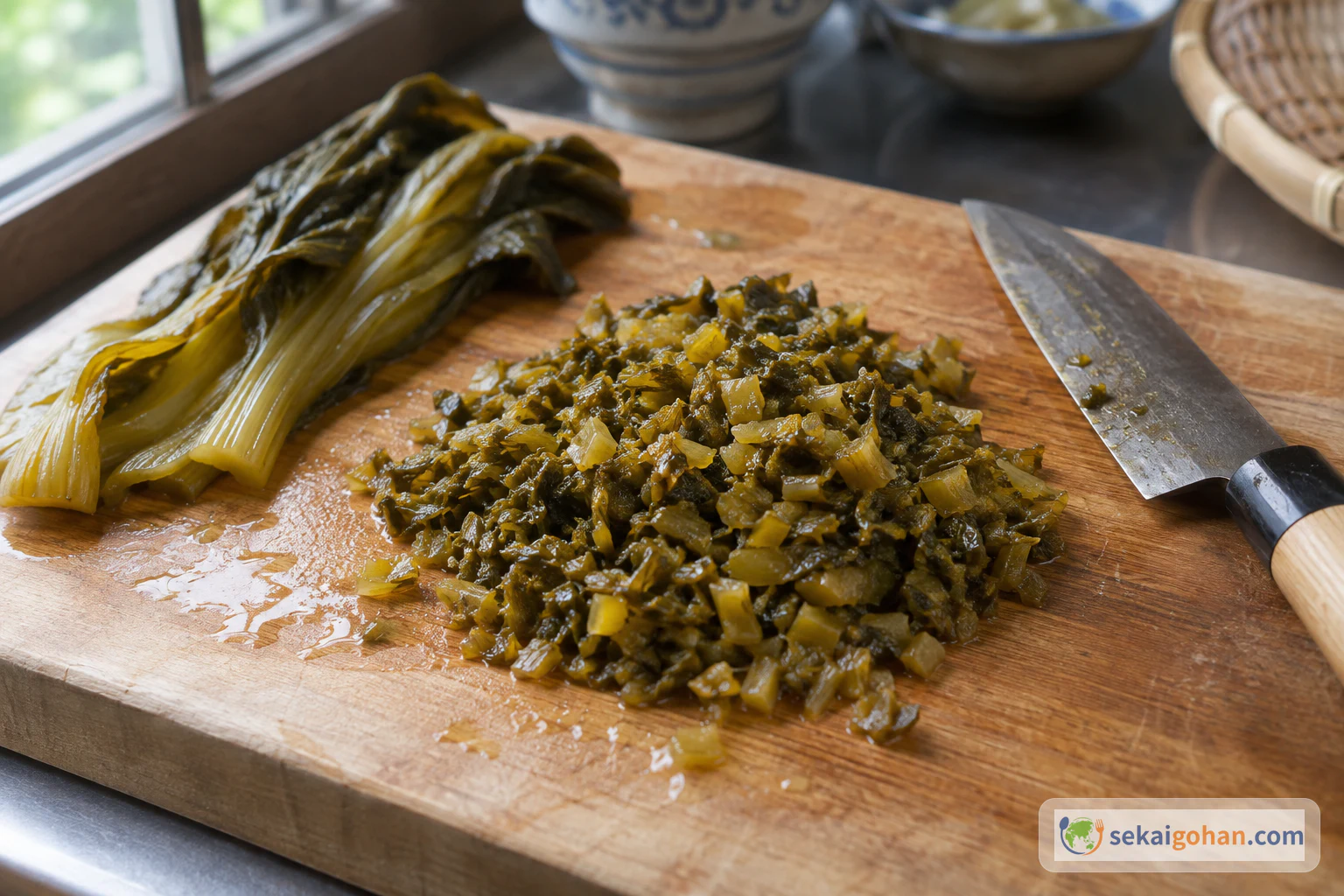
Bite a piece of the takana before you start. Brands differ a lot in salt and sourness, and general takana-zuke carries about 4 g of salt per 3½ oz (100 g). If yours is very salty, use less soy sauce in step 4.
This dish contains egg, soy (soy sauce) and sesame (sesame oil and seeds). Check the labels on the pickle and the soy sauce for anything else that matters at your table.
Equipment
- Frying pan, about 10 inches (26 cm), for both the egg crepe and the pickle
- Large heatproof bowl, about 2 quarts (2 L), for mixing the rice
- Knife and cutting board
- Cooking chopsticks
- Rice paddle (shamoji)
Choosing the Pickle and Swapping the Rest
Aso takana-zuke is the first choice. It has soft leaves and the true Aso flavor. Look for it online or at a Japanese or other Asian grocery store; bags often hold more than this recipe uses, and the leftovers make good rice balls or fried rice. Kyushu takana-zuke made from Miike-type takana works too. Its stems are thicker and more fibrous, so slice them thinly before chopping. Nozawana-zuke comes from the same leaf-mustard family and can stand in when nothing else is around, but it is pickled differently, so the flavor will not be the same.
New pickle or old pickle changes the dish more than any other choice. Old pickle brings sourness and depth, and it is the kind the Asoji restaurant uses. New pickle keeps a sharper mustard heat and a fresh, green edge.
| Ingredient | Good swap | What changes |
|---|---|---|
| Salad oil | Rapeseed or rice bran oil | Nothing; any neutral oil works |
| Sesame oil | Use toasted sesame oil, the common Japanese kind | Less oil means weaker aroma and a drier bowl |
| Mirin | Hon-mirin (true mirin) | Mirin-style seasoning has different sweetness and alcohol, and the sweetness turns flat |
| Sugar | Reduce to 2 tsp | A less sweet, saltier bowl |
| Sesame seeds | Ground sesame | Stronger aroma, but you lose the little pop of whole seeds |
Takana-zuke is eaten without further cooking, so store a bought pickle exactly as its label says (refrigerated, if marked) and use it by its date. If you pickle takana yourself, do not leave a low-salt quick pickle at room temperature. Sealed or vacuum-packed low-acid foods carry a risk of botulism. Sealed packs that have not been heated to 248°F (120°C) for at least 4 minutes must be refrigerated below 37°F (3°C). Heating just before eating, at 176°F (80°C) for 30 minutes or at 212°F (100°C) for several minutes, inactivates the toxin.
Method
Chop the pickle and make the egg first. The crepe needs to cool before you can slice it, so use that time to fry the pickle. Have the rice warm and waiting in its bowl before the pickle goes into the pan, because the fried pickle goes straight into the rice. The cooking itself happens in one pan, start to finish.
When It Goes Wrong
| What you see | Why | What to do |
|---|---|---|
| Too salty | A very salty pickle | Cut the soy sauce to 2 tsp, or add more rice. Next time soak the pickle in water for about 10 minutes, then squeeze it well before chopping |
| Dry, crumbly rice | Too little sesame oil, or cold rice | Add another 1 tbsp sesame oil and always mix into warm rice |
| Wet, heavy rice | Brine left on the pickle | Squeeze the takana before chopping |
| Flat, muddy taste | Pickle fried too briefly so moisture remains, or too much sugar | Fry until the liquid is gone and the smell turns toasty; keep sugar at 4 tsp or less |
| Tough, stringy bits | Thick-stemmed Miike-type pickle | Slice the stems thinly before chopping and fry 1 minute longer |
| The egg crepe tears | Thin crepes are fragile | Leave it; it gets shredded anyway |
Serving, Variations and Storage
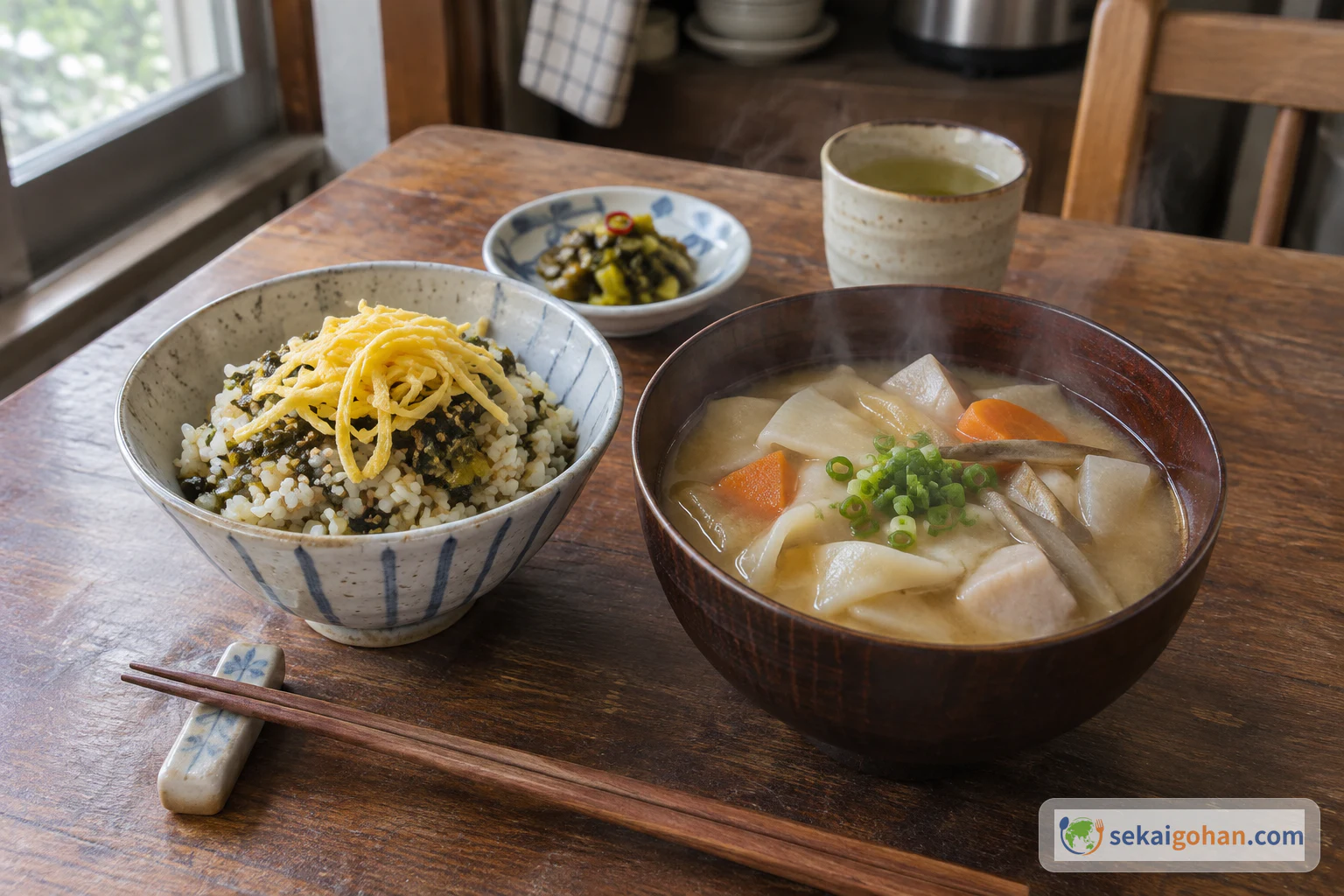
At the table
Takana meshi is a full rice course, so it pairs best with soup. Dango-jiru on the side is the Aso way, if you want to cook a second pot. A miso soup and a dish of extra pickles make a fine everyday meal too. For another Japanese home rice dish, see Japanese curry.
Variations
- Bamboo shoots, restaurant style. Chop 1¾ oz (50 g) boiled bamboo shoots and fry them with the takana in step 4. They add a crunchy bite and bring the bowl closer to the Aso restaurant version.
- Chilli, Aso style. Add a little sliced dried red chilli in step 4. The heat goes up and the flavor moves toward the old Aso version.
- Nori. Scatter shredded nori on top at the end. It adds a sea aroma that pairs well with the sesame.
- Shiso seeds. Spoon shiso seeds over the bowl for a sharp, herbal aroma.
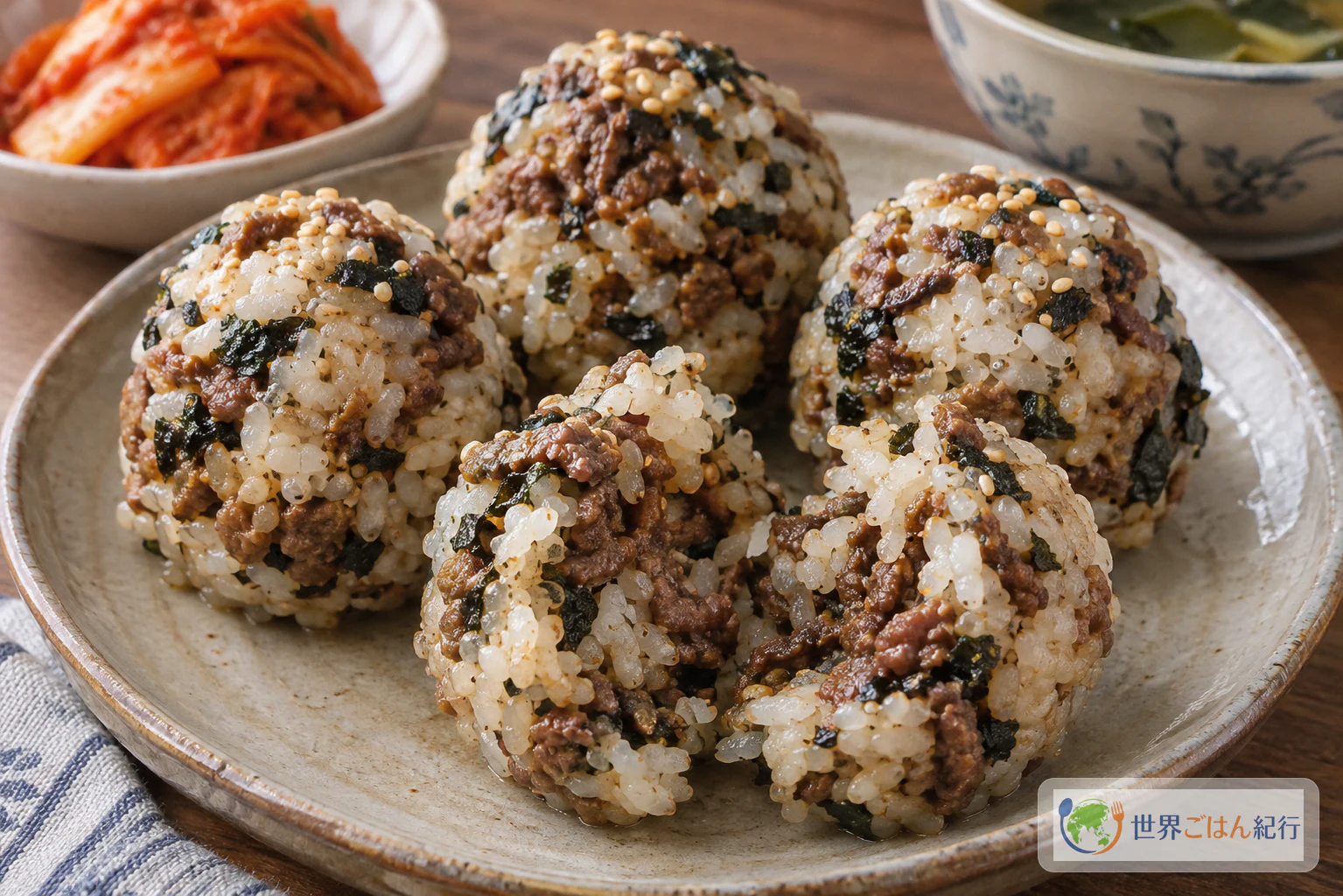
- Rice balls. Shape the mixed rice into onigiri. Tuck the shredded egg inside rather than on top so the balls hold together.
Storage
Refrigerate leftovers in a covered container and eat them the same day. The egg spoils first, so if you plan to eat some later, keep the shredded egg separate and add it just before eating.
Frequently asked questions
Why two different oils?
Each oil has a different job. The neutral salad oil cooks the egg cleanly so it stays sweet and pale. The large amount of sesame oil carries the pickle's flavor into every grain of rice and keeps the bowl moist, which is why it looks generous.
Can I use leftover cold rice?
Warm it through first. Cold rice clumps and won't take the oil, so you end up pressing and breaking the grains to spread the pickle. Warm rice loosens with a few folds of the paddle.
Is the egg essential?
The egg is what makes this the Kumamoto home version. It adds color and sweetness. Without it, the bowl tastes closer to the plain Aso version. The pickle and sesame alone still make a complete dish.
How do I make it milder for children?
Soak the chopped pickle briefly in water, then squeeze it hard. This tones down the heat and salt but also washes out some flavor, so make it up with soy sauce in step 4.