Jiao Ma Ji: A Cold Chicken Dish Led by Green Scallion and Sichuan Pepper, Not Red Heat
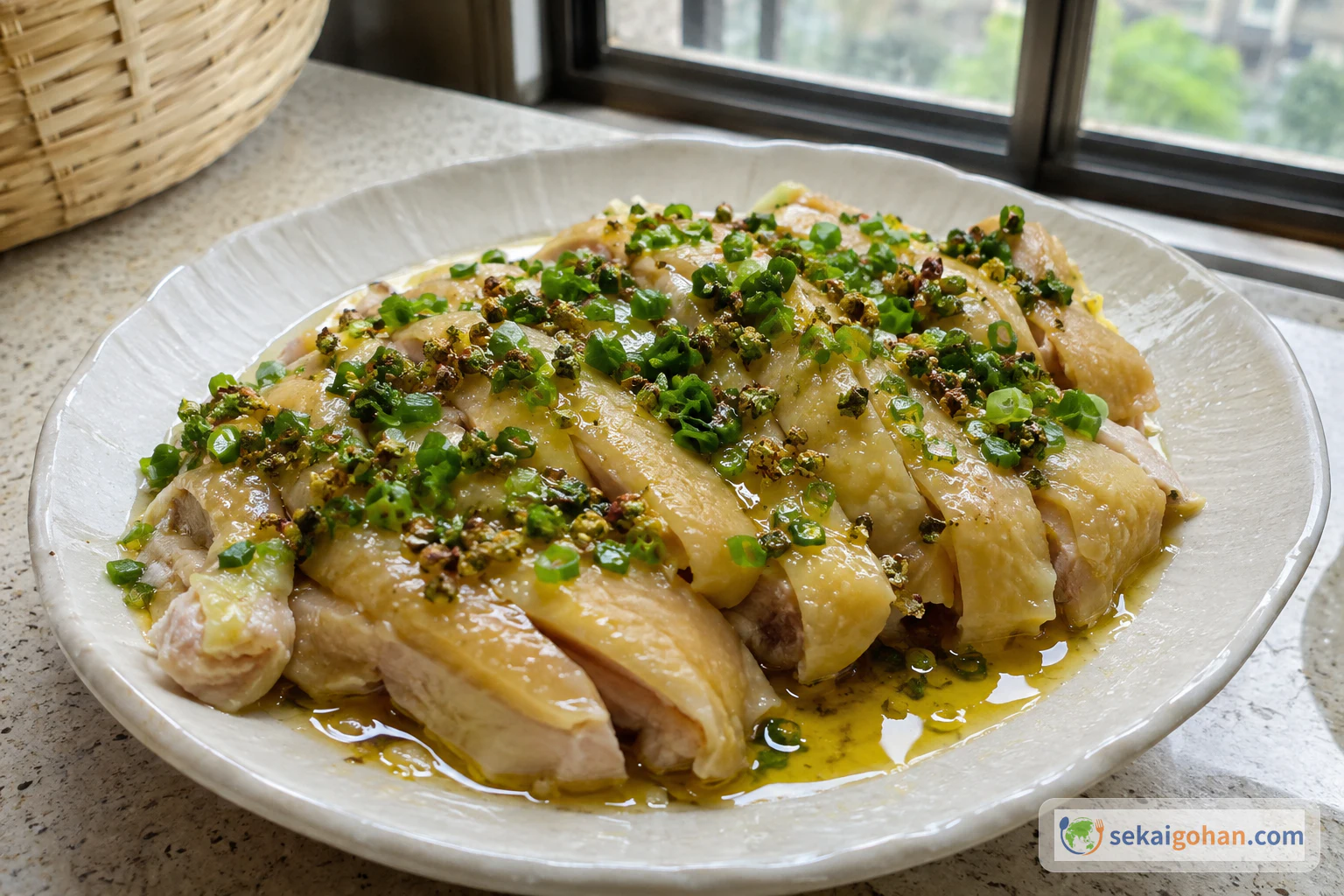
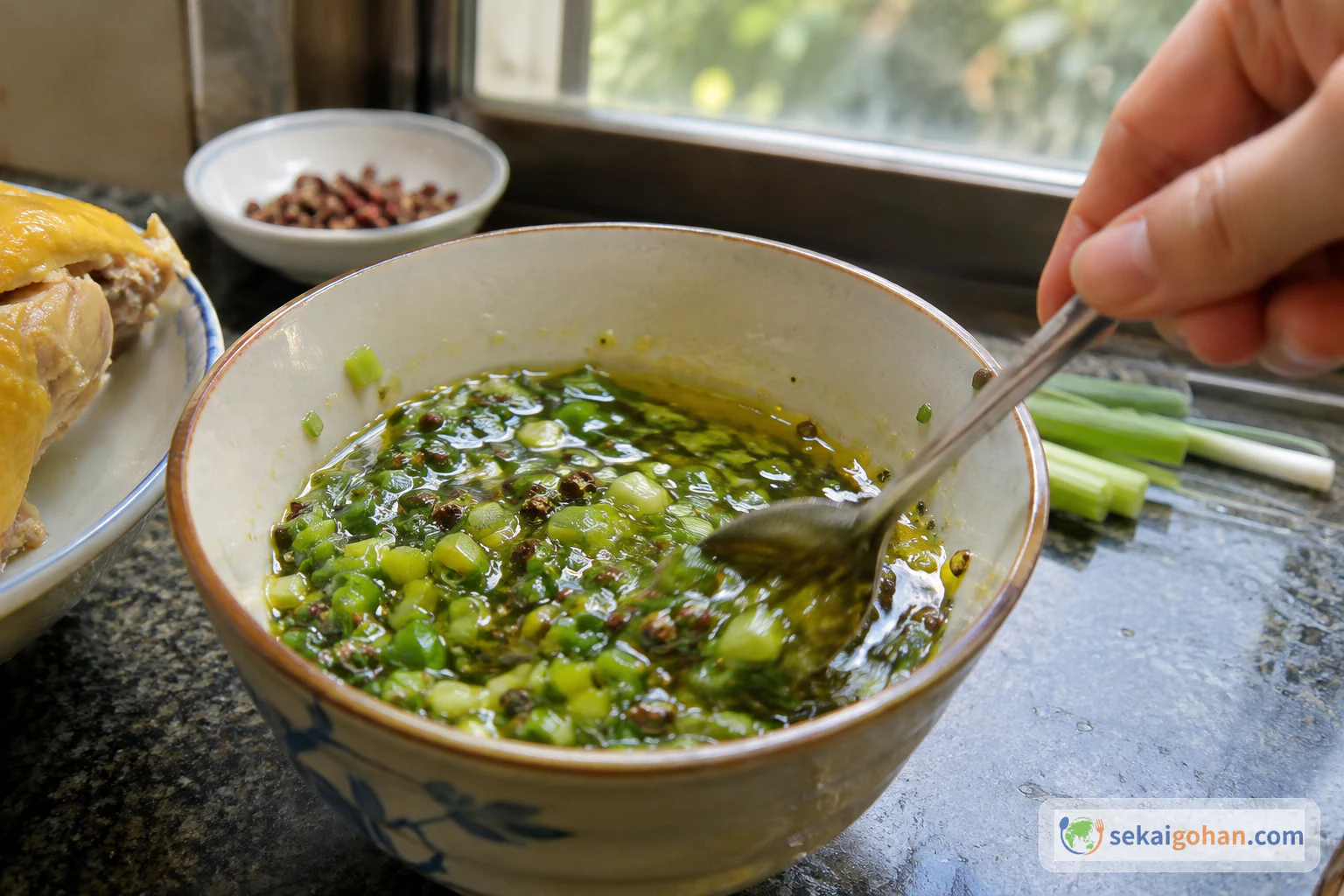
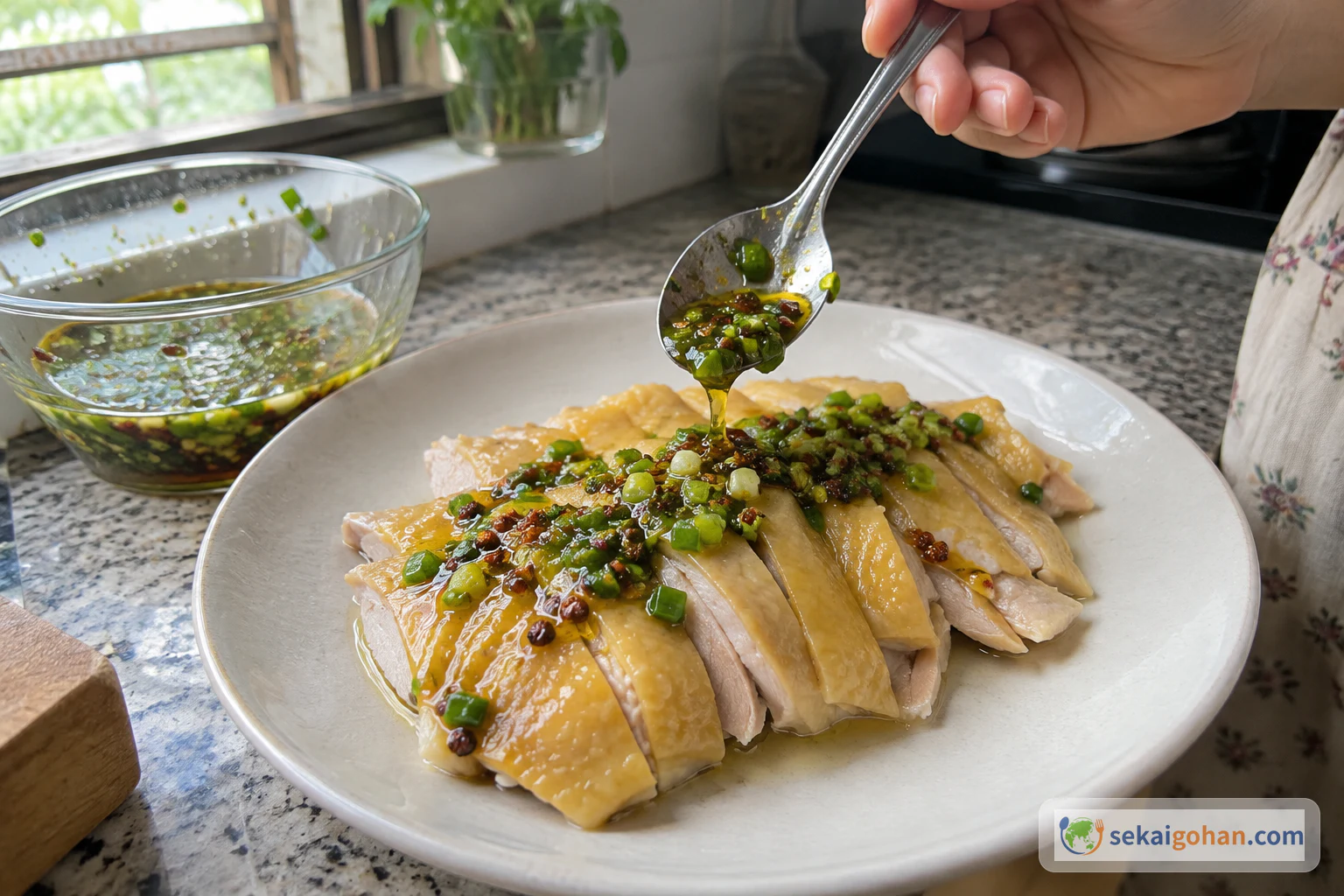
Gently steamed chicken, served cold. A sauce that tastes of the numbing fragrance of Sichuan pepper, the sharp green aroma of scallion leaves and warm rapeseed oil, rounded out with the chicken's own juices. No chili.
In a century-old historic building in Taiwan that now houses the Kishu-an (紀州庵) teahouse, the writer Ma Shifang (馬世芳) offered a Sichuan-style jiao ma ji for a feature on writers' home cooking, published by the Taiwanese food site Supertaste (TVBS) in December 2024. Ma describes it as a dish also made at home as a cold starter for guests: the ingredients are easy to find, it suits any season, and it goes with tea or with drinks.
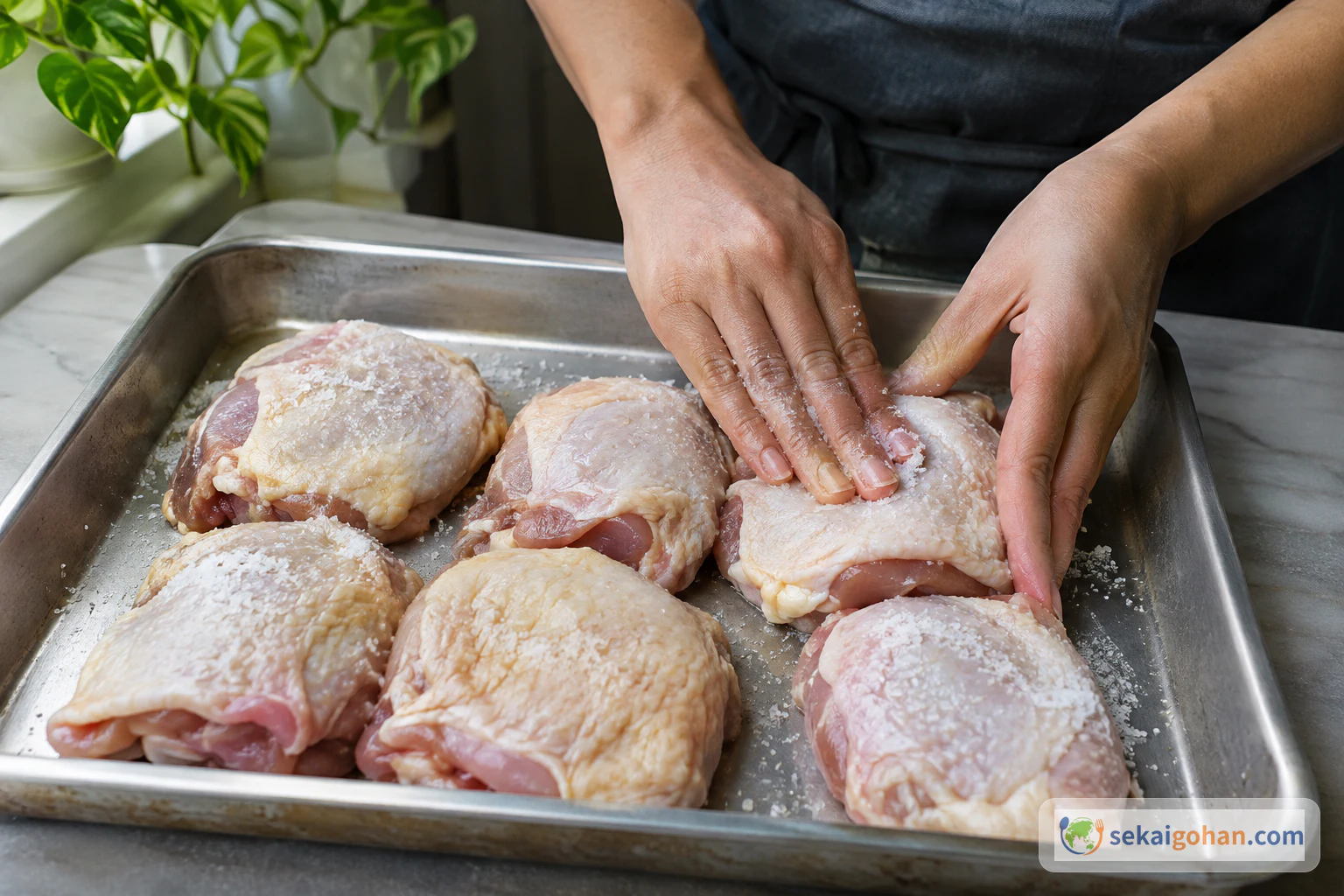
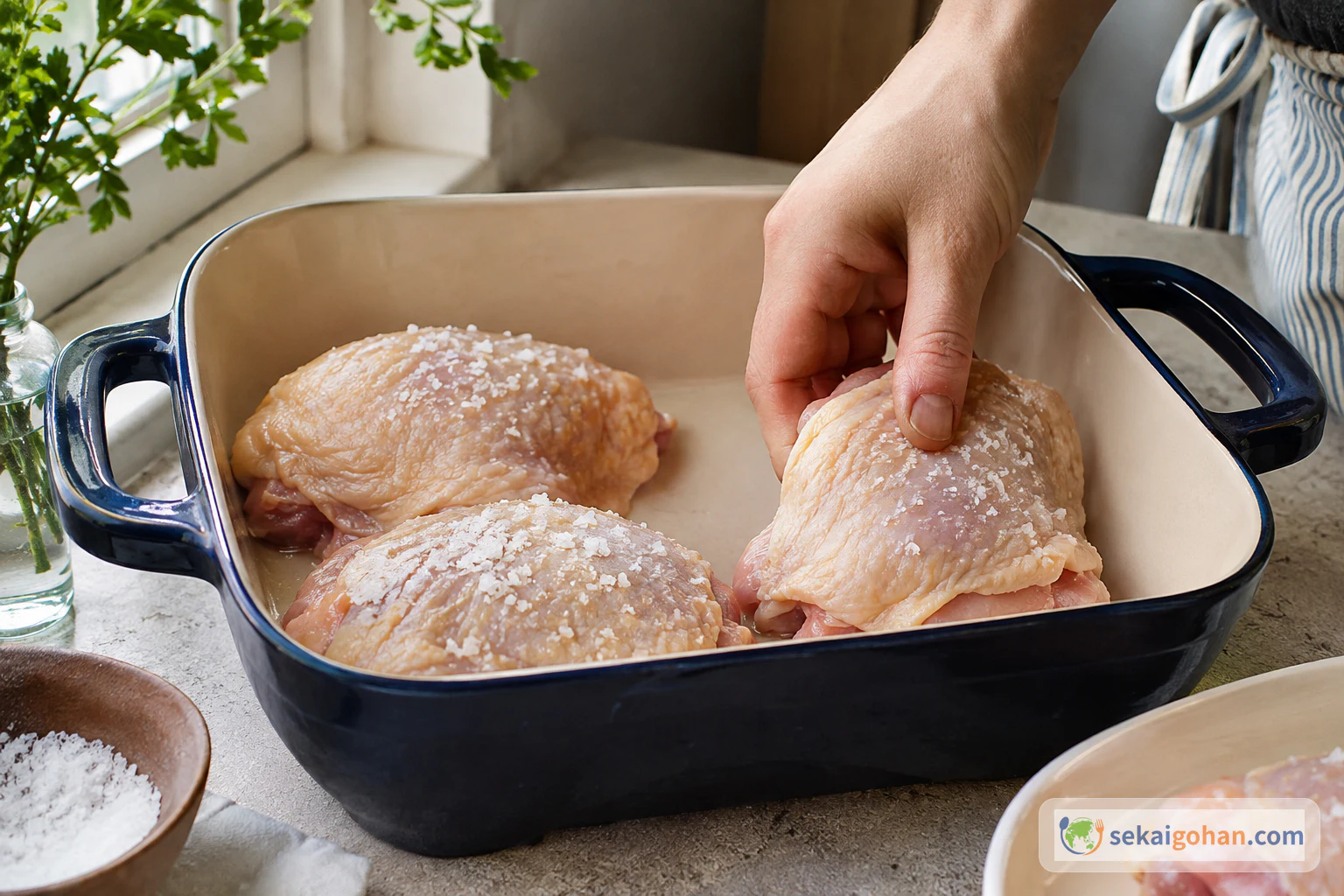
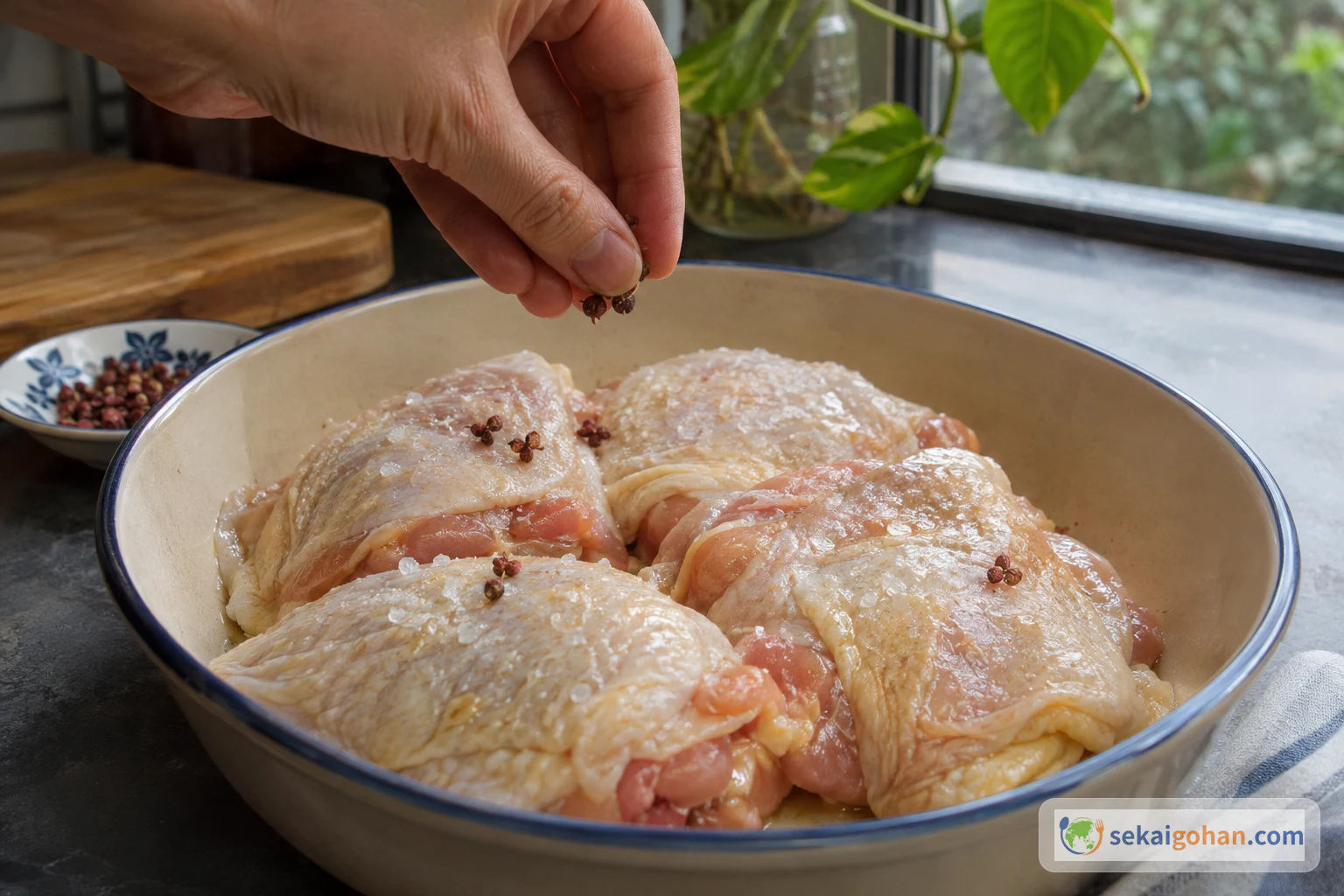
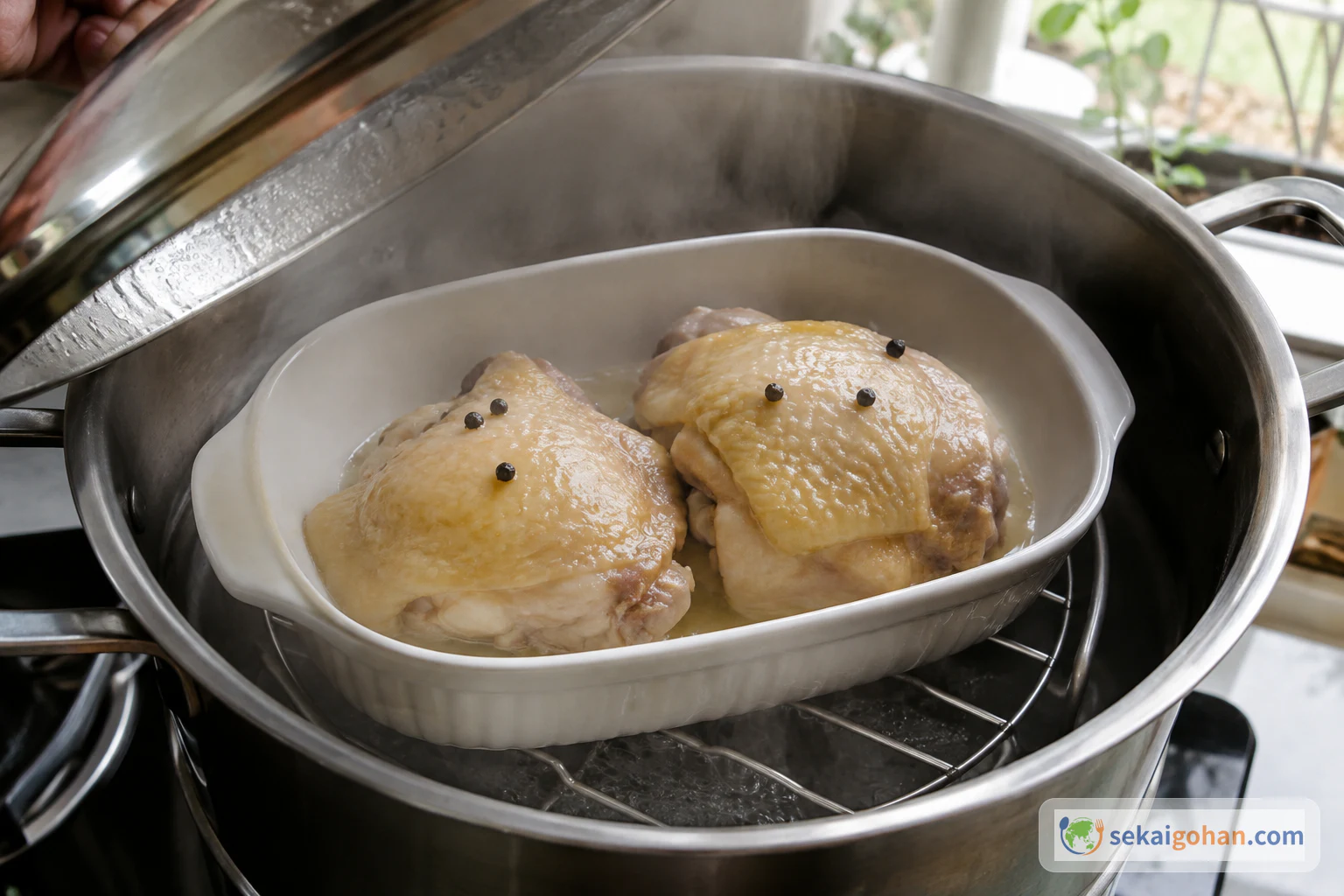
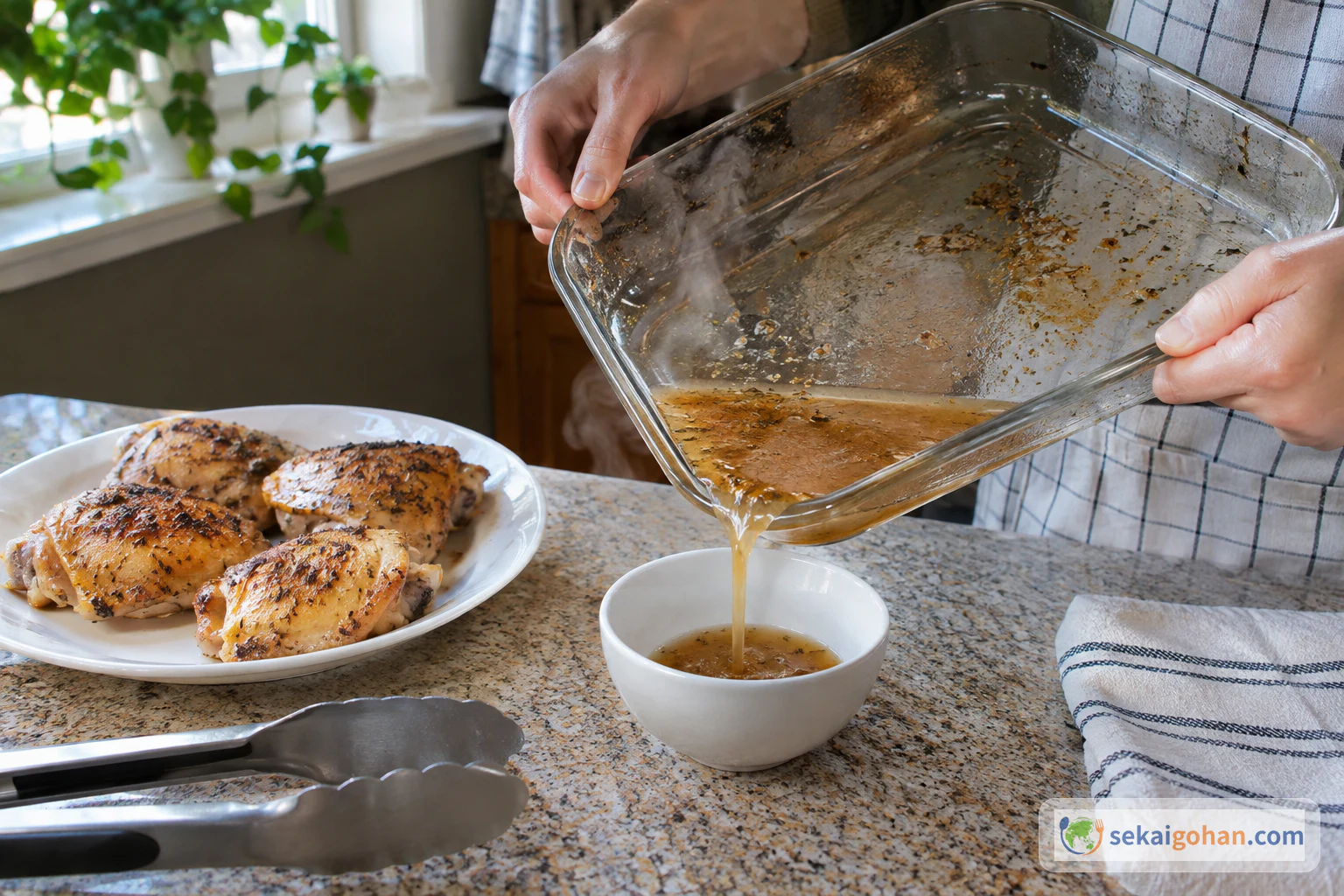
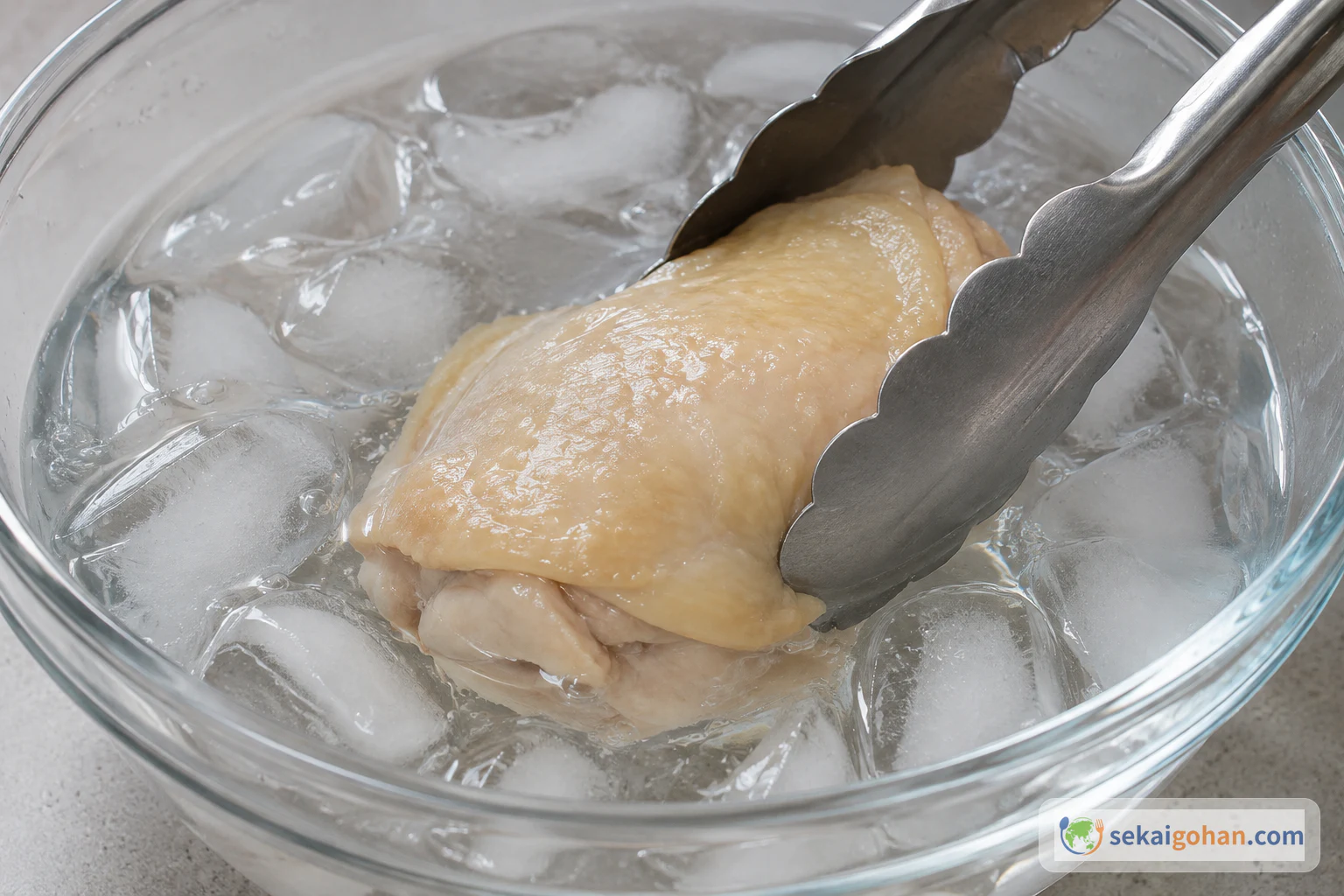
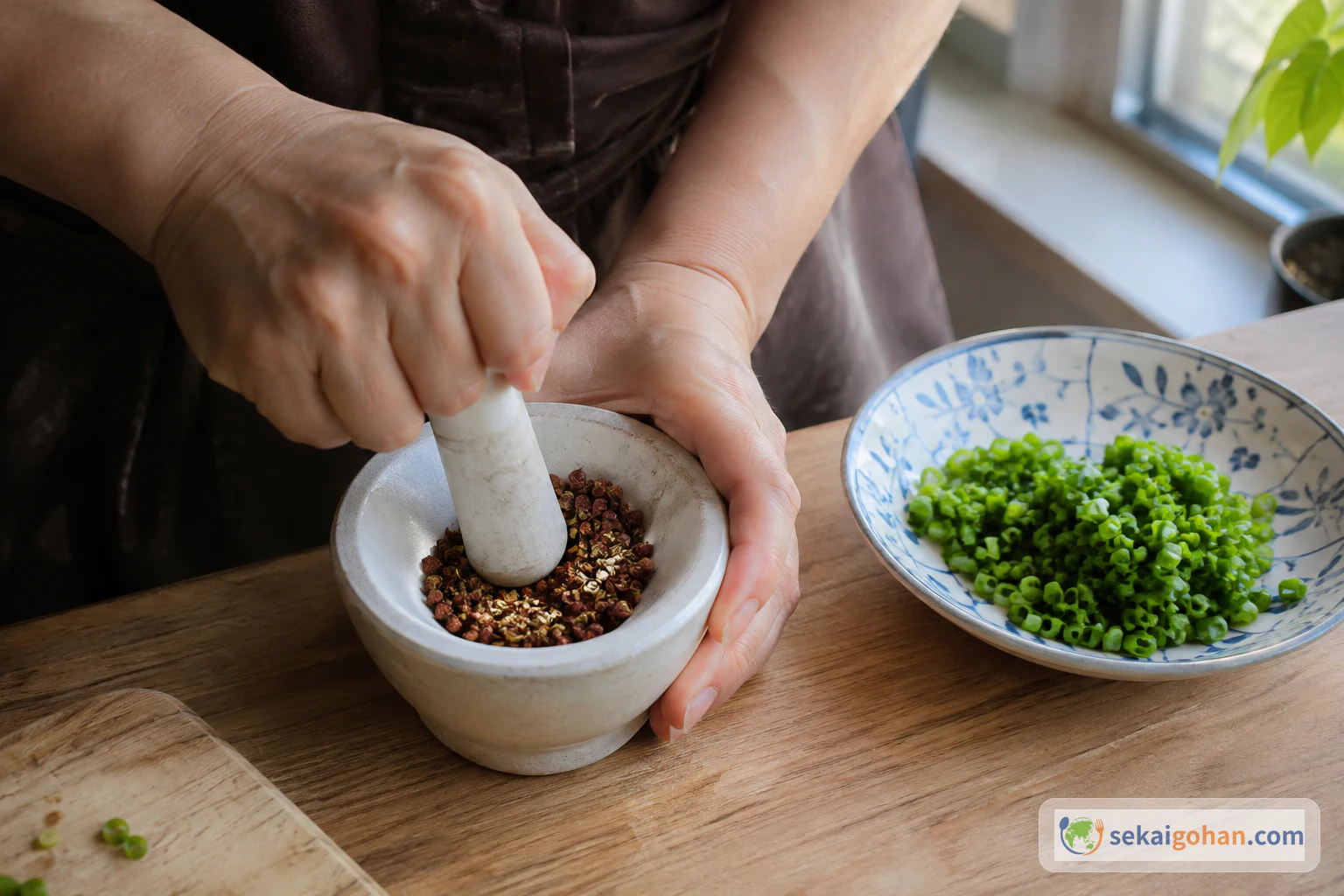
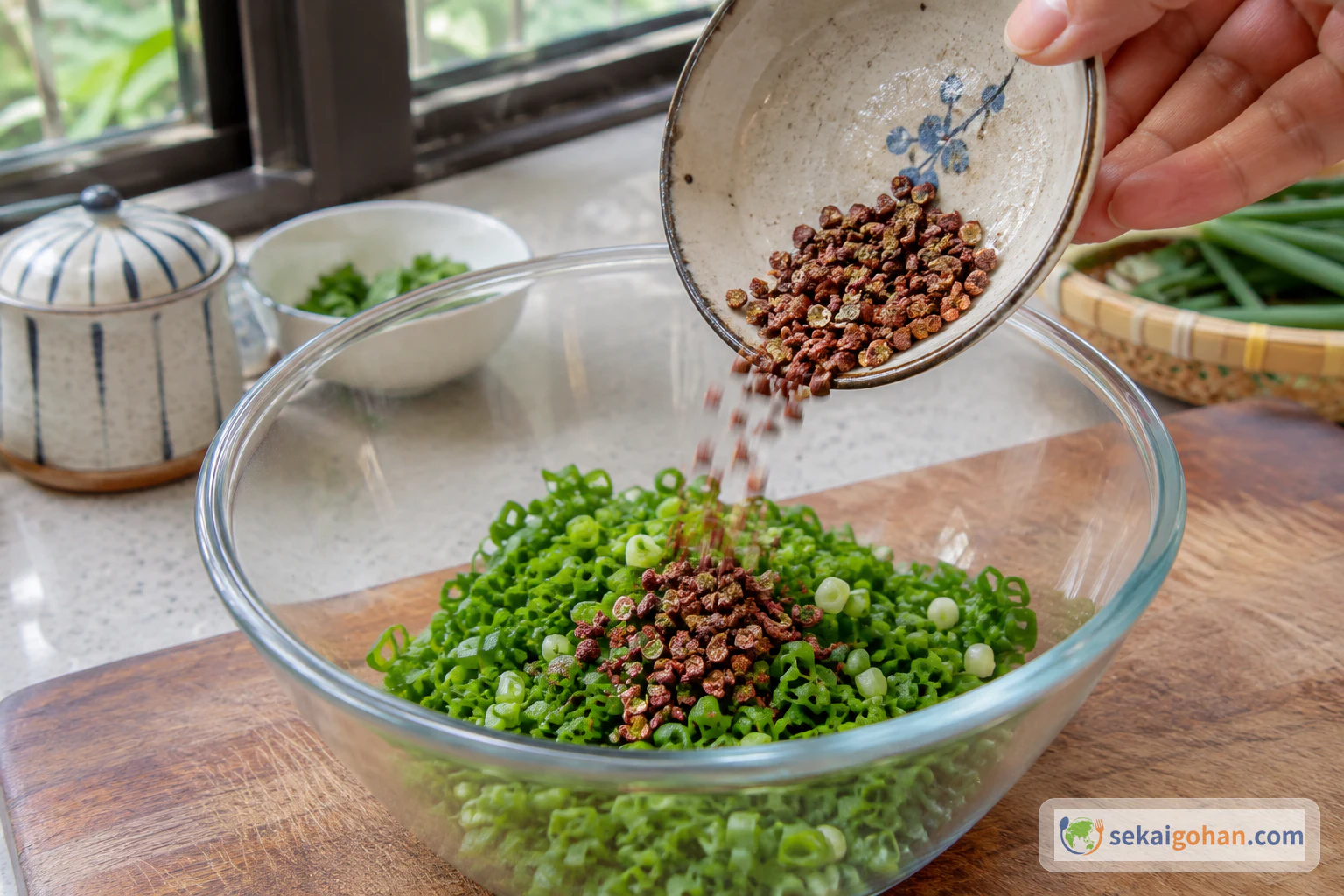
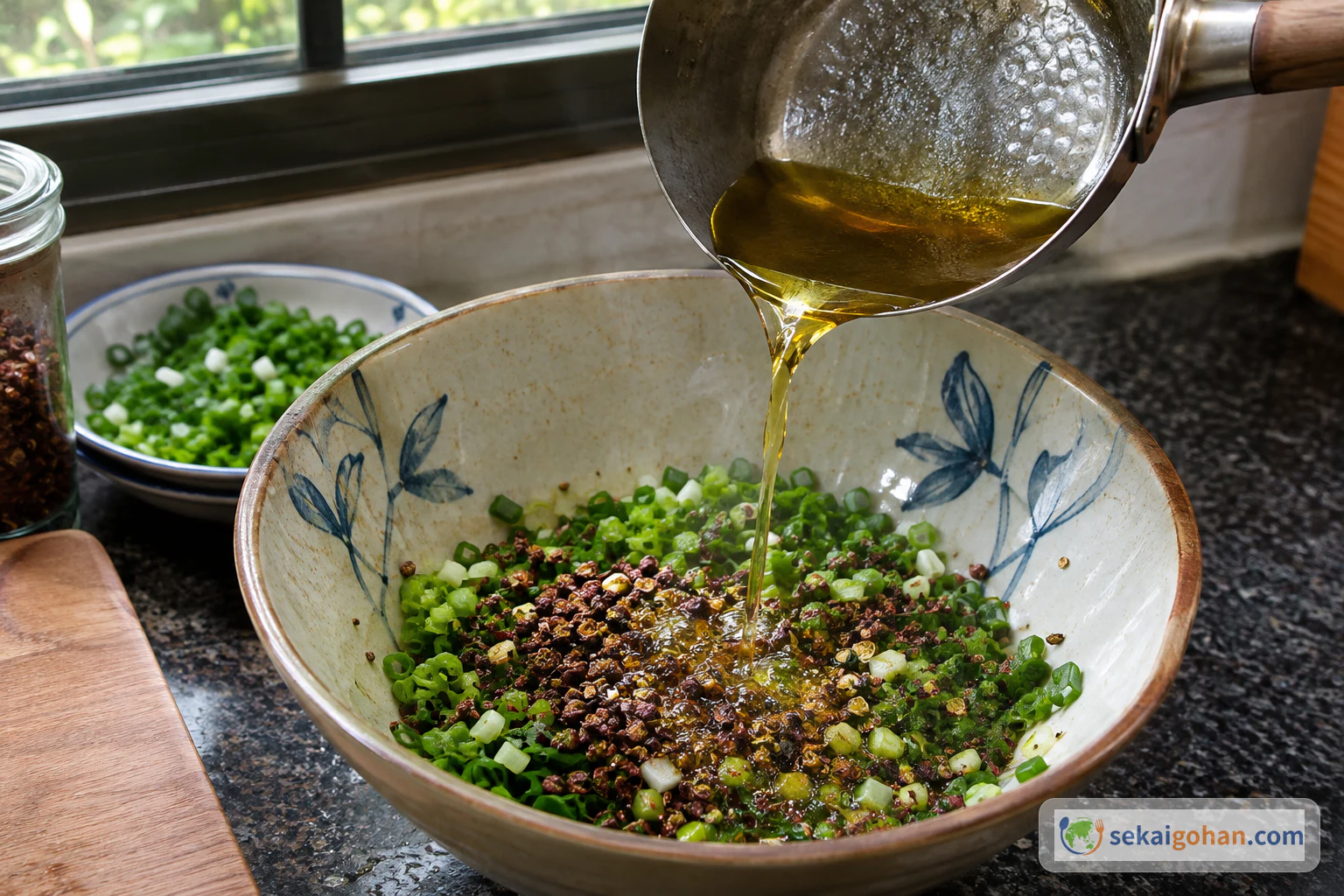
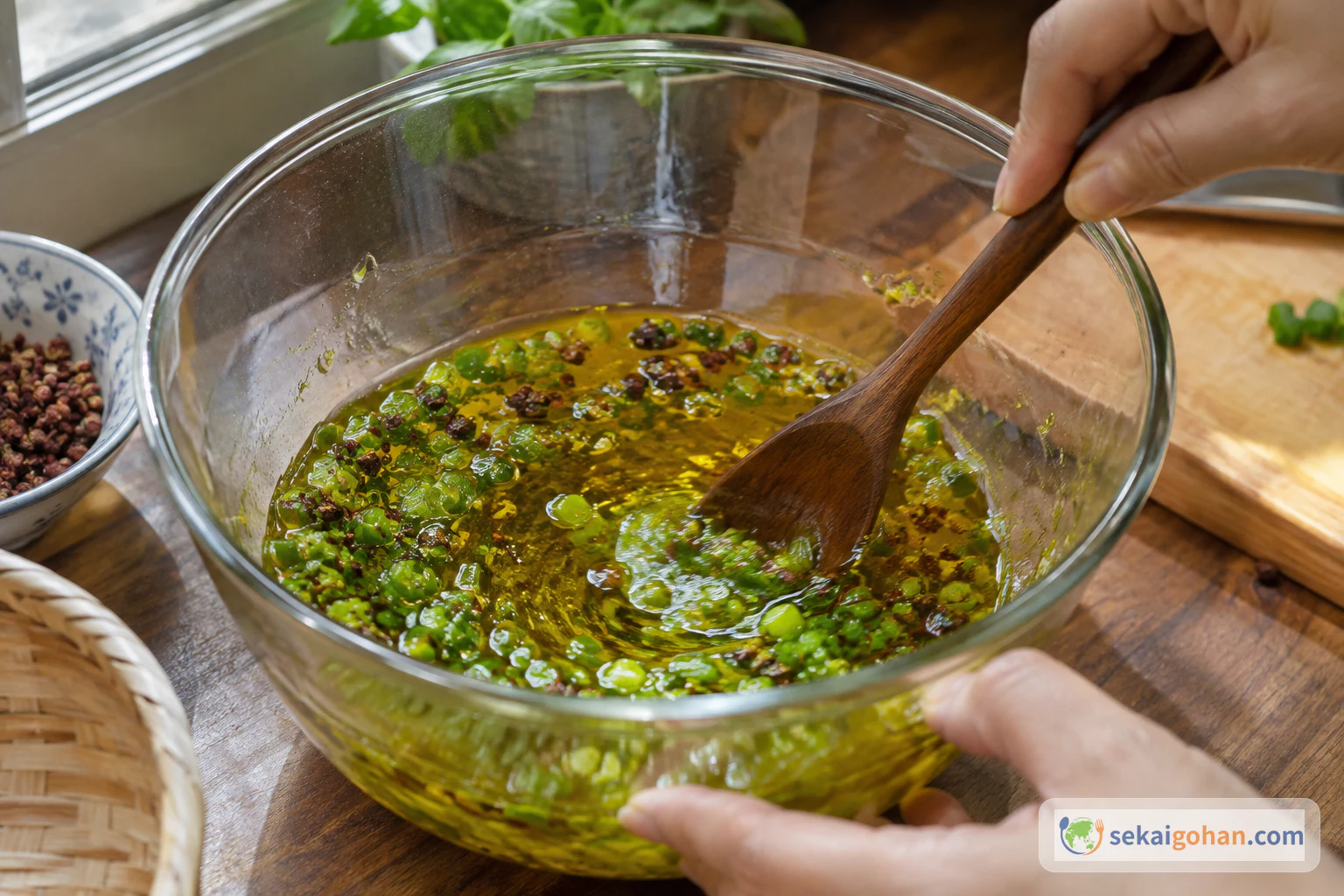
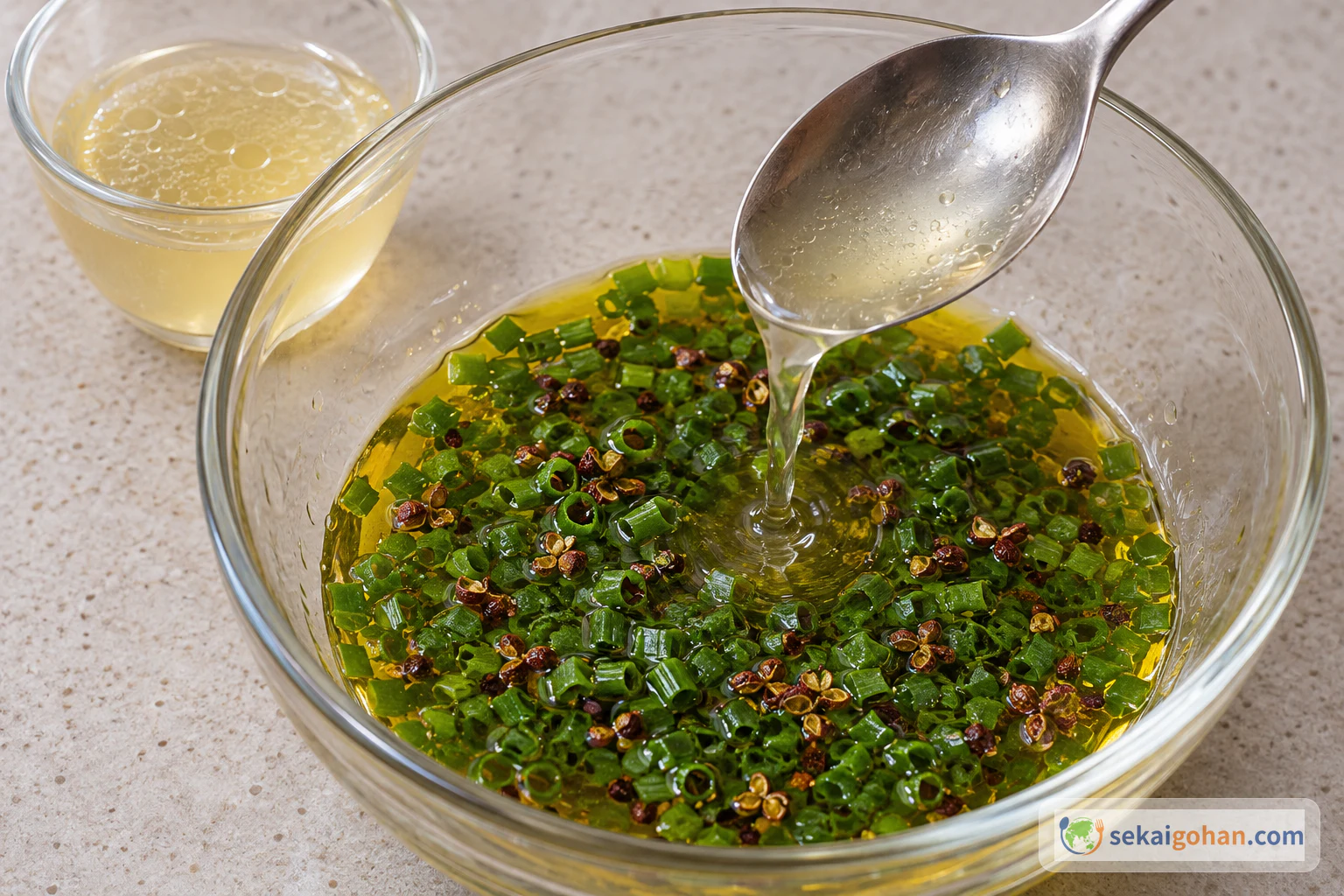
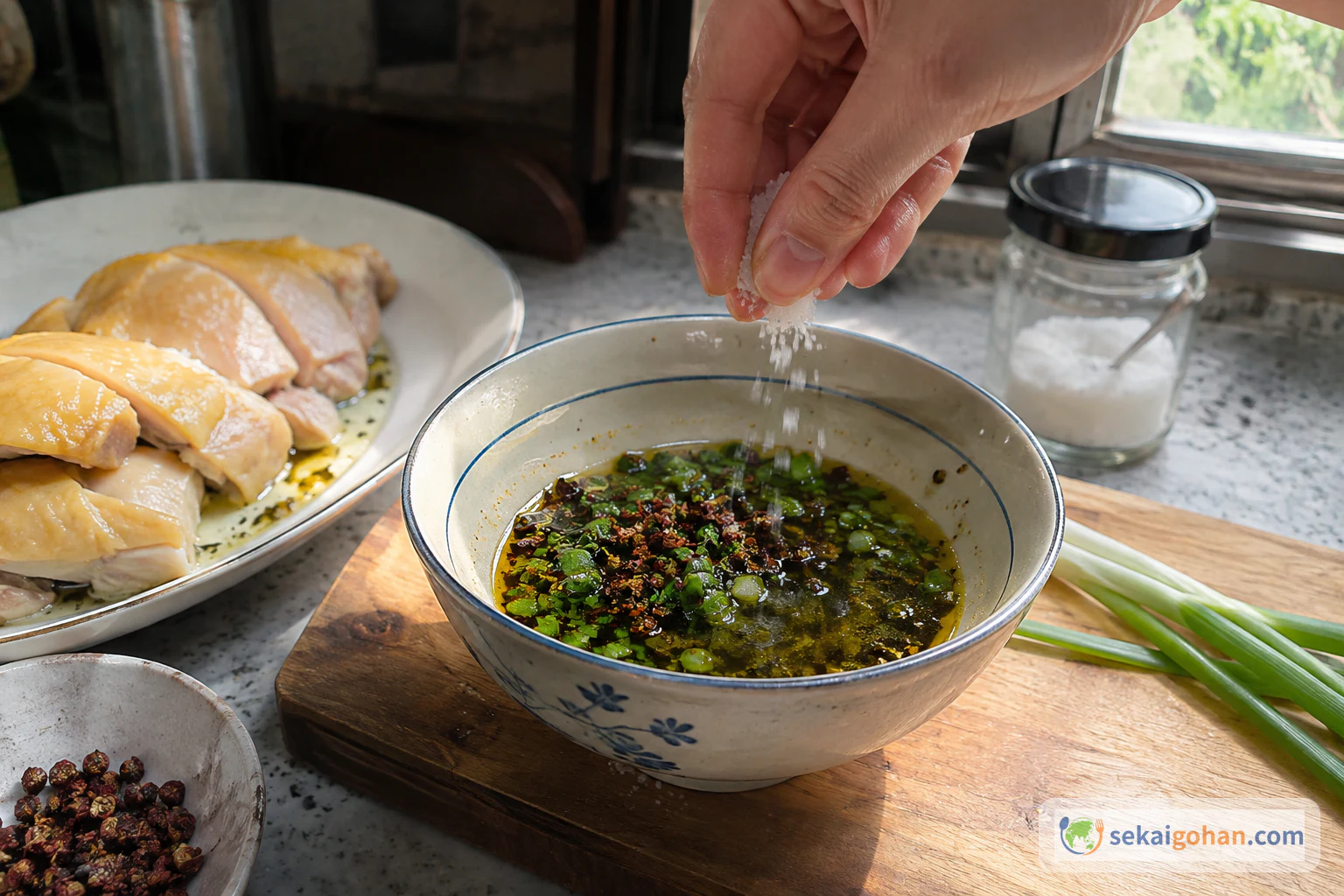
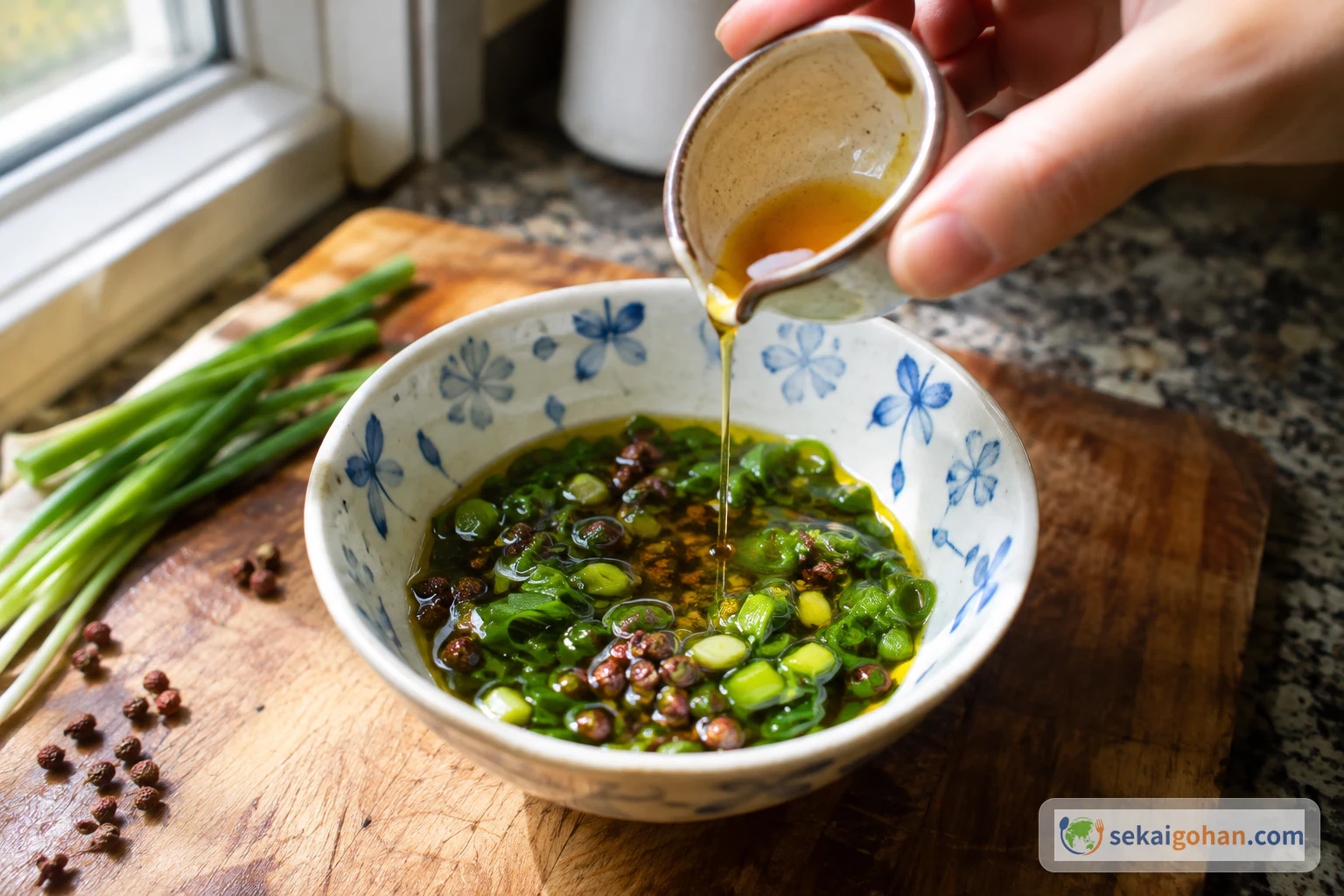
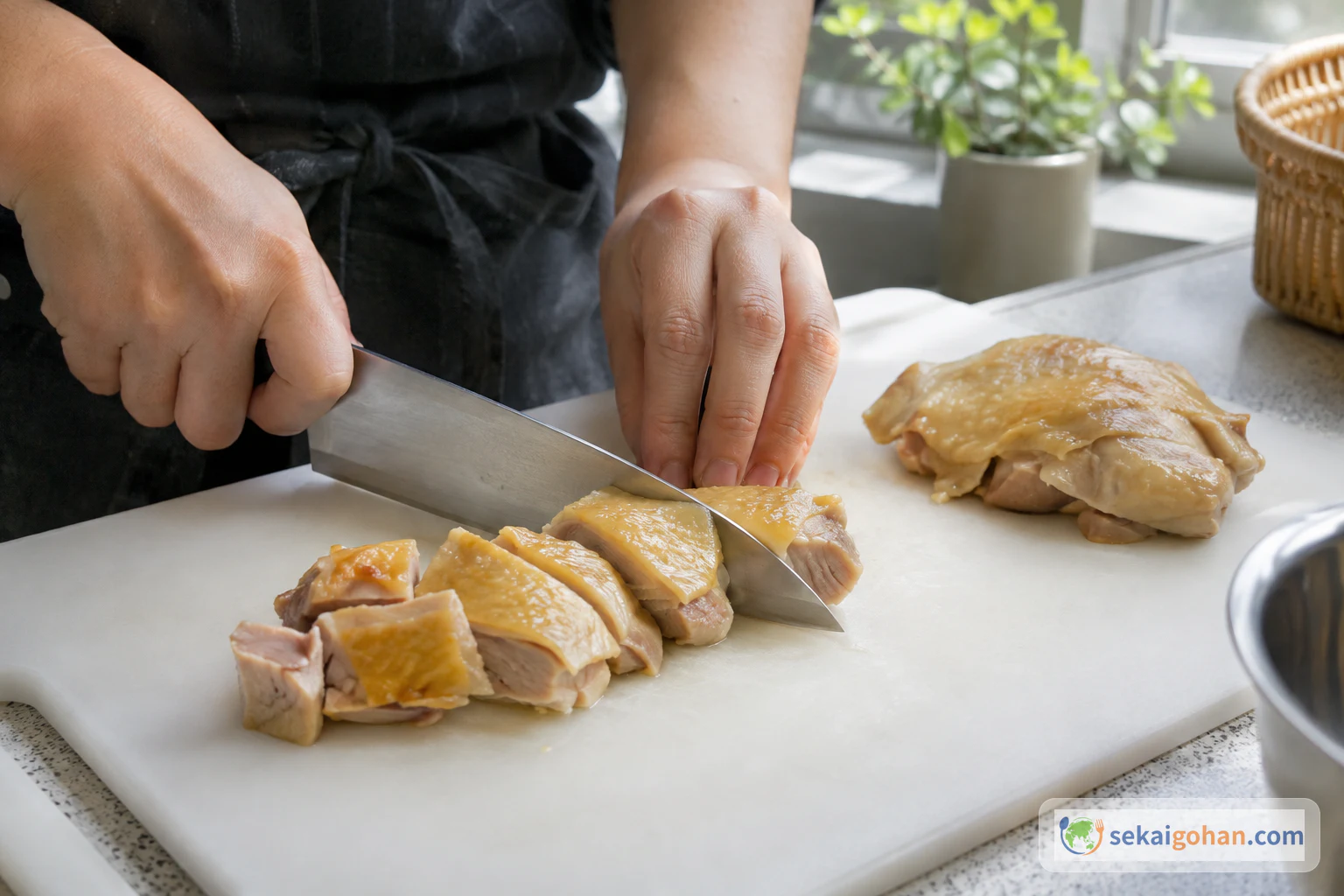
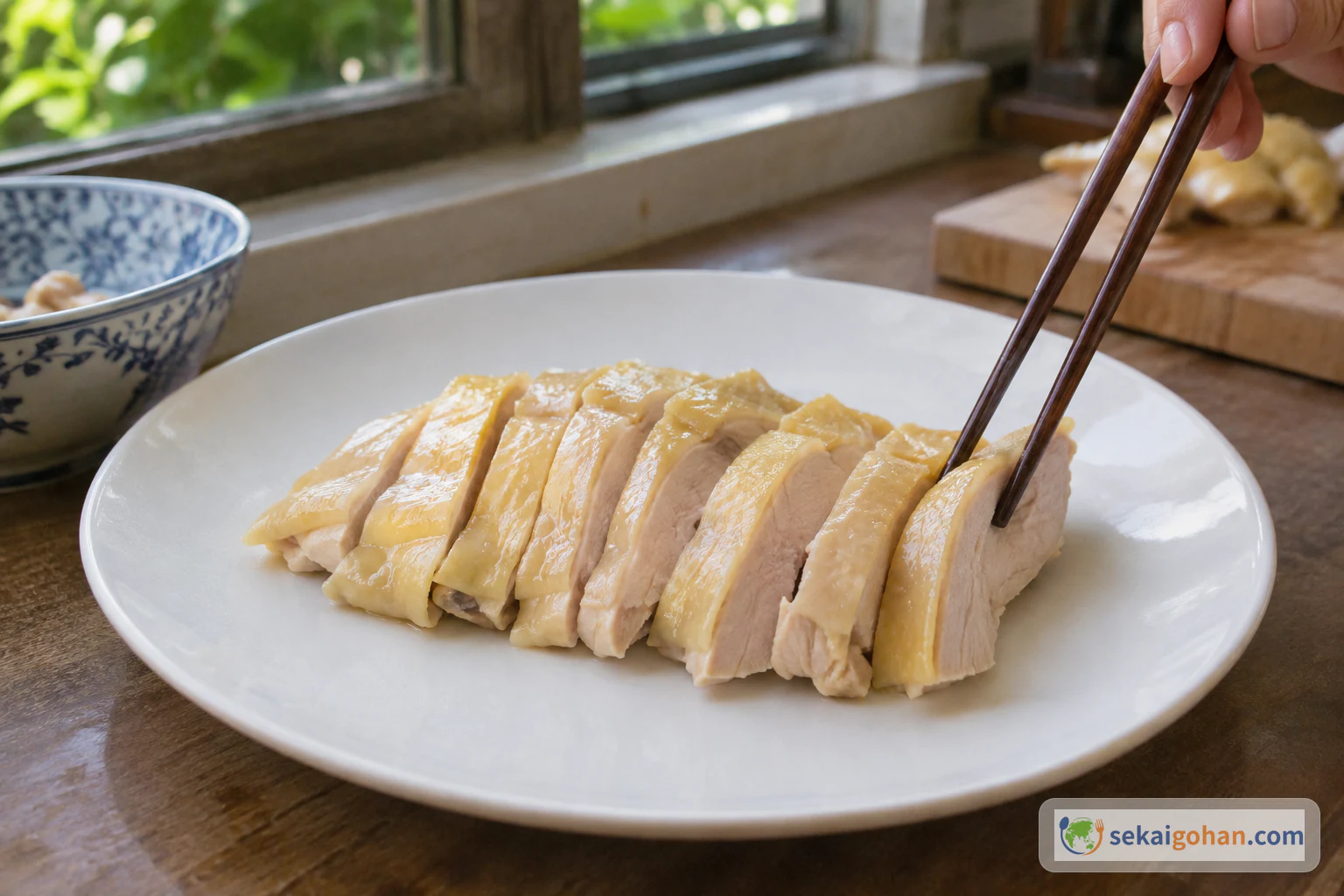
The version described there is simple. Boneless chicken thighs are rubbed with salt and steamed skin-side up with a few Sichuan peppercorns. The cooked chicken goes through ice water, and the juices from the steaming dish are kept. Finely chopped scallion greens and crushed Sichuan pepper go into a bowl, hot rapeseed oil is poured over them, and the sauce is finished with some of those steaming juices, salt and a little sesame oil. The chicken is cut into easy pieces and the sauce goes on top. Ma notes that this home version uses no chili at all.
This article follows that Sichuan cold-dish style. The name jiao ma ji (椒麻雞, simplified 椒麻鸡, jiāo má jī) is also used for quite different dishes, so it helps to be clear from the start: here, jiao means Sichuan pepper, not chili, and ma is its tingling, numbing quality.
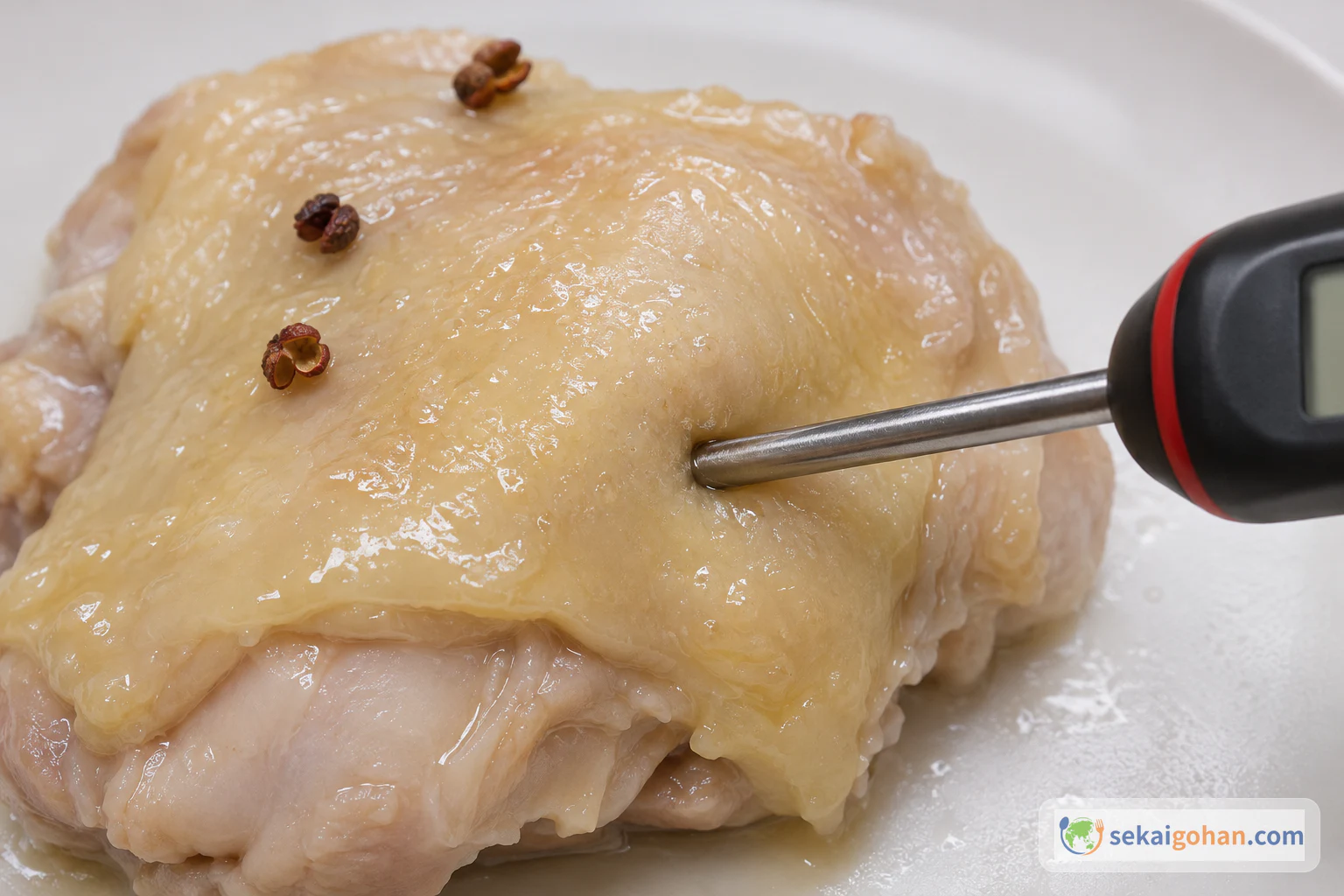
This recipe has not been kitchen-tested by Sekai Gohan. In Ma Shifang's recipe, salt, Sichuan pepper, oil, steaming juices and sesame oil are given as "a little", "to taste" or "as needed" rather than as measured amounts. The two chicken thighs are a shopping suggestion, not a promised number of servings. There is also no fixed steaming time: you check doneness with a food thermometer instead.
If you are exploring the wider table, you can find more dishes on our China country page.
Ingredients: Chicken, Sichuan Pepper, Scallion Greens and Two Oils
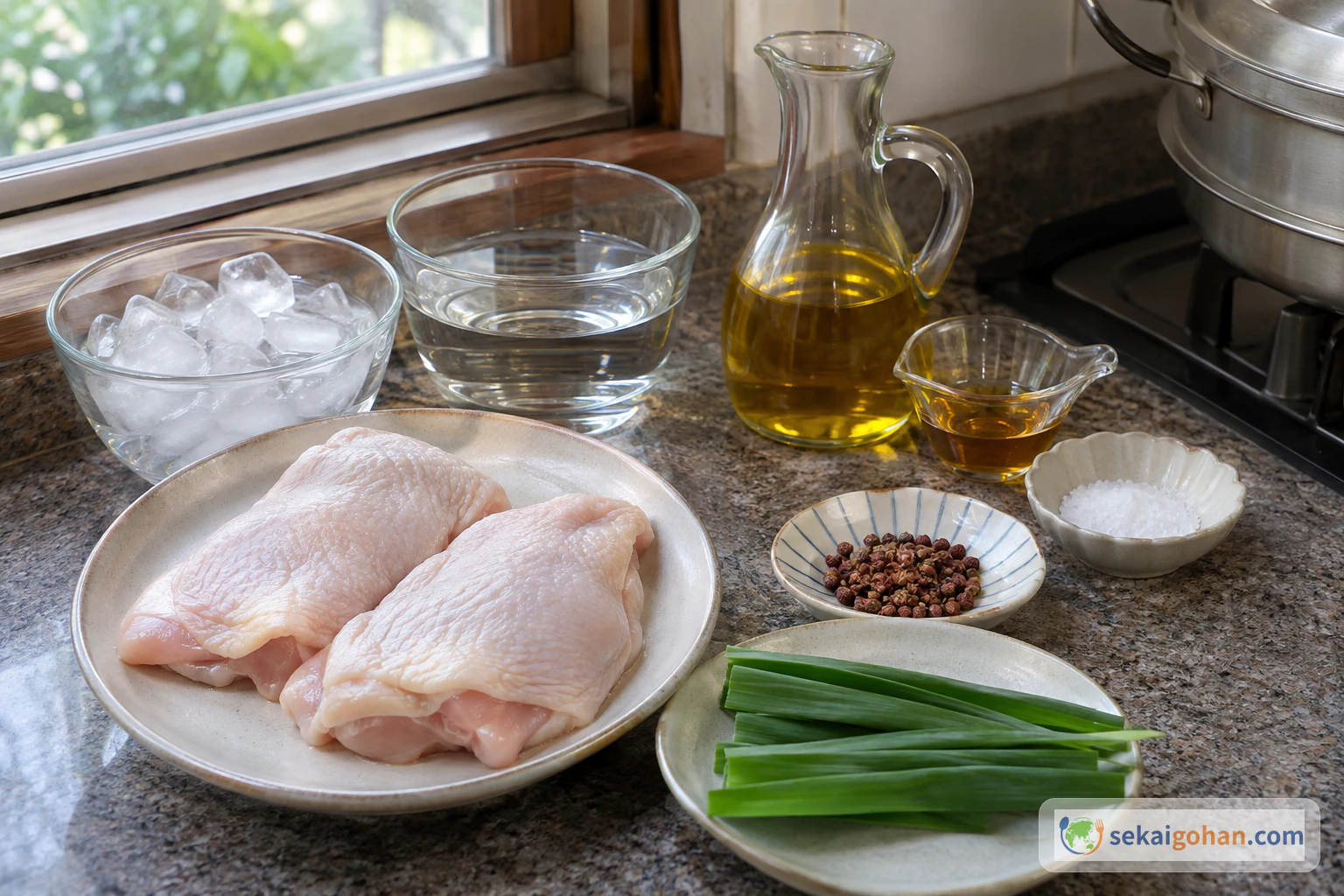
Salt and Sichuan pepper are each used twice: once on the chicken and once in the sauce. Water for the steamer and ice water for chilling are working supplies, not part of the dish.
Choosing the Pepper, Oil, Scallions and Chicken
Sichuan pepper. Look for whole dried Sichuan peppercorns at a Chinese grocer or online. Crush them yourself just before making the sauce. Japanese sansho can stand in, but its aroma and numbing feel are different, so the dish will not taste the same.
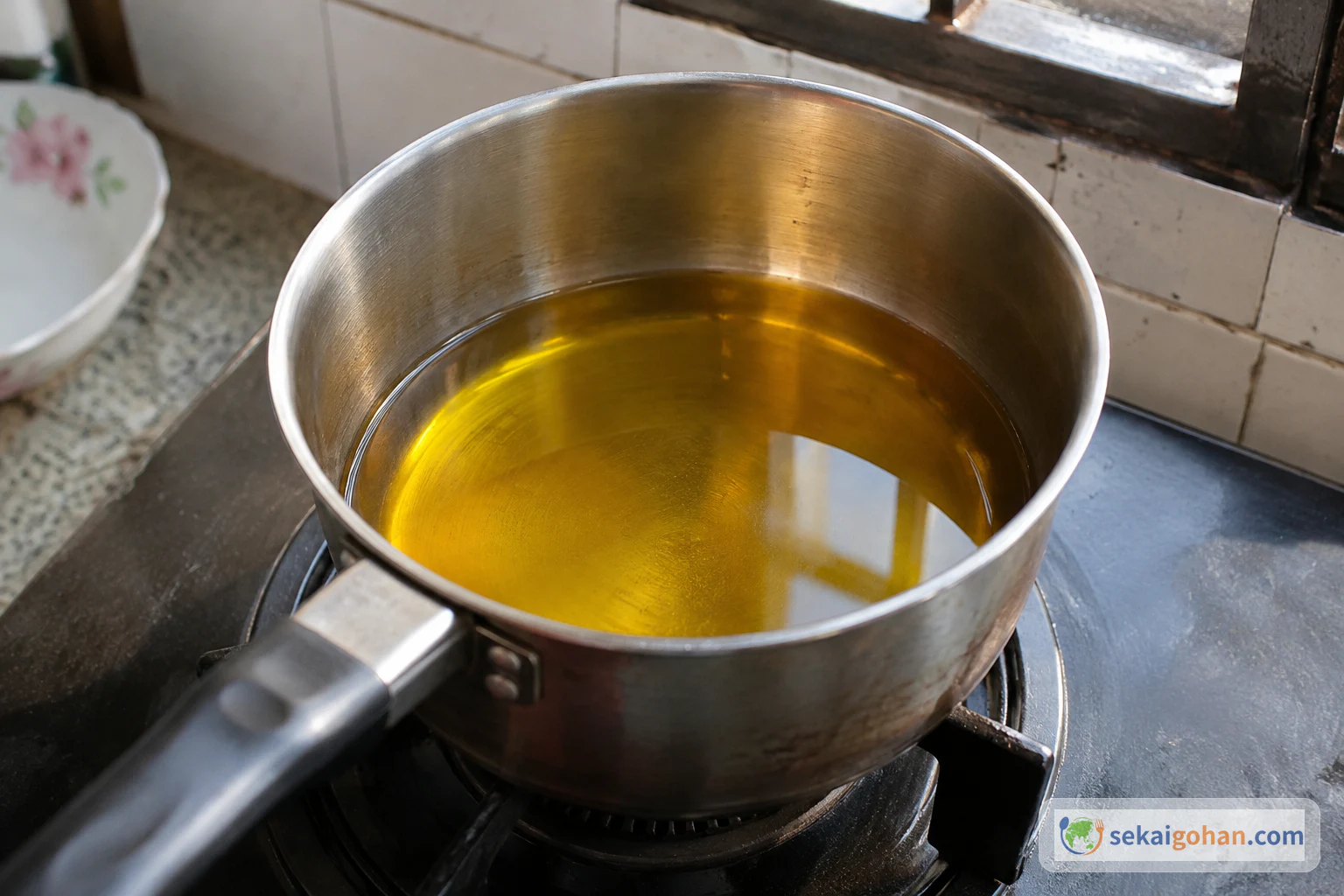
Rapeseed oil. The aromatic edible rapeseed oil used in Sichuan cooking is what gives this sauce its distinctive aroma. Ordinary refined rapeseed oil from a supermarket will work, but it does not have the same aroma. Neutral vegetable oil or olive oil can also be used, though the flavor moves further from the Sichuan style.
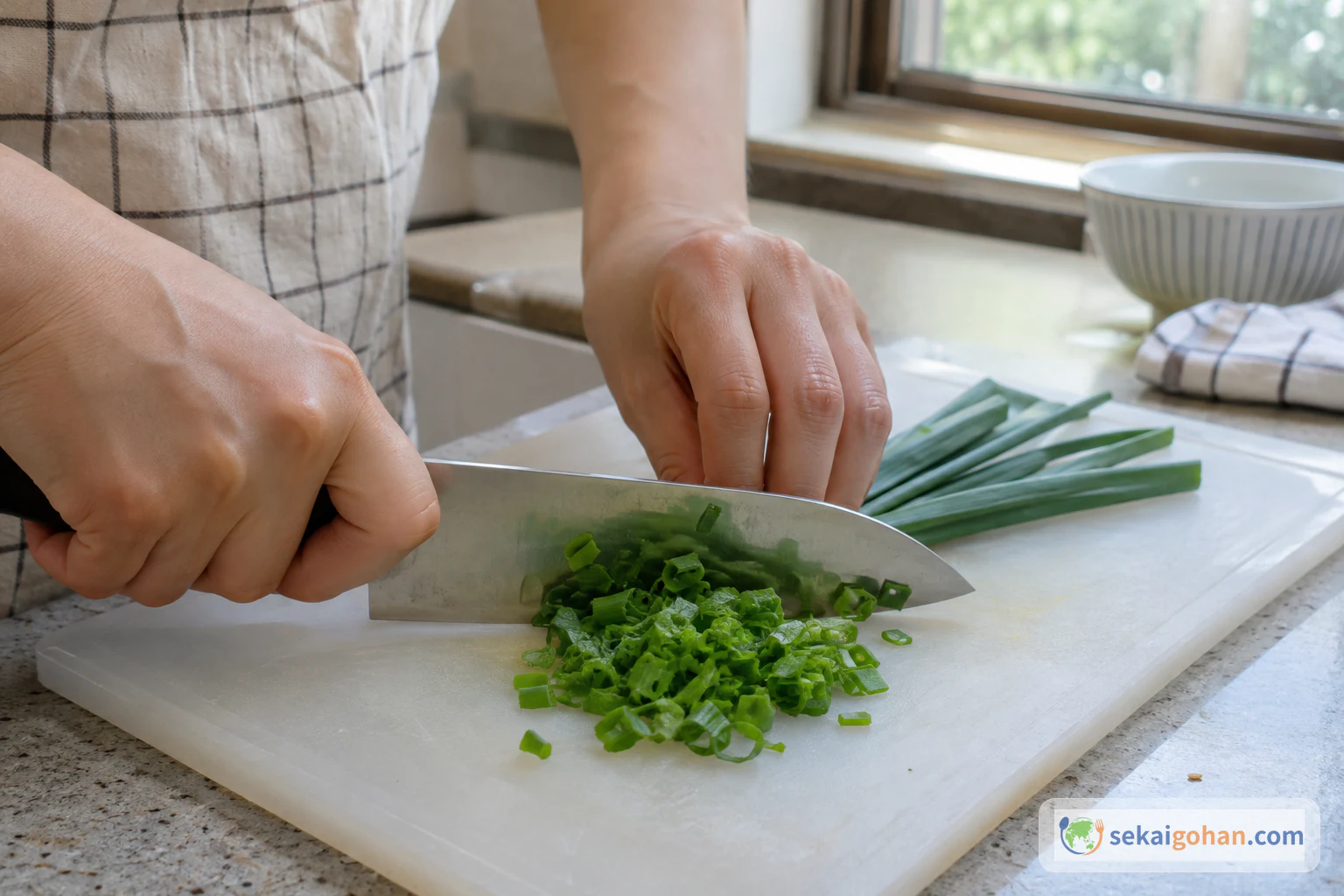
Scallion greens. Use only the green, leafy parts and chop them finely. The green tops of Japanese long onion (negi) can stand in. Thinner, more delicate scallions change both the aroma and how much moisture goes into the sauce.
Sesame oil. Toasted sesame oil sold in many countries is strongly fragrant, so start with a small amount and adjust.
Chicken. Skin-on boneless thighs are the standard here. Skinless thighs also work, but you lose the soft texture of the steamed skin.
Equipment
- Raw-meat-only tray or board for salting the chicken
- Deep heatproof dish that fits inside your steamer
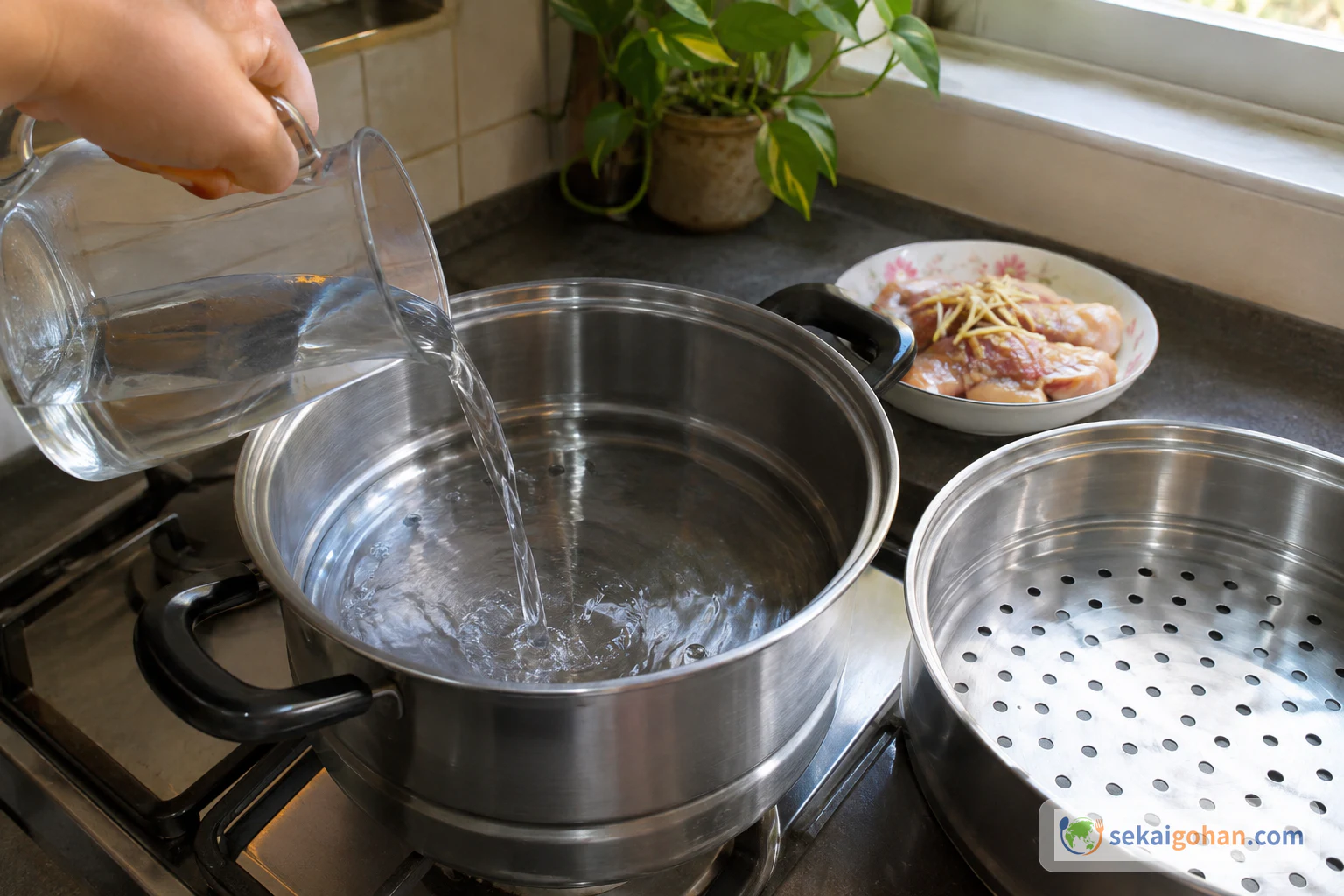
- Stovetop steamer with a rack and lid (or another steamer you know well; follow its own instructions for water)
- Food thermometer with a probe
- Clean small bowl for the steaming juices
- Clean bowl for ice water, and clean tongs used only for cooked chicken
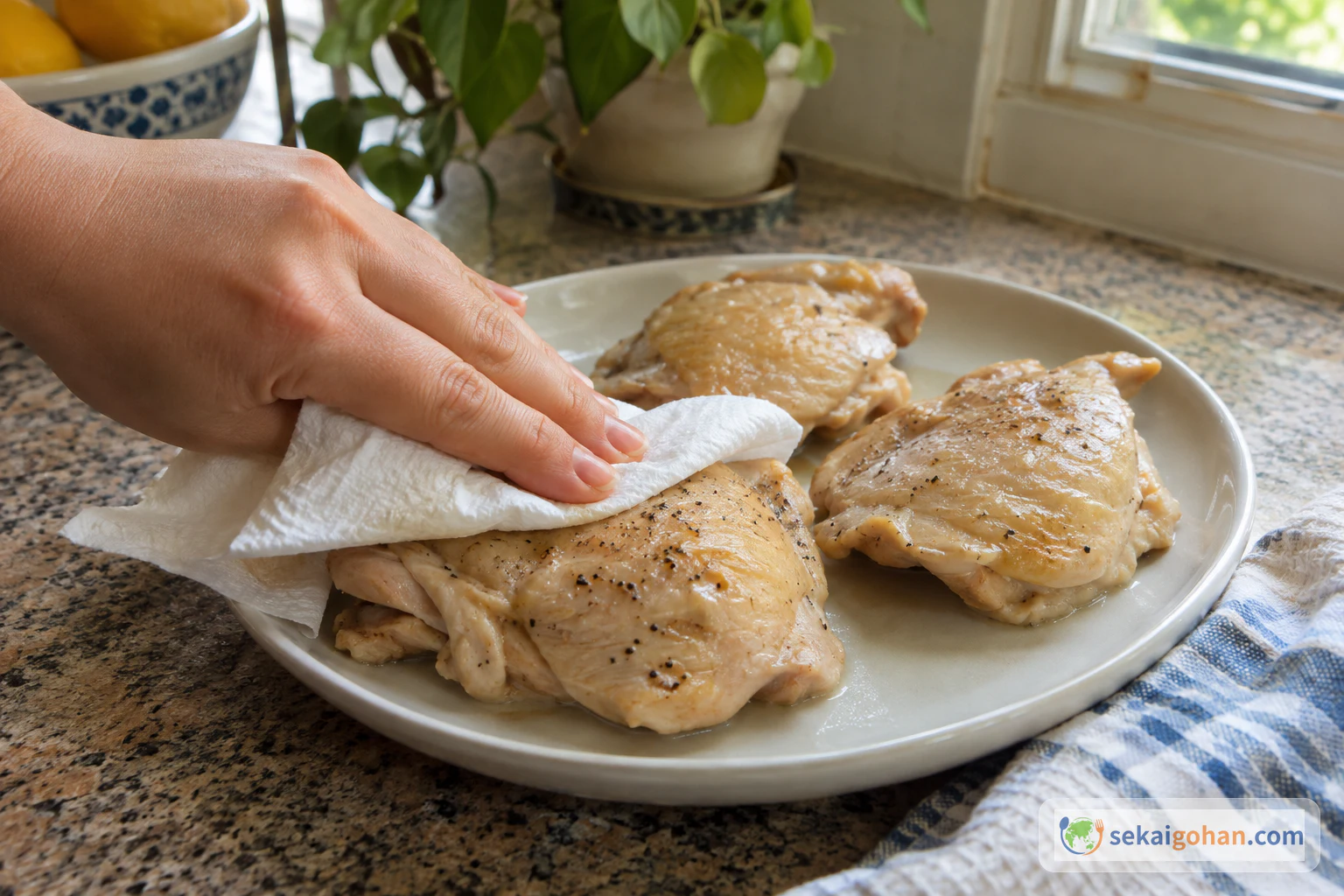
- Clean paper towels
- Clean cutting board and knife for the cooked chicken, separate from those used for raw meat
- Board and knife for the scallions
- Mortar and pestle for crushing the peppercorns
- Large, roomy heatproof bowl for the sauce
- Small saucepan for heating the oil
- Chopsticks and a spoon
- Serving plate
Method: Steam, Chill, Then Pour Hot Oil over Scallion and Pepper
Steaming time depends on the thickness of the chicken and on your steamer, so no time is fixed. The chicken is done when its center has reached 75°C and stayed there for at least 1 minute. The photos show each action only; they cannot show temperature, time or hygiene.
When Something Goes Wrong
| Problem | Likely cause | What to do |
|---|---|---|
| The thermometer reads below 75°C at the center | Thick pieces or a gentler steamer | Cover and keep steaming, then check again until the center holds 75°C for at least 1 minute. Don't go by color |
| The sauce tastes of separate bits rather than one aroma | Scallion cut coarsely, peppercorns left whole | Next time chop the green parts finely and crush the peppercorns. Whole peppercorns scattered in quantity don't blend into the sauce |
| The scallion barely sizzled and the aroma is flat | The oil was not hot enough | Heat the oil until a dipped chopstick tip gathers small bubbles. Use a large heatproof bowl so the oil can bubble safely |
| No steaming juices left for the sauce | The juices were poured away | The juices are the backbone of the sauce and are hard to replace. Next time, set them aside in a clean bowl right after steaming |
| Sesame oil is overpowering | Toasted sesame oil is strong | Add less next time and taste as you go |
Serving and Leftovers
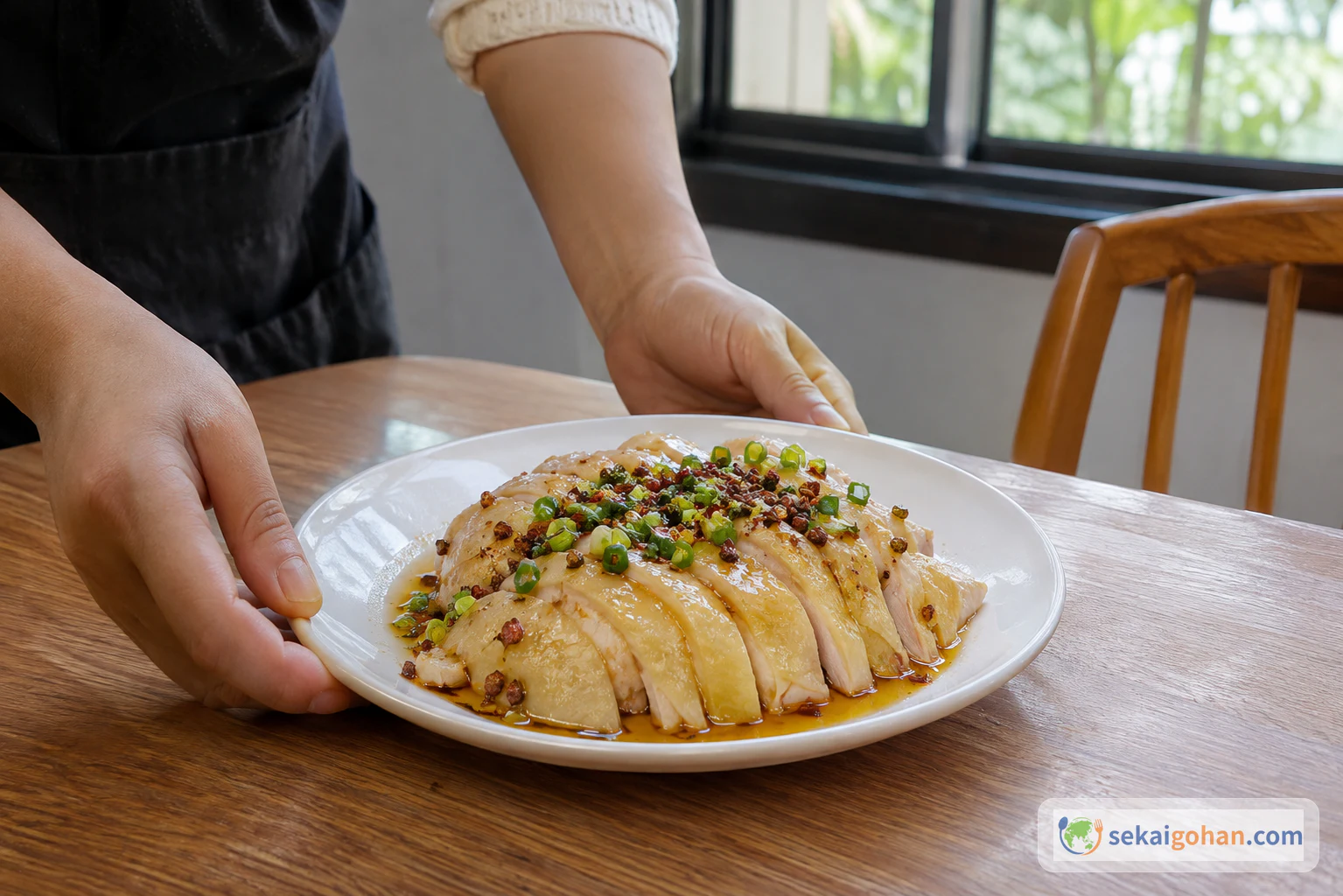
Jiao ma ji is a cold dish, but that does not mean leaving it out to cool. Chill the chicken in ice water rather than at room temperature, and serve the dish soon after it is dressed.
Eat it promptly. Whatever you will not eat right away, cover and refrigerate promptly at 4°C or below, and do not leave it at room temperature for more than 2 hours in total. Avoid long periods at room temperature in general. This is general food-handling guidance, not a guarantee of how many days it will keep.
Variations to Try Separately
Keep the basic recipe as it is the first time, and try these one at a time:
- Green Sichuan pepper (青花椒). It brings a different, fresher fragrance. Treat it as a variation with its own aroma rather than the same flavor.
- Different rapeseed oils. Oils differ by origin and pressing, and the aroma of the sauce changes with them.
- Skin-on or skinless thighs. Compare the soft steamed skin with the leaner texture of skinless meat.
- Pepper at the table. Keep some crushed Sichuan pepper on the side so each person can add more numbing heat to their own portion.
- A refreshing side. A plain, light daikon dish served alongside, as a separate dish, balances the oil of the sauce.
Background: One Name, Several Different Dishes
The Sichuan Cuisine Research Archive of Chen's Private Kitchen (陳家私菜) describes jiao ma ji as a Sichuan cold dish of chicken that is poached or steamed, cooled and eaten with a jiao ma sauce of Sichuan pepper and scallion chopped finely together, loosened with oil and chicken stock. In that description the heart of the jiao ma flavor is the numbing fragrance of the pepper, the green aroma of scallion leaves, salt, savoriness and the oil that pulls them together.
The same name covers other dishes. In Taiwan, a "Thai-style" jiao ma ji (泰式椒麻雞) is fried chicken with a sweet, sour and spicy red sauce. In Xinjiang there is a version tossed with long thin chilies (線辣椒) and onion. Within Sichuan cooking it also stands apart from kou shui ji (口水雞, "mouth-watering chicken") with its red chili-oil sauce, teng jiao ji (藤椒雞) made with green "vine pepper" oil, and bang bang ji (棒棒雞) with shredded chicken. It is also a different world from red, chili-heavy Sichuan dishes such as water-boiled fish or mapo tofu.
Professional kitchens have their own versions. The Chinese chefs' site cswzg.com carries a restaurant-scale jiao ma ji pian (椒麻鸡片) in which the chicken is started in cold water, finished in residual heat, chilled in ice water and boned, then dressed with a pounded paste of scallion, dried Sichuan pepper and salt mixed with stock and several other seasonings. It is a different formula and method, and nothing from it has been mixed into the home recipe above.
Where and when jiao ma ji first appeared could not be confirmed, so this article makes no claim about its origin or an originating restaurant.
Frequently Asked Questions
Is Sichuan-style jiao ma ji spicy?
Not in the chili sense. The home version this recipe follows uses no chili; Ma Shifang says so directly. What you feel is the tingling, numbing ma of Sichuan pepper, along with the sharp aroma of scallion greens.
Is it the same as mouth-watering chicken (kou shui ji)?
No. Both are cold chicken dishes from Sichuan, but kou shui ji is dressed in a red chili-oil sauce, while jiao ma ji is built on Sichuan pepper and scallion greens in oil, loosened with the chicken's juices.
Can I use Japanese sansho instead of Sichuan pepper?
You can, as a substitute. The two are related, but the aroma and the numbing sensation are not the same, so expect a different result.
How long should I steam the chicken?
No steaming time is given in the recipe this article follows, and it varies with the thickness of the chicken and your steamer. Instead of a time, use a food thermometer: the center should reach 75°C and stay there for at least 1 minute. This standard comes from the food-poisoning prevention guidance of Japan's Ministry of Health, Labour and Welfare. Shenzhen's market regulator likewise recommends a center temperature of 75°C for cooked foods including chicken, checked with a thermometer.
The recipe mentions 1.5–2 cups of water for an electric cooker. How much is that?
Ma's version steams the chicken in a Taiwanese electric cooker (電鍋), with 1.5–2 cups of water in the outer pot measured with the cooker's own cup. The capacity of that cup isn't stated, so it is not converted here. With any other steamer, use the water amount its maker directs.
Can I use ordinary vegetable oil or olive oil?
Ma notes that salad oil or olive oil can be used, but considers aromatic Sichuan rapeseed oil the real thing; with other oils the taste moves away from it. Ordinary refined rapeseed oil also lacks the aroma of Sichuan rapeseed oil.
How should I store leftovers?
Cover and refrigerate promptly at 4°C or below, and don't let it sit at room temperature for more than 2 hours. No storage period in days is given.
Sources
- Ma Shifang (馬世芳), "百年古蹟裡吃作家私房菜!川式椒麻雞只麻不辣,吃得到正宗川菜2靈魂食材," Supertaste (食尚玩家) / TVBS. The home Sichuan-style recipe followed here: salted boneless chicken thighs steamed skin-side up with a few Sichuan peppercorns, ice water, reserved steaming juices, hot rapeseed oil over finely chopped scallion greens and crushed pepper, seasoning with juices, salt and a little sesame oil; the author's teahouse and home serving; no chili in this version. https://supertaste.tvbs.com.tw/amp/food/352492
- Sichuan Cuisine Research Archive (Chen's Private Kitchen 陳家私菜, supervised by Chen Pangyong), "椒麻鸡." Used only to describe the jiao ma flavor type as a Sichuan cold dish and to distinguish it from the Xinjiang and Taiwanese dishes of the same name and from teng jiao ji, kou shui ji and bang bang ji. https://chin-z.com/shisen/dishes/dish-118.html
- 中国厨师网 (cswzg.com), "〖川菜〗椒麻鸡片." A restaurant-scale Sichuan jiao ma chicken with a different formula and method, used for comparison only. The original publication this page was compiled from could not be confirmed. https://cswzg.com/news/toutiao/2019/0619/454.html
- Shenzhen Administration for Market Regulation (深圳市市场监督管理局), "食品安全五要点,业界指南不可少." General food-safety guidance: 75°C center temperature for cooked foods including chicken with a thermometer, separating raw and cooked foods, refrigeration at 4°C or below, and not exceeding 2 hours at room temperature. https://amr.sz.gov.cn/xxgk/qt/ztlm/spaq/kpxt/sats/content/post_1932041.html
- Ministry of Health, Labour and Welfare, Japan (厚生労働省), "家庭でできる食中毒予防の6つのポイント." Heating to 75°C at the center for at least 1 minute, clean utensils, separating raw and cooked foods, and avoiding long periods at room temperature. https://www.mhlw.go.jp/topics/syokuchu/dl/point0709.pdf