Paomo: Xi'an Lamb Soup with Torn Flatbread

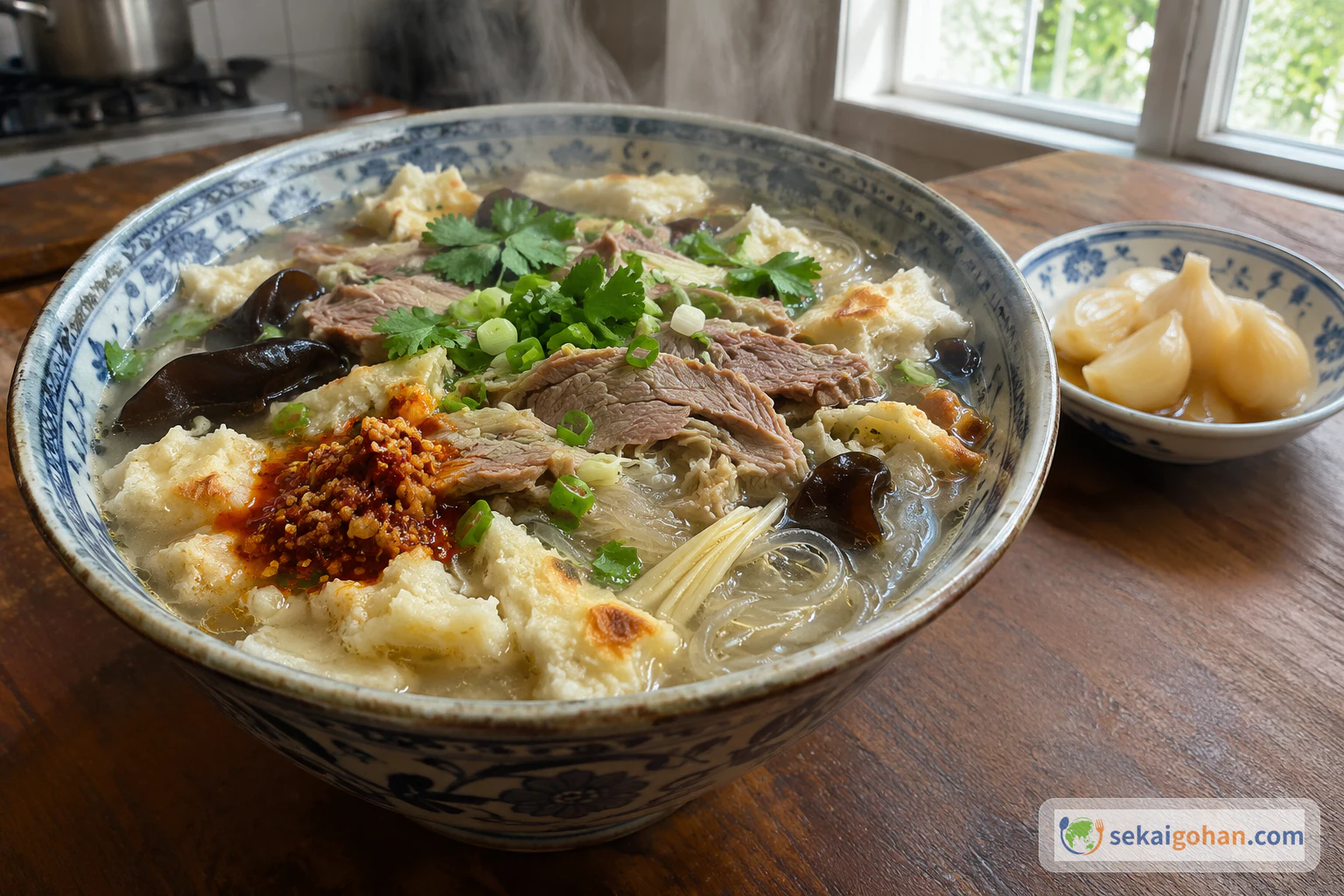
Xi'an lamb paomo in a large bowl: torn flatbread, thin slices of lamb, black wood ear, daylily buds and mung bean glass noodles under hot lamb bone broth, topped with chopped scallion and cilantro
Level
Intermediate
Cuisine
Chinese

Xi'an lamb paomo, torn flatbread in spiced lamb bone broth. How to make the two-dough flatbread, keep the broth clear and tear the bread to soybean size.

Cooking flow

Cooking steps

STEP11 / 12

Make the main dough and let it rest

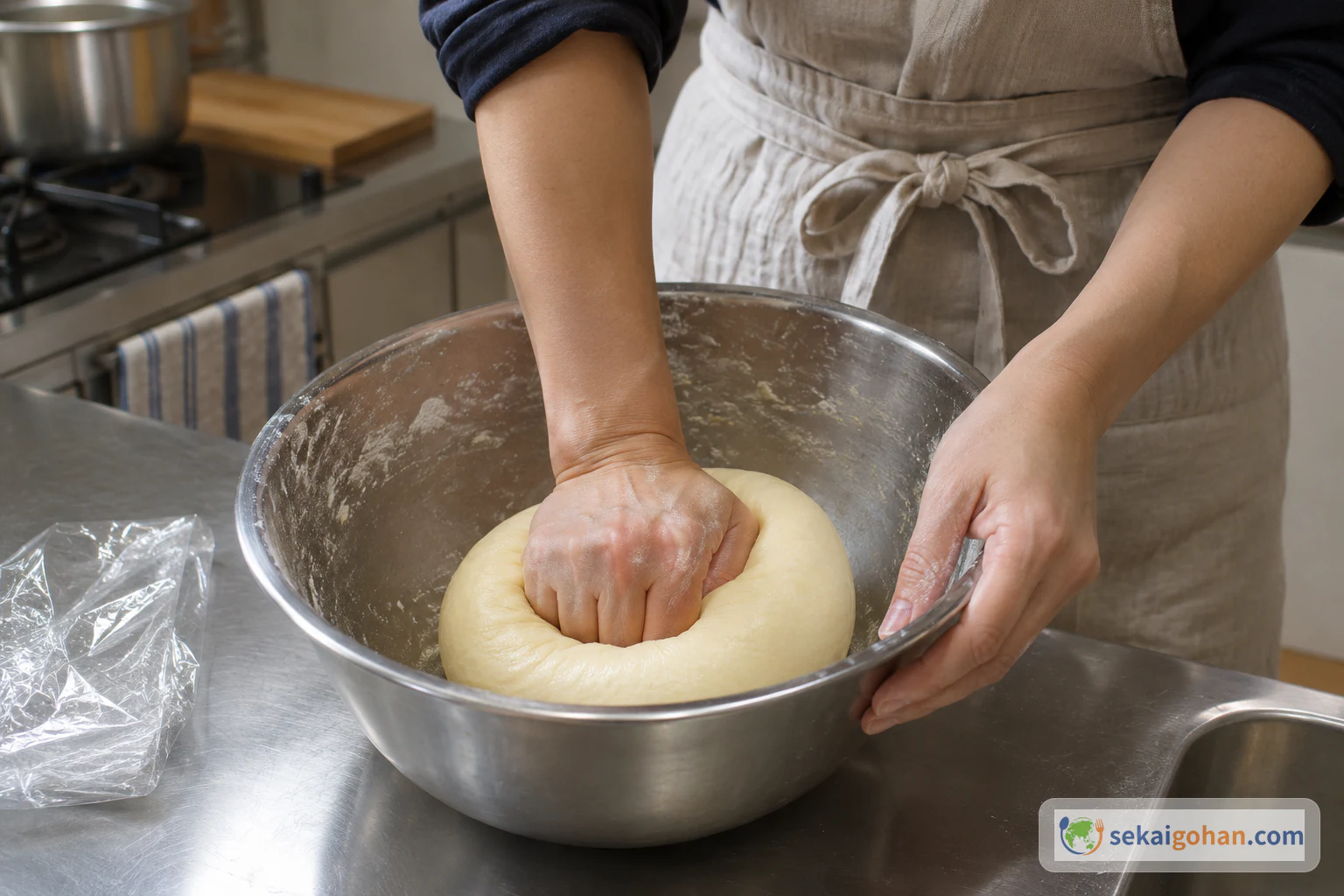
Kneading the main dough by hand after adding the alkali water to the flour, with plastic wrap ready for the rest
At first the dough looks shaggy. It turns smooth once the water is fully worked in

Dissolve the food-grade alkali in 8½ oz (240 g) of water. Pour it into 1 lb (450 g) of all-purpose flour and bring it together. Knead by hand for 8 to 10 minutes, or with the dough hook on low for 10 to 12 minutes. Cover with plastic wrap and rest for 1 hour. It's ready when the surface looks smooth and the dough holds together in one ball.

STEP22 / 12

Ferment the yeast dough

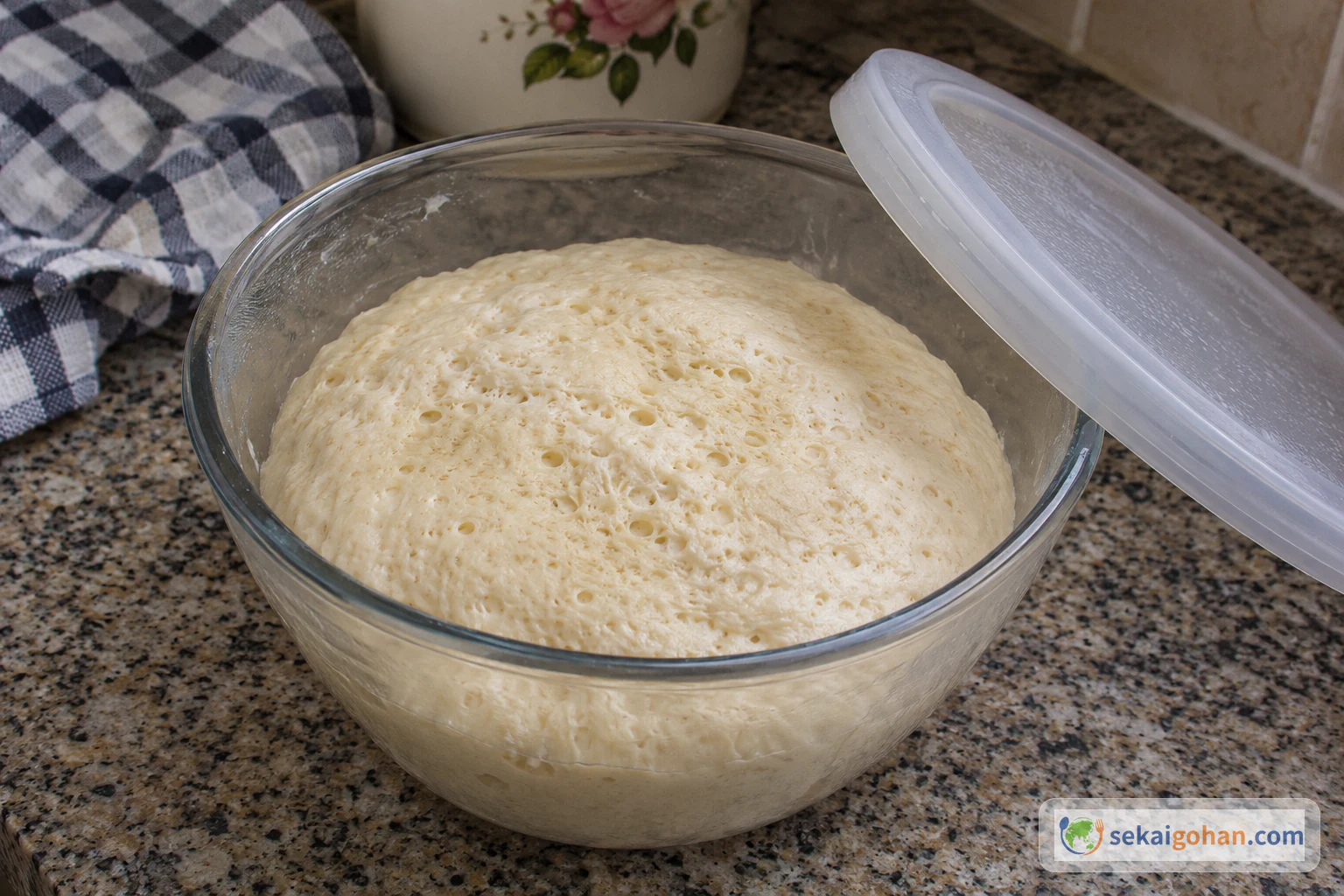
Mixing dry yeast with water, adding flour, then covering the small bowl to ferment
A warm tea towel over the bowl keeps a cold kitchen from stalling the rise

Dissolve 1.5 g of instant yeast in about 1 oz (25 g) of water in a small bowl. Stir in about 1½ oz (45 g) of flour until no dry flour is left. Cover and leave it somewhere warm for 1 hour. It's ready when it has risen and you can see bubbles on the surface.

STEP33 / 12

Knead the two doughs together

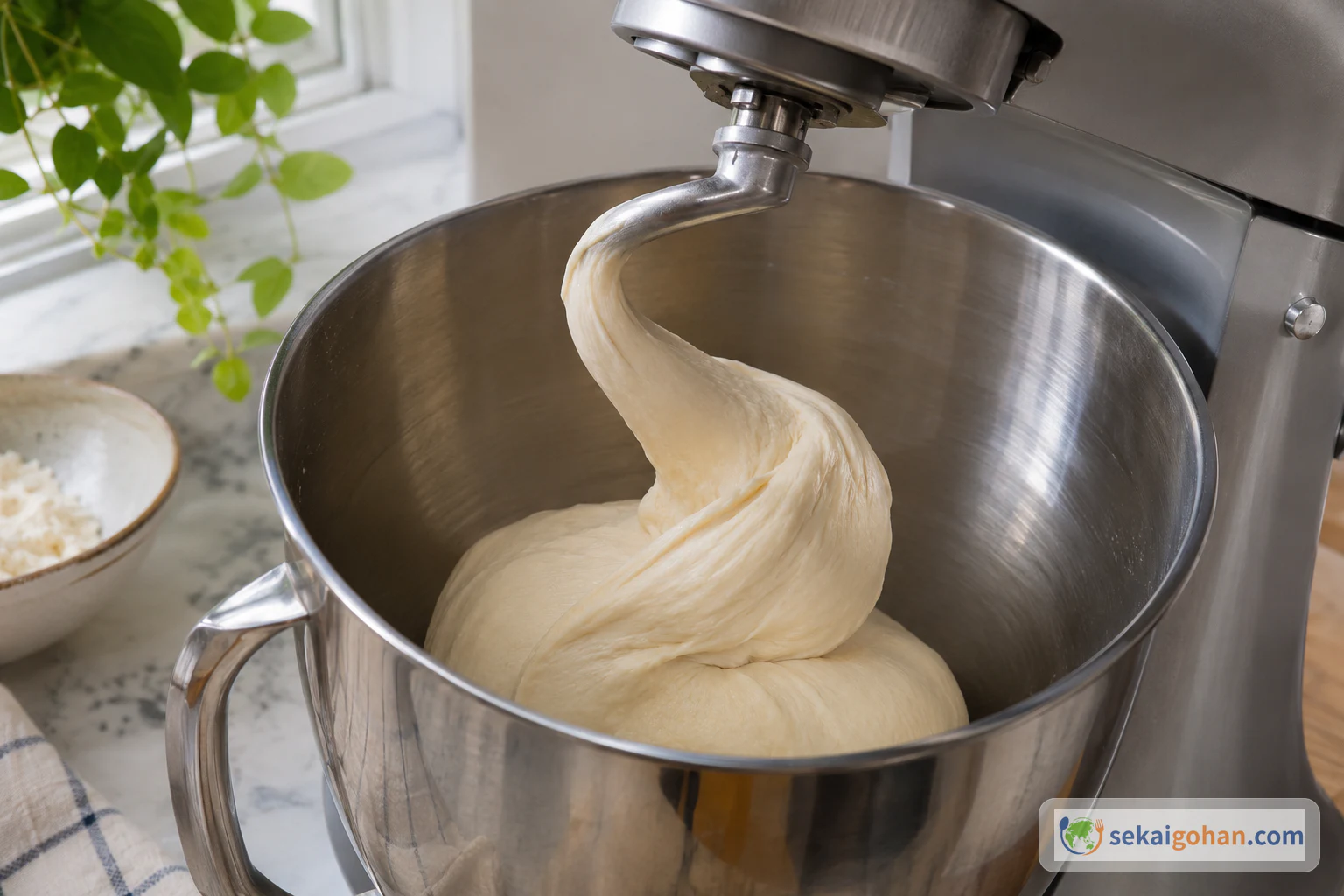
Combining the two doughs with a dough hook into one smooth dough
When the dough clears the sides of the bowl, it's done

Put the rested main dough and the yeast dough together. Knead with the dough hook on low for 10 minutes, or by hand for 6 to 8 minutes. At first the two doughs slide against each other. Keep going until they turn into one even mass. It's ready when the dough is smooth, firm and no longer sticks to your hands.

STEP44 / 12

Divide into eight and rest

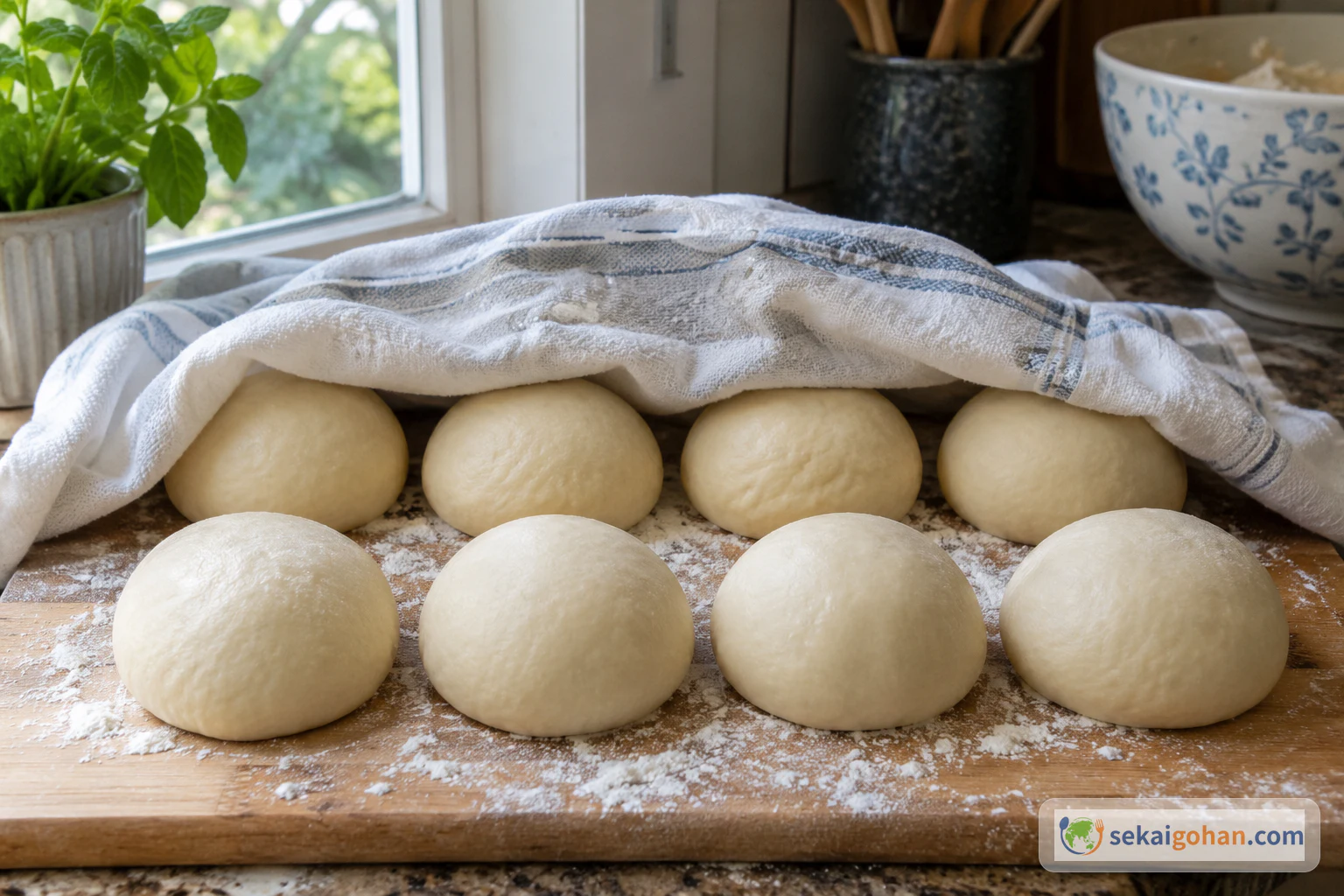
Eight smooth dough balls under a damp cloth
A damp cloth stops the surface drying into a skin that would crack when you roll it

Cut the dough into 8 equal pieces. Roll each one into a ball by cupping it under your palm and tucking the edges underneath. Cover loosely with a damp towel and rest for 10 minutes. Move on when the surface of each ball has relaxed and turned smooth again.

STEP55 / 12

Roll thin and griddle until dry through

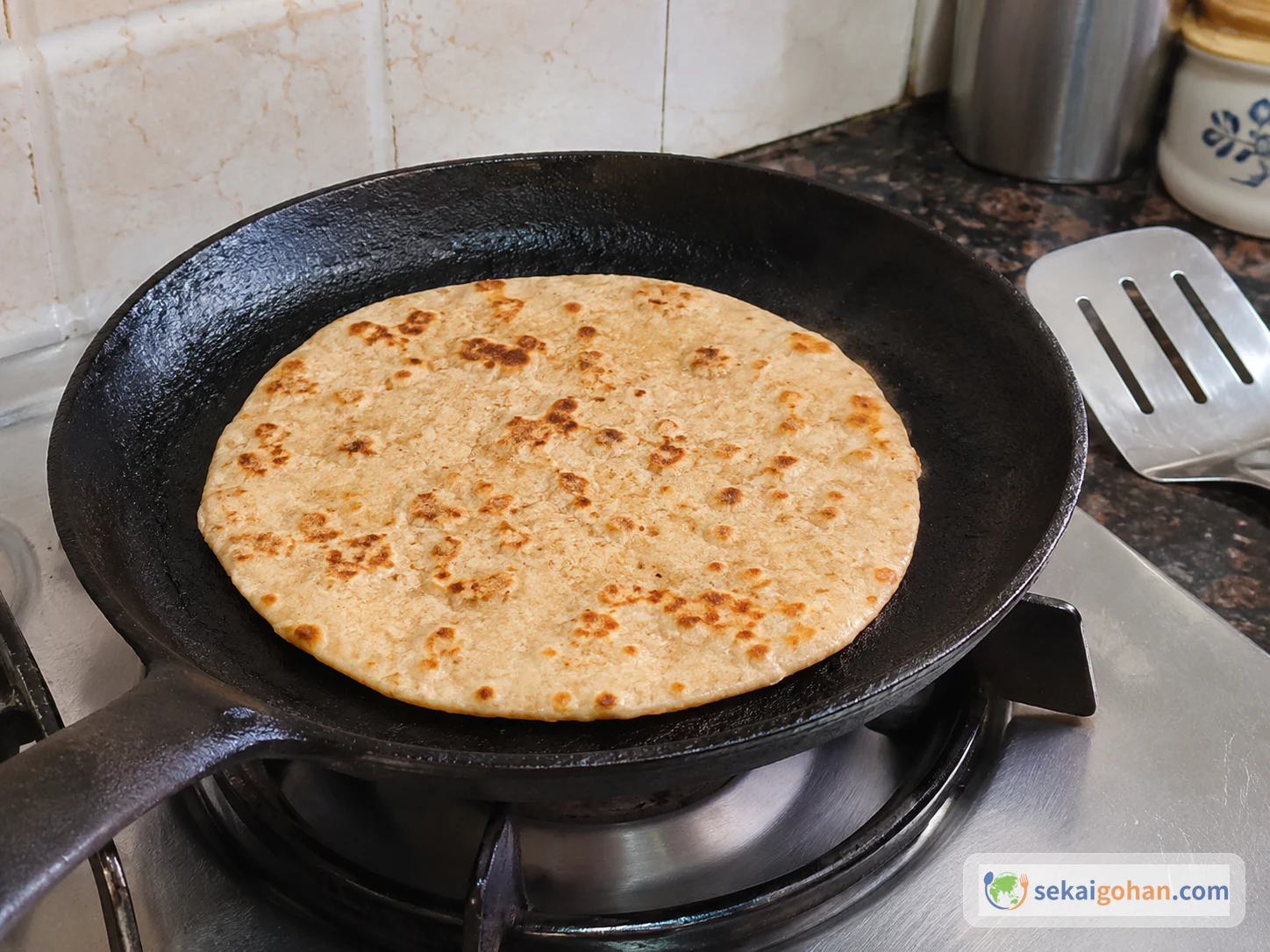
Rolling the dough thin and griddling the round on both sides in a dry pan until browned spots appear
Use no oil in the pan. The bread should toast dry, not fry

Roll each ball into a thin round 5 to 6 inches (13 to 15 cm) across. Heat a dry skillet over low to medium heat and cook the rounds one at a time, 2 to 3 minutes a side. Give them longer if the center still feels doughy. Cook until both sides have browned spots and the middle is dry, with no raw, tacky feel when you press it. Stack the finished breads under a damp towel to cool.

The bread is done on the griddle

Cook the bread all the way through in this step. It only spends a few minutes in the broth later, and that isn't enough to cook raw dough. A bread that is dry right through also tears cleanly into small pieces instead of smearing into paste.

STEP66 / 12

Soak the bones and lamb overnight in the refrigerator

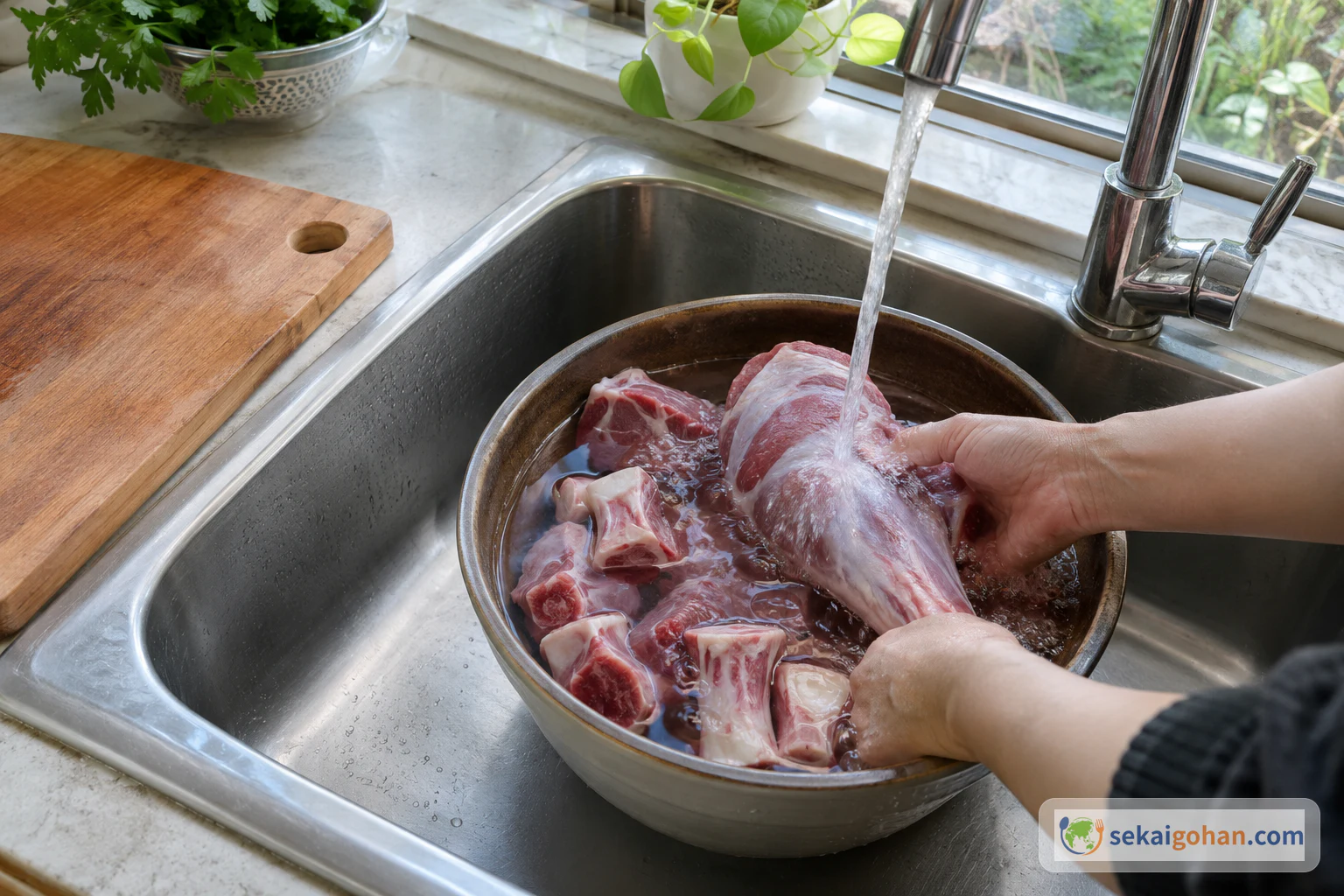
Lamb bones and lamb leg soaked overnight in the refrigerator, then drained and rinsed under running water
Keep the raw lamb on its own board and away from anything that will be eaten as is

Put the lamb bones and the lamb leg in a deep container and cover them with cold water. Cover the container and set it on the lowest shelf of the refrigerator overnight, where no juices can drip onto other food. The next morning, pour off the soaking water and rinse the bones and meat under running water. Clean the sink afterward. They're ready when the rinse water runs clearer and no blood is left on the surface.

Handling raw lamb

Keep the knife, cutting board and containers you use for raw lamb separate from cooked food and from vegetables eaten raw, like the scallion and cilantro garnish. Wash your hands after touching raw meat and before you handle anything else. Store raw meat in the refrigerator so its juices can't reach other ingredients.

STEP77 / 12

Boil the bones, skim, then add the spices and lamb

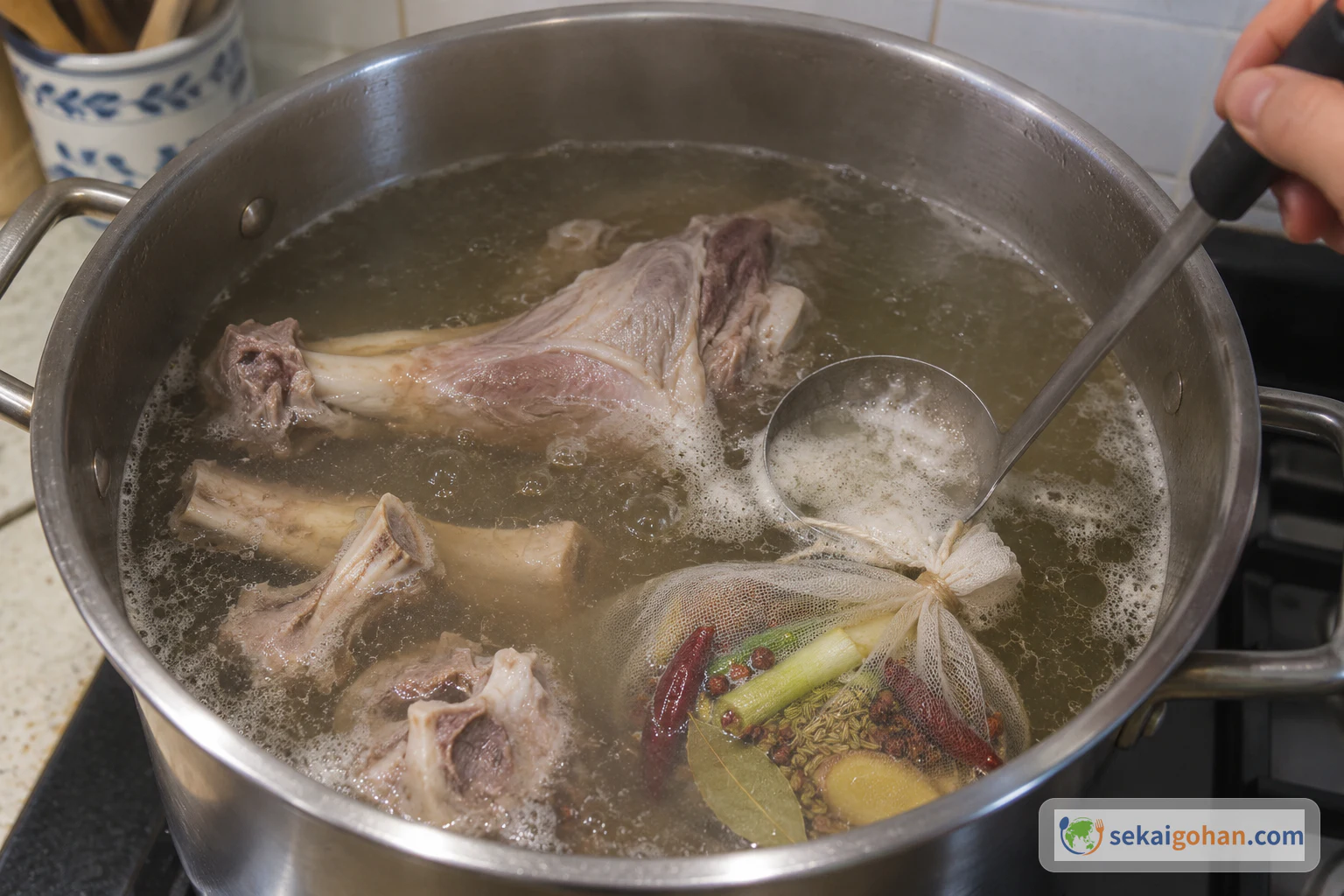
Skimming foam from the lamb bone broth, then simmering it with the spice bag and lamb leg
Skim at the first boil, before the spices go in, and the broth will stay much clearer

Put the bones in the stockpot with 3¼ to 4¼ quarts (3 to 4 L) of fresh water and bring to a boil. Skim off the gray foam as it rises until the surface stays fairly clean. Fill the spice bag with the fennel seeds, Sichuan peppercorns, bay leaves, dried chilies, ginger and the handful of scallions. Add the bag and the lamb leg, then simmer over medium-low heat for 1 hour. It's ready when a chopstick pushed into the thickest part of the meat slides in with no resistance.

STEP88 / 12

Lift out the lamb to chill and keep the bones going

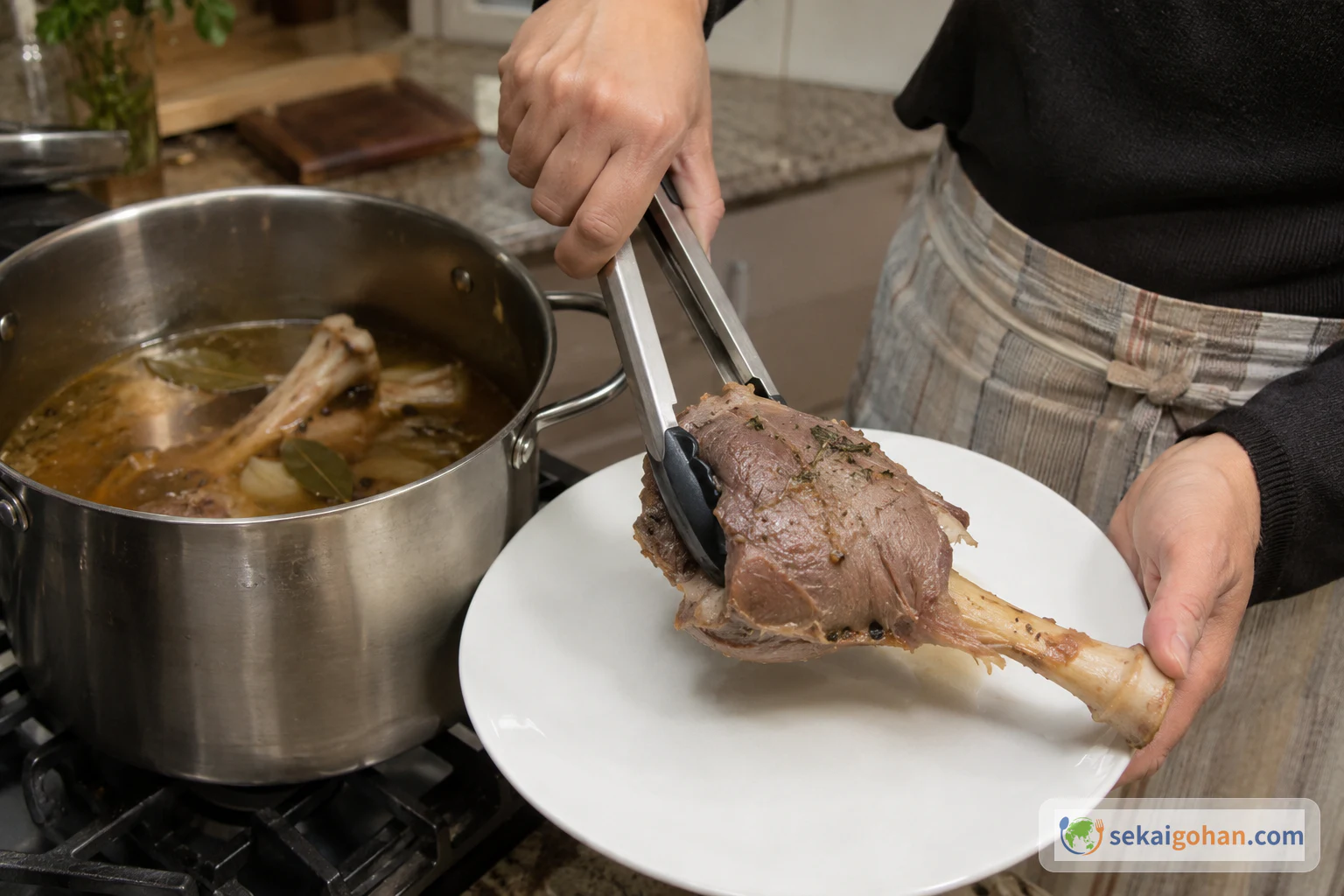
Lifting the lamb out of the pot while the bones keep simmering, then cooling the meat on a covered plate
Cold lamb firms up, so you can slice it thin without it shredding

Lift the lamb onto a clean plate, not the one that held it raw. Let the steam come off it, then cover it and put it in the refrigerator. Leave the bones in the pot and simmer for another hour. The meat is ready to slice once it's cold and firm all the way through.

STEP99 / 12

Strain the broth

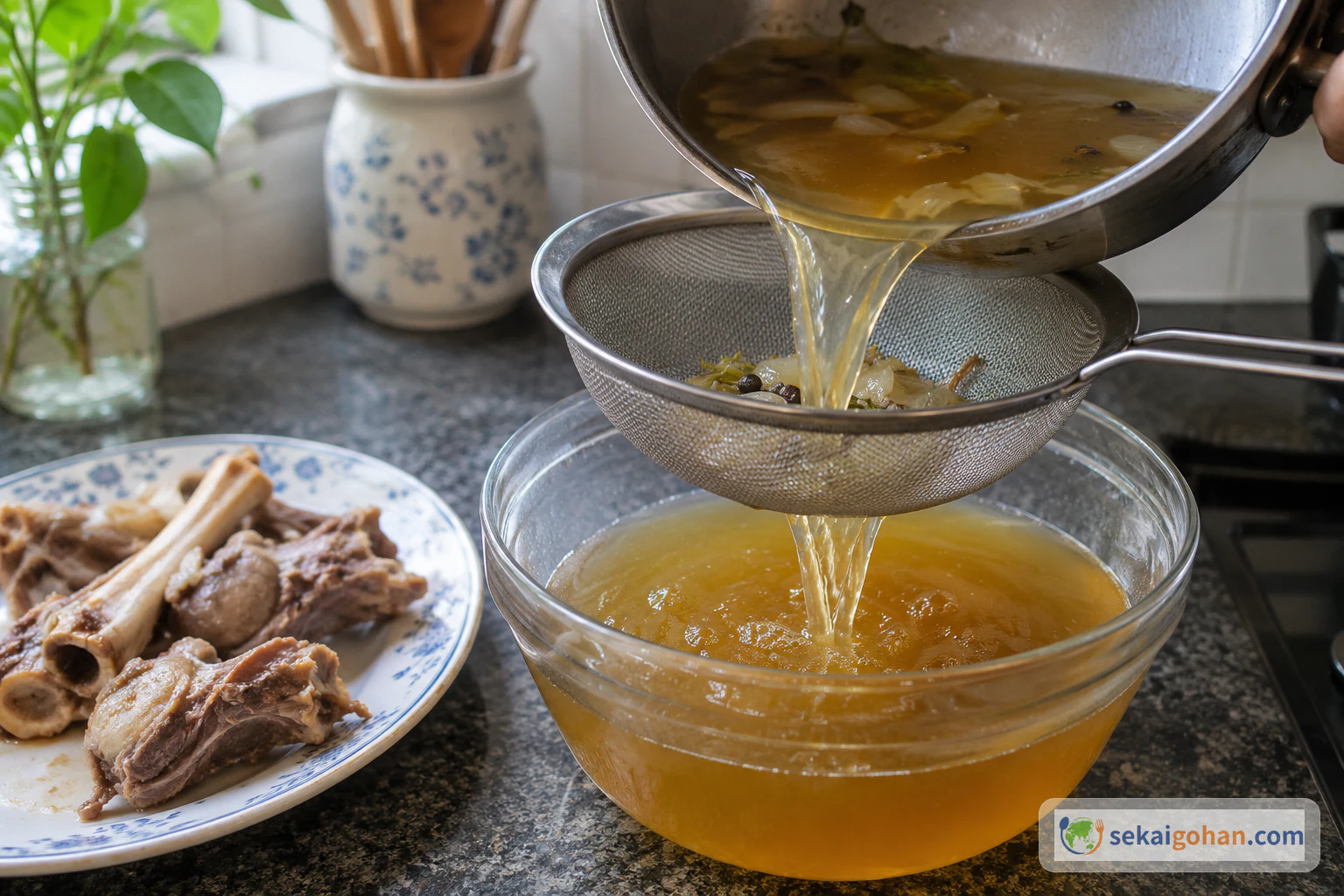
Removing the bones and straining the broth through a fine-mesh sieve until it runs clear
Let the broth pass through on its own. Pressing the solids clouds it

Lift out the bones and pour the broth through a fine-mesh sieve into a clean pot or bowl. Throw away the spice bag along with whatever the sieve catches. Let the broth sit for a moment and look at the surface. It's right when the broth is fairly clear and a layer of fat floats on top. If you're making it ahead, see storage below.

STEP1010 / 12

Slice the lamb and soak the dried goods

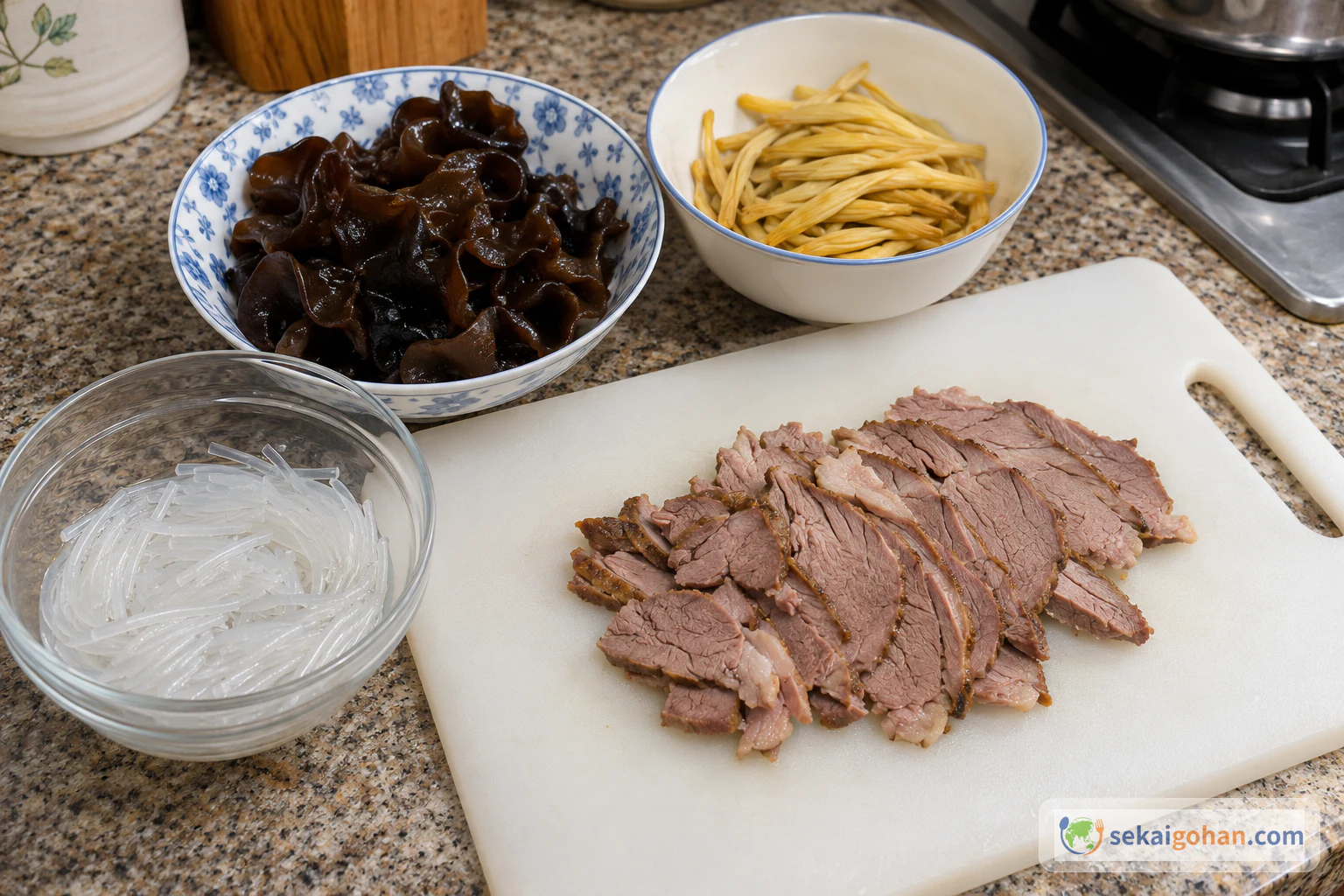
Slicing the cold lamb thinly on a board kept apart from raw meat, with bowls of soaked wood ear, daylily buds and glass noodles
Daylily buds turn soft and plump once they're fully soaked

Slice the chilled lamb thinly against the grain on a board and knife that never touched raw meat. Soak the wood ear, daylily buds and glass noodles in water for 1 hour. Tear the larger wood ear pieces to about 1 inch (2.5 cm) and cut the noodles into 4 to 5 inch (10 to 13 cm) lengths. They're ready when the wood ear and daylily are soft and plump and the noodles bend without snapping.

STEP1111 / 12

Tear the bread to soybean size

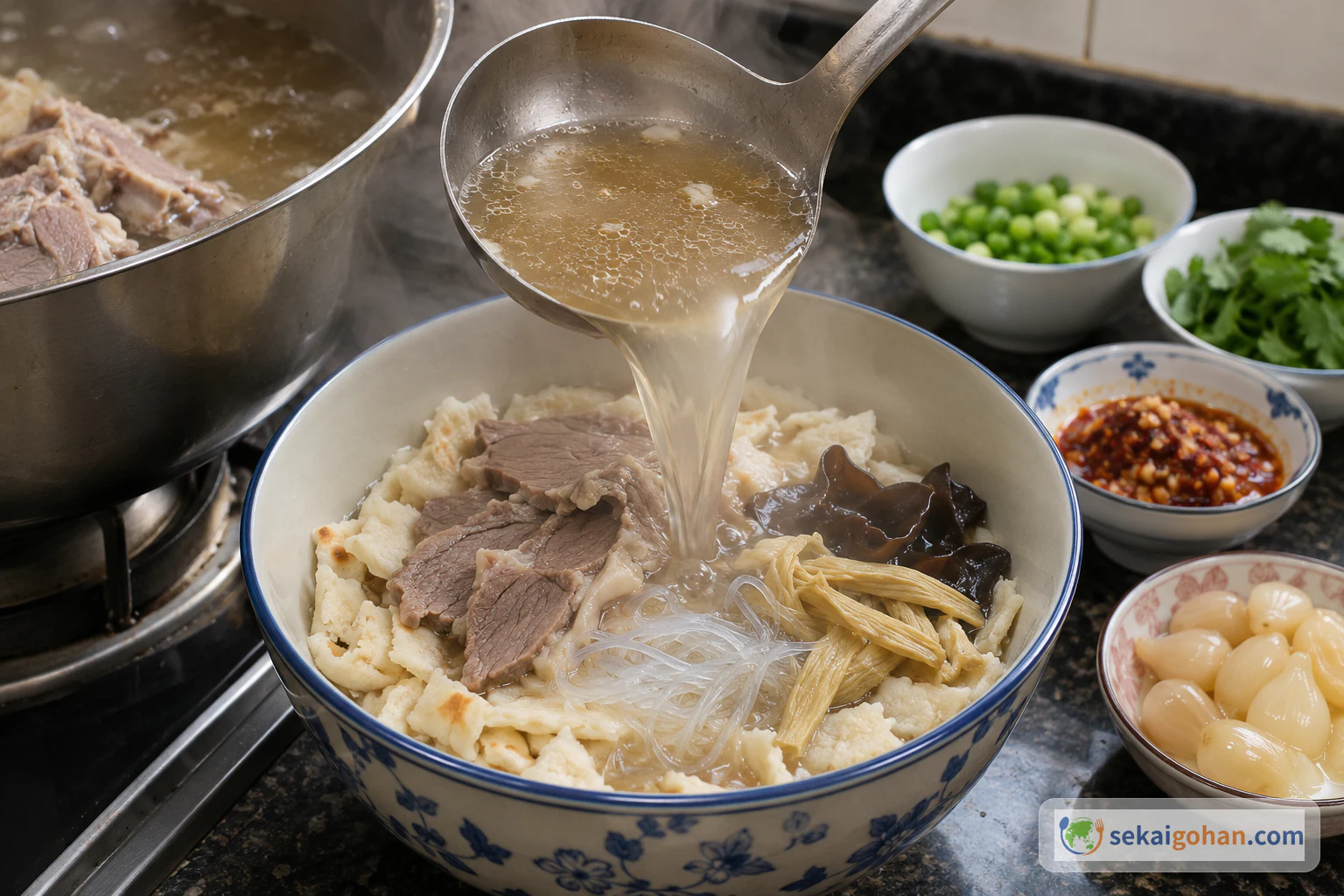
Tearing the flatbread into soybean-sized pieces, adding the toppings and pouring in the boiling broth
The pieces should look ragged. Rough edges hold more broth than neat cubes

Take one and a half breads per bowl to start. Hold a bread in both hands, pull it into strips, then pinch and tear the strips into smaller and smaller bits. Shake the pile now and then so the loose crumbs settle and the bigger pieces show. The size is right when every piece is about as big as a soybean.

Take your time tearing

Tearing is the slow part, and it decides the bowl. Even, soybean-sized pieces soak evenly in the few minutes of simmering and still chew. Big pieces stay dry inside. If you knead them or crumble them to dust, they melt into porridge.

STEP1212 / 12

Simmer, season and finish each bowl

STEP 12

Bring 2 cups (480 ml) of broth per bowl to a boil in a small pot. Add the torn bread, wood ear, daylily buds, glass noodles and sliced lamb. Simmer for a few minutes, then taste and add salt. Pour everything into the bowl and top with scallion, cilantro and garlic chili paste, with sweet pickled garlic on the side. It's ready when the broth is at a full boil and the lamb is steaming hot all the way through.

0 / 0
Ingredients

Ingredients

1 / 1

Ingredients

Ingredient Amount Role
All-purpose flour, for the main dough 1 lb (450 g) Body of the flatbread
Food-grade alkali (食用碱, shijian) a little Changes the flavor and color of the bread
Water, for dissolving the alkali 8½ oz (240 g) Brings the main dough together
Instant yeast 0.05 oz (1.5 g) Leavens the small starter dough
Water, for the yeast dough scant 1 oz (25 g) Dissolves the yeast
All-purpose flour, for the yeast dough about 1½ oz (45 g) Starter dough
Lamb bones 2 lb (900 g) Depth and body of the broth
Lamb leg, in one piece 1½ lb (680 g) Sliced meat for the bowl
Water, for the broth 3¼–4¼ quarts (3–4 L) Stock
Fennel seeds (小茴香, xiaohuixiang) 1 tbsp Spice bag, sweet anise note
Sichuan peppercorns (花椒, huajiao) 1 tbsp Spice bag, numbing fragrance
Bay leaves 3 Spice bag
Dried red chilies 2 Spice bag, gentle warmth
Fresh ginger 6 slices Spice bag, cuts the lamb's gaminess
Scallions, for the spice bag a handful Aromatic for the stock
Dried black wood ear (黑木耳) as needed Crunch in the bowl
Dried daylily buds (黄花菜, huanghuacai) as needed Earthy, slightly sweet strands
Mung bean glass noodles as needed Slippery bite
Scallions, finely sliced as needed Fresh garnish
Cilantro, finely sliced as needed Fresh garnish
Garlic chili paste to taste Heat on top
Sweet pickled garlic (糖蒜, tangsuan) as needed Sweet-sour bite on the side
Salt to taste Seasons each bowl
0 / 0

You make paomo with your fingers first. You pull and pinch a griddled flatbread into crumbs no bigger than a soybean until the bowl is full of pale, ragged bits. Then the pot of lamb broth goes back to a boil, the bread and toppings go in, and a few minutes later the bowl comes to the table steaming. It smells of fennel and Sichuan pepper, with fat shining on the surface and scallion and cilantro scattered across the top.

Yangrou paomo (羊肉泡馍, yángròu pàomo) is the lamb version from Xi'an in Shaanxi. The bread soaks up the broth but still chews. The lamb is sliced thin and tender, and the wood ear and daylily buds add crunch and a little earthiness. Next to the bowl sits a dish of sweet pickled garlic, with garlic chili paste for heat.

A Winter Bowl from Xi'an, Eaten from the Edge In

Xi'an eats paomo in the cold months, and it is written about as a winter dish. Lines by the poet Su Dongpo are quoted in writing about it. Nobody agrees on where it began. It is usually traced to a lamb soup served at the royal court of the Western Zhou. Another account says it took shape around the An Lushan rebellion (755–763). Both stories are told, and neither one has been proven.

The tearing has an actual rule. A 2016 cooking standard in Xi'an set the size of the pieces: about as big as a soybean, made by pulling, tearing, pinching and shaking the bread apart (拉、撕、捏、抖). Pieces that small take up the broth evenly and still keep some bite. Big chunks stay dry in the middle while the outside goes soggy.

Restaurants build the broth from lamb bones and fat, strain off the fat and simmer the stock for about two hours. The lamb is sliced, cooked and added at the end. Each bowl is finished with salt, pepper, daylily buds, wood ear, green garlic, glass noodles, cilantro and sweet pickled garlic. The home version below keeps that structure, with a spice bag in the stock and a flatbread made from two doughs, one with alkali and one with yeast.

In Xi'an paomo is Muslim cooking, so no cooking wine goes in. Lamb is the classic choice. Beef paomo is its own dish with its own flavor, so swapping beef into this recipe gives you that dish instead. If you want more of the province's wheat cooking, the wide, hand-pulled biangbiang noodles come from the same kitchens. For more of the country's dishes, see China.

How to eat it

Start at the rim of the bowl, where the bread is a little firmer, and work inward. Don't stir the soup with your chopsticks. In Xi'an that counts as bad manners, and it also breaks the bread down too fast.


Ingredients
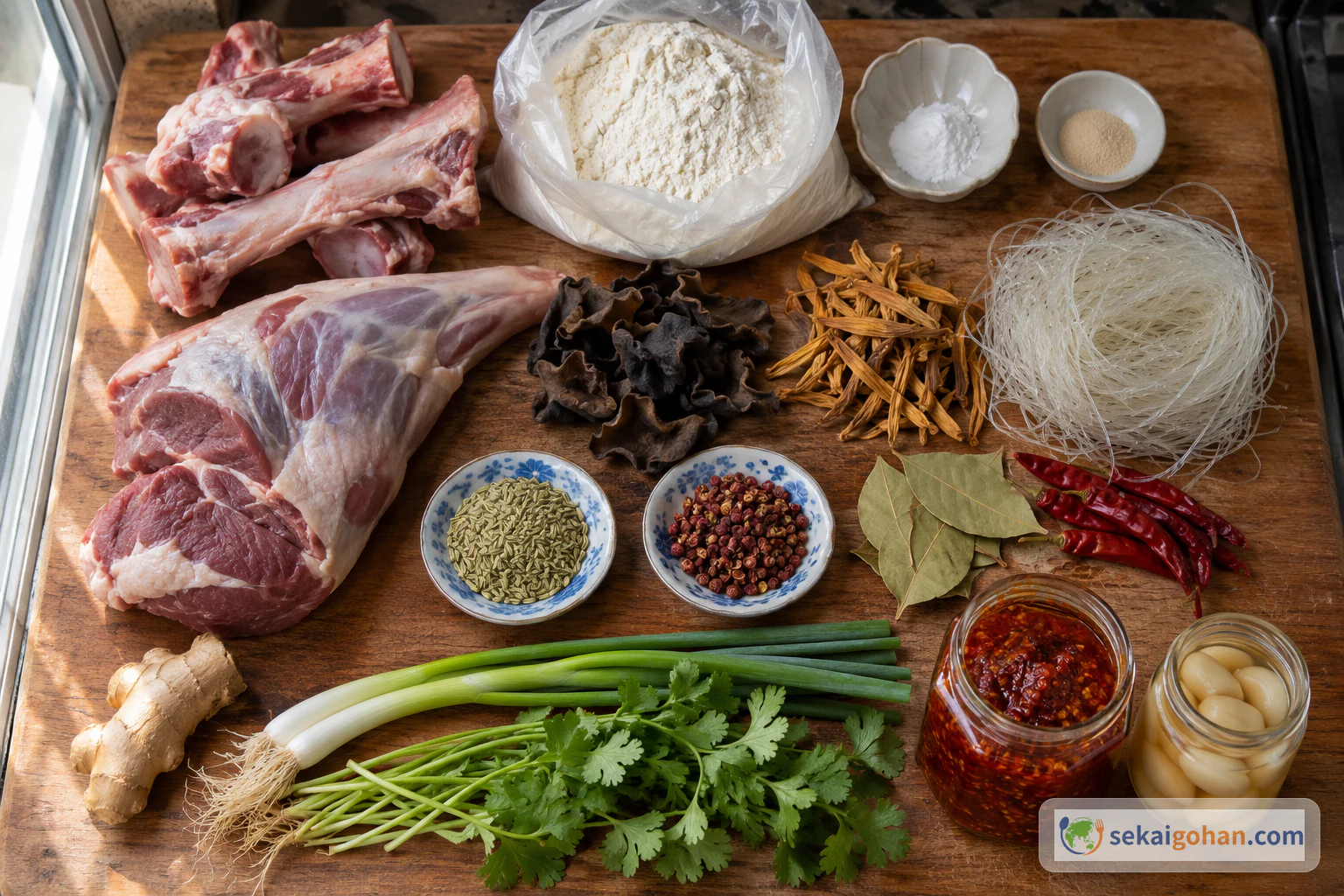
Ingredients for paomo laid out: lamb bones, lamb leg, a bag of flour, a small dish of food-grade alkali, dry yeast, dried black wood ear, dried daylily buds, mung bean glass noodles, fennel seeds, Sichuan peppercorns, bay leaves, dried red chilies, ginger, scallions, cilantro, garlic chili paste and sweet pickled garlic
The dried goods each need an hour of soaking, so set them out early
Allergen information

The flatbread is wheat and contains gluten. Read the labels on the garlic chili paste and the sweet pickled garlic for allergens and other added ingredients.

Equipment

  • Large stockpot
  • Spice bag or a muslin pouch you can tie shut
  • Fine-mesh sieve
  • Large mixing bowl and a small bowl
  • Stand mixer with a dough hook (optional, you can knead by hand)
  • Rolling pin
  • Dry skillet or electric griddle
  • Clean damp kitchen towel and plastic wrap
  • Two cutting boards and knives, one only for raw meat
  • Small pot for finishing each bowl

Shopping and Swaps: What Has to Be Lamb, What Can Bend

You'll need a butcher for the lamb. Ask ahead for lamb bones, because many shops don't keep them out on the counter, and buy the leg as one piece so it slices cleanly after chilling. A Chinese grocery or an online shop carries the food-grade alkali, the glass noodles, the dried daylily buds and the dried wood ear. A spice shop has good fennel seed and Sichuan peppercorns. Sweet pickled garlic is sold in jars at Chinese grocers, and the sweetness and sourness differ a lot from one brand to the next.

If you can't find Use What changes
Lamb bones and leg Beef bones and beef The dish becomes beef paomo, with a different flavor
Food-grade alkali Baked baking soda or baked baking powder Works as a substitute, but the bread's flavor and color change
Sweet pickled garlic Pickled sushi ginger or pickled olives Keeps a sharp-sweet side bite, with a different flavor
Garlic chili paste Doubanjiang Brings a fermented-bean taste, so it isn't the same condiment
Specific dried red chilies Any dried red chili Heat changes with the variety

There's no stand-in for Sichuan peppercorns. Their numbing citrus fragrance is a big part of what the broth smells like. Lamb, the spice bag and bread torn by hand are the three things to keep. Everything else in the table can bend.


Method

Start the night before. The bones and lamb soak in the refrigerator overnight (step 6). The next day, the work happens in two lanes. While the stock simmers through its two hours, make the doughs, griddle the bread and soak the dried goods. The meat needs time to chill before you slice it, so let the bowls wait for the meat rather than the other way around. The broth also keeps well made ahead.

When It Goes Wrong

What you see Why What to do
The bread is gummy in the center Griddled too fast or too briefly Turn the heat down and cook longer, until pressing the middle shows no raw, tacky feel
The combined dough stays sticky The two doughs aren't fully kneaded together Keep kneading until it is smooth and clean on your hands. Don't add flour to hide it
The broth is cloudy and gray Foam left in at the first boil, or blood not rinsed off Skim thoroughly before the spices go in. Rinse well after the soak next time
The lamb shreds when you slice it Not chilled long enough Return it to the refrigerator until it is firm all the way through
The bowl turns to porridge Bread torn too fine, or stirred in the bowl Tear to soybean size and leave the soup unstirred
Wood ear or daylily still tough Not soaked long enough Leave them in the water until they are soft and plump before cooking

Serving, Variations and Making Ahead

At the table

Paomo is a one-bowl meal for a cold day. Sweet pickled garlic on the side is part of the dish: a bite of it between spoonfuls cuts through the lamb fat. Put the garlic chili paste on the table so each person sets their own heat. Eat from the rim inward and leave the soup unstirred.

Variations

  • Beef paomo: beef bones and beef leg in place of lamb. This makes a different dish, milder and beefier.
  • Green garlic finish: green garlic shoots in place of the sliced scallion, as Xi'an bowls are finished. The garnish turns sharper and more garlicky.
  • Chili on the side only: keep the paste off the bowl entirely. The broth tastes cleaner, and the spice-bag aromas come through more clearly.
  • Pickled sushi ginger or olives in place of sweet garlic. You keep the sharp side bite with a different flavor.

Making the broth ahead

The broth makes ahead well. Cool the strained broth, then cover it and refrigerate it promptly. Keep the chilled cooked lamb covered in the refrigerator too, apart from anything raw. On the day, bring the broth back to a full boil before the bread and toppings go in, and heat the lamb in it until it's steaming hot through.

Frequently asked questions

Can I use pita or store-bought flatbread?

You can make a soup with it, but it won't have the right texture. The alkali dough, the yeast starter and the dry griddling give this bread its chew and let it take up broth without falling apart. If you buy bread, pick a dense, dry flatbread and tear it the same way.

Why soak the bones and meat overnight?

The soak draws blood out of the lamb, and that keeps the broth clear and clean-tasting. Do it in the refrigerator, covered, and pour the water away the next morning. Rinse well before the bones go into fresh water.

The bread simmers in the broth anyway. Can I leave it a little underdone on the griddle?

No. Cook it dry all the way through in step 5. A few minutes in the broth softens the bread but doesn't cook raw dough. Underdone bread also smears instead of tearing into clean pieces.

How much bread goes into one bowl?

About one and a half breads make a bowl for a light eater. For a hungrier eater, tear a little more. The amount of broth per bowl stays the same, so more bread makes a thicker bowl.
Sources