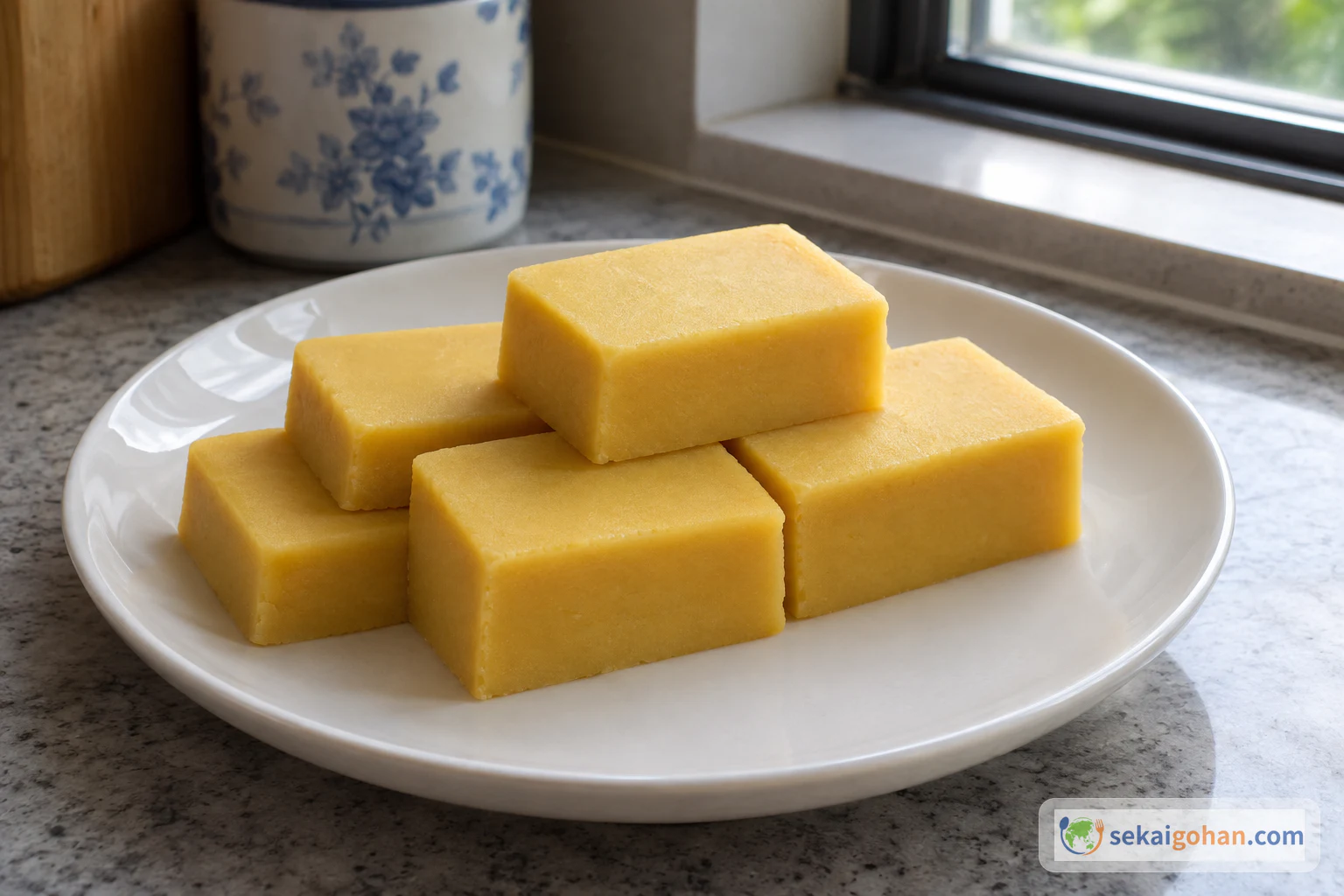
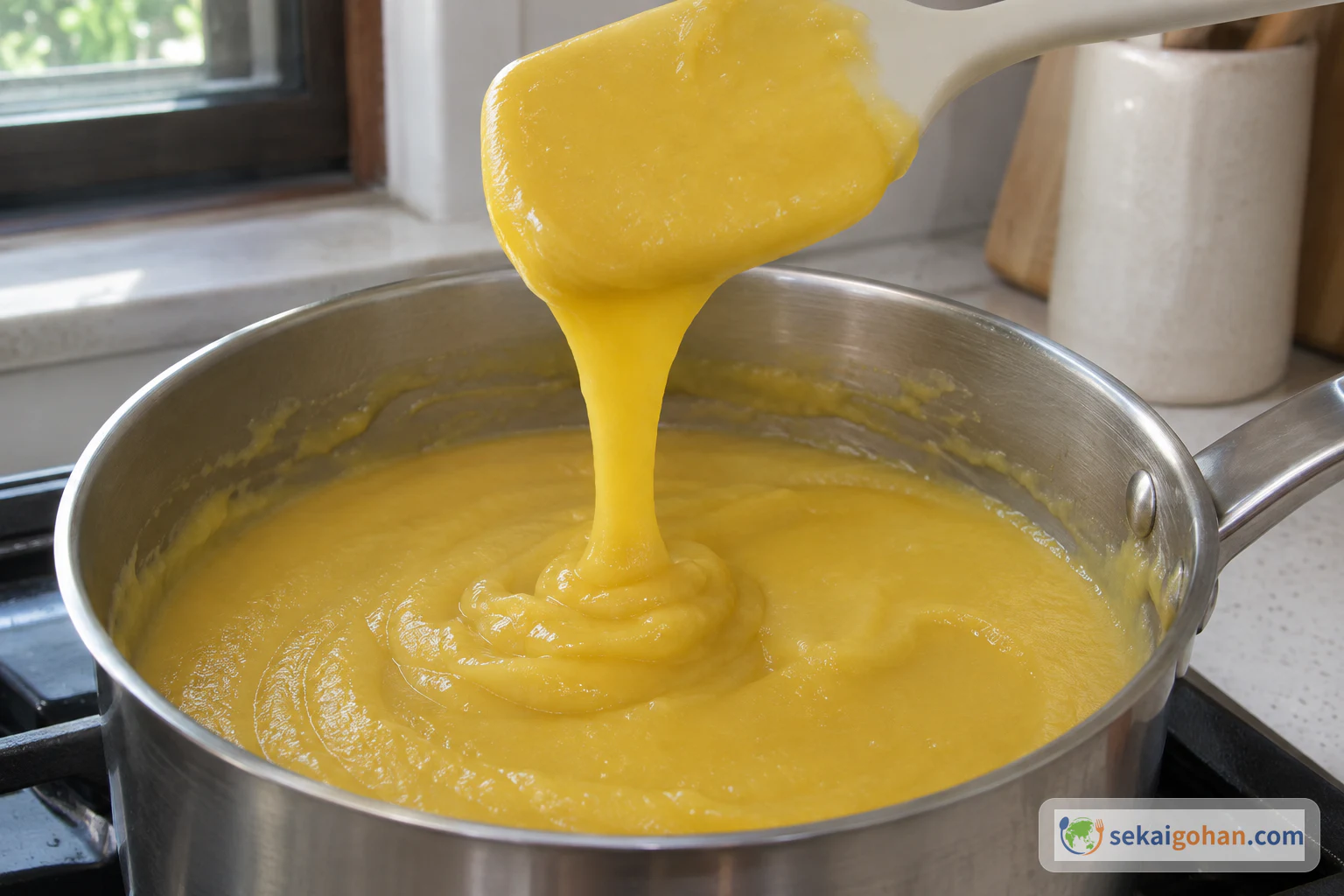
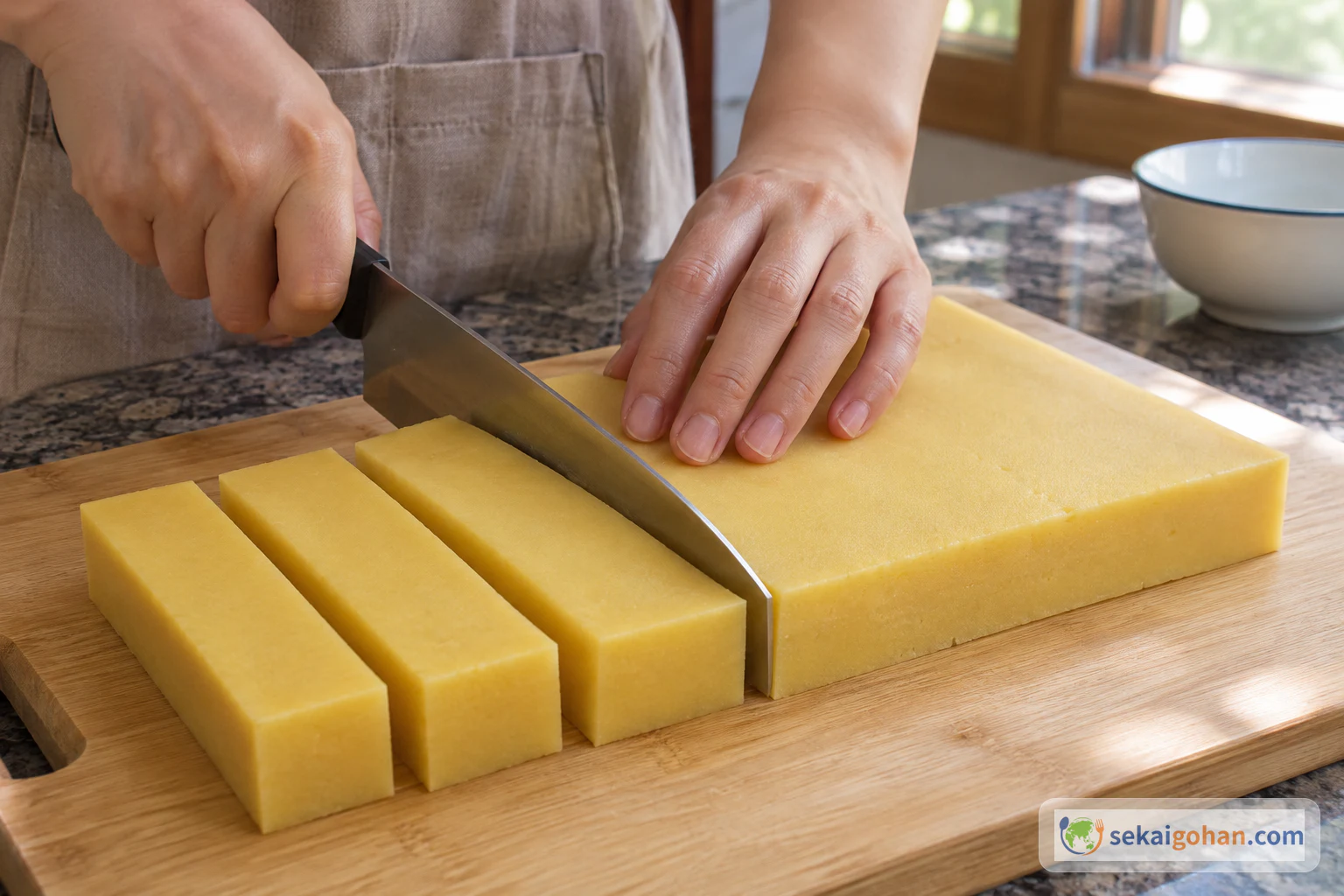
Lift the spatula out of the pan and the golden pea paste falls back in a thick ribbon, then sinks slowly into itself. That is the moment the cake is made. Wandouhuang is Beijing's chilled cake of yellow split peas and sugar, set with nothing but the starch of the peas. It is pale gold, dense and fine, lightly sweet, and it melts on the tongue. In Beijing it belongs to spring, and it is eaten in small cut pieces with a cup of tea.
A Spring Cake from Beijing's Lanes and Palace Kitchens
In Beijing, wandouhuang is eaten on the third day of the third lunar month, the old spring festival also known as Shangsi. That is also the season of the spring temple fairs, and the cake was a fair snack long before it was anything grander. Vendors pushed it through the crowds on wheelbarrows, the slab of yellow paste kept under a damp blue cloth so it would not dry out, and they cut pieces to order.
That street cake was the coarse kind, called cao wandouhuang'r, made from roughly worked peas and dotted with small jujubes. The Qing palace kitchens took it and refined it into xi wandouhuang'r, the fine version: sieved smooth, without the dates, cut into clean, even blocks. The recipe here follows that smooth palace style. Beijing cooks have long held that the best peas for it are the speckled "flower peas" grown around Zhangjiakou, north-west of the city.
The best-known story about the cake ties it to Empress Dowager Cixi and a street vendor near Beihai, and some tell it as one of her favourite sweets. It is told as a legend, and where the palace version first took shape is not settled. What is clear is that wandouhuang stands among Beijing's palace snacks alongside yundougao, a cake of white kidney beans, and alongside other set and steamed sweets from across Chinese cooking.
豌豆黄 (wāndòu huáng) puts together "pea" and "yellow," the two things you see on the plate. In Beijing it is often said with the city's rolled ending, 豌豆黄儿 (wandouhuang'r). In English it also goes by pea flour cake or yellow pea cake.
Ingredients
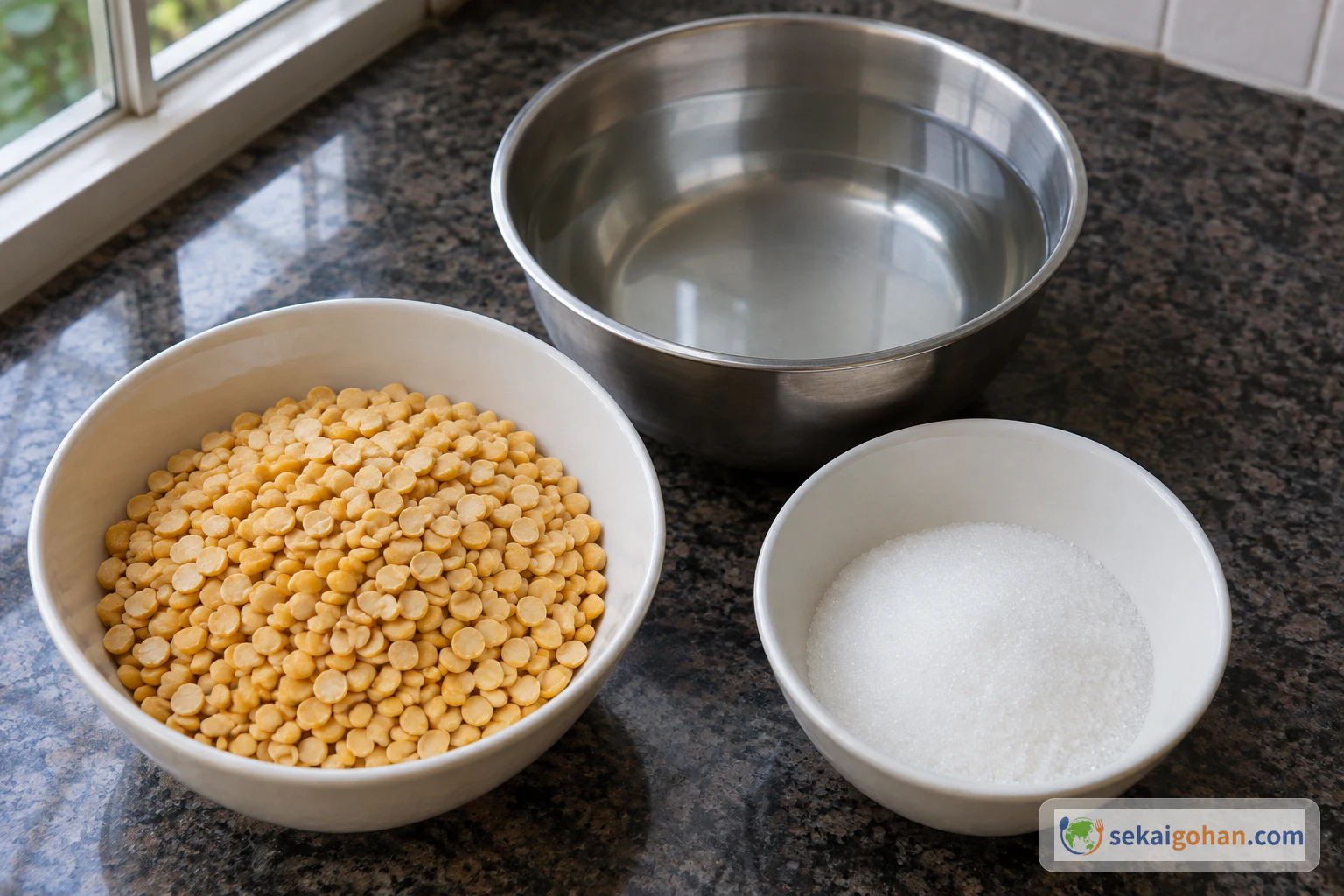
Wandouhuang is made from peas, a legume. Anyone who reacts to peas or other legumes should not eat it.
Equipment
- Fine strainer for rinsing
- Large bowl for soaking
- Saucepan for cooking the peas
- Blender or hand blender
- Fine-mesh sieve (for the smoothest result)
- Non-stick saucepan or pan for cooking the paste
- Heatproof spatula
- 8-inch (20 cm) square tin
- Cling film
Choosing the Peas and Sugar
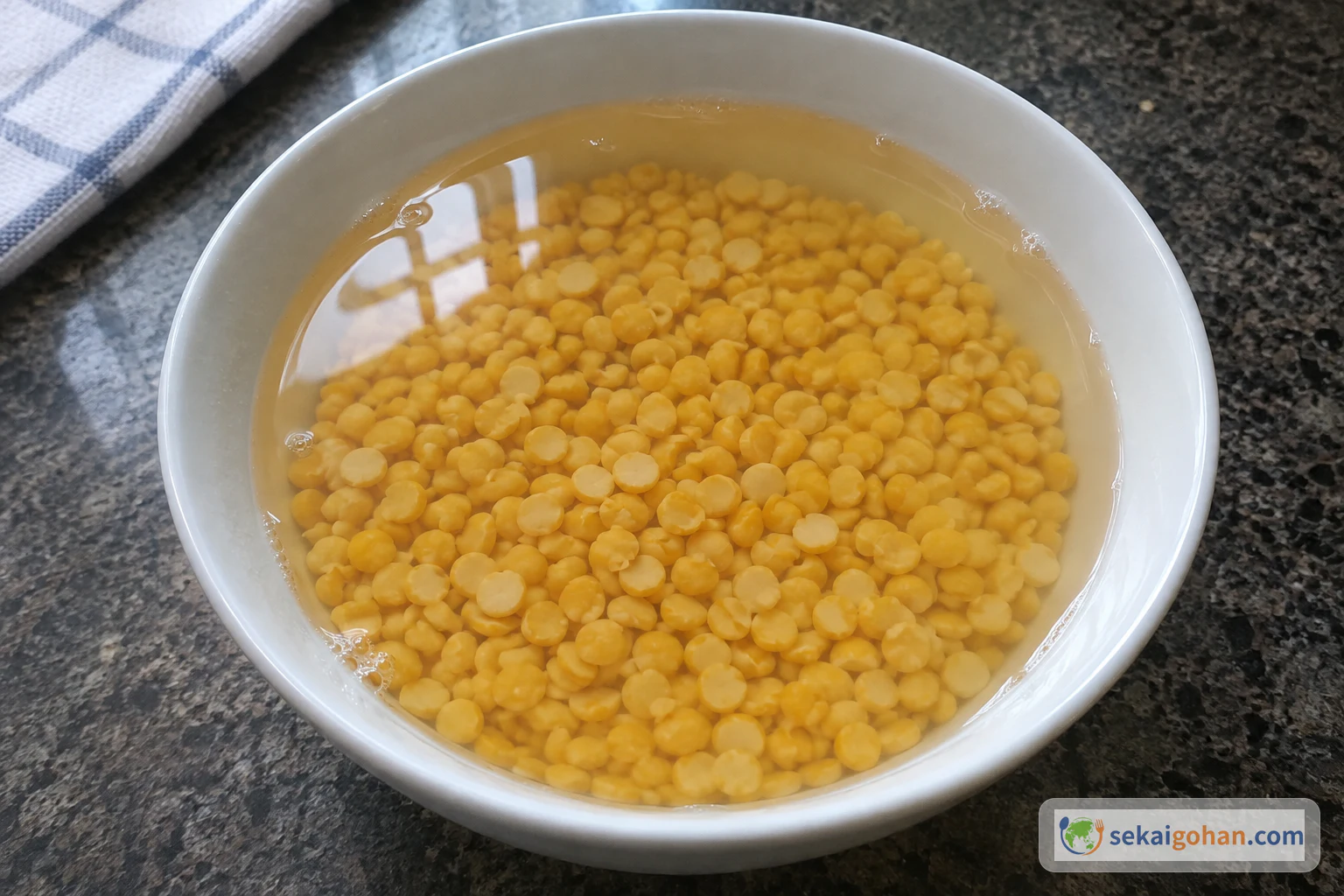
The one ingredient worth seeking out is peeled yellow split peas. Look for them wherever dried pulses are sold, or order them online, and check that they are split and skinless. Green split peas or whole dried peas with their skins give a different colour and a different flavour, and the cake loses the clear gold that gives it its name.
The sugar is easy. Caster sugar dissolves quickly into the paste; granulated sugar works as well. Rock sugar, the traditional choice in many Beijing kitchens, is covered in the questions below.
| Keep for a Beijing-style cake | Fine to adjust |
|---|---|
| Peeled yellow split peas | Caster, granulated or rock sugar |
| No agar, gelatin or starch; the peas set it | Sieving, for a finer or more rustic texture |
| A square tin, so the cake cuts into clean blocks | Pressing the purée through a sieve or blending it longer |
Method
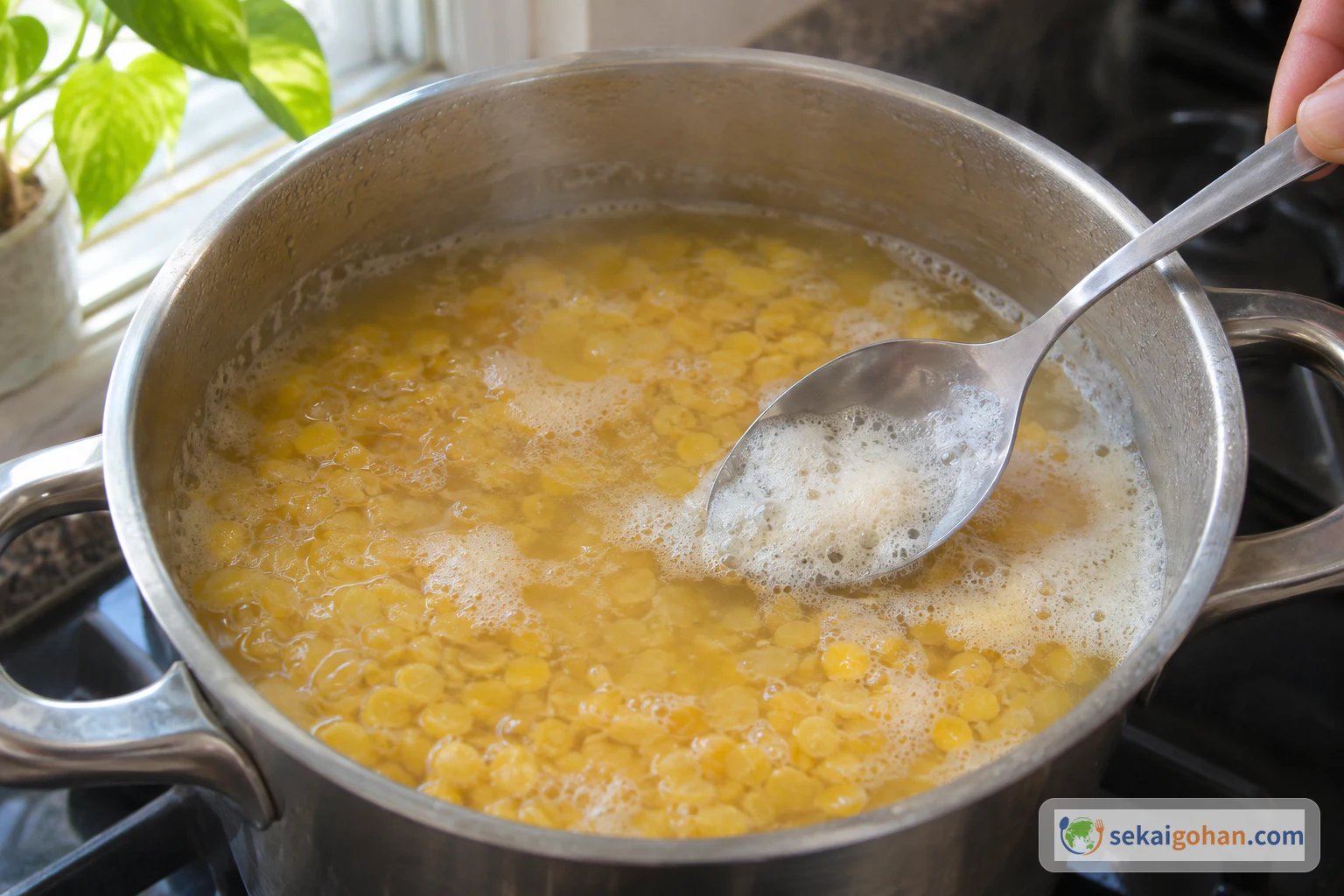
The work splits across two days. Soak the peas the night before, then cook, blend and stir the paste in one session; the stirring is the only part that needs your full attention. After the paste goes into the tin, the refrigerator does the rest.
When It Goes Wrong
| What you see | Why | What to do |
|---|---|---|
| The cake stays soft and slumps when turned out | The paste was not cooked to the ribbon stage | Scrape it back into the pan and stir over medium heat until it falls in a thick ribbon, then refill and chill |
| The peas stay firm after long cooking | Sugar went in before they softened | Keep sugar out until after blending; cook the peas in plain water |
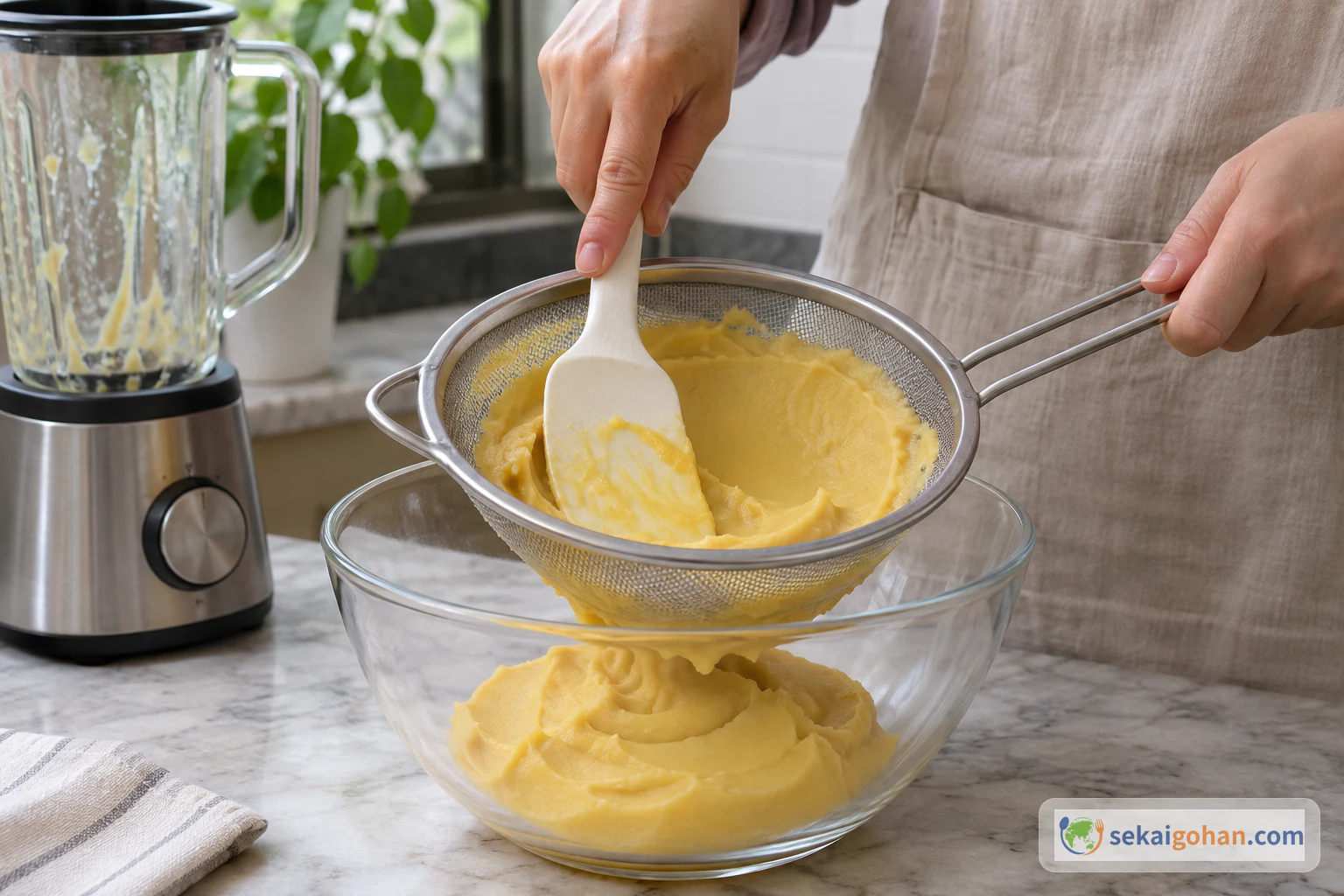
| The texture is grainy | Pea bits survived the blender | Press the purée through a fine sieve before cooking it with sugar |
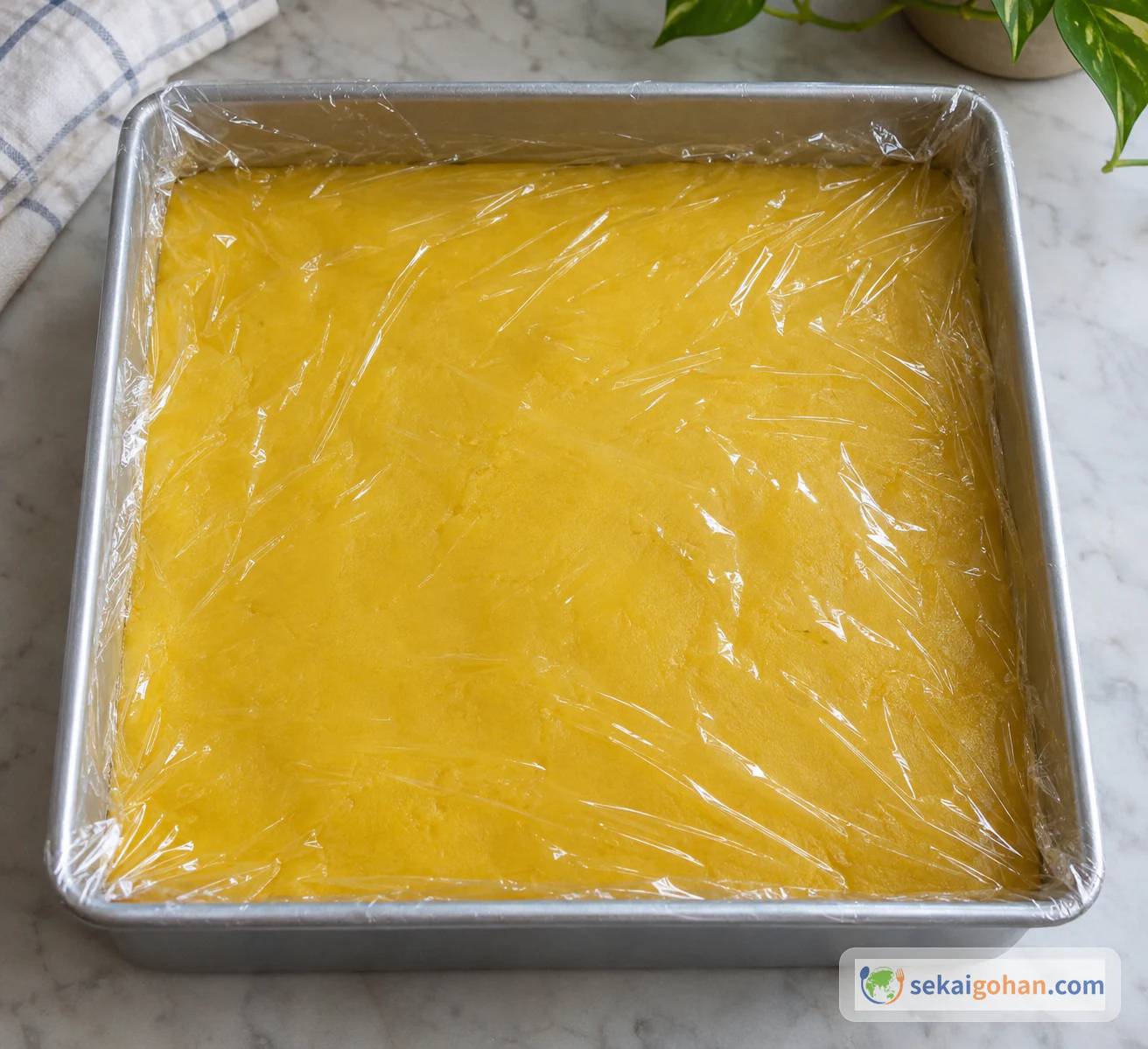
| The top is cracked or dry | Air reached the surface while it cooled | Press cling film directly onto the paste, not across the rim of the tin |
| Dark flecks and a burnt taste | Paste caught on the bottom of the pan | Stir constantly, scrape the corners and lower the heat; use a non-stick pan |
Serving, Variations and Storage
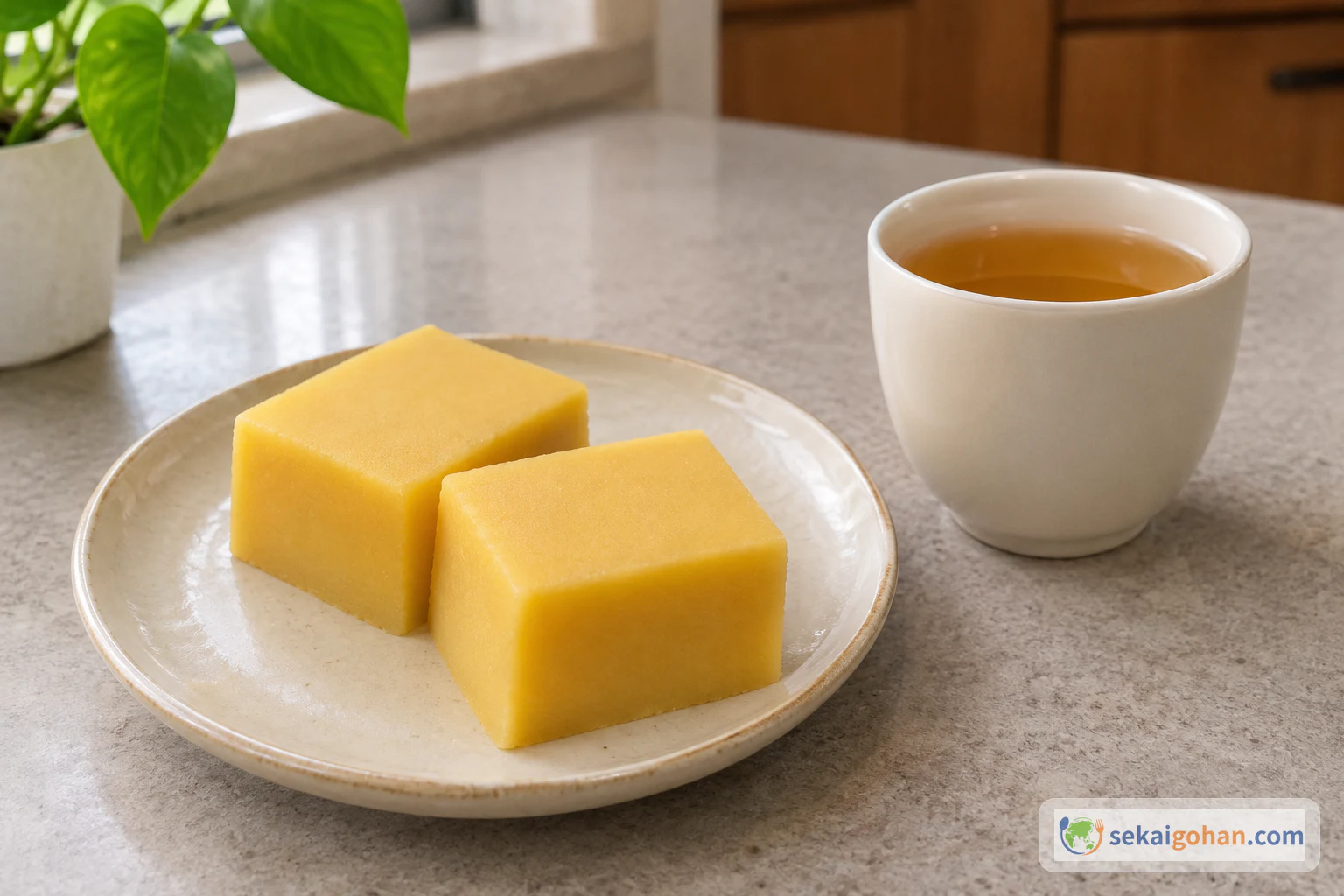
Serve wandouhuang chilled, in small blocks, with tea. The sweetness is gentle and the texture dense, so a few pieces per person is plenty, and hot tea sets off the cool, melting cake. It is the natural thing to make for the third day of the third lunar month, but it suits any spring afternoon.
Variations
- Rustic temple-fair style. Skip the sieve and fold small jujubes into the paste before it goes into the tin. The cake turns coarser and is studded with pockets of fruit, closer to the street version.
- Smoother palace style. Press the purée through the fine-mesh sieve. The cake becomes smoother and cuts with a clean face.
Storage
Keep leftover cake covered in the refrigerator and eat it soon.
Frequently Asked Questions
Do I need to grease the tin?
No. The cooked paste releases from the tin once it has chilled and set. Turn it out onto a board and it comes away in one block.
Can I use rock sugar?
Yes. Rock sugar is the traditional choice in many Beijing kitchens and gives a clean, mild sweetness. Stir it into the paste until it dissolves completely.
My peas went soft after half an hour. Is that enough?
Yes, if every pea you test crushes to paste between your fingers. The peas, their age and your pot change how long they take. Soft all the way through is what counts.