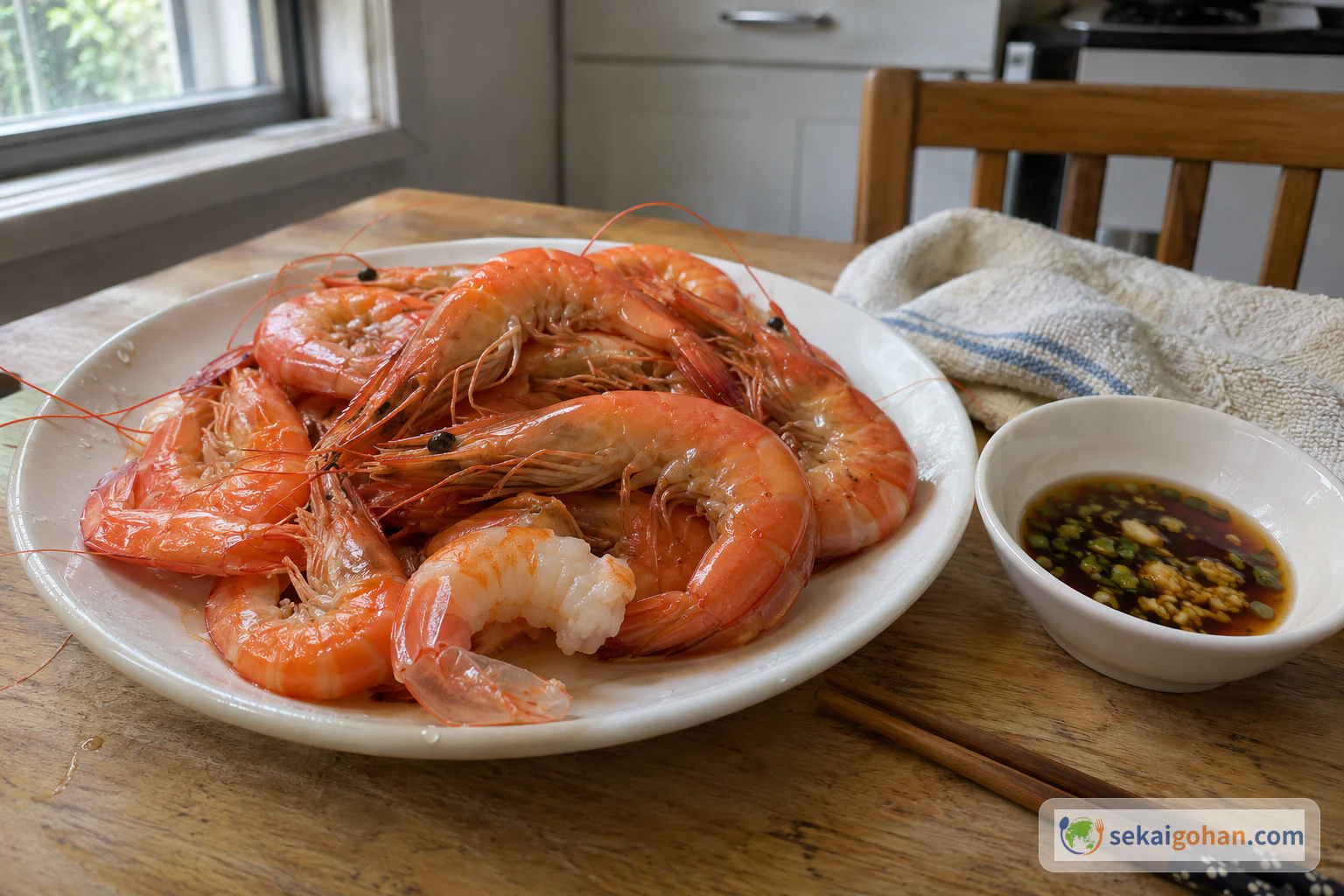
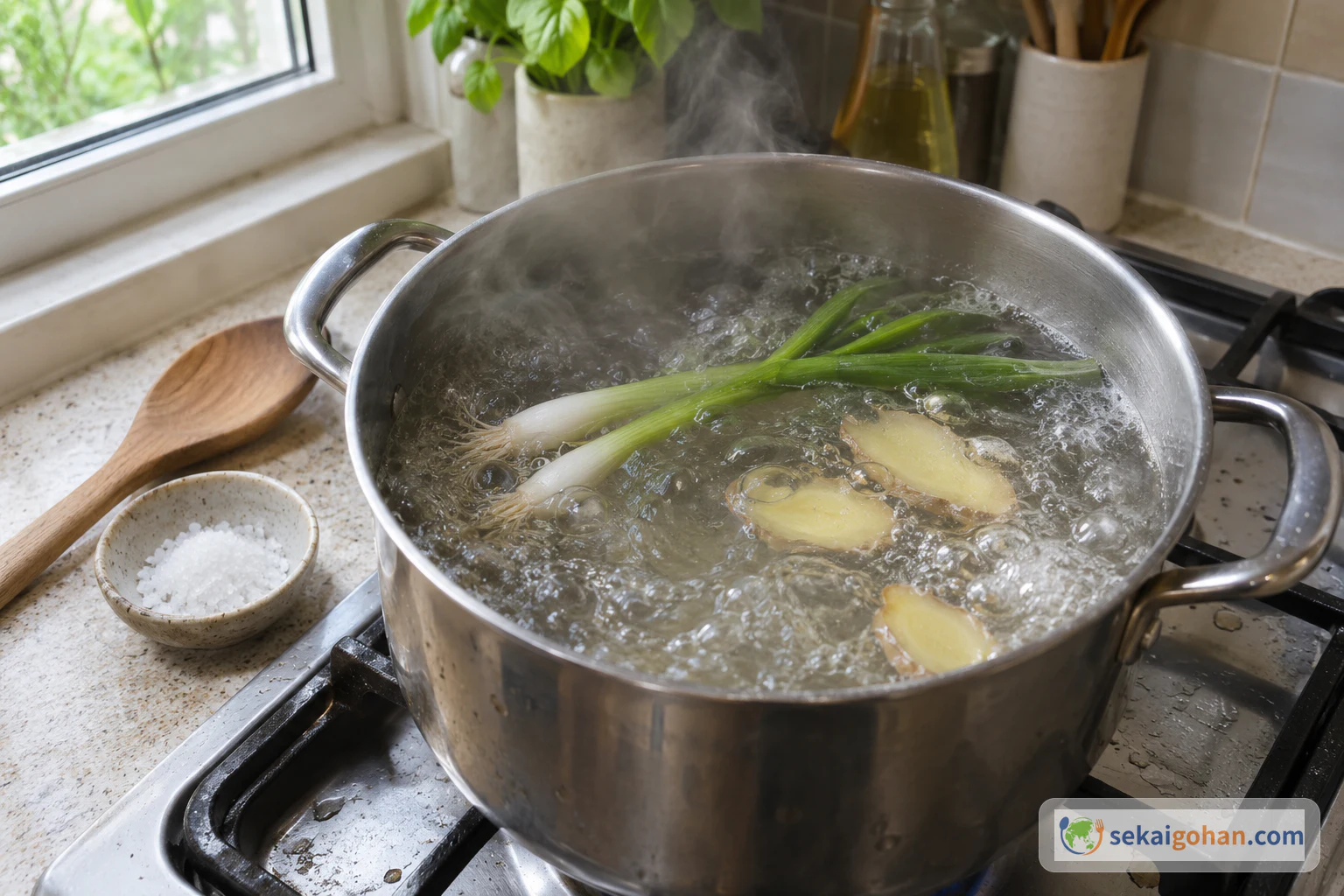
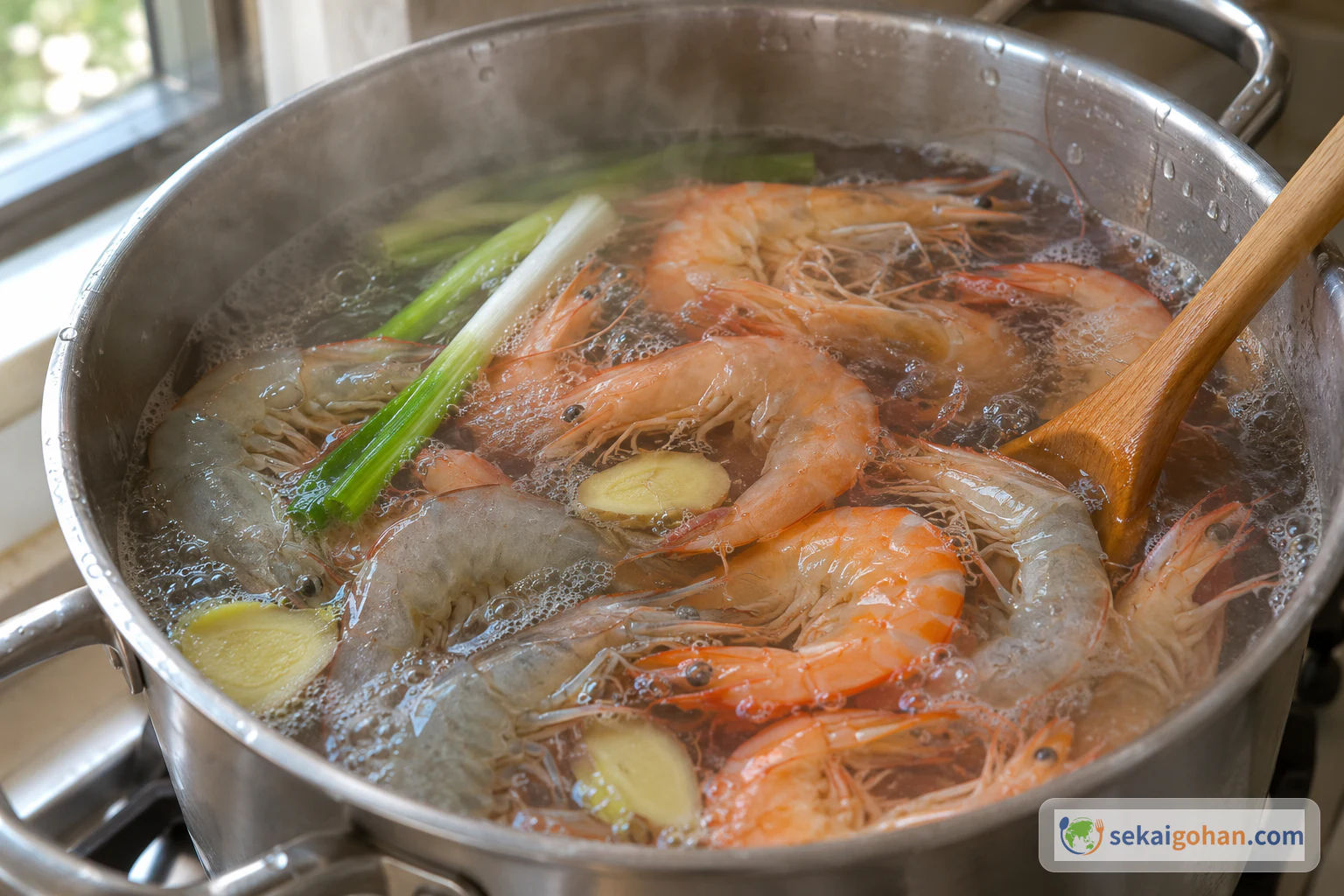
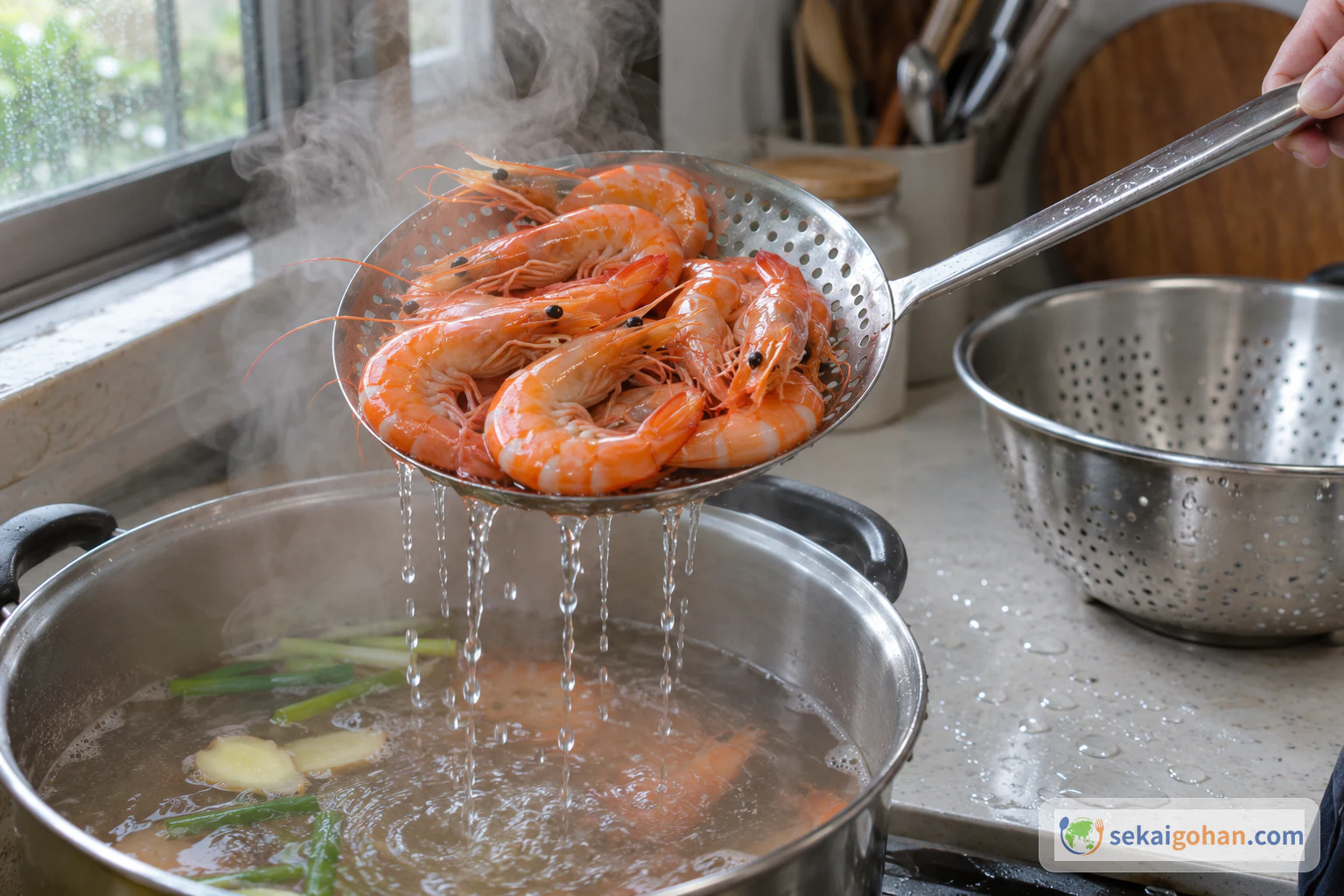
The pot is at a hard boil, slices of ginger and two whole scallions turning in the water, and the steam smells of rice wine. The shrimp go in grey and translucent, and within about a minute the whole pot flushes pink. You lift them out at once, still dripping, and everyone at the table starts peeling with their fingers. White boiled shrimp, 白灼蝦, is the Cantonese way of cooking shrimp with nothing but seasoned water, so what you taste is the shrimp itself: sweet, fresh and tender, with a small bowl of ginger, scallion and light soy sauce beside it for dipping.
Water, Aromatics and a Few Seconds of Attention
Baak zoek (白灼) is a Cantonese cooking technique: food is passed through boiling water or stock just long enough to cook it. In Guangzhou, people cook shrimp this way to keep the fresh, sweet and tender taste they already have, then peel them at the table and dip each one in sauce. The same technique gives you white-boiled choy sum, the leafy green blanched in water and dressed afterward. The method gives the dish its name, which tells you where the cook's attention goes.
Nothing about it is roasted, fried or steamed. The only oil in the whole dish is the spoonful poured hot over the ginger and scallion for the sauce; the shrimp see only water. Compare it with char siu, another fixture of the Cantonese table, which is roasted until lacquered and dark. White boiled shrimp sits at the other end: no seasoning goes onto the shrimp at all, and everything you add arrives through the dip.
白灼蝦 and 白灼虾 are the same dish, written in traditional and simplified Chinese characters. In English it usually appears as white boiled shrimp or white boiled prawns.
Shrimp that taste of the bay
Along the coast the technique follows whatever the boats bring in. In Shenzhen's Dapeng district, small red shrimp gather over the sandy seabed of Daya Bay, and fishermen bring them ashore carefully in sand nets. They are a third to half the size of jiwei shrimp (基圍蝦), with hard shells and red speckles all over, and locals hold that white boiling is the best way to cook them because it lets you taste them as they are. Around the region, the shrimp change and the pot stays the same.
Shrimp-eye water
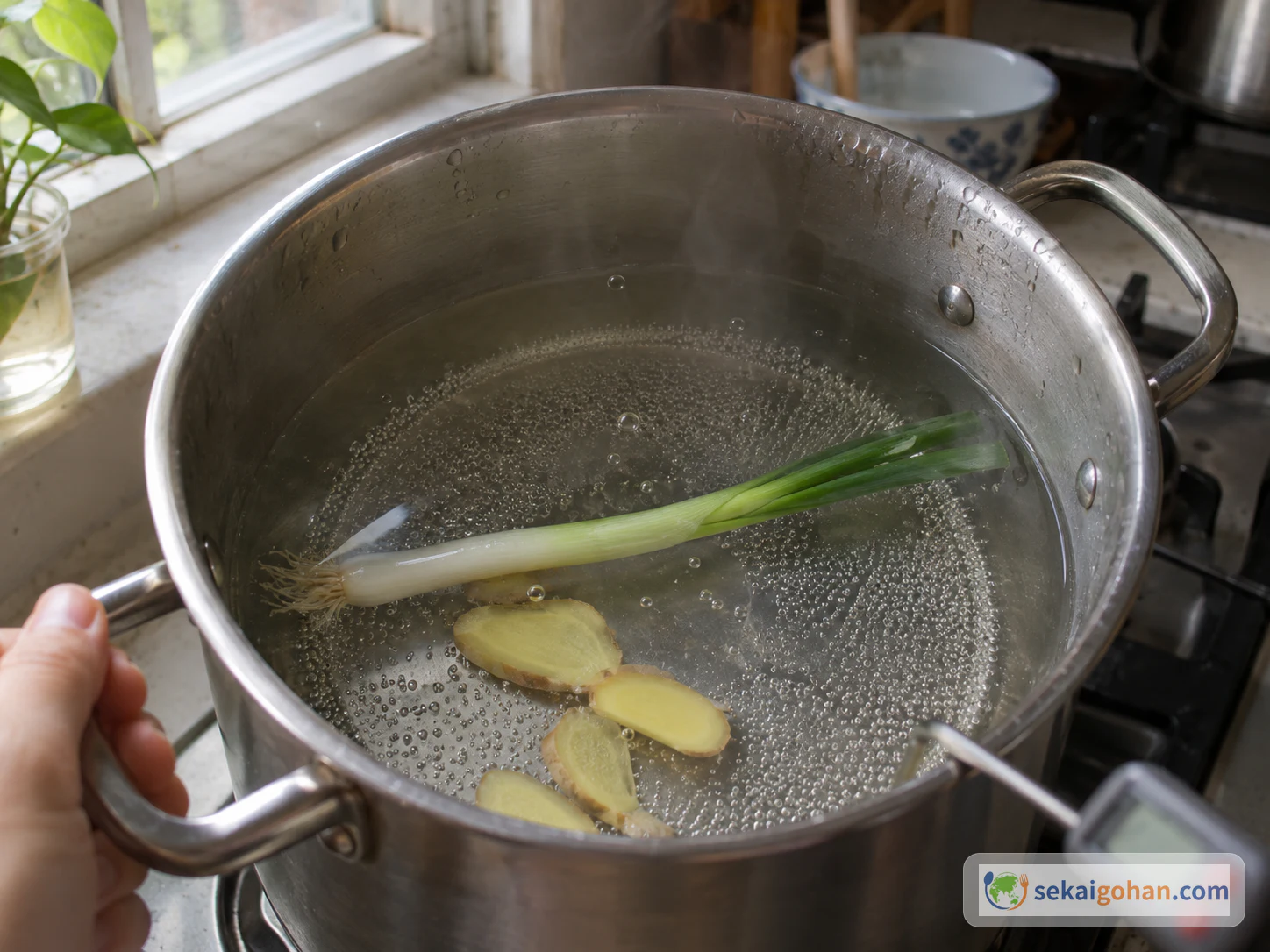
Not every Cantonese cook agrees on how hot the water should be. Some Hong Kong cooks argue that shrimp dropped into a hard boil seize on the outside before the center cooks, and that shrimp started in cold water give their flavor to the water and turn tough. Their answer is "shrimp-eye water" (蝦眼水): water heated until small bubbles about the size of a shrimp's eye line the bottom of the pot, roughly 160–175°F (70–80°C). It is a kitchen measure read entirely by looking into the pot. The recipe below takes the other route, with shrimp into a full boil and out the moment they turn pink; the shrimp-eye method is set out as a variation further down.
The sauce is where households differ
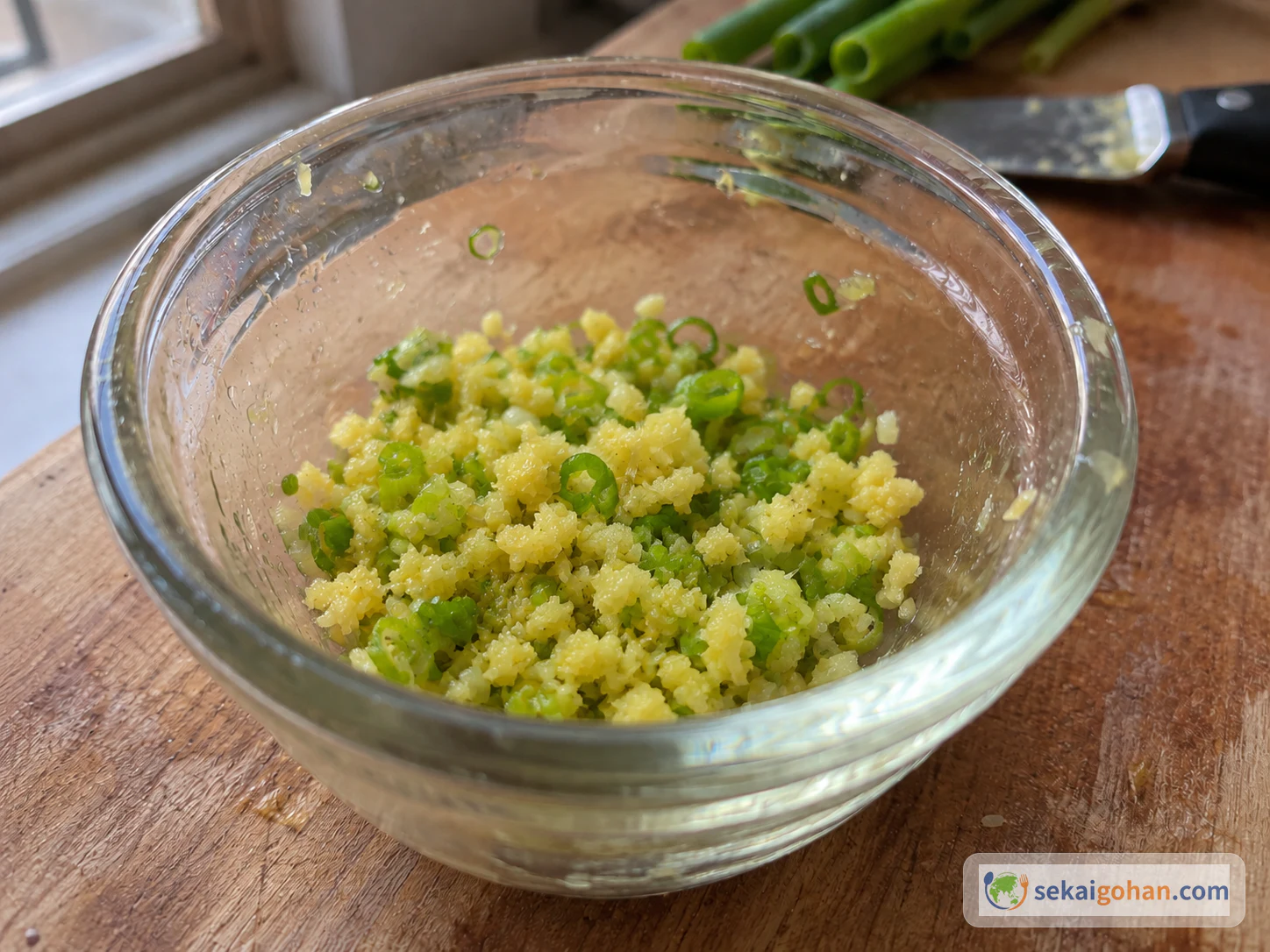
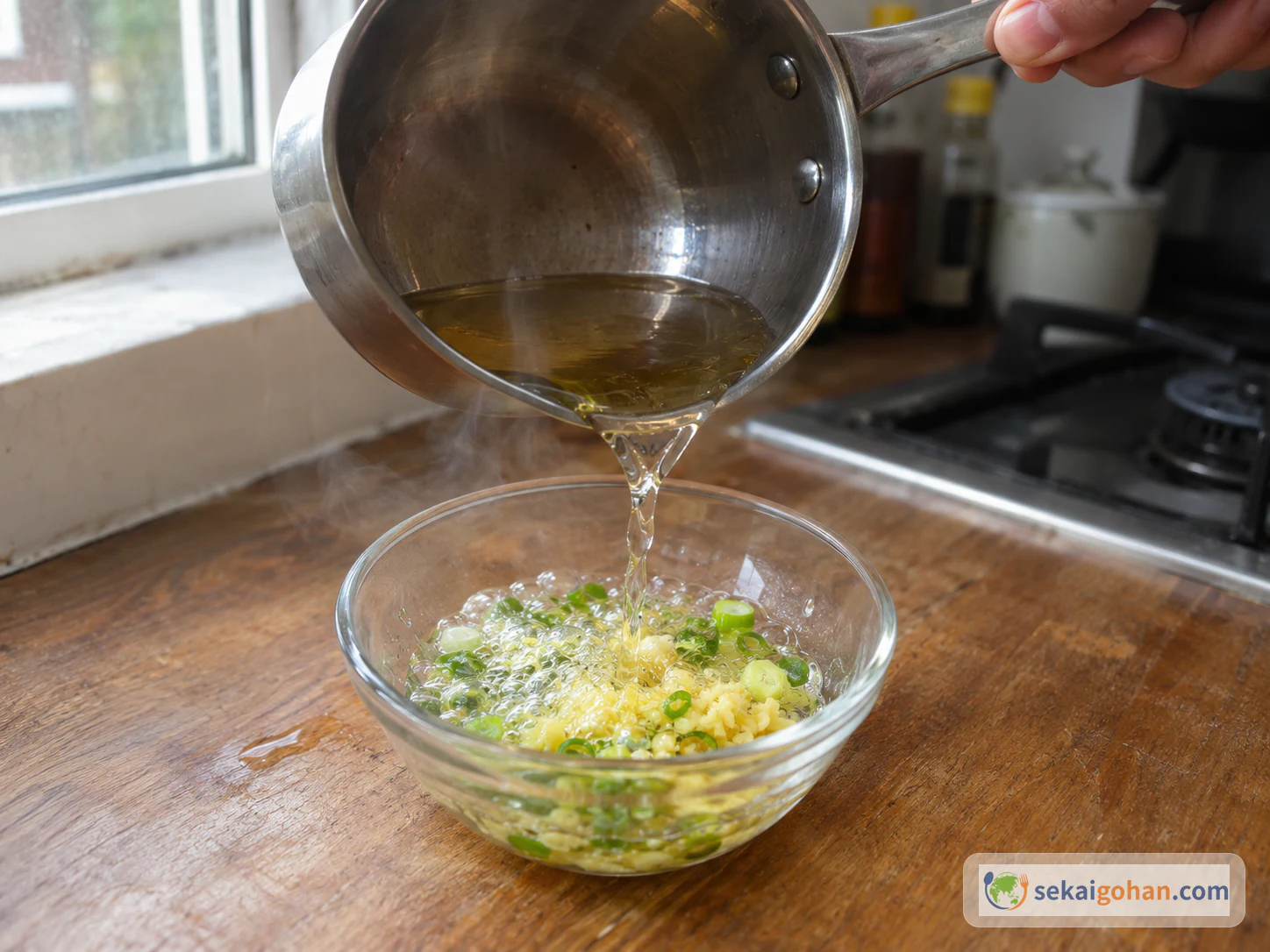
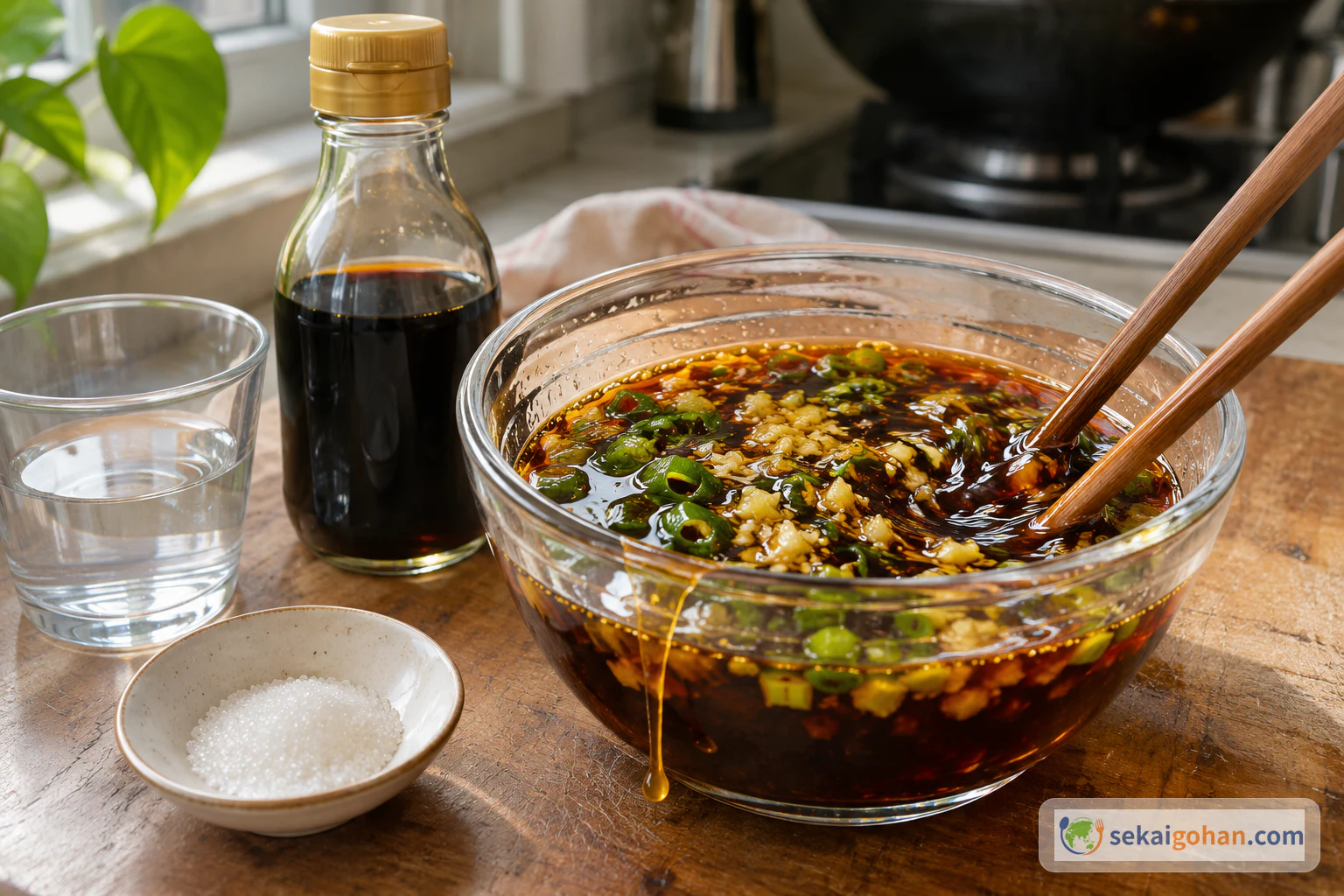
How the shrimp are cooked barely changes from kitchen to kitchen. The dipping sauce is where regions and families make the dish their own, and changing it at home is part of the tradition. The sauce here is ginger and scallion bloomed in hot oil, then loosened with light soy sauce, a little water, a pinch of sugar and a few drops of black vinegar. It is sharp enough to wake the shrimp up and light enough that you still taste them.
Nearby dishes share the shrimp and little else:
| Dish | What happens to the shrimp |
|---|---|
| White boiled shrimp (白灼蝦) | Boiled in the shell; sauce comes afterward, at the table |
| Drunken shrimp (醉蝦) | Live shrimp soaked in wine and never heated |
| Garlic steamed shrimp (蒜蓉蒸蝦) | Topped with garlic and steamed |
| Salt and pepper shrimp (椒鹽蝦) | Deep-fried and tossed with spiced salt |
Drunken shrimp is eaten raw, and raw seafood carries Vibrio bacteria. Keep to the cooked dish. For more dishes from the same country, see the Chinese recipes collection.
Ingredients (serves 4)
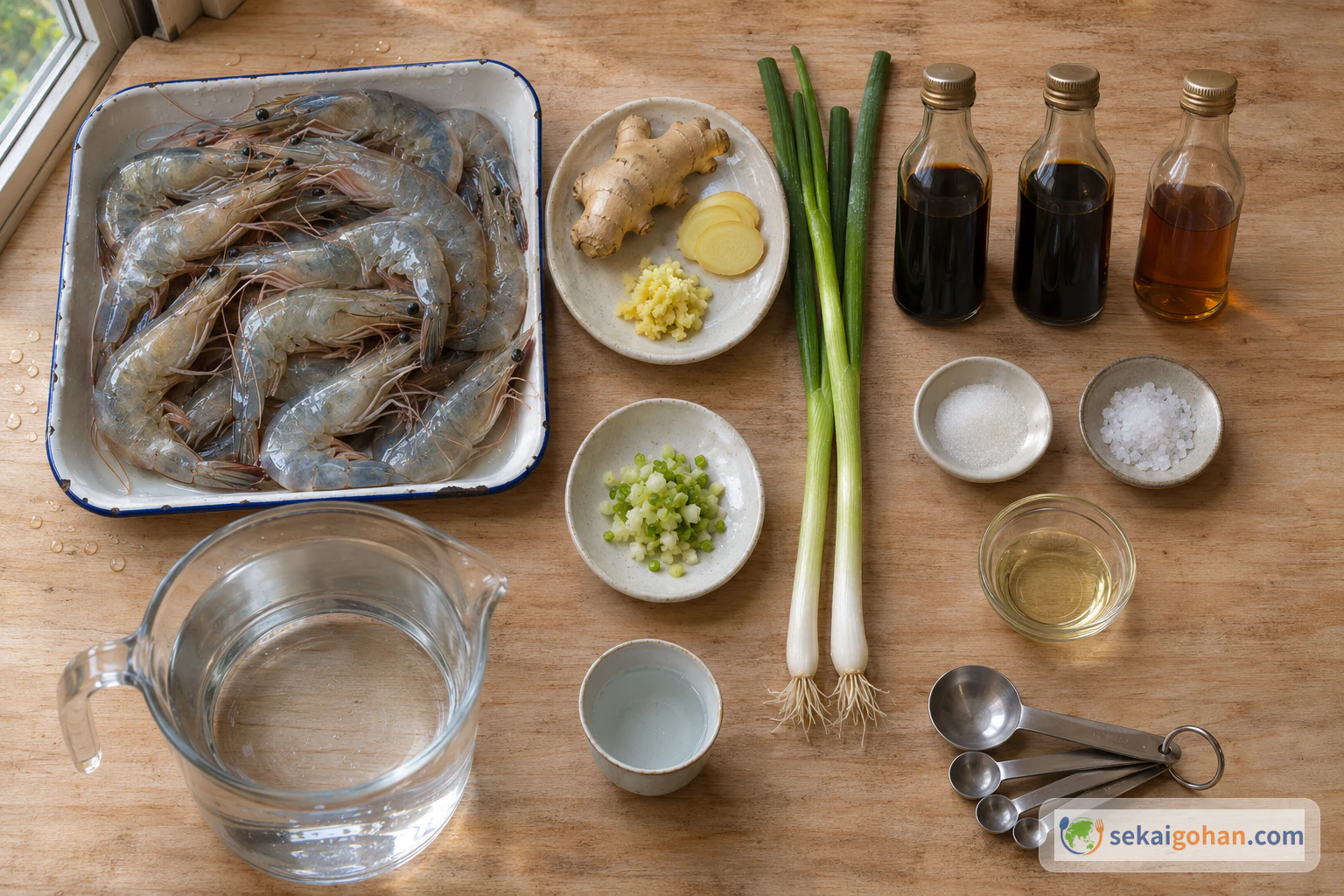
The list splits into two jobs. The first seven rows make the dipping sauce; the rest go into the pot. Ginger and scallion appear in both, so prepare them separately: minced for the sauce, sliced or whole for the water.
This dish contains shrimp (a crustacean), wheat and soy from the soy sauce, and alcohol from the Shaoxing wine. Check the labels of the soy sauce, vinegar and wine.
Equipment
- Medium pot, deep enough to hold the water and shrimp
- Small heatproof bowl for the sauce
- Small saucepan or skillet for heating the oil
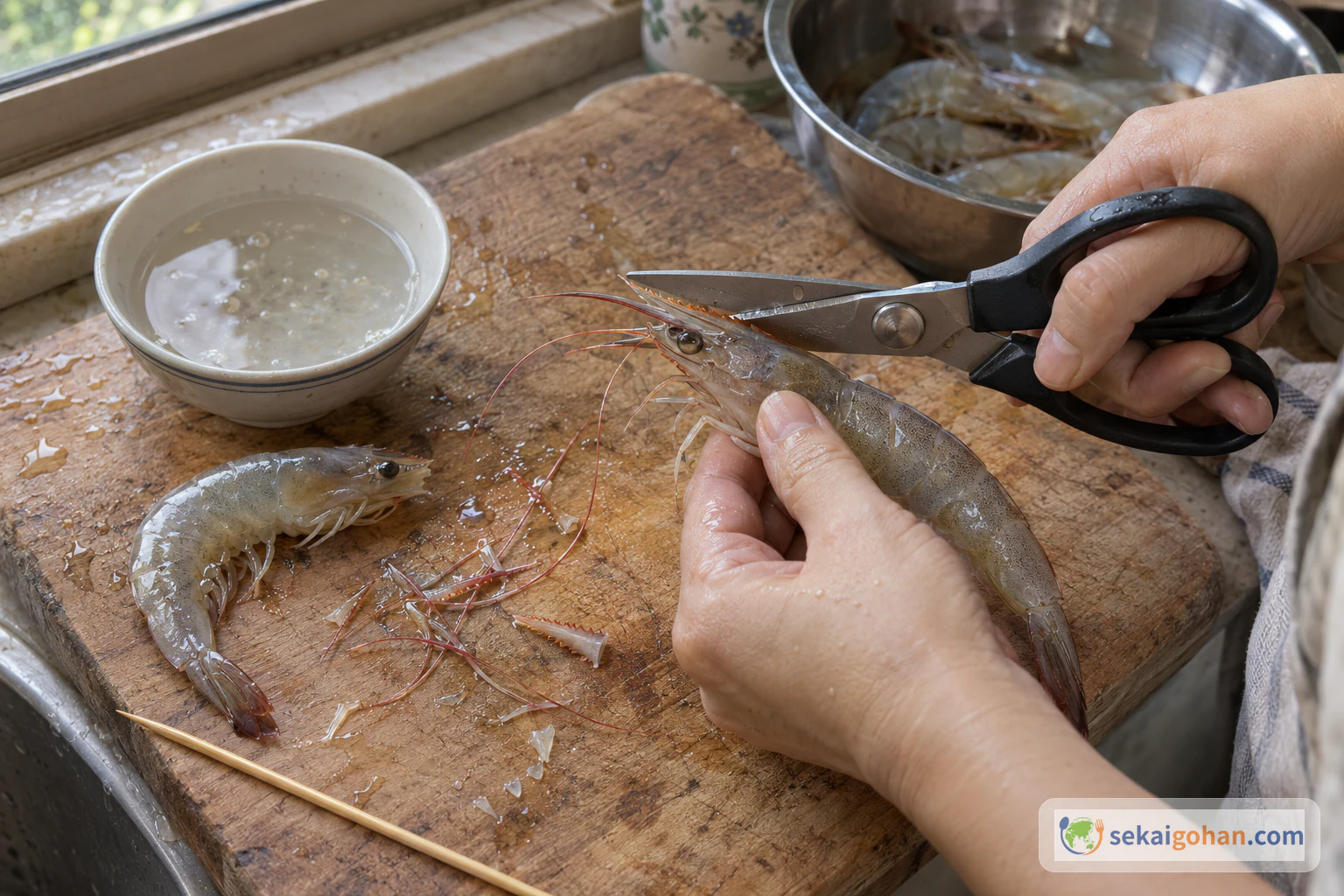
- Kitchen shears
- Bamboo skewer or toothpick
- Skimmer, slotted spoon or colander
- Measuring spoons and a measuring cup
- Instant-read thermometer, if you have one
Choosing the Shrimp and the Bottles
Live shrimp are best, and good frozen shrimp come next. Head-on or headless both work for this dish. Thaw frozen shrimp completely and pat them dry, because shrimp that are still icy cool the water and cook unevenly. Large, thick shrimp take longer than small ones, so pick shrimp of a similar size.
Three bottles come from a Chinese grocery or online, and each one carries part of the flavor:
| Ingredient | Best choice | Supermarket swap and what it changes |
|---|---|---|
| Light soy sauce (生抽) | Chinese light soy sauce | Regular soy sauce darkens the dip and has a stronger aroma; use the same amount and taste. Japanese light (usukuchi) soy sauce is a different product and is not a stand-in |
| Chinese black vinegar | Zhenjiang-style black vinegar; a small bottle is plenty | Plain grain vinegar gives sourness without the sweet, toasted note. Do not add more of it |
| Shaoxing wine | Shaoxing wine | Japanese sake makes the water sweeter; seasoned cooking wine adds its own salt. Either moves the dish away from its Cantonese taste |
Everything else comes from the supermarket. Young ginger gives a milder, lighter sauce. The green parts of the scallion carry more aroma than the white. Keep the oil neutral: sesame oil takes over the dip and blurs the edge of the ginger. Coarse salt and fine salt fill a tablespoon differently, so measure with the salt you always use.
Finishing the sauce first means it is ready the moment the shrimp come out, and it never shares a board, knife or hand with raw shrimp.
Method
The sauce comes first and is finished before the shrimp are touched. Then you trim the shrimp, wash your hands and tools, and bring the pot to a boil. The cooking itself takes about a minute and needs your full attention, so have the skimmer and a clean serving plate beside the stove before the shrimp go in.
The oil for the sauce is heated until it just starts to smoke, and it spits when it hits the aromatics. Use a heatproof bowl and pour away from yourself. Hands, knives, boards and colanders that touched raw shrimp must not touch the cooked shrimp or the sauce; wash them in between.
Take the oil off the heat as soon as it starts to smoke. Oil that smokes heavily scorches the ginger and leaves the dip bitter. You want a loud sizzle and glossy green scallion, and no dark brown bits.
When It Goes Wrong
| What you see | Why | What to do |
|---|---|---|
| Shrimp are tough and dry | Left in the water too long | Lift them out as soon as they are completely pink; they keep cooking in their own heat |
| Center is still translucent | Large shrimp, not fully thawed, or not enough water | Return them to the boiling water until the flesh is white and opaque through, or 167°F (75°C) in the thickest part |
| Some cooked, some still grey | Too many shrimp at once for the pot | Cook in two batches, letting the water return to a full boil in between |
| A fishy smell | Aromatics left out, or shrimp past their best | Always use the ginger, scallions and wine in the water; buy live or good frozen shrimp |
| Sauce is harsh or bitter | Too much ginger, or the oil overheated | Keep to a tablespoon of each aromatic and take the oil off at the first wisp of smoke |
| Sauce is too salty | Regular soy sauce used in place of light soy sauce | Add a little water to the bowl; next time buy Chinese light soy sauce |
Serving, Variations and Storage
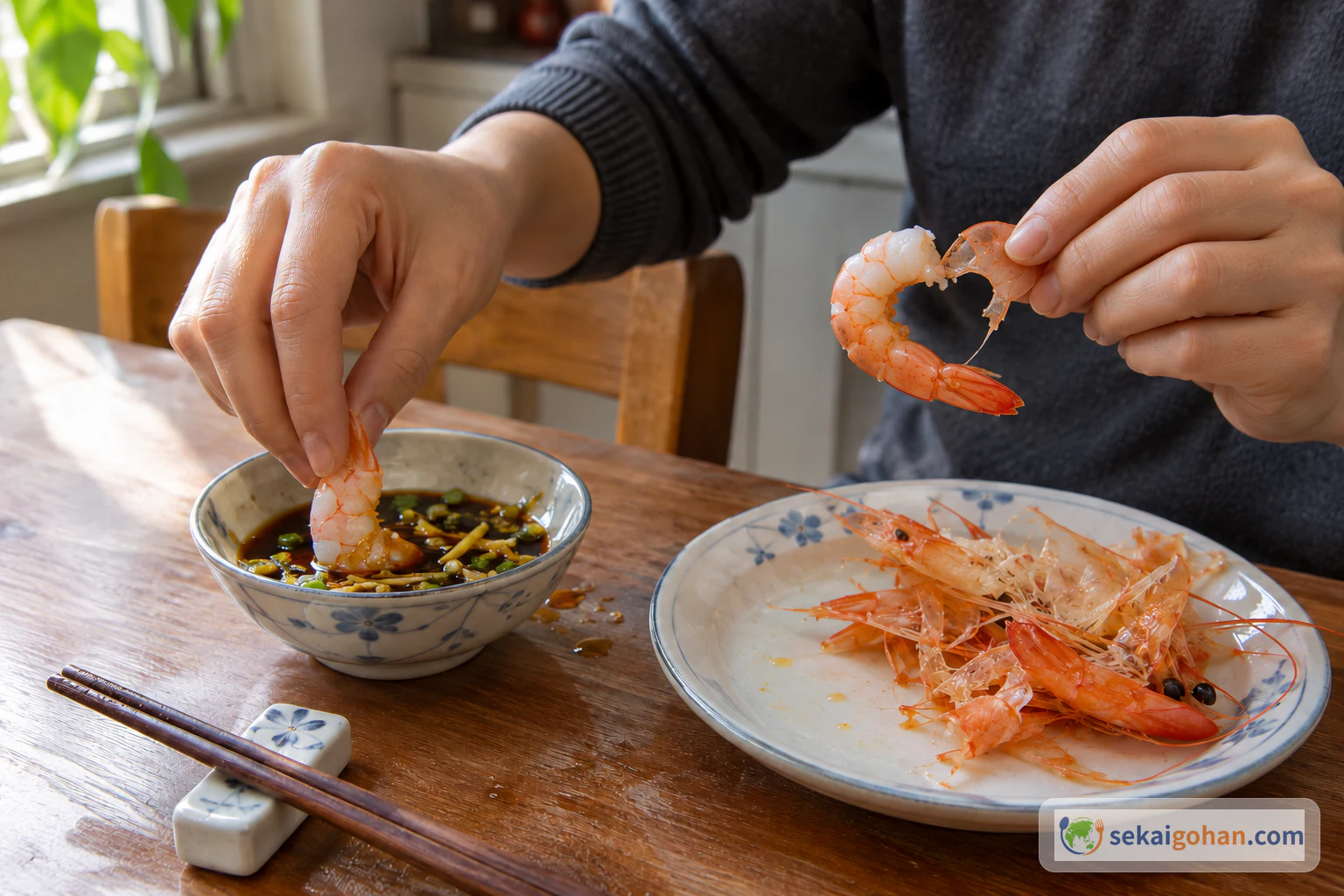
Bring the shrimp to the table on one plate with the sauce in a small bowl, and put out a plate for shells. Everyone peels their own. Hold the shrimp, twist off the head if it has one, pull away the shell segments and the tail, and dip the meat into the sauce, catching a few pieces of ginger and scallion on the way out. The shrimp are good hot, at room temperature and chilled, so the dish works as well as a cold starter as it does straight from the pot.
Variations
Shrimp-eye water. Put enough water to cover the shrimp in a pot with a few slices of ginger, a few scallions, and either a little Sichuan peppercorn or some cooking wine. Heat until small bubbles line the bottom of the pot, about 160–175°F (70–80°C), with the surface still calm. Add the shrimp, stir, and cook uncovered for about 3 minutes, lifting them out when the water begins to boil and they have turned orange-red. Cooks who favor this method say the gentler heat gives a softer, more even texture. Use color and opaque flesh to judge, because shrimp size changes the time.
Sichuan peppercorns in the pot. Swap the Shaoxing wine for a little Sichuan peppercorn and the water takes on a light, numbing fragrance. Use one or the other, never both; the two aromas clash.
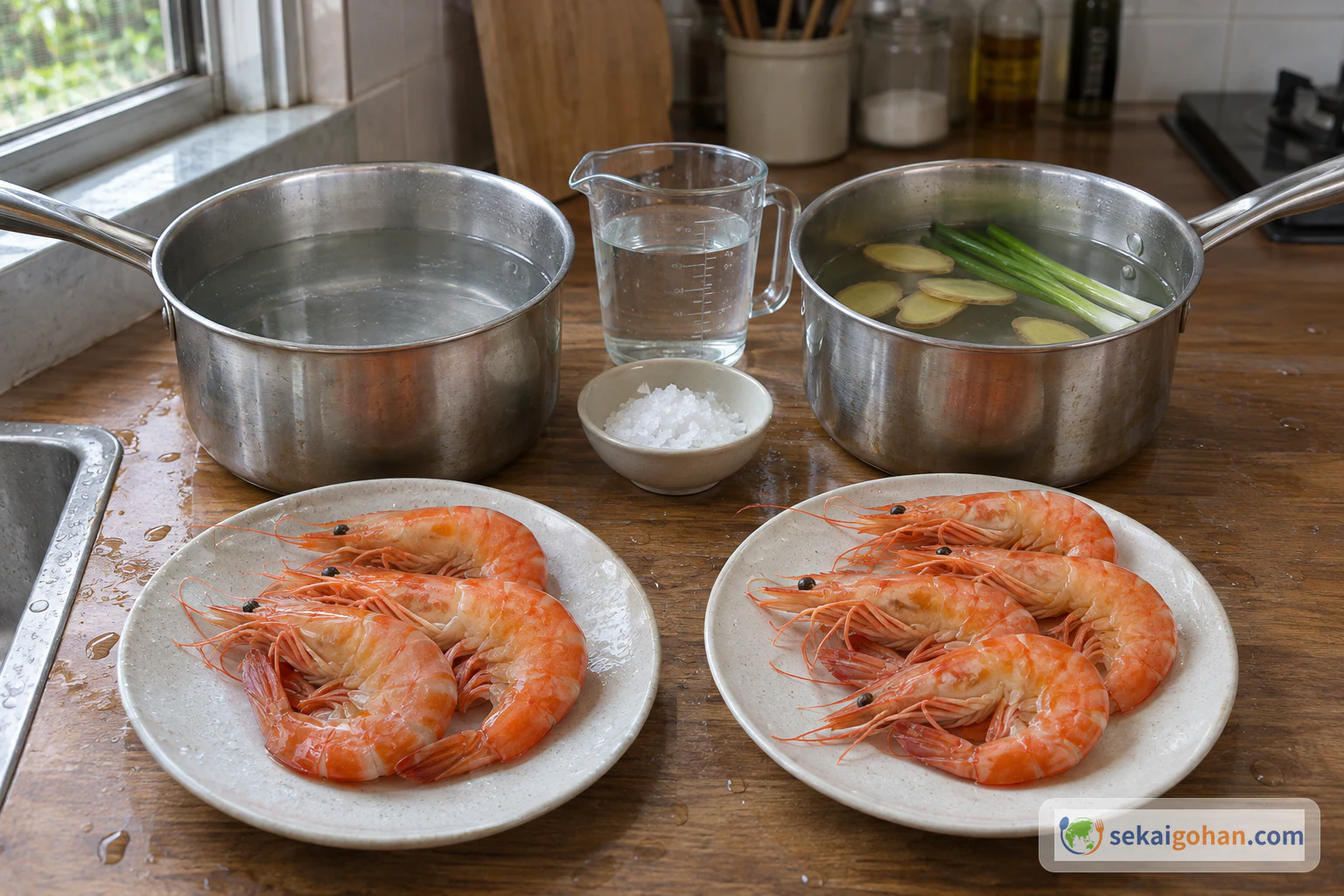
Salt only. The plainest version uses no aromatics and no wine: about 1¼ lb (550 g) shrimp in 2 cups (500 ml) water with ¾ oz (20 g) sea salt. This water is much saltier than the main recipe's, so keep the two sets of amounts apart. The shrimp come out tasting more of the sea, and the dipping sauce does all the seasoning.
Storage
Eat the shrimp as soon as possible. For leftovers, follow the rule for any cooked seafood: wrap them, refrigerate at 39°F (4°C) or below, keep them apart from raw foods, and eat them within 1 to 2 days. Reheat leftovers thoroughly before eating, or eat them chilled straight from the refrigerator.
Frequently Asked Questions
Should I keep the heads on?
Either way works. Head-on shrimp and headless shrimp both work. Cook both the same way and judge doneness by color and opaque flesh.
Can I make it for two?
Halve every ingredient, in both the sauce and the pot. A smaller pot of water comes back to the boil faster, so watch the color even more closely.
Won't 1½ tablespoons of salt make the shrimp too salty?
Most of that salt stays in the water you pour away. It seasons the shrimp lightly through the shell, and the sauce provides the real saltiness. Keep the salt measure as given and season at the table with the dip.
Is it suitable for children or pregnant guests?
Yes, as long as the shrimp are fully cooked. Children, older people, pregnant people and anyone with a weakened immune system should avoid raw or half-cooked seafood. Peel the shrimp for small children and check that the flesh is white and opaque all the way through.