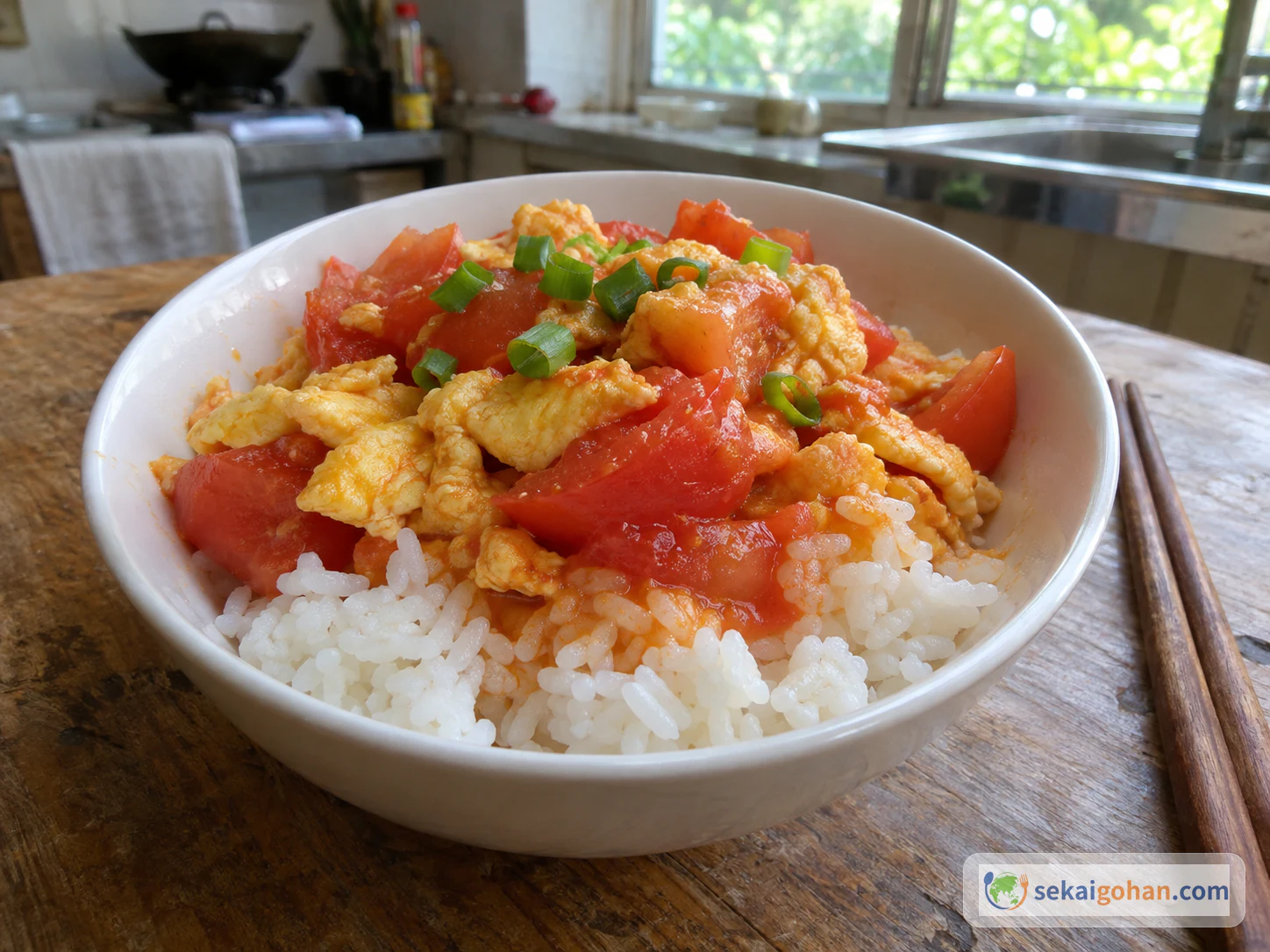
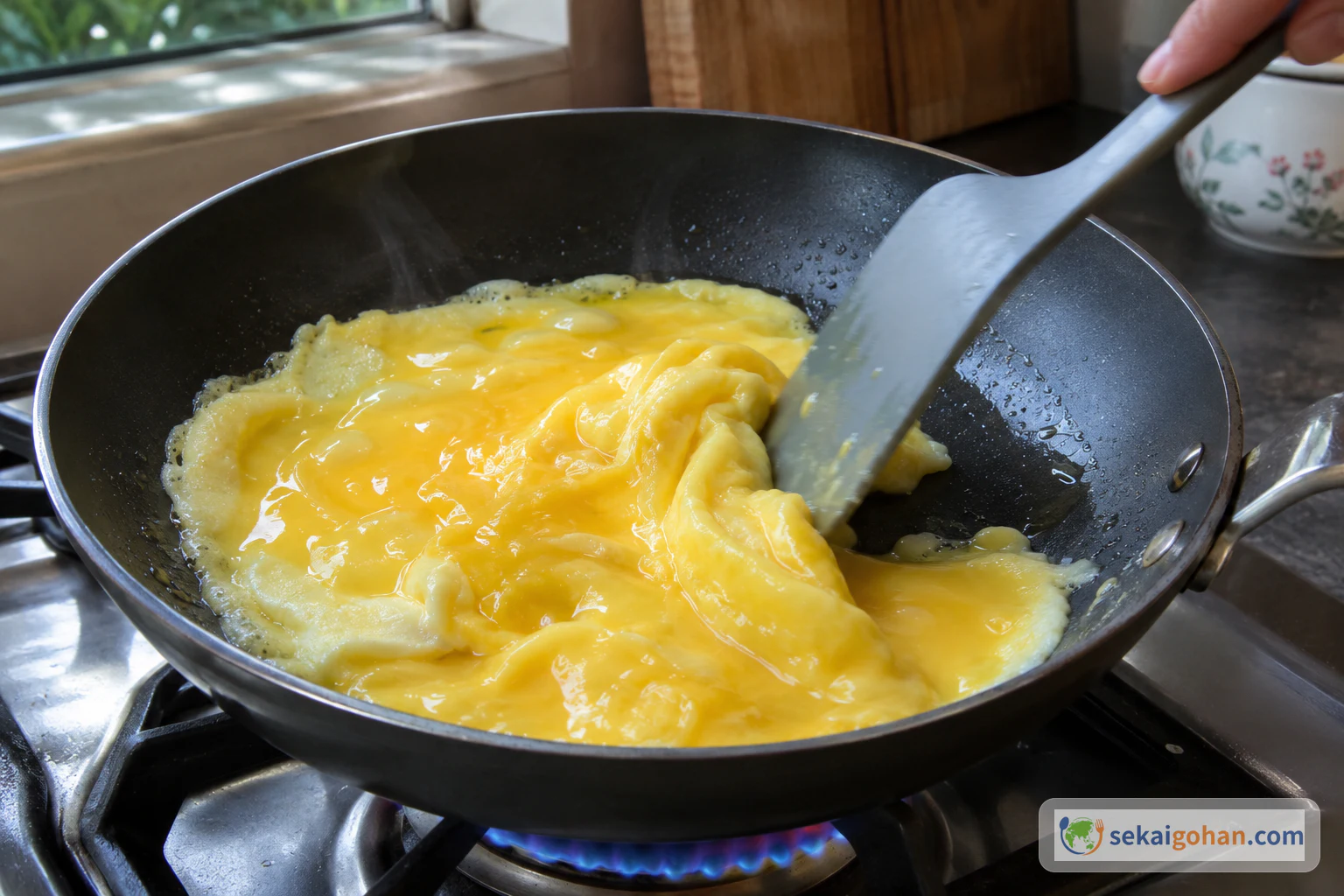
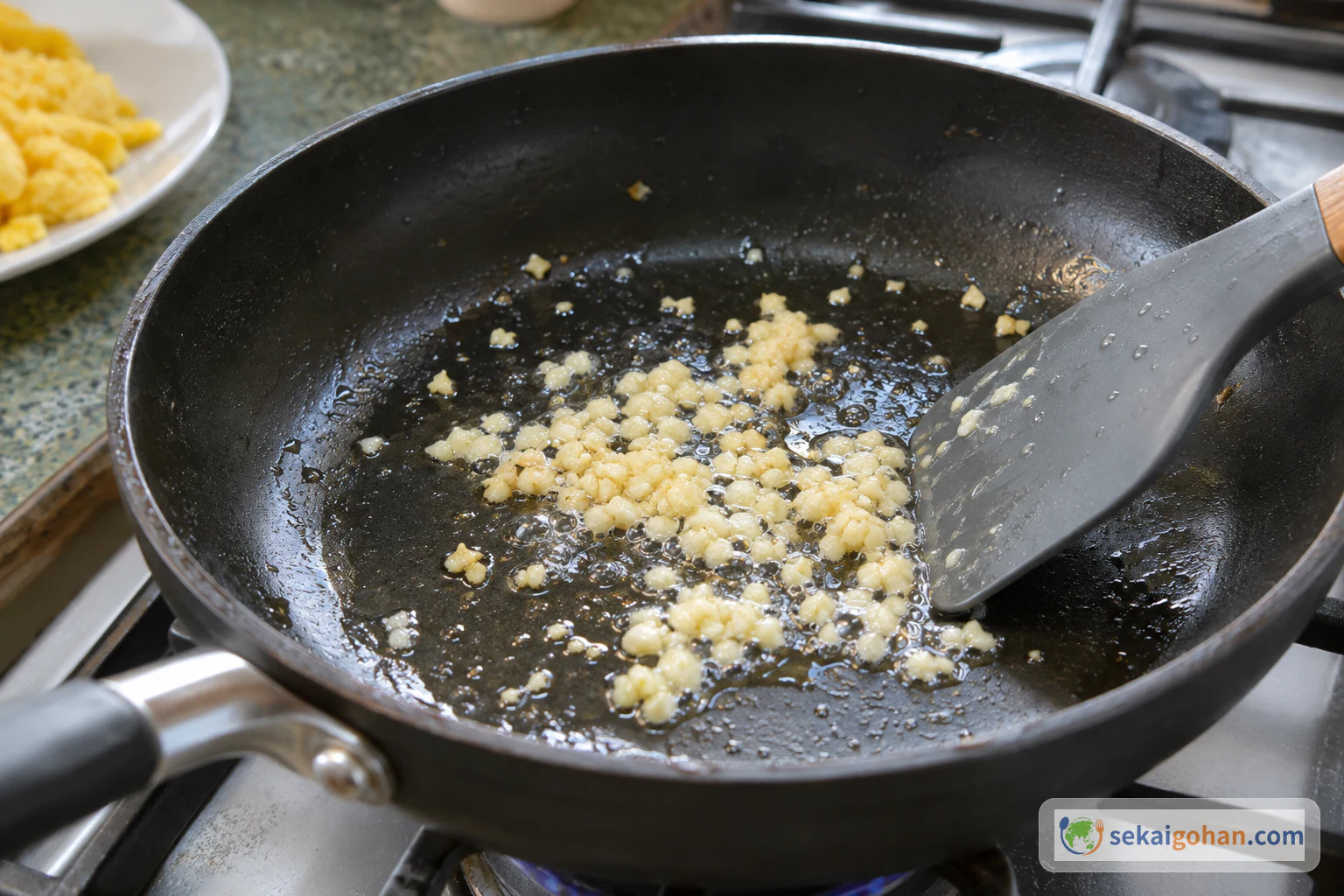
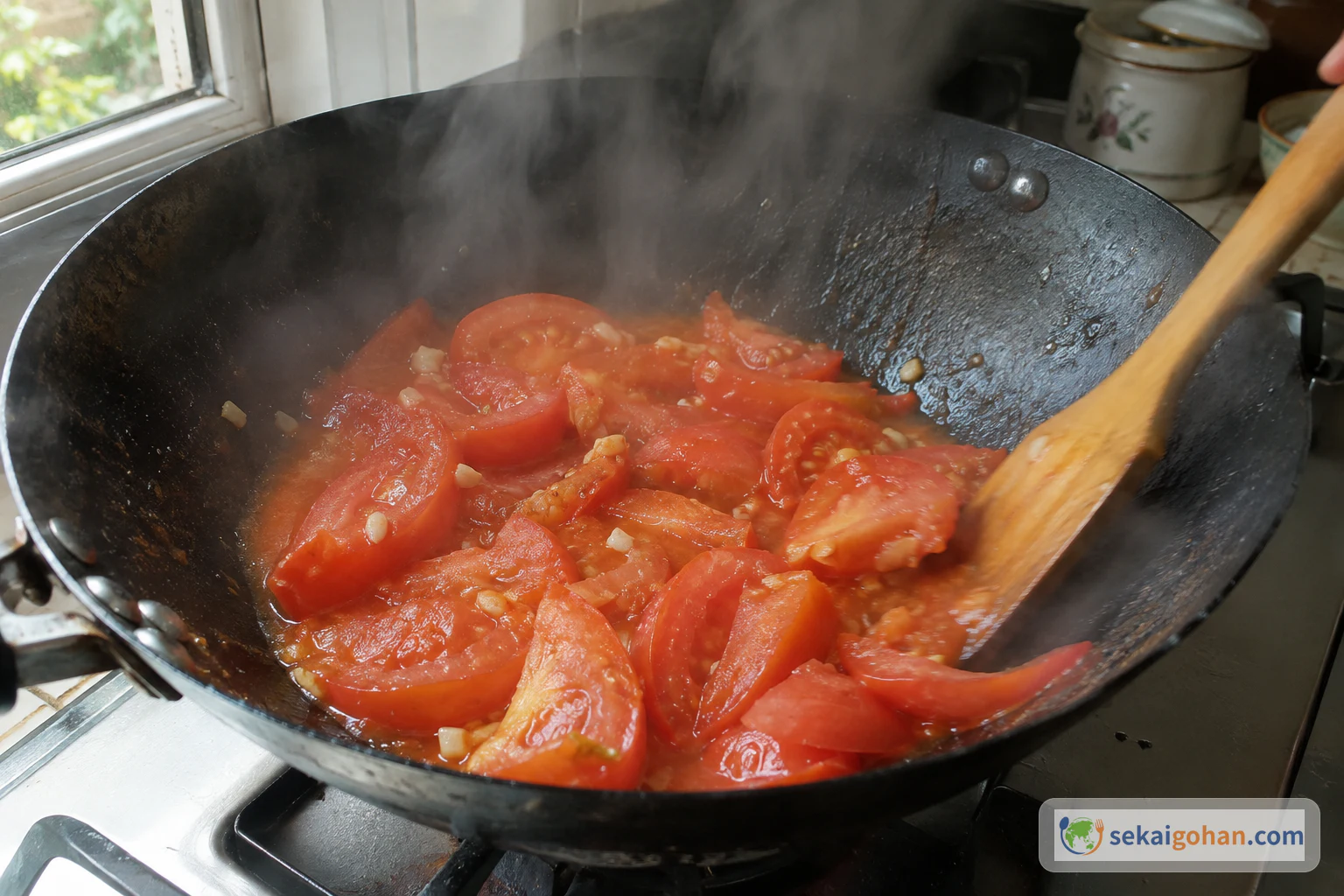
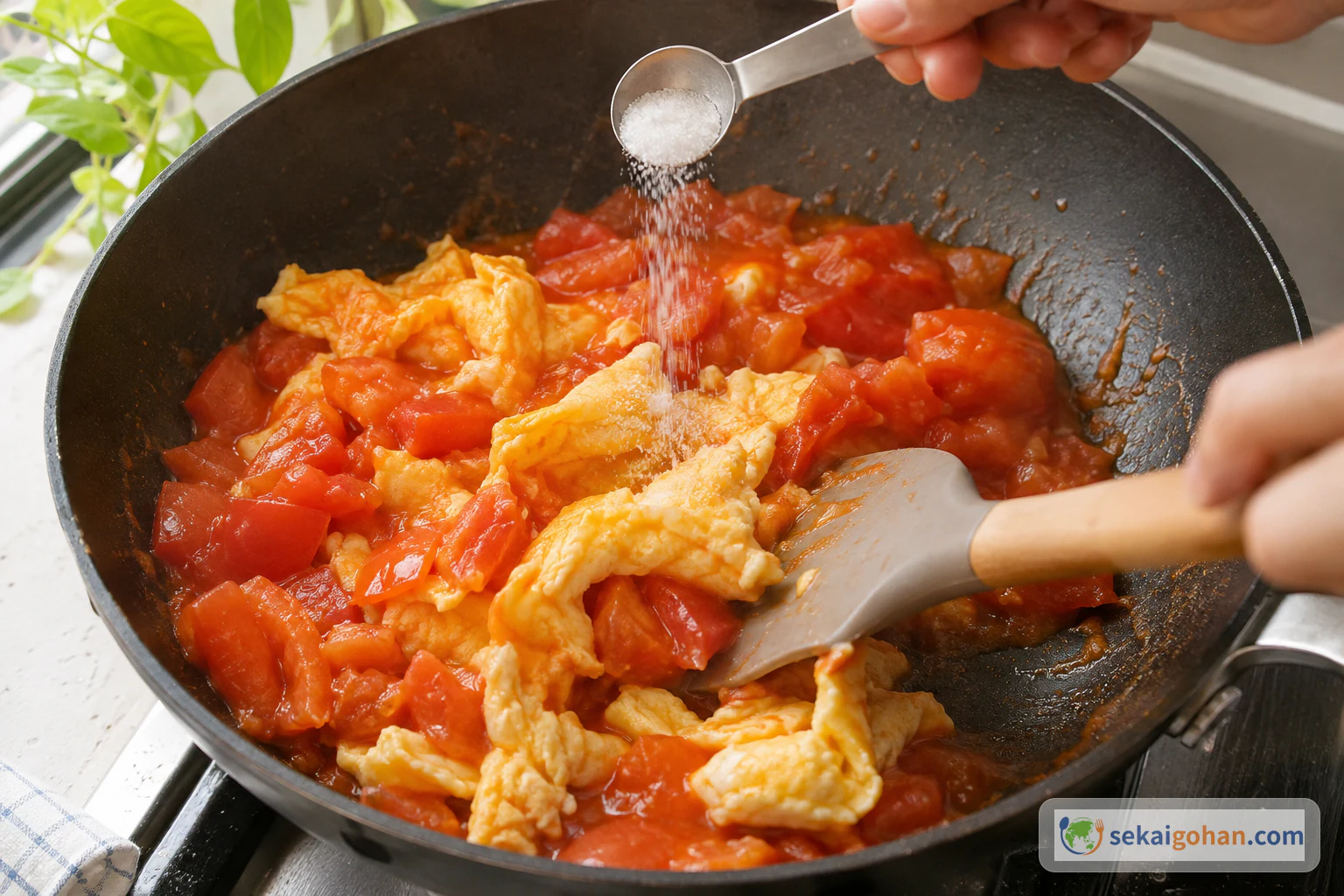
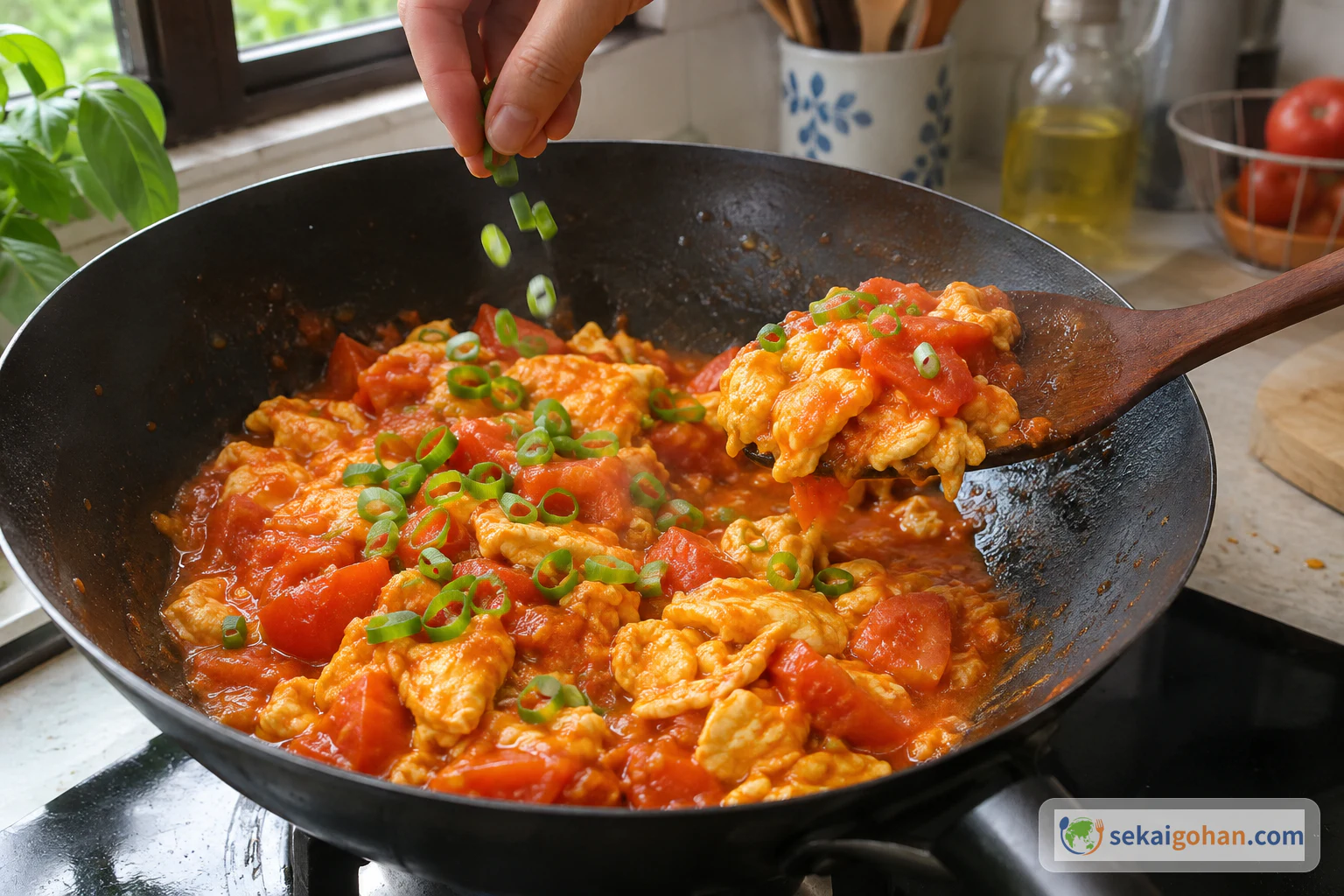
The beaten egg hits the hot oil and puffs at the edges. Within half a minute the bottom has set into a pale sheet while the top still shines, and that is the moment to start pushing it into big, soft curds. A few minutes later the same pan holds tomato wedges slumping into their own red juice, and the eggs go back in to drink it up. Stir-fried tomato and eggs is the everyday dish of Chinese home kitchens, school canteens and office cafeterias, the one many children learn to cook first and the one Chinese people living abroad say they miss. It tastes sweet and sour from ripe tomato, rounded by salt and a little sugar, with egg so soft it barely holds together, and most of it ends up spooned over white rice, juice and all.
A Dish Every Family Makes Its Own Way
In China this is jia chang cai (家常菜), home cooking in the plainest sense: fast, cheap and built from what is already in the kitchen. It belongs to no single province. It turns up on family dinner tables across the country, in canteens and in small neighbourhood restaurants, and almost everyone measures any plate of it against the version their parents made. That habit of comparison is part of the dish. Ask two cooks how they make it and the answers split at once over sugar, water, garlic or scallion, and whether the tomato skins stay on. You can see more of the everyday cooking it sits beside on our China country page.
In the north it is usually called 西红柿炒鸡蛋 (xīhóngshì chǎo jīdàn), "west red persimmon stir-fried with eggs." In the south it is 番茄炒蛋 (fānqié chǎo dàn), using the other common word for tomato. Both names, and the English "tomato and egg stir-fry," point to the same dish.
The loudest argument is about sugar. Sweet or savoury is a long-running quarrel in China that never gets settled: some households add a spoonful of sugar to soften the tomato's acid, others use only salt with garlic or scallion and call anything sweeter a mistake. This recipe takes a middle line with a small amount of sugar and a final taste, so the pan can lean whichever way your household does.
Other kitchens change the structure rather than the seasoning. In one common home style, the eggs are seasoned before they go into the pan, and water goes in with the tomatoes; the wok is covered for a minute or two, then uncovered and cooked down over high heat, which gives a juicier, looser dish. The Cantonese restaurant way goes further: ginger slices in the oil, tomatoes sometimes peeled, brown sugar and ketchup for a deeper sweet-sour taste, and a cornstarch slurry that turns the juice into a glossy, clinging sauce. Both are good dishes in their own right. The version below keeps to garlic, salt and sugar with no water and no starch, so the tomato's own juice is the sauce.
From a garden curiosity to a dinner staple
The tomato is a newcomer in Chinese cooking. It began in the Andes, was domesticated in Mexico, and reached Europe through Spain in the 16th century, where it spent a long time as an ornamental plant feared as poisonous and nicknamed the "wolf peach." It arrived in China during the Ming dynasty's Wanli era (1573–1620), carried mainly by missionaries and merchants, and spread from the southeast coast inland under names like 番柿, 洋柿 and 六月柿, "foreign persimmon" and "sixth-month persimmon." The earliest Chinese written record, from 1621, describes it as a plant worth looking at, not one worth eating.
For centuries it stayed that way. After the 19th century it was grown here and there; in the Republican period, books and newspapers began explaining its nutrition and how to cook it, and Western restaurants on the southeast coast helped spread the taste. Exactly when it became an ordinary vegetable is not settled, but it became a common food during the 20th century, and large-scale growing came after the founding of the People's Republic. Eggs grew plentiful too: China has been the world's largest egg producer since 1985. A dish of two cheap, everywhere ingredients became one of China's classic dishes, known well beyond its borders.
Ingredients (serves 2 to 4)
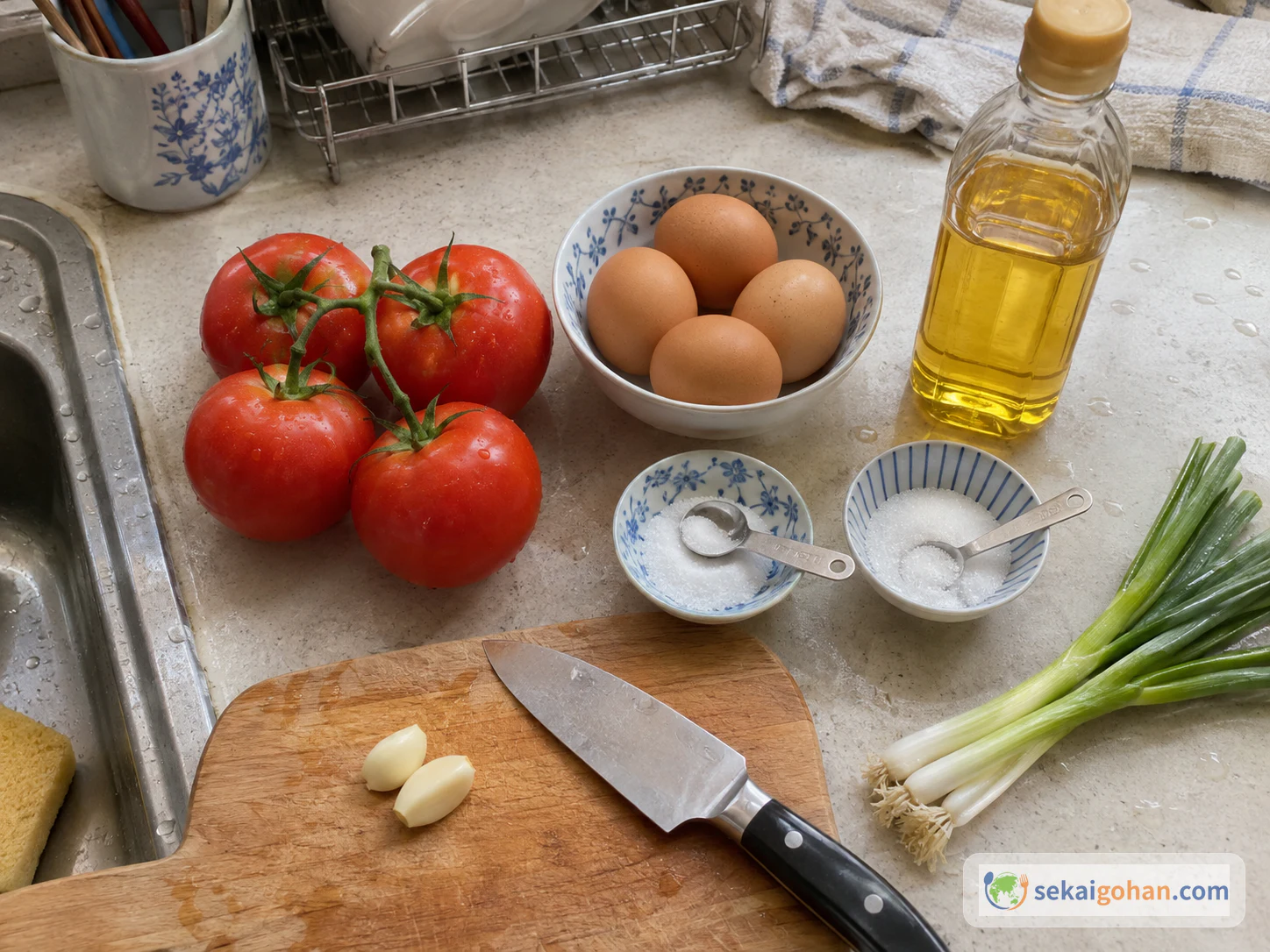
Ripe, heavy, deep-red tomatoes need only the 1 tsp of sugar, and very ripe garden tomatoes need just a pinch. Pale or sharp supermarket tomatoes taste sour once cooked; go up to 2 tsp of sugar for those, adding it after you taste.
This dish contains egg. Peanut oil is used for frying; for anyone with a peanut allergy, use a neutral vegetable oil instead. Garlic and green onion are included. Check the labels of any oil or seasoning you buy for other allergens.
Equipment
- Nonstick skillet or carbon steel wok
- Spatula or wooden spoon
- Cutting board and knife
- Mixing bowl and chopsticks or a fork
- Plate for holding the cooked eggs
- Measuring spoons
Choosing Tomatoes, Oil and the Pan
Everything here comes from an ordinary supermarket; no trip to a Chinese grocery is needed. What decides the dish is the ripeness of the tomatoes and the softness of the egg, and both are in your hands at the shop and the stove.
| Choice | Best pick | What a swap changes |
|---|---|---|
| Tomatoes | Beefsteak or vine-ripe, fully red | Roma works, but the skins are thicker |
| Oil | Peanut oil | Vegetable oil tastes lighter and leaves less toasty aroma; sesame oil pushes its own flavour to the front |
| Garlic | 2 cloves, minced | 2 sliced green onions in its place give a sweeter, gentler dish with less bite |
| Pan | Nonstick skillet | A carbon steel wok gives a smoky wok taste, but use more oil so the egg does not stick |
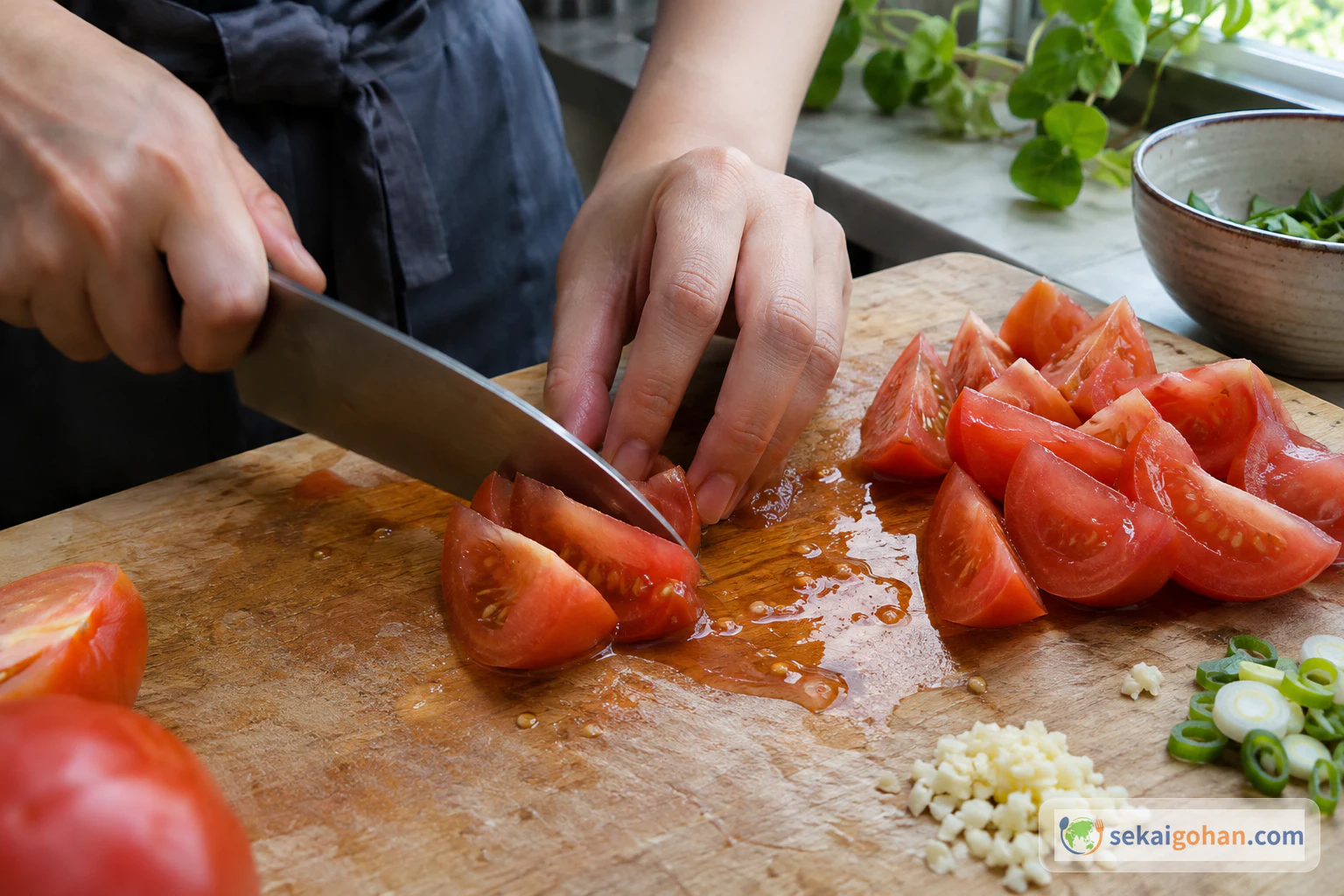
Keep the skins on the tomatoes. They hold the wedges together through the short cooking, so you get soft pieces in juice rather than a purée.
Method: Soft Eggs First, Then the Tomato Sauce
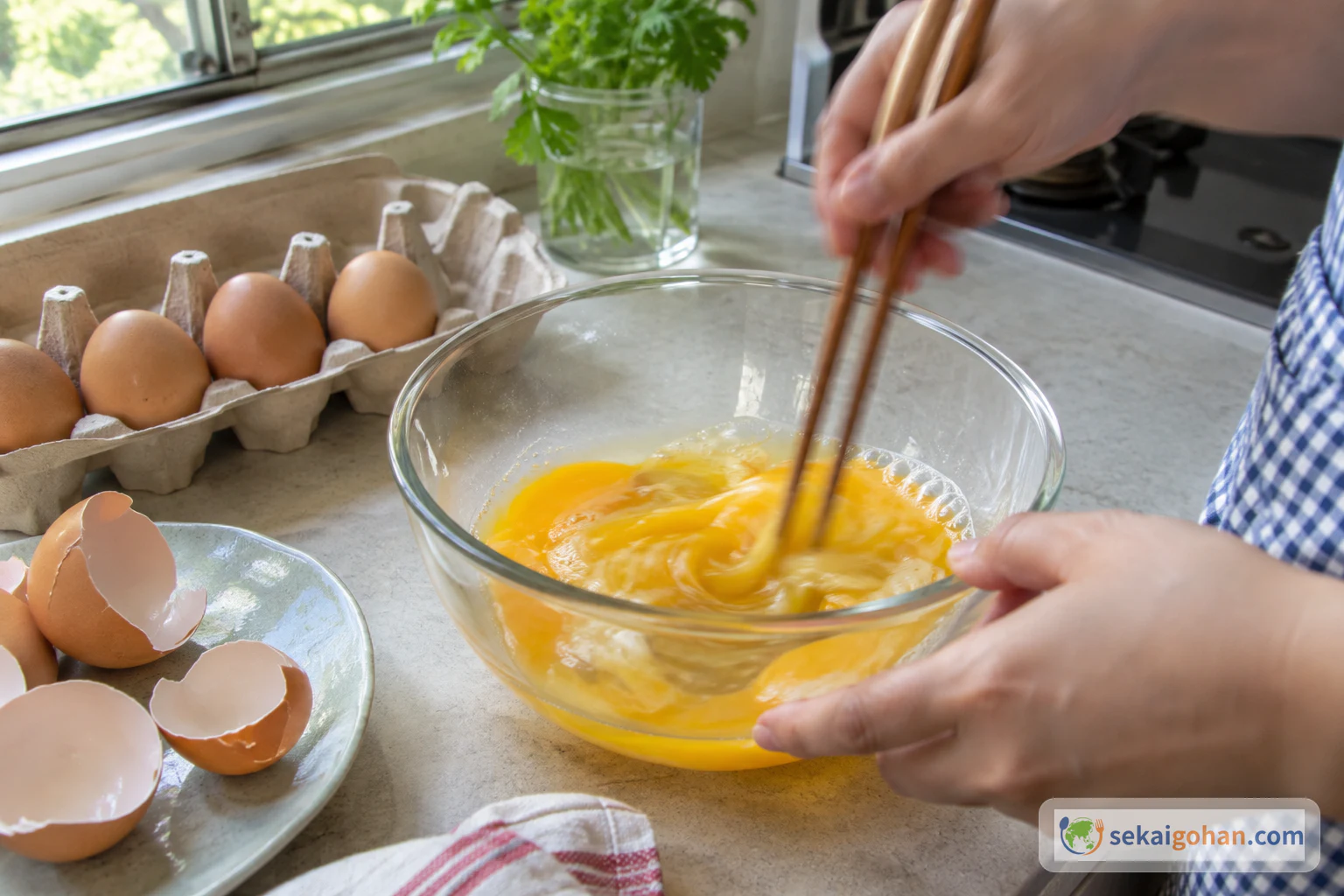
The whole dish cooks in minutes, so cut the tomatoes, mince the garlic and beat the eggs before the pan goes on the heat. After that the work runs straight through in one pan: eggs in and out, garlic, tomatoes, eggs back in. There is no hands-off time, and the one moment that decides the result is when the eggs come out of the pan.
The raw top surface in step 3 is a stage on the way, not how the dish is served. Every curd must be heated through to the center before it reaches the table. Do not serve undercooked egg dishes to infants or older people.
When It Goes Wrong
| What you see | Why | What to do |
|---|---|---|
| Dry, rubbery egg | The eggs stayed on the heat too long | Start stirring while the top is still raw and take them out as soon as they are barely set |
| Egg sticks and tears into scraps | Too little oil, or the oil was not hot before the egg went in | Use a nonstick pan; in a carbon steel wok, use more oil and wait until the oil is hot |
| Bitter edge to the taste | The garlic browned | Add the tomatoes as soon as the garlic smells fragrant, and lower the heat slightly next time |
| Sharp, sour sauce | Underripe or cold-stored tomatoes | Add sugar, up to 2 tsp, and taste; choose fully ripe tomatoes next time |
| Flat, dull flavour | Not enough salt for the amount of juice | Taste at the end and add salt a pinch at a time |
| Thin, watery juice | Very ripe, juicy tomatoes | Spoon the juice over rice; it is meant to soak in, so leave it rather than cooking the tomatoes down further |
Serving, Variations and Leftovers
At the table
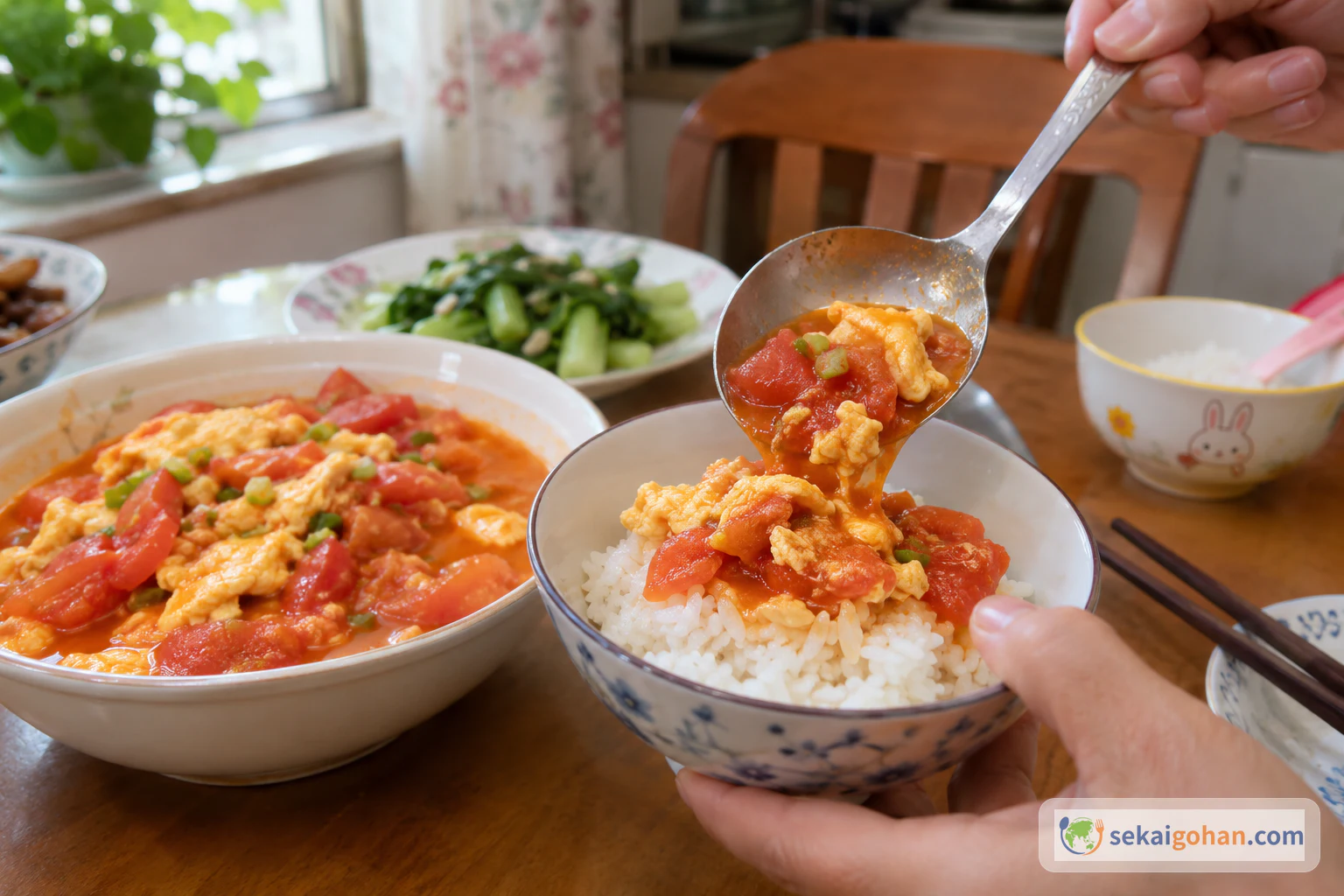
The most common way to eat it is over a bowl of white rice, with the red juice running down into the grains. It also goes over noodles or rice noodles as a topping, and on a family table it sits beside one or two other stir-fries as the gentle, sweet-sour dish among them. Because it is mild and soft, it is often the dish children reach for first.
Variations
- Green onion instead of garlic. Swap the garlic for 2 sliced green onions. The dish turns sweeter and softer in flavour, closer to the households that cook it with scallion and salt only.
- A soy-seasoned version. Halve the salt and add 1 tsp soy sauce, 1 tsp Shaoxing wine and ⅛ tsp white pepper. The sauce turns darker and more savoury, with a warm wine aroma. Dry sherry or mirin stand in for Shaoxing wine.
- Sesame oil finish. Stir in ½ tsp sesame oil at the very end for a nutty aroma over the tomato.
- Cafeteria style. Double the tomatoes, cut them smaller and cook them longer. You get a saucier dish with more juice than egg, made for pouring over plenty of rice.
Leftovers
The dish is at its best straight from the pan. Refrigerate leftovers promptly in a clean container and eat them soon. Reheat until hot right through to the center before serving.
Frequently asked questions
Should I peel the tomatoes?
Keep the skins on for this dish; they hold the wedges together so you get soft pieces in juice. Peeled tomatoes break down faster and make a juicier, smoother sauce, which suits the Cantonese restaurant style. If thick skins bother you, choose beefsteak or vine-ripe tomatoes over roma.
Can I season the eggs before cooking them?
Here the salt goes in at the end, which keeps the eggs soft and lets you judge the seasoning against the tomato juice. Some households beat the eggs with salt, white pepper, sesame oil and Shaoxing wine before cooking. That gives a more savoury curd, and you then cut back the salt added at the end.
Can I add ketchup or cornstarch to make it saucier?
Both belong to the restaurant style, where ketchup deepens the sweet-sour taste and a cornstarch slurry turns the juice glossy and thick. This dish relies on the tomato's own juice and leaves both out. For more sauce without them, use the cafeteria-style variation with doubled tomatoes.
Is it suitable for small children?
Yes, as long as every curd is cooked through to the center before serving. Undercooked egg dishes should not go to infants or older people, so give the eggs a little longer in the tomato juice in step 6 when cooking for them. The mild, sweet-sour taste makes it a natural first dish for children.