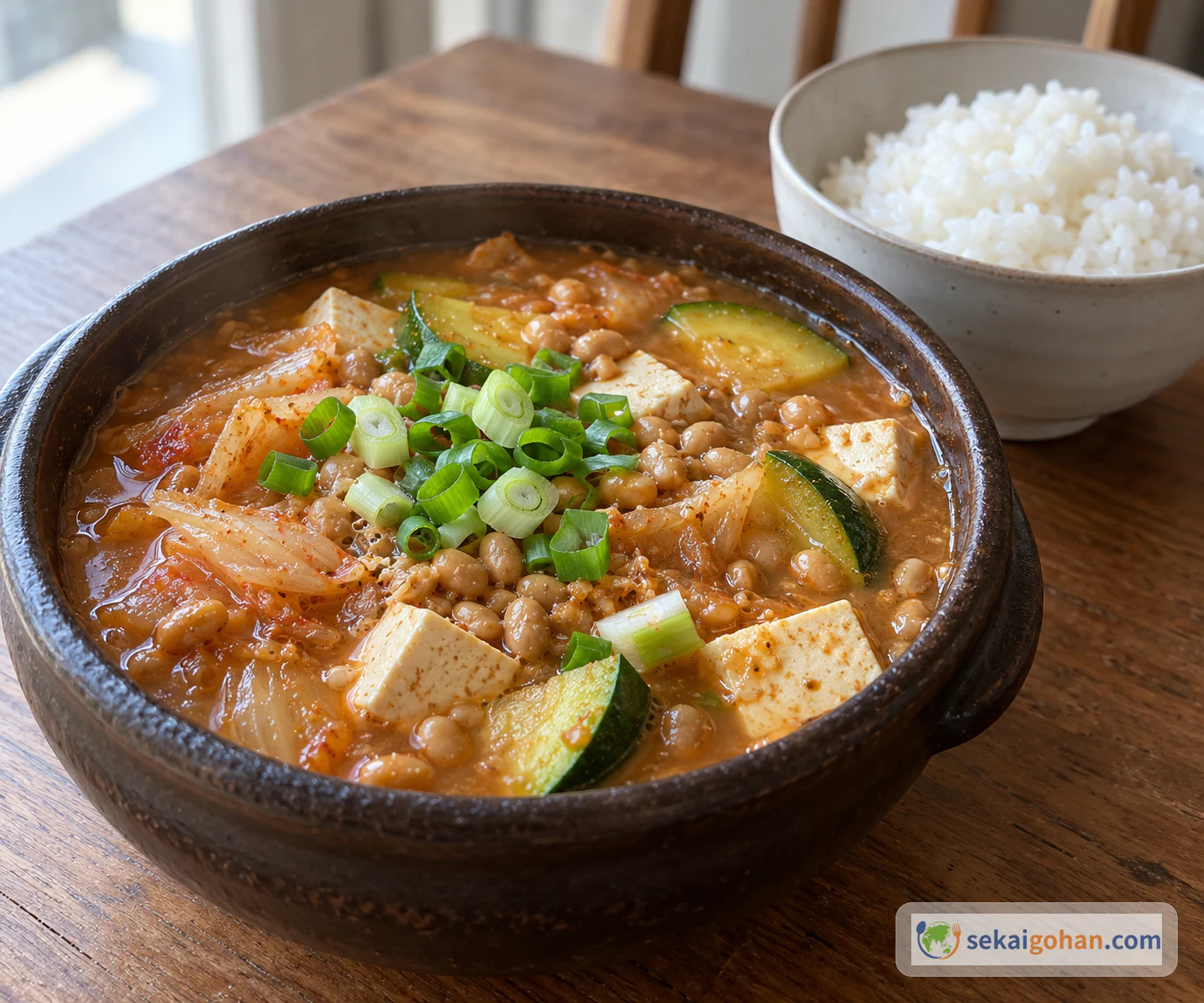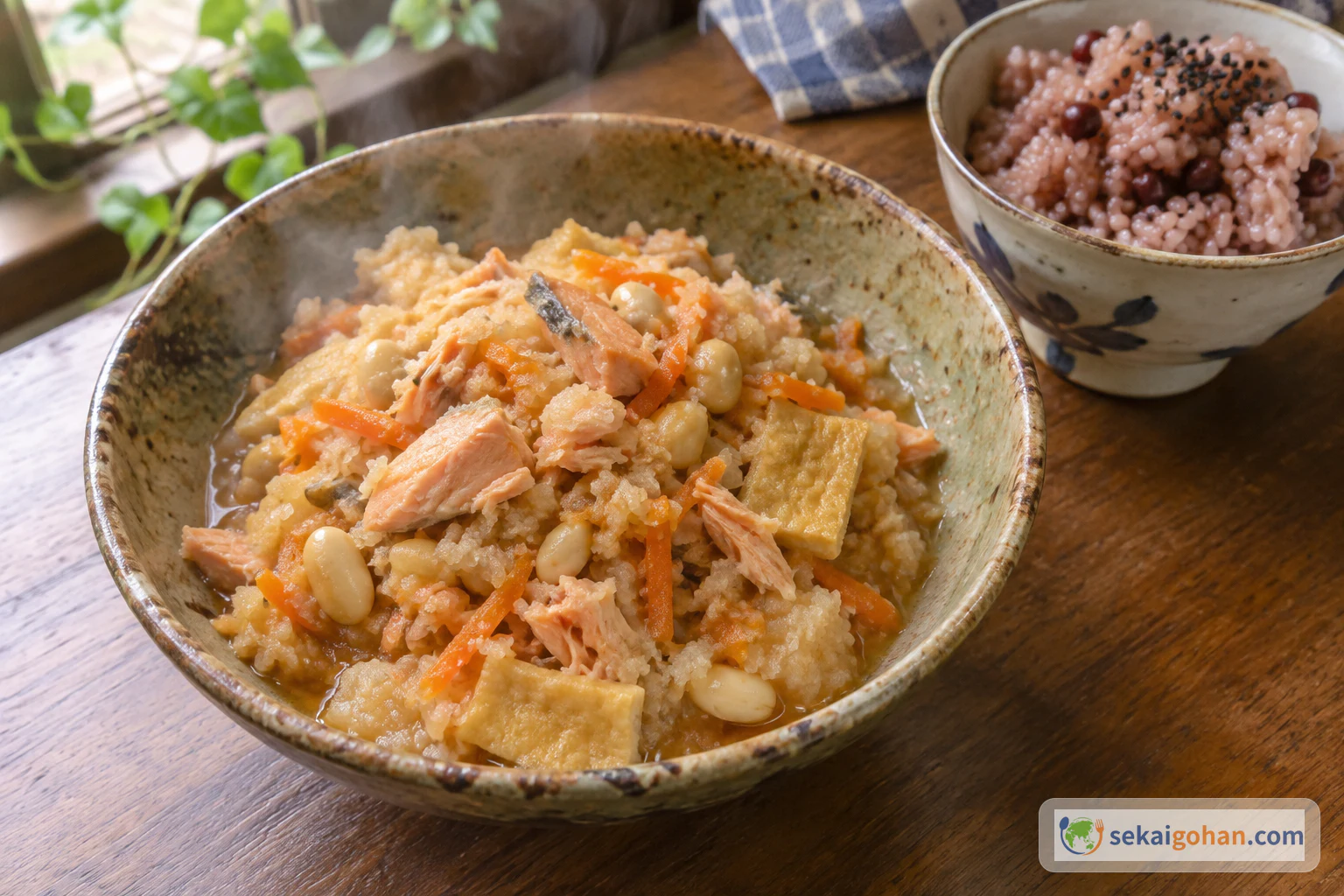
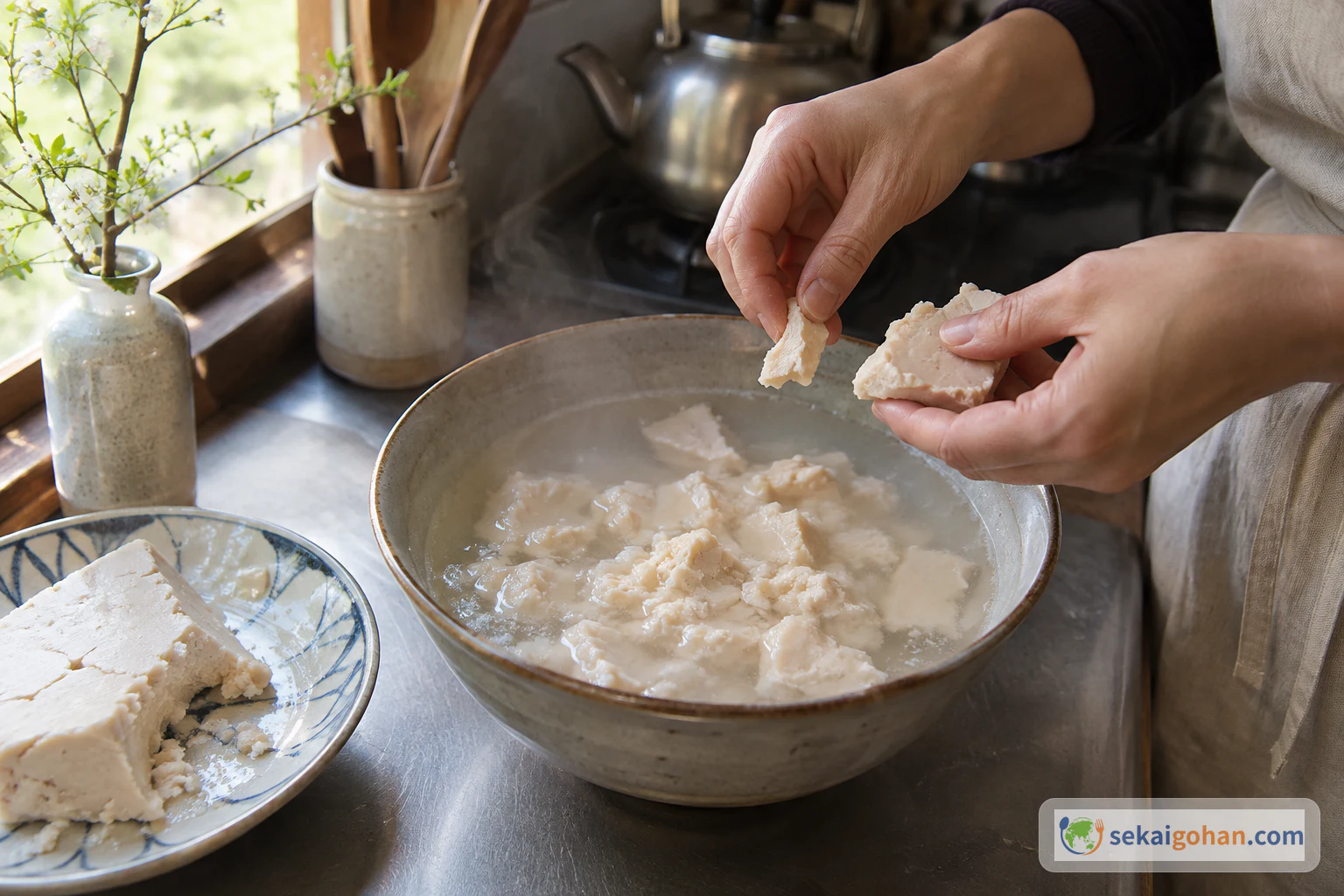
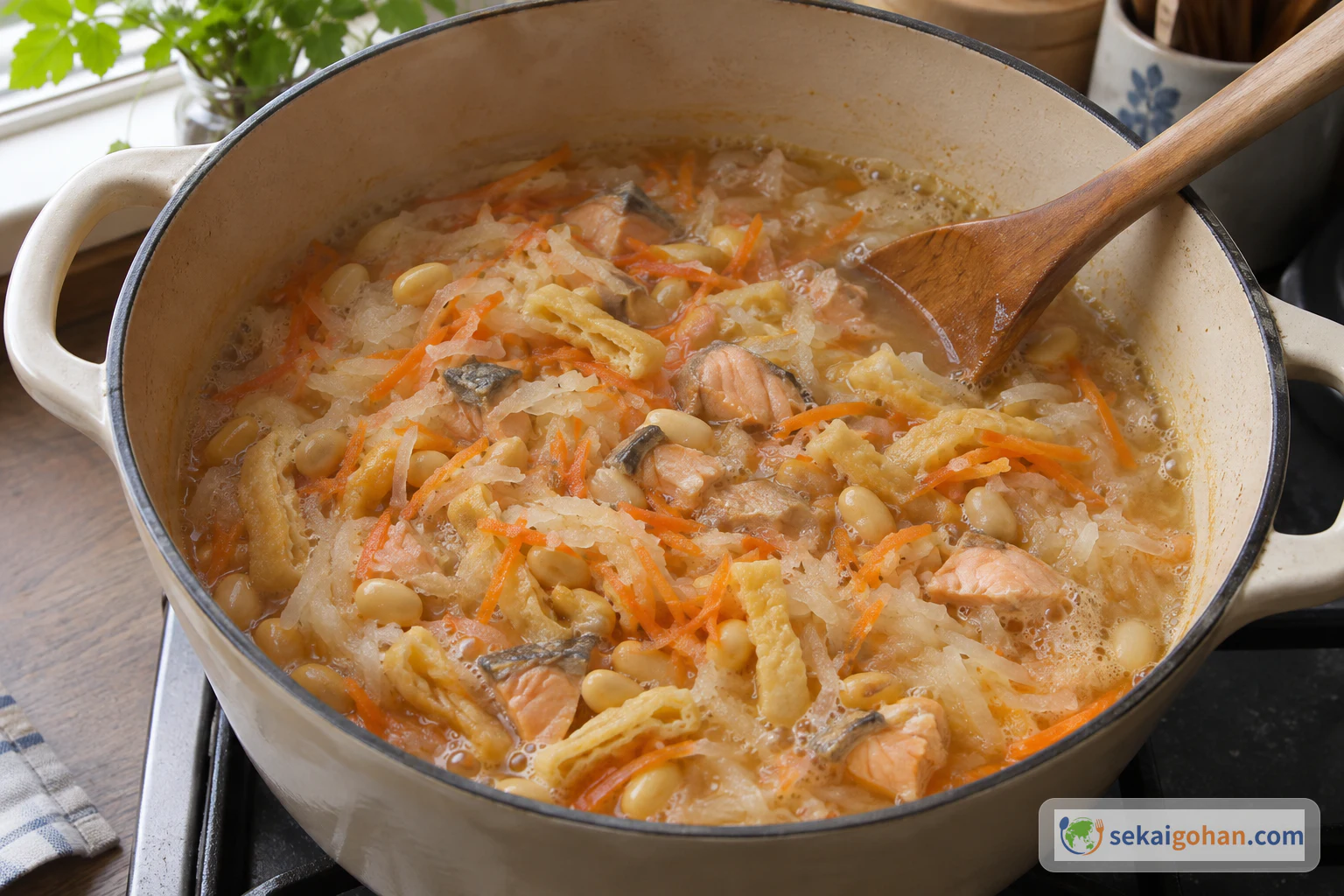
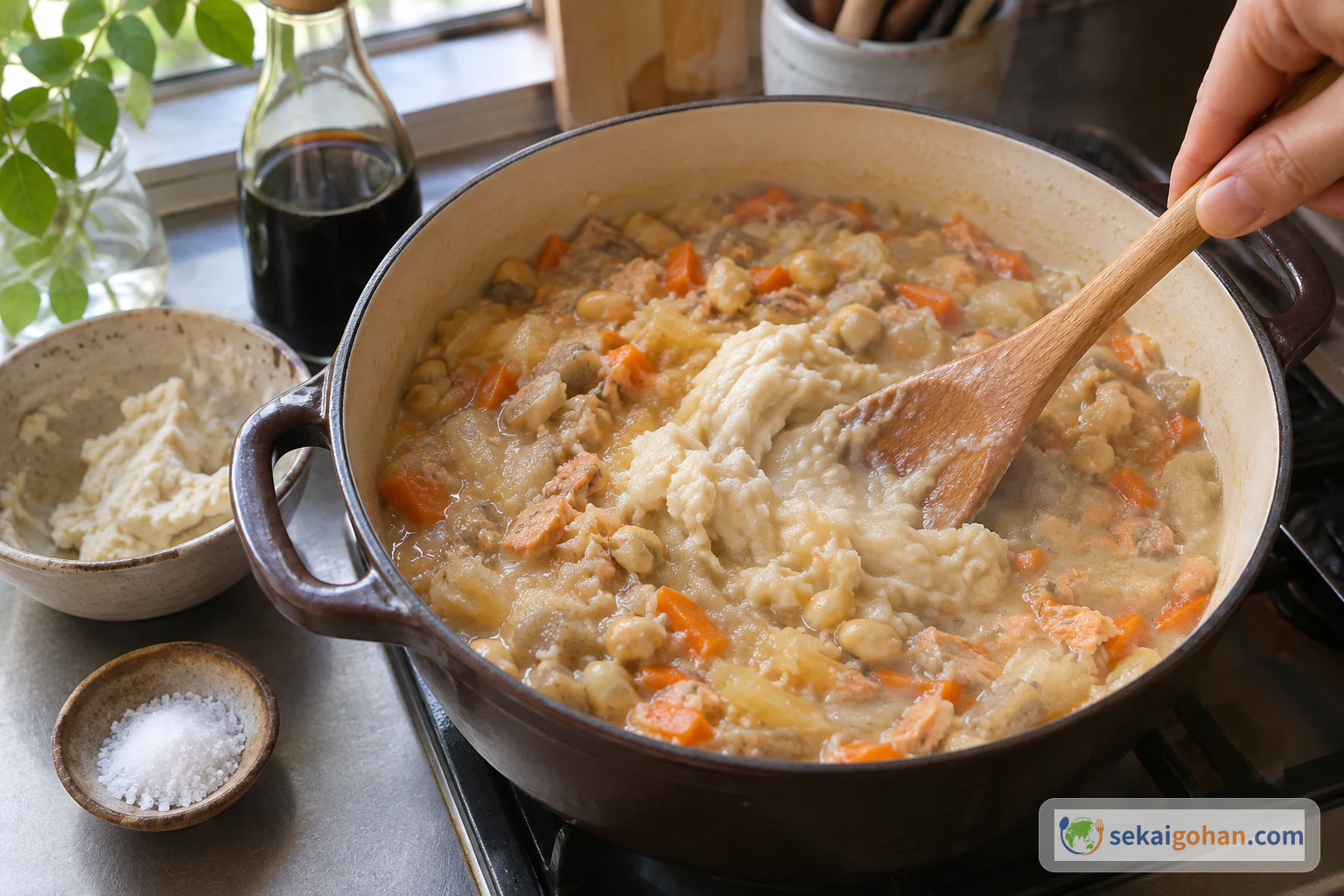
The softened sake lees go in last. You stir them into a pot that has been murmuring over low heat for an hour, and the coarse shreds of daikon and carrot turn pale and creamy while a sweet, winey smell rises with the steam. This is shimotsukare, the stew of Tochigi Prefecture, north of Tokyo. It is made with grated root vegetables, the head of a salted salmon, roasted soybeans, fried tofu and sake lees, and it is set out beside red rice in the cold weeks of late winter. It tastes mellow and gently sweet from the daikon, savory and salty from the fish, and toasty from the beans. In the bowl it looks like nothing else on a Japanese table, lumpy and beige and flecked with orange, and it is fair to say that it divides opinion.
A Stew for First Horse Day, Made from Winter's Leftovers
Hatsuuma and the Inari shrine
Shimotsukare belongs to one day. Hatsuuma, the first Day of the Horse in the second month of the old lunar calendar, is when households cook it and carry it, together with sekihan red rice, to their local Inari shrine as an offering. The prayer is for health in the year ahead and for keeping sickness away. The dish grew up around that offering, and it is still made across most of Tochigi Prefecture today. You can read more about the country's regional tables on our Japan page.
A handful of old beliefs travel with the pot. Making it on any day other than hatsuuma was once held to bring bad luck. The salmon head was thought to ward off evil, and the roasted soybeans carry a pun on mametsu, "destroying demons." There is also a custom of eating shimotsukare from seven different households, which was said to keep a person free from illness for the year.
Because every household grates, simmers and seasons a little differently, eating from seven kitchens means tasting seven versions of the same dish.
Two leftovers that meet in February
The ingredient list reads like a winter calendar. The salted salmon (shiobiki-zake) is a New Year fish, and its head is what remains after the body has been eaten through January. The roasted soybeans are the lucky beans left from Setsubun, the early-February bean-throwing night. Shimotsukare is where those two leftovers meet, stretched with daikon and carrot from the winter field and softened with sake lees. Nothing from the season goes to waste.
Where the dish began is not settled. One line traces it back to sumutsukari, a dish of the Heian and Kamakura periods. Another holds that it took its present form around the Tenmei famine of 1781 to 1789, when people offered it at Inari shrines. Sake lees are thought to have spread into the recipe in the middle of the Edo period.
How the pot changes from house to house
The method shifts from kitchen to kitchen. Some cooks grill the salmon head lightly before simmering it until it falls apart, and simmer the sake lees with water into a cream before adding them. Others make a quicker pot with a salted salmon fillet and finely chopped daikon and carrot. The version here keeps the coarse onioroshi grate, the whole salmon head and the sake lees added at the very end, which together give the rough, mellow texture that defines the dish.
Ingredients (serves 5)
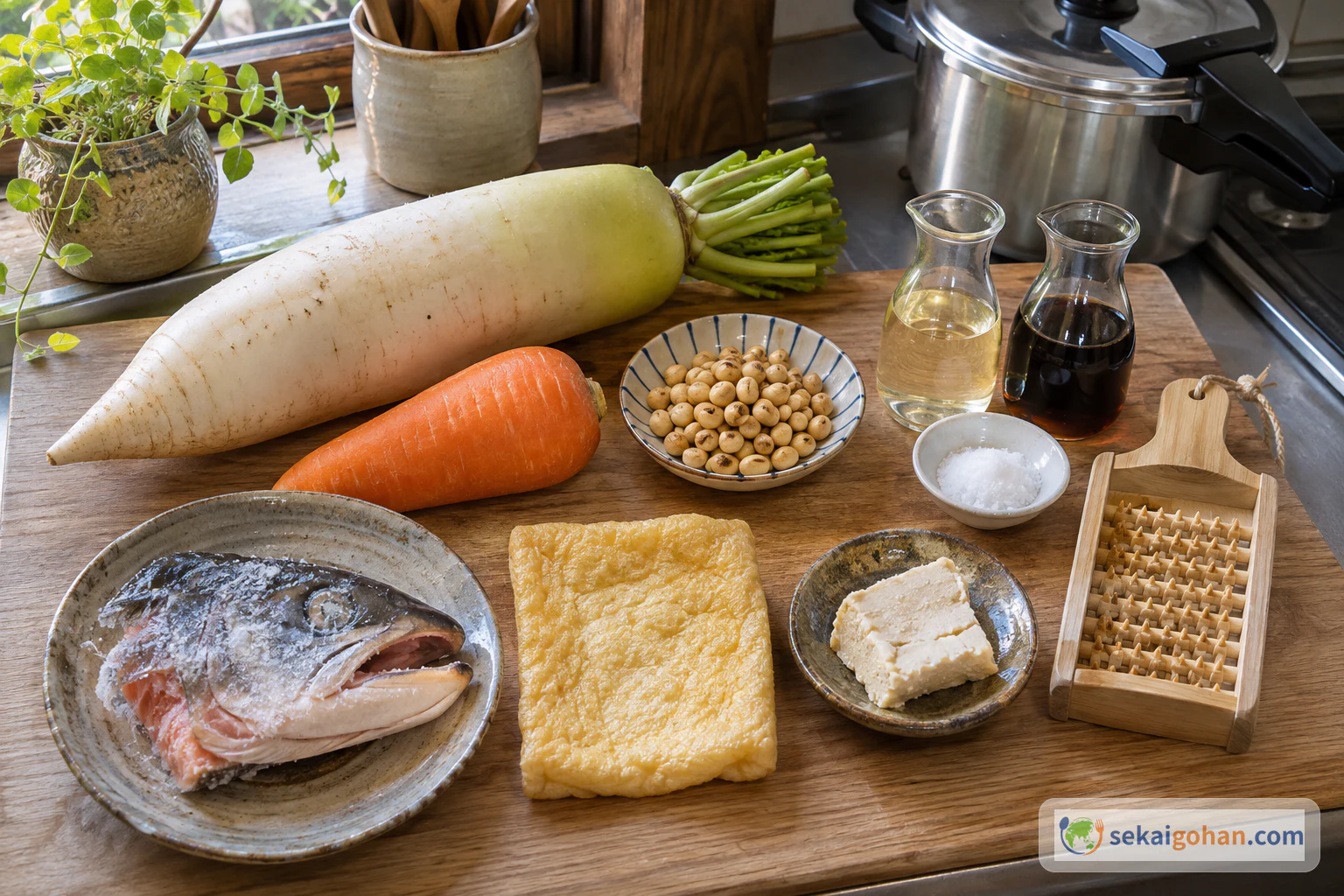
Shimotsukare contains soy (soybeans, fried tofu, soy sauce) and fish (salmon). Sake lees contain alcohol: take care when serving infants, anyone who is pregnant, and anyone who will drive afterward. Check the labels of processed products such as fried tofu and soy sauce for wheat and other allergens.
Equipment
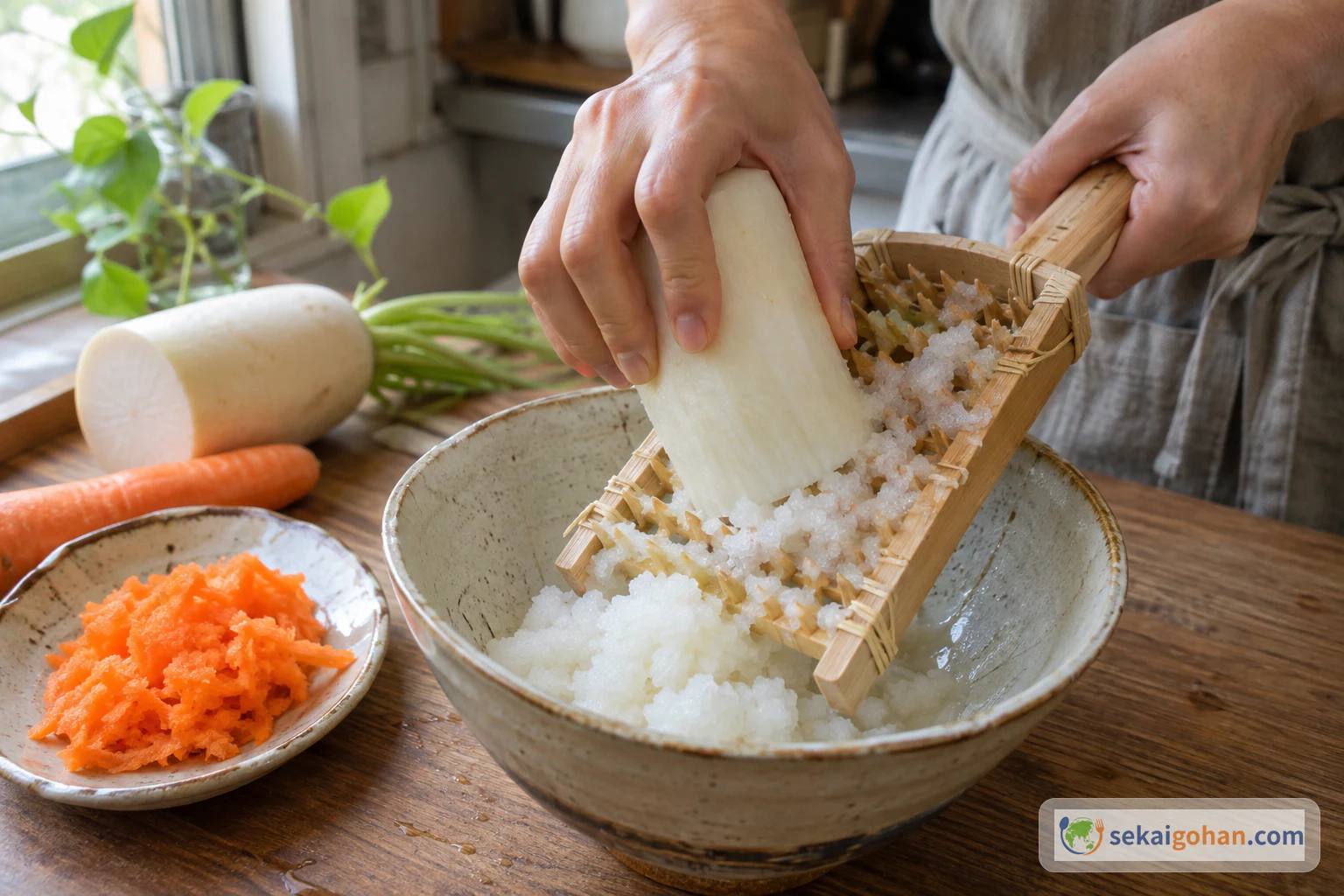
- Onioroshi (coarse bamboo grater)
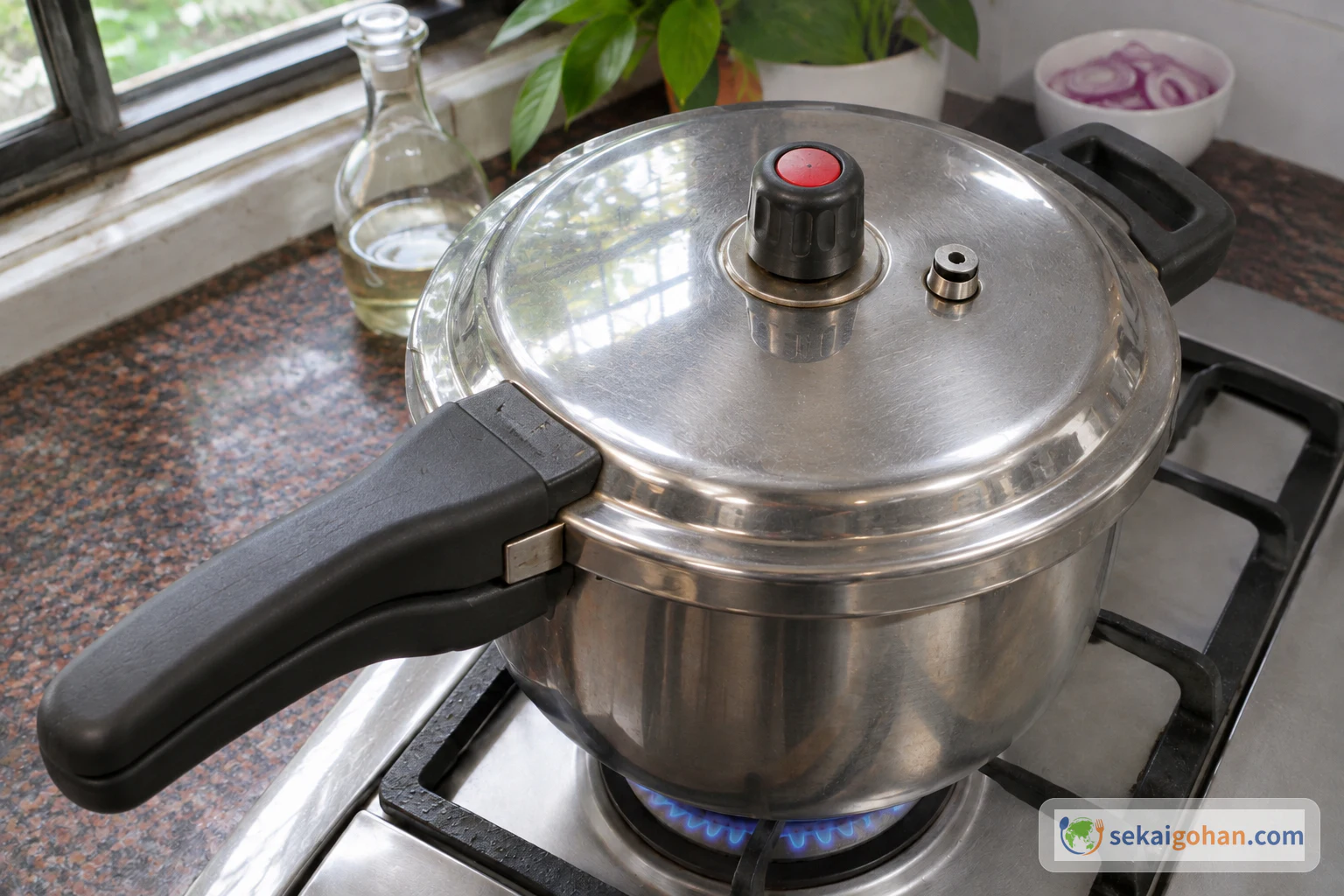
- Pressure cooker
- Heavy-bottomed pot
- Small saucepan for parboiling
- Clean cloth or kitchen towel
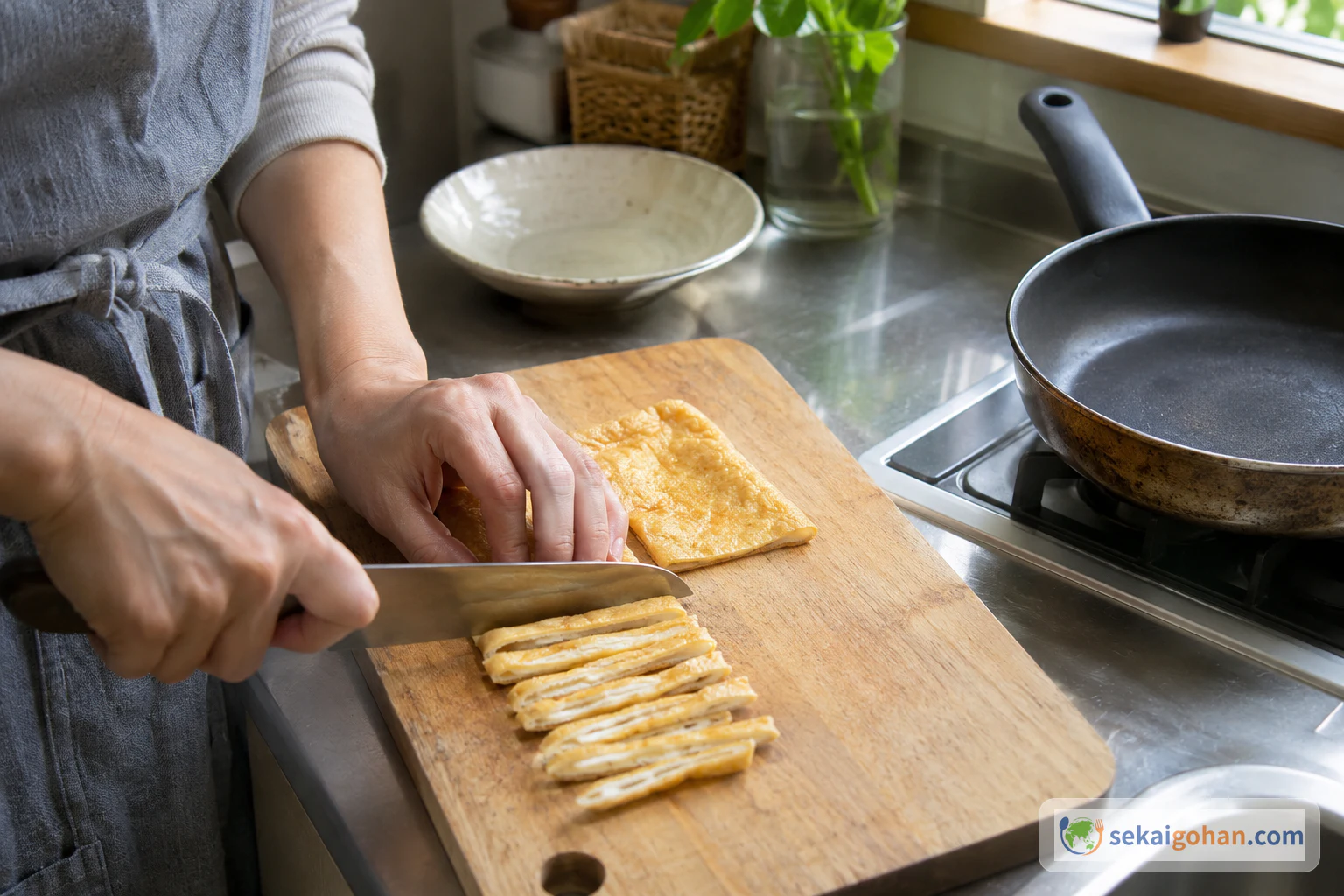
- Frying pan or grill for the fried tofu
- Small bowl for soaking the sake lees
- Knife and cutting board
- Wooden spoon
Choosing and Substituting
The salted salmon head is the hardest thing to find abroad. Availability depends on the season and the shop, so ask the fish counter ahead of time and buy only a salmon head sold as food. A salted salmon fillet makes a lighter pot with less body, since the bone and skin of the head are where the deep savory flavor comes from. You can also grill the head lightly before using it, which adds a roasted note.
Roasted soybeans are sold as Setsubun beans in Japanese shops. Boiled soybeans work in their place; they give a softer bean without the toasty edge.
Sake lees come in two forms. Sheet lees (ita-kasu) are firm slabs you tear by hand, and paste lees (neri-kasu) are already soft and blend in faster. Either one gives the stew its creamy body and its fragrance. Rice vinegar is the natural choice for the vinegar.
| Keep this for a Tochigi taste | What a swap does |
|---|---|
| Coarse onioroshi grate | A coarse box grater gives finer, wetter shreds and a softer stew; chopping by knife moves toward the quick fillet version |
| Salmon head | A fillet makes it lighter and less savory |
| Sake lees added last | Leaving them out takes away the mellowness that makes it shimotsukare |
An onioroshi has bamboo teeth that tear daikon into rough, uneven shreds instead of a watery purée. Those shreds keep some texture through the long simmer and give shimotsukare its signature lumpy bite. If you cook this dish more than once, the grater is the one tool worth buying.
Method
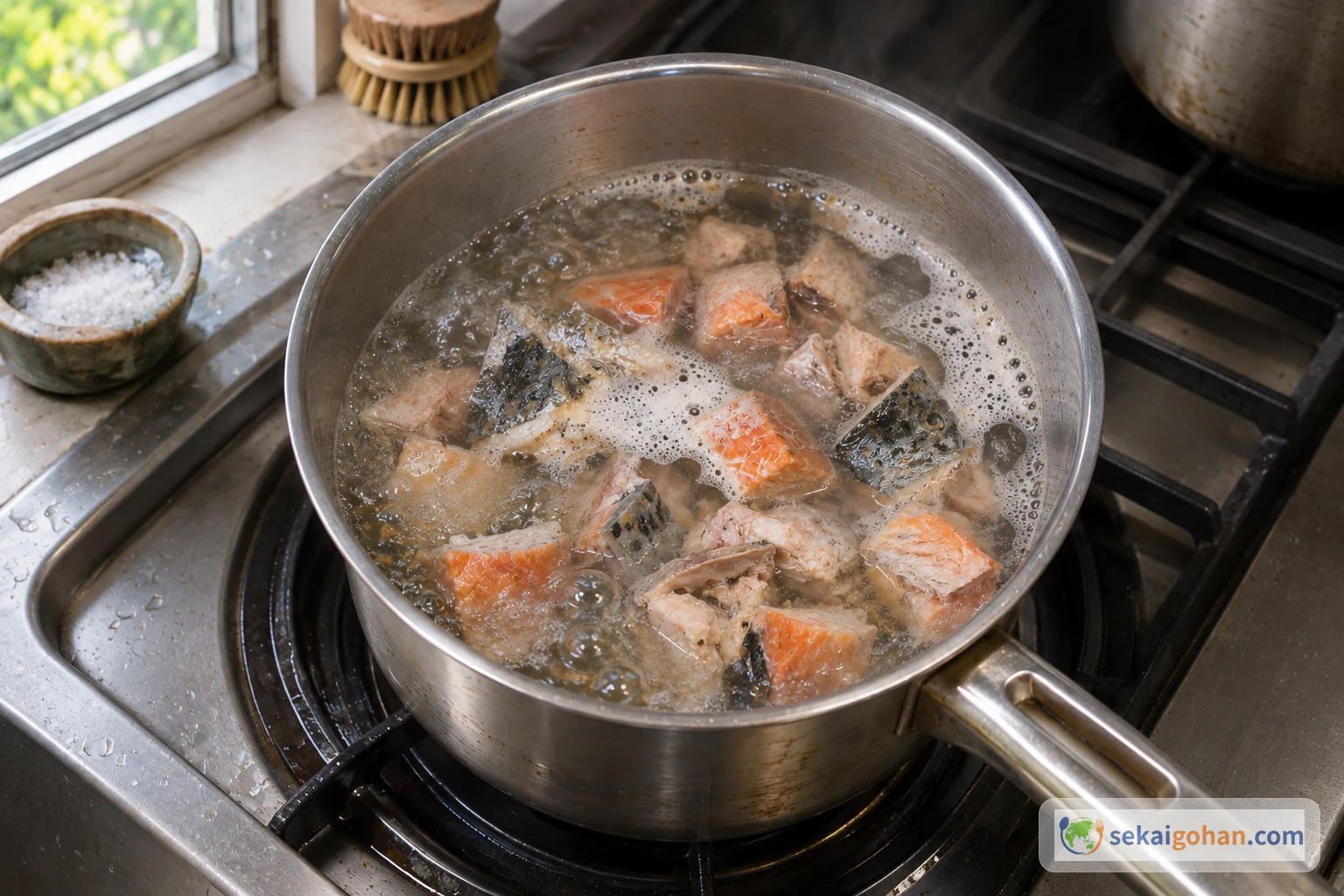
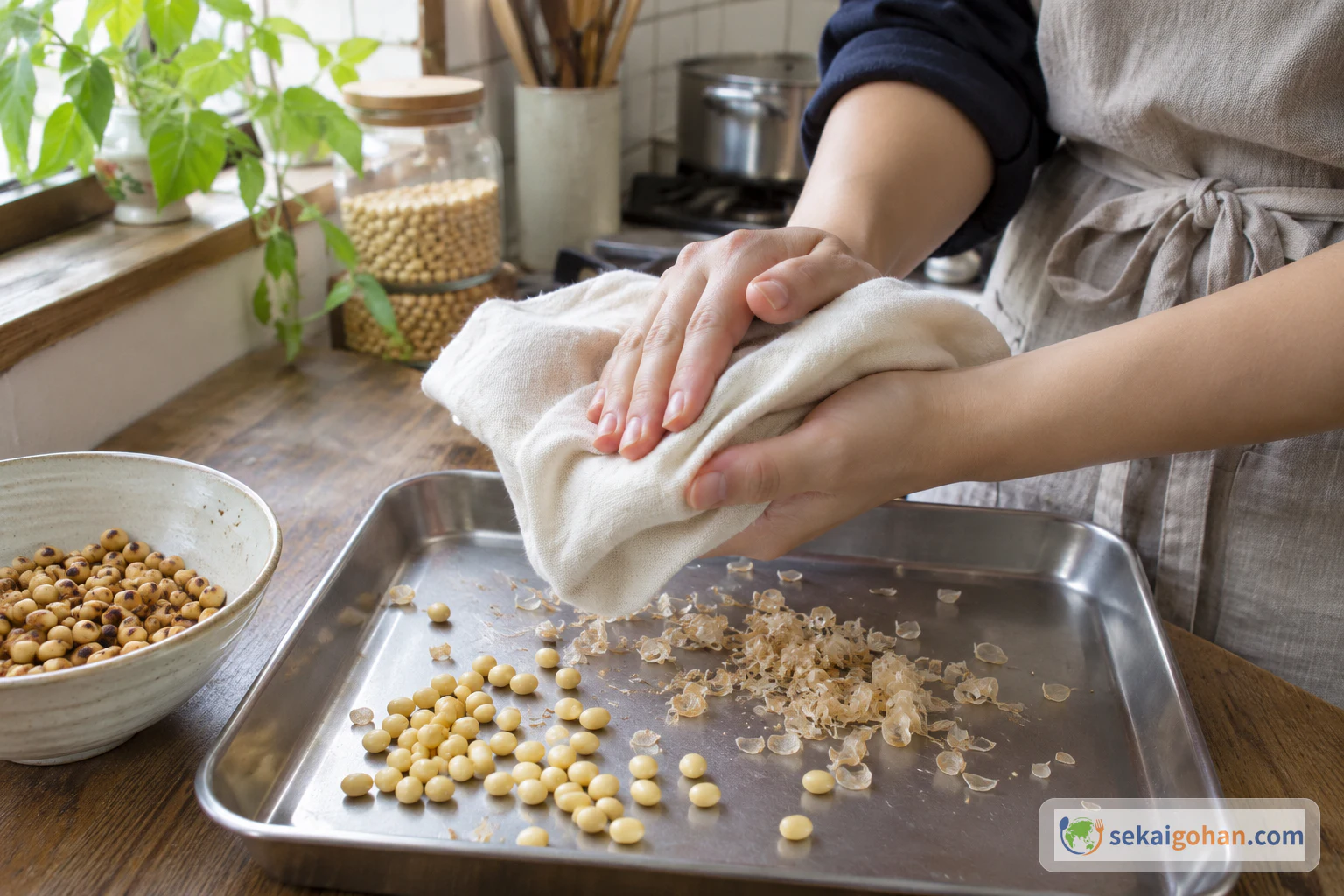
Start with the salmon head, since it needs parboiling and twenty minutes under pressure. While the pressure cooker cools down on its own, grate the vegetables, skin the beans, toast the fried tofu and soak the sake lees. Everything then goes into one heavy pot for about an hour of quiet simmering, which is the hands-off stretch, and the lees go in only at the end.
The salmon head leaves hard bones and teeth in the stew. Pick out any hard bones and teeth before serving, and warn everyone at the table to eat carefully.
When It Goes Wrong
| What you see | Why | What to do |
|---|---|---|
| The stew is mushy and watery | The daikon was grated too finely | Simmer a little longer to reduce it; next time use an onioroshi or the coarsest grater you have |
| It tastes too salty | The salmon head carried a lot of salt | Loosen with water; next time parboil the head well and season only after tasting |
| Lumps of sake lees remain | The lees were not soaked long enough | Mash the lumps against the side of the pot and keep stirring over low heat |
| The bottom has scorched | The heat was too high or the lees went in early | Move the unscorched stew to a clean pot without scraping; keep the heat low and add lees at the end |
| A strong fishy smell | The head was not rinsed and parboiled well | Next time rinse thoroughly and discard the parboiling water before pressure cooking |
Serving, Variations and Storage
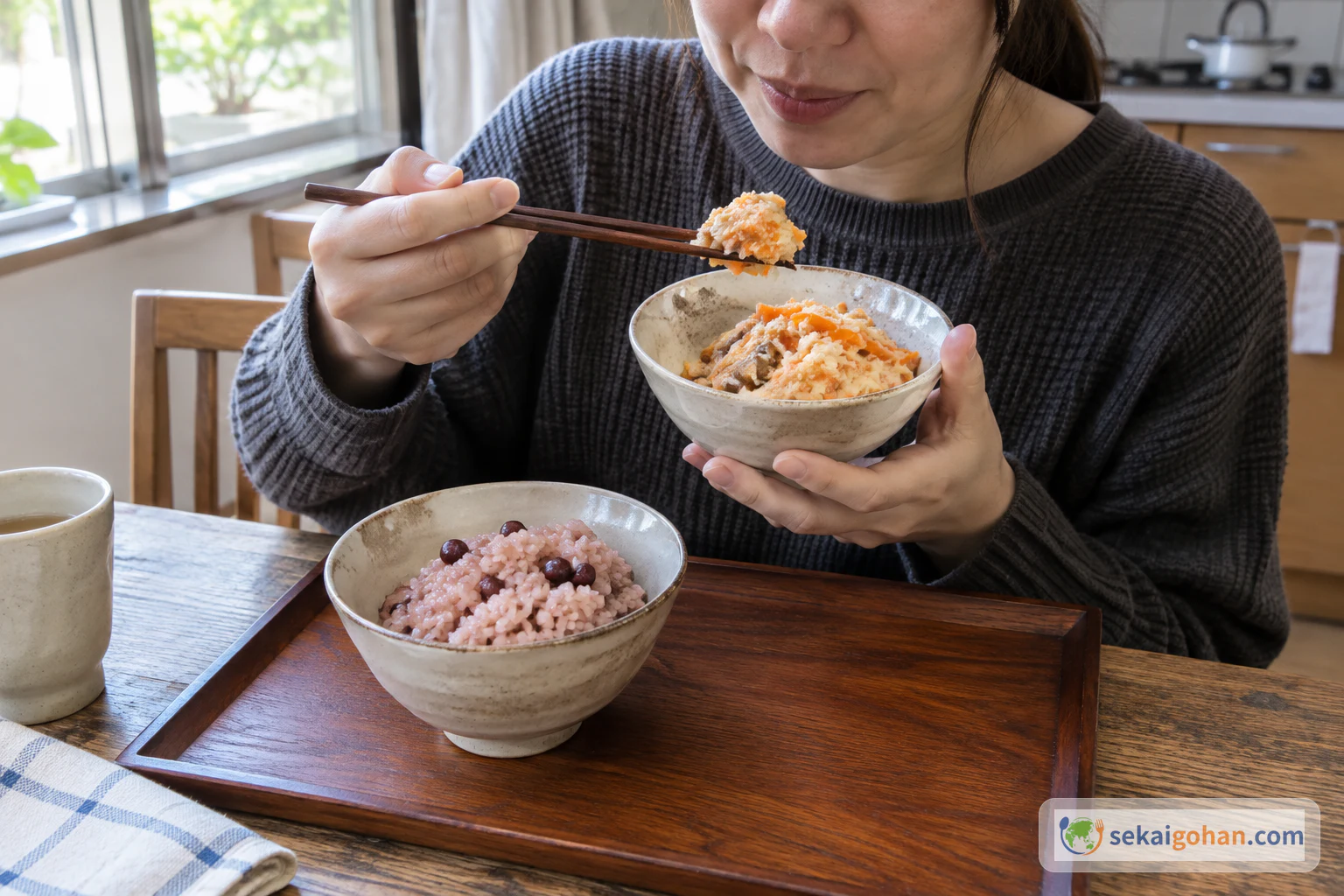
At the table
Shimotsukare is served with sekihan, the red rice of celebrations, the same pairing that is offered at the Inari shrine on hatsuuma. Serve it in a small bowl beside the rice. The mellow lees and the chewy rice suit each other, and the salt of the salmon carries the plain rice.
Variations
- Grilled salmon head. Grill the head lightly instead of parboiling, then simmer it until it breaks down. The pot gains a roasted, smoky depth.
- Lees cooked into a cream. Simmer the sake lees with water until smooth before adding them. They dissolve more evenly and give a silkier finish.
- Quick version for two. A salted salmon fillet with finely chopped daikon and carrot and 1¾ oz (50 g) sake lees comes together in about 30 minutes. It is lighter and smoother, a different dish from the coarse-grated pot.
- Sweeter pot. Add more sugar at the end for a rounder, gentler taste.
Storage
Cool the stew, then refrigerate it promptly in a covered container. Reheat only what you will eat, until it is hot all the way through to the center.
Frequently asked questions
Can I make shimotsukare on a day other than hatsuuma?
By old custom it was made on hatsuuma alone, and other days were thought unlucky. The recipe itself works whenever you have the ingredients. Late winter, around the time of New Year salmon and Setsubun beans, is the natural time to gather them.
Can I make a smaller batch?
Yes. Reduce every ingredient by the same ratio so the balance of salmon, vegetables and lees stays the same. The quick two-person version with a fillet and chopped vegetables is a separate method rather than a scaled-down version of this pot.
Can I leave out the sake lees?
You will get a simmered daikon and salmon dish, but it will not taste like shimotsukare. The lees bring the creamy body, the pale colour and the sweet, fermented aroma.
Why remove the soybean skins?
Without the skins the beans blend into the stew more easily while keeping their roasted flavor.