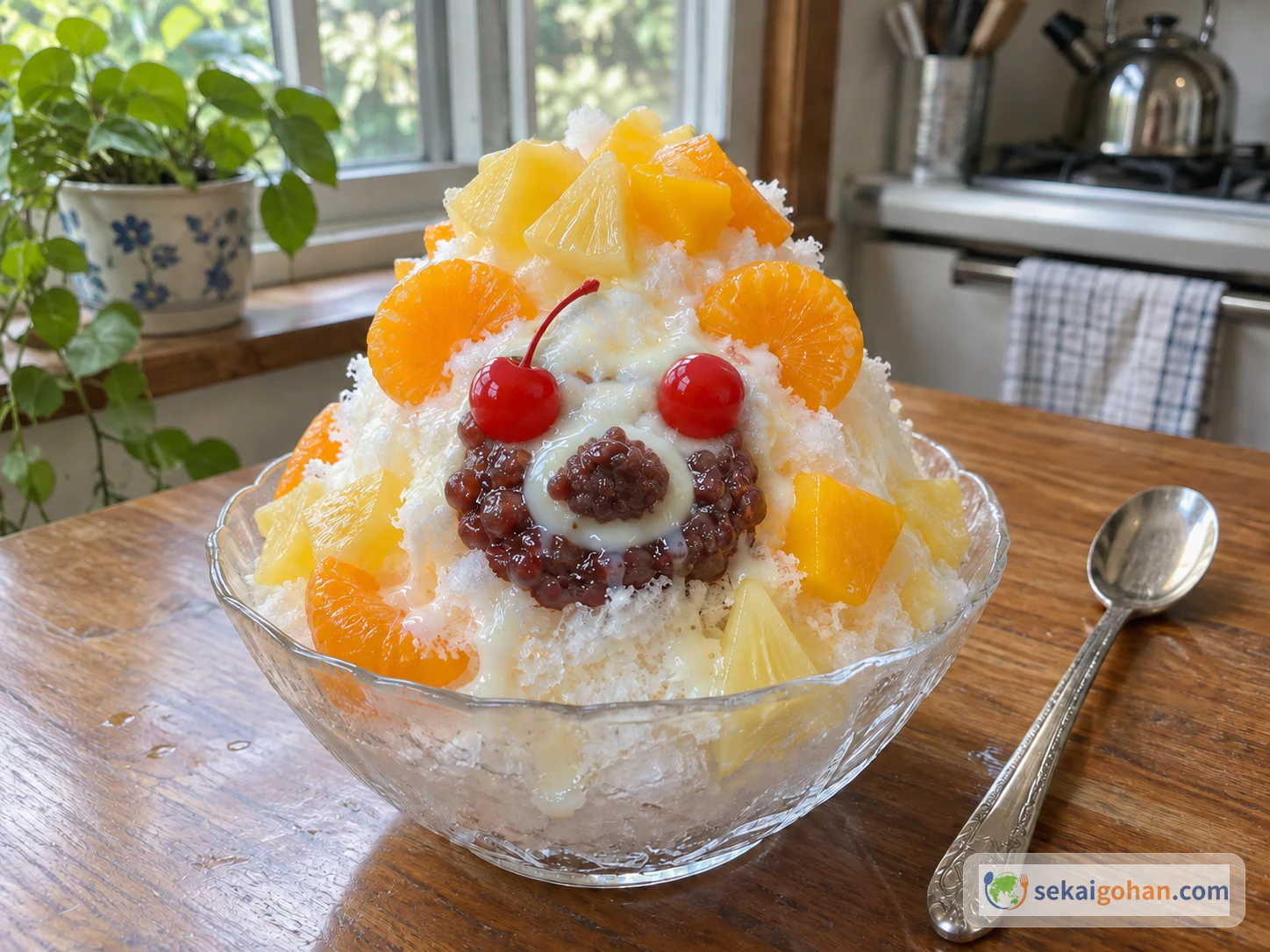
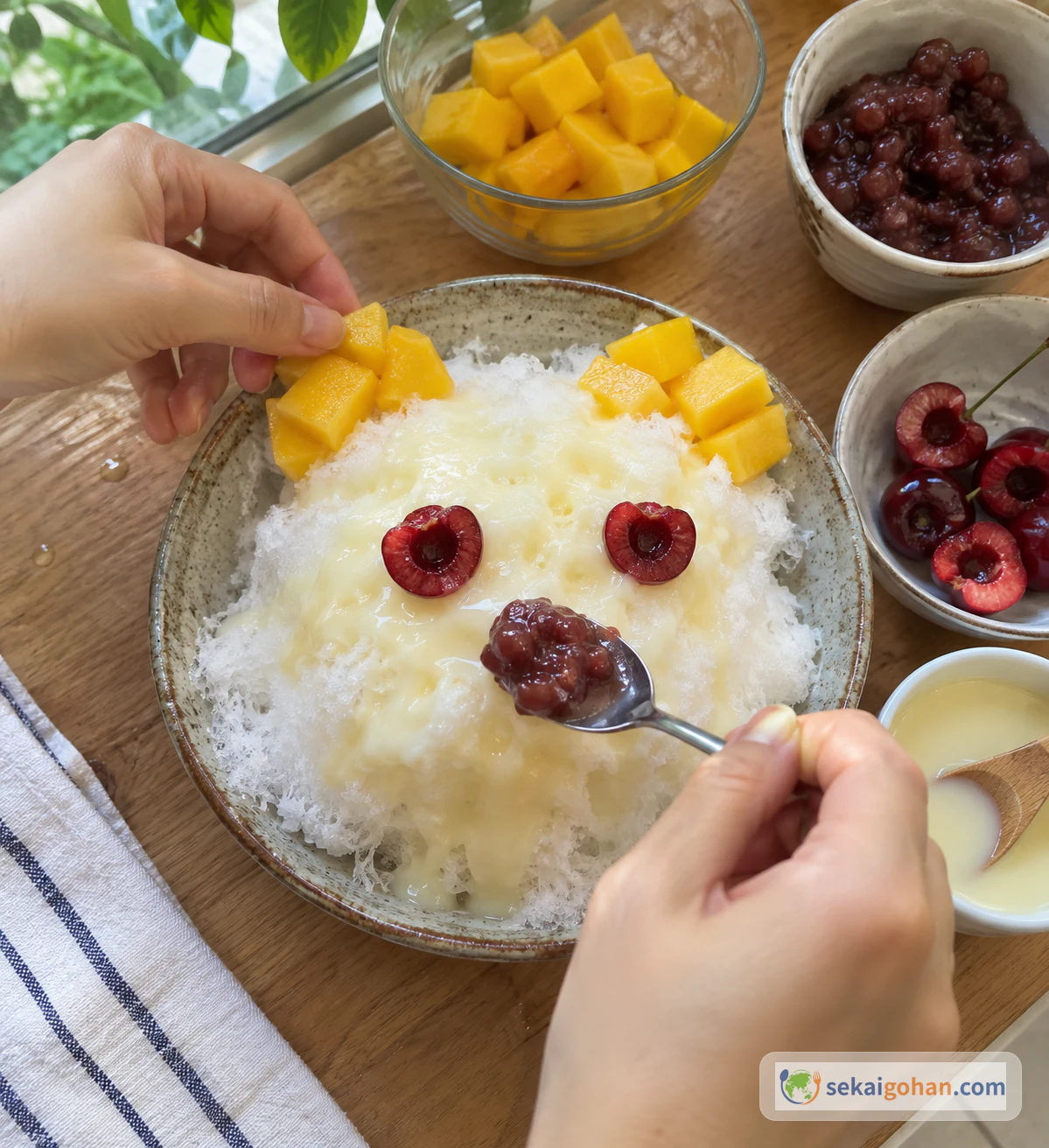
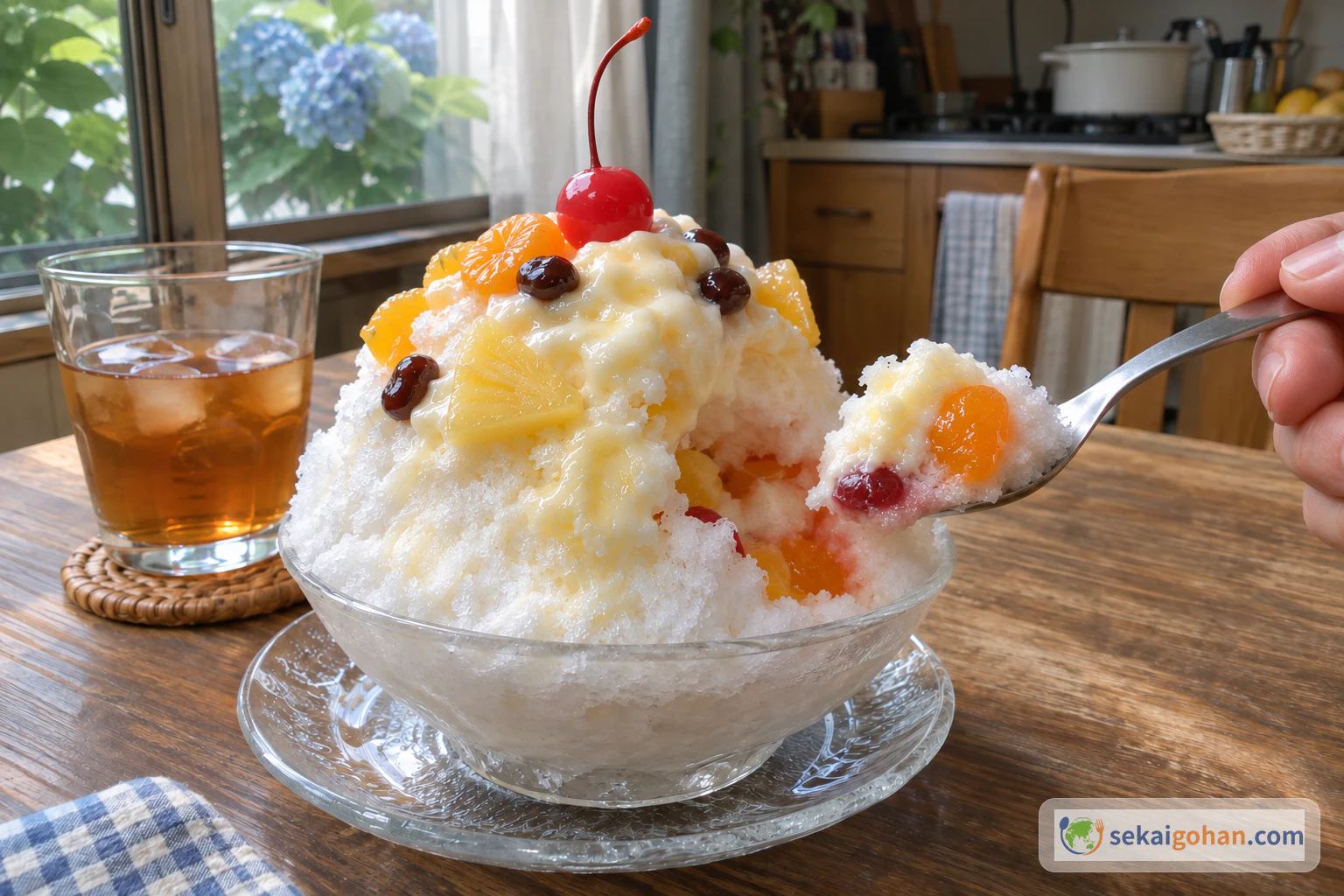
A mound of ice shaved as fine as snow sits in a glass bowl. A thin stream of condensed milk runs down its sides, and two red cherries and a dab of red bean paste on top look back at you like a bear's face. This is shirokuma, the "white bear" shaved ice of Kagoshima on the southern tip of Kyushu, and across southern Kyushu it is one of the signs that summer has come. Push the spoon in and it comes up with milky ice, a cube of tart pineapple, soft yellow peach and a few grains of sweet azuki all at once. The condensed milk hits first, then the bright canned fruit, then the deep, earthy beans.
From a Diner Ice to a Bear in a Bowl
Shirokuma is shaved ice dressed with condensed milk and topped with fruit and beans. That one combination separates it from ordinary syrup shaved ice. In Kagoshima city the name covers any shaved ice finished with condensed milk, canned fruit and azuki. People think of it as a local specialty, the way other regions of Japan have their own signature sweets.
The dish is usually traced to Mujyaki, a shop in the Tenmonkan district of Kagoshima. Its founder, Takeshi Kubo, is credited with creating it in 1947, and it went on sale in 1949. It started out as mizore, shaved ice with plain white or red syrup. That version was too sweet, and it was reworked until the milk flavor took over. Mujyaki's shirokuma still uses a condensed-milk syrup that takes more than half a day to make, and the shop keeps the recipe to itself. The bowl is filled with diced fruit and jūroku-sun beans, the large white beans also called ōfuku-mame, and today the shop serves more than ten kinds of shirokuma.
At home the bowl comes together from a few cans. Sweetened condensed milk goes on straight from the tube, the fruit is canned, and the beans are sweet red bean paste or sweetened boiled azuki. Ice made from drinking water and a home ice shaver do the rest.
Where the name came from is not settled, and it was never registered as a trademark, so no record decides it. One explanation is the face: cherries, angelica and raisins placed on the white mound look like a bear's face. The other points to a white-bear label on the cans of condensed milk used by a cotton shop. The shop writes the name 白熊, while shops and packaged sweets mostly write it 白くま. Both are read shirokuma.
Ingredients
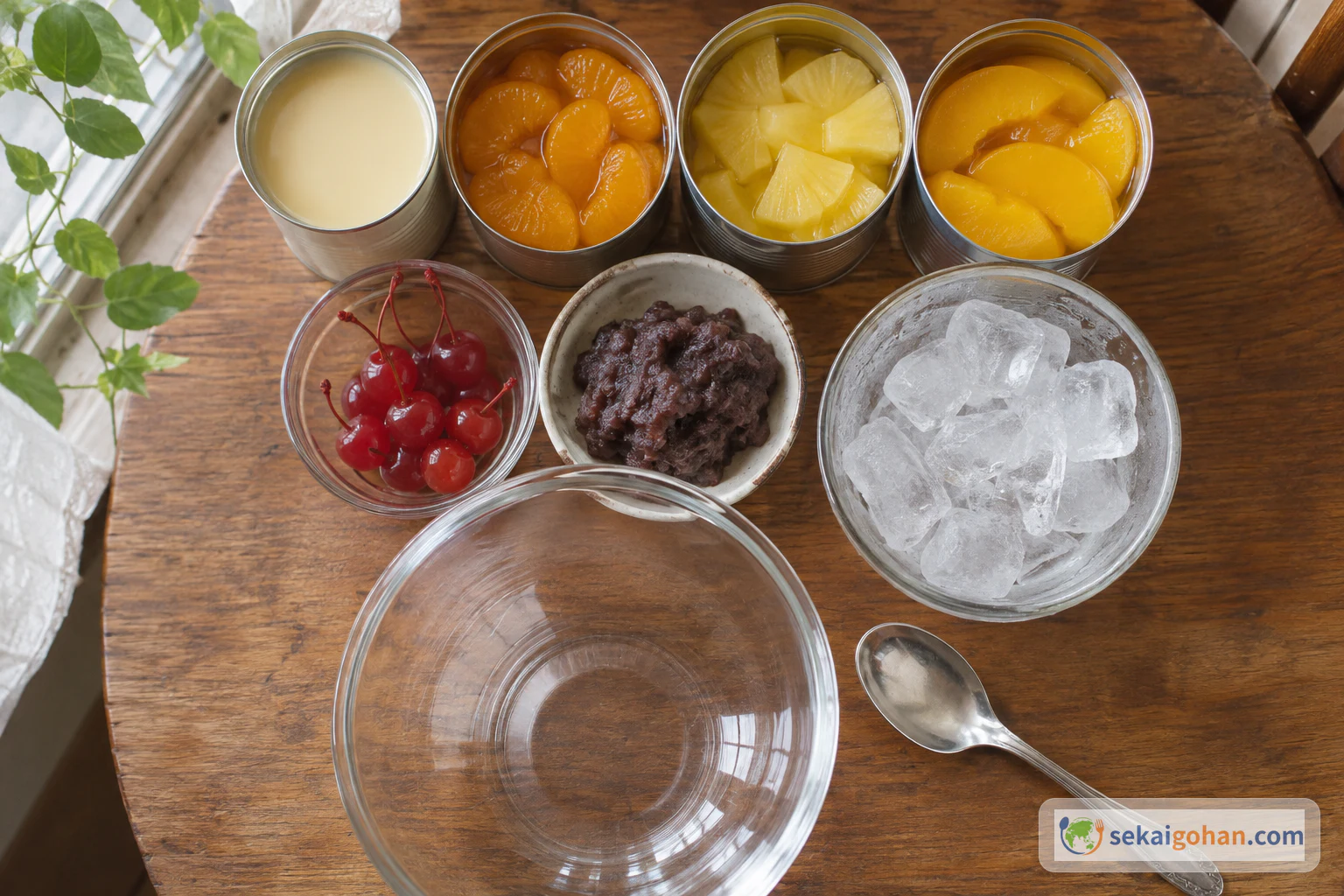
Sweetened condensed milk contains milk. Check the label on bought red bean paste or boiled azuki for allergens and for what else is made in the same facility.
Equipment
- Home ice shaver (a hand-cranked one works well)
- Wide glass bowl
- Long spoon
- Sieve set over a bowl
- Knife and cutting board
- Small pitcher, or the condensed milk tube itself
What to Buy and What to Swap
Make sure you buy sweetened condensed milk. Evaporated milk sits next to it on the shelf, but it is unsweetened and gives a different, flat result. Condensed milk in a squeeze tube is sold in ordinary supermarkets in Japan, and the tube makes it easy to pour a thin line. Canned fruit is the right choice here, not a shortcut. Its syrup-soft texture and its tart edge are the flavor of shirokuma, and it is ready the moment you open the can.
Fresh citrus can replace the canned mandarin. It gives a sharper, juicier bite and less of the soft, sweet canned taste. The cherries can be left out if you have none, but then the bear has no eyes. Sweet-simmered jūroku-sun beans bring the bowl closer to the Kagoshima shop version, and at home they are an optional extra on top of the azuki. Angelica and raisins are part of the shop's decoration and can be added or skipped.
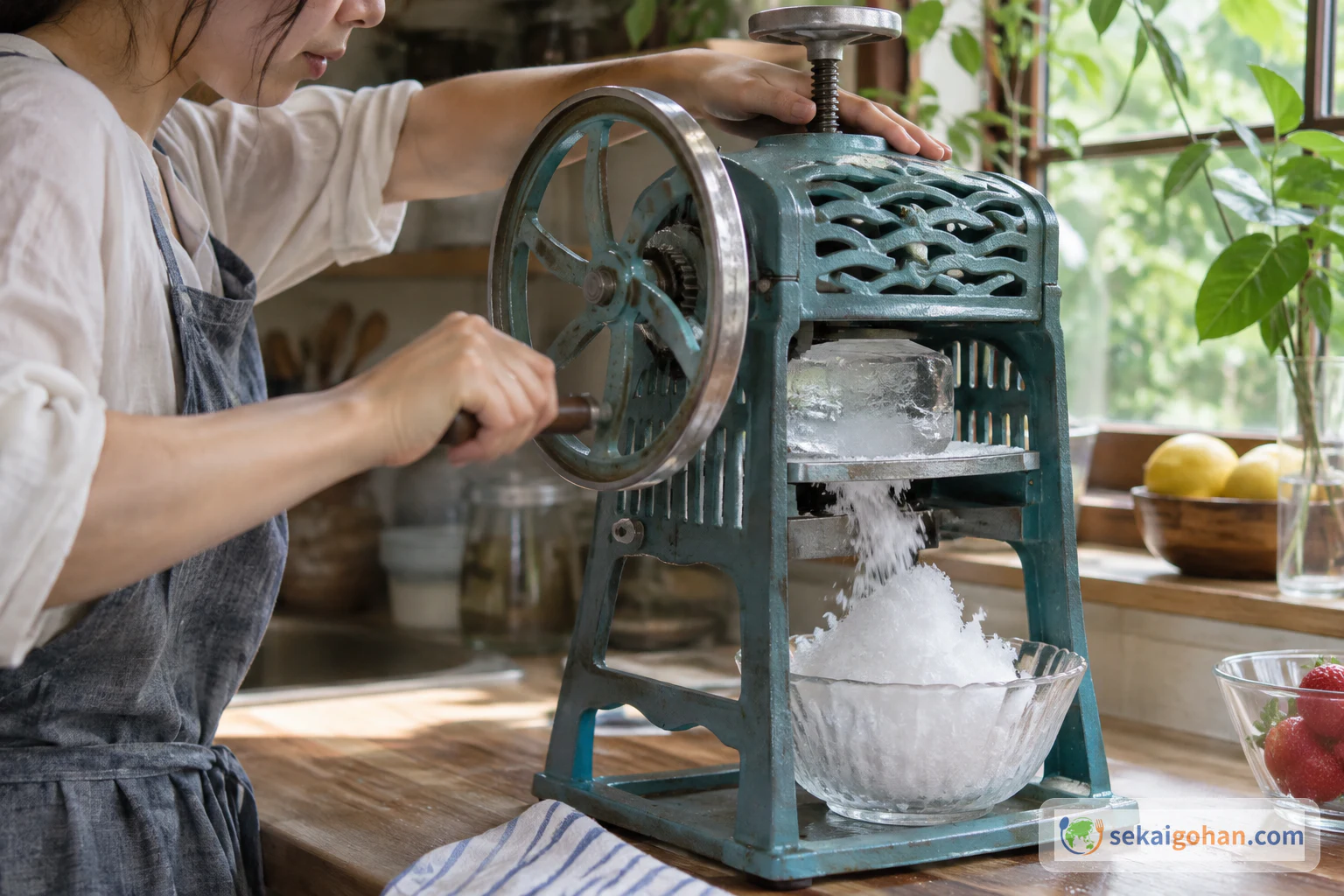
The one tool worth buying is a hand-cranked ice shaver. Crushed or blended ice comes out as crunchy chips that never take up the milk the way snow-fine ice does. A wide glass bowl shows the milk running down the sides and gives the face room.
Four things make it taste like Kagoshima: the sweetness of real condensed milk, the tartness of canned fruit, chunky bean paste and ice shaved fluffy. Change the fruit as you like, but keep all four.
Method: Cold Bowl, Snow-Fine Ice, Fast Hands
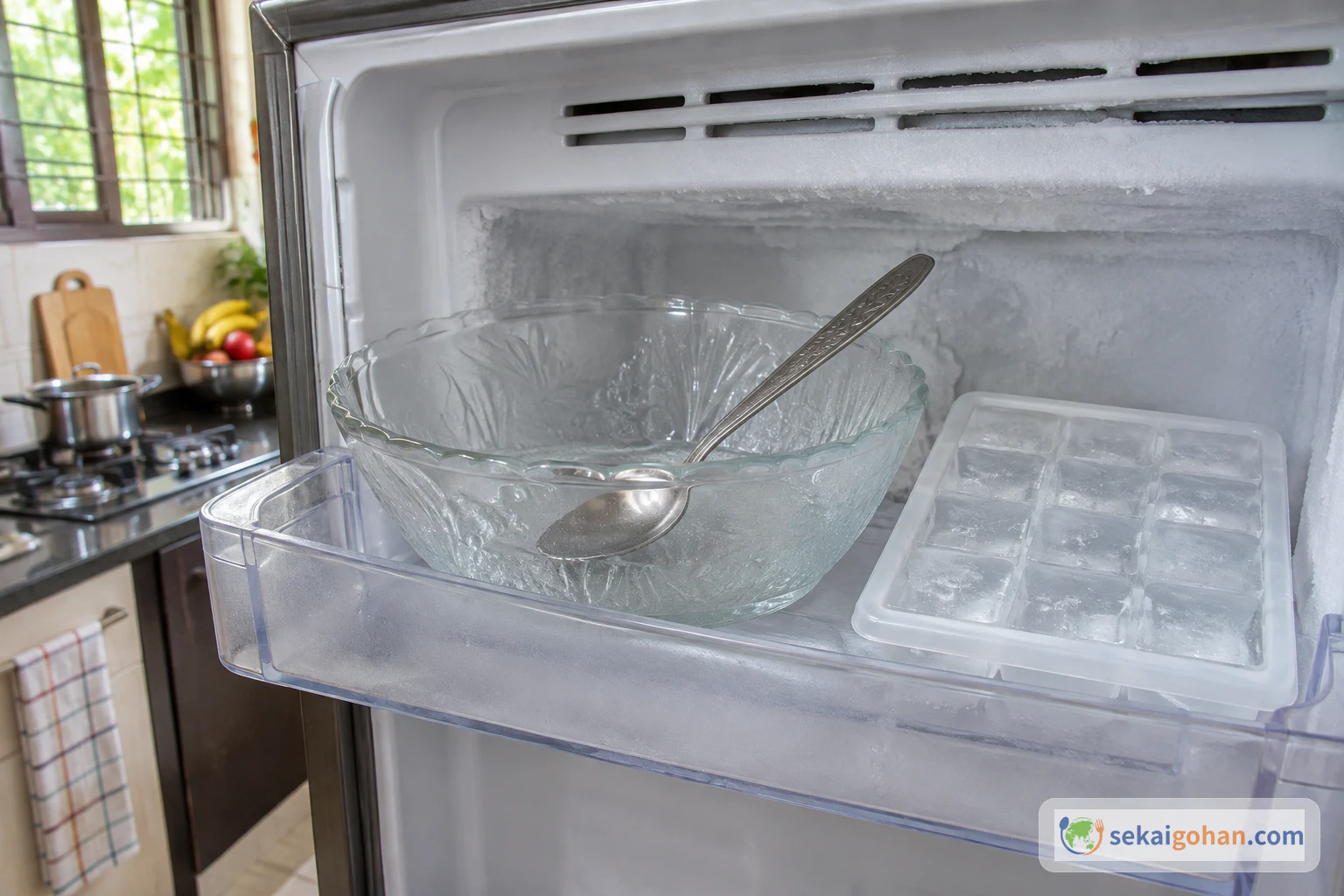
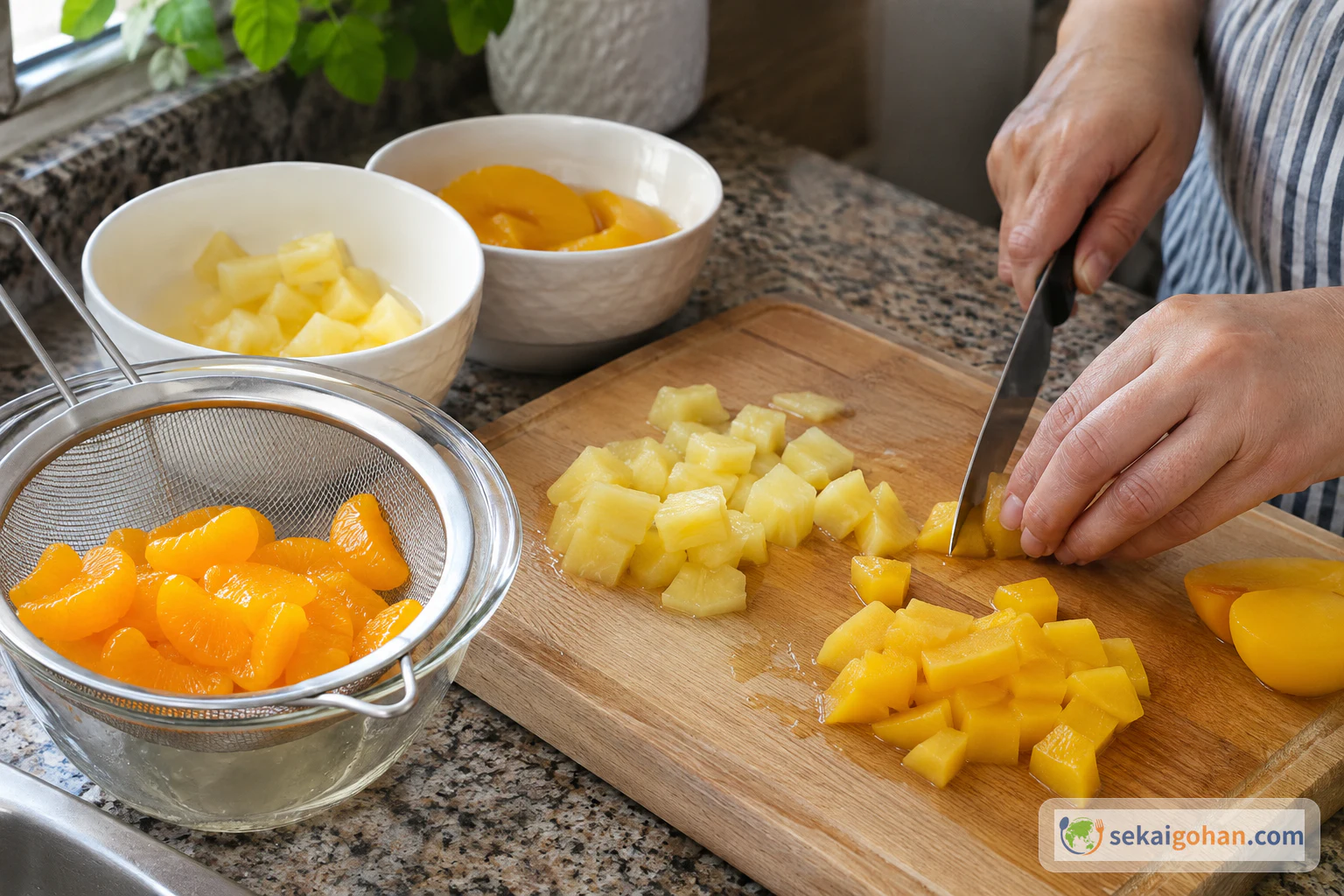
Everything slow happens before you shave a single flake. Chill the bowl and spoon, then drain and dice the fruit while they cool. After that the ice, milk and face go on in a few minutes, and the bowl goes straight to the table.
Make the ice only from drinking water. Wash the ice shaver before you use it. Keep your fingers away from the blade while cranking and when you clean it, and take care with the knife and with the sharp edges of opened cans.
When It Goes Wrong
| What you see | Why | What to do |
|---|---|---|
| The mound slumps and the bowl fills with water | The bowl was warm, or the ice sat before topping | Chill the bowl and spoon first, top the ice the moment it is shaved and serve at once |
| Sticky, thin puddles around the fruit | Can syrup was still on the fruit | Drain the fruit in a sieve until the board stays dry, then dice |
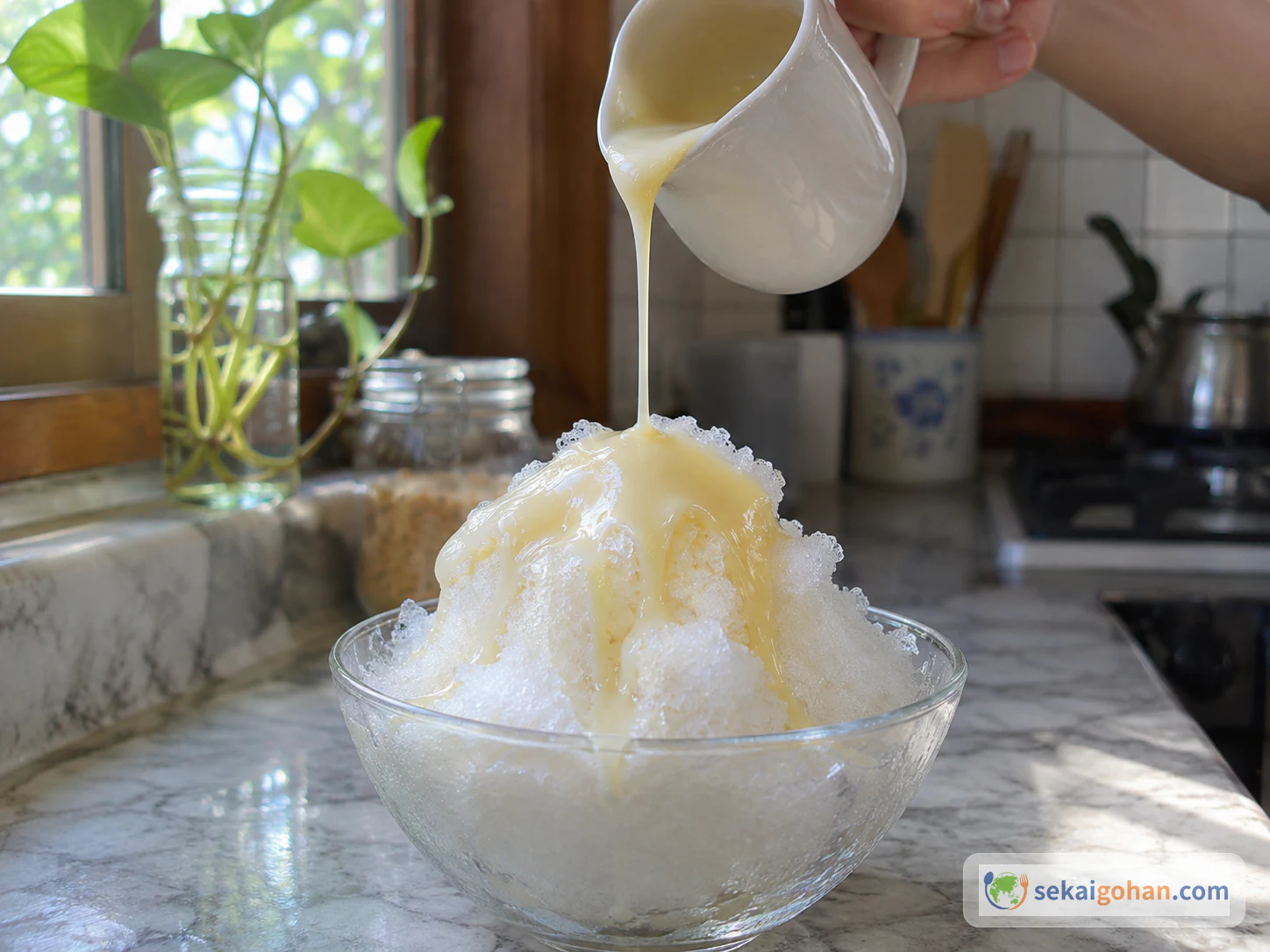
| The lower ice tastes of nothing | The milk only went on top | Pour in a thin circling stream and let it run down the sides |
| Too sweet | Too much condensed milk for the amount of ice | Use less milk next time. Even the shop reworked its sweetness over the years |
Serving, Variations and Leftovers
At the table
Shirokuma is a summer-afternoon dessert, eaten fast while the ice is still snow. Serve each bowl with a long spoon so people can reach the beans and fruit at the bottom, and make one bowl at a time so none of them sits melting.
Variations
- More beans. Double the red bean paste and spread some under the fruit as well as on the nose. The bowl gets deeper and earthier, closer to an azuki shaved ice.
- Different fruit. Swap the canned fruit for other fruit you have. Firm, tart fruit keeps the brightness. Very soft fruit releases juice and melts the ice faster.
- Matcha milk. Dust a little matcha over the condensed milk before the face goes on. Its bitterness cuts the sweetness, and the bowl turns pale green.
- Strawberries on top. Halved strawberries in place of some of the canned fruit give a fresher, sharper tartness.
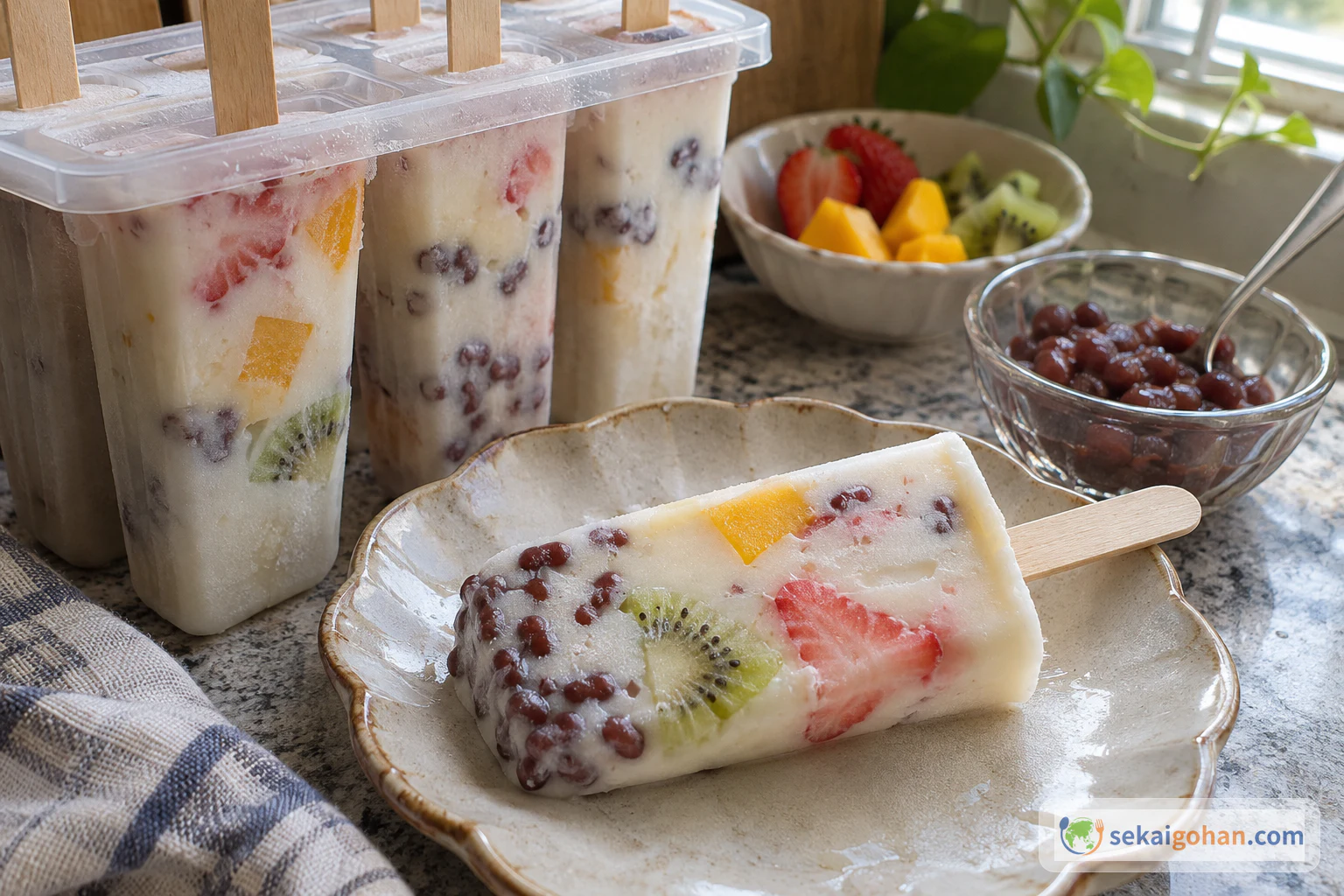
- Ice bar version. This frozen bar is a separate dish, not a shaved ice. For three bars, combine ⅓ cup (80 ml) milk, ¼ cup (60 ml) heavy cream and 1 oz (30 g) condensed milk. Pour the mixture into ice pop molds with fruit and sweetened boiled azuki as needed, and freeze for at least 5 hours. You get a creamy, milky bar with the fruit and beans set inside.
Leftovers
Assembled shirokuma does not keep, so make only what you will eat. Put leftover canned fruit in a separate covered container and refrigerate it.
Frequently asked questions
How is shirokuma different from ordinary Japanese shaved ice?
Ordinary kakigori is shaved ice with flavored syrup, often a single color. Shirokuma replaces the syrup with condensed milk and adds fruit and beans, so every bowl carries tart, milky and bean flavors at once. In Kagoshima the topping set itself defines the dish.
Are the shirokuma ice creams sold in shops the same dish?
They take their idea from the bowl. Packaged shirokuma ices, such as those from Sentan and Marunaga, list sweetened condensed milk, fruit and sweet candied azuki among their ingredients. They are frozen desserts rather than freshly shaved ice, so the snowy texture is gone, but the flavor set is the same.
Can I make the shop's condensed-milk syrup at home?
The shop's syrup recipe is not public, and the syrup takes more than half a day to make. At home, sweetened condensed milk straight from the tube or can gives the milky sweetness that defines the dish. Pour it thin and let it run down the sides and it soaks through the ice the way a syrup does.