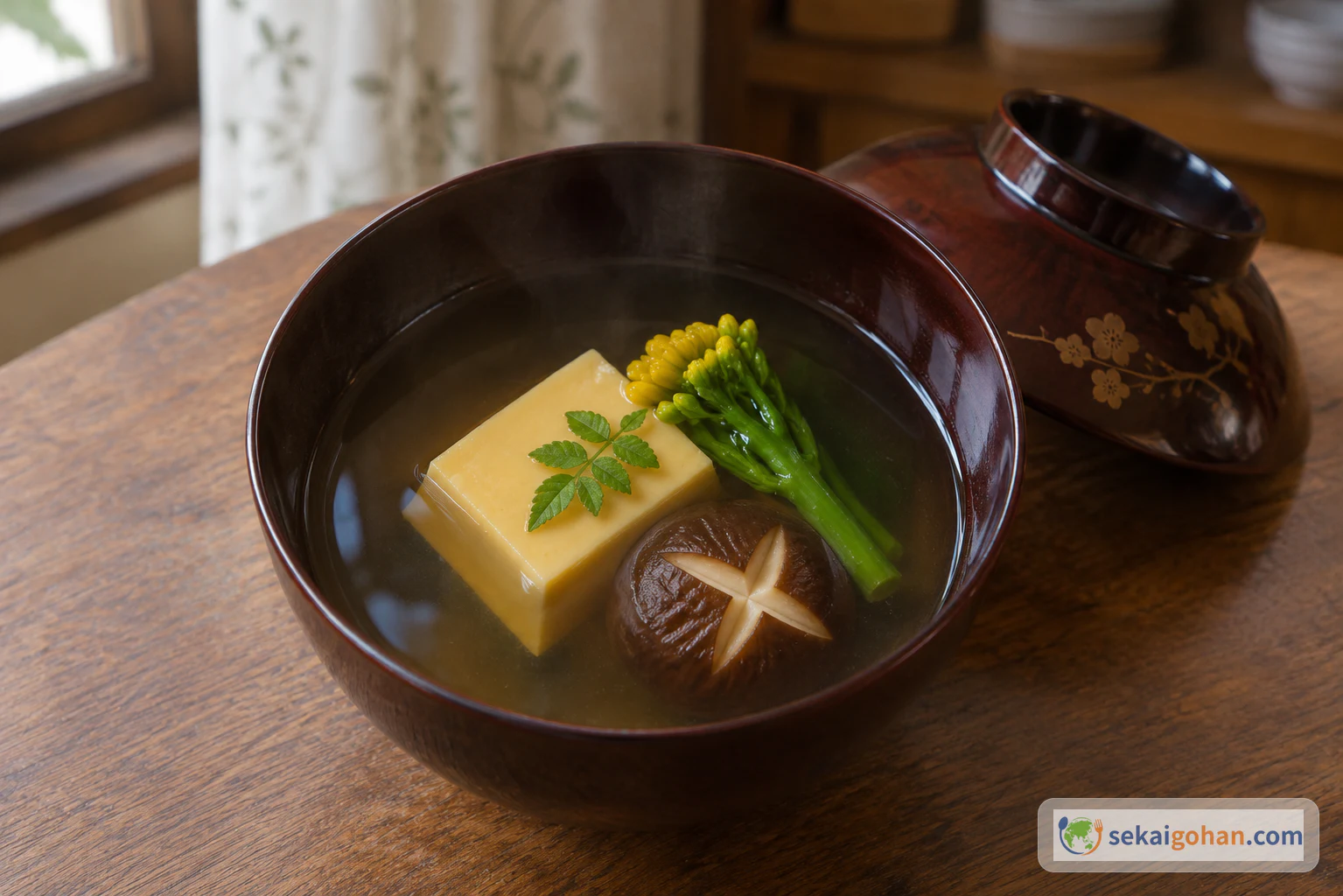
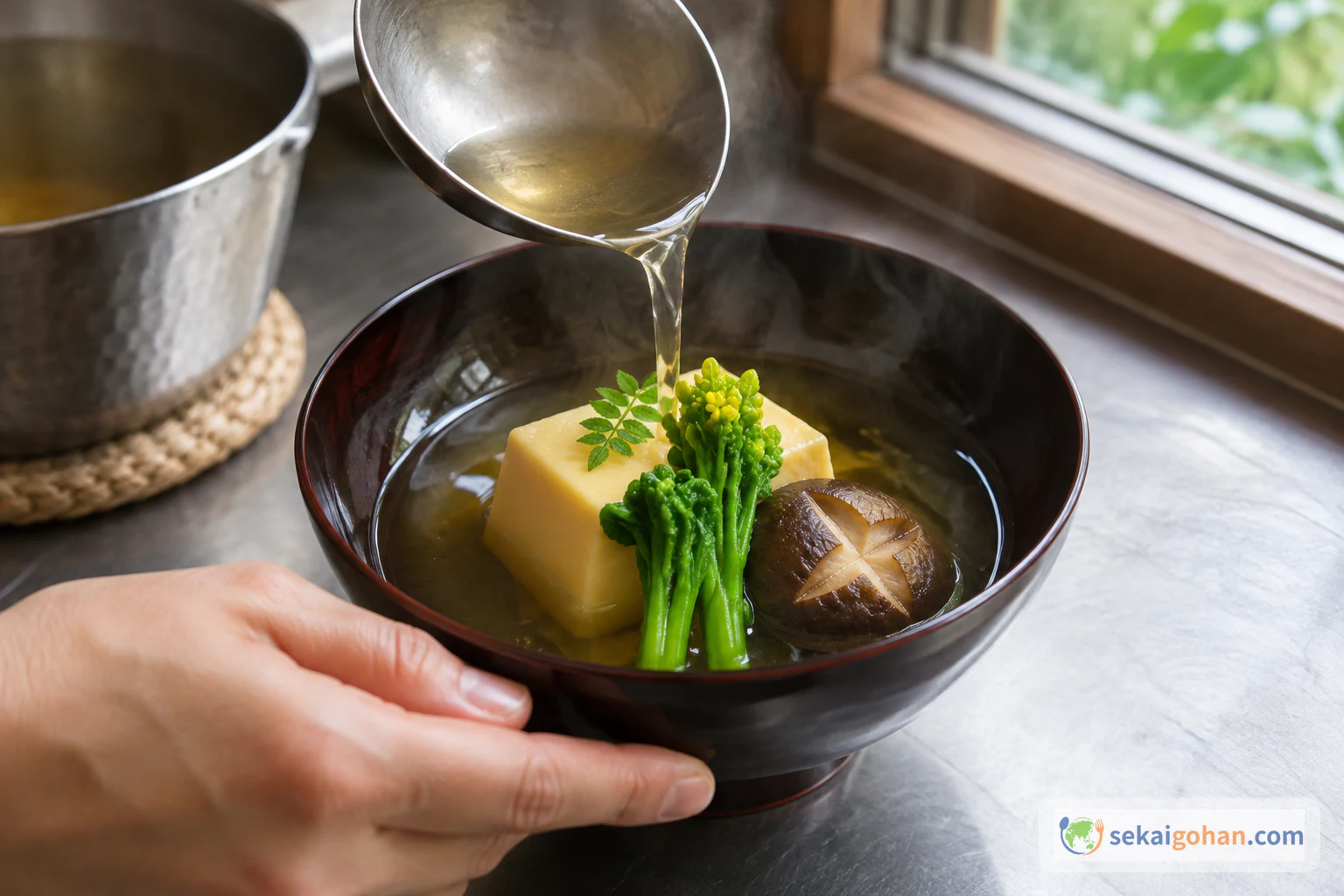
Lift the lid off a lacquered bowl and the first thing you notice is that you can see straight to the bottom. A square of egg tofu sits there, green rape-blossom stems lean against it, and a single sansho leaf floats on top, giving off a sharp green scent as the steam rises. This is suimono, the clear soup of Japan. It is dashi seasoned only with salt and soy sauce, so the broth tastes of kelp and smoked bonito and very little else. Since no miso goes in, any cloudiness shows at once. In a bowl of suimono, clarity is the flavour.
Everything in this recipe works to keep the broth clear. The kombu never boils, the bonito flakes are never squeezed, and the finished soup is never allowed to bubble hard. None of these steps is fussy. Each one keeps the broth clean, and the clean taste is what you are cooking for.
A Clear Bowl Where Nothing Hides
Dashi in Japan is most often made from kombu and katsuobushi together. The first pull from fresh ingredients, ichiban dashi, goes to dishes where the aroma and quality of the stock matter most, and suimono is the classic example. Kombu brings glutamate and bonito brings inosinate. Together they give a depth of savouriness that neither has alone. Dashi itself is thought to go back to around the seventh century.
The word has a long history, though the exact timeline is not settled. Texts from the Nara period use the word atsumono (羹) for hot soups. The name suimono shows up in the Muromachi period. In the Edo period more fillings and seasonal versions appeared. The two terms suimono and sumashi-jiru are sometimes used interchangeably. Some cooks separate them instead: suimono for a bowl built around what sits in it, sumashi-jiru for a bowl that is mostly clear broth.
Three parts in every bowl
A suimono bowl is built from three parts, and once you know them you can make one from almost anything in season. The wandane is the main piece, such as tofu, fish or shellfish. The tsuma is the support, usually seasonal vegetables, wheat gluten (fu) or shiitake. The suikuchi is a small aromatic note added last, such as yuzu, mitsuba or kinome. In this bowl, egg tofu is the wandane, rape blossoms and shiitake are the tsuma, and kinome is the suikuchi.
Wan is the bowl and tane the seed or core, so the wandane is the heart of the bowl. Suikuchi means roughly "the sipping mouth". It is the scent that reaches you just before the first sip.
At the table and on special days
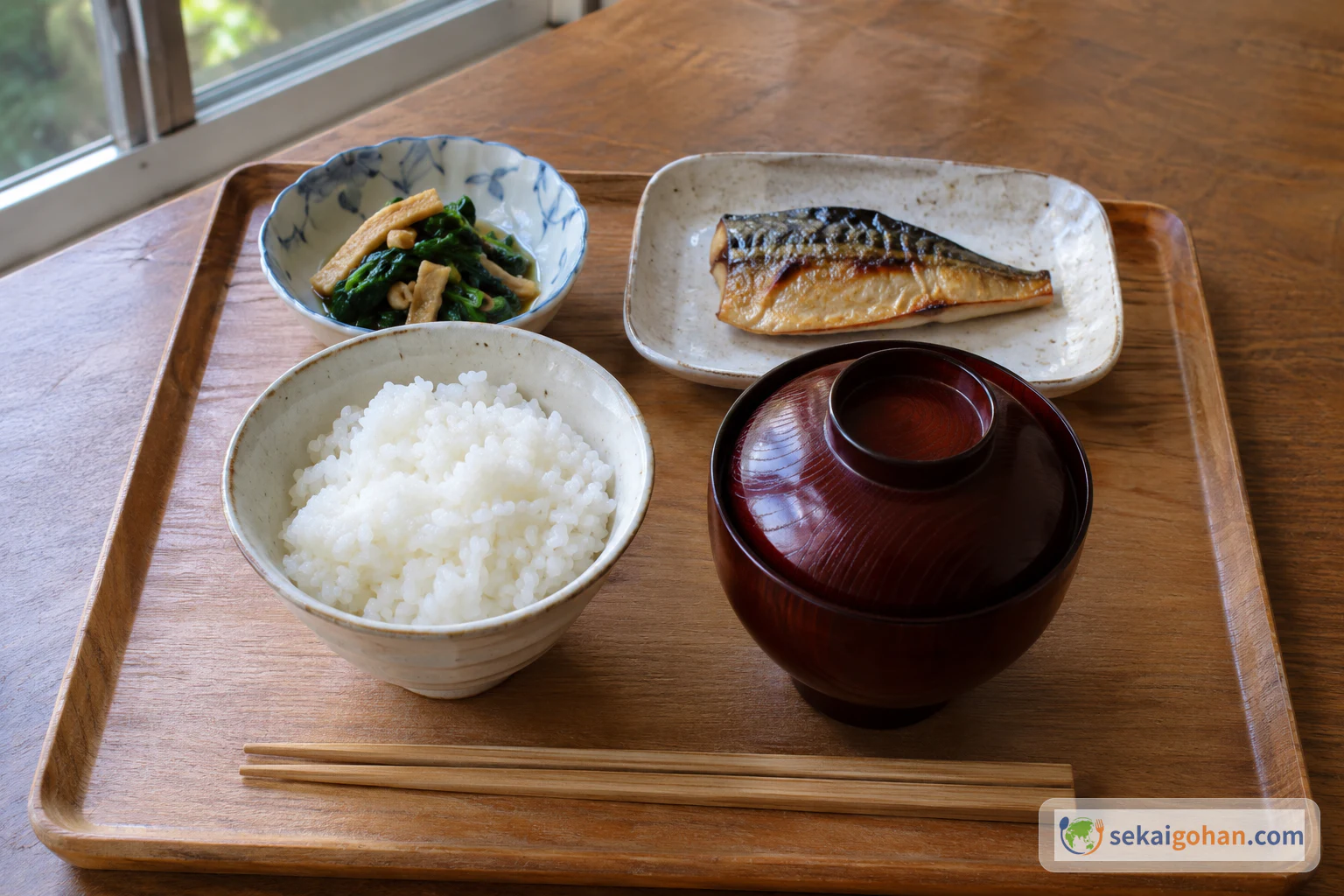
At an everyday Japanese meal, suimono fills the "one soup" in ichiju sansai, one soup and three dishes, with rice and three side dishes. Miso soup fills the same place on other days. The order on the tray is fixed: rice on the left, soup bowl to its right. In a kaiseki banquet meal (会席), suimono often comes right after the opening appetizer, the sakizuke. In the tea-ceremony meal (懐石), it more often comes partway through. People often say Tokyo and the east like a stronger soup based on bonito, while Osaka, Kyoto and the west lean toward a lighter, kombu-led broth. Recipes still differ a lot from one household to the next.
For Hinamatsuri, the girls' festival on 3 March, the bowl usually holds hamaguri clams. Each clam's two shells fit only each other, so the clam stands for a happy marriage, and the soup is served as a wish for a good match and a happy life. Japan also has cloudy soups. The pork-bone broth of tonkotsu ramen is boiled hard on purpose until it turns milky. Across the sea, Korea's doenjang jjigae dissolves fermented soybean paste into the pot. Suimono goes the other way and keeps the broth clear enough to see through. For more of the country's cooking, see Japan.
Ingredients (serves 4)
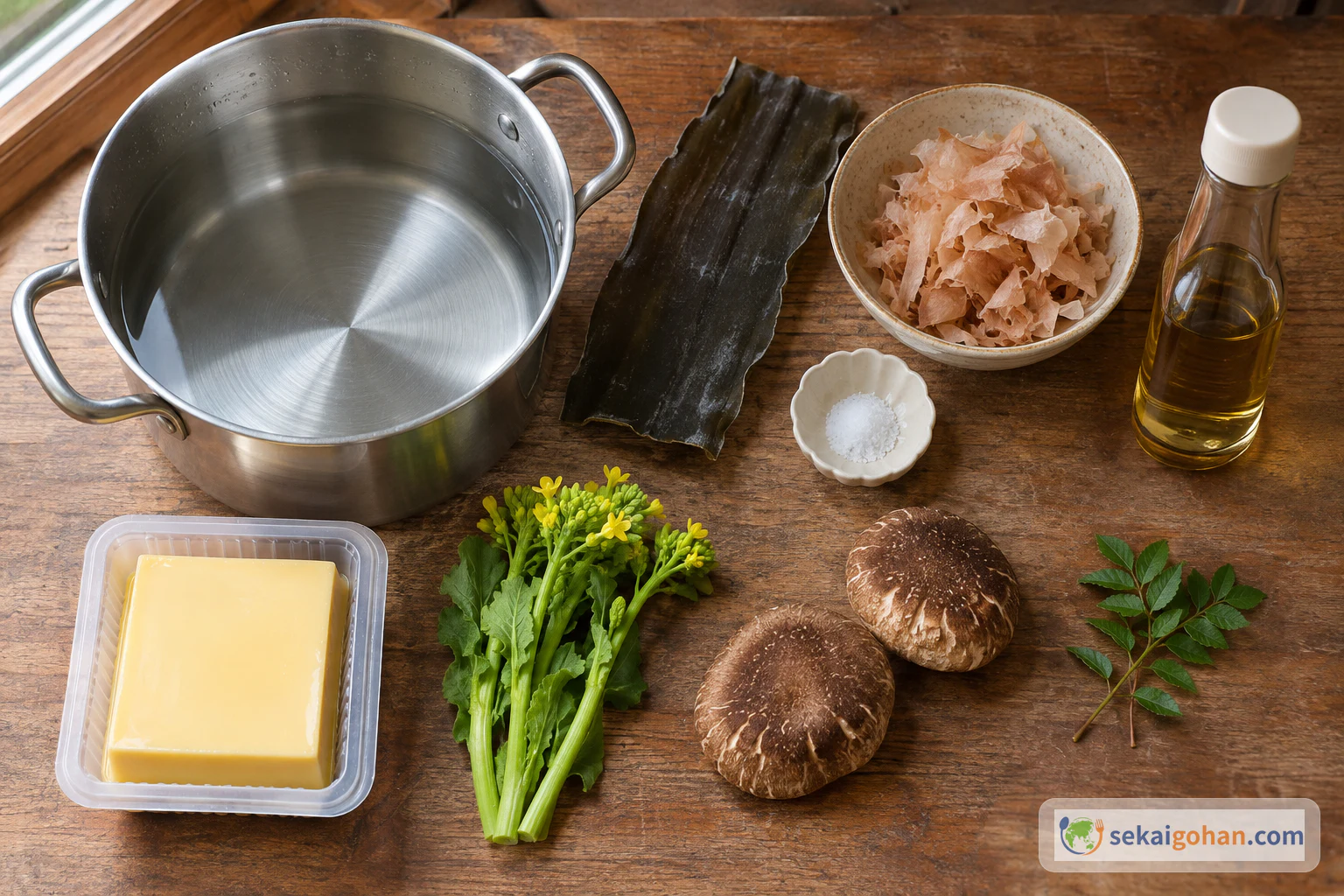
Weigh the kombu. Pieces differ a lot in thickness, so weigh it in grams instead of judging by size. Use as much of each filling as fits nicely in four bowls without crowding the broth.
This soup contains egg (egg tofu), wheat and soy (soy sauce) and fish (katsuobushi). Ingredients in egg tofu differ from brand to brand, so check the label for egg, soy and wheat. Shiitake, rape blossoms and sansho leaves can also cause reactions in sensitive people.
Equipment
- Saucepan for the dashi
- Cooking thermometer
- Second pan for blanching
- Fine-mesh strainer
- Paper towels
- Bowl to catch the strained dashi
- Lidded soup bowls, lacquered if you have them
Choosing and Substituting
Kombu and katsuobushi are the two things worth buying with care. Look for dashi kombu or ma-kombu at a Japanese grocer or online, and check the net weight on the bag. For katsuobushi, choose pale, light flakes without the dark red bloodline (chiai). The bloodline gives a stronger, fishier stock. Instant granules and dashi packs make a clear soup, but they lack the fresh ichiban aroma the whole bowl is built around.
Soy sauce matters more than you might expect. Usukuchi is paler and milder in aroma than regular koikuchi (dark) soy sauce, and it is about 10% saltier, so a little goes further. If you only have dark soy sauce, use half as much and make up the rest with salt, to taste. This is a rough swap that has not been worked out for this recipe, and the broth will be a shade darker. Shiro (white) soy sauce is also used for suimono and keeps the broth even paler. Use fine, free-flowing salt: coarse salt fills a teaspoon very differently, and that throws the seasoning off.
| If you can't find | Use | What changes |
|---|---|---|
| Kinome | Mitsuba, yuzu peel, myoga or green onion | Each gives a different scent: mitsuba is herbal, yuzu citrusy, myoga sharp and gingery |
| Rape blossoms | Another tender seasonal green | Loses the mild bitterness of the buds |
| Usukuchi soy sauce | Half the amount of dark soy sauce, plus salt | Slightly darker broth |
Method: Dashi First, Then a Quiet Pot
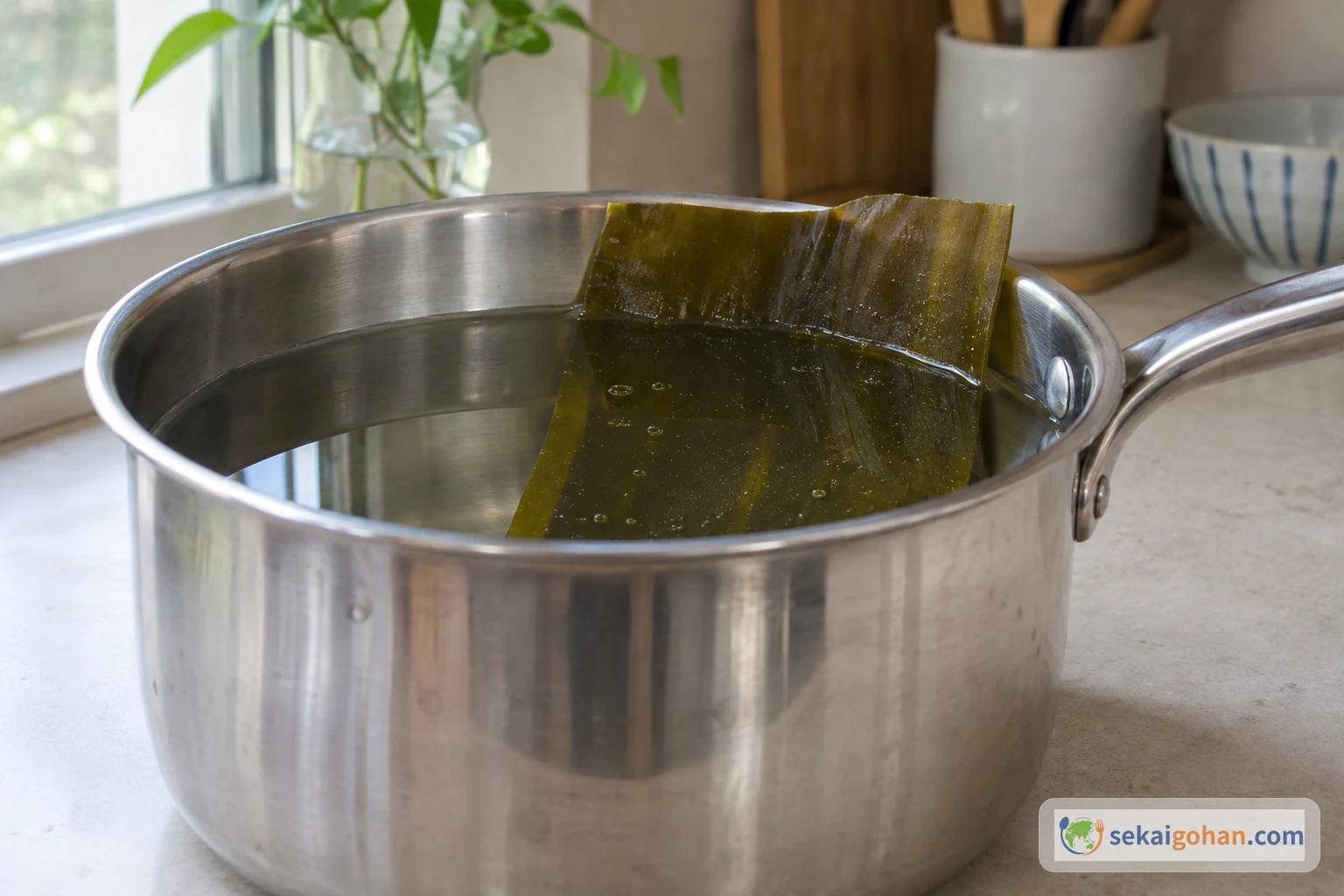
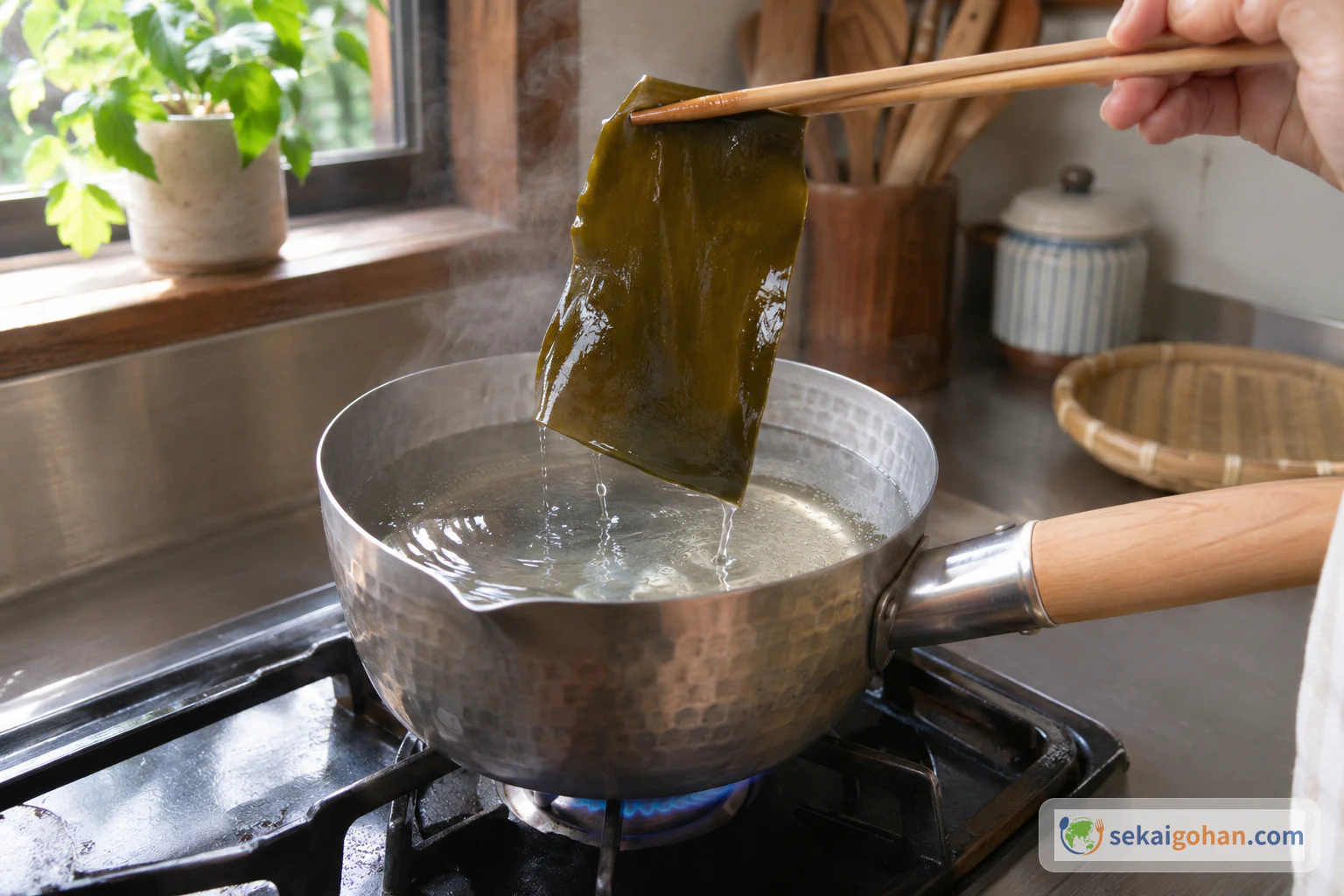
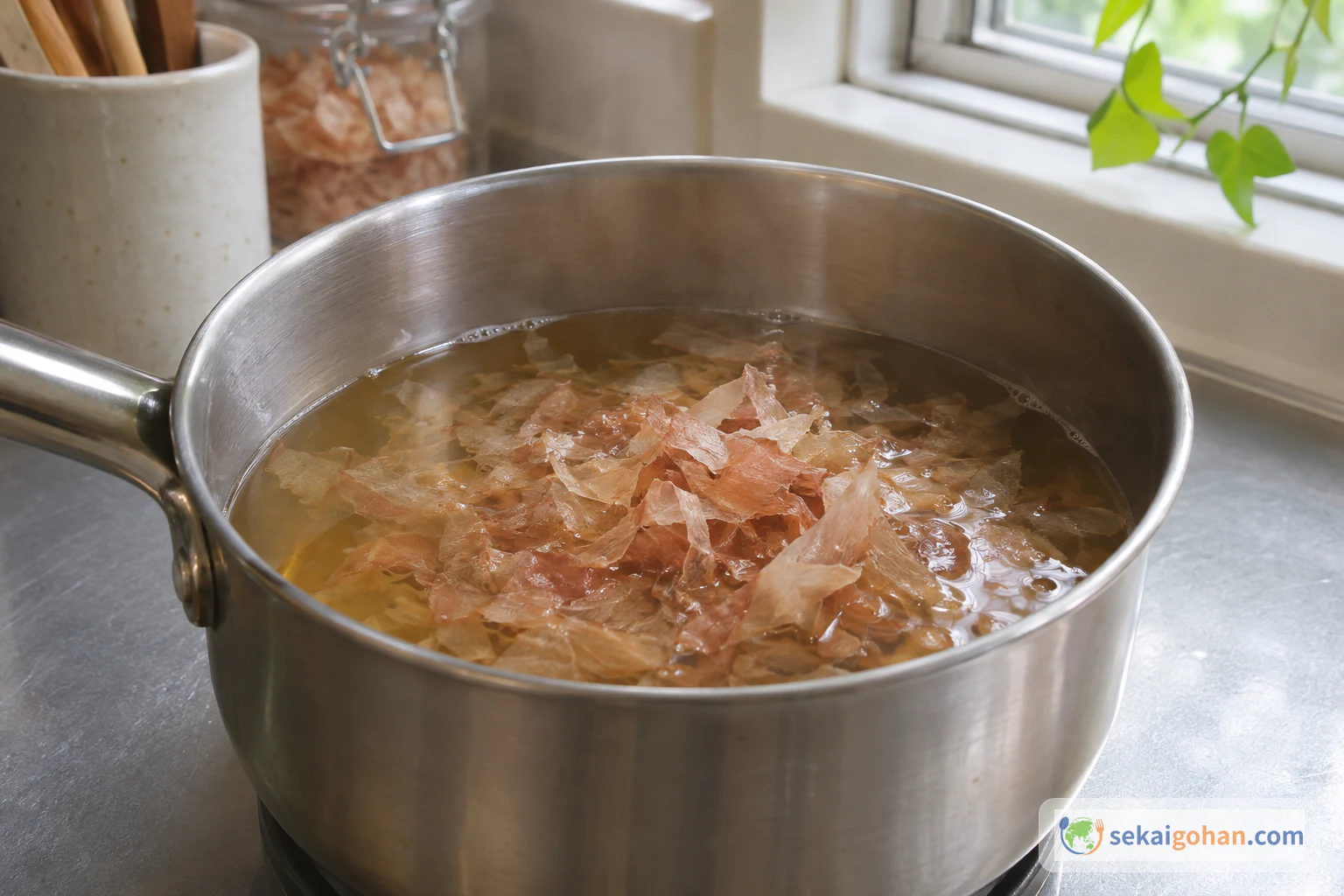
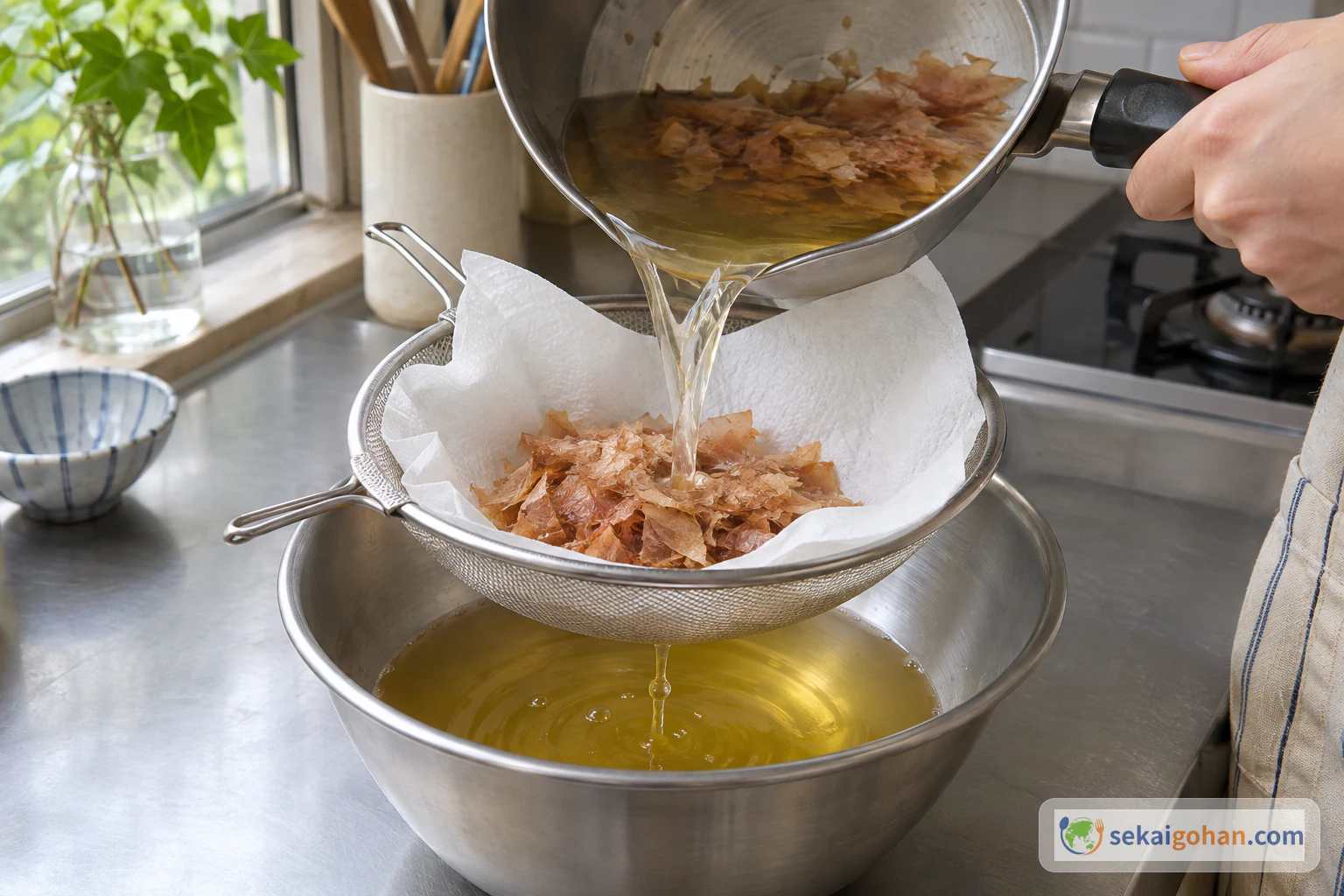
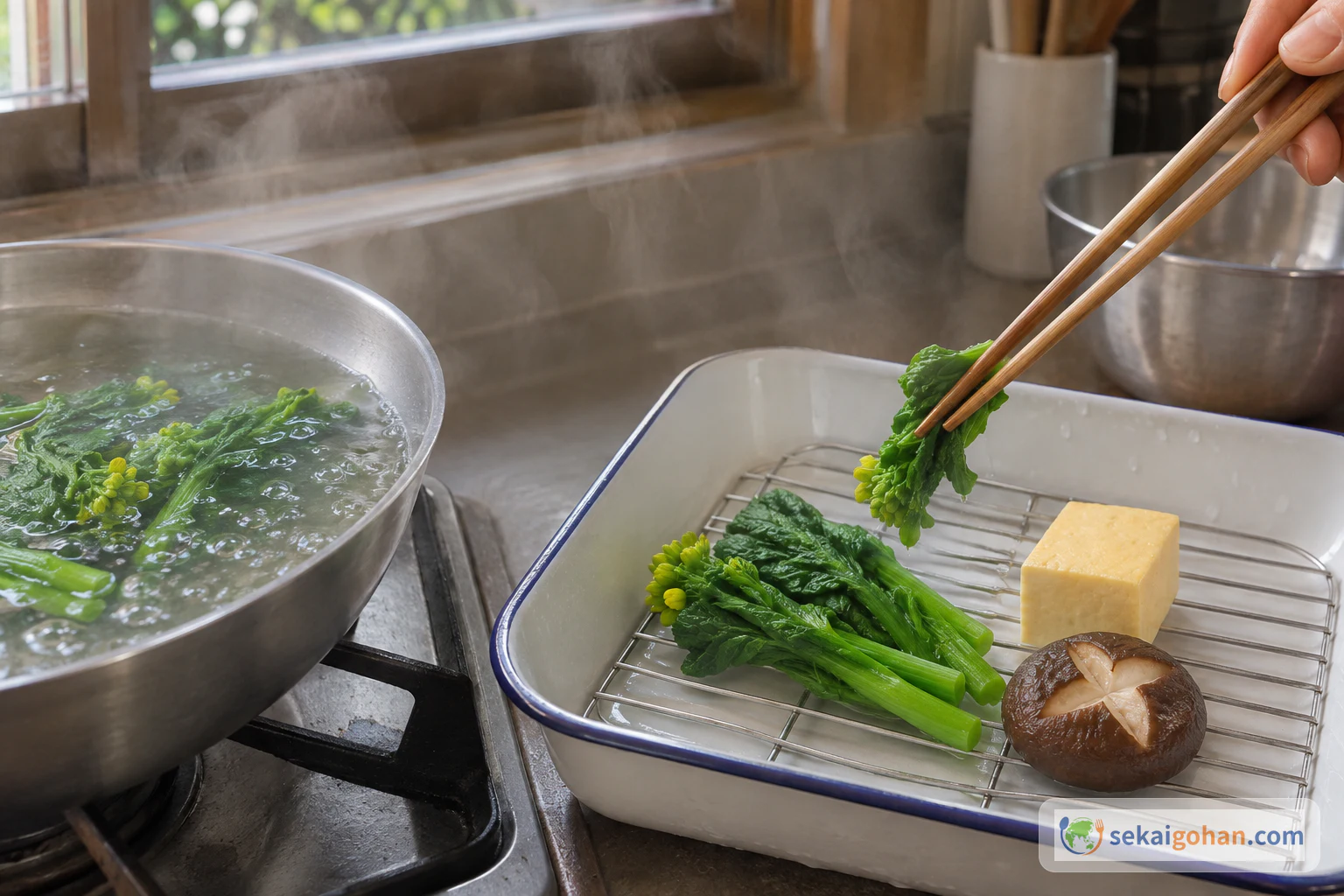
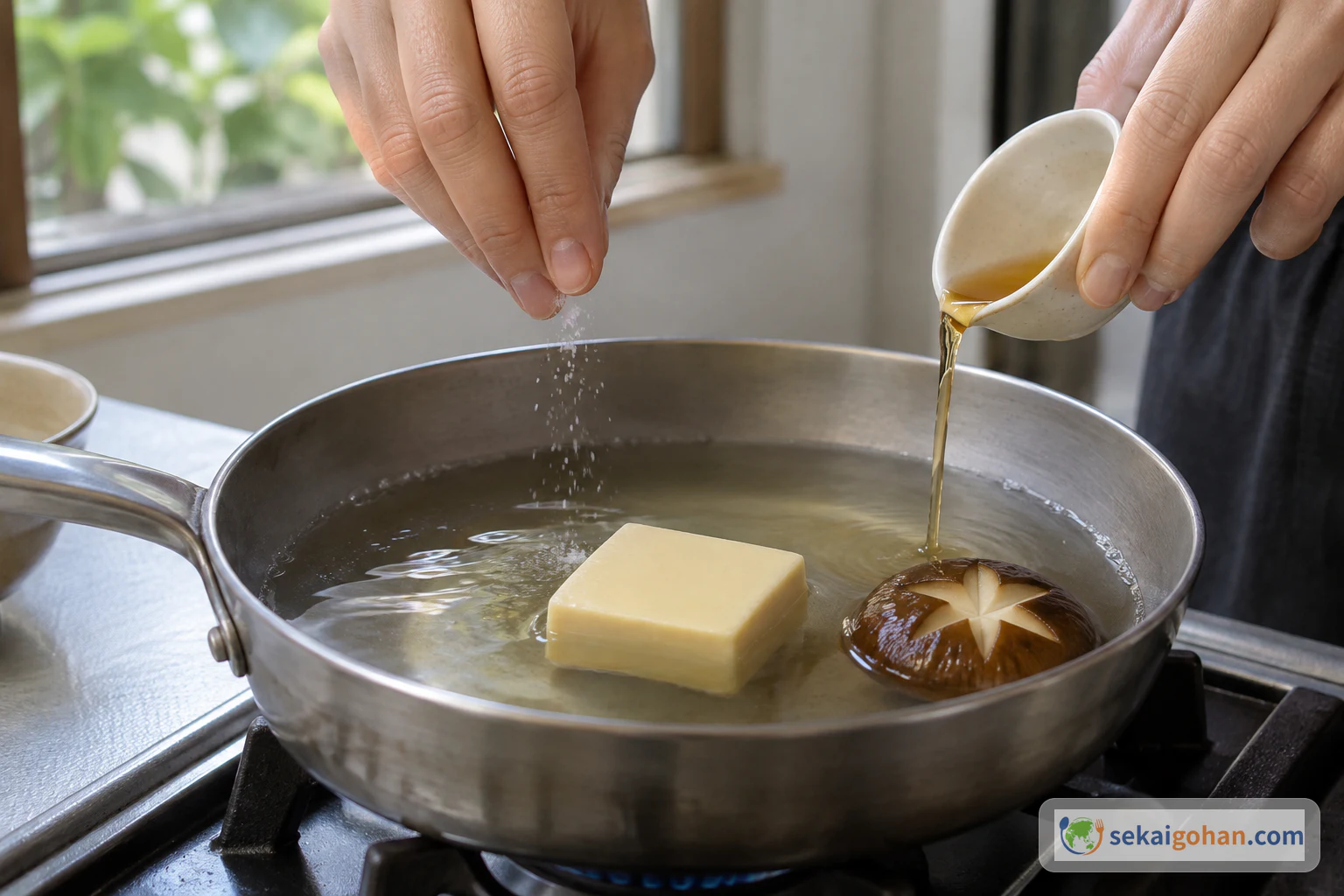
The work comes in two parts. First comes the dashi, which is mostly waiting: the kombu soaks, rests off the heat, and the flakes steep. While the kombu soaks, get the egg tofu, shiitake and rape blossoms ready and set the blanching water on to heat. After you strain the dashi, the rest moves quickly, and the broth should never boil again.
When It Goes Wrong
| What you see | Why | What to do |
|---|---|---|
| Cloudy broth | The flakes were squeezed or stirred, or the soup boiled after straining | Strain gently and let it drain on its own. After that, keep the soup just below a simmer |
| Bitter, harsh edge to the dashi | The kombu got too hot or boiled | Take it out at 195°F (90°C), or at the first small bubbles. Never boil kombu |
| Flat, weak aroma | The flakes steeped too long, or the dashi sat too long before use | Strain at 5 minutes and use the dashi soon after |
| Too salty | All the salt went in at once, or coarse salt threw off the measure | Start at ½ tsp of fine salt and taste before going toward ⅔ tsp |
| Greenish tint in the broth | The greens went in unblanched or were simmered in the dashi | Blanch rape blossoms separately and add them only in the bowl |
Serving, Variations and Keeping Dashi
Serve suimono as the soup in a rice-and-side-dishes meal, with the bowl to the right of the rice. A lid keeps the scent in until it is lifted at the table, so serve in lidded bowls if you have them. Bring the lid to the table on the bowl and let each person lift their own.
Variations
- Hamaguri for Hinamatsuri. The festival bowl uses clams as its main piece. This article gives no amounts or steps for a clam version, so follow the warning below if you make one.
- A different suikuchi. Swap the kinome for mitsuba, a twist of yuzu peel, sliced myoga or green onion. The broth stays the same, but each one gives the bowl a different scent.
- Seasonal wandane. Tofu, kamaboko or fu change with the year, as do rape blossoms and clams in spring. Keep one main piece and one or two supporting ones so the broth stays the focus.
- A quicker weekday bowl. One quicker suimono uses hanpen fish cake, fresh shiitake and mitsuba and takes about 10 minutes. It makes a lighter, simpler bowl than this ichiban-dashi version.
Buy clams sold for cooking and never eat them raw. Heat them until the centre stays at 185°F (85°C) or higher for 1 minute. While they purge sand, cover the container so the water does not splash onto other food or tools. Keep hands, knives and boards that touched raw shellfish away from other food until they are washed.
Keeping dashi
Dashi does not keep, so use it up quickly. Refrigerate any you will use soon in a covered container. For longer storage, freeze it in small portions and use it within about two weeks. The spent kombu and flakes can make a second dashi, niban dashi, which suits simmered dishes and takikomi gohan (rice cooked with seasonings and fillings) better than a clear soup.
Frequently Asked Questions
How is suimono different from miso soup?
Both fill the soup place in a Japanese meal. Miso soup has fermented soybean paste dissolved into it, which makes it cloudy and full. Suimono has only salt and soy sauce, so it stays clear and the dashi carries all the flavour.
Can I use dashi packs or instant granules?
They make a quick clear soup, and the method from step 6 onward is the same. The bowl will taste of the product, and you lose the fresh kombu-and-bonito aroma that defines suimono. On days with time, make ichiban dashi. Save the shortcuts for miso soup or simmered dishes.
Should I add the salt and soy sauce in a set order?
Add them together over gentle heat, then taste. Salt is where you have some range, so adjust with that and leave the soy sauce at 2 tsp.
Can I make the dashi earlier in the day?
Yes. Strain it, cool it, and refrigerate it covered. Warm it gently with the egg tofu and shiitake when you are ready to serve. It loses aroma as it sits, so suimono is best on the day the dashi is made.