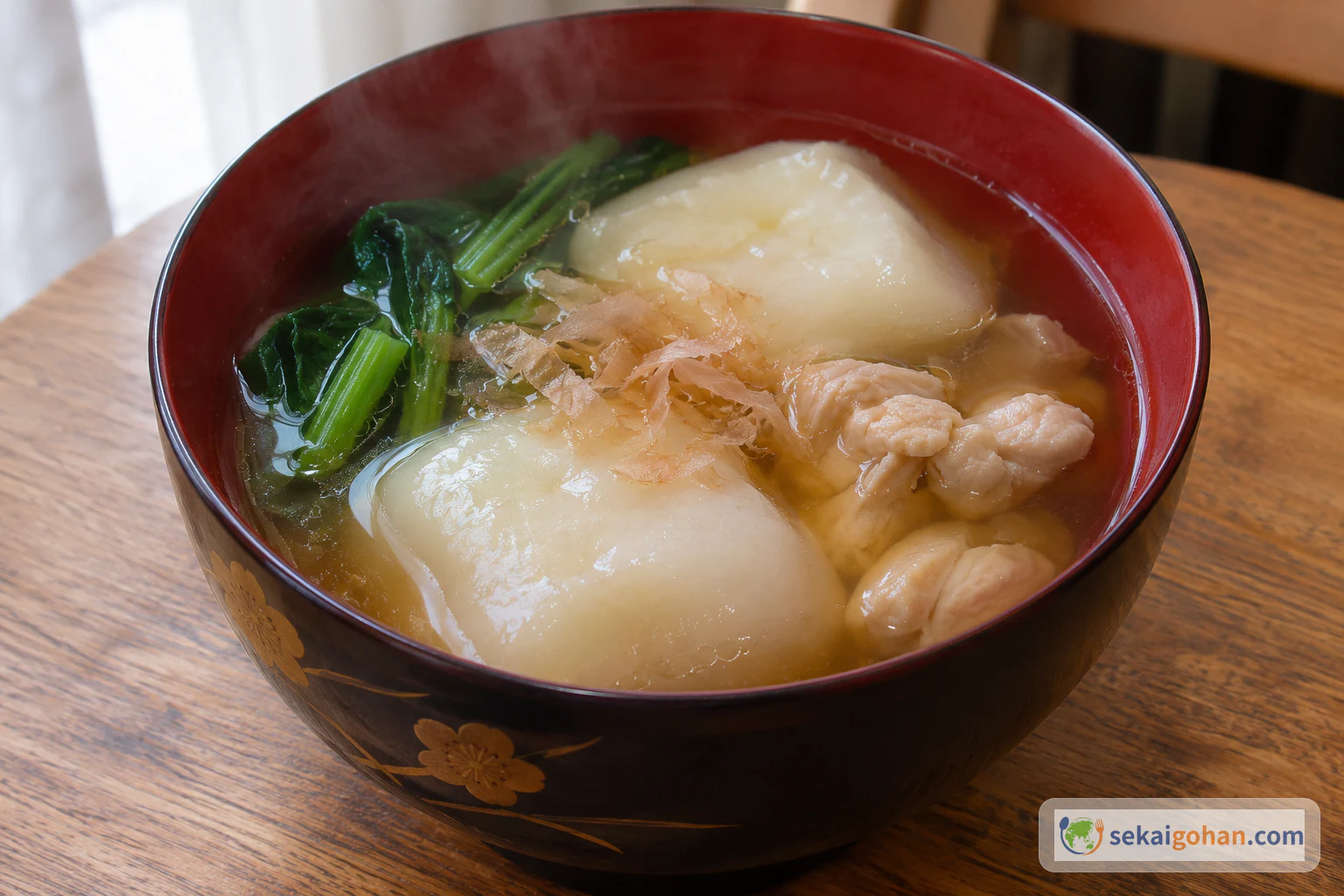
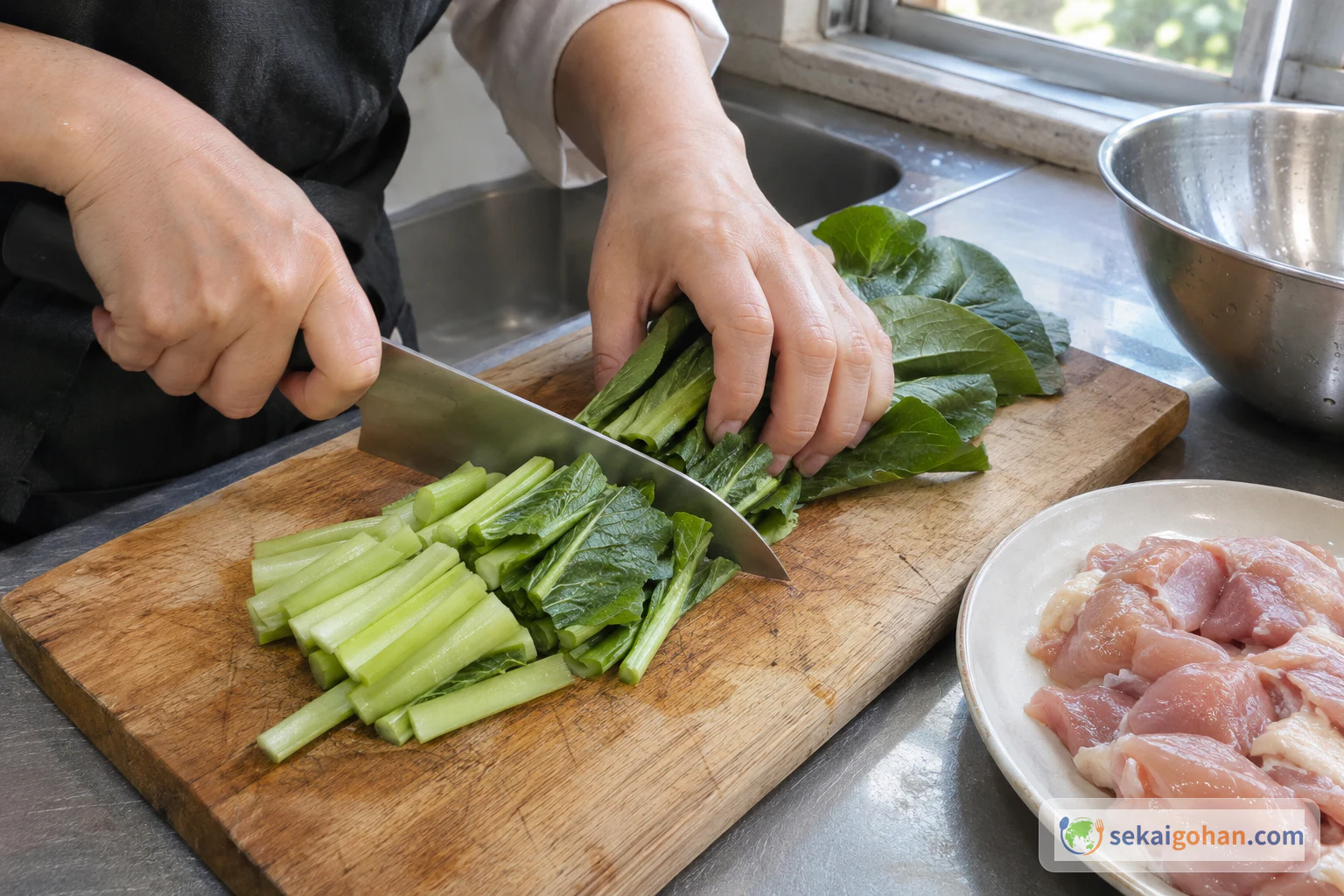
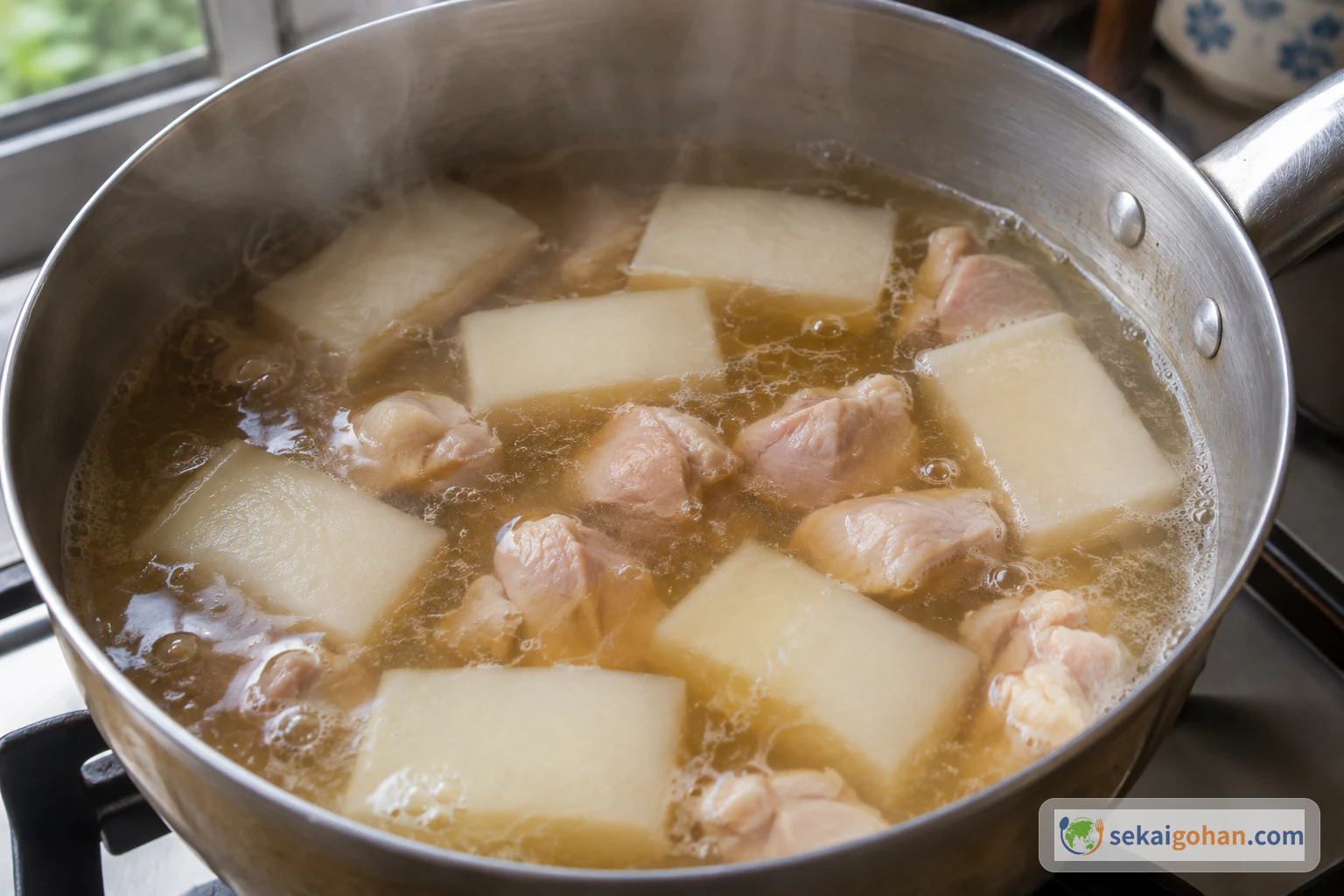
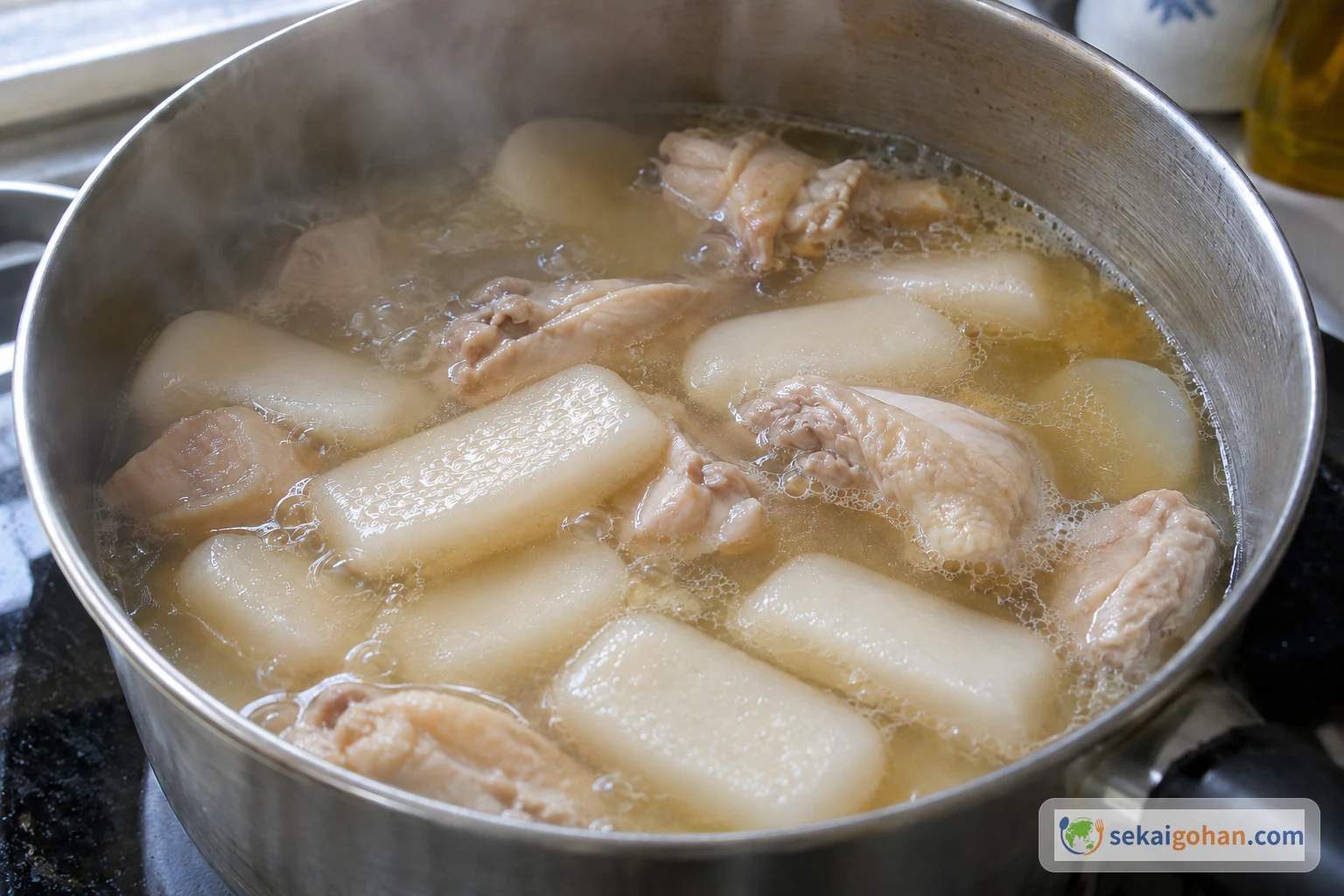
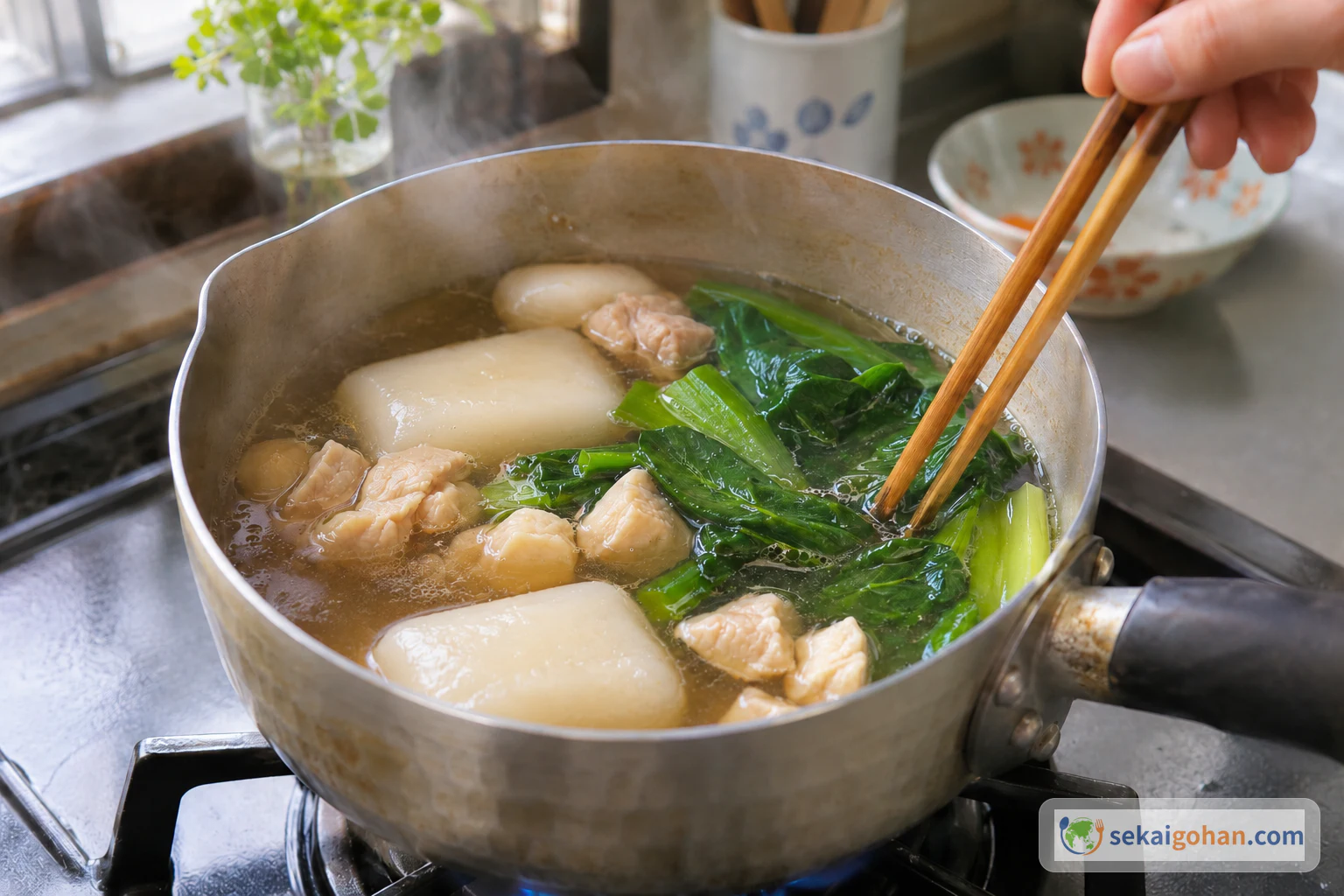
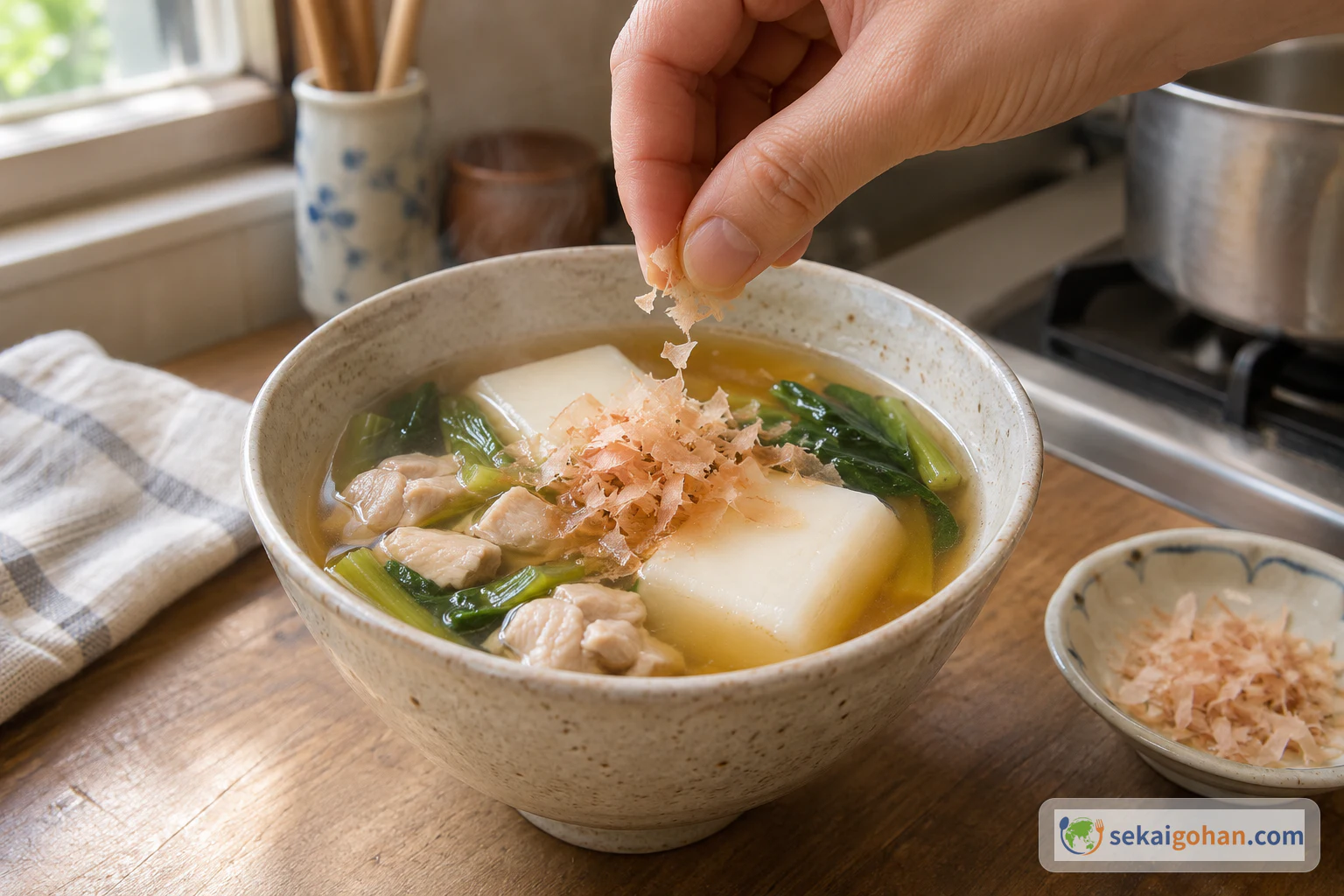
The square mochi go into the pot straight from the pack, pale and hard-edged, and the bubbling broth falls quiet around them. When it comes back to a simmer, their corners begin to round and their surfaces turn glossy; the greens go in, the soy sauce goes in last, and the kitchen fills with the smell of dashi and warm rice. This is zōni, the mochi soup Japanese households make for the first three days of the New Year. This bowl follows the Aichi way: ungrilled square mochi, a little chicken thigh, a handful of greens, and a clear broth seasoned with soy sauce and finished with bonito flakes. It tastes clean and gently savory with a faint sweetness from mirin, and the mochi turns soft and stretchy against the fresh bite of the greens.
Square Mochi, Clear Broth and a Pun on Nagoya
Every region of Japan makes zōni, and few dishes change so much from one place to the next. People say there are as many zōni as there are regions. Families argue happily over square or round mochi, grilled or simmered, clear soup or miso, a bowl crowded with seafood or one with almost nothing in it. The version a person grows up with is the one that tastes like New Year.
Aichi sits at the plain end of that spectrum. The usual bowl is square mochi and mochi-na in a soy-seasoned clear broth, with chicken added in many homes. Around Nagoya it gets plainer still: just mochi and mochi-na, no chicken at all. In Mikawa, the eastern half of the prefecture, some households make it with miso, and along the coast grilled goby goes into the stock. The mochi is never grilled first. It goes into the hot broth as it is and softens there.
Why Aichi keeps it so plain
Three explanations get passed around, and none is settled. One says the Owari lord Tokugawa Muneharu was scolded by the shogun Tokugawa Yoshimune for eating lavishly, and the region's New Year bowl turned modest after that. Another points to the frugal samurai culture going back to Tokugawa Ieyasu. The third is a pun, and it is the one people enjoy telling.
Mochi-na is a green also called shōgatsu-na, "New Year greens," an heirloom vegetable of the Owari area. Lifting mochi and na (greens) out of the bowl with chopsticks sounds like na o ageru, "to raise one's name." Some also read it as raising the name of Na-goya.
Aichi is a bean-miso prefecture, and yet its zōni carries no miso. The likely reason is that miso is everyday food there, so for a festive day households reach for clear soup instead.
Grilled or simmered, square or round
The split that tells you most about someone's zōni is how the mochi is cooked. In Aichi it simmers raw in the broth. In the Kanto style around Tokyo, square mochi are grilled until browned on both sides before they go into a clear broth with chicken and komatsuna; that broth is kept light on purpose, because the New Year osechi dishes alongside it are sweet and strongly seasoned with mirin, sugar and soy sauce. In western Toyama the mochi is grilled lightly, without letting it take on too much color. In northern Iga, in Mie, round mochi are pressed on a straw mat to print a pattern, grilled, and floated in clear soup.
Shape follows its own map. In Mie, where east and west meet, the usual explanation is that round mochi came from the court culture of the west, while the square, cut noshi mochi spread from the simplified samurai culture of the east, until the Ibuki and Suzuka mountain ranges stopped it moving further south. Mie households still keep both. In 2011, every fourth-grader in the prefecture helped map their family's zōni, and the map still showed nine regional blocks that had existed since the early twentieth century. In a survey of parents and children in 2009 and 2010, 92% of Mie households ate zōni every year, and 98% of the university-age children in those households ate it too. The bowl passes down at home.
One bowl per place
These are individual regional styles, set side by side so you can find yours. They are not a map of the whole country.
| Region | Mochi | Broth | Main toppings | How the mochi is cooked |
|---|---|---|---|---|
| Aichi (this recipe) | Square | Clear, soy sauce | Mochi-na or komatsuna, chicken thigh, bonito flakes | Simmered in the broth, not grilled |
| Kanto | Square | Clear kombu and bonito dashi, light soy sauce | Chicken thigh, komatsuna, knotted kamaboko, yuzu peel | Grilled in a pan, on a rack or in a toaster |
| Kyoto | Round | White miso with kombu dashi | Kintoki carrot, daikon, taro, mitsuba, yuzu peel, bonito flakes | Boiled in hot water, not grilled |
| Eastern Toyama (Shimoniikawa) | Mochi | Kombu and fish-head stock, salt and soy sauce | Young yellowtail (fukuragi), filefish, mackerel, shrimp, vegetables, rolled kamaboko | Boiled in a separate pot and rinsed in hot water |
| Western Toyama (Tonami) | Mochi | Dashi seasoned with soy sauce | Long leeks with roots on, kamaboko | Grilled lightly, without much color |
| Mie | Square and round both | Clear soup to miso | Mochi-na, daikon, taro, komatsuna, shiitake, carrot | Boiled; or grilled and passed through boiling water; or grilled |
The toppings carry wishes. In Toyama, long leeks go in with their roots attached, a wish to live long enough for your hair to turn white. Both halves of that prefecture add rolled kombu kamaboko, often the red-and-white kind. At year's end, rolled kamaboko fills supermarket shelves, and in Uozu the shops lay out plain-grilled fukuragi for the pot. In 2020, Uozu even held a zōni class for people who had moved to town from elsewhere, so newcomers could make the local bowl.
Ingredients (serves 4)
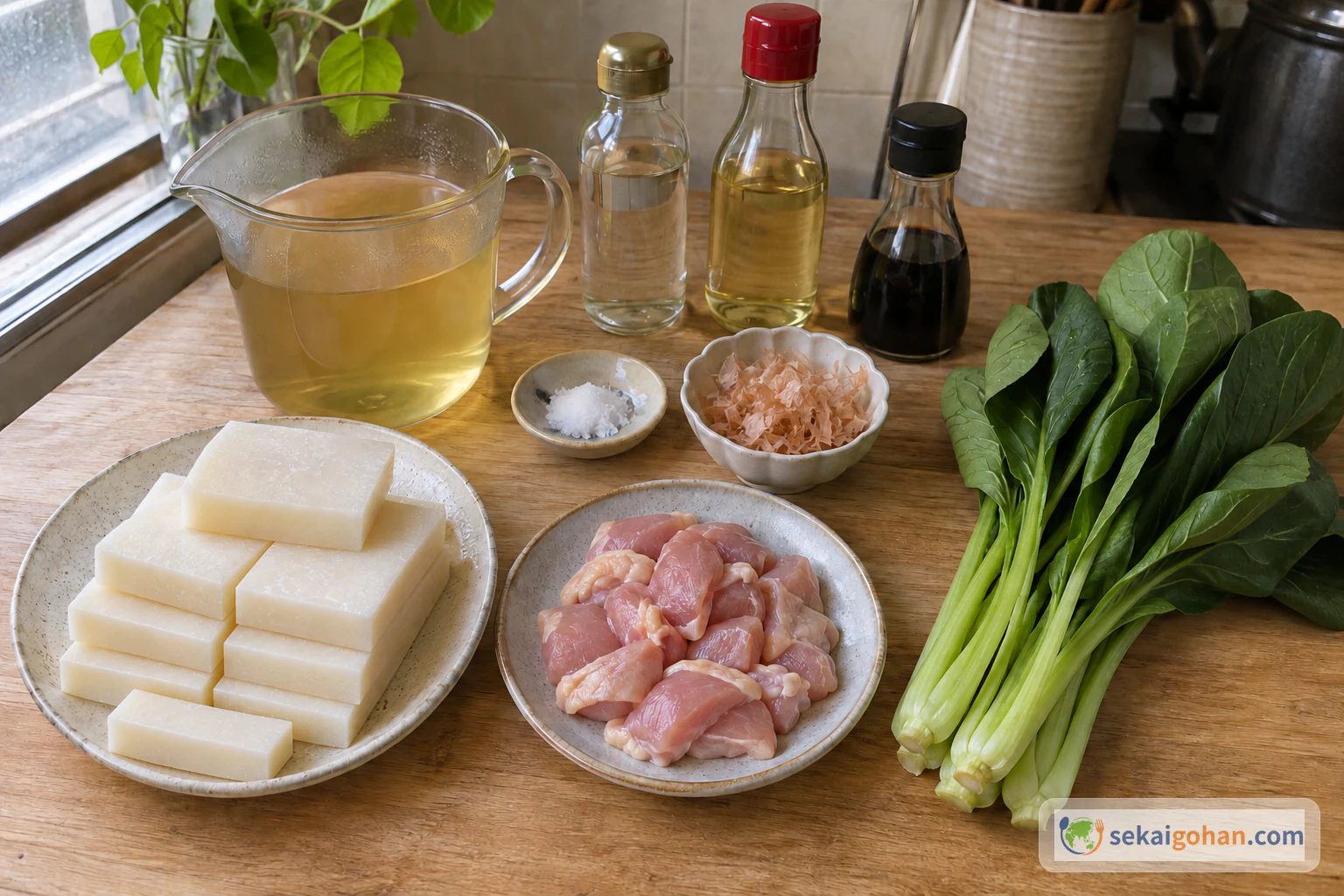
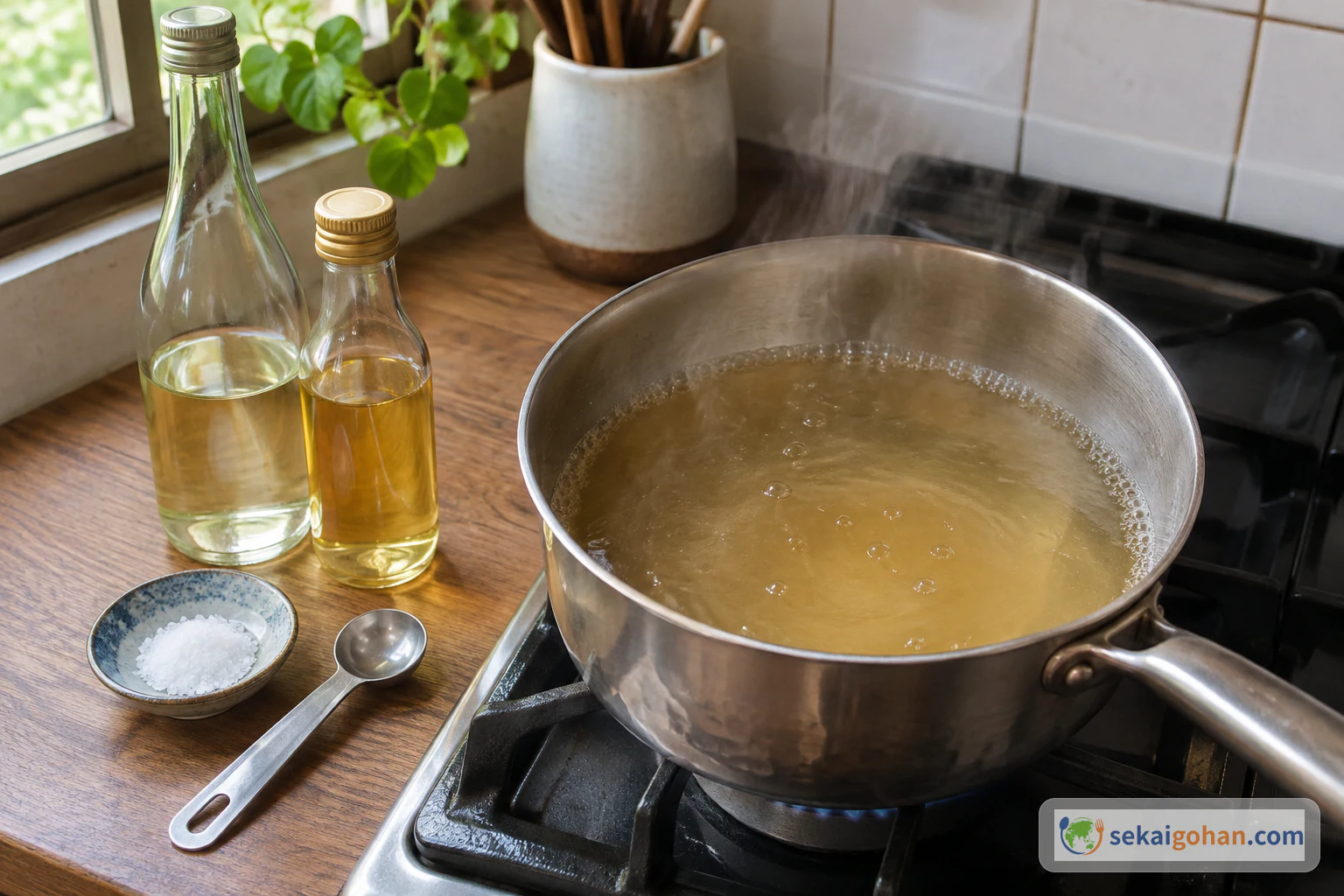
The broth seasonings form one group that goes into the pot together. Soy sauce stays out of that group and goes in at the very end.
Check the labels of your products. Mochi is made from glutinous rice, soy sauce usually contains soy and wheat, and bonito flakes are fish. Dashi granules and packs can contain other ingredients, so read those labels too.
Equipment
- Saucepan, about 7–8 inches (18–20 cm) across, large enough for the broth and 8 pieces of mochi
- Cutting board and knife
- Measuring spoons
- 4 soup bowls
- Fine strainer and paper towel, if you make dashi from kombu and bonito flakes
Choosing and Substituting
Mochi: Individually wrapped square kiri-mochi are the easiest to buy and portion. Round mochi work too; the texture is the same and only the shape changes, so check them with the chopstick test in step 5.
Greens: Mochi-na is softer, sweeter and less harsh than komatsuna. Komatsuna is the accepted substitute and gives a firmer stem and a slightly greener edge. Some Aichi households use nothing but mochi-na, so the greens alone can carry the bowl.
Chicken: Thigh gives the broth its quiet richness. Breast makes a lighter, leaner broth with less body.
Seasonings: Cooking sake works about the same as drinking sake. Mirin-style seasoning tastes sweeter than real mirin. Regular dark soy sauce gives deeper color and aroma; light (usukuchi) soy sauce keeps the broth pale and lets the dashi come forward.
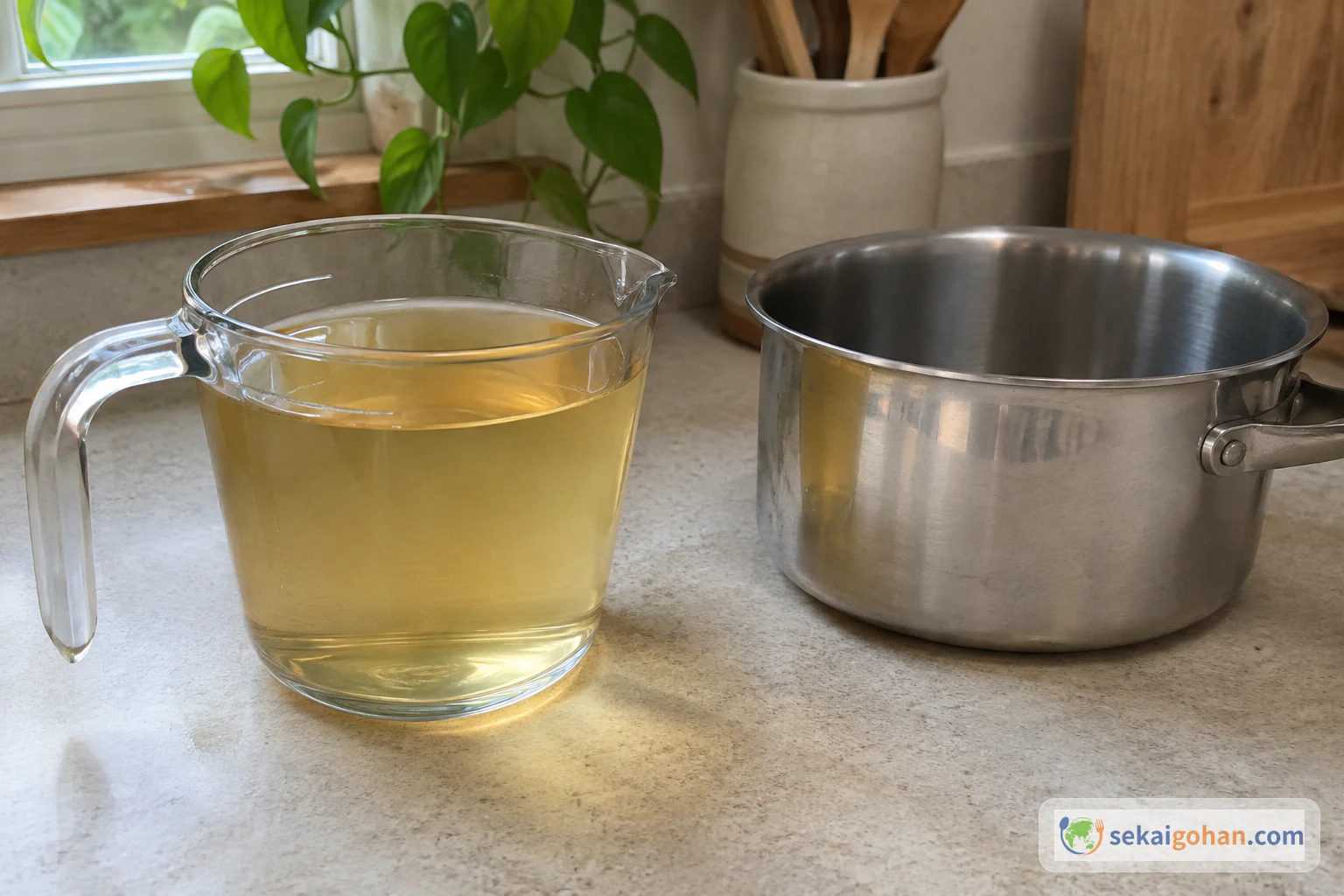
Dashi: Granules or dashi packs give a steady, reliable savoriness; dashi made from kombu and bonito flakes smells brighter.
Put ¼–⅓ oz (5–10 g) kombu in about 4¼–5 cups water and warm it over low heat for about 10 minutes, taking the kombu out before the water boils; kombu gives its best at 160–175°F (70–80°C). Raise the heat for 2–3 minutes, add ¾–1 oz (20–30 g) bonito flakes just before it boils, turn off the heat at once and wait 2 minutes; bonito likes about 185°F (85°C). Strain through paper towel and let it drip on its own without squeezing. This makes more than you need: measure 2½ cups (600 ml) for the pot and use the rest for other cooking.
What keeps this bowl tasting of Aichi is the ungrilled square mochi, the clear soy broth, and leaving out kamaboko, yuzu and mitsuba. The greens and the dashi are where you can bend to what your shop has.
Method
The work is short and happens in one pot. Cut the greens and chicken and have the dashi measured before you turn on the heat, because once the broth boils everything follows in quick order. The only waiting is while the mochi softens, and that is the moment to watch.
A little broth in the bottom of each bowl before the mochi goes in keeps the mochi from sticking to the bowl. Soft mochi pressed against a dry bowl clings and tears when you lift it.
When It Goes Wrong
| What you see | Why | What to do |
|---|---|---|
| Cloudy, slippery broth | Starch from the mochi and fat from the chicken | Trim the yellow fat under the chicken skin and skim the scum as it rises |
| Broth too salty or too flat | Soy sauce went in without tasting | Taste after the greens, then add soy sauce; never put it in with the first seasoning group |
| Mochi sticks to the bowl and tears | Mochi went into a dry bowl | Ladle a little broth in first, then add the mochi |
| Mochi falls apart | Simmered too long or boiled too hard | Pull the pot from the heat as soon as a chopstick slides through, and keep it at a gentle bubble |
| Greens tough or dull | Stems and leaves cooked unevenly | Add stems before leaves; split thick komatsuna stems lengthwise |
Serving, Variations and Storage
Zōni is eaten on the first three days of the New Year, usually alongside osechi. Serve it hot, as soon as the bonito flakes go on.
Mochi is the most common food in choking deaths according to research in Japan, and it is worth taking seriously at the New Year table. In 2024, 4,383 people in Japan died from food blocking the airway, 3,992 of them aged 65 or older, about 91%. That figure covers all foods, not mochi alone. Mochi grows firmer as it cools and gets stickier around 104°F (40°C), so a piece that looks soft in the bowl can be firmer by the time it reaches the throat. Many people eat zōni only once a year and are out of practice. Cut the mochi into small pieces, keep each bite to an easy size, chew slowly and well before swallowing, and moisten the throat with tea or broth before eating. Washing down mochi that has not been chewed with a drink is dangerous. When older family members eat, someone should sit with them and watch. Learn first aid for choking from official guidance before the holiday.
Variations
Grilled mochi, Kanto style. Brown the mochi in a frying pan over medium heat, turning it constantly until both sides have toasted spots; a grill rack or toaster oven works too. It is done when the sides feel soft to the touch. Add it to the bowls at the end. The bowl gains a toasty, nutty aroma.
Light soy sauce. Swapping usukuchi soy sauce for the 2 tablespoons of regular soy sauce keeps the broth pale and clear, and the dashi comes forward.
Yuzu peel instead of bonito flakes. A sliver of yuzu peel on top changes the finishing aroma from smoky to citrus, the way Kanto bowls finish.
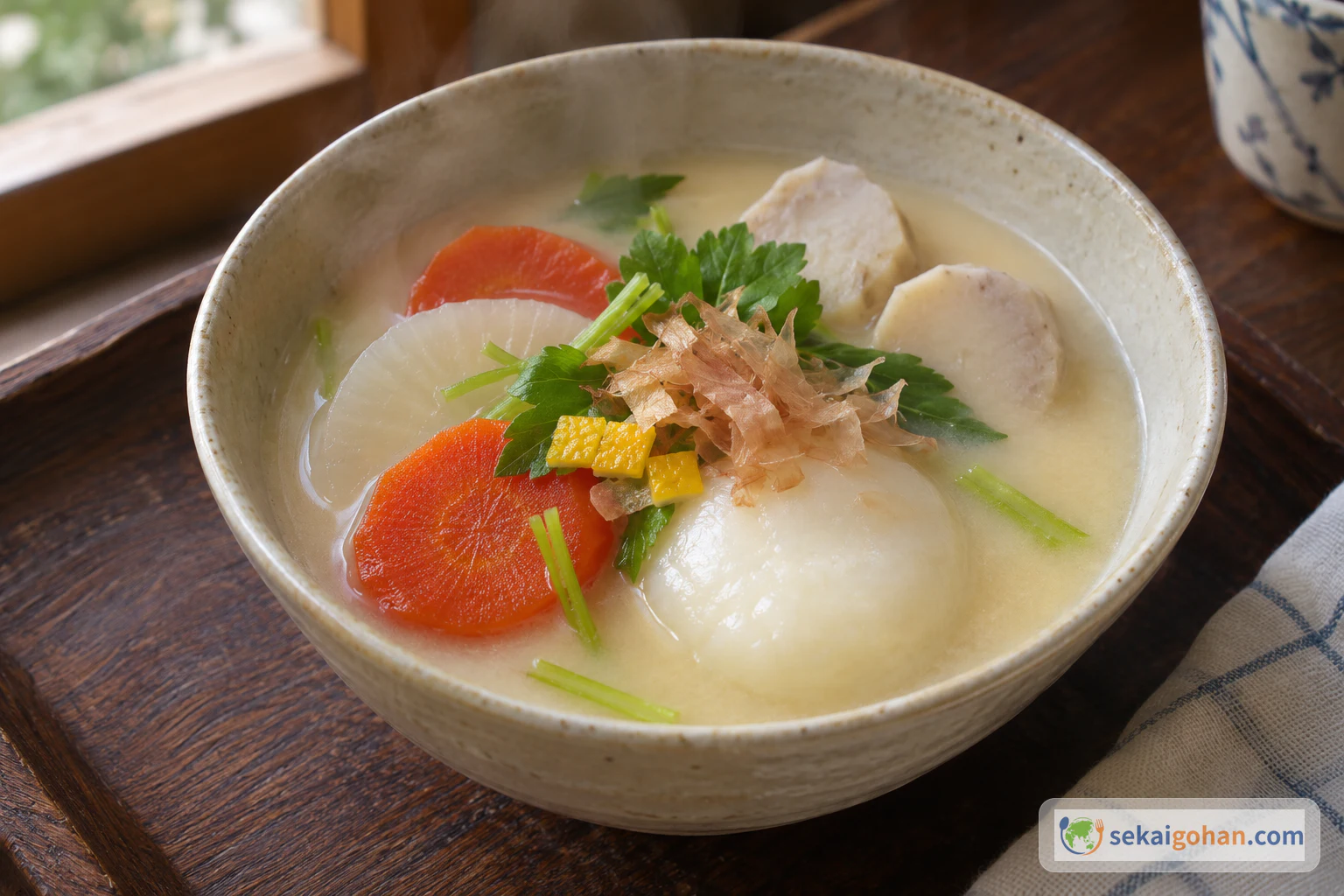
Kyoto white miso. This is a separate pot, not miso stirred into the clear broth. For four, cut ½ Kintoki carrot (4 oz / 120 g) and 3 oz (80 g) daikon into rounds about ⁵⁄₁₆ inch (7–8 mm) thick, and peel 2 taro and slice them ⅜ inch (1 cm) thick. Parboil the vegetables for about 8 minutes to clear the taro's slipperiness, then warm them in kombu dashi, dissolve in 3 oz (90 g) white miso (saikyo miso) and bring it to a simmer once. Boil 4 round mochi in hot water until soft, without grilling. Top with mitsuba cut to 2 inches (5 cm), ⅜-inch (1 cm) squares of yuzu peel and bonito flakes. White miso brands differ in saltiness, so taste as you dissolve it.
Storage
Zōni is made to eat right away. Mochi left in the broth keeps drinking it and slumps apart. Cook only as much mochi as you will eat now, and add fresh mochi to the broth when you serve the next round.
Frequently Asked Questions
Can I leave out the chicken?
Yes. Around Nagoya the usual bowl is just mochi and mochi-na. The broth turns lighter and more delicate, and the greens and dashi carry the flavor.
Can I add kamaboko or shiitake?
Neither is part of this Aichi bowl; kamaboko and shiitake belong to other regional styles, such as the Kanto and Mie bowls in the table above. If you add them, put them in with the greens so they warm through. The bowl then moves away from the plain Nagoya style.
My mochi is frozen. Does that change anything?
Cook it as in the recipe and judge doneness by the same chopstick test rather than by time, before adding the greens. Follow the mochi package for any thawing.