Macarons: A Cookie That Is Not Finished When It Leaves the Oven
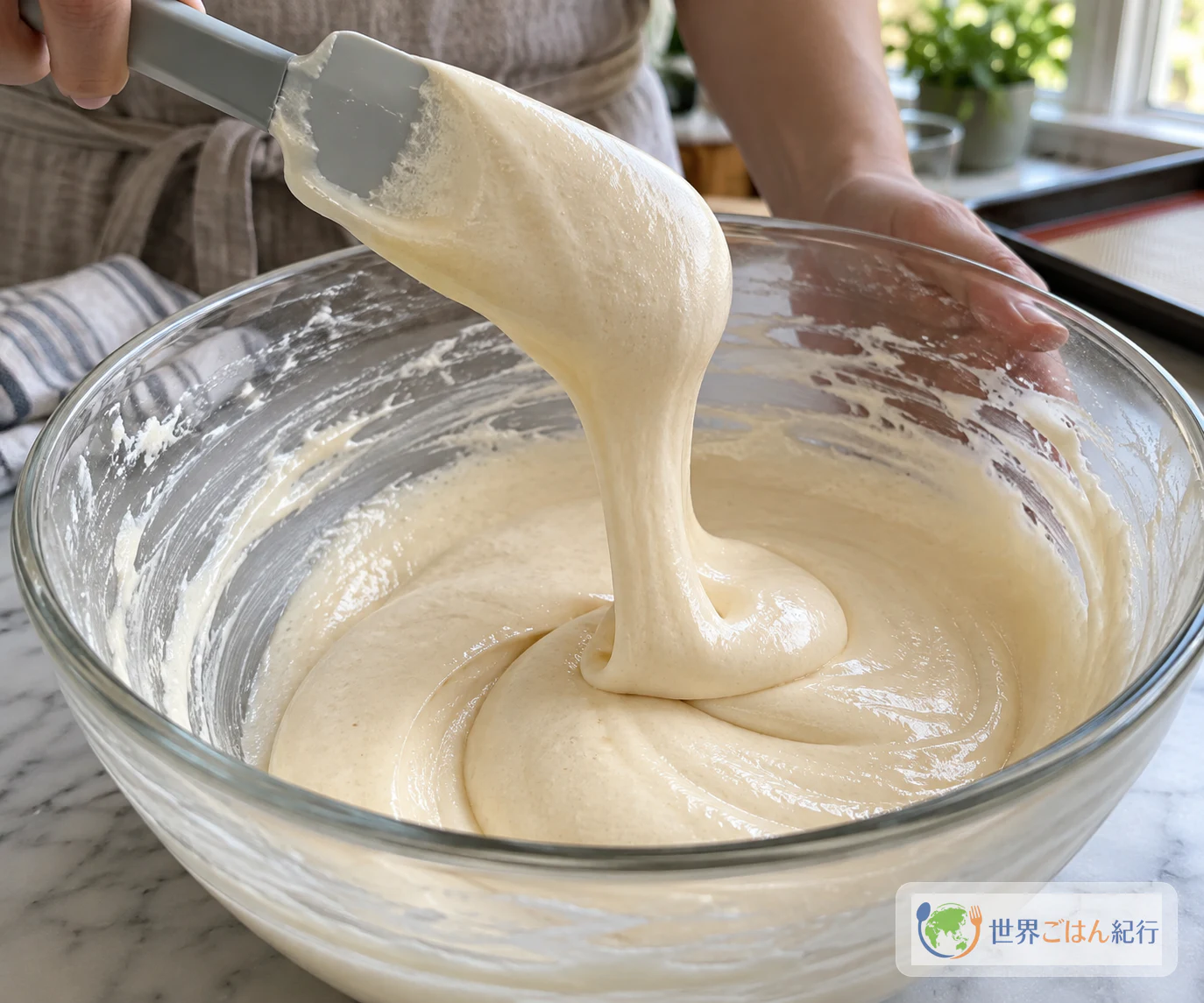
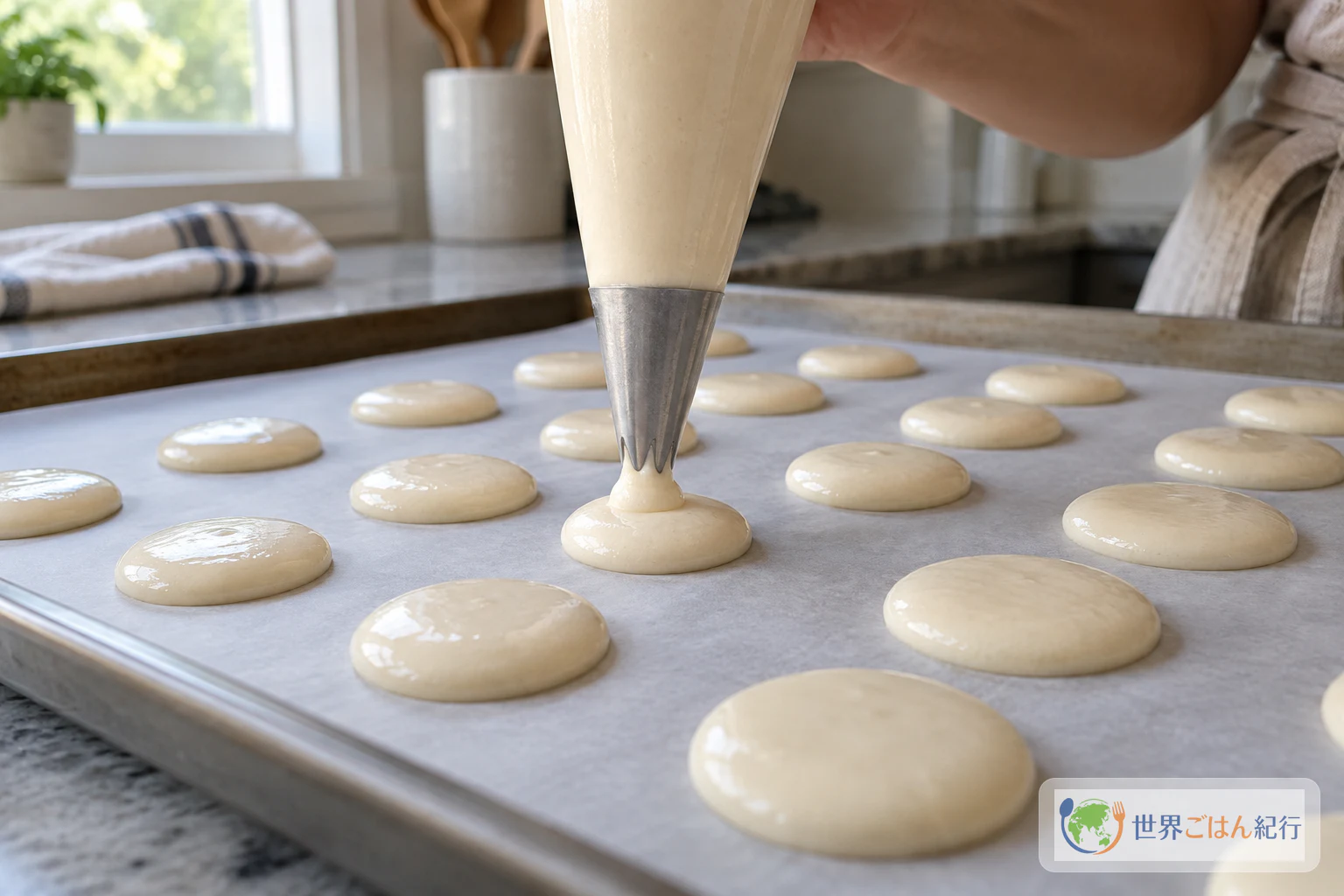
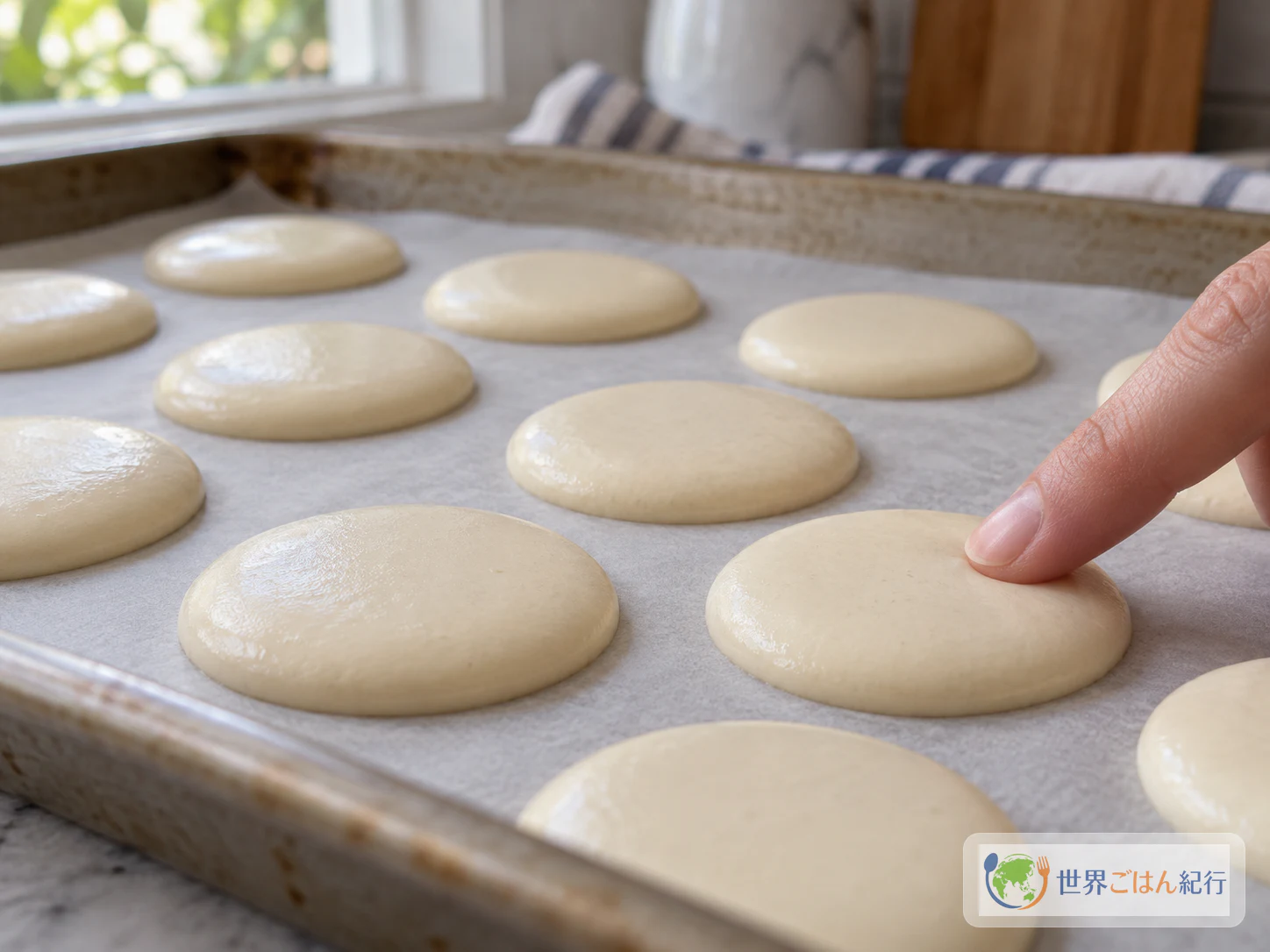
Stop folding when the batter is glossy and falls in a slowly settling ribbon. Bake only once the surface has a dry skin that doesn't stick to your finger. After filling, give the macarons time in the refrigerator before you eat them.
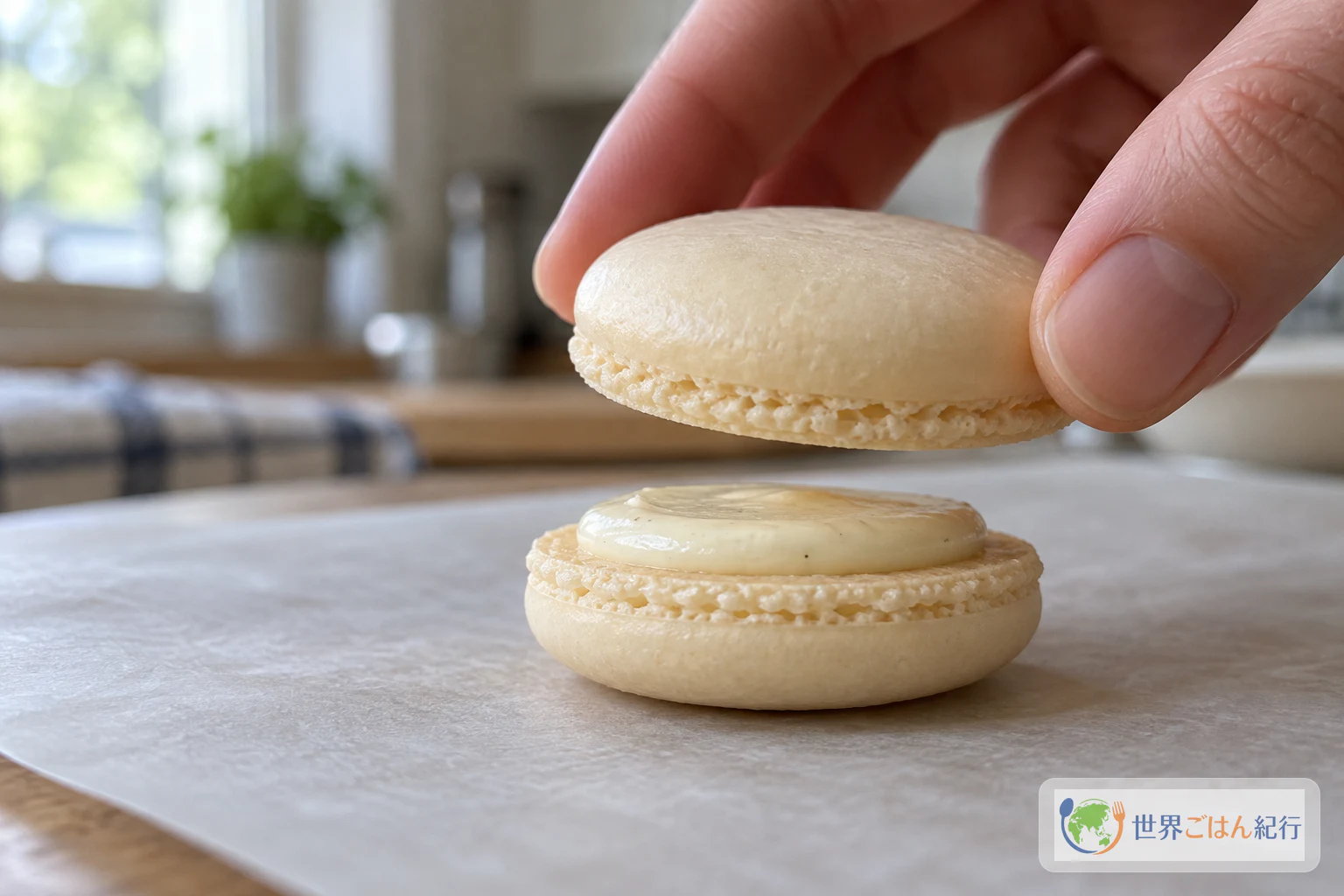
Once the shells have cooled on the baking sheet, you match them by size, pipe a small mound of buttercream onto one, and press the second shell on top until the filling reaches the edge. This still isn't the end. The recipe this article follows, from King Arthur Baking's test kitchen, sends the filled macarons into the refrigerator for another 24 to 48 hours so the shells can soften slightly against the cream. Then you bring them out at least an hour before eating.
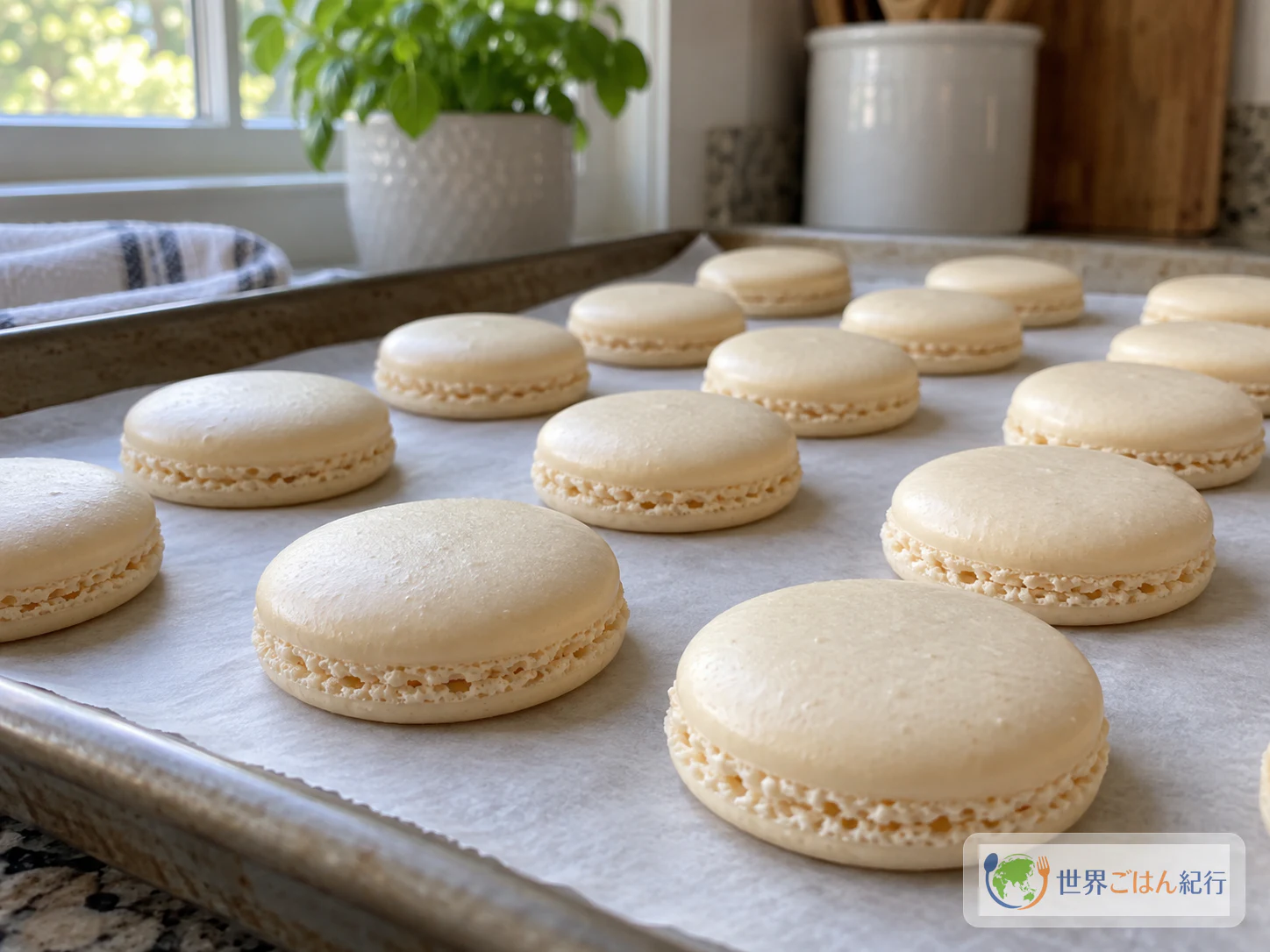
Behind the color and neat shape of a macaron are two judgments you make by eye: how the batter flows at the end of mixing, and whether the piped surface has dried enough that it no longer sticks to a fingertip. The ruffled "foot" at the base of a shell and the thin crust over a tender interior both come out of those two moments.
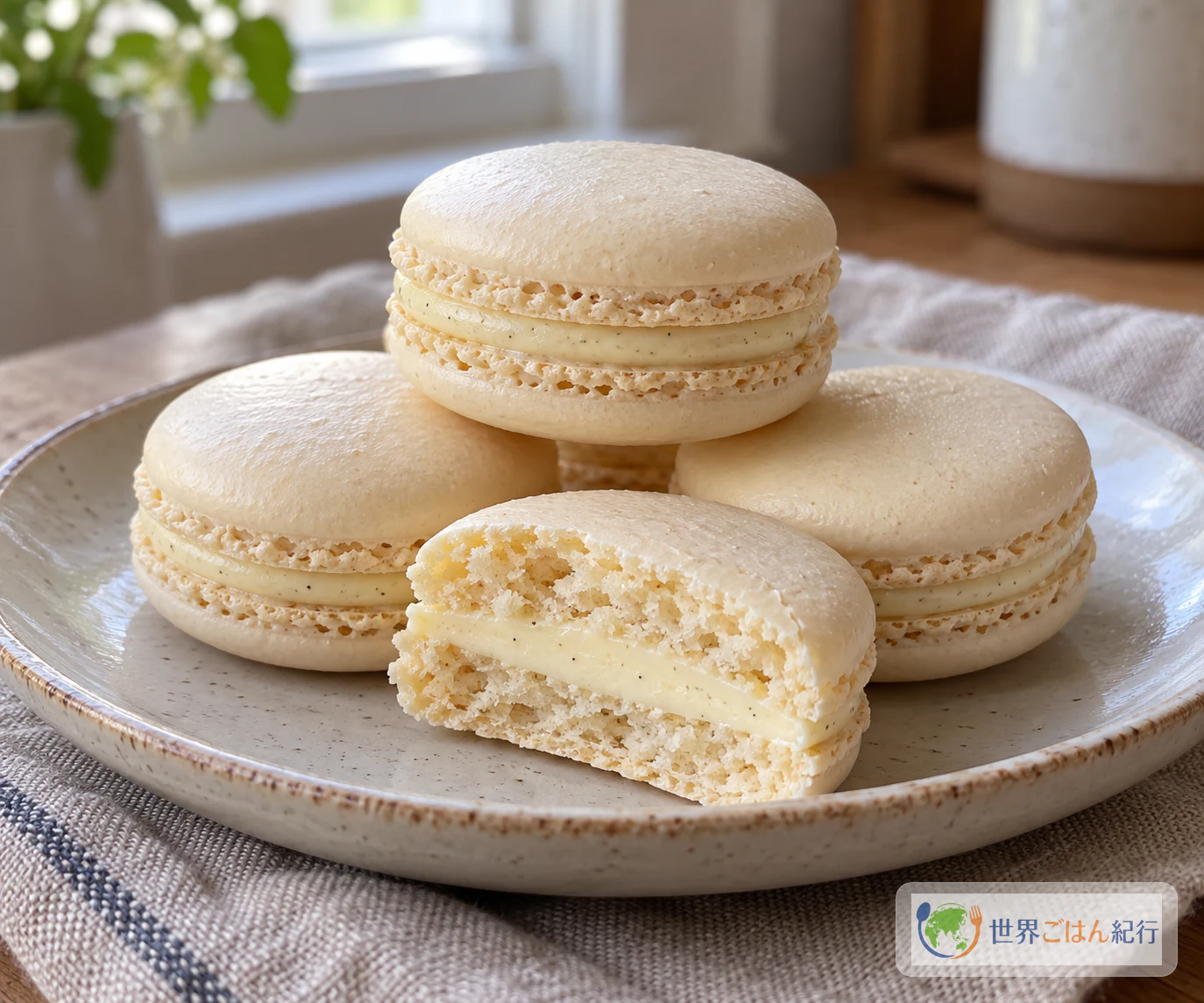
This is the Parisian (French) macaron: two almond-meringue shells, called coques, sandwiching a filling. It is a different confection from the macaron of Nancy, a single, round, cracked almond biscuit eaten on its own. In English, "macaron" and "macaroon" are easily confused; this article is about the French sandwich type.
Here the shells are left uncolored, an ivory almond shade, and filled with vanilla French buttercream. Keeping the base version plain makes it easier to read the state of the batter, the skin and the feet.
Ingredients for About 24 Filled Macarons
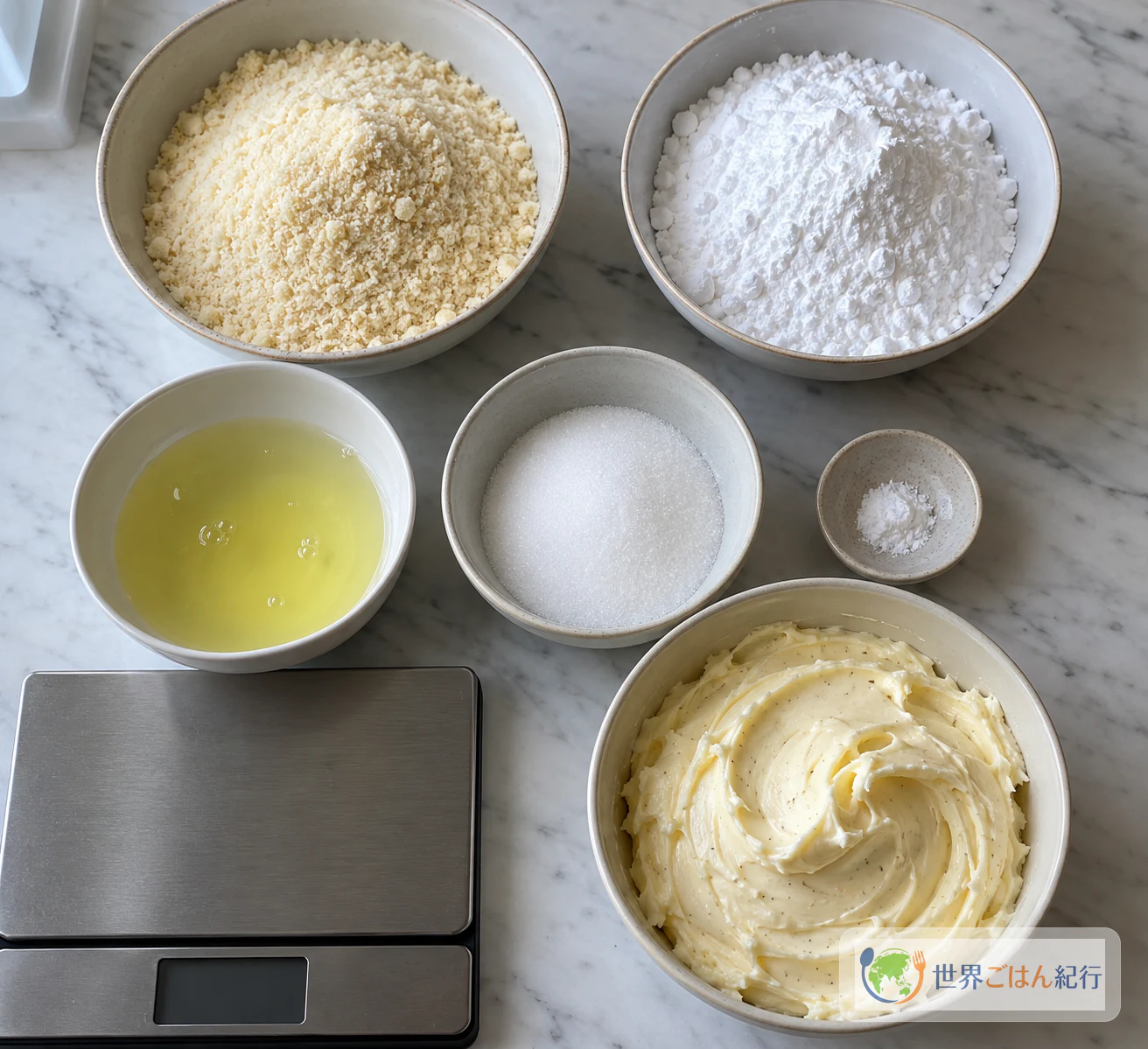
These amounts are one set. Mixing the flour, sugar or egg-white amounts with another recipe changes the batter. The recipe yields about 24 filled macarons, which means about 48 shells paired into 24 sandwiches.
Allow about 40 minutes of hands-on time, 15–20 minutes of baking, and about 2 hours overall. The 24–48 hours of resting in the refrigerator after filling is separate from that.
The filling is 200 g of finished French buttercream. The buttercream is not part of the shell formula. You can use 200 g of buttercream you already have, or make the separate full batch listed below and weigh 200 g out of it.
These macarons contain almonds (a tree nut) and egg. The buttercream adds milk (butter). Check the labels of almond flour, confectioners' sugar, buttercream and other products for allergen and shared-facility statements.
Choosing and Substituting: What to Look for in Almond Flour and Sugar
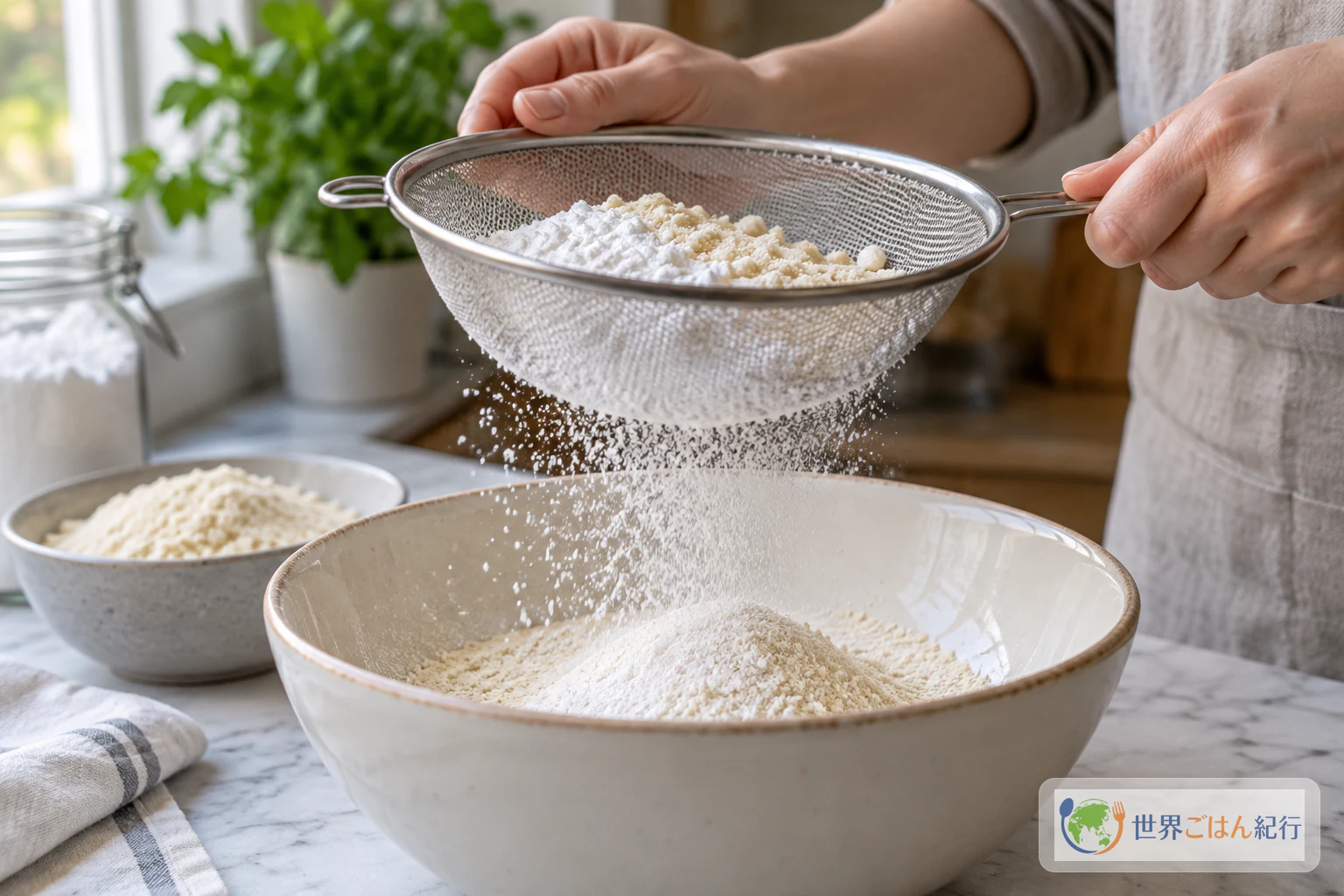
Almond flour should be as finely ground and dry as possible. Coarsely ground almonds, or replacing it with wheat flour, will not give the same result.
Confectioners' sugar varies between products and countries; some contain cornstarch or other added ingredients. Don't assume every powdered sugar behaves the same. Read the label and choose the product closest to plain confectioners' sugar.
Egg whites are given by weight, so a scale matters more than egg size. Bring them to room temperature before you start.
Cream of tartar is usually found at specialty baking suppliers or online. The formula includes it; if you omit it, you are changing the recipe.
The buttercream is the one part where you have a real choice. If you don't want a large surplus, use 200 g of French buttercream you have already prepared. If you want to make it from scratch, the full batch above is a separate recipe with its own ingredients. Don't shrink it by guesswork.
Equipment
- Digital scale that reads in 0.1 g or 1 g steps
- Fine-mesh sieve
- Hand mixer or stand mixer
- Flexible spatula
- Piping bag
- Plain round piping tip, about 1/2 inch (about 1.3 cm)
- Flat baking sheet
- Parchment paper; the batter sticks badly to an unlined pan
- Airtight container for resting and storing the filled macarons
- For the optional buttercream only: a saucepan and a thermometer that can read the hot sugar syrup
Method: Meringue, Macaronage, Skin, Bake, Fill, Rest
Every time in this method is a guide. At each stage, check what the meringue, batter or surface looks like before moving on.
When It Goes Wrong: What to Check Before the Next Batch
A macaron's feet, cracks and spread usually come from several conditions acting together. Rather than blaming a single cause, write down the conditions of each batch and change one thing at a time.
| What you see | What to check | Next time |
|---|---|---|
| No feet, or cracked tops | Whether the surface had fully dried; how far the batter was folded; oven temperature, preheating and pan conditions | Check them in that order and record each one. No single cause is certain |
| The peaks from piping don't settle | The batter may be underfolded; also check the size of the tip and how you piped | More folding is not guaranteed to fix it; look at both factors |
| Rounds spread flat, or feet are weak | Overfolding, how far the meringue was whipped, room humidity, drying | Don't change several of these at once |
| Bottoms stick to the parchment | Whether the shells had cooled completely | Use the source's fix: the whole sheet in the freezer for 15–20 minutes. Don't assume they were underbaked |
| Shells brown too much | Oven temperature | Lower to 300°F (about 149°C) as the source suggests. Color and doneness are not the same thing |
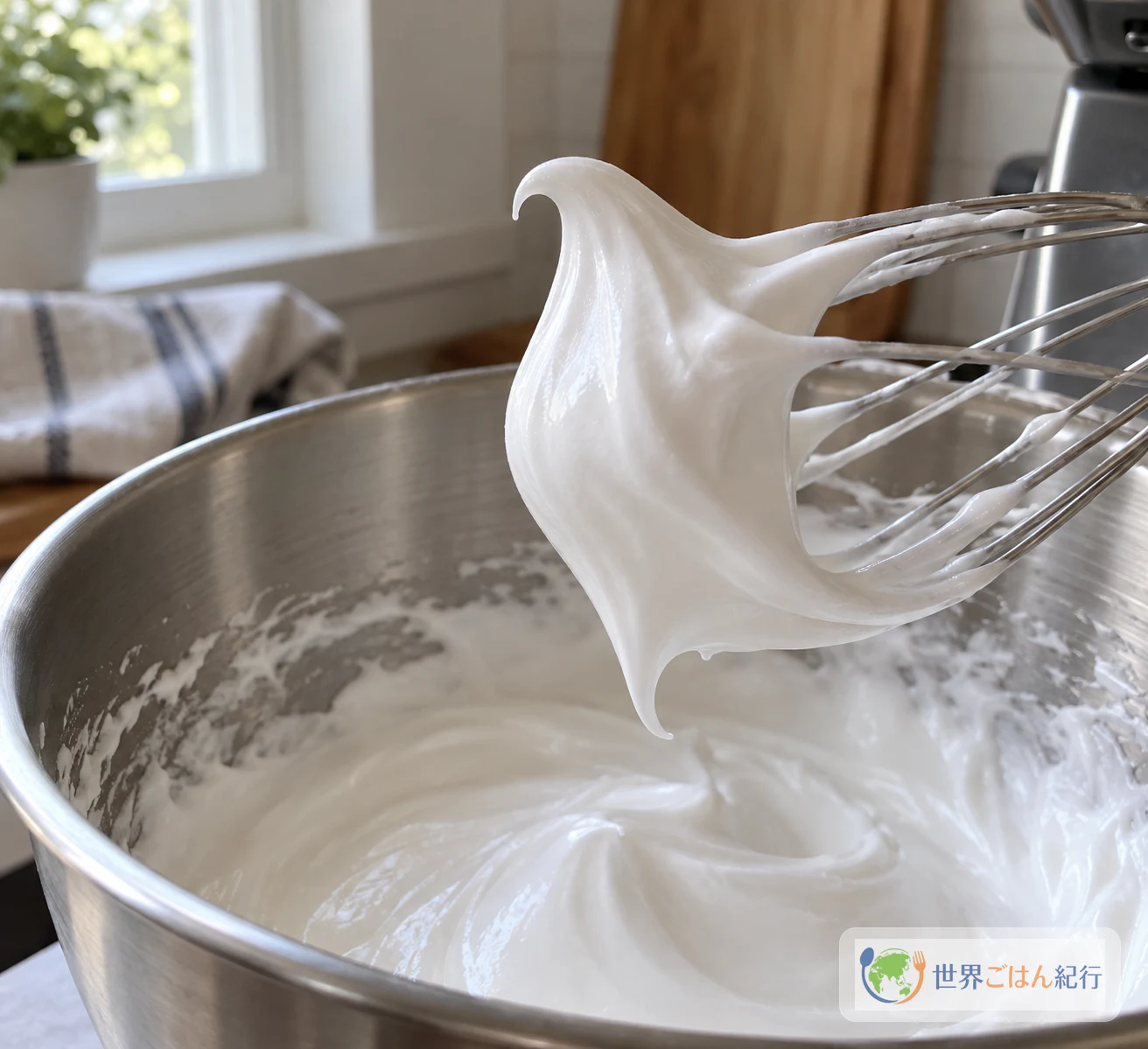
The reference points from the method are the ones to come back to: a medium peak with a bending tip, a ribbon that settles slowly, a skin that doesn't stick to your finger, and shells cooled fully before you lift them.
Storage
Kept airtight, the shells or the finished macarons can be refrigerated for up to 1 week or frozen for up to 1 month, according to the source recipe. That is a storage guide from the source, not a guarantee of safety for carrying them around or leaving them out at room temperature.
If you made the full buttercream batch, the source for that recipe says the surplus can be refrigerated for up to 1 week or frozen. Products and kitchens differ, so treat that as the source's guidance rather than a safety guarantee.
Variations: Changing the Filling, Not the Shells
These are suggestions separate from the base recipe. The shell formula stays the same; the changes go into the buttercream.
| Variation | How | What to keep in mind |
|---|---|---|
| Blueberry | Blueberry powder in the buttercream | The source's tip starts from 1 tablespoon for a full batch of frosting. That amount is for the whole batch; don't add 1 tablespoon to the 200 g portion |
| Lemon | Lemon juice powder in the buttercream | A powder, not added liquid |
| Vanilla | Vanilla bean paste in the buttercream | Already part of the full buttercream batch above |
| Chocolate | Use the chocolate version from the buttercream recipe | It needs more ingredients, so treat it as a separate recipe in full. Don't add cocoa to the shells |
| Color | Gel food coloring in the buttercream | Coloring the shell batter is a change to the recipe whose amount would need testing |
Not One Origin: Macarons Across France
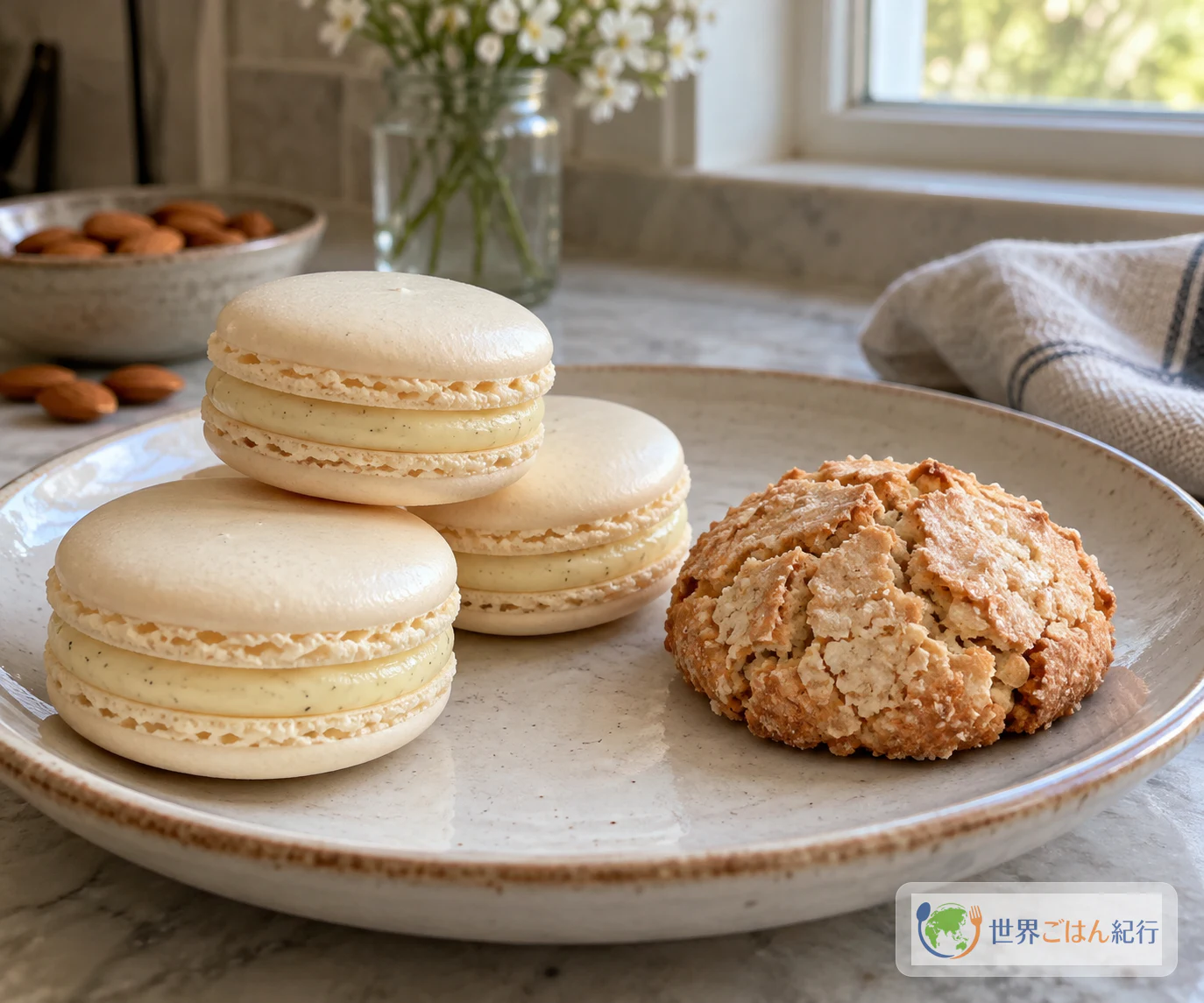
The macaron is older and more varied than the colorful sandwich in a pastry case. Early French macarons were baked confections built mainly on almonds, sugar and egg white, and several regions of France had their own. The pastry association Relais Desserts describes these older single almond biscuits spreading across regions, distinct from the later filled, double-shell form.
Nancy, in eastern France, keeps one of these. France's Ministry of Agriculture describes the Nancy macaron as a round, cracked, soft biscuit eaten on its own, and recounts the tradition associated with the "Sœurs Macarons." Its feature on Nancy also tells the story that Catherine de' Medici brought the macaron to France in 1533. Maison Ladurée's own history page, by contrast, calls that popular tale undocumented and does not settle on a single birthplace. It also mentions a suggested link between the name and the Italian maccarone or maccherone. With the sources telling it differently, the 1533 story is best read as a story, not as an established date.
On the form made here, the accounts agree more closely. Both the Ministry of Agriculture and Ladurée place the shift to two shells joined by a filling in Paris in the 1830s. Ladurée, founded in 1862, describes in its own history a role in spreading the filled macaron worldwide; that is the house's account of itself rather than independent proof.
The recipe in this article is a home-kitchen French-meringue method from a US test kitchen, not a single "traditional" French formula. It is one way to make the Paris type, and the Nancy macaron and the other regional macarons remain their own confections. For other regional French dishes, see Alsace's tarte flambée and Nice's pan bagnat.
Frequently Asked Questions
Most questions about macarons come back to two points: when the batter stopped being folded, and whether the skin was truly dry before baking.
Are a macaron and a macaroon the same thing?
The English spellings are easily confused. This article uses "macaron" for the French type with two almond-meringue shells and a filling in between.
How long do I let the piped batter dry?
The source says at least 30 minutes, and up to 2 hours when it's humid. The real signal is the surface: matte, with a thin skin that doesn't stick to a light touch.
Will my macarons always get feet?
There's no guarantee. Feet depend on how the batter was folded, how well the surface dried, and how your oven behaves. If they don't appear, check those conditions in turn and change one at a time.
What temperature should I bake at?
The source bakes at 320°F (about 160°C) for 15–20 minutes, until the tops are set, and lowers to 300°F (about 149°C) if the shells brown too much. Treat these as starting points and adjust for your own oven.
Can I make them ahead?
Yes; in fact the source recommends resting the filled macarons in the refrigerator for 24–48 hours before eating, and taking them out at least an hour beforehand. For storage, it gives up to 1 week refrigerated or 1 month frozen, airtight.
How is this different from the Nancy macaron?
The Nancy macaron is a single, round, cracked almond biscuit eaten on its own. The Paris macaron sandwiches a filling between two smooth shells with feet. They are different forms, not two versions of one recipe.
Sources
- King Arthur Baking Test Kitchen, "French Macarons." The shell ingredients and amounts, French-meringue method, macaronage endpoint, piping size, resting and skin test, baking temperature and time, filling, refrigerator resting, storage, yield and flavor tips. https://www.kingarthurbaking.com/recipes/french-macarons-recipe
- King Arthur Baking, "French Buttercream." The ingredients and method for the optional separate buttercream batch, the syrup temperature, whipping the yolks and adding butter, its yield and storage. https://www.kingarthurbaking.com/recipes/french-buttercream-recipe
- Ministère de l'Agriculture, de l'Agro-alimentaire et de la Souveraineté alimentaire (France), "Les secrets du macaron de Nancy." The Nancy macaron and its tradition, the distinction from the filled Paris macaron, the macaron as an almond, sugar and egg-white confection, and its telling of the Catherine de' Medici/1533 story. https://agriculture.gouv.fr/les-secrets-du-macaron-de-nancy
- Maison Ladurée, "History & Origin of the Macaron." The house's own history: the uncertainty of a single origin, the Catherine de' Medici story described as undocumented, regional French almond biscuits, the filled Paris macaron in the 1830s, and Ladurée's account of its own role. https://laduree.com/en-us/pages/history-of-the-macaron
- Relais Desserts, "… LE MACARON." Used only for the broad picture of regional French macarons and the older single almond biscuit versus the filled double-shell form; its origin narratives are not treated as established fact. https://www.relais-desserts.net/2024/04/22/le-macaron/