
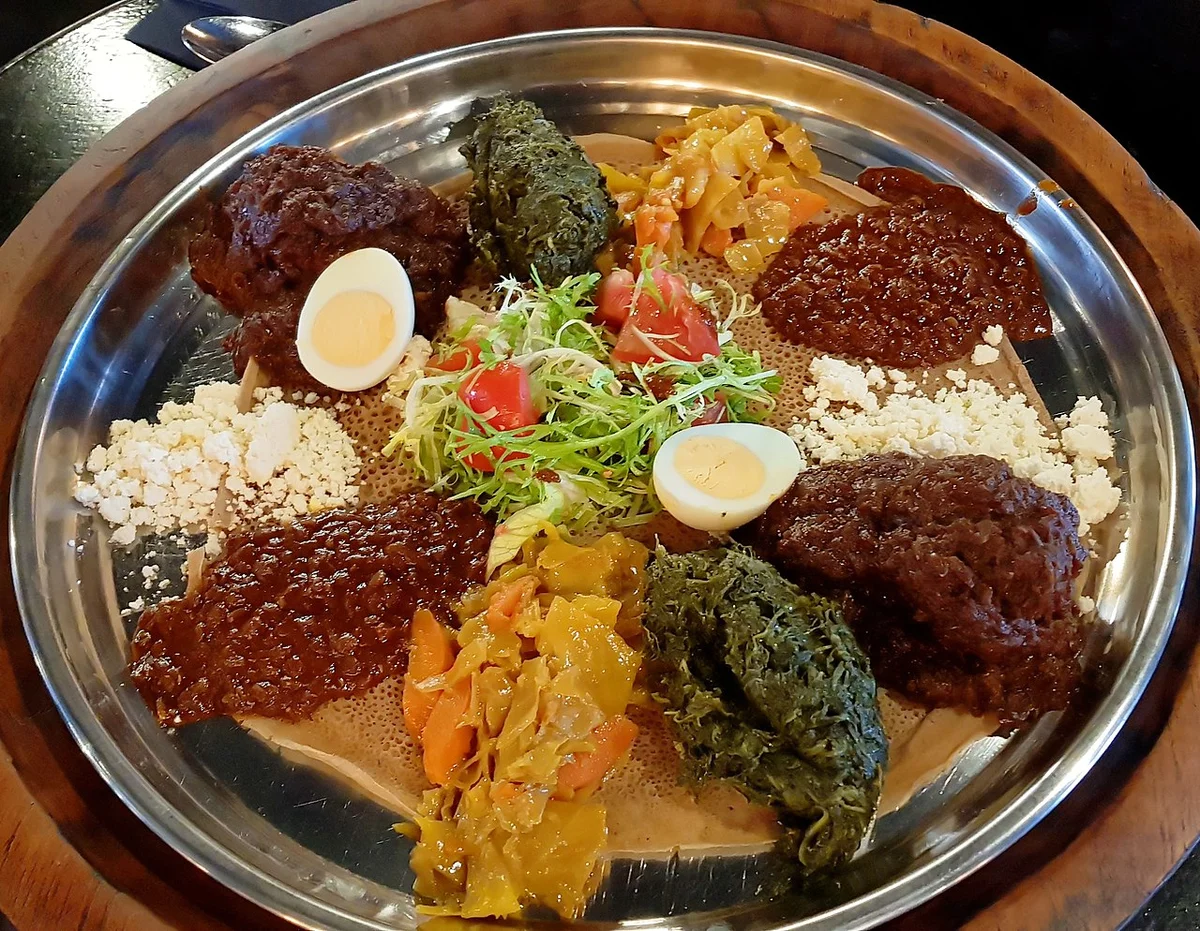
The "red stew" born on the shore of the Red Sea
A piercing scent of spice drifts through a back street of Asmara. Open the door and, in a small eatery with soot-darkened walls, a woman is slowly stirring a huge pot. Inside, the stew is a deep reddish brown. Tomato and berbere have melted together, and the chunks of beef are on the verge of collapsing. This is zigni (ዝግኒ / Zigni), the taste of home that Eritreans miss wherever they are in the world.
Zigni is a national Eritrean stew of beef long-simmered with berbere and tomato. It is sometimes compared with the doro wot of neighboring Ethiopia, but where doro wot is chicken-based, beef is the star of zigni. Eritrean berbere is also said to have a higher ratio of fenugreek and cumin than the Ethiopian kind, giving a deeper toasty note.
Eritrea is a small East African country that became independent from Ethiopia in 1993 and sits at a strategic point on the Red Sea. Under the influence of the Italian colonial period (1890–1941), pasta and cappuccino have blended naturally into Eritrean cooking. But at the root of the food, it is still zigni and injera. Zigni is there at weddings, funerals, holidays and ordinary dinners alike.
A kind of "tsebhi" (ጸብሒ), the Tigrinya word for stew, and in particular the beef kind. It is characterized by long simmering with tomato, berbere and niter kibbeh (spiced butter). In Eritrea there is also a milder version called "zigni bruce" (ዝግኒ ብሩስ). Eating it with injera is the proper way.
Ingredients (serves 4)
Berbere spice (homemade blend)
| Spice | Amount | Notes |
|---|---|---|
| Paprika | 2 tbsp | The main source of color. Use the mild kind |
| Cayenne pepper | 2 tsp | Adjust the heat here |
| Ground coriander | 1.5 tsp | — |
| Ground cumin | 1 tsp | The Eritrean style uses more cumin |
| Ground fenugreek | 1/2 tsp | Don't overdo it. It turns bitter |
| Ground cardamom | 1/4 tsp | Crushing whole pods also works |
| Black pepper | 1/2 tsp | — |
| Allspice | 1/4 tsp | — |
| Ground cloves | a tiny pinch | Too much tastes medicinal |
| Ground cinnamon | 1/4 tsp | — |
If making it yourself sounds like a chore, look for ready-made berbere at an African or Ethiopian grocer, or online. With commercial berbere, figure on 2–3 tbsp. Homemade, though, lets you adjust the amount of fenugreek and gets closer to the distinctive Eritrean flavor.
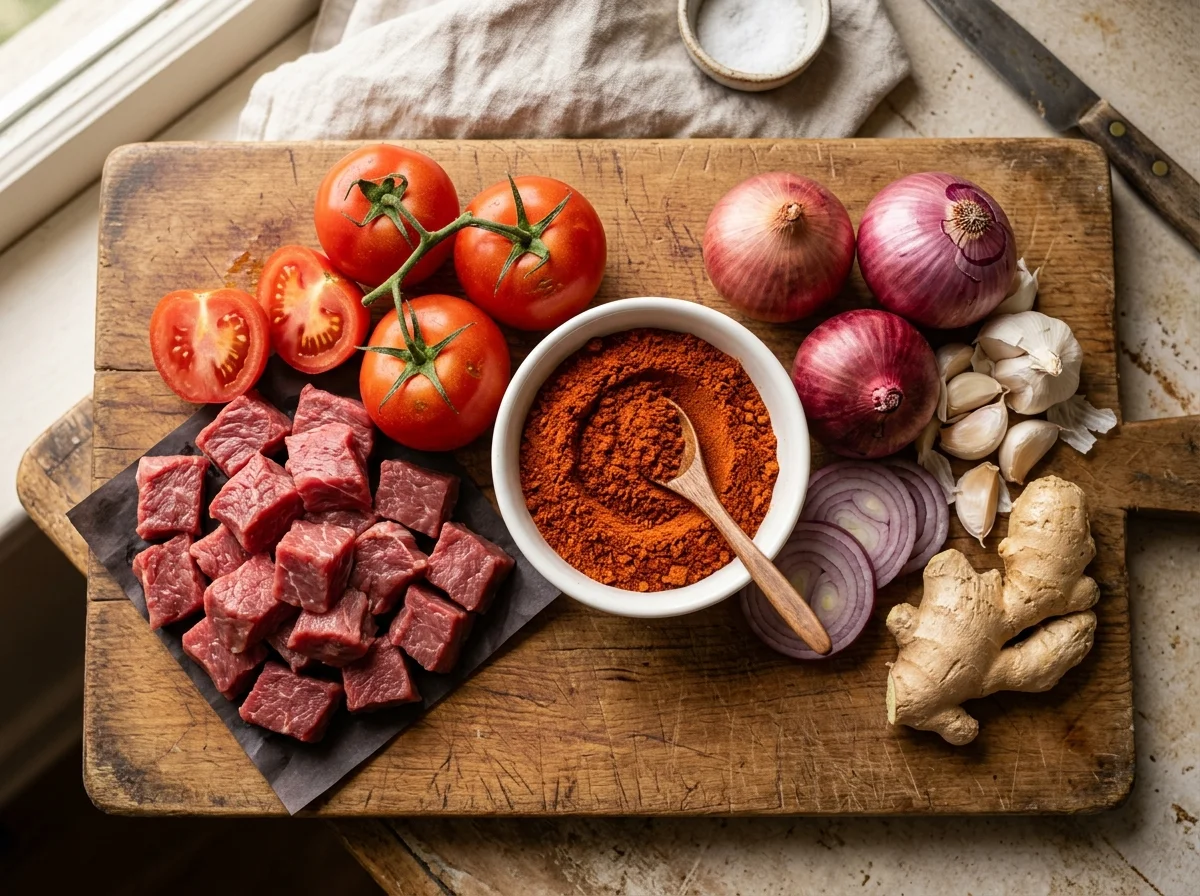
Blend your own berbere
The taste of zigni is decided by the berbere. In Eritrean homes, the proportions are passed by word of mouth from mother to daughter, and every household has "our berbere." Here is the basic blend most commonly shared in English-speaking Eritrean communities.
Blending guide
- Dry-roast: Put the pan over low heat and dry-roast the coriander seeds, cumin seeds, fenugreek seeds, whole cardamom and whole cloves for 2–3 minutes. Take it off the heat when the aroma rises and the color changes slightly.
- Cool: Let it cool for 5 minutes as is. Grinding while hot loses aroma.
- Grind: Grind finely in a spice grinder or mortar. An inexpensive mortar is enough.
- Blend: Add the paprika, cayenne pepper, black pepper, cinnamon and allspice to the ground spices and mix well.
They look almost the same but the blends differ. The Eritrean style has a higher ratio of fenugreek and cumin, and some households add basil or rue. The Ethiopian style tends to use korarima (Ethiopian cardamom) and ajwain seeds. When recreating it elsewhere, using slightly more coriander and cumin gives a result closer to Eritrean.
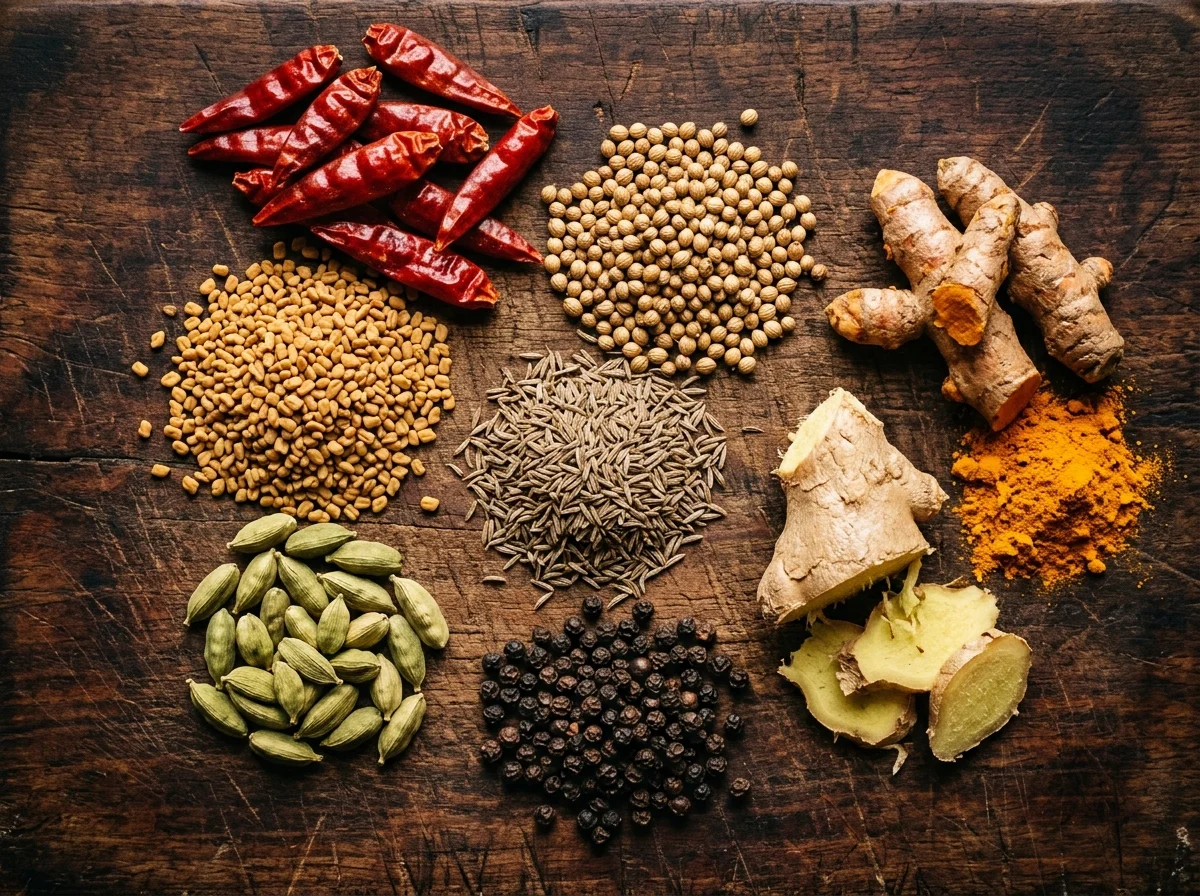
Prepare niter kibbeh (spiced butter)
Niter kibbeh is a spiced clarified butter essential to Eritrean and Ethiopian cooking. It is similar to Indian ghee but differs in that herbs and spices are melted into it together. It is used not only in zigni but in almost every Eritrean dish.
Preparation guide
- Melt: Put 80 g unsalted butter in a small pot and melt over very low heat. Do not let it boil.
- Add the spices: When it starts to foam, add the crushed cardamom, cumin seeds and turmeric.
- Clarify: Keep it at low heat for 15–20 minutes. It is done when the milk solids have sunk to the bottom and the clear top layer is golden.
- Strain: Strain through a tea strainer or paper towel and put it in a jar. It keeps for 1 month in the refrigerator.
A method of adding turmeric, cardamom and cumin to store-bought ghee and heating for 5 minutes also gives a close enough flavor.
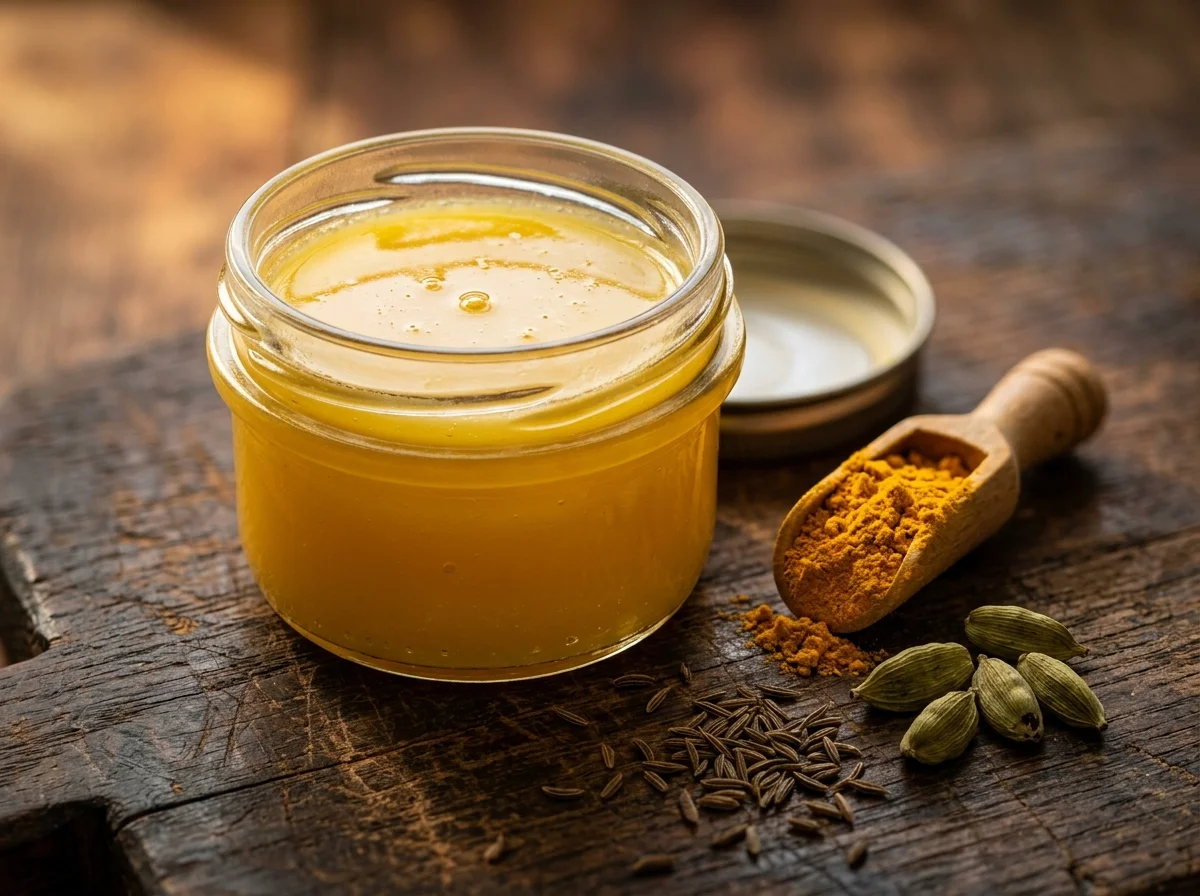
Cooking steps (the zigni itself)
1. Cook the onion without oil (20 minutes)
This is the biggest feature of zigni and a cooking method fundamentally different from tagine or European stews.
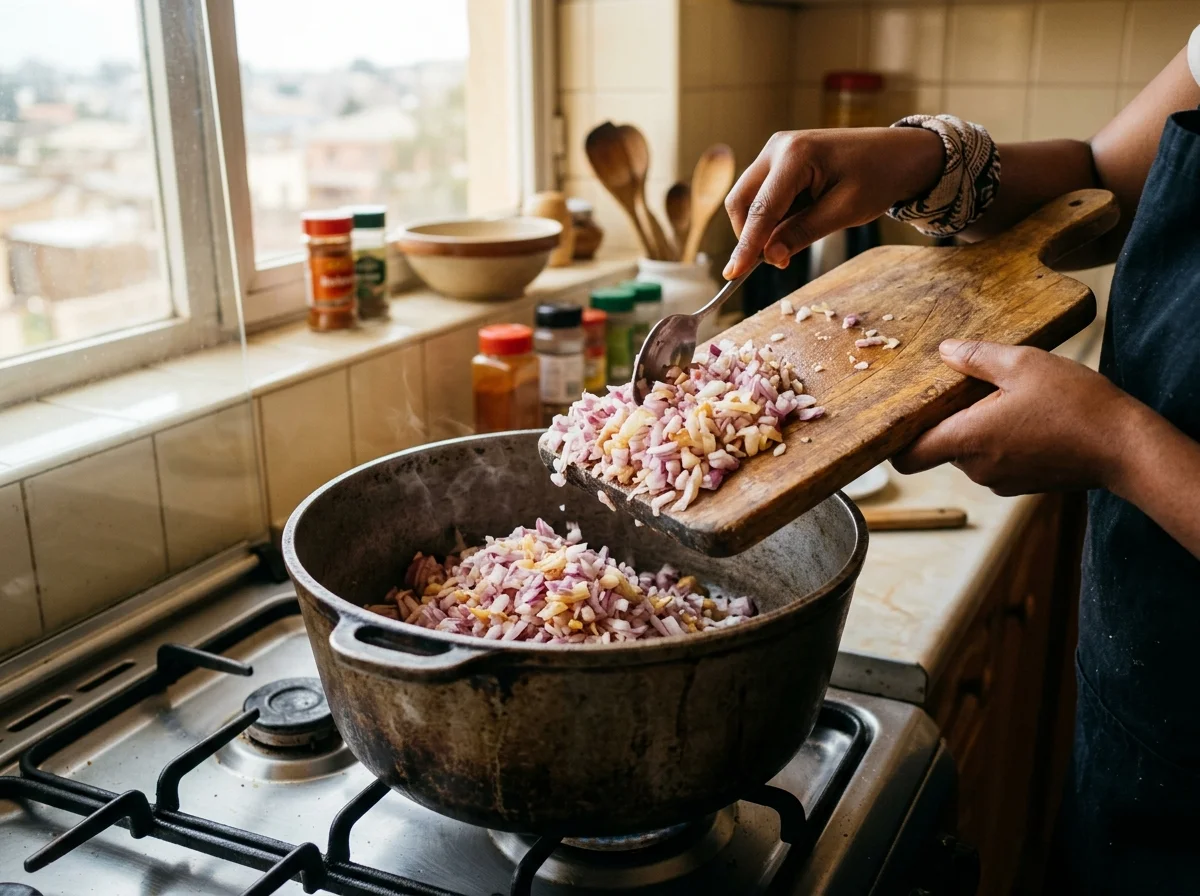
Put 3 finely chopped onions straight into a large, heavy pot with no oil or butter. Set over medium heat and keep stirring so they don't stick. Moisture begins to come out in about 5 minutes, they approach amber at 10 minutes, and at 15–20 minutes the moisture has cooked off and they become a dark brown paste. You are there when dragging a wooden spoon across the bottom leaves a track and the onion moves as one mass. If it looks about to scorch partway through, add 1 tbsp water.
Why no oil? According to English-language researchers of Eritrean cooking, this "dry sauté" caramelizes the onion's sugars as far as possible and gives the stew its distinctive sweetness and depth. If you put ghee in from the start, the onion becomes "fried" and the caramelization is only half done.
2. Add the tomato paste (10 minutes)
Add 4 tbsp tomato paste to the amber onion and cook together over medium heat. Keep stirring constantly for 7–10 minutes, until the acidity of the paste cooks off. Watch the bottom, which scorches easily. You are done when the onion and paste are evenly blended, the color has changed from brick red to a deep reddish brown, the moisture is gone, and dragging a wooden spoon across the bottom leaves a track for about 1 second. Also check that a thin film of oil is seeping onto the surface and that it is a heavy, smooth paste with no graininess.
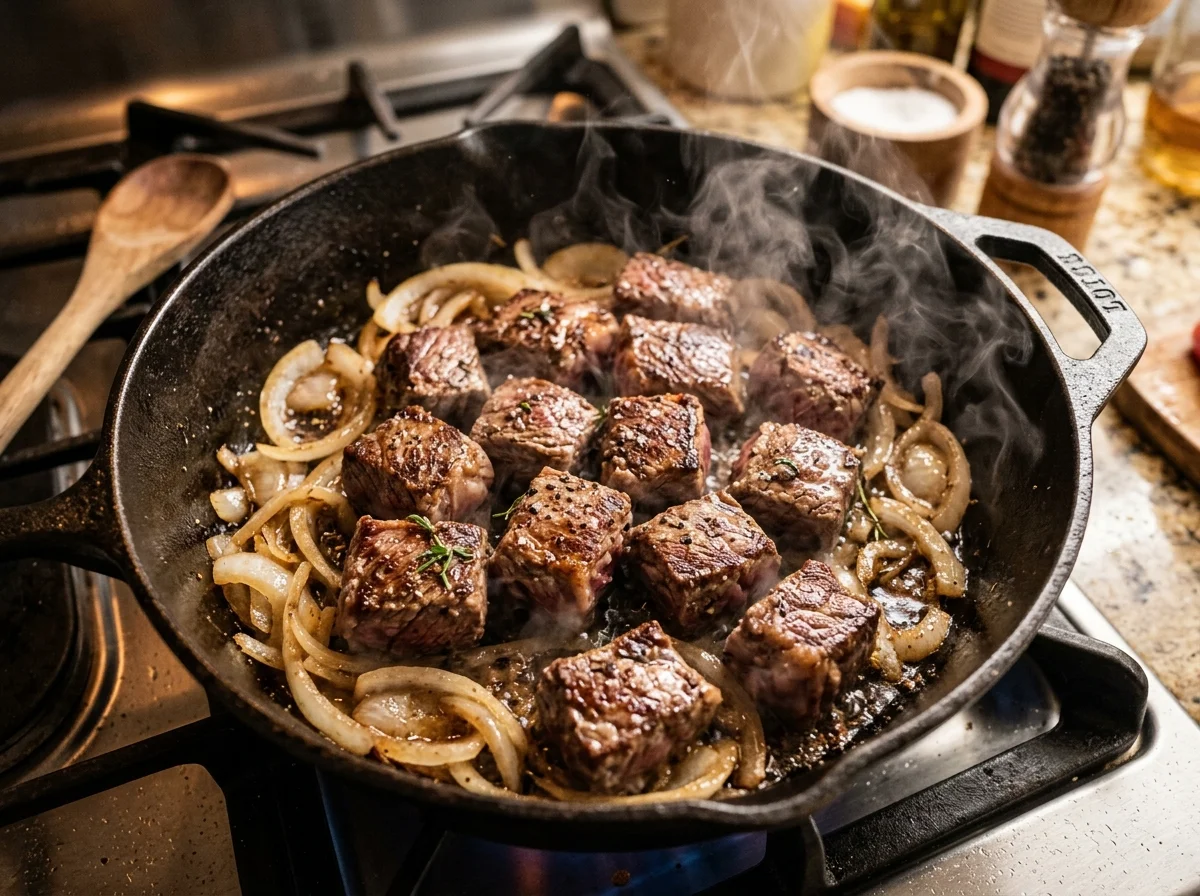
3. Add the berbere and niter kibbeh (3 minutes)
Lower the heat to medium-low and add the homemade berbere. Cook for 1 minute, and when the powdery feel is gone, oil is seeping out, and the surface is red and glossy, move on. Then add the niter kibbeh (or 2 tbsp ghee) and mix well for 2 minutes.
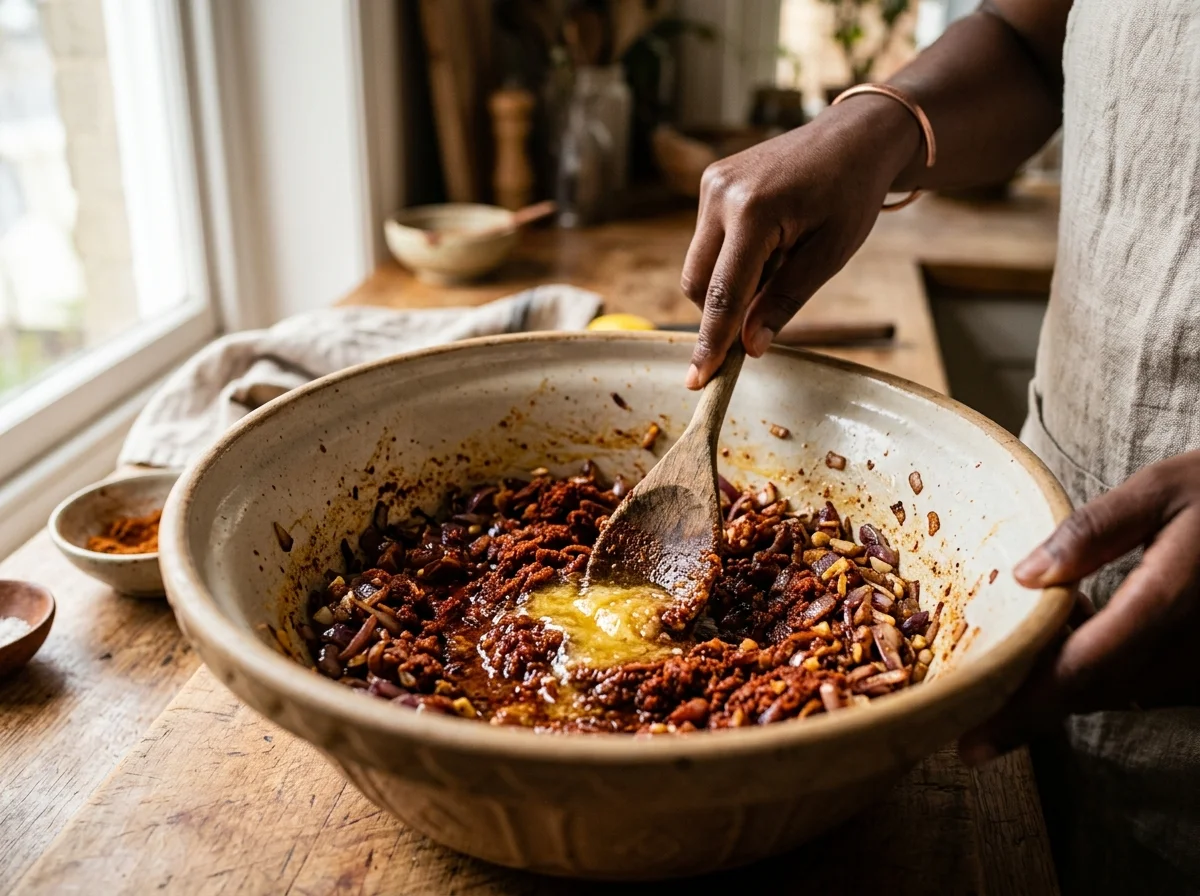
4. Add the garlic and ginger (1 minute)
Add the grated garlic and ginger and cook for 1 minute over medium-low heat. It is enough when the whiteness is gone and the smell from the pot changes from raw to a sweet fragrance. If it begins to scorch, bitterness stays through the whole thing, so move on to the tomato before the bottom of the pot dries out.
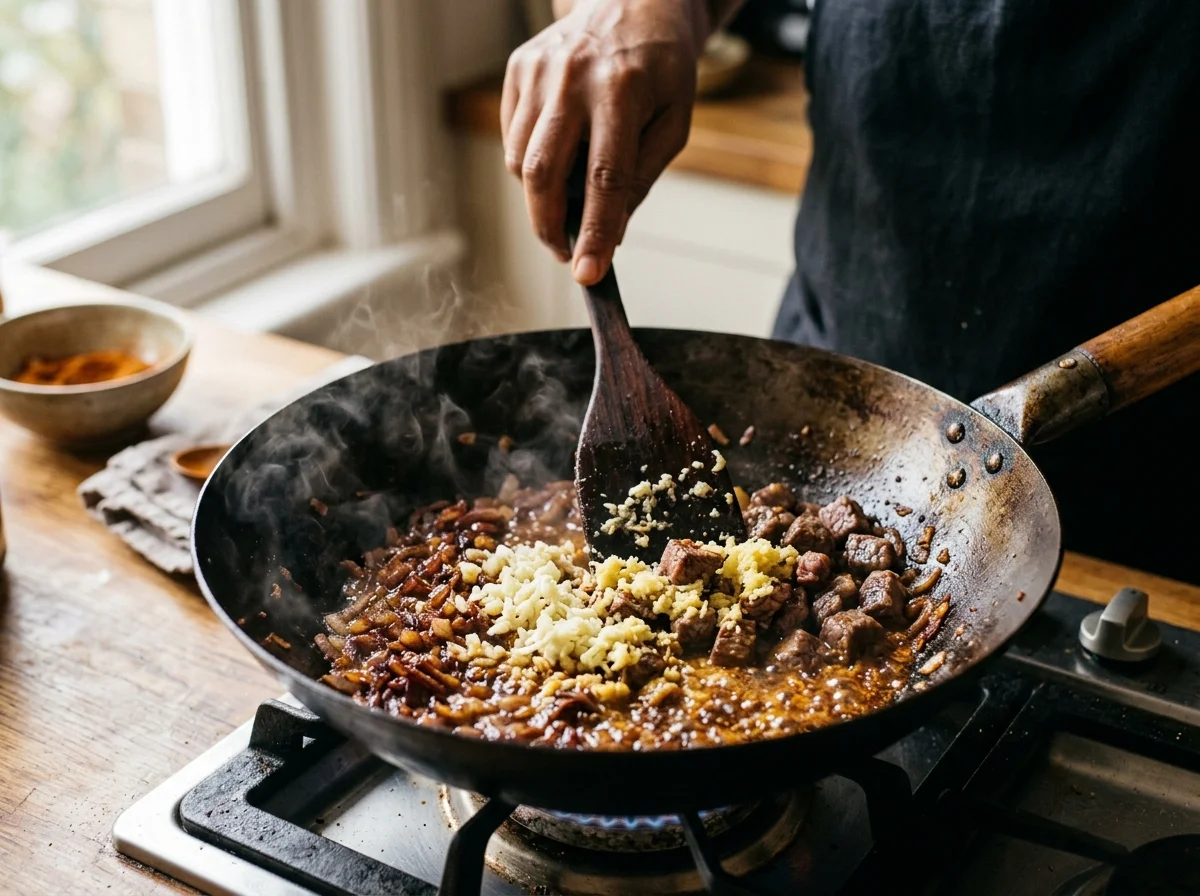
5. Add the tomatoes and water (5 minutes)
Add the roughly chopped tomatoes (or canned whole tomatoes) and 300 ml water, and heat over medium heat for about 5 minutes until it comes to a boil once. When large bubbles rise, lightly crush the tomatoes with a wooden spoon, and move on when the whole sauce is an even red.
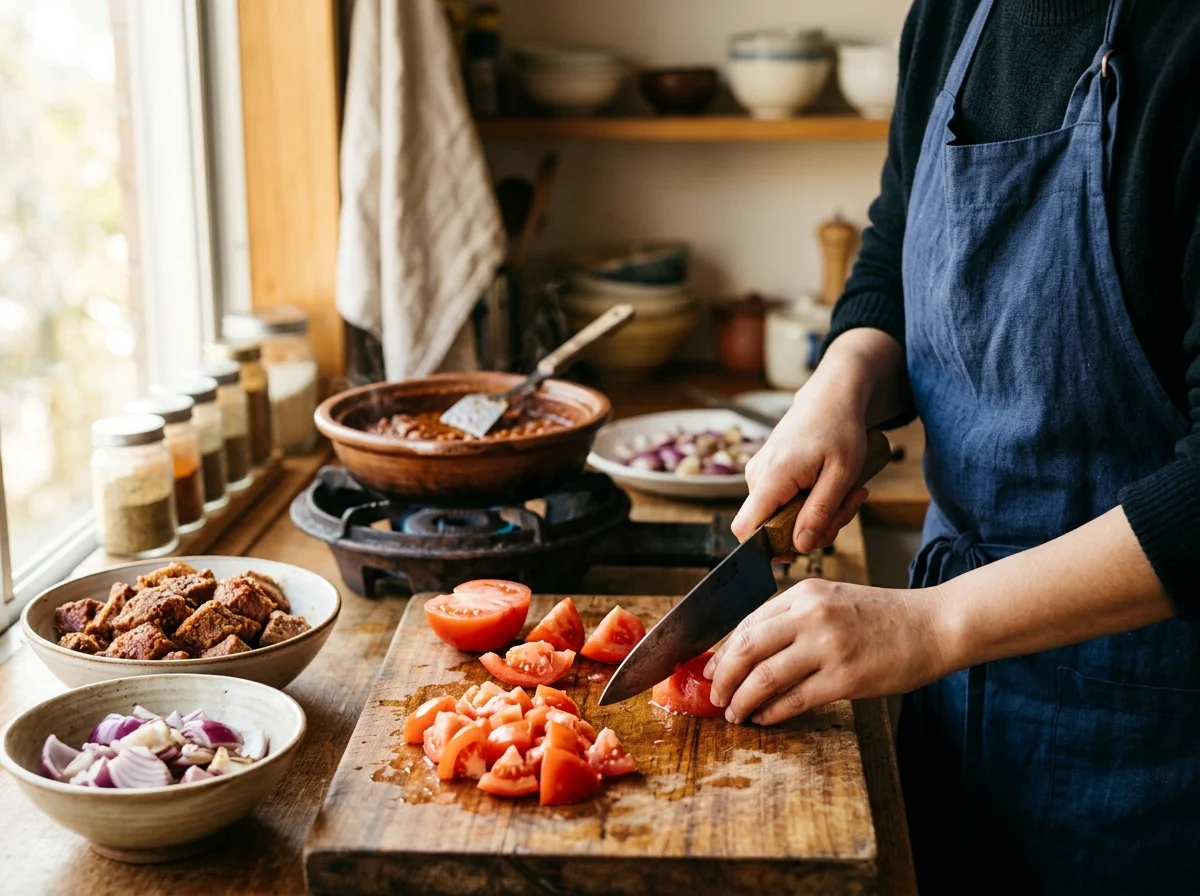
6. Add the beef and simmer (60–90 minutes)
Put the beef cut into 3 cm (1 1/4 in) cubes into the pot and mix it all together. Cover and simmer over low heat for 60–90 minutes. When a chopstick slides easily into the beef and the oil in the sauce seeps red onto the surface, move on to the finish.
- Shank: 90 minutes (the collagen dissolves and it becomes meltingly tender)
- Cubed stewing beef (chuck and so on): 60 minutes
- With a pressure cooker: 20 minutes under pressure + natural release If the liquid reduces too much, add 50 ml at a time. The ideal final thickness is "when you drag a wooden spoon across the bottom, the track disappears in 3 seconds."
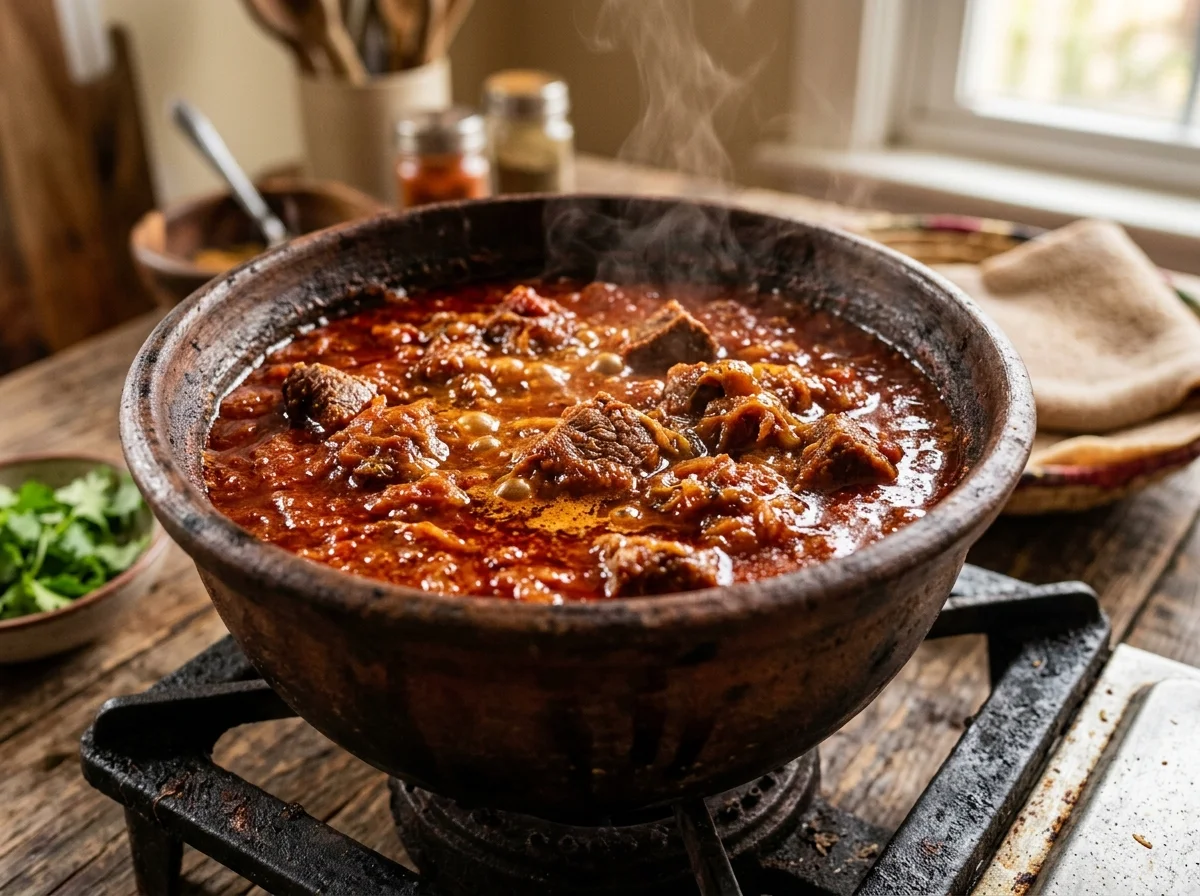
7. Adjust the seasoning (3 minutes)
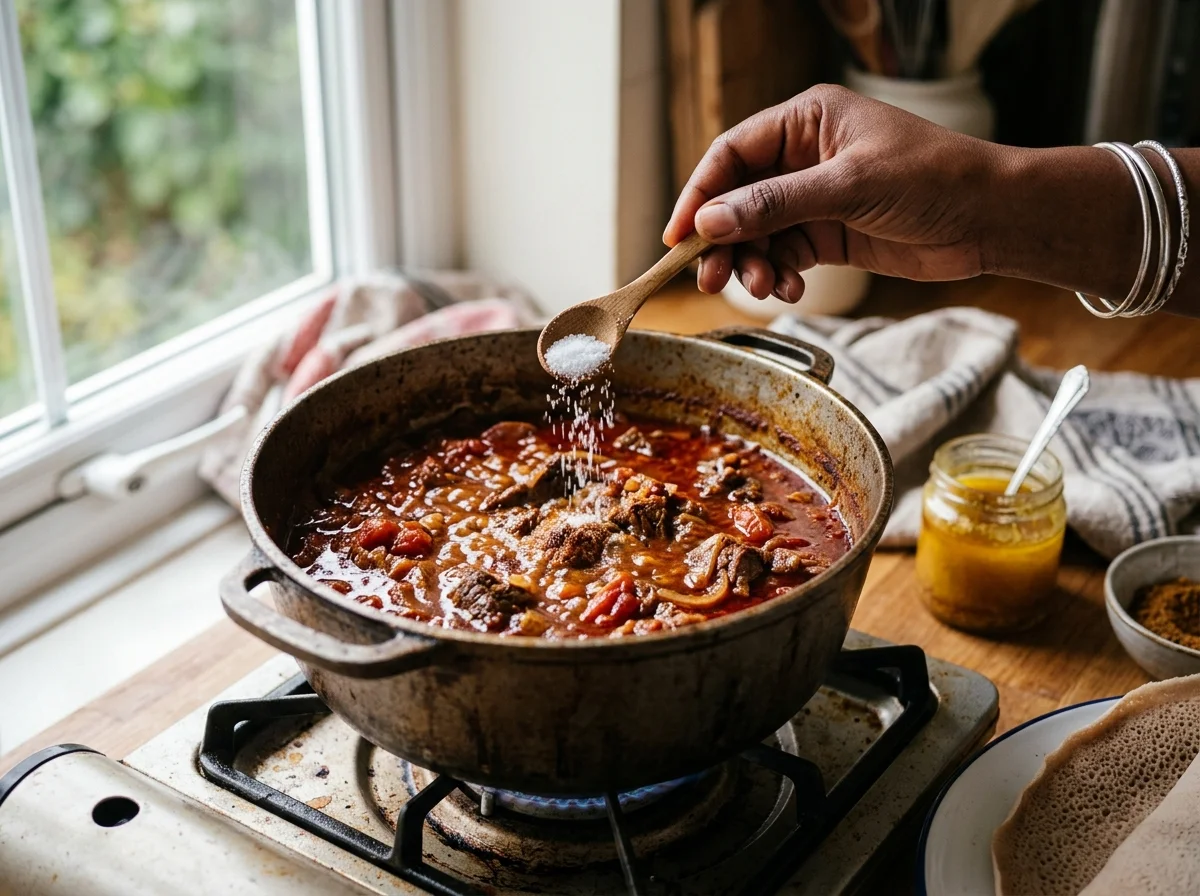
Add salt to adjust the seasoning. In Eritrea it is common to season quite strongly. To go with the sourness of injera, slightly saltier than you would eat it alone is right. A final drizzle of 1 tbsp niter kibbeh raises the aroma another level.
Serving and eating
The traditional way
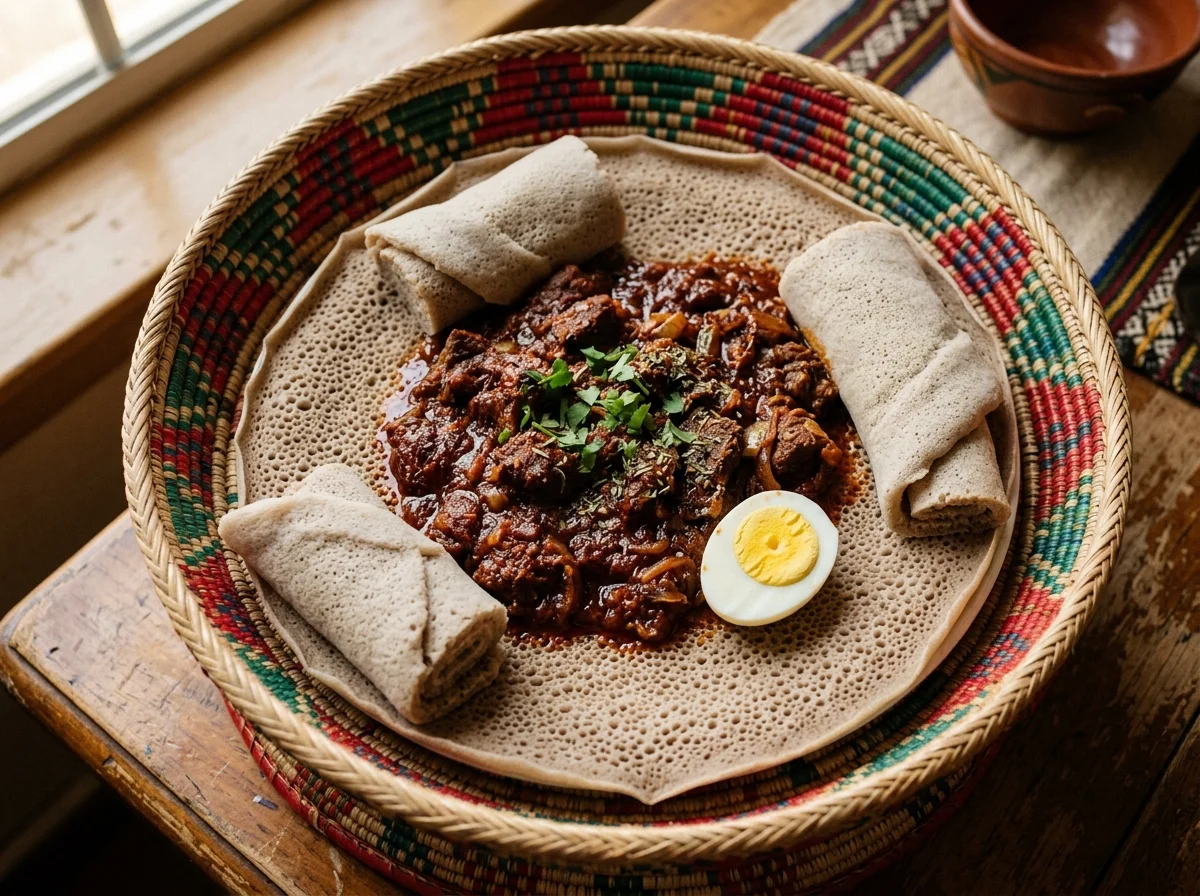
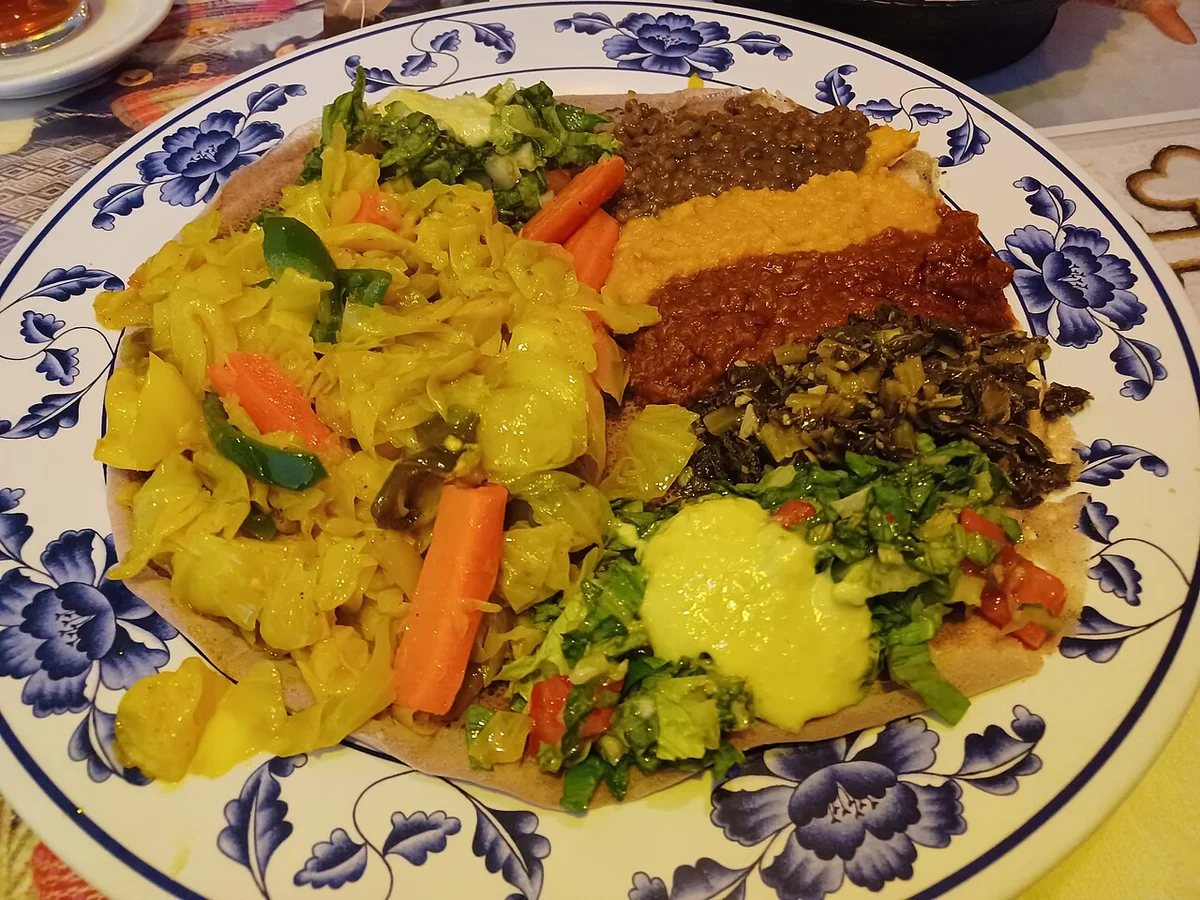
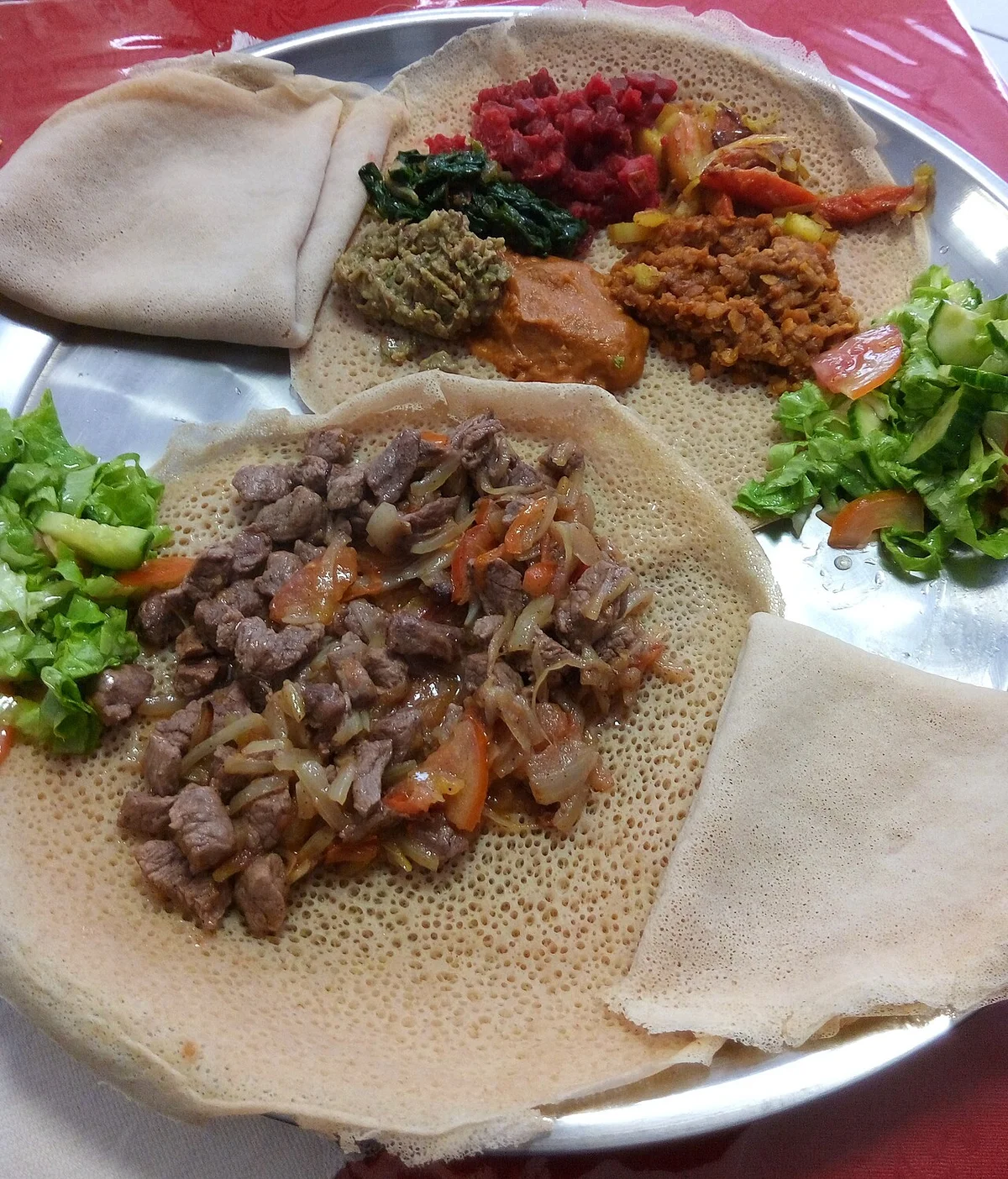
Eritrean meals are communal at heart. Injera is spread on a large round plate (mesob), and zigni and side stews (shiro, alicha, hamli and others) are laid on top.
You eat with your hands. Tear off an edge of injera and pick up the zigni as if wrapping it. Using only the right hand is the etiquette, and topping it with a halved boiled egg is the standard style for celebrations.
Adapting it to your table
If you can't get injera, substitutes:
- Naan: the chewy texture is closest to injera
- Whole wheat chapati: no sourness but it pairs well
- Rice: many people in the Eritrean diaspora eat it with white rice too. You can also fry it with rice, like nasi goreng (in Japanese)
- Crêpes: wrapping in a buckwheat galette brings it closer to the sourness of injera
Variations
Zigni dorho (chicken version)
Use bone-in chicken thighs in place of beef. It ends up similar to doro wot, but the berbere blend differs, so the flavor is different. In the Eritrean style, the chicken is coated in lemon juice and left for 30 minutes before simmering. The simmering time drops to 40–50 minutes. Adding whole boiled eggs is standard, and it appears especially on holiday and wedding menus.
Zigni bruce (milder)
Omit the cayenne pepper and increase the paprika to 3 tbsp. This is a version for children and people who dislike heat, and is made as a matter of course in Eritrean homes too. The sweetness of the tomato comes to the front for a different kind of deliciousness.
Shiro zigni-style (chickpea flour version)
A vegetarian version that uses chickpea flour (besan) in place of meat. Dissolve 100 g besan in water and add it to the berbere tomato sauce to simmer. It is a vegetable dish eaten during Eritrean fasting periods (tsom) and is surprisingly satisfying even without meat.
Pasta zigni
A legacy of the Italian colonial period. Boil spaghetti al dente and spoon zigni over it as a sauce. "Spaghetti zigni" is a standard menu item in Asmara eateries. Thicker pastas (linguine or fettuccine) suit it. Tossing it with penne is also popular.
Quick zigni with curry roux
In place of berbere, a super-quick version uses 1 piece of store-bought curry roux (hot) + 1 tbsp paprika + 1 tsp cumin. It differs from the authentic flavor, but the essence of zigni comes through. Just don't skip the oil-free dry sauté of the onion.
Culture and history
The Eritrean table and society
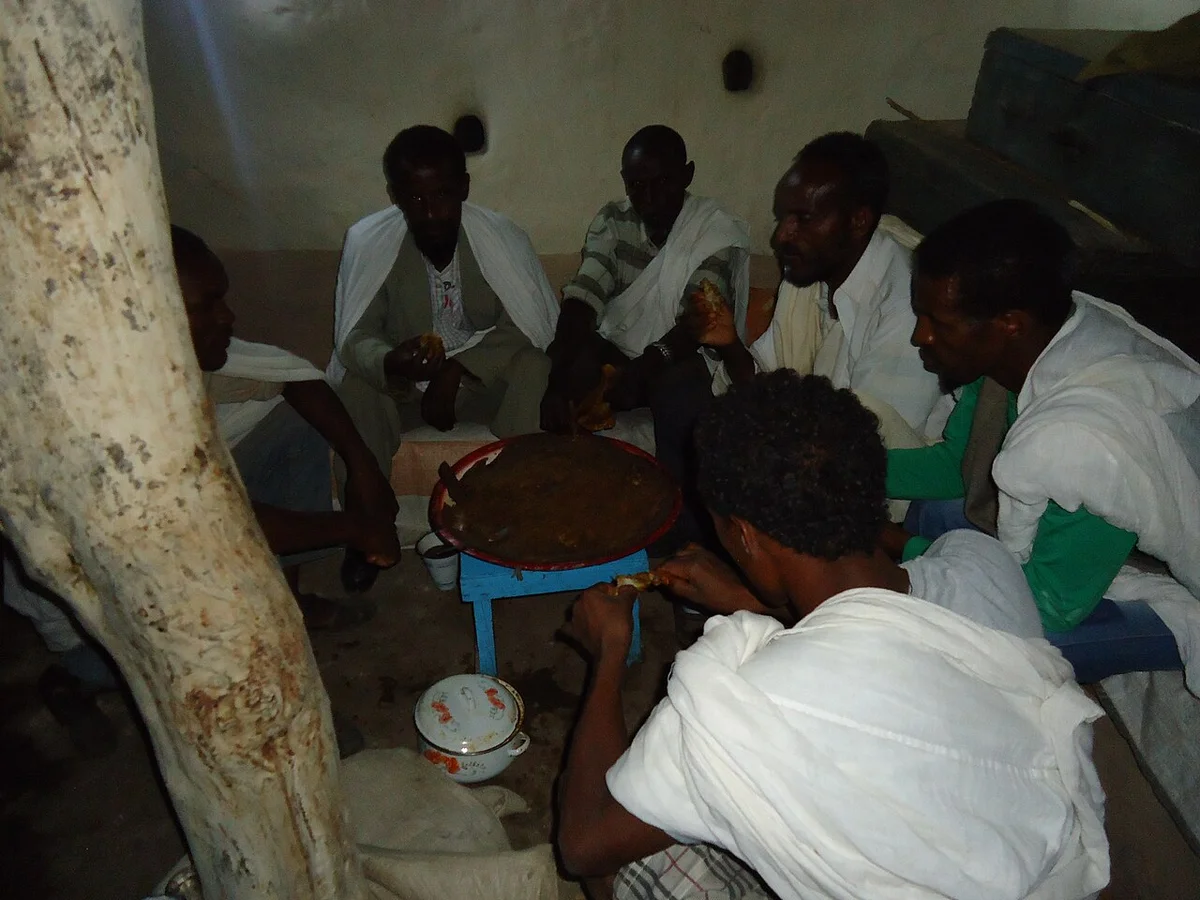
An Eritrean meal is not simply about taking in nutrition; it is an act of confirming the bonds of the community. Family and friends gather around one mesob (a woven basket table) and eat together from a single piece of injera. This way of sharing a meal is regarded as an expression of trust and affection.
Zigni is everyday food, and also sits at the center of every festival, including Timkat (Epiphany), Meskel (the Feast of the Cross) and Independence Day (May 24). In other parts of Africa too, there are dishes passed down as "mother's cooking" country by country, such as bobotie (South Africa; in Japanese) and thieboudienne (Senegal), an interesting thing they have in common.
The influence of the Italian colonial period
The Italian colonial period from 1890 to 1941 left a large mark on Eritrean cooking. Macchiato is served in the cafés of Asmara, and pasta has blended into daily food. But zigni existed before Italian influence arrived.
After the 30-year war of independence (1961–1991) and independence in 1993, zigni is still widely made in the diaspora (communities of Eritreans living abroad).
Storage and making ahead
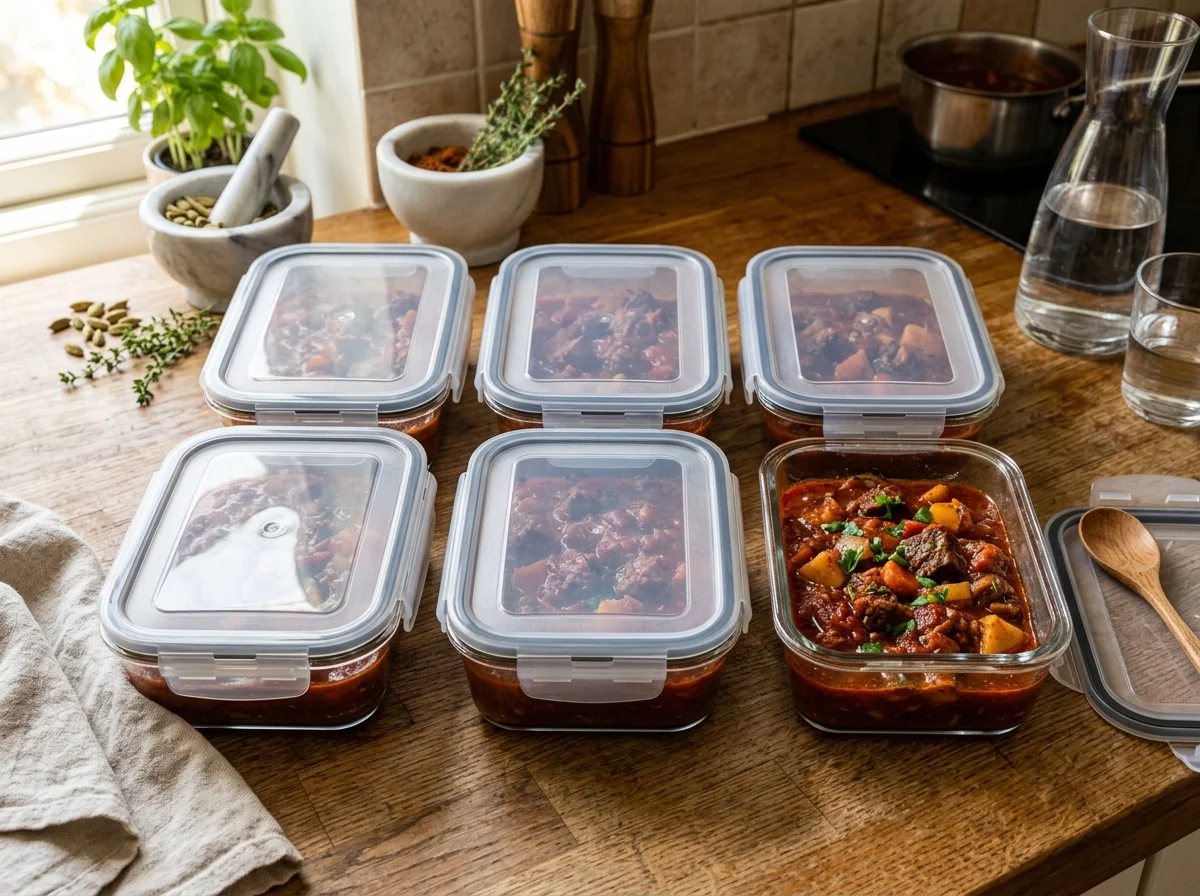
Zigni is a stew that tastes better the day after it is made. The spices settle in and the sauce soaks into the beef, deepening the flavor.
| Storage method | Duration | Points |
|---|---|---|
| Refrigerator | 4–5 days | Store in an airtight container. Reheat in a pot over low heat |
| Freezer | about 1 month | Freeze in portion sizes in zip bags. Thaw overnight in the refrigerator |
| Make-ahead variations | — | Can be turned into pasta sauce, omelet filling, or a hidden flavor in curry |
When reheating, if the moisture has cooked off and it has become too thick, add a little water. Adding a small piece of niter kibbeh as you warm it brings back an aroma like freshly made.
Common pitfalls and how to deal with them
These are the mistakes first-time zigni cooks are most likely to make, in order of priority. The oil-free dry sauté of the onion in particular is the point that makes the biggest difference.
Scorching the onion
The oil-free dry sauté is a battle against scorching. Use a nonstick pot, or add 1 tbsp water when it seems about to scorch. The rule is not to leave the pot for the 20 minutes until it turns amber.
Berbere heat too weak / too strong
The amount of cayenne pepper changes the heat dramatically. It is safest to start modestly (1 tsp) and taste at the end of simmering, adding more if needed. Once heat is in, it cannot be taken out. If you've made it too hot, eat it with yogurt, or dilute it by adding tomato paste and water.
The beef is tough
Either not enough simmering time or the cut is the cause. Use shank and simmer at least 60 minutes. With a pressure cooker, 20 minutes under pressure makes it surprisingly tender. If it's still tough, cutting the meat smaller and simmering another 30 minutes helps.
The sauce is watery
Remove the lid and reduce for 5–10 minutes over medium heat. A small amount of tomato paste tends to make it watery. Aim for a thickness where "when you drag a wooden spoon across the bottom, the track disappears in 3 seconds."
Learn more about Eritrean cooking
Once you have made zigni, do widen your exploration of the world of Eritrean and Ethiopian cooking.
- Injera — the sour, crêpe-like staple made from teff flour. Zigni's best partner
- Doro wot — Ethiopia's chicken stew. Interesting to compare the different use of berbere
- An introduction to Ethiopian cuisine — for a systematic study of East African food culture
More dishes to cook alongside
- An introduction to African cuisine - Shares ingredients and aromas from the same region.
- An introduction to Ethiopian cuisine - Shares ingredients and aromas from the same region.
- An introduction to Moroccan cuisine - Shares ingredients and aromas from the same region.
- How to make ekpang nkwukwo - Shares ingredients and aromas from the same region.
Frequently asked questions
These are questions gathered from people who have actually made zigni and people who have become interested in Eritrean cooking.
Q1. What is the difference between zigni and doro wot?
Doro wot is Ethiopia's signature stew centered on chicken with boiled eggs added, while zigni is the Eritrean stew centered on beef. The berbere blends differ subtly too: the Eritrean style has more fenugreek and cumin, while the Ethiopian style tends to include korarima (Ethiopian cardamom) and ajwain seeds. Households vary a great deal, however, and the boundary between the two is blurry.
Q2. Is commercial berbere okay?
Yes, commercial berbere makes it perfectly delicious. But heat varies greatly by maker, so start with a smaller amount and adjust as you taste.
Q3. Is it still good without injera?
Of course. Naan, chapati, white rice, pasta, any carbohydrate goes with it. In the Eritrean diaspora community, many people eat it with white rice or spaghetti. Eating it with bread is also recommended.
Q4. Can I leave out the fenugreek?
You can, but the complex flavor characteristic of zigni is greatly reduced. Fenugreek is also in curry powder, so adding 1/2 tsp curry powder is one substitute.
Q5. Can children eat it?
If you adjust the heat of the berbere, there is no problem. In "zigni bruce" (the milder version), with the cayenne pepper left out entirely and only paprika used, elementary school children and older can enjoy it. Because it is tomato-based, it has a mild tomato-stew flavor that children like.
Q6. Can a pressure cooker save time?
Yes. Do the onion's dry sauté and the spice-frying steps as usual, and after adding the meat and water, 20 minutes under pressure + natural release brings the total cooking time down to about 1 hour. The finished flavor is nearly unchanged.
Nutrition information (per serving, from 4 servings)
| Nutrient | Amount |
|---|---|
| Energy | 485 kcal |
| Protein | 38 g |
| Fat | 22 g |
| Carbohydrates | 32 g |
| Fiber | 6 g |
| Salt equivalent | 2.1 g |
Beef shank is high in protein, low in fat and rich in collagen. The salt is somewhat high, however, so people with high blood pressure should reduce the salt.
Summary
Zigni is a dish that could be called the soul of Eritrea, in which the layered aroma of berbere, the deep richness that comes from the oil-free dry sauté of onion, and the umami of tomato and beef become a three-in-one.
You can make it with ingredients from an ordinary supermarket, but do not skimp on the homemade berbere blend. The extra step of grinding dry-roasted spices yourself opens the door to "a deliciousness unlike curry or anything else, whose name you didn't know."
Once made, it keeps for 5 days in the refrigerator and tastes better the next day. It works over pasta or over white rice. Few stews are this accommodating.
If your curiosity about Eritrean cooking has been stirred, also try ugali (Tanzania's staple) and jollof rice (West Africa's one-pot rice), as part of the same East and West African food culture. You will be surprised at the diversity of food on the African continent.
Sources
Recipe and cooking technique
- "Zigni (Eritrean Spicy Beef Stew)," Immaculate Bites. https://www.africanbites.com/zigni-eritrean-spicy-beef-stew/ — A home zigni recipe by an Eritrean-American food blogger. Consulted for the technique of the oil-free dry sauté of onion
- "Berbere Spice Mix," Serious Eats. https://www.seriouseats.com/berbere-spice-mix-recipe — Consulted for the detailed explanation of the berbere blend and the dry-roasting steps
- "Niter Kibbeh (Ethiopian Spiced Butter)," Food52. https://food52.com/recipes/niter-kibbeh — Consulted for how to make and store niter kibbeh
Culture and history
- "Eritrean Cuisine: A Complete Guide," TasteAtlas. https://www.tasteatlas.com/eritrea — Consulted for an overview of Eritrean cooking and the classification of its representative dishes
- Mesfin, Daniel J. Exotic Ethiopian Cooking. Ethiopian Cookbook Enterprises, 2006. — A standard English-language reference on Ethiopian and Eritrean cooking. Consulted for how to make niter kibbeh and berbere



