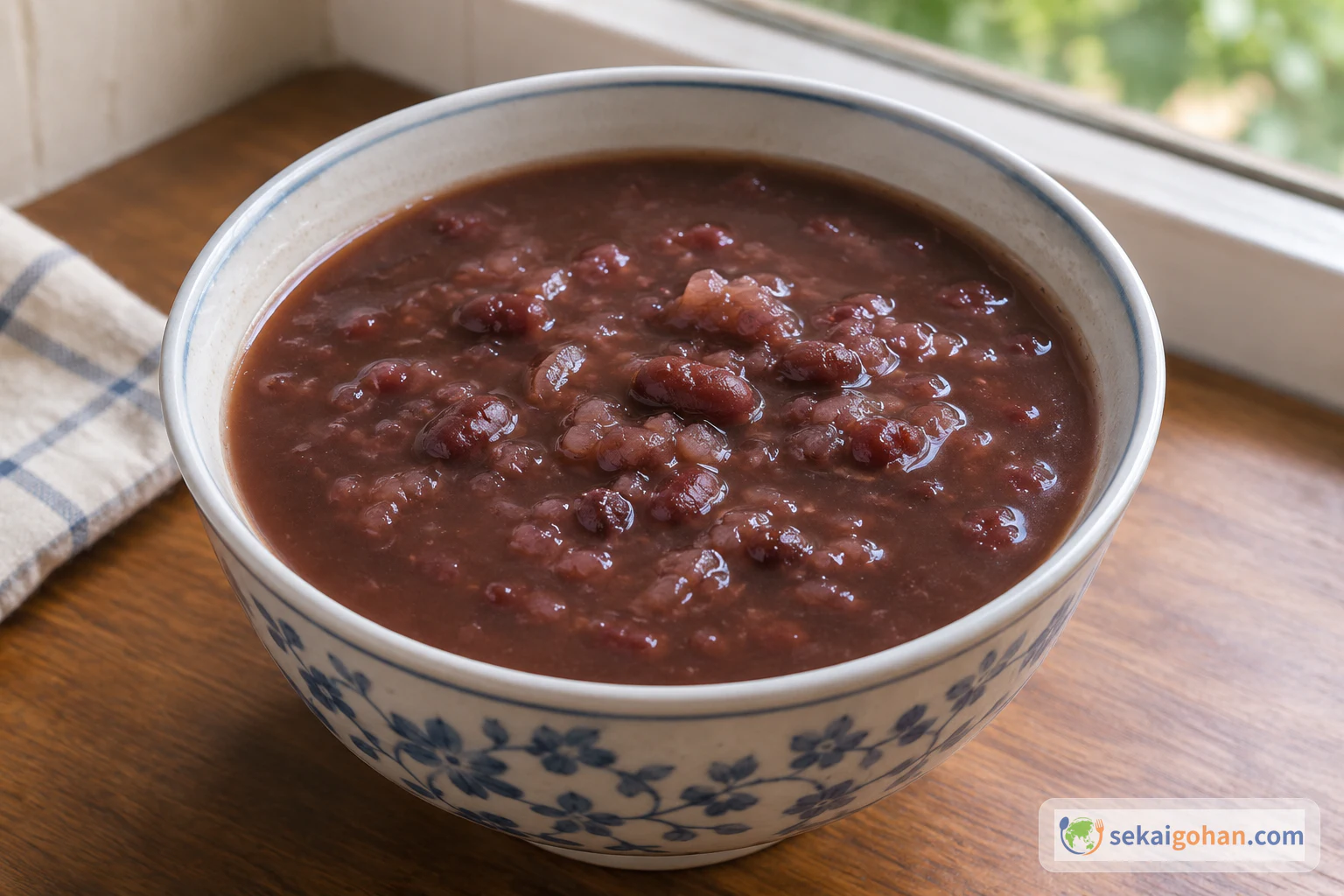
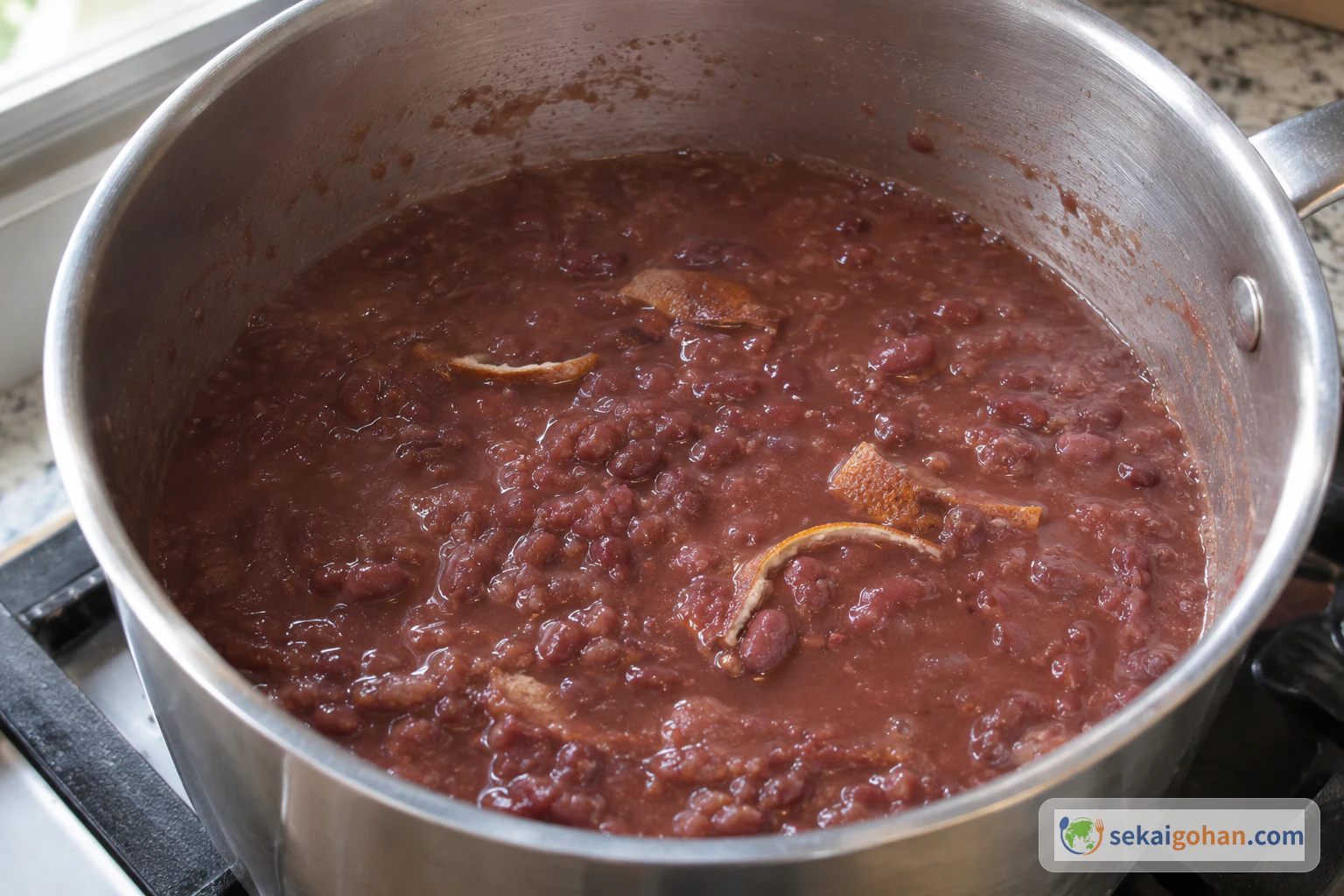
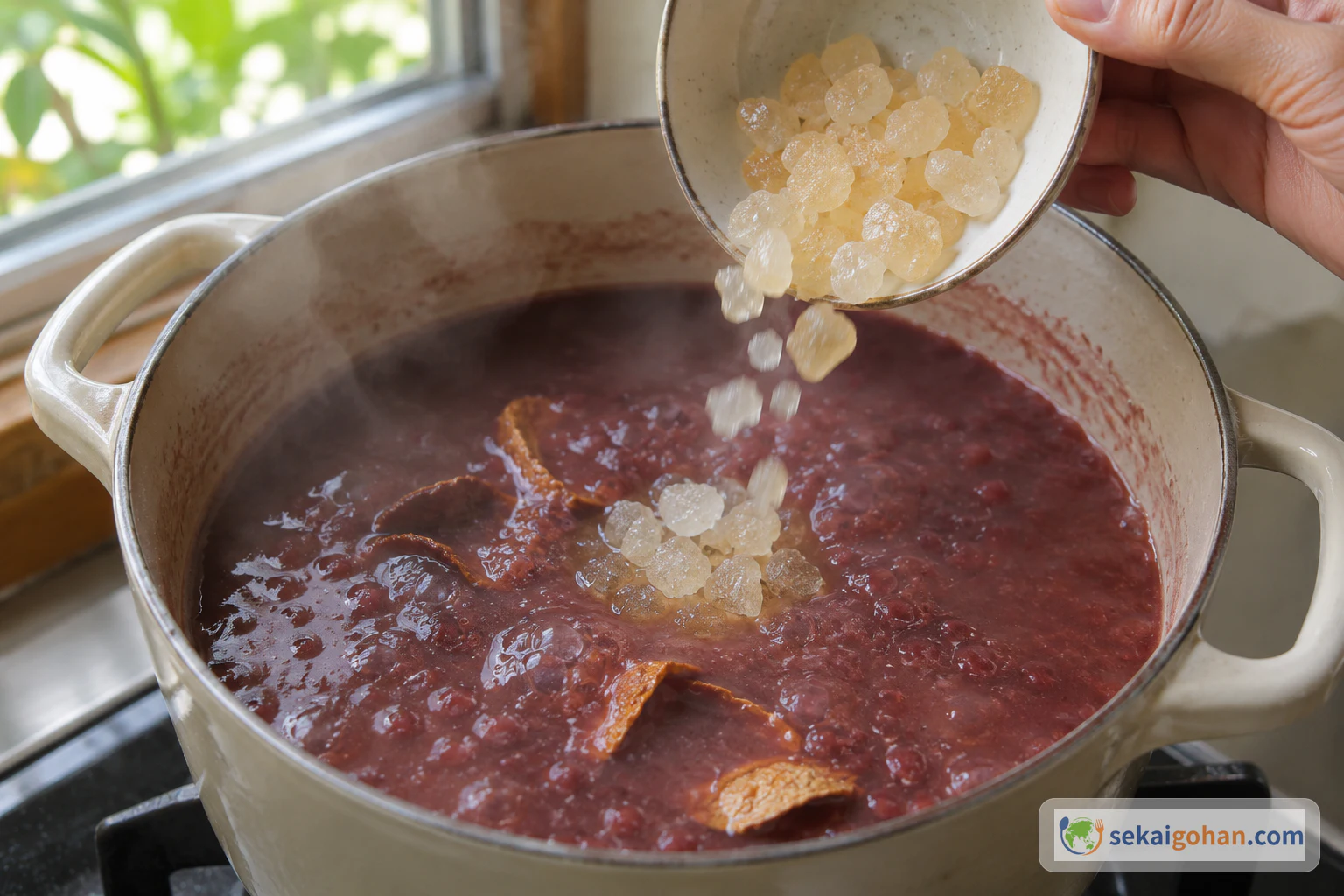
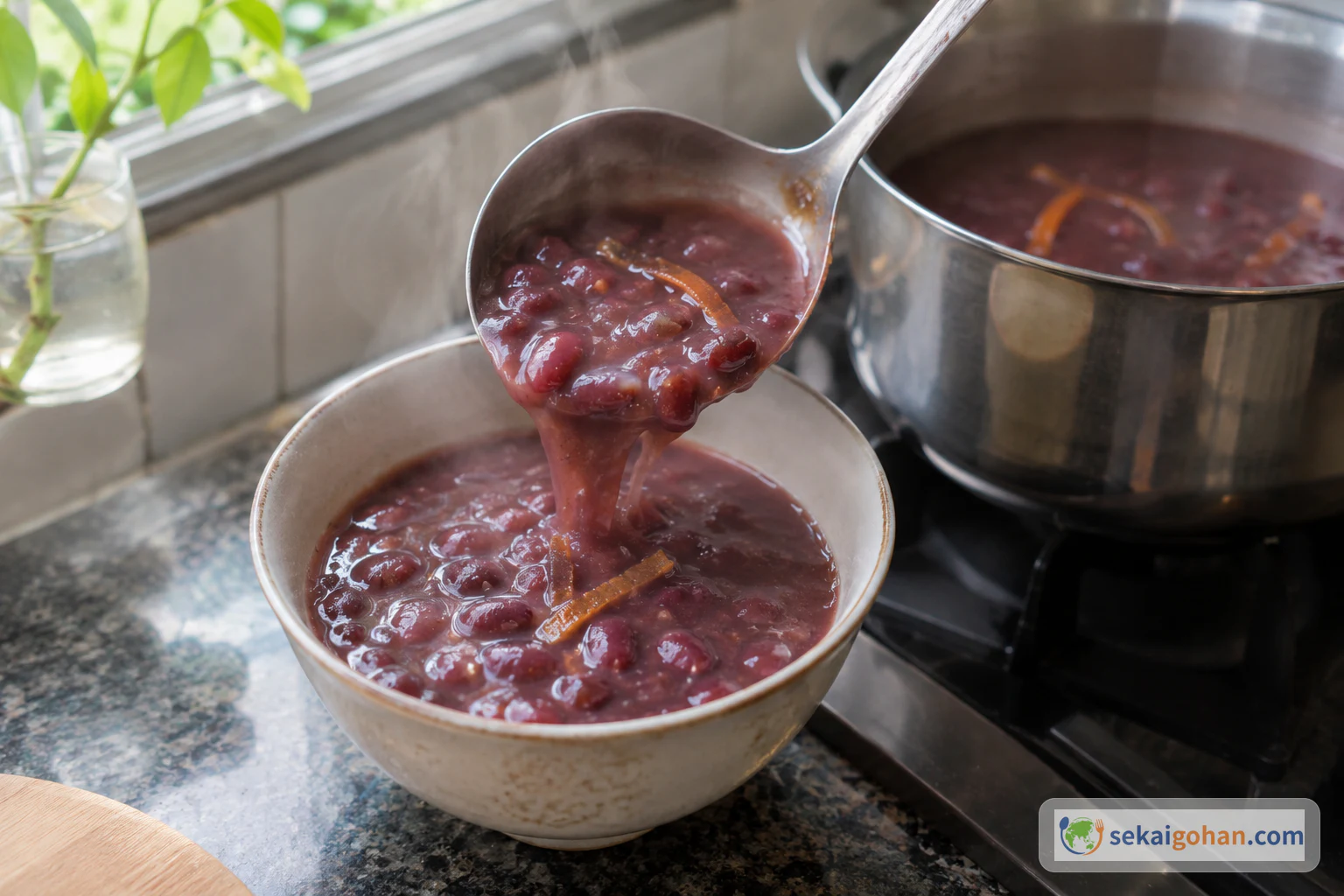
After hours on the stove, the adzuki beans stop looking like beans. Their skins split, their insides slip out into the pot, and the thin red water they started in turns cloudy and heavy on the spoon while the dried tangerine peel scents the steam with citrus. This is Hong Kong red bean soup, 紅豆沙: adzuki beans simmered with chenpi until they collapse, then sweetened with rock sugar and eaten hot. It tastes of soft, earthy bean and clean sweetness, with an orange-peel aroma that lifts each spoonful.
A Warm Bowl After Dinner in Hong Kong
In Hong Kong, red bean soup is one of the tong sui, the sweet soups. After dinner, people head out to dessert shops where black sesame soup and red bean soup sit among the traditional choices, and the meal ends on a warm bowl rather than a slice of cake. Some shops let you add glutinous rice balls to your sweet soup, so the same red bean base turns up plain at one table and with chewy dumplings at the next.
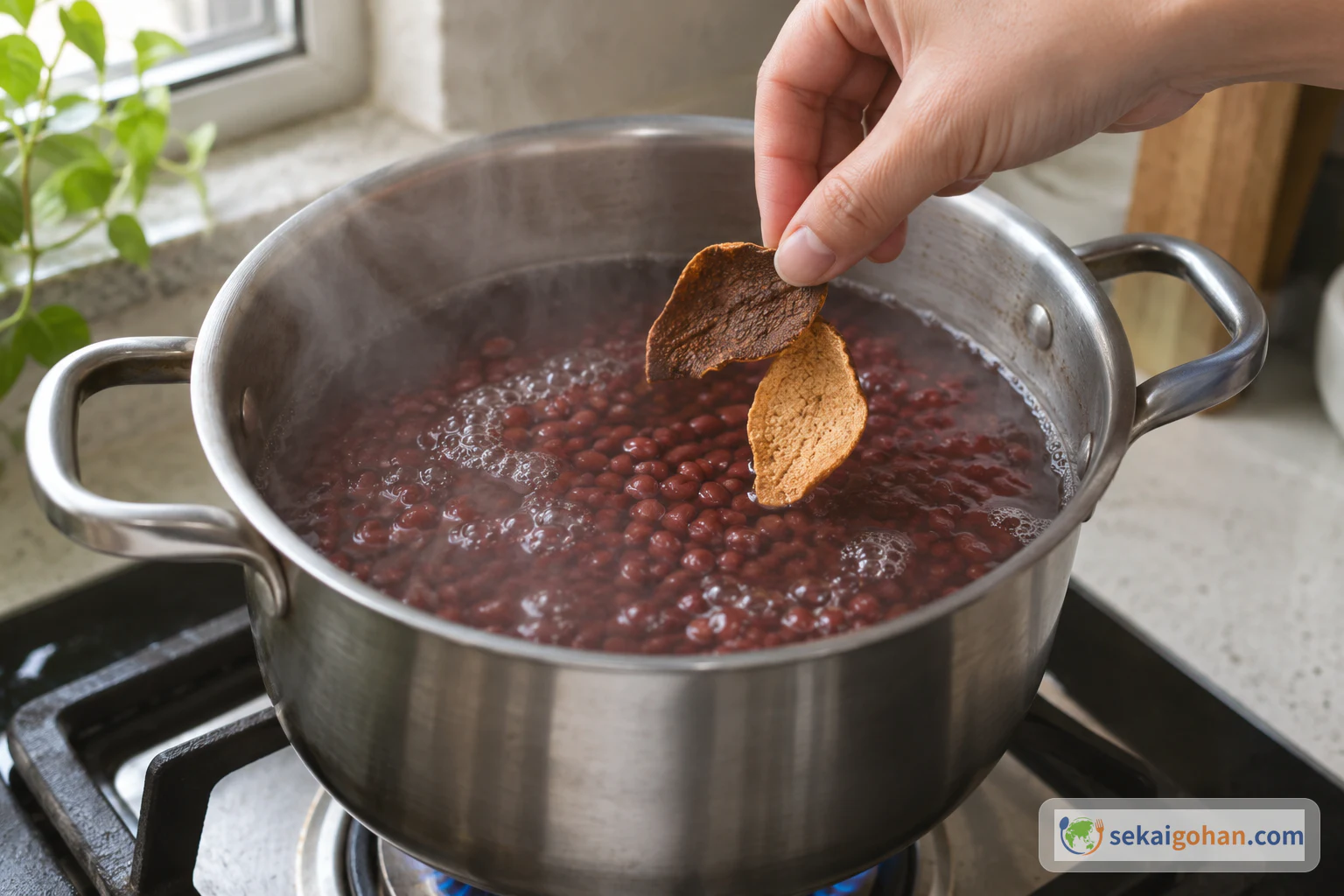
The Hong Kong pot is defined by two things: chenpi, the dried tangerine peel that goes in once the water boils, and beans cooked long enough to dissolve into their own liquid. Rock sugar comes only at the end, which keeps its sweetness bright against the bean. Where and when the dish first took shape is not settled, and you will find red bean soups across Chinese kitchens, so this one belongs among the many dishes of China as a distinctly Cantonese version.
Neighbours in the same family
Across the strait, red bean soup was a snack in Taiwan's farming communities, something eaten in the breaks between work in the fields. Cooks there make it several ways, and one idea matches the Hong Kong pot: sugar goes in only after the beans have drunk up water and softened. Japan's oshiruko works with the same bean but strains it and adds shiratama dumplings, so it ends up smoother and chewier than this pot of broken beans. Malaysia's bubur cha cha takes the sweet soup in another direction entirely, with coconut milk and tubers.
Both 紅豆沙 and 紅豆湯 (hong dou tang) are used for sweet red bean soups. Where one name ends and the other begins, and where either meets Japanese oshiruko or zenzai, depends on thickness, add-ins and local habit rather than one fixed rule. Here the name goes with the Hong Kong pot, thick with dissolved bean and scented with chenpi.
Ingredients
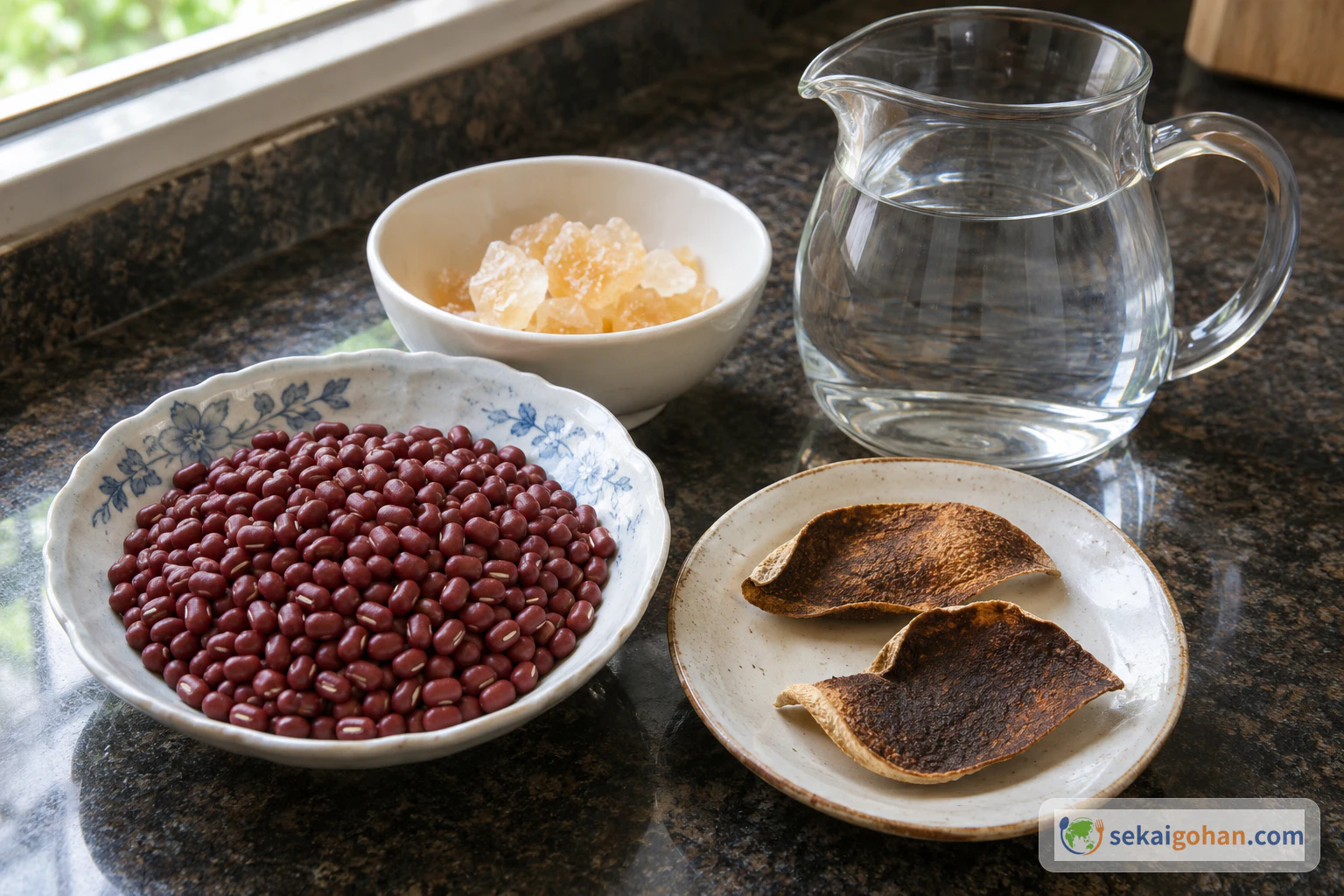
Rock sugar crystals come in very different sizes, and big lumps leave gaps in a measuring cup. Fill the cup with the sugar as it comes, add it all when the time comes, then taste. Add more only after the first batch has dissolved, so you judge the real sweetness of the pot.
Adzuki beans, dried tangerine peel and rock sugar are not among the major food allergens. Check the labels on packaged chenpi and rock sugar for allergen and shared-facility statements before buying for someone with allergies.
Equipment
- A large pot, roomy enough to hold the beans with plenty of water above them
- A bowl for soaking
- A colander
- A wooden spoon for stirring from the bottom
- A measuring cup
- A ladle and serving bowls
Buying Chenpi and Rock Sugar, and What Swaps Change
Dried adzuki beans are easy to find in Asian grocers and many supermarkets, and they are the bean this soup is built on. Chenpi and Chinese rock sugar are the two items worth a trip to a Chinese grocer or an online Chinese food shop. Chenpi is the one to keep for the dish to taste like Hong Kong; the aged, dried peel is what makes the pot smell the way it does.
| Swap | What it changes |
|---|---|
| Raw sugar instead of rock sugar | Changes the colour and aroma of the finished syrup; use the same cup measure and taste |
| Japanese rock sugar | A close substitute in the pot; crystal size changes how much fits in the cup, so taste before adding more |
| Brown cane sugar such as Japanese kibi sugar | A different, deeper sweetness and a less clear finish; a separate choice from rock sugar |
| Dried Japanese mandarin peel instead of chenpi | Gives citrus scent but without chenpi's aged depth |
| Fresh orange zest | A sharp, fresh citrus note, a different thing from dried, aged peel |
| No peel at all | A plain red bean soup with no citrus aroma |
Method: Soak, Simmer Slowly, Sweeten Last
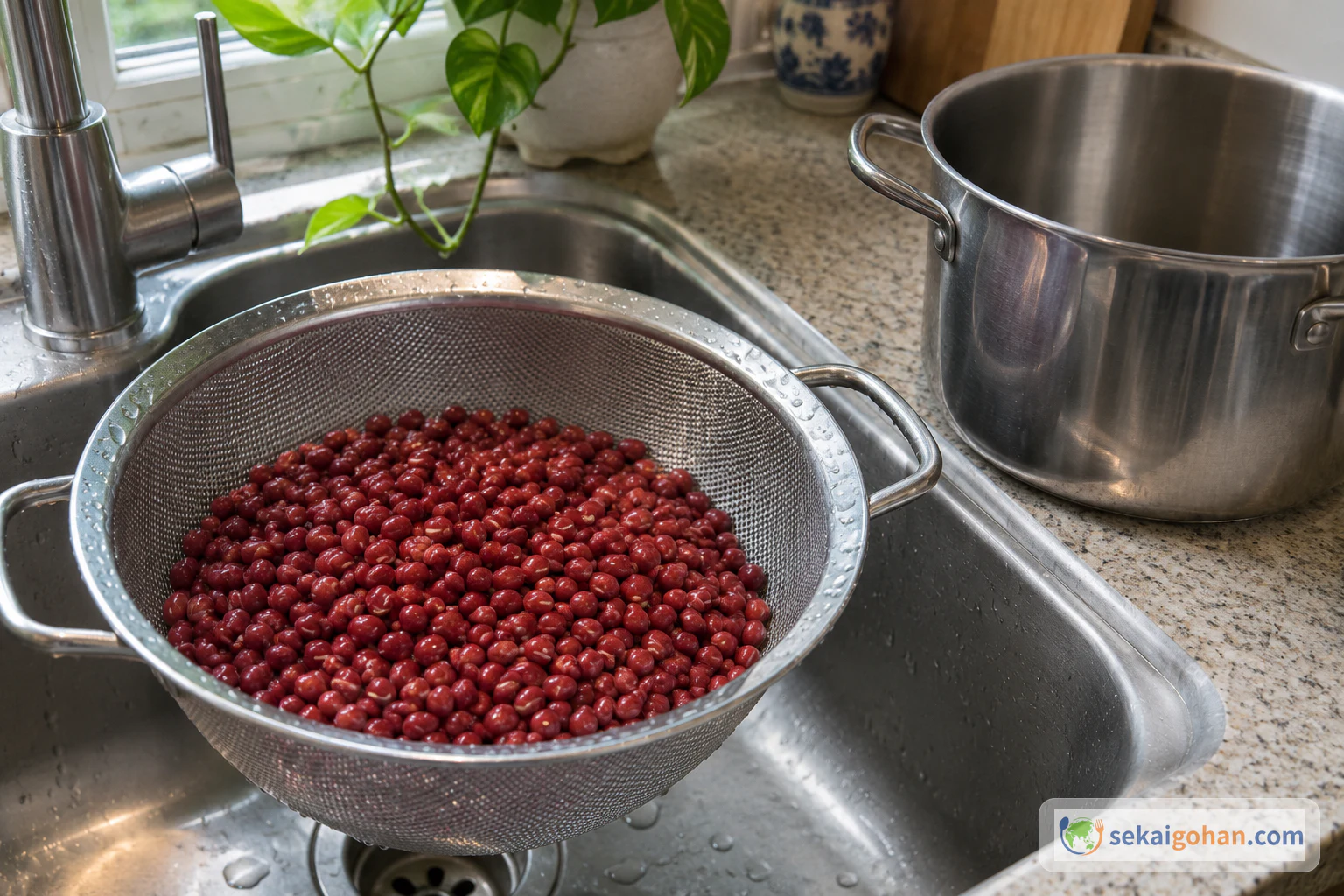
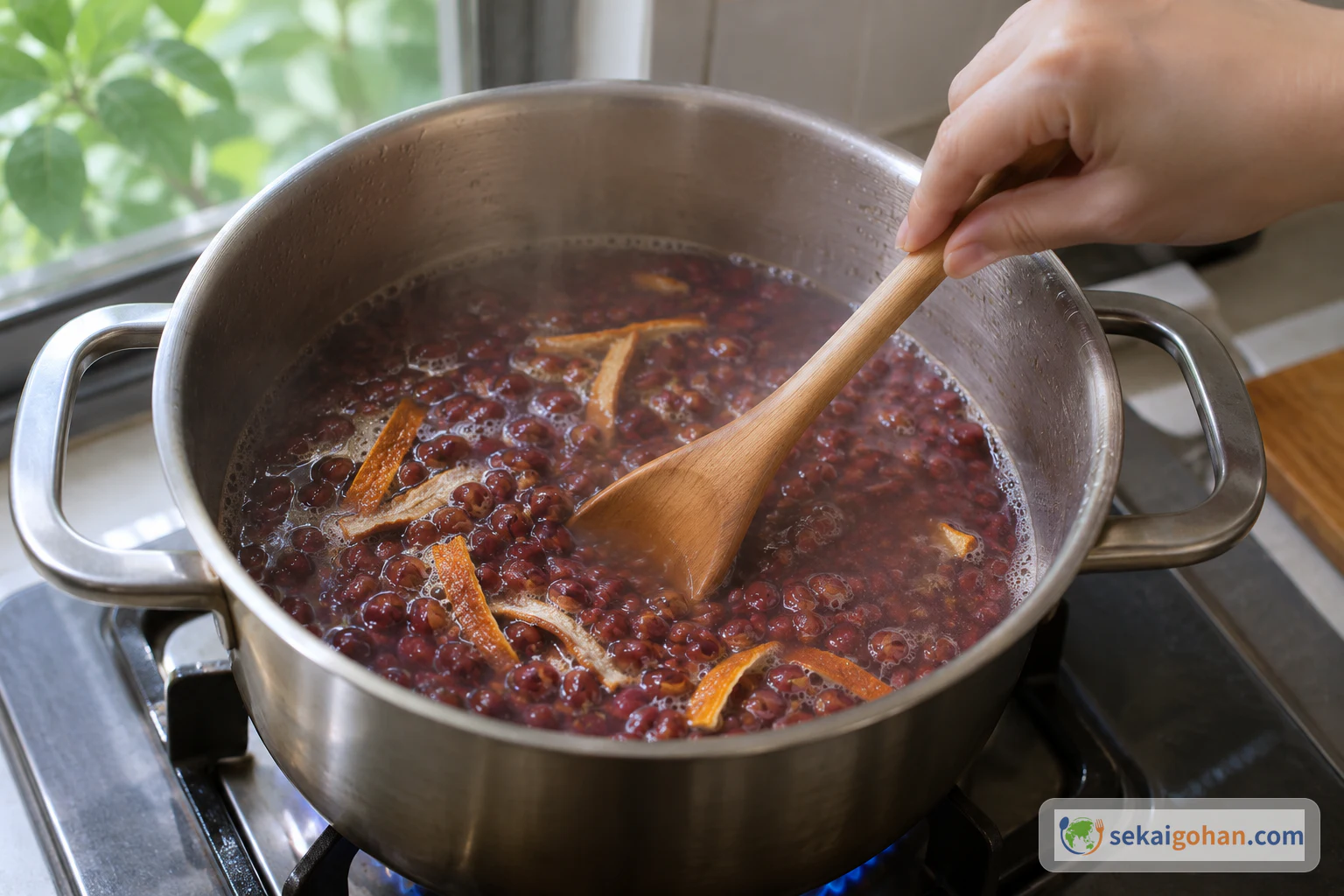
The work is front-loaded and short: soak the beans, drain them, start the pot. After that comes about 3 hours of quiet simmering in which your only jobs are stirring now and then and keeping the water topped up. The one decision that matters comes at the end, when you look at the beans and judge whether they have broken down enough for the sugar.
Each time you stir, look at the water line. When beans begin to poke above the liquid, pour in more water. A pot that runs low makes the beans at the bottom catch and stops the ones on top from softening.
Thickened bean soup holds a lot of heat and bubbles thickly. Stir with a long wooden spoon, keep the heat gentle once the pot is simmering, and ladle carefully into bowls.
When It Goes Wrong
| What you see | Why | What to do |
|---|---|---|
| Beans still whole and firm after about 3 hours | The beans need longer, or the pot ran low and they stopped softening | Top up the water and keep simmering gently, checking every so often until most beans collapse |
| Beans sticking to the bottom of the pot | The water level dropped and the thick soup sat unstirred | Add water, stir from the bottom, and keep the heat at a gentle simmer |
| Beans stay whole and tight after the sugar goes in | The sugar went in too early, before the beans had softened | Keep simmering with enough water and wait for the beans to break down; next time add sugar only at step 4's cue |
| Soup still thin after the sugar dissolves | It has not cooked down far enough | Keep cooking and stirring until it thickens to your liking |
Serving and Variations
Red bean soup is an after-dinner sweet, served hot in small bowls as a meal winds down, the way Hong Kong dessert shops serve it. It needs nothing beside it; the soup itself carries the sweetness, the bean and the citrus.
Three ways to change the pot
- With glutinous rice balls. Some Hong Kong dessert shops let you add glutinous rice balls to a sweet soup. Cook the balls separately and add them to each bowl at the table; they bring a chewy bite against the soft beans and keep the soup itself unchanged.
- With raw sugar. Swapping rock sugar for raw sugar changes the colour and aroma of the syrup while keeping the method the same.
- Without chenpi. Leaving out the peel gives a plain, simple red bean soup, earthier and without the citrus lift.
Frequently asked questions
Do I need to blend or strain the beans?
No blender or sieve is needed. Over the long simmer most of the beans collapse on their own and thicken the liquid. A few whole beans may remain in the soup, and that rough texture is fine.
How thick should the finished soup be?
As thick as you like it. Some prefer it loose enough to drink from the spoon, others cook it down until it coats the spoon. Decide in the last stage after the sugar has dissolved, since that is when the soup reaches its final body.
Can I make it less sweet?
Yes. Add part of the rock sugar, let it dissolve, taste, and stop when it is sweet enough for you. Sweetness is easy to add and hard to take away, so build it up in stages.