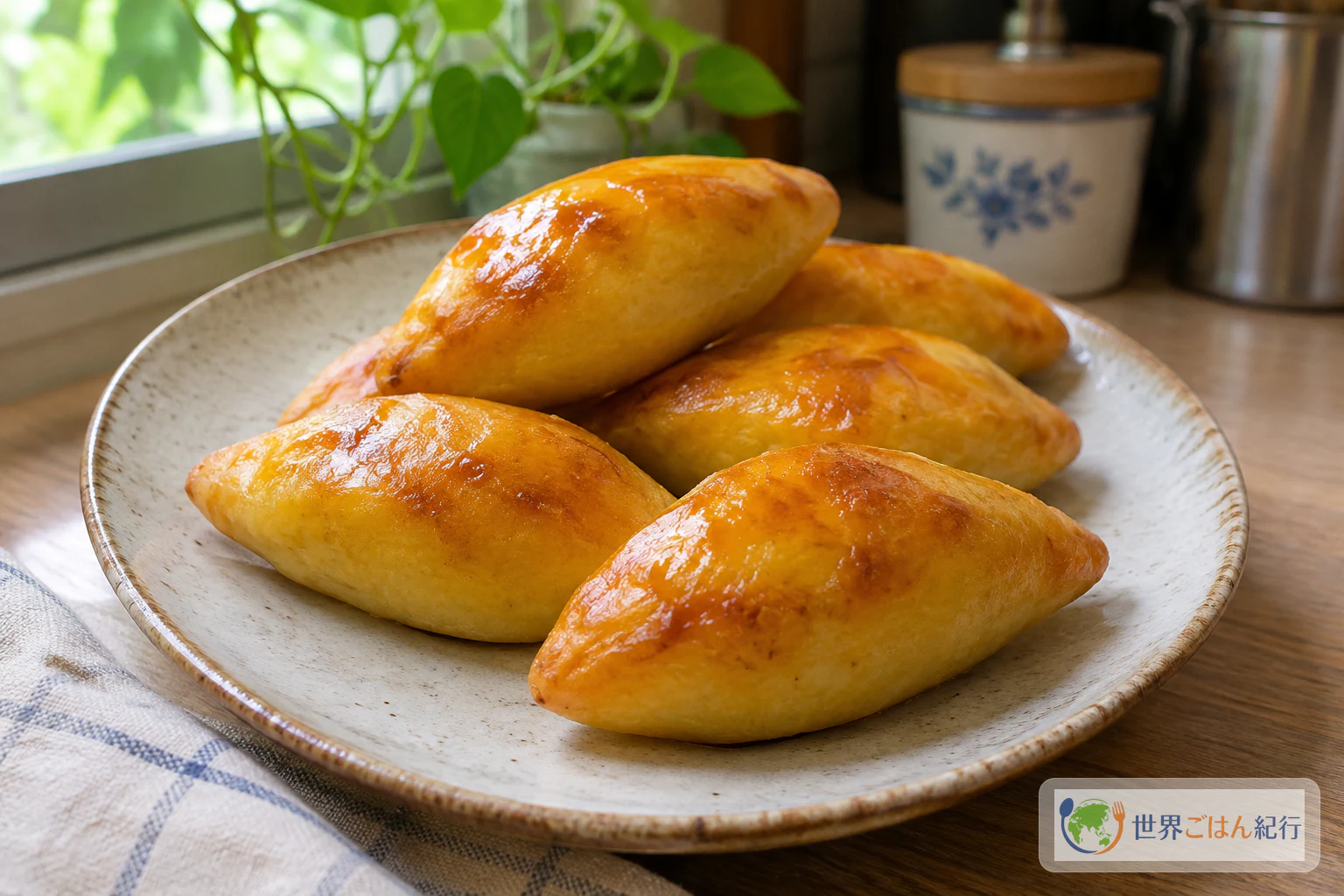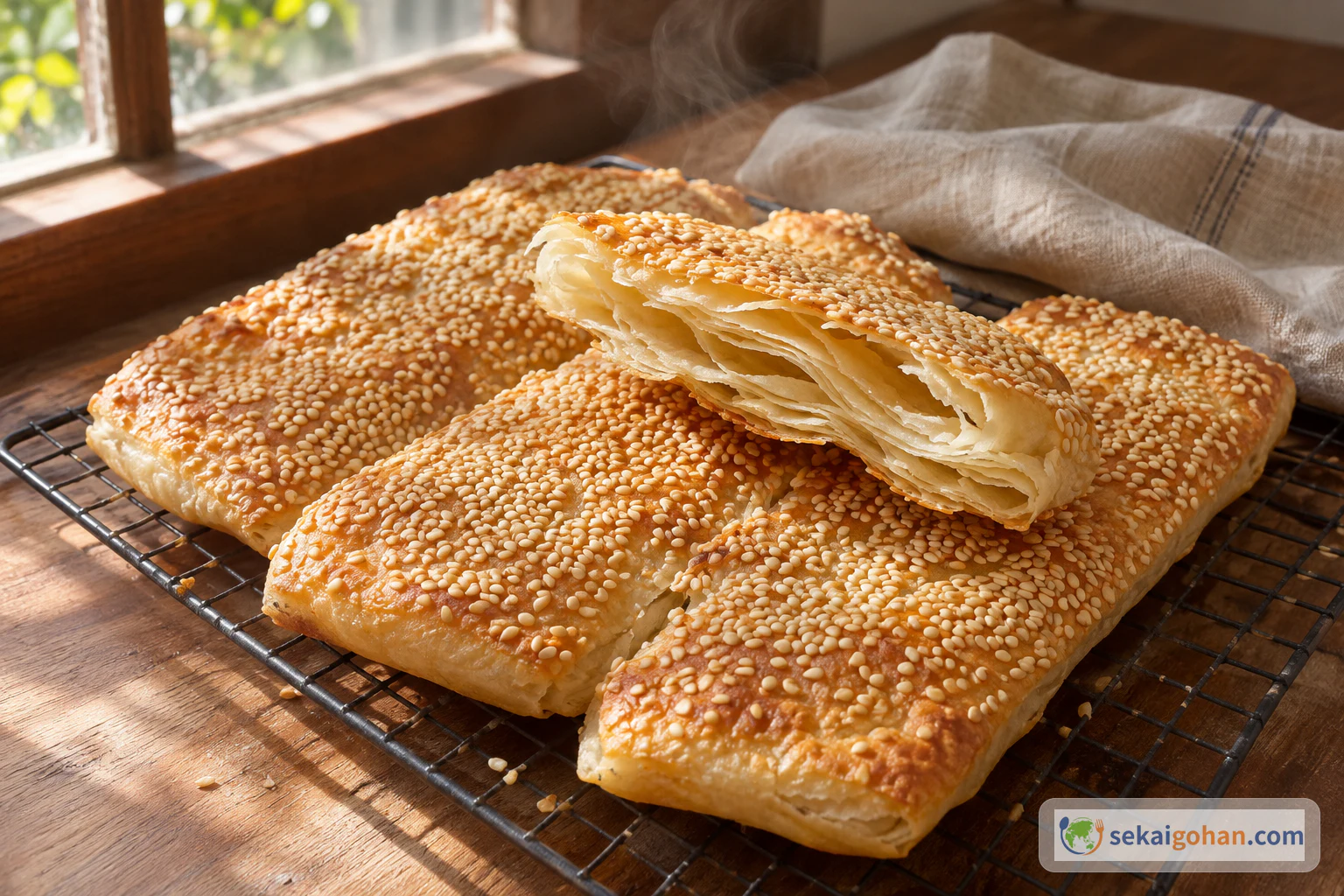
In a small breakfast shop in Taichung with only a few tables, the shaobing come out of the oven every morning. Each one is split open, a stick of fried dough goes inside, and a bowl of warm soy milk, sweet or savory, comes with it. The line forms early, and people eat quickly and head off to work. Shaobing is a baked flatbread from northern China with a crust of white sesame on top and thin, flaky layers inside, each streaked with a paste of sesame and five-spice. It tears apart in sheets, smells of toasted seed, and makes a neat pocket for whatever you want to put in it.
A Breakfast Bread from Northern China
The name is written 烧饼 (燒餅 in traditional characters), pronounced shāobǐng, and translates roughly as "roasted pastry." In northern China it belongs to the morning. Filled shaobing go with soy milk and tea; plain ones are eaten beside steamed eggs or a morning meat dish. In the Mandarin-speaking north around Beijing, shaobing also come to the table in winter alongside hot pot. The bread is usually unleavened, and both the filling and the sesame are a matter of choice. Fillings run sweet or savory: red bean paste, black sesame paste, mung beans stir-fried with egg and tofu, braised beef, smoked meat, or beef and pork cooked with spices.
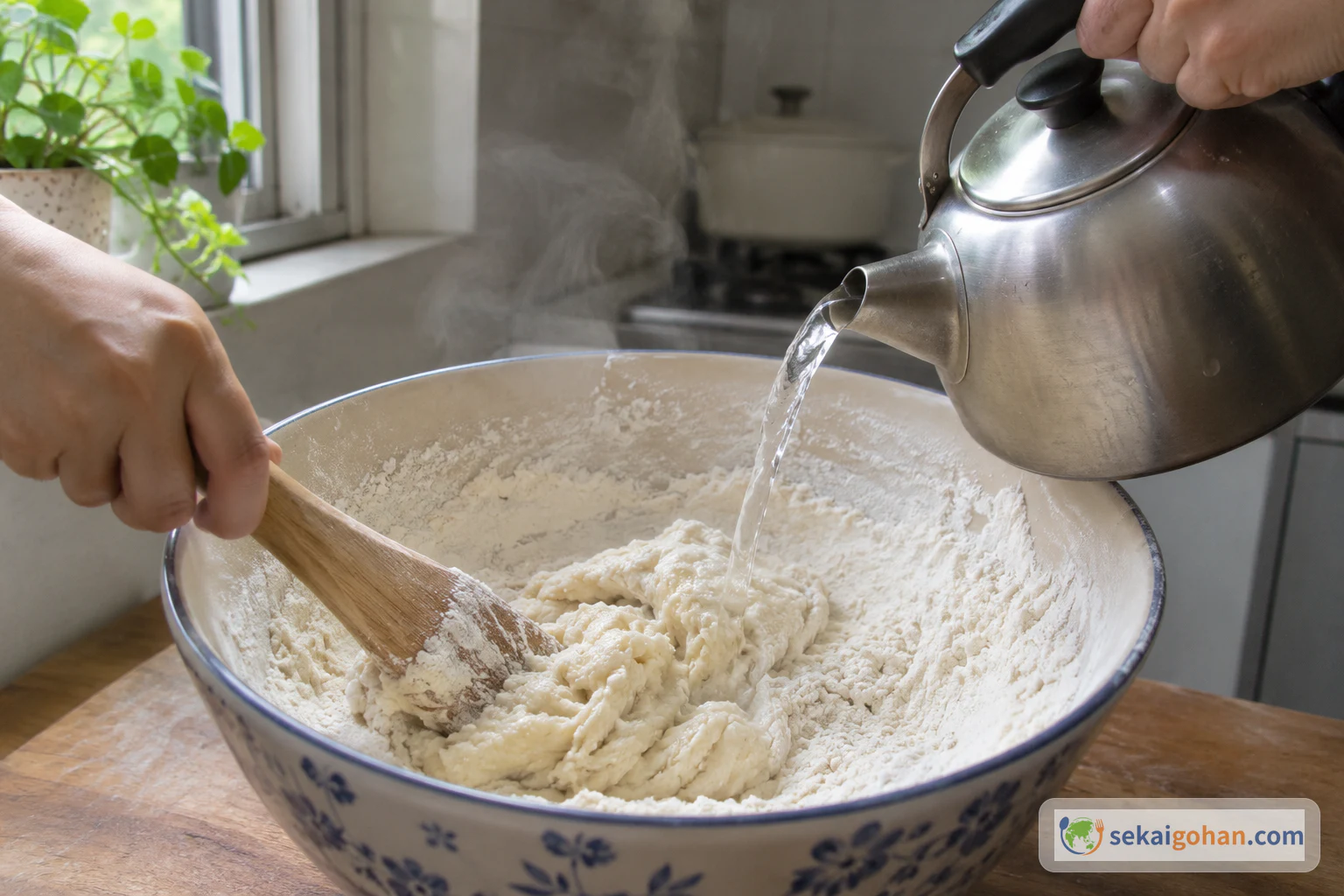
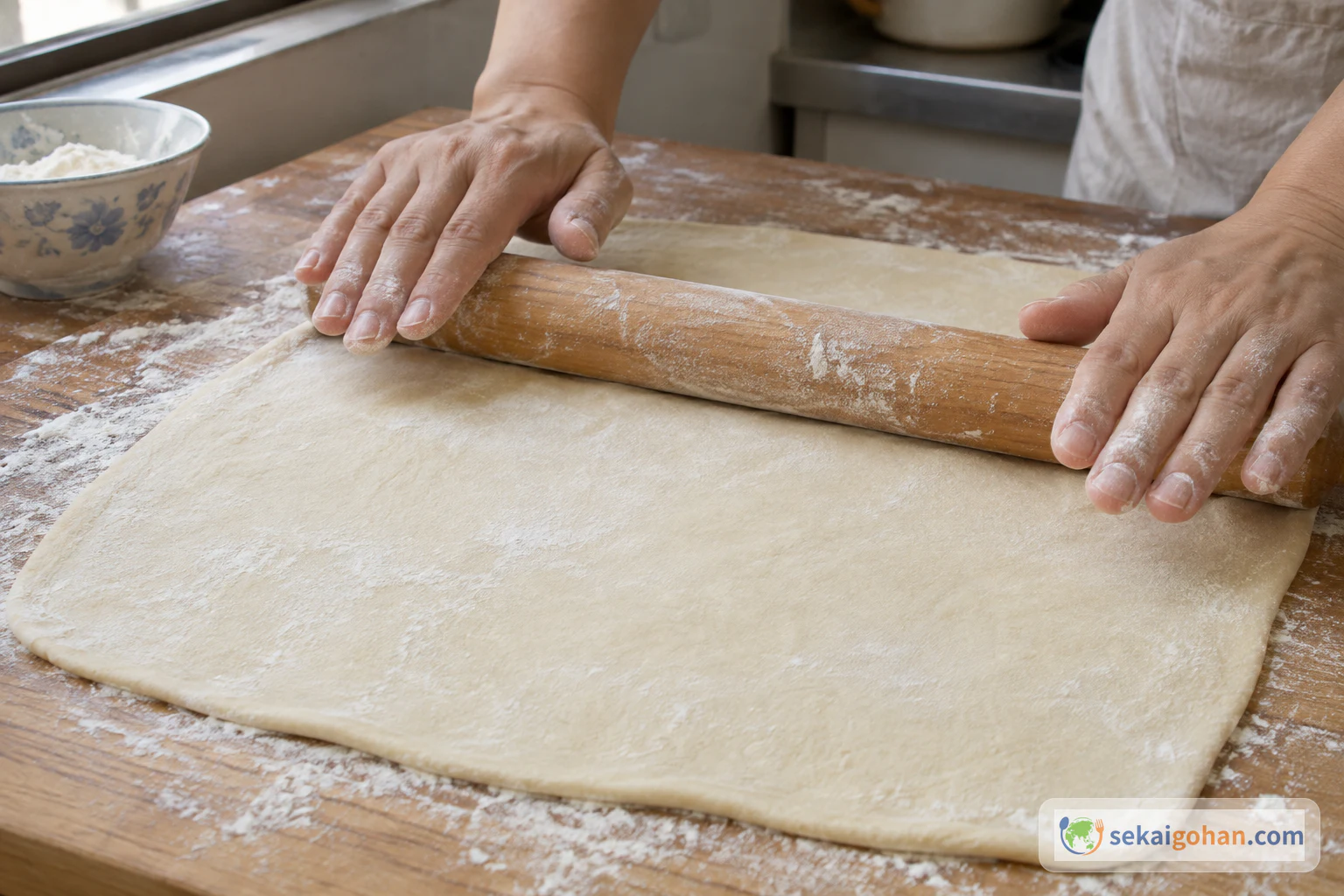
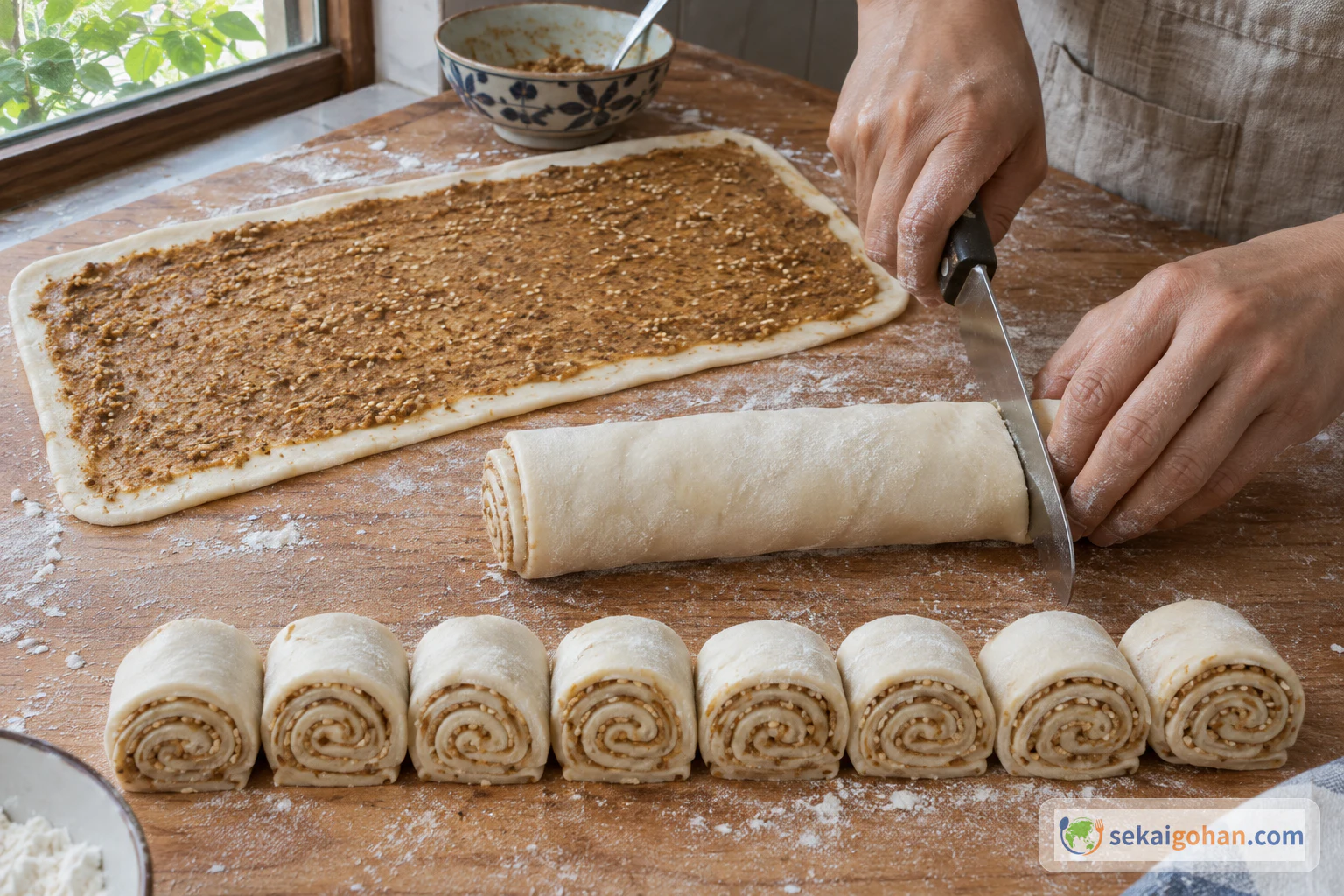
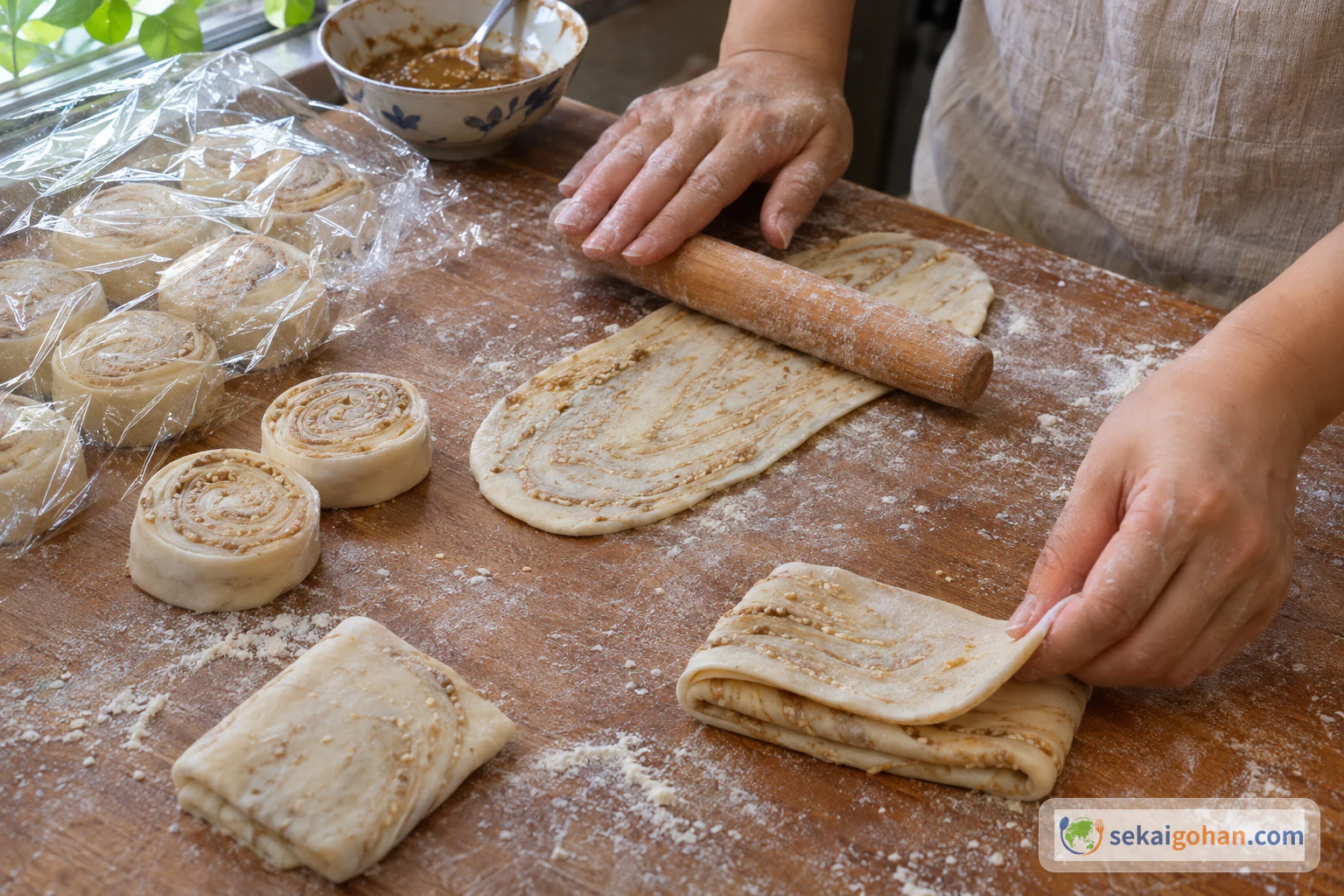
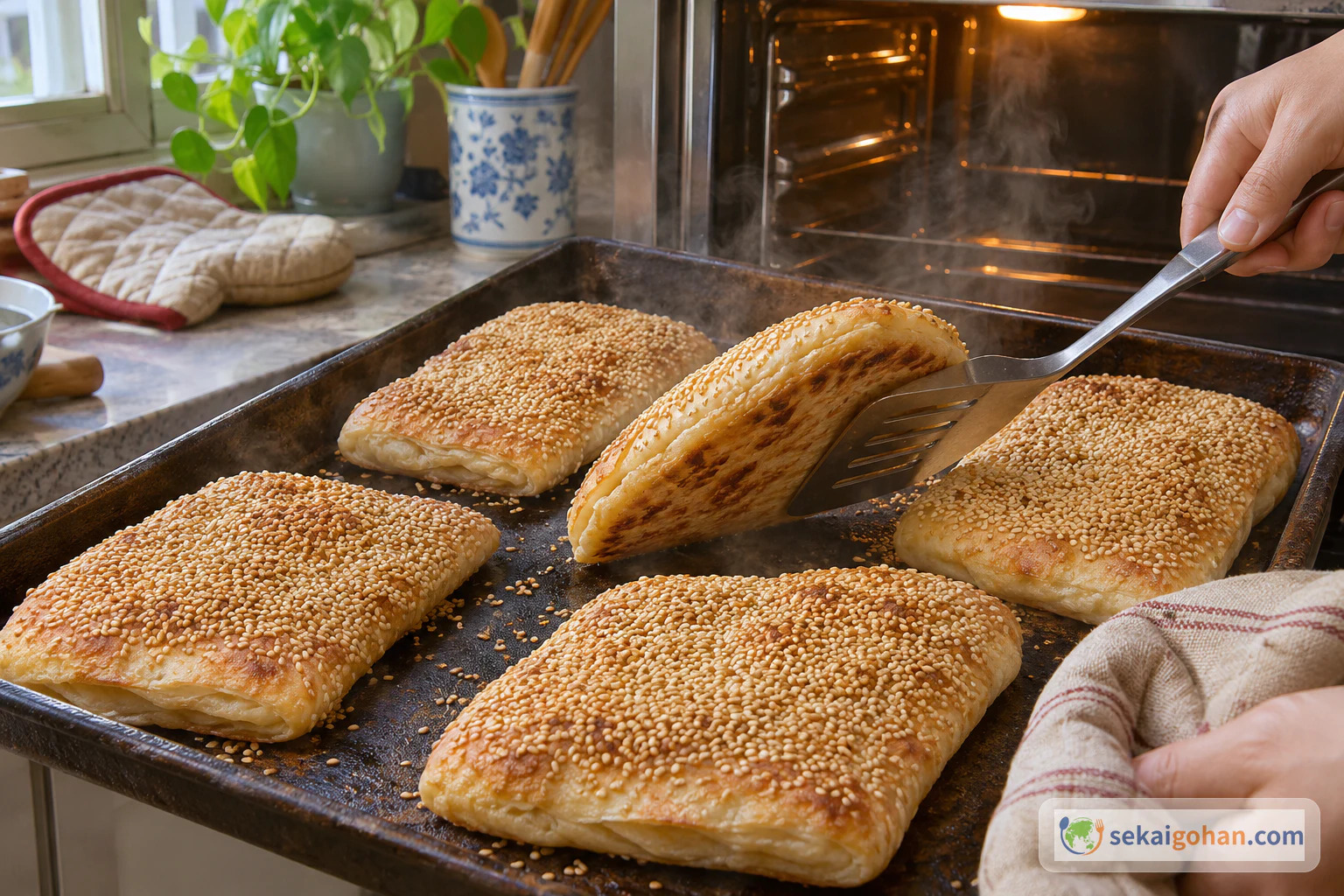
The layers come from a simple lamination. Boiling water makes the dough soft and easy to roll, a paste of oil and flour is spread over it, and rolling and folding stack the paste between thin sheets of dough. In the oven the bread puffs up dramatically and then sinks back as it cools. With its flaky layers and toaster-friendly shape, it has been jokingly called "Chinese Pop-Tarts."
The same bread also goes by 火燒 (huoshao). An older name in the old stories is 胡餅 (hubing), glossed as "barbarian pastry". In Hebei, a shaobing split and stuffed with braised donkey meat is known as a donkey burger.
A bread said to have come from the west
Where shaobing began is not settled. The usual story credits Ban Chao, a general of the Han dynasty, with bringing it back from the Western Regions, and shaobing is traced to that hubing. It is thought to be related to the naan of Persia and Central Asia and the pita of the Middle East. Accounts from the Tang dynasty describe people from the Western Regions making and selling sesame cakes in China. Read these as tradition and likely kinship rather than fixed history; what is certain is that the bread is a fixture of northern Chinese mornings and of Taiwanese breakfast shops.
Round, oval and paper-thin
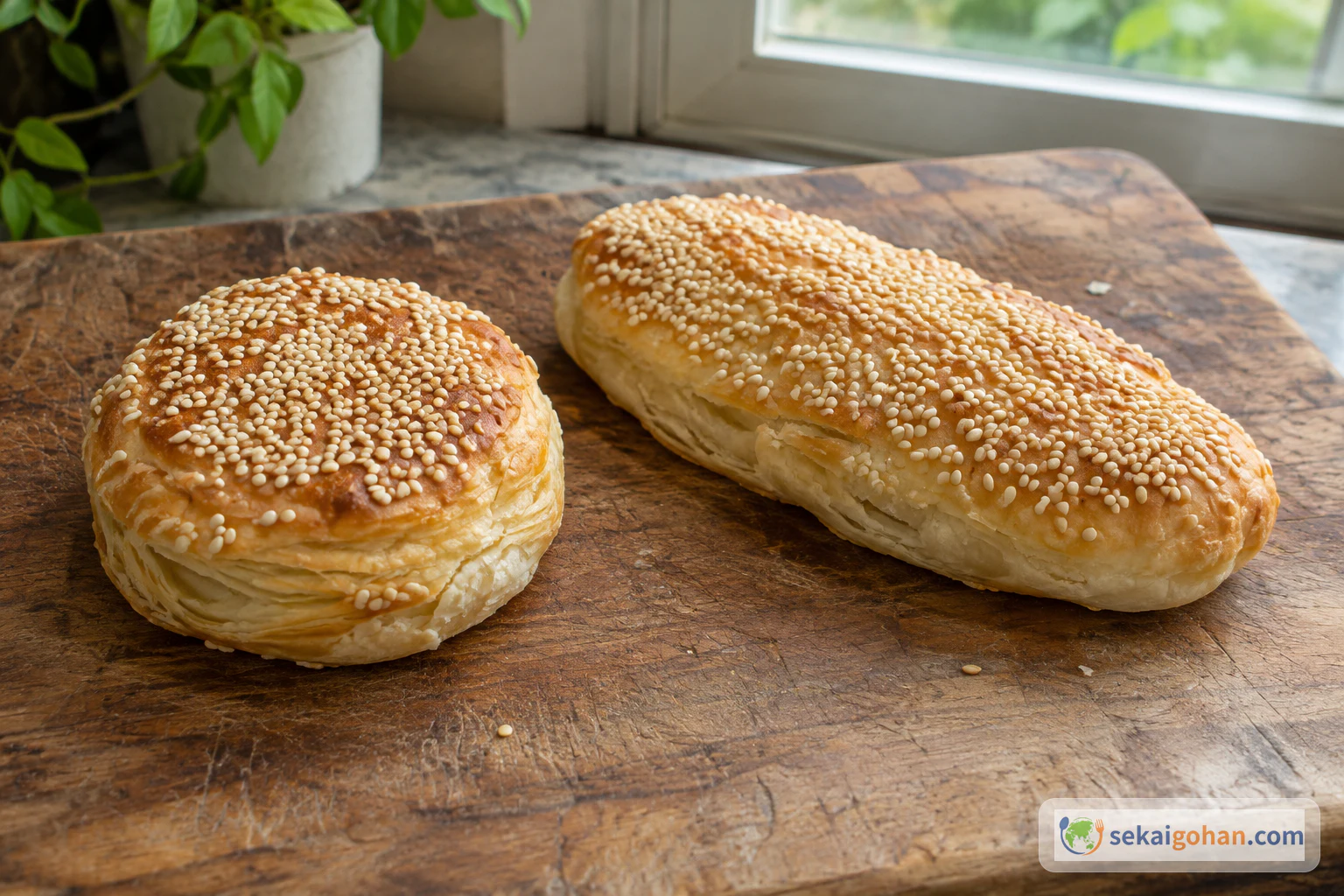
Regional styles differ sharply. Huangqiao shaobing, from Huangqiao in Jiangsu, is golden and crisp outside, and by tradition the sweet ones are round and the savory ones long and oval. Zhoucun shaobing from Zibo in Shandong was created by Guo Yunlong from a thick, horseshoe-shaped bread; it is round and paper-thin, sesame on the front and pricked with tiny holes on the back, and it is known for keeping a long time. Changzhou's magao is a flat oval made with lard, flour, sesame, sugar and salt, baked in a traditional jar oven, and comes in sweet, salty and spicy versions.
In Taiwan, shaobing settled in as a breakfast-shop staple, the bread in that youtiao sandwich with soy milk. It sits at the same breakfast counter as the egg crepe danbing, and it is a different thing entirely from the meat-filled, oven-baked pepper bun hujiao-bing, even though both wear white sesame. If you want more of the wheat cooking of the north, biangbiang noodles come from the same flour-loving tradition. For more dishes from the country, see Chinese food.
Ingredients (makes 8)
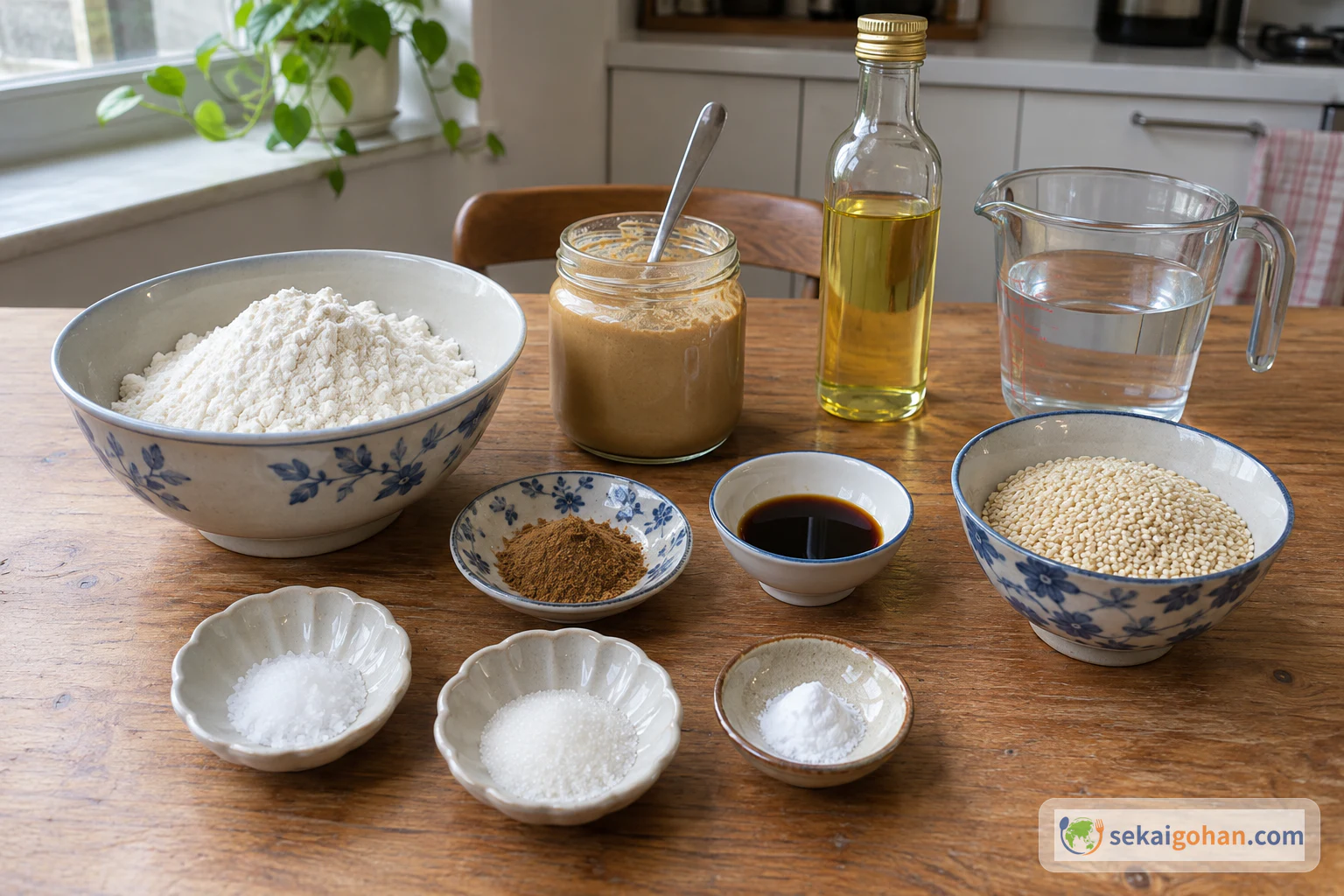
The filling and the dough each have their own salt and oil. Keep them in separate piles on the counter so nothing goes in twice.
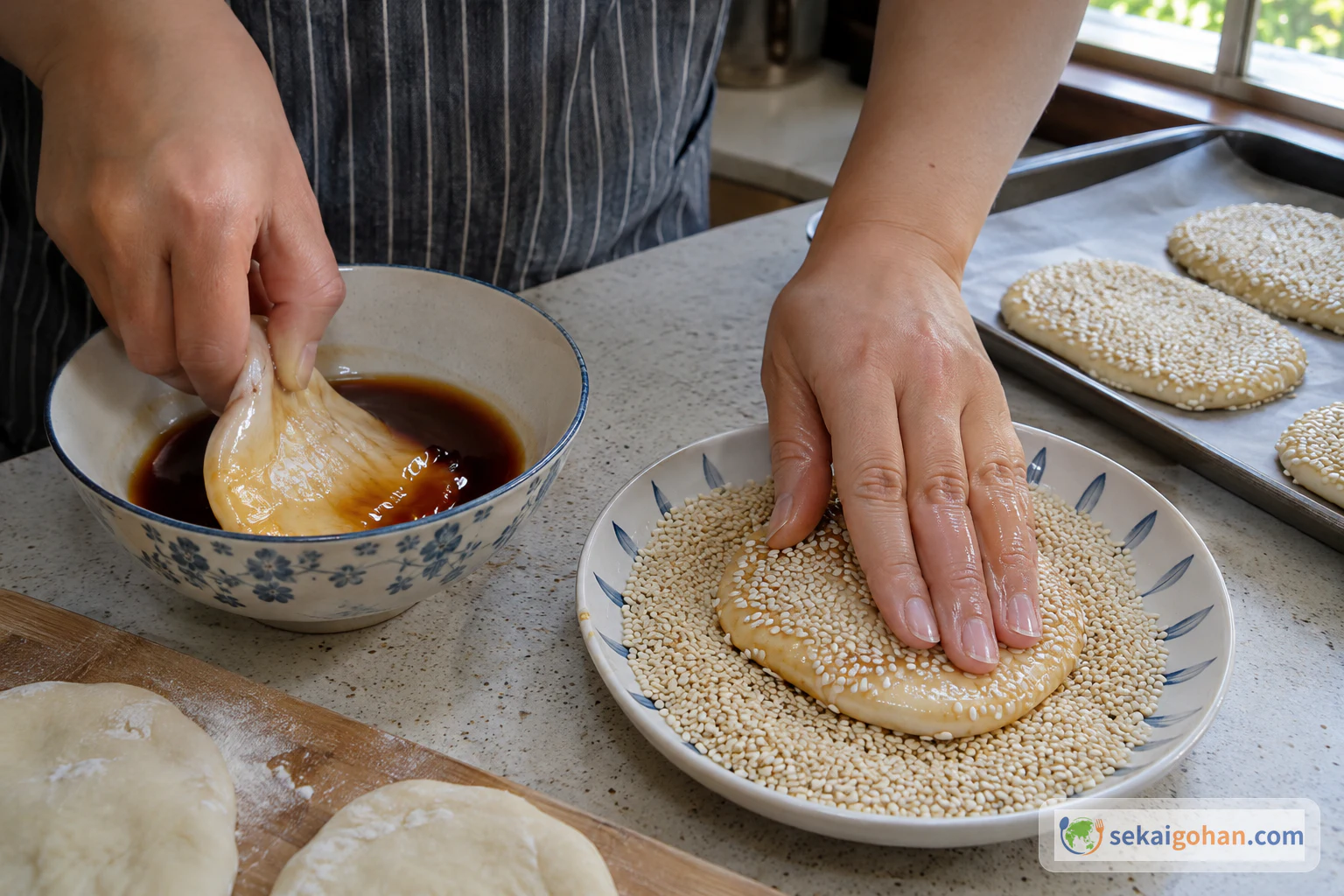
The soy liquid and the sesame seeds are a dipping setup, so some of both will be left in the bowl and on the plate when you finish. The filling paste, by contrast, goes on in full: spread every bit of it over the dough.
Shaobing contains wheat, sesame and soy (from the soy sauce). Sesame is in the filling and the crust, so there is no version of this recipe without it. Check the labels on sesame paste, five-spice powder and soy sauce for other allergens and shared-facility statements.
Equipment
- Digital kitchen scale
- Heatproof bowl and a small pan for heating the oil
- Large mixing bowl and a wooden spatula
- Kettle for boiling water
- Rolling pin
- Serrated bread knife
- Plastic wrap or a clean towel to cover the dough
- Small bowl for the soy liquid and a plate for the sesame seeds
- Tray for resting the shaped pieces
- Baking sheet that can go into a 475°F (246°C) oven
- Oven mitts, a metal spatula and a wire rack
Buying and Substituting
Sesame paste and five-spice powder are the two things to buy at an Asian grocer or online. Chinese sesame paste (芝麻醤, zhimajiang) is the natural choice; any smooth white sesame paste made only from sesame is the closest substitute. Buy five-spice powder ready-made; it is sold in Asian groceries.
For the flour, look for cake flour or a flour labeled low-gluten and use it in both the filling and the dough. All-purpose flour is only for dusting the board. Any neutral vegetable oil works for both the filling and the dough. An ordinary soy sauce is right for the dipping liquid. Buy sesame seeds that are raw and white, not pre-toasted and not black.
On a morning when baking is out of reach, frozen shaobing are sold in Asian supermarkets. Quality varies by brand, and they warm up easily in a toaster.
Method
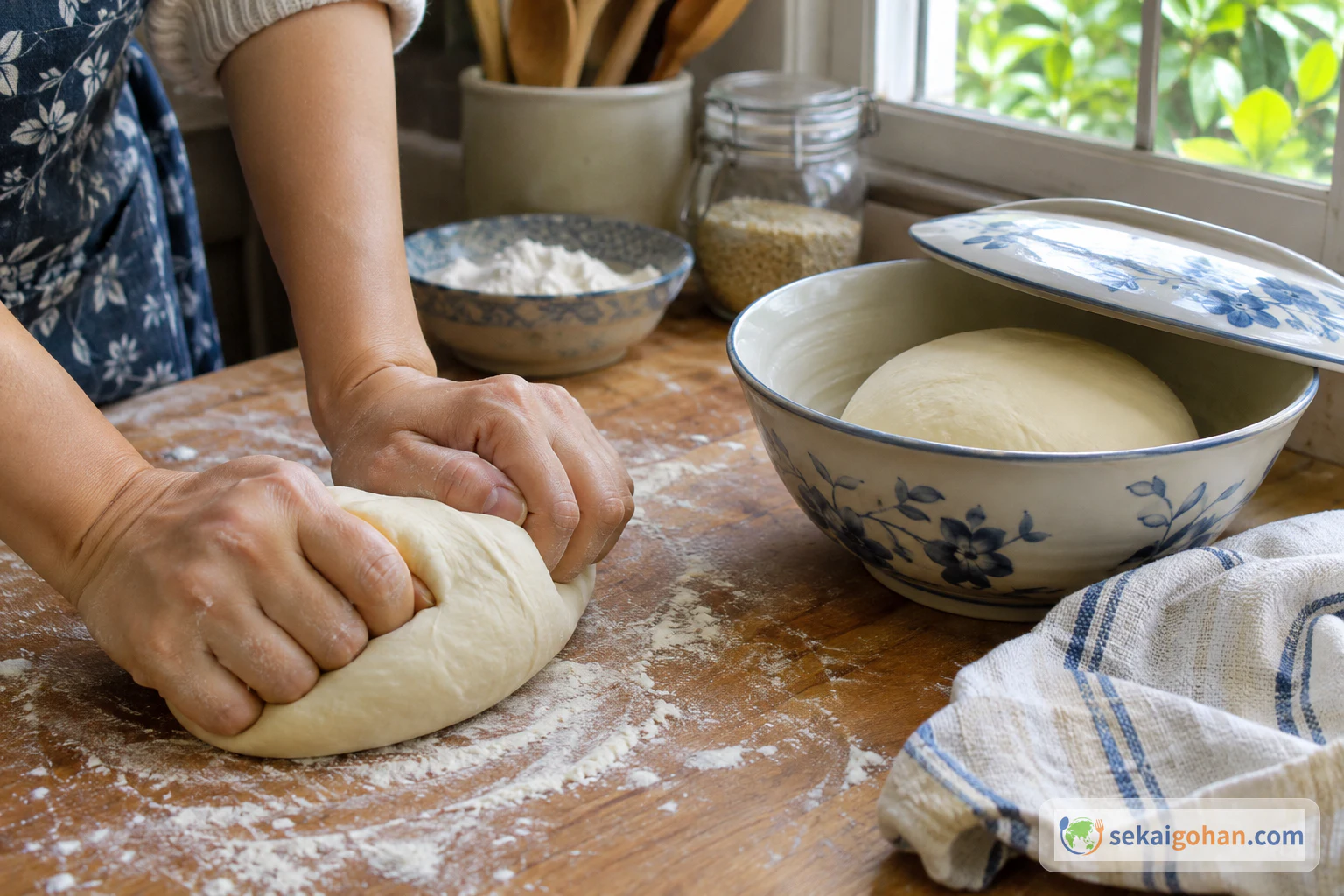
Make the filling paste first so it is ready when the dough is. The dough then needs two 20-minute rests, which is the hands-off part of the morning. After shaping, the pieces rest another 15 minutes while the oven and the baking sheet heat up together, and the bake itself is quick.
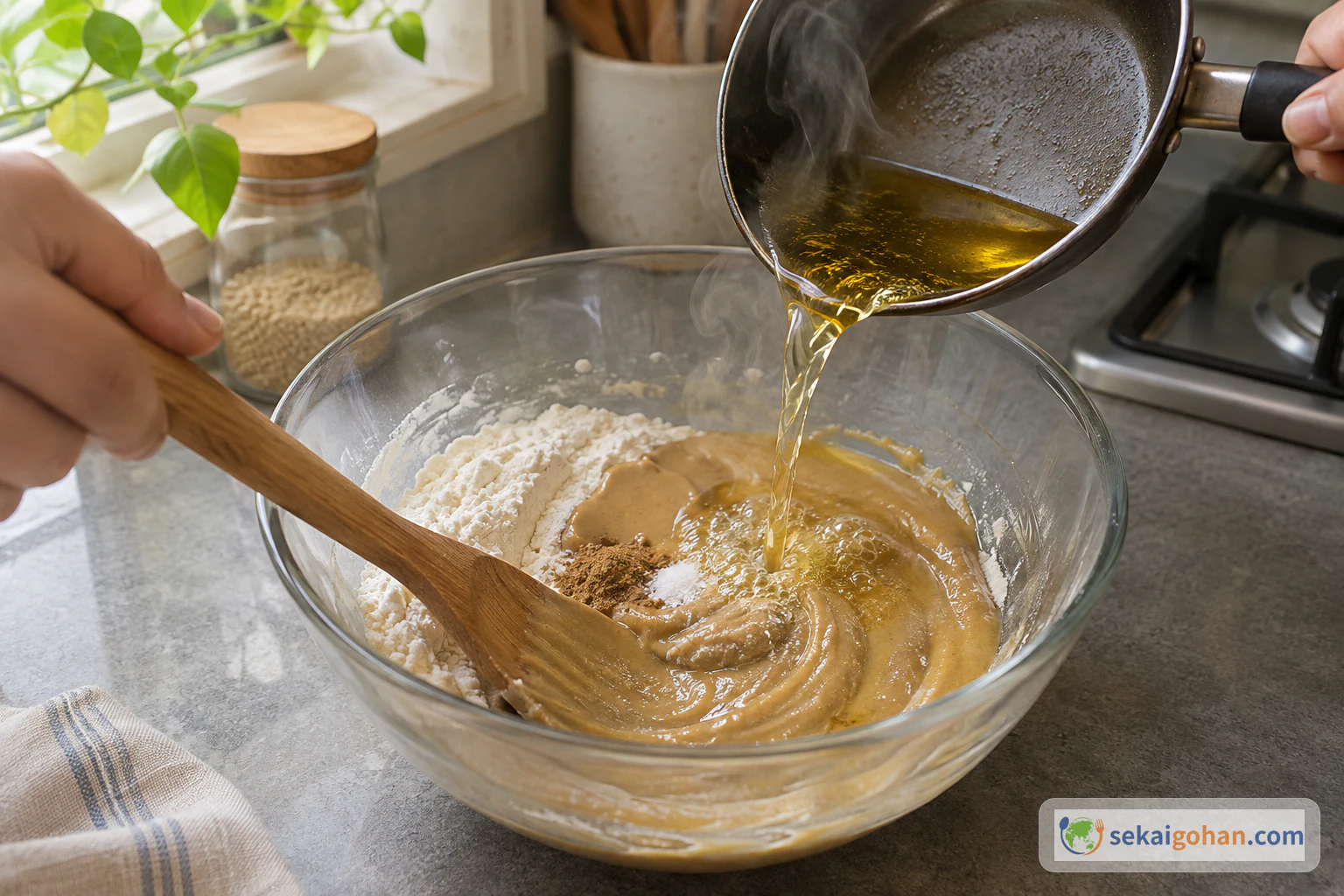
The oil for the filling is heated until it starts to smoke, the dough is mixed with just-boiled water, and the baking sheet goes into a 475°F (246°C) oven empty and comes out very hot. Pour slowly and away from you, use a heatproof bowl, and handle the sheet only with oven mitts.
Roll tightly every time: once when you roll the big sheet into a log, and again when you roll each piece into a small cylinder. Then make both folds. A loose roll or a skipped fold gives you a bread with a filling but few layers.
When It Goes Wrong
| What you see | Why | What to do |
|---|---|---|
| The dough sticks to your hands while kneading | A slight stickiness is the right state for this dough | Keep kneading and dust the board lightly; leave the dough recipe as it is |
| The bread has filling but few layers | The log or the cylinder was rolled loosely, or a fold was skipped | Roll tightly both times and make both folds in step 8 |
| Sesame falls off after baking | The top was only partly wetted with soy liquid | Dip the whole top surface, then press firmly into the seeds |
| The bread stays pale | The oven runs cooler than its setting, or the sheet went in cold | Preheat the sheet with the oven; if your oven tops out below 475°F, keep baking and judge by color until light golden |
| The crust is hard | Overbaked | Stay within 10 minutes plus 4 to 6 minutes after the flip |
| The bread collapses after coming out | This is normal | Nothing to fix; it puffs in the oven and sinks as it cools |
Serving, Variations and Storage
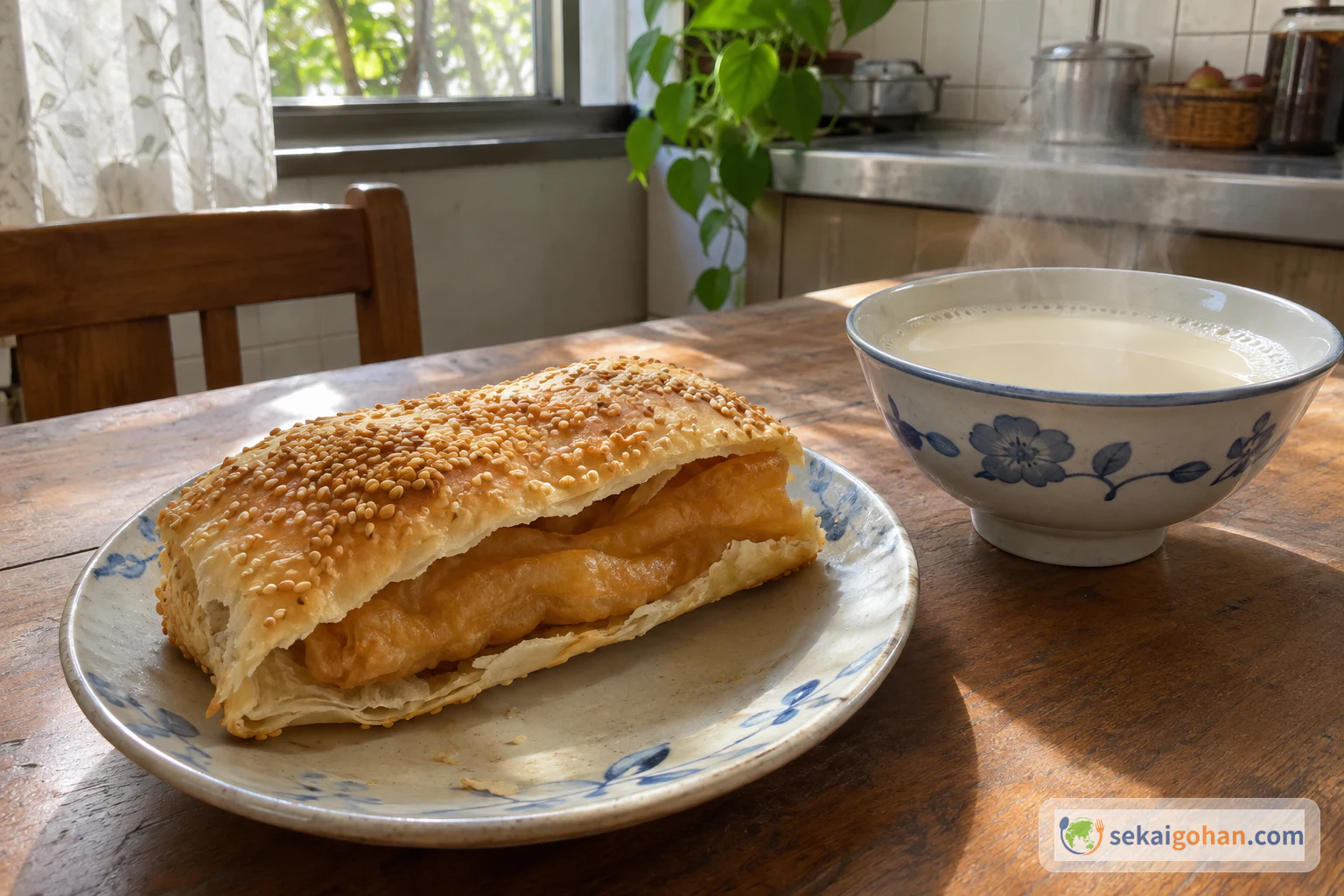
At the table
Eat shaobing as they are, or split them with a serrated knife and fill them. The Taiwanese way is to cut along the side and keep one edge attached, making a pocket. A youtiao (fried dough stick) inside and warm soy milk on the side is the breakfast-shop set; both are optional, and the bread is complete without them. Braised beef, smoked meat or whatever vegetables you have, stir-fried, go in just as well. Shredded leftover roast chicken with lettuce and caramelized onion makes a good lunch. A shaobing warmed in the toaster and spread with butter is another way to eat it.
Variations
- Sweet shaobing. Swap the five-spice filling for brown sugar, honey, red bean paste or sweet black sesame paste. The bread turns into a sweet breakfast pastry, and the soy-dipped sesame crust gives it a salty edge.
- Play with the shapes. Borrow the Huangqiao habit and shape sweet ones round and savory ones as long ovals, so everyone at the table knows which is which.
- Plain sesame bread. A plain shaobing layered with a paste of oil and flour cooked to the color of peanut butter, with no sesame paste or five-spice, is a separate recipe with its own dough and bake, so it is not a swap for this filling. Plain shaobing suit steamed eggs or a meat dish.
Frequently Asked Questions
Can I use all-purpose flour for the dough?
Use cake flour, also sold as low-gluten flour, for both the dough and the filling. All-purpose flour has one job here, which is dusting the board and the rolling pin. If you cannot find cake flour in the baking aisle, Asian groceries stock low-gluten flour.
Can I shorten or skip the rests?
Give the dough both 20-minute rests, and above all keep the first one. The final 15-minute rest overlaps with heating the oven, so it costs no extra time.